INTERNACIONAL
Israeli forces order evacuation for most of Rafah ahead of attack on the area


The Israeli military issued evacuation orders on Monday for most of Rafah and suggested it may soon launch another ground operation in the city after its ceasefire with Hamas ended.
The evacuation orders appeared to cover almost all the city and nearby areas. The military ordered civilians to head to Mawasi, where tent camps were set up along the coast.
«The IDF is returning to intense operations to dismantle the capabilities of the terrorist organizations in these areas,» a spokesperson for the Israeli Defense Forces wrote on X. «For your safety, move immediately to the shelters in Al Mawasi.»
Earlier this month, Israel ended its ceasefire with Hamas and renewed its air and ground attacks against the terror group. In early March, Israel cut off all supplies and humanitarian aid to Gaza to pressure Hamas to accept changes to the ceasefire agreement.
ISRAEL STRIKES BEIRUT FOR THE FIRST TIME SINCE A CEASEFIRE ENDED THE LATEST ISRAEL-HEZBOLLAH WAR
Mourners walk by the bodies of the Abu Sultan family, killed when an Israeli army strike hit their tent before their burial at the hospital in Khan Younis, southern Gaza Strip, Sunday, March 30, 2025. (AP)
Israel launched a major operation in Rafah in May, decimating large parts of the area. The military seized a strategic corridor along the border and the Rafah crossing with Egypt, which is Gaza’s only path to the outside world that was not controlled by Israel.
Israel was expected to withdraw from the corridor under the ceasefire before later refusing, citing the need to block weapons smuggling.
Israel has said it would intensify its military operations until Hamas releases the remaining 59 hostages in its custody, including 24 who are believed to be alive. Israel has also called on the terror group to disarm and leave the territory, conditions that were not in the ceasefire agreement. Hamas has rejected those demands.
LANDMARK UK REPORT ON HAMAS EXPOSES WORST ATTACK ON JEWS SINCE HOLOCAUST

Hassan Abu Sultan mourns over the body of her son Jehad, who, along with his wife and three children, was killed when an Israeli army strike hit their tent. (AP)
Israeli Prime Minister Benjamin Netanyahu said Sunday that his country would take control of security in Gaza after the war and would impose President Donald Trump’s controversial proposal to resettle the territory’s civilians in other countries.
The proposal has been universally rejected by Palestinians, who view it as forcible displacement from their homeland. Human rights experts also say the plan would likely violate international law.
Hamas has insisted on moving forward with the signed ceasefire deal, which called for the remainder of the hostages to be released in exchange for a lasting ceasefire and Israel pulling its troops out of Gaza. Negotiations over those parts of the agreement were supposed to have begun in February after some hostages were freed in exchange for more than 1,000 Palestinian prisoners in Israeli custody.

Benjamin Netanyahu, Israel’s prime minister, said Israel would take control of security in Gaza after the war and impose President Donald Trump’s plan to resettle the territory’s civilians in other countries. (REUTERS/Ronen Zvulun/Pool/File Photo)
CLICK HERE TO GET THE FOX NEWS APP
The war began when Hamas launched an attack on Israel on Oct. 7, 2023, killing roughly 1,200 people and kidnapping another 251, most of whom have since been released in ceasefires or other deals.
More than 50,000 Palestinians have been killed by the Israeli military’s retaliation, according to the Hamas-run government’s Gaza Health Ministry, which does not differentiate between civilians and terrorists.
At the height of the war, roughly 90% of Gaza’s population had been displaced, and many had fled.
The Associated Press contributed to this report.

INTERNACIONAL
El dilema de Donald Trump: ¿Se justifican 200.000 millones de dólares para una guerra sin fin con Irán y una posible invasión terrestre?


NEWYou can now listen to Fox News articles!
A trio of progressive Democrats backed by members of «The Squad» suffered blistering rebukes on Tuesday as Illinois voters rejected them in favor of more moderate candidates, prompting questions from onlookers about whether the party’s core, and momentum, should be entrusted to the far-left wing of its base.
To James Carville, a longtime Democratic strategist, the answer has been «no» for a long time. Talking to Fox News Digital in response to several progressive candidates losing in Tuesday’s Democratic primary in deep blue Illinois, he questioned the narrative that Squad-aligned progressives are gaining momentum.
«What momentum? About 15% of the Democratic Party identifies themselves as progressive. And what’s unique, they win about 15% in the primaries at most,» Carville said. «This was something I’ve dealt with all my life.»
«In New York, [Zohran] Mamdami got 50.5% — which is not overwhelming. That’s hardly the basis for some national movement,» Carville said, referring to the socialist mayor of New York City.
AIPAC-BACKED CHICAGO DEMOCRAT LOSES PRIMARY DESPITE OUTSIDE SPENDING BLITZ
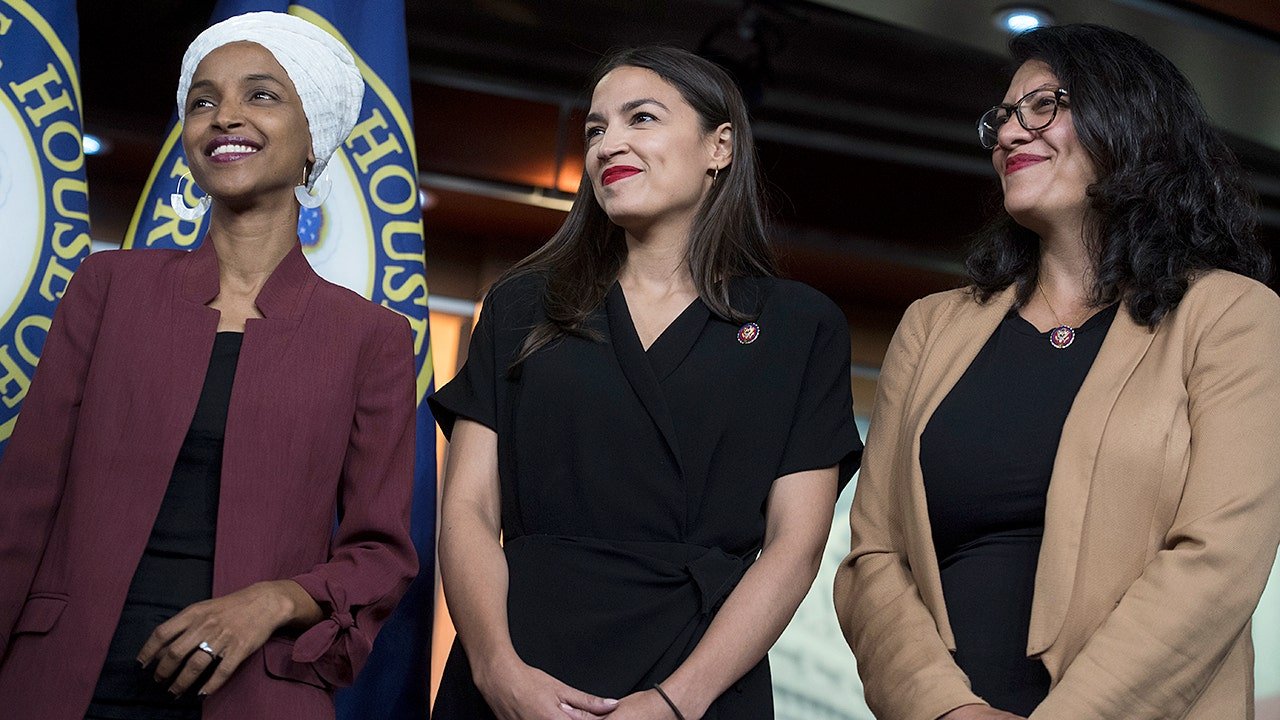
Progressive candidates in the Illinois primary were largely unsuccessful against more moderate candidates. (Photo By Tom Williams/CQ Roll Call)
The progressive losses all came despite high-profile support from some of the most progressive figures in Congress.
Kat Abughazaleh, the 26-year-old Palestinian American running on an anti-establishment platform and promises to implement a «wealth tax,» attracted support from the likes of Rep. Rashida Talib, D-Mich., and Rep. Ilhan Omar, D-Minn, but lost on Tuesday.
Defeated technology entrepreneur Junaid Ahmed told voters he would push for the self-determination of Gaza and implement healthcare for all, earning the support of Rep. Alexandria Ocasio-Cortez, D-N.Y., Rep. Pramila Jayapal, D-Wash., and Sen. Elizabeth Warren, D-Mass.
And Robert Peters, a state senator who raised $1.1 million on his track record of helping to end cash bail and raising the minimum wage at the state level, garnered backing from Sen. Bernie Sanders, D-Vt, and Warren, but lost his bid for Congress to Cook County Commissioner Donna Miller.
BILLIONAIRE JB PRITZKER SAYS HE’S HAD TO OVERCOME HIS WEALTH, WHICH WOULD BE ‘OBSTACLE’ IN 2028
Between them, they raised $5.7 million.
Anthony Driver Jr., widely regarded as a progressive candidate in Illinois’ 7th District Democratic primary, lost to the more moderate, establishment-aligned Democrat, La Shawn Ford.
Driver was endorsed by Jayapal and the Congressional Progressive Caucus.
Liam Kerr, co-founder of the Welcome PAC, a group that supports moderate Democrats, believes their losses should give the party a clear takeaway.
«Illinois is just the latest reminder that the noise machine around far-left candidates rarely translates into actual votes,» Kerr said.
«There’s a real hunger in this party to win, and the candidates who keep losing are the ones more focused on ideological performance than tried and true economic concerns. The blueprint is simple: ditch the clout-chasing ideologues and invest in hard-working candidates who know their communities.»
Kerr’s framing was echoed by Jim Kessler, vice president of policy at Third Way, a Democrat think tank focused on moderate platforms.
«Illinois delivered a cold shower to the progressive fringe in the Democratic Party. Every winner was a mainstream Democrat. A lesson Democrats always have to relearn is that mainstream beats extreme,» Kessler said.
But to other onlookers, the results aren’t so definitive. Even as figures like Carville argue far-left policies aren’t a recipe for national success, others see the Illinois losses as far less decisive for progressives than critics suggest.
CLICK HERE TO DOWNLOAD THE FOX NEWS APP
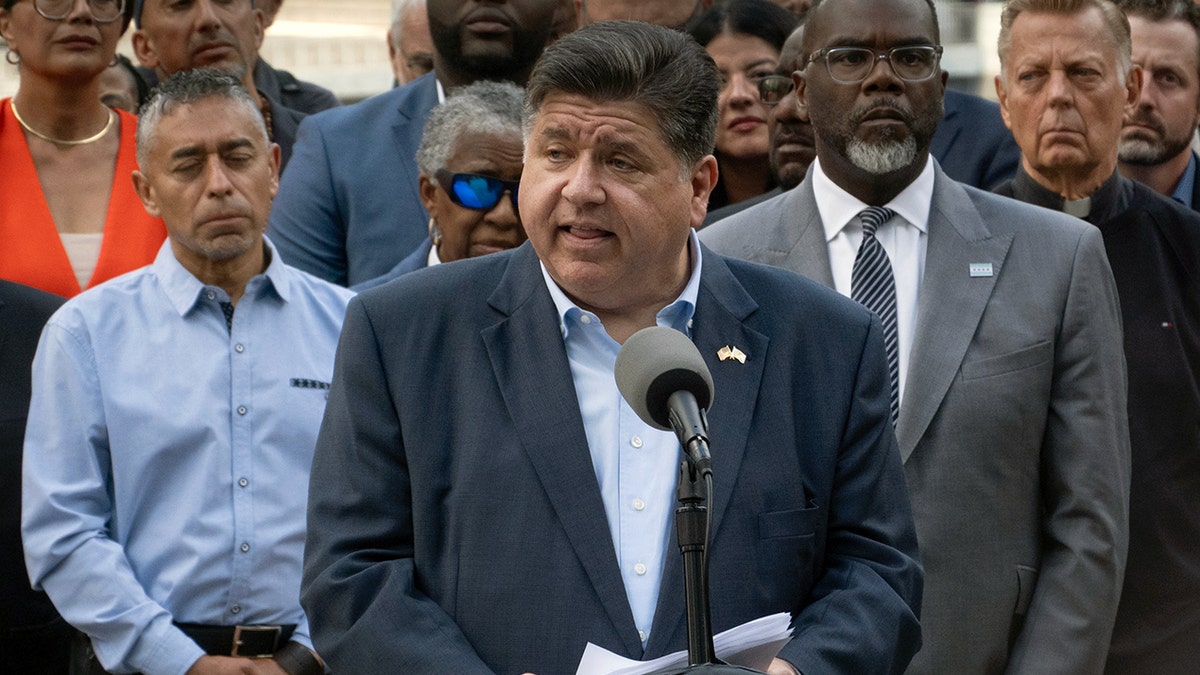
Illinois Gov. JB Pritzker, center, speaks in Chicago. (Scott Olson/Getty Images)
Michael Ceraso, a veteran of the 2016 Sanders presidential campaign, pointed out that some of Tuesday’s winners can’t be swept neatly into the «moderate» camp. He doesn’t believe progressives really even lost the night at all.
«Daniel Biss is a progressive. The dude pushed climate and building regulations in Evanston,» Ceraso said, referring to the winner for Illinois’ 9th Congressional District — the candidate that beat out Abughazaleh.
Ceraso also noted that several candidates backed by Illinois governor J.B. Pritzker won out.
«The Illinois governor is a progressive. He backed [Juliana] Stratton,» Ceraso said, referring to the lieutenant governor and Senate candidate who won the Democratic nomination in a high-profile, competitive, contentious, and expensive primary showdown.
«[They] increased the minimum wage, ended the sub-minimum wage for disabled people and protected reproductive care. That’s what progress means: moving toward a goal that lifts others, not protecting the status quo.»
Still, other voices, like that of Adam Green, co-founder of the Progressive Change Campaign Committee, noted that outside groups like the American Israel Public Affairs Committee (AIPAC) had focused their attention on defeating the most progressive voices in the election.
«The real debate inside the Democratic Party is not whether progressive economic policies appeal to voters,» Green argued.
«It is whether candidates who genuinely believe in those ideas can compete against industries willing to spend millions to co-opt that message in support of candidates who will never actually challenge power,» Green said.
Having now cleared the primaries, Illinois will hold its general elections on Nov. 3.
politics,midterm elections,illinois
INTERNACIONAL
Qué leer gratis: cómo vivir sin ansiedad, los “desamores breves” y el pionero argentino de la ciencia ficción

Algunos creen que no hay salida, que desde que apareció el celular ya no se puede sacar la cara de la pantalla. Una salida posible es el libro: tirarse a leer a la sombra de sauce una buena historia atrapante. Pero quizás el problema no sea el soporte sino el contenido. ¿Y si en vez de estar scrolleando eternamente en las redes sociales nos sentamos a leer, en el mismo celular, un buen cuento, una novela, un ensayo, algo que nos lleve de paseo por otra vida, otro mundo, otra sensibilidad?
A continuación, tres libros que se pueden leer gratis en Bajalibros.
Las fuerzas extrañas, de Leopoldo Lugones
Las fuerzas extrañas, de Leopoldo Lugones, publicado en 1906, es un libro fundamental porque marca el nacimiento de la ciencia ficción y la fantasía en la literatura argentina. Aunque en su momento fue poco comprendido y no tuvo éxito comercial, la colección de cuentos imaginó experimentos y avances científicos que, décadas después, la propia ciencia acabaría confirmando. Lugones explora el conocimiento humano y la curiosidad científica en relatos que mezclan el asombro, la tragedia y el humor, anticipando temas que hoy atraviesan el género.

La importancia del libro reside en su capacidad para mostrar cómo la literatura puede ser un laboratorio de ideas y una puerta a futuros posibles. Cada cuento de Las fuerzas extrañas se convierte en una reflexión sobre los límites de la ciencia, la ética y la imaginación, invitando al lector a cuestionar la realidad y a considerar el impacto del progreso sobre la condición humana. Obras como “La fuerza omega”, “La metamúsica” o “Yzur” se adelantaron a debates contemporáneos sobre inteligencia artificial, la relación con los animales y los riesgos del conocimiento sin control.
Para un lector actual, Las fuerzas extrañas no es solo una curiosidad histórica: es una obra que sigue vigente porque plantea preguntas esenciales sobre el sentido del avance científico y el papel de la ficción como herramienta para pensar el presente y el futuro. Leer a Lugones hoy es reconocer la potencia de la literatura para anticipar y provocar cambios en la forma en que comprendemos el mundo.

(Des)Amores breves de Carolina Balbiani
Carolina Balbiani es periodista de Infobae. Los lectores la conocen. Escribe historias de amor y muerte con una intensidad impactante. Publicó varios libros. Uno de ellos se titula (Des)Amores breves, cuentos en el que hace foco en los efectos que el amor desbordante provoca en ciertas personas que no están preparadas para romper la vida cotidiana. Cuando el encanto de la pasión se vuelve un hechizo maldito.

“Son historias que nacen de historias que escuché y todas terminaban mal. Los finales felices son un poco bobos, me parece. Es un prejuicio mío, es totalmente arbitrario. Pero cuando me protestan por los finales, yo digo que si el día es lindo y está todo bien, no hay historia. Hay una idealización del amor fogoso, pero después decanta la vida. Y la vida es mucho más que la pasión. Intenté poner esas cosas que uno piensa y no dice. Como cuando hay gente que piensa que mejor no hubiera tenido un embarazo, o un romance, o una historia, pero no lo dice porque es políticamente incorrecto. Me gusta que el personaje pueda expresarse”, dijo la autora en una entrevista para Infobae con Patricia Zunini.
60 maneras de vivir sin ansiedad
En tiempos de mucho celular y la imposibilidad de una pausa reflexiva, viene muy bien la lectura. La lectura en general. Pero en particular, un libro: 60 maneras de vivir sin ansiedad. Técnicas sencillas, explicaciones dinámicas y buenas ideas para replantearse la vida cotidiana son algunas de las propuestas de este texto que se puede leer como una especie de guía para el bienestar personal.

Cómo dejar de ser perfeccionista cómo mejorar la organización cotidiana para ganar en armonía y bienestar o de qué manera alejar los pensamientos negativos y reducir la velocidad vertiginosa a la que vivimos figuran entre los temas centrales que ofrecemos aquí. Además los lectores encontrarán técnicas saludables para aliviar las tensiones del cuerpo y de la mente. Meditación, tai chi chuan, recetas naturales, relajación, masajes y mucho más.

Así quedaron formados los grupos de la Copa Libertadores ¿Cuáles son los rivales de los argentinos?

La agenda de Milei en Hungría: reuniones bilaterales, cumbre de CPAC y una distinción

Drink The Sea, la banda integrada por figuras del rock internacional, debuta en Argentina: su amor por el asado y Soda Stereo

La Justicia ordenó medidas para determinar quién pagó el vuelo privado de Manuel Adorni a Punta del Este

El dilema de Donald Trump: ¿Se justifican 200.000 millones de dólares para una guerra sin fin con Irán y una posible invasión terrestre?

Squad-backed progressives hit with ‘cold shower’ as moderates win Illinois primaries

TRAICIÓN Y ÉXODO: La promesa rota de Monteoliva que desató una ola masiva de bajas en la Policía Federal

Adorni se disculpó por el viaje de su esposa: “Fue una pésima decisión, más allá de que no generó gasto para el Estado”

Horacio Rodríguez Larreta reapareció y lanzó “Metrópolis”, su nuevo espacio en la Ciudad de Buenos Aires

Insólito: un esquiador británico terminó la Copa del Mundo de Oslo bajo los efectos del alcohol

 POLITICA2 días ago
Las chicanas de Cristina Kirchner en el arranque de su indagatoria: “Tengo apodos, pero no me parecen adecuados”
- ECONOMIA2 días ago
Juicio por YPF: la Justicia de EEUU benefició a Argentina y suspendió todas las demandas hasta que se defina la cuestión de fondo
- POLITICA1 día ago
Senado: la oposición pidió explicaciones por $LIBRA y los vuelos de Adorni y Bullrich defendió al Gobierno