INTERNACIONAL
Trump’s ‘big, beautiful’ tax agenda scores major victory in House despite GOP rebellion threats


In a massive victory for President Donald Trump and Speaker Mike Johnson, R-La., the House of Representatives passed a bill Thursday that will set the stage for a massive conservative policy overhaul.
The legislation passed mostly along party lines on Thursday morning after a long night of negotiations between House GOP leaders and fiscal hawks who were critical of its spending cut levels.
Speaker Mike Johnson, R-La., and Senate Majority Leader John Thune, R-S.D., held a press conference on Thursday morning in a bid to allay conservatives’ concerns.
HOUSE FREEDOM CAUCUS CHAIR URGES JOHNSON TO CHANGE COURSE ON SENATE VERSION OF TRUMP BUDGET BILL
President Donald Trump, left, and Speaker Mike Johnson, right, are working to pass the president’s agenda through Congress. (Getty Images)
«I’m happy to tell you that this morning, I believe we have the votes to finally adopt the budget resolution so we can move forward on President Trump’s very important agenda for the American people,» Johnson said. «Our first big, beautiful reconciliation package here, involves a number of commitments. And one of those is that we are committed to finding at least $1.5 trillion in savings for the American people, while also preserving our essential programs.»
Thune said, «We are aligned with the House in terms of what their budget resolution outlined in terms of savings. The speaker has talked about $1.5 trillion. We have a lot of United States senators who believe in that as a minimum.»
It comes after the House’s initial plan to vote on the legislation Wednesday was quickly scuttled at the last minute in the face of more than a dozen Republican holdouts.
Congressional Republicans are working on a massive conservative policy overhaul via the budget reconciliation process. By lowering the Senate’s threshold for passage from 60 votes to 51, it allows the party in power to pass significant fiscal and budgetary policy changes.
In this case, Republicans are looking for some added funds for border security, defense, and to raise the debt ceiling – while paring back spending on the former Biden administration’s green energy policies and in other sections of the federal government, likely including entitlement programs.
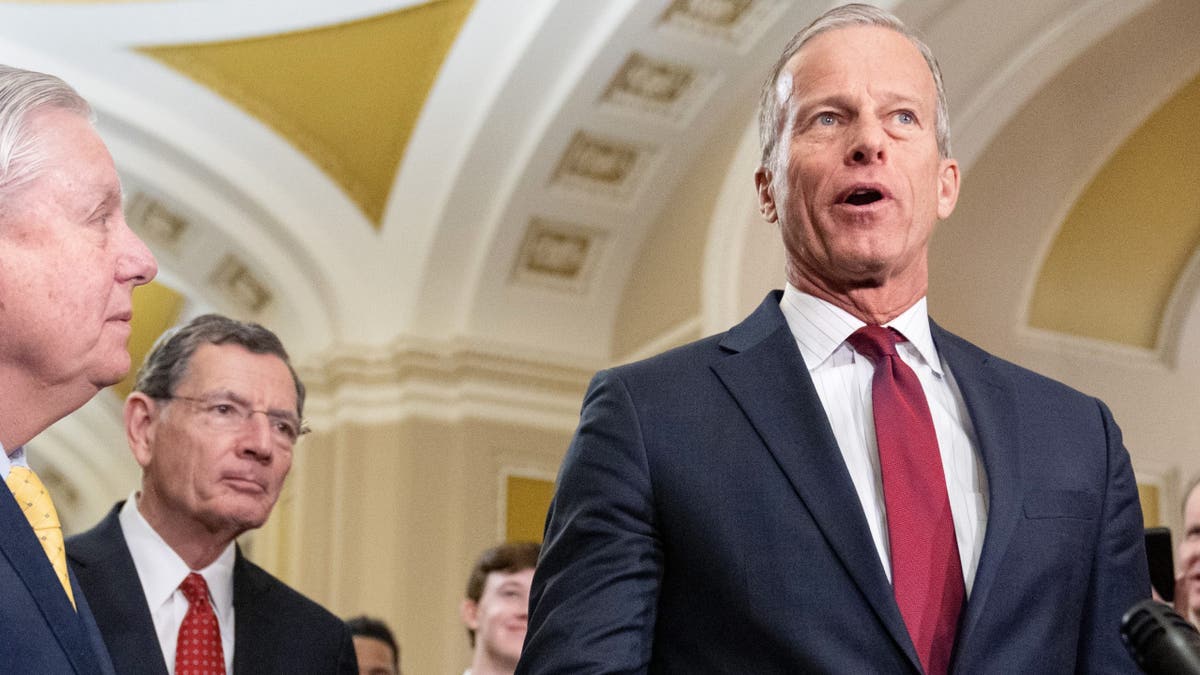
Senate Majority Leader Sen. John Thune, right, points toward Sen. Lindsey Graham, R-S.C., next to Sen. John Barrasso, R-Wyo., center, while speaking to reporters in Washington on Feb. 11, 2025. (AP Photo/Jacquelyn Martin)
GOP lawmakers are also looking to extend Trump’s 2017 Tax Cuts and Jobs Act (TCJA), the provisions of which expire at the end of this year. They’ll also need new funding for Trump’s efforts to eliminate taxes on tipped and overtime wages.
The House passed its own version of the plan earlier this year, calling for at least $1.5 trillion in spending cuts to offset the new spending and attempt to bring down the national debt – which is over $36 trillion.
The Senate’s plan closely aligns with the House version, but mandates a minimum of $4 billion in cuts, a significant gap to bridge.
An unrelated vote was held open for over an hour on Wednesday night, with lawmakers growing impatient on the House floor, while Johnson huddled in a back room with holdouts.
One House Republican told Fox News Digital there was some frustration with how Johnson handled the matter.
«He kept the entire conference out on the floor for 80 minutes while you play graba– with these people,» the GOP lawmaker fumed. «And all day it was like, ‘Oh, we’re going to get this done.’»
MEET THE TRUMP-PICKED LAWMAKERS GIVING SPEAKER JOHNSON A FULL HOUSE GOP CONFERENCE
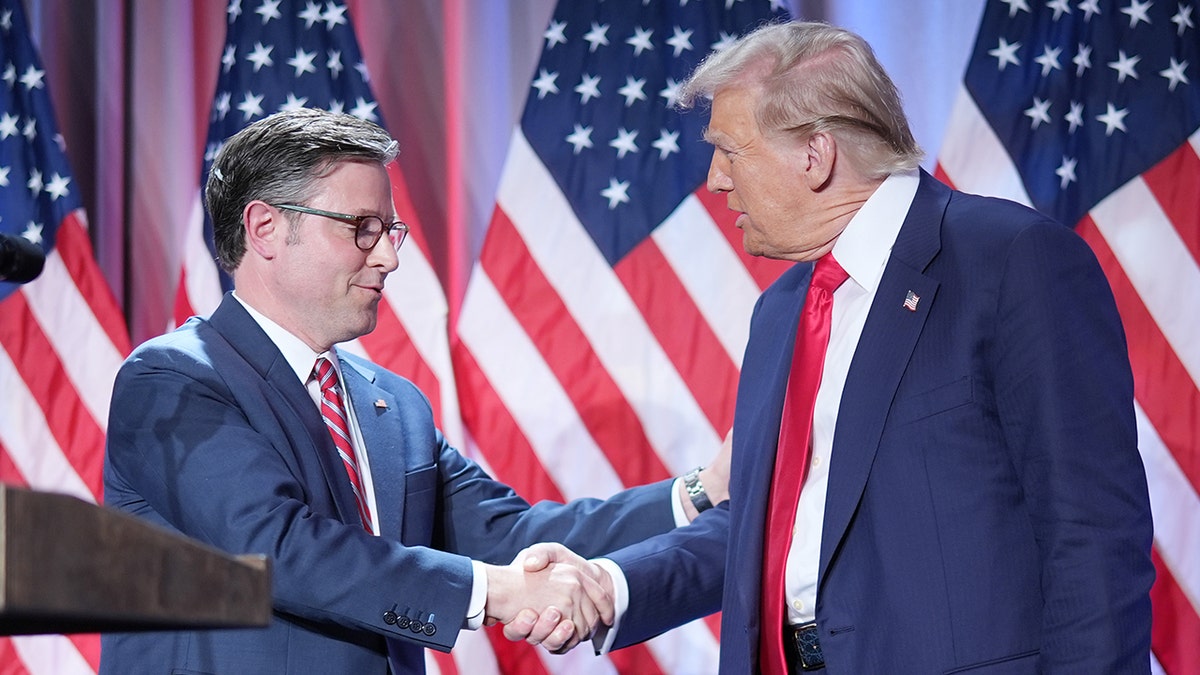
Speaker of the House Mike Johnson shakes hands with President Donald Trump onstage at a House Republicans Conference meeting at the Hyatt Regency on Capitol Hill on Nov. 13, 2024. (Andrew Harnik/Getty Images)
That House Republican said, «All the chatter we were hearing was [holdouts were] down to single digits. But 17, 20 people were in that room. So clearly there was a much bigger problem than they were letting on all day.»
CLICK HERE TO GET THE FOX NEWS APP
Traditionally, the House and Senate must pass identical reconciliation frameworks to begin the work of crafting policy to fit into that framework.
Republicans are also working up against the clock – the debt ceiling is expected to be reached sometime this summer, after which the U.S. government risks a national default if it does not raise that limit to pay its debts.
Trump’s 2017 tax cuts are also projected to expire at the end of this year if they are not extended.
House Of Representatives,House Budget,Donald Trump,Trump’s First 100 Days,Politics










INTERNACIONAL
Multiple allies decline US calls for Strait of Hormuz support amid rising Middle East tensions
NEWYou can now listen to Fox News articles!
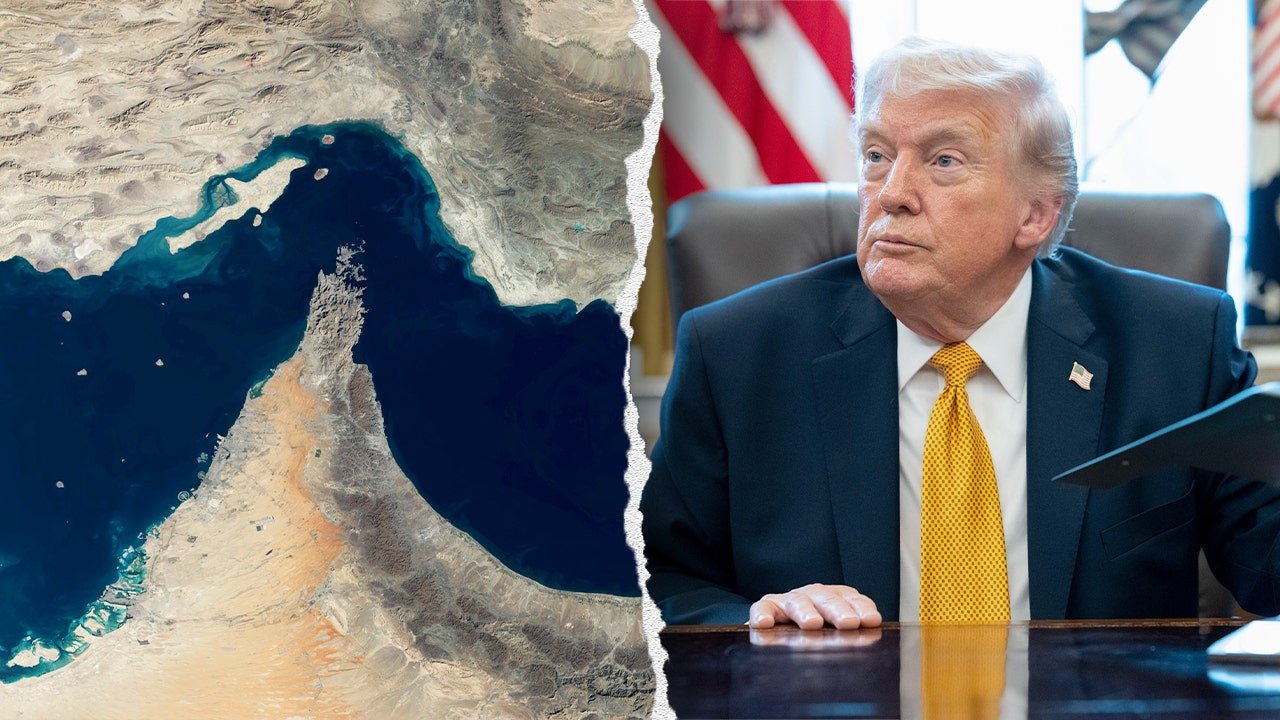
A growing number of U.S. allies are declining to take part in military efforts to secure the Strait of Hormuz, despite mounting pressure from Washington.
From Europe to the Indo-Pacific, governments are signaling reluctance to be drawn into direct military action, instead emphasizing diplomacy, legal constraints or limited defensive contributions.
Countries declining military involvement in reopening the Strait of Hormuz
France
France has ruled out any military role in securing the Strait of Hormuz, stressing a diplomatic approach. In an interview with FRANCE 24 last week, Armed Forces Minister Catherine Vautrin said Paris is «not participating in this war.»
«At this point, there is no question of sending any vessels to the Strait of Hormuz,» she explained. Vautrin also questioned whether Washington and Jerusalem share the same end goals in the conflict with Iran.
President Donald Trump, however, suggested Monday he expects support from French President Emmanuel Macron.
UK DEPLOYING WARSHIP, HELICOPTERS TO CYPRUS AFTER DRONE STRIKE
President Donald Trump (right) takes part in the Gaza summit chaired by Egypt’s President Abdel Fattah el-Sisi alongside France’s President Emmanuel Macron in Sharm El Sheikh, Egypt, on Oct. 14, 2025. (Michael Kappeler/Picture Alliance via Getty Images)
«I think he’s going to help. I mean, I’ll let you know. I spoke to him yesterday. I don’t do a hard sell on them because my attitude is we don’t need anybody. We’re the strongest nation in the world. We have the strongest military by far in the world. We don’t need them,» Trump said at the White House. «But, it’s interesting. I’m almost doing it in some cases, not because we need them, but because I want to find out how they react.»
IRAN HOLDS WORLD ENERGY HOSTAGE WITH ‘NIGHTMARE’ STRAIT OF HORMUZ SEA MINES, FORMER CENTCOM OFFICIAL WARNS
Germany
Germany has rejected military involvement, with Chancellor Friedrich Merz stating the conflict falls outside NATO’s scope. «We will not participate in ensuring freedom of navigation in the Strait of Hormuz by military means. The war in the Middle East is not a matter for NATO,» he said in a post on X. «Therefore, Germany will also not become involved militarily.»

German Chancellor Friedrich Merz arrives at the White House on June 5, 2025, in Washington, D.C. (Anna Moneymaker/Getty Images)
Australia
Australia has declined to send ships to the strait despite U.S. calls for support. In an interview on ABC Radio National on Monday, Catherine King, minister for infrastructure, transport, regional development and local government, said, «We won’t be sending a ship to the Strait of Hormuz. We know how incredibly important that is, but that’s not something that we’ve been asked or that we’re contributing to.»
She noted Australia’s current contribution is limited to support in the United Arab Emirates, including providing aircraft to assist with defense given the number of Australians in the country.
IRAN DEPLOYS EXPLOSIVE ‘SUICIDE SKIFFS’ DISGUISED AS FISHING BOATS IN STRAIT OF HORMUZ
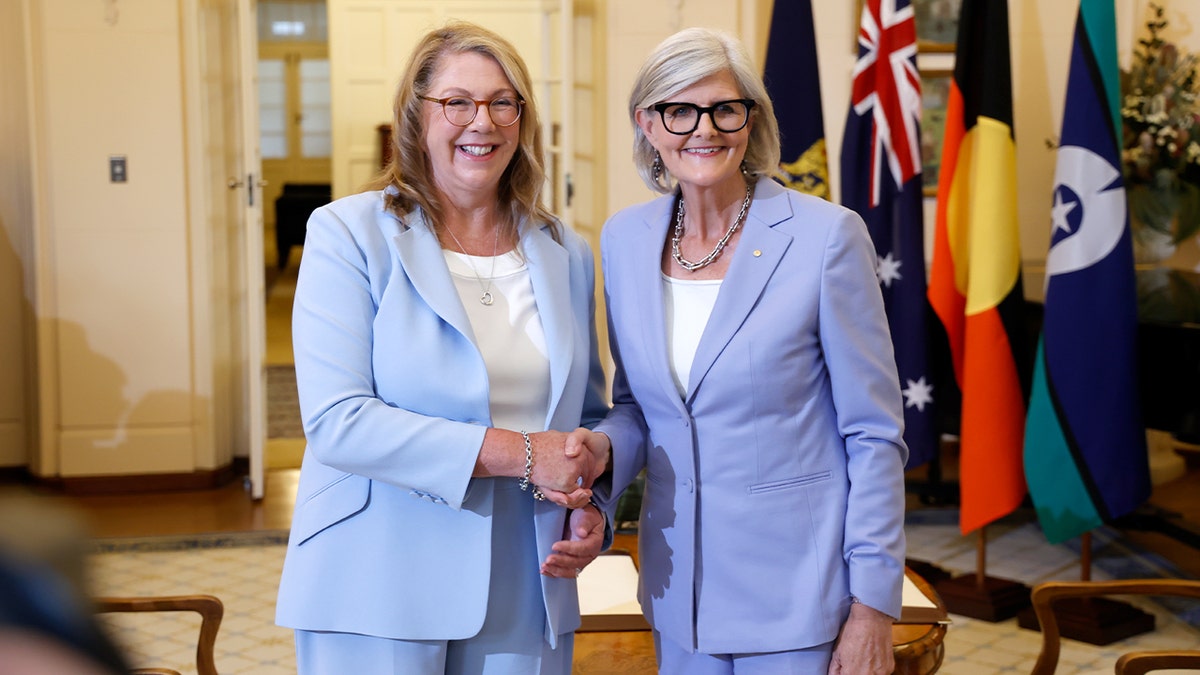
Minister for Infrastructure, Transport, Regional Development and Local Government Catherine King (L) shakes hands with Governor-General Sam Mostyn (R) during a swearing-in ceremony at Government House in Canberra, Australia, on May 13, 2025. (Hilary Wardhaugh/Getty Images)
Ireland
Ireland has ruled out participation in any EU naval mission to reopen the strategic waterway. Irish Prime Minister (Taoiseach) Micheál Martin told reporters ahead of his meeting with Trump, «We don’t have that offensive military capacity in any shape or form, so obviously it’s not something that’s on our agenda,» according to the Irish Examiner. «The world is in a very challenging situation and no one likes war. We certainly don’t as a country, and we want a specific resolution.»
WHY GULF STATES AREN’T JOINING THE WAR AGAINST IRAN — DESPITE ATTACKS ON THEIR SOIL
Spain
Spain has rejected any involvement in a Hormuz mission and called for an end to the war.
Defense Minister Margarita Robles said, «We are on a defense and security mission in Cyprus and at this moment Spain is not considering any mission in Hormuz. What we are considering is the demand that the war end,» according to Spanish newspaper La Razón.
She described the conflict as an «illegal war that is causing many deaths.»
Foreign Minister José Manuel Albares similarly argued to end the «spiral of violence» and «this escalation that does not have clear objectives.»
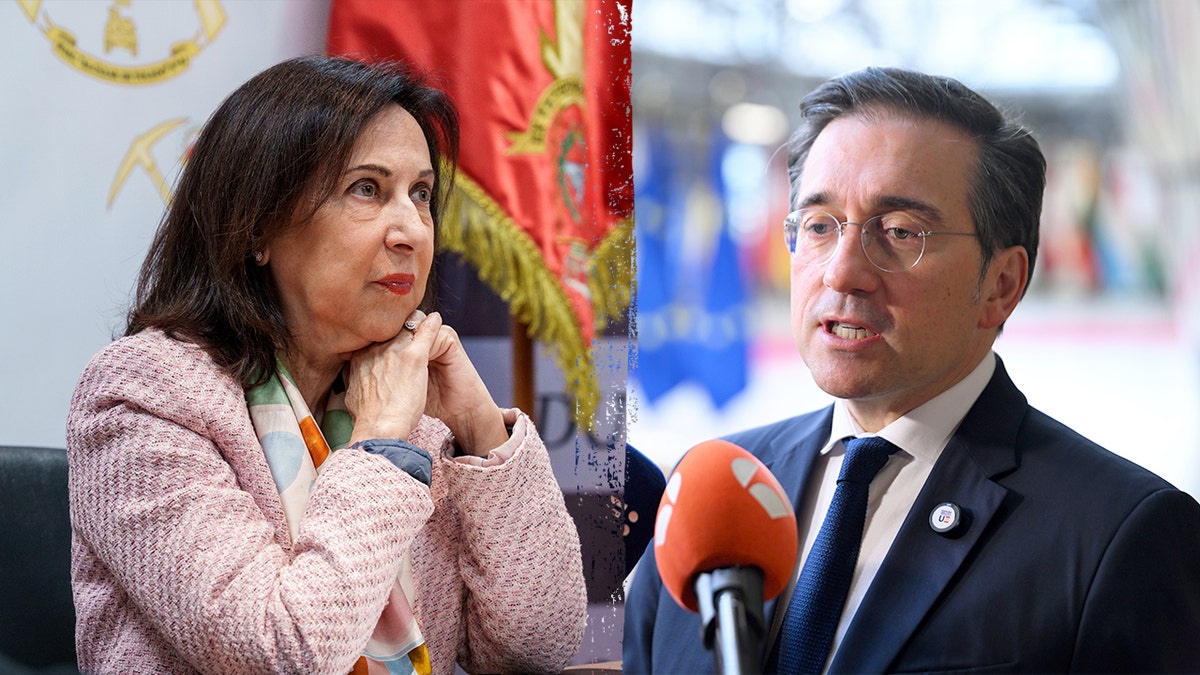
Spanish Defense Minister Margarita Robles (L) and Foreign Minister José Manuel Albares (R) have rejected any military involvement in reopening the Strait of Hormuz. (Dursun Aydemir/Anadolu via Getty Images; Matias Chiofalo/Europa Press via Getty Images)
Countries signaling caution or limited involvement
United Kingdom
The U.K. has stopped short of committing to direct military action while emphasizing coordination with international partners. In a press conference on Monday, Prime Minister Keir Starmer said, «We will not be drawn into the wider war.»
He called on allies and other European countries to «bring together a viable collective plan that can restore freedom of navigation in the region as quickly as possible.»

Keir Stamer, U.K. prime minister, speaks during a news conference providing an update on the situation in the Middle East, at Downing Street in London, U.K., on Thursday, March 5, 2026. (Tolga Akmen/EPA/Bloomberg via Getty Images)
Japan
Japan is holding off on any deployment of naval escorts to the Middle East, citing legal constraints. Speaking in parliament during an Upper House Budget Committee meeting, Prime Minister Sanae Takaichi said, «No decision has been made whatsoever regarding the dispatch of escort vessels,» according to The Japan Times. «We are currently examining what Japan can do independently and what is possible within the legal framework.»
TRUMP PRESSES NATO PARTNERS ON SUPPORT AS HEGSETH BLASTS HESITATION
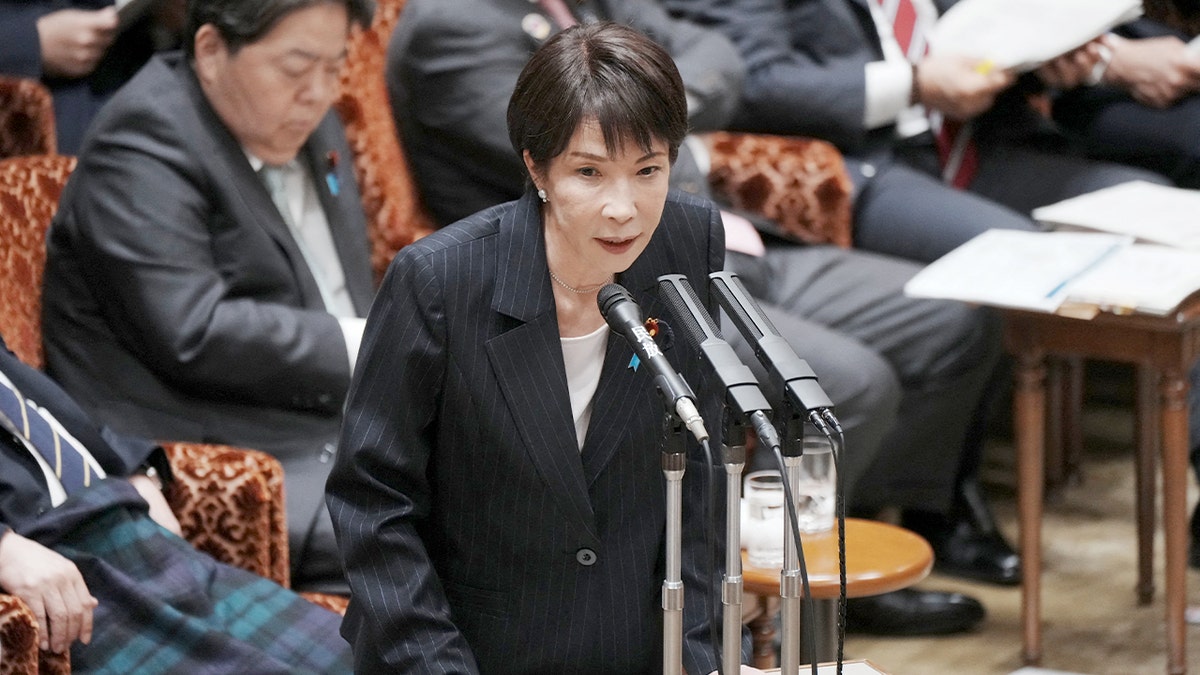
Japan’s Prime Minister Sanae Takaichi answers questions at a budget committee session of the House of Councillors in Parliament in Tokyo on March 16, 2026. (Kazuhiro Nogi/AFP via Getty Images)
CLICK HERE TO DOWNLOAD THE FOX NEWS APP
«Legally speaking, this is very difficult,» Takaichi added. «We are carefully examining what can be done within the scope of current laws and what is the best course of action at this time. At the same time, we are continuing to engage with Iran to help de-escalate the situation while also exchanging information with various countries.»
war with iran,middle east,europe,japan,australia
INTERNACIONAL
New names emerge in Jack Smith’s wide-ranging bid for GOP lawmakers’ phone records, unearthed emails show
NEWYou can now listen to Fox News articles!
FIRST ON FOX: Internal Department of Justice emails obtained by Fox News Digital show prosecutors working for special counsel Jack Smith sought phone records in 2023 for a wide-ranging group of Republican lawmakers, including newly revealed names such as a current Trump administration official.
The email exchanges between prosecutors beginning Jan. 9, 2023, show Smith’s team mapped out a web of House and Senate lawmakers who interacted with key people in Smith’s probe into the 2020 election, including figures like President Donald Trump’s former chief of staff Mark Meadows and former New York City Mayor Rudy Giuliani, who led many of Trump’s unsuccessful legal challenges to the election results.
New names within the emails obtained by Fox News Digital include Rep. Brian Babin (R-Texas), Rep. Andy Biggs (R-Ariz.) and then-Rep. Lee Zeldin, who now leads the Environmental Protection Agency.
«I’d like to seek [the Public Integrity Section’s] concurrence to get phone tolls for several MOCs who had contact with pertinent parties in our investigation,» wrote former DOJ lawyer Timothy Duree. «I’ll keep the timeframe tight—probably October 1, 2020, to January 31, 2021.»
The emails come as part of Smith’s investigation and prosecution of Trump over the 2020 election, which initially began as an FBI probe called Arctic Frost. Ongoing House and Senate Judiciary Committee investigations have revealed through various public disclosures that the Biden DOJ targeted a large web of Republican people and entities with subpoenas during the probe, but the lawmakers’ records requests have become a top source of scrutiny.
JACK SMITH DEFENDS SUBPOENAING REPUBLICAN SENATORS’ PHONE RECORDS: ‘ENTIRELY PROPER’
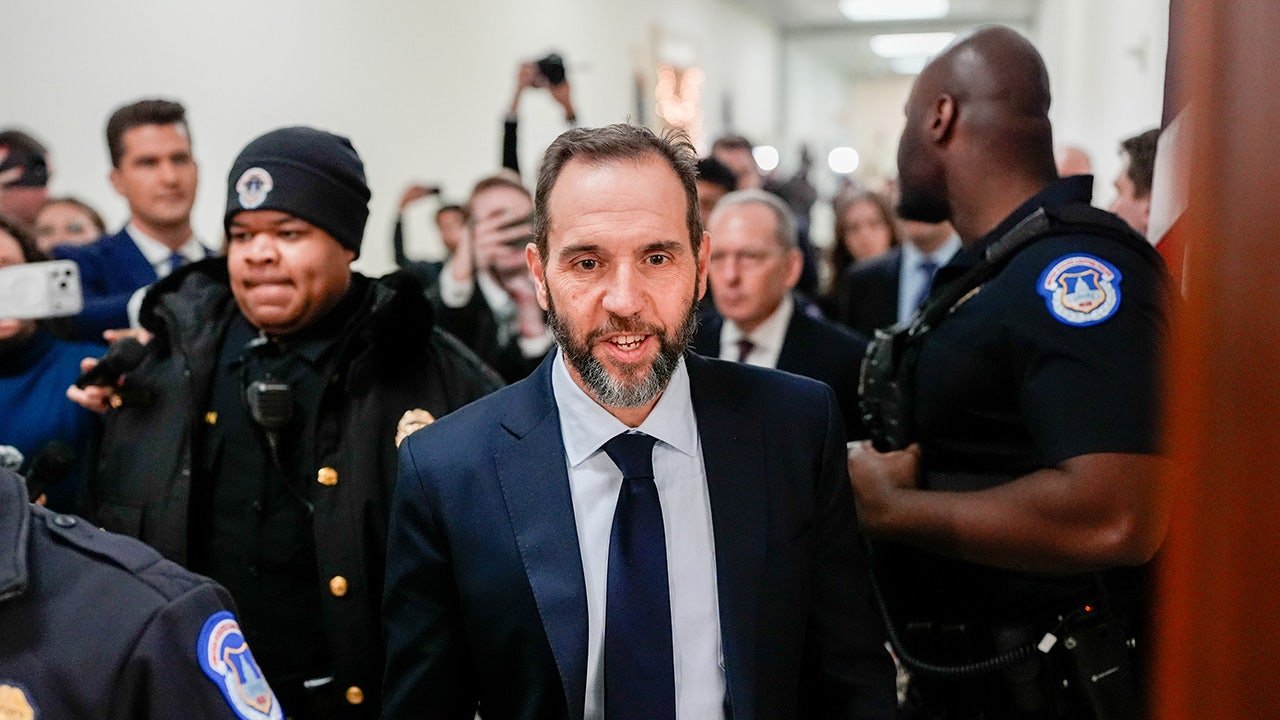
Jack Smith, former special counsel, arrives for a closed-door deposition before the House Judiciary Committee in Washington, DC, on Wednesday, Dec. 17, 2025. (Kent Nishimura/Bloomberg via Getty Images)
Duree produced 16 names and said he wanted to discuss whether to «subpoena these all at once.» The list included Babin and Biggs and now former Reps. Mo Brooks, Matt Gaetz, Paul Gosar, Louie Gohmert, Zeldin and Jody Hice. The list also included Gohmert’s chief of staff Connie Hair, and seven senators whose names were previously revealed through public disclosures, such as Sens. Ted Cruz, R-Texas, and Marsha Blackburn, R-Tenn.
Public disclosures previously showed that some of the 16 members’ phone records were indeed subpoenaed, but the new emails with new names, including Babin, Biggs and Zeldin, do not make clear if Smith ultimately executed subpoenas for their phone records. The phone records, also known as toll records, would have included dates, times and phone numbers but not the content of calls and messages.
Raymond Hulser, a prosecutor on Smith’s team, responded at one point in the January 2023 email chain by acknowledging the scale of the subpoena request.
«And please there’s no hurry this morning, [Duree]» Hulser wrote. «It just occurred to me that before we tell Main we are going to fire off subpoenas for so many members tolls I should make sure Jack’s aware.»
DEM REP DEFENDS DOJ OBTAINING GOP SENATOR CALL RECORDS IN 2023: ‘YOU WEREN’T SURVEILLED’
Smith, who has since testified to the House Judiciary Committee about his work, has stood by the subpoenas, saying they were «entirely proper» and followed DOJ protocol. The Republicans who were targeted have, however, condemned the subpoenas as egregious violations of the Constitution’s speech or debate clause, which gives Congress members an added layer of immunity from investigations.

US Senator Chuck Grassley announces an FBI whistleblower says the FBI during the Arctic Frost investigation had subpoenaed the records of Republican elected officials in Congress, during a press conference on Capitol Hill in Washington, DC, Oct. 6, 2025. (SAUL LOEB/AFP via Getty Images)
In addition to members of Congress, public disclosures by the congressional committees revealed that Smith targeted hundreds of Republican-affiliated people and entities as he pursued charges against Trump. Smith eventually brought four criminal charges against the then-Republican presidential candidate alleging he illegally attempted to overturn the 2020 election results but dropped the case after Trump won the 2024 election, citing a DOJ policy against prosecuting sitting presidents.
In another email from the January 2023 email chain, Hulser directed Duree to check the Jan. 6 Committee’s report for members who interacted with Trump and Giuliani on Jan. 6, the day of the U.S. Capitol breach, underscoring how Smith’s prosecutors used the investigative work of the committee to help with their probe. Republicans have widely dismissed the since-disbanded Jan. 6 panel as hyper-partisan as it comprised seven Democrats and two vocally anti-Trump Republicans.
Hulser later said Smith wanted to «narrow» down the list of 16, leading Duree to provide a bolded list of names «we should get in the first round.»
CLICK HERE TO GET THE FOX NEWS APP
No. 1 on the list, for instance, read «Brian Babin (texts with Meadows; calls with Chip Roy, Perry, Ratcliffe, and Meadows).» Other names noted on the list followed a similar structure. Roy and Perry were known targets in Smith’s probe and previously revealed that they had their records subpoenaed by the special counsel’s team.
Fox News Digital reached out to a Smith representative for comment, as well as the current House lawmakers mentioned in the emails and Zeldin’s office.
justice department,congress,donald trump
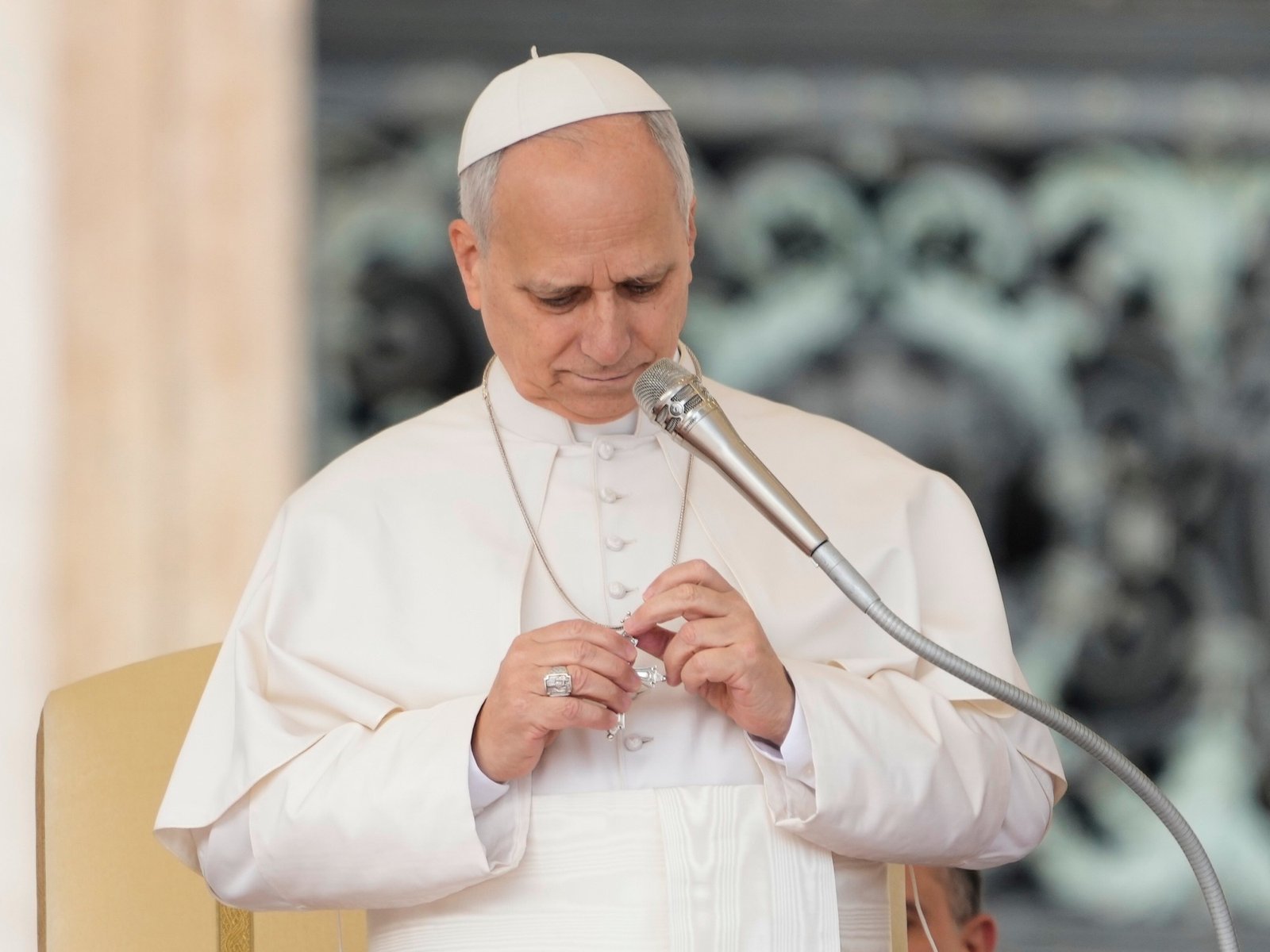
En “una reflexión a la luz del Magisterio Pontificio”, el Vaticano publica un ensayo de Andrea Tornielli sobre la carrera al rearme y la urgencia de la paz en la que analiza “el riesgo del apocalipsis nuclear”. A la luz de cómo va la guerra que Estados Unidos e Israel mantienen contra Irán, el tema es de rigurosa actualidad.
“Una mirada realista no debería nunca olvidar que el riesgo de un apocalipsis nuclear aparece cada vez más cercano y, cuando se comienza a pensar como posible —aunque sea por hipótesis—, la total destrucción del otro no tiene en cuenta los datos de hecho sobre los cuales concuerdan todos los analistas, como la doctrina de la destrucción mutua asegurada por el uso a gran escala de armas atómicas por parte de un país atacante contra un país defensor, dotado de capacidad de un segundo golpe, que comportaría la destrucción de ambos”, explica.
Tornielli señala que “ninguna de las dos partes puede vencer porque el que golpea primero es destruido por la represalia”.
Andrea Tornielli (nacido en Chioggia, Italia, en 1964) es uno de los periodistas y escritores católicos más influyentes de la actualidad. Desde diciembre de 2018, por nombramiento del entonces Papa Francisco, es el responsable de coordinar toda la línea editorial de los medios vaticanos
En el mundo de hoy existen alrededor de 12 mil cabezas nucleares, el 90% de las cuales las poseen Rusia (5.459, de las cuales 1.718 están desplegadas) y Estados Unidos (5.177, con 1.700 desplegadas). El autor destaca que “las armas nucleares ya existentes poseen una potencia tal de poder destruir nuestra civilización centenares de veces, mientras bastaría una cincuentena para causar daños catastróficos globales”.
En cuanto a la guerra convencional, “hay que reconocer que especialmente hoy la tecnología lleva a la guerra con un potencial destructivo enorme, que perdura por mucho tiempo con el riesgo de no terminar nunca y de favorecer la expansión del terrorismo y la inestabilidad”.
La tecnología disponible, agrega, especialmente hoy lleva a guerras con un potencial destructivo enorme, “que perduran largo tiempo, con el riesgo de no terminar más o de favorecer la expansión del terrorismo y la inestabilidad”.
Andrea Tornielli escribe que “la única verdadera solución, que encontramos en el Magisterio de los Pontífices, es la de abandonar la deshumanidad de los conflictos que registran un creciente poder de muerte confiado a la Inteligencia Artificial, para volver a la humanidad de la diplomacia, del diálogo, de la negociación”.
Y avanzar al desarme, “que para los cristianos encuentra fundamento en las palabras de Jesús a Pedro en el Getsemaní: ‘Aparta la espada’, ha dicho León XIV el pasado 11 de octubre; es una palabra dirigida a los potentes del mundo, a aquellos que guían la suerte de los pueblos. Está dirigida al mismo tiempo a cada uno de nosotros, para hacernos cada vez más conscientes de que por ninguna idea, o fe, o política, podemos matar”.
Destaca que es necesario “desarmar antes que nada el corazón porque, prosigue el Papa, ‘si no hay paz en nosotros, no daremos paz’”. Y es la invitación del pontífice a “adquirir un punto diverso para mirar al mundo desde abajo, con los ojos de quien sufre, no con la óptica de los grandes”.
En el reciente Mensaje por la Jornada Mundial de la Paz 2026, León XIV escribió: “Los repetidos llamados a incrementar los gastos militares y las opciones que han seguido son presentadas por muchos gobiernos con la justificación de la peligrosidad de los otros. En efecto, la fuerza disuasiva de la potencia y, en particular, la amenaza nuclear, encarnan la irracionalidad de una relación entre pueblos basada no en el derecho, la justicia y la confianza, sino en el miedo y el dominio por la fuerza”.
El pontífice concluye, escribe Tornielli, que “frente a los escenarios de guerra cada vez más preocupantes” la única alternativa “es el desarme —cultural, político, espiritual—, la única alternativa a tener en consideración con seriedad porque abre una perspectiva diversa: un equilibrio basado en la confianza, la cooperación y la prevención”.
En los últimos días, el riesgo de un enfrentamiento nuclear se ha acentuado, sobre todo en los debates en Estados Unidos, pero también en Europa.

El Gobierno dará de baja 900 mil planes sociales de $78 mil y los reemplazará por vouchers de capacitación

Manuel Adorni y Santiago Caputo vuelven a verse tras la tensión por el video del viaje a Punta del Este en jet privado

Los 5 gestos que delatan que una persona está enamorada de vos, según la psicología

Nuevas rutas aéreas: cuánto cuesta un pasaje en avión a Tandil, Olavarría o Paraná

Multiple allies decline US calls for Strait of Hormuz support amid rising Middle East tensions

Por qué hay que dejar una planta de aloe vera en el baño, según el manual de interiorismo

La fuerte exigencia a Mauro Icardi para poder ver a sus hijas con Wanda Nara: “A Maurito se lo va a multar si no lleva a las menores al colegio”

BOMBAZO – Guerra abierta: Feinmann y Rossi contraatacan tras la denuncia de Victoria Villarruel

TRAICIÓN Y ÉXODO: La promesa rota de Monteoliva que desató una ola masiva de bajas en la Policía Federal

Milei llegó a Madrid para participar de un foro ultraliberal organizado por expertos en criptomonedas

 CHIMENTOS3 días ago
La fuerte exigencia a Mauro Icardi para poder ver a sus hijas con Wanda Nara: “A Maurito se lo va a multar si no lleva a las menores al colegio”
- POLITICA14 horas ago
TRAICIÓN Y ÉXODO: La promesa rota de Monteoliva que desató una ola masiva de bajas en la Policía Federal
- INTERNACIONAL23 horas ago
Insólito: un esquiador británico terminó la Copa del Mundo de Oslo bajo los efectos del alcohol