INTERNACIONAL
Continuidad o cambio: ¿Quién será el sucesor del Papa Francisco?


¿Continuidad o cambio? Tras la muerte de Francisco la pregunta surge inevitablemente respecto del perfil de su sucesor. Es que Jorge Bergoglio, si bien no llegó a realizar cambios revolucionarios en la Iglesia, puso en marcha una apertura -por ejemplo en el caso de los católicos divorciados vueltos a casar, permitiendo que puedan comulgar, y los gay dándoles espacios y bendiciendo a los cónyuges- que puso los pelos de punta a los sectores más conservadores.
Sus cuestionamientos a un sistema económico que considera inhumano -aunque sin abjurar del capitalismo- disgustaron a los católicos liberales como también su insistencia en la defensa de los migrantes incomodaron a quienes consideran su llegada a Europa y Estados Unidos como peligrosa y amenazante para los valores de Occidente. En fin, tampoco cayó bien en determinados sectores su promoción de los movimientos sociales de América Latina.
En otro plano, sus actitudes de cercanía a la gente sencilla, austeridad y alejamiento de todo boato resultaron difíciles de digerir para los sectores tradicionalistas. Llegaron a acusarlo de estar “desacralizando el papado”.
¿Su sucesor se mostrará despojado de ornamentos al presentarse tras su elección? ¿Seguirá usando un auto común o corriente con usaba Francisco? ¿Vivirá en la residencia del Santa Marta u optará por los aposentos papales?
Es cierto que hubo cuestiones en las cuales no avanzó, sea porque temió un cisma como el el caso de que hombres mayores casados de probada fe puedan ejercer el sacerdocio en zonas del planeta alejadas carentes de sacerdotes. O porque no estaba de acuerdo con el celibato optativo o el diaconado femenino -el primer peldaño del clero seguido por el sacerdocio y el episcopado- que también le hubieran provocado enormes tensiones.
¿El hecho de que haya designado a las dos terceras partes de los cardenales menores de ochenta años -o sea, que votan en la elección papal- posibilitará que su sucesor se le parezca? Los observadores eclesiásticos aseguran que no necesariamente. Que en todo caso esto puede ejercer algún tipo de influencia, pero que no sería decisiva. ¿Quién podía imaginar que tras un Papa conservador como Pío XII iba a surgir un progresista como Juan XXIII?
¿Y quién se le parecería y quién no? ¿Acaso Francisco dejó un delfín? Si bien barajar nombres de posibles candidatos es una quimera -“el que entra papa al cónclave sale cardenal”, reza el dicho- las especulaciones son inevitables ante una elección papal. Aunque la difusión de probables candidatos perjudica sus chances porque es algo que cae mal entre los cardenales que prefieren la discreción, más allá se que puertas adentro haya debates fuertes.
No obstante, el actual presidente de la Conferencia Episcopal Italiana (CEI), cardenal Matteo Zuppi, emerge como un claro papable. Proveniente de la progresista moderada Comunidad San Egidio y enrolado en la línea de Francisco, Zuppi -de 69 años- se ocupó de la desactivación de conflictos en Africa. En los últimos años fue enviado por el Papa a Ucrania y Rusia para tratar de lograr una tregua, el intercambio de prisioneros y ayuda humanitaria.
Otro candidato es el cardenal filipino Luis Antonio Tagle -de 67 años-, que fue llevado a Roma por Francisco para ocuparse de Cáritas Internacional y ser prefecto de la relevante Congregación para la Evangelización de los Pueblos. De hecho, hace unos años se decía que era el candidato preferido del Papa. Pero luego -sobre todo por algunos problemas de gestión que tuvo- su estrella comenzó a opacarse, según se escucha en medios vaticanos.
Otro que se menciona -también en la línea de Francisco- es el secretario de Estado del Vaticano, el cardenal Pietro Parolin -de 70 años-, muy apreciado por su bonhomía. Fue nuncio (embajador papal) en Venezuela, entre otros cargos y destinos. Y fue designado para la actual función por Jorge Bergoglio. Pero es un sacerdote de carrera diplomática, sin experiencia pastoral, o sea, sin trabajo religioso en el terreno, lo cual le restaría posibilidades.
Del lado conservador emerge ante todo el cardenal Péter Ergó, arzobispo de Budapest, quien tuvo un breve paso por Buenos Aires enseñando Teología.
A diferencia de Francisco que permitió que los católicos divorciados en nueva unión puedan comulgar (recibir la hostia consagrada) cree que sólo pueden hacerlo si viven en continencia sexual. Y rechaza de plano las uniones gay, aunque acepta si acompañamiento pastoral.
No faltan quienes ponen en la lista de los conservadores -como el que más- al cardenal africano Robert Sarah, pero su edad -tiene 79 años- y el hecho de haber participado de algunas operaciones contra Francisco, lo vuelven altamente improbable.
Como también el cardenal Gerhard Müller -de 77 años- a quien en su momento el Papa no le renovó el mandato al frente de la Congregación para la Doctrina de la Fe.
Lo concreto es que 48 horas después de la muerte de Francisco comenzaron las llamadas “congregaciones generales” que con plenarios de cardenales que, si bien inicialmente tratan cuestiones relativas a las exequias pontificias, de a poco van analizando la situación de la Iglesia y los desafíos que deberá afrontar el próximo pontífice, lo cual implica qué perfil debe tener.
Hay un requisito relevante para elegir pontífice: hace falta el voto de los dos tercios de los cardenales electores para que se pueda consagrar un Papa, una cantidad no fácil de conseguir. Por eso, el arzobispo argentino Marcelo Sánchez Sorondo, de muchos años en el Vaticano, dice que podría ocurrir que dos candidatos se neutralicen y se opte por “un tapado”.
En una semana más las congregaciones generales terminarán y los cardenales comenzarán el cónclave: o sea, deberán aislarse y empezar a votar en la Capilla Sixtina.
Son conscientes de que si tardan mucho ello se verá cómo lo que será: que no se ponen de acuerdo. ¿Optarán por la continuidad o por el cambio? ¿O por una continuidad con cambios? Lo cual nos un juego de palabras, aunque lo parezca.

El hielo y sus consecuencias
Las riquezas de Groenlandia
Nuevas rutas de navegación
INTERNACIONAL
Democrats eye narrow path to capture Senate majority, but one wrong move could sink them

NEWYou can now listen to Fox News articles!
Senate Democrats are publicly laying out their roadmap to reclaim the chamber in the 2026 midterm elections, arguing that President Donald Trump’s agenda and an expanded battleground map give them multiple paths back to the majority.
Charging that «President Trump is creating a toxic agenda that’s harming people,» Democratic Senatorial Campaign Committee (DSCC) Chair Sen. Kirsten Gillibrand told Fox News Digital she’s «optimistic that we have a shot to take back the majority.»
Democrats need a net gain of four seats after Senate Republicans flipped four seats in the 2024 cycle to secure a 53-47 majority. But party leaders say recent Democratic overperformances in the 2025 elections, combined with GOP-held seats now in play, have widened the map far beyond initial expectations — even as Republicans insist the political environment still favors them.
REPUBLICAN SENATORS, IN FIRST 2026 ROAD TRIP, TOUT BORDER SECURITY, TAX CUTS
An exterior view of the Senate side of the U.S. Capitol, on Jan. 12, 2026. (Paul Steinhauser/Fox News)
A DSCC memo titled «Senate Democrats Carve Out Path to Senate Majority in 2026,» which was released on Wednesday, highlights that «at the start of 2025, Democrats had two clear offensive targets: Maine and North Carolina. Over the past year, the DSCC expanded the battleground map significantly and created multiple potential paths to the majority.»
Gillibrand charged that Trump «is creating this massive backlash because of his bad and hurtful and harmful agenda,» which she said «adds more to the map.»
Senate Minority Leader Chuck Schumer, the longtime party leader in the chamber, agreed, telling The Associated Press, «it’s a much wider path than the skeptics think, and a much wider path than it was three months ago and certainly a year ago.»
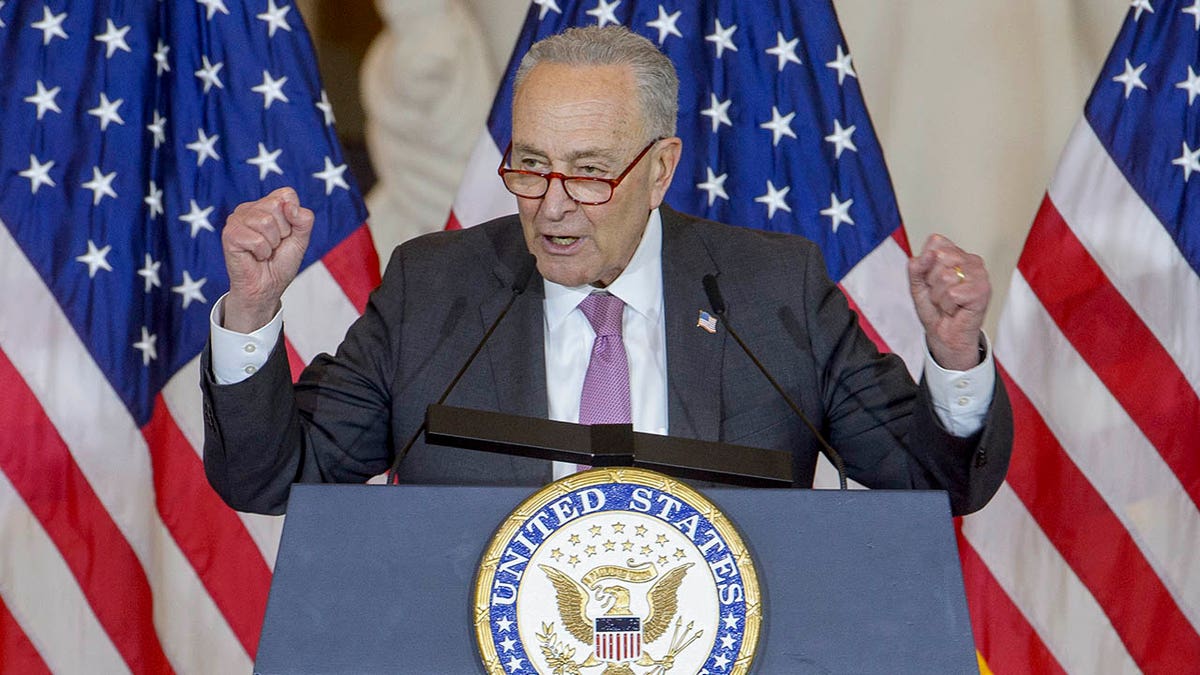
Senate Minority Leader Chuck Schumer of New York, the top Democrat in the chamber, is optimistic about his party’s chances of winning back the majority in the 2026 midterm elections. (Rod Lamkey, Jr./AP Photo)
Gillibrand, in her interview with Fox News Digital, and the DSCC in its memo, touted the party’s top recruits for three GOP-held seats they’re working to flip: former three-term Sen. Sherrod Brown of Ohio, former two-term North Carolina Gov. Roy Cooper and two-term Maine Gov. Janet Mills.
And Gillibrand highlighted the DSCC’s most recent recruiting success, Monday’s landing of former Rep. Mary Peltola, who was twice elected statewide to Alaska’s at-large House seat, which could potentially put the red-leaning state in play this year.
The DSCC also has its eyes on battleground turned red state Iowa, where there’s an open GOP-held seat, and Texas, where longtime Republican Sen. John Cornyn is trying to survive a competitive and combustible primary as he seeks re-election.
But Democrats are also facing crowded Senate primaries.
4 KEY SENATE SEATS REPUBLICANS AIM TO FLIP IN 2026 MIDTERMS TO EXPAND THEIR MAJORITY
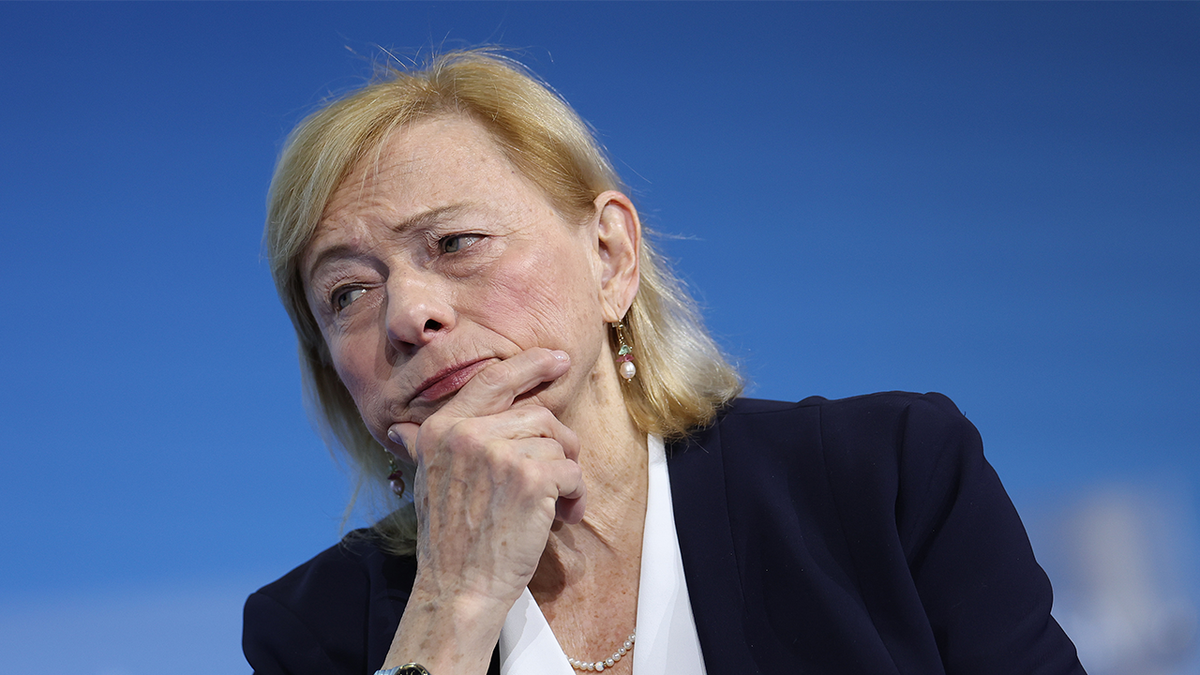
Democrat Gov. Janet Mills announced that she will run for Maine’s Senate seat in October 2024. (Kevin Dietsch/Getty Images)
Mills is facing a formidable rival on the left in Graham Platner, an oyster farmer and military veteran who is backed by progressive champion Sen. Bernie Sanders.
There are also competitive Democratic Senate primaries in Texas, Iowa and Michigan, where Democrats are playing defense as they aim to hold the seat held by retiring two-term Sen. Gary Peters, Gillibrand’s predecessor at the DSCC. Republicans in the Great Lakes State are mostly rallying behind former Rep. Mike Rogers, who’s making a second straight bid for the Senate.
Asked whether her party’s Senate primaries will impede success in November, a confident Gillibrand said, «I think we will have the best candidates in each one of these states.»
While the party in power — clearly the Republicans right now — traditionally faces political headwinds in the midterm elections, and with Democrats riding a wave of momentum following a slew of ballot box victories in 2025, a current read of the 2026 map indicates the GOP may be able to go on offense in some key states.
Gillibrand’s counterpart, National Republican Senatorial Committee Chair Sen. Tim Scott of South Carolina, told Fox News Digital last month that «54 is clearly within our grasp right now, but with a little bit of luck, 55 is on our side.»
GOP SENATE CAMPAIGN CHIEF AIMS TO EXPAND 2026 MAP IN THIS BLUE-LEANING STATE
Asked about Scott’s aspirations to pick up one or two seats, Gillibrand quickly responded, «No chance.»
«I’m very optimistic that with the quality of candidates that we have, with the recruiting failures and the poor candidates the Republicans have, and this very harmful climate that President Trump is creating, we have all the makings of a blue wave,» Gillibrand emphasized.
NRSC’s communications director, Joanna Rodriguez, argued that the «Democrats’ battleground map is littered with failed career politicians no longer aligned with the values of their states and messy, nasty primaries that will leave Schumer with a majority of candidates that have all pledged to vote him out.»
Democrats are also playing defense in blue-leaning Minnesota, where Sen. Tina Smith is retiring, and the party faces another competitive primary, and in swing state New Hampshire, where former governor and longtime Sen. Jeanne Shaheen is retiring.
And in Georgia, Republicans see first-term Sen. Jon Ossoff as the most vulnerable Democrat up for re-election this cycle. But a nasty three-way GOP Senate primary may hurt the Republicans’ chances of flipping the seat in the crucial southeastern battleground.
AFFORDABILITY BOOSTS DEMOCRATS AT BALLOT BOX IN 2025 AFTER INFLATION HELPED TRUMP AND GOP SOAR IN 2024
Deep concerns over inflation boosted Trump and Republicans to sweeping victories at the ballot box in 2024, as they won back the White House and Senate and kept their House majority.
But Democrats say their decisive victories in November’s elections were fueled by their laser focus on affordability.
Don’t expect any letup in Democrats’ cost-of-living messaging.

President Donald Trump speaks on inflation at Mount Airy Casino Resort in Mount Pocono, Pennsylvania, on Tuesday, Dec. 9, 2025. (Adam Gray/Bloomberg/Getty Images)
«Candidates that connect with their voters, candidates that are listening to the concerns that their constituents have, those are the candidates that win elections, and we saw Democrats do that across the board in 2025,» Gillibrand said. «Candidates that understand what people are going through are the ones that connect with voters, and that’s the kind of candidates we are marshaling in this election, and we are supporting this election.»
But Scott predicts the tide will turn for Republicans on the affordability issue.
CLICK HERE TO DOWNLOAD THE FOX NEWS APP
«I’ve said 2026 is a year of affordability, and the great news is President Trump has been producing time and time again,» the NRSC chair touted.
Pointing to the tax cut provisions in the GOP’s sweeping domestic policy measure signed into law this past summer by Trump, Scott said «2026 is shaping up to be the year where Donald Trump’s activities, his actions, the legislation we’ve passed, shows up for the American voter. And consumers all across the country will see a more affordable economy because of President Trump and the Senate majority and the House majority in the hands of the Republican Party.»
elections,democrats elections,midterm elections,senate elections,democratic party,republicans elections,campaigning

NEWYou can now listen to Fox News articles!
Some U.S. military personnel have been told to leave bases in the Middle East, Fox News has learned.
The order comes amid widespread protests in Iran and threats to intervene from President Donald Trump. Qatar’s government confirmed that some U.S. personnel had departed from the Al Udeid Air Base, America’s largest military base in the Middle East.
Qatar’s International Media Office said the steps were part of broader efforts to safeguard the security of citizens and residents and to protect critical infrastructure and military facilities, adding that any further developments would be announced through official channels.
Trump said on Tuesday that he cut off meetings with the Iranian regime, saying there would be no contact until the government stops killing protesters. He also urged the Iranian people to «take over» the country.
LIZ PEEK: TRUMP IS PUTTING AMERICA FIRST BY BACKING IRAN INTO A CORNER
Some U.S. military personnel have been told to leave military bases in the Middle East. (AP Photo/Chris Seward)
«Iranian Patriots, KEEP PROTESTING – TAKE OVER YOUR INSTITUTIONS!» Trump wrote on Truth Social. «Save the names of the killers and abusers. They will pay a big price.»
«I have canceled all meetings with Iranian Officials until the senseless killing of protesters STOPS. HELP IS ON ITS WAY,» he added.
Trump has repeatedly suggested that the U.S. may intervene against Ayatollah Ali Khamenei’s regime, but he has not offered details of any plans.
NETANYAHU AND RUBIO DISCUSS US MILITARY INTERVENTION IN IRAN AMID ONGOING NATIONWIDE PROTESTS: REPORT
Reports say Iranian authorities have killed more than 2,500 people, though the actual total could be much higher.
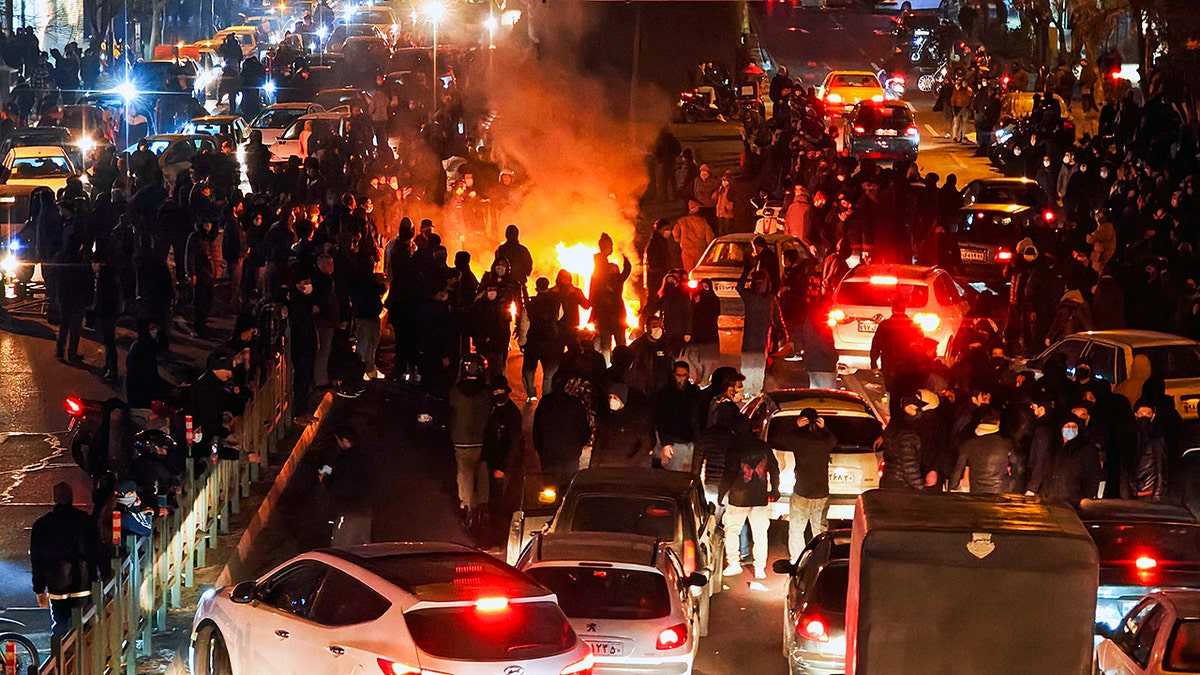
People gather during a protest on January 8, 2026, in Tehran, Iran. Demonstrations have been ongoing since December, triggered by soaring inflation and the collapse of the rial, and have expanded into broader demands for political change. (Anonymous/Getty Images)
The White House confirmed on Monday that Trump was weighing whether to bomb Iran in reaction to the crackdown.
IRAN’S ‘DISTINCTIVE’ DRONE DEPLOYMENT SEES DEATH TOLL SOAR AMID VIOLENT PROTESTS
White House press secretary Karoline Leavitt told reporters that diplomacy remains Trump’s first option, but that the president «has shown he’s unafraid to use military options if and when he deems necessary.»
«He certainly doesn’t want to see people being killed in the streets of Tehran. And unfortunately that’s something we are seeing right now,» she added.
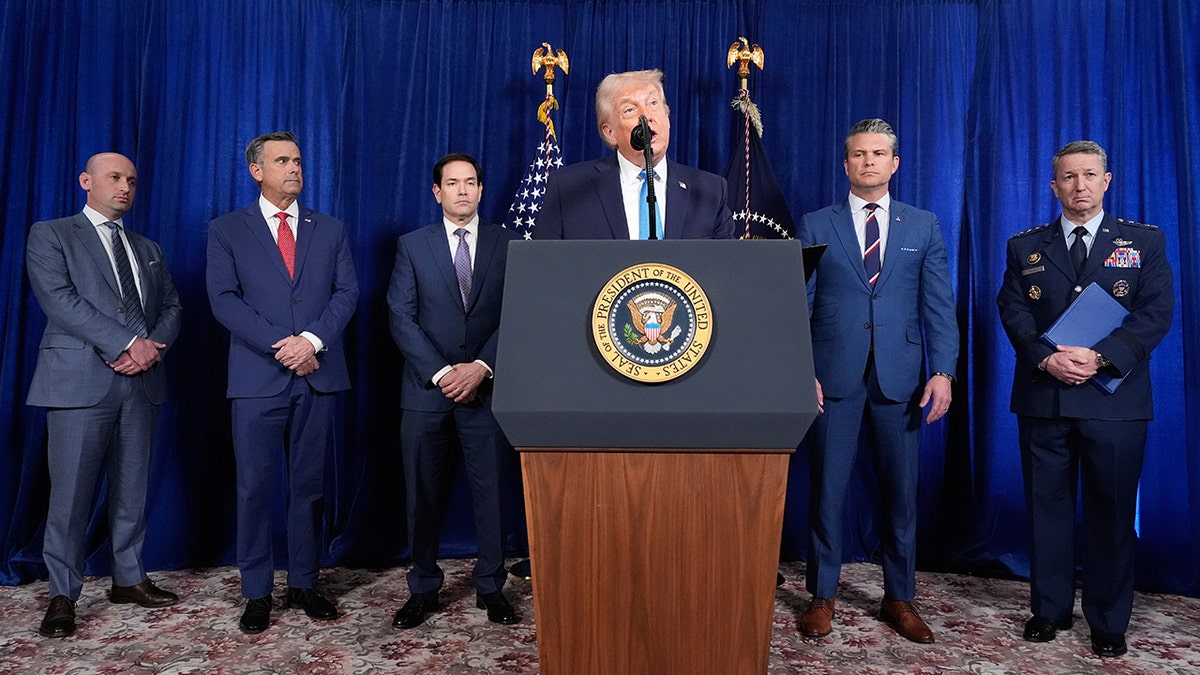
President Donald Trump has threatened to intervene against the Iranian regime. (Alex Brandon/AP Photo)
Iranian authorities have used deadly force against anti-regime protesters and have cut off public internet access in an effort to stop images and video from spreading across the globe.
CLICK HERE TO DOWNLOAD THE FOX NEWS APP
The protests represent the highest level of unrest Iran has seen since nationwide protests against the death of Mahsa Amini at the hands of morality police in 2022.
Reuters contributed to this report.
middle east,iran,world

El BCRA concretó la mayor compra de dólares en diez meses y ya sumó más de u$s500 millones en 2026

El titular de la IGJ dosifica la ofensiva contra la AFA y relativiza la chance de colocar un veedor oficial

Mané mete a Senegal en la final de la Copa de África

Lali Espósito anunció su casamiento con Pedro Rosemblat

Adiós al calor: cuándo llega la lluvia que traerá un frente de aire frío

Nacho Torres pidió sumar el delito de ecocidio al Código Penal y endurecer penas por incendios intencionales

Polémica en redes: Milei y Feinmman se cruzaron con Marcela Feudale por los incendios en Chubut

Murió el cantante colombiano Yeison Jiménez en un accidente de avión: el video del día que predijo la tragedia

La triste despedida de Jorge “Corcho” Rodríguez a Pía, su asistente por 30 años: “Gracias por tu amor”

La AFA giró US$8 millones a cinco empresas en Miami que ya no existen: un argentino disolvió hace seis días una firma clave

 CHIMENTOS2 días ago
La triste despedida de Jorge “Corcho” Rodríguez a Pía, su asistente por 30 años: “Gracias por tu amor”
- POLITICA1 día ago
La AFA giró US$8 millones a cinco empresas en Miami que ya no existen: un argentino disolvió hace seis días una firma clave
- POLITICA2 días ago
Incendios en Chubut: el fiscal general aseguró que el responsable podría recibir hasta 20 años de prisión