INTERNACIONAL
UN cash app for Gazans exploited by Hamas as terror group steals aid money meant for civilians

Protesters in Gaza target Hamas
For the first time since Hamas seized power 18 years ago, Gazans are speaking out against Hamas at great personal risk, Fox News’ Mike Tobin reports.
United Nations agencies’ monthly cash transfers to Gaza residents are inadvertently strengthening the Hamas terrorist organization, as the group and affiliated traders continue to control the money flow to the enclave, an expert on Hamas’ financial and economic operations said.
«Hamas exploits its role as the de facto ruler of Gaza to extract financial gains from aid money sent by U.N. organizations to civilians via apps still operating in the region,» Eyal Ofer told Fox News Digital.
«The aid system is being manipulated by Hamas and affiliated traders. Hamas does this largely behind the scenes, leveraging their control over large merchants, crime families, and using cash to establish a shadow banking system within Gaza.»
HOW ISRAEL’S WAR AGAINST HAMAS TERRORISTS WILL BE DIFFERENT UNDER TRUMP
Gazans at a bazaar set up to meet their basic needs amidst the rubble in the heavily damaged Jabalia refugee camp in northern Gaza on the 3rd day of Ramadan, after Israel halted humanitarian aid to the Gaza Strip, on March 3, 2025. (Mahmoud Issa/Anadolu via Getty Images))
Each month, international organizations send significant sums into Gaza’s economy. The U.N.’s World Food Programme (WFP) transfers approximately $18.43 million, reaching 82,636 families, with each family receiving an average of $209, according to open-source data. UNICEF’s monthly assistance averages $5 million, helping to reach at least 20,000 families every month.
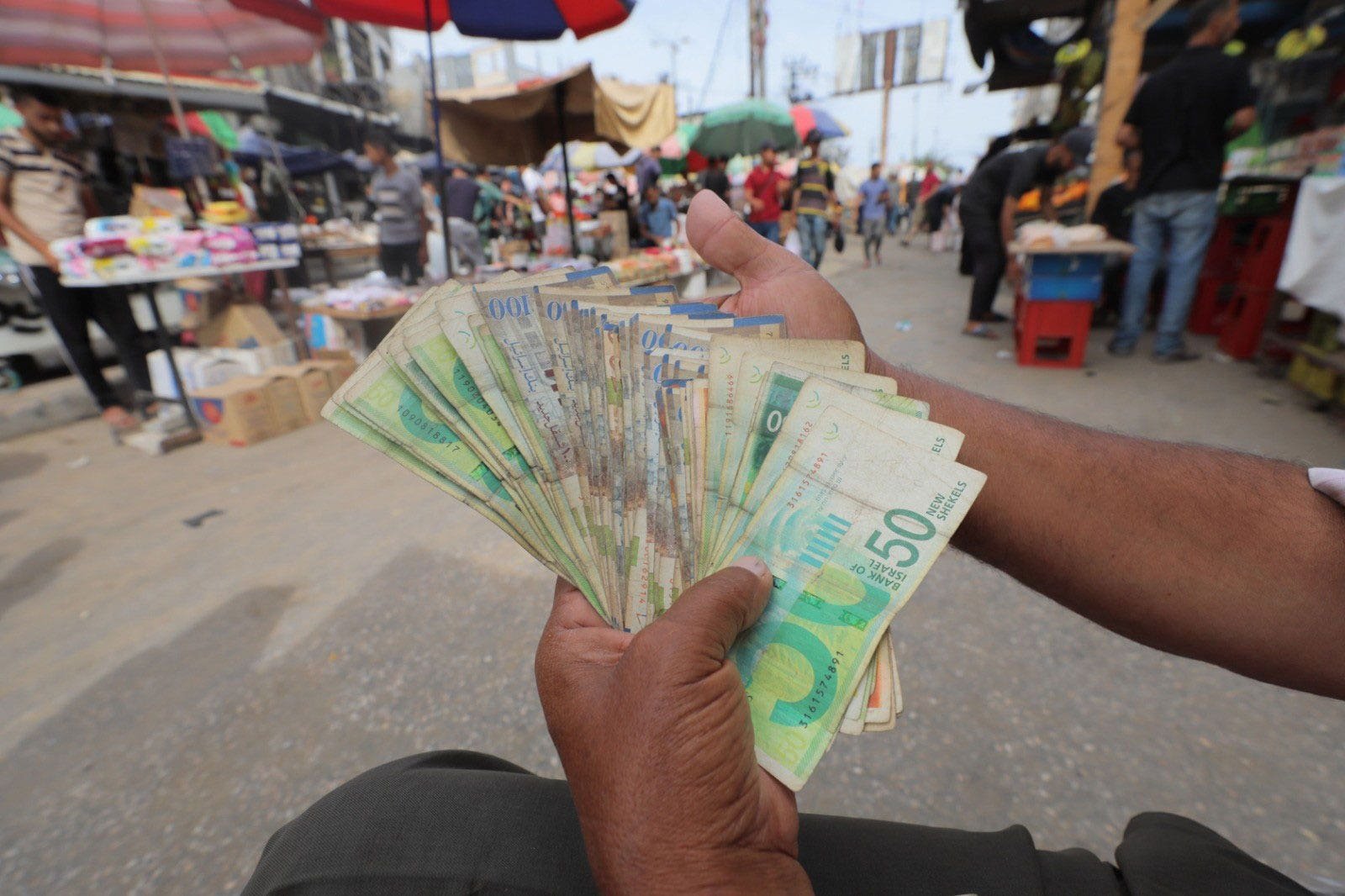
«I go to the market and meet people whose job is to provide cash in exchange for a fee,» Gaza resident Shahab Yousef told Israel’s news agency TPS-IL. «The fee is 20–30%. If I transfer 1,000 shekels [$271] I get back 700 [$190],» he said. «For big purchases, I pay digitally. But at the market, I need cash, and I lose 30 percent every time.»
Another Gaza resident, Nidal Qawasmeh, expressed similar frustration to TPS-IL. «These people are charging 30 percent just to give you cash. I just want to take care of my family, but everything costs me more because of this. Prices are insane.»
The specific amount received per family every month is around $270 (or 1,000 New Israeli Shekels), which was calculated as 80% of the Survival Minimum Expenditure Basket, UNICEF told Fox News Digital. Smaller organizations like UNFPA and others also contribute, bringing the total to about $39.66 million per month, reaching 60% of Gaza’s households, according to open-source data.
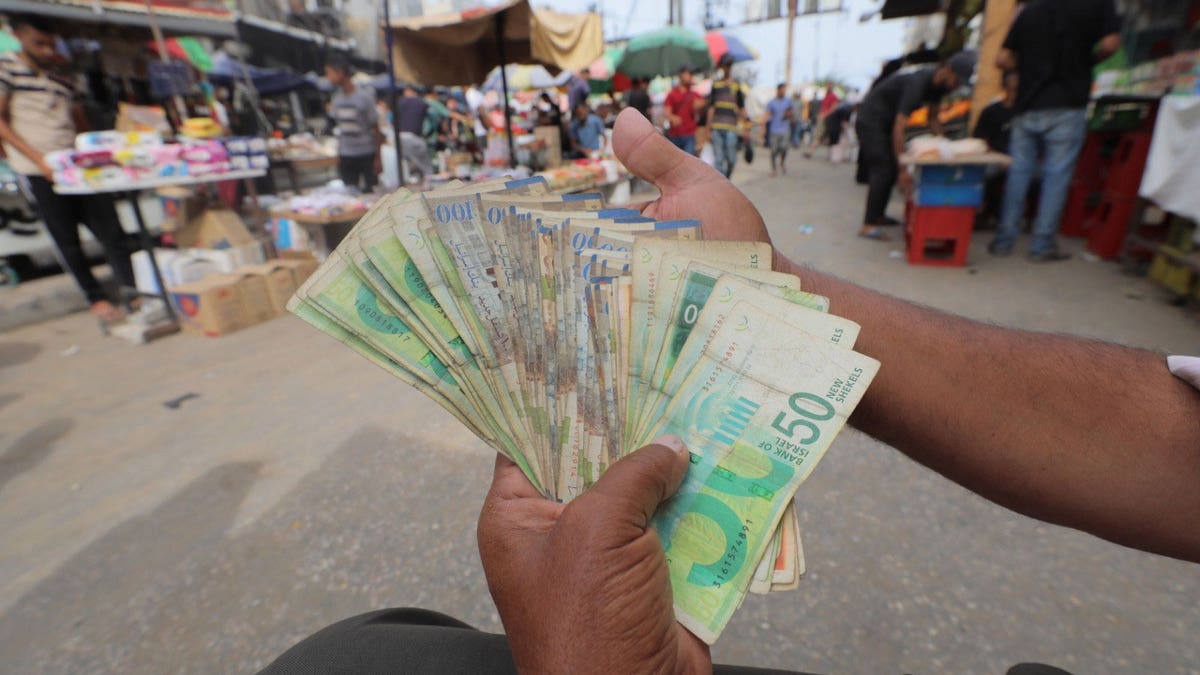
A man holds a wad of Israeli shekels in Gaza. (Majdi Fathi/TPS)
Despite the scale of direct financial aid, which reaches over half of the enclave’s population, Gaza’s severe food insecurity and high inflation (91% and 118%, respectively, as of January 2024) underscore its importance. However, the way this money circulates within Gaza is far more complex. «Hamas controls much of the cash that enters Gaza through various channels,» Ofer told Fox News Digital, «People who receive money via mobile apps must convert it into cash to use in local markets, but this involves hefty fees, with many money changers tied to Hamas or its allies.»
TPS-IL reported that Israel’s Foreign Minister Gideon Sa’ar recently warned that Hamas’s economic strength in Gaza relies on billions of shekels in cash, paid as salaries and quickly reclaimed through taxes on merchants. In a letter to Bank of Israel Governor Prof. Amir Yaron, Sa’ar urged the cancelation of the circulation of 200-shekel bills previously introduced into Gaza, saying that experts believe the move would severely damage Hamas’s financial network. The Bank of Israel rejected the proposal, citing technical reasons and claiming that implementation was not feasible.
Ofer’s research found that the fees can range from 20% to 35%, meaning recipients lose a significant portion of their aid just to access it. «In videos from Gaza, you can see traders refusing to accept app funds and forcing customers to convert them into cash, knowing they will lose at least 20% in the process,» he said.
Peter Gallo, an international lawyer and former Office of Internal Oversight Services (OIOS) investigator at the U.N., told Fox News Digital, «If an investigator in Israel can figure it out, the aid agencies either knew or should have known. Twenty to thirty percent is just ridiculous. That’s extortion. It’s what some have politely described as a ‘revolutionary tax.’ In fairness, the aid agencies might argue they had no alternative, It is the cost of doing business, but it would have been better if they were honest about it from the start.»
HAMAS TERROR GROUP REPORTEDLY BUCKLING UNDER FINANCIAL STRAIN AMID ISRAELI MILITARY GAINS AND GROWING UNREST

Palestinians shop for food and clothes at the local bazaar as daily life continues in the shadow of war in Jabalia, Gaza, on January 15, 2024. (Photo by Mahmoud Shalha/Anadolu via Getty Images) (Photo by Mahmoud Shalha/Anadolu via Getty Images)
A spokesperson for UNICEF told Fox News Digital, «UNICEF is aware of the cash liquidity crisis in Gaza and the continuous shortage of hard cash, which is a direct consequence of the banking system’s inability to function amid the ongoing conflict.
«Since May 2024, UNICEF has introduced fully digital cash payments via e-wallets, which do not require hard cash at any point. By using e-wallets, recipients of humanitarian digital cash transfers can purchase goods such as food, hygiene items and medicine without ever handling physical money,» the spokesperson said.
«The use of digital e-wallets can be accessed through an app and works on the most basic smartphones. When implemented, these digital cash payments via e-wallets eliminate the need for cash conversion and, consequently, the payment of any fees. The UNICEF humanitarian digital cash program adheres to the highest standards of neutrality and impartiality. No external party, actor, or agency—not even the beneficiaries themselves—has any role or influence in the design or implementation of the program, including the composition of the beneficiary list, payment schedule, frequency and amounts.»
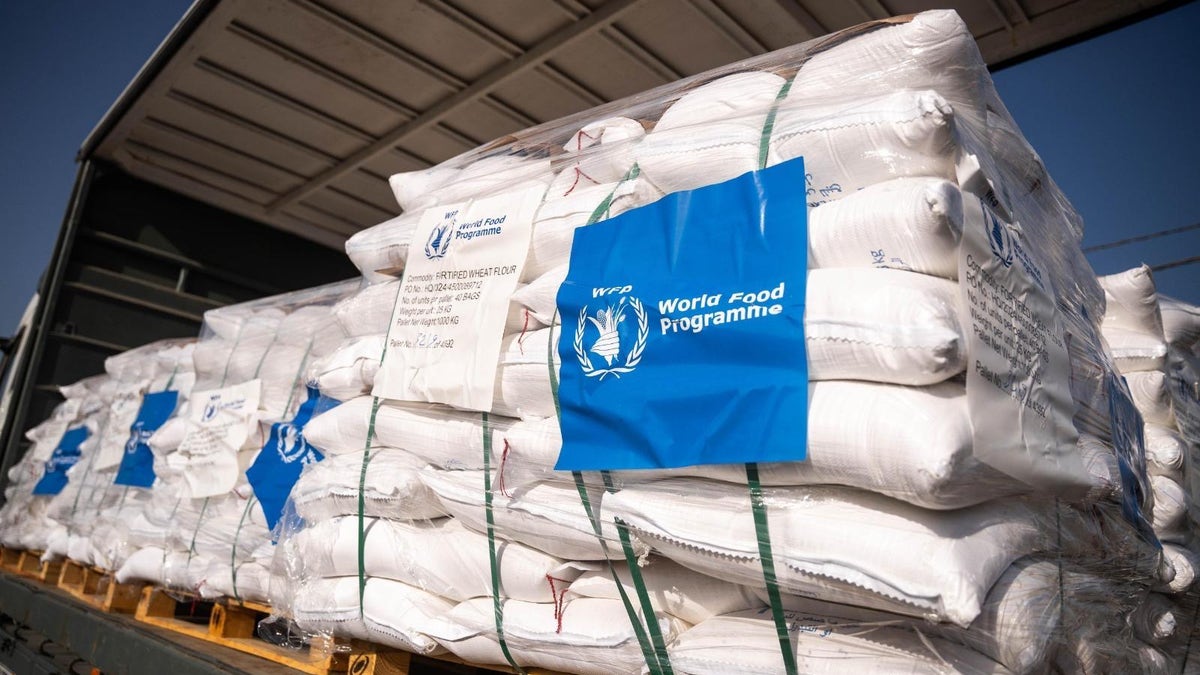
World Food Programme (WFP) aid at the Erez west crossing on the Israel-Gaza border. (IDF spokesman)
The spokesperson claimed: «More than 1.8 million people—close to the entire population of Gaza—are grappling with extreme food insecurity, with at least half of them being children. . . . Acute malnutrition among children is rising at alarming rates. The UNICEF humanitarian cash transfer program is, simply put, keeping children alive in the midst of a war not of their making by providing them with access to essential items for their survival. UNICEF’s monthly budget for humanitarian cash transfers in Gaza averages USD 5 million to support approximately 20,000 families. We estimate that these parameters are too small to significantly impact the local economy.»
CLICK HERE TO GET THE FOX NEWS APP
The World Food Programme didn’t respond to multiple requests for comment.
«Turning a blind eye is not acceptable. The U.N. Security Council has been addressing terrorist financing since 2001, yet aid agencies continue to ignore the fact that Hamas is making a profit off this money flow, despite international efforts to stop terrorist financing,» Gallo said.

INTERNACIONAL
El hombre de más de 70 años que ‘autoeditó’ su primera novela y se convirtió en un fenómeno editorial: “una gran sorpresa” para The New York Times
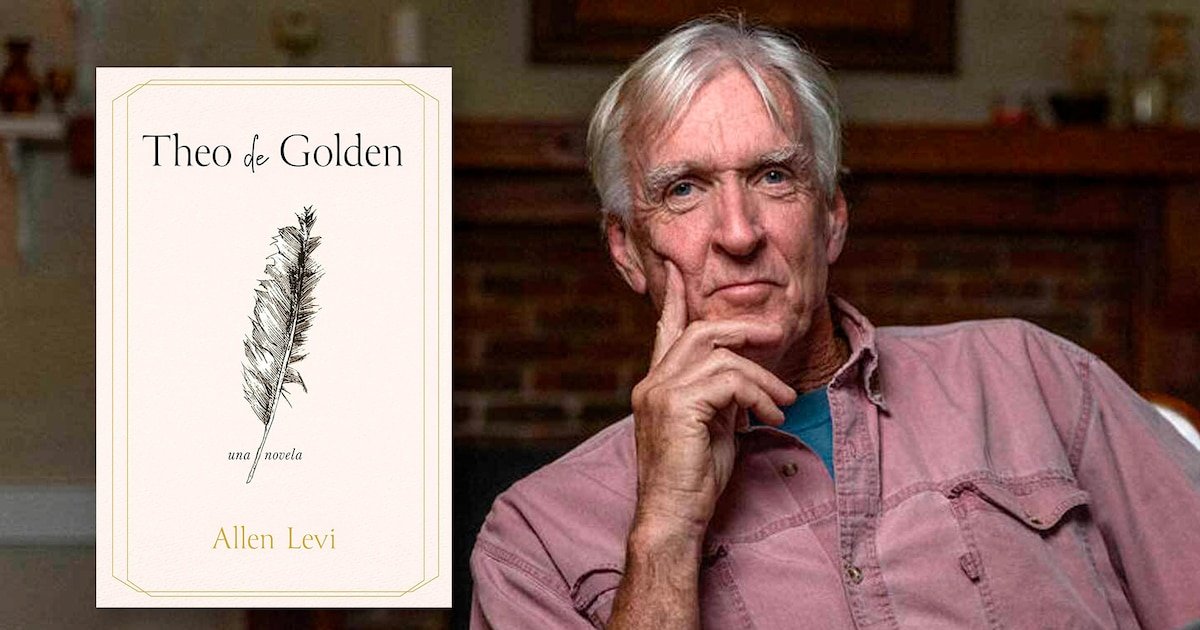
Cuando Allen Levi, músico de larga trayectoria y escritor debutante, decidió dar forma a su primera novela, su intención inicial consistía únicamente en “probar si tenía el músculo” necesario para componer una obra de ficción extensa, tal como ha relatado él mismo a diversos medios estadounidenses.
Tras concluir el manuscrito, pensó en relegarlo a un cajón, hasta que un grupo de amigos le convenció para ‘autopublicarlo’. La novela surgida de ese reto, Theo of Golden, acabó por convertirse en un insólito fenómeno literario, definido como “la sorpresa del año” para The New York Times: en 2023 vendió 3.000 copias, cifra que se disparó hasta las 25.000 en 2024, y actualmente supera ya los 300.000 ejemplares vendidos. El ascenso se ha visto refrendado por la adquisición de los derechos editoriales, lo que ha potenciado aún más su trayectoria.
La trama de Theo de Golden, que ahora publica Grijalbo, se centra en la llegada a la ciudad de Golden, en Georgia, de un octogenario solitario, Theo, que adquiere los 92 retratos que decoran la pared de una cafetería local con la intención de devolverlos a sus retratados. El personaje, descrito como “un joven viejo con vigor” (incapaz de considerarse un “reliquia” o “débil”, y tan ágil que disfruta subiendo los tres pisos de su edificio) va entretejiendo una red de relaciones en la ciudad mediante la entrega de los retratos. En cada encuentro, Theo envía primero una carta manuscrita en la que se define como “un inofensivo anciano, viudo, padre, un león sin dientes con intenciones inocentes”.
Una vez entregado el dibujo a cada destinatario, comparte con ellos su impresión personal y les asegura que son “capaces de santidad”. Esta cadena de ‘bestowals’ genera una ola de simpatía y gratitud entre los habitantes de Golden, entre quienes figuran personajes como Tony, veterano de Vietnam y librero; Ellen, una mujer sin hogar con una enfermedad mental indeterminada; Simone, estudiante de música; o Kendrick, conserje universitario cuya hija permanece ingresada tras sufrir un accidente en el que falleció su madre.

En paralelo, Theo despliega una generosidad casi secreta que incluye procurar un tratamiento médico mejor para la hija de Kendrick, localizar a la hija de Ellen, facilitar que los padres de Simone asistan a su recital y gestionar regalos de Navidad inesperados. Solo hacia el final de la novela se desvelan las razones detrás de estas acciones y de la misteriosa fortuna de Theo.
A diferencia de otras obras que abordan la mediación de los mayores en la vida cotidiana, como Martes con mi viejo profesor, la novela de Levi se caracteriza por poseer una estructura narrativa potente y un marcado tono alegórico. El propio autor ha explicado que pretendía huir de un enfoque ingenuo y excesivamente ‘sentimentalista’, un propósito que se refleja en la presencia de un giro argumental final especialmente duro, sobre el que recibe preguntas habituales en los actos de promoción.
Cómo fue el proceso de ‘autopromoción’
No obstante, el relato apuesta por un mensaje perdurable que enfatiza la bondad, los encuentros fortuitos y las pequeñas acciones carentes de tecnología y mediación digital. Así, el público inicial del libro se concentró en el sur de los Estados Unidos y creció a través de Facebook, una red que es usada por personas mayores y que crea comunidad lectora.
El proceso de autopromoción, instrumentado por la sobrina del autor, Aron Ritchie, se basó en identificar contactos de diferentes etapas de la vida de Levi y llegar a clubes de lectura y grupos afines por medios directos. Su recorrido por colegios, eventos para jóvenes y asociaciones culminó con su implicación personal en encuentros con pequeños grupos de lectores.

La progresión de ventas fue sorprendentemente orgánica, sin apenas inversión en publicidad ni una presencia relevante en redes sociales distintas de Facebook. La posterior publicación tradicional de la novela vino acompañada de una irrupción en listas como la del The New York Times, donde ha figurado durante 15 semanas.
Con respecto a los referentes literarios y el tono general de la novela, el propio Levi cita habitualmente a Wendell Berry o David Brooks, aunque su estilo y ambientación evocan la obra de escritores como Paulo Coelho, Matt Haig o Mitch Albom, por el carácter luminoso y simbólico de su propuesta narrativa. De hecho, la abundancia de guiños a la belleza del arte, la música y la literatura (con menciones a Edward Albee, Eudora Welty, Pablo Casals, Aaron Copland o Antonin Dvorak) constituye un rasgo central en la atmósfera de la obra.
Sustrato espiritual de la obra
A pesar de haber rechazado ofertas de editoriales cristianas, Allen Levi no esconde el sustrato espiritual de Theo de Golden. El desenlace incorpora una ceremonia fúnebre cristiana plasmada íntegramente durante varias páginas, y el propio Levi ha explicado que su objetivo era que los lectores “experimentaran el amor de Dios y vieran la imagen de Dios en sí mismos, por eso los retratos”. Aun así, sostiene que la obra puede conmover a lectores ajenos a dicha perspectiva por su apelación universal a la bondad.
El ejercicio de la compasión ocupa un lugar central. Así lo demuestra la historia de Kendrick, quien, tras el accidente sufrido por su hija, opta por el perdón hacia el responsable, un inmigrante guatemalteco sin antecedentes penales que causó el siniestro al quedarse dormido al volante mientras intentaba regresar con su propia hija enferma de cáncer.
El mensaje concreto del libro se recoge en palabras de la abuela de Kendrick: “Si tienes que elegir entre justicia y misericordia, elige siempre el camino de la misericordia. Si te equivocas, que sea por misericordia… y recuerda que el ojo de Dios ve”. Este enfoque, refuerza la pulsión de cristianismo basado en las obras y no en las oraciones que impregna la narrativa, un planteamiento alejado de la actual hegemonía evangélica conservadora.
La cantante actúa por primera vez en Madrid con la gira de ‘LUX’ ante un público que clama por ella. / Grabación de pantalla de @rafacasah
El estilo de Levi ha suscitado también comentarios relativos a su carácter anticuado o poco sutil. Algunas críticas han subrayado tanto la “insistencia didáctica” de la obra como el empleo de recursos narrativos que evocan la tradición sentimental del siglo XIX, con paralelismos como el de Little Eva de La cabaña del tío Tom.
Este énfasis deliberado en la bondad y la generosidad, que según Levi desafía los códigos imperantes de la industria, ha resultado, no obstante, un potente motor de ventas y recomendación. Atraídos por ese mensaje y el carácter “puro” del proceso de publicación, muchos lectores continúan recomendando el libro y ampliando su éxito internacional. Allen Levi ha comenzado a trabajar en una secuela centrada en Ellen, uno de los personajes más singulares de la novela, enfrentándose ahora a la presión de cumplir unas expectativas muy superiores y a la dificultad de lidiar con una nueva tragedia narrativa.

NEWYou can now listen to Fox News articles!
A Russian military plane crash in annexed Crimea has killed six crew and 23 passengers, Russian news agencies reported in the early hours of Wednesday, citing the Defense Ministry.
The An-26 military transport plane was carrying out a scheduled flight over the Crimean Peninsula, which Russia illegally annexed from Ukraine in 2014, the reports said. The military lost contact with the plane around 6 p.m. on Tuesday.
PLANE CRASH IN RUSSIA’S FAR EAST LEAVES 48 DEAD
An An-26 plane is pictured at a base in Ho Chi Minh City, Vietnam, on March 9, 2014. On Tuesday, March 31, 2026, a Russian An-26 military transport plane crashed in annexed Crimea, killing 29 people on board. (AP Photo/Na Son Nguyen, File)
The Soviet-designed military transport turboprop aircraft crashed into a cliff, sources at the scene told state news agencies Tass and RIA Novosti.
Russia’s Investigative Committee said a total of seven crew members and 23 passengers were on board. It wasn’t immediately clear from official statements if one crew member had survived.
TRUMP SAYS ‘INFLAMMATORY’ ZELENSKYY STATEMENT ON CRIMEA PROLONGS WAR WITH RUSSIA

Russia’s President Vladimir Putin is pictured during a meeting on March 30, 2026. Since the Kremlin sent troops into Ukraine in 2022, accidents involving Russian military planes have been frequent. (Alexander KAZAKOV / POOL / AFP via Getty Images)
The Investigative Committee said it has launched a criminal probe in connection with flight regulations and a search is underway in a mountainous forested area in the Bakhchisarai district.
The Interfax news agency cited the Defense Ministry as saying a suspected technical malfunction may have caused the crash and that there was no «damaging interference» with the aircraft.
Accidents involving Russian military planes have been frequent since the Kremlin sent troops into Ukraine.
CLICK HERE TO GET THE FOX NEWS APP

Russian officials inspect a building after an Su-34 bomber military plane crashed into a residential area in Yeysk, Russia, in October 2022, killing 15 people. A military plane carrying crew and passengers crashed into a cliff in annexed Crimea on March 31, 2026, according to Russian officials. (Arkady Budnitsky/Anadolu Agency via Getty Images)
In December, an An-22 military transport plane crashed in Russia’s Ivanovo region, killing seven crew. In October, a MiG-31 fighter jet crashed in the Lipetsk region, while a Tu-22M3 bomber crashed in the Siberian region of Irkutsk in April 2025.
In October 2022, a Su-34 bomber crashed into a residential area of Yeysk, a Russian city on the Azov sea, sparking a massive fire and killing 15 people.
russia, world, disasters, ukraine
INTERNACIONAL
Qué pasará si Estados Unidos lanza una invasión terrestre en Irán: analistas opinan y la respuesta no es buena


El desopilante cruce entre Ancelotti y Modric tras el Brasil – Croacia: «¿Tú no tienes un abuelo brasileño?”

La gravísima amenaza de Robertito Funes Ugarte a una estrella que hizo saltar a Fernanda Iglesias: «Saliste con el dueño»

Jorge Macri le exigió a Kicillof el pago de $27.000 millones por la asistencia de bonaerenses sin techo en CABA

El hombre de más de 70 años que ‘autoeditó’ su primera novela y se convirtió en un fenómeno editorial: “una gran sorpresa” para The New York Times

Tras el desplome de febrero, la liquidación de divisas del agro repuntó y superó los USD 2.000 millones en marzo

Javier Milei y sus medidas, en vivo: defensa del Gobierno a Manuel Adorni y reacciones a la caída del índice de la pobreza

Máximo Kirchner salió al cruce de Milei y Macri tras el fallo por YPF a favor de la Argentina

La secretaria del piloto denunció que el amigo de Adorni la hostiga y la justicia dispuso medidas

El Gobierno cambia su propuesta de reforma: endurece penas para delitos comunes, pero no para los casos de corrupción

Nuevas críticas de Marcela Pagano contra los Milei: “Karina es la que gobierna”, aseguró

 POLITICA3 días ago
Nuevas críticas de Marcela Pagano contra los Milei: “Karina es la que gobierna”, aseguró
- POLITICA1 día ago
Dos jubiladas que le habrían prestado dinero a Manuel Adorni negaron conocerlo
- POLITICA2 días ago
Quiénes son las dos acreedoras del préstamo con el que Adorni compró su departamento en Caballito