INTERNACIONAL
De la Capilla Sixtina a la Sala de las lágrimas: los lugares secretos del cónclave que marcarán la elección del futuro Papa


El cónclave que elegirá al sucesor del papa Francisco se desarrolla en algunos de los lugares más significativos del Vaticano, cada uno de ellos con una carga histórica y simbólica que resalta la solemnidad y el carácter divino del proceso.
Estos espacios han sido escenario de papados durante siglos y sirven de marco a un evento que atrae la atención de millones de católicos alrededor del mundo.
El cónclave inicia en este imponente templo, que no solo es el centro religioso del catolicismo, sino también uno de los lugares más emblemáticos de la historia de la Iglesia. Bajo las decoraciones doradas y los mármoles preciosos de la basílica, los cardenales se reúnen para celebrar una misa que marca el comienzo del proceso de elección del nuevo papa.

Después de esta ceremonia, los cardenales se trasladan en procesión hacia la Capilla Sixtina, cantando el himno “Veni Creator”. La Basílica de San Pedro, construida entre 1506 y 1626 y diseñada por grandes maestros como Bramante, Miguel Ángel y Bernini, también será el lugar donde el nuevo papa será proclamado públicamente al decirse las palabras “Habemus Papam” desde el balcón de la logia.
La Capilla Sixtina, construida entre 1477 y 1480, es uno de los lugares más reconocibles del Vaticano y un escenario clave durante el cónclave. Los cardenales se sientan en sillas de madera de cerezo, frente a mesas cubiertas con manteles de tonos beige y granate, para realizar las votaciones. La Capilla Sixtina no solo es conocida por sus impresionantes frescos de artistas como Perugino y Botticelli, sino sobre todo por la obra maestra de Miguel Ángel, su famosa bóveda y el Juicio Final.

La capilla también alberga el proceso secreto de votación, con dos estufas en las que se queman las papeletas de voto. En una de ellas, el humo negro indica que no se ha llegado a acuerdo, y el humo blanco señala que se ha elegido al nuevo papa.
Tras ser elegido, el nuevo papa se dirige a la Sala de las lágrimas, una pequeña habitación ubicada al fondo de la Capilla Sixtina. Este espacio, de solo 9 metros cuadrados, es donde, según la tradición, el papa elegido rompe en llanto ante la magnitud de la responsabilidad que asumirá. Además, es en esta sala donde el nuevo papa viste por primera vez la sotana blanca que lo identificará durante su pontificado.

Antes de su primera aparición pública desde el balcón de la Basílica de San Pedro, el nuevo papa se dirige a la Capilla Paulina, ubicada cerca de la Capilla Sixtina. En este espacio, el papa se detiene para realizar una breve oración personal, un momento de recogimiento ante el Santo Sacramento. La capilla fue construida en 1537 por el arquitecto Antonio da Sangallo a petición de Papa Pablo III, y se ha convertido en un lugar de reflexión para el papa elegido antes de asumir su nueva misión.

Durante el cónclave, los cardenales se alojan en la Residencia de Santa Marta, un moderno edificio que se encuentra detrás de la Basílica de San Pedro. Esta residencia fue construida bajo el pontificado de Juan Pablo II y reemplazó a las antiguas habitaciones improvisadas del Palacio Apostólico. Aquí, cada cardenal tiene una habitación individual y acceso a servicios de alta calidad, incluyendo comidas y lavandería. La residencia está equipada con una capilla y está ubicada a tan solo 500 metros de la Capilla Sixtina, lo que facilita el traslado diario para las votaciones.

Un aspecto crucial del cónclave es el compromiso de los cardenales y todo el personal involucrado de mantener el secreto absoluto sobre lo que ocurre durante el proceso de elección. Los cardenales deben jurar guardar silencio, bajo pena de excomunión.
Además, el Vaticano ha implementado estrictas restricciones de comunicación, como el bloqueo del uso de teléfonos móviles y otros dispositivos electrónicos en los lugares clave, y la interrupción de la circulación de vehículos y peatones para evitar cualquier contacto con el exterior durante el traslado entre la residencia de Santa Marta y la Capilla Sixtina.
Estos lugares del cónclave, con su carga simbólica y solemne tradición, son testigos de uno de los procesos más significativos para la Iglesia Católica. Cada rincón de estos espacios históricos no solo marca el camino hacia la elección del nuevo papa, sino que también refleja la profunda espiritualidad y el respeto por la historia que caracteriza a la Santa Sede.
(Con información de AFP)
art gallery,eidon,museum,nev

INTERNACIONAL
Trump anticipó la caída de la dictadura de Cuba tras la ofensiva de Estados Unidos en Irán: “Es la guinda del pastel”
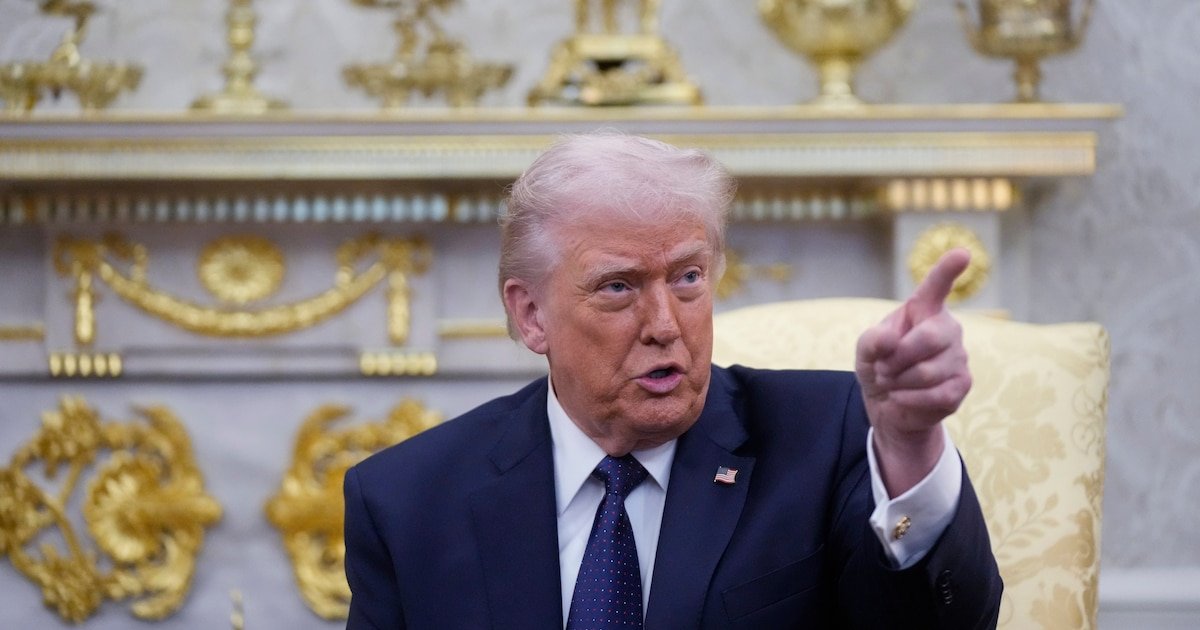
El presidente de Estados Unidos, Donald Trump, aseguró este jueves que el régimen cubano “está cerca de su final” y vinculó la crisis actual de la isla a la estrategia de presión económica implementada por su administración.
“Cuba caerá… Después de 50 años, eso es la guinda del pastel”, afirmó el mandatario en una entrevista telefónica con Politico.
Trump sostuvo que la grave escasez de combustible y productos básicos que vive actualmente la población responde al corte de suministros y petróleo venezolano, una medida que Washington considera clave en el debilitamiento progresivo de la dictadura cubana.
Según el presidente estadounidense, la política de endurecimiento de las sanciones ha logrado aislar a Cuba de su principal fuente de apoyo externo: Venezuela.
“Cortamos todo el petróleo, todo el dinero, todo lo que venía de Venezuela, que era la única fuente”, detalló Trump.
De acuerdo con el mandatario, la falta de recursos externos ha puesto al régimen en una situación límite, acelerando un proceso de cambio político que, según sus palabras, “ya no tiene retorno”.

“De lo contrario, no tendrían este problema”, subrayó en referencia al desabastecimiento generalizado.
En este contexto, Trump confirmó que existen negociaciones en curso entre Estados Unidos y La Habana, aunque aclaró que la iniciativa responde a la necesidad manifiesta del régimen cubano de recibir asistencia ante la profunda crisis económica.
“Necesitan ayuda. Estamos hablando con Cuba”, dijo el mandatario en su entrevista con Politico.
La crisis humanitaria en Cuba se ha agravado en los últimos meses. Tras la detención del narcodictador Nicolás Maduro a principios de enero, en una operación sorpresa liderada por fuerzas estadounidenses, Trump ordenó nuevas restricciones, incluyendo una orden ejecutiva que impone aranceles y sanciona a cualquier país que intente suministrar petróleo a la isla.
Estas medidas han profundizado el aislamiento internacional del régimen cubano y han restringido aún más el acceso a combustible, alimentos y productos básicos para la población.

“Es por mi intervención, la intervención que está ocurriendo”, dijo Trump.
Durante la entrevista, Trump utilizó el caso venezolano como ejemplo del posible desenlace en Cuba. Destacó que, tras la captura de Maduro, la relación bilateral con Caracas experimentó un giro sustancial, con la cooperación de la jefa del régimen chavista, Delcy Rodríguez, a quien definió como una interlocutora “satisfactoria” para los intereses estadounidenses.
“Venezuela lo está haciendo fantásticamente. Está haciendo un trabajo fantástico. La relación con ellos es excelente”, aseguró Trump.
El presidente también abordó la dimensión geopolítica de su estrategia. Según Trump, la presión sobre La Habana busca no solo el aislamiento económico, sino también un cambio de orientación política y económica en la isla, similar al proceso iniciado en Venezuela. Washington considera que la caída del régimen cubano alteraría de manera significativa el equilibrio de poder en el Caribe y fortalecería la proyección de Estados Unidos en la región.
Mientras tanto, la situación interna en Cuba continúa deteriorándose. Los reportes sobre largas filas para acceder a combustible, apagones extensos y escasez de alimentos reflejan el impacto de las sanciones y el corte de suministros externos.
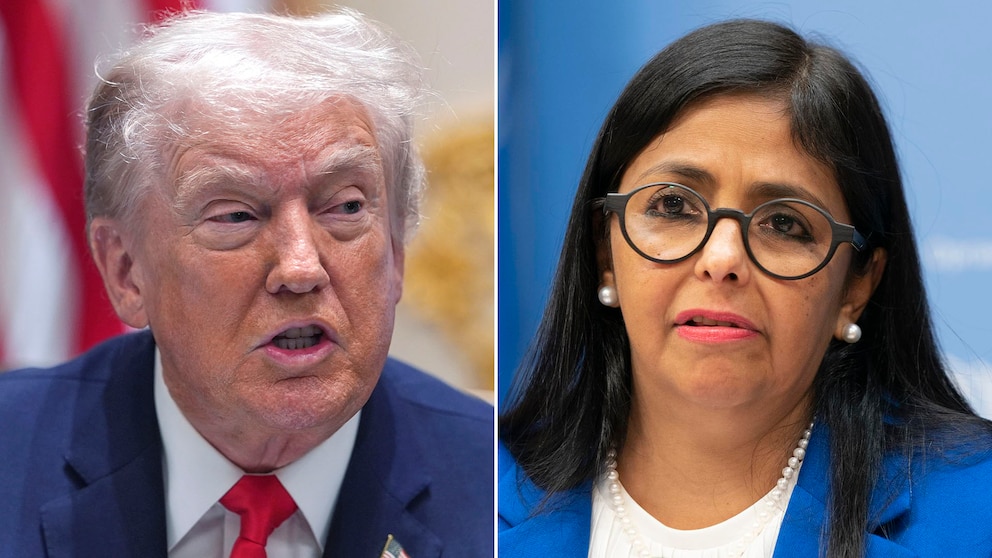
Trump reiteró durante la entrevista que la inminente caída del régimen cubano será una de las piezas centrales de su legado en política exterior. “¿Cuánto hace que escuchas hablar de Cuba? ¿Cuba, Cuba? Por 50 años”, expresó el presidente, enfatizando que su administración ha conseguido lo que no lograron los gobiernos anteriores: llevar al régimen cubano a una crisis terminal.
(Con información de Europa Press)
Daily Life,Energy Resources,General Society,Human Interest,Society / Social Issues,Energy Markets,South America / Central America,Human Interest / Brights / Odd News
INTERNACIONAL
Red Cross shares audio of Iranian civilian explaining situation on the ground in Tehran: ‘No respite’
NEWYou can now listen to Fox News articles!
The International Committee of the Red Cross (ICRC) released audio Thursday of a civilian in Tehran describing what it’s like on the ground as Operation Epic Fury rocks Iran.
«To us here, the war did not start four days ago. It started when we heard the initial news of a piling up of the forces in the region and preparations for war. Now, with the war going on, we hear constant explosions, and there is no respite from this,» the unidentified civilian said.
The civilian said the frequency of explosions has made people so nervous that even everyday noises can cause panic attacks.
«Any moment you can expect a loud noise. This has made us so nervous that any loud noise, including the noise of a car passing by, gives us a panic attack,» the civilian said.
Even with the noise of the explosions, the civilian, who said he was born and raised in Tehran, noticed the city had become a ghost town as people had either fled the war or limited movements to stay safe from aerial attacks.
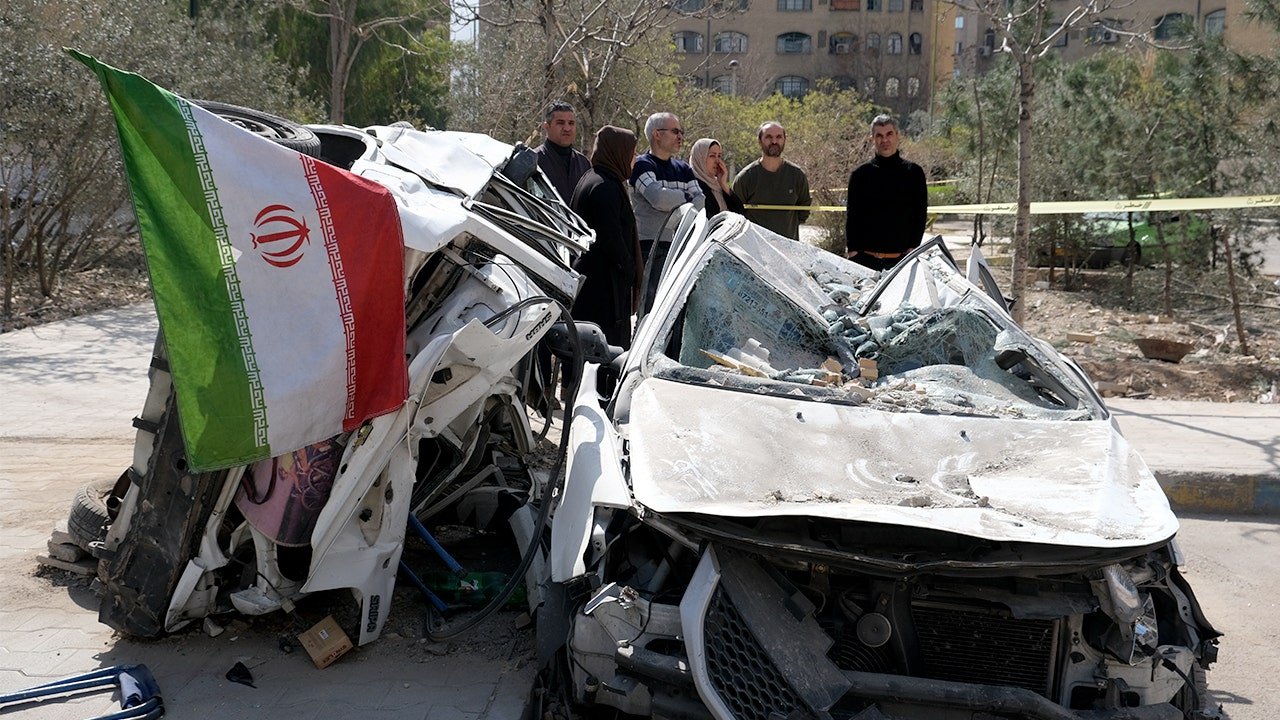
Neighbors stand March 5, 2026, in Tehran, Iran, near a destroyed car with an Islamic Republic flag, looking at a building damaged in the Shahid Borujerdi residential complex in Tehran that was heavily bombed the morning of March 4 by Israel and the U.S. during Operation Epic Fury. (Kaveh Kazemi/Getty Images)
«As a person who was born and lived his whole life in this city, I have never seen the city so quiet,» the civilian said. «Some of the people of my city have left. Many others stayed in, trying to limit movements to avoid getting caught in the aerial attacks on the city that never seem to come to an end. You don’t see people around. My city was a very big city and busy. I’m not used to seeing my city so calm and quiet.»
The U.S. and Israel have carried out air and sea attacks on Iran since the operation began Saturday. The operation has killed at least 1,230 people in Iran, according to The Associated Press. Additionally, six U.S. service members in Kuwait were killed in the hostilities.
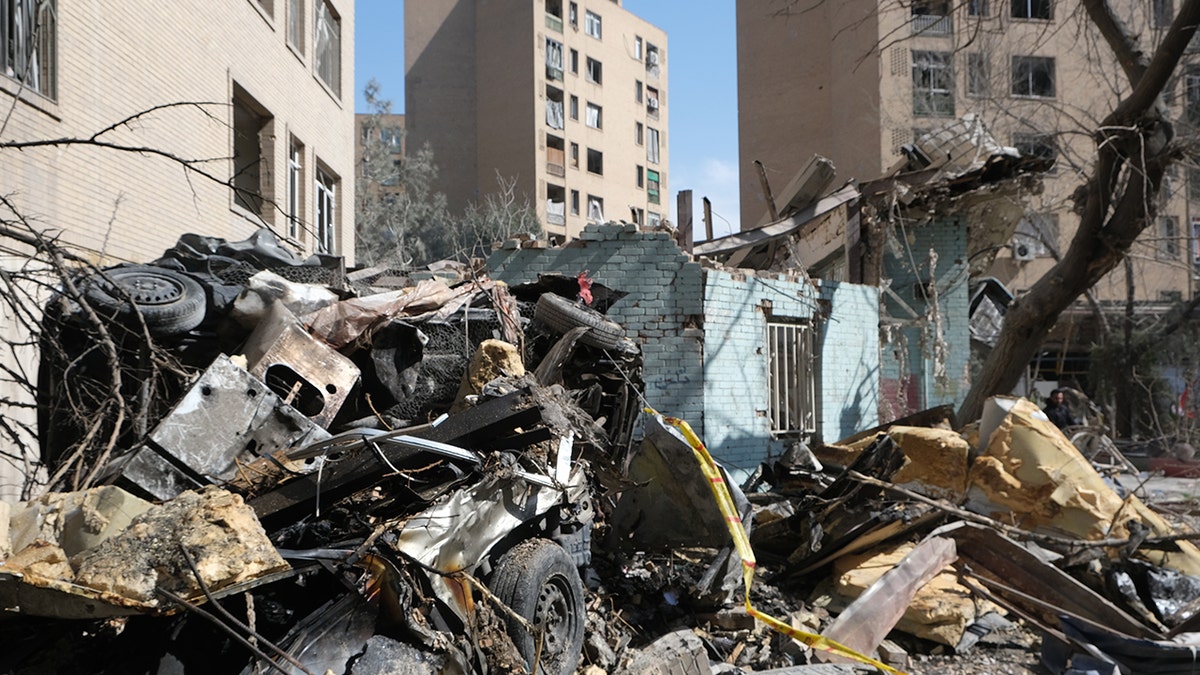
A destroyed car outside a building in the Shahid Borujerdi residential complex in southeast Tehran March 5, 2026, that was heavily bombed the morning of March 4 by Israel and the U.S. during Operation Epic Fury. (Kaveh Kazemi/Getty Images)
IRAN’S DRONE SWARM ATTACKS UNLEASH ‘EXPONENTIAL COSTS’ ON US, PROLONGING WAR: ‘ASYMMETRIC CAPABILITY’
The ICRC has expressed concerns about the situation in Iran, and the organization’s president said on day one of Operation Epic Fury that it could have «devastating consequences for civilians.»
«The military escalation in the Middle East is igniting a dangerous chain reaction across the region, with potentially devastating consequences for civilians,» ICRC President Mirjana Spoljaric said.
In a statement issued a few days later, Spoljaric warned that «the scale of major military operations flaring across the Middle East risks embroiling the region — and beyond — into another large-scale armed conflict that will overwhelm any humanitarian response.»
«Without urgent steps to de-escalate the situation and respect the rules of war, further civilian lives will be lost,» Spoljaric added. «Civilians are already suffering the consequences of war.»
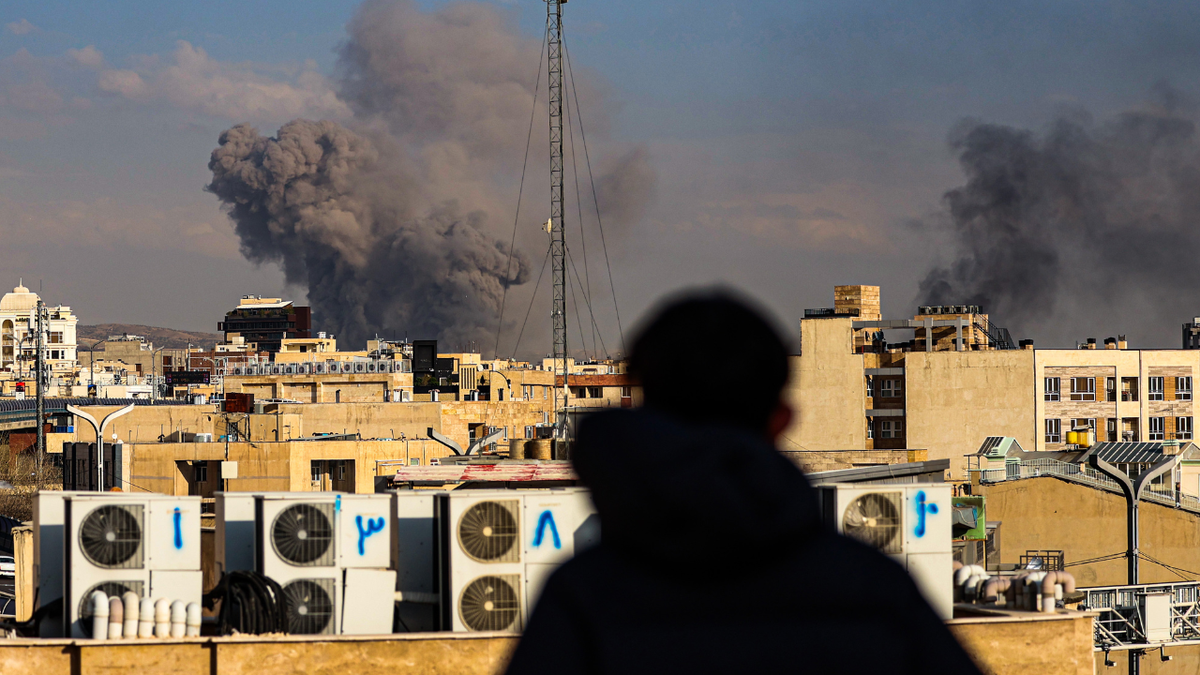
A view of Tehran with smoke visible in the distance after explosions were reported in the city March 2, 2026. (Contributor/Getty Images)
CLICK HERE TO DOWNLOAD THE FOX NEWS APP
According to the civilian, Iranians on the ground are worried about the future and wonder how the war will play out. Another fear among the people is the possibility of supplies running out.
«The supplies are available in the shops that are open and work. But what if the situation gets worse or continues as it is now? Will the supplies being stocked be of any help, or will they be meaningless in the face of what can happen?» the civilian wondered.
«It is especially more worrying for people like me, who have to take care of people with medical complications that require special care. We are now under a lot of stress, worried to see what can come next.»
Fox News Digital reached out to the ICRC for comment.
Related Article

war with iran,world,iran,middle east
INTERNACIONAL
Virginia Dems mandate Jan. 6 be taught as ‘violent insurrection,’ ban election fraud claims in schools
NEWYou can now listen to Fox News articles!
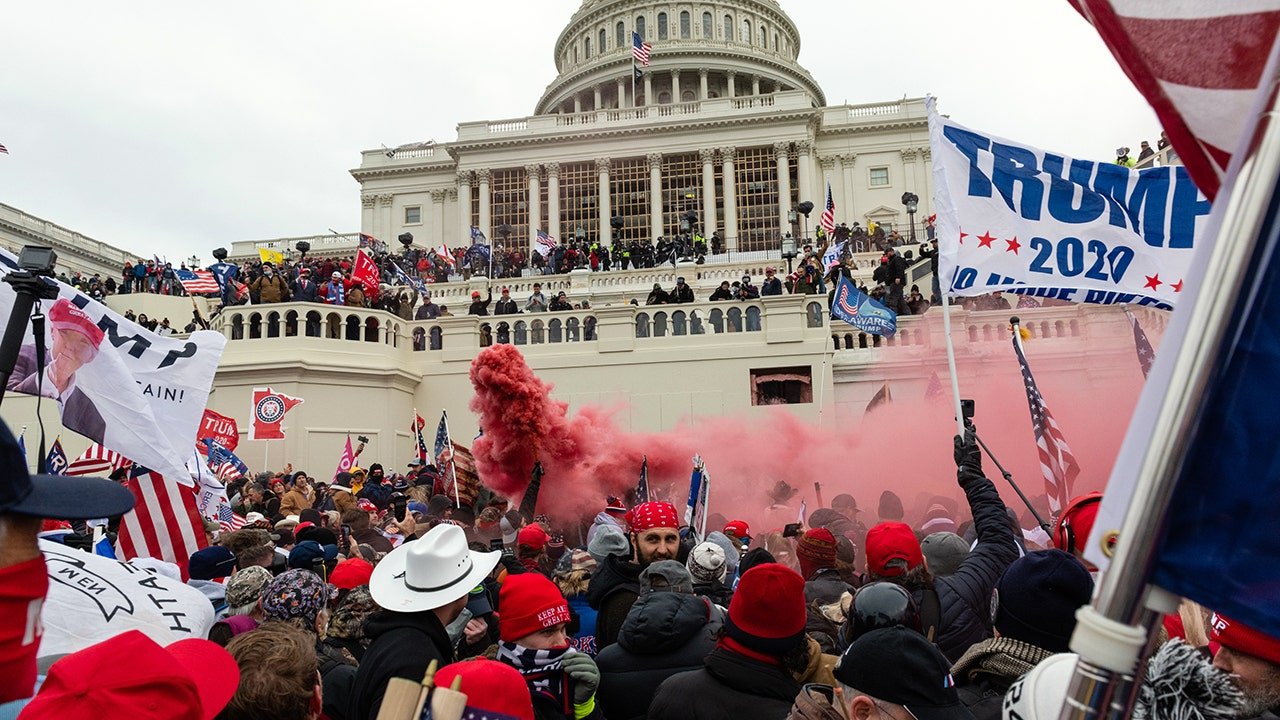
Virginia lawmakers passed a bill Wednesday that requires public schools to describe the Jan. 6, 2021, Capitol riot as a violent attack and specifically prohibits teachers from framing it as a peaceful protest.
Virginia Democrats have quickly advanced a slew of controversial legislation since Gov. Abigail Spanberger was elected in November and their ranks ballooned in the state House, including a bid to redraw every Republican congressman except Rep. Morgan Griffith out of their seats to make the Democratic majority 10-1 in the state’s congressional delegation. Now, they are taking steps to shape how the history of Jan. 6 is taught to children.
HB 333, crafted by Del. Dan I. Helmer of Fairfax, bars public school programs from describing the Jan. 6, 2021, Capitol riot as a peaceful protest or presenting claims that widespread election fraud altered the 2020 presidential results as credible.
The bill specifically «prohibits» instruction that portrays the insurrection as peaceful or suggests there was «extensive election fraud» that could have changed the election outcome. However, it does not lay out any explicit criminal penalties for violations.
Del. Dan I. Helmer, D-Fairfax, left, and VA AG Jay Jones, right. (Craig Hudson/Getty Images)
In a statement to the Virginia Mercury on the bill, Helmer said there is «real concern» that President Donald Trump is «trying to rewrite the history of January 6; borne out by the fact there is a WhiteHouse.gov site that presents a false history.»
Fox News Digital reached out to Virginia Republicans for comment.
The Virginia Assembly of Independent Baptists also came out against the bill, with executive director Michael Huffman testifying before a state Senate committee that the true education equips children for life, not political agendas, and glorifying or mandating … the dark day serves only short-sighted partisanship, not our kids’ future,» according to Hampton Roads’ PBS affiliate.
Helmer, an Iraq War veteran and staunch gun control advocate, was first elected by flipping what was Fairfax County’s last remaining Republican district, along its border with Prince William County, in 2020.
VIRGINIA DEMOCRATS MOVE TO SEIZE REDISTRICTING POWER, OPENING DOOR TO 4 NEW LEFT-LEANING SEATS
Helmer also announced a bid for Congress in one of the newly-redrawn districts nicknamed the «lobster» or the «scorpion» by critics – as it runs from the Potomac River in Arlington southwestward before splitting in two «claws» to reach out toward the West Virginia line near Rawley Springs and the other jutting down toward Goochland and Powhatan effectively collecting a swath of Republican-leaning towns and pitting them against a small but densely-populated Democrat stronghold.
One of his ads in a 2018 congressional bid compared Trump to Usama bin Laden, where he narrated that the «greatest threat to democracy» used to live «in a cave» but now «he lives in the White House.»
He had recused himself from the redistricting redraw, according to the New York Times, but is considered a top ally of House Speaker Don Scott, D-Portsmouth, who engineered the effort in the lower chamber.
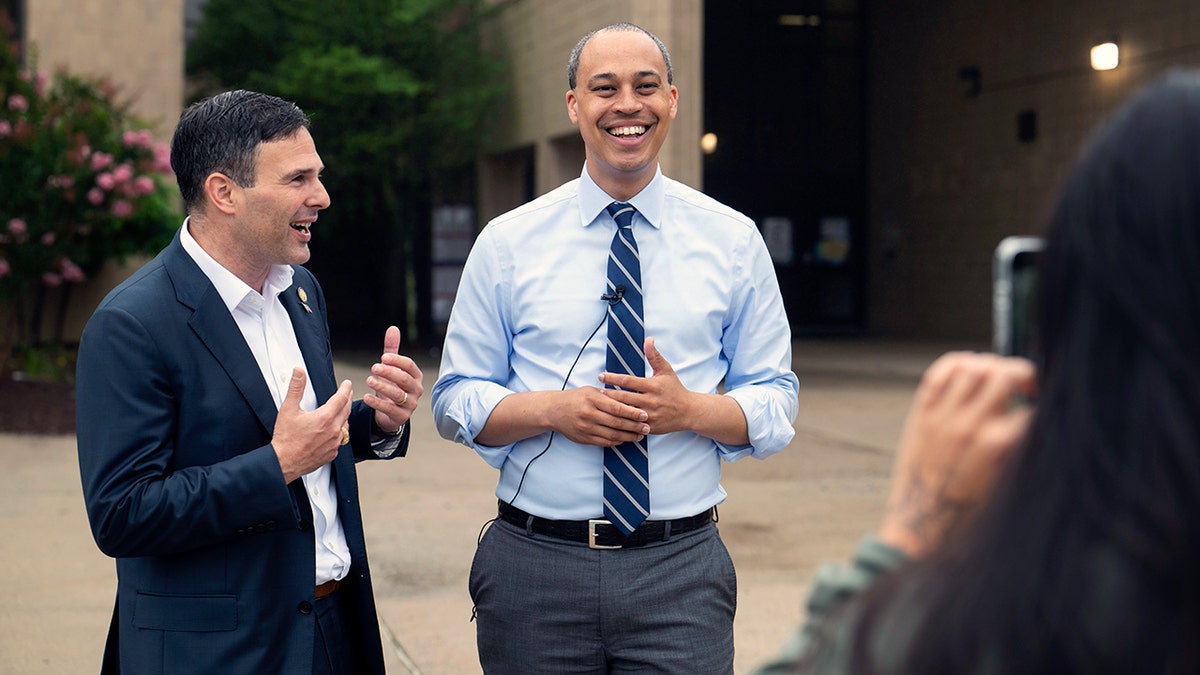
Del. Dan I. Helmer, D-Fairfax, left, and VA AG Jay Jones, right. (Craig Hudson/Getty Images)
While the new map has yet to get voters’ approval in an April special election, Helmer has also garnered at least one Democratic challenger in the would-be heavily Democratic-favored district.
CLICK HERE TO DOWNLOAD THE FOX NEWS APP
Prosecutor J.P. Cooney, the former top deputy of Special Counsel Jack Smith in his investigation of Trump, told the New York Times that the mogul is not being sufficiently «check[ed]» by Congress and that the DHS-involved shooting of Alex Pretti solidified his decision.
Fox News Digital’s Alec Schemmel contributed to this report.
Related Article
capitol protests,democrats elections,abigail spanberger,virginia,bills

Los Brito, nuevos reyes de la ganadería: gran inversión para que Salta sea polo exportador de carne

Arranca el paro del fútbol argentino: ¿Cuáles son las razones y cuándo se jugará la fecha postergada?

Trump anticipó la caída de la dictadura de Cuba tras la ofensiva de Estados Unidos en Irán: “Es la guinda del pastel”

Juana Repetto sacó a la calle a su bebé de 3 semanas y la mataron a críticas

Santiago Viola pasó por la oficina de Santiago Caputo: reunión clave para contener la interna libertaria

Patricia Bullrich contó qué le dijo Nahuel Gallo sobre el traslado en el avión de la AFA

Puertas adentro, Villarruel explotó: «El esfuerzo no lo hizo la política» y demolió el relato económico de Milei

Pampita se mudó a un castillo francés de detalles alucinantes: «1000 metros, 14 ambientes, vale 11 millones de dólares»

Escándalo en la primera fiesta de Gran Hermano: piden sanción para Lola, Lolo y Titi

El drama que vive Oriana Sabatini a horas del nacimiento de su hija con Paulo Dybala: se complicó la salud de su abuela de 90 años

 POLITICA3 días ago
Puertas adentro, Villarruel explotó: «El esfuerzo no lo hizo la política» y demolió el relato económico de Milei
- POLITICA3 días ago
Petri y Villarruel se cruzaron por un gesto en el Congreso: de “golpista” a “te conozco por el trencito de la alegría”
- CHIMENTOS1 día ago
¡Interna total! Pablo Layus explotó y blanqueó quiénes son los que arruinan Intrusos: «Te matan»