INTERNACIONAL
Las asombrosas imágenes de un astronauta que pasó 220 días en el espacio


Al igual que otros miembros de la tripulación de la estación espacial, Pettit realizó experimentos, habló con estudiantes y se ejercitó durante horas para mantener su salud y evitar la pérdida de densidad ósea. Pero el trabajo más llamativo que realizó en órbita fue la fotografía.

La mayoría de los habitantes de la Tierra nunca tendrán la oportunidad de ir al espacio. “Podía intentar darles un vistazo a través de mis imágenes”, dijo Pettit durante una conferencia de prensa un par de semanas después de su regreso.
Pettit señaló que los fotógrafos empedernidos siempre quieren tener una cámara en la mano. “Podría mirar por la ventana y limitarme a disfrutar de la vista”, dijo. “Pero cuando estoy mirando por la ventana, simplemente disfrutando de la vista, es como: ‘Oh, wow, un meteorito. Oh, wow. Mira eso. Hombre, ahí hay un destello. ¿Qué es eso? Y, ‘Oh, mira eso, un volcán estallando’. Es como: ‘Está bien, ¿dónde está mi cámara? Tengo que capturarlo’”.
A veces instala cinco cámaras a la vez en el módulo cúpula de la estación espacial, donde siete ventanas ofrecen vistas panorámicas del espacio y la Tierra.
La fotografía espacial suele parecerse mucho a la fotografía nocturna. Las estrellas son tenues, y se necesitan exposiciones de segundos o minutos para reunir suficientes fotones. Pero en órbita, nada está quieto. La estación espacial gira alrededor de la Tierra a unos ocho kilómetros por segundo, y la Tierra también gira.

A veces, Pettit aprovechó el movimiento para obtener belleza artística: las luces de abajo se difuminaban en líneas brillantes, mientras que las estrellas de arriba trazaban arcos en el cielo.
“Creo que son una mezcla de ciencia y arte”, escribió Pettit en X. “Hay muchas cosas tecno-geek que ver, o simplemente puedes sentarte y pensar ‘Qué genial’”.
Otras veces, la cámara se montaba en un “rastreador sideral orbital”, un dispositivo casero que Pettit llevó de la Tierra y que giraba lentamente para contrarrestar el movimiento de la estación espacial, de modo que el objetivo permanecía apuntando a un punto concreto del cielo.

El rastreador permitió captar, con una exposición de 10 segundos, una imagen cristalina de la Vía Láctea sobre un océano Pacífico nublado justo antes del amanecer. El resplandor azul-púrpura surge de la dispersión de la luz solar en el nitrógeno de la atmósfera terrestre.
El rastreador sideral también permitió obtener la siguiente imagen, tomada a través de la ventana de una nave espacial SpaceX Crew Dragon acoplada.

Las dos galaxias enanas de la imagen son las Nubes Grande y Pequeña de Magallanes. A escala cósmica, se encuentran entre las vecinas más cercanas de nuestra Vía Láctea.
En abril, Pettit grabó este video de las etéreas pulsaciones rítmicas de las auroras, la luz brillante emitida cuando las moléculas de la atmósfera son bombardeadas por partículas de alta energía procedentes del sol.
A veces, las luces de colores se deben a actividades humanas, no a fenómenos cósmicos. Las rayas verdes de esta foto son casi del mismo color que las auroras, pero son las luces que utilizan los barcos pesqueros frente a Tailandia para atraer a los calamares.

Con su cámara apuntando hacia la Tierra, Pettit grabó relámpagos en la atmósfera superior sobre la cuenca del Amazonas, en Sudamérica. Para el video, el tiempo se alargó de unos 6 segundos a 33 segundos, revelando más estructura en los destellos.
El río Betsiboka, en Madagascar, le recordó a Pettit los vasos sanguíneos del ojo.

Las áreas metropolitanas se iluminan por la noche, al igual que los incendios forestales.
Pettit también aprovechó las oportunidades para captar las idas y venidas de naves espaciales desde la Tierra, incluido un lanzamiento de prueba de un cohete SpaceX Starship desde Texas el pasado noviembre y el acoplamiento de una nave espacial SpaceX Dragon que transporta carga a la estación espacial en diciembre.

Cuando no estaba de servicio, Pettit también inventaba experimentos científicos divertidos. Uno de ellos mostraba gotas de agua cargadas eléctricamente que bailaban alrededor de una aguja de tejer de teflón. “Quiero hacer cosas en el espacio que solo se puedan hacer en el espacio”, dijo. “Y ya me preocuparé de ponerme al día con los programas de TV y cosas así cuando vuelva”.
En otro experimento, inyectó colorante para comida en una esfera de agua, creando un glóbulo que en cierto modo se parecía al planeta Júpiter, o a una canica muy bonita.

Pettit también disolvió una pastilla de antiácido dentro de una esfera de agua. Sin gravedad para hacer que las burbujas suban y salgan fácilmente del agua, sus patrones son completamente diferentes en el espacio.

También congeló obleas delgadas de hielo de agua a menos 60 grados Celsius. “¿Qué harías con un congelador así en el espacio?”, escribió en X. “Decidí hacer finas obleas de hielo de agua sin más razón de que estoy en el espacio y puedo hacerlo”.
Al fotografiar las obleas de hielo con filtros polarizadores, se revelaron intrincados patrones cristalinos.
Pettit es el astronauta actual de más edad de la NASA, pero no es la persona de más edad que ha estado en órbita. Ese fue John Glenn, quien fue el primer astronauta estadounidense que dio la vuelta a la Tierra en 1962, y luego volvió a volar en 1998 en el transbordador espacial Discovery a los 77 años.

Pettit ni siquiera es la persona de más edad que ha pasado un tiempo en la Estación Espacial Internacional. Un astronauta privado, Larry Connor, tenía 72 años cuando pasó allí dos semanas en 2022 como parte de una misión operada por Axiom Space de Houston.
“Solo tengo 70 años, así que me quedan unos cuantos años buenos”, dijo Pettit durante la conferencia de prensa. “Podría verme realizando uno o dos vuelos más antes de estar listo para colgar las toberas de mis cohetes”.
Kenneth Chang, periodista científico del Times, cubre la NASA y el sistema solar, así como la investigación más cercana a la Tierra.
astronaut,nasa,science,space













NEWYou can now listen to Fox News articles!
«I can’t believe they just left!»
«Why didn’t they just stay until they fixed it?»
«Why didn’t they make them stay?»
I must have fielded forty questions last week from colleagues, friends and acquaintances. Even reporters and editorial staff from other news organizations. And that’s to say nothing of a few Congressional aides.
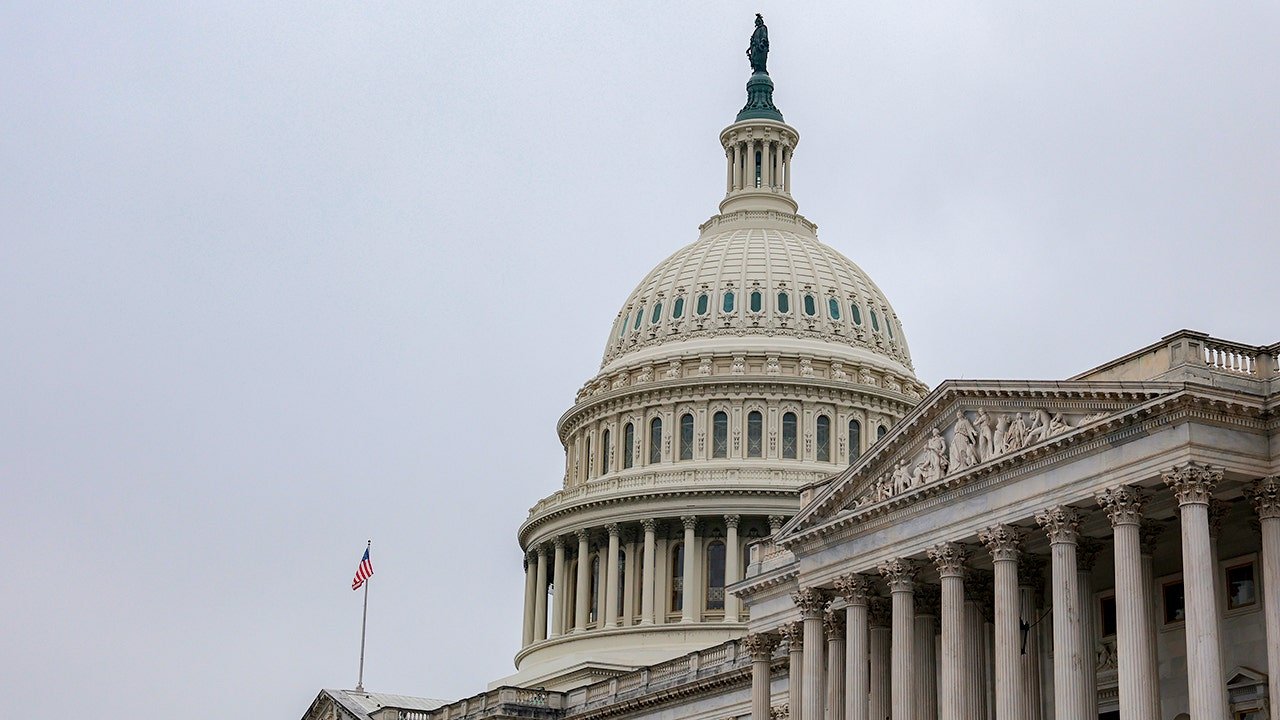
Everyone had the same question. They were in disbelief that lawmakers just abandoned the Capitol a week ago Thursday and left the Department of Homeland Security without funding on Saturday at 12:00:01 am et.
COAST GUARD CAUGHT AS ‘COLLATERAL DAMAGE’ IN DEMOCRATS’ DHS SHUTDOWN AS CHINA, RUSSIA PRESS US WATERS
Senate Democrats blocked a short-term funding bill, stalling efforts to keep DHS and its agencies operating. (Photo by Heather Diehl/Getty Images)
The Senate tried twice to avert the partial government shutdown on Thursday. The Senate failed to break a filibuster on a placeholder, undetermined funding bill. And then Sen. Chris Murphy, D-Conn., objected to a request by Sen. Katie Britt, R-Ala., to approve a stopgap, two-week funding bill. Passage of the bill would require agreement of all 100 senators. But all it took was one objection. And Murphy, speaking for many Democrats on both sides of the Capitol, interceded to sidetrack Britt’s effort.
«I’m over it!» shouted an exasperated Britt on the Senate floor, as Congress pitched at least part of the federal government into its third shutdown since October 1.
Democrats are refusing to fund the Department of Homeland Security until there’s a specific agreement to reform U.S. Immigration and Customs Enforcement (ICE). And – few Democrats will say this out loud – but their base insists on Democrats shuttering DHS over ICE tactics after the killings of Renee Good and Alex Pretti in Minneapolis.
This is somewhat ironic. Republicans funded ICE through 2029 via last year’s One, Big, Beautiful Bill. So thanks to Democrats, TSA, the Coast Guard and FEMA – all under the DHS aegis – are without money right now. That means tens of thousands of employees are technically working without paychecks as they scan passengers at airports, patrol the seas and respond to natural disasters.
This brings us back to the basic question: Why didn’t they just stay until they figured it out?
As a reporter, I have covered dozens of shutdowns, partial shutdowns, near shutdowns, flirtations with shutdowns. That’s to say nothing of various permutations of interim spending bills – long and short – known as Continuing Resolutions or CRs. Those bills keep the funding flowing at the old spending level – until lawmakers all agree on something new. Sometimes one CR begets another CR. And even another one after that until everything’s resolved. The exercise can go on for months.
HOW ICE WENT FROM POST-9/11 COUNTERTERROR AGENCY TO CENTER OF THE IMMIGRATION FIGHT
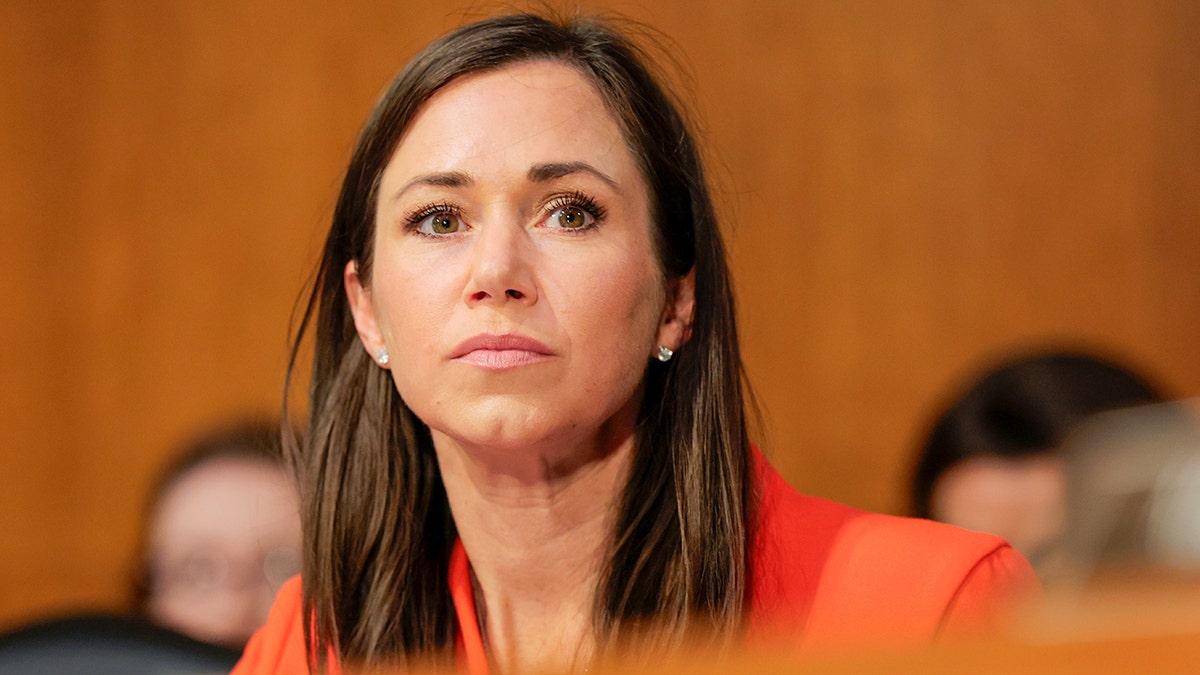
Sen. Katie Britt vented frustration on the Senate floor after her stopgap bill was blocked. (Photo by Anna Moneymaker/Getty Images)
But as it pertains to DHS, lawmakers weren’t going to solve the issues surrounding ICE right away. So both the House and Senate got out of Dodge last Thursday as the deadline loomed. Lawmakers were everywhere from the Middle East to Munich when the bell tolled midnight Saturday and DHS lumbered into a slow-speed funding crash.
Failure to fund the Department of Homeland Security may seem unreasonable from a policy standpoint – regardless of what you think of ICE. But it’s not unreasonable if you understand the politics and Congressional procedure to fund ICE.
Let’s say they were on the precipice of an agreement to fund DHS. That may involve some last-minute trading of paper between Senate and House leaders. Maybe a call or two from the President to reluctant Republicans. If lawmakers believed a deal was within range, it’s doubtful that leaders would have cut Members loose. They would have stayed if there was a viable path to nail something down last Friday, have the Senate expedite the process and vote on either Saturday or Sunday (albeit after the deadline) and then have the House vote on Monday. That’s all under the premise of a deal being close.
They were nowhere near that stage when lawmakers called it last Thursday. Democrats didn’t send over their offer for days after a brief shutdown of 78 percent of the government more than two weeks ago. Democrats then criticized Republicans and the White House for slowly volleying a counteroffer. Democrats then rejected the GOP plan – only sending back another plan late Monday.
Getting a deal which can pass both the House and Senate – and overcome a Senate filibuster – takes time. And there simply wasn’t a deal to be had yet.
This is where things get really interesting. With no agreement in sight, you simply don’t anchor lawmakers in Washington with nothing to do. There’s nothing to vote on. There are no committee meetings scheduled. All tethering lawmakers to DC does is stir up trouble.
There’s a line in the song «Trouble» in The Music Man by Meredith Willson: «The idle brain is the devil’s playground.» Who knows what kinds of mischief you would have, just making very cranky lawmakers hang around Washington for days – without anything to vote on. Keeping everyone here does not contribute to securing a deal. Yes, all 532 House and Senate Members (there are two House vacancies) must eventually be dialed-in to vote on a bill to fund DHS. But we aren’t there yet. A handful of Members in the House, Senate and people at the White House will be the ones to negotiate an agreement. Rank-and-file Members marooned in Washington with nothing to do but post outrageous things on social media and appear on cable TV is counterproductive.
Now, let’s look at the other scenario of being close to an agreement. House and Senate leaders may believe they are still a little short of votes. But if something is viable, leaders know they can nail down the votes with some arm-twisting, legislative and ego massaging and a few forceful phone calls. Yes, that process may require elbow grease. But in that instance, keeping everyone in Washington for a few extra days and blowing up a long-awaited Congressional recess actually helps the process.
DHS SHUTDOWN LEAVES LOCAL EMERGENCY RESPONDERS ON THEIR OWN AMID EXTREME WEATHER, EXPERT WARNS

TSA officers, Coast Guard members and FEMA staff are working without pay as the DHS funding lapse drags on. (Photo by Heather Diehl/Getty Images)
Why?
Think of the Stockholm Syndrome. You demand that everyone stay in Washington for an extra day or two and the «hostages» will start to come around to the viewpoints of their captors. Yes, everyone is frustrated and mad. But they feel the bill is something they can support and finally end this triumvirate of government shutdowns. In this case, the fustigation builds – but just a little. Everyone is happy to vote yes and rush off of Capitol Hill.
If they were close to nailing down an agreement on DHS funding, then Congressional leaders would have deployed a version of the Stockholm Syndrome to wrap up everything.
CLICK HERE TO DOWNLOAD THE FOX NEWS APP
But with no deal, leaders were more afraid of the mayhem they may trigger by keeping everyone in Washington. The devil would romp freely through the playground of idle brains.
So how will you know when there’s a deal?
When everyone’s present and accounted for.
government shutdown,budget senate,democrats senate,homeland security

NEWYou can now listen to Fox News articles!
Turkey’s massive military, trade, Islamic diplomacy and education expansion into Africa is, some analysts say, undermining U.S. goals, as Ankara capitalizes on wars and conflicts on the continent.
Experts claim Turkey’s military sales appear to be based on maximizing profit, without worrying about what the arms sold do to the balance of power, particularly in Jihadist areas such as the Sahel.
Recently, multiple reports claimed Turkish companies have sold military drones to both sides in the three-year-long conflict in Sudan.
TURKEY SAYS SYRIA USING FORCE IS AN OPTION AGAINST US-BACKED FIGHTERS WHO HELPED DEFEAT ISIS
Turkish President Recep Tayyip Erdogan and Nigerian President Bola Ahmed Tinubu shake hands after a joint press conference in Ankara on Jan. 27, 2026. (Ercin Erturk/Anadolu via Getty Images)
«Turkey is really capitalizing on all these conflicts in Sudan, in Ethiopia, in Somalia, to strengthen its military presence, its diplomatic and economic engagements,» Turkey analyst Gönül Tol, told an American Enterprise Institute seminar in Washington last week. Tol, founding director of the Middle East Institute’s Turkey program, added that the country is «one of the top, top weapons providers to Africa. So if there is more chaos, that will only help Erdogan strengthen his hands.»
President Recep Tayyip Erdogan stated in October that overall trade volume with the African continent has shot up from $5.4 billion in 2003, to $41 billion in 2024. He told a business and economic forum in Istanbul that the state-backed carrier Turkish Airlines is literally leading the way into African countries for Turkish companies, now flying to 64 African destinations.
Erdogan told the forum that over the past two decades, «we have advanced our relations hand in hand, shoulder to shoulder, and most importantly, heart-to-heart, to a level that could not even be imagined.»

Somalis celebrate the victory of Turkish President Recep Tayyip Erdogan after he won the presidential runoff election, in Mogadishu, on May 29, 2023. (Hassan Ali Elmi AFP via Getty images)
Drone sales to Sudan’s warring partners would only prolong the war, conduct which is directly against U.S. policy. Just last month, a State Department spokesperson told Fox News Digital that «the U.S. is working with allies and others to bring an end to external military support to the parties, which is fueling the violence.»
RISING ISIS THREATS TO US HOMELAND DRIVE AFRICOM AIRSTRIKES AGAINST TERRORISTS IN SOMALIA
«Turkish drones, marketed as cost-effective and politically low-friction alternatives to U.S. or European systems, have proliferated across African conflict zones,» Mariam Wahba, research analyst at the Foundation for Defense of Democracies, told Fox News Digital.
«Reporting that Turkish firms supplied drones to both the Sudanese (government) Armed Forces and the Rapid Support Forces (the opposing militia in the conflict) underscores Ankara’s transactional approach: access and influence take precedence over stability, civilian protection or alignment with Western policy objectives,» she said.
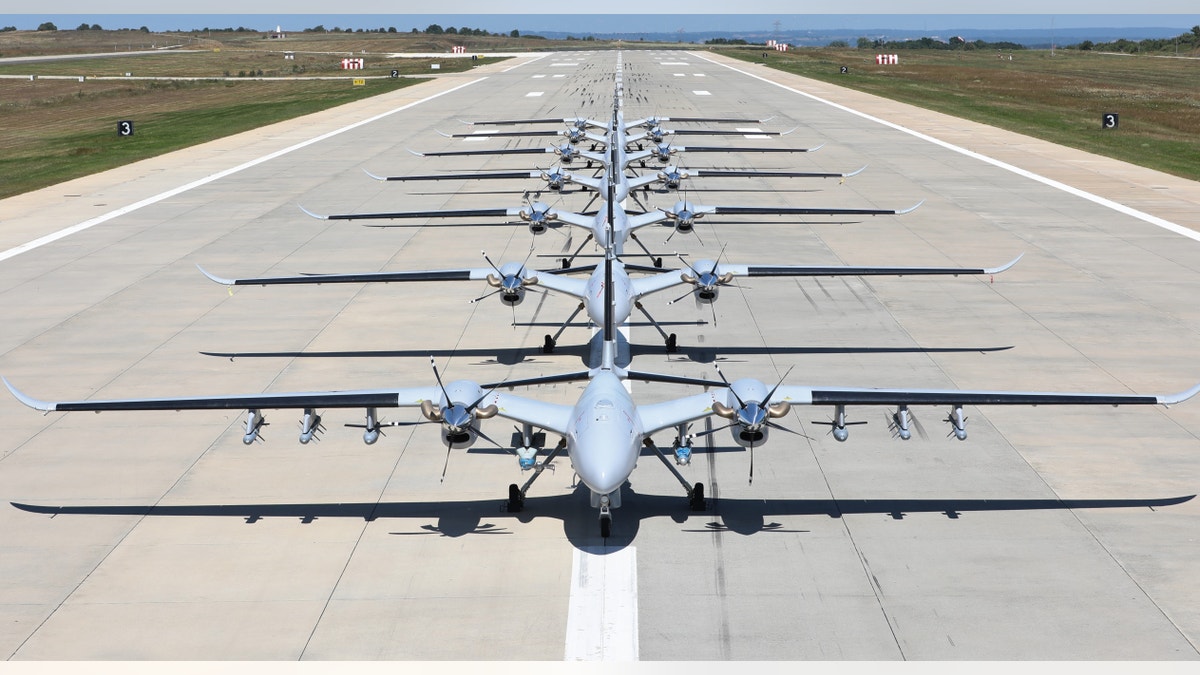
Bayraktar Akinci unmanned aerial vehicles at Flight Training and Test Center in Istanbul, Turkey, on July 5, 2022. (Baykar/Handout/Anadolu Agency via Getty Images))
In a 2025 FDD report, Sinan Siddi, senior fellow and director of the organization’s Turkey program, wrote, «The deal between Baykar and SAF is worth $120 million, resulting in the sale of six TB2 drones, three ground control stations, and 600 warheads.» Siddi claimed the deal took place after the U.S. placed sanctions on such sales.
Although Turkish drones are also claimed to have been sold to Sudan’s RSF militia, the company said to have been involved is reported to have publicly denied making the sale. The company did not respond to Fox News Digital’s request for comment.
A State Department spokesperson, when asked by Fox News Digital about the allegations said, «We refer you to the Government of Turkey for comment on reports related to any Turkish firms operating in Sudan.»
Fox News Digital reached out to the Turkish government but received no response.
TRUMP OVERHAULS US ARMS SALES TO FAVOR KEY ALLIES, PROTECT AMERICAN WEAPONS PRODUCTION

A Turkish Airlines flight arrives in Mogadishu in Oct. 2022. (Sally Hayden/SOPA Images/LightRocket via Getty Images)
The TB2 drone reportedly sold to the Sudanese government is made by a company said to be owned by Erdogan’s son-in-law. Experts say the TB2 is one-sixth the cost of a U.S. Reaper drone. Fox News Digital reached out to the company, but received no response.
The U.S. Africa Command’s Africa Defense Forum recently reported it «typically costs between $2 million and $5 million per aircraft, though total system packages — including ground control stations, communication systems, and training — often cost significantly more, sometimes reaching $5–$15 million per system depending on the contract. The TB2 is recognized for its high cost-efficiency, with operational costs estimated at only a few hundred dollars per hour.»
Particularly in Africa’s Sahel region, the FDD’s Wahba claimed Turkey is trying to return to the principles of its Ottoman Empire, which ruled for centuries and promoted the culture of imposing caliphates – areas where Islamic law is strictly enforced.
Wahba said, «On the whole, this is a worrying development that risks undermining U.S. interests. In addition to backing Islamist movements such as Hamas and the Muslim Brotherhood, which does not bode well for its ideological orientation, Ankara is pursuing a neo-Ottoman foreign policy that is already taking concrete shape across parts of Africa.»
«Turkey’s arms sales across Africa are best understood», the FDD’s Siddi told Fox News Digital, «not as ad hoc commercial transactions, but as a deliberate strategy to expand Ankara’s political, military and economic footprint on a continent increasingly contested by global and middle powers.»

Gambia’s President Adama Barrow welcomes Turkey’s President Recep Tayyip Erdogan in Banjul, Gambia, Jan. 27, 2020. (Turkish Presidency via AP, Pool)
He said, «By exporting drones, small arms and security services to fragile states such as Sudan… the Erdogan government positions Turkey as a low-cost, low-conditionality alternative to Western partners, while simultaneously opening new markets for its rapidly growing defense industry. These weapons transfers are designed to buy diplomatic leverage, secure access to ports, bases and contracts and cultivate client relationships with regimes and militias that can advance Turkey’s regional ambitions.»
CLICK HERE TO DOWNLOAD THE FOX NEWS APP
The number of embassies Turkey operates in Africa has rocketed from 12 in 2002, to 44 today. Wahba said the 64 African destinations Turkish Airlines flies to is a useful indicator. «As a state-backed carrier, its rapid expansion of direct routes into African capitals mirrors Turkey’s diplomatic and security priorities. The airline functions as a soft-power and access enabler for Ankara’s broader agenda.»
Wahba claimed this all should matter for Washington, «because Ankara’s model increasingly competes with, and in many cases directly undercuts, U.S. priorities on conflict mitigation and stability.»
africa,turkey,national security,conflicts,trade
INTERNACIONAL
El egiptólogo más famoso del mundo tiene su documental y se defiende: “Los fracasados intentarán detenerte”

A los 78 años, Zahi Hawass encarna la transformación de la egiptología moderna y el resurgimiento del patrimonio nacional egipcio. Su imagen está ligada de forma indeleble a proyectos colosales como el Gran Museo Egipcio (GEM), cuya construcción alcanzó un coste de USD 1.000 millones y se convirtió en símbolo de la centralidad de las antigüedades en la identidad nacional.
En el documental autobiográfico The Man With the Hat, dirigido por Jeffrey Roth, Hawass revisita los puntos culminantes de su ascenso, mientras aparta discretamente las controversias asociadas a su carrera.
La película indaga en su infancia en una aldea del norte de Egipto, sus recuerdos familiares y su tardía vocación por la arqueología. Inicialmente, consideró otras trayectorias como el fútbol, la diplomacia o el derecho, pero fue la limpieza accidental de una estatua de Afrodita la que marcó el inicio de su fascinación. “Lo que estudié lo olvidé y por eso tuve que empezar de nuevo”, afirmó. Posteriormente, Hawass obtuvo una beca Fulbright que lo condujo a la Universidad de Pensilvania para realizar su doctorado.
Su papel mediático y su dominio del relato público han convertido a Hawass no solo en un funcionario, sino en el “único funcionario egipcio en lograr fama”, como subrayó en la videollamada con Artnet News: “Nunca pasó antes porque cuando alguien empieza a destacar, lo destruyen”. Aseguró que muchos de sus detractores son “demonios” que ocupan su tiempo en redes sociales.
Estas reacciones no han opacado sus logros más visibles. La inauguración del GEM fue acompañada por un ceremonial que reafirmó el vínculo entre la población y sus tesoros históricos, y justificó la reivindicación internacional de piezas como el busto de Nefertiti en el Neues Museum de Berlín, la piedra Rosetta en el British Museum y el zodiaco de Dendera en el Louvre.
Uno de los hallazgos más difundidos bajo su gestión fue la denominada ciudad dorada perdida de Luxor, un yacimiento de tres mil años con viviendas, talleres, panaderías y una fábrica de ladrillos, que ha sido comparada con “la Pompeya egipcia”.

La cámara del documental recorre sus piezas más valiosas, como cerámica azul elaborada por artesanos locales. Según Hawass, este descubrimiento fue un “accidente” durante la búsqueda del templo funerario de Tutankhamon, e insistió que “solo el 30% de los monumentos antiguos egipcios han sido hallados”. El mayor misterio pendiente es la tumba de la reina Nefertiti, que según sus hipótesis permanece intacta, comparable en relevancia al hallazgo en 1922 de la tumba de su hijo, el rey Tutankhamon, por Howard Carter.
En cuanto al legado de la investigación, Hawass reivindicó como su principal contribución el “hacer que la egiptología sea accesible para los egipcios”. Así, formó nuevas generaciones de arqueólogos en excavaciones en Giza, Saqqara y el Valle de los Reyes, espacios tradicionalmente dominados por expertos occidentales.
Sin embargo, el brillo de estas conquistas convive con el peso de las críticas. Varios colegas lo acusan de restringir el acceso a yacimientos y de monopolizar la cobertura mediática de hallazgos relevantes. Su firme oposición a la perspectiva afrocéntrica sobre la historia egipcia quedó patente al denunciar lo que llamó “hechos engañosos” promovidos en la serie de Netflix African Queens, donde una actriz negra interpreta a Cleopatra.

Durante la Primavera árabe de 2011, el rechazo a sus vínculos con el expresidente Hosni Mubarak precipitó el fin de su mandato como primer ministro de antigüedades. Manifestantes llegaron a calificarlo como “el Mubarak de las antigüedades” y, al dejar el cargo, algunos analistas en The Guardian celebraron la caída de una figura “egocéntrica, rodeada de acusaciones sobre sus negocios privados”, incluidas alegaciones de complicidad en la sustracción de artefactos por parte de investigadores alemanes y de mala gestión de fondos públicos.
El documental The Man With the Hat apenas aborda estos temas, pues el único relato es el del propio Hawass. Cuando se defiende enérgicamente de las imputaciones, sus palabras carecen del contexto necesario para que el espectador aprecie la complejidad de cada episodio. Su argumento puede resumirse en la afirmación de que “los fracasados intentarán detenerte”.
El magnetismo y la teatralidad de Hawass, reconocidas en sus frecuentes apariciones televisivas y hasta en programas como el de Joe Rogan, donde rehusó debatir teorías sobre alienígenas y las pirámides, han sido decisivos para situar la egiptología en el centro de la conversación cultural y política, dotándola de una visibilidad inédita, aunque al coste de convertirse en una figura profundamente polarizadora.

Eduardo y Elina Costantini celebraron su 6° aniversario de casados: “¡Amor que siempre soñé!”

Why keeping lawmakers in DC during shutdown may have caused more harm than good

Las recomendaciones del FMI para medir mejor la inflación y seguir de cerca los datos de la economía

¿Dónde ver EN VIVO y ONLINE el Nueva Chicago vs. Tristán Suárez por la Primera Nacional?

A 10 años de la masacre de Montañita: cuatro amigas, unas vacaciones por Sudamérica y un trágico final

La esposa de Nahuel Gallo anunció que el gendarme inició una huelga de hambre para que el régimen chavista lo libere

Escándalo en MasterChef: una famosa abandonó a los gritos y acusando que está todo arreglado

Del himno peronista de Kelly Olmos al exabrupto de Agustina Propato: las perlitas del debate por la reforma laboral

Villarruel cuestionó la apertura de importaciones: «Sin industria, se pasa a depender de China»

La CGT calificó de “contundente” al paro y marcó la adhesión en “un 90%”

 CHIMENTOS3 días ago
Escándalo en MasterChef: una famosa abandonó a los gritos y acusando que está todo arreglado
- POLITICA3 días ago
Del himno peronista de Kelly Olmos al exabrupto de Agustina Propato: las perlitas del debate por la reforma laboral
- ECONOMIA1 día ago
Villarruel cuestionó la apertura de importaciones: «Sin industria, se pasa a depender de China»