INTERNACIONAL
Supreme Court upholds Trump’s removal of Biden appointees from federal boards

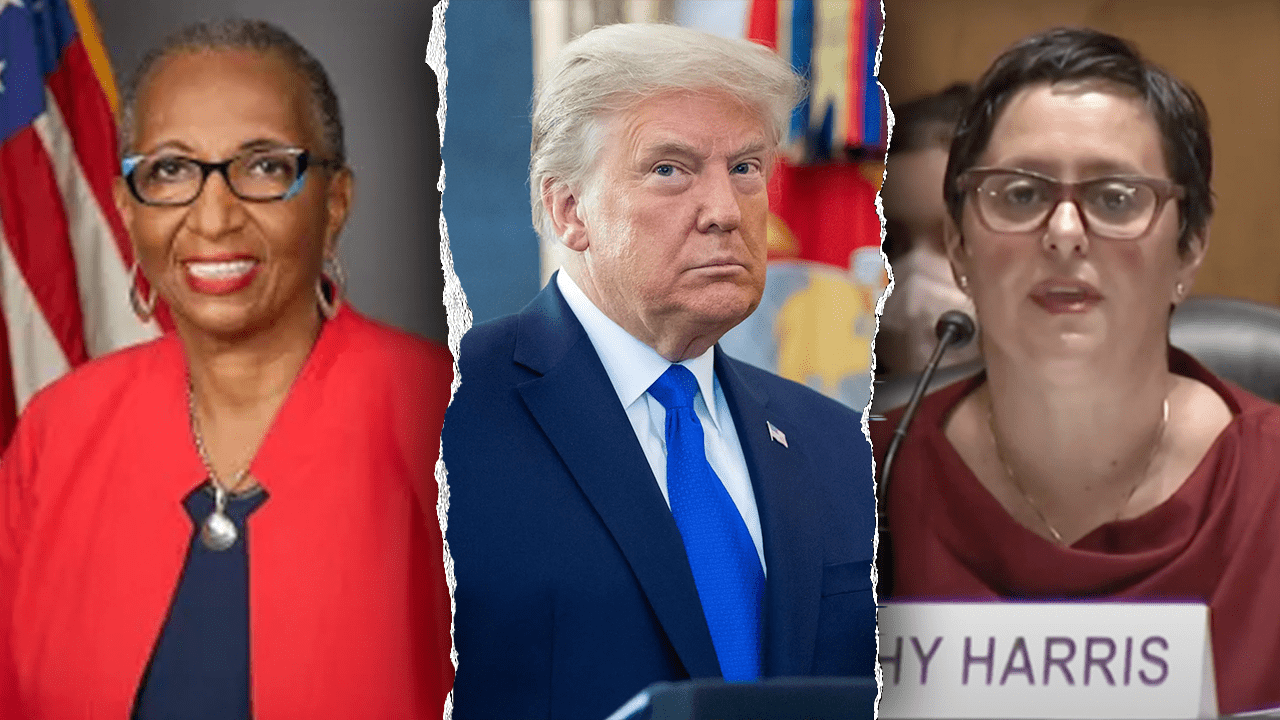
The Supreme Court upheld President Donald Trump’s removal of two Democratic appointees from federal boards, handing the administration a legal victory and settling a high-stakes dispute over the president’s power to fire agency officials.
The Thursday ruling comes after Supreme Court Chief Justice John Roberts agreed to temporarily halt the reinstatement of National Labor Relations Board (NLRB) member Gwynne Wilcox and Merit Systems Protection Board (MSPB) member Cathy Harris, two Democrat appointees who were abruptly terminated by the Trump administration this year.
Both had challenged their terminations as «unlawful» in separate lawsuits filed in D.C. federal court.
However, the high court suggested that it could block attempts to fire Federal Reserve Chair Jerome Powell, who, according to Trump, has complained has not cut interest rates fast enough.
APPEALS COURT BLOCKS TRUMP FROM FIRING FEDERAL BOARD MEMBERS, TEES UP SUPREME COURT FIGHT
Supreme Court Justices Samuel Alito, Clarence Thomas, Justice Brett M. Kavanaugh, Amy Coney Barrett, Supreme Court Chief Justice John Roberts, and Justices Elena Kagan and Sonia Sotomayor attend the 60th inaugural ceremony on Jan. 20, 2025, at the US Capitol in Washington, DC. (Ricky Carioti /The Washington Post via Getty Images)
The issue confronting the justices was whether the board members, both appointed by President Joe Biden, can stay in their jobs while the larger fight continues over what to do with a 90-year-old Supreme Court decision known as Humphrey’s Executor, in which the court unanimously ruled that presidents cannot fire independent board members without cause.
The court’s three liberal justices dissented.
«Not since the 1950s (or even before) has a President, without a legitimate reason, tried to remove an officer from a classic independent agency,» Justice Elena Kagan wrote, joined by Justices Sonia Sotomayor and Ketanji Brown Jackson.
Kagan wrote that her colleagues were telegraphing what would happen.
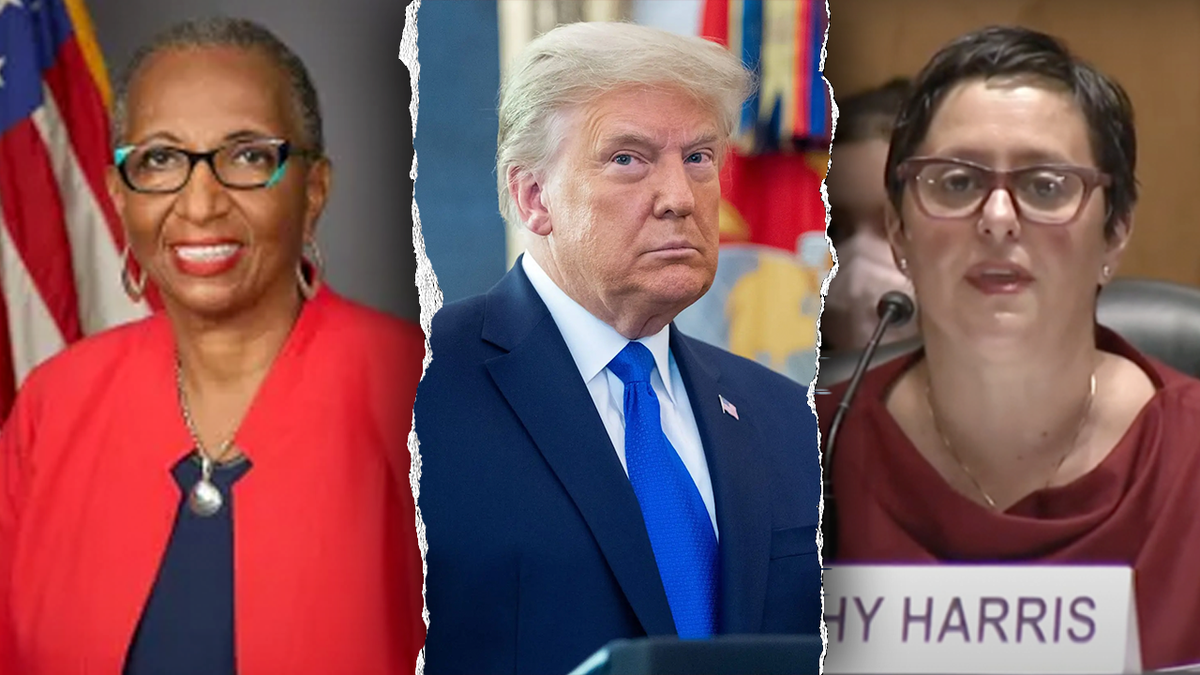
Split image shows fired NLRB member Gwynne Wilcox, President Donald Trump and fired MSPB member Cathy Harris. (NLRB/Getty/C-SPAN)
«The impatience to get on with things—to now hand the President the most unitary, meaning also the most subservient, administration since Herbert Hoover (and maybe ever)—must reveal how that eventual decision will go,» she wrote.
Lawyers for the Trump administration urged the Supreme Court to either keep Wilcox and Harris off the job while the case moves through the lower courts, or to resolve the issue directly. They asked the justices to grant certiorari before judgment – a fast-track procedure the court uses occasionally to bypass the appeals process in cases of significant national importance.
They urged that Wilcox and Harris not be reinstated to their positions, arguing in their reply brief that the «costs of such reinstatements are immense.»
They argued that keeping both Wilcox and Harris in place would «entrust» the president’s powers «for the months or years that it could take the courts to resolve this litigation,» something they said «would manifestly cause irreparable harm to the President and to the separation of powers.»
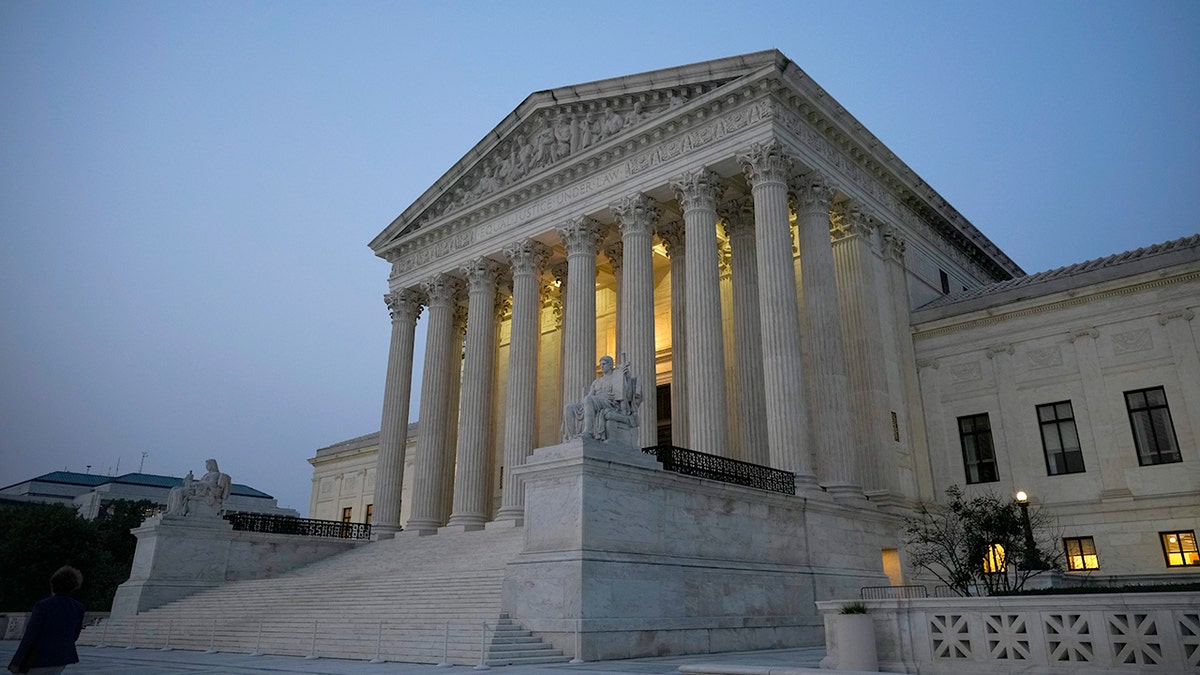
The U.S. Supreme Court is shown at dusk on June 28, 2023 in Washington, DC (Drew Angerer/Getty Images)
«The President would lose control of critical parts of the Executive Branch for a significant portion of his term, and he would likely have to spend further months voiding actions taken by improperly reinstated agency leaders.»
Earlier this month, the U.S. Court of Appeals for the D.C. Circuit voted 7–4 to restore Wilcox and Harris to their respective boards, citing Supreme Court precedent in Humphrey’s Executor v. United States and Wiener v. United States – landmark rulings that upheld limits on the president’s power to remove members of independent federal agencies.
The majority noted that the Supreme Court has never overturned the decades-old precedent upholding removal protections for members of independent, multimember adjudicatory boards – such as the NLRB and MSPB – and said that precedent supported reinstating Wilcox and Harris.
It also rejected the Trump administration’s request for an administrative stay, which would have allowed their removals to remain in place while the challenge proceeds in court.
«The Supreme Court has repeatedly told the courts of appeals to follow extant Supreme Court precedent unless and until that Court itself changes it or overturns it,» judges noted in their opinion.
The ruling would have temporarily returned Harris and Wilcox to their posts – but the victory was short-lived. The Trump administration quickly appealed to the Supreme Court, which granted an emergency administrative stay blocking their reinstatement.
In their own Supreme Court filings, lawyers for Wilcox and Harris argued that the court should reinstate them to their roles on their respective boards until a federal appeals court can consider the matter.
APPEALS COURT BLOCKS TRUMP ADMIN’S DEPORTATION FLIGHTS IN ALIEN ENEMIES ACT IMMIGRATION SUIT
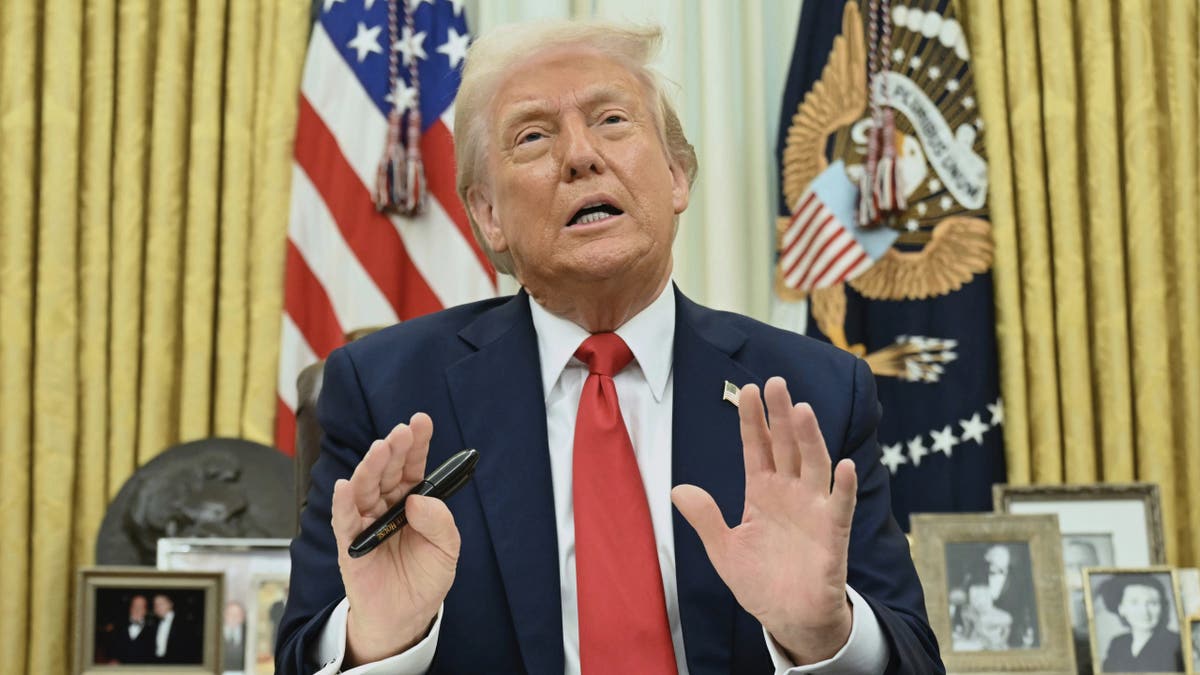
President Donald Trump speaks to reporters before signing an executive order in the Oval Office of the White House in Washington, Monday, March 31, 2025. (Pool via AP) (Pool via AP)
Both Wilcox and Harris opposed the administration’s effort to fast-track the case, warning against skipping the normal appeals process and rushing arguments. «Rushing such important matters risks making mistakes and destabilizing other areas of the law,» Harris’s lawyers told the Supreme Court this week.
Wilcox, the NLRB member, echoed this argument in her own brief to the high court.
Counsel for Wilcox cited the potential harm in removing her from the three-member NLRB panel – which they argued in their filing could bring «an immediate and indefinite halt to the NLRB’s critical work of adjudicating labor-relations disputes.»
«The President’s choice to instead remove Ms. Wilcox does not bring the Board closer in line with his preferred policies; it prevents the agency from carrying out its congressionally mandated duties at all,» they said.
Harris and Wilcox’s cases are among several legal challenges attempting to clearly define the executive’s power.
Hampton Dellinger, a Biden appointee previously tapped to head the Office of Special Counsel, sued the Trump administration over his termination. Dellinger filed suit in D.C. district court after his Feb. 7 firing.
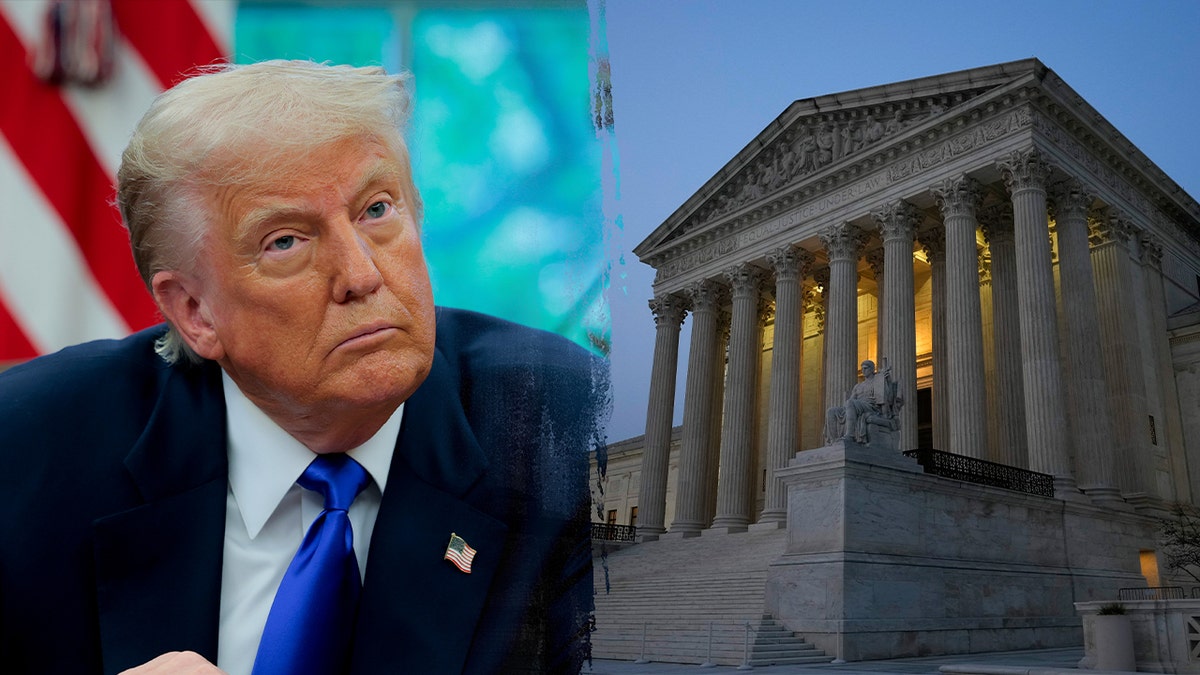
President Donald Trump and an image of the U.S. Supreme Court building. (Getty Images)
CLICK HERE TO GET THE FOX NEWS APP
He had maintained the argument that, by law, he could only be dismissed from his position for job performance problems, which were not cited in an email dismissing him from his post.
Dellinger dropped his suit against the administration after the D.C. appellate court issued an unsigned order siding with the Trump administration.
The Justice Department, for its part, said in February a letter to Sen. Dick Durbin, D-Ill., that it was seeking to overturn Humphrey’s Executor.
The Associated Press contributed to this report.
Supreme Court,Donald Trump,Trump’s First 100 Days,Politics,Labor Unions


INTERNACIONAL
Iran’s internet blackout hiding strike damage and suppressing dissent, Israeli officials say

NEWYou can now listen to Fox News articles!
Israeli officials are warning that Iran’s ongoing internet blackout is shaping the battlefield in ways that extend far beyond cyberspace, limiting visibility into the impact of U.S. and Israeli strikes while tightening the regime’s grip on its own population.
Multiple Israeli sources told Fox News that the blackout is not only restricting information from leaving Iran but also preventing citizens from organizing internally, at a time when pressure on the regime is mounting. Attempts by civilians to access the internet through satellite services such as Starlink have been disrupted through jamming, according to Israeli officials, while hundreds of individuals suspected of using such terminals have been detained.
«This is a blackout on truth,» a senior Israeli intelligence official told Fox News. «The regime is hiding reality from its own people. They don’t want the Iranian people to see how badly they’re getting hit.»
ISRAEL HAMMERS IRANIAN INTERNAL SECURITY COMMAND CENTERS TO OPEN DOOR TO UPRISING
Strikes on the Iranian leadership, the IRGC, and Iranian naval vessels and oil infrastructure have roiled the markets. ( Sasan / Middle East Images / AFP via Getty Images)
The information vacuum inside Iran is being filled by state-controlled narratives, according to the official.
«Iranians only know what they see on TV channels controlled by the Islamic regime, which falsely shows the U.S. and Israel being destroyed,» the Israeli official said.
But the impact goes beyond perception. The blackout is also affecting behavior on the ground.
«And it’s not just about what people see, it’s about what they can do,» the official said. «Cutting the internet stops people from communicating, from sharing what’s really happening, and from organizing.»
The restrictions come as the Iranian regime faces both external military pressure and lingering internal unrest following a brutal crackdown earlier in 2026. In January, security forces opened fire on nationwide protests, with reports suggesting the toll could be more than 30,000 killed in a matter of days.
Against that backdrop, Israeli officials say the blackout reflects the regime’s fear of renewed unrest.
«The Iranian people are one of the things the regime fears most,» the official said. «That’s why this blackout was such a priority.»
IRAN REGIME HIDES IN BUNKERS AS CIVILIANS LEFT EXPOSED WITHOUT ADEQUATE BOMB SHELTERS OR SIRENS
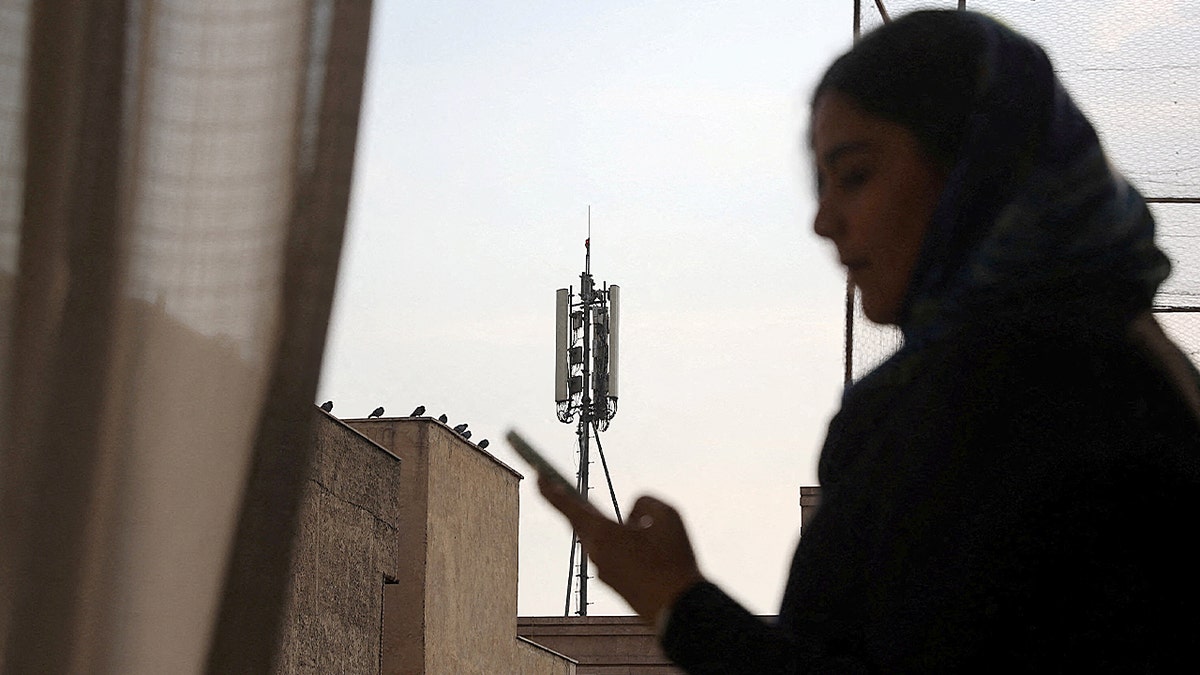
Iran internet blackout continues with heavy filtering despite partial restoration, costing over $780 million according to analyst Simon Migliano. (Majid Asgaripour/WANA (West Asia News Agency) via Reuters)
The result, according to Israeli officials, is a war that is unfolding largely out of public view.
«This is one of the least visible wars in modern history because very little footage is coming out,» the official said. «When this blackout is lifted, the full extent of the damage to the regime will become clear. Right now, we’re only seeing a small glimpse of just how badly they’re being decimated.»
Israeli sources also linked the blackout directly to high-value military targets.
The U.S. and Israel, the official claims, «have taken out 25 senior commanders from the MOIS,» referring to Iran’s Ministry of Intelligence.
«The majority (were) eliminated in the opening strike when they gathered for a meeting,» the official said, adding that those targeted were involved in managing the blackout.
The official identified Esmail Khatib as among those killed, describing him as «the minister of Intelligence who was the guy who signed off on the blackout.»
IRAN MOVES HUNDREDS OF MILLIONS IN CRYPTO DURING NATIONWIDE INTERNET BLACKOUT, REPORT REVEALS
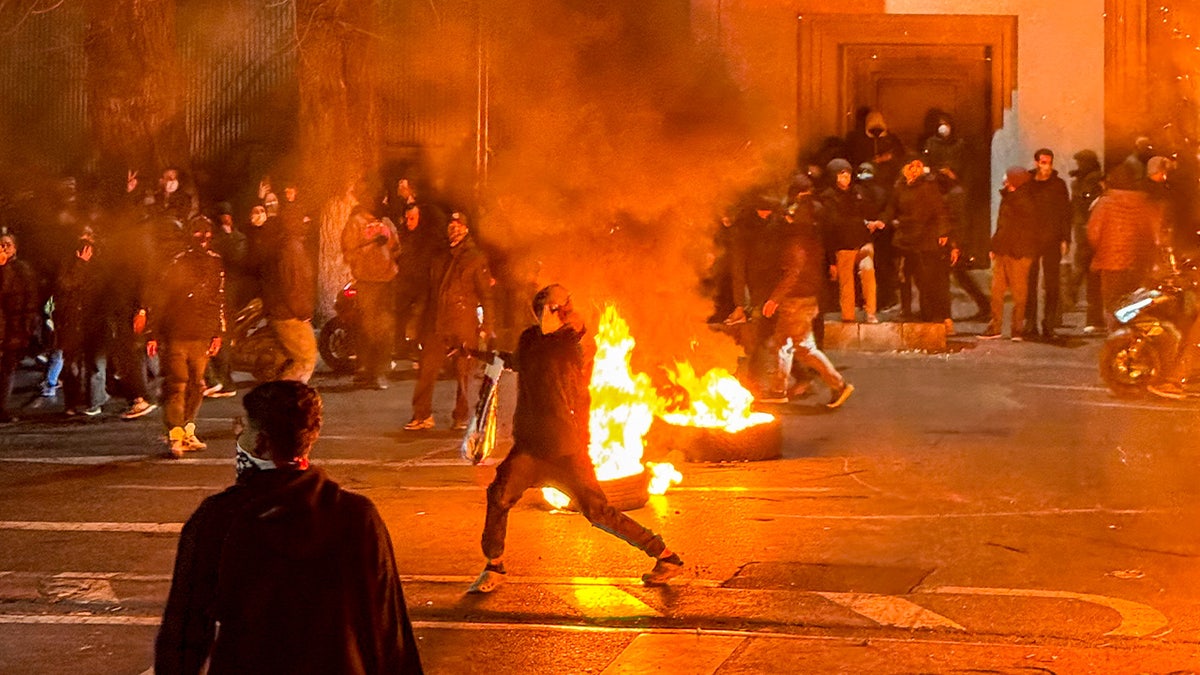
Iranians gather while blocking a street during a protest in Tehran, Iran Jan. 9, 2026. (MAHSA / Middle East Images / AFP via Getty Images)
U.S. analysts say the information domain is becoming a central front in the conflict.
John Spencer, executive director of the Urban Warfare Institute, wrote on X that «Iran has repeatedly shut down internet access to control its population. That capability can be reversed.»
Spencer argued that external actors could shift the balance by targeting regime communications while enabling civilian connectivity.
«Disrupt regime command networks while enabling connectivity for the population through external systems. Information becomes a weapon,» he wrote. «Control of narrative, coordination, and awareness shifts away from the regime.»
CLICK HERE TO DOWNLOAD THE FOX NEWS APP
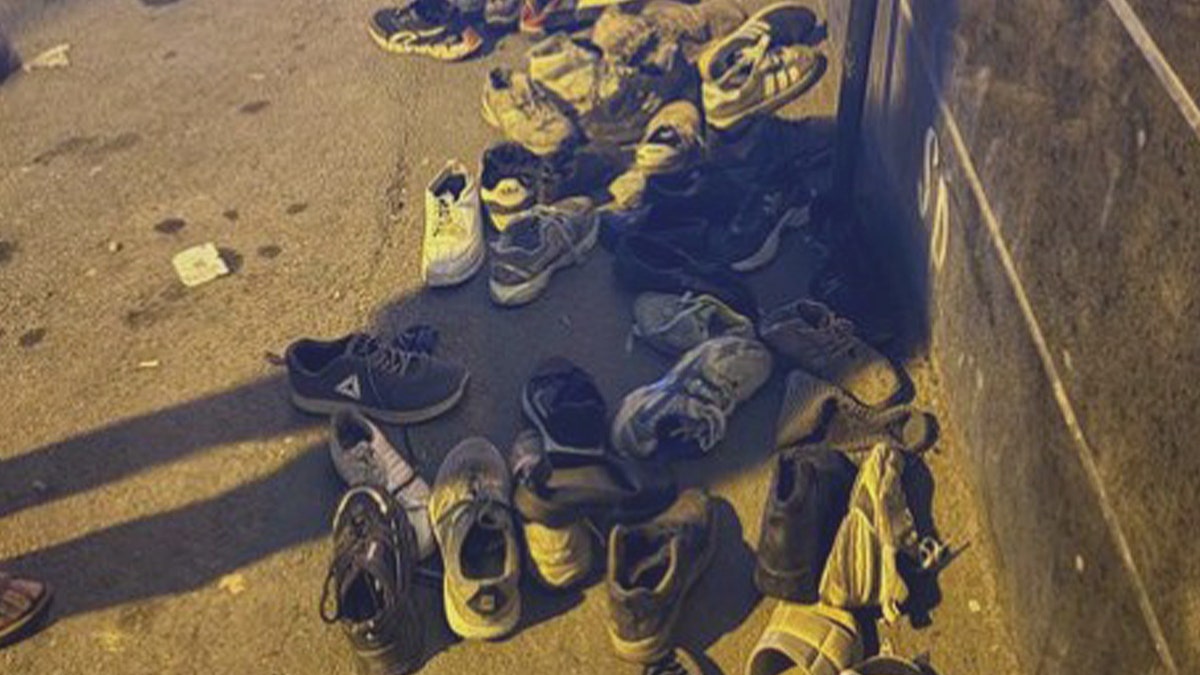
Iranian security forces allegedly killed detainees and burned bodies during protests, with clashes continuing in Kermanshah, Rasht and Mashhad despite government claims. (NCRI)
He also pointed to underlying instability inside Iran, noting that the country’s population is «over 85 million, young, urban, and repeatedly discontent,» with protest activity suggesting that a significant portion opposes the regime.
«Until now, civilians have largely been told to shelter,» Spencer wrote. «That could change.»
Fox News Digital reached out to the Iranian mission to the United Nations, which responded, «no comment.»
Fox News Digital reached out to the White House for comment.
war with iran, world protests, iran
INTERNACIONAL
Legal powerhouse accused of bailing on panel exposing their ‘monopoly’ over law school accreditation

NEWYou can now listen to Fox News articles!
FIRST ON FOX: The American Bar Association’s expected panelist from its council on law school accreditation ended up no-showing at a conservative Federalist Society event about the ABA’s «monopoly» on law school accreditation.
The Trump administration has accused the ABA of acting as a politicized gatekeeper, executive agencies have restricted their members from attending ABA events, and its diversity-related law school accreditation standards have been regarded as unlawful. Trump’s Attorney General Pam Bondi later escalated that effort by telling the ABA it would no longer receive special access to the judicial vetting process, which followed concerns its rating process for federal judicial nominees was biased as well. .
At the Thursday event, which was held across the street from where the ABA was holding its spring antitrust conference, America First Legal President Gene Hamilton suggested the ABA no-showed because the group’s position on the matter is «indefensible.»
«I don’t know all the backstory. I mean, I’m just a moderator, but I think that there’s a certain amount – if I was a betting man – my suspicion is that the ABA’s status quo and their position and their involvement in the process is indefensible from the perspective of somebody who tries to present themselves as being an unbiased, uninterested party that is just simply involved in accrediting law schools,» said Hamilton.
DOJ BLASTS ‘PARTISAN’ DC BAR COMPLAINT AGAINST SENIOR TRUMP OFFICIAL
America First Legal President Gene Hamilton speaks at a Federalist Society event in Washington, D.C. on the American Bar Association’s «monopoly» over law school accreditation. (Fox News Digital)
«When they’re confronted with hard facts and evidence and data and actual experiences from real people, multiple people, not just one person, but multiple people, it doesn’t make for a great environment if you’re trying to maintain an image that does not match reality.»
The panelists at Thursday’s event pointed to what they described as concrete, firsthand clashes with the ABA and the legal institutions tied to it. First Assistant Attorney General of Texas, Brent Webster, for example, argued that the politicization of the legal establishment became real for him when the State Bar of Texas sought to strip him and Attorney General Ken Paxton of their law licenses over litigation Texas had filed after the 2020 election.
Webster said that fight, which ended with the Texas Supreme Court vindicating him, helped expose to Texas officials how deeply bar institutions had been «radicalized» and contributed to the state’s decision to loosen the ABA’s hold over law-school approval.
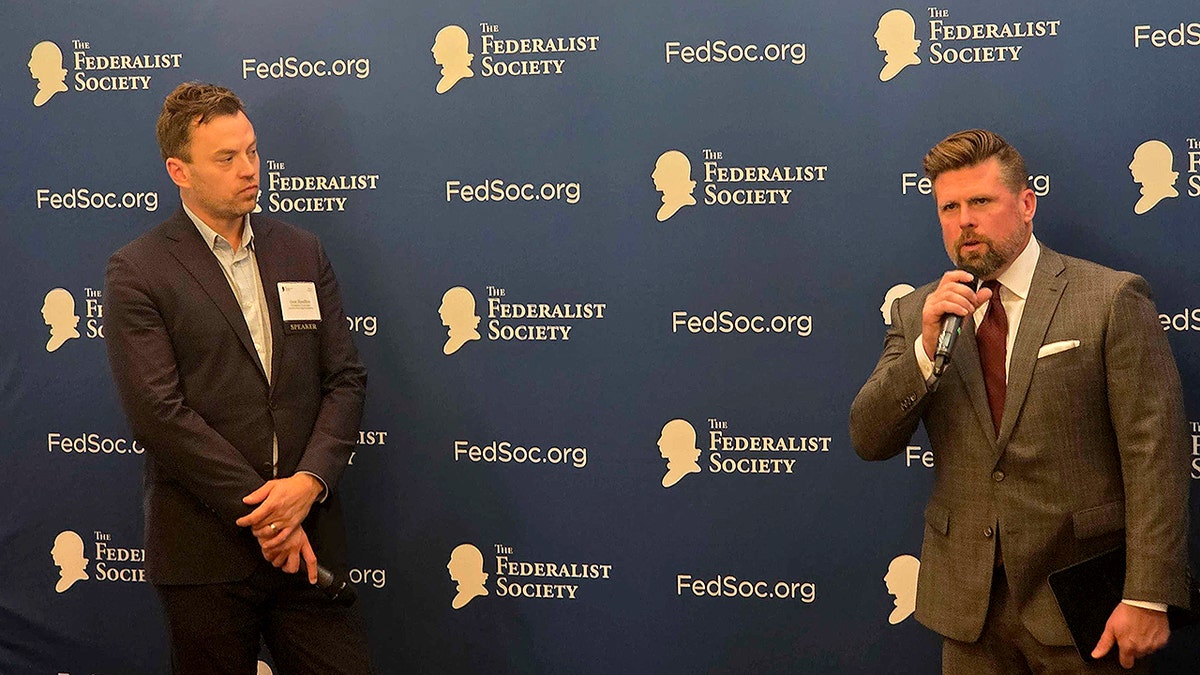
First Assistant Attorney General of Texas, Brent Webster, (right) speaks alongside America First Legal President Gene Hamilton (left) at Federalist Society event in Washington, D.C. on the American Bar Association’s «monopoly» over law school accreditation. (Fox News Digital)
Meanwhile, David Dewhirst, Solicitor General for the State of Florida, made a parallel argument through the experience of St. Thomas University’s law school in Miami, which he said was left in prolonged uncertainty by the ABA over whether its Catholic identity could coexist with the ABA’s nondiscrimination standards, especially on sexual orientation and gender identity.
TRUMP LAWYER IN JACK SMITH CASE DRAWS CONSERVATIVE BACKING AFTER DOJ PRAISE RATTLES ‘ELITE’ LEGAL CONFERENCE
Together, those stories were presented as real-world examples of the broader complaint underscored at the Thursday event – that the ABA is no longer acting as a neutral professional body, but as an ideological gatekeeper with the power to shape who gets trained, licensed and recognized in the legal profession.
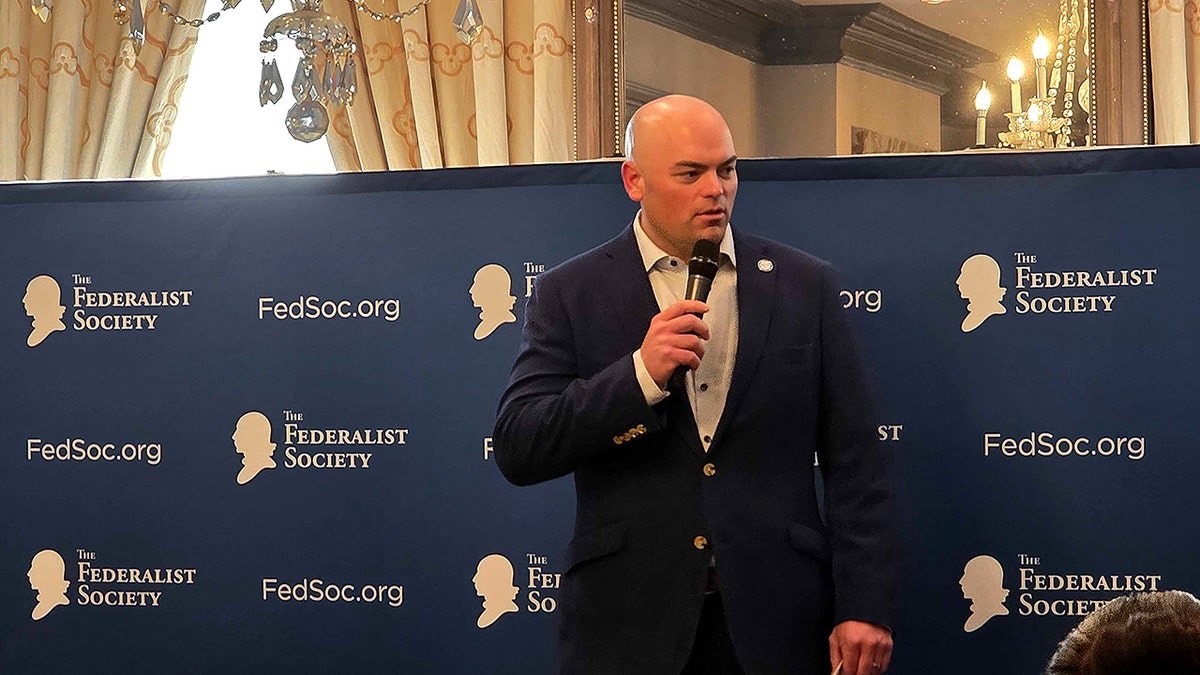
Florida Solicitor General David Dewhirst speaks at Federalist Society event in Washington, D.C. on the American Bar Association’s «monopoly» over law school accreditation. (Fox News Digital)
A representative from the ABA Section of Legal Education and Admissions to the Bar said former Colorado Supreme Court Justice and Chair-elect of the ABA’s Section of Legal Education and Bar Admissions, Melissa Hart, was not even aware she had been listed as a panelist. They added that the invitation, sent to them on March 13, according to the Federalist Society, was «last-minute» and no one was available to attend, despite the Federalist society telling Fox News that their open invite to the ABA had been confirmed about a week after it was sent.
«From the perspective of the ABA, when they’re under significant pressure right now from both the federal administration, the states and a lot of people waking up to their shenanigans – it makes it a tough time to be in an environment that is a little bit more direct and blunt and to the point,» Hamilton added about the ABA’s absence at the event.
American Bar Association (ABA) (Justin Sullivan/Getty Images)
CLICK HERE TO GET THE FOX NEWS APP
At the event, Hamilton unveiled a new report from America First Legal, which showed ABA’s Standing Committee on Amicus Curiae Briefs, over the last decade, has produced 80% of left-leaning liberal arguments, 20% neutral and zero that are conservatively aligned. In all six cases, the ABA has filed amicus briefs involving Trump, the ABA went against the president or his allies.
«The ABA requires that amicus briefs be authorized by its board of governors and must be consistent with existing ABA policy or involve matters of ‘special significance to lawyers or the legal profession,’» a press release from AFL argued. «Briefs on birthright citizenship, transgender healthcare for minors and the Texas heartbeat law fall well outside that mandate,» AFL said in a press release announcing the new research.
law, federal courts, justice department, florida, texas, politics, donald trump

Hezbollah y sus dobles estándares

El miedo a la guerra civil

Una ceremonia de toda la prensa

Fatima y Ali

La joven Fátima
Un gran corresponsal

La China Suárez y Mauro Icardi regresaron a Turquía en medio de una polémica noche en Buenos Aires

El Poder Ejecutivo avanza con los nombramientos judiciales y envía más de 50 pliegos al Senado

Iran’s internet blackout hiding strike damage and suppressing dissent, Israeli officials say

Un jugador de Zambia terminó en el hospital antes del amistoso con la Selección Argentina

Natalidad porteña: menos relato y más política pública

Cae un gigante lácteo: 5 meses de salarios impagos, indemnizaciones paradas y deuda con tambos

Máximo Kirchner salió al cruce de Milei y Macri tras el fallo por YPF a favor de la Argentina

Ian Lucas contó que Maxi López le advirtió sobre su romance con Evangelina Anderson: “No seas bol…”

La secretaria del piloto denunció que el amigo de Adorni la hostiga y la justicia dispuso medidas

¡DERIVA ECONÓMICA Y SOBERBIA POLÍTICA! El abismo entre el «relato oficial» y la realidad de una clase media que no aguanta más

 POLITICA2 días ago
Máximo Kirchner salió al cruce de Milei y Macri tras el fallo por YPF a favor de la Argentina
- POLITICA2 días ago
La secretaria del piloto denunció que el amigo de Adorni la hostiga y la justicia dispuso medidas
- POLITICA1 día ago
El Gobierno cambia su propuesta de reforma: endurece penas para delitos comunes, pero no para los casos de corrupción