
INTERNACIONAL
Musk deletes explosive posts about Trump and Epstein files

NEWYou can now listen to Fox News articles!
From bringing the heat to retreating on the beef.
Elon Musk appears to be backtracking on some of the wild accusations he made during his ugly spat with President Donald Trump earlier this week.
Musk sensationally posted on Thursday that the president’s name appears in unreleased Jeffrey Epstein files — and said that’s why the files haven’t been made public.
«@RealDonaldTrump is in the Epstein files,» Musk wrote on X. «That is the real reason they have not been made public. Have a nice day, DJT!»
Musk followed the post with another, saying, «Mark this post for the future. The truth will come out.»
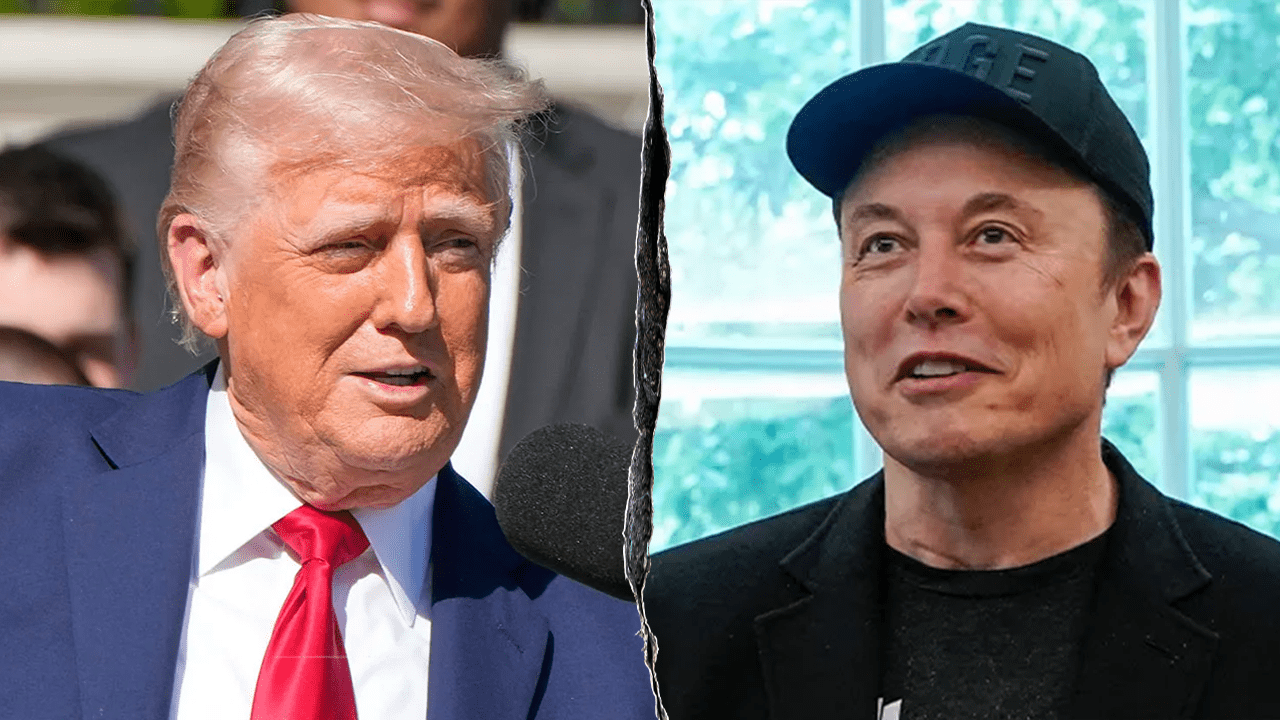
Elon Musk appears to be backtracking on some of the wild accusations he made during his heated spat with President Donald Trump earlier this week. (Reuters/AP)
PRESIDENT TRUMP TEASES ‘LAST DAY, BUT NOT REALLY’ FOR ELON MUSK AT DOGE: OVAL OFFICE PRESSER SET FOR FRIDAY
But eagle-eyed online sleuths noticed that Musk had quietly deleted the posts.
The former «First Buddy» dropped the allegation in response to a back-and-forth series of social media messages between him and Trump. But as of today, the post has been removed from the Tesla CEO’s timeline.
The post wasn’t the only one he deleted: Musk also appears to have taken down a post endorsing a message that read, «Trump should be impeached» and that Vance «should replace him.»
Musk shared the post and wrote «yes,» but his comment is no longer visible.
The beef between Musk and Trump exploded onto the national scene this week with the SpaceX CEO publicly blasting Trump’s major legislation, the Big Beautiful bill, for increasing the deficit by around $2.5 trillion.
The feud came despite a months-long «bromance» between the pair, with Musk donating around $277 million to Trump’s campaign and enthusiastically supporting his return to office. Trump’s return to office also saw Musk oversee the Department of Government Efficiency (DOGE) for months.
White House Press Secretary Karoline Leavitt said in the aftermath of Musk’s post that it was an «unfortunate episode from Elon, who is unhappy with the One Big Beautiful Bill because it does not include the policies he wanted.»
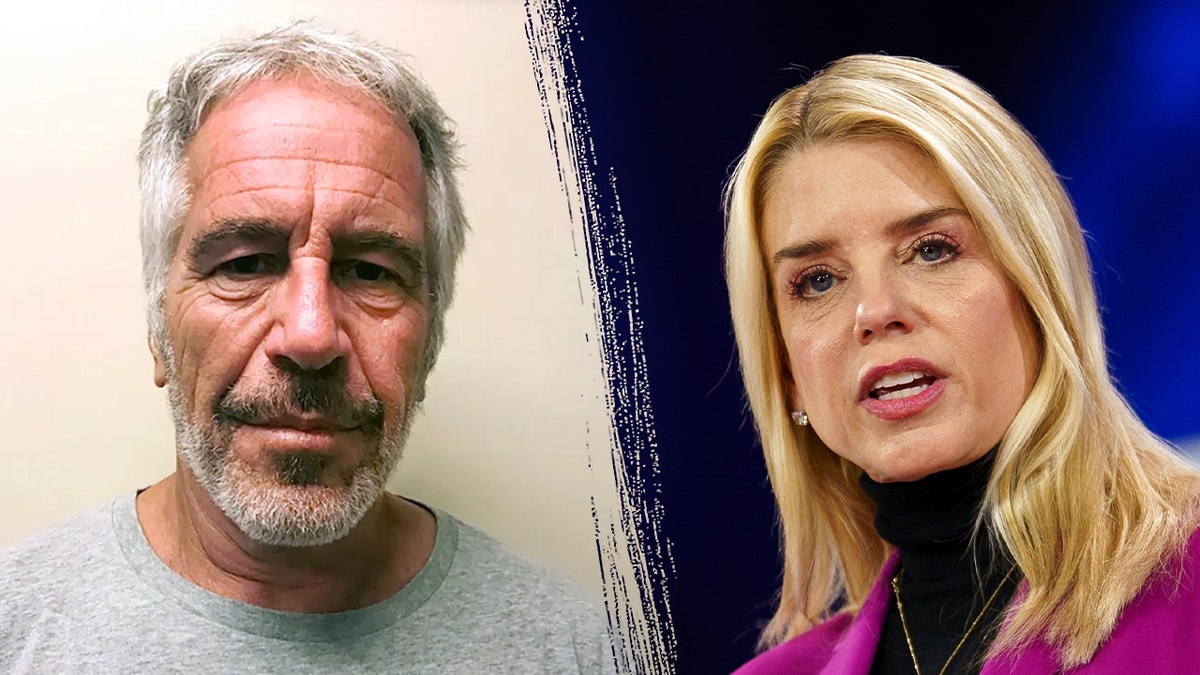
U.S. Attorney General Pam Bondi said the FBI handed over Jeffery Epstein files to the DOJ. (New York State Sex Offender Registry via AP | Getty Images)
JEFFREY EPSTEIN LIST: AG PAM BONDI RELEASES HIGHLY ANTICIPATED DOJ DOCUMENTS
The White House said a source familiar with the Epstein matter said it is widely known that Trump kicked Epstein out of his Palm Beach Golf Club.
The source also pointed out that the administration released the Epstein files, which included Trump’s name, and nothing was new about Musk’s revelation.
«If Elon truly thought the President was more deeply involved with Epstein, why did he hang out with him for 6 months and say he ‘loves him as much as a straight man can love a straight man?’» the source said.
Musk’s bombshell allegation against Trump comes months after a trove of files pertaining to the Epstein case were released.
In February, Attorney General Pam Bondi sent a letter to FBI Director Kash Patel explaining the delay in the release of documents and placing blame on an FBI field office in New York.
Bondi said she requested the full Epstein case file before Patel was confirmed as the head of the FBI and received about 200 pages — far fewer than the number of pages released last year in a civil lawsuit connected to Ghisalaine Maxwell, the trafficker’s former lover and convicted accomplice.
Although Bondi pushed for the release of the full dossier, which included records, documents, audio and video recordings, and materials related to Epstein and his clients, the request remains unfulfilled.
One of the key pieces that remains unreleased is a client list, though Bondi claimed in February it was on her desk to be reviewed.
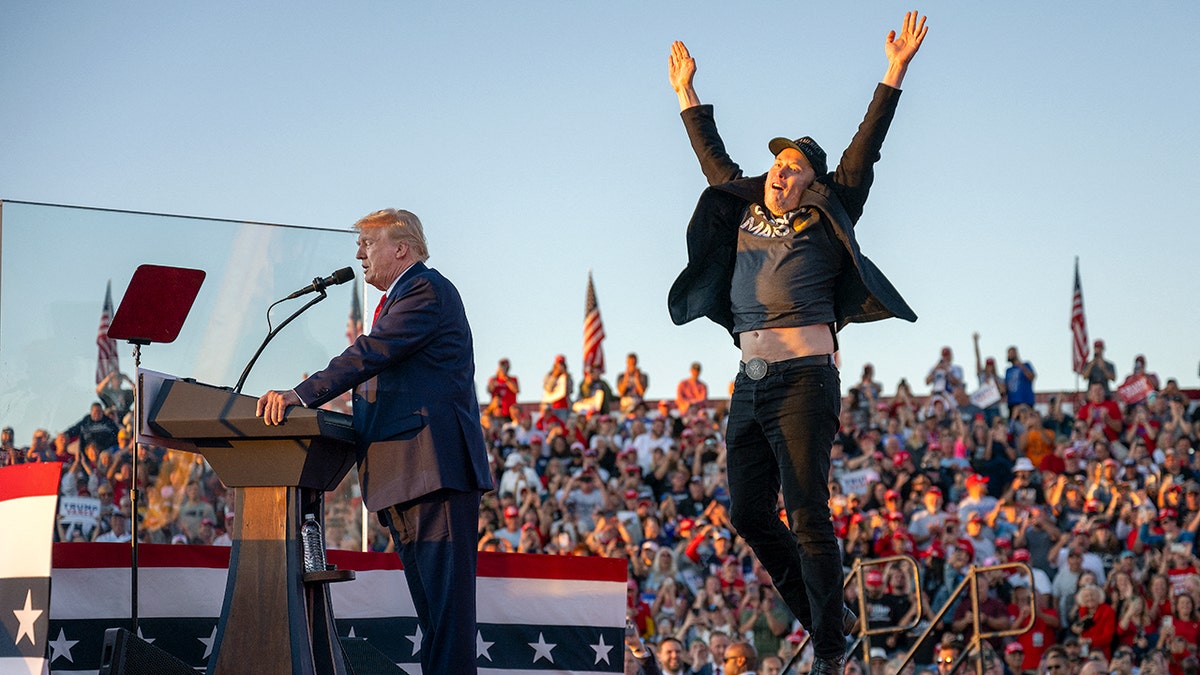
Elon Musk has been a staunch Trump supporter since he endorsed his 2024 run in July. (JIM WATSON/AFP via Getty Images)
The documents that have been released so far include flight logs, an evidence list, a contact book and a redacted «masseuse list» believed to refer to Epstein’s victims.
Many people named in the documents have never been accused of Epstein-related wrongdoing. However, some have, like Maxwell; Prince Andrew, who has denied allegations of wrongdoing; and Jean-Luc Brunel, a French modeling agent who, like Epstein, died in a jail awaiting trial.
CLICK HERE TO GET THE FOX NEWS APP
Epstein, Maxwell and unnamed co-conspirators allegedly abused young women and underage girls between 1996 and his death in 2019, according to the lawsuit. Citing police documents, it alleges that Epstein recruited girls between 14 and 16 as well as students at Palm Beach Community College for «sex-tinged sessions.»
Maxwell is appealing her conviction while serving a sentence at a federal prison in Tallahassee. She is due for release in the summer of 2037.
Fox News Digital’s Andrew Mark Miller and Mike Ruiz contributed to this report.


“Todo cuanto sobre las mujeres han escrito los hombres debe tenerse por sospechoso, puesto que son juez y parte a la vez”. Lo escribió Simone de Beauvoir en El segundo sexo de 1949. Durante muchos años esta filósofa francesa reflexionó sobre lo que significa que ser mujer y llegó a la conclusión de que no es un destino biológico, sino una construcción social. El libro fue un éxito de ventas y aún hoy es una cita ineludible.
La cuarta parte del libro inicia con un apartado titulado “Infancia”. Allí escribe: “No se nace mujer: se llega a serlo”. Y sigue con una idea que línea a línea se torna más clara: “Ningún destino biológico, psíquico o económico define la figura que reviste en el seno de la sociedad la hembra humana; es el conjunto de la civilización el que elabora ese producto intermedio entre el macho y el castrado al que se califica de femenino”.

Unas cincuentas páginas antes usa la misma fórmula: “A decir verdad, no se nace genio: se llega a serlo; y la condición femenina ha hecho imposible ese devenir hasta el presente”. El punto central es la diferencia entre sexo y género. Distingue entre el cuerpo con el que nacés (biología) y la identidad que la sociedad te impone (cultura). Al nacer, un bebé tiene características biológicas (hembra), pero no tiene “feminidad”.
Luego “se llega a serlo”: a medida que la niña crece, la familia, la educación, las leyes y la religión le enseñan cómo debe comportarse, vestir, hablar y sentir para encajar en el molde de lo que esa sociedad considera “femenino”. Si históricamente el hombre ha sido definido como el “sujeto” (lo universal, la norma, el ser humano) y la mujer como “lo Otro”, ser mujer es aceptar un rol secundario, una posición de subordinación.

Como filósofa existencialista, Beauvoir creía que “la existencia precede a la esencia”. Esto significa que no hay una “esencia femenina” natural (como ser más cariñosa, sumisa o maternal por naturaleza). Si la feminidad es algo que se “aprende” o se “construye”, entonces también se puede deconstruir. La frase se volvió bandera y eslogan y se fue adoptando en las nuevas corrientes y fue un puntapié para el movimiento trans: no se nace mujer (¿ni varón?).
El segundo sexo es considerado la “piedra basal” del feminismo moderno. Cuando se publicó, el feminismo (luego se lo llamaría “feminismo de la primera ola”) estaba estancado tras haber conseguido el voto. El libro fue extremadamente polémico: el Vaticano lo incluyó en su lista de libros prohibidos y sectores conservadores lo tacharon de escandaloso. Funcionó de “combustible” para un activismo real.

Quién fue Simone de Beauvoir
Simone de Beauvoir (1908–1986) fue una filósofa, escritora y activista francesa, considerada la madre del feminismo moderno y una figura central del existencialismo. Defendió la libertad individual y la igualdad de género, argumentando que la identidad no es algo biológico sino una construcción social. Sin dudas su obra maestra y pilar de la teoría feminista es el libro que acabamos de analizar: El segundo sexo.
También escribió Los mandarines (novela que retrata las dudas intelectuales y políticas en la Francia de posguerra; ganó el Premio Goncourt), Memorias de una joven formal (primer tomo de su autobiografía) y La mujer rota (colección de tres relatos cortos que exploran la crisis existencial y la vulnerabilidad de las mujeres frente al paso del tiempo y el desamor). El filósofo Jean-Paul Sartre fue su compañero de vida.
INTERNACIONAL
La tregua anunciada por Trump abre un escenario de paz con objetivos “aceptables” para Irán, Israel y Estados Unidos

La tregua de dos semanas anunciada por Donald Trump abrió el camino a un eventual acuerdo de paz “de largo plazo” y puso sobre la mesa un escenario en el que todas las partes podrán declarar su propio triunfo.
Atrás quedaron el ultimátum del presidente estadounidense de “aniquilar” a Irán en una sola noche y 24 horas de intensa actividad bélica en el terreno, aunque el cese del fuego deja varios puntos difíciles sin resolver.
“En Medio Oriente no existe aquel que perdió. No pierde nadie. Es la regla. Nadie puede perder y Trump tampoco”, dijo a TN el analista internacional Mauro Enbe.
Es un arreglo que, de confirmarse en los próximos 15 días con la reapertura del estrecho de Ormuz, podría adecuarse a objetivos “aceptables” de cada una de las partes en conflicto. Pero las negociaciones demorarían más allá de dos semanas.
“Trump declarará su triunfo militar y, de concretarse, reivindicará la reapertura del estrecho. Irán, aunque debilitado, se mostrará vencedor porque el régimen teocrático sobrevivió a la guerra, mientras que Israel lo hará porque Teherán no tiene la misma capacidad bélica” amenazante, dijo Enbe.
Faltará determinar el destino de los alrededor de 450 kilos de uranio enriquecido que Estados Unidos e Israel exigen a Irán que entregue para evitar cualquier intento de construir bombas atómicas. Además, se deberá definir cómo será la futura política nuclear del gobierno de los ayatollah bajo la fuerte presión israelí.
Presiones internacionales e internas
La amenaza destemplada de Trump de barrer la civilización iraní en una sola noche fue una bravuconada más del presidente estadounidense para meter presión sobre Irán. Pero dio resultado.
Su enésimo ultimátum esta vez provocó una fuerte presión internacional que no solo abrazó a sus socios europeos, sino también hasta el mismo papa León XIV, que juzgó “inaceptables” sus amenazas.
El cierre del estrecho de Ormuz causó una grave crisis internacional (Foto de archivo: Reuters)
Pero Trump necesita ponerle un punto final a esta guerra que le provocó fuertes dolores de cabeza internos y un aumento de la presión de su partido republicano, en especial de su movimiento MAGA (Make America Great Again).
En un año electoral, donde se definirá la segunda parte de su mandato, las elecciones de medio término previstas para noviembre son una espada de Damocles para un presidente en guerra y con fuertes turbulencias comerciales y económicas derivadas del cierre del estrecho de Ormuz.
Leé también: Guerra en Medio Oriente: fue liberada la periodista estadounidense que estaba secuestrada en Bagdad
El presidente estadounidense estaba metido en un callejón sin salida. A pocos meses de las elecciones, “va a querer vender la victoria ante el electorado. Trump está apoyando a sus candidatos en la interna republicana. Tenía que terminar el conflicto de alguna manera”, dijo Enbe.
¿Qué va a pasar con el estrecho de Ormuz?
A menos de dos horas de cumplirse su propio ultimátum, Trump anunció la suspensión de los bombardeos a Irán, bajo la mediación del primer ministro de Pakistán, Shehbaz Sharif, y el jefe del Ejército, Asim Munir. Israel avaló la tregua.
Poco después, el Consejo Supremo de Seguridad Nacional de Irán anunció que aceptó un cese del fuego.
“Se ha decidido al más alto nivel que Irán entablará, durante un período de dos semanas (…), negociaciones con la parte estadounidense en Islamabad”, afirmó el organismo en un comunicado.
Sin embargo, advirtió: “Esto no significa el fin de la guerra. Irán solo aceptará el cese de las hostilidades cuando las negociaciones hayan concluido con éxito», indicó.
De hecho, presentó su propio plan de 10 puntos que obliga a Washington a aceptar el enriquecimiento de uranio y levantar todas las sanciones. Pero sus exigencias son diametralmente opuestas a las que bajaron desde Washington, que busca terminar con el plan nuclear iraní, acabar con los grupos proxy como Hezbollah y poner punto final a la represión interna.
Leé también: El líder supremo de Irán está grave e inconsciente, según un memorándum basado en informes de inteligencia
Son puntos que ponen un signo de interrogación a la marcha de las negociaciones y que prevén un escenario complejo para alcanzar un acuerdo definitivo.
“Creo que los dos ganaron. Hace unos días Trump salió a decir que esto había sido un cambio de régimen y ahora ha obtenido el compromiso de la reapertura del estrecho de Ormuz. En este sentido, ha ganado. Por otro lado, Irán va a decir que logró disuadir a Estados Unidos de no lanzar un ataque contra su territorio. Es un escenario que beneficia a ambos”, dijo a TN el analista Said Chaya, director del Núcleo de Estudios de Medio Oriente de la Universidad Austral.
El primer paso está en marcha. El canciller iraní, Abbas Araqchi, dijo que Irán posibilitará “el paso seguro” por el estrecho de Ormuz durante las próximas dos semanas.
Para Enbe, aún resta saber que pasará en el futuro con el estrecho por donde pasa habitualmente el 20 % del comercio petrolero y gasístico mundial, el punto clave del conflicto.
“Hay que ver ahora cómo reaccionará Irán con este punto” en un eventual acuerdo a largo plazo, indicó el analista.
La negociación pasará ahora por determinar si el control del paso marítimo será libre o quedará en manos de Irán y Omán en forma conjunta con el cobro de un “peaje” como pretende Teherán.
Después, cada parte tendrá tiempo para declarar su victoria total sobre el enemigo por obra y gracia de la propaganda, las fakes news y los discursos oficiales.
“Cada uno lo presenta como mejor le conviene. La verdad es la primera víctima en este contexto”, resumió Chaya.
Irán, Donald Trump

NEWYou can now listen to Fox News articles!
President Donald Trump’s support for his war with Iran began to publicly fray within his own party, as some in the GOP bucked the president’s threat Tuesday morning.
Trump has for several days suggested he would order the military to destroy much of Iran’s civilian infrastructure, including energy sites and bridges, if the country does not reopen the Strait of Hormuz.
Trump planted that flag again Tuesday morning, declaring that a «whole civilization will die tonight» if Iran does not act before his 8 p.m. Eastern deadline. While the threat was reversed shortly before the deadline in a Truth Social post revealing a two-week ceasefire after talks with Pakistani leaders, Trump’s strategy is unpredictable.
«Almost all of the various points of past contention have been agreed to between the United States and Iran, but a two week period will allow the Agreement to be finalized and consummated,» Trump wrote. «On behalf of the United States of America, as President, and also representing the Countries of the Middle East, it is an Honor to have this Longterm problem close to resolution.»
Members of security forces watch over the crowd during a funeral procession held for IRGC Navy Chief Alireza Tangsiri, alongside other senior naval commanders and their families who were killed in US-Israeli strikes in late March, on April 1, 2026 in Tehran, Iran. (Majid Saeedi/Getty Images)
EX-TRUMP ALLY MARJORIE TAYLOR GREENE JOINS LEFT-WING CALLS FOR THE 25TH AMENDMENT AS IRAN DEADLINE NEARS
He added the administration received a 10-point proposal from Iran, and officials «believe it is a workable basis on which to negotiate.»
While Republicans have largely kept quiet about the war, many are refusing to use the term despite Trump referring to it as such on several occasions. But his latest threat has rattled some in the GOP, who view it as a betrayal of how America operates in wartime.
Still, they aren’t calling for Congress to reassert itself as Operation Epic Fury continues in the Middle East.
«So, let me be clear: I do not support the destruction of a ‘whole civilization,’» Rep. Nathaniel Moran, R-Texas, wrote on social media Tuesday afternoon. «That is not who we are, and it is not consistent with the principles that have long guided America.»
«I have and will continue to support a strong national defense—one that is focused, disciplined, and firmly rooted in protecting the safety and security of the American people,» the Texas Republican added. «But, how we protect the lives of the innocent is just as important as how we engage the enemy.»
And Sen. Lisa Murkowski, R-Alaska, who has bucked Trump on Venezuela but largely toed the party-line on Iran, called for the saber-rattling to end.
She charged that his threat «cannot be excused away as an attempt to gain leverage in negotiations with Iran.»
«This type of rhetoric is an affront to the ideals our nation has sought to uphold and promote around the world for nearly 250 years,» Murkowski said on X. «It undermines our long-standing role as a global beacon of freedom and directly endangers Americans both abroad and at home.»
DEMOCRATS THREATEN TO GRIND SENATE TO A HALT TO FORCE PUBLIC IRAN HEARINGS
Others, like Sen. Ron Johnson, R-Wis., a close ally of the president’s, hoped that Trump’s threat was «bluster.»
«I do not want to see that we are not at war with the Iranian people. We are trying to liberate them,» Johnson said.
Though they are publicly breaking with the latest threat, none have called for legislative action. Both Murkowski and Johnson have repeatedly voted against war powers resolutions pushed by Senate Democrats seeking to block Trump’s authority in Iran.
Still, Sen. John Curtis, R-Utah, has vowed to oppose more funding for the president’s Iran campaign until Congress votes to authorize the war, and former Republican-turned independent Rep. Kevin Kiley, I-Calif., wants Congress to conduct oversight of the president’s Iran campaign.
Neither chamber has conducted an oversight hearing so far.
«The United States does not destroy civilizations. Nor do we threaten to do so as some sort of negotiating tactic,» Rep. Kevin Kiley, I-Calif., who recently left the Republican Party ahead of a potentially bruising reelection bid, wrote on social media.
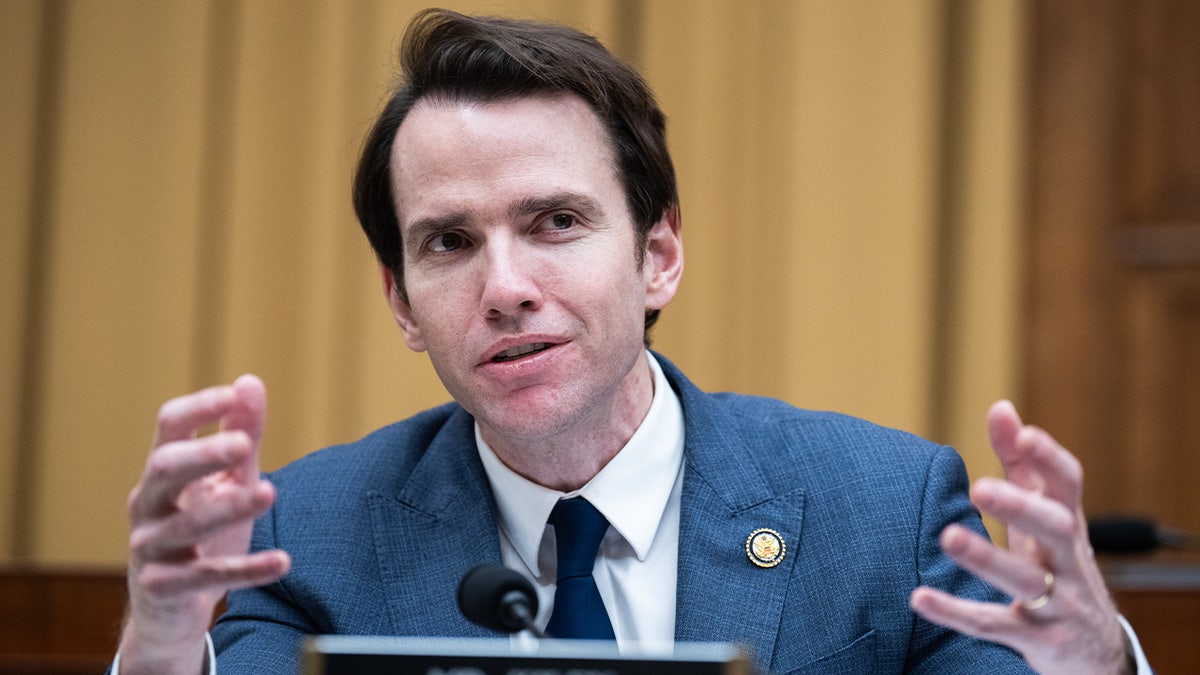
Rep. Kevin Kiley, R-Calif., questions Attorney General Pam Bondi during the House Judiciary Committee hearing titled «Oversight of the U.S. Department of Justice,» in Rayburn building on Wednesday, Feb. 11, 2026. (Tom Williams/CQ-Roll Call, Inc)
CLICK HERE TO DOWNLOAD THE FOX NEWS APP
Congressional Democrats erupted against Trump’s threat Tuesday with many lawmakers calling for the president’s impeachment or removal via the 25th Amendment. Some Democrats, including Sen. Sheldon Whitehouse, D-R.I., have said those proposals are «unrealistic» in the face of widespread GOP opposition.
The House and Senate are not scheduled to return to Washington until the week of April 13.
congress, donald trump, war with iran, republicans, iran

Activistas de Greenpeace intervinieron un monumento frente al Congreso en rechazo a la Ley de Glaciares

Simone de Beauvoir, filósofa francesa: “No se nace mujer: se llega a serlo”

Extrema preocupación en la Patagonia por una plaga de jabalíes, una de las especies más dañinas del mundo

River Plate buscará comenzar la Copa Sudamericana con una victoria ante Blooming en Bolivia: hora, TV y formaciones

El simulador espacial súper realista con el aprobado de Elon Musk y la NASA lo peta en Steam 11 años después de salir

Diputados: con el apoyo de aliados, el Gobierno confía en aprobar hoy las modificaciones a la Ley de Glaciares

La nueva advertencia de Donald Trump a Irán: «El tiempo se acaba, quedan 48 horas antes del infierno»

Círculo rojo: intrigas en el gabinete, desgaste por el caso Adorni y movimientos inquietantes en el Poder Judicial

Caputo habló sobre los créditos del Banco Nación que tomaron sus funcionarios: “No hay nada ilegal ni inmoral”

Créditos del Banco Nación: el Gobierno reveló que Pettovello echó a Massaccesi porque “mintió”
-
 ECONOMIA2 días ago
Caputo habló sobre los créditos del Banco Nación que tomaron sus funcionarios: “No hay nada ilegal ni inmoral”
-

 POLITICA1 día ago
Adorni recibió US$100 mil de otras dos mujeres por la hipoteca de un departamento anterior en Caballito
-
 POLITICA11 horas ago
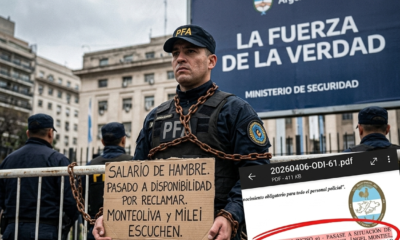
Ajuste y Castigo: El Gobierno de Milei Pasa a «Disponibilidad» al Policía que se Encadenó por un Sueldo Digno