INTERNACIONAL
Continued court fights could put Harvard in unwinnable position vs Trump

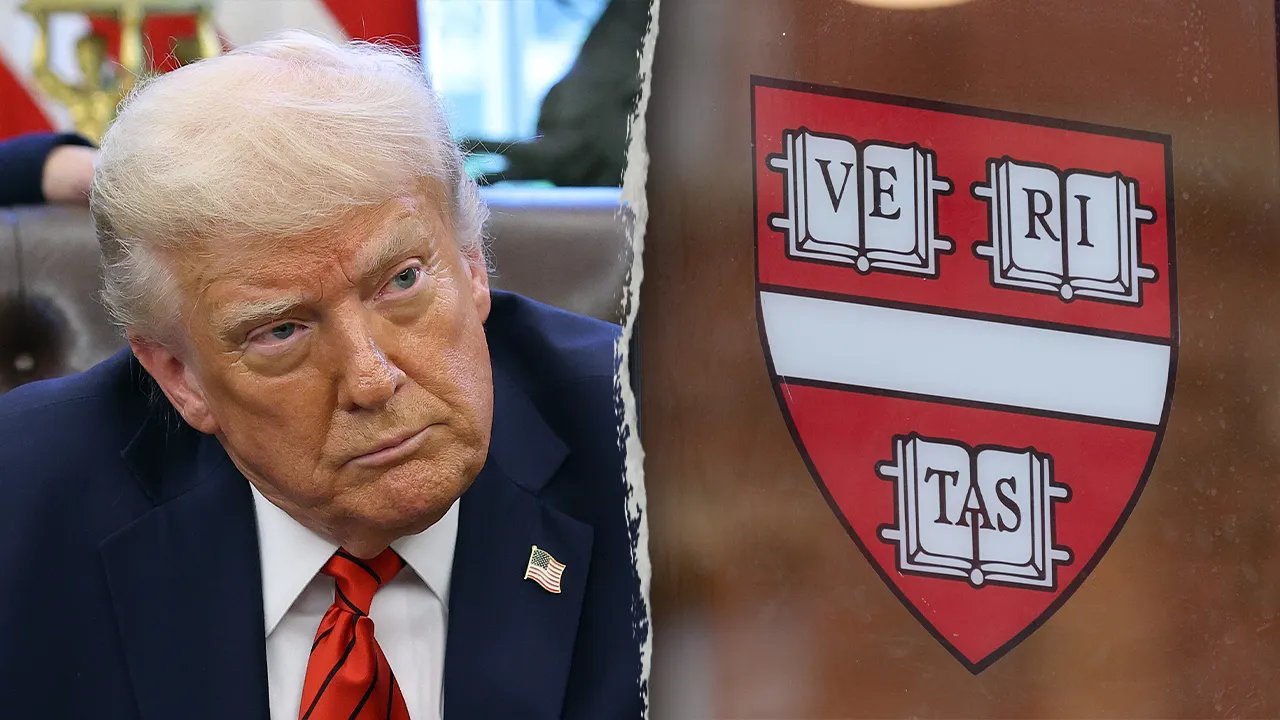
NEWYou can now listen to Fox News articles!
A federal judge in Massachusetts on Thursday granted Harvard University’s emergency request to block, for now, the Trump administration’s effort to ban international students from its campus, siding with Harvard in ruling that the university would likely suffer «immediate and irreparable harm» if enforced.
The temporary restraining order from U.S. District Judge Allison D. Burroughs blocks the administration from immediately stripping Harvard of its certification status under the Student and Exchange Visitor Program, or SEVP — a program run by Department of Homeland Security (DHS) that allows universities to sponsor international students for U.S. visas.
Burroughs said in her order that Harvard has demonstrated evidence it «will suffer immediate and irreparable injury before there is an opportunity to hear from all parties,» prompting her to temporarily block the SEVP revocation.
Still, some see the order as a mere Band-Aid, forestalling a larger court fight between Harvard and the Trump administration — and one that Trump critics say could be unfairly weighted against the nation’s oldest university.
STATE DEPARTMENT NOW SCRUTINIZING ALL VISA HOLDERS ASSOCIATED WITH HARVARD
Banners hang outside the Harry Elkins Widener Memorial Library at the Harvard University campus in Cambridge, Massachusetts, on May 27. (Sophie Park/Bloomberg)
«Ultimately, this is about Trump trying to impose his view of the world on everybody else,» Harvard Law professor Noah Feldman said in a radio interview discussing the Trump administration’s actions.
Since President Donald Trump took office in January, the administration has frozen more than $2 billion in grants and contracts awarded to the university. It is also targeting the university with investigations led by six separate federal agencies.
Combined, these actions have created a wide degree of uncertainty at Harvard.
The temporary restraining order handed down on Thursday night is also just that — temporary. Though the decision does block Trump from revoking Harvard’s SEVP status, it’s a near-term fix, designed to allow the merits of the case to be more fully heard.
Meanwhile, the administration is almost certain to appeal the case to higher courts, which could be more inclined to side in favor of the administration.
And that’s just the procedural angle.
JUDGES V TRUMP: HERE ARE THE KEY COURT BATTLES HALTING THE WHITE HOUSE AGENDA

Harvard President Alan Garber acknowledges an extended round of applause during Harvard University’s commencement ceremonies in Cambridge, Massachusetts, on May 29. (AP Photo/Charles Krupa)
Should Harvard lose its status for SEVP certification — a certification it has held for some 70 years — the thousands of international students currently enrolled at Harvard would have a very narrow window to either transfer to another U.S. university, or risk losing their student visas within 180 days, experts told Fox News.
Some may opt not to take that chance, and transfer to a different school that’s less likely to be targeted by the administration — even if it means sacrificing, for certainty, a certain level of prestige.
Regardless of how the court rules, these actions create «a chilling effect» for international students at Harvard, Aram Gavoor, an associate dean at George Washington University Law School and a former Justice Department attorney, said in an interview.
Students «who would otherwise be attending or applying to Harvard University [could be] less inclined to do so, or to make alternative plans for their education In the U.S.,» Gavoor said.
Even if the Trump administration loses on the merits of the case, «there’s a point to be argued that it may have won as a function of policy,» Gavoor said.

People walk through the gate on Harvard Yard at the Harvard University campus in Cambridge, Massachusetts, on June 29, 2023. (Getty Images)
Meanwhile, any financial fallout the school might see as a result is another matter entirely.
Though the uncertainty yielded by Trump’s fight against Harvard could prove damaging to the school’s priority of maintaining a diverse international student body, or by offering financial aid to students via the federally operated Pell Grant, these actions alone would unlikely to prove financially devastating in the near-term, experts told Fox News.
Harvard could simply opt to fill the slots once taken by international students with any number of eager, well-qualified U.S.-based applicants, David Feldman, a professor at William & Mary who focuses on economic issues and higher education, said in an interview.
Harvard is one of just a handful of American universities that has a «need-blind» admissions policy for domestic and international students — that is, they do not take into consideration a student’s financial need or the aid required in weighing a potential applicant. But because international students in the U.S. typically require more aid than domestic students, replacing their slots with domestic students, in the near-term, would likely have little noticeable impact on the revenue it receives for tuition, fees and housing, he said.
«This is all about Harvard, choosing the best group of students possible,» Feldman said in an interview. If the administration successfully revokes their SEVP certification, this would effectively just be «constraining them to choose the second-best group,» he said.
«Harvard could dump the entire 1,500-person entering class, just dump it completely, and look at the next 1,500 [applicants],» Feldman said. «And by all measurables that you and I would look at, it would look just as good.»
Unlike public schools, which are subject to the vagaries of state budgets, private universities like Harvard often have margins built into their budgets in the form of seed money that allows them to allocate more money towards things they’ve identified as goals for the year or years ahead.
This allows them to operate with more stability as a result — and inoculates them to a larger degree from the administration’s financial hits.
CLICK HERE TO GET THE FOX NEWS APP
«Uncertainty is bad for them,» Feldman acknowledged. But at the end of the day, he said, «these institutions have the capacity to resist.»
«They would rather not — they would rather this whole thing go away,» Feldman said. But the big takeaway, in his view, is that Harvard «is not defenseless.»

INTERNACIONAL
El ataque a Irán afectó también los viajes en Medio Oriente: caos en vuelos y aeropuertos
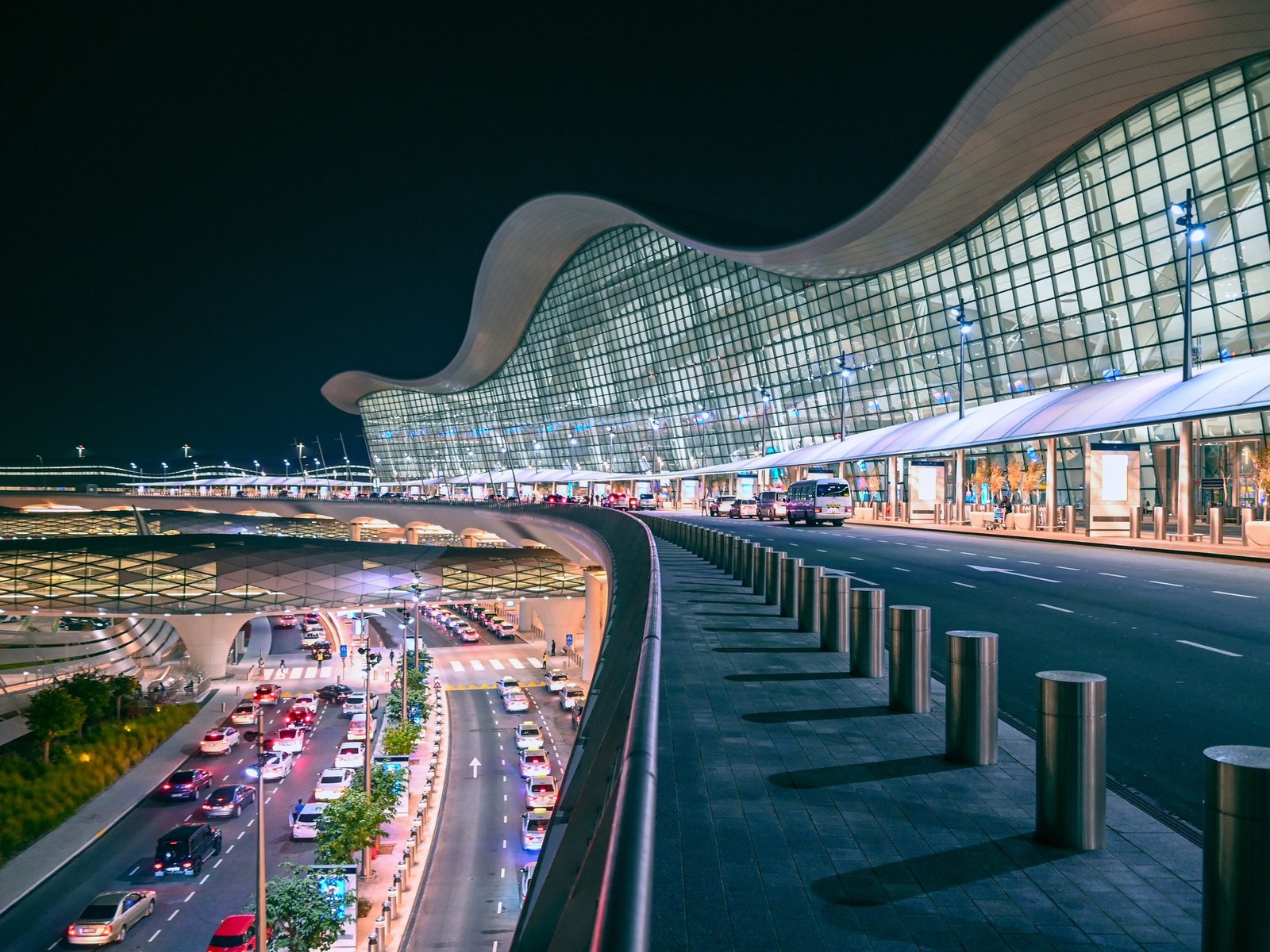
El ataque de Estados Unidos e Israel a Irán en la madrugada del sábado cambió sorpresivamente los planes de vuelos en todo Oriente Medio por el cierre del espacio aéreo en la región y las complicaciones se extendían este fin de semana por los ataques contra algunos aeropuertos y la suspensión de las operaciones en estaciones clave que conectan Europa, África y Occidente con Asia.
Cientos de miles de viajeros quedaron varados o fueron desviados a otros aeropuertos luego que Israel, Qatar, Siria, Irán, Irak, Kuwait y Bahréin cerraron sus espacios aéreos. Tampoco hubo actividad de vuelos sobre Emiratos Árabes Unidos, según el sitio web de rastreo FlightRadar24, después que el gobierno allí anunciara un “cierre temporal y parcial” de su espacio aéreo.
En ese marco se produjeron el cierre de aeropuertos clave de conexión en Dubái, Abu Dabi y Doha, y a la cancelación de más de 1.800 vuelos por parte de las principales aerolíneas de Oriente Medio. Las tres aerolíneas más importantes que operan en esos aeropuertos —Emirates, Qatar Airways y Etihad— suelen tener alrededor de 90.000 pasajeros por día transitando por esos centros y aún más viajeros con destino a lugares en Oriente Medio, según la firma de análisis de aviación Cirium.
En medio hubo un ataque de represalia iraní que impactó en el Aeropuerto Internacional de Dubái, el más grande de Emiratos Árabes Unidos y uno de los más transitados del mundo, donde al menos un hombre de nacionalidad asiática murió y otras tres personas resultaron heridas.
Emirates condenó el “ataque flagrante que involucró misiles balísticos iraníes”. También se reportaron ataques en otros aeropuertos comerciales de la región, incluido el Aeropuerto Internacional de Kuwait.
Henry Harteveldt, un analista de la industria aérea y presidente de Atmosphere Research Group, alertó que los pasajeros “deberían prepararse para retrasos o cancelaciones durante los próximos días a medida que estos ataques evolucionen y, con suerte, terminen”.
Las aerolíneas que están cruzando Oriente Medio tendrán que desviar los vuelos alrededor del conflicto, con muchos vuelos dirigidos hacia el sur sobre Arabia Saudí. Eso añadirá horas a esos viajes y consumirá combustible adicional, sumándose a los costos que las aerolíneas tendrán que absorber. Por lo tanto, los precios de los boletos podrían comenzar a aumentar rápidamente si el conflicto se prolonga.
Los vuelos adicionales también ejercerán presión sobre los controladores de tráfico aéreo en Arabia Saudí, que podrían tener que ralentizar el tráfico a fin de asegurarse de manejarlo de manera segura. Y los países que cerraron su espacio aéreo dejarán de percibir las tarifas de sobrevuelo que las aerolíneas pagan por cruzar por encima.
Por ahora no está claro cuánto tiempo durará la interrupción de las operaciones de vuelo. A modo de comparación, el ataque israelí y estadounidense a Irán en junio de 2025 duró 12 días.
En ese contexto, algunas aerolíneas estaban emitiendo exenciones para los viajeros afectados, lo que significa que los pasajeros pueden reprogramar sus planes de vuelo sin pagar cargos adicionales ni tarifas más altas.
Al menos 145 aviones que se dirigían a ciudades como Tel Aviv y Dubái a primera hora del sábado fueron desviados a aeropuertos en ciudades como Atenas, Estambul o Roma, según FlightAware. Otros dieron la vuelta y regresaron al lugar desde donde despegaron.
Un avión pasó casi 15 horas en el aire después de salir de Filadelfia y llegar hasta España antes de dar la vuelta y regresar al lugar donde comenzó.
Numerosas aerolíneas cancelaron vuelos internacionales a Dubái durante el fin de semana, y la agencia de aviación civil de India designó gran parte de Oriente Medio —incluidos los cielos sobre Jordania, Arabia Saudí y Líbano— como una zona de alto riesgo de seguridad a todas las altitudes.
Air India canceló todos los vuelos a destinos de Oriente Medio. Turkish Airlines señaló que los vuelos a Líbano, Siria, Irak, Irán y Jordania se suspenderán hasta el lunes, y que los vuelos a Qatar, Kuwait, Bahréin, Emiratos Árabes Unidos y Omán se suspenderán hasta nuevo aviso.
Delta Airlines, con sede en Estados Unidos, y United Airlines suspendieron los vuelos a Tel Aviv al menos durante el fin de semana, y la aerolínea holandesa KLM ya había anunciado a principios de semana que suspenderá sus vuelos con origen y destino en Tel Aviv.
Aerolíneas como Lufthansa, Air France, Transavia y Pegasus han cancelado todos los vuelos a Líbano, y American Airlines suspendió los vuelos de Filadelfia a Doha.
La inglesa British Airways informó que sus vuelos a Tel Aviv y Bahréin se suspenderán hasta la próxima semana, y que los vuelos a Amán, Jordania, se cancelarán el sábado.
Con información de AP / SMB
INTERNACIONAL
Concerns rise over DHS shutdown in shadow of Iran strikes: ‘Now would be a good time’ to end it
NEWYou can now listen to Fox News articles!
The partial government shutdown has Department of Homeland Security employees missing their paychecks even as the U.S. has engaged Iran with airstrikes that have brought the nation to the brink of war.
Earlier Saturday, the U.S. and Israel commenced targeted Iranian positions including the palace of dictator Ayatollah Ali Hosseini Khamenei – who was later declared dead by Jerusalem officials. The strikes have prompted concerns of retaliation, possibly inside U.S. borders.
«I am in direct coordination with our federal intelligence and law enforcement partners as we continue to closely monitor and thwart any potential threats to the homeland,» DHS Secretary Kristi Noem said in a statement.
As Friday rolled into Saturday, Transportation Safety Administration officers began effectively working pro bono, with the agency calling them «true models of selflessness and sacrifice.»
«Right now, the men and women of TSA are showing up to work without a paycheck due to the reckless DHS shutdown — despite the fact that Democrat members of Congress are still getting paid,» the agency said in a statement, calling out Democrats’ «political theater making life harder for these officers and their families.»
Lawmakers took notice of the disparity on Saturday as eyes turned to the security of America’s homeland amid Iran’s pledge to strike back.
«Given developments in the Middle East and the ongoing threat posed by Iran and its terrorist proxies, Democrats in the house, and Senate must cease the politics and must immediately fund the Department of Homeland Security,» said Rep. Daniel Meuser, R-Pa.
The Blue Mountain congressman – whose district is home to the agency’s latest immigration center purchase in Shartlesville, which is simultaneously being lambasted by Pennsylvania Gov. Josh Shapiro – added that blocking DHS funding is «irresponsible and dangerous» amid the rising global tension.
«Democrats in Congress must join Republicans, act responsibly and stop blocking efforts to fund DHS,» said Meuser.
Meuser added that protecting American people is a fundamental federal responsibility and that the U.S. cannot afford national security-related delays.
DHS SHUTDOWN TRIGGERS TSA ‘EMERGENCY MEASURES’ AS LAWMAKER WARNS AIRPORTS COULD FEEL ECONOMIC PAIN
His Keystone compatriot Sen. David McCormick echoed that sentiment in a Saturday statement:
«Now would be a good time for Democrats to drop their opposition to DHS funding and pass the bill to support our homeland security,» McCormick said.
«Continuing to play political games with our national security given the unfolding situation in the Middle East is dangerous.»
While many Democrats voiced concern or opposition to the Trump administration’s strikes, McCormick’s counterpart, Sen. John Fetterman, ridiculed critics on X – retweeting an alert that Ayatollah Ali Hosseini Khamenei had been killed, writing: «Let’s see who grieves for that garbage.»
The top Democrat on the House Homeland Security Committee, however, did criticize the operation.
Rep. Bennie Thompson of Mississippi told NOTUS News on Saturday that Trump’s attack lacks «a clear strategy» while saying the U.S. is «vulnerable to ensuing terrorism attacks today because of Trump’s reckless, inflammatory actions.»
CLICK HERE TO GET THE FOX NEWS APP
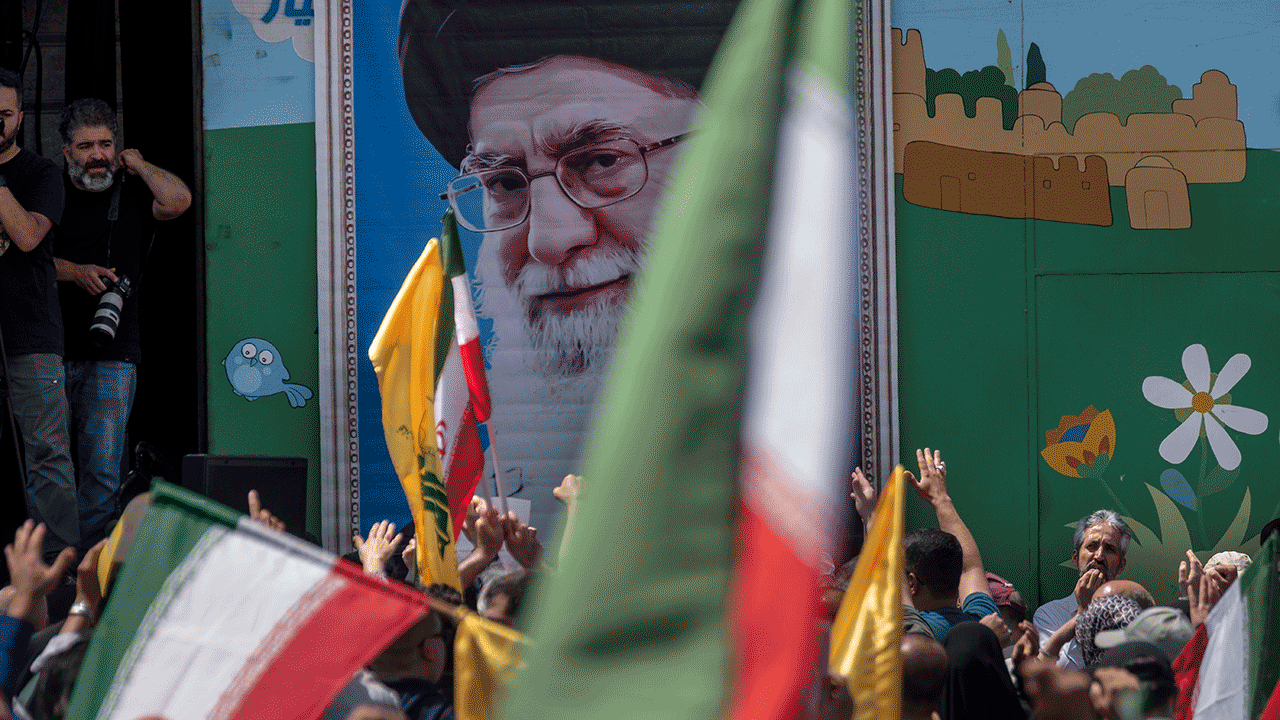
Iranian worshippers hold up their hands as signs of unity with Iran’s Supreme Leader, Ayatollah Ali Khamenei, during an anti-Israeli rally to condemn Israel’s attacks on Iran, in downtown Tehran, Iran, on June 20, 2025. (Morteza Nikoubazl/NurPhoto via Getty Images)
«I am deeply concerned about the administration’s attention to possible threats and its ability to protect Americans,» he added.
Just prior to the strikes, the Senate and House Democratic leaders released a joint statement addressing the DHS shutdown’s current conditions.
«We have received the White House’s counteroffer and are reviewing it closely. Democrats remain committed to keep fighting for real reforms to rein in ICE and stop the violence,» said New York Sen. Charles Schumer and Rep. Hakeem Jeffries.
Fox News Digital reached out to DHS for additional comment.
Related Article
war with iran,iran,donald trump,immigration,homeland security,republicans
NEWYou can now listen to Fox News articles!
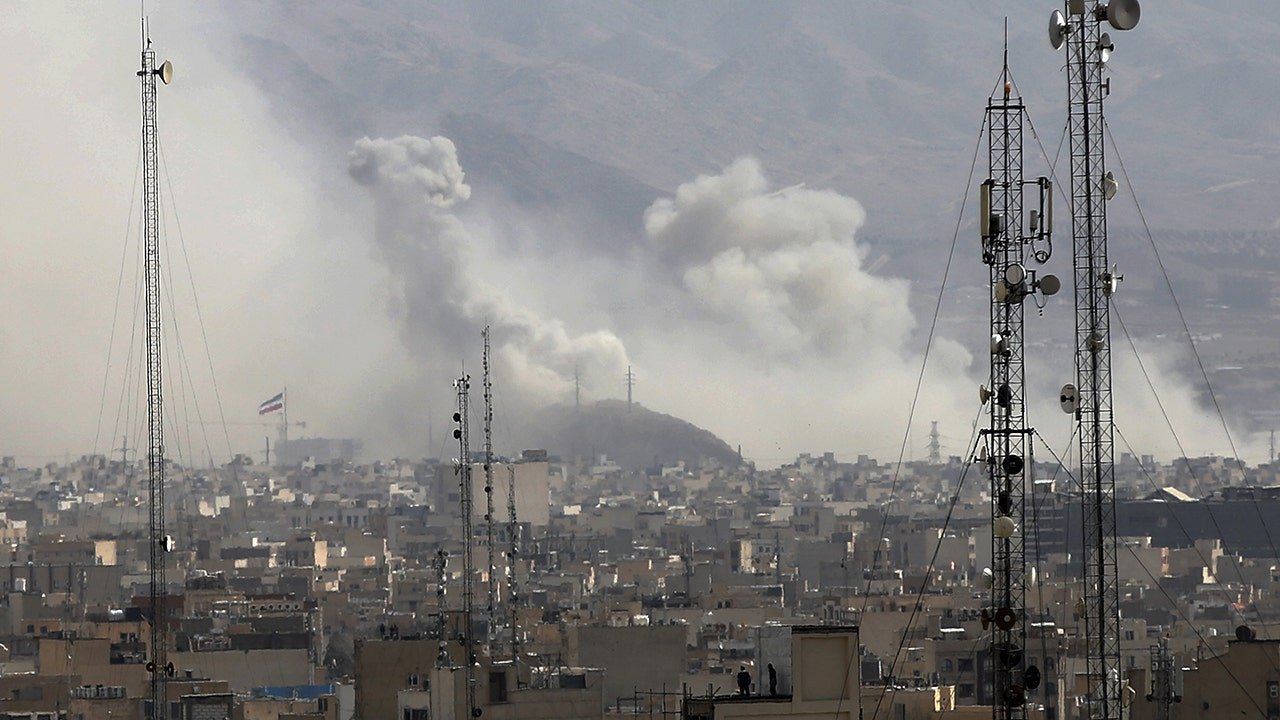
In coordinated, sweeping U.S.–Israeli strikes on Iran in the predawn hours of Saturday, key military and nuclear-linked sites were targeted inside the country.
The strikes focused on what U.S. officials described as high-value Iranian targets, which included Iran Revolutionary Guard Corps (IRGC) command and control facilities, naval assets and underground sites believed to be associated with Iran’s nuclear program.
In addition, Iranian air defense weapons, missile and drone launch sites, and military airfields were also targeted, according to officials.
Israeli forces targeted sites linked to Iran’s Supreme Leader Ayatollah Ali Khamenei, a senior Israeli official confirmed to Fox News.
President Donald Trump confirmed Saturday afternoon that Khamenei had been killed in a strike. He is among more than 40 senior Iranian security and regime figures killed in the attack, a senior Israeli official told Fox News.
In coordinated, sweeping U.S.–Israeli strikes on Iran in the predawn hours of Saturday, key military and nuclear-linked sites were targeted inside the country. (Fatemeh Bahrami/Anadolu via Getty Images)
«Khamenei, one of the most evil people in History, is dead,» Trump wrote in a Truth Social post. «This is not only Justice for the people of Iran, but for all Great Americans, and those people from many Countries throughout the World, that have been killed or mutilated by Khamenei and his gang of bloodthirsty THUGS.»
He also claimed that the IRGC is seeking immunity from the U.S.
The leaders had all been meeting at a compound in Tehran on Saturday morning.
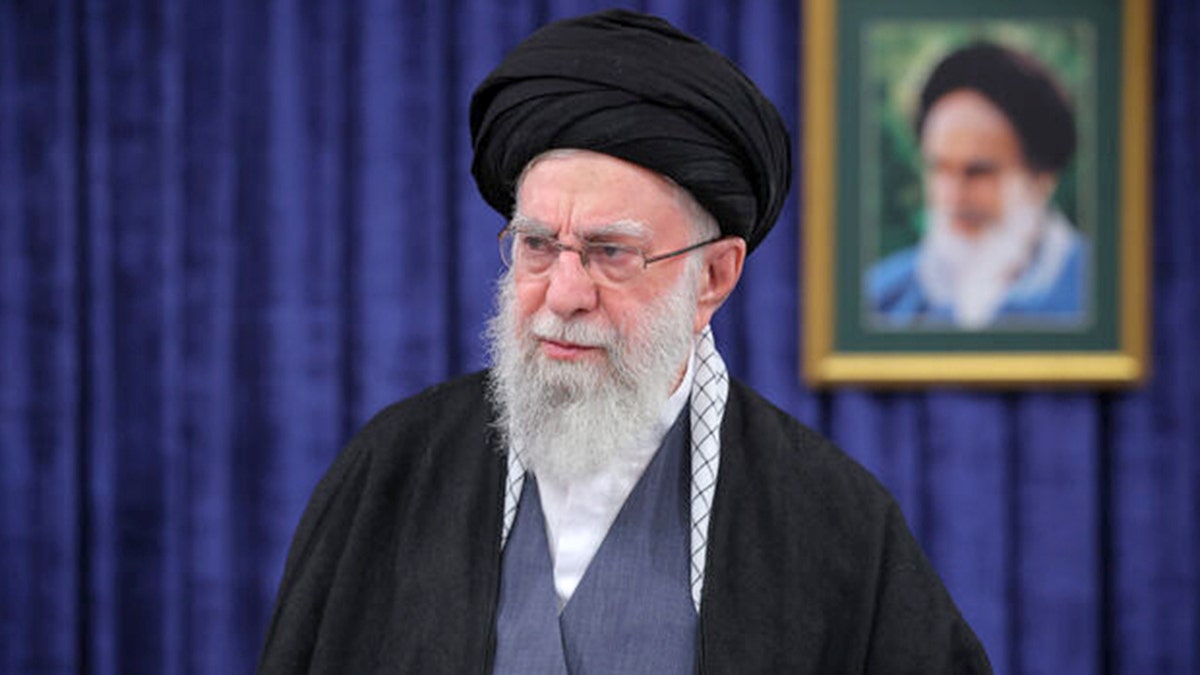
Iran’s Supreme Leader Ali Khamenei was killed in the strikes, President Donald Trump confirmed. (Iranian Leader Press Office/Anadolu via Getty Images)
FBI RAISES COUNTERTERROR TEAMS TO HIGH ALERT AMID IRAN TENSIONS
The strikes were moved up due to the «target of opportunity,» multiple sources told Fox News, which is why the strikes happened in the daytime in Iran, keeping the element of surprise. «There was a deliberate decision to accelerate the timeline,» one source said.
The campaign, which Trump described overnight from Mar-a-Lago as the beginning of «major combat operations» in the region, encompasses multi-geographic targets in an effort to overwhelm Iran’s defensive capabilities.
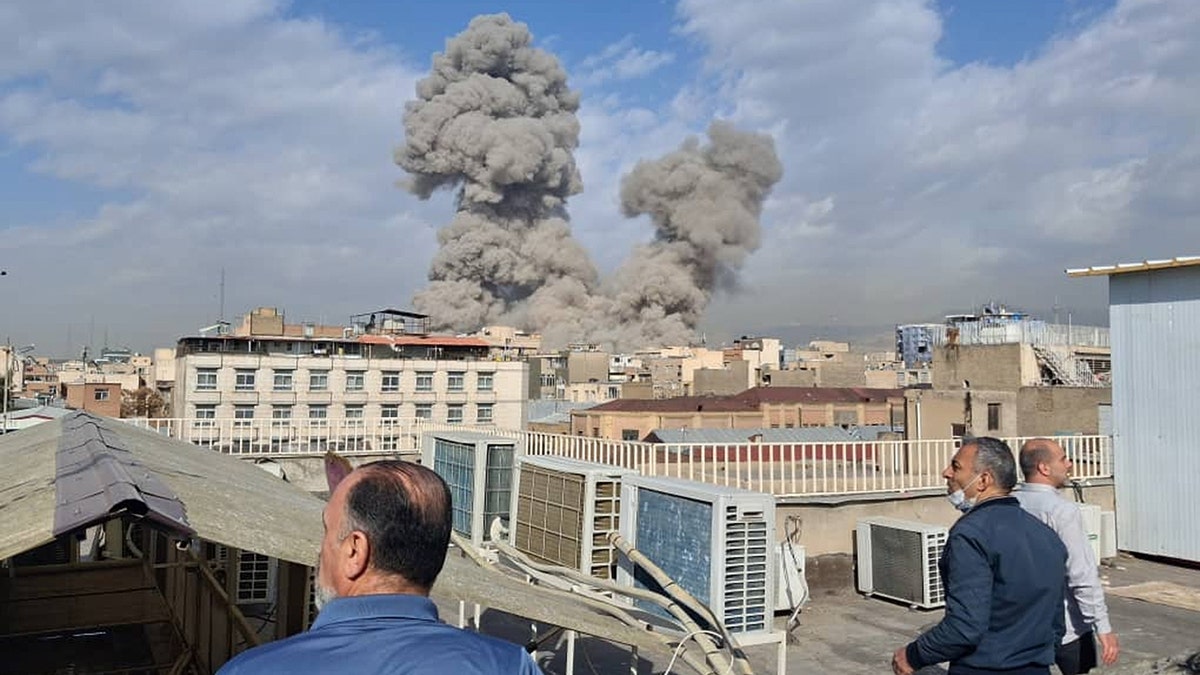
People watch as smoke rises on the skyline after an explosion in Tehran on Saturday. (AP Photo)
ISRAEL’S LARGEST EVER MILITARY FLYOVER HAMMERS IRANIAN MILITARY TARGETS
The strikes could also continue for multiple days.
CLICK HERE TO DOWNLOAD THE FOX NEWS APP
Trump said the campaign aimed to devastate Iran’s military, dismantle its nuclear program, and he urged the Iranian people to «take over» their government.
Tomahawk cruise missiles were used in the first strikes of the operation, called Operation Epic Fury, along with one-way attack drones that were used for the first time, according to a U.S. official.
Fox News’ Liz Friden, Morgan Phillips, Amanda Macias, Alexandra Koch and Kelley Kramer contributed to this report.
Related Article
war with iran,iran,world,israel,military

Llega el reemplazo de Gallardo: Eduardo Coudet será el nuevo entrenador de River Plate

La DAIA respaldó la postura del Gobierno tras el ataque de Estados Unidos al régimen iraní

El impactante look color Tiffany que eligió Mirtha Legrand para su primer programa con 99 años

Los réditos y los límites de la nueva mayoría oficialista

El Gobierno evocó a las víctimas del atentado a la AMIA tras la muerte de Alí Jamenei

Se duplicó la cantidad de cheques rechazados por falta de fondos en el último año

Catherine Fulop contó el difícil momento que atraviesa su madre en Venezuela: “Está postrada”

Jorge Macri prepara su discurso para abrir el año legislativo: el deseo de reelección y el espejo en Bukele

Crisis en la industria: otra multinacional se achica y cierra una planta en la Argentina

Alarma por la salud de Divina Gloria tras salir de Gran Hermano: “La internaron directamente en terapia intensiva”

 CHIMENTOS2 días ago
Alarma por la salud de Divina Gloria tras salir de Gran Hermano: “La internaron directamente en terapia intensiva”
- CHIMENTOS2 días ago
Ginette Reynal dio una rotunda marcha atrás con una decisión que tomó hace dos meses: “No aguanto más”
- CHIMENTOS2 días ago
¡Titi revolucionó Gran Hermano! Cuáles son las 5 cosas que ya extraña: «Accesorios, pilates, bondiola, auriculares y bailar»