INTERNACIONAL
Un siglo después: una nueva carta abierta contra el regreso del fascismo













NEWYou can now listen to Fox News articles!
Senate Minority Leader Chuck Schumer, D-N.Y., condemned President Donald Trump’s plan to deploy U.S. Immigration and Customs Enforcement (ICE) agents to U.S. airports on Sunday.
Schumer made the comments while speaking on the Senate floor Sunday, saying Trump’s decision is «impulsive» and could make the situation at airports worse.
«Today, Donald Trump and [Tom] Homan are saying they will deploy ICE agents to airports starting on Monday. This is really disturbing. ICE agents who are untrained and have caused problems everywhere they’ve gone lurking at our airports. That’s asking for trouble, and it will certainly make the chaos at the airports even worse,» Schumer said.
«No one has any faith in ICE agents. They haven’t received training. They don’t know what it is to be a TSA person and do what you need to do,» he continued. «And the real problem here is they have no plan for using these ICE agents. Trump says, send them there. They send them there. And Homan says they’re still drawing up plans with less than a day’s notice. What is this? We know what it is. It’s another impulsive action by Donald Trump.»
SCHUMER GAMBIT FAILS AS DHS SHUTDOWN HITS 36 DAYS AND AIRPORT LINES GROW
President Donald Trump and Senate Minority Leader Chuck Schumer are clashing over funding plans for the DHS. (Anna Moneymaker/Getty Images; Kevin Dietsch/Getty Images)
«Some idea pops into his head and he announces it. And then the people working for him, a few of whom do have some degree of talent and ability. Not many underlings. They have to rush to try and implement what they know is an idiotic plan,» he said.
The ICE deployment is Trump’s latest move in the battle with Democrats over funding for the Department of Homeland Security.
Schumer also used his time on the Senate floor Sunday to criticize Trump’s actions in Iran.
«Donald Trump said, ‘you know, I may have a plan or I may not for a war,’» Schumer said. «There’s people’s lives are at stake. Billions are being spent on an almost daily basis. And he says, you know, ‘I may have a plan or I may not.’ These are the words of the commander in chief in the middle of a war involving one of the most dangerous regimes on Earth. ‘I have a plan, or I may not.’»
«That’s unhinged and dangerous. Lives are on the line. The president says he may not even have a plan. Tens of billions are being wasted. No plan. Troops being killed and injured, no plan. Civilians being killed and injured. No plan. Gasoline costs $3.94 a gallon on average. And Trump, ‘I have no plan’,» Schumer said.
Meanwhile, Schumer and his allies have refused to approve DHS funding without reforms to immigration enforcement.
TSA agents across the country have gone more than a month without a paycheck, with no clear end in sight.

Travelers wait in line at a TSA checkpoint at William P. Hobby Airport in Houston, Texas, on March 9, 2026. (Mark Felix/Bloomberg via Getty Images)
Trump first threatened to deploy ICE to airports on Saturday, demanding that Democrats «immediately sign an agreement» to fund DHS.
DHS SHUTDOWN TRIGGERS TSA ‘EMERGENCY MEASURES’ AS LAWMAKER WARNS AIRPORTS COULD FEEL ECONOMIC PAIN
Airports across the country have reported huge numbers of employees calling out sick or not showing up for work. More than 400 TSA employees have quit their jobs.
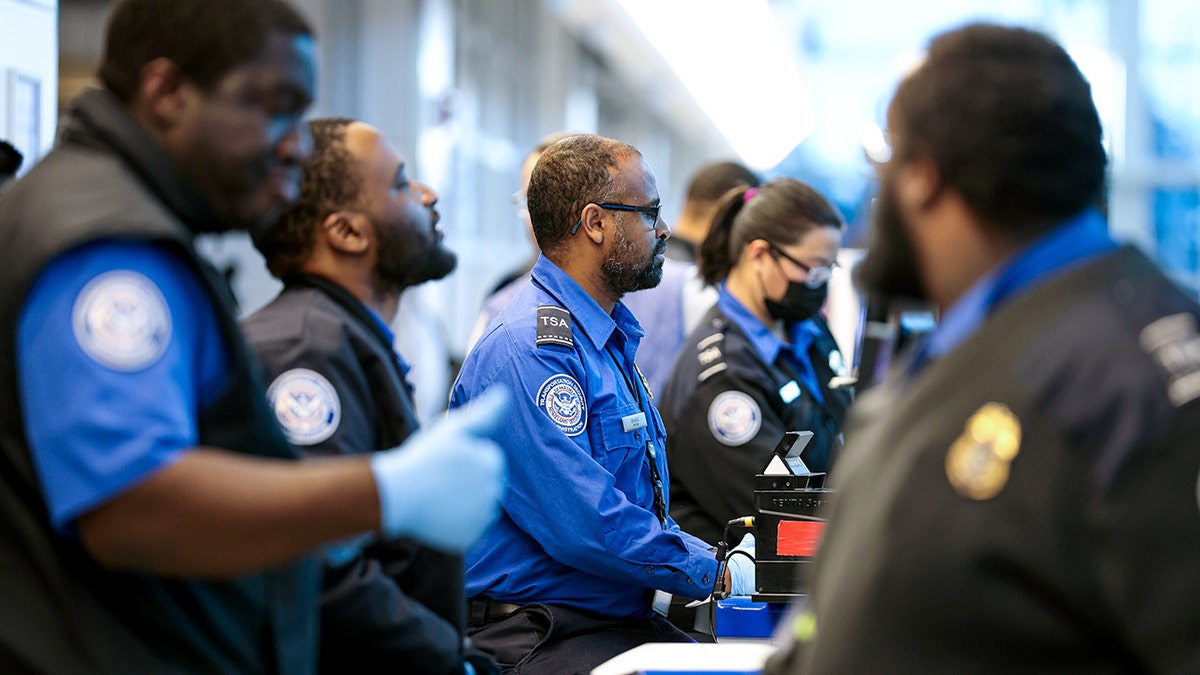
TSA Agents scan luggage at Ronald Reagan Washington National Airport in Arlington, Virginia. (Valerie Plesch/Getty Images)
«On Monday, ICE will be going to airports to help our wonderful TSA Agents who have stayed on the job despite the fact that the Radical Left Democrats, who are only focused on protecting hard-line criminals who have entered our Country illegally, are endangering the USA by holding back the money that was long ago agreed to with signed and sealed contracts, and all,» Trump wrote Sunday on Truth Social.
CLICK HERE TO DOWNLOAD THE FOX NEWS APP
Trump also predicted blowback from Democrats, saying they would complain «no matter how great a job ICE does.»
chuck schumer,donald trump,politics,travel
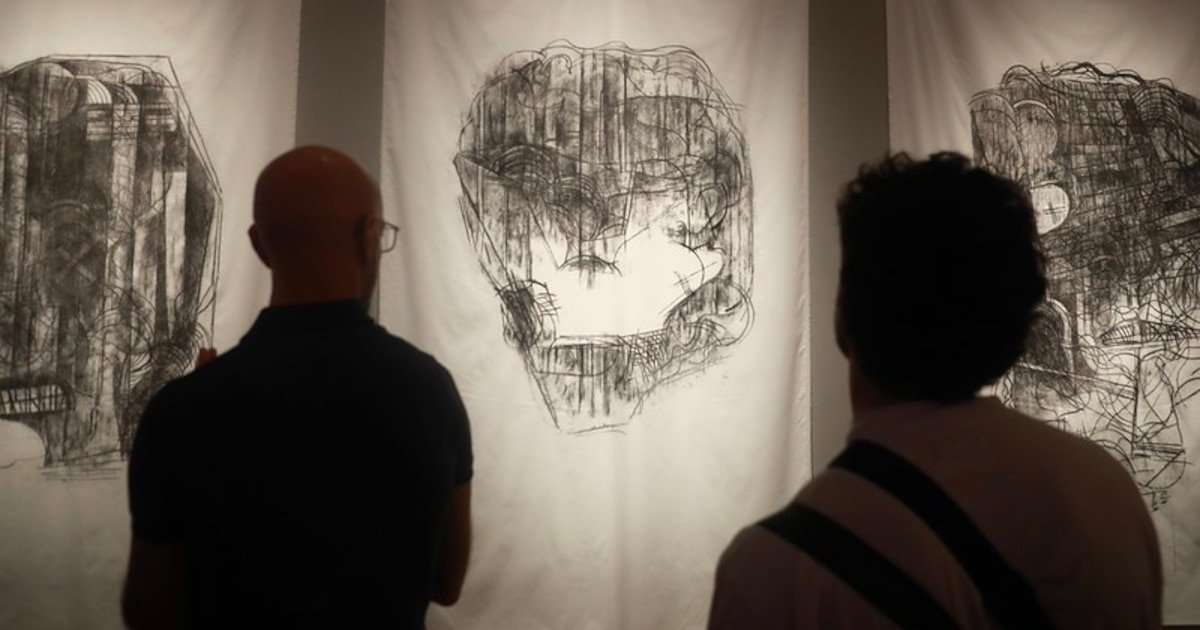
Eugenio Dittborn, figura central del arte contemporáneo en Chile, presenta por primera vez en la Argentina una muestra individual que reúne obras de distintas etapas de su carrera y expone su particular abordaje conceptual sobre la representación y circulación de las imágenes.
A diferencia de muestras retrospectivas convencionales, Historias del rostro, en el Museo Nacional de Bellas Artes, con curaduría de Justo Pastor Mellado, presenta solo dos piezas principales y un conjunto de documentos históricos fundamentales dentro del recorrido del artista. Este enfoque, según detalló Mellado, busca demostrar “la potencia conceptual del universo creativo” de Dittborn, utilizando recursos mínimos pero de gran densidad visual y simbólica.
La obra destacada de esta exposición, según Mellado, es “XXII Historia del rostro”, una pintura aeropostal realizada en 1998 que condensa veinte retratos impresos, conformando lo que el curador describe como “una pequeña enciclopedia de la representación del rostro”.

En la pieza convergen dibujos infantiles, caricaturas, retratos hablados, imágenes de personas con afecciones mentales, fichas de identificación policial y fotografías de pobladores originarios tomadas de un álbum etnográfico.
Esta obra, además de su contenido visual, integra el procedimiento singular que distingue al artista desde los años ochenta: la pintura se pliega, se envía en un sobre a diferentes destinos internacionales y se exhibe junto con su envoltura, cuestionando los sistemas tradicionales de circulación y legitimación de las obras de arte.
Las pinturas aeropostales constituyen una estrategia desarrollada por Dittborn a inicios de la década de 1980. A través de este formato, el artista no solo introduce métodos de experimentación gráfica y crítica visual, sino que también propone un sistema alternativo de circulación que desafía la noción de obra única y su permanencia física en el espacio expositivo. Cada pintura, compuesta por iconografías e inscripciones heterogéneas, es doblada y enviada físicamente a distintos países, donde se despliega temporalmente junto al sobre que la contiene.

La otra producción principal de la muestra, creada en 2022, es “Todas las caras del rostro”, que reúne diez dibujos en carboncillo sobre sudarios. Mellado describe que estos rostros aparecen “con sus cuencas vacías, mostrándonos con descaro sus dientes apretados, sus cráneos pelados o adornados con rizos, sus narices puntiagudas dispuestas sobre patrones de damero vistos en escorzo, combinando tramas que delatan la textura de la tela”. De este modo, la obra dialoga directamente con los materiales y gestos gráficos constitutivos de la trayectoria de Dittborn.
El recorrido de la exposición se completa con dos publicaciones producidas por Eugenio Dittborn entre 1976 y 1979, que según el director del Bellas Artes, Andrés Duprat, “se convirtieron en acontecimientos de la historia editorial y visual chilena”. Para Duprat, el gran mérito de la curaduría radica en que, mediante una selección precisa y acotada, se “logra reactualizar la escena de origen del artista, y subraya la persistencia de la línea como principio organizador de su práctica”.

Eugenio Dittborn nació en Santiago de Chile en 1943 y cuenta con obras en instituciones internacionales de relevancia. Esta exposición en el Museo Nacional de Bellas Artes, que cuenta con el apoyo del Centro Cultural Matta de la Embajada de Chile, constituye la primera oportunidad de observar de cerca algunos de los núcleos conceptuales y formales de su producción, a partir de piezas que exploran tanto la representación del rostro como los circuitos que permiten a la imagen persistir y desplazarse en el tiempo y el espacio.
*“Eugenio Dittborn. Historias del rostro” podrá visitarse hasta el 31 de mayo en la sala 33 del primer piso del Museo, de martes a viernes, de 11 a 19.30 (último ingreso), y los sábados y domingos, de 10 a 19.30.
Bellas Artes,Eugenio Dittborn
INTERNACIONAL
Analysts say Gaza ‘civilian’ deaths include Hamas, other terror members working as medics, media workers

NEWYou can now listen to Fox News articles!
As Hamas and Palestinian Islamic Jihad (PIJ) publicly claim their dead, new research shows that many previously counted as civilians were in fact members of the terrorist organizations, undermining accusations that Israeli forces deliberately targeted civilians in Gaza.
Researchers monitoring the Hamas-run health ministry’s death reports told Fox News Digital that a growing number of «martyrs» were exposed as terrorists by their own groups such as Hamas, despite maintaining public identities as healthcare or media workers.
Gabriel Epstein, senior policy associate at Israel Policy Forum, told Fox News Digital that he has tracked multiple individuals named by Hamas and PIJ as martyrs killed in battle in Gaza who held positions in the health industry, including nongovernmental organizations (NGOs.)
US-BACKED GAZA AID GROUP SLAMS DOCTORS WITHOUT BORDERS, ACCUSES IT OF SPREADING ‘FALSE’ CLAIMS
Smoke rises and ball of fire over buildings in Gaza City on Oct. 9, 2023, during an Israeli air strike. (Sameh Rahmi/NurPhoto via Getty Images)
Epstein found several individuals labeled as medical staff who are also members of terrorist groups. The most serious revelation from the martyr list is Fadi al-Wadiyya, a physiotherapist for Médecins sans frontières, who was killed by Israel Defense Forces in June 2024. MSF responded to the death, saying they were «outraged» and «strongly condemn[ed] the killing of our colleague.»
When the IDF claimed that al-Wadiyya was a member of PIJ, MSF said they had «no prior knowledge» of his «alleged involvement in military activities» and said they had «not received any formal explanation» of «the circumstances of his killing.»
In a Telegram account claiming to be the media reserve for the Al-Quds Brigades, a post mourning al-Wadiyya’s martyrdom on Feb. 24 lists the physiotherapist as an assistant to the military manufacturing unit of PIJ’s Al-Quds Brigades.
Fox News Digital asked MSF whether they were aware of al-Wadiyya’s PIJ connections prior to the martyr announcement. A spokesperson said, «We would not knowingly employ people engaging in military activity» as it «would pose a danger to our staff and patients by compromising our neutrality.»
HAMAS TERRORISTS USE AMBULANCES, SCHOOLS, HOSPITALS IN VIOLATION OF US-BROKERED CEASEFIRE, IDF OFFICIAL SAYS
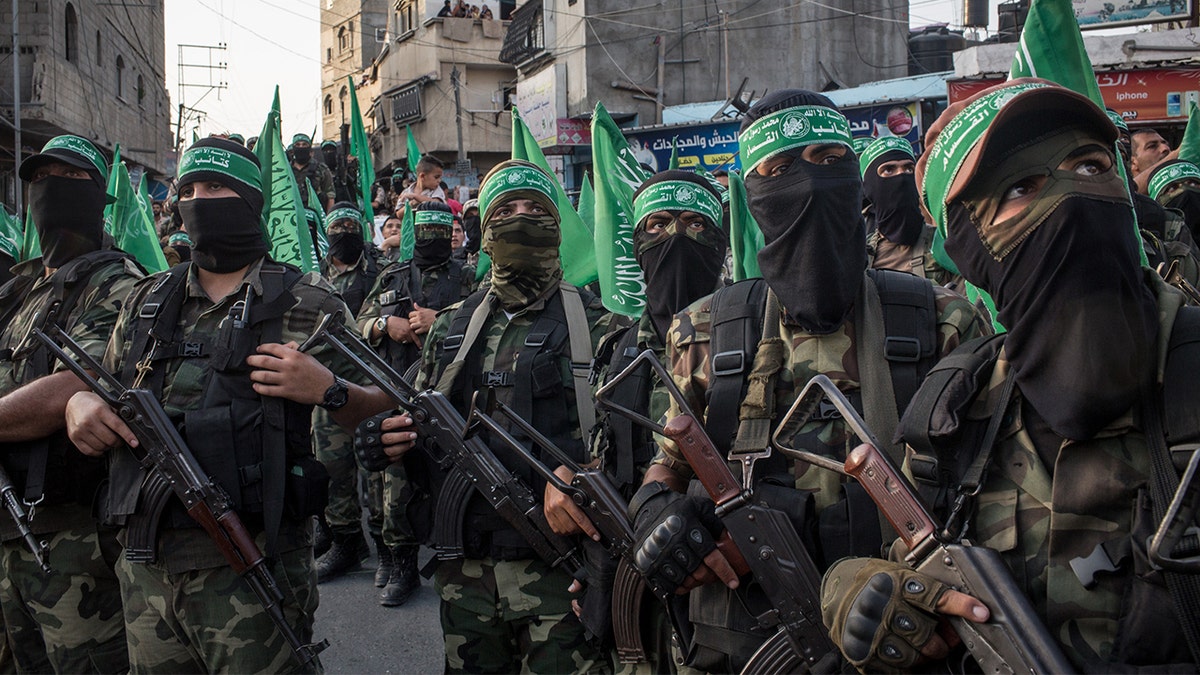
Hamas terrorists march in Gaza during a parade. (Getty Images)
The spokesperson said that «MSF had no indication that Fadi Al Wadiya might have been involved in military activity of any kind prior to the Israeli authorities’ online posts in June 2024. In the immediate aftermath of Al-Wadiya’s killing, we asked for explanations from the Israeli authorities, but never received an official response. If the Israeli authorities were aware of Al-Wadiya’s links with militant activities, they never shared this info with us until after he was killed. To this day, the only information they shared and that we are aware of is what was shared through public social media posts.»
The IDF banned MSF operations in Gaza from the beginning of March because the organization refused to provide a list of its Palestinian employees. In response to Fox News Digital’s questions about whether they would consider providing this list to the IDF presently, MSF’s spokesperson said, «We did not share our staff lists with Israel because we did not receive concrete assurances to ensure the safety of our staff or the independent management of our operations. This is a place where humanitarian workers have frequently been detained, attacked, and killed. We have a responsibility to protect our colleagues from harm.»
Epstein shared several other cases of healthcare workers who played prominent roles in terror groups.
MEDICAL NGO THAT SLAMMED ISRAEL’S ANTI-TERROR RAID NOW QUITS GAZA HOSPITAL OVER ARMED OPERATIVES

Ambulances carrying patients from Kamal Adwan Hospital in Beit Lahya, Gaza City. Oct. 12, 2024. (Hamza Z. H. Qraiqea/Anadolu via Getty Images)
Mohammed Akram Abdullah al-Kafarna was mourned by the Palestinian Nursing and Midwifery Association’s Facebook page as the nursing supervisor at Kamal Adwan Hospital and by the Institute for Palestine Studies as head of the Gaza nursing system. A Telegram account that lists members of Hamas’ best-outfitted Izz al-Din al-Qassam Brigades, al-Kafarna is described as one of Beit Hanoun’s «Qassam Martyrs.»
Ayman Suleiman Aliyan Abu Tayr was listed as martyred in Khan Younis in June 2025. The Institute for Palestine Studies labels him as a nurse and head of the clinical nutrition department at Nasser Hospital. According to a Telegram account linked to PIJ’s Al-Quds Brigades, Abu Tayr was a Commander in the Central Operations Unit of the Al-Quds Brigades.
Jaber Abdulhamid Diab Mohammedin was mourned on the Palestinian Ministry of Health General Directorate of Nursing’s Facebook page as an Intensive Care Unit nurse at the Al-Rantisi Specialized Children’s Hospital. A Telegram account linked to the Islamic Jihad Movement lists Mohammedin as a commander in the military manufacturing unit of the PIJ’s Al-Quds Brigade.
Nidal Jaber Abdulfattah al-Najjar is labeled as an administrator at the Palestinian Ministry of Health, according to the Institute for Palestine Studies, while a mourner on Facebook noted that he worked in the Al-Rantisi Children’s Hospital. He is labeled on a Telegram account emblazoned with Hamas’ distinctive red triangle as a martyr commander of Hamas’ Al-Radwan Battalion.
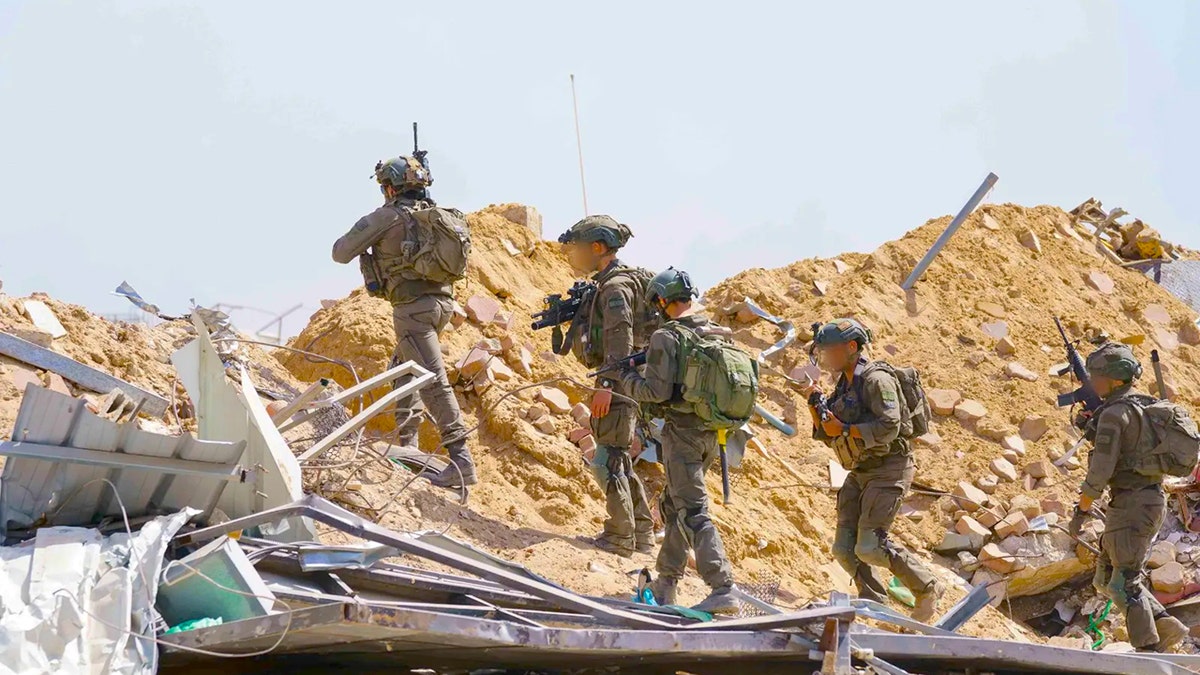
IDF forces are seen operating in Rafah, in the Gaza Strip. (IDF Spokesman’s Unit)
Salo Aizenberg, director of media watchdog group HonestReporting, told Fox News Digital that he is tracking at least 10 «virtually indisputable» examples of journalists who are actually combatants, working with Hamas and other terrorist groups.
David Adesnik, vice president of research for the Foundation for Defense of Democracies, told Fox News Digital that he has also been tracking the disclosures. «With PIJ, the number of commanders who operated with civilian cover is striking,» Adesnik said. «We’re at a point where the evidence indicates that this duplicity was a routine part of a strategy to infiltrate civilian organization, especially humanitarian ones. This provides access and protection while ensuring outrage when these supposed humanitarians are killed.»
Adesnik said he believes it «likely that Hamas also employed this strategy in a systematic way, but right now we mainly have the PIJ disclosures. Given that Hamas is many times larger, if it were to disclose this kind of information, the effects could easily ripple across the humanitarian sector in Gaza.»
Among the cases Aizenberg is tracking are media workers. He said that his list is «based solely on admissions by those groups and other Gazan sources,» and «does not include the many additional examples identified through Israeli evidence.»
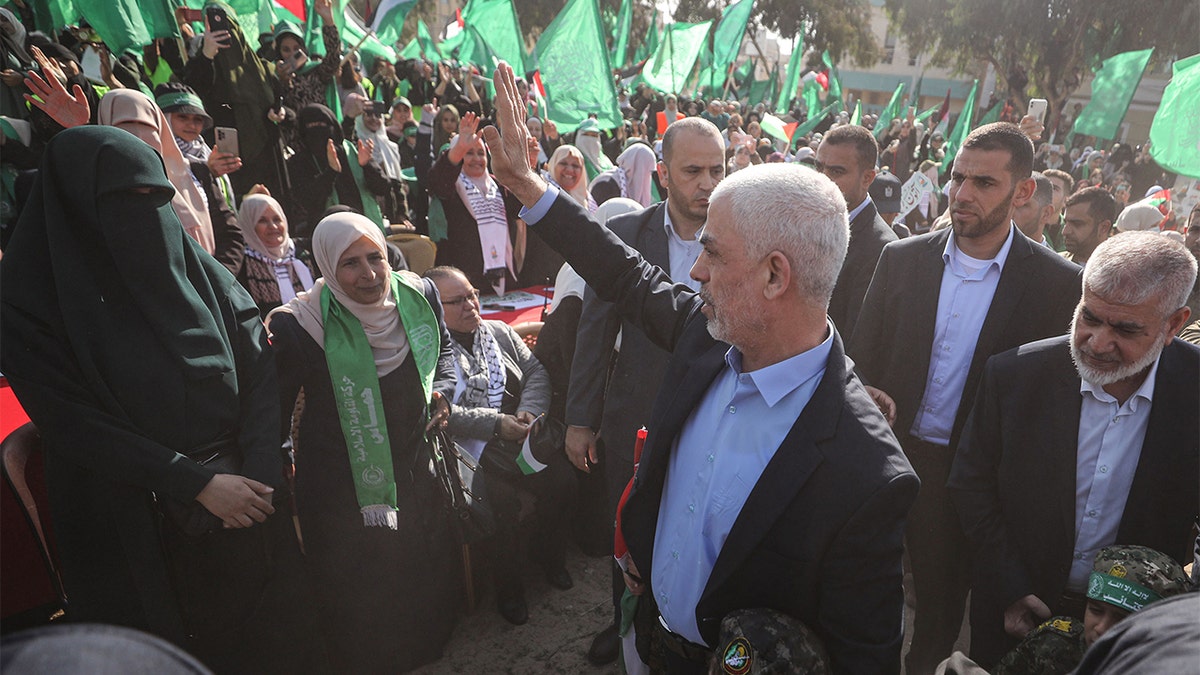
Yahya Sinwar, the former Hamas terror leader who was killed by the IDF, waves to a crowd in Gaza. (Mustafa Hassona/Anadolu Agency via Getty Images)
Though the Committee to Protect Journalists (CPJ) cites Yacoup Al-Borsch as a journalist and the executive director of Namaa Radio, Aizenberg has found «numerous social media posts and martyr notices identifying him as a fighter and ‘mujahid.’» This includes a Facebook post from an account affiliated with the Al-Omari Mosque in Jabalia.
Ahmed Abu Sharia was a freelancer who worked for outlets like Iranian Tasnim News Agency, the CPJ says. According to the «official» Telegram site of the Mujahideen Brigades, the Palestinian Mujahideen movement’s military wing, he was also a member of the Mujahideen Brigades.
Rizq Abu Shakian was a «media worker and administrator for the pro-Hamas Palestine Now Agency,» according to CPJ. Shakian also appears in Hamas uniform on a Telegram site that shares images of Palestinian martyrs. According to Aizenberg’s research, he was a member of the Al-Qassam Brigades.
In response to questions about whether CPJ would update listings of journalists who have been claimed as terror affiliates, the group directed Fox News Digital to its policy for updating listings, which states, «CPJ has a long-standing policy of updating its data and the accompanying narrative accounts without issuing formal corrections as new information becomes available over time. In certain cases, a record may be removed from public view when new information leads CPJ to determine that a case falls outside its mandate or for security concerns, such as the safety of the journalist and their family. CPJ will publicly record when it has removed a journalist from the database for a reason outside of security concerns. «
CLICK HERE TO DOWNLOAD THE FOX NEWS APP
As the shaky ceasefire in Gaza continues, analysts say they continue to place value in closely examining the war’s casualties. Epstein said that «reviewing cases of militants who held dual civilian roles in key sectors like media, healthcare and education is important for the historical record and underscores the information limitations press, government, and analysts face in real time during conflict.» He said that «over time, militant identification can give a sense of just how deep Hamas, PIJ and other militant groups’ hold over key sectors in Gaza was.»
israel,hamas,conflicts,terrorism

Bartolomé Abdala descartó una interpelación en el Congreso a Karina Milei y Manuel Adorni: “Tiran piedras a la luna”

Cumplió 100 años: el colegio de la zona norte que tiene un castillo y familias de hasta cuatro generaciones de alumnos

Banco Macro adquirió el 50% de Banco Sáenz para profundizar su estrategia digital junto a Personal Pay

La patada por la que Tagliafico fue expulsado por segunda vez consecutiva en el Olympique de Lyon

La Justicia impulsa un acercamiento entre el Gobierno y Kicillof por la deuda de Anses que reclama el gobernador

Schumer knocks Trump on Iran, plan to send ICE to airports: ‘Asking for trouble’

Senado: la oposición pidió explicaciones por $LIBRA y los vuelos de Adorni y Bullrich defendió al Gobierno

Kicillof desembarcó en CABA, lanzó su proyecto 2027 y empezará a ampliar su armado político en todo el país

¿DÓNDE ESTÁ ESMERALDA? El grito de una madre que sacude a la Argentina: «Me la arrebataron de la puerta»

¿MACRI 2027? El «operativo retorno» que sacude al PRO y los nombres que suenan para la vicepresidencia

 POLITICA3 días ago
Kicillof desembarcó en CABA, lanzó su proyecto 2027 y empezará a ampliar su armado político en todo el país
- POLITICA3 días ago
¿MACRI 2027? El «operativo retorno» que sacude al PRO y los nombres que suenan para la vicepresidencia
- POLITICA2 días ago
¿FIN DE CICLO? Escándalo por la mansión no declarada y viajes de lujo empujan a Manuel Adorni fuera del Gobierno: Su salida sería inminente