INTERNACIONAL
Could private security contractors be the ‘day after’ solution in Gaza?

NEWYou can now listen to Fox News articles!
The question of a «day after» plan in the Gaza Strip has plagued negotiations between Israel, the U.S., Arab nations and Hamas for months and has ultimately led to the terrorist network’s refusal to release the 55 hostages still held there.
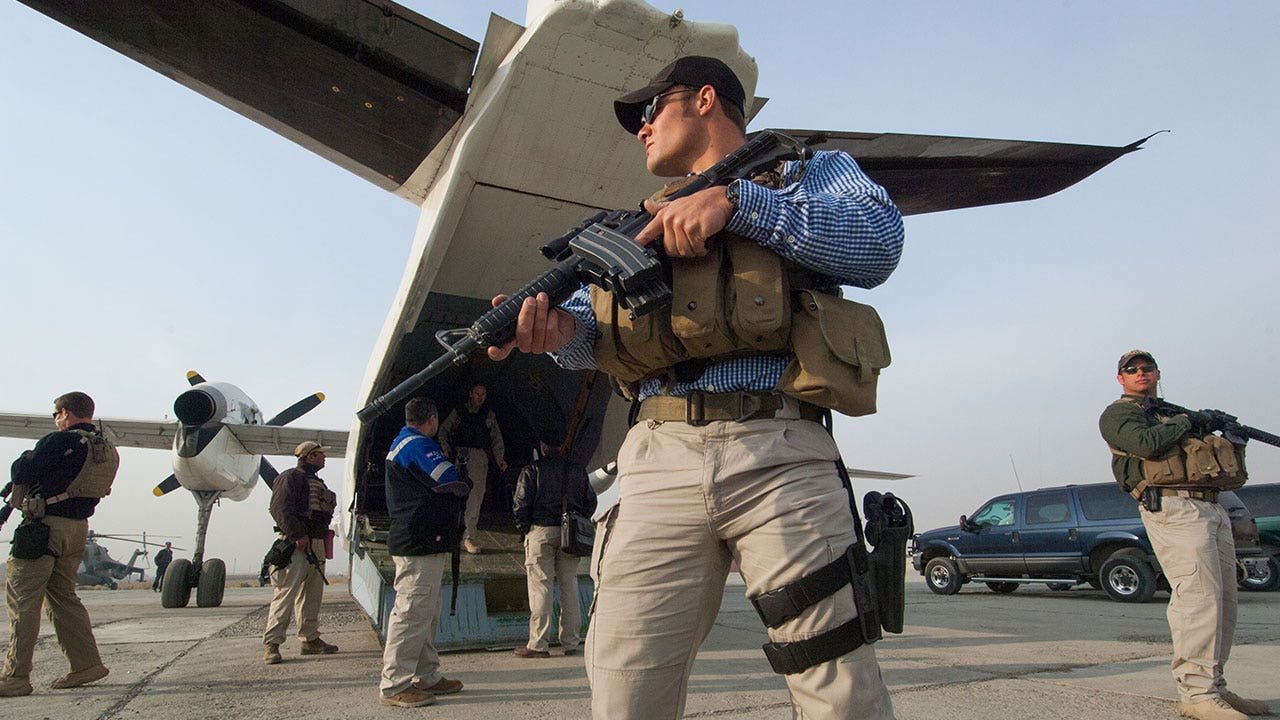
However, foreign policy leaders and security experts based in Washington may have the key that could provide a solution to help rebuild the war-torn Gaza Strip where others cannot: private security contractors (PSC).
PSCs, which have heavy experience in the Middle East and decades of lessons learned to draw from, could be used as non-state actors to provide stability and a path forward for the Palestinians, but they would have to start with humanitarian aid, John Hannah, former national security advisor to Dick Cheney and current Randi & Charles Wax senior fellow at the Jewish Institute for National Security of America (JINSA), told Fox News Digital.
Palestinians continue their daily lives under harsh conditions amid the rubble of destroyed buildings in the Jabalia refugee camp in northern Gaza following the enforcement of a ceasefire agreement on Feb. 10, 2025. (Mahmoud ssa/Anadolu via Getty Images)
ISRAEL OBJECTS TO FOREIGN NATIONS SANCTIONING ITS OFFICIALS
In a plan hatched out following Hamas’ Oct. 7, 2023 attack on Israel and the subsequent outbreak of war in the Gaza Strip, a group of eight members with JINSA and the Vandenberg Coalition comprised a report that detailed how the handling of humanitarian aid could completely change security in the region.
The plan, in part, initially looked similar to the mechanism known as the Gaza Humanitarian Foundation (GHF), which is backed by the U.S. and Israel, and which launched last month to distribute aid to Palestinians.
However, the plan comprised by Hannah and the team took it a step further and argued that these aid actors should also be involved in rebuilding Gaza.
«We thought humanitarian issues was the best way [forward],» Hannah said. «It was the common denominator that would allow all of the major stakeholders that want to get to a better ‘day after’ – Israel, the United States, the key pragmatic Arab states – they all could agree that we can’t agree on a political vision for Palestine 10 years from now, and the issue of a Palestinian state, but we can all agree on this apple pie and motherhood issue that we don’t want to see starving, suffering Palestinians.»

Hamas terrorists emerge in a show of strength, escorting Red Cross vehicles carrying three Israeli hostages to be released as part of the ceasefire deal. (TPS-IL)
The Israel Defense Forces had already detailed the need to eliminate Hamas following the deadliest-ever attack on Israel, but the group of eight experts also identified that aid, long used by Hamas to maintain power by using it to incentivize support and recruitment, and to punish opposition, needed to be the key to cementing actual change.
«We needed a solution on humanitarian aid,» Hannah said. «And when we looked around the world, who could do this, take over the humanitarian aid? We were left with one option.»
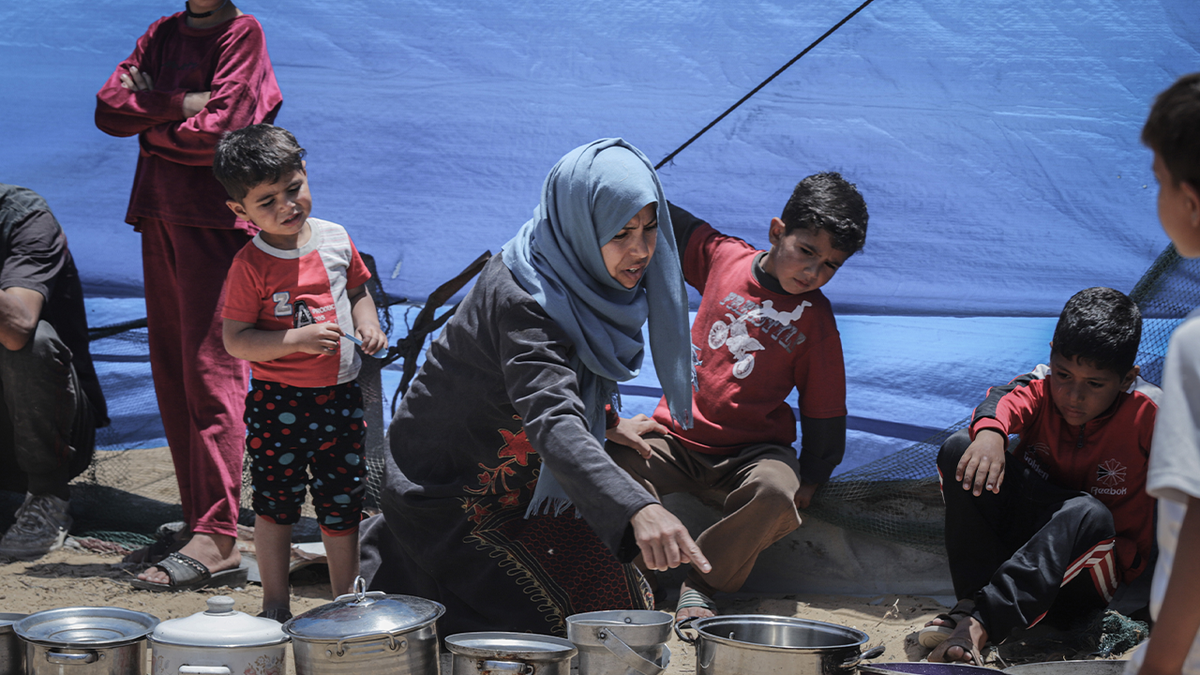
Displaced Palestinians line up pans to collect hot food from a charity food distribution center in Gaza City, northern Gaza, on Tuesday, May 27, 2025. (Ahmad Salem/Bloomberg via Getty Images)
ISRAEL’S NAVY HITS HOUTHIS IN YEMEN IN ‘UNIQUE’ STRIKE AFTER TRUMP PROMISES END TO US OPS
«We didn’t think it should be the Israel Defense Forces. Israel lacks legitimacy with the Palestinian population, and frankly, it had its hands full doing the military job of defeating Hamas,» he added. «American forces weren’t going to do it. We didn’t think Arab forces would step up and do this. And the U.N. system as it existed under UNRWA was illegitimate in the eyes of Israel.»
The group not only briefed the Biden and Netanyahu administrations on the proposal, but held numerous discussions with Israeli officials in 2024 on how such a plan could work.
Retired U.S. Army Lt. Gen. Michael Barbero – who served as deputy chief of staff, Strategic Operations for Multinational Forces-Iraq for 2007-2008 and who was tasked by Gen. David Petraeus to create a system of accountability over PSCs in Iraq following the Blackwater incident in September 2007 known as the Nisour Square massacre – also briefed Israeli officials on how a PSC mechanism could work in the Gaza Strip.
Progress on the proposal appeared to stall by summer last year as then-President Joe Biden and Israeli Prime Minister Benjamin Netanyahu were at increasing loggerheads over humanitarian concerns and mounting civilian Palestinian death tolls.
However, Hannah questioned whether the seed had been planted with Israel by the time the Trump administration re-entered office, enabling the GHF to come in and start distributing aid.
The GHF, though it has distributed over 16 million meals since it began operations in late May, saw a chaotic start with starving Palestinians rushing certain sites and reports of violence unfolding.
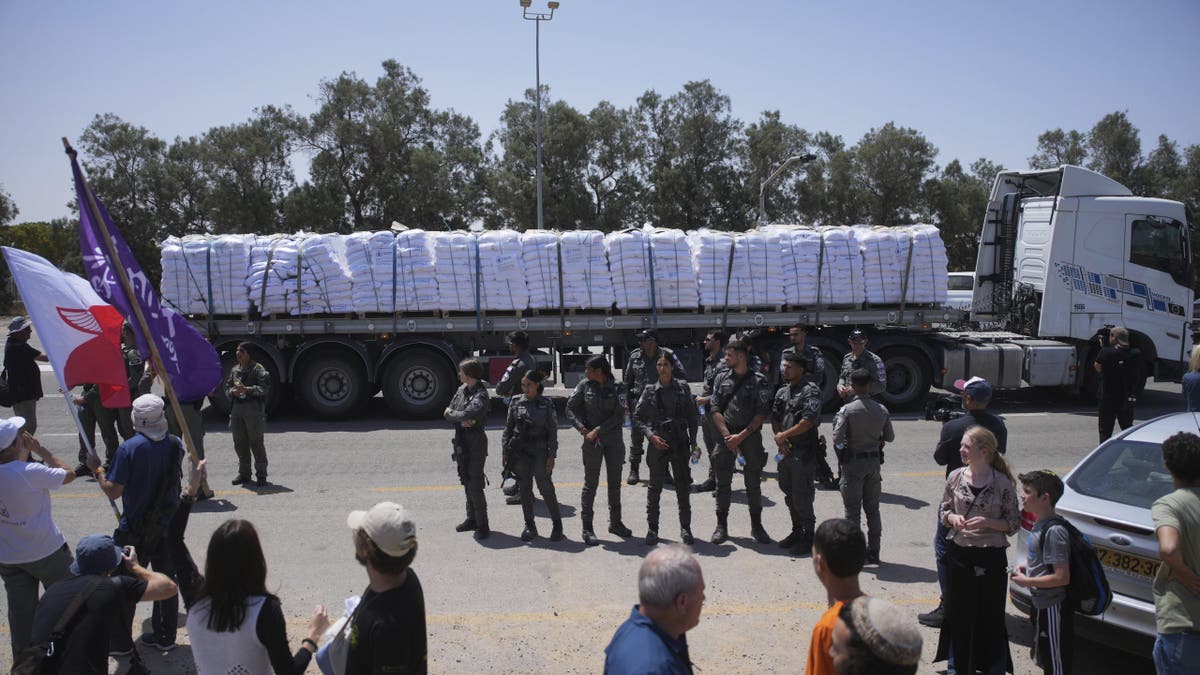
A truck loaded with humanitarian aid for the Gaza Strip makes its way to the Kerem Shalom crossing in southern Israel, Wednesday, May 21, 2025. (AP Photo/Ohad Zwigenberg)
THERE’S A WAY TO AID GAZA. I KNOW, MY FOUNDATION JUST HELPED DELIVER 7 MILLION MEALS… WITHOUT INCIDENT
Though the reports of the level of chaos have reportedly been exaggerated by Hamas – which ultimately would benefit from the GHF’s failure as experts have explained – the group initially drew some criticism over transparency concerns, though the group has been looking to remedy this with regal updates.
The group, which saw its third leadership in as many weeks earlier this month, told Fox News Digital that despite some frustration among world leaders and aid groups, its goal is to work with major organizations like the United Nations and others to better distribute aid across Gaza where those programs are still flagging.
U.S. Ambassador to Israel Mike Huckabee confirmed last month that the GHF’s distribution centers would be protected by private security contractors.

Palestinians in Gaza get aid from the U.S. and Israel-backed Gaza Humanitarian Foundation. (Gaza Humanitarian Foundation)
Though while Washington backs the effort, State Department spokeperson Tammy Bruce has repeatedly made clear that the GHF is «an independent organization» that «does not receive U.S. government funding.»
However, she has also refused to confirm whether any U.S. officials are working for the program.
PSCs have a storied history in the Middle East, and not only the U.S. war on terror. They have been used by nations like Saudi Arabia and the UAE, which could lend them a level of acceptance that would not be attainable by another force.
The proposal issued by Hannah and his colleagues took the use of PSCs one step beyond humanitarian aid and argued they could make a positive impact in the actual reconstruction of the Gaza Strip – an idea that was also presented to the Trump administration this year.
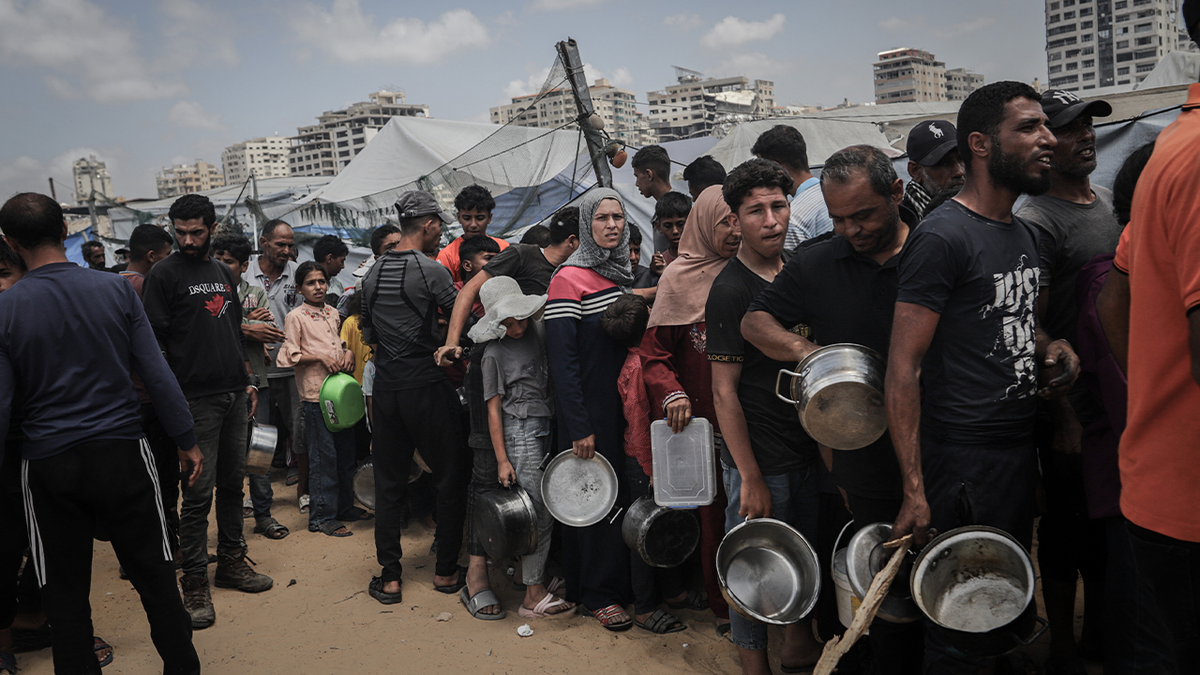
Displaced Palestinians wait to receive a free meal from a charity food distribution center in Gaza City, northern Gaza, on Tuesday, May 27, 2025. (Photographer: Ahmad Salem/Bloomberg via Getty Images)
«It’s not at all foreign to these Arab parties that you might employ PSCs for certain critical missions,» Hannah said. «Our idea was, let’s scale it up. Let’s unify the effort. Let’s have America and the Arabs lead it.
«The Arabs would put in most of the humanitarian aid workers, a lot of the financing, and then they would hire some of these international PSCs with a lot of experience to come in and protect those operations,» he explained. «You’d have the Arabs engaged, which we thought was absolutely critical.»
The plan also included bringing in other international aid organizations that would work with these PSCs to expand developments like housing projects, community development and infrastructure repair to restore electricity and water.
«And eventually, hopefully, begin to identify new leadership, local leadership in Gaza, who would be prepared to cooperate with the operations of this nonprofit entity,» Hannah said. «Local Gazans of goodwill, who wanted to be rid of Hamas, who this entity could provide some support to, some protection to so they can, could begin rebuilding Gaza civil administration.»
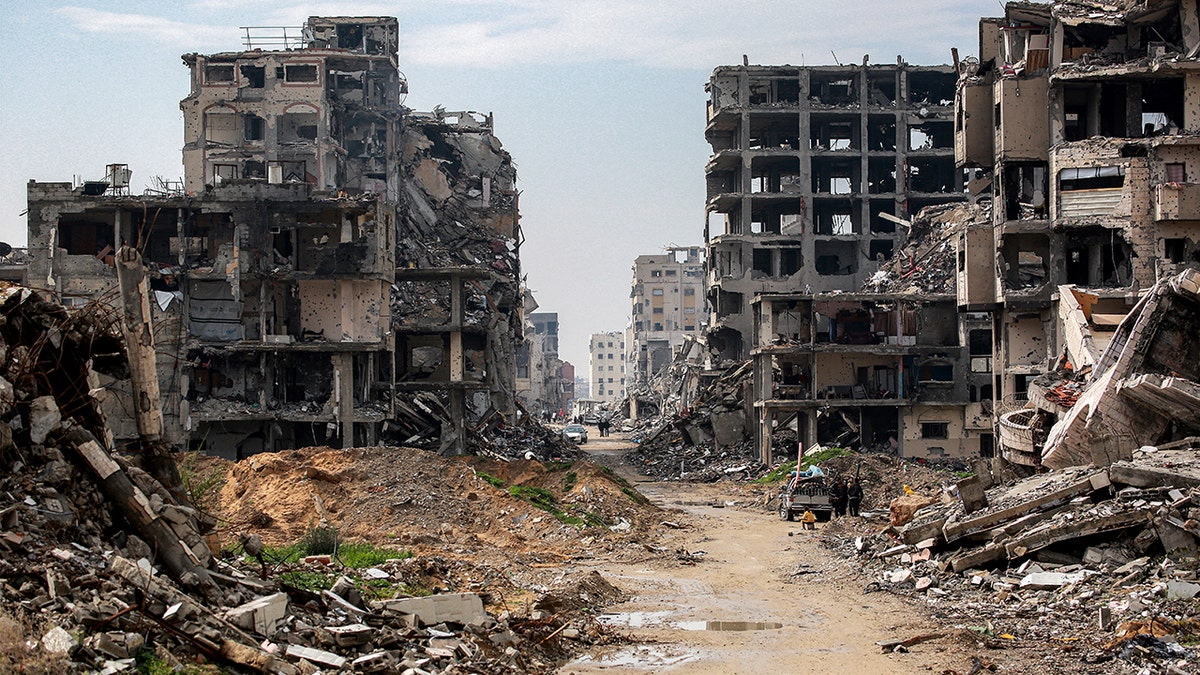
Destroyed buildings are pictured in the west of Beit Lahia in the northern Gaza Strip on Feb. 11, 2025 amid the current ceasefire deal in the war between Israel and Hamas. (BASHAR TALEB/AFP via Getty Images)
CLICK HERE TO GET THE FOX NEWS APP
The plan also addressed the perpetual question of how to deter the next generation of Hamas terrroirsts, particularly amid Israeli military operations.
Hannah argued this issue could be addressed by simultaneously training a «non-Hamas new Palestinian, local Palestinian security force» that would not only have the trust of the local population but could also gain the trust of Israel.
Hannah said he still believes this plan could be a tenable next step to securing the Gaza Strip but urged the Trump administration to take a more direct diplomatic role by leaning on Arab, European and Israeli partners to make it happen.
The White House did not respond to Fox News Digital’s questions about this reporting.

INTERNACIONAL
Así será el día a día de Artemis II tras su despegue: la agenda completa de la histórica misión tripulada rumbo a la Luna

La historia vuelve a escribirse. Artemis II despegó este jueves a las 19:24 (hora Argentina) y lleva a la humanidad al umbral de la Luna por primera vez en más de medio siglo. La misión, que reúne a cuatro astronautas a bordo de la nave Orion, tiene previsto un itinerario de casi 10 días repleto de desafíos científicos, maniobras técnicas y rutinas pensadas para sobrevivir en el espacio profundo.
Cada jornada está pensada al detalle. Desde el chequeo de sistemas vitales hasta experimentos biomédicos, pasando por ejercicios físicos y simulacros de emergencia. La agenda busca no solo garantizar la seguridad de la tripulación, sino también acumular datos que serán claves para el futuro de la exploración lunar.
Día 1

Tras la partida con el Sistema de Lanzamiento Espacial, los astronautas Reid Wiseman, Victor Glover, Christina Koch y el canadiense Jeremy Hansen ingresaron al espacio en ocho minutos. Luego de la separación de etapas, Orion alcanza una órbita segura y posteriormente una órbita terrestre alta. Las primeras 23 horas se destinan a revisar sistemas esenciales, como el dispensador de agua, el inodoro y la eliminación de dióxido de carbono.
Durante este periodo inicial, la tripulación realiza maniobras de aproximación y giro alrededor de la etapa de propulsión criogénica intermedia, practicando operaciones de proximidad. Al concluir el primer día, los astronautas comprueban las comunicaciones de emergencia mediante la Red del Espacio Profundo y ajustan la nave para la maniobra de inyección translunar.
Día 2

La agenda se concentra en el entrenamiento físico, clave para combatir los efectos de la ingravidez. Wiseman y Glover se turnan en el dispositivo de ejercicio, mientras Koch y Hansen siguen la rutina en la segunda parte del día.
Cada movimiento sirve para probar los límites del cuerpo humano en microgravedad. Koch se encarga de la configuración para la maniobra de inyección translunar, la orden que coloca a Orion en ruta hacia la Luna. A partir de allí, la tripulación dispone de tiempo para adaptarse y establecer contacto visual con la Tierra.
Día 3
El tercer día trae consigo una corrección crucial en la trayectoria. Hansen lidera la preparación para el encendido, mientras el resto ensaya maniobras médicas: reanimación cardiopulmonar, uso de instrumental de emergencia y pruebas del sistema de comunicación en situación crítica.
La jornada concluye con un ensayo de la secuencia científica que activarán al acercarse al entorno lunar.
Día 4
Otra corrección de trayectoria refina el camino. Ahora, la atención se centra en los objetivos de observación geográfica y la captura de imágenes de cuerpos celestes. El equipo ajusta instrumentos y cámaras, perfilando las tareas científicas que se desplegarán al entrar en la órbita lunar.
Día 5

Orion cruza el umbral de la esfera lunar. La tripulación dedica la mañana a ensayar el sistema de supervivencia de la nave: prueban los trajes espaciales para emergencias, comen y beben en condiciones presurizadas. Por la tarde, ejecutan la última corrección de trayectoria antes del gran sobrevuelo.
Día 6
La nave alcanza su punto más alejado de la Tierra en el sexto día, lo que puede suponer un récord de distancia.
Al acercarse a entre 6.400 y 9.660 km (4.000 a 6.000 millas) de la superficie lunar, la tripulación toma fotos y videos de la Luna.
Durante este sobrevuelo, registran observaciones en tiempo real, incluso en lapsos de 30 a 50 minutos sin comunicación con la Tierra por hallarse detrás del satélite.
La iluminación de la superficie lunar varía según la fecha y la posición del Sol, generando oportunidades únicas para registrar cambios en el relieve y la composición del terreno. Esta variabilidad permite a la tripulación analizar cómo la luz solar resalta cráteres, montañas y valles, ofreciendo datos valiosos para futuras misiones y para el entendimiento de la geología lunar.
Día 7

El séptimo día, Orion abandona la zona de influencia lunar. Antes de alejarse, los científicos dialogan con la tripulación para recabar sus primeras impresiones tras el sobrevuelo. La nave ejecuta la maniobra inicial de regreso, y los astronautas disfrutan de una jornada mayormente libre antes de afrontar las últimas fases de la misión.
Día 8
El octavo día implica preparativos frente a posibles eventos de radiación solar. Los astronautas evalúan la construcción de refugios con los suministros de Orion y llevan a cabo experimentos para medir los niveles de radiación a bordo. Al final del día, prueban las capacidades de pilotaje manual, ensayando diferentes modos de control de la nave.
Día 9
La atención se centra ahora en el regreso en los preparativos de retorno: revisión del proceso de reingreso, comprobación de los sistemas de recolección de residuos y ensayo con prendas de compresión destinadas a prevenir la intolerancia ortostática, una alteración cardiovascular común al volver de la microgravedad.
Día 10

En el décimo día, la tripulación realiza los últimos chequeos, reordena la cápsula y utiliza los trajes espaciales para la reentrada atmosférica. Tras la separación del módulo de servicio y la exposición del escudo térmico, la nave enfrenta temperaturas de hasta 1.500 ℃ (2.732 ℉). Superada la fricción, se despliegan los paracaídas de frenado y los principales, ralentizando la cápsula hasta un descenso seguro.
El cierre de Artemis II será el amerizaje suave en el Océano Pacífico, donde equipos de recuperación aguardan para recibir a la tripulación y poner fin a una misión que redefine los alcances de la exploración lunar.
North America,Science / Technology

NEWYou can now listen to Fox News articles!
JOHANNESBURG — A Holy Week attack in a predominantly Christian town in Nigeria that left a reported 28 dead has led to widespread fears that more of Christ’s followers could be targeted over the coming Easter weekend.
On Palm Sunday last weekend, multiple gunmen reportedly shouted a Muslim declaration as they randomly opened fire in the predominantly Christian town of Angwan Rukuba in the Jos District of Nigeria’s Plateau State.
«The terrorists stormed the area in a commando style and started shooting, sporadically chanting, ‘Allahu Akbar’ (God is great in Arabic),» a field worker told the aid agency Voice of the Martyrs from the scene. «The area is (a majority) Christian community.»
AFTER TRUMP STRIKES ISLAMIST TERRORISTS, US GENERAL TRAVELS TO NIGERIA WITH MILITANTS ‘ON THE RUN’
Henrietta Blyth, CEO of Open Doors UK & Ireland, told Fox News Digital this Easter there are fears of more attacks against Christians in Nigeria.
«Tragic events like this are all too common in Plateau State and large areas of northern Nigeria,» Blyth said.
«And too often they can occur on Christian holy days like this. Indeed, people in the region will remember the devastating 2023 Christmas Eve attacks in Benue state that killed over 140 people.»
Police officers gather at the site of Sunday night’s terrorist attack in Gari Ya Waye community in Jos North, Nigeria, March 30, 2026. (AP Photo/Samson Omale)
Nigeria is ranked the seventh-worst country in the world for Christian persecution by Open Doors. The organization claims it accounts for 72% of the total number of Christian killings worldwide in 2025.
A local human rights lawyer who asked to conceal his name due to security fears, was nearby when the latest attack happened. He told Fox News Digital, «A group of people came, around 20, some on motorcycles, and started shooting.»
He added the area is essentially a Christian one «and for anybody to go and openly shoot at people, then it must be that that person had Christians in mind.»
CHRISTIANS TARGETED IN SYSTEMATIC KIDNAPPING CAMPAIGN IN NIGERIA BY JIHADI HERDSMEN, EXPERTS SAY

Funerals for some 27 Christians who were reportedly killed by Islamist Fulani tribesmen in the village of Bindi Ta-hoss, Nigeria, July, 28, 2025 (Courtesy: Christian Solidarity International )
Another local Christian resident, who also asked to withhold his name, told Fox News Digital, «I can assure you that the majority position among Christians in Nigeria is that what we are experiencing in Nigeria is Islamic expansionism, and it must be stopped, using whatever means is necessary.»
The human rights lawyer said there are reports of videos circulating that are threatening more attacks against Christians, adding, «Here in Jos in Nigeria, we say that there is no Christian holiday or event left on the Christian calendar that has escaped an attack by radical Islamists or terrorists in Nigeria, whether it is Christmas, Easter or Good Friday, Palm Sunday or Sunday services or whatever. We are trapped.»

Christians hold signs as they march on the streets of Abuja during a prayer and penance for peace and security in Nigeria in Abuja March 1, 2020. (Kola Sulaimon/AFP via Getty Images)
CLICK HERE TO DOWNLOAD THE FOX NEWS APP
In a statement to Fox News Digital, Todd Nettleton of the Voice of the Martyrs’ group said that, in countries like Nigeria, «Easter is often a season of peril. Holy days on the Christian calendar, including Christmas and Easter, are often times when those who hate the Gospel target our brothers and sisters in violent attacks.»
Open Doors’ Blythe said, «The fear of being brutally attacked will hang over millions of Christians across Nigeria and sub-Saharan Africa, as they prepare for Easter, a festival that should be the most joyful moment in the Christian calendar. We will be praying that Christians around the world will be safe and free to celebrate and worship jubilantly this Eastertide.»
Fox News Digital reached out to the Nigerian government for comment but received no response.
africa, christianity religion, terrorism
INTERNACIONAL
En una carta pública, el presidente de Irán dijo que Netanyahu manipula a Trump en la guerra y lanzó una advertencia a EE.UU.
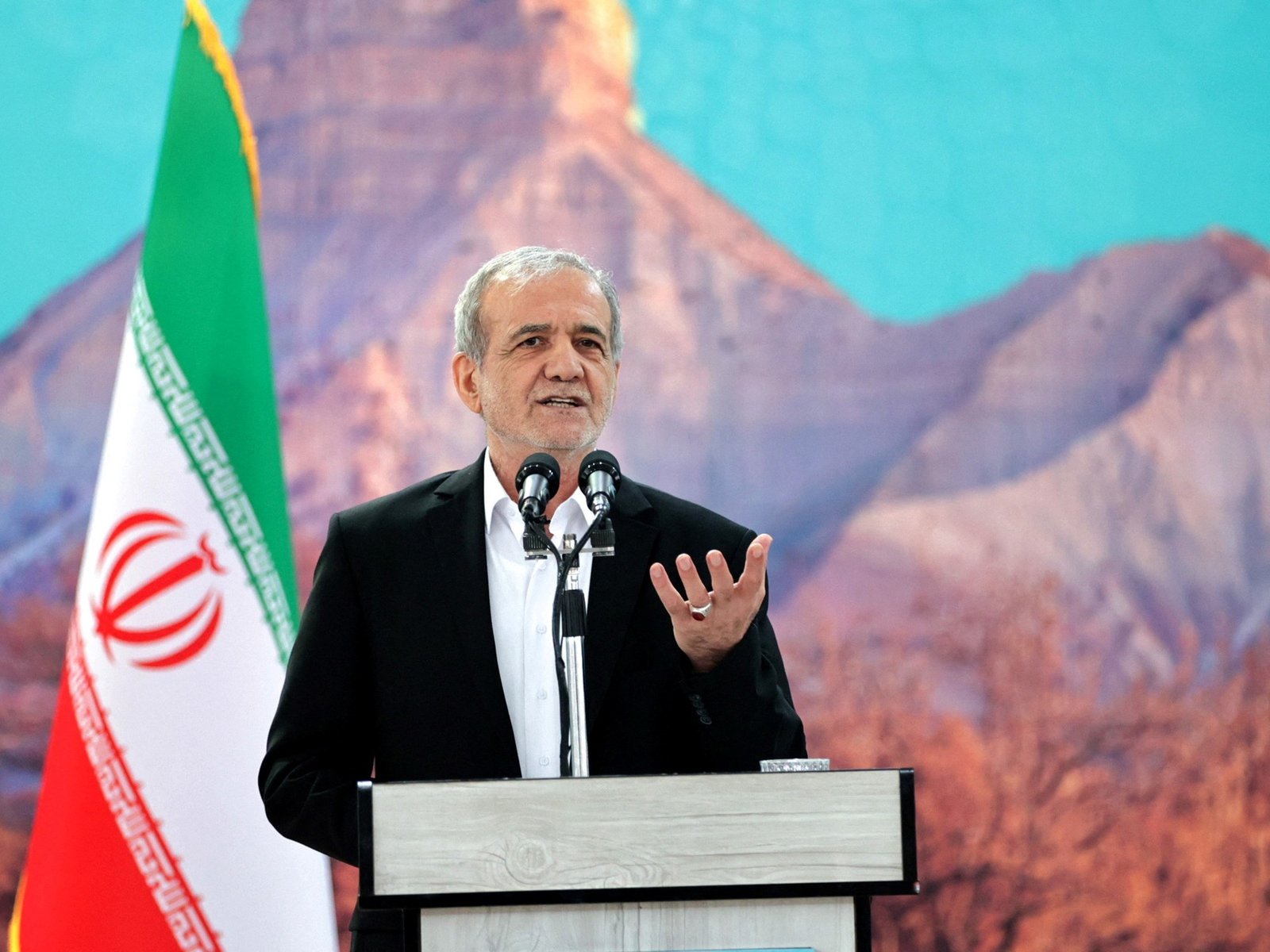
Mientras se cruzan las versiones por un alto al fuego entre Washington y Teherán, este miércoles por la tarde el presidente iraní publicó una carta abierta en la que dijo dirigirse «al pueblo de los Estados Unidos». Masoud Pezeshkian cuestionó la «guerra de desinformación», deslizó que Donald Trump puede estar siendo manipulado por Benjamin Netanyahu y cerró con una fuerte advertencia: «A lo largo de su milenaria y orgullosa historia, Irán se sobrepuso a muchos agresores. Lo que queda de ellos sólo son nombres manchados en la historia».
Se trata de una misiva de cuatro carillas publicada en los perfiles oficiales de redes sociales de Pezeshkian, presidente de Irán, este miércoles por la noche, hora local. Llegó apenas horas después de que Donald Trump afirmara en Truth Social que «el nuevo presidente del régimen iraní acababa de pedirle un alto al fuego», lo cual sería considerado por Washington sólo después de que se liberara el estrecho de Ormuz.
En su carta, Pezeshkian no se pronuncia explícitamente sobre el posible cese al fuego, pero señala: «Hoy el mundo está en una encrucijada. Seguir por el camino de la confrontación es más caro y fútil que nunca. La elección entre confrontación y compromiso es real y consecuente; su resultado moldeará el futuro de las generaciones venideras».
Tampoco aclara si la carta fue escrita con aprobación del líder supremo, Mojtaba Khamenei, de mayor poder que el presidencial.
«Al pueblo de los Estados Unidos de América y a todos aquellos que, en medio de un caudal de distorsiones y relatos fabricados, continúan buscando la verdad y aspira a llevar una vida mejor. Irán –en su nombre, carácter e identidad– es una de las civilizaciones más antiguas en la historia. Pero además de sus ventajas históricas y geográficas a lo largo de los tiempos, Irán nunca ha elegido, en su historia moderna, el camino de la agresión, expansión, colonialismo o la dominación», comienza la carta del presidente iraní.
Y continúa: «Incluso ante la ocupación, invasión y de la presión sostenida de las potencias globales –y a pesar de tener superioridad militar sobre varios de sus vecinos–, Irán nunca inició una guerra. En cambio, resolvió y repelió valientemente a aquellos que lo atacaron (…) Por eso, retratar a Irán como una amenaza no es ni consistente con la realidad histórica ni la moderna; y esa percepción responde a la necesidad de justificar la presión, mantener superioridad militar y la industria bélica (…) En ese contexto, si no hay una amenaza, se la inventa».
To the people of the United States of America pic.twitter.com/3uAL4FZgY7
— Masoud Pezeshkian (@drpezeshkian) April 1, 2026
También señala a Estados Unidos por concentrar «sus más numerosas fuerzas y capacidades militares alrededor de Irán». «Lo que Irán ha sostenido es una respuesta mesurada en legítima defensa, lo cual no significa la iniciación de guerra o agresión alguna», amplía Pezeshkian en su carta abierta.
Además, dice -en referencia a las negociaciones por el programa nuclear, previas al estallido de la guerra- que «Irán buscó negociar, alcanzó un acuerdo y cumplió con sus compromisos».
«La decisión de salir de ese acuerdo, escalar el conflicto y lanzar dos ataques en medio de las negociaciones fueron dos decisiones destructivas del gobierno estadounidenses. Haber atacado infraestructura crucial de Irán –instalaciones energéticas e industriales– atentó directamente contra su pueblo», sigue.
Luego desliza acusaciones sobre el rol de Benjamin Netanyahu y su influencia sobre Trump: «¿Acaso los Estados Unidos no entraron en el conflicto arrastrados como un proxy de Israel, manipulados por su régimen? ¿Acaso no es evidente que Israel busca confrontar contra Irán hasta la vida del último soldado norteamericano y del último dolar de impuestos de cada estadounidense? ¿Es realmente ‘Primero EE.UU.’ la prioridad del gobierno norteamericano?».
«A lo largo de su historia y orgullosa historia, Irán se sobrepuso a numerosos agresores. Lo único que queda de ellos son nombres manchados en la historia, mientras que Irán persiste, resiliente, digno y orgulloso«, concluyó el presidente iraní.
Más temprano este miércoles, Trump publicó en su propia red social, Truth, un mensaje para anunciar que el régimen de Teherán había pedido un alto al fuego. «El nuevo presidente del régimen iraní, mucho menos radicalizado y mucho más inteligente que sus precesores, ¡acaba de pedir un alto al fuego a los EE. UU.! Lo consideraremos cuando el estrecho de Ormuz esté abierto, libre y despejado», comenzó el mandatario norteamericano.
De lo contrario, aseguró, Estados Unidos continuará «bombardeando Irán hasta la aniquilación o, como dicen algunos, hasta que regrese a la Edad de Piedra».
No tardó en llegar la respuesta desde Teherán: el portavoz del Ministerio de Relaciones Exteriores, Esmaeil Baqaei, dijo que «la afirmación de Trump es falsa e infundada».

Canales para ver el Argentina vs. Zambia por el amistoso internacional

El plan de la ultragestión libertaria en el Gobierno y en el Congreso para ganar aire ante el caso Adorni

La llamativa confesión de Robert Pattinson sobre su fanatismo por Buenos Aires: “Voy a vivir ahí un tiempo”

Así será el día a día de Artemis II tras su despegue: la agenda completa de la histórica misión tripulada rumbo a la Luna

Después de cancelar la venta de la cadena, Carrefour anunció un nuevo CEO local que buscará crecer en un “entorno desafiante”

La abogada Agostina Páez volvió de Brasil: estuvo presa acusada de racismo

El Gobierno cambia su propuesta de reforma: endurece penas para delitos comunes, pero no para los casos de corrupción

Nuevas críticas de Marcela Pagano contra los Milei: “Karina es la que gobierna”, aseguró

Dos jubiladas que le habrían prestado dinero a Manuel Adorni negaron conocerlo

Quiénes son las dos acreedoras del préstamo con el que Adorni compró su departamento en Caballito

 POLITICA2 días ago
Dos jubiladas que le habrían prestado dinero a Manuel Adorni negaron conocerlo
- POLITICA2 días ago
Quiénes son las dos acreedoras del préstamo con el que Adorni compró su departamento en Caballito
- ECONOMIA2 días ago
Uno por uno: qué dicen los principales artículos de la Reforma Laboral que suspendió la Justicia por pedido de la CGT