INTERNACIONAL
Un libro en dos mil palabras: “El proceso”, de Kafka, una acusación sin causa y un descenso sin fin


Algunos libros no se leen, se habitan. Nos envuelven con una atmósfera, una lógica propia que altera nuestras coordenadas más elementales. Tal es el caso de El proceso, novela inacabada de Franz Kafka publicada póstumamente en 1925, que narra el lento e inexorable hundimiento de Josef K., un empleado de banco que es arrestado una mañana sin saber por qué. Desde entonces, el protagonista intenta sin éxito comprender y defenderse ante un tribunal que nunca ve, en un proceso cuyo sentido y lógica escapan a toda razón. Esta es la historia que te vamos a contar-CON SPOILERS– en unas 2.000 palabras.
El proceso
eBook
En la primera edición de El proceso, en 1925, Max Brod -el amigo de Kafka que publicó su obra pese a los pedidos en contrario del autor- comentaba que el manuscrito no llevaba título. Sin embargo, contaba que Kafka -que había muerto un año antes- siempre se refirió al texto con esa denominación. Por regla general, Kafka se decidía por un título definitivo una vez concluida la obra. El proceso, entonces, podría haber sido sólo un título provisional.
Kafka, nacido en Praga en 1883, creó una obra única y perturbadora, donde la culpa y el absurdo son fuerzas que gobiernan al individuo. El proceso se ha interpretado como una alegoría, una crítica al poder burocrático o un retrato de la ansiedad existencial. Pero, más allá de las interpretaciones, lo que queda es una narración que nos atrapa desde la primera línea. La historia no tiene redención, sino una deriva: el proceso comienza, y de ahí en adelante, todo es descenso.
Vamos al texto:
“Alguien tenía que haber calumniado a Josef K., pues fue detenido una mañana sin haber hecho nada malo“. Así comienza la historia. Es su cumpleaños número treinta, vive en una pensión, trabaja como procurador en un banco. Pero ese día, en vez del desayuno que le lleva la cocinera Anna, entran dos hombres desconocidos. Uno se llama Franz. Visten de negro. No son policías ni muestran credenciales. Solo le dicen que está detenido, aunque puede seguir con su rutina. K. no entiende nada. Pregunta por la acusación. La respuesta es siempre la misma: “No estamos autorizados a decírselo”.

Franz y su compañero Willem lo escoltan, no lo agreden. Lo llevan ante un inspector que se presenta en una habitación de la pensión convertida en improvisado despacho. El inspector repite que todo está en marcha: “El proceso se acaba de iniciar y usted conocerá todo en el momento oportuno”. Pero no hay explicación, ni delito, ni instancia clara. K. se siente ofendido y ridículo. No es encerrado ni conducido ante un juez. Simplemente le dicen que el proceso ha comenzado y que será convocado. Esa es la nueva condición de su existencia.
Esa misma noche, K. se disculpa ante su casera, Frau Grubach, y luego va a la habitación de la señorita Bürstner, una vecina. Le cuenta lo sucedido, la escena del arresto, la presencia de los extraños. Bürstner, incrédula, escucha con interés. K., excitado, recrea el episodio, la imita, se agita, mueve los muebles como si interpretara una obra. Termina besándola. A la mañana siguiente, un tal Capitán Lanz, amigo de la casera, lo reprende por haber importunado a la señorita. K. lo ignora. El proceso ya ha entrado en su cuerpo.
Lo más inquietante: no lo trasladan ni lo encierran. El arresto no implica reclusión. K. puede continuar con su vida, ir al trabajo, hablar con su casera. –”Entonces estar detenido no es tan malo”, dice K. Pero todo está teñido de una nueva inquietud. El proceso ha comenzado y su sombra lo acompañará siempre.
Una semana después, recibe una citación. Debe presentarse un domingo en un lugar impreciso. Encuentra finalmente la sala: un desván miserable, atestado de personas. El juez instructor le llama la atención por su retraso. K. responde con un largo alegato donde denuncia el carácter arbitrario del tribunal: “Fui detenido hace diez días, me río de lo que motivó mi detención, pero eso no es algo para tratarlo aquí. Me asaltaron por la mañana temprano, cuando aún estaba en la cama. Es muy posible ––no se puede excluir por lo que ha dicho el juez instructor–– que tuvieran la orden de detener a un pintor, tan inocente como yo, pero me eligieron a mí”.
Sus palabras son firmes, cada vez más enfáticas: “No hay ninguna duda de que detrás de las manifestaciones de este tribunal, en mi caso, pues, detrás de la detención y del interrogatorio de hoy, se encuentra una gran organización. Una organización que, no sólo da empleo a vigilantes corruptos, a necios supervisores y a jueces de instrucción, sino a una judicatura de rango supremo con su numeroso séquito de ordenanzas, escribientes, gendarmes y otros ayudantes”
El público, formado por gente de aspecto miserable, parece aprobar. Pero K. no obtiene respuestas. «Hoy se ha privado a sí mismo de la ventaja que supone el interrogatorio para todo detenido“, le reprocha el juez. K. abandona la sala frustrado: ”¡Pordioseros! Os regalo todos los interrogatorios“.

En la segunda visita, el tribunal ya no lo espera. Las salas están vacías. Recorre pasillos, encuentra a la esposa del ujier, quien coquetea con él. La escena es ambigua. Aparece un estudiante, la alza y se la lleva. La mujer lo mira y le dice: “No, ¿en qué piensa usted? Eso sería mi perdición”. El poder judicial también tiene sus jerarquías internas, sus transacciones. K. apenas las roza.
K. empieza a perder el control de su vida. Visita cada semana el tribunal, que se esconde en los pisos superiores de edificios ajenos, mal ventilados y llenos de funcionarios indiferentes.
Aunque el proceso domina la vida de K., también lo afectan sus relaciones personales. Una figura clave es la señorita Bürstner, la vecina a quien K. confiesa su arresto. Tras el primer encuentro, ella lo evita.
Más adelante, cuando K. acude con su tío Karl al abogado Huld, conoce a Leni, la enfermera del abogado, que está enfermo del corazón. Ella se presenta como una figura abierta, sensual, casi provocadora. Lo conduce a un cuarto, se entrega de inmediato. «––Venga ––dijo ella, y lo atrajo a sí. Le besó la frente y sus manos“.
Pero incluso ese gesto tiene algo ambiguo. Leni parece disfrutar su influencia sobre los acusados. Josef K. lo percibe: “––Para ella ––pensó K.–– no soy más que otro cliente del abogado”. En sus visitas posteriores, Leni se muestra cada vez más involucrada, lo cela, le da consejos, se infiltra en su proceso. Pero K. duda. No sabe si confiar en ella o si es parte del engranaje judicial. La intimidad también se vuelve sospecha.
El abogado recibe a K. en la cama.
Karl se preocupa por el prestigio del apellido, por la reputación. Pronto se desencanta de la pasividad de K. «––No te das cuenta de lo que está en juego ––le dice––. Te comportas como si fuera un juego de oficina». La tensión entre ambos se incrementa. Karl lo abandona, decepcionado, sin ayudar más. K. se queda solo, otra vez.
Pero K. desconfía de Huld. Cree que el abogado solo prolonga el proceso. La escena más inquietante ocurre cuando conoce al comerciante Block, otro cliente de Huld, que ha estado procesado durante cinco años. Block se ha convertido en una sombra, un siervo. Se arrastra, obedece, vive con miedo. Cuando K. lo visita, lo encuentra arrodillado, siendo humillado por el abogado. «––Este hombre ––dijo Huld– ya no es un cliente. Es mío“. K. ve en Block su posible futuro. Decide cortar con Huld.
La rutina del proceso
El tribunal no emite dictámenes ni convoca nuevas audiencias. Pero el proceso sigue. K. no sabe cómo. Alguien escribe su expediente. Hay funcionarios que lo visitan, escribientes en habitaciones ocultas.
Uno de los momentos más simbólicos ocurre en el banco donde trabaja. Al escuchar ruidos en un depósito, K. descubre a Franz y Willem, los dos empleados que lo detuvieron al inicio, siendo azotados por un guardián. Ellos le suplican: «––¡Ayúdenos, señor K., somos sus guardianes!“. El castigo, le explican, es por su queja formal contra ellos. Pero la escena se repite: al día siguiente, los vuelve a encontrar en la misma posición, como si el castigo no tuviera fin.
Esta repetición instala la idea de que la sanción no es una consecuencia, sino una estructura. Nadie sale. No hay redención ni aprendizaje. Solo ciclos. Kafka lo presenta sin subrayarlo, pero con brutal claridad.
Buscando otra vía, K. visita al pintor Titorelli, un artista oficial del tribunal. Vive en un altillo rodeado de niñas que lo espían. K. le pregunta si puede ayudarlo a obtener la absolución.
El pintor le explica las tres formas de resolución posibles: la absolución verdadera (inexistente), la aparente (que lo mantiene bajo vigilancia) y la dilación indefinida. Esta última es la única accesible. Se le mantiene en libertad, pero el proceso sigue. “El proceso no se detiene, pero el acusado queda casi tan a salvo de una condena como si estuviera libre”, le explica Tirorelli. La culpa nunca desaparece.
Otro momento revelador ocurre cuando K. explora el desván donde se alojan las oficinas judiciales. Allí encuentra escribientes apilados, dormitorios improvisados, archivadores oscuros, sofocantes. Uno de ellos le explica que su expediente “debe ir bien” porque tiene poco volumen. K. pregunta por su contenido. Le responden: “––Los instructores lo leen, y si no entienden algo, añaden una nota”. No hay defensa ni acusación, solo texto acumulado, escrito sin sentido.
K. sube y baja escaleras, abre puertas, entra en salas de espera repletas. A veces le preguntan si es acusado o funcionario. Otras, lo confunden. La burocracia lo diluye todo: culpabilidad, jerarquías, hechos. Incluso el lenguaje se desvanece.
Hacia el final, K. se encuentra en la catedral con un sacerdote. Cree que está allí para acompañar a un cliente del banco. Pero el sacerdote lo llama: “––¡Josef K.!“. Le revela que es el capellán de la prisión: “––Tú eres Josef K ––dijo el sacerdote […] ––Estás acusado”.
K. intenta justificarse: “––Pero yo no soy culpable ––dijo K––. Es un error. ¿Cómo puede ser un hombre culpable, así, sin más?“. El sacerdote responde: ”––Eso es cierto ––dijo el sacerdote––, pero así suelen hablar los culpables“.
Entonces le cuenta una parábola: un hombre llega ante una puerta que da acceso a la Ley. Un guardián le impide entrar. El hombre espera años. Pregunta si podrá pasar. El guardián dice: «––Es posible, pero no ahora“. El hombre envejece, insiste, ofrece todo lo que tiene. Antes de morir, pregunta por qué nadie más ha pedido entrar. El guardián responde: “––Ningún otro podía haber recibido permiso para entrar por esta puerta, pues esta entrada estaba reservada sólo para ti. Yo me voy ahora y cierro la puerta”.
K. pregunta si el guardián lo engañó. El sacerdote dice: «––No debes aceptar todo como verdad. Debes aceptarlo como necesario». La necesidad reemplaza a la verdad. El orden ya no se basa en justicia, sino en cumplimiento.
La noche antes de cumplir 31 años, dos hombres vestidos de negro llegan a buscarlo. K. los esperaba. “Se levantó en seguida y contempló a los hombres con curiosidad. ––¿Les han enviado para recogerme? ––preguntó”. Lo conducen sin violencia, pero con firmeza. Caminan por las calles hasta llegar a las afueras.
Allí, uno de ellos saca un cuchillo. K. comprende lo que va a ocurrir. No se resiste. Piensa: «¿Dónde estaba el juez al que nunca había llegado?“.
El verdugo se lo pasa al otro, quien lo sostiene. El cuchillo cae. Kafka cierra así la novela: «––¡Como un perro! ––dijo, fue como si la vergüenza debiera sobrevivirle“.
Kafka nunca terminó esta novela. Pero eso es parte de su fuerza. El proceso no tiene resolución ni moraleja, porque el mundo que describe tampoco las tiene. Josef K. no es culpable de nada, pero eso no lo salva. Como escribió el propio Kafka: “La sentencia no se pronuncia de una vez, el procedimiento se va convirtiendo lentamente en sentencia”. Y una vez iniciado, es imposible escapar del proceso.

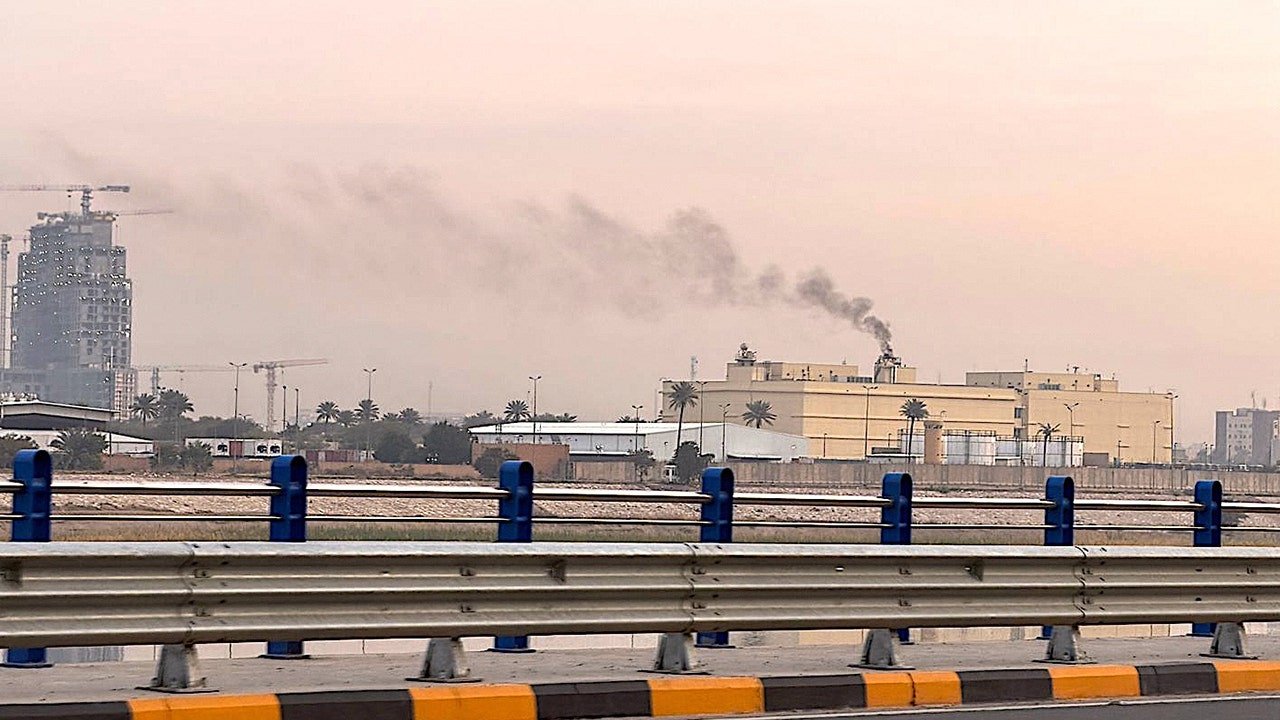
NEWYou can now listen to Fox News articles!
Iraq’s Prime Minister Mohammed Shia al-Sudani is facing mounting criticism for his government’s inability to stop pro-Iranian militias and the Islamic Republic of Iran from attacking American, French, Italian and Kurdish military personnel and facilities in Iraq.
On Saturday, the U.S. Embassy in Baghdad said that all U.S. citizens in Iraq should leave «immediately,» as «Iran-aligned terrorist militias have attacked the International Zone in central Baghdad on multiple occasions.»
The announcement came after a missile reportedly struck a helipad inside the U.S. Embassy in Baghdad early Saturday.
Speaking on background, a State Department spokesperson told Fox News Digital, «The United States strongly condemns attacks by Iran and Iran-backed terrorist militias against U.S. diplomatic personnel and facilities, civilian targets and energy infrastructure in Iraq, particularly in the Iraqi Kurdistan Region.»
US EMBASSY IN BAGHDAD TARGETED AS IRAN LAUNCHES ATTACKS DURING OPERATION EPIC FURY
A billboard featuring a photo of Ali Khamenei, Iran’s supreme leader who was killed in U.S. and Israeli airstrikes, is seen along a street in Baghdad on March 9, 2026. (Murtadha Al-Sudani/Anadolu via Getty Images)
The statement added, «As Secretary Rubio has said, the Iraqi government must take all possible measures to safeguard U.S. diplomatic personnel and facilities and ensure militia groups cannot use Iraqi territory to threaten the United States or the region. Doing so is in Iraq’s interest,» the spokesperson noted, «We retain a range of options to protect our interests. We do not preview sanctions or sanction actions.»
A Kurdish official, speaking on condition of anonymity, told Fox News Digital that the Iran-backed Popular Mobilization Forces (PMF) in Iraq «are paid and armed by the Iraqi government. They are on the Iraqi payroll. This is not the first time they have fired on the U.S., the Kurdistan Regional Government [KRG] and the energy sector. These PMF have brazenly attacked U.S. military bases.»
According to the official, «Many of these leaders [from the PMF] are part of al-Sudani’s government and his very coalition.»
In a statement to Fox News Digital on Sunday, an official for Iraq’s Embassy in Washington D.C. flatly denied the allegations against al-Sudani. «We would like to unequivocally confirm that the allegations claiming the Prime Minister granted a ‘green light’ to any armed group to target U.S. or Western interests are completely false. The Iraqi government has repeatedly emphasized its firm rejection of any attacks on diplomatic missions or foreign interests.»
The representative added, «The Prime Minister has also issued several statements condemning such acts, describing them as terrorist activities, and has directed the relevant authorities to pursue those responsible and bring them to justice.»
Al-Sudani raised eyebrows last week when he congratulated the Islamic Republic of Iran’s selection of its new Supreme Leader, Mojtaba Khamenei, the son of the assassinated second Supreme Leader of Iran, Ali Khamenei. «We express our confidence in the ability of the new leadership in the Islamic Republic of Iran to manage this sensitive stage, and continue to strengthen the unity of the Iranian people in facing the current challenges,» al-Sudani reportedly said.
When asked about the congratulatory statement to Khamenei, the Iraqi Embassy official said, «This action falls within the scope of standard diplomatic practices carried out by many countries, including several Gulf states. Iraq maintains diplomatic relations with neighboring countries, including Iran, while simultaneously ensuring balanced relations with all its regional and international partners.»
IRAN PROXIES WAGE WAR ON ISRAEL, THREATEN US INTERESTS AS IRAQ SLAMMED FOR NOT DISARMING THEM
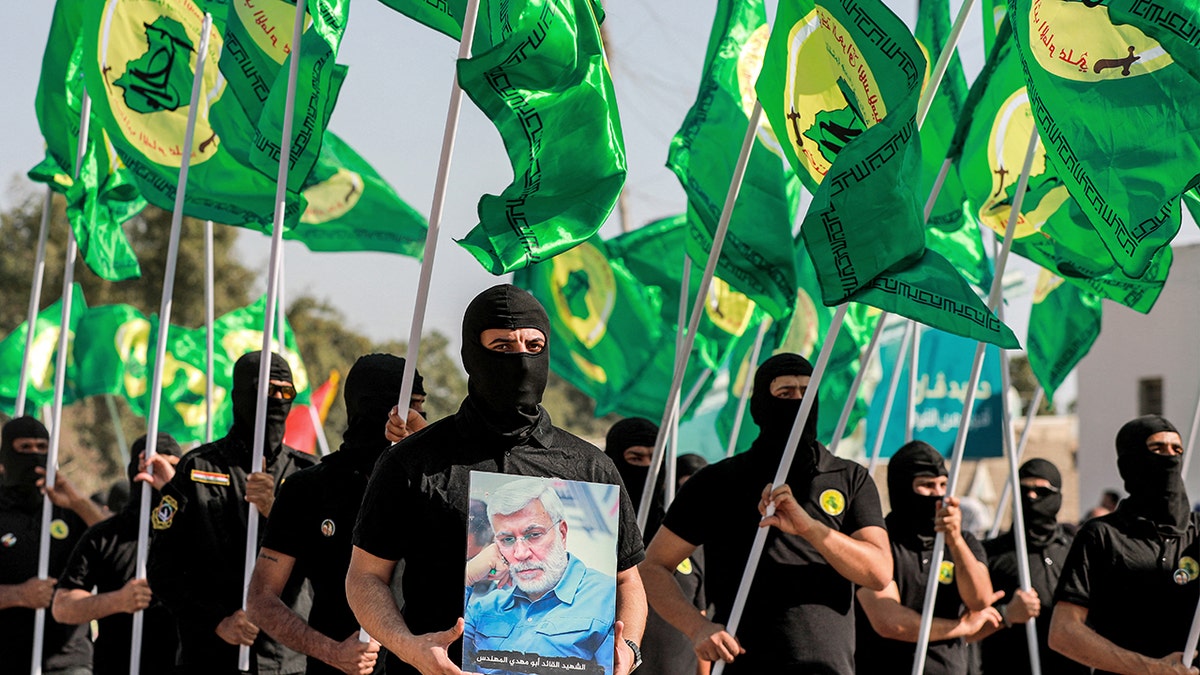
A member of the Imam Ali Battalions, the armed wing of the Islamic Movement of Iraq — a member faction of the Popular Mobilization Forces (PMF) paramilitaries — holds up a picture depicting Iraqi PMF commander Abu Mahdi al-Muhandis (who was in a US drone strike in early 2020), as other group members gather with its flags during a rally to mark annual Quds (Jerusalem) Day commemorations in Baghdad on April 5, 2024. (Murtaj Lateef/AFP via Getty Images)
The intensified attacks on the international anti-jihadi coalition in Iraq’s autonomous Kurdistan region on Friday resulted in the death of a French soldier and injuries to six other people. According to France 24, the commanding officer, Colonel Francois-Xavier de la Chesnais, said the French soldier, Arnaud Frion, was murdered by an Iranian-designed Shahed lethal drone.
The Iraqi Kurdish news outlet Rudaw reported on Saturday that the «Kurdistan Region was targeted with seven explosive-laden drones early Saturday as Iran and its proxy forces in Iraq continue to target the U.S. consulate in Erbil and other military and civilian sites in the Region.» Rudaw said since the start of U.S. Operation Epic Fury the Kurdistan area has been targeted with over 300 drone and missile attacks, resulting in the killing of seven people and 35 injured.
The Kurdish official complained that al-Sudani’s «government is not serious about taking on militias because the militias are part of the government.» However, the official praised the U.S. «The Americans are going after them aggressively over the last week with attacks on their [PMF] positions.»
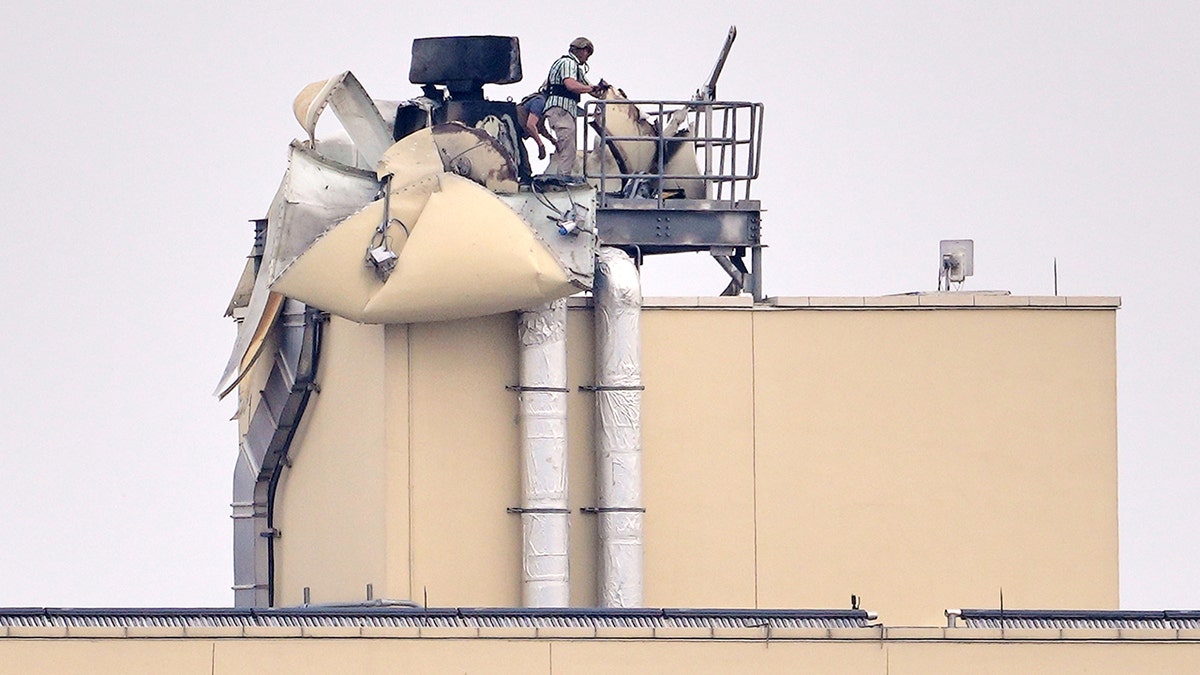
U.S. embassy personnel inspect damage caused by a bombing in Baghdad, Iraq, on Saturday, March 14, 2026. (Hadi Mizban/AP)
According to a Long War Journal report, «Airstrikes, likely conducted by the U.S. as part of the U.S.-Israeli operation against the Islamic Republic, have continued targeting Iran-backed Iraqi militias.» Neither the U.S. or Israel have not commented on reports that they are striking the PMF.
Fox News Digital secured information in early March from the Israeli Defense Forces that drones have bee fired at Israel from Iraqi territory since the start of the war.
The PMF told the Iraqi News Agency that American military forces have conducted 32 airstrikes against PMF headquarters since February 28.
The Kurdish official urged the Trump administration to «demand that Iraq’s government stop paying and arming the PMF and target their banking system that finances the PMF.» The official continued, «We have shared information with the Iraqis and the Americans, who have in turn shared information with the Iraqi government.» On the terrorist activities of the PMF the official said, «The al-Sudani government has been unwilling to confront them.»
TRUMP THREATENS TO END IRAQ SUPPORT OVER AL-MALIKI COMEBACK BID TIED TO IRAN INFLUENCE
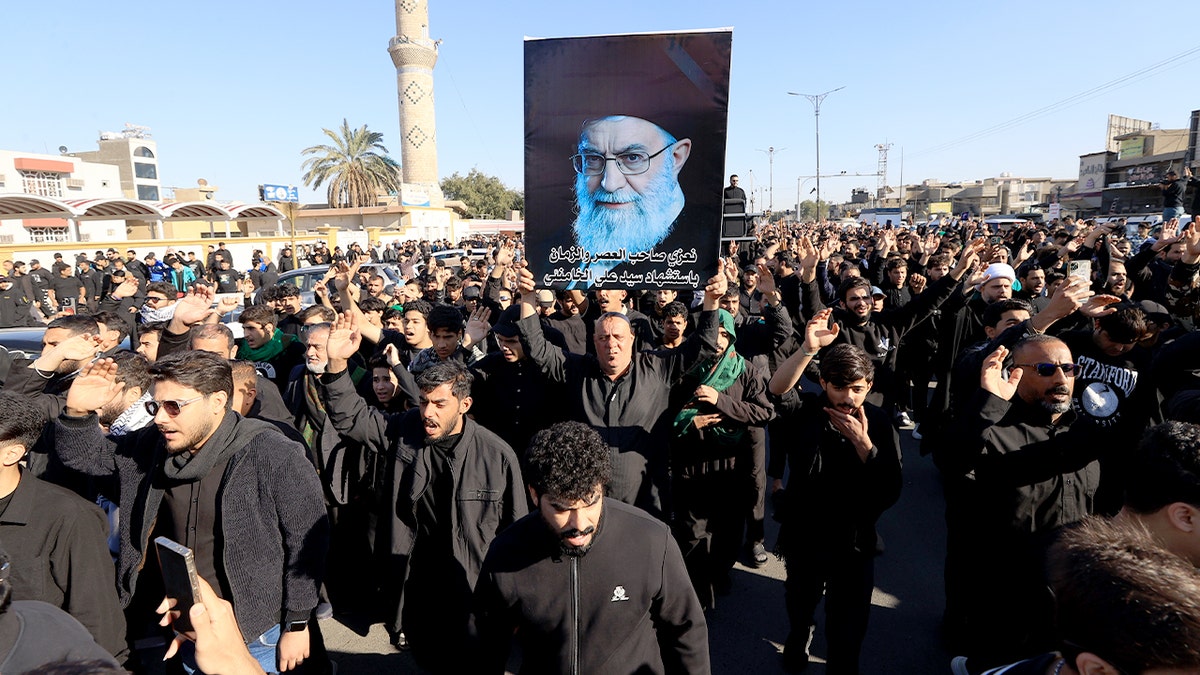
Supporters gather in Baghdad’s Sadr district holding Iranian flags and posters of Ayatollah Ali Khamenei following the announcement that he was killed in U.S.-Israeli attacks, on March 1, 2026 (Murtadha Al-Sudani/Anadolu via Getty Images)
The official bemoaned that the al-Sudani government initiated a «handful of arrests last year, and they were released on bail and were able to flee to Iran.» The Kurdish official said the KRG «provided the information to the Iraqi government about the perpetrators» who fled to the Islamic Republic.
An Iraqi official dismissed the reports on PMF terrorists, stating,» I have not heard of such a thing. I guess that’s not true.»
The Kurdish official cited two PMF groups as the most bellicose toward the U.S.: Asaib Ahl al Haq (League of the Righteous) and Kataib Hezbollah. The Trump administration sanctioned Asaib Ahl al Haq in March 2024. The State Department said Asaib Ahl al Haq «and its leaders are violent proxies of the Islamic Republic of Iran» and the group «is extensively funded and trained by Iran’s Islamic Revolutionary Guard Corps (IRGC) Qods Force.»
The U.S. government sanctioned Kataib Hezbollah in 2023. The Kurdish official also charged the al-Sudani’s government with imposing an embargo on imported goods to Iraqi Kurdistan as way «to strip away our autonomy and everything we can built over 30 years.» The autonomous Kurdish government is widely considered a robust pro-American ally.
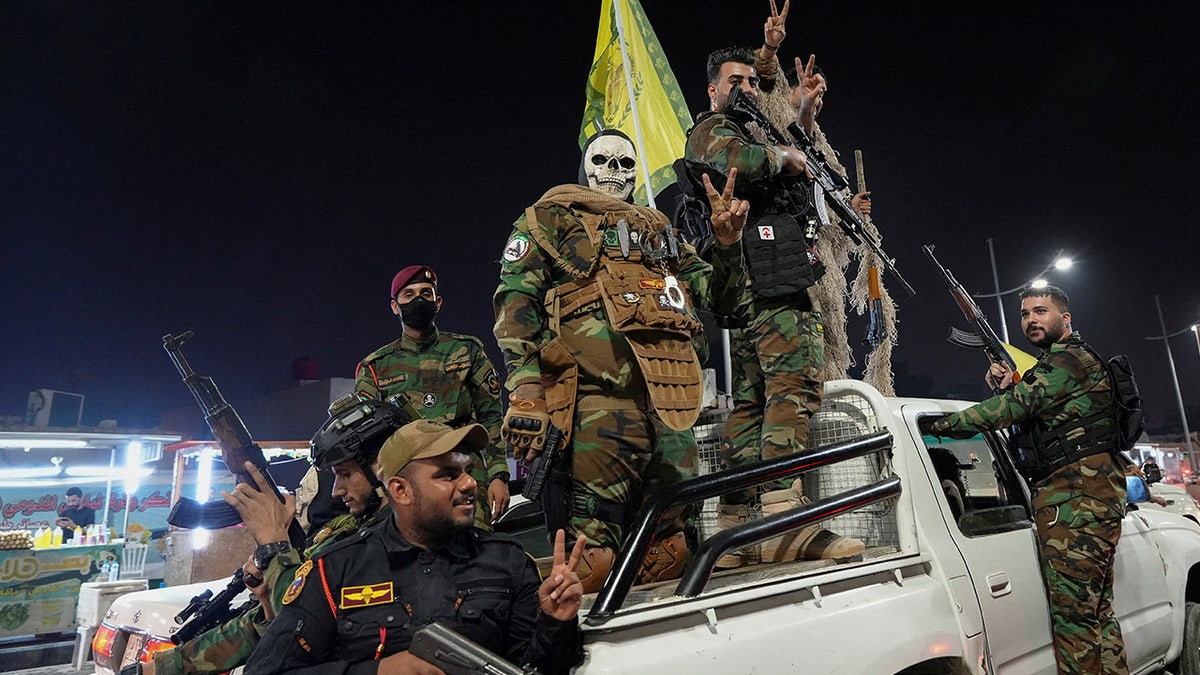
Iran-backed shi’ite groups fighters celebrate on a street, after the IRGC attack on Israel, in Basra, Iraq, October 1, 2024. (Essam Al-sudani/Reuters)
The Iraqi official denied the embargo, stating, «The federal government does not pursue a policy of ‘embargo’ against the Kurdistan Region. The current measures aim to unify the legal, customs, and trade framework across all Iraqi borders in line with the federal constitution.
«No country can afford contradictory internal trade and customs regimes, as this risks harming the national economy as a whole. Our objective is a unified, fair economic framework that protects state revenues while respecting the region’s specificities, and we believe this is best achieved through dialogue and cooperation.»
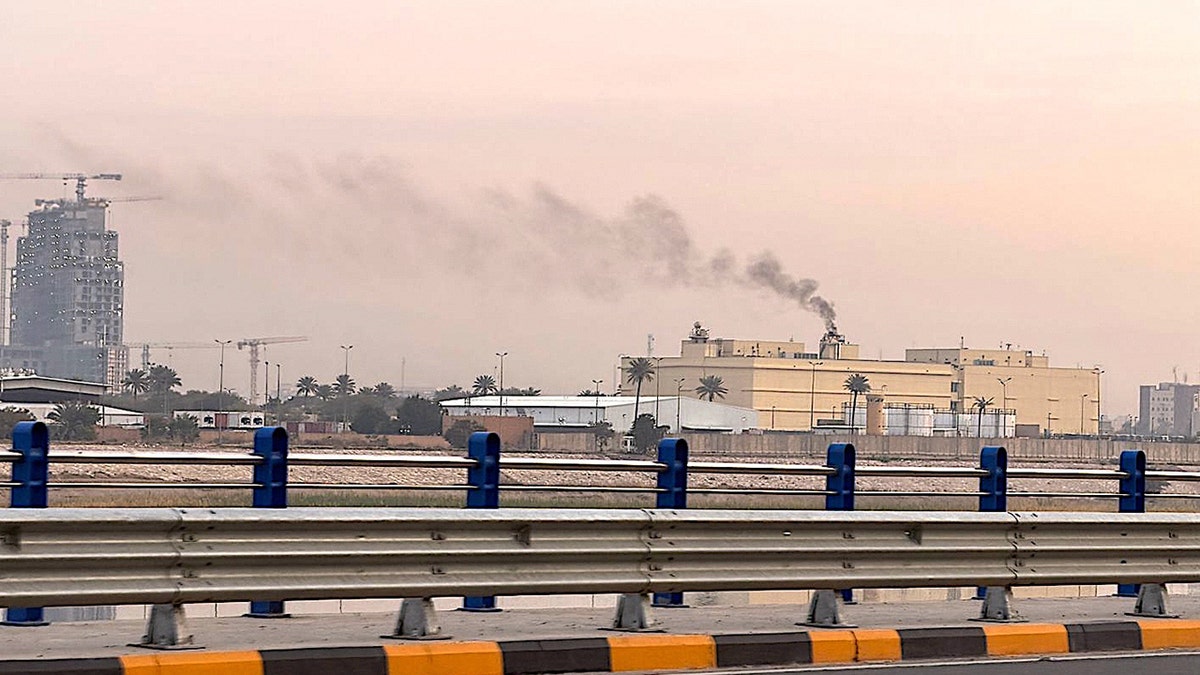
Smoke rises from the U.S. embassy building in Baghdad, Iraq, Saturday, March 14, 2026. (Ali Jabar/ AP Photo)
CLICK HERE TO DOWNLOAD THE FOX NEWS APP
Entifadh Qanbar, a former spokesman for the deputy prime minister of Iraq, told Fox News Digital that «One could even describe the PMF as the Iraqi branch of the Iranian Revolutionary Guard, effectively functioning as an Iraqi Islamic Revolutionary Guard Corps. The PMF operates through a network of militias that frequently attack U.S. forces, foreign interests, and targets in Kurdistan.»
He argued for «The dismantling of the mother organization — the PMF itself. As long as the PMF exists, militias operating under its umbrella will continue to attack U.S. forces and regional targets.»
Fox News Digital reporter Greg Norman-Diamond contributed to this report.
war with iran,iraq,terrorism,national security,mojtaba khamenei
NEWYou can now listen to Fox News articles!
Bobby Pulido, a Latin Grammy winner and music star, once said he would pursue Mexican citizenship and described himself as a «winter Texan» for spending much of the year south of the U.S. border, drawing scrutiny for his time spent internationally as he pursues a seat in Congress.
«It gets hot here, bro. Like real hot — like real hot. I’m a summer Mexican,» Pulido told interviewers in 2023.
«It sounds better: winter Texan. It sounds better to say, ‘I’m a winter Texan.’»
His comments, which Pulido says he made in jest, run counter to statements he made to NBC News earlier this month.
TEXAS BORDER DISTRICT DEM CUELLAR BEATS BACK PRIMARY CHALLENGERS
Bobby Pulido, Democratic Congressional candidate for Texas, speaks on Friday, Feb. 27, 2026. (Gabriel V. Cardenas/Bloomberg via Getty Images)
«I live in Texas. We’ve always lived in Texas. Since COVID, really — that’s just not true,» Pulido said, responding to accusations that he only sometimes lived in the district he is running to represent.
Pulido is best known for his Tejano and Mexican–Spanish folk-style songs, such as «Desvelado» and «Se Murió de Amor,» and has received five nominations for a Latin Grammy Award.
He won Best Tejano Album in 2022 and 2025.
Pulido’s career still takes him south of the border on a regular basis, leading him to tell local newspapers in Mexico that he was considering dual citizenship in 2015.
«I’m going to be Mexican because I want the same Mexican passport you have,» Pulido told El Norte, a Mexican outlet.
His last five concerts have been in Mexico, according to his tour website.
Pulido made headlines last fall when he announced a congressional bid in one of the country’s most competitive districts. Shortly afterward, he also drew scrutiny for a resurfaced history of posting links to explicit websites on his personal X account — as well as for a social media post of what appeared to be him urinating on President Donald Trump’s Hollywood Walk of Fame star.
TRUMP’S PARDON OF HOUSE DEM CUELLAR BACK IN THE SPOTLIGHT AS HIS BROTHER FACES INDICTMENT

Bobby Pulido, left, pictured alongside Trump’s Hollywood star, right. (Photo by Medios y Media/Getty Images; David Livingston/Getty Images )
He has also received backlash over his past vulgar attacks against Trump, including posting the Spanish translation of «f— your mother.»
«I’d like to give you the biggest ‘f— you» you piece of s—, a–hole, d— head, son of a b—-,» Pulido said to Trump in another post.
Despite those controversies, Pulido recently captured the Democratic nomination to run in Texas’ 15th Congressional District — a seat currently held by Rep. Monica De La Cruz, R-Texas.
De La Cruz, a two-term incumbent, needled Pulido over his time spent in Mexico through a post to X. She quipped that Pulido «only belongs at quinceañeras,» referring to the lavish, coming-of-age parties traditionally thrown for girls turning 15 in Latin cultures.
«Don’t threaten me with a good time,» Pulido shot back.
His campaign said Pulido asked local quinceañeras if he could attend them, drawing nearly 1,000 invites to parties in the district.
Pulido’s ties to Mexico extend beyond his music career.
A person familiar with Pulido’s background said his wife still lives in Mexico along with children from previous marriages. He also owns a house there and told interviewers in 2025 that he goes to Mexico for healthcare.
«We live on the border. My wife and I have a house in Mexico. So, we travel there, and we spend time over there. And I’ve had a pretty unique perspective of experiencing healthcare over there and healthcare here,» Pulido said.
TRUMP ENDORSES CUELLAR OPPONENT AFTER PARDONING DEM REP

Bobby Pulido holding his award at the Annual Latin Grammy Awards Premiere Ceremony on Nov. 13, 2025, in Las Vegas, Nevada. (Greg Doherty/Getty Images for The Latin Recording Academy)
CLICK HERE TO DOWNLOAD THE FOX NEWS APP
His campaign confirmed that Pulido does not have dual citizenship.
«Bobby has one citizenship — American, and he’s proud of it. And, frankly, there’s nothing wrong with people having ties to family and heritage across borders,» Pulido’s spokesperson told Fox News Digital.
congress,elections,democrats elections,politics

Fuerzas
Consecuencias

¿Reabrir el estrecho?
Nuevas cepas con Israel
Las próximas decisiones de Trump: la isla de Kharg y el depósito nuclear.

US warns Iraq must act against Iran-backed militia attacks on American assets

Alberto Weretilneck defendió la Argentina Week pero apuntó a Milei por sus críticas al empresariado: “Fue innecesario”

Lanzaron un plan de retiros voluntarios en Anses: abonan hasta $80 millones en un pago

Canales para ver el River Plate vs. Sarmiento por el Torneo Apertura

Dem candidate’s unearthed ‘winter Texan’ comment could haunt campaign

Al entrar en la tercera semana de guerra, Trump se enfrenta a decisiones difíciles

El ex novio de Luana de Gran Hermano reveló información sensible sobre su relación: “El bolso tenía plata”

Morena Rial salió de la cárcel y se conoció escalofriante dato que involucra a Jorge Rial: «Me pidió que me hiciera cargo»

Emanuel Noir, de Ke Personajes, anunció que dejará las redes sociales: “Una búsqueda mayor a la que creí, apareció”

Cuánto subirán las jubilaciones y pensiones en abril después del dato de inflación que sorprendió

 CHIMENTOS2 días ago
La fuerte exigencia a Mauro Icardi para poder ver a sus hijas con Wanda Nara: “A Maurito se lo va a multar si no lleva a las menores al colegio”
- POLITICA2 días ago
BOMBAZO – Guerra abierta: Feinmann y Rossi contraatacan tras la denuncia de Victoria Villarruel
- POLITICA3 días ago
Milei llegó a Madrid para participar de un foro ultraliberal organizado por expertos en criptomonedas