INTERNACIONAL
‘Jewish Matchmaking’ star living in Israel has hope amid conflicts with Hamas, Iran


NEWYou can now listen to Fox News articles!
Star of the hit Netflix show «Jewish Matchmaking,» Cindy Seni isn’t single anymore, but still talks to renowned matchmaker Aleeza Ben Shalom and lives in Israel.
From serving in the Israel Defense Forces (IDF) during COVID to living in Jerusalem through Oct. 7 and now the launch of Operation Rising Lion, Seni has seen a slew of historic events firsthand.
«It’s been a whirlwind,» Seni told Fox News Digital. «It feels like it’s a never-ending wound that we just keep trying to patch up and then it gets reopened again and it’s very, very difficult.»
Israel’s air defense targets Iranian missiles in the sky of Tel Aviv in Israel on June 16, 2025. (MATAN GOLAN/Middle East Images/AFP via Getty Images)
CAITLYN JENNER, STUCK IN ISRAEL AFTER IRAN STRIKE, POSTS PICTURES OF CHAOS AND SHELTER
Since the operation in Iran began, Israel has directed civilians to stay in bomb shelters or protected spaces for longer periods of time. Seni says it can be «anxiety-inducing» as one never knows how long the shelter-in-place order will last.
«It’s a question sometimes of an entire night or a few hours,» she said. «And thank God I have a safe room in my apartment, but a lot of people don’t, so they have to run and literally go out on the street at night in the middle with their kids and that’s very stressful.»
While she said that life in Israel right now is anxiety-inducing and scary, Seni also spoke about the resilience of the Israeli people, something she admires about the culture. Seni told Fox News Digital that people in Israel are living their lives not because they aren’t afraid or stressed, but rather in spite of that because they don’t have a choice. As Seni said, «they can’t stop.»
One resilient Israeli who has had a major impact on Seni’s life amid the chaos of war and conflict is her husband, Eldad Cohen.
«He’s a very, very resilient Israeli. He’s been through a lot of things,» she said. «He was injured as well in the army, and he has his own kind of, you grew up here during the Second Intifada in Jerusalem, and so he has this own resilience that really grounds me.»

«Jewish Matchmaking» star Cindy Seni and her now-husband Eldad Cohen at the Western Wall in Jerusalem, Israel. (@IsraelWithCindy/Instagram)
MIKE JOHNSON CALLS OFF ISRAEL TRIP AMID IRAN CONFLICT
Seni’s other love is spreading joy online through her Instagram account, «Israel with Cindy,» where she posts skits, photos and personal stories.
«So, ‘Israel with Cindy’ was really created as a way to spread joy within the community —the Jewish community — and it kind of really grew from there,» Seni said. «When situations like these happen, and the same thing with October 7th, I was faced with an extreme amount of hatred or just antisemitism. And I decided that my platform was going to be used in times of need to show antisemitism and expose hatred and trying to really find peace and a solution in the long-term. Humanizing Israelis, humanizing Jews, which I think is often lost in today’s society, sometimes in this polarized world.»

Rescue personnel work at an impact site following a missile attack from Iran on Israel, in Rishon LeZion, Israel, June 14, 2025. (REUTERS/Ronen Zvulun )
CLICK HERE TO GET THE FOX NEWS APP
Israeli Prime Minister Benjamin Netanyahu’s office said that as of Wednesday 24 people had been killed and more than 800 injured in Iran’s retaliatory strikes. Additionally, 3,800 people have been evacuated from their homes.
While the numbers may be daunting, Seni says she has faith in the Israeli security forces and in God.
«I’m a believer in God, so, I believe that we have divine protection. I think that, God willing, everything will be okay.»


NEWYou can now listen to Fox News articles!
President Donald Trump made an extraordinary appearance Wednesday for Supreme Court arguments — an American presidential first — as his administration seeks to unwind birthright citizenship during two hours of dramatic oral arguments.
The Supreme Court voiced strong pushback against efforts to restrict who can be called an American, a politically divisive case over automatic citizenship for some children born in the United States to foreign nationals.
Trump, wearing a red tie and dark suit, entered the courtroom around nine minutes before the court gaveled into session and did not speak during the session, per court rules.
He closed his eyes for brief times during the session, but looked alert and focused throughout his time in the courtroom, staying for the entire oral presentation by his Solicitor General John Sauer, which lasted about 65 minutes.
THE SUPREME COURT IS GOING TO GIVE PRESIDENT TRUMP A MAJOR OPENING ON IMMIGRATION
President Donald Trump became the first sitting president to listen live to Supreme Court oral arguments Wednesday in Washington, D.C. (Kent Nishimura / AFP)
Chief Justice John Roberts did not acknowledge the president’s appearance.
Trump, Commerce Secretary Howard Lutnick and Attorney General Pam Bondi were in the front row of the public section and passed some notes to one another before Trump left the courtroom around 11:19 a.m. ET, seven minutes or so into the ACLU lawyer Cecilia Wang’s oral presentation. Trump left without commenting.
Trump later issued a Truth Social post saying, «We are the only Country in the World STUPID enough to allow ‘Birthright’ Citizenship!»
Trump heard a majority of justices taking turns expressing varying levels of skepticism at the administration’s claim that the citizenship «privilege» has been historically abused and wrongly granted to those whose mother gave birth while in the country illegally or temporarily.
At issue is the executive order the president signed on his first day back in office to redefine birthright citizenship, part of a broader crackdown on immigration that has led to increased deportations and decreased admittance of refugees and asylum seekers at the border.
JOHN YOO: SUPREME COURT SHOWDOWN EXPOSES SHAKY CASE AGAINST BIRTHRIGHT CITIZENSHIP
In the first Supreme Court argument appearance by a sitting president, most of the bench appeared to agree with the post-Civil War’s 14th Amendment — and subsequent congressional laws and Supreme Court precedent — all support the idea of making citizens of everyone born in the country, regardless of immigration status.
Roberts, appointed by Republican George W. Bush, questioned the government’s legal position when it came to the 14th Amendment’s limited exceptions to citizenship.
«The examples you give to support that strike me as very quirky,» Roberts said. «You know, children of ambassadors, children of enemies during a hostile invasion, children on warships — and then you expand it to a whole class of illegal aliens who are here in the country.
«I’m not quite sure how you can get to that big group from such tiny, and sort of idiosyncratic, examples.»
Liberal Justice Ketanji Brown Jackson wondered how determining citizenship would be applied in practical terms if immigrant mothers gave birth.
SUPREME COURT’S SHOWDOWN ON BIRTHRIGHT CITIZENSHIP DECISION COULD RESHAPE AMERICA
«How does this work?» Jackson asked U.S. Solicitor General D. John Sauer. «Are you suggesting that when a baby is born, people have to have documents present? Documents? Is this happening in the delivery room?
«How are we determining when or whether a newborn child is a citizen of the United States under your rule?»
Conservative Justices Clarence Thomas and Sameul Alito — both confirmed to the bench before Trump’s first administration — sounded mostly likely to back Trump’s position.
«How much of the debates around the 14th Amendment had anything to do with immigration?» Thomas asked early in the argument, saying it was designed to give newly freed slaves citizenship, and does not necessarily apply to children of newly arrived immigrants.
All lower federal courts that have heard various challenges to the birthright citizenship order have ruled against the administration.
CLICK HERE TO DOWNLOAD THE FOX NEWS APP
An expected definitive high-court ruling against Trump by early summer could have sweeping national implications — and possibly slow momentum — for Trump’s get-tough immigration agenda, which has become a defining feature of his second White House term.
supreme court, supreme court oral arguments, immigration, donald trump
INTERNACIONAL
En un discurso por TV, Trump afirmó que aplastó a Irán y que está «muy cerca» de terminar la guerra



NEWYou can now listen to Fox News articles!
Republican leaders are rallying around President Donald Trump’s new approach to end the 47-day Department of Homeland Security (DHS) funding lapse — a plan that could make the agency shutdown-proof for the rest of Trump’s term.
House Speaker Mike Johnson, R-La., and Senate Majority Leader John Thune, R-S.D., said Wednesday that DHS will be funded along «two parallel tracks,» meaning that the president’s immigration and border security agenda will receive an influx of money through a party-line reconciliation bill. The rest of DHS is funded through the normal appropriations process.
«We operated under a belief that while our country is in the midst of an international armed conflict, Democrats might finally come to their senses and understand that defunding our homeland security agencies is beyond reckless and very dangerous,» Johnson and Thune wrote in a joint statement. «We cannot allow Democrats to any longer put the safety of the American public at risk through their open border policies, so we are taking that off the table.»
The GOP leaders added that a forthcoming budget reconciliation package will include three years of immigration enforcement and border security funding. That move could prevent Democrats from using the appropriations process as leverage over the president’s immigration agenda for the remainder of his term.
Congressional Republicans are eying their own fixes to Obamacare subsidies, but the Senate and House are diverging in their approaches. Ultimately, President Donald Trump will be the deciding factor. (Getty Images)
HOUSE CONSERVATIVES ERUPT OVER SENATE GOP, WHITE HOUSE DEAL AMID SAVE ACT FIGHT
The GOP leaders’ budget reconciliation push comes as Republican efforts to fund Immigration and Customs Enforcement (ICE) and U.S. Customs and Border Protection (CBP) through regular order have stalled in the Senate due to widespread opposition from Democrats.
With the Senate’s 60-vote legislative threshold in place, Senate Minority Leader Chuck Schumer, D-N.Y., effectively has veto power over DHS appropriations if he keeps his caucus in line.
To end the stalemate, Trump asked Republicans Wednesday to draft a budget reconciliation package funding immigration enforcement and border security that could pass both chambers without any Democratic support.
«We are going to work as fast, and as focused, as possible to replenish funding for our Border and ICE Agents, and the Radical Left Democrats won’t be able to stop us,» Trump wrote on Truth Social. «We will not allow them to hurt the families of these Great Patriots by defunding them.»
The president added that he wants the legislation on his desk by June 1.
The budget reconciliation process would allow Republicans to steer around Democratic opposition and pass a DHS funding bill at a simple majority threshold. Republicans narrowly passed Trump’s One Big Beautiful Bill Act using reconciliation in June 2025 after months of intraparty squabbling.
Though ICE and the Border Patrol received an unprecedented infusion of money through Trump’s «big, beautiful» bill, certain support staff employed by both agencies have not been paid during the seven-week shutdown.
The U.S. Coast Guard, the Transportation Security Administration (TSA), the Federal Emergency Management Agency (FEMA) and the U.S. Secret Service have seen a more significant lapse in appropriations, though Trump took executive action to provide back pay to TSA agents reporting to work during the funding lapse.
HOUSE REPUBLICANS PASS RIVAL DHS PLAN, SETTING UP SENATE FIGHT AS SHUTDOWN SET TO BECOME LONGEST IN HISTORY
Sen. John Hoeven, R-N.D., indicated to reporters Monday that Trump would ultimately get behind the Senate’s preferred approach.
«The Democrats can’t create another shutdown like they did this time,» Hoeven said, if the DHS budget reconciliation bill were to be signed into law.
The North Dakota lawmaker also disputed that a reconciliation package would take several months to put together.
«We’ll get it done as quick as you can,» Hoeven said. «I hope it’s certainly not months.»
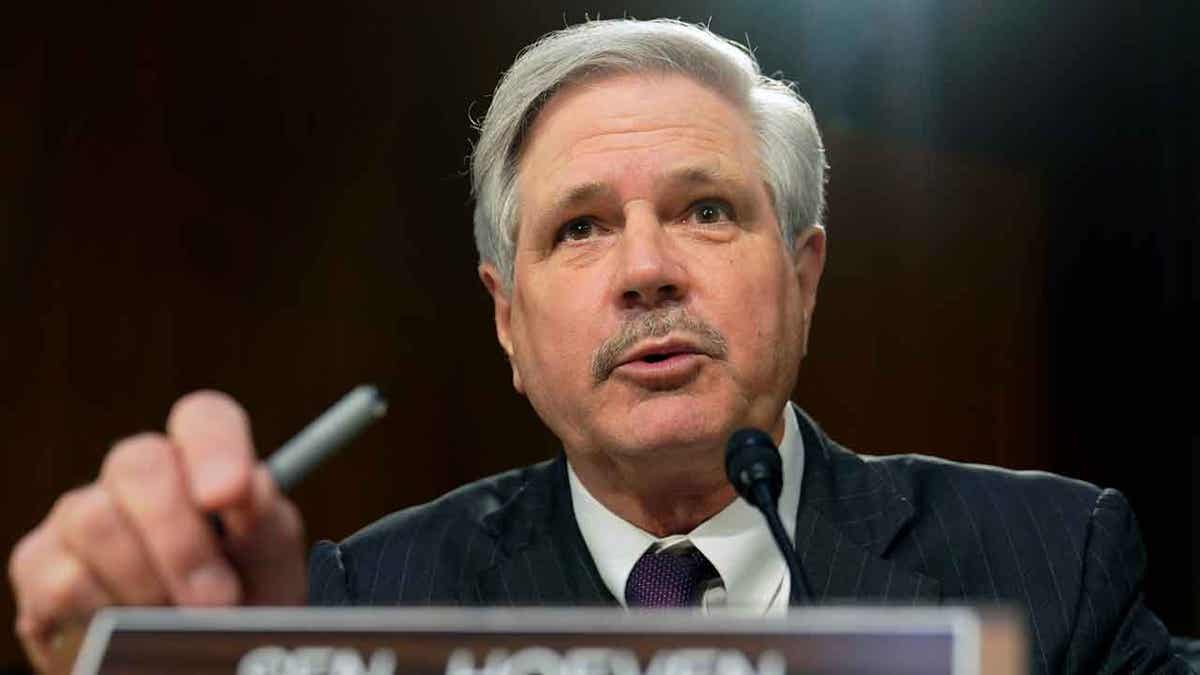
Sen. John Hoeven, R-N.D., a member of the Senate Appropriations Committee, said Republicans are considering a budget reconciliation package making Immigration and Customs Enforcement shutdown-proof. (Mariam Zuhaib/AP Photo)
CLICK HERE TO DOWNLOAD THE FOX NEWS APP
A second reconciliation package could prove more difficult in an election year when lawmakers will have to identify spending cuts to pay for the border security and immigration funding. The strategy could also extend the funding lapse for ICE and the Border Patrol for several more months.
Amid both chambers’ planned two-week recesses, Trump told the New York Post on Tuesday he is considering calling Congress back to Washington to find a solution to the DHS shutdown.
House Majority Whip Tom Emmer, R-Minn., told CNBC’s «Squawk Box» on Wednesday that a «skinny reconciliation bill» funding the department would pass both chambers once Congress resumes session in mid-April if a deal has not been reached.
House GOP leadership has previously voiced skepticism about funding immigration enforcement through a budget reconciliation package. Some conservatives have also complained about the precedent of letting Democrats decide which agencies receive funding through the normal appropriations process.
«The problem is that what they’re doing is they’re placing the burden on the Republican Party entirely to make sure that we have border security funding and Immigration and Customs Enforcement, because they’re going to try to force it into a reconciliation bill,» House Speaker Mike Johnson, R-La., told Fox News’ Brian Kilmeade on Friday. «That’s a very difficult task. It is a high risk gamble for us to assume that we could do that.»
homeland security, donald trump, government shutdown, mike johnson, chuck schumer, politics

Inside Supreme Court: How Trump heard birthright citizenship arguments

Fabio Capello, sobre la ausencia de Italia en el Mundial: ‘Es una vergüenza y una tragedia. Lo peor que le ha pasado en su historia reciente’

El grupo de jubilados que deja de cobrar el bono completo de $70.000 en abril 2026

“Argentina hace historia”: el Gobierno confirmó la conexión exitosa con el microsatélite enviado a la NASA

La historia oculta del debut de Maradona como titular en la Selección: un número ajeno, un gesto intrépido y el abogado que fue figura

¡Escándalo! Tini Stoessel rompió el silencio y habló por primera vez de la traición de Emilia Mernes: “Es muy delicado”

Nuevas críticas de Marcela Pagano contra los Milei: “Karina es la que gobierna”, aseguró

Dos jubiladas que le habrían prestado dinero a Manuel Adorni negaron conocerlo

Quiénes son las dos acreedoras del préstamo con el que Adorni compró su departamento en Caballito

El incómodo momento que Wanda Nara y Martín Migueles le habrían hecho pasar a los japoneses en el tren bala: la foto

 POLITICA2 días ago
Dos jubiladas que le habrían prestado dinero a Manuel Adorni negaron conocerlo
- POLITICA2 días ago
Quiénes son las dos acreedoras del préstamo con el que Adorni compró su departamento en Caballito
- POLITICA23 horas ago
El Gobierno reevalúa la estrategia de comunicación por el caso Adorni y mide el impacto en la imagen de Milei