INTERNACIONAL
Trump cuts G-7 summit short as Israel–Iran conflict escalates during his 22nd week in office


NEWYou can now listen to Fox News articles!
President Donald Trump spent his 22nd week back in the Oval Office participating in the G-7 Summit, while handling the conflict in the Middle East, after Israel launched preemptive strikes on Iran after months of attempted and stalled nuclear negotiations amid renewed concern that Iran was advancing its nuclear program.
The country and the world waited during Trump’s 22nd week back as commander-in-chief to see how the president planned to respond to the crisis in the Middle East.
The week began after the president celebrated his 79th birthday and participated in the massive parade in Washington, D.C., to celebrate the 250th anniversary of the United States Army on Saturday.
VANCE TO MEET WITH FEDERAL LAW ENFORCEMENT, MARINES IN LA AMID ANTI-ICE RIOTS
The country and the world waited during President Donald Trump’s 22nd week back as commander-in-chief to see how the president planned to respond to the crisis in the Middle East. (Evan Vucci/The Associated Press )
He then traveled Sunday night to Alberta, Canada, for the G-7 Summit, where he participated in multiple sessions of meetings with allies. The president met with leaders from Canada, France, Germany, Italy, Japan, the United Kingdom and the European Union.
But the situation in the Middle East sent the president back to the White House a day early.
Israel’s initial strikes on Iran June 12 were part of its «Operation Rising Lion,» which targeted Iran’s nuclear and missile infrastructure. The strikes have killed top Iranian military leaders and beyond.
FLASHBACK: TRUMP LAUNCHED HIS FIRST PRESIDENTIAL CAMPAIGN TEN YEARS AGO
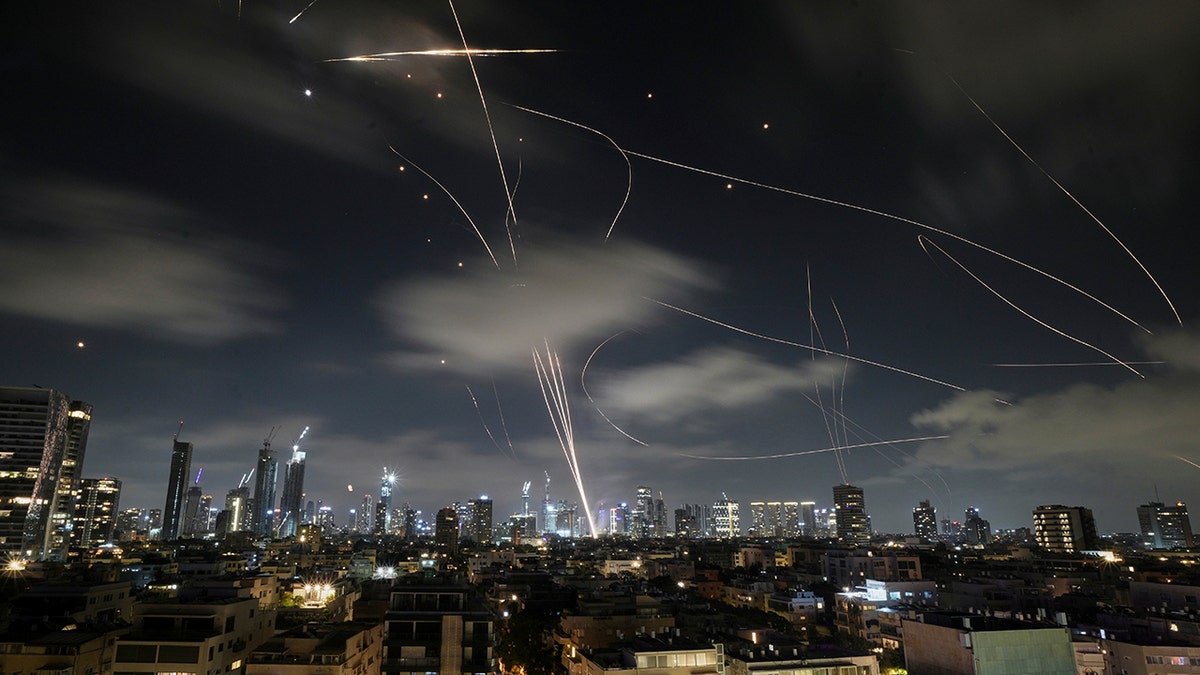
The Israeli Iron Dome air defense system fires to intercept missiles during an Iranian attack over Tel Aviv, Israel, June 18, 2025. (Leo Correa/The Associated Press )
Iran said the strikes were a «declaration of war,» and launched its own strikes on Israel — with a barrage of missiles hitting the Jewish state throughout the week, with some breaking through the Israeli Iron Dome defense system and causing destruction.
On his way back to Washington, D.C., the president stressed that Iran is «very close» to developing a nuclear weapon.
Earlier in June, the International Atomic Energy Agency’s estimation said that Iranian stockpiles included 60% enriched uranium that could become 90%. And last week, Gen. Erik Kurilla, the U.S. Central Command chief, ahead of Israel’s preemptive strikes, said that Iran has the materials to build a nuclear weapon within one week.
The Trump administration had been engaged in talks with Iran to make a deal on its nuclear program, and the president has urged the Islamic state to make a deal. But the country pulled out of ongoing talks with the United States. The most recent round of talks were scheduled for June 15.
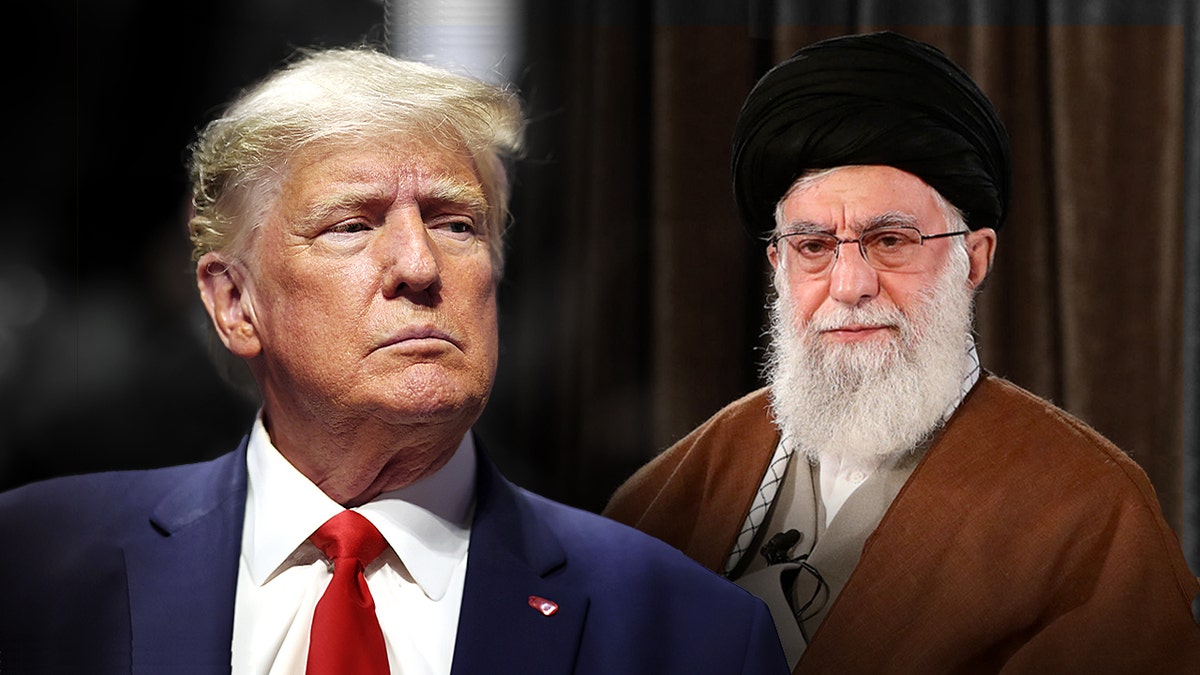
The president, Monday night, before leaving the G7, again said Iran «should have signed the ‘deal’ I told them to sign.»
«What a shame, and a waste of human life,» Trump said. «Simply stated, IRAN CAN NOT HAVE A NUCLEAR WEAPON.»
The president added, in his Truth Social post, that he has «said it over and over again!»
«Everyone should immediately evacuate Tehran!» Trump posted.
TRUMP WEIGHS STRIKING IRANIAN NUCLEAR FACILITIES: ‘I MAY DO IT, I MAY NOT DO IT’
By Tuesday, the president announced that the United States has «complete and total control of the skies over Iran.» He also said that the Supreme Leader of Iran Ali Khamenei’s location had been determined.
The president said that Khamenei is «an easy target,» but is «safe» in his hiding spot.
«We are not going to take him out (kill), at least for now,» the president said. «But we don’t want missiles shot at civilians, or American soldiers. Our patience is wearing thin.»
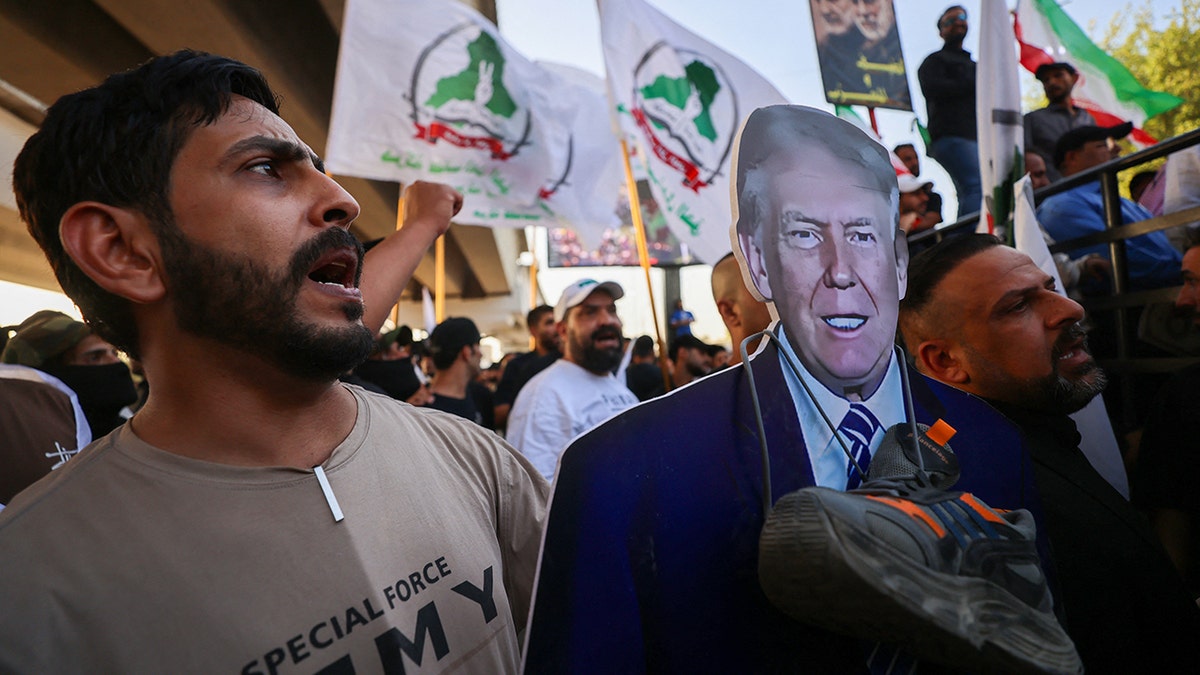
Supporters of Iraqi pro-Iran groups hold a cutout of President Donald Trump with a shoe around the neck, during a demonstration in Baghdad near the green zone, the ultra-secured neighbourhood hosting the U.S. embassy, on June 16, 2025, amid the Israel-Iran escalating conflict. (Ahmad al-Rubaye/AFP via Getty Images)
As for whether the United States will strike Iranian nuclear facilities, the president said: «I may do it, I may not do it.»
«Yes, I may do it. I may not do it. I mean, nobody knows what I’m going to do. I can tell you this, that Iran’s got a lot of trouble, and they want to negotiate,» Trump told reporters Wednesday. «And I said, why didn’t you negotiate with me before all this death and destruction? Why didn’t you go? I said to people, why didn’t you negotiate with me two weeks ago? You could have done fine. You would have had a country. It’s very sad to watch this.»
Trump, dating back to his first administration, has said that he refuses to broadcast his military plans ahead of time. The White House said the president would make his decision on how to handle Iran in the coming weeks.
Meanwhile, the anti-Immigration and Customs Enforcement riots that broke out in Los Angeles earlier in June slowed as the president awaited a federal court ruling in California Gov. Gavin Newsom’s lawsuit against the Trump administration for sending in the National Guard without his authority.

A demonstrator waves an American and Mexican flag during a protest in Compton, California, June 7, 2025, after federal immigration authorities conducted operations. (Ethan Swope/The Associated Press )
Trump, earlier in June, ordered the National Guard to L.A. to aid law enforcement amid the violent protests.
On Thursday night, the U.S. Court of Appeals for the Ninth Circuit ruled unanimously in Trump’s favor, saying that the president is allowed to keep control of the National Guard troops deployed to Los Angeles. The ruling stayed a lower court order that ordered command of the troops back to Newsom.
A president hasn’t made a decision about the deployment of a National Guard without the permission of the state’s governor since 1965.
Trump, in a post to his Truth Social, praised the Court of Appeals for their decision, touting it as a «WIN.»
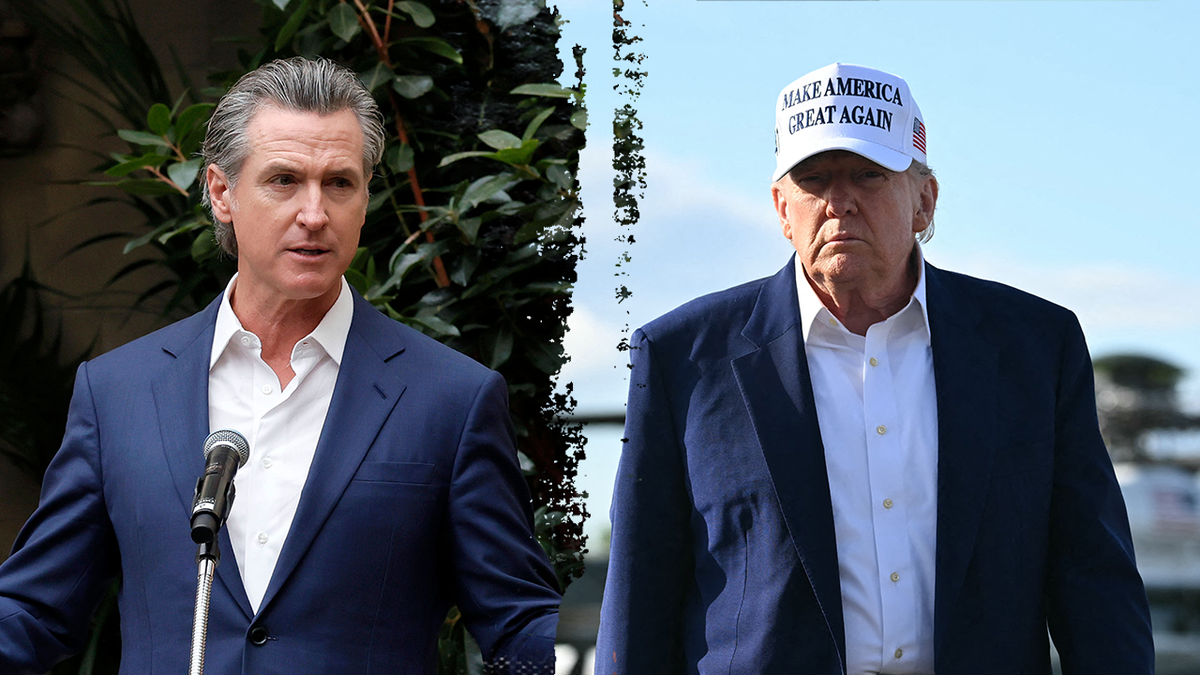
California Gov. Gavin Newsom, and President Donald Trump (Getty Images)
«BIG WIN in the Ninth Circuit Court of Appeals on the President’s core power to call in the National Guard!» Trump posted. «The Judges obviously realized that Gavin Newscum is incompetent and ill prepared, but this is much bigger than Gavin, because all over the United States, if our Cities, and our people, need protection, we are the ones to give it to them should State and Local Police be unable, for whatever reason, to get the job done.»
The president added: «This is a Great Decision for our Country, and we will continue to protect and defend Law abiding Americans. Congratulations to the Ninth Circuit, America is proud of you tonight!»
By Friday, Vice President JD Vance traveled to Los Angeles to tour a multiagency Federal Joint Operations Center and a Federal Mobile Command Center.
The vice president also met with leaders of federal law enforcement deployed in Los Angeles, as well as U.S. Marines deployed to the city.
Fox News’ Emma Colton and Diana Stancy contributed to this report.

NEWYou can now listen to Fox News articles!
EXCLUSIVE: NASA Administrator Jared Isaacman laid out the timeline for the Artemis Moon landing and discussed the current delay to the Artemis II mission during an exclusive interview with Fox News Digital.
The agency announced Friday that Artemis III, Artemis IV and Artemis V will all be launched before the end of President Donald Trump’s second term. Artemis IV and Artemis V will be missions where astronauts return to the surface of the Moon.
«To be overwhelmingly clear, we did not stretch out our timeline or delay anything. What we did is insert additional missions, standardized, so we can actually achieve the national policy that President Trump set out to return American astronauts to the Moon, and build an enduring presence to stay,» Isaacman told Fox News Digital.
«Artemis II, we’re going to launch in a matter of weeks [and] go around the Moon,» Isaacman explained. «Artemis III will launch by mid 2027 with the aim to buy down risk and low Earth orbit for subsequent [Moon] landing attempts in 2028.»
NASA Administrator Jared Isaacman told Fox News Digital that Artemis II will launch in early April and that additional standardized missions will enable astronauts to return to the Moon by 2028 under President Trump’s timeline. (Patrick T. FALLON / AFP)
The Artemis program was initially established by President Donald Trump during his first term in December 2017.
Isaacman is seeking to complete four Artemis missions under his tenure at the agency, while the Biden administration successfully completed just one non-manned test flight in 2022.
The NASA administrator was critical of the Biden administration for the delay in launches, telling Fox News Digital «the previous administration didn’t make any decisions over the last four years that need to be done.»
INSIDE NASA’S FAST-TRACK PLANS FOR LUNAR NUCLEAR POWER AND NEW SPACE STATIONS TO OUTPACE GLOBAL RIVALS

Jared Isaacman defended the Artemis delays as necessary adjustments, criticizing the Biden administration for inaction and emphasizing a faster, more consistent launch cadence to build a sustained lunar presence. (REUTERS/Joe Skipper)
«That’s being corrected now,» Isaacaman said. «You need to standardize, you need to launch with cadence. That’s how you get back to the moon. That’s how you stay. President Trump’s 100% behind that.»
Artemis II was scheduled to launch in early February, though the Space Launch System (SLS) rocket was transferred from the launchpad back to the Vehicle Assembly Building (VAB) to repair a helium leak on Wednesday.
In response to the Artemis II delay, the administrator also pointed out that the three-year delay between the Biden administration’s last successful Artemis mission and the current one set the agency back.
SENATE CONFIRMS JARED ISAACMAN AS NASA CHIEF MONTHS AFTER TRUMP-MUSK RIFT THAT MAY HAVE PULLED HIS NOMINATION
«You can’t launch a rocket this complex and important every three years, and expect to get it right,» Isaacman added. «There’s just, there’s just no muscle memory there. There’s going to be mistakes.»
«We’re not going to rush this, because, clearly, we’re, again, we’re relearning the same lessons, which means we didn’t get the technical root cause last time, three years ago,» Isaacman said. «We’re hoping, in a matter of days, we’ll have our arms around [Artemis II].»

The agency plans to complete four Moon missions during President Donald Trump’s second term. (AP Photo/J. David Ake)
Isaacman said that the current launch window for Artemis II is set for early April.
NASA RETURNS HUMANS TO DEEP SPACE AFTER OVER 50 YEARS WITH FEBRUARY ARTEMIS II MOON MISSION
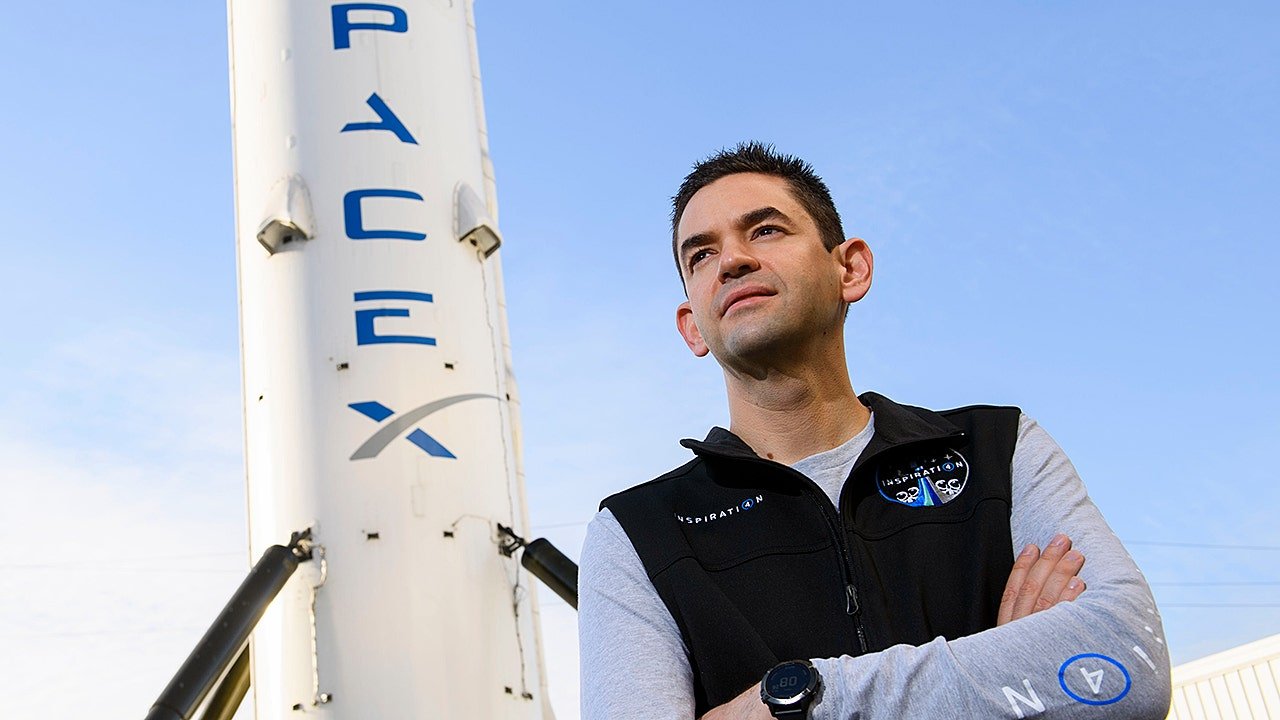
The 43-year-old billionaire was sworn in as the administrator of the space agency last December. Isaacman himself is a space fanatic, having commanded the first ever commercial spacewalk in September 2024.
In the less than one hundred days that he has served as administrator, Isaacman has been vocal about his dedication to Trump’s mission to return Americans to the surface of the Moon and beyond — a daunting task for a mission that was last completed during Apollo 17 in 1972, more than half a century ago.
«The approach we were taking is the right way, and it’s consistent with NASA’s history,» Isaacman told Fox News Digital. «We didn’t go right to Apollo 11. We launched with frequency, and we continued to learn and buy down risk.»

America has not landed on the Moon since 1972. (Getty Images)
NASA SAYS AMERICA WILL WIN ‘THE SECOND SPACE RACE’ AGAINST CHINA
«NASA, throughout our history, has launched, on average, every three months, our design vehicles from Mercury, Gemini, Apollo, through space shuttle. Apollo 8 launched less than two months after Apollo 7’s splashdown,» Isaacaman said.
«This is how you get back to the Moon and be able to stay,» the NASA administrator added.
He also noted that funding for the missions and resources needed for success already exist at the agency, and that «we got everything we need.»
TRANSPORTATION SECRETARY DUFFY TO ANNOUNCE NUCLEAR REACTOR DEVELOPMENT PLAN FOR THE MOON
One of the key components to ensuring the completion of each Artemis mission is labor, and Isaacman took issue with the large number of contractors that work with the space agency, yet are not employed by NASA itself.
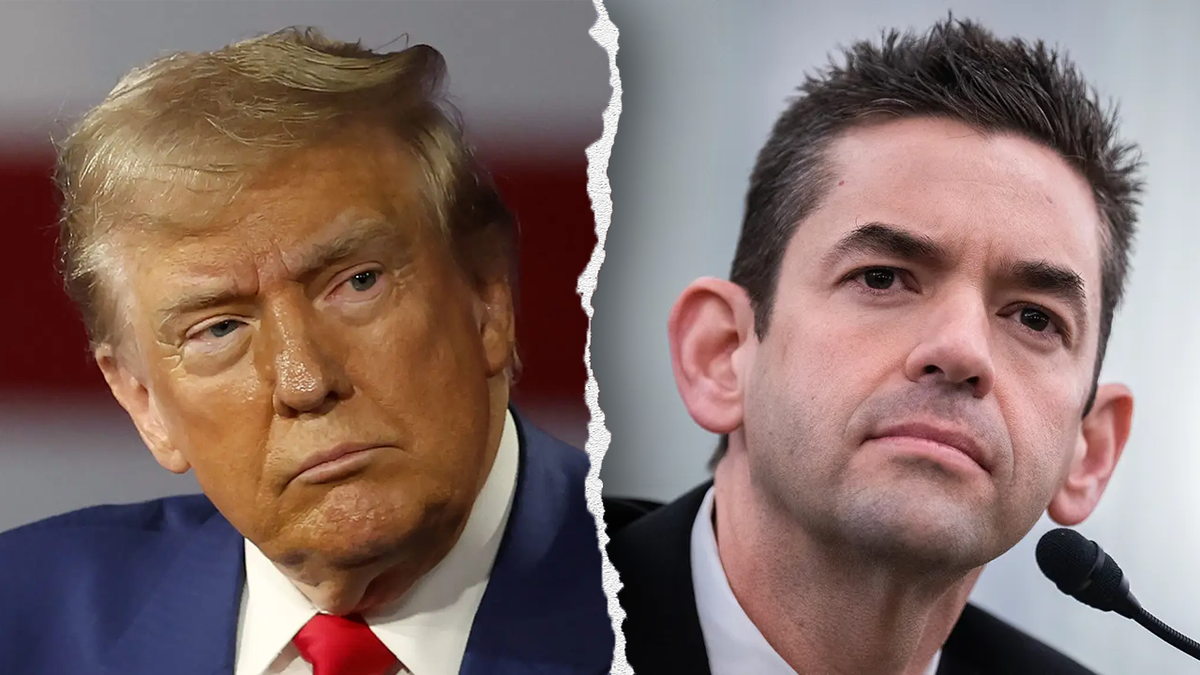
Jared Isaacman, who has been outspoken about his support for President Donald Trump’s plan to return to the Moon, was sworn in as NASA administrator last December. (Kevin Dietsch/Getty Images, Tom Williams/CQ-Roll Call, Inc via Getty Images)
When asked if he planned on transitioning contractors to NASA employees, Isaacman said, «100%.»
«One of the first observations I had in the job after visiting every one of the NASA centers is all of the core competencies that we either outsourced or lost over the years,» Isaacman explained. «Contractors are great and should contribute to NASA in areas that we are not supposed to be the best in the world at.»
«But when we’re talking about launchpad, launch control, mission control in Houston, those should be civil servants,» Isaacman told Fox News Digital. «That should be a core competency in NASA. We should be the best in the world at it. We are going to exercise the workforce directive that went out weeks ago to convert contractors to civil servants, rebuild core competencies.»
CLICK HERE TO DOWNLOAD THE FOX NEWS APP
The NASA administrator said that top companies who provide contractors, like Boeing, Elon Musk’s SpaceX, and Jeff Bezos’s Blue Origin, have told him that they support the timeline that would ultimately achieve Trump’s vision of returning mankind to the Moon.
«We have universal support in this,» Isaacman explained. «Support from every one of the prime contractors in this program. Lockheed, Boeing, ULA, SpaceX, Blue Origin and all of the congressional leaders that have space equities understand that this is the way back to the Moon.»
Preston Mizell is a writer with Fox News. Story tips can be sent to Preston.Mizell@fox.com and on X @MizellPrestonRelated Article

spaceflight,air and space,donald trump
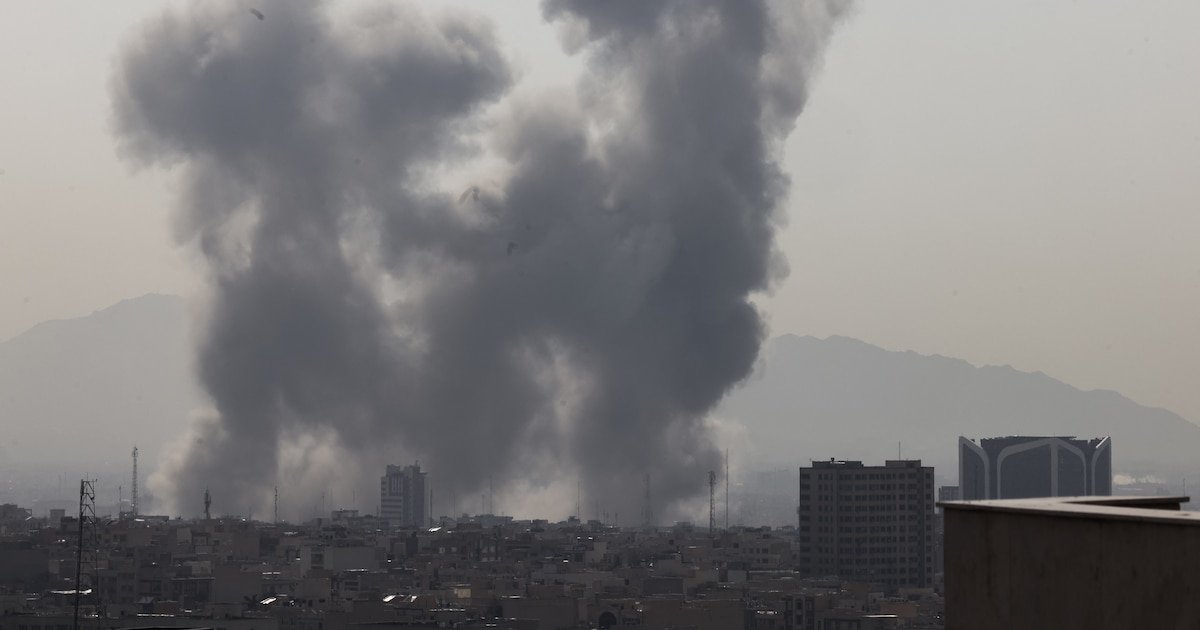
Estados Unidos e Israel lanzaron este sábado un ataque “de gran envergadura” contra el régimen de Irán, provocando explosiones en Teherán y otras ciudades tras semanas de amenazas de intervención militar. Teherán respondió con el lanzamiento de misiles y drones en represalia, según informaron los Guardianes de la Revolución. Mientras tanto, diplomáticos estadounidenses presentes en el Golfo y civiles israelíes recibieron órdenes de buscar refugio.
“El Estado de Israel lanzó un ataque preventivo contra Irán. El ministro de Defensa, Israel Katz, declaró el estado de emergencia especial e inmediato en todo el país”, indicó la oficina del ministro en un comunicado.
En un mensaje en video, luego de que Estados Unidos e Israel comenzaran a bombardear Irán, Trump dejó claro que el objetivo era amplio: derrocar al régimen instaurado desde la revolución de 1979. “Vamos a destruir sus misiles y arrasar su industria de misiles por completo. Será totalmente—de nuevo—aniquilada. Vamos a destruir su armada”, afirmó en el mensaje publicado en su plataforma Truth Social.
Asimismo, envió un mensaje directo a la población iraní: “La hora de su libertad está cerca”. “Permanezcan resguardados. No salgan de sus hogares. Es muy peligroso afuera. Caerán bombas por todos lados. Cuando terminemos, tomen el control de su gobierno. Les pertenecerá a ustedes”, agregó.
Posteriormente, el primer ministro israelí, Benjamin Netanyahu, afirmó este sábado que Israel y Estados Unidos habían atacado a Irán con el objetivo de “eliminar la amenaza existencial” que representa la república islámica.
“Hermanos y hermanas, ciudadanos de Israel: Hace instantes, Israel y Estados Unidos lanzaron una operación para eliminar la amenaza existencial que representa el régimen terrorista de Irán”, señaló Netanyahu en un mensaje en video difundido por el gobierno israelí.
Según el primer ministro, la acción conjunta creará las condiciones para que el valiente pueblo iraní tome su destino en sus propias manos.
La Guardia Revolucionaria del régimen iraní anunció el inicio de la primera oleada de misiles y drones contra Israel, tras los ataques coordinados de las fuerzas israelíes y estadounidenses. “En respuesta a la agresión del enemigo hostil y criminal contra la República Islámica de Irán, ha comenzado la primera oleada de amplios ataques con misiles y drones de la República Islámica de Irán hacia los territorios ocupados”, indicó el cuerpo militar en un comunicado.
Pocas horas después de los primeros ataques contra el régimen iraní, Israel había detectado misiles lanzados desde Teherán y llamó a su población a refugiarse.
El Ejército israelí explicó que el estado de emergencia se trata de una “alerta proactiva para preparar al público ante la posibilidad de lanzamiento de misiles hacia el Estado de Israel”. En un comunicado difundido en redes sociales, las Fuerzas de Defensa de Israel anunciaron que, a partir de las 08.00 horas (hora local), “se realizarán cambios inmediatos a las Pautas del Comando del Frente Interno”, incluyendo la “prohibición de actividades educativas, reuniones y lugares de trabajo, excepto los sectores esenciales”.
Las autoridades israelíes también ordenaron el cierre del espacio aéreo al tráfico civil e instaron a los civiles a no acudir al aeropuerto. El Ministerio de Transporte informó que permanecerá cerrado hasta que las condiciones de seguridad lo permitan y que su reapertura será anunciada con al menos 24 horas de antelación.

La operación militar israelí ocurrió contra una zona cercana a las oficinas del líder supremo, el ayatollah Ali Khamenei, según la agencia The Associated Press. Por otra parte, el medio mencionó Estados Unidos está participando en los ataques israelíes contra Irán, según un funcionario estadounidense.
El líder supremo de Irán no está en Teherán y fue trasladado a un lugar seguro, según el informe de Reuters. Las autoridades iraníes bloquearon los accesos por carretera al complejo de Khamenei, en el centro de la capital iraní, mientras continuaban escuchándose más explosiones en distintos puntos de la capital.
Ataque de Irán a EEUU en Bahréin
Horas después de los ataques coordinados, Teherán también bombardeó con misiles la base de Estados Unidos en Bahréin, Emiratos Árabes Unidos, Kuwait y Qatar. “Cualquier base en toda la región que ayude a Israel será nuestro objetivo”, dijo el portavoz del Estado Mayor de las Fuerzas Armadas iraníes citado por la agencia iraní Mehr.
Según este medio, el régimen de los ayatolás lanzó ataques con misiles simultáneamente a la mayor bases en la región, la de Al Udeid en Qatar, a la de Al Salem en Kuwait, la de Al Dhafra en EAU y a la quinta base estadounidense en Bahréin.

En medio de esta creciente tensión, la Unión Europea (UE) pidió “la máxima moderación”, y afirmó que garantizar la seguridad nuclear es “crucial”. “Garantizar la seguridad nuclear y prevenir cualquier acción que pueda agravar aún más las tensiones o socavar el régimen mundial de no proliferación es de importancia crucial”, señaló la presidenta de la Comisión Europea, Ursula von der Leyen.
“Pedimos a todas las partes que ejerzan la máxima moderación, que protejan a la población civil y respeten plenamente el derecho internacional”, añadió en una declaración conjunta con el presidente del Consejo Europeo, António Costa.
War,Middle East,Military Conflicts
INTERNACIONAL
«Dejen las armas y tendrán inmunidad, o enfrentarán una muerte segura»: el mensaje completo de Trump tras el ataque de Estados Unidos a Irán

La “batalla cultural” de Milei agota un foco y gira al frente económico

Indemnizaciones y Fondo de Asistencia por Despidos: cómo funcionará y en qué casos se aplicará

Canales para ver el Barracas Central vs. Tigre por el Torneo Apertura

NASA chief vows four Moon missions before Trump’s term ends in ambitious 2028 timeline

Estados Unidos e Israel llevaron a cabo ataques coordinados contra el régimen de Irán

Qué son las sesiones ordinarias y extraordinarias en el Congreso

Jorge Macri prepara su discurso para abrir el año legislativo: el deseo de reelección y el espejo en Bukele

Crisis en la industria: otra multinacional se achica y cierra una planta en la Argentina

Alarma por la salud de Divina Gloria tras salir de Gran Hermano: “La internaron directamente en terapia intensiva”

Catherine Fulop contó el difícil momento que atraviesa su madre en Venezuela: “Está postrada”

 ECONOMIA3 días ago
Crisis en la industria: otra multinacional se achica y cierra una planta en la Argentina
- CHIMENTOS1 día ago
Alarma por la salud de Divina Gloria tras salir de Gran Hermano: “La internaron directamente en terapia intensiva”
- CHIMENTOS3 días ago
Catherine Fulop contó el difícil momento que atraviesa su madre en Venezuela: “Está postrada”