INTERNACIONAL
Thomas Massie says he feels ‘misled’ by Trump after Iran strikes: ‘He’s engaged in war’

NEWYou can now listen to Fox News articles!
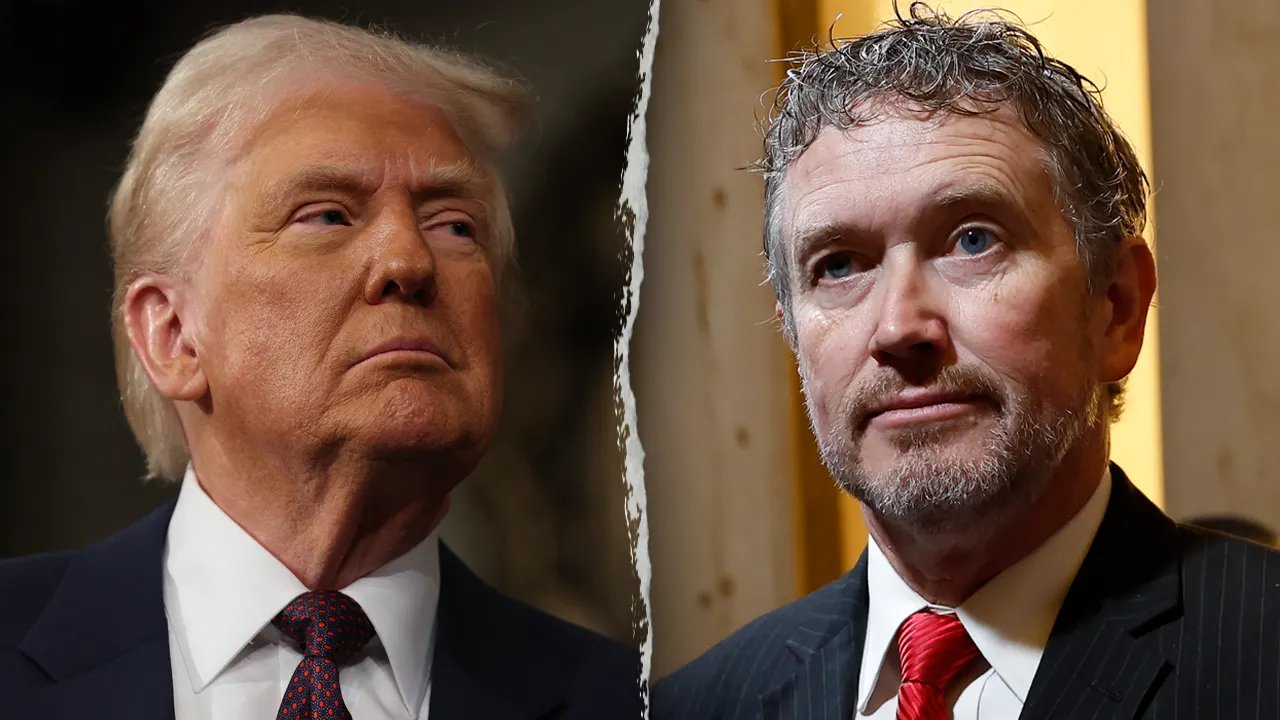
EXCLUSIVE: Rep. Thomas Massie is accusing President Donald Trump of falling short of his campaign pledges with his Saturday night strikes on Iran.
«I feel a bit misled,» Massie told Fox News Digital in a Sunday afternoon interview. «I didn’t think he would let neocons determine his foreign policy and drag us into another war.»
«Other people feel the same way, who supported Trump — I think the political danger to him is he induces a degree of apathy in the Republican base, and they fail to show up to keep us in the majority in the midterms.»
Massie, a conservative libertarian who has long been wary of foreign intervention by the U.S., has been one of the most vocal critics of the Trump administration’s recent operation.
RUBIO DECLARES IRAN’S DAYS OF ‘PLAYING THE WORLD’ OVER AFTER TRUMP’S DECISIVE STRIKE
Rep. Thomas Massie said he is looking for ways to force a vote on his War Powers resolution. (Win McNamee/POOL/AFP via Getty Images; Kevin Dietsch/Getty Images)
U.S. stealth bombers struck three major nuclear enrichment facilities in Iran Saturday night.
Trump and other GOP leaders hailed the operation as a victory, while even pro-Israel Democrats also offered rare praise.
«Iran’s nuclear enrichment facilities have been completely and totally obliterated,» Trump said Saturday night. «And Iran, the bully of the Middle East, must now make peace. If they do not. future attacks would be far greater and a lot easier.»
But progressives and the growing isolationist wing of the GOP blasted it as a needless escalation of tensions in the Middle East, at a time when Israel has been engaged in a weeklong conflict with Iran as well.
Top officials up to Trump himself have said the U.S. is not seeking war with Iran.
Vice President JD Vance told NBC News’ «Meet The Press» Sunday, «We’re not at war with Iran. We’re at war with Iran’s nuclear program.»
Massie told Fox News Digital those assurances were «ludicrous.»
DEMOCRATIC LAWMAKERS CRITICIZE ISRAEL’S DEFENSIVE STRIKES AGAINST IRAN’S NUCLEAR SITES
«He’s engaged in war. We are now a co-belligerent in a hot war between two countries,» the Kentucky Republican said, arguing that conflict separates this action from Trump’s strikes that killed deceased Iranian General Qassem Soleimani.
«You can’t say this isn’t an act of war, that it’s a strike outside of a war,» he said. «This is inside, geographically and temporally, of a war.»
The Kentucky Republican notably has broken from Trump on several other occasions, and has been one of the few GOP officials to openly clash with the president — particularly on government spending and foreign intervention.
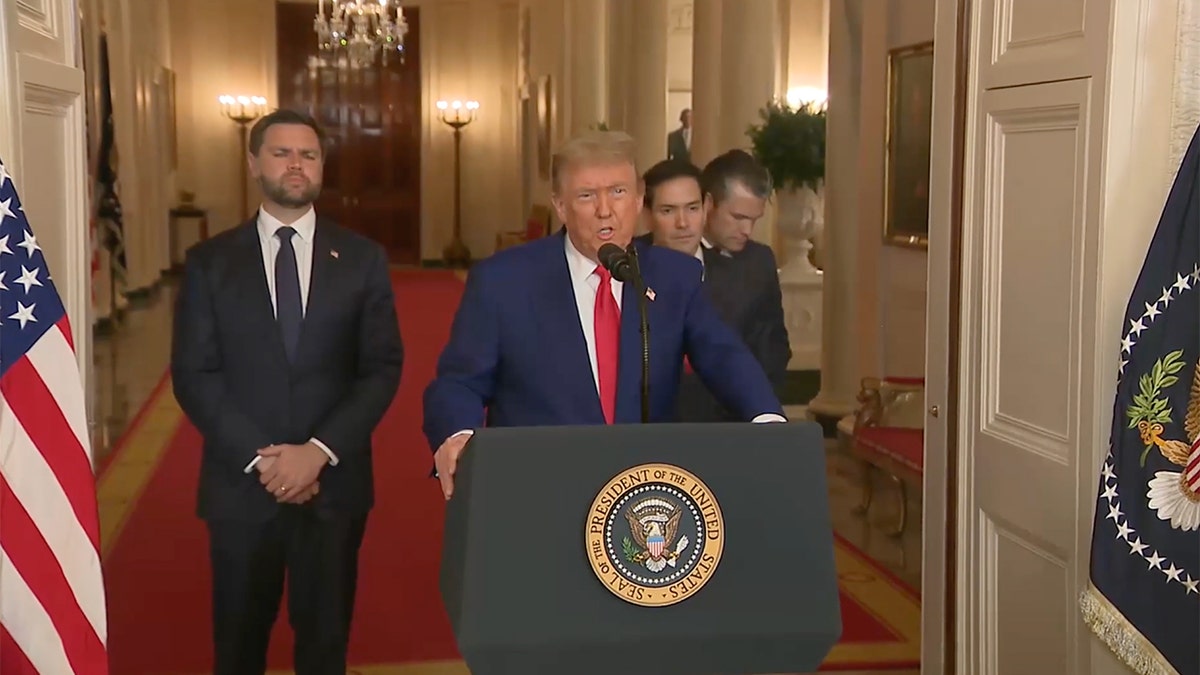
President Donald Trump addressed the nation after the strikes June 21, 2025. (Pool)
He’s co-leading a resolution to prevent the «United States Armed Forces from unauthorized hostilities in the Islamic Republic of Iran» alongside Rep. Ro Khanna, D-Calif., which they introduced days before the strikes. Sen. Tim Kaine, D-Va., is leading a Senate counterpart.
Massie noted his team was looking at ways to get the resolution on the House floor — while conceding likely opposition from pro-Israel groups and congressional leaders.
«We’re going to try to use the privileges of the House to get this to the floor,» he said.
«People were saying, ‘Why did you introduce this resolution? The president’s not going to strike Iran.’ He has struck Iran. And now the the naysayers said, ‘Oh, well, you don’t need this resolution.»
ISRAEL-IRAN WAR DIVIDES DEMOCRATS, BUT TRUMP’S DIPLOMACY ALSO SPLITTING REPUBLICANS
Defense Secretary Pete Hegseth said during a Sunday morning press conference that the administration properly notified Congress about the strikes within existing statute — even as progressives and some conservatives accuse him of bypassing a co-equal branch of government.
«They were notified after the planes were safely out,» Hegseth said. «We complied with the notification requirements of the War Powers Act.»
But Massie noted that the same War Powers Act also requires Congress to vote on U.S. military intervention in foreign countries within 60 days, if the conflict continues.
«Even if they’re able to circumvent a vote on the resolution that Ro Khanna and I have introduced, we’re going to have to vote at some point if this becomes a protracted engagement,» he said.
War powers resolutions can be called up for a House vote after 15 days of inaction by the relevant committee, after the legislation is referred to that committee.
When reached for comment, the White House pointed Fox News Digital to Trump’s most recent Truth Social post calling Massie a «grandstander» and threatening to recruit a primary challenger against him.
CLICK HERE TO GET THE FOX NEWS APP
«Congressman Thomas Massie of Kentucky is not MAGA, even though he likes to say he is,» Trump wrote. «Actually, MAGA doesn’t want him, doesn’t know him, and doesn’t respect him. He is a negative force who almost always Votes ‘NO,’ no matter how good something may be.»
«MAGA should drop this pathetic LOSER, Tom Massie, like the plague! The good news is that we will have a wonderful American Patriot running against him in the Republican Primary, and I’ll be out in Kentucky campaigning really hard. MAGA is not about lazy, grandstanding, nonproductive politicians, of which Thomas Massie is definitely one. Thank you to our incredible military for the AMAZING job they did last night. It was really SPECIAL!!!»
Fox News Digital also reached out to Speaker Mike Johnson’s office for comment.

INTERNACIONAL
India y Brasil firmaron un memorándum sobre minerales críticos y tierras raras en Nueva Delhi
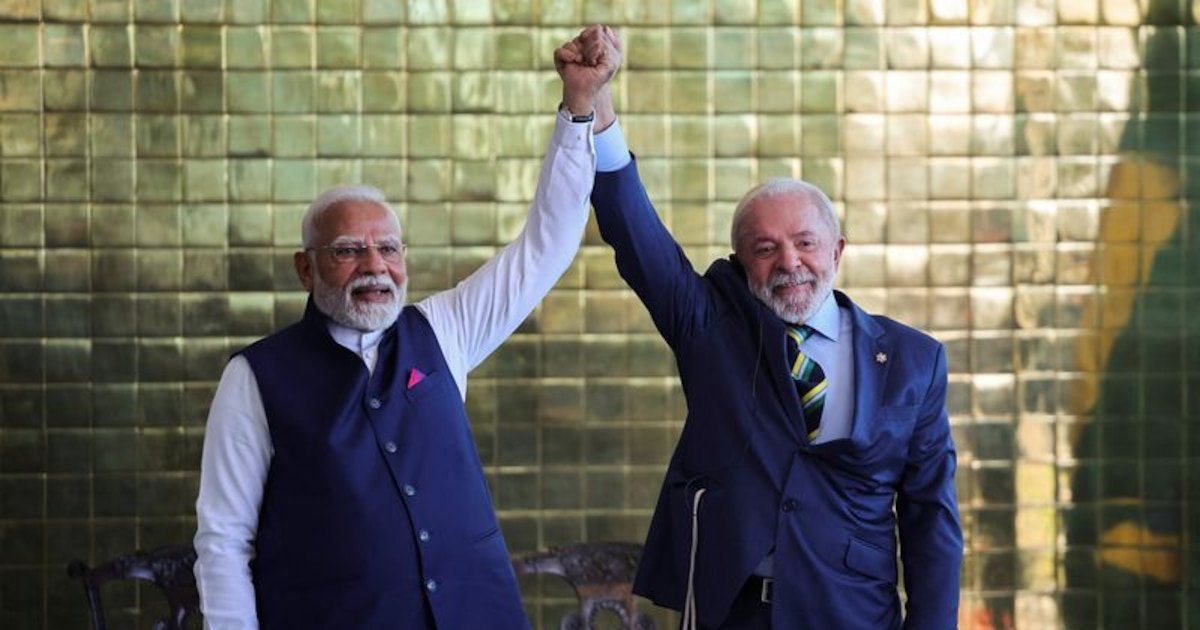
India y Brasil firmaron este sábado un acuerdo sobre minerales críticos y tierras raras, según anunció el primer ministro indio, Narendra Modi, tras mantener conversaciones en Nueva Delhi con el presidente brasileño, Luiz Inácio Lula da Silva.
Modi calificó el acuerdo como “un paso importante hacia la construcción de cadenas de suministro resilientes”. Ambos mandatarios mantuvieron conversaciones en busca de un fortalecimiento en la cooperación del sector estratégico.
Brasil posee la segunda mayor reserva mundial de estos elementos, esenciales en industrias que van desde vehículos eléctricos y paneles solares hasta teléfonos inteligentes, motores a reacción y misiles guiados.
India busca reducir su dependencia de China, principal exportador global de tierras raras, por lo que impulsó la producción interna, el reciclaje y la búsqueda de nuevos proveedores. En este contexto, la alianza con Brasil adquiere especial relevancia.
Lula llegó a Nueva Delhi acompañado por una delegación de ministros y líderes empresariales para participar en una cumbre mundial. El sábado recibió una bienvenida ceremonial y rindió homenaje a Mahatma Gandhi antes de reunirse con Modi. Los funcionarios confirmaron que ambos líderes firmaron un memorando sobre minerales críticos y analizaron iniciativas para incrementar los lazos comerciales.

India ya figura como el décimo mayor mercado para las exportaciones brasileñas, con un comercio bilateral que superará los USD 15.000 millones en 2025. Ambos países se han fijado como objetivo alcanzar los USD 20.000 millones en 2030.
Ante el dominio de China en la producción de tierras raras, varias naciones buscan diversificar sus fuentes. Rishabh Jain, del Consejo de Energía, Medio Ambiente y Agua de Delhi, señaló que la cooperación de India con Brasil en minerales críticos complementa acuerdos recientes con Estados Unidos, Francia y la Unión Europea.
Si bien estas alianzas otorgan acceso a tecnología avanzada y capacidades de procesamiento, “las alianzas del Sur Global son fundamentales para asegurar un acceso diversificado a recursos locales y dar forma a las reglas emergentes del comercio global”, afirmó Jain.
Se esperaba que el primer ministro indio y el presidente brasileño también abordaran en sus conversaciones los obstáculos económicos mundiales y las tensiones en los sistemas comerciales multilaterales, especialmente tras verse ambos países afectados por los aranceles estadounidenses en 2025, lo que llevó a los dos líderes a pedir una cooperación más estrecha.
Desde entonces, Washington se ha comprometido a reducir los gravámenes sobre productos indios en virtud de un acuerdo comercial anunciado a principios de este mes.
“Lula y Modi tendrán ocasión de intercambiar puntos de vista sobre la situación mundial y, en particular, sobre los desafíos que atraviesa el multilateralismo y el comercio internacional”, afirmó Susan Kleebank, secretaria para Asia y el Pacífico de la Cancillería brasileña.

Brasil es el mayor socio de India en América Latina. Entre las principales exportaciones brasileñas hacia India destacan el azúcar, el petróleo, los aceites vegetales, el algodón y el mineral de hierro, cuya demanda se ha incrementado debido al rápido desarrollo de las infraestructuras y el crecimiento industrial de India, que podría convertirse en la cuarta economía mundial.
Empresas brasileñas también se están expandiendo en India. En enero, el grupo Adani y Embraer firmaron un acuerdo para la fabricación de helicópteros.
Durante la cumbre sobre inteligencia artificial AI Impact en Nueva Delhi, Lula reclamó la creación de un programa de gobernanza mundial multilateral e inclusivo para la IA. Tras su visita a India, el presidente brasileño viajará a Corea del Sur, donde se reunirá con el presidente Lee Jae-myung y participará en un foro de negocios Brasil-Corea del Sur.
(Con información de AFP)
INTERNACIONAL
Supreme Court kills Trump’s ‘Liberation Day’ tariffs — but 4 other laws could resurrect them
NEWYou can now listen to Fox News articles!
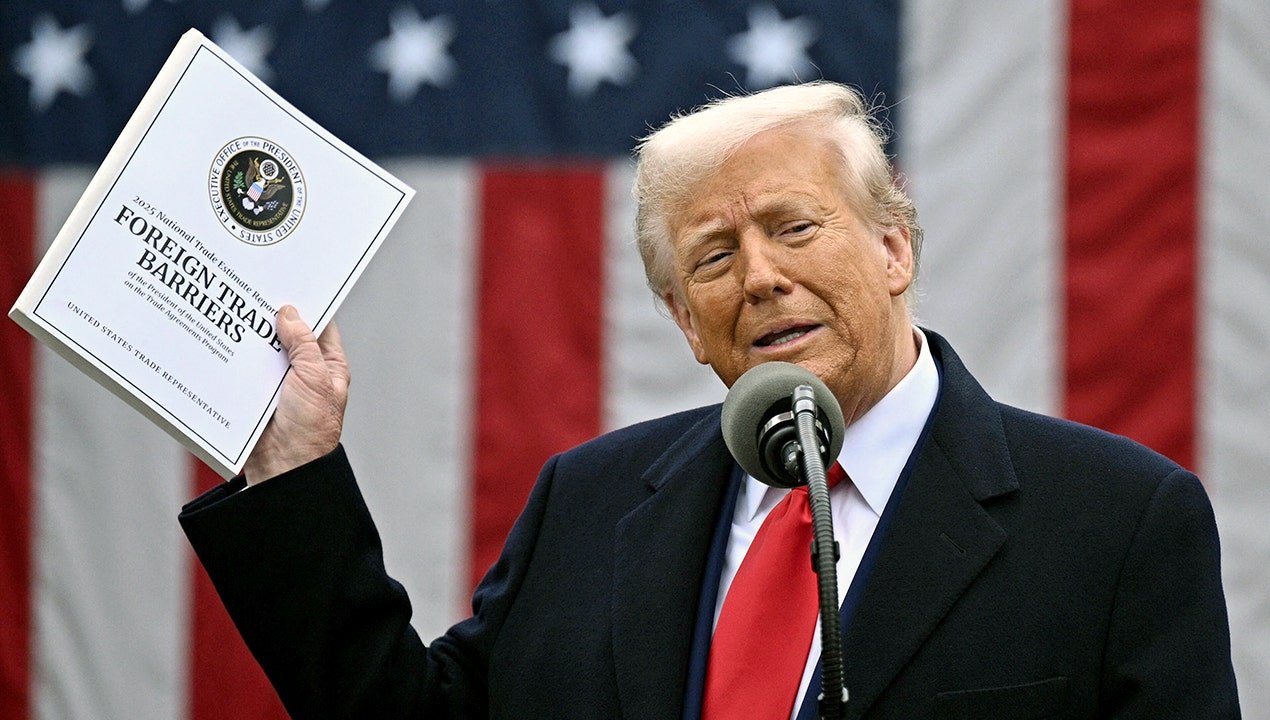
The Supreme Court rebuked President Trump’s use of the International Emergency Economic Powers Act to impose sweeping «Liberation Day» tariffs, ruling that the Constitution gives Congress — not the president — authority over tariffs.
But the decision may not be the final word. From the Trade Expansion Act to the Trade Act of 1974 and even Depression-era statutes, multiple legal avenues remain that could allow Trump to reassert aggressive trade powers.
In a 6-3 decision led by George W. Bush-appointed Chief Justice John Roberts, the court ruled that the «framers gave [tariff] power to Congress alone, notwithstanding the obvious foreign affairs implications of tariffs.»
George H.W. Bush-appointed Justice Clarence Thomas, Trump-appointed Justice Brett Kavanaugh and George W. Bush-appointed Justice Samuel Alito dissented.
SUPREME COURT PREPARES TO CONFRONT MONUMENTAL CASE OVER TRUMP EXECUTIVE POWER AND TARIFF AUTHORITY
A protester holds a sign as the U.S. Supreme Court hears arguments on President Trump’s tariffs on Wednesday, November 5, 2025. (Bill Clark/CQ-Roll Call, Inc via Getty Images)
On «Liberation Day» in 2025, Trump cited the International Emergency Economic Powers Act (IEEPA), drafted by former Rep. Jonathan Brewster-Bingham, D-N.Y., to declare an emergency situation in which foreign countries were «ripping off» the U.S.
With that avenue now closed by Roberts, Trump could try to use the same national security rationale to invoke the Trade Expansion Act of 1962, which in part allows the Commerce Department to impose tariffs on «article[s]… imported… in such quantities or under such circumstances as to threaten or impair the national security.»
Unlike the IEEPA, the JFK-era law has been tested in the courts, and Commerce Secretary Howard Lutnick has since built on his predecessor Wilbur Ross’ 2018 steel and aluminum tariffs imposed under the act, adding 407 more imports to the tariff list on the grounds that they are «derivative» of the two approved metals.
TRUMP’S OWN SCOTUS PICKS COULD WIND UP HURTING HIM ON TARIFFS

President Donald Trump shows off non-reciprocal tariff examples. (Mandel Ngan/Getty Images)
During his 2025 confirmation hearing, Lutnick voiced support for a «country by country, macro» approach to tariffs and agreed with the president that the U.S. is «treated horribly by the global trading environment.»
While tariffs imposed under Section 232 of the Trade Expansion Act are not immediate and require the Commerce Department to conduct a formal investigation, the law provides a court-tested avenue for the president.
In the wake of Friday’s ruling, Sen. Rand Paul, R-Ky., and others celebrated the court’s affirmation that Trump cannot use «emergency powers to enact taxes,» but Congress has previously approved another avenue to impose tariffs.
Then-Rep. Albert Ullman, D-Ore., crafted a bill signed by President Gerald Ford that expressly gave presidents broader authority to impose tariffs: the Trade Act of 1974.
A federal appeals court in September ruled against thousands of companies that challenged tariffs on China imposed under Section 301 of the Trade Act.
6 HOUSE REPUBLICANS DEFY TRUMP ON KEY AGENDA ITEM IN DEM-PUSHED VOTE
In this case, U.S. Trade Representative Jamieson Greer, a Trump appointee, could seek retaliatory tariffs against countries with unfair trade barriers, according to Global Policy Watch.
An investigation, including negotiations with the targeted countries, would then ensue, and Greer could ultimately be cleared to impose trade restrictions if the probe finds that the U.S. is being denied trade agreement benefits or that such a deal is unjustifiable.
However, in most cases, imposed tariffs sunset after four years, according to reports.
In Trump’s favor, it could be argued that the same reasoning Roberts used to strike down the IEEPA authority could backfire on tariff opponents because the 1974 law explicitly gives the executive branch trade-restriction authority.
Another section of the Ford-signed law could also be used to unilaterally impose tariffs.
Section 122, the «Balance of Payments» portion of the law, allows Trump to temporarily enforce tariffs or import quotas in certain situations.
A president may impose tariff duties of up to 15% for 150 days against all or certain countries if they are found to be «maintain[ing] unjustifiable or unreasonable restrictions on U.S. commerce,» according to the Retail Industry Leaders Association.
«This authority is intended to give the executive branch flexibility to respond quickly to trade practices that may harm U.S. economic interests or to correct significant balance-of-payments deficits,» the trade group said in a June report.
However, reports show Section 122 has not been tested in court as extensively, which could lead to lawsuits and legal uncertainty.
SUPREME COURT RULES ON TRUMP TARIFFS IN MAJOR TEST OF EXECUTIVE BRANCH POWERS
Another potential policy option for Trump is one that drew sharp criticism when President Herbert Hoover signed it against the advice of economists early in the Great Depression.
The Smoot-Hawley Tariff Act of 1930, named for Republican Sen. Reed Smoot of Utah and Rep. Willis Hawley of Oregon, imposed tariffs on tens of thousands of imports in hopes of protecting American producers facing dire economic conditions.
Hawley’s great-granddaughter, Carey Cezar of Baltimore, told NBC News in 2025 that she voted for Kamala Harris and opposed Trump’s tariffs after her ancestor’s name resurfaced in public discourse.
Other critics of Smoot-Hawley say it is a key reason the Depression was so dire and expansive.
However, the law still provides a mechanism for the Commerce Department to determine when a good is being «dumped» on U.S. consumers or whether a foreign country is unfairly subsidizing an export to the U.S., and to respond with tariffs.
Additionally, while Trump has imposed tariffs largely on a country-by-country basis, Smoot-Hawley requires that levies be applied on a product-by-product basis.
BESSENT WARNS OF ‘GIGANTIC LOSS’ IF SUPREME COURT STRIPS TRUMP’S EMERGENCY TARIFF POWERS
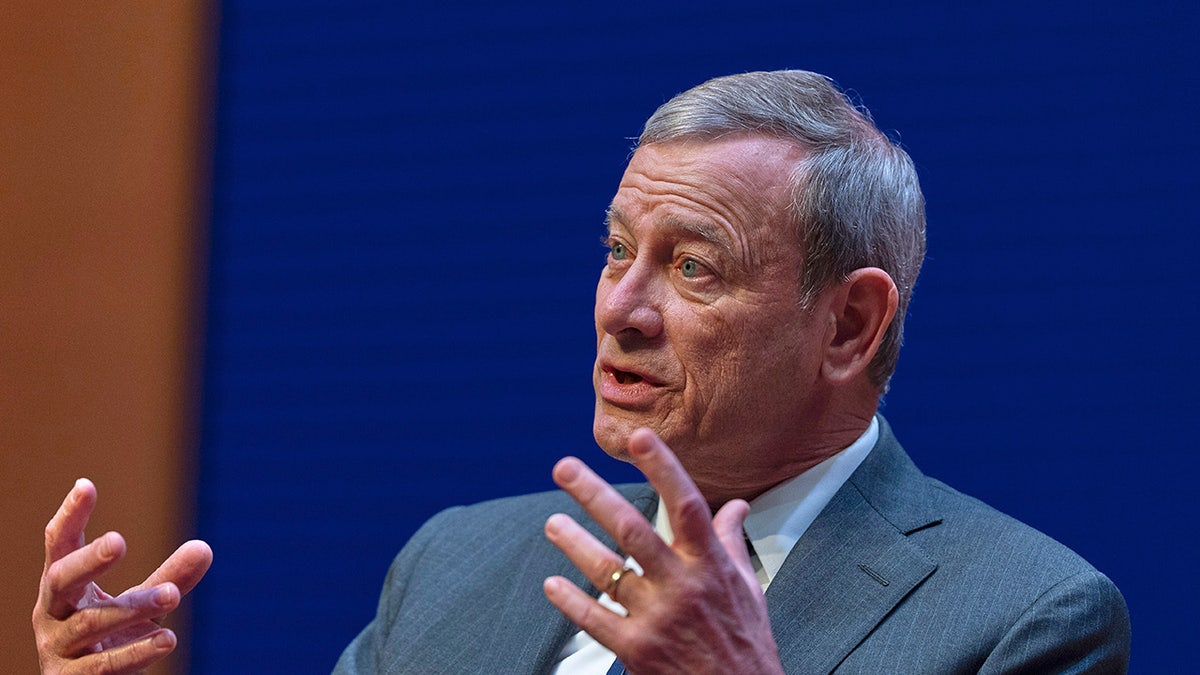
Chief Justice of the U.S. Supreme Court John Roberts speaks during a lecture to the Georgetown Law School graduating class of 2025, in Washington, May 12, 2025. (AP Photo/Manuel Balce Ceneta, File)
A fifth avenue that is largely unreachable by Trump is the Fordney-McCumber Tariff Act of 1922.
Sen. Porter McCumber, R-N.D., and Rep. Joseph Fordney, R-Mich., passed a bill allowing Republican President Warren Harding to impose much higher tariffs than were standard at the time, in hopes of protecting U.S. farmers from a sharp decline in revenue following World War I.
In one of the first contemporary rebukes of protectionism, Fordney-McCumber was criticized for permitting tariffs as high as 50% on countries, including allies, which opponents said had the unintended consequence of hurting America’s ability to service its war debts.
Fordney-McCumber was eventually superseded by Smoot-Hawley, and any remaining provisions are considered obsolete following the Reciprocal Trade Agreements Act, signed by President Franklin Roosevelt to undo some of Congress’ trade restrictions.
CLICK HERE TO DOWNLOAD THE FOX NEWS APP
The RTAA shifted tariff authority from Congress to the president, granting authority for bilateral negotiations aimed at lowering tariffs at the time.
That dynamic, often called «reciprocity,» is being used in the Trump era not to lower tariffs but to raise them.
donald trump,protectionism,supreme court,law,trade
INTERNACIONAL
Más preocupación por Nahuel Gallo en Venezuela: denuncian una trampa en la Ley de Amnistía con las fechas y hay malestar entre los familiares

Organismos de derechos humanos y familiares de presos políticos denuncian que la Ley de Amnistía aprobada por la dictadura de Venezuela tiene un recorte arbitrario con las fechas, dentro del período de 28 años que abarca. Sostiene que deja excluidos a 400 detenidos, entre los que figura el gendarme argentino Nahuel Gallo.
Este jueves, la Asamblea Nacional controlada por el chavismo aprobó la Ley de Amnistía, 20 días después de que la anunciara la presidenta encargada Delcy Rodríguez
Si bien Delcy Rodríguez, quien juró en el cargo dos días después de la captura del dictador Nicolás Maduro, había anticipado que la amnistía abarcaría desde 1999 hasta 2026, el texto especifica solo 12 dentro de esos 27 años, por lo que deja por fuera a cientos de detenidos.
Los organismos de derechos humanos remarcan que en la letra chica de la ley, por cómo fueron elegidos los meses, hay 15 años entero de los 28 que quedaron afuera. «Es una selección indebida y bastante arbitraria de momentos y de meses en específico», cuestionó Gonzalo Himiob, vice de Foro Penal, una de las organizaciones civiles más prestigiosas del país y que monitorea la situación de los presos en Venezuela.
En la conferencia de prensa de la ONG en Caracas, donde también estaban familiares de los detenidos, Alfredo Romero, presidente del Foro Penal, aseguró que Nahuel Gallo «en ningún lado de la amnistía está incluido» y destacó la presencial de la suegra del gendarme en la conferencia.
«La amnistía es un instrumento muy pequeño, con muchas restricciones, pero es un logro», destacó Romero, quien igualmente enfatizó que no se podrá alcanzar la reconciliación y la reunificación del país, «sin que como condición previa se liberen todos los presos políticos».
Gallo fue detenido el 8 de diciembre de 2024, y el artículo 6 de la ley determina para ese año la amnistía sólo para «los hechos de violencia por motivos políticos acaecidos en el marco de las elecciones presidenciales de julio de 2024».
Según cifras de la ONG, en Venezuela «hay más de 11.000 personas con medidas restrictivas a su libertad que estuvieron encarceladas» y son numerosos los mayores de 70 años presos, pese a que la legislación contempla medidas sustitutivas de libertad basadas en el principio humanitario.
Los grupos humanitarios también pidieron en una rueda de prensa que se desmantele “el sistema represivo” que dio pie a las encarcelaciones. Y, por otro lado, advirtieron también que el futuro de muchos de los potenciales beneficiarios de la amnistía esta «todavía amenazado por la persecución política» como consecuencia que la ley está sujeta a «una excesiva discrecionalidad».
Consideraron además un despropósito que sean “los mismos jueces y fiscales que han acusado a personas injustamente, arbitrariamente”, los encargados de “interpretar la ley para otorgar beneficios”, en lugar de designar “jueces ad hoc” para ese fin.
«Hasta que esto no cambie, vamos a tener todavía la amenaza en un futuro de que incluso aquellos que van a ser amnistiados puedan ser nuevamente encarcelados», insistió Romero.
En tanto, la ONG Justicia, Encuentro y Perdón (JEP) expresó en un comunicado que todas sus “preocupaciones y advertencias respecto al proyecto de ley de amnistía se confirman ante un texto que, tal como señalamos oportunamente, resulta revictimizante, excluyente y, en lo absoluto, garantiza la liberación plena de todos los presos políticos».
«Hemos sostenido y reiteramos que la liberación de todas las personas detenidas por razones políticas depende de una genuina y verdadera voluntad política, que debe verificarse en la aplicación efectiva de la Constitución y las leyes nacionales, sin interpretaciones restrictivas ni decisiones discrecionales», enfatizó JEP.
El gobierno de Rodríguez anunció el 8 de enero que liberaría a un número significativo de prisioneros. Voceros del gobierno han dicho que han sido liberados casi 900 reclusos desde diciembre, aunque el Foro Penal hasta el miércoles registraba la liberación de 448 personas por motivos políticos.
Con información de la Agencia AP

Semana financiera: las acciones repuntaron y el dólar profundizó su caída, con el trasfondo del debate por la reforma laboral

Uruguay será testeo del primer rival argentino en el Mundial

Patricia Bullrich: “La Justicia no puede interponerse sobre la voluntad de los legisladores”

El ambicioso plan de incentivos de la Reforma Laboral para revivir el empleo registrado

Roberto Baradel se sumó al paro docente contra el Gobierno de Axel Kicillof

La famosa vedette que confesó que extraña su época de trabajar como «gato»: “Es una cosa hermosa que te hagan regalos”

Reforma laboral bomba: menos indemnización, más horas y despidos más fáciles — el cambio que puede sacudir el empleo en Argentina

Ayuda Escolar Anual: a cuánto asciende, donde se tramita y quien puede cobrarla

Escándalo en MasterChef: una famosa abandonó a los gritos y acusando que está todo arreglado

Del himno peronista de Kelly Olmos al exabrupto de Agustina Propato: las perlitas del debate por la reforma laboral

 ECONOMIA3 días ago
Ayuda Escolar Anual: a cuánto asciende, donde se tramita y quien puede cobrarla
- CHIMENTOS1 día ago
Escándalo en MasterChef: una famosa abandonó a los gritos y acusando que está todo arreglado
- POLITICA1 día ago
Del himno peronista de Kelly Olmos al exabrupto de Agustina Propato: las perlitas del debate por la reforma laboral