INTERNACIONAL
Ucrania atacó un depósito de petróleo en la región rusa de Rostov

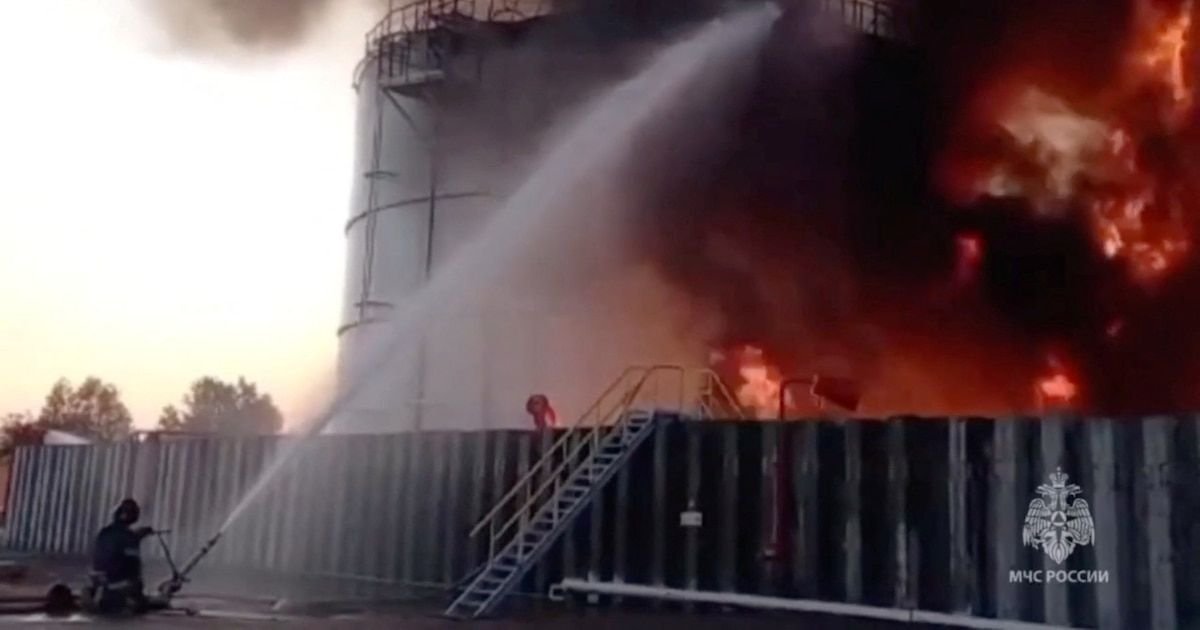
Las fuerzas ucranianas atacaron e incendiaron el lunes un depósito de petróleo en la región rusa de Rostov, al sur del país, utilizado para abastecer a las fuerzas rusas en las zonas ocupadas de Ucrania, informó el ejército ucraniano.
El Estado Mayor de las Fuerzas Armadas de Ucrania dijo que las unidades militares de operaciones especiales, junto con las fuerzas de cohetes y artillería, habían golpeado la planta de Atlas en la región de Rostov, no lejos de la frontera oriental de Ucrania.
“Se ha confirmado un ataque de nuestras fuerzas en la zona del objetivo”, dijo el Estado Mayor en un comunicado en Telegram. “Se ha observado un incendio. Se están aclarando los resultados del ataque”.
El texto agregó que la instalación se utilizaba para suministrar combustible y lubricantes a las unidades rusas que operan en las partes ocupadas por Rusia de las regiones de Luhansk y Donetsk en el frente oriental de la guerra.
Las fuerzas ucranianas han estado llevando a cabo ataques transfronterizos, incluidos objetivos de la industria energética, que, según el Estado Mayor, tenían como objetivo frenar el potencial económico de Rusia para proseguir con la guerra de más de tres años en Ucrania.
Los blogueros militares ucranianos habían informado anteriormente del asalto al depósito de petróleo, diciendo que los tanques de combustible habían sido pasto de las llamas en el incidente.

Antes del golpe ucraniano, Rusia atacó con drones y misiles durante la madrugada del lunes a Kiev: al menos siete personas murieron y dos más en el norte de Ucrania. El presidente Volodímir Zelensky denunció que Rusia lanzó 352 drones, incluidos 159 del modelo Shahed de origen iraní, y 16 misiles, algunos de ellos balísticos fabricados por Corea del Norte. Los ataques provocaron destrucción en áreas residenciales y hospitales, en una nueva ola de bombardeos nocturnos sobre territorio ucraniano.
“El bombardeo fue masivo, con misiles y drones en la capital y su región”, declaró el ministro del Interior, Igor Klymenko. “Fueron alcanzadas zonas residenciales, hospitales y equipamientos deportivos, sin respetar el carácter civil de estas infraestructuras”, agregó. En el distrito de Shevchenko, en el oeste de Kiev, una sección completa de un edificio residencial de varios pisos quedó destruida. El alcalde Vitali Klitschko confirmó la muerte de seis personas en ese inmueble, donde las operaciones de rescate continúan.
Otra víctima mortal fue reportada en Bila Tserkva, una ciudad al sur de Kiev que también resultó afectada por los ataques, dejando al menos diez heridos. En Chernígov, en el norte del país, dos personas murieron tras un ataque con drones, y otras diez resultaron heridas, según informó en Telegram el jefe de la administración regional, Vyacheslav Tchaus. Periodistas de AFP presentes en la capital relataron haber escuchado el zumbido de drones y múltiples explosiones. En refugios subterráneos, decenas de residentes aguardaron el fin de los ataques en silencio, consultando sus teléfonos en busca de información.
Los bombardeos nocturnos se han convertido en una constante en varias ciudades ucranianas, mientras las negociaciones para un alto el fuego siguen sin avances. El pasado 17 de junio, otro ataque masivo dejó 28 muertos y más de 130 heridos en Kiev, según cifras del gobierno. En paralelo, Ucrania ha incrementado sus propias ofensivas. El comandante en jefe de las Fuerzas Armadas, Oleksandr Syrsky, afirmó el sábado que se intensificarán los ataques contra objetivos militares rusos en respuesta a las agresiones.
(Con información de Reuters)

NEWYou can now listen to Fox News articles!
Government documents reveal the fall of drug kingpin «El Mencho» over the weekend was the culmination of an aggressive, more than yearlong strategy of «total elimination» pursued by the Trump administration against the ruthless Jalisco New Generation cartel (CJNG), which is present in almost all 50 U.S. states.
Ruben «Nemesio» Oseguera Cervantes, known as «El Mencho,» the leader of the CJNG, was killed Sunday in a Mexican military operation in Tapalpa, Mexico, authorities said. Though the operation was carried out by Mexican forces, the United States laid the groundwork, making El Mencho’s fall possible.
On President Donald Trump’s first day in office, he signed an executive order directing the State Department to designate several cartels and international criminal groups «foreign terrorist organizations» (FTOs), a designation unlocking military-grade surveillance and «material support» prosecutions. Though lesser known than MS-13 or Tren de Aragua, CJNG was one of the groups designated an FTO by the administration.
Shortly after Trump’s executive order, on Feb. 5, Attorney General Pam Bondi sent a policy memorandum to all Department of Justice employees, announcing a «fundamental change in mindset and approach» to cartels and transnational criminal organizations to a policy of «total elimination.»
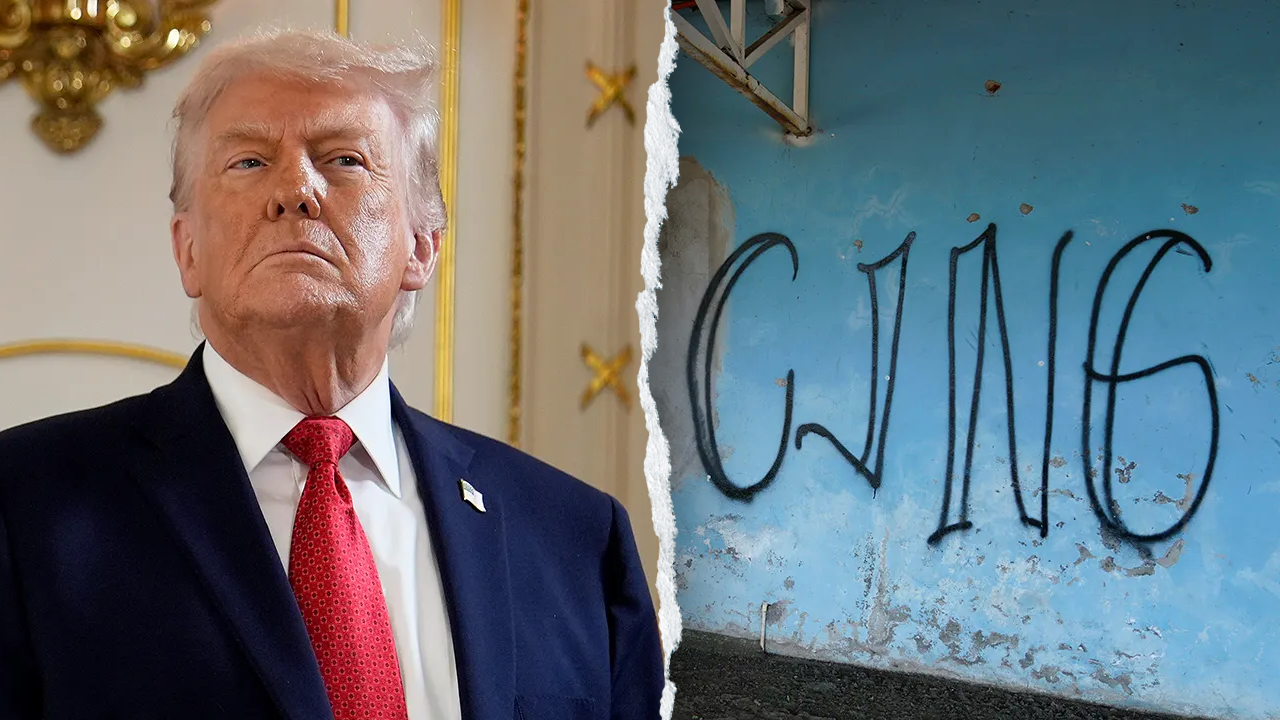
A mugshot of Ruben «Nemesio» Oseguera Cervantes, known as «El Mencho,» beside graffiti depicting the letters of the Jalisco New Generation cartel on an abandoned home in El Limoncito, Mexico. (Eduardo Verdugo/AP Images; Drug Enforcement Administration)
Rather than simply seeking to mitigate the harms of cartel activity, Bondi said the DOJ would be suspending red tape to «empower federal prosecutors throughout the country to work urgently with the Department of Homeland Security and other parts of the government toward the goal of eliminating these threats to U.S. sovereignty.»
The memo said the DOJ would be prioritizing cartel managers and leaders.
According to the Drug Enforcement Administration’s 2025 National Drug Threat Assessment, CJNG is one of the most ruthless cartels in Mexico and a key supplier of fentanyl to the U.S., making it «one of the most significant threats to the public health, public safety, and national security of the United States.»
The DEA said CJNG operates vast distribution networks within the U.S., with associates, facilitators and affiliates operating in «almost all 50 U.S. states.» The DEA also said CJNG has been increasing its involvement in non-drug crime, including extortion, taxing human smuggling and fraud schemes.
A 2019 DOJ statement to the Senate Committee on Homeland Security and Governmental Affairs states that CJNG is «one of the most powerful and fastest growing cartels» and operates key drug distribution hubs in Los Angeles, New York, Chicago and Atlanta. The Department of National Intelligence estimates the group has approximately 15,000–20,000 members.
CARTELS OUTGUN POLICE: ROCKET LAUNCHERS SEIZED IN EL MENCHO RAID SPOTLIGHT CJNG FIREPOWER

A soldier stands guard by a charred vehicle after it was set on fire in Cointzio, Mexico, Sunday, Feb. 22, 2026, after the death of cartel leader «El Mencho.» (AP Photo/Armando Solis)
Recognizing the threat posed by CJNG, the administration announced major results just over one month after Trump’s inauguration. On Feb. 27, Bondi announced the U.S. had secured the extradition of 29 high-ranking cartel leaders from Mexico, including top-tier CJNG leaders, a key money broker and a family member of El Mencho. Among those extradited and charged was Antonio Oseguera Cervantes, also known as «Tony Montana,» El Mencho’s brother, who was charged in the District of Columbia for his alleged leadership role in the cartel.
On March 7, El Mencho’s son and heir apparent, Ruben Oseguera-Gonzalez, known as «El Menchito,» was sentenced in Washington, D.C., to life in prison plus 30 years and ordered to forfeit $6 billion in drug proceeds. El Menchito had been extradited to the U.S. during the first Trump administration in 2020.
The next week, on March 15, the president again upped the ante against the cartels by designating fentanyl as a weapon of mass destruction, authorizing the use of advanced military assets for supply-side interdiction at the border. The move had a major impact on CJNG’s drug smuggling operations.
June was another high-impact month in the fight against CJNG. El Mencho’s brother-in-law, José González Valencia, «La Chepa,» was sentenced to 30 years in federal prison. Another high-ranking leader, José González Valencia, co-founder of the CJNG’s financial wing «Los Cuinis,» was also sentenced to 30 years.
The same month, the Treasury Department used the FEND Off Fentanyl Act for the first time to cut off three major Mexican banks, CIBanco, Intercam and Vector, from the U.S. dollar system for allegedly laundering CJNG funds.
US DRUG OVERDOSE DEATHS PLUMMET 20% AS TRUMP ADMINISTRATION CRACKS DOWN ON SOUTHERN BORDER
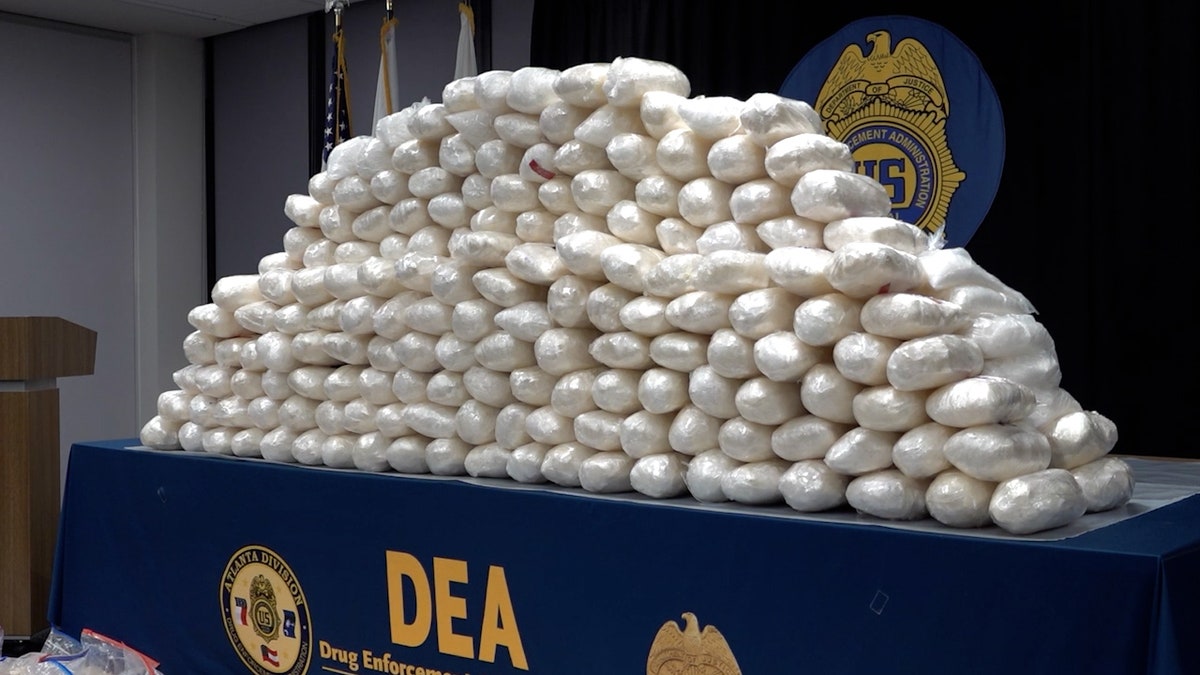
The Drug Enforcement Administration in Atlanta seized more than 1,000 pounds of meth linked to the violent Jalisco New Generation cartel in September. (Fox News)
In August, the administration secured the extradition of another 26 high-ranking cartel leaders from Mexico, including Abigael González Valencia, another brother-in-law of El Mencho known as «El Cuini,» who was the head of a major money-laundering organization for the cartel.
Not letting up, the next month, the DEA and Department of Homeland Security launched a massive, nationwide weeklong operational surge targeting CJNG distribution networks. The effort led to 670 arrests and the seizure of $18 million in currency and $29 million in assets. The operation also resulted in the seizure of 92.4 kilograms of fentanyl powder and 1,157,672 counterfeit fentanyl pills.
Announcing the seizures, DEA Administrator Terrance Cole said the administration «is targeting the Jalisco New Generation cartel as what it is—a terrorist organization—at every level, from its leadership to its distribution networks and everyone in between.»
MEXICO FLIES 37 CARTEL MEMBERS TO US UNDER PRESSURE FROM TRUMP ADMIN
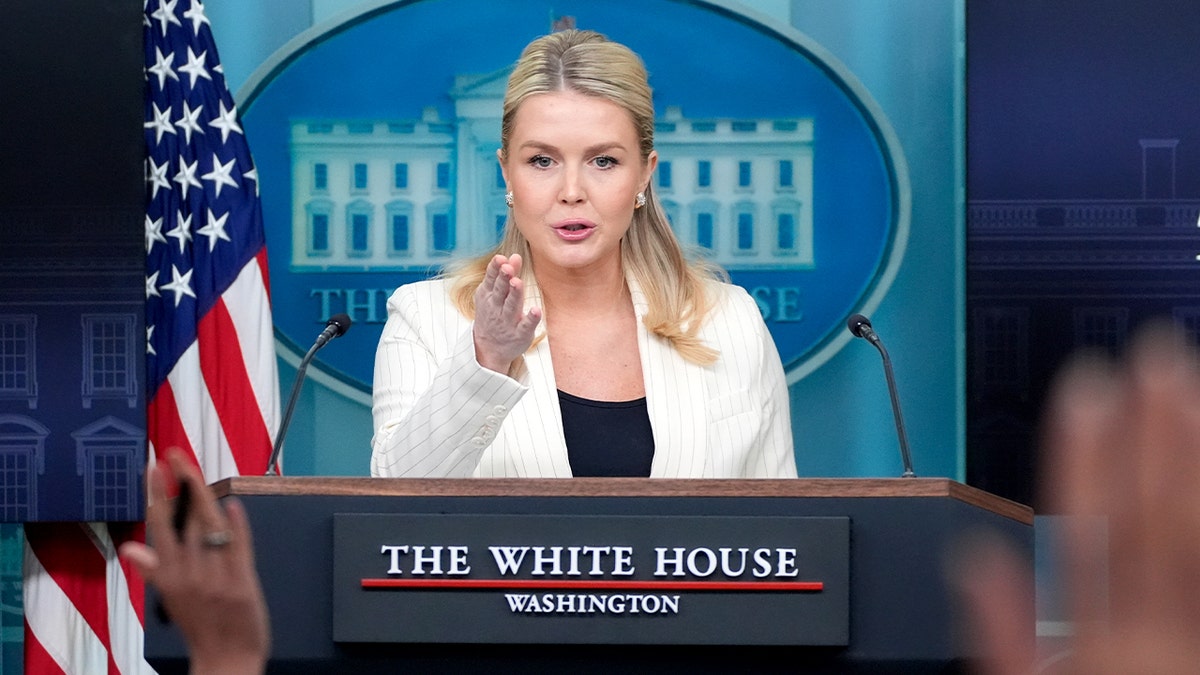
White House press secretary Karoline Leavitt says murders plunged to historic lows as Trump ramped up arrests, deportations and gang crackdowns, citing new crime data. (Alex Brandon/AP)
«Let this serve as a warning,» said Cole at the time. «DEA will not relent… This focused operation is only the beginning — we will carry this fight forward together until this threat is defeated.»
By the end of 2025, the DEA was reporting that it had seized a total of 47 million fentanyl pills, enough to represent more than 369 million lethal doses, from cartel smugglers, including CJNG.
At the start of 2026, the administration again increased its targeting of CJNG and other cartels. The Department of War established the Joint Interagency Task Force-Counter Cartel (JIATF-CC) under U.S. Northern Command as the «next step» in the whole-of-government approach to «identify, disrupt, and dismantle cartel operations posing a threat to the United States along the U.S.-Mexico border.»
On Feb. 19, just 72 hours before the Tapalpa raid, the Treasury sanctioned Kovay Gardens, a CJNG-controlled resort in Puerto Vallarta, cutting off a $300 million revenue stream flowing into the cartel’s coffers.
CLICK HERE TO DOWNLOAD THE FOX NEWS APP
Following the raid, White House press secretary Karoline Leavitt confirmed the U.S. provided intelligence support to the Mexican government to assist in the operation.
Leavitt added that Trump «has been very clear the United States will ensure narcoterrorists… are forced to face the wrath of justice they have long deserved.»
Related Article
mexican cartel violence,donald trump,homeland security,defense,justice department,location mexico,pam bondi
INTERNACIONAL
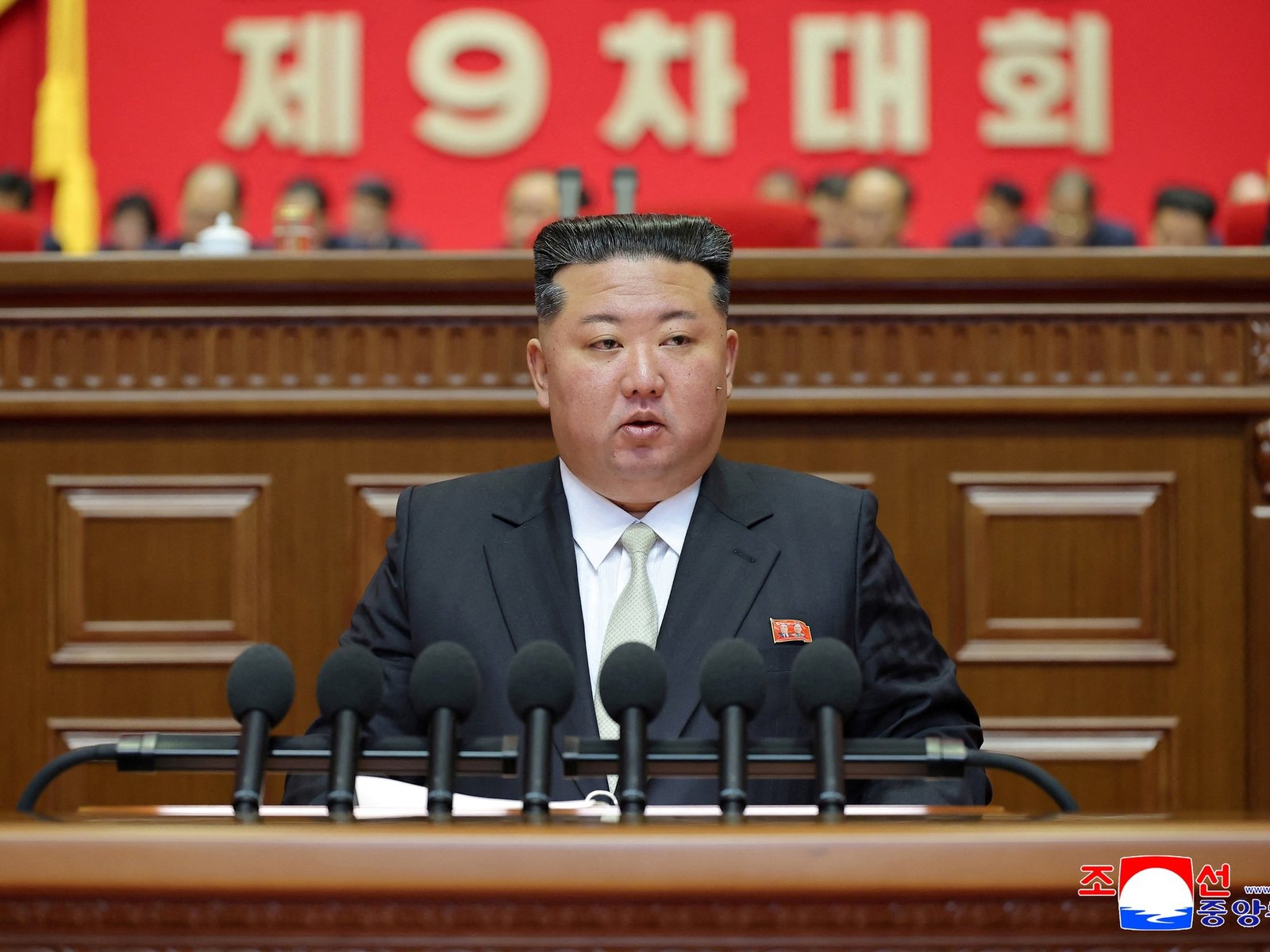
La hermana del dictador Kim Jong-un, Kim Yo-jong, fue ascendida en el congreso de Corea del Norte
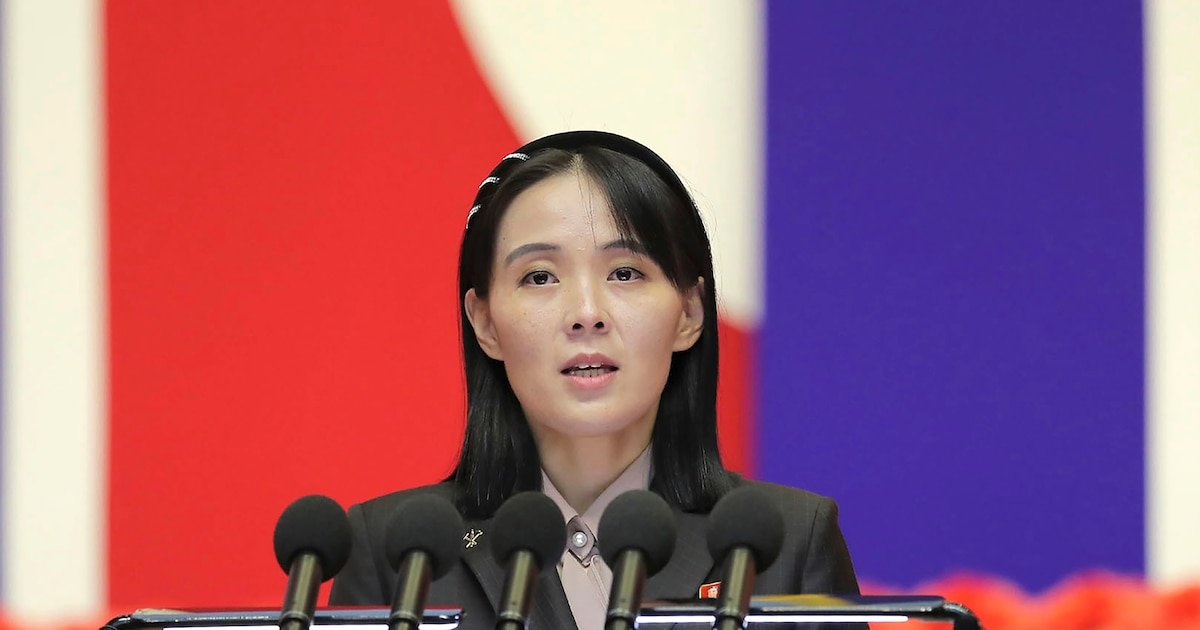
La hermana de Kim Jong-un, Kim Yo-jong, obtuvo un ascenso como directora titular de departamento en el Partido de los Trabajadores de Corea del Norte, según confirmaron este martes los medios estatales.
De acuerdo con la Agencia Central de Noticias de Corea (KCNA), la decisión se tomó durante el congreso quinquenal del partido gobernante en Pyongyang, donde el Comité Central oficializó el nuevo cargo de la funcionaria.
Kim Yo-jong ocupaba hasta ahora el puesto de subdirectora de departamento y su promoción la coloca al frente de uno de los espacios de mayor influencia dentro de la estructura partidaria. El evento, que congregó a miles de miembros de la elite, marcó uno de los pocos momentos en que se permite observar el funcionamiento interno del régimen norcoreano.
El congreso, que se realiza cada cinco años, define las prioridades del Partido de los Trabajadores en áreas clave como la diplomacia y la planificación militar. La cumbre también sirve como escenario para que el líder norcoreano consolide su control sobre la estructura.
Nacida a fines de la década del ochenta, de acuerdo con datos del gobierno surcoreano, Kim Yo-jong es hija de Kim Jong-il y de Ko Yong-hui, quien fue bailarina y tercera pareja conocida del ex mandatario. Tanto ella como su hermano cursaron estudios en Suiza, antes del ascenso de Kim Jong-un tras el fallecimiento de su padre en 2011, y su avance en la jerarquía política se aceleró a partir de ese momento.

La KCNA indicó que se prevé que Kim Jong-un anuncie las próximas etapas del programa nuclear norcoreano en el transcurso del congreso, que continuará durante varios días.
El dictador norcoreano fue reelecto como secretario general del Partido de los Trabajadores de Corea del Norte durante este noveno congreso de la organización. La decisión, adoptada en la cuarta jornada del encuentro, recibió el respaldo unánime de los delegados y formalizó así su control sobre el poder político y militar del país.
El partido calificó el nombramiento como expresión de la “voluntad inquebrantable” de sus miembros y destacó la figura de Kim como el único dirigente capaz de encarnar la fortaleza del Estado.
“La disuasión bélica del país, con las fuerzas nucleares como eje central, ha mejorado radicalmente y nuestro Estado ha avanzado dinámicamente hacia la prosperidad, garantizando así el futuro del país y de su pueblo a pesar de los duros desafíos de la historia”.
El congreso, considerado el máximo órgano de decisión política del régimen, reúne a cerca de 7.000 participantes entre delegados y observadores. Su función es definir las grandes directrices del Estado, que abarcan desde los planes económicos y sociales hasta las prioridades militares.

“El nuevo plan quinquenal se convertirá en una etapa para estabilizar y consolidar nuestra economía y lograr su desarrollo cualitativo gradual”, señaló Kim en un discurso el lunes.
Según información difundida por el partido, la reunión incluyó la revisión de las normas internas de la organización, pero no se detallaron los cambios aprobados.
En la sesión de apertura, Kim Jong-un señaló ante los delegados: “Hoy, nuestro partido se enfrenta a difíciles y urgentes tareas históricas de impulsar la construcción económica y el nivel de vida del pueblo, y de transformar todos los ámbitos de la vida estatal y social lo antes posible”.
Las autoridades del partido adelantaron que el congreso servirá para presentar la siguiente fase del programa nuclear norcoreano y para avanzar en la sofisticación de la disuasión militar.
(Con información de AFP)
Asia / Pacific


¡La reina del drama! Furiosa, Juana Repetto rompió el silencio y contó la verdad del distanciamiento de su papá Nicolás

Estafaba a comerciantes con comprobantes truchos de transferencias y lo detuvieron

El Gobierno creó una plataforma para denunciar las tasas municipales: “Que nadie se quede con lo que es tuyo”

Trump’s ‘total elimination’ strategy paved way for fall of cartel kingpin ‘El Mencho’

Los optimistas del mercado: 15 consultoras esperan un dólar barato para los próximos meses

Kroos le devuelve el dardo a Ancelotti por el ‘caso Vinicius’: ‘Fue un error’

Villarruel cuestionó la apertura de importaciones: «Sin industria, se pasa a depender de China»

“Ahora es la hora de jugarse”: el mensaje de Patricia Bullrich a los empresarios tras aprobarse la reforma laboral

Según un especialista, el precio de la carne se mantendrá alto “entre dos y tres años”

Cómo será el tratamiento de la reforma laboral en el Senado, luego de haber obtenido la media sanción en Diputados

 POLITICA3 días ago
“Ahora es la hora de jugarse”: el mensaje de Patricia Bullrich a los empresarios tras aprobarse la reforma laboral
- ECONOMIA2 días ago
Según un especialista, el precio de la carne se mantendrá alto “entre dos y tres años”
- POLITICA2 días ago
Cómo será el tratamiento de la reforma laboral en el Senado, luego de haber obtenido la media sanción en Diputados