INTERNACIONAL
Trump may look to his daughter-in-law to defend Senate seat in key battleground

NEWYou can now listen to Fox News articles!
President Donald Trump calls Sen. Thom Tillis’ announcement that the two-term Republican senator won’t see re-election next year in battleground North Carolina «Great News.»
And with Tillis — who Trump torched this past weekend for not supporting his so-called «big, beautiful» spending and tax cut bill in a key test vote — now out of the picture in the midterms, it’s likely the president and his political team will be the kingmakers in the selection of the 2026 GOP nominee in North Carolina.
«It’s the president’s choice. The president and his team will have those conversations,» a Republican operative, pointing to Trump’s immense sway over the GOP, told Fox News.
TILLIS DENOUNCES TRUMP’S ‘BIG, BEAUTIFUL BILL ’ HOURS AFTER SURPRISE RETIREMENT ANNOUNCEMENT
Republican Sen. Thom Tillis of North Carolina announced on Sunday that he won’t seek re-election in 2026 to a third term in the U.S. Senate. (Anna Moneymaker/Getty Images)
«Does he have great choices? Absolutely,» said the strategist, who asked to remain anonymous to speak more freely.
Likely at the top of the list is Lara Trump, the president’s daughter-in-law who served last year, amid the 2024 presidential campaign, as co-chair of the Republican National Committee (RNC).
TRUMP REACTS TO TILLIS NOT SEEKING RE-ELECTION, SENDS WARNING TO ‘COST CUTTING REPUBLICANS’
Lara Trump, who grew up in Wilmington, North Carolina, and attended undergraduate studies at North Carolina State University, is married to the president’s son, Eric.
She stepped down from her post at the RNC late last year and currently hosts «My View with Lara Trump» on the Fox News Channel.
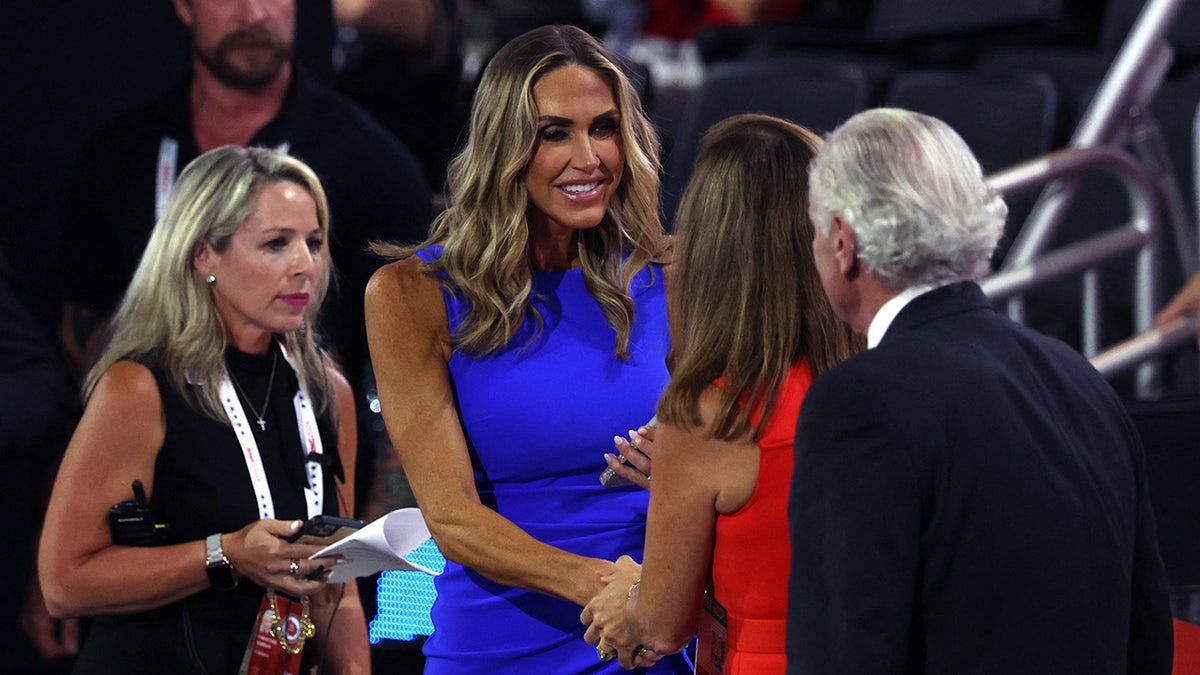
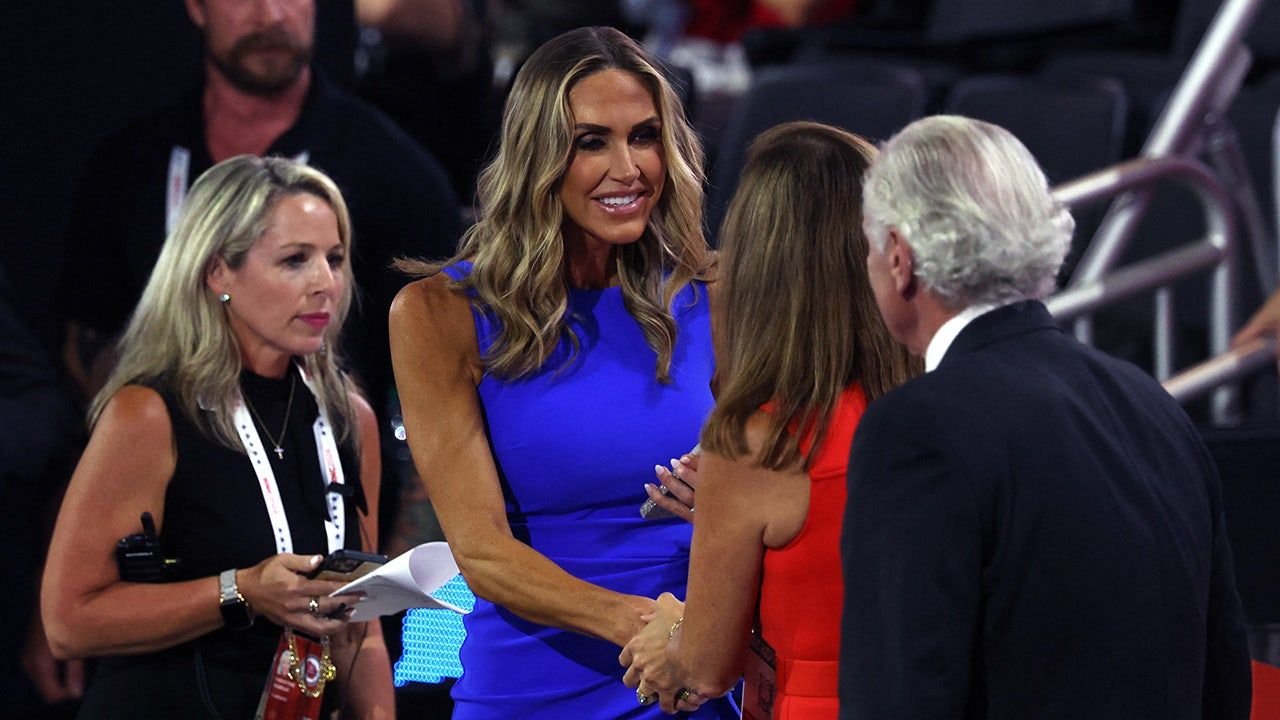
Lara Trump, seen at the Republican National Convention in Milwaukee, Wisconsin, on July 15, 2024, is seen as a potential Republican candidate in the race to succeed retiring GOP Sen. Thom Tillis. (Mike Segar/Reuters)
The Republican strategist highlighted that Lara Trump «has the name, but beyond that she is a fundraising powerhouse, and she has the discipline to be an incredible candidate and senator if she chooses to.»
«She’s probably the only person who should have ‘considering’ in the same sentence because she is the president’s daughter-in-law and that will be a consideration,» the operative added.
Four years ago, Lara Trump considered making a bid for an open Senate seat in North Carolina in the 2022 midterm elections.
«It would be an incredible thing. It’s my home state, a state I love so much, and look, I think we need some strong Republicans in Washington, D.C.,» she told Fox News at the time.
She ultimately decided against launching a campaign, citing her two young children as the main reason for her decision. But she did leave open the possibility of a future run for office in her home state.
Lara and Eric Trump own a home in Florida, and Lara Trump’s name was briefly mentioned late last year as a potential successor to Republican Sen. Marco Rubio of Florida, who was nominated by Trump to serve as Secretary of State in his second administration.
«After an incredible amount of thought, contemplation, and encouragement from so many, I have decided to remove my name from consideration for the United States Senate, she said in a statement near the end of December.
Another name being floated in North Carolina is RNC Chair Michael Whatley.
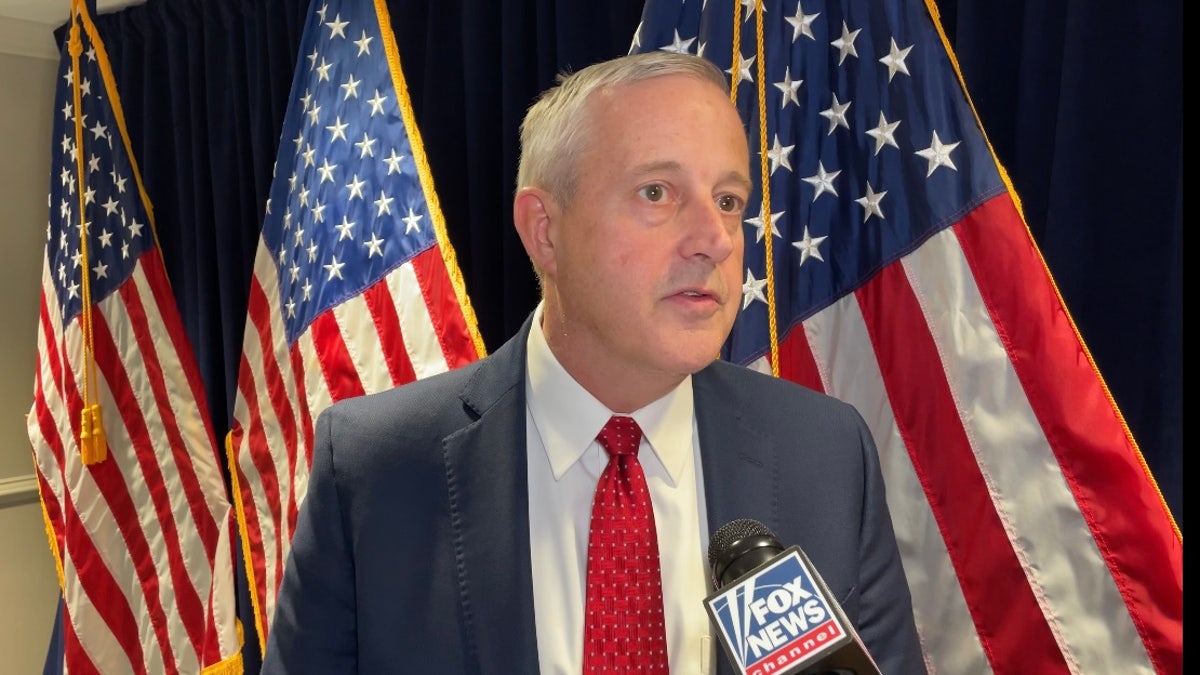
Republican National Committee chair Michael Whatley is interviewed by Fox News Digital, at the RNC headquarters in Washington D.C., on Dec. 12, 2024. (Fox News – Paul Steinhauser)
Whatley served five years as chair of the North Carolina GOP before Trump early last year picked him to succeed Ronna McDaniel as RNC chair.
«Chairman Whatley is honored to have been asked by President Trump to serve as Chair of the Republican National Committee following a hugely successful 2025, and is focused on grown Republican majorities in Congress,» an RNC adviser told Fox News when asked about the North Carolina Senate race.
WHAT MIKE WHATLEY TOLD FOX NEWS DIGITAL
Another name that comes up is Rep. Richard Hudson, who for a second straight cycle is chair of the National Republican Congressional Committee.
Along with Whatley, Hudson, who for over a decade has represented a congressional district in the central section of North Carolina, is a strong Trump ally.
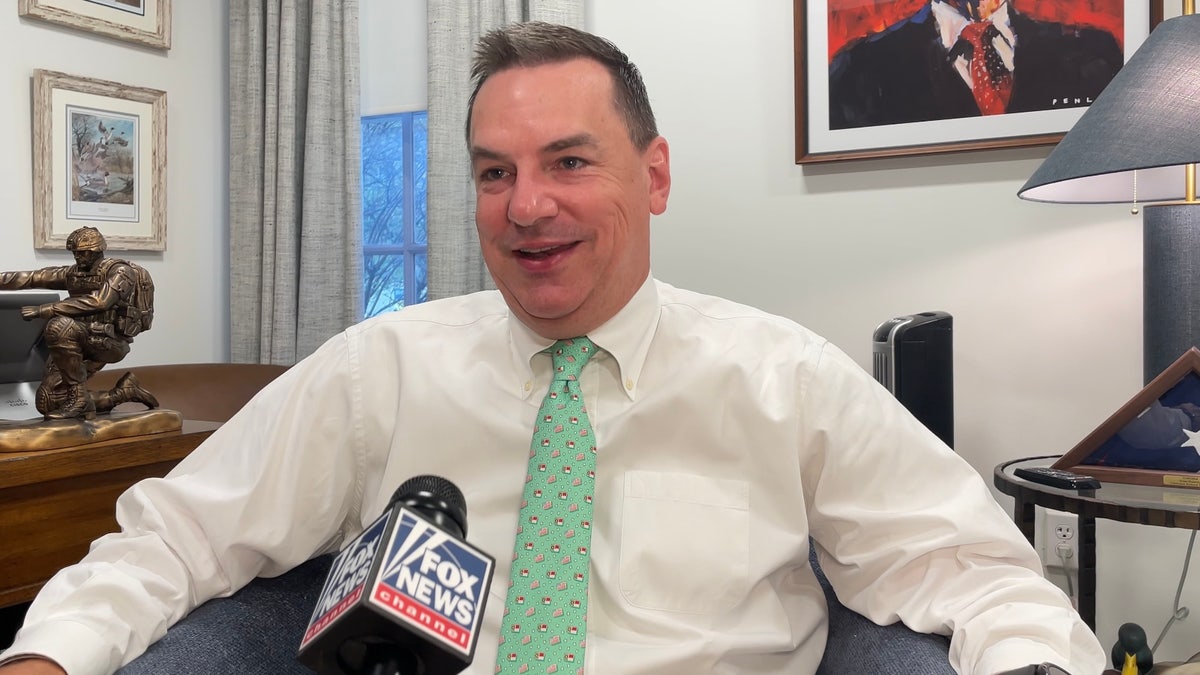
Rep. Richard Hudson of North Carolina, chair of the National Republican Congressional Committee, is interviewed by Fox News Digital, on April 7, 2025 in Washington D.C. (Paul Steinhauser/Fox News)
A source familiar told Fox News that Hudson «is tight with Trump world, and if they really wanted him to run, he wouldn’t tell them no.»
A trio of first-term Republican congressmen in North Carolina may also have interest in the race to succeed Tillis.
Sources confirmed to Fox News that Rep. Pat Harrigan is eyeing a bid. Reps. Tim Moore and Brad Knott may also have interest. And four-term GOP Rep. Murphy may consider a run.
SCOOP: HOUSE REPUBLICAN EYES BID FOR THOM TILLIS SENATE SEAT AFTER TRUMP ATTACK
Some national Republicans are relieved that Tillis isn’t seeking re-election. Tillis, who has long been an independent thinker who crossed the political aisle to seek compromise, doesn’t poll well with the MAGA base.
Some Republican operatives familiar with Senate races suggested that the GOP would have an easier time energizing base voters in a smaller midterm electorate with a more conservative candidate than Tillis on the 2026 ballot as the GOP’s nominee in North Carolina.
And Trump loyalists saw the Tillis announcement as further proof of the president’s immense hold over the GOP.
Tillis, in a statement, noted that «in Washington over the last few years, it’s become increasingly evident that leaders who are willing to embrace bipartisanship, compromise, and demonstrate independent thinking are becoming an endangered species.»
In the race for the Democratic Senate nomination, former Rep. Wiley Nickel, a trial lawyer and former state senator, launched a bid earlier this year.

Then-Gov. Roy Cooper, a Democrat from North Carolina, speaks with reporters on Sept. 10, 2024 in Philadelphia, Pennsylvania (Paul Steinhauser/Fox News)
But all eyes are on former two-term Democratic Gov. Roy Cooper, who is mulling a run. Cooper is viewed as the most formidable and prominent potential Democratic candidate for a seat his party is aiming to flip from red to blue.
But no Democrat has won a Senate race in North Carolina since 2008.
CLICK HERE TO GET THE FOX NEWS APP
Hours after Tillis’ announcement on Sunday, a top non-partisan political handicapper shifted their rating on the North Carolina Senate race from Lean Republican to Toss Up.
«The surprise move from Tillis moves this race into the Toss Up category and officially makes the Tar Heel State Democrats’ top pickup opportunity,» the Cook Report’s Jessica Walter said.


NEWYou can now listen to Fox News articles!
Democratic lawmakers say President Donald Trump’s redistricting gambit is backfiring as Virginia’s Democratic-controlled Senate advanced new congressional maps that could chip away at the House GOP’s majority.
The Virginia Senate voted 21-16 along party lines on Wednesday to pass a set of new congressional maps that would leave just one Republican district in play.
Republicans currently hold five.
To Republicans like Rep. Rob Wittman, R-Va., that’s too drastic a swing for a state that only has 11 districts to begin with. Even in light of similar redistricting pushes in Texas, California and other states, Wittman believes Virginia’s case is unique.
DOJ URGES SUPREME COURT TO BLOCK CALIFORNIA MAP, CALLS NEWSOM-BACKED PLAN A RACIAL GERRYMANDER
President Donald Trump speaks to reporters and members of the media at Mar-a-Lago on Feb. 1, 2026, in Palm Beach, Fla. (Al Drago/Getty Images)
«This partisan power grab is not reflective of Virginia. Virginia is a 6-5 congressional delegation: six Democrats, five Republicans. And now they want to go to 10 Democrats, one Republican — 92%,» Wittman said.
«They’re going to disenfranchise most Virginians, if not all of them, that are Republican or independent.»
Despite the size of the change the maps would bring, Democrats believe it’s just the latest continuation of a fight that Trump started.
«You have to fight fire with fire,» Rep. Suhas Subramanyam, D-Va., told Fox News Digital.
«The voters that I’m talking to feel that we can’t just sit back and be victims of redistricting. I don’t think this would be happening unless [Trump] pushed for redistricting in Texas and other red states,» Subramanyam said.
When asked if he thinks the changes would go too far, Subramanyam said he thinks Republicans will have a chance to press their case at the ballot box.
«If Republicans can win over the hearts and minds of Virginians, they will have a good cycle. It’s a very volatile map in that sense, and so I know many have argued that this is actually fair. I would say that it’s certainly a map where, if Republicans campaign well and their message resonates, they can win too,» Subramanyam said.
Since Trump urged lawmakers in Texas to push through a map change in July 2025, state legislatures across the country have explored ways to squeeze out a congressional advantage where control of the House hangs by a two-seat thread.
TEXAS FILES EMERGENCY SUPREME COURT PETITION AFTER TRUMP-BACKED CONGRESSIONAL MAP BLOCKED BY FEDERAL JUDGES

Rep. Suhas Subramanyam, D-Va., speaks during a news conference on Oct. 14, 2025. (Tom Williams/CQ Roll Call, Inc. via Getty Images)
Virginia’s map change, on its own, would give Democrats a path to flipping control of the chamber in November.
But the maps aren’t a sure thing. Their implementation turns on pending legal battles about whether the shakeup complies with the state’s constitutional requirements, according to a complaint filed late last year.
On Friday, the Virginia Supreme Court ruled that the redistricting consideration could continue while it deliberates over a final ruling on whether the maps are permissible.
To become official, maps will also require a statewide constitutional referendum. Under current law, Virginia’s constitution outlaws gerrymandering, the practice of drawing congressional districts to purposefully benefit a political party.
Subramanyam said the referendum gives voters a chance to express their will.
«It will come down to the voters. One good thing in Virginia is that people will have a say and can vote on the referendum in April. Folks in Texas, like where my family still lives, didn’t have a choice,» Subramanyam said, noting that Texas’s redistricting push didn’t require a constitutional amendment and was decided purely by the legislature.
Wittman believes the fact Virginia is looking to upend its own constitution should make the reshuffle a foregone conclusion.
When asked whether he sees Virginia’s redistricting question as a consequence of the redistricting in Texas, Wittman said the two situations differ because of existing state law.
JEFFRIES SAYS GOP ‘DONE EFF’D UP IN TEXAS,’ VOWS THEY WON’T WIN FIVE SEATS: ‘THEY CAN’T IGNORE IT’
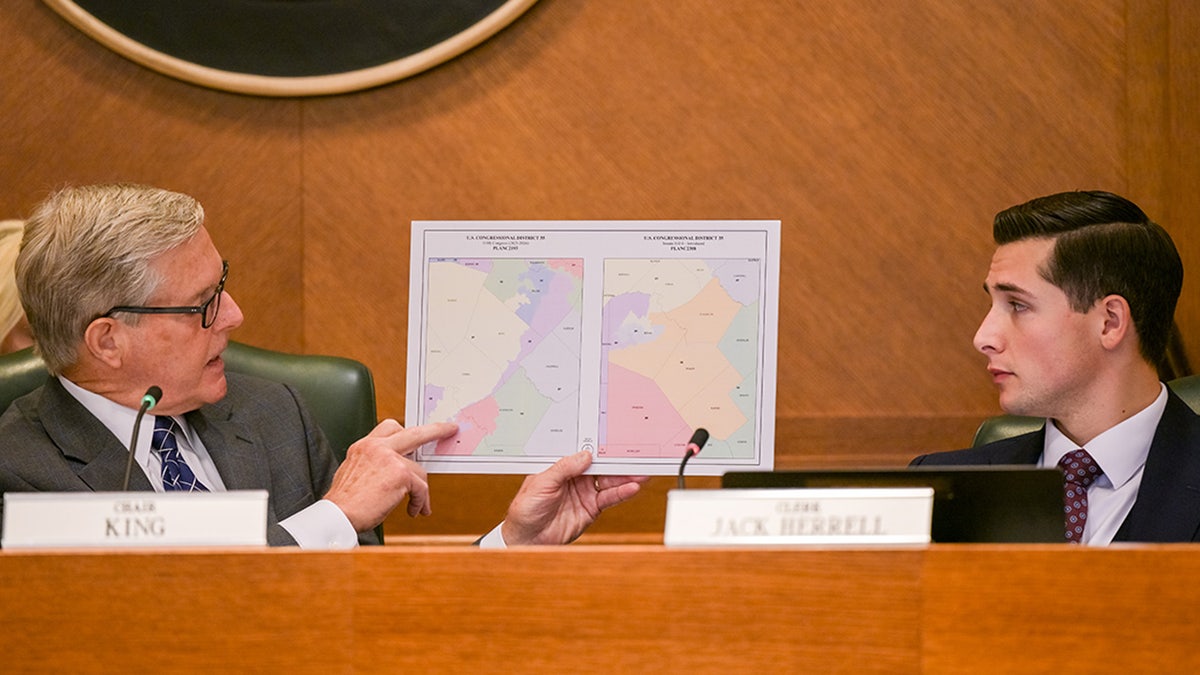
Sen. Phil King, R-Texas, displays a map during a Special Committee on Congressional Redistricting public testimony hearing on Aug. 7, 2025, in Austin. (Brandon Bell/Getty Images)
«Each state has their own constitution as to how they put together their congressional districts. Virginia’s is very clear. A super majority of voters — 66% of the voters — said we want a bipartisan redistricting commission. That’s Virginia,» Wittman said, referring to the 2020 vote in Virginia that outlawed gerrymandering.
«Texas is doing what Texas and its constitution allow,» he added.
Upon teeing up that referendum, Virginia Gov. Abigail Spanberger framed the action as a way to give Virginians a voice in a national debate over congressional redistricting.
CLICK HERE TO DOWNLOAD THE FOX NEWS APP
«Virginia voters deserve the opportunity to respond to nationwide attacks on our rights, freedoms and elections… I trust Virginia voters to respond,» Spanberger said in a statement.
Voters in the state will consider whether to «temporarily adopt new congressional districts to restore fairness in the upcoming elections» on April 21.
congress,virginia,democratic party,politics

NEWYou can now listen to Fox News articles!
Médecins Sans Frontières (MSF), commonly known as Doctors Without Borders, suspended non-critical medical operations at Gaza’s Nasser Hospital in Khan Younis, citing security concerns.
MSF said it made the decision, as of Jan. 20, due to concerns about the management of the hospital and what it described as a pattern of unacceptable incidents within the compound.
The suspension had not been widely reported at the time, and it was not immediately clear when the decision was first publicly posted.
MSF’s frequently asked questions page, where the update appears, shows it was last revised on Feb. 11.
US-BACKED GAZA AID GROUP SLAMS DOCTORS WITHOUT BORDERS, ACCUSES IT OF SPREADING ‘FALSE’ CLAIMS
A Médecins Sans Frontières (MSF) poster and other informational notices are seen on a door at Nasser Hospital as patients face difficulties accessing care in Khan Yunis, Gaza, on Jan. 15, 2026. (Abed Rahim Khatib/Anadolu via Getty Images)
In recent months, the international medical humanitarian aid group said staff and patients have reported the presence of armed and sometimes masked men, intimidation, arbitrary arrests of patients and the suspected movement of weapons on hospital grounds.
«While none of these incidents occurred in parts of the hospital compound where MSF works, they pose serious security threats to our teams and patients,» MSF wrote on its website.
«MSF formally expressed its strong concern to relevant authorities and emphasized the incompatibility of such violations with our medical mission. Hospitals must remain neutral, civilian spaces, free from military presence or activity, to ensure the safe and impartial delivery of medical care,» the group continued. «MSF calls on all armed groups, Hamas, and Israeli forces to respect medical facilities and ensure the protection of civilians.»
HAMAS PLOTS INFILTRATION AT US-BACKED GAZA AID SITE, FORCES TEMPORARY SHUTDOWN

Palestinian children receive medical treatment at Nasser Hospital amid a rise in influenza and respiratory infections in Khan Yunis, Gaza, on Jan. 14, 2026. (Hani Alshaer/Anadolu via Getty Images)
In a statement issued Saturday, Nasser Hospital rejected what it called «false, unsubstantiated, and misleading allegations» by MSF regarding the presence of weapons or armed groups inside the facility.
«These allegations are factually incorrect, irresponsible, and pose a serious risk to a protected civilian medical facility. The Gaza Strip is under an extreme and prolonged state of emergency resulting from systematic attacks on civilian institutions,» it said. «Under these conditions, isolated unlawful actions by uncontrolled individuals and groups have occurred across society, including attempts by some to carry weapons.»
Hospital officials said a civilian police presence had been arranged to help safeguard patients, staff and infrastructure and called on MSF to retract its claims and reaffirm its commitment to medical neutrality.
The Israel Defense Forces (IDF) said Sunday on X that it has intelligence indicating Hamas is using Nasser Hospital as a headquarters and military post, reiterating longstanding allegations that the militant group embeds operations within civilian facilities in Gaza.

Patients are treated in the orthopaedic department of Nasser Hospital as Palestinians wounded in Israeli attacks continue receiving care under limited conditions in Khan Yunis, Gaza, on Jan. 29, 2026. (Abed Rahim Khatib/Anadolu via Getty Images)
CLICK HERE TO DOWNLOAD THE FOX NEWS APP
«For over two years, the IDF and the defense establishment has warned about the cynical use by terrorist organizations in Gaza of hospitals and humanitarian shelters as human shields to conceal terrorist activity,» it wrote.
Hamas has previously denied using hospitals or other civilian facilities for military purposes.
hamas,israel,middle east,aid
INTERNACIONAL
La traición, la noche helada y la fuga por la nieve: la historia de la masacre de Glencoe
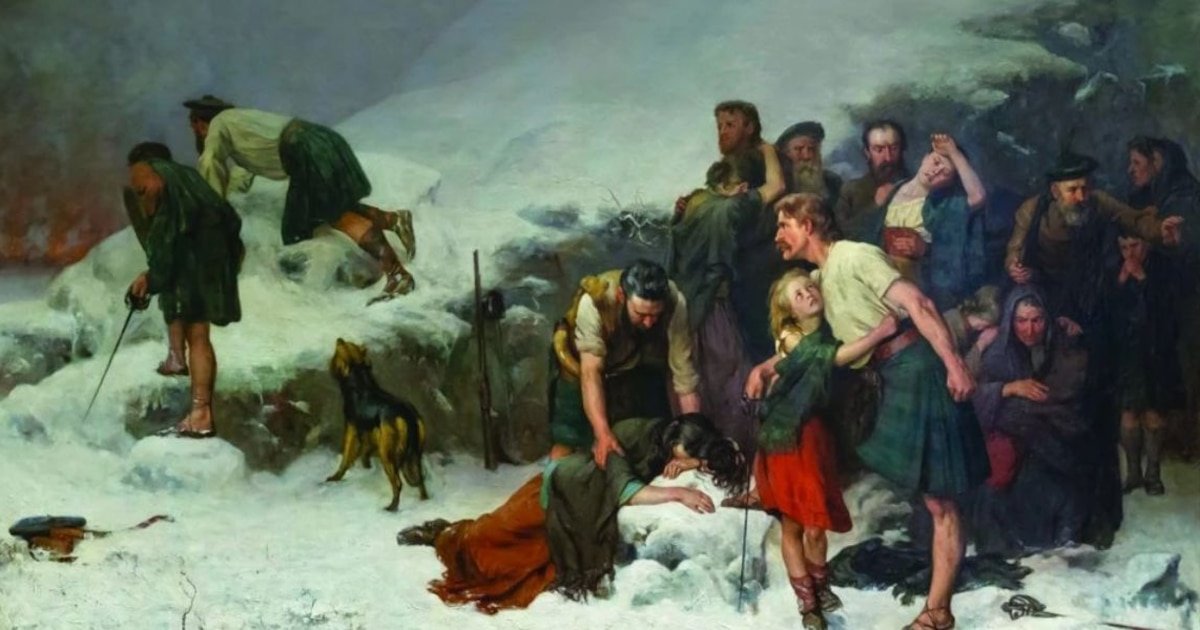
El 13 de febrero de 1692, la Matanza de Glencoe marcó uno de los episodios más oscuros y polémicos en la historia de Escocia. Este acto de violencia, ejecutado por fuerzas del gobierno bajo el mando del capitán Robert Campbell de Glenlyon, selló el destino del clan MacDonald en las Tierras Altas occidentales, dejando una huella indeleble en la memoria nacional y en el imaginario popular, hasta el punto de inspirar relatos modernos como la célebre escena de la “boda roja” en la serie Game of Thrones.
Desde tiempos remotos, Escocia mantuvo una tradición de resistencia frente a invasores y de luchas internas por el poder. Las crónicas del país registran desde los Caledonios y los Pictos rechazando el dominio romano, hasta figuras emblemáticas como William Wallace y Robert the Bruce enfrentándose al ejército inglés en Stirling y Bannockburn.
A finales del siglo XVII, la política escocesa se vio marcada por la llamada causa jacobita, surgida tras la destitución del rey católico James VII de Escocia y II de Inglaterra durante la “Revolución Gloriosa” de 1688, que instauró en el trono a William de Orange (posteriormente William III).
La causa jacobita agrupó a quienes buscaban restaurar a un monarca católico, y encontró apoyo entre varios clanes de las Tierras Altas, en particular los MacDonald de Glencoe, quienes permanecieron leales al depuesto James.
El gobierno de William III, decidido a consolidar su autoridad, exigió que todos los clanes de las Tierras Altas firmaran un juramento de lealtad antes del 1 de enero de 1692.
A cambio, prometía dinero, tierras y el perdón para quienes acataran la orden a tiempo. En cambio, quienes no lo hicieran serían castigados como traidores.
La situación de los MacDonald era especialmente delicada. Aunque el jefe del clan, Iain MacIain, buscó cumplir la exigencia, se vio perjudicado por la demora en la autorización del propio James para prestar el juramento.
Según el archivo del Glencoe National Nature Reserve, “James solo dio su consentimiento a la solicitud de William a mediados de diciembre; la noticia llegó a los MacDonald el 28 de diciembre: tenían tres días para cumplir el plazo”.
MacIain emprendió una travesía a través de la nieve hasta Fort William, pero allí nadie tenía la autoridad para aceptar el juramento. Debió desplazarse a Inveraray, a más de 96 kilómetros de distancia, y finalmente pudo prestar el juramento el 6 de enero, convencido de que su clan quedaba a salvo.
Sin embargo, la decisión de “dar un escarmiento” ya estaba tomada desde el gobierno, y la suerte de Glencoe estaba echada.

El trasfondo de este trágico desenlace implicaba no solo rivalidades entre clanes, sino también un claro deseo del gobierno de imponer su control sobre los rebeldes de las Tierras Altas.
Aunque la historia suele asociar la masacre a la enemistad tradicional entre los MacDonald y los Campbell, la evidencia señala que se trató, sobre todo, de una operación estatal para quebrar la resistencia jacobita.
“Aunque los Campbell son los más asociados con la masacre, fue menos una cuestión de rivalidad de clanes que un complot gubernamental para alinear a los clanes de las Tierras Altas con el rey William”, detalló el propio sitio oficial de Glencoe.
En la última semana de enero de 1692, dos compañías, sumando unos 120 soldados del regimiento del conde de Argyll y comandados por Robert Campbell de Glenlyon, llegaron a Glencoe. Siguiendo las tradiciones de hospitalidad de las Tierras Altas, los MacDonald ofrecieron alojamiento y techo a los soldados durante casi dos semanas.
“Glenlyon había recibido órdenes de alojar a sus hombres entre las familias MacDonald en el valle, en lugar de impuestos no pagados. Las reglas tradicionales de hospitalidad implicaban que fueron bien recibidos. Sin embargo, Iain MacIain, jefe anciano del clan, ordenó que las mujeres jóvenes y solteras fueran enviadas lejos, y temiendo que Glenlyon pretendiera desarmar al clan, ocultó las armas en otro lugar”, relató el portal History Today.
La noche del 12 de febrero, Glenlyon y sus oficiales recibieron sus órdenes escritas: “A las 5 de la mañana del día siguiente debía atacar a los rebeldes… y matar a todos los menores de setenta años”.
El propio MacIain fue asesinado por la espalda mientras intentaba vestirse. Su esposa fue despojada de sus ropas y los soldados le arrancaron los anillos de los dedos con los dientes; terminó muriendo de exposición. Nueve hombres atados fueron fusilados uno a uno y Glenlyon remató a cada uno con su bayoneta.
En total, al menos 38 hombres, mujeres y niños murieron en el ataque inicial, y muchos más fallecieron de frío al intentar huir a las montañas.
El impacto de la masacre fue tan profundo que, señala el Glencoe National Nature Reserve, “cuando la noticia finalmente llegó al público, tras ser publicada primero en Francia, una Comisión Parlamentaria de Escocia determinó que los asesinatos fueron ‘crímenes de asesinato bajo confianza’“.
Y agrega: “En una época donde la hospitalidad era piedra angular de la vida en las Tierras Altas, este fue un crimen atroz y sorprendente”.

La indignación en Escocia fue inmediata y duradera. En 1695, el rey William III se vio obligado a ordenar una comisión de investigación. La responsabilidad se repartió, aunque la comisión concluyó que el rey había firmado la orden de “extirpar” a los MacDonald, pero solo con la intención de “proceder por la vía de la justicia pública”.
La mayor parte de la culpa recayó en John Dalrymple, secretario de Estado para Escocia, quien, según la comisión, “despreciaba a los Highlanders y particularmente a los MacDonald”.
William III finalmente lo perdonó, justificando que “al estar a muchos cientos de millas de distancia, no podía tener conocimiento ni participación en el método de ejecución”.
A pesar de que la tradición popular culpó a los Campbell, los registros históricos indican que solo una docena de miembros de este clan participaron directamente en la masacre.
El hecho de que los soldados se alojaran bajo el mismo techo que sus víctimas durante días antes del ataque, violando las normas más sagradas de hospitalidad, convirtió la masacre en un símbolo de traición y barbarie.

Bad Bunny en River, postales de dos noches históricas: las mejores fotos

El Gobierno denunció por actos de terrorismo a los responsables de la violencia afuera del Congreso

Democrats say Trump redistricting push backfiring as Virginia advances new House maps

Qué sectores tendrán la obligación de emitir comprobantes electrónicos, según una nueva norma de ARCA

Yerry Mina, ex del Barça, y su nueva vida en Cagliari: ‘Es el líder indiscutible del grupo’

Doctors Without Borders reduces operations at Gaza hospital over security concerns

A quién afecta la Reforma laboral: estos son los puntos clave del proyecto de Milei

Reforma laboral: la modificación sobre accidentes o enfermedades ajenas al trabajo

Cayeron 20% las ventas de automóviles en China y el régimen impone medidas para regular el mercado

El Barça y media Europa esperan: la joya de 19 años Diomandé atrapada en un lío legal

 POLITICA2 días ago
El Gobierno busca aprobar la reforma laboral y el Régimen Penal Juvenil antes del 1 de marzo
- SOCIEDAD2 días ago
Avistaron una ballena azul en Chubut por primera vez en la historia
- INTERNACIONAL2 días ago
Chaotic video shows passengers trading midair blows; plane forced to divert: reports