INTERNACIONAL
MAGA law group fights to expose how Biden’s DEI agenda may have tainted life-saving organ transplants


NEWYou can now listen to Fox News articles!
A conservative legal group is trying to uncover whether the former Biden administration’s focus on diversity, equity and inclusion (DEI) initiatives seeped into the nation’s organ transplant system and led to prioritizing patients based on race.
MAGA law group America First Legal is suing a number of federal health agencies to obtain documents related to the nation’s organ transplant system.
Specifically, they’re targeting the Department of Health and Human Services, the Centers for Medicare and Medicaid Services and the Health Resources Services Administration, in an attempt to compel them to turn over documents related to the Organ Procurement and Transplantation Network (OPTN).
In April 2023, AFL filed a Freedom of Information Act (FOIA) request seeking documents relevant to the Biden administration’s efforts to infuse DEI into the organ transplant system. However, to date, AFL says it has not received any of the requested information and, as a result, decided to sue in an effort to compel the release of it.
«The Biden Administration infected the federal government with ‘equity,’ replacing traditional principles of fairness and need with race-conscious criteria,» said America First Legal Counsel Will Scolinos. «AFL is determined to uncover the complete scope of Biden-era DEI policies and will continue to take decisive action to restore colorblind healthcare.»
NOEM UNCOVERS AND KILLS MULTIMILLION-DOLLAR, BIDEN-ERA DEI, LGBTQ PROGRAM
MAGA law group America First Legal is suing to uncover documents so that it can see if the Biden administration’s efforts to infuse DEI into the federal government led to discrimination in the nation’s organ transplant system. (iStock; Getty Images)
Just days after taking office in 2021, former President Joe Biden signed Executive Order 13985, directing all federal agencies to conduct «Equity Assessments» to determine whether «underserved communities and their members» faced systemic barriers to accessing federal programs. The order also required each agency to develop an action plan to address those barriers.
As part of this effort, in December 2021, CMS issued a request to the public for comments on how the agency could «Advance Equity and Reduce Disparities in Organ Transplantation.»
«CMS is focused on identifying potential system-wide improvements that would increase organ donations, improve transplants, enhance the quality of care in dialysis facilities, increase access to dialysis services, and advance equity in organ donation and transplantation,» the agency said at the time.
«Communities of color have much higher rates of high blood pressure, diabetes, obesity, and heart disease, all of which increase the risk for kidney disease. Black Americans are almost four times more likely, and Latinos are 1.3 times more likely, to have kidney failure compared to White Americans. Despite the higher risk, data shows that Black and Latino patients on dialysis are less likely to be placed on the transplant waitlist and have a lower likelihood of transplantation. Because of these stark inequities, CMS’ [Request For Information] asks the public for specific ideas on advancing equity within the organ transplantation system.»

A box carrying an organ for transplantation can be seen on an operating room table. (iStock)
BLISTERING REPORT CALLS FOR INVESTIGATION INTO 5 ‘WOKE’ HOSPITALS PUSHING ‘RADICAL’ AGENDA WITH TAXPAYER MONEY
Meanwhile, several weeks later, the HRSA announced that the «labeling of race and ethnicity information for organ donors» would «change on a number of data reports available on the Organ Procurement and Transplantation Network (OPTN) website.» According to the HRSA, the move made the data «clearer, more consistent and easier for users to interpret,» and did not impact the manner in which data is collected. OPTN collects and manages data pertaining to the patient waiting list, organ donation, matching and transplantation in the U.S.
HRSA also announced a «modernization initiative» for OPTN around the same time, which included plans to strengthen «equity, and performance in the organ donation and transplantation system.»
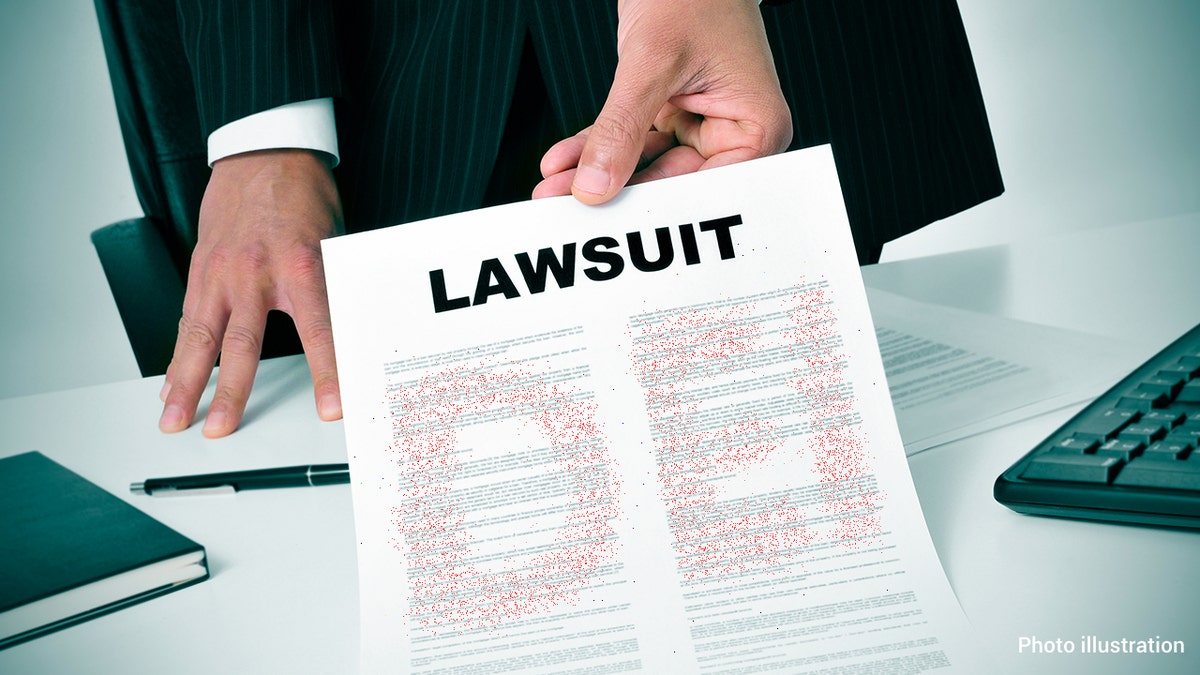
In its lawsuit, AFL chronicled a series of delays, non-responses and incomplete communications following its April 2023 FOIA request. AFL is hoping to obtain a judge’s order requiring the release of the records it is seeking, as well as an index of any withheld material and explanations for why it could not be provided. (Fox News Digital)
CLICK HERE TO GET THE FOX NEWS APP
In its lawsuit, AFL chronicled a series of delays, non-responses and incomplete communications following its April 2023 FOIA request. AFL is hoping to obtain a judge’s order requiring the release of the records it is seeking, as well as an index of any withheld material and explanations for why it could not be provided.
«The last administration’s pervasive directives requiring consideration of immutable characteristics like race, color, and ethnicity — to make healthcare more ‘equitable’ — should concern all Americans,» Scolinos said Tuesday. «AFL is determined to uncover the complete scope of Biden-era DEI policies and will continue to take decisive action to restore colorblind healthcare.»
HHS declined to comment on AFL’s lawsuit.

INTERNACIONAL
Trump says US ‘obliterated’ military targets in strike on key Iranian oil hub: ‘Powerful bombing raids’
NEWYou can now listen to Fox News articles!
President Donald Trump said Friday that the U.S. had carried out a bombing raid on Iran’s Kharg Island, a strategically vital island in the Persian Gulf that serves as the country’s largest oil terminal and a crucial hub for its crude exports.
«Moments ago, at my direction, the United States Central Command executed one of the most powerful bombing raids in the history of the Middle East, and totally obliterated every MILITARY target in Iran’s crown jewel, Kharg Island,» Trump wrote on Truth Social.
The island, located roughly 35 miles off Iran’s Bushehr province in the country’s southwest, is about the size of New York City’s Central Park but carries huge importance for Iran’s economy.
It has a loading capacity of about 7 million barrels per day, and roughly 90% of Iran’s crude oil exports pass through it. Most of those exports are shipped to China and India, underscoring the island’s importance not only to Iran’s energy trade but also to broader global oil markets.
BEFORE-AND-AFTER SATELLITE IMAGERY OFFERS A RARE LOOK AT DAMAGE INSIDE IRAN
Satellite view of Kharg Island, located in the Persian Gulf off the coast of Iran. (Gallo Images/Orbital Horizon/Copernicus Sentinel Data 2024)
That makes Kharg Island one of Iran’s most sensitive and strategically important pieces of infrastructure. Any military action there could have consequences well beyond Iran, raising the risk of disruptions to crude flows, shipping traffic and energy prices across the region.
Trump said the U.S. had deliberately avoided targeting the island’s oil infrastructure, while warning that could change if Iran moved to disrupt shipping through the Strait of Hormuz.
«Our Weapons are the most powerful and sophisticated that the World has ever known but, for reasons of decency, I have chosen NOT to wipe out the Oil Infrastructure on the Island. However, should Iran, or anyone else, do anything to interfere with the Free and Safe Passage of Ships through the Strait of Hormuz, I will immediately reconsider this decision,» Trump added.
THE UNLIKELY TOOL TRUMP IS EYEING TO TACKLE RISING OIL PRICES AMID THE IRAN CONFLICT
The latest revelation comes as the widening conflict in the Middle East rattles global energy markets and raises fresh fears about the security of the Strait of Hormuz, the world’s most important oil choke point.
The Strait of Hormuz, a narrow passage between Iran, the United Arab Emirates and Oman, carries roughly 20 million barrels of oil a day and about one-fifth of the global supply of liquefied natural gas (LNG). When conflict flares in the region, even the threat of disruption can rattle markets because so much of the world’s energy moves through that single corridor.
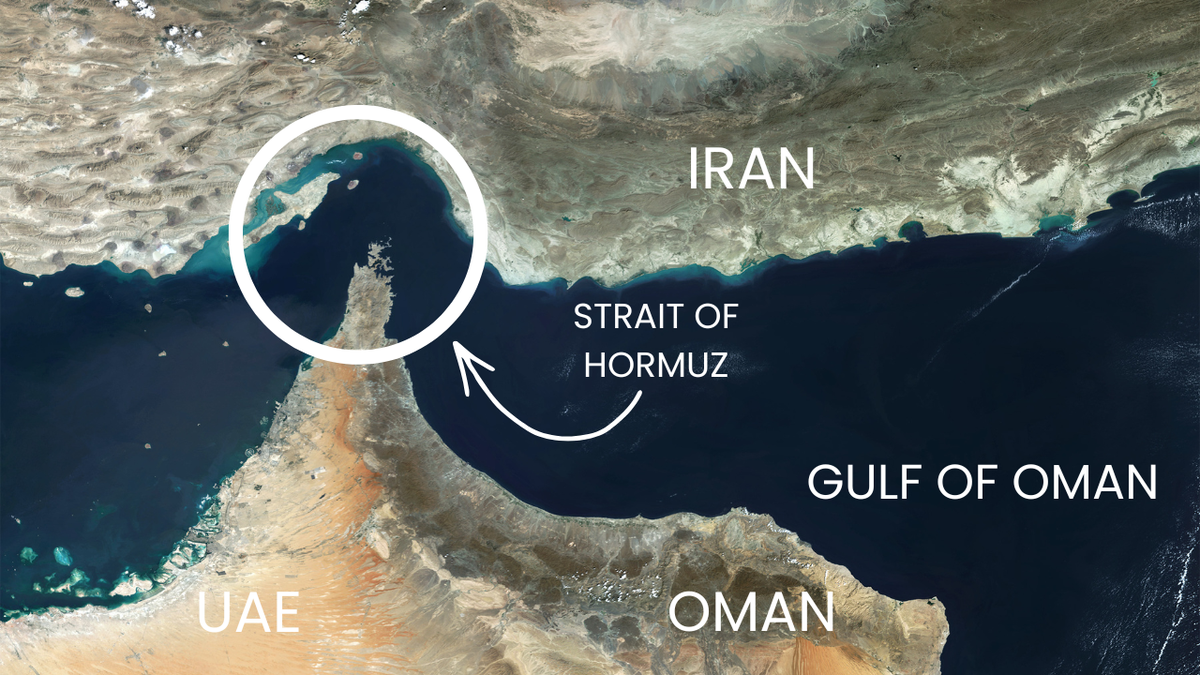
A satellite image shows the Strait of Hormuz, a key maritime passage connecting the Persian Gulf to the Gulf of Oman, vital for global energy supply. (Amanda Macias/Fox News Digital)
That threat is already rippling through energy markets.
This week, benchmark oil prices punched back above $100 a barrel for the first time since 2022, underscoring how quickly geopolitical shocks can ripple through the energy complex.
That jump is showing up at the pump. As oil prices climb, gasoline and diesel prices are rising fast — especially diesel, which can move quickly because it’s tied closely to freight and industrial demand.
On Friday, the national average for regular gasoline rose to about $3.63 a gallon, according to AAA. Diesel prices have also jumped, with the national average up $1.23 to $4.89 a gallon.

A woman pumps gas at a station in New York as prices climb nationwide due to the ongoing conflict in the Middle East. (Lori Van Buren/Albany Times Union via Getty Images)
As energy costs accelerate, the White House is weighing steps to safeguard commercial shipping through the Strait of Hormuz and leaning on emergency stockpiles to cushion the blow.
Before boarding Air Force One for Mar-a-Lago late Friday, Trump told reporters the U.S. Navy may start escorting tankers through the Strait «very soon.»
Asked about the risk of disruptions, Trump said Monday evening he would keep the route open and threatened retaliation if Iran tried to interfere.
CLICK HERE TO DOWNLOAD THE FOX NEWS APP
«I will not allow a terrorist regime to hold the world hostage and attempt to stop the globe’s oil supply. And if Iran does anything to do that, they’ll get hit at a much, much harder level,» Trump said during a news conference in Florida.
«In the long run, oil supplies will be dramatically more secure without the threat of Iranian ships, drones, missiles,» he added.
war with iran,donald trump,iran,politics,world,geopolitics,middle east
INTERNACIONAL
La Armada estadounidense comenzará “pronto” a escoltar barcos a través del Estrecho de Ormuz
El presidente de Estados Unidos, Donald Trump, anunció que el país comenzará a escoltar barcos a través del Estrecho de Ormuz para protegerlos de posibles ataques del régimen iraní. La medida se enmarca en los intentos de la administración estadounidense por reducir los altos precios del petróleo provocados por la guerra en Medio Oriente.
Al ser consultado por periodistas sobre el inicio de los operativos de escolta, Trump afirmó: “Sucederá pronto”.
Respecto a si los objetivos de Estados Unidos e Israel en el conflicto con Irán podrían diferir en cuanto a la finalización de los combates, el mandatario señaló: “Bueno, supongo que pueden ser un poco diferentes, son un país diferente al nuestro”.
Las fuerzas armadas de Estados Unidos realizaron el viernes uno de los bombardeos más intensos en la historia de Medio Oriente contra objetivos militares en la isla de Kharg, en Irán, según confirmó el inquilino de la Casa Blanca.
A través de la red Truth Social, Trump confirmó que la operación, ejecutada por el Comando Central de Estados Unidos (CENTCOM) bajo su orden, “aniquiló por completo todos los objetivos militares en la joya de la corona de Irán, la isla de Kharg”.
En ese sentido, advirtió que, aunque decidió no atacar la infraestructura petrolera de la isla, reconsiderará esa posición si el régimen irnaí o cualquier otro actor, en referencia a los grupos terroristas de la región, impide el tránsito libre y seguro de barcos por el Estrecho de Ormuz.

La isla de Kharg, ubicada a unos 30 kilómetros de la costa iraní, gestiona cerca del 90% de las exportaciones de crudo de Irán, según datos de JP Morgan. Este enclave constituye el principal punto de carga de petróleo para buques y alberga grandes tanques de almacenamiento destinados al mercado internacional.
Analistas citados por la BBC señalaron que, hasta el momento, Estados Unidos e Israel habían evitado atacar esta isla debido al riesgo de consecuencias energéticas irreversibles para la región.
Trump afirmó que los ataques estadounidenses dejaron a las fuerzas iraníes “sin capacidad alguna” para defenderse y sostuvo: “No hay nada que puedan hacer al respecto”. Además, reiteró que Irán “nunca tendrá un arma nuclear ni la capacidad de amenazar a Estados Unidos, Oriente Próximo ni al mundo”. El mandatario pidió a las fuerzas armadas iraníes y a sus aliados deponer las armas para “salvar lo que queda de su país”.
La isla de Kharg representa un enclave estratégico para la economía iraní desde la expansión petrolera de las décadas de 1960 y 1970, debido a la escasa profundidad de otras áreas costeras en la región, lo que dificulta el acceso de superpetroleros.
Según JP Morgan, cualquier incursión militar en Kharg podría detener de inmediato la mayor parte de las exportaciones de crudo iraní y provocar represalias en el estrecho o ataques contra la infraestructura energética contra los países.

Solo 77 barcos cruzaron el Estrecho de Ormuz en marzo, frente a los 1.229 tránsitos registrados en el mismo período del año anterior, según datos de Lloyd’s List Intelligence.
La mayoría de los buques que atravesaron la zona forma parte de la llamada flota fantasma, compuesta por embarcaciones antiguas, en condiciones deficientes, sin seguro adecuado y con propietarios poco identificables, usualmente vinculadas a Rusia e Irán.
Las fuerzas armadas de Irán advirtieron que cualquier ataque contra la infraestructura petrolera y energética del país desencadenará represalias contra instalaciones energéticas de compañías petroleras asociadas con Washington en la región.
El cuartel general central del Ejército en Al-Anbiya afirmó, en un comunicado difundido por medios iraníes, que la infraestructura petrolera y energética de empresas que colaboran con Estados Unidos “sería destruida de inmediato y convertida en un montón de cenizas” en caso de que las instalaciones energéticas de Irán fueran atacadas.
Domestic,Politics,North America,Government / Politics
INTERNACIONAL
EEUU ofreció una recompensa millonaria por información sobre el paradero del ayatollah Mojtaba Khamenei
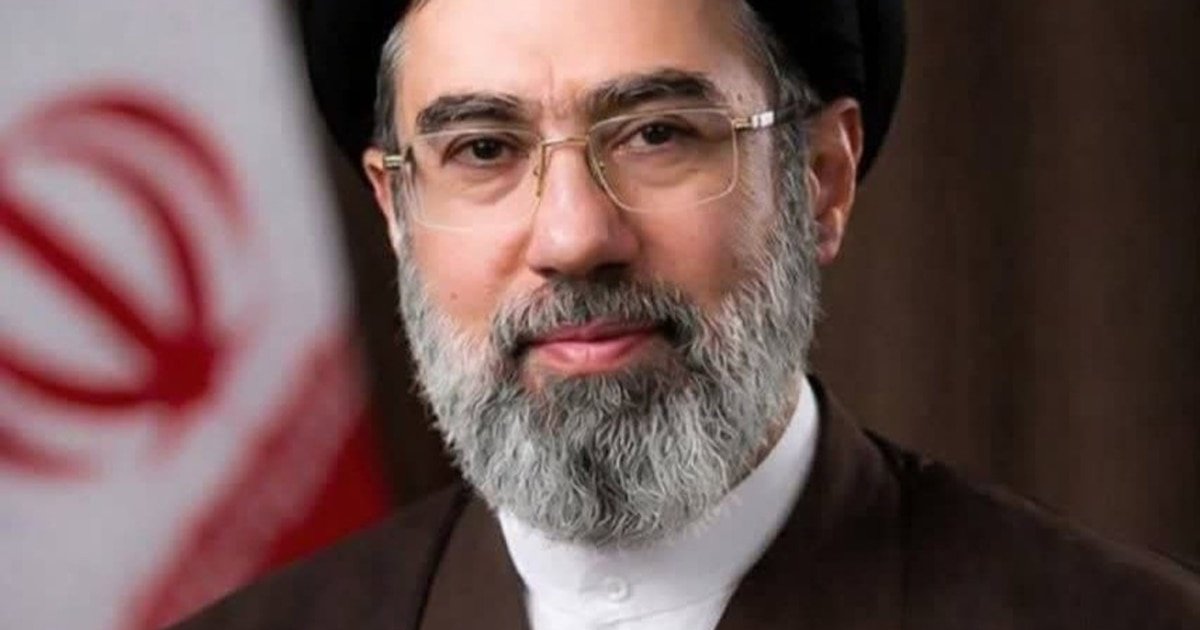
Estados Unidos ofreció una recompensa de hasta 10 millones de dólares por información sobre el paradero del nuevo líder supremo iraní Mojtaba Khamenei, en el marco de una iniciativa del programa Recompensas por la Justicia del Departamento de Estado.
La solicitud incluye datos sobre “líderes terroristas iraníes”, con la posibilidad de reubicación para quienes aporten información relevante.
El Departamento de Estado sostiene que estos individuos “comandan y dirigen diversos elementos del Cuerpo de la Guardia Revolucionaria Islámica de Irán (CGRI), que planifica, organiza y ejecuta actos terroristas en todo el mundo”.
Entre los funcionarios sobre los que Estados Unidos busca información figuran el ministro de Inteligencia, Esmail Khatib; el jefe adjunto del Estado Mayor, Ali Asghar Hejazi; el general de división Yahya Rahim Safavi; el general de brigada Eskandar Momeni; y el secretario del Consejo Supremo, Ali Larijani.
En medio del ofrecimiento millonario por parte de la administración del presidente estadounidense Donald Trump, Israel asegura que está atacando puestos de control de seguridad de la Basij y del Cuerpo de la Guardia Revolucionaria Islámica (IRGC) en Teherán, y sostiene que agentes de inteligencia y observadores colaboran en el terreno.
Israel y Estados Unidos buscan desestabilizar el sistema y el régimen iraní. Analistas militares señalan que resulta casi imposible derrocar por completo un sistema de gobierno únicamente mediante ataques aéreos, y advierten sobre la ampliación del alcance de la operación.

Trump confirmó la muerte del padre de Mojtaba Khamenei, el ex líder supremo iraní Ali Khamenei, mediante un comunicado difundido en Truth Social el pasado 28 de febrero, día el ataque conjunto de Estados Unidos e Israel en Teherán.
En su mensaje, el presidente estadounidense afirmó que la muerte de Khamenei representó “justicia para el pueblo de Irán” y para “todos los grandes estadounidenses y personas de muchos países en el mundo que han sido asesinados o mutilados por Khamenei y su banda de matones sedientos de sangre”. Trump subrayó que la eliminación del líder del régimen constituyó “la mayor oportunidad para que el pueblo iraní recupere su país”.
Estados Unidos e Israel atacaron más de 15.000 objetivos desde el inicio de la guerra con Irán a finales del mes pasado, según indicó este viernes el jefe del Pentágono, Pete Hegseth.
“Entre nuestra fuerza aérea y la de los israelíes, se han atacado más de 15.000 objetivos enemigos. Eso es bastante más de 1.000 al día”, declaró Hegseth en conferencia de prensa.
El funcionario también afirmó Mojtaba Khamenei está “herido y probablemente desfigurado”. “Sabemos que el nuevo supuesto -y no tan supremo- líder está herido y probablemente desfigurado”, puntualizó Hegseth.

En ese sentido, añadió que Khamenei “carece de legitimidad” y hace referencia a la unidad tras “asesinar a decenas de miles de manifestantes”, en alusión a las protestas que comenzaron a finales del año pasado y continuaron hasta el comienzo de la guerra de Estados Unidos e Israel contra Irán, el 28 de febrero.
“Irán tiene cámaras y grabadoras ¿por qué emite un comunicado escrito? Creo que sabemos por qué”, sostuvo Hegseth, quien añadió que Khamenei siente “miedo” y que gran parte de su familia, incluido su padre y anterior líder supremo, ha muerto en los ataques.
En una entrevista con Fox News, Donald Trump fue consultado el jueves sobre la situación de Mojtaba tras su reciente designación como líder supremo de Irán. El presidente estadounidense respondió haciendo hincapié en la salud del líder supremo del régimen: “Creo que está dañado, pero probablemente está vivo de alguna forma”.
Irán,Ayatollah Mojtaba Khamenei,IRGC,Guardia Revolucionaria Islámica,terrorismo,recompensa,Estados Unidos,inteligencia,seguridad,líderes

Gustavo Garzón habla del estreno de la nueva obra que escribió: “Hay partes parecidas a cosas que viví, pero deformadas”

“Lo banco a muerte”: la defensa de Luis Caputo a Manuel Adorni por la polémica por el viaje de su esposa

Trump says US ‘obliterated’ military targets in strike on key Iranian oil hub: ‘Powerful bombing raids’

La Armada estadounidense comenzará “pronto” a escoltar barcos a través del Estrecho de Ormuz

Por qué el atraso de pagos de créditos a familias alcanzó el nivel más alto en 15 años y qué podría ocurrir en 2026

Estudiantes vs. Lanús: formaciones, hora y dónde ver por tv

Muni Seligmann respondió las críticas tras el accidente de su bebé y su viaje a Miami: “Hay que contarlo y naturalizarlo”

El ex novio de Luana de Gran Hermano reveló información sensible sobre su relación: “El bolso tenía plata”

Sorpresa en Gran Hermano tras la expulsión de Carmiña: la reacción de la producción y las dudas sobre su reemplazo

Emanuel Noir, de Ke Personajes, anunció que dejará las redes sociales: “Una búsqueda mayor a la que creí, apareció”

 CHIMENTOS2 días ago
El ex novio de Luana de Gran Hermano reveló información sensible sobre su relación: “El bolso tenía plata”
- CHIMENTOS2 días ago
Sorpresa en Gran Hermano tras la expulsión de Carmiña: la reacción de la producción y las dudas sobre su reemplazo
- CHIMENTOS1 día ago
Emanuel Noir, de Ke Personajes, anunció que dejará las redes sociales: “Una búsqueda mayor a la que creí, apareció”