INTERNACIONAL
Trump’s tariff power grab barrels toward Supreme Court

NEWYou can now listen to Fox News articles!
A federal court fight over President Donald Trump’s authority to unilaterally impose sweeping tariffs on U.S. trading partners is expected to be appealed to the Supreme Court for review, legal experts told Fox News Digital, in a case that has already proved to be a pivotal test of executive branch authority.
At issue in the case is Trump’s ability to use a 1977 emergency law to unilaterally slap steep import duties on a long list of countries doing business with the U.S.
In interviews with Fox News Digital, longtime trade lawyers and lawyers who argued on behalf of plaintiffs in court last week said they expect the ruling from the U.S. Court of Appeals for the Federal Circuit in a matter of «weeks,» or sometime in August or September – in line with the court’s agreement to hear the case on an «expedited» basis.
The fast-track timeline reflects the important question before the court: whether Trump exceeded his authority under the International Emergency Economic Powers Act (IEEPA) when he launched his sweeping «Liberation Day» tariffs.
FEDERAL JUDGES GRILL TRUMP LAWYERS OVER ‘LIBERATION DAY’ TARIFFS ON EVE OF ENFORCEMENT
President Donald Trump, alongside Secretary of Treasury Scott Bessent and then-Secretary of Commerce nominee Howard Lutnick, speaks to the press in the Oval Office of the White House on Feb. 3, 2025. (Jim Watson/AFP via Getty Images)
Importantly, that timing would still allow the Supreme Court to add the case to their docket for the 2025-2026 term, which begins in early October. That could allow them to rule on the matter as early as the end of the year.
Both Trump administration officials and lawyers for the plaintiffs said they plan to appeal the case to the Supreme Court if the lower court does not rule in their favor. And given the questions at the heart of the case, it is widely expected that the high court will take up the case for review.
In the meantime, the impact of Trump’s tariffs remains to be seen.
Legal experts and trade analysts alike said last week’s hearing is unlikely to forestall the broader market uncertainty created by Trump’s tariffs, which remain in force after the appeals court agreed to stay a lower court decision from the U.S. Court of International Trade.
Judges on the three-judge CIT panel in May blocked Trump’s use of IEEPA to stand up his tariffs, ruling unanimously that he did not have «unbounded authority» to impose tariffs under that law.
Thursday’s argument gave little indication as to how the appeals court would rule, plaintiffs and longtime trade attorneys told Fox News Digital, citing the tough questions that the 11 judges on the panel posed for both parties.
TARIFF FIGHT ESCALATES AS TRUMP APPEALS SECOND COURT LOSS

President Donald Trump delivers remarks on tariffs in the Rose Garden of the White House, April 2, 2025. (Reuters/Carlos Barria/File Photo)
Dan Pickard, an attorney specializing in international trade and national security issues at the firm Buchanan Ingersoll & Rooney, said the oral arguments Thursday did not seem indicative of how the 11-judge panel might rule.
«I don’t know if I walked out of that hearing thinking that either the government is going to prevail, or that this is dead on arrival,» Pickard told Fox News Digital. «I think it was more mixed.»
Lawyers for the plaintiffs echoed that assessment – a reflection of the 11 judges on the appeals bench, who had fewer chances to speak up or question the government or plaintiffs during the 45 minutes each had to present their case.
«I want to be very clear that I’m not in any way, shape or form, predicting what the Federal Circuit will do – I leave that for them,» one lawyer for the plaintiffs told reporters after court, adding that the judges, in his view, posed «really tough questions» for both parties.
Oregon Attorney General Dan Rayfield, who helped represent the 12 states suing over the plan, told Fox News Digital they are «optimistic» that, based on the oral arguments, they would see at least a partial win in the case, though he also stressed the ruling and the time frame is fraught with uncertainty.
In the interim, the White House forged ahead with enacting Trump’s tariffs as planned.
Pickard, who has argued many cases before the Court of International Trade and the U.S. Court of Appeals for the Federal Circuit, noted that the oral arguments are not necessarily the best barometer for gauging the court’s next steps – something lawyers for the plaintiffs also stressed after the hearing.
JUDGES V. TRUMP: HERE ARE THE KEY COURT BATTLES HALTING THE WHITE HOUSE AGENDA
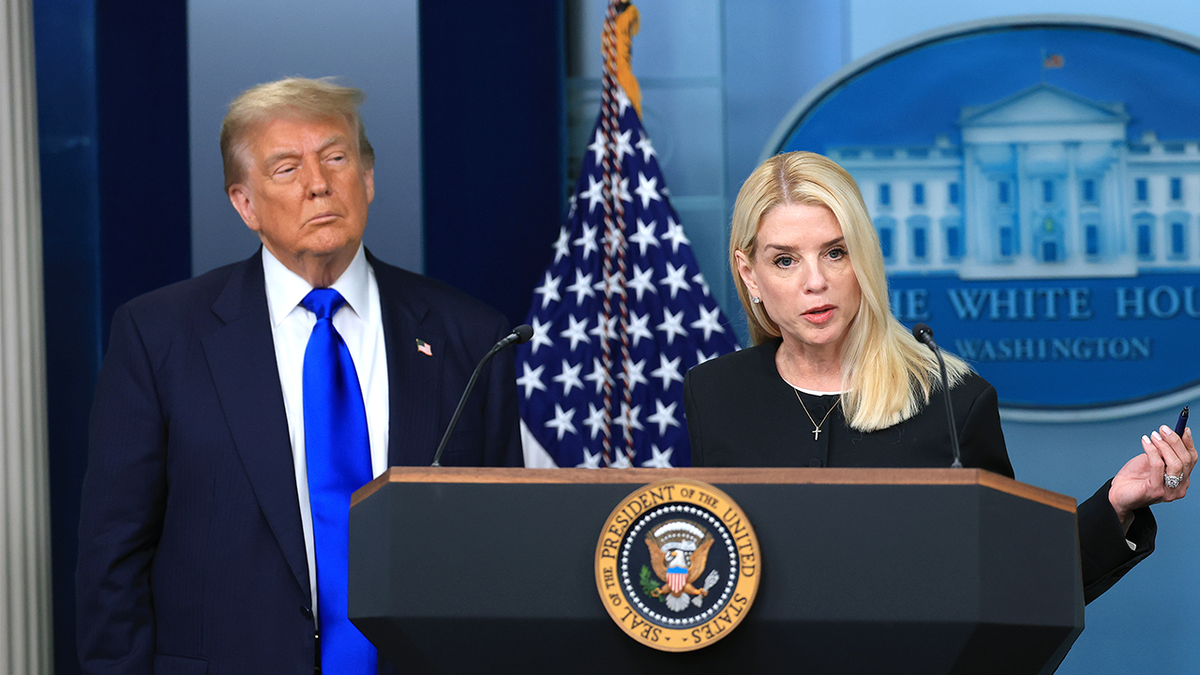
Attorney General Pam Bondi speaks alongside President Trump at the White House after the Supreme Court ruled judges cannot issue nationwide injunctions. (Joe Raedle/Getty Images)
Even if the high court blocks the Trump administration from using IEEPA, they have a range of other trade tools at their disposal, trade lawyers told Fox News.
The Trump administration «has had more of a focus on trade issues than pretty much any other administration in my professional life,» Pickard said.
«And let’s assume, even for the sake of the argument, just hypothetically, that the Supreme Court says this use of IEEPA exceeded your statutory authority. The Trump administration is not going to say, like, ‘All right, well, we’re done. I guess we’re just going to abandon any trade policy.’
«There are going to be additional [trade] tools that had been in the toolbox for long that can be taken out and dusted off,» he said. «There are plenty of other legal authorities for the president.
«I don’t think we’re seeing an end to these issues anytime soon – this is going to continue to be battled out in the courts for a while.»
Both Pickard and Rayfield told Fox News Digital in separate interviews that they expect the appeals court to rule within weeks, not days.
The hearing came after Trump on April 2 announced a 10% baseline tariff on all countries, along with higher, reciprocal tariffs targeting select nations, including China. The measures, he said, were aimed at addressing trade imbalances, reducing deficits with key trading partners, and boosting domestic manufacturing and production.
Ahead of last week’s oral arguments, U.S. Attorney General Pam Bondi said lawyers for the administration would continue to defend the president’s trade agenda in court.
CLICK HERE TO GET THE FOX NEWS APP
Justice Department attorneys «are going to court to defend [Trump’s] tariffs,» she said, describing them as «transforming the global economy, protecting our national security and addressing the consequences of our exploding trade deficit.»
«We will continue to defend the president,» she vowed.
federal courts,donald trump,politics,supreme court,federal judges











INTERNACIONAL
Iran’s drone swarms challenge US air defenses as troops in Middle East face rising threats
NEWYou can now listen to Fox News articles!
Cheap Iranian drone attacks are forcing the Pentagon to rapidly expand layered air defenses in the Middle East, as thousands of U.S. troops stationed across the region face an escalating aerial threat that is testing the limits of traditional missile defenses.
The United Arab Emirates (UAE) said Tuesday its air defenses detected nine ballistic missiles and 35 drones launched by Iran. Eight missiles were intercepted while one fell into the sea.
Of the 35 drones, 26 were shot down and nine crashed on UAE soil, the country said.
IRAN WAR, 11 DAYS IN: US CONTROLS SKIES, OIL SURGES AND THE REGION BRACES FOR WHAT’S NEXT
The engagement highlights how the battlefield is shifting.
Ballistic missiles travel high and fast, allowing long-range interceptors such as the Patriot air defense system and the Terminal High Altitude Area Defense system (THAAD) to engage them predictably. Drone swarms, which Iran increasingly has relied on in recent exchanges, present a different challenge to U.S. forces.
They fly lower, move slower and often arrive in clusters, making them harder to detect and more likely to strain defenses built for high-speed threats.
U.S. troops already have been directly affected by one-way attack drones in the region. In a March 1 strike near Camp Arifjan in Kuwait, six American service members were killed and dozens wounded when an Iranian drone hit a tactical operations center.
Each interception also carries a cost.
High-end missile interceptors can run into the millions of dollars per shot.
Many of the drones they are designed to defeat are far cheaper and produced in large numbers — creating what defense officials have described as a growing «math problem» in modern warfare. The U.S. can end up firing expensive missiles at relatively inexpensive drones, a dynamic that becomes harder to sustain if attacks come in waves.
That imbalance is accelerating a push inside the Pentagon to expand a layered counter-drone strategy — combining short-range interceptors, electronic warfare tools and emerging technologies such as high-energy lasers.
For U.S. forces in the region, larger drone waves increase the odds that defenses are stretched, and that even one drone could reach a base or ship.
This marks the first sustained confrontation in which U.S. forces are facing large-scale, state-backed drone waves as a central feature of the battlefield — forcing commanders to adapt in real time and draw on lessons learned from Ukraine, where mass-produced Shahed drones reshaped air defense strategy.
An Iran-made Shahed-136 unmanned aerial vehicle is displayed at a rally in Azadi (Freedom) Square in Tehran, Iran, Feb. 11, 2026. (Morteza Nikoubazl/NurPhoto/via Getty Images)
Lasers and staying power
Among the new U.S. systems drawing renewed attention are high-energy lasers.
Directed energy is being developed and tested for counter-drone missions and has been used in limited domestic contexts.
U.S. defense officials say lasers offer a potentially significant advantage: Once powered, they can fire repeatedly without expending traditional ammunition.
Unlike missile interceptors, which must be replaced after each launch, a laser system can continue engaging targets as long as sufficient power is available. In theory, that provides sustained defensive capacity during large drone waves.
«It’s a function now of our procurement system, moving those things to the troops as fast as we can,» retired Vice Adm. Kevin Donegan, former commander of U.S. Naval Forces Central Command and the U.S. 5th Fleet, told Fox News Digital.
Donegan acknowledged the technology is real but not yet fully fielded across combat zones.
Scaling high-energy systems requires power generation, integration and infrastructure — all of which take time.
A U.S. official confirmed to Fox News Digital directed energy systems have been tested and employed to counter drones in combat scenarios and the Pentagon «continues to work to scale this capability as quickly as possible.»
Central Command, the U.S. military command tasked with overseeing the Middle East, declined to comment on whether lasers are part of its current drone defense system against Iran.
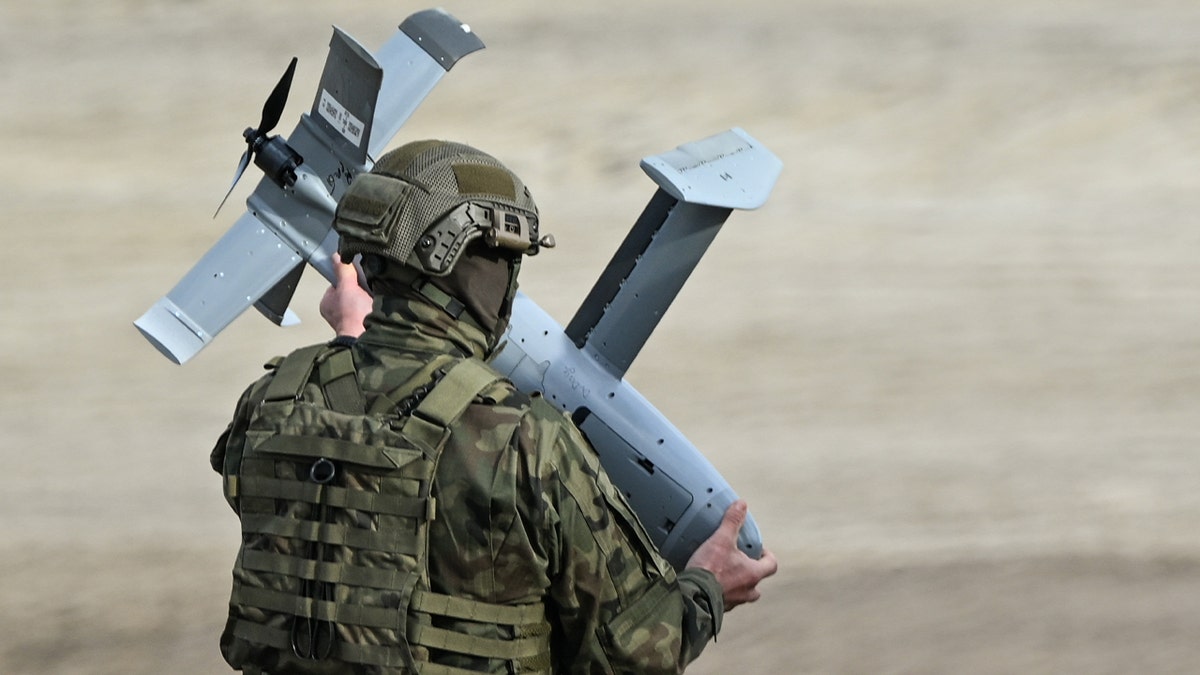
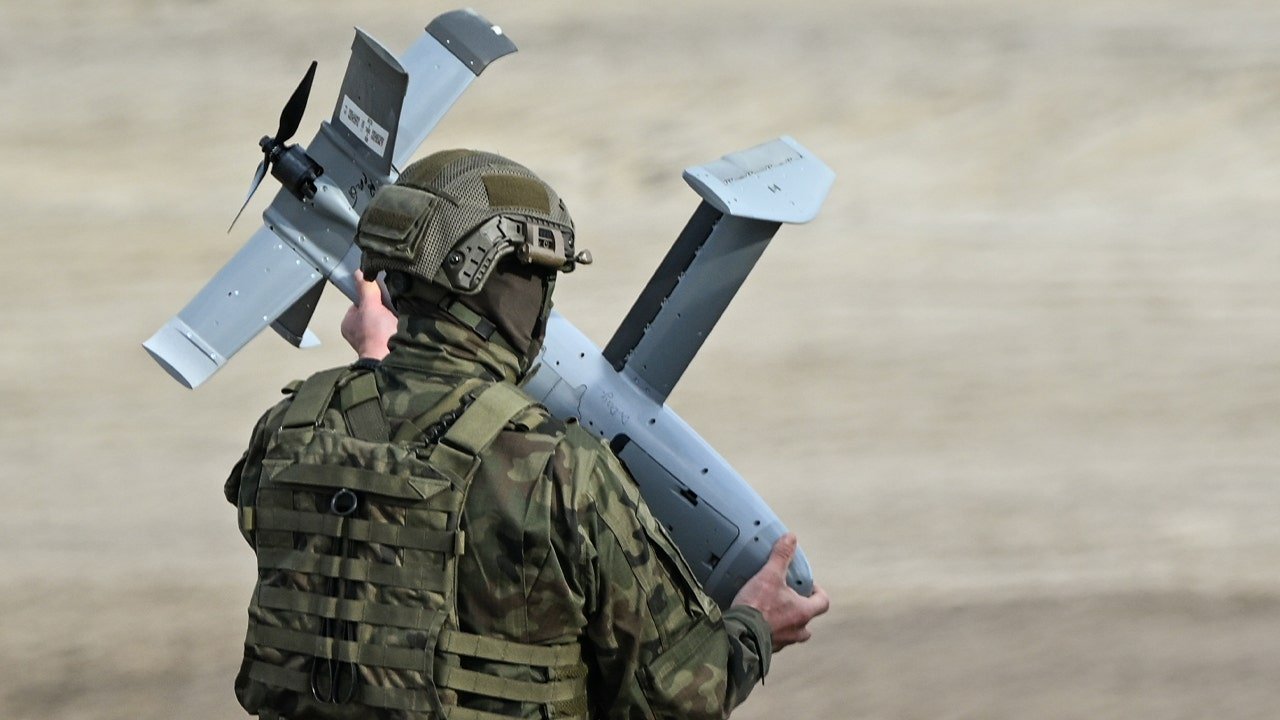
A Polish Army soldier carries an AS3 Surveyor interceptor drone, part of the U.S. «MEROPS» counter-drone system, during a live-fire demonstration at the Deba training grounds in Poland, Nov. 18, 2025. (tur Widak/NurPhoto via Getty Images)
Building defensive depth
While lasers represent a longer-term evolution, commanders are relying on multiple defensive layers today.
The recent deployment of the Merops drone-on-drone interceptor into U.S. Central Command reflects that approach.
Developed by U.S.-backed defense firm Perennial Autonomy, Merops is a mobile counter-drone system that launches small interceptor drones from a truck-mounted platform to disable incoming threats. The system was battle-tested against Shahed drones in Ukraine and fielded in NATO countries such as Poland before being accelerated into the Middle East as drone activity intensified.
A former defense official familiar with counter-drone operations said effective counter-UAS capability depends on overlapping systems integrated around high-value targets rather than reliance on a single interceptor.
«Effective counter-UAS capability is overlapping,» the official said. «No one system solves the drone problem by itself.»
AYATOLLAH’S ARSENAL VS. AMERICAN FIREPOWER: IRAN’S TOP 4 THREATS AND HOW WE FIGHT BACK
U.S. ships in the region rely on short-range missile systems such as the Rolling Airframe Missile and Sea Sparrow, along with the Close-In Weapon System, a radar-guided rapid-fire gun that can engage threats at close range.
Ground-based defenses incorporate radar detection with specialized interceptors such as Raytheon’s Coyote family, designed to defeat small unmanned aircraft. Industry systems like Anduril’s Roadrunner add autonomous interceptor drones capable of engaging airborne threats and, in some configurations, returning for reuse.
Success begins with early detection. Radar systems track low-flying drones and give operators time to choose whether to jam, intercept or destroy incoming threats.
«We’ve built into the weapon systems of all our military platforms that are combatants counter-drone capability,» Donegan said.
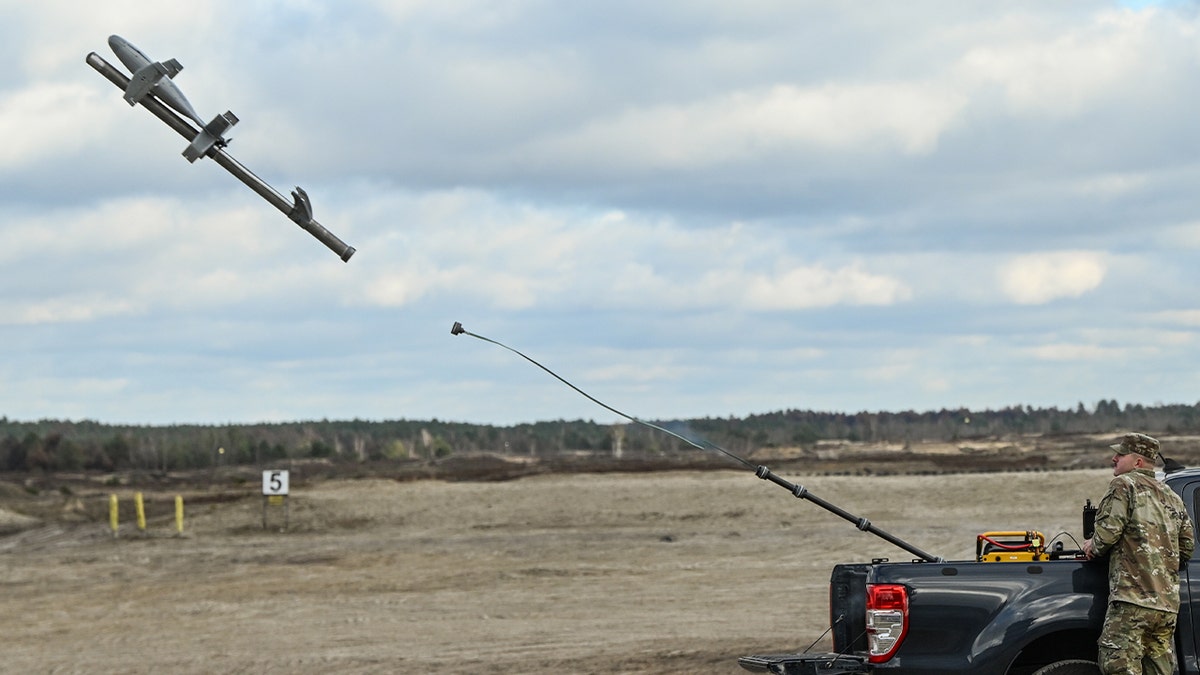
The recent deployment of the Merops drone-on-drone interceptor into U.S. Central Command reflects that approach. (WOJTEK RADWANSKI/AFP via Getty Images)
Lessons from Ukraine
Iran’s Shahed drones were refined during Russia’s war in Ukraine, where cities faced nightly waves of low-cost one-way attack aircraft. There, layered defenses combining short-range interceptors, electronic warfare and evolving technologies proved essential in absorbing sustained attacks.
Ukrainian officials have said some cities faced more than a hundred drones in a single night, forcing air defense crews to remain on alert for hours at a time.
Ukraine has since offered to share its battlefield experience with the United States and Gulf partners as Iranian drone activity expands in the Middle East.
Officials say those lessons are influencing U.S. planning.
«JIATF-401 is accelerating procurement of multiple counter-UAS capabilities across several combatant commands, including sensing radars, kinetic interceptors and other available systems, not just Merops, to expand layered defenses in the U.S. Central Command area of operations,» a U.S. official said.
«Some of the capabilities being surged to support our warfighters reflect lessons we are learning and technology we are transferring from the battlefield in Ukraine.»
CLICK HERE TO DOWNLOAD THE FOX NEWS APP
The result is expanding defensive depth — designed to absorb and defeat a threat that is inexpensive, persistent and increasingly central to modern warfare.
For the troops stationed at those bases and aboard those ships, that layered defense is what stands between a drone intercepted in the sky and one that reaches its target.
As drone production scales and tactics evolve, the contest between low-cost attack drones and layered air defenses playing out in Iran the future of warfare itself.
drones,war with iran,ukraine,conflicts defense
INTERNACIONAL
El caso de la maestra que abusó de su alumno de 12 años, fue presa y terminó casándose con él

Durante años, el nombre de Mary Kay Letourneau ocupó muchos titulares en Estados Unidos luego de que se diera a conocer su polémica historia. Se trataba de una maestra de primaria que abusó sexualmente de uno de sus alumnos, un nene de apenas 12 años. Tiempo más tarde, ambos tuvieron dos hijas y se casaron.
El caso generó una enorme controversia debido a una trama que incluyó un delito grave, una condena judicial, años de prisión y una relación que continuó incluso después de la cárcel.
Leé también: Un perro desenterró un pie humano de un basural y se reveló un macabro crimen que conmocionó a Chile
Mary Katherine Schmitz -conocida como Mary Kay Letourneau- nació el 30 de enero de 1962 en Tustin, Estados Unidos. Era maestra, estaba casada y tenía cuatro hijos.
En 1996, cuando tenía 34 años, trabajaba como docente de sexto grado en una escuela pública Shorewood, en la localidad de Burien. Ese año conoció a uno de sus alumnos, Vili Fualaau, un nene de apenas 12 años.
Según se estableció posteriormente, Letourneau comenzó a abusar sexualmente del menor durante ese período. Esto se prolongó en secreto hasta que la situación salió a la luz de una manera imposible de ocultar: la profesora quedó embarazada.
Además, a principios de 1997, el esposo de la docente descubrió unas cartas de “amor” entre Letourneau y Fualaau, por lo cual decidió abandonar el hogar familiar. Poco después, un familiar del menor que descubrió el hecho realizó la denuncia ante las autoridades.
Rápidamente, el caso se transformó en un escándalo público. En marzo de ese mismo año, Letourneau fue detenida y acusada formalmente por abuso sexual a un menor de edad.
Mientras esperaba que la Justicia dictara su sentencia, dio a luz a la hija que concibió tras los abusos que cometió contra Fualaau. Mary Kay Letourneau durante el juicio. (Foto: Reuters)
En ese momento, la fiscalía del estado de Washington buscaba una condena severa. El pedido era una pena de prisión de seis años y medio. Sin embargo, la defensa logró negociar un acuerdo de culpabilidad que redujo considerablemente la condena.
El acuerdo establecía que Letourneau cumpliría seis meses de cárcel -con tres meses suspendidos- y que, una vez en libertad, tendría prohibido mantener cualquier tipo de contacto con el menor de por vida. Ese punto era central dentro de las condiciones impuestas por la Justicia.
Leé también: Un falso secuestro y 900 días de incertidumbre: el caso de la joven que fue asesinada cuando salió a correr
Letourneau cumplió tres meses en la cárcel y fue liberada bajo las condiciones acordadas con el tribunal. Pero poco tiempo después ocurrió algo que cambió por completo su situación judicial: la policía la encontró dentro de un auto junto a Vili Fualaau, el mismo adolescente con el que tenía prohibido mantener contacto.
El hallazgo implicaba una violación directa del acuerdo judicial que había permitido reducir su condena inicial. Ante esa situación, un juez decidió revocar el acuerdo de culpabilidad que había sido negociado previamente. La consecuencia fue inmediata: se restableció la pena máxima permitida por la ley para el delito, que era de siete años y medio de prisión. Mary Kay Letourneau y Vili Fualaau junto a sus dos hijas, Audrey y Georgia. (Foto: ABC News)
En 1998, Letourneau volvió a la cárcel para cumplir la condena completa. Durante su encarcelamiento ocurrió otro hecho que volvió a llamar la atención del público y de los medios. Ocho meses después de volver a estar tras las rejas, dio a luz a la segunda hija de Fualaau.
La mujer permaneció encarcelada hasta 2004. Tras recuperar su libertad, retomó su relación con Vili y en mayo del año siguiente, ambos decidieron casarse.

Años después, el matrimonio salió a dar entrevistas sobre cómo fue su relación. (Foto: CNN)
Durante los años siguientes, la pareja continuó, crió a las dos hijas que habían tenido y hasta escribieron un libro juntos sobre su historia al que titularon Un solo crimen, el amor. Luego el caso se llevó a la pantalla grande en la película All American Girl: The Mary Kay Letourneau Story.
En distintas entrevistas, Vili Fualaau aseguró que no se consideraba una víctima y que no sentía vergüenza por la relación con Letourneau. Sin embargo, con el paso del tiempo su postura comenzó a cambiar.
En mayo de 2017, después de casi doce años de matrimonio, Fualaau presentó una solicitud de divorcio. Aunque más tarde retiró ese pedido, la relación ya atravesaba una etapa de desgaste.
Finalmente, el matrimonio se terminó en agosto de 2019, cuando la pareja formalizó su divorcio.
Leé también: Desapareció 11 días y lo encontraron en el sótano de su edificio: su padre fue condenado por maltrato
Tras la ruptura, Fualaau reconoció que con el tiempo había comenzado a ver la relación de otra manera. Para mayo de 2020, llegó a considerarla poco saludable, una mirada distinta a la que había sostenido durante años.
Por su parte, Mary Kay Letourneau murió el 6 de julio de 2020, a los 58 años, en su casa cerca de Seattle, como consecuencia de un cáncer contra el cual luchó durante meses.
Estados Unidos, abuso sexual a un menor
INTERNACIONAL
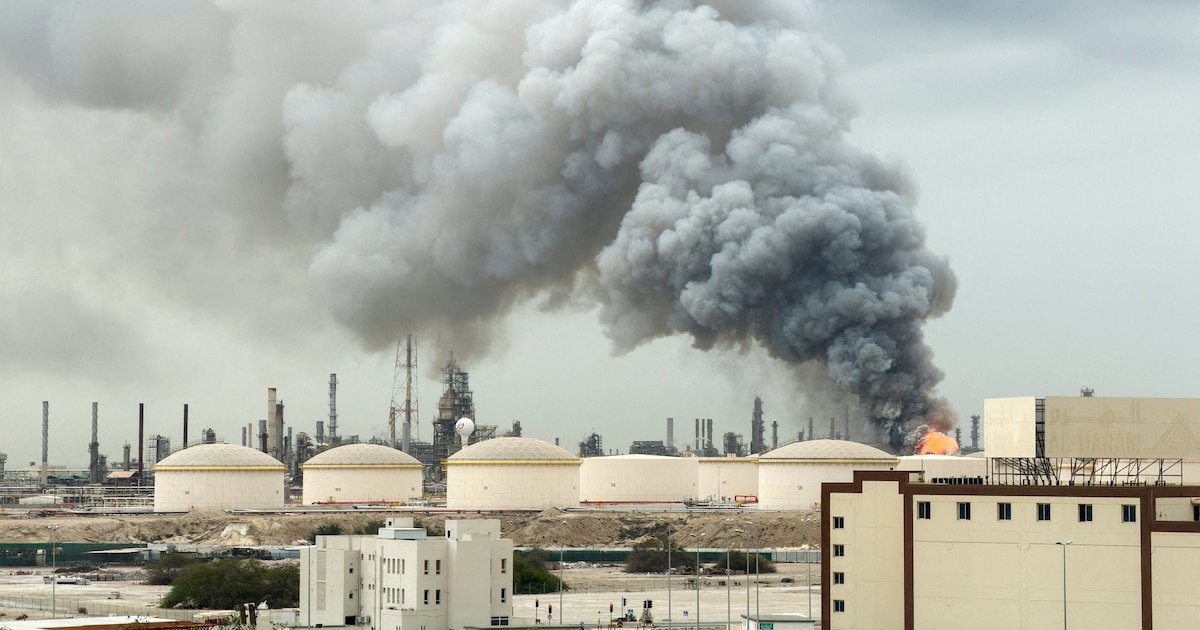
EN VIVO: El régimen de Irán atacó infraestructuras energéticas en el Golfo y los precios del petróleo continúan en alza
El ejército iraní afirmó haber atacado bases militares y servicios de seguridad israelíes
Las autoridades del régimen de Irán informaron el jueves del ataque a bases militares israelíes y la sede del servicio de seguridad Shin Bet, en el decimotercer día del conflicto.
Según un comunicado difundido por la televisión estatal iraní, “las bases aéreas de Palmachim y Ovda del régimen sionista, así como la sede del Shin Bet, fueron atacadas por drones del Ejército de la República Islámica de Irán”.
El sistema de defensa aérea de Corea del Sur ya se utiliza en Medio Oriente
El sistema de defensa aérea surcoreano Cheongung-II está logrando resultados destacados en su primera operación de combate, según afirmó Yu Yong-weon, integrante del comité de defensa nacional de la Asamblea Nacional de Corea del Sur.
Este sistema, desplegado en los Emiratos Árabes Unidos, habría alcanzado una tasa de intercepción del 96% frente a ataques aéreos masivos de Irán, un desempeño que, según el legislador, supera el promedio habitual en escenarios de ataques con múltiples drones y misiles balísticos de trayectorias irregulares.
Hasta la fecha, las dos baterías Cheongung-II instaladas en territorio emiratí lanzaron cerca de 60 misiles interceptores para enfrentar la amenaza. Los Emiratos, además, cuentan con otros sistemas de defensa como los Patriot y THAAD estadounidenses y los Barak de fabricación israelí.
El Cheongung-II, conocido también como Bloque de Misiles Tierra-Aire de Alcance Medio, integra la red de defensa de Corea del Sur y utiliza un radar multifunción con tecnología avanzada de seguimiento y guiado, permitiendo el enfrentamiento simultáneo de varios objetivos.
Israel identificó una nueva ola de misiles procedentes de Irán y llamó a los israelíes a resguardarse

Las Fuerzas de Defensa de Israel informaron la detección de misiles lanzados desde Irán hacia territorio israelí y señalaron que los sistemas de defensa trabajan para interceptar la amenaza. El Comando del Frente Nacional envió alertas y recomendaciones directamente a los teléfonos móviles de quienes se encuentran en las zonas afectadas.
Las autoridades solicitaron a la población que siga las instrucciones: ingresar de inmediato a áreas protegidas tras recibir la advertencia y permanecer allí hasta recibir nuevas indicaciones. Solo se podrá salir de las áreas seguras cuando haya una notificación explícita del Comando del Frente Nacional.
El Ejército israelí enfatizó que la responsabilidad individual y el cumplimiento de estas indicaciones son claves para salvar vidas.
Las FDI destruyeron de un complejo de armas de Hezbollah en el Monte Dov, Líbano
Las Fuerzas de Defensa de Israel (FDI) informaron que efectivos de la Brigada de la Montaña (810) localizaron armas y un punto de lanzamiento empleado por la organización Hezbollah en la zona del Monte Dov, en el sur de Líbano.
La documentación difundida por las FDI muestra las actividades de las tropas en la región, donde se han identificado infraestructuras utilizadas por Hezbollah para preparar ataques contra territorio israelí.
Italia confirmó que su base militar en el Kurdistán iraquí fue atacada

Un misil impactó una base militar italiana en Erbil, según informó el Ministerio de Defensa italiano. “Todos están a salvo”, declaró la cartera.
El ministro de Asuntos Exteriores italiano, Antonio Tajani, compartió detalles sobre la situación actual de sus compatriotas en Kurdistán iraquí y repudió el bombardeo: “Condeno enérgicamente el ataque a la base italiana en Erbil”.
A su vez, llevó tranquilidad a los familiares de los afectados: “Acabo de hablar con el embajador italiano en Irak. Afortunadamente, todos nuestros soldados se encuentran bien y a salvo en el búnker. Les expreso mi solidaridad y gratitud por su servicio diario a la patria”.
Las bolsas de Asia registran bajadas tras un nuevo repunte del precio del petróleo

Las principales bolsas del continente asiático registraban retrocesos este jueves, afectadas por un nuevo repunte en los precios del petróleo y el recrudecimiento del conflicto entre Estados Unidos, Israel e Irán.
Tokio abrió la sesión en negativo ante la preocupación por el suministro de crudo. El índice Nikkei cayó alrededor de un 1,4 % a las 14:15 hora local, a poco más de una hora del cierre. El índice más amplio Topix retrocedió un 1,7%.
Los títulos bancarios y tecnológicos figuraban entre los más castigados, mientras que empresas de defensa, como Mitsubishi Heavy Industries, mostraban subidas.
En Seúl, el referencial Kospi descendió un 0,61% a una hora del cierre, tras dos jornadas previas de alzas. En contraste, el Kosdaq, que agrupa a tecnológicas y firmas de mediana capitalización, avanzaba un 0,07%.
En China continental y Hong Kong, las principales bolsas cedieron hasta un 1,35% al mediodía. El Hang Seng de Hong Kong bajó un 1,23%, arrastrado por descensos en valores tecnológicos, mientras que el índice de referencia de Shanghái perdió un 0,64% (4.106 puntos) y el de Shenzhen un 1,35%.
En Nueva Delhi, el ánimo de los inversores se vio impactado no solo por el aumento del precio del crudo, sino también por la confirmación de que Estados Unidos abrió nuevas investigaciones por presuntas prácticas comerciales desleales contra 16 países, incluido India. El Sensex de la Bolsa de Bombay retrocedió un 1,23%, mientras el Nifty 50 cayó un 1,13%.
Ministro de Exteriores de Israel: “Sólo los iraníes pueden derrocar a la República Islámica”

El ministro de Asuntos Exteriores de Israel, Gideon Saar, declaró que Israel no puede derrocar el sistema gobernante de Irán y que solo el pueblo iraní tiene la capacidad de provocar un cambio de régimen en la República Islámica.
En declaraciones a The Times of Israel, el funcionario sostuvo que los iraníes necesitarían ayuda externa para lograr ese objetivo. “En última instancia, no podemos derrocar al régimen; solo el pueblo iraní puede hacerlo”, afirmó. “Al mismo tiempo, debemos decir que sin ayuda externa no tienen ninguna posibilidad de derrocar al régimen”.
El canciller israelí indicó que existen “grietas visibles” dentro del liderazgo iraní, aunque las figuras de línea dura siguen controlando el gobierno. “Por lo general, este tipo de cosas (como la caída de un régimen) ocurren después de la campaña militar, menos cuando hay una guerra”, añadió.
Saar recalcó que el cambio de régimen en Irán no es un objetivo explícito de Israel, pero que el país busca crear condiciones que puedan posibilitar ese desenlace.
El embajador de EEUU ante la ONU habló sobre la condena a los ataques iraníes en Medio Oriente

Michael Waltz, embajador de Estados Unidos ante la ONU, Mike Waltz, se refirió a la condena del Consejo de Seguridad de la ONU a los ataques de Irán en Medio Oriente y destacó que “muchas de estas naciones del Golfo históricamente mantuvieron una posición neutral en lo que respecta a Irán”.
Waltz señaló: “Se puede ver que la coalición de los Acuerdos de Abraham se mantiene firme y contraataca”. “La estrategia de Irán de sembrar el caos, de intentar tomar a sus vecinos como rehenes, de intentar quebrantar la determinación de la región, ha resultado claramente contraproducente, como lo demuestra esta votación de hoy”, agregó.
La bolsa de India se desploma por el valor del barril de petróleo
Los principales índices bursátiles de India registraron fuertes caídas en la apertura de este jueves, afectados por el repunte del precio del petróleo —que superó los 100 dólares por barril tras nuevos ataques en Medio oriente— y por el anuncio de una investigación comercial de Estados Unidos contra el país asiático.
El índice Sensex de la Bolsa de Bombay, principal referente del mercado indio, se desplomó un 1,23 %, mientras que el Nifty 50, compuesto por las cincuenta compañías de mayor capitalización, perdió un 1,13 %. El descenso fue generalizado en los 16 principales índices sectoriales, e impactó también a las empresas de mediana y pequeña capitalización, que retrocedieron un 1,3 % y un 1,5 %, respectivamente.

Independiente Rivadavia vs. Barracas Central: formaciones, hora y dónde ver por tv

«Si no genera dinero, vamos a despedir a 1000 personas y será tu culpa»: Así ha roto su silencio Jeff Kaplan, ex-director de Overwatch

Lollapalooza Argentina 2026: cómo llegar, ingresos al predio y horarios de cada show

Una nueva causa judicial por corrupción amenaza con sacudir la política entrerriana

El mercado alerta que será cada vez más difícil lograr un IPC que arranque con 0 en el corto plazo

Video: el eufórico festejo de Mbappé desde su palco tras el hat-trick de Valverde ante el City

La cruda confesión de Amalia Granata por el trastorno que sufre su hijo Roque: “Le hicimos estudios y salió que tiene TDAH, dislexia y disgrafia”

Jenny Mavinga angustiada tras una quemadura en Gran Hermano 2026: “¡Ay, me quemó!

El mercado le está corriendo el arco a Caputo y el riesgo país no baja: en la City palpitan medidas

¿Fraude? Robertito Funes Ugarte contó todo sobre el “porro” y el celular dentro de Gran Hermano: “Se dice que les pasan información a los chicos”

 CHIMENTOS3 días ago
Jenny Mavinga angustiada tras una quemadura en Gran Hermano 2026: “¡Ay, me quemó!
- CHIMENTOS1 día ago
Muni Seligmann respondió las críticas tras el accidente de su bebé y su viaje a Miami: “Hay que contarlo y naturalizarlo”
- POLITICA2 días ago
Juan Carlos Schmid deja la conducción de Dragado y Balizamiento después de 33 años