INTERNACIONAL
Fiscal hawks seek millions for home district projects amid government funding debate

NEWYou can now listen to Fox News articles!
House GOP fiscal hawks have requested tens of millions of federal dollars for projects in their home districts for fiscal year 2026, an analysis by Fox News Digital has found.
It’s common practice for congressional lawmakers to request funding for specific community initiatives for the people they represent – measures called «earmarks.» Critics of such funding have often referred to it as «pork,» however.
This coming fiscal year, beginning on Oct. 1, is no different – both Republicans and Democrats have requests totaling over a billion dollars in earmarks so far.
That includes conservatives in the House of Representatives who have been known to criticize what they describe as excessive or bloated government spending.
GOP LAWMAKERS CLASH OVER STRATEGY TO AVERT GOVERNMENT SHUTDOWN CRISIS
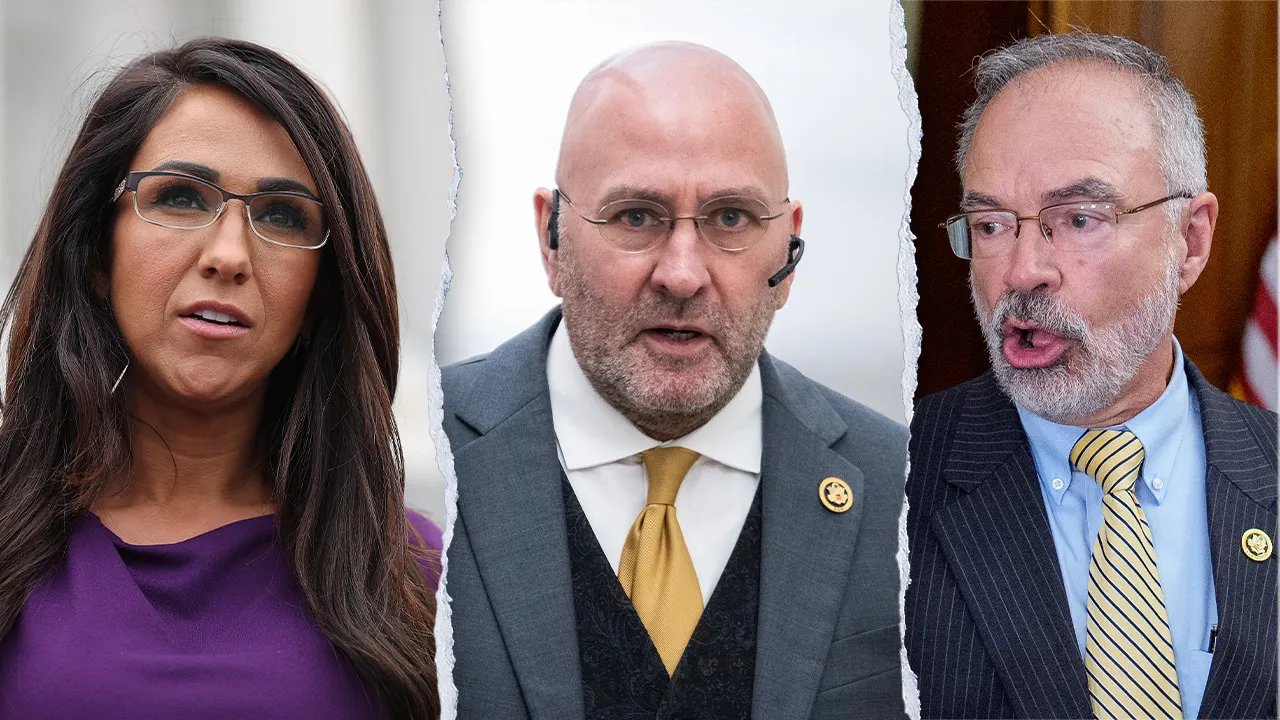
House conservatives like Reps. Lauren Boebert, Clay Higgins, center, and Andy Harris have requested millions for community funding projects in their districts. (Getty Images)
House Freedom Caucus Chair Andy Harris, R-Md., for instance, has been approved for more than $55 million in federal funding for projects in his district.
The figure includes $9 million for the Middle River Fire Company to make improvements and upgrades to its facilities, and $1 million for the development of a Doctor of Veterinary Medicine program at the University of Maryland Eastern Shore.
The majority of Harris’ requests are aimed at rural development in his district and the Army Corps of Engineers. Three earmarks were requested for clean water initiatives.
Harris told Fox News Digital when reached for comment on the funds, «These awards are certified to directly benefit taxpayers in the district—drawing from existing grant programs that are funded annually. It’s far better for elected members of Congress to designate where that money goes than to leave those decisions to unelected federal bureaucrats. There are no additional funds appropriated for Community Project Funding – they all fall within the agency’s appropriation.»
Rep. Tim Burchett, R-Tenn., a self-described deficit hawk, was approved for just over $10 million so far. That includes over $4 million for Flexible Neutron Source, a research tool at the University of Tennessee, and $2 million for veterans housing in Knox County.
LONGTIME BIDEN AIDE SAYS HE STOOD TO EARN UP TO $8M HAD PRESIDENT WON RE-ELECTION
House Freedom Caucus member Rep. Clay Higgins, R-La., was approved for more than $18 million in earmarks – with the largest request being $4,200,000 for the Silicon Bayou Semiconductor Technology Center at the University of Louisiana, Lafayette.
Higgins’ total sum also includes funding for Army Corps of Engineers projects, as well as rural hospital, law enforcement and clean water initiatives.
He also submitted a joint request with House Majority Leader Steve Scalise, R-La., for $131,500,000 toward a levee and floodgate system, called the Morganza to the Gulf of Mexico Project, aimed at storm damage prevention.
Rep. Lauren Boebert, R-Colo., another member of the House Freedom Caucus, got nearly $15 million in community funding projects approved, chiefly aimed at clean water programs and highway infrastructure.
Boebert was vehemently against earmarks when she first came to Congress. Her opinion has changed since then, however, due to Republican-led changes to the process – which she explained in a 2023 op-ed in the Aspen Times.
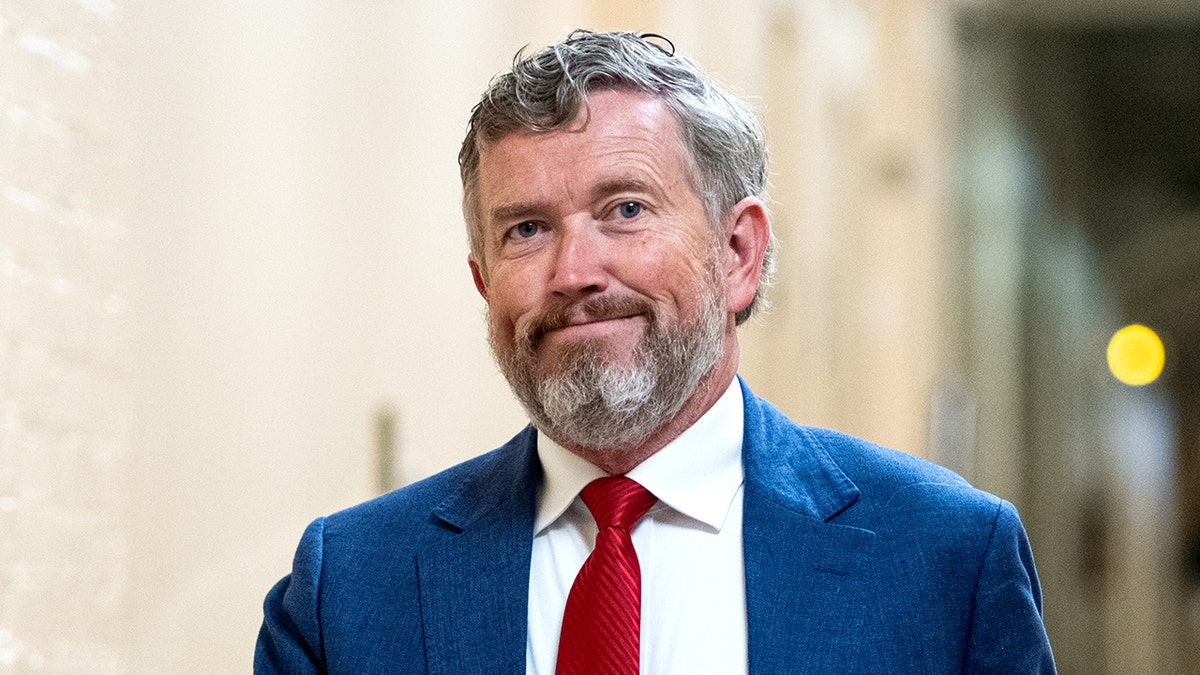
Rep. Thomas Massie got $5 million approved for airport improvements. (Bill Clark/CQ-Roll Call, Inc via Getty Images)
She made a similar argument to Fox News Digital when reached for this story: «I fought for real reforms to the appropriations process in 2023 to make sure my constituents’ tax dollars go to necessary infrastructure projects, not the wasteful and corrupt spending schemes that took place under Nancy Pelosi.»
«My district’s roads are crumbling, and our water keeps getting sent to California, where it’s wasted, because Colorado’s politicians won’t invest in water storage or infrastructure investments. My constituents pay federal taxes just like everyone else, and they should see their dollars benefit their communities instead of being sent to sanctuary cities like Denver,» Boebert said.
Conservative libertarian Rep. Thomas Massie, R-Ky., also got some community funding, though only totaling $5 million approved so far. Massie’s requests so far are all focused on construction and rehabilitation for Cincinnati/Northern Kentucky International Airport.
Massie told Fox News Digital of the funding, «I serve on the Transportation and Infrastructure Committee because I believe the federal government has a legitimate role in transportation infrastructure, and the legislature has the constitutional authority to direct the funding of those projects.»
«In fact, I have voted in the GOP conference more than once to restore congressionally directed spending in the context of transportation infrastructure,» Massie said.
And Rep. Marjorie Taylor Greene, R-Ga., chair of the subcommittee for Delivering on Government Efficiency (DOGE), got nearly $10 million in earmarks approved for her rural-suburban Georgia district.
Those funding requests are largely comprised of infrastructure initiatives, clean water programs, and law enforcement-related projects for Floyd County and other areas.
148 DEMOCRATS BACK NONCITIZEN VOTING IN DC AS GOP RAISES ALARM ABOUT FOREIGN AGENTS
While known as a fiscal hawk, it’s worth noting that the majority of Greene’s criticism of government spending is directed at foreign aid.
Greene said she was glad to be able to provide for her district when reached for comment by Fox News Digital.
«I’m proud to bring federal tax dollars back home to Northwest Georgia – where they belong. My constituents work hard, and for far too long, Washington has sent their money to fund foreign wars, foreign governments and globalist pet projects. When I first got to Congress, I opposed the earmark process because I believed it was a tool of the Swamp. But after seeing how it works today, I’ve realized that if we don’t fight to bring money back to our districts, the money goes elsewhere,» Greene said.
«I’ll never support billions for Ukraine or other endless wars, but I will absolutely fight to secure critical investments in Northwest Georgia, from water systems and sewer expansions to public safety equipment, roads and broadband.»
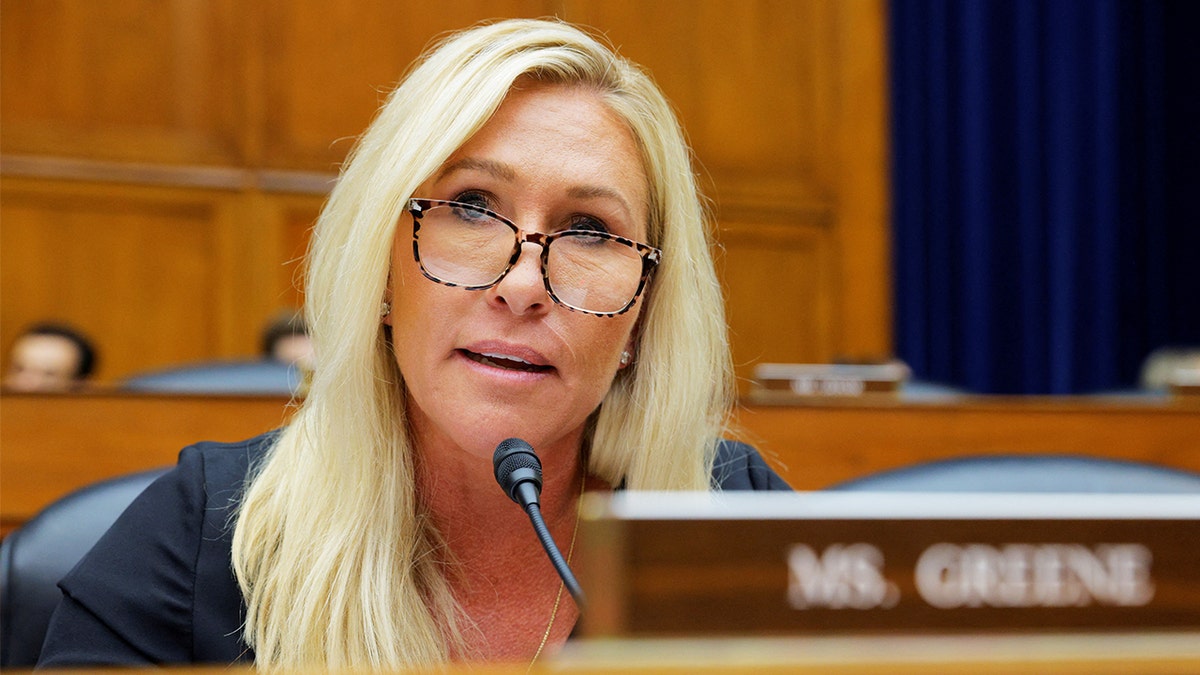
Greene said she was glad to be able to provide for her district. (Reuters/Jim Bourg)
The aforementioned lawmakers’ spending requests are far from an exhaustive total list across the entire House, but fiscal conservatives’ earmark proposals show just how widespread the practice is within Congress – on both sides of the aisle.
Republicans have made some changes to the process as of FY2025, however, to narrow what’s allowed.
CLICK HERE TO GET THE FOX NEWS APP
In an effort to block out funding requests for «woke» or socially progressive policies, GOP appropriators have barred earmarks for most nonprofit organizations.
That move likely saved hundreds of millions of dollars in annual spending, but Democrats decried it as a block on federal funding for LGBT initiatives.
Fox News Digital reached out to spokespeople for Burchett and Higgins for comment but did not receive a response.
house of representatives politics,politics,budget house of representatives politics,government shutdown














La oposición venezolana y organismos de derechos humanos cuestionaron el alcance de la ley de amnistía aprobada el jueves por la Asamblea Nacional y consideraron que la norma dejaría afuera a numerosos presos políticos y exiliados, entre ellos a María Corina Machado.
“Tengo que esperar a tener el texto definitivo. Pero es sumamente excluyente”, dijo a TN el activista Gonzalo Hmiob, vicepresidente de la ONG Foro Penal.
Leé también: La izquierda volvió al poder en Perú: la apuesta por el caos se cuela en las luchas electorales de la derecha
La amnistía podría beneficiar a cientos de presos políticos detenidos en cárceles de todo el país, pero al mismo tiempo podría excluir a opositores como la exiliada premio Nobel de la Paz y a militares condenados.
Uno de sus artículos más cuestionados es precisamente el que excluye “a las personas que se encuentren o puedan ser procesadas o condenadas por promover, instigar, solicitar, invocar, favorecer, facilitar, financiar o participar en acciones armadas o de fuerza contra el pueblo, la soberanía y la integridad territorial de la República Bolivariana de Venezuela por parte de Estados, corporaciones o personas extranjeras”.
Esa fue una de las acusaciones habituales contra la líder opositora y otros dirigentes como Leopoldo López, también en el exilio.
“Advertimos que la ley contempla un injustificable exceso de exclusiones, que no la exigen ni la Constitución ni los instrumentos internacionales. Esto, sin duda, no se corresponde con el espíritu de paz y reconciliación que debería tener una norma de esta naturaleza”, dijo a TN el activista Oscar Murillo, secretario general del Programa Venezolano de Educación Acción en Derechos Humanos (PROVEA).
No está claro tampoco si la amnistía beneficiará a los argentinos Nahuel Gallo, acusado tras su arresto de planear el asesinato de Delcy Rodríguez, y de Germán Giuliani, vinculado a una causa de narcotráfico (un delito que está excluido de la norma), según la versión oficial y que sus familias y el gobierno argentino niegan.
Las liberaciones de más de 600 presos políticos que el Foro Penal estima que aún siguen detenidos podrían concretarse después que la presidenta encargada promulgue la ley, posiblemente este mismo viernes.
“Un paso”
El analista venezolano Andrés Cañizalez, investigador de la Universidad Católica Andrés Bello de Caracas, dijo a TN que la aprobación de la amnistía marca “un paso” hacia adelante.
“No es el paso que quisiera la sociedad democrática nin las ONG de derechos humanos. Es un paso para aliviar un gran sufrimiento que hay en Venezuela”, afirmó.
Los legisladores aprobaron el proyecto de ley de amnistía en la Asamblea Nacional en Caracas, Venezuela, este jueves 12 de febrero de 2026. (Foto: Cristian Hernández/AP)
Pero la dirigencia opositora cuestionó varios artículos, en especial las exclusiones de la ley.
“Es una situación que crea muchísima incertidumbre. Hay que seguir insistiendo y continuar la resistencia que es algo absolutamente pacífico y a lo que ellos no están acostumbrados”, dijo a TN la exprecandidata presidencial Corina Yoris, muy cercana a Machado.
Leé también: “Un shock total”: cómo se vive en el Reino Unido la libertad bajo investigación del príncipe Andrés
Además, la dirigente opositora dijo que “no se cumplen los estándares de una ley de amnistía” y afirmó que ”no contempla la reparación de las víctimas».
“La ley de amnistía tendría que acogerse a la justicia transicional como establecen los estándares de la ONU. Son muy graves las omisiones de la ley y el deseo de pasar ´agachado´ y meter la manera de perdonar los crímenes que ellos han cometido. Es muy fuerte», afirmó.
Qué dicen los organismos de derechos humanos
Antonio González Plessmann, co-director del grupo defensor de derechos humanos Surgentes, dijo a TN que esta “es una mala ley, porque deja a muchas personas por fuera, pero sirve para mitigar daños y avanzar”.
Según afirmó, “la ley señala de manera taxativa un conjunto de hechos que son insuficientes para proteger centenares de casos de personas judicializadas por razones políticas”.
Entre estos puntos, mencionó detenciones por reclamar derechos laborales, expresar críticas, denunciar hechos de corrupción y luchar por los derechos de los campesinos.
Leé también: Trump aseguró que Obama reveló información clasificada cuando habló de la existencia de extraterrestres
“Mención aparte merecen los funcionarios militares acusados de cometer delitos militares, que fueron explícitamente excluidos”, apuntó.
Además, señaló: “La Ley crea una Comisión de seguimiento (sin participación social) que tendrá la potestad de sugerir casos no previstos que puedan ser amnistiados, generando con ello alta discrecionalidad”.
Para el activista, “la inmensa mayoría de las personas amnistiadas no cometieron ningún delito”. Por ello, dijo que era necesario “un texto que señalara que ser beneficiario de la amnistía no implica el reconocimiento de ningún delito o falta; ni inhibe la posibilidad de exigir una reparación integral por la violación a sus derechos humanos en el marco de los procesos de judicialización, detención o sanciones administrativas que sufrieron”.
“Aún con todo estos defectos, la Ley sirve para extinguir la acción penal en cientos de casos”, indicó.
Oscar Murillo, de PROVEA, aseguró: “Antes y ahora con esta ley, vamos a seguir exigiendo la liberación plena, incondicional e inmediata de todas las personas privadas arbitrariamente de libertad por razones políticas”.
“Asimismo, planteamos que deben abordarse con carácter de urgencia temas como la derogación o declaratoria de nulidad de leyes o normas utilizadas para la criminalización”, en implícita alusión a la llamada Ley del Odio que el chavismo prometió reformular, concluyó.
Venezuela, amnistia

NEWYou can now listen to Fox News articles!
For weeks, the U.S. military has quietly amassed what President Donald Trump has described as an «armada» in Iran’s backyard. Mapped out across the Persian Gulf and beyond, the deployment tells its own story — one of calculated pressure backed by credible capability.
The latest signal of escalation is the movement of the world’s largest aircraft carrier, the U.S. Navy’s USS Gerald R. Ford, and its strike group from the Caribbean toward the Middle East.
The buildup coincides with indirect negotiations between Washington and Tehran over Iran’s disputed nuclear program. Trump has warned that the regime must fully dismantle its nuclear infrastructure — or face consequences.
THE WORLD’S TOP NUCLEAR POWERS HAVE NO ARSENAL LIMITS, HERE ARE THE COUNTRIES WITH NUKES
President Donald Trump has demanded that the Iranian regime dismantle its nuclear weapons program. (Andrew Caballero-Reynolds/AFP/Getty Images)
At the heart of America’s force projection is another carrier strike group: the USS Abraham Lincoln — a mobile fortress at sea, guarded by destroyers and equipped to unleash precision strikes at a moment’s notice. On deck, F-35 fighters and F/A-18 attack aircraft sit within range of dozens of key Iranian military and nuclear targets.
Meanwhile, in the Eastern Mediterranean, the destroyers USS Bulkeley and USS Roosevelt provide additional strike capability and missile defense coverage — and could potentially assist Israel in defending against any Iranian counterattack.
WORLD’S LARGEST AIRCRAFT CARRIER HEADS TO MIDDLE EAST AS IRAN NUCLEAR TENSIONS SPIKE DRAMATICALLY
Farther south, in the Red Sea, the USS Delbert B. Black adds another layer of firepower along one of the world’s most important shipping lanes. The Red Sea links the Mediterranean to the Indian Ocean through the Suez Canal, a corridor that carries a significant share of global trade and energy supplies.
A U.S. destroyer there not only protects commercial traffic but also gives Washington the flexibility to respond quickly to threats moving between the Middle East and Europe.
Even closer to Iran’s coastline, in the Persian Gulf and the Strait of Hormuz, the USS McFaul and USS Mitscher are operating in one of the most strategically sensitive waterways on the planet. Roughly a fifth of the world’s oil passes through the Strait of Hormuz each day. Their presence signals that the U.S. can both defend that vital choke point and, if necessary, strike Iranian targets from close range.
IRAN DRAWS MISSILE RED LINE AS ANALYSTS WARN TEHRAN IS STALLING US TALKS

Alongside the warships in the region are advanced aircraft such as the F-35 fighter, a jet designed to slip past air defenses and hit targets with precision. (Cpl. Isaac Cantrell/U.S. Marine Corps)
Beyond naval forces, U.S. air power is spread across multiple Middle Eastern bases, giving commanders the ability to strike, defend and sustain operations quickly.
Several types of combat aircraft are operating from regional bases, including F-15s, F-16s and the radar-evading F-35. The A-10 specializes in close-air support missions against armored threats.
Those fighters are backed by a network of support aircraft. KC-135 and KC-46 tankers refuel jets midair, allowing them to fly farther and stay aloft longer. EA-18G electronic warfare aircraft can jam enemy radar and communications. E-3 Sentry aircraft serve as airborne command centers, tracking threats across wide areas. P-8 Poseidon planes patrol and monitor maritime activity.
CLICK HERE TO DOWNLOAD THE FOX NEWS APP
Additionally, heavy transports — including C-5 Galaxy and C-17 Globemaster aircraft — move troops and equipment, while MQ-9 Reaper drones provide surveillance and can carry precision weapons. The assets give U.S. commanders flexibility to operate across air, sea and land.
Taken together, the air and naval deployments create overlapping strike capability, missile defense coverage and control over major maritime routes. For Iran, it means U.S. forces are not concentrated in a single vulnerable location — they are distributed, layered and positioned to operate from multiple directions at once.
iran,middle east,donald trump,white house,nuclear proliferation,national security
INTERNACIONAL
“Cumbres borrascosas”: por qué Joyce Carol Oates no enseñaría la novela a sus estudiantes

“Los comentarios sobre Wuthering Heights resultan tan tristes. Es evidente que muchos, la mayoría, solo han leído la primera parte y no la segunda; la novela es de una ambición enorme porque dramatiza un arco de experiencia que en realidad abarca décadas”, publicó Joyce Carol Oates —autora estadounidense referente y activa usuaria de X—, reabriendo el debate en torno a la polémica por Cumbres borrascosas tras el estreno de la versión cinematográfica dirigida por Emerald Fennel. La discusión, centrada en el legado de Emily Brontë -autora de la novela- ganó impulso en redes sociales, al reunir un agudo cruce generacional sobre la recepción de los clásicos del siglo XIX.

Cumbres borrascosas
eBook
Oates identifica una distancia radical entre la experiencia lectora actual y la que requiere una obra como Cumbres borrascosas.Por eso, dijo, le resultaban tristres los comentarios. La autora de Blonde, Mamá y Memorias de una viuda habló de cómo fue, en su momento, el debut de Emily Brontë: “Es un logro para una novelista que publica por primera vez, igual que Jane Eyre de la hermana de Emily, Charlotte Brontë”, compartió Oates en X.
Oates reflexionó acerca de la viabilidad, hoy, de conectar con la literatura del siglo XIX: “Quizá se ha vuelto imposible en el siglo XXI para los lectores asimilar una obra del siglo XIX; como profesora de literatura, creo que no intentaría ‘enseñarla’ hoy salvo a estudiantes universitarios muy interesados en literatura, quienes no tendrían dificultades para comprenderla”, agregó en la misma red social.
Al recordar su experiencia escolar, Joyce Carol Oates comparó su formación con el clima educativo actual: “Resulta desconcertante, al mirar estas publicaciones sobre Cumbres borrascosas, que en nuestros institutos de Williamsville, Nueva York —escuelas públicas reconocidas por su enfoque humanístico—, los profesores realmente enseñaban a las Brontë, Dostoyevski, Thoreau y muchos otros autores cuyos libros probablemente hoy se considerarían demasiado exigentes y se descartarían como ‘basura’”, relató Oates en X.

Añadió que los estudiantes leyeron esos libros y aprendieron mucho, igual que los estadounidenses del siglo XIX, quienes “escribían cartas tan elocuentes entre ellos”, destacó Oates.
En referencia a la nueva película, Oates apuntó en X la posibilidad, nunca realizada, de una lectura renovadora: “Sería emocionante ver una interpretación radicalmente nueva de Cumbres borrascosas en la que Heathcliff sea, o pueda ser, el hijo no reconocido del terrateniente Earnshaw: un heredero de la nobleza británica de piel oscura, marginado”, argumentó la autora.
Contrastó dicha posibilidad con el enfoque de la versión dirigida por Fennel: “Pero la nueva película, a juzgar por las críticas —algunas difundidas en medios de cine y portales de reseñas especializados—, parece ser simplemente un romance apasionado entre personajes blancos, lo cual puede ser bueno para la taquilla, aunque no resulta interesante en otros sentidos”, añadió Oates en la plataforma.
Joyce Carol Oates ya había abordado, en una publicación realizada en X en 2024, el impacto de las redes sociales sobre la imaginación y creatividad, dando contexto al universo de las Brontë: “¿Y si las hermanas Brontë hubieran tenido TikTok? Tan solitarias e incomunicadas en la rectoría junto al cementerio, solo podían contarse historias entre ellas, que plasmaron en libros en miniatura de los cuales nacieron años después Cumbres borrascosas y el héroe romántico Rochester”.

Cuestionó el rol de las plataformas digitales en la vida creativa: “En el corto plazo, las redes sociales fascinan; a largo plazo, secan la imaginación y debilitan el alma”, afirmó Oates en la misma red social.
En mensajes previos, la autora evocó la escritura de Mary Shelley: “Releyendo Frankenstein; o, el moderno Prometeo de Mary Shelley. Solo tenía dieciocho años cuando empezó a escribirlo, diecinueve cuando lo terminó, en una especie de trance de inspiración y concentración. Un logro, como Cumbres borrascosas de Emily Brontë: primeras novelas”.
A modo de ironía sobre la corrección contemporánea, escribió en 2016: “‘Withering Heights’, (Cumbres marchitas) corrección moderna de Wuthering Heights. Menos mal que Emily Brontë no contó con la ayuda del autocorrector”, ironizó Oates en Twitter.

Finalmente, dejó planteada una observación sobre la diferencia entre Brontë y Jane Austen: “Cumbres borrascosas es la versión bad-boy-Byroniana de todas las novelas de Jane Austen, con sus damas y caballeros elegantes”, afirmó Oates, estableciendo un contraste provocador entre dos tradiciones narrativas inglesas: mientras las novelas de Jane Austen suelen centrarse en relaciones atravesadas por normas sociales, ironía y códigos de cortesía dentro de un mundo ordenado, Cumbres borrascosas de Emily Brontë lleva el amor y el conflicto a un terreno mucho más oscuro, pasional y desbordado, encarnado en la figura casi salvaje de Heathcliff; al decir “bad-boy-Byroniana”, Oates alude al arquetipo romántico del héroe atormentado y rebelde, sugiriendo que la novela de Brontë sería como una versión extrema, tormentosa y emocionalmente violenta de las historias de amor socialmente reguladas que asociamos con Austen.
cine,Jacob Elordi,Margot Robbie,Emerald Fennell,Saltburn,película,actores,director,Hollywood,drama

Dólar hoy en vivo: a cuánto operan todas las cotizaciones minuto a minuto este viernes 20 de febrero

¿Qué pasará con María Corina Machado en Venezuela?

El desgarrador último mensaje que Eric Dane le dejó a sus hijas antes de morir a los 53 años: el sueño que no pudo cumplir

Manuel Pellegrini bancó a Matías Almeyda, DT de la contra, tras conocerse su sanción

Los movimientos de los gobernadores en la votación de la reforma laboral

Impulsado por el avance de la reforma laboral, el Gobierno llamó a dos reuniones clave para avanzar con nuevos proyectos en el Congreso

Reforma laboral bomba: menos indemnización, más horas y despidos más fáciles — el cambio que puede sacudir el empleo en Argentina

Cristian Ritondo: “Vamos a apoyar la ley de modernización laboral, pero no el régimen de licencias por enfermedad”

El dólar no sólo cae en la Argentina: qué pasa con otras monedas emergentes y cuáles son las causas

Tras el anuncio de la CGT, también habrá paro total de los medios de transporte de pasajeros en el país

 POLITICA3 días ago
Reforma laboral bomba: menos indemnización, más horas y despidos más fáciles — el cambio que puede sacudir el empleo en Argentina
- ECONOMIA2 días ago
Ayuda Escolar Anual: a cuánto asciende, donde se tramita y quien puede cobrarla
- POLITICA3 días ago
El Gobierno endurece las medidas de seguridad y control en la marcha prevista contra la reforma laboral en el Congreso