INTERNACIONAL
Cayó la “diosa de la riqueza” en Londres por una estafa multimillonaria con bitcoins


La Justicia británica condenó a Zhimin Qian, apodada la “diosa de la riqueza”, por liderar una de las mayores estafas con criptomonedas de la historia. La Policía Metropolitana de Londres logró recuperar 61.000 bitcoins, valuados en más de 6.700 millones de dólares, en lo que ya es considerado el mayor decomiso de criptomonedas del mundo.
La sentencia se conoció este lunes en el Tribunal de la Corona de Southwark, donde Qian admitió haber adquirido y poseído bitcoin de manera ilegal. La investigación, que duró siete años y cruzó fronteras, destapó una red global de lavado de dinero que arrancó con una alerta sobre la transferencia de activos delictivos, según indicó la BBC.
Leé también: Video: atraparon a un caimán que merodeaba en un local de comidas y le hicieron un bozal con cinta
Cómo fue la estafa que sacudió a China y al mundo
Entre 2014 y 2017, Zhimin Qian encabezó una estafa masiva en China que engañó a más de 128.000 personas. Los fondos robados fueron convertidos en bitcoin y ocultados en una compleja red de operaciones internacionales.
La policía británica detalló que Qian huyó de China con documentos falsos y se instaló en Reino Unido, donde intentó blanquear el dinero comprando propiedades. Durante años, logró evadir la justicia hasta que fue arrestada tras una investigación que involucró a equipos policiales de varios países.
El lunes también se supo que Seng Hok Ling, ciudadano malasio de 47 años, se declaró culpable de participar en el lavado de dinero. Según la acusación, Ling operó con criptomonedas en nombre de Qian, “sabiendo o sospechando que sus acciones facilitarían la adquisición o el control de bienes delictivos por parte de un tercero”. Seng Hok Ling, uno de los cómplices de la criptoestafa. (Foto: Policía Metropolitana de Londres).
El rol de los cómplices y el destino de los fondos
La operación criminal contó con la ayuda de Jian Wen, una empleada de un restaurante chino en Londres, que fue condenada a seis años y ocho meses de prisión el año pasado. Wen pasó de vivir sobre el local a mudarse a una mansión en el norte de Londres y compró propiedades en Dubai por más de 670 mil dólares. La policía le confiscó más de 400 millones de dólares en bitcoin.
Además, el martes, el tribunal inició el proceso para confiscar más de 21 millones de dólares del control de Ling, aunque la cifra podría ajustarse según la cotización de las criptomonedas al momento de la sentencia, prevista para noviembre.
Algunos informes sugieren que el gobierno británico podría intentar retener parte de los fondos incautados, aunque todavía no hay una decisión oficial.
Leé también: Un influencer estrelló un helicóptero ultraligero y grabó su muerte en una transmisión en vivo
Quién es la “diosa de la riqueza” y cómo operaba la red
En China, Zhimin Qian era conocida como la “diosa de la riqueza”. Según medios locales, la mayoría de las víctimas eran personas de entre 50 y 75 años, que invirtieron desde cientos de miles hasta decenas de millones de yuanes en los planes que ella promovía. Empresarios, empleados bancarios y hasta miembros del poder judicial cayeron en la trampa, muchas veces alentados por amigos o familiares.
El fiscal jefe adjunto de la Corona, Robin Weyell, advirtió que “el bitcoin y otras criptomonedas son cada vez más utilizadas por la delincuencia organizada para ocultar y transferir activos, de modo que los estafadores puedan disfrutar de los beneficios de su conducta delictiva”.
El impacto global y la respuesta de las autoridades
La condena de Qian marca el cierre de años de trabajo conjunto entre la policía británica y equipos de China. El jefe del Comando de Delitos Económicos y Cibernéticos de la Policía Metropolitana, Will Lyne, destacó que se trató de una investigación “compleja y dedicada”.

Zhimin Qian estafó a cientos de personas por más de 6.000 millones de dólares. (Foto: Policía Metropolitana de Londres).
El ministro de Seguridad del Reino Unido, Dan Jarvis, aseguró que el fallo envía “una clara señal” de que el país no es un “refugio seguro” para los delincuentes. “El blanqueo de capitales erosiona la confianza, socava nuestra economía y alimenta el auge de la delincuencia organizada grave”, remarcó.
Mientras tanto, el abogado de Qian, Roger Sahota, sostuvo que su clienta espera que la condena sirva para tranquilizar a los inversores y garantizar que, gracias al aumento del valor de las criptomonedas, hay fondos suficientes para compensar las pérdidas.
La sentencia definitiva para Zhimin Qian y Seng Hok Ling se conocerá el 10 de noviembre, en una audiencia que podría marcar un antes y un después en la lucha contra el crimen financiero global.
estafa, criptomonedas, BitCoin












INTERNACIONAL
Cómo las noticias falsas e imágenes creadas con IA multiplicaron el pánico tras la muerte del capo más poderoso de México

INTERNACIONAL
Biden-appointed judge who slapped down Trump deportation policy previously rebuked by SCOTUS
NEWYou can now listen to Fox News articles!
A federal judge appointed by former President Joe Biden on Thursday again ruled against the Trump administration’s third-country deportation policy, months after the Supreme Court blocked his earlier decision and rebuked him in a rare follow-up order.
The Supreme Court not only stayed Boston-based Judge Brian Murphy’s injunction over the same deportation policy in a 6-3 order last June, but the high court followed up with a second 7-2 order a week later admonishing the judge for flouting its decision. Murphy’s latest ruling is also likely to land before the justices, setting up a fresh test of the judge’s decisions in the high-stakes case.
Murphy, who was confirmed by the Senate along party lines, had issued a sweeping 81-page decision on Thursday finding that the Department of Homeland Security’s process for deporting migrants to third countries (countries that are not specified in the migrants’ removal orders) was unlawful because it violated the migrants’ due process by not giving them enough time to raise fears that they could be tortured in the country they are sent to.
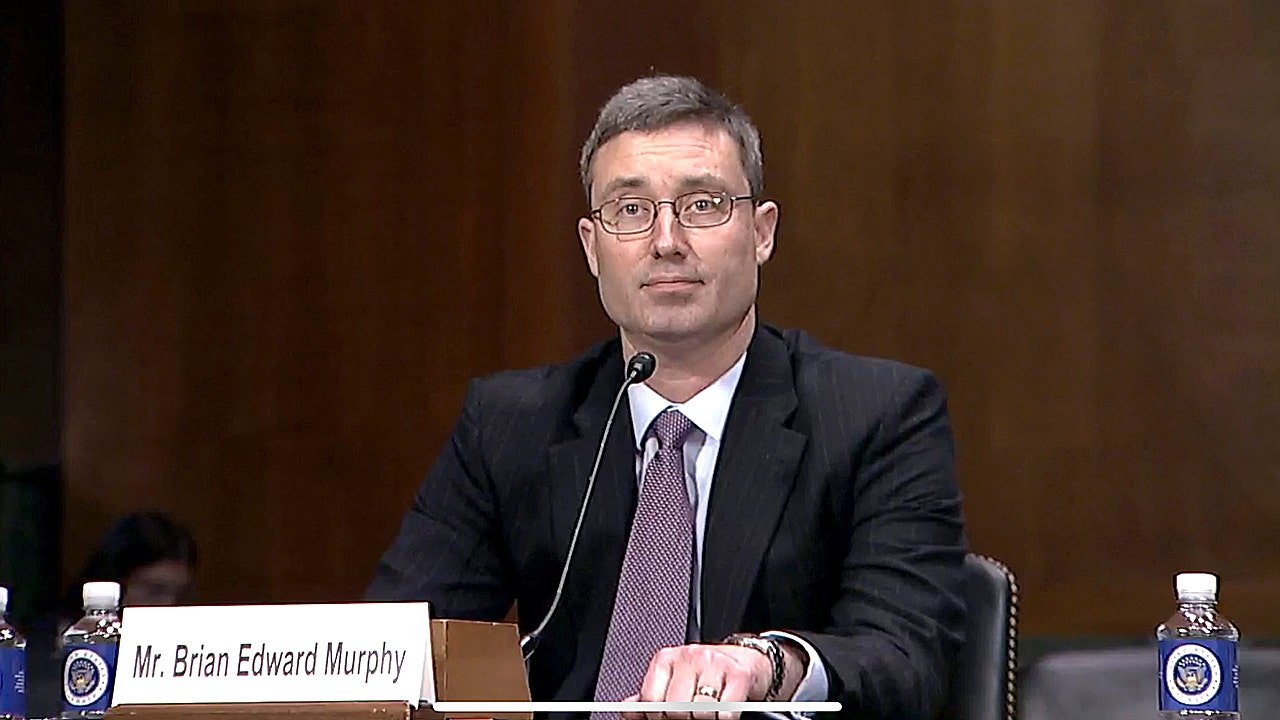
Judge Brian E. Murphy speaks at his Senate Judiciary Committee confirmation hearing on April 17, 2024. (U.S. Senate Committee on the Judiciary)
Murphy’s decision came after the judge last year issued a preliminary injunction that also blocked DHS from deporting migrants to third countries under the department’s current protocols. The Supreme Court’s order in June halted that decision, but, pointing to a technicality, Murphy said that a separate subsequent ruling he made on May 21 specifically addressing six migrants bound for South Sudan was still «in full force and effect» despite the high court’s stay.
The judge’s move led the Department of Justice to ask the Supreme Court for clarification, and the high court responded by issuing its follow-up 7-2 opinion saying Murphy could not block DHS from deporting the six migrants.
«Our June 23 order stayed the April 18 preliminary injunction in full. The May 21 remedial order cannot now be used to enforce an injunction that our stay rendered unenforceable,» the Supreme Court’s majority wrote.
In an unusual move, the majority also noted that if the government needed further help to stop Murphy’s interference, it could seek a writ of mandamus, a rare legal tool used by a higher court to force a lower court judge to follow the law.

Department of Homeland Secretary Kristi Noem (Getty Images/Alex Brandon)
The high court said it expected Murphy to «now conform [his] order to our previous stay and cease enforcing the April 18 injunction through the May 21 remedial order.»
Justice Elena Kagan, an Obama appointee who agreed with Murphy’s initial decision to block the deportations, sided with the majority in agreeing that the judge had acted defiantly.
«I do not see how a district court can compel compliance with an order that this Court has stayed,» Kagan wrote in a concurring opinion.
FEDERAL JUDGE RULES AGAINST DHS ON WARRANTLESS IMMIGRATION ARRESTS IN OREGON
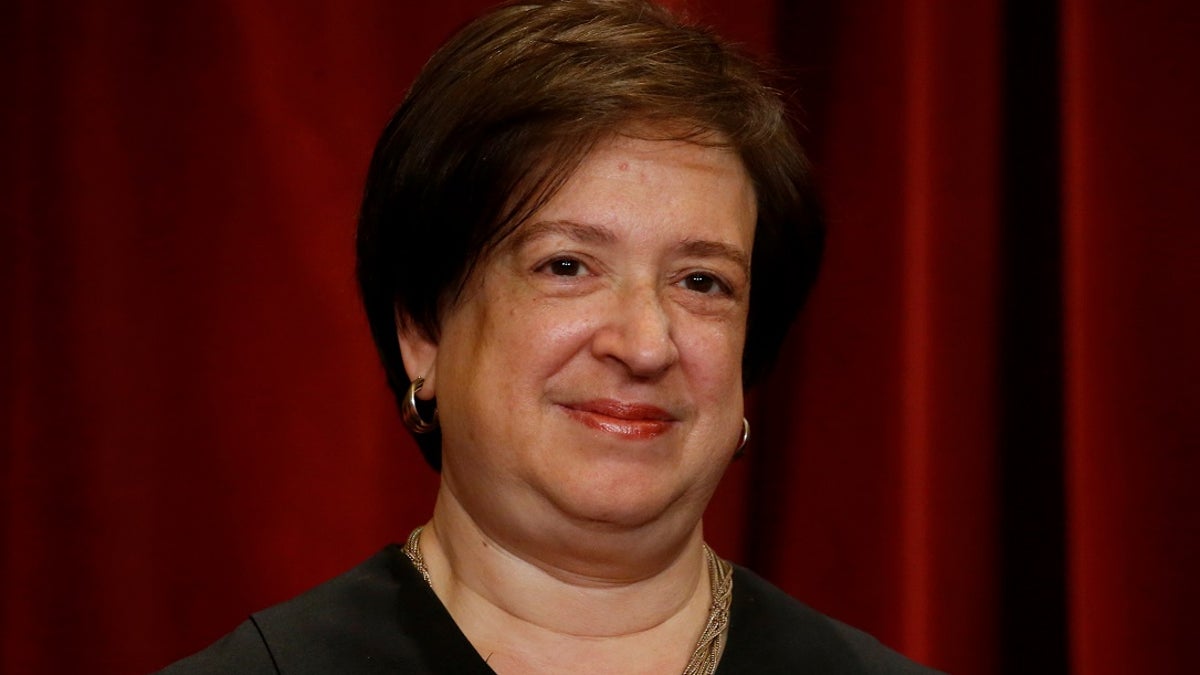
Justice Elena Kagan joined the Supreme Court in 2010 after being nominated by former President Barack Obama. (Reuters/Jonathan Ernst)
The DOJ had fumed over Murphy’s attempt to block the deportation of the six migrants. Solicitor General John Sauer described it as a «lawless act of defiance» of the Supreme Court’s authority when seeking clarification from the high court.
CLICK HERE TO DOWNLOAD THE FOX NEWS APP
«For over two months now, the Executive has labored under an injunction that this Court yesterday deemed unenforceable,» Sauer wrote. «This Court should immediately make clear that the district court’s enforcement order has no effect, and put a swift end to the ongoing irreparable harm to the Executive Branch and its agents, who remain under baseless threat of contempt as they are forced to house dangerous criminal aliens at a military base in the Horn of Africa that now lies on the borders of a regional conflict.»
Murphy said in his ruling Thursday that DHS’s deportation policy was «not fine nor is it legal.» During the prior administration, when Murphy was appointed to the federal bench, Biden sought to undo Trump’s strict immigration policies, leading to nearly 10 million migrant encounters at the southern border. Biden also faced criticism for lax policies that involved releasing millions of migrants into the country during his tenure while they awaited immigration hearings. Border encounters have dropped dramatically since Trump retook office.
Murphy stayed his ruling for 15 days to give the Trump administration time to appeal to the U.S. Court of Appeals for the 1st Circuit, given what the judge acknowledged was the «importance» and «unusual history» of the case.
Fox News Digital’s Breanne Deppisch contributed to this report.
Related Article

supreme court,judiciary,immigration,deportation,justice department

NEWYou can now listen to Fox News articles!
Talks between Iran and the U.S. wrapped up in Geneva Thursday as officials cited «significant progress» and announced a next meeting set for Vienna within days.
Yet despite senior U.S. officials describing the third round as «positive,» per Axios, Iranian state television also reported that Tehran will continue enriching uranium and rejected proposals to transfer it abroad.
According to The Associated Press , the reports claimed Iran would also push for the lifting of international sanctions — signaling it is not prepared to meet President Donald Trump’s demands.
The negotiations were carried out primarily indirectly, with Omani Foreign Minister Badr al-Busaidi relaying messages between the two sides.
Oman’s Foreign Affairs’ Minister Badr bin Hamad al-Busaidi gives a thumbs up as he leaves his hotel to reach Oman’s ambassador residency for new round of talks between the United States and Iran to address Iran’s nuclear program. (Fabrice COFFRINI / AFP via Getty Images)
In a post on X, al-Busaidi confirmed that the round had concluded and said discussions would resume soon.
«We have finished the day after significant progress in the negotiation between the United States and Iran,» he said on X.
«We will resume soon after consultation in the respective capitals. Discussions on a technical level will take place next week in Vienna. I am grateful to all concerned for their efforts: the negotiators, the IAEA, and our hosts, the Swiss government,» al-Busaidi said.
There was no immediate public statement from U.S. or Iranian officials after the session.
LEAVITT SAYS TRUMP CHOOSES DIPLOMACY FIRST FOR IRAN, BUT REMAINS ‘WILLING TO USE’ LETHAL FORCE IF NECESSARY

Special envoy Steve Witkoff (C) and Jared Kushner (L) meet with Oman’s Minister of Foreign Affairs Sayyid Badr bin Hamad Albusaidi (R) in Geneva, Switzerland, to discuss ongoing diplomatic negotiations on Thursday, Feb. 26, 2026. (Oman Ministry of Foreign Affairs/X)
Trump’s special Middle East envoy, Steve Witkoff, attended the three-hour negotiations with Iranian Foreign Minister Abbas Araghchi.
IAEA Director General Rafael Grossi was also involved, with Iranian officials presenting a draft proposal for a potential nuclear agreement with the U.S., which has key demands.
Iran insists it has the right to enrich uranium and has appeared to refuse to negotiate over other issues, including its long-range missile program and support for armed groups such as Hamas and Hezbollah.
TRUMP ADMIN RAMPS UP ‘MAXIMUM PRESSURE’ IRAN SANCTIONS AHEAD OF NEW ROUND OF NUCLEAR TALKS
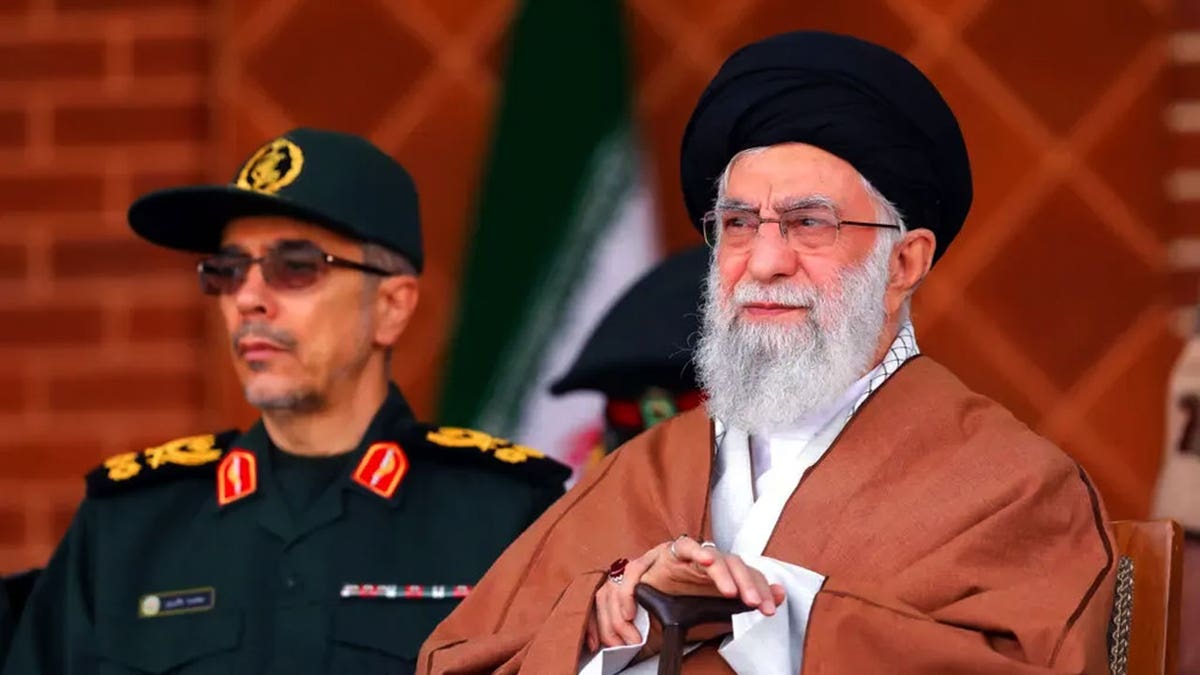
Iran’s Supreme Leader, Ayatollah Ali Khamenei pictured sitting next to a senior military official in Iran. (Getty Images)
Trump, meanwhile, insists on a deal to curb Iran’s nuclear program. In his State of the Union address Feb. 24, the president said he prefers a diplomatic solution.
«My preference is to solve this problem through diplomacy, but one thing is certain: I will never allow the world’s number one sponsor of terror, which they are by far, to have a nuclear weapon,» the president said. «Can’t let that happen.»
As the Geneva talks unfolded Thursday, Ali Shamkhani, a senior adviser to Iran’s Supreme Leader, Ayatollah Ali Khamenei, also wrote on X that if the main U.S. concern is preventing a nuclear weapon, that stance «aligns» with Khamenei’s fatwa and Iran’s defensive doctrine.
CLICK HERE TO DOWNLOAD THE FOX NEWS APP
He added that Iranian Foreign Minister Abbas Araghchi has «sufficient support and authority» to come to a final agreement in the talks.
The development came as the U.S. continues assembling military assets, including a fleet of aircraft and warships in the Middle East.
Fox News Digital has reached out to the White House for comment.
Related Article

iran,ali khamenei,middle east,sanctions,nuclear proliferation,donald trump

Qué se sabe del estado de salud de Bastián Jerez, el niño de 8 años accidentado en Pinamar

Reparto de cargos: tensa pulseada entre Kicillof y La Cámpora por un lugar clave en la línea sucesoria de Buenos Aires

Ginette Reynal dio una rotunda marcha atrás con una decisión que tomó hace dos meses: “No aguanto más”

La trama detrás de la jugada de Kicillof y Tapia que le permitió a la AFA eludir a la IGJ

Cómo las noticias falsas e imágenes creadas con IA multiplicaron el pánico tras la muerte del capo más poderoso de México

Cuánta plata hay que ganar por mes para pertenecer al 10% de la población más rica de Argentina

Jorge Macri prepara su discurso para abrir el año legislativo: el deseo de reelección y el espejo en Bukele

Daiana Fernández Molero defendió la reforma laboral: “Va a haber mayor creación de empleo porque va a ser más fácil contratar en blanco”

Uno por uno, todos los famosos que saludaron a Mirtha Legrand por sus 99 años

Crisis en la industria: otra multinacional se achica y cierra una planta en la Argentina

 POLITICA2 días ago
Jorge Macri prepara su discurso para abrir el año legislativo: el deseo de reelección y el espejo en Bukele
- POLITICA3 días ago
Daiana Fernández Molero defendió la reforma laboral: “Va a haber mayor creación de empleo porque va a ser más fácil contratar en blanco”
- CHIMENTOS3 días ago
Uno por uno, todos los famosos que saludaron a Mirtha Legrand por sus 99 años