ECONOMIA
Jornada financiera: bonos y acciones de bancos se movieron a la baja mientras el equipo económico negocia en Washington

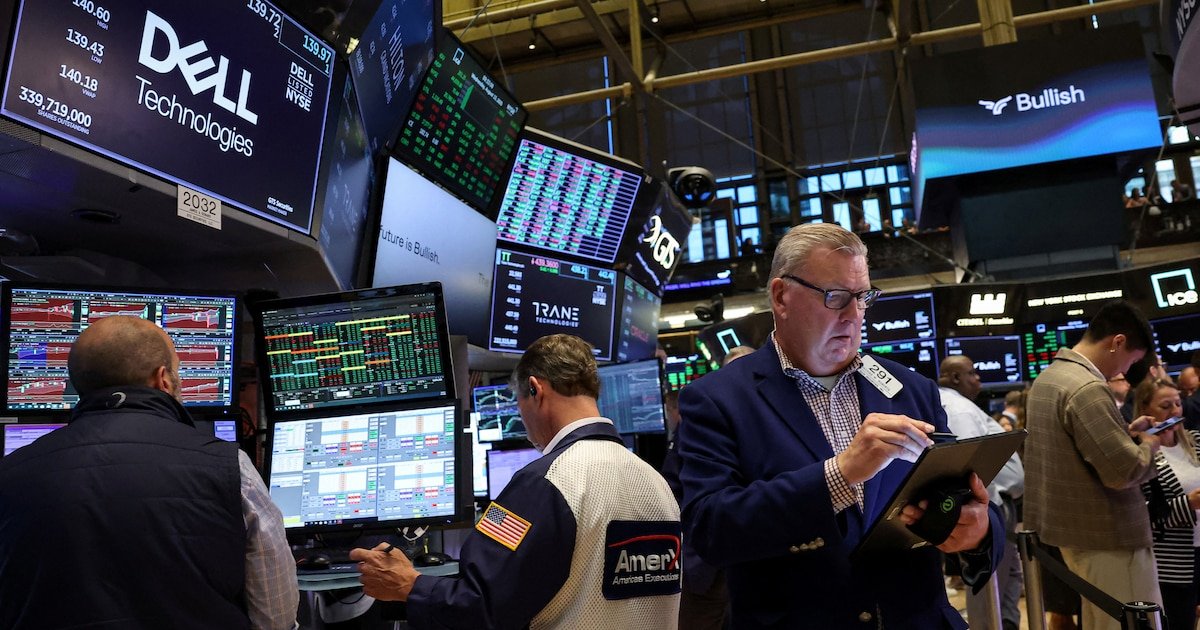
La proximidad de las elecciones legislativas acentúa la búsqueda de cobertura inversora, con una firme demanda de dólares en una plaza regulada por la oferta del Tesoro. El sentimiento del mercado sigue muy cauteloso y solo una concreta ayuda financiera de los EEUU para fortalecer finanzas de la administración de Javier Milei podría darle un giro distinto a la tendencia negativa que retomó la operatoria.
Los bonos soberanos en dólares sintieron el impacto de la falta de novedades sobre las negociaciones del equipo económico en Washington, encabezado por el ministro Luis Caputo. A la vez, los precios de los ADR de bancos argentinos fueron los que más cayeron en Wall Street. La presión dolarizadora se trasladó a las cotizaciones financieras y se reflejó en una mayor brecha respecto del intervenido dólar oficial.
Al cierre, el índice S&P Merval de la Bolsa de Comercio de Buenos Aires restó un 0,5% en pesos, en los 1.793.952 puntos, mientras que los ADR y acciones argentinos operados en Wall Street anotaron mayoría de números rojos, encabezados por Banco Francés (-4,9%) y Banco Supervielle (-4,4%).
En tanto, los bonos soberanos en dólares -Globales y Bonares- promediaron una importante baja de 1,8 por ciento.

El analista financiero Salvador Di Stefano afirmó que “el país no necesita devaluar el signo monetario, lo que necesita es crédito para renovar los vencimientos de capital futuro, y bajar el riesgo país. Hay que recordar que el Gobierno sistemáticamente muestra superávit fiscal. Por ende, los ingresos fiscales financian la suma de todos los gastos más los intereses de la deuda y, por ende, no hay incremento de deuda pública. Por otro lado, como carece de financiamiento para pagar el stock de deuda de capital, lo hace con recursos propios, y esto genera estrés en las reservas”.
“En escenarios de alta volatilidad, los inversores priorizan eliminar el riesgo de mercado y canalizar los flujos hacia activos a devengamiento. El nivel de tasas de interés ya de por si genera un rango de cobertura atractivo“, indicó un informe de MegaQM.
Para los analistas de Rava Bursátil, “si bien la tendencia de largo plazo es bajista, existe la posibilidad de un rebote técnico acotado para inversores con perfil de riesgo”.
El economista Gustavo Ber consideró que el“escenario electoral se combina con el clima de la ansiedad que despiertan las negociaciones del equipo económico en Washington, toda vez que viene en ascenso la expectativa por precisiones sobre el respaldo financiero, y cada mensaje protocolar es recibido por algunos operadores rápidamente con cierta decepción y así es que se frenan las apuestas”.
En otra rueda con nutrido volumen de negocios por USD 600,7 millones en el segmento de contado, el dólar mayorista bajó 50 centavos, a $1.429,50 para la venta, en una plaza cuya oferta volvió a ser apuntalada por posturas vendedoras del Tesoro, que los operadores estimaron en más de USD 250 millones en el día.
Dado el ritmo de ventas oficiales de contado -prácticamente la mitad de la oferta-, los analistas prevén que esta semana podrían consumirse las divisas obtenidas por las compras en bloque con la eliminación temporal de retenciones a los agroexportadores, que le permitieron al Tesoro agregar a su cuenta cerca de 2.000 millones de dólares. El Gobierno acumuló ventas en torno a los USD 1.800 millones tras seis ruedas consecutivas de intervención directa en el mercado de contado.
Este martes el techo de las bandas de flotación dispuestas por el Banco Central se ubicó en $1.484,16, unos 54,66 pesos o 3,8% por encima del precio mayorista.
El dólar al público terminó sin cambios en el Banco Nación, a $1.455 para la venta. El Banco Central informó que en las entidades financieras el dólar minorista promedió $1.460,63 para la venta (alza de 43 centavos) y $1.407,64 para la compra.
Las cotizaciones del dólar implícitas en activos bursátiles argentinos que se negocian en el exterior avanzaron 2%, entre 29 y 30 pesos. El “contado con liquidación” mediante bonos se negoció a $1.541,29, mientras que el dólar MEP se ubicó en los $1.527,25. La brecha entre el “liqui” y el mayorista se amplió a 111,79 pesos o 7,8 por ciento.
Todos los contratos de dólar futuro marcaron precio al alza, en un rango de 0,1% a 1,6%, según la plataforma A3 Mercados, con negocios dentro del rango habitual, por el equivalente en pesos a 935 millones de dólares. Las posturas para fin de octubre -pasadas las elecciones- quedaron a $1.469,50, con ganancia de 1,50 peso o 0,1%, debajo de la banda superior de flotación dispuesta por el Banco Central, en 1.501 pesos.
El dólar blue ganó diez pesos o un 0,7%, a $1.460 para la venta. Se trata de su nivel más alto desde el 22 de septiembre, ahora “empatado” con el dólar minorista.
Las reservas internacionales brutas del Banco Central restaron USD 426 millones o 1%, a USD 42.202 millones, sin que se hayan efectuado pagos de obligaciones con el exterior en la jornada.
Por la mañana el oro anotó un récord histórico al superar los USD 4.000 la onza. En 2025 el precio del metal se incrementó 53 por ciento. En términos de las reservas del Banco Central argentino, implicó este año una ganancia contable de unos USD 2.277 millones, dada la tenencia de unos 2.000 millones de onzas en las reservas.
“El movimiento refleja una dinámica consistente de reasignación de carteras hacia activos de refugio, en un contexto de elevada incertidumbre macroeconómica y tensiones geopolíticas. En este escenario, el metal precioso reafirma su condición de principal reserva de valor ante el debilitamiento de las perspectivas de crecimiento global”, comentó Antonio Montiel, director de Análisis de ATFX Education.
Corporate Events,North America,NEW YORK













El sistema financiero argentino cerró 2025 con un fuerte deterioro en la calidad de su cartera de créditos, traccionado principalmente por el segmento de hogares. De acuerdo con el último Informe sobre Bancos del Banco Central de la República Argentina (BCRA), el ratio de irregularidad de las familias escaló al 9,3% en diciembre, más del triple del 2,5% registrado en el mismo mes de 2024.
El salto en la mora de los hogares fue el principal motor del deterioro sistémico. El ratio de irregularidad del crédito total al sector privado cerró el año en 5,5%, frente al 1,6% observado al cierre de 2024, lo que confirma un cambio de tendencia en la segunda mitad del año.
Fuerte disparidad entre empresas y familias
La dinámica fue muy distinta según el tipo de deudor. Mientras la irregularidad en financiaciones a hogares llegó al 9,3%, en el segmento corporativo se ubicó en 2,5% al cierre de 2025. Si bien las empresas también registraron un aumento interanual -desde el 0,8% de diciembre de 2024-, la magnitud fue considerablemente menor.
Dentro del crédito a familias, el deterioro se concentró en préstamos personales y prendarios, líneas típicamente asociadas al consumo. En el ámbito empresarial, el aumento de la mora se vinculó principalmente a compañías del comercio y de la producción primaria.
El ratio de irregularidad del crédito, según el segmento
Pese al aumento de la cartera irregular, el crédito al sector privado siguió ganando espacio en los balances. A diciembre, el financiamiento a empresas y familias representó el 43,9% del activo total del sistema, 8,6 puntos porcentuales más que un año antes. Este proceso de mayor peso del crédito privado se dio en detrimento del financiamiento al sector público, que redujo su participación al 27,8%.
El incremento de la mora impactó directamente en los ratios de cobertura. El previsionamiento total del sistema representó el 93% del saldo irregular al cierre de 2025, muy por debajo del 168,4% registrado a fines de 2024.
Sin embargo, al analizar las previsiones sobre el total de crédito al sector privado, el indicador subió del 2,6% al 5,2% en el mismo período. Es decir, aunque la cobertura específica frente a la cartera irregular se redujo, el sistema incrementó las reservas en relación con la masa total prestada, anticipando un escenario de mayor riesgo crediticio.
Expansión del crédito y depósitos
Durante 2025, el financiamiento en pesos al sector privado creció 27,4% en términos reales. Las líneas con garantía real fueron las más dinámicas, especialmente los créditos hipotecarios. Solo en diciembre se registraron casi 3.000 nuevas altas, y el año cerró con aproximadamente 43.700 nuevos deudores en ese segmento. El total de deudores hipotecarios alcanzó los 179.500, un 20,6% más que en 2024.
En cuanto al fondeo, los depósitos del sector privado en pesos aumentaron 7,7% real, impulsados por colocaciones a plazo, que crecieron 15,8%. En moneda extranjera, los depósitos avanzaron 17,7% a lo largo del año.
A pesar del deterioro crediticio, el sistema mantuvo niveles de solvencia elevados. La integración de capital se ubicó en el 28,6% de los activos ponderados por riesgo (APR), mientras que el exceso de capital sobre la exigencia mínima regulatoria alcanzó el 253%.
En materia de rentabilidad, el sistema cerró con resultados positivos, aunque menores a los de 2024. El retorno sobre activos (ROA) fue del 1%, y el retorno sobre patrimonio (ROE), del 4,4%. Según el BCRA, la caída respecto al año anterior respondió a un menor margen financiero real y al aumento de los cargos por incobrabilidad derivados de la suba de la mora.
Por último, la liquidez en pesos —considerando disponibilidades y títulos públicos aplicados a efectivo mínimo— se ubicó en el 32,9% de los depósitos, 2,9 puntos porcentuales menos que en diciembre de 2024.
iprofesional, diario, noticias, periodismo, argentina, buenos aires, economía, finanzas,
impuestos, legales, negocios, tecnología, comex, management, marketing, empleos, autos, vinos, life and style,
campus, real estate, newspaper, news, breaking, argentine, politics, economy, finance, taxation, legal, business,
technology, ads, media,banco,credito
ECONOMIA
El Banco Central compró USD 2.400 millones en 2026 y las reservas tocaron un máximo en más de cuatro años

En medio de la estabilidad cambiaria, el Banco Central de la República Argentina (BCRA) logró comprar divisas en 33 ruedas consecutivas tanto dentro como fuera del mercado de cambios, luego de adquirir USD 167 millones este viernes. Desde principios de 2026, la entidad sumó más de USD 2.400 millones, lo que representa poco más del 24% de la meta anual de acumulación de reservas.
En este período, el BCRA compró un total de USD 2.412 millones en el marco de la “fase 4” del programa económico. Estas adquisiciones se financiaron mediante la emisión de pesos sin esterilización, lo que mantiene la liquidez y limita presiones sobre las tasas. Posteriormente, el Tesoro absorbe parte de esos pesos a través de colocaciones de deuda interna.
Las reservas internacionales se sitúan actualmente en USD 46.261 millones, tras un alza diaria de 1.348 millones de dólares. Se trata de un máximo desde agosto de 2021. Las compras del Central y la revaluación de monedas que integran las tenencias internacionales explican parte de esa suba. El monto restante corresponde a fondos por USD 800 millones de Santa Fe que se transfirieron desde el Banco Santander de Nueva York hacia el banco provincial y agente financiero del distrito. Fuentes de la gobernación aclararon que los depósitos, cuyo origen se remonta a una colocación de deuda en los mercados internacionales a comienzos de diciembre de 2025, siguen en dólares y se utilizarán para obras públicas, sobre todo para la organización de los Juegos Sudamericanos.
El flujo de divisas hacia el Banco Central proviene tanto de la liquidación de exportaciones agroindustriales como de la emisión de deuda corporativa. Se prevé que nuevas colocaciones del sector privado aumenten la disponibilidad de dólares. PwC estimó que durante 2025 empresas argentinas emitieron deuda por más de 20.000 millones de dólares, lo que ayudó a mantener la estabilidad cambiaria del año pasado.
Las proyecciones oficiales para 2026 contemplan compras netas de divisas en un rango de 10.000 a 17.000 millones de dólares, condicionado por la demanda de pesos y el ingreso de divisas. El presidente del BCRA, Santiago Bausili, sostuvo que el proceso de acumulación de reservas dependerá del avance de la remonetización y del flujo de divisas. Hasta el momento, la entidad superó el 24% de su meta anual.
El BCRA fijó un límite diario del 5% del volumen operado en el Mercado Libre de Cambios para sus compras, como mecanismo para resguardar la estabilidad cambiaria. En algunas ocasiones, este tope se excedió por operaciones que, según fuentes privadas, no pasaron por el circuito mayorista tradicional.
La entidad explicó que puede comprar divisas fuera del mercado mayorista mediante acuerdos directos con empresas o instituciones, una herramienta que le permite evitar distorsiones en el funcionamiento del mercado de cambios.
- 5 de enero: USD 21 millones
- 6 de enero: USD 83 millones
- 7 de enero: USD 9 millones
- 8 de enero: USD 62 millones
- 9 de enero: USD 43 millones
- 12 de enero: USD 55 millones
- 13 de enero: USD 55 millones
- 14 de enero: USD 187 millones
- 15 de enero: USD 47 millones
- 16 de enero: USD 125 millones
- 19 de enero: USD 21 millones
- 20 de enero: USD 8 millones
- 21 de enero: USD 107 millones
- 22 de enero: USD 80 millones
- 23 de enero: USD 75 millones
- 26 de enero: USD 39 millones
- 27 de enero: USD 32 millones
- 28 de enero: USD 33 millones
- 29 de enero: USD 52 millones
- 30 de enero: USD 23 millones
- 2 de febrero: USD 39 millones
- 3 de febrero: USD 57 millones
- 4 de febrero: USD 44 millones
- 5 de febrero: USD 126 millones
- 6 de febrero: USD 51 millones
- 9 de febrero: USD 176 millones
- 10 de febrero: USD 42 millones
- 11 de febrero: USD 214 millones
- 12 de febrero: USD 141 millones
- 13 de febrero: USD 42 millones
- 18 de febrero: USD 80 millones
- 19 de febrero: USD 76 millones
- 20 de febrero: USD 167 millones
El dólar mayorista profundizó su descenso este viernes, acompañado por un volumen operado de USD 475,7 millones en el segmento de contado, lo que permitió al Banco Central continuar comprando divisas sin modificar la tendencia de precios.
La cotización cerró en $1.376, con una caída de 13 pesos o 0,9% en la jornada, alcanzando su valor más bajo desde el 14 de octubre. Durante febrero, el tipo de cambio oficial perdió 71 pesos, equivalente a una baja de 4,9%, y desde el inicio de 2026 acumula un retroceso de 79 pesos o 5,4%.
En la última semana, el dólar mayorista cedió 23,50 pesos, una baja de 1,7%. El valor actual se ubica 219,93 pesos o 16% por debajo del tope de la banda cambiaria fijado por el BCRA en $1.595,93, ampliando la brecha al nivel más alto desde el 4 de julio de 2025.
Corporate Events,South America / Central America,Government / Politics

What does a financial advisor do?
The term “financial advisor” is fairly broad. There’s no regulation of the term, so any number of professionals can call themselves financial advisors. Like the titles financial planner, financial consultant, financial coach and wealth advisor, there are no uniform requirements to be considered a financial advisor.
For the most part, though, a financial advisor is someone who can guide you as you make decisions about your money.
“Financial advisors, by whatever title they go by, can help you set goals and create a plan to reach your objectives,” says Roger Wohlner, a financial advisor based in Arlington Heights, Illinois. “A financial advisor can also help you adjust your plan as things change, and might be able to help you with specific planning issues like taxes, retirement, college or business.”
Different professionals use the term whether they’re selling insurance, managing a portfolio of assets or creating a comprehensive financial plan.
What types of financial advisors are there?
When considering who to work with, Pam Krueger, the founder and CEO of Wealthramp, a platform that vets financial advisors and matches them with clients, suggests worrying less about the title used and instead paying attention to the services offered.
“You also need to understand how they get paid and whether they’re a fiduciary,” Krueger says. “A fiduciary is required to provide advice that is in your best interest. Other advisors, such as those who sell insurance or other products, might not be fiduciaries and instead make part of their money based on commissions.”
Krueger points out that there’s nothing wrong with working with a financial advisor who makes money on commissions.
“Just because they’re getting paid as a result of making a sale doesn’t mean that they can’t provide good advice,” Krueger continues. “However, it’s important for you to have information to understand the difference between getting actual advice and the possibility that you’re sitting through a sales pitch.”
Before working with someone, Krueger suggests confirming that they are a fiduciary financial advisor and getting it in writing that they will make recommendations based on your best financial interest, regardless of whether it helps them earn a little extra money.
What credentials should you look for in a financial advisor?
While credentials can be a good starting point when vetting a financial advisor, Wohlner agrees with Krueger that finding a fiduciary financial advisor should be the top priority.
“Whether someone is a fiduciary matters more than the letters behind their name,” Wohlner says. “Pay attention to experience and education as well. Find out if they have experience in some of the specific areas you need help with.”
Even though credentials aren’t the final arbiter of whether a financial advisor is a good choice, some certifications might indicate a high level of education and a commitment to ongoing professional development in the financial industry.
Krueger suggests prioritizing the following:
- Certified financial planner (CFP): These advisors have to complete financial planning courses that include basic information on investing and tax planning. A CFP must pass a comprehensive exam and take ongoing education credits to maintain their certification through the CFP Board.
- Chartered financial analyst (CFA): Issued by the CFA Institute, this designation requires advisors to fulfill specific work experience requirements, complete courses and pass three exams. The focus is on investment analysis, portfolio management and wealth management. CFA professionals must maintain membership with the CFA Institute.
- Certified public accountant (CPA): If you’re concerned about taxes and other related financial matters, working with an advisor who is also a CPA might make sense. CPA requirements (often including education and exam specifics) are typically set by the individual state.
Other designations that require education and experience, and that might be useful in terms of ensuring that a financial advisor has received training and practice, include:
- Accredited financial counselor (AFC): Requires experience hours and an education course, as well as passing an exam. To remain credentialed, an advisor must meet ongoing education requirements set forth by the Association for Financial Counseling and Planning Education. It’s also a Financial Industry Regulatory Authority (Finra)-accredited designation.
- Chartered financial consultant (ChFC): To become this type of financial consultant financial planning courses are required, including some that are specialized, as well as ongoing education and adherence to the ethics standards set forth by the American College of Financial Services.
- Registered investment adviser (RIA): Registered investment advisers are those who meet specific requirements set by the state or the Securities and Exchange Commission (SEC). When a certain level of assets under management is reached, an RIA must register with the SEC. You can generally check into violations and judgments using Finra BrokerCheck.
While you can receive good advice without the credentials, they can provide you with peace of mind as you choose a financial advisor.
How do financial advisor fee structures work?
The cost of a financial advisor varies based on how they earn money and the fee structure involved.
First, it’s important to understand how a financial advisor is paid. There are three main models that a financial advisor might use:
- Commission: A financial advisor who doesn’t receive money directly from you is usually making money from commissions for selling financial products. This might be common among brokers and insurance agents.
- Fee-only: Fee-only financial advisors make their money exclusively from fees clients pay. You’re less likely to run into conflicts of interest with a fee-only advisor, Krueger says, because their bottom line isn’t influenced by whether you buy certain financial products or services.
- Fee-based: Krueger says it’s important to understand the distinction between fee-only and fee-based financial advisors. A fee-based advisor or planner uses a hybrid model. They might charge a fee for planning and guidance, or asset management, but they might also receive commissions.
While you don’t need to automatically assume someone earning commissions is providing poor advice, Wohlner points out, you do need to be aware of the potential conflicts and choose accordingly.
Financial advisor fee structures
If you select a financial advisor who charges a fee, consider the structure they choose. Typically, you want to work with someone whose fee structure matches your budget and style. Some common ways that financial advisors charge clients include:
- Assets under management (AUM): Your financial advisor charges you based on the assets they manage on your behalf, expressed as an annual percentage. This is common with wealth managers and advisors who handle investments. As your assets increase, your fees also increase. For example, if you have $200,000 assets under management at 1%, you pay $2,000 a year. Later, when your portfolio grows to $500,000, you pay $5,000 a year.
- Retainer: Rather than charging based on your portfolio size, a financial advisor might charge a set fee paid monthly, quarterly or annually. The advisor should tell you how many check-ins you have during the year and what services, such as financial planning or reviews, are included in the annual retainer.
- Subscription: Similar to a retainer, some financial advisors charge a subscription or membership fee. You pay monthly or quarterly and have access to a suite of services or online tools to help you manage your money. In many cases, your subscription level determines how many meetings you have and what guidance you receive. There might be an onboarding cost with a subscription model.
- Hourly: Instead of charging based on services, you’re charged based on an hourly rate. You can choose this option if you want to have more one-on-one advice and services, and pay only based on the time you use.
- Fixed: Some financial advisors have a set fee list based on the service you receive. They might have a pricing list for a comprehensive financial plan, check-in, college plan, financial review or other services.
How to find and vet a financial advisor
When looking for a financial advisor, consider starting with a vetted network. Krueger says that she vets all the financial advisors in the Wealthramp network and that they only recommend fiduciary financial advisors. Other networks that offer access to advisors include Advisor.com, a Buy Side financial partner, XY Planning Network and NAPFA.
Some networks offer a questionnaire that can help narrow down your choices. Others can help you find a financial advisor located near you if that’s important to you, or you can work with someone remotely.
Once you have some options from a trusted network or platform, schedule discovery sessions with two to four financial advisors. Wohlner points out that many advisors will have a brief initial session with you to see if you’re a good fit.
When you have your initial meeting with each, assess their values, approach and whether their fee structure matches your budget and needs. Compare the answers you receive and decide who you’re most comfortable working with.
Key questions to ask a prospective financial advisor
When you have a discovery session with a financial advisor, ask questions that can help you understand how they work and whether they would be compatible with your financial approach and needs. Some of the questions Wohlner and Krueger suggest asking include:
- Are you a fiduciary? Start by finding out whether they are a fiduciary, and ask whether they act as a fiduciary all the time.
- How are you compensated? Be informed about whether an advisor receives commissions for sales on top of fees or other income.
- What is your fee structure? Find out how the advisor charges for advice and what services the fee encompasses, as well as how many one-on-one sessions you receive based on the fee.
- Do you have any credentials? Ask about their credentials and whether they remain up-to-date to maintain them.
- What is your background and education? Credentials might not be as important as their education and experience. Find out if they have a relevant background that might be of benefit to you, even if they don’t have letters following their name.
- How much experience do you have? Find out how long they’ve been helping people with their finances and whether they have experience with the help you need. For example, if you’re struggling with debt and saving for retirement, find out if your advisor has experience with debt reduction planning on top of retirement planning.
Pay attention to how the advisor interacts with you and how comfortable you are with them. Verify that they listen to you and understand your needs as you determine who you should work with.
Should I choose a fiduciary or a broker-dealer?
Broker-dealers are financial professionals or firms that buy and sell securities for their own accounts and on behalf of their clients. You might see them simply referred to as brokers.
Broker-dealers aren’t held to a fiduciary standard, but they are required to make recommendations that are in your best interest. Broker-dealers earn commission when they buy or sell investments on your behalf, introducing a conflict of interest into the advisor-client relationship.
That doesn’t necessarily mean you shouldn’t work with a broker-dealer. In fact, some advisors are registered as both a broker-dealer and an RIA. In these cases, it’s important to be aware of which role the advisor is filling when you work with them. If they’re acting as an RIA, they’re held to a fiduciary standard, but if they’re acting as a broker, they only have to recommend products that are suitable for your situation.
Many of the larger investment firms, such as Charles Schwab or Fidelity, offer both brokerage and advisory services.
What if my advisor isn’t meeting my needs?
If your current advisor isn’t the right fit, you might want to consider changing financial advisors. First, though, it could be worth having a meeting with them to see if you’re able to improve your relationship and clear up issues that could be caused by miscommunication.
If you come away from that meeting ready to find someone new, make a note of the ways you weren’t satisfied with the relationship and use that information to help you find the best financial advisor for your needs. Once you’ve chosen a new advisor, they should be able to help facilitate the transfer of your assets to their firm if needed.
How do fiduciary standards protect you?
Fiduciary advisors are required to put your best interest ahead of their own. This means that they can’t recommend products or financial plans that aren’t suitable for you because it would earn them a larger payout.
However, remember that some advisors can switch between a role that requires them to act as a fiduciary, like an RIA, and one where they aren’t held to that same standard, like a broker-dealer. Ultimately, it’s up to you to find an advisor you trust to help you make the best decisions with your money.

Revelan el ataque de celos de Mauro Icardi a la China Suárez por sus escenas zarpadas

La AFA cuestionó la decisión de la Justicia de llamar a indagatoria a Claudio “Chiqui” Tapia

Los gremios docentes convocaron a un paro nacional para el 2 de marzo

Así cayó el príncipe Andrés: su vínculo con Epstein, títulos reales perdidos y un arresto histórico

Truck smashes into famed synagogue, police charge man with hate crime: ‘Very distressing’

Se triplicó el nivel de morosidad de las familias con los bancos: más del 9% tiene deudas

Reforma laboral bomba: menos indemnización, más horas y despidos más fáciles — el cambio que puede sacudir el empleo en Argentina

Ayuda Escolar Anual: a cuánto asciende, donde se tramita y quien puede cobrarla

El Gobierno endurece las medidas de seguridad y control en la marcha prevista contra la reforma laboral en el Congreso

Escándalo en MasterChef: una famosa abandonó a los gritos y acusando que está todo arreglado

 ECONOMIA2 días ago
Ayuda Escolar Anual: a cuánto asciende, donde se tramita y quien puede cobrarla
- CHIMENTOS1 día ago
Escándalo en MasterChef: una famosa abandonó a los gritos y acusando que está todo arreglado
- POLITICA23 horas ago
Del himno peronista de Kelly Olmos al exabrupto de Agustina Propato: las perlitas del debate por la reforma laboral