INTERNACIONAL
Mamdani funnels big money to radical allies plotting control of City Hall: ‘Seize state power’

NEWYou can now listen to Fox News articles!
FIRST ON FOX: Newly released campaign finance records reveal New York City mayoral candidate Zohran Mamdani’s campaign gave over $28,000 last month to the New York City Democratic Socialists of America, a radical group that has boasted about the level of influence it will have if Mamdani is elected mayor.
The Mamdani campaign made a payment of $28,677.57 to DSA’s NYC chapter on Sept. 15 and filled in the purpose field that the funds were for «Other: explntion / Texting.»
Mamdani’s campaign has previously given numerous smaller payments totaling roughly $3,000 to DSA for «Fundraising / Fundraising Emails» but the September donation represents by far the largest contribution to the group since his campaign was launched. NYC-DSA has received 36 payments, totaling over $33,000 from Mamdani’s campaign since early 2025.
The donation comes amid public boasting from DSA that they wield massive influence on Mamdani’s platform.
‘ABSOLUTELY A COMMUNIST’: MAMDANI DODGES LABEL, BUT HIS RECORD AND EXPERT SAY OTHERWISE
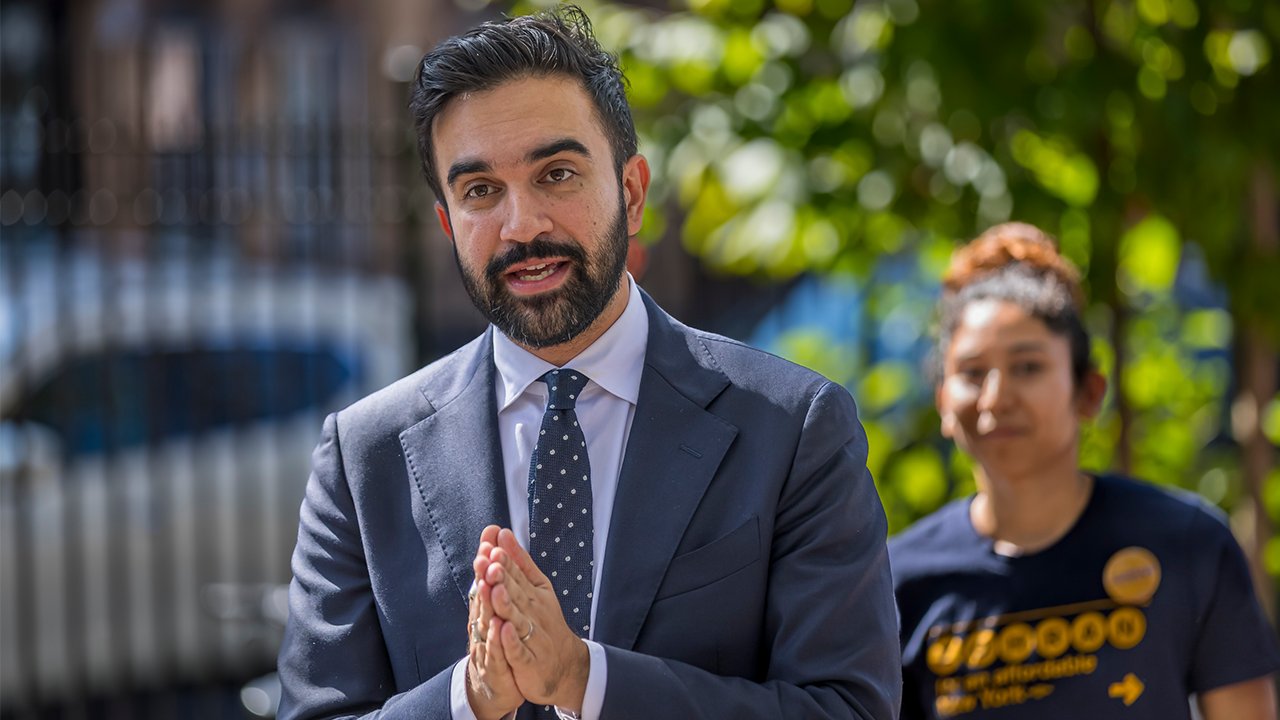
New York City Democratic mayoral nominee Zohran Mamdani speaks to volunteers at a canvass launch in Brooklyn on Sept. 28, 2025. (Michael Nigro/Pacific Press/LightRocket via Getty Images)
During a July panel discussion, Fox News Digital previously reported how DSA members discussed how they have been closely collaborating with Mamdani and how he has the organization positioned to «seize state power.»
DSA organizer Daniel Goulden claimed the organization has been intimately involved in Mamdani’s campaign, even helping to write portions of his platform.
«With Zohran, we’re in basically the best possible position to seize state power that we can be in because, you know, we’re like this,» Goulden said, indicating with his fingers that the campaign and organization are very close.
Goulden went on to suggest that «one of the things that made Zohran really successful with his policy rollouts is specifically relying on DSA.»
«DSA has regular meetings with him, let alone his team. His policy director is my friend. I’ve been working with his campaign manager for well over a year. You know? I have friends who are his staff,» he said.
He went on to say the DSA worked especially closely with Mamdani on his «trans rights» platform to use city resources to give free transgender treatments to people across the country.
«We wrote the platform with him. The team was so happy to work with us on this,» he explained. «What we explicitly wanted to do was use the power of New York City to provide free gender-affirming care – and I say free in case insurance companies decide to boot us off – free gender-affirming care, not just to people in New York City, but across the country.»
«Our endorsed candidates are expected to follow the will of the membership,» chapter leader Darren Goldner concluded.
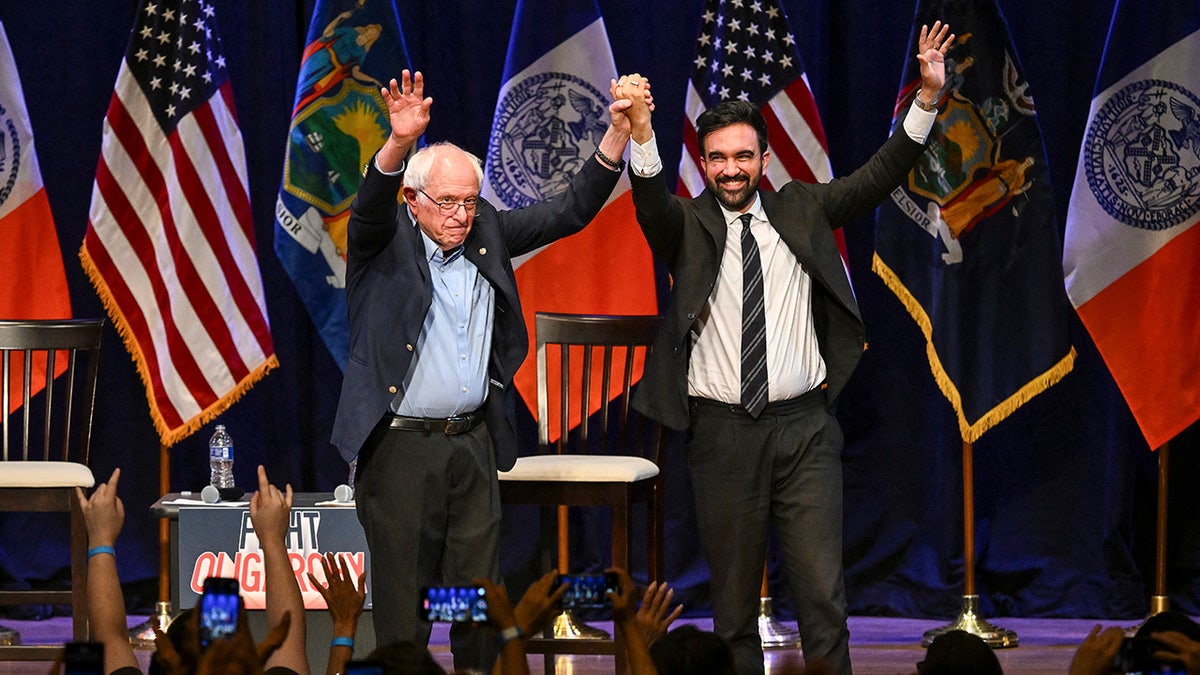
Sen. Bernie Sanders, I-Vt., and New York City Mayoral candidate Zohran Mamdani hold hands during the town hall «Fighting Oligarchy» event at Brooklyn College on Sept. 6, 2025. (ANGELA WEISS/AFP via Getty Images)
Last week, New York Post reported from a DSA event that group leaders boasted about a «symbiotic» relationship with Mamdani that will last past the election if Mamdani wins.
Mamdani revealed during a 2021 interview that he was «very excited about being a member of DSA, specifically the New York City chapter» and that the anti-Israel Boycott, Divestment, and Sanctions movement was a major issue pushed by DSA in order to get endorsements, Fox News Digital previously reported.
«Within the questionnaire when you submit to be considered a candidate to be endorsed by the organization, you’re asked what your views are on BDS and I think that has also brought what it is typically thought of as a separate issue into the sphere of local politics where we create a bench of candidates,» Mamdani said. «We’re not legislating on BDS on a daily basis, but it’s clear that our commitment is unabashed to justice.»
The national DSA organization and its chapters, including the NYC-DSA, have shared views on several issues that they have been vocal about, including their disdain for ICE and cracking down on on «bad landlords» by having the city take control of properties when a landlord refuses to make repairs or «demonstrates consistent neglect» of their tenants.
He also believes he can fix New York City’s affordable housing crisis by immediately freezing the rents of the over two million New York residents who live in rent-stabilized apartments, which is part of DSA’s housing justice platform.
«Assemblymember Zohran Mamdani is here to bring New Yorkers back to the left. With a platform focused on cost of living: from utility bills to grocery bills to bus fares to childcare to rent, Zohran is the candidate who wants to make life in New York City more affordable,» NYC-DSA’s website says. «His platform focuses on the pillars of free childcare, fast and free buses, and freezing rent for all rent-stabilized tenants.»
A Fox News Digital review found that multiple staff members of Mamdani’s campaign are directly involved with DSA, including Tascha Van Auken, who has been paid over $100K by the campaign and is the campaign’s field director. In a July 2025 profile piece, she explained how the Mamdani campaign adopted the DSA’s model of canvassing.
«So I would say that the beginning of the campaign for us is building up the leadership structure, building up the infrastructure, really honing in on what we’re talking to voters about,» Auken, who has been branded as the NYC-DSA’s «field operations guru,» said. «Then once petitioning is over, we go full force into persuasion, which is basically just lots and lots of talking to voters that we haven’t talked to before, persuading them to vote for Zohran or just identifying that they are Zohran supporters or not.»
CUOMO WARNS DEM SOCIALIST RIVAL’S TAX PLAN WOULD TRIGGER MASS EXODUS OF NYC’S WEALTHY
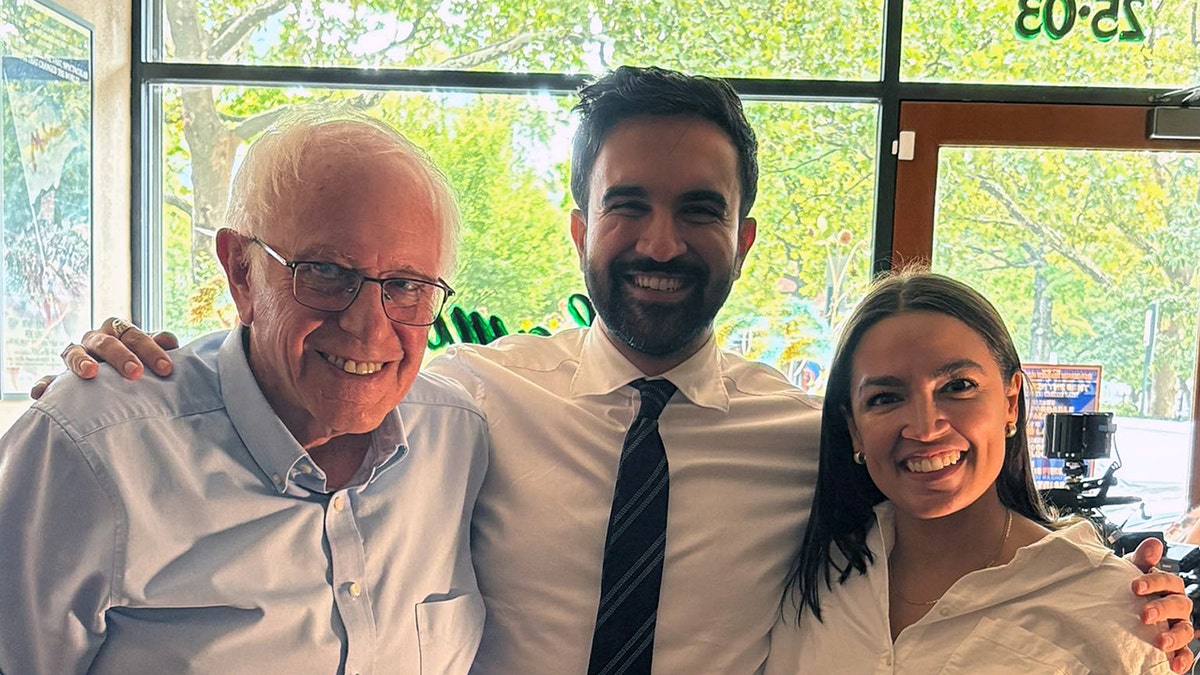
Sen. Bernie Sanders, Democratic mayoral candidate Zohran Mamdani and Rep. Alexandria Ocasio-Cortez pose for a photo in Astoria, Queens, Sept. 6, 2025. (@ZohranKMamdani via X)
Elliana Bisgaard-Church, who previously served as Mamdani’s campaign manager during the Democratic primary and is member of his inner circle, is also a member of the NYC-DSA and worked closely with top leaders of the DSA chapter. Mamdani and Bisgaard-Church, who raked in a six-figure salary working for Mamdani, met on a weekly basis with NYC-DSA co-chairs Grace Mausser and Gustavo Gordillo, according to The Nation.
«Toward the end of the race, in a final get-out-the-vote push, Mausser recalled a meeting in which Bisgaard-Church requested help to secure as much youth turnout as possible. NYC-DSA responded at a moment’s notice with a text- and phone-banking effort by the organization’s youth wing, as well as an extensive tabling operation at several nightclubs in Bushwick and the Ridgewood neighborhood of Queens,» The Nation reported.
«So I would say that the beginning of the campaign for us is building up the leadership structure, building up the infrastructure, really honing in on what we’re talking to voters about,» Auken, who has been branded as the NYC-DSA’s «field operations guru,» said. «Then once petitioning is over, we go full force into persuasion, which is basically just lots and lots of talking to voters that we haven’t talked to before, persuading them to vote for Zohran or just identifying that they are Zohran supporters or not.»
Elliana Bisgaard-Church, who previously served as Mamdani’s campaign manager during the Democratic primary and is a member of his inner circle, is also associated with NYC-DSA and worked closely with top leaders of the DSA chapter. Mamdani and Bisgaard-Church, who raked in a six-figure salary working for Mamdani, met on a weekly basis with NYC-DSA co-chairs Grace Mausser and Gustavo Gordillo, according to The Nation.
CLICK HERE TO DOWNLOAD THE FOX NEWS APP
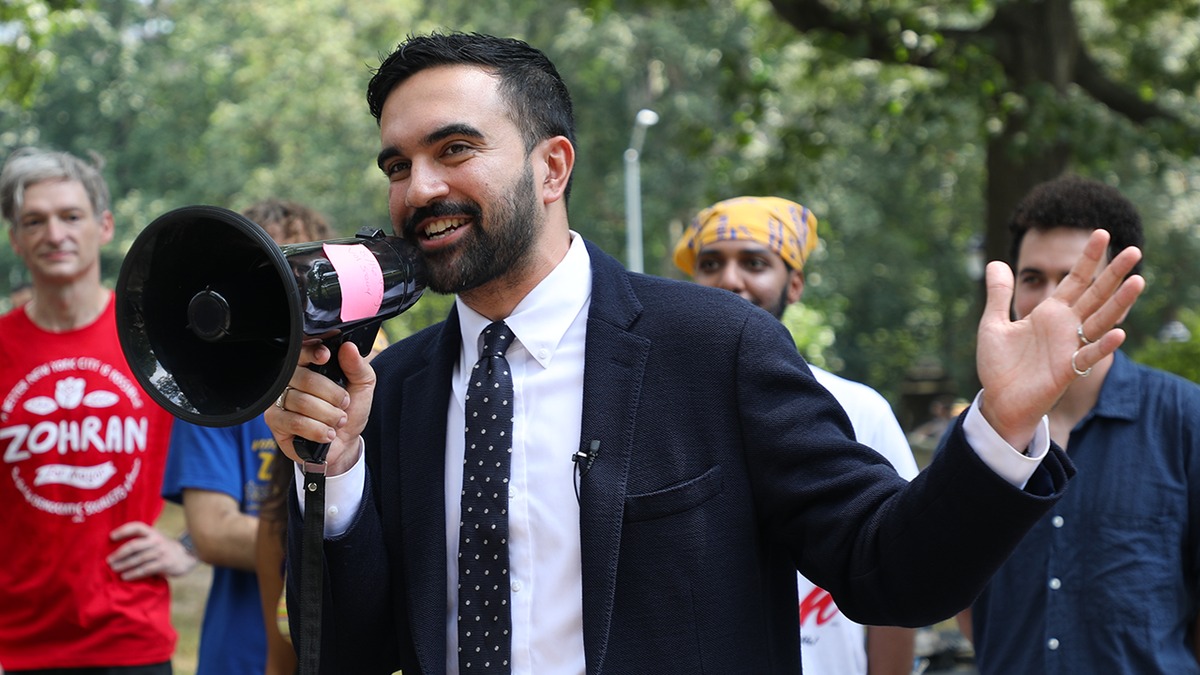
New York City Democratic mayoral nominee Zohran Mamdani spoke to supporters at a canvass launch event in Prospect Park on Aug. 17, 2025. (Deirdre Heavey/Fox News Digital)
«Toward the end of the race, in a final get-out-the-vote push, Mausser recalled a meeting in which Bisgaard-Church requested help to secure as much youth turnout as possible. NYC-DSA responded at a moment’s notice with a text- and phone-banking effort by the organization’s youth wing, as well as an extensive tabling operation at several nightclubs in Bushwick and the Ridgewood neighborhood of Queens,» The Nation reported.
Fox News Digital reached out to Mamdani’s campaign for comment.
In a statement to Fox News Digital, NYC-DSA Co-Chair Grace Mausser said, «NYC-DSA is committed to supporting Zohran Mamdani by contacting our members to encourage them to volunteer for his campaign and to vote for him.»
«The services that we use to text and email our members cost money, and in order to comply with New York City campaign finance law, the campaign is paying for these coordinated communications. The communications include a clear disclaimer to that effect.»
Fox News Digital’s Peter Pinedo contributed to this report.
politics,zohran mamdani,new york city










INTERNACIONAL
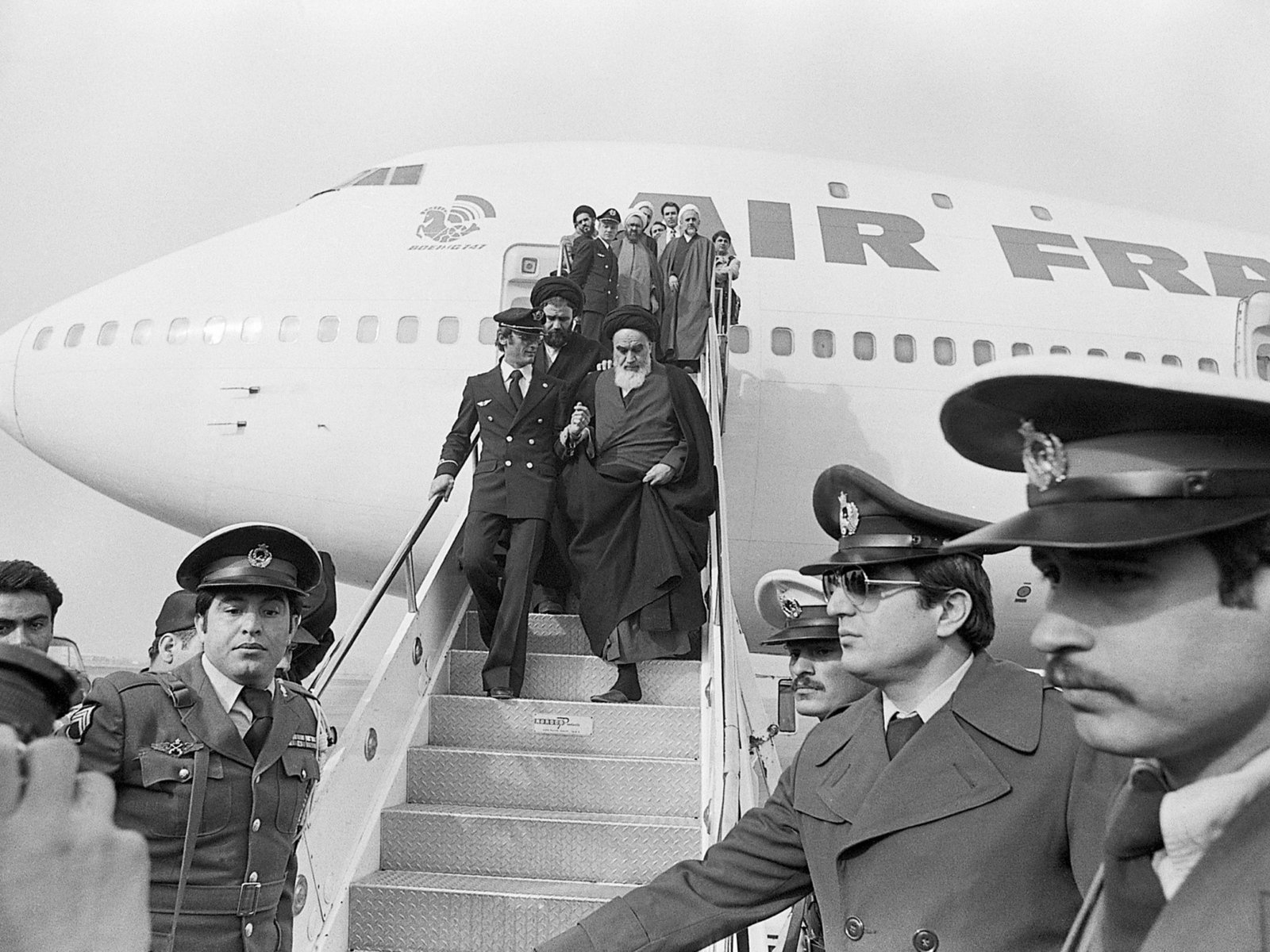
«La calle ardía de protestas y se escuchaban disparos», el enviado de Clarín en Irán hace 47 años en la caída del Sha


NEWYou can now listen to Fox News articles!
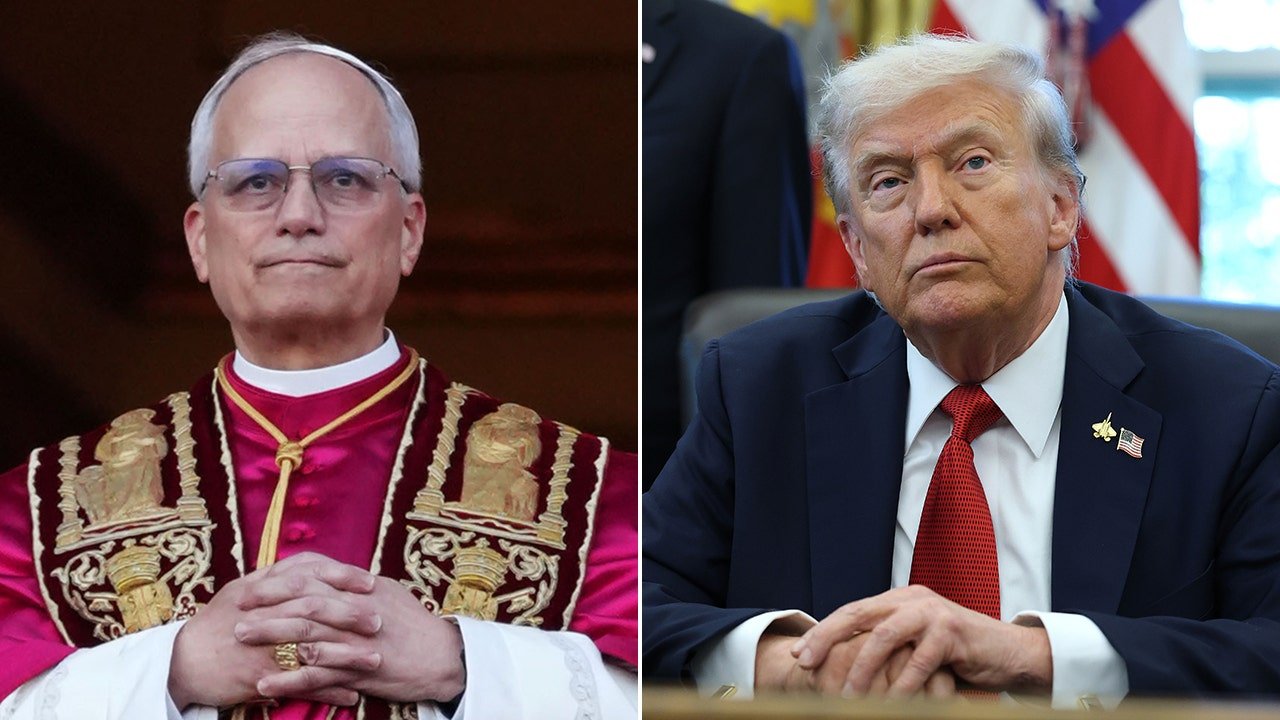
People Leo XIV on Saturday announced the appointment of the Vatican’s new ambassador, Apostolic Nuncio, to the U.S. to help manage strained relations with the Trump administration.
Italian Archbishop Gabriele Caccia, 68, a veteran Vatican diplomat who is currently ambassador to the United Nations, previously served as ambassador to the Philippines and Lebanon.
Caccia is replacing 80-year-old Cardinal Christophe Pierre, who is retiring.
«I receive this mission with both joy and a sense of trepidation,» Caccia said after the appointment, according to the Vatican News. He added that his mission was «at the service of communion and peace,» remembering that 2026 marks the 250th anniversary of the U.S.
People Leo XIV on Saturday announced the appointment of the Vatican’s new ambassador, Apostolic Nuncio, to the U.S. to help manage strained relations with the Trump administration. (Christopher Furlong/Getty Images; Anna Moneymaker/Getty Images)
The pope and President Donald Trump have been at odds over key issues for the White House, including immigration and the war in Iran.
Pierre’s ambassadorship was also at times at odds with the more conservative U.S. Conference of Catholic Bishops while representing Pope Francis’ more progressive priorities.
«Stability and peace are not built with mutual threats, nor with weapons, which sow destruction, pain, and death, but only through a reasonable, authentic, and responsible dialogue,» the American-born pope said on Sunday after the U.S. and Israel launched coordinated strikes on Iran, according to the outlet Chicago Catholic.
POPE LEO URGES DIALOGUE OVER MILITARY ACTION AFTER FAILED MADURO, TRUMP CALL
«Faced with the possibility of a tragedy of enormous proportions, I address to the parties involved a heartfelt appeal to assume the moral responsibility to stop the spiral of violence before it becomes an irreparable abyss,» he added.
In early January, Leo also delivered a major policy speech, mostly in English, that came on the heels of the U.S. military action in Venezuela.
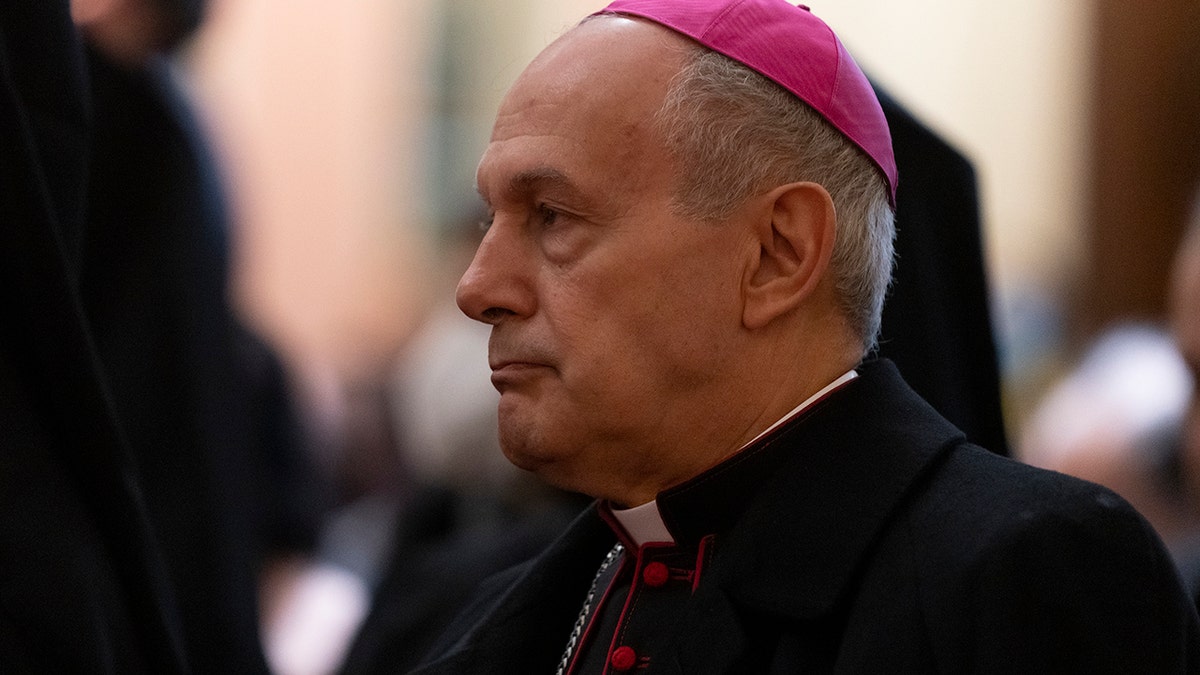
Archbishop Gabriele Caccia has been appointed by the pope as the new Vatican ambassador to the U.S. (Lev Radin/Pacific Press/LightRocket via Getty Images)
«War is back in vogue and a zeal for war is spreading,» the pope warned in the speech.
Trump called it a «great honor for our country» when Leo was elected pope last May after Pope Francis’ death, and when asked about Leo’s remarks earlier this year seemingly pressing him on policy, Trump told Politico he hadn’t seen the statements from the pontiff, but «I’m sure he’s a lovely man.»
He also said that he had met with the pope’s brother, who he called «serious MAGA.»
Last fall, the pope suggested that supporting the «inhuman treatment of immigrants in the United States» is not «pro-life,» leaving White House press secretary Karoline Leavitt to «reject there was inhumane treatment of illegal immigrants in the United States under this administration.»
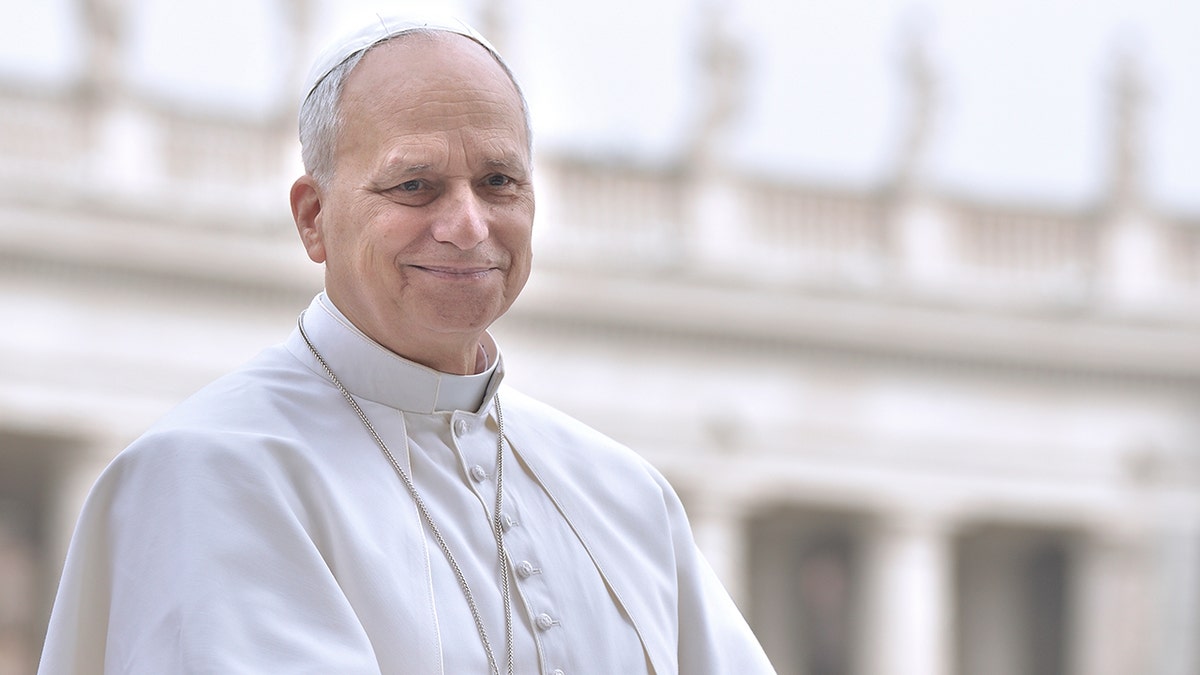
The pope and the Trump administration have been at odds over immigration and U.S. military actions. (Rocco Spaziani/Archivio Rocco Spaziani/Mondadori Portfolio via Getty Images)
Leavitt, who is Catholic, added that the administration always tries to be as humane as possible while enforcing laws.
CLICK HERE TO DOWNLOAD THE FOX NEWS APP
Archbishop Paul S. Coakley, current president of the U.S. conference, said after Caccia’s appointment: «On behalf of my brother bishops, I wish to extend our warmest welcome and our prayerful support to him as he carries out his responsibilities across the United States.»
Trump won 59% of the Catholic vote in the 2024 election, according to Politico.
The Associated Press contributed to this report.
Related Article
pope leo xiv,donald trump,world,roman catholic,geopolitics
NEWYou can now listen to Fox News articles!
During the Shield of the Americas summit in Florida on Saturday, outgoing Department of Homeland Security (DHS) Secretary Kristi Noem thanked President Donald Trump for appointing her to a newly created role after she was ousted from overseeing the agency.
Noem, who is moving to the newly created position of special envoy for the Shield of the Americas, showed no ill feelings toward the president and said she was proud of her work at DHS, arguing the department had secured the border and eliminated public safety threats.
«I do want to thank the president for creating this and for giving me the honor and the opportunity to serve as a special envoy to this region, to the Western Hemisphere,» Noem said during the summit at Trump National Doral outside Miami.
«This Shield of the Americas will be a powerful example to the rest of the world about what’s possible.»
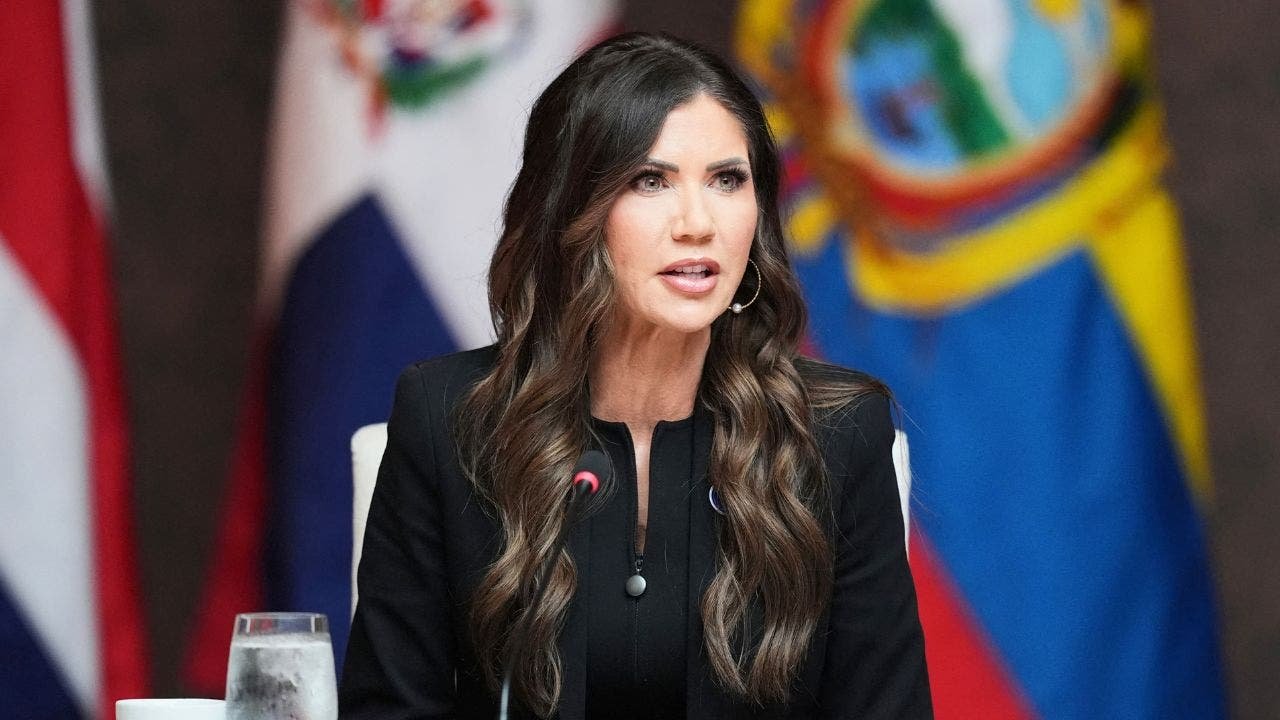
Homeland Security Secretary Kristi Noem delivers remarks during a working lunch at the Shield of the Americas summit, Saturday, at Trump National Doral near Miami. (Rebecca Blackwell / Pool / AFP via Getty Images)
Trump announced this week that Noem would shift into the new role after cutting short her tenure at DHS.
Noem was removed as the nation’s immigration chief after a turbulent stretch marked by internal clashes and two contentious congressional hearings where even some Republicans pressed her over leadership missteps, including the ad campaign, which she claimed the president had signed off on.
Noem framed the initiative as an effort to expand border security cooperation beyond the United States.
«The way that we cooperate on our shared ideals of freedom and of democracy and safety and security will be a shining light to all of those who wish to be more like all of us,» she said.
WHAT’S NEXT FOR KRISTI NOEM? 2026 SENATE CHATTER GROWS AFTER DHS EXIT
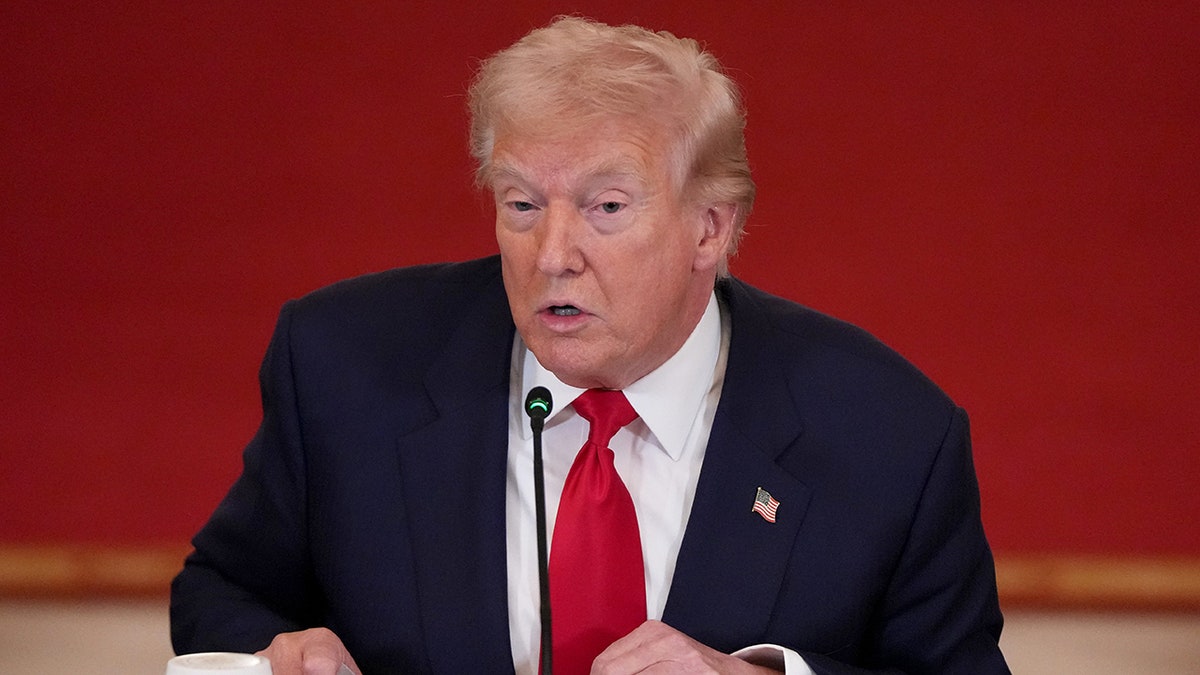
Trump removed Noem as the nation’s DHS chief this week after a turbulent stretch. (Julia Demaree Nikhinson/AP Photo)
Noem, who previously served in Congress and as South Dakota governor before leading DHS, defended her record overseeing immigration enforcement during the past year.
«In the last year, as secretary of Homeland Security, we have focused on securing our border,» she said. «We have transformed our country from one that was being invaded by enemies, millions of them that were coming in unvetted, that we didn’t know who was there and who wished to harm us.»
«We’ve secured that border,» she continued. «We’ve focused on removing public safety threats, and over 3 million people have been deported or removed from our country in the last year.»
Noem argued that stronger border enforcement has allowed the administration to pivot toward economic and diplomatic engagement with neighboring nations.
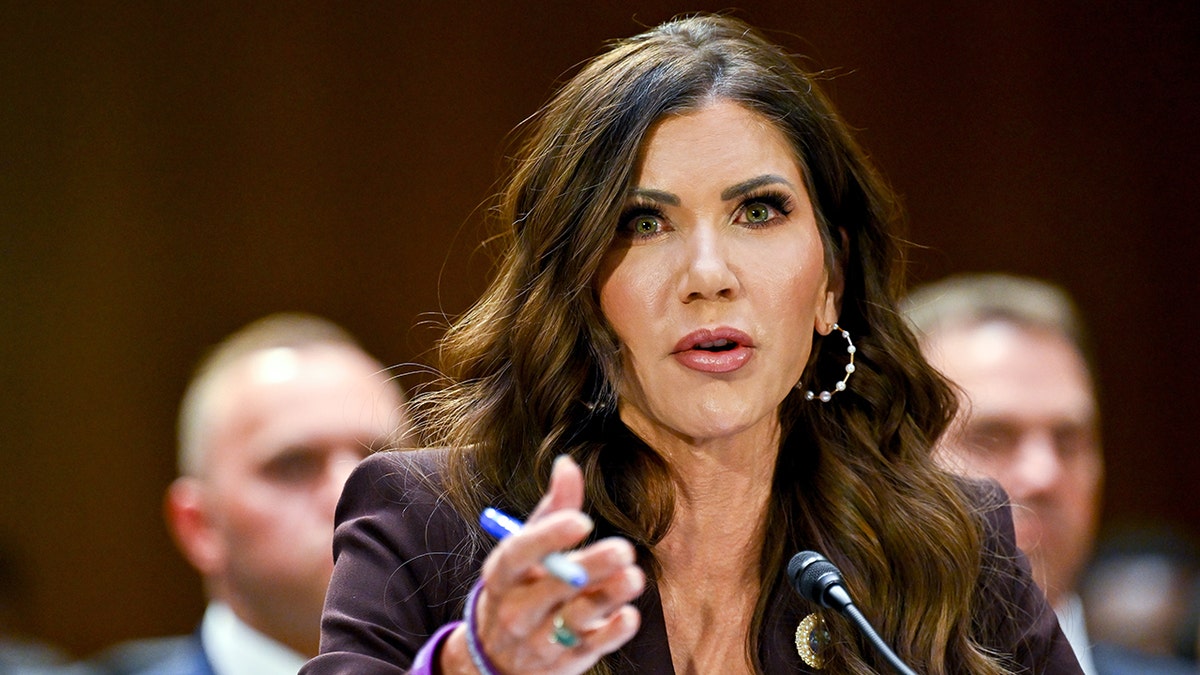
DHS Secretary Kristi Noem testifies before the Senate Judiciary Committee on Capitol Hill. (Graeme Sloan/Getty Images)
«Secure borders has changed everything for our country,» she said. «Now that America is secure and our borders are secure, we want to focus on our neighbors and to help our neighbors with their borders and challenges that they have so that they may have the security that we enjoy.»
Trump announced on Truth Social that Sen. Markwayne Mullin, R-Okla., will replace her effective March 31, while Noem shifts to the newly created envoy role.
Members of Trump’s Cabinet, including Secretary of State Marco Rubio, Secretary of War Pete Hegseth, Secretary of Commerce Howard Lutnick and United States Trade Representative Jamieson Greer attended Saturday’s summit.
CLICK HERE TO DOWNLOAD THE FOX NEWS APP
Leaders from other nations included Argentina’s Javier Milei, El Salvador’s Nayib Bukele Ortez, Bolivia’s Rodrigo Paz Pereira, Costa Rica’s Rodrigo Chaves Robles, Panama’s José Raúl Mulino Quintero, and Trinidad and Tobago’s Kamla Persad-Bissessar, Chile’s Jose Antonio Kast, the Dominican Republic’s Luis Rodolfo Abinader Corona, Ecuador’s Daniel Roy Gilchrist Noboa Azín, Guyana’s Mohamed Irfaan Ali, Honduras’ Nasry «Tito» Asfura and Paraguay’s Santiago Peña.
Notably missing were the leaders of Venezuela, Delcy Rodríguez, and Mexico, Claudia Sheinbaum Pardo.
Fox News Digital’s Alec Schemmel contributed to this report.
Related Article
kristi noem,donald trump,homeland security,politics,americas

«La calle ardía de protestas y se escuchaban disparos», el enviado de Clarín en Irán hace 47 años en la caída del Sha

La invitación de Milei a un influencer español crítico de Pedro Sánchez: “Venite a la Argentina”

Un gobernador aliado al gobierno nacional pidió “cambios tributarios y un mercado de crédito que funcione”

Con un golazo de Lamine Yamal, el Barcelona venció al Athletic Bilbao y se mantiene en la cima de La Liga

Pope Leo picks new Vatican ambassador to US as Trump tensions mount over policies

Trump anunció la creación de una “coalición antinarco” al inaugurar la cumbre Escudo de las Américas de la que participó Milei

El hijo adoptivo de José María Muscari tomó una tajante decisión de vida a los 18 años

¡Interna total! Pablo Layus explotó y blanqueó quiénes son los que arruinan Intrusos: «Te matan»

Javier Milei habló de la crisis con la vicepresidenta: “No quiero la renuncia de Victoria Villarruel”

Mapa de la guerra en Medio Oriente: dos bandos y 13 países involucrados en un conflicto que jaquea al mundo

 POLITICA2 días ago
Javier Milei habló de la crisis con la vicepresidenta: “No quiero la renuncia de Victoria Villarruel”
- CHIMENTOS3 días ago
El desafortunado comentario de Yanina Zilli contra Daniela de Lucía, tras la muerte de su padre: “Jugamos con lo personal”
- CHIMENTOS2 días ago
Ian Lucas se hartó de las mentiras de Evangelina Anderson y confirmó que fueron novios: “Ella me da vergüenza”