INTERNACIONAL
Former Zelenskyy associate accused in $100 million embezzlement scheme


NEWYou can now listen to Fox News articles!
A former associate of Ukrainian President Volodymyr Zelenskyy has been accused of being the mastermind behind a $100 million embezzlement scheme.
Tymur Mindich, who was once Zelenskyy’s business partner, was identified by Ukraine’s anti-corruption watchdogs as being the orchestrator of a scheme involving top officials and Ukraine’s state nuclear power company. Prior to the scandal, some feared Mindich’s growing influence over Ukraine’s lucrative industries that he had access to because of his ties to Zelenskyy.
Mindich allegedly exerted control over loyalists who then pressured contractors for Energoatom, Ukraine’s state-owned nuclear power company, demanding kickbacks to bypass bureaucratic obstacles. The requested kickbacks were reportedly as high as 15%.
Despite his history with Mindich, Zelenskyy was not implicated in the investigation. The Ukrainian president also issued sanctions against his former business partner once the anti-corruption findings were revealed.
TRUMP ADMINISTRATION STAYS SILENT AS MASSIVE UKRAINE CORRUPTION SCANDAL ROCKS ZELENSKYY’S INNER CIRCLE
Ukrainian President Volodymyr Zelenskyy participates in a briefing at the Office of the President following a staff meeting in Kyiv, Ukraine, on Nov. 7, 2025. (Pavlo Bahmut/Ukrinform/NurPhoto via Getty Images)
On Nov. 11, Ukraine’s National Anti-Corruption Bureau (NABU) said that a group of individuals, including Mindich, «set up a major corruption scheme to control key state-owned enterprises,» including the country’s state-owned nuclear agency, the Kyiv Independent reported. The Ukrainian news outlet said that sources confirmed law enforcement searched properties tied to Mindich on Nov. 10, but he was tipped off and fled.
Mindich remains at large, with Politico reporting that he fled to Israel as the scheme unraveled and law enforcement zeroed in on him.
«Any effective actions against corruption are very needed. The inevitability of punishment is necessary,» Zelenskyy said in an evening address, according to the Kyiv Independent.

Ukrainian President Volodymyr Zelenskyy during a Coalition of the Willing meeting in London on Friday, Oct. 24, 2025. (Chris J. Ratcliffe/Bloomberg via Getty Images)
TOP UKRAINIAN OFFICIALS IN ZELENSKYY GOVERNMENT SUBMIT RESIGNATIONS AMID $100 MILLION CORRUPTION SCANDAL
The NABU’s 15-month investigation allegedly involved 1,000 hours of wiretapping and resulted in 70 raids, the Kyiv Independent reported, citing the agency.
«What we were hearing only as rumors now has some evidence,» activist Tetiana Shevchuk of Ukraine’s Anti-Corruption Action Center told The Associated Press. «For a long time we have heard that Tymur Mindich is a shadow controller of the energy sector.»
In addition to Mindrich, Justice Minister Herman Halushchenko, who was Energy Minister from 2021 to 2025, was also raided, according to the Kyiv Independent, which cited sources.
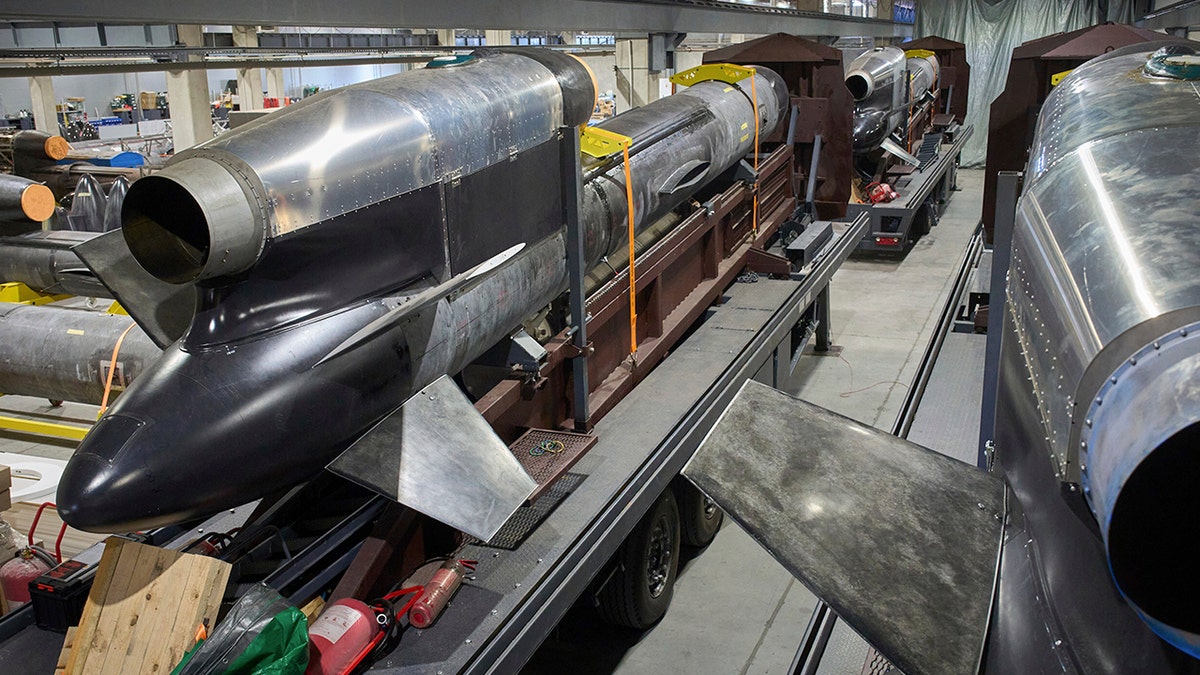
Flamingo missiles are seen at Fire Point’s secret factory in Ukraine on Aug. 18, 2025. (Efrem Lukatsky, File/AP Photo)
Mindich was co-owner of Zelenskyy’s production company Kvartal 95, something that Shevchuk believes pushed him toward politics. The activist told the AP that Mindich «would have never been in politics, never been in a position of power or business without his connection to Zelenskyy, and this magnitude is worse because it’s happening during war time, and it is related to energy infrastructure at a time when Ukrainians don’t have electricity in their homes.»
This isn’t the only NABU investigation centered on Mindich. The anti-corruption agency is allegedly working on a probe into the former Zelenskyy associate’s dealings with Ukraine’s top drone manufacturer, Fire Point. However, NABU has yet to release its findings in that investigation.
CLICK HERE TO DOWNLOAD THE FOX NEWS APP
Fox News Digital reached out to Zelenskyy’s office for comment.
The Associated Press contributed to this article.
ukraine,volodymyr zelenskyy,conflicts












INTERNACIONAL
Qué es la “ficción reparadora”, el género literario que no sólo muestra el dolor sino que intenta sanarlo

En los últimos años empezó a circular, en el ámbito literario y crítico, una expresión que despierta curiosidad: “ficción reparadora”. No designa un género ni una moda pasajera, sino una manera de entender para qué sirve contar historias. La idea es sencilla y, al mismo tiempo, potente: hay relatos que no solo representan el dolor o el conflicto, sino que trabajan sobre ellos, los transforman simbólicamente y ofrecen una experiencia de elaboración. En lugar de limitarse a mostrar la herida, intentan intervenirla desde la imaginación.
No se trata de un género con reglas fijas ni de una fórmula de autoayuda encubierta, sino de una sensibilidad narrativa: historias que parten de una pérdida, una decepción o una crisis vital y acompañan a sus personajes en un proceso de recomposición. En un presente saturado de distopías y relatos de colapso, estas ficciones eligen otro foco: no negar la oscuridad, pero sí explorar cómo se reconstruye una vida después del quiebre.
Un ejemplo es La tienda de los deseos, de Hiyoko Kurisu, donde una tienda aparentemente común en un barrio japonés ofrece algo más que objetos: cada artículo, mínimo y cotidiano, habilita a sus clientes a revisar heridas íntimas y ensayar cambios posibles. En la misma línea, Mis días en la librería Morisaki, de Satoshi Yagisawa, sitúa la reparación en el corazón de una librería de Tokio: entre estanterías y cafés, los vínculos inesperados y la hospitalidad del mundo del libro se convierten en una forma de recomenzar. En ambos casos, la ficción no promete milagros; propone algo más verosímil y acaso más poderoso: la posibilidad de volver a armarse, página a página.

La “ficción reparadora”, originaria de Japón y Corea, ha captado el interés de importantes casas editoras en Estados Unidos y Reino Unido, que han acelerado la adquisición de derechos y la publicación de títulos similares tras el crecimiento exponencial de lectores en los últimos años.
Este tipo de ficción ocupa un lugar destacado en las listas de best sellers, con ventas superiores a 3 millones de ejemplares solo en mercados angloparlantes para series como Antes de que se enfríe el café de Toshikazu Kawaguchi.
El organismo público coreano Literature Translation Institute informó que 150 obras coreanas se publicaron en español entre 2001 y 2024, la mayoría en el último lustro. Destacadas editoras, como Shannon DeVito de Barnes & Noble y Sara Nelson de Harper, consideran que este fenómeno representa el mayor boom de narrativa traducida desde el auge del noir escandinavo, apoyado por la acción concertada de libreros, agentes de derechos y plataformas digitales.

El modelo editorial se orienta a capitalizar la demanda de libros que funcionen como refugio emocional, impulsando la publicación masiva de títulos inéditos en español e inglés, así como lanzamientos y reediciones notables como La asombrosa tienda de la señora Yeom de Kim Ho-Yeon, que acumula más de 1 millón de copias vendidas y ha sido traducida a 23 idiomas, y El misterio de la lavandería de Yeonnam-dong de Kim Jiyun, que alcanzó 18 reediciones antes de su adaptación musical.
En la Argentina, ya se está escribiendo el género. Por ejemplo, la periodista y escritora Silvia Cordano -que es coautora de Nuestras Mujeres de Malvinas- por estos días está presentando los relatos de Las acuarelas prodigiosas.
Las novelas que se agrupan bajo la etiqueta de ficción reparadora se distinguen por tramas centradas en escenarios cotidianos —cafeterías, librerías, lavanderías o tiendas de barrio— y abordan conflictos emocionales, como la soledad, el duelo o la culpa, desde la contención y la empatía más que desde la intensidad dramática. El componente mágico realista aparece de forma recurrente: cafeterías donde se puede viajar en el tiempo, gatos sanadores, tiendas que venden sueños y librerías cuyas recomendaciones pretenden transformar vidas.

Editoras como Elena Ramírez de Planeta y Anik Lapointe de Salamandra describen este tipo de literatura como una narrativa de detalles sin sobresaltos, centrada en el bienestar y el valor de la comunidad frente a la incertidumbre global.
Estos títulos suelen tener estructura episodica y breve, favoreciendo la lectura en dispositivos móviles, y se destinan a un público joven-adulto, especialmente mujeres de 18 a 35 años, aunque el alcance se expande a adolescentes gracias a la penetración de la cultura coreana y japonesa en el entretenimiento masivo.
El protagonismo de los libros, la comida y los gatos —elemento visual utilizado por editoriales en portadas, aunque no siempre central— refuerza la construcción de marca y contribuye a la viralización de estas obras en redes sociales y espacios destacados de librerías.
La difusión masiva de la ficción reparadora tiene su raíz en la viralización en TikTok e Instagram, como demuestran los vídeos vinculados a la saga de Kawaguchi, que superan los 28 millones de visualizaciones y han llevado a sellos como Hanover Square Press, Sunmark, Planeta, Plaza & Janés y Duomo a redoblar la apuesta por el género. Los eventos de firmas en ciudades como Nueva York, Toronto, Los ángeles o Dubái reflejan la dimensión internacional y la capacidad de estas historias para movilizar lectores y ventas en mercados muy distintos.

Un factor central en la expansión ha sido el papel de la traducción y la intermediación editorial. Según fuentes periodísticas, la preferencia por títulos japoneses en Reino Unido es tal que el 43 % de los libros traducidos más vendidos provinieron de Japón. El español ya es el sexto idioma con mayor recepción de obras coreanas, superando los 150 títulos en 25 años, con crecimiento acelerado desde la pandemia.
La respuesta de editoriales como Berkley (Penguin Random House) y HarperOne (HarperCollins) ha impulsado la publicación de secuelas y spin-offs ligados a best sellers recientes, incluyendo adaptaciones rápidas de fenómenos como Te receto un gato de Syou Ishida y Mis días en la librería Morisaki de Satoshi Yagisawa.
El auge de la ficción reparadora es reflejo del renovado interés global por la cultura japonesa y coreana, alimentado por el éxito transversal del K-pop, los K-dramas, el manga y el anime, así como el reconocimiento de la creatividad empática presente en estas narrativas.
Directivos como Jaekwang Shin del Centro Cultural Coreano en España han trazado paralelismos históricos y sociales entre estas culturas y sus mercados editoriales de referencia, mientras responsables de librerías independientes, como Andrea Stefanoni en Madrid y Jessica Callahan en Estados Unidos, han comprobado el aumento del interés y la capacidad de estas historias para atraer nuevos lectores.
librería,Japón,Corea,magia,fantasía,juventud,comunidad,gatos,lectura,consuelo
NEWYou can now listen to Fox News articles!
President Donald Trump warned that Iran is working to build missiles that could «soon reach the United States of America,» elevating concerns about a weapons program that already places U.S. forces across the Middle East within range.
Iran does not currently possess a missile capable of striking the U.S. homeland, officials say. But its existing ballistic missile arsenal can target major American military installations in the Gulf, and U.S. officials say the issue has emerged as a key sticking point in ongoing nuclear negotiations.
Here’s what Iran can hit now — and how close it is to reaching the U.S.
What Iran can hit right now
A map shows what is within range of ballistic missiles fired from Iran. (Fox News)
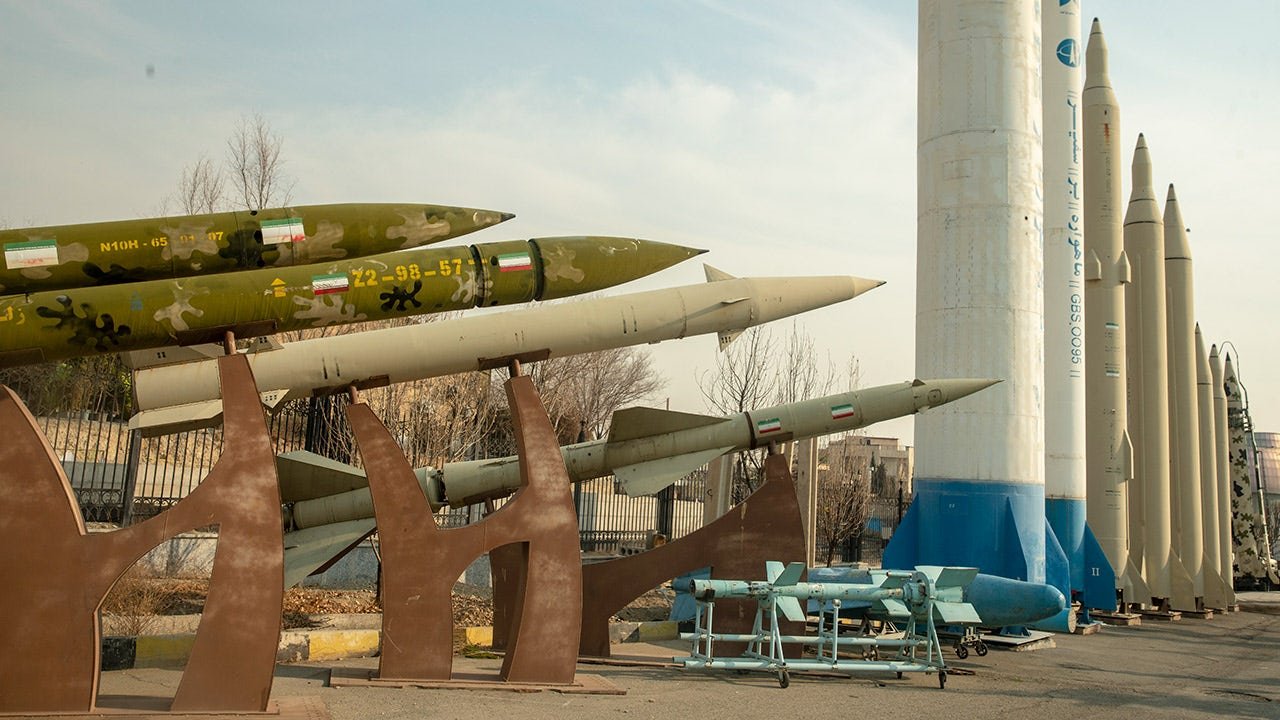
Iran is widely assessed by Western defense analysts to operate the largest ballistic missile force in the Middle East. Its arsenal consists primarily of short- and medium-range ballistic missiles with ranges of up to roughly 2,000 kilometers — about 1,200 miles.
That range places a broad network of U.S. military infrastructure across the Gulf within reach.
Among the installations inside that envelope:
IRAN SIGNALS NUCLEAR PROGRESS IN GENEVA AS TRUMP CALLS FOR FULL DISMANTLEMENT
- Al Udeid Air Base in Qatar, forward headquarters for U.S. Central Command.
- Naval Support Activity Bahrain, home to the U.S. 5th Fleet.
- Camp Arifjan in Kuwait, a major Army logistics and command hub.
- Ali Al Salem Air Base in Kuwait, used by U.S. Air Force units.
- Prince Sultan Air Base in Saudi Arabia.
- Al Dhafra Air Base in the United Arab Emirates.
- Muwaffaq Salti Air Base in Jordan, which hosts U.S. aircraft.
U.S. forces have drawn down from some regional positions in recent months, including the transfer of Al Asad Air Base in Iraq back to Iraqi control earlier in 2026. But major Gulf installations remain within the range envelope of Iran’s current missile inventory.
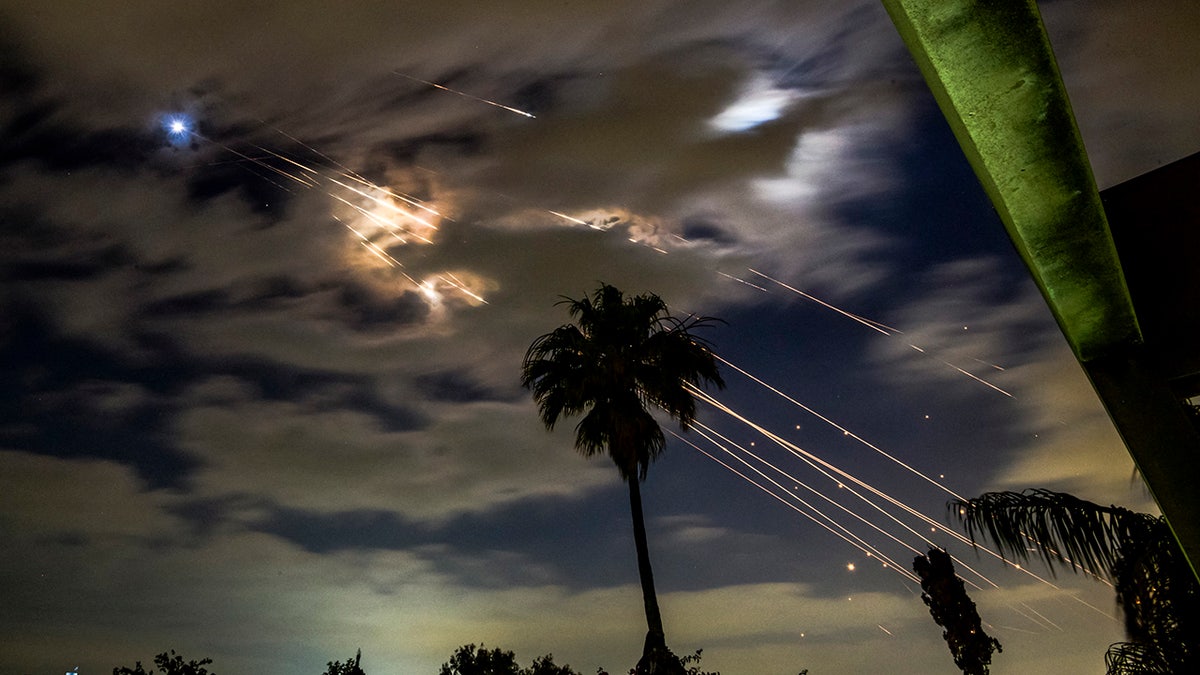
Israel’s air defense targets Iranian missiles in the sky of Tel Aviv in Israel, June 16, 2025. (MATAN GOLAN/Middle East Images/AFP via Getty Images)
Multiple U.S. officials told Fox News that staffing at the Navy’s 5th Fleet headquarters in Bahrain has been reduced to «mission critical» levels amid heightened tensions. A separate U.S. official disputed that characterization, saying no ordered departure of personnel or dependents has been issued.
At the same time, the U.S. has surged significant naval and air assets into and around the region in recent days.
The USS Abraham Lincoln Carrier Strike Group is operating in the Arabian Sea alongside multiple destroyers, while additional destroyers are positioned in the eastern Mediterranean, Red Sea and Persian Gulf.
The USS Gerald R. Ford Carrier Strike Group is also headed toward the region. U.S. Air Force fighter aircraft — including F-15s, F-16s, F-35s and A-10s — are based across Jordan, Saudi Arabia and Bahrain, supported by aerial refueling tankers, early warning aircraft and surveillance platforms, according to a recent Fox News military briefing.
Iran has demonstrated its willingness to use ballistic missiles against U.S. targets before.
In January 2020, following the U.S. strike that killed Islamic Revolutionary Guard Corps Gen. Qassem Soleimani, Iran launched more than a dozen ballistic missiles at U.S. positions in Iraq. Dozens of American service members were later diagnosed with traumatic brain injuries.
That episode underscored the vulnerability of forward-deployed forces within reach of Iran’s missile arsenal.
Can Iran reach Europe?
Most publicly known Iranian missile systems are assessed to have maximum ranges of around 2,000 kilometers.
Depending on launch location, that could place parts of southeastern Europe — including Greece, Bulgaria and Romania — within potential reach. The U.S. has some 80,000 troops stationed across Europe, including in all three of these countries.
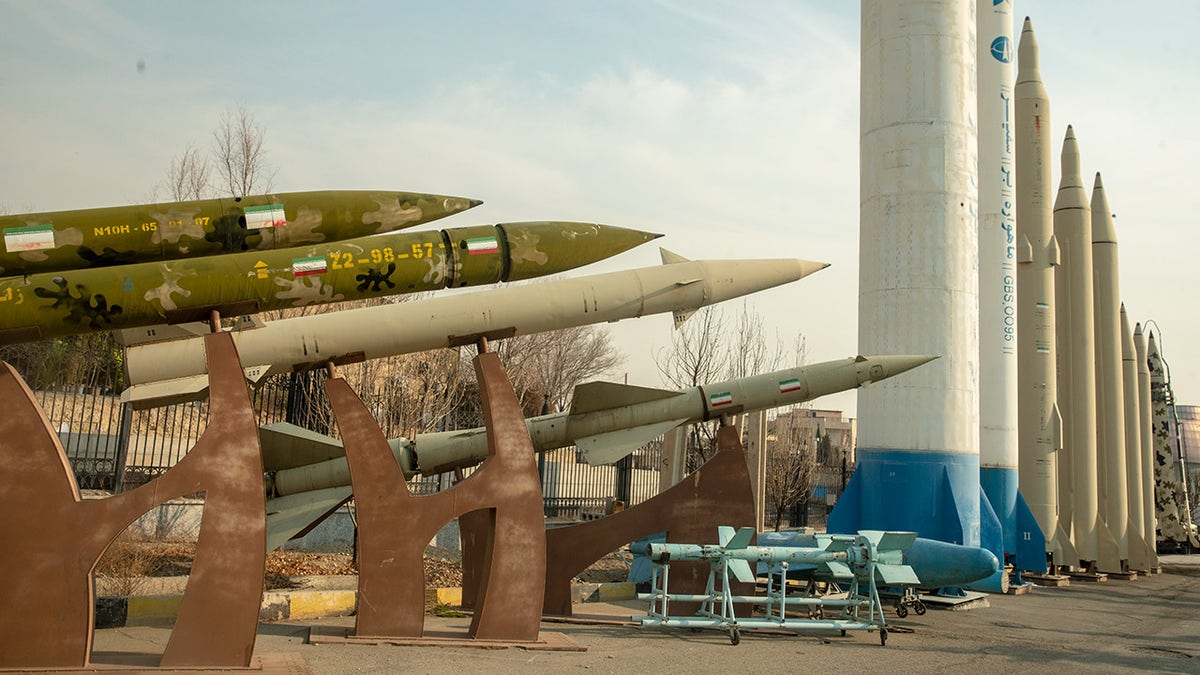
Iran is widely assessed by Western defense analysts to operate the largest ballistic missile force in the Middle East. (Majid Saeedi/Getty Images)
Reaching deeper into Europe would require longer-range systems than Iran has publicly demonstrated as operational.
Can Iran hit the US?
IRAN NEARS CHINA ANTI-SHIP SUPERSONIC MISSILE DEAL AS US CARRIERS MASS IN REGION: REPORT
Iran does not currently field an intercontinental ballistic missile (ICBM) capable of striking the U.S. homeland.
To reach the U.S. East Coast, a missile would need a range of roughly 10,000 kilometers — far beyond Iran’s known operational capability.
However, U.S. intelligence agencies have warned that Iran’s space launch vehicle program could provide the technological foundation for a future long-range missile.
In a recent threat overview, the Defense Intelligence Agency stated that Iran «has space launch vehicles it could use to develop a militarily-viable ICBM by 2035 should Tehran decide to pursue the capability.»
That assessment places any potential Iranian intercontinental missile capability roughly a decade away — and contingent on a political decision by Tehran.
U.S. officials and defense analysts have pointed in particular to Iran’s recent space launches, including rockets such as the Zuljanah, which use solid-fuel propulsion. Solid-fuel motors can be stored and launched more quickly than liquid-fueled rockets — a feature that is also important for military ballistic missiles.
Space launch vehicles and long-range ballistic missiles rely on similar multi-stage rocket technology. Analysts say advances in Iran’s space program could shorten the pathway to an intercontinental-range missile if Tehran chose to adapt that technology for military use.
For now, however, Iran has not deployed an operational ICBM, and the U.S. homeland remains outside the reach of its current ballistic missile arsenal.
US missile defenses — capable but finite
The U.S. relies on layered missile defense systems — including Terminal High Altitude Area Defense (THAAD), Patriot and ship-based interceptors — to protect forces and allies from ballistic missile threats across the Middle East.
These systems are technically capable, but interceptor inventories are finite.
During the June 2025 Iran-Israel missile exchange, U.S. forces reportedly fired more than 150 THAAD interceptors — roughly a quarter of the total the Pentagon had funded to date, according to defense analysts.
The economics also highlight the imbalance: open-source estimates suggest Iranian short-range ballistic missiles can cost in the low hundreds of thousands of dollars apiece, while advanced U.S. interceptors such as THAAD run roughly $12 million or more per missile.
Precise inventory levels are classified. But experts who track Pentagon procurement data warn that replenishing advanced interceptors can take years, meaning a prolonged, high-intensity missile exchange could strain stockpiles even if U.S. defenses remain effective.
Missile program complicates negotiations
The ballistic missile issue has also emerged as a key fault line in ongoing diplomatic efforts between Washington and Tehran.
Secretary of State Marco Rubio has said Iran’s refusal to negotiate limits on its ballistic missile program is «a big problem,» signaling that the administration views the arsenal as central to long-term regional security.
While current negotiations are focused primarily on Iran’s nuclear program and uranium enrichment activities, U.S. officials have argued that delivery systems — including ballistic missiles — cannot be separated from concerns about a potential nuclear weapon.
CLICK HERE TO DOWNLOAD THE FOX NEWS APP
Iranian officials, however, have insisted their missile program is defensive in nature and not subject to negotiation as part of nuclear-focused talks.
As diplomacy continues, the strategic reality remains clear: Iran cannot currently strike the U.S. homeland with a ballistic missile. But U.S. forces across the Middle East remain within range of Tehran’s existing arsenal — and future capabilities remain a subject of intelligence concern.
Related Article

iran,conflicts defense,middle east,pentagon
INTERNACIONAL
La política exterior de Trump y algunas señales de lo que vendrá: ¿Resucitar el imperio?


El polémico discurso del senador libertario Enzo Fullone sobre los glaciares

Las estrategias que evalúa el Gobierno para lograr que la AFA sea auditada por los veedores de la IGJ

¡Video tremendo! Falló la seguridad y agredieron a Lionel Messi en pleno partido en Puerto Rico: «Riesgo de vida»

El campo destacó el acuerdo con la UE y habló del impacto en la carne y el dólar

Canales para ver el Racing vs. Independiente Rivadavia por el Torneo Apertura

Qué es la “ficción reparadora”, el género literario que no sólo muestra el dolor sino que intenta sanarlo

Jorge Macri prepara su discurso para abrir el año legislativo: el deseo de reelección y el espejo en Bukele

Crisis en la industria: otra multinacional se achica y cierra una planta en la Argentina

Daiana Fernández Molero defendió la reforma laboral: “Va a haber mayor creación de empleo porque va a ser más fácil contratar en blanco”

Uno por uno, todos los famosos que saludaron a Mirtha Legrand por sus 99 años

 POLITICA2 días ago
Jorge Macri prepara su discurso para abrir el año legislativo: el deseo de reelección y el espejo en Bukele
- ECONOMIA2 días ago
Crisis en la industria: otra multinacional se achica y cierra una planta en la Argentina
- CHIMENTOS3 días ago
Natalie Weber, entre rezarle a San Cupertino o enviar a su hija Mía a una maestra particular: “Felicitaciones”