
INTERNACIONAL
Pope Leo XIV begins Lebanon visit amid economic crisis, heightened security concerns

NEWYou can now listen to Fox News articles!
Pope Leo XIV arrived in Lebanon on Sunday, opening the second half of his first international trip as pontiff after three days in Turkey marked by calls for unity, peace and renewed ties among Christian communities.
His stop in Lebanon places him in a nation where Christians have long-faced war, instability and a wave of emigration that has reshaped the country’s demographics.
Lebanon was once a Christian-majority country, a balance reflected in the 1932 census that recorded Christians as just over half the population. No official count has been conducted since, but demographic studies and independent estimates show a significant shift over the past century. As Reuters reported, Christians are now «believed to make up roughly a third of Lebanon’s population,» a decline driven by emigration, conflict, and changing birth rates.
POPE LEO XIV OPENS FIRST FOREIGN TRIP IN TURKEY WITH A VISIT TO CHRISTIANITY’S EARLY HEARTLANDS
Pope Leo XIV and Ecumenical Patriarch Bartholomew I attend a signing ceremony of a joint declaration at the Ecumenical Patriarchate, during Pope’s first apostolic journey, in Istanbul, Turkey on Nov. 29, 2025. (Dilara Senkaya/Reuters/Pool)
JP De Gance, founder and president of Communio, told Fox News Digital that the choice of Turkey and Lebanon as the Pope’s first destinations is intentional. «Pope Leo chose to make Turkey and Lebanon the site of his first trip very likely to emphasize two major themes of his pontificate. Coming out of the conclave that elected him, he has placed a great emphasis on both unity and on peace.»
Lebanon marks the most emotionally charged part of the trip. The last papal visit came in 2012. Pope Francis had hoped to travel there but was unable to make the journey because of health concerns. Lebanon is often described as having the highest proportion of Christians in the Middle East, yet these communities have been devastated by economic collapse, political paralysis and mass migration over the last decade.
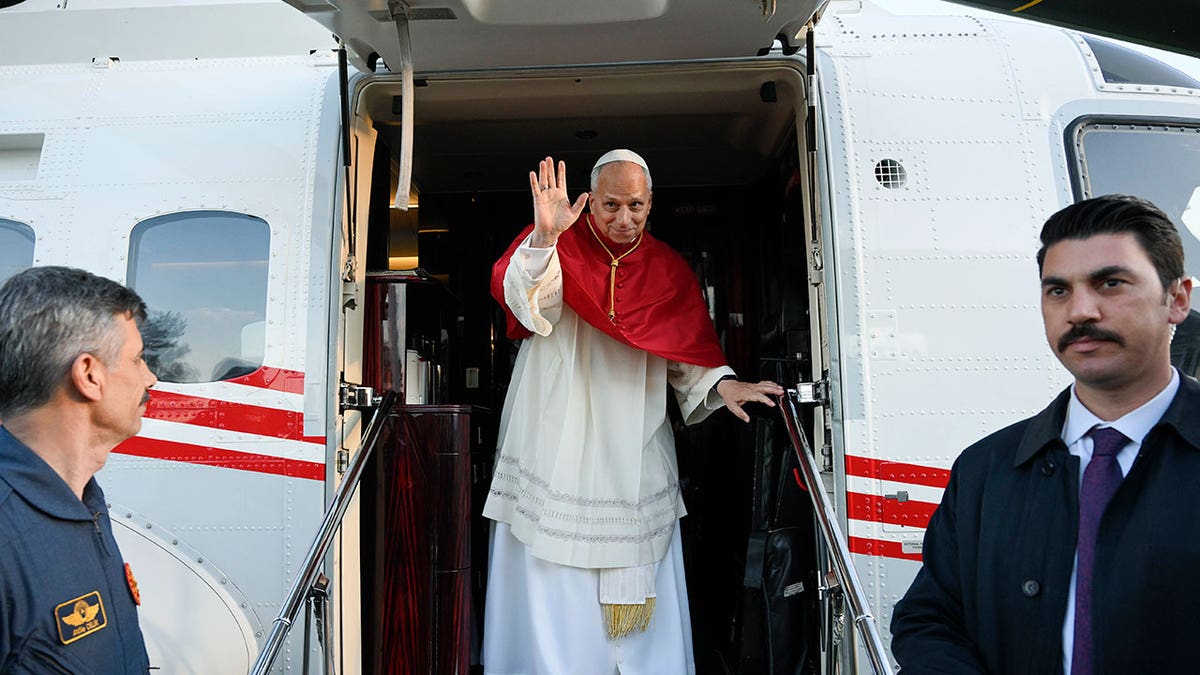
Pope Leo XIV arrives on helicopter near the archaeological excavations of the ancient Basilica of Saint Neophytos to take part in a prayer service with Bartholomew I, on his second day in Turkey on Nov. 28, 2025 in Iznik, Turkey. Pope Leo XIV is making his first foreign trip on a six-day visit to Turkey and Lebanon. During his trip, the Pope is scheduled to meet with faithful from local Catholic communities, as well as political and religious leaders, drawing attention to regional issues. (Photo by Simone Risoluti – Vatican Media via Vatican Pool/Getty Images) ((PhSimone Risoluti/Vatican Media via Vatican Pool/Getty Images)
The Associated Press reported that the Pope’s schedule includes meetings with political leaders, Christian and Muslim clerics and families affected by overlapping national crises. A key moment will come on Dec. 2 when he visits the Port of Beirut, the site of the 2020 explosion that killed more than 200 people and wounded thousands. His presence there is expected to draw significant attention in a country where many still demand accountability for the blast.
Local media outlets report that large crowds are expected despite deep infrastructure problems and ongoing security challenges.
The Pope arrives amid one of Lebanon’s most volatile periods in years, with repeated exchanges of fire along the southern border throughout 2024 and 2025 between Hezbollah and Israeli forces. The clashes displaced residents and raised fears of a wider conflict, prompting questions about whether the situation might force last-minute changes to the papal itinerary.
POPE LEO XIV AGREES TO THROW OUT FIRST PITCH AT WHITE SOX NEW STADIUM AFTER INVITE FROM TEAM OWNER
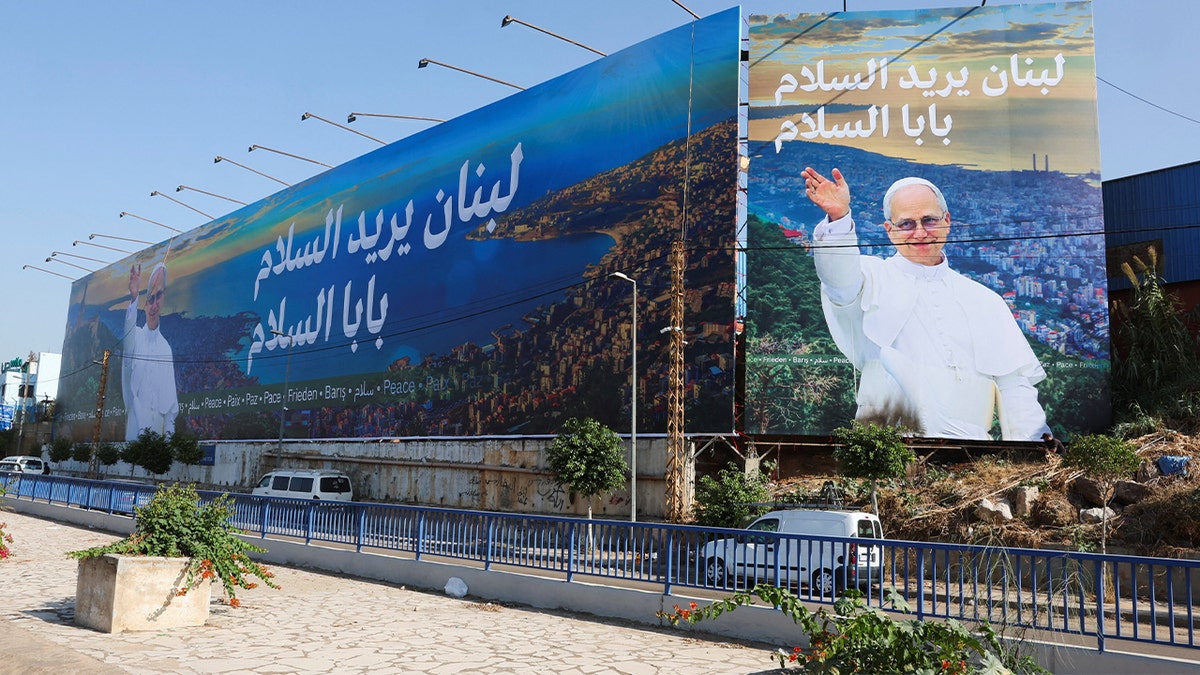
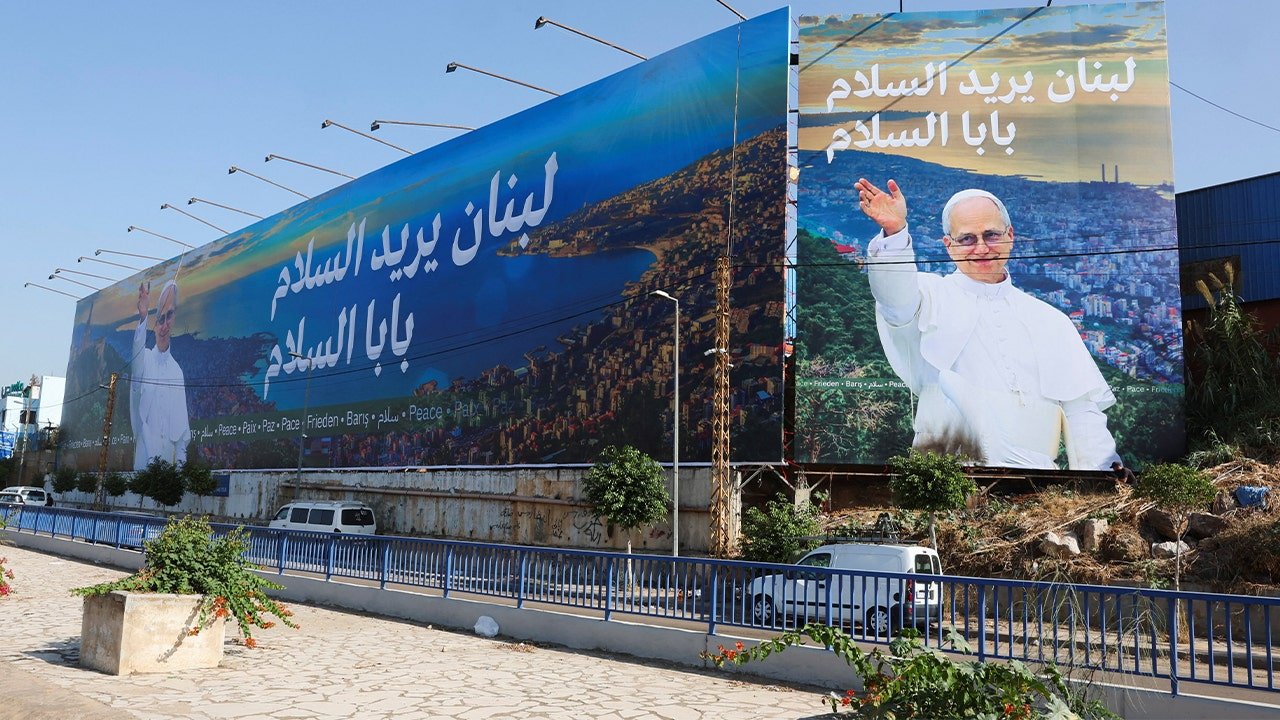
A billboard depicting Pope Leo XIV, ahead of his planned visit to Lebanon, at the main airport road in Beirut, Lebanon Nov. 21, 2025. (Mohamed Azakir/Reuters)
Vatican spokesman Matteo Bruni addressed those concerns in comments to EWTN Vatican, confirming that the schedule remains intact. «There is no specific concern related to the recent Israeli strike,» Bruni said. He added that «the situation was already well known even a few months ago, and all necessary precautionary measures have been taken.»
De Gance said the Lebanon leg underscores the Pope’s focus on Christians in the most vulnerable regions. «In terms of peace, I believe the pope has added Lebanon to this trip because a great many Christian communities — both those in full communion with Rome and those who are Eastern Orthodox — are suffering in a war-torn region.»
He added that the trip also aims to draw international attention to communities often overlooked. «Leo likely wants to bring the bully pulpit of the papacy to the region to bring a message of peace that also advocates for those often forgotten in the West — our Eastern Christian brothers and sisters.»
POPE LEO XIV STRONGLY SUPPORTS US BISHOPS’ CONDEMNATION OF TRUMP IMMIGRATION RAIDS: ‘EXTREMELY DISRESPECTFUL’
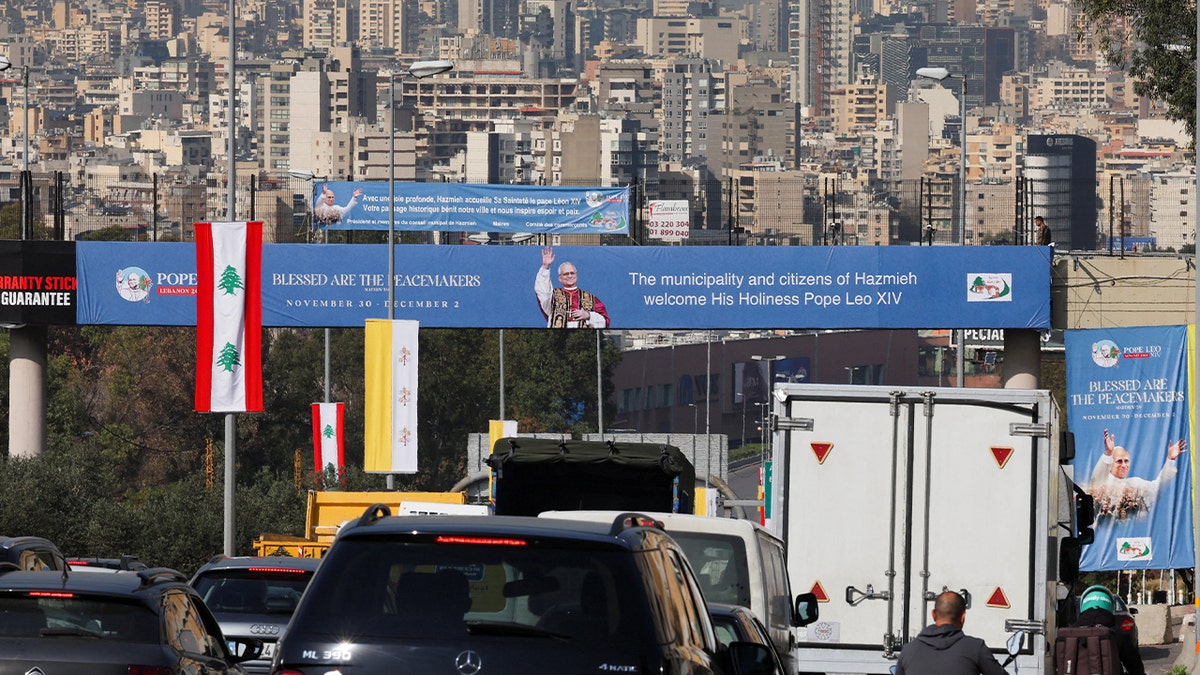
Posters of Pope Leo XIV, along with Lebanese and Vatican flags, are placed along a road ahead of his planned visit to Lebanon, in Hazmieh, Lebanon, on Nov. 28, 2025. (Mohamed Azakir/Reuters)
The themes emerging in Lebanon mirror those set in Turkey, where Pope Leo appealed for dialogue amid regional tensions. His opening days as pontiff emphasized reconciliation, solidarity and support for Christian communities navigating political and social upheaval.
His visit to Turkey, where the Pope marked the 1700th anniversary of the First Council of Nicaea in İznik. At an ecumenical prayer service near the archaeological remains associated with the council, he gathered with Ecumenical Patriarch Bartholomew I and other Christian leaders.
De Gance highlighted the significance of the commemoration. «Pope Leo chose to commemorate the 1,700th anniversary of the Council of Nicea, which has such historic significance because this council helped define the reality — now still accepted by Protestants, Catholics and Orthodox — that Jesus Christ is truly God and truly man.» He added, «At the time of the council, a great many Christians had begun to reject this central apostolic truth. This first council helped settle this controversy and is rightly celebrated today by those in the East and the West as creating greater unity within the entire church.»
CLICK HERE TO DOWNLOAD THE FOX NEWS APP
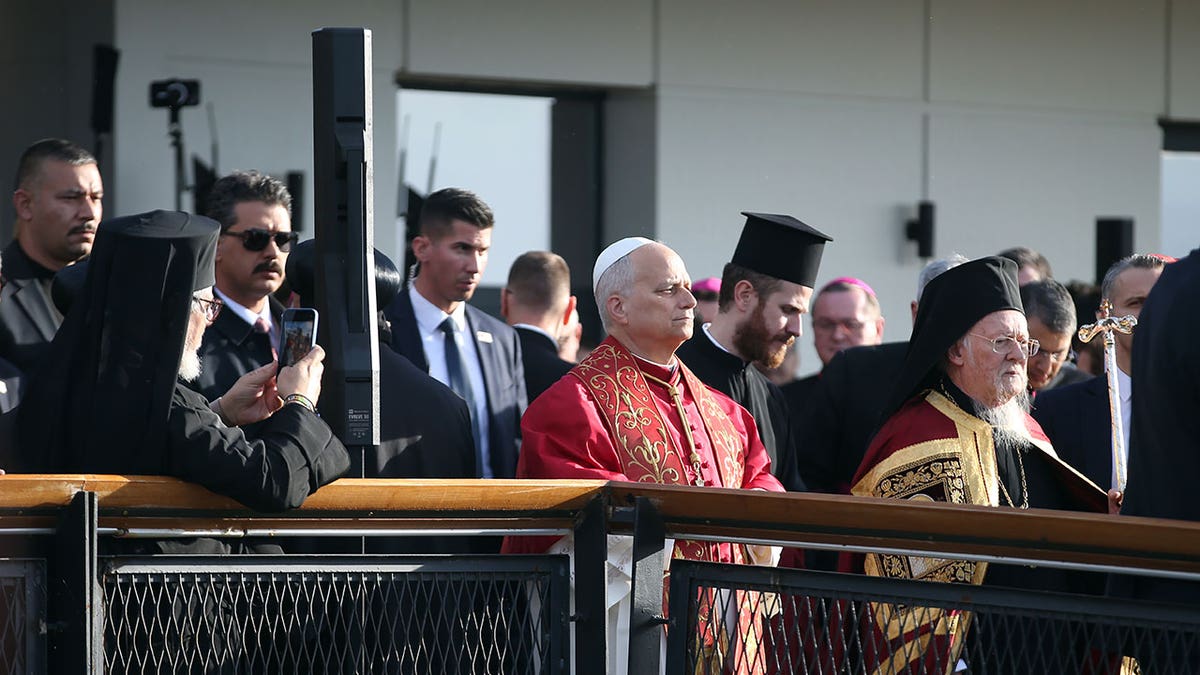
Pope Leo XIV attends a ceremony marking the 1700th anniversary of the First Council of Nicaea held in the ruins of Basilica of Saint Neophytos, revealed in 2014 after water levels receded in Lake Iznik and identified as having been built in honor of Saint Neophytos in Bursa, Turkiye on November 28, 2025. Fener Greek Patriarch Bartholomeos (R) also attended the event. (Photo by Baris Seckin/Anadolu via Getty Images) ((Photo Baris Seckin/Anadolu via Getty Images)
During the ceremonies, Pope Leo emphasized the shared Christian heritage found in the Nicene Creed, a foundational statement of faith recited across denominations.
For many Lebanese Christians, his arrival offers a moment of recognition from Rome and a source of hope during a period of deep national uncertainty.
pope leo xiv,vatican,lebanon,faith,christianity,turkey









INTERNACIONAL
Cristina Kirchner manda una delegación a la cumbre progresista de Pedro Sánchez, que profundiza su pelea con Netanyahu y Trump



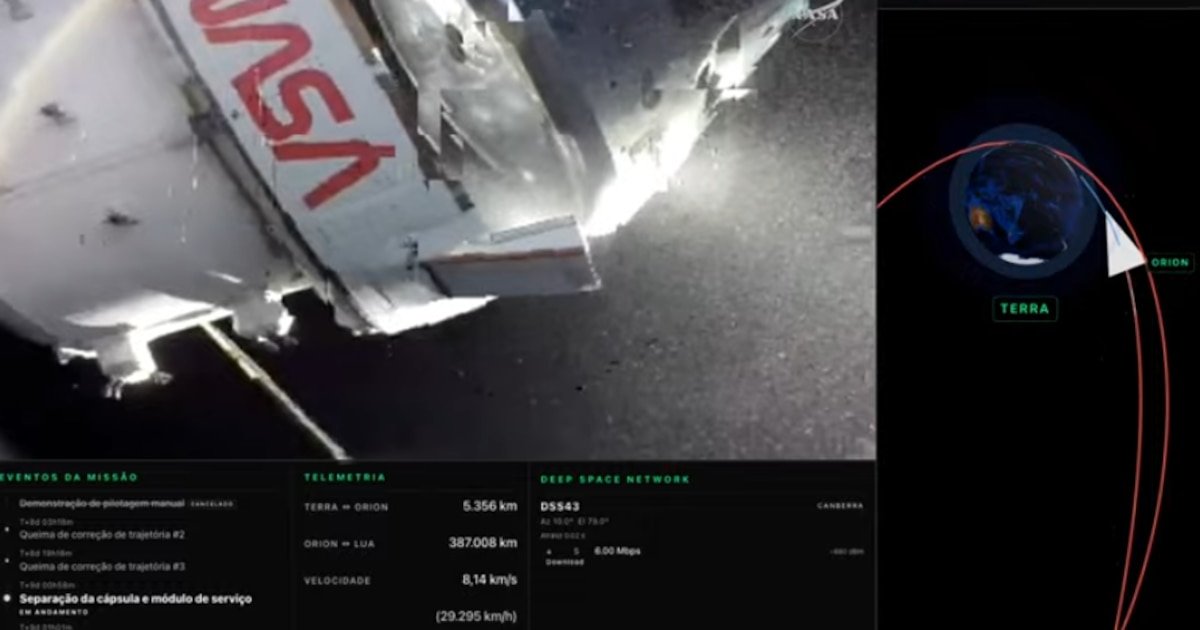
La nave Orión reingresa a la atmósfera a una velocidad de 40.000 km/h.
Hace un minuto, la cápsula Orión se desacopló del módulo europeo de servicio y revelando el escudo térmico. La tripulación se prepara para el reingreso atmosférico y entrar a la Tierra a 40.000 km/h.
La NASA describe el tramo final del viaje de Artemis II como el “período de apagón planificado de seis minutos”, una ventana de silencio total que comienza cuando Orión entra en contacto con las capas más densas de la atmósfera a una altitud de 121.920 metros (400.000 pies).
La cápsula se precipita a una velocidad suficiente para cruzar de Nueva York a Tokio en menos de 20 minutos. Su objetivo es amerizar frente a las costas de San Diego, California, y culminar así un viaje de 1.118.624 kilómetros (695.000 millas) por el espacio.
La cápsula Orión de la misión Artemis II descenderá este viernes 10 de abril de 2026 a las 20:07 hora del Este (19:07 de México, Nicaragua, Costa Rica y El Salvador; 20:07 de Colombia, Perú, Ecuador y Bolivia; 21:07 de Argentina, Brasil y Chile. Serán las 00.07 GMT del sábado 11 de abril y 02.07 de España),
La cápsula Orión iniciará su reingreso a la atmósfera terrestre a una altitud de 121.920 metros, preparada para soportar temperaturas de hasta 2.760 grados Celsius y velocidades que superan los 40.000 kilómetros por hora.
El astronauta Victor Glover, uno de los cuatro integrantes de Artemis II, afirmó que el regreso a la Tierra “ha estado rondando su mente desde el día en que fue seleccionado” para la expedición. El equipo enfrenta una mezcla de desafío técnico y emoción contenida en las horas previas a la maniobra más crítica: el amerizaje frente a la costa de California.

Durante la fase final del descenso, los astronautas atraviesan una combinación de tensión técnica y esfuerzo psicológico. El entrenamiento intensivo y la coordinación con el equipo de rescate resultan fundamentales para afrontar temperaturas extremas, un periodo de incomunicación y la incertidumbre de un tramo considerado el más peligroso antes de ser extraídos y sometidos a una evaluación médica tras el retorno.
Glover describe el reingreso como “montar una bola de fuego a través de la atmósfera”, una expresión que refleja la intensidad de la experiencia cuando la nave inicia su caída desde más de 120.000 metros y el escudo térmico alcanza temperaturas extremas. Para el astronauta, estos momentos previos a la secuencia de reentrada son los más esperados y exigentes para cualquier miembro de una misión de este tipo.
El centro de control de la misión supervisa constantemente muchos factores antes del amerizaje. Uno de esos factores es el clima. Pero afortunadamente las cosas se encuentran bien encaminadas para la tripulación.
“Las condiciones meteorológicas en el Pacífico son ideales para el amerizaje de hoy”, declaró Rob Navias, responsable de relaciones públicas de la NASA.
“Hablamos de vientos de apenas 10 nudos y olas de menos de 1,2 metros. No se podría pedir mejor tiempo para este regreso a casa, para el Integrity, la primera vez que una tripulación ameriza en la nave del programa Artemis.”
Última maniobra de corrección de trayectoria

Hace pocos minutos, los astronautas de Artemis II realizaron la tercera y última maniobra de corrección de trayectoria de regreso de la cápsula Orión, para situarla en el correcto ángulo de ingreso atmosférico.
Se trató de la última maniobra importante de la misión que fue lanzada hace 10 días y en la cual llegaron a orbitar la Luna. La NASA comunicó que los propulsores de Orión se activaron durante 8 segundos para cambiar la velocidad de la nave espacial.
“Es un paso vital para asegurar que la cápsula Orion llegue al corredor de entrada sobre el Océano Pacífico antes del amerizaje. Parece que vamos a realizar una buena tercera maniobra de encendido del RTC y estamos evaluando los detalles”, comunicó el control de la misión en Houston a la tripulación.
Orión está viajando actualmente a 9950 kilómetros por hora y se encuentra a una distancia de 78.535 kilómetros de la Tierra.
La tripulación se despertó con la última canción antes del amerizaje
Cada día nuevo en el espacio, la tripulación de Artemis II fue despertada para iniciar sus actividades diarias con un tema musical, elegido por la NASA desde la Tierra.
Esta situación ha dado lugar a algunos diálogos divertidos entre el centro de control de la misión en Houston y la tripulación del Orión, como cuando durante el inicio del cuarto día de la misión, el comandante Reid Wiseman no se mostró contento que la canción “Pink Pony Club” de Chappell Roan se interrumpiera antes del estribillo.
Hoy, en un día cargado de tensión por lo que implica la peligrosa maniobra de reingreso atmosférico a 40.000 km/h y el posterior amerizaje en el océano Pacífico, la tripulación fue despertada con la canción Correr al agua o “Run To The Water” del grupo Live.
La misión Artemis II de la NASA enfrenta su tramo más complejo con el retorno de la nave Orión, que debe atravesar la atmósfera a más de 40.000 km/h y soportar temperaturas cercanas a los 2.700 °C antes de amerizar cerca de San Diego.

El descenso, previsto para las 21:07 en Argentina, implica una secuencia de maniobras críticas y el despliegue de paracaídas para garantizar la seguridad de los cuatro astronautas, quienes serán rescatados por la Marina de Estados Unidos. Este operativo pone a prueba los sistemas de protección térmica y rescate, y representa un paso clave en el programa lunar de la agencia espacial.
North America

Mark Dubowitz says Trump holds ‘maximum leverage’ over Iran as ceasefire begins
Mark Dubowitz, CEO of the Foundation for Defense of Democracies, analyzes President Trump’s firm Iran policy following a two-week ceasefire agreement. He highlights the regime’s weakened state after 15 months of Trump’s administration, making Iran’s 10-point peace plan with «ridiculous demands» unlikely to be accepted. Dubowitz discusses the choice facing Iran’s new regime.
NEWYou can now listen to Fox News articles!
The lack of a two-week pause in the fighting between Israel and Hezbollah appears to be a dealbreaker for Iran’s regime as the ceasefire takes effect.
While the Trump administration maintains the deal does not include the Tehran-backed terrorist movement Hezbollah, Iran is threatening to use that exclusion as a pressure point against the U.S., potentially collapsing the entire ceasefire.
On Wednesday, Iran’s Foreign Minister Seyed Abbas Araghchi wrote on X that «The Iran–U.S. Ceasefire terms are clear and explicit: the U.S. must choose—ceasefire or continued war via Israel. It cannot have both. The world sees the massacres in Lebanon. The ball is in the U.S. court, and the world is watching whether it will act on its commitments.»
IRAN REVEALS 10-POINT PLAN FOR PEACE WITH THE US – HERE’S WHAT’S IN IT
Rescue workers search for victims at the site of an Israeli airstrike that hit a crowded neighborhood south of Beirut, Lebanon, Sunday, April 5, 2026. (Hussein Malla/AP)
His comments were later echoed by Iran’s parliamentary speaker Mohammad Bagher Ghalibaf, citing Israeli attacks in Lebanon. Earlier in the day, Pakistan’s Prime Minister Shehbaz Sharif, a key intermediary in ceasefire talks between the U.S. and Iran over Operation Epic Fury, said the two-week ceasefire would include Lebanon.
Hezbollah reneged on a U.S. negotiated November 2024 ceasefire by entering the war against Israel on March 2025 to aid Iran. Many experts say long-term regional security depends on Lebanon’s government and army disarming the terror group.
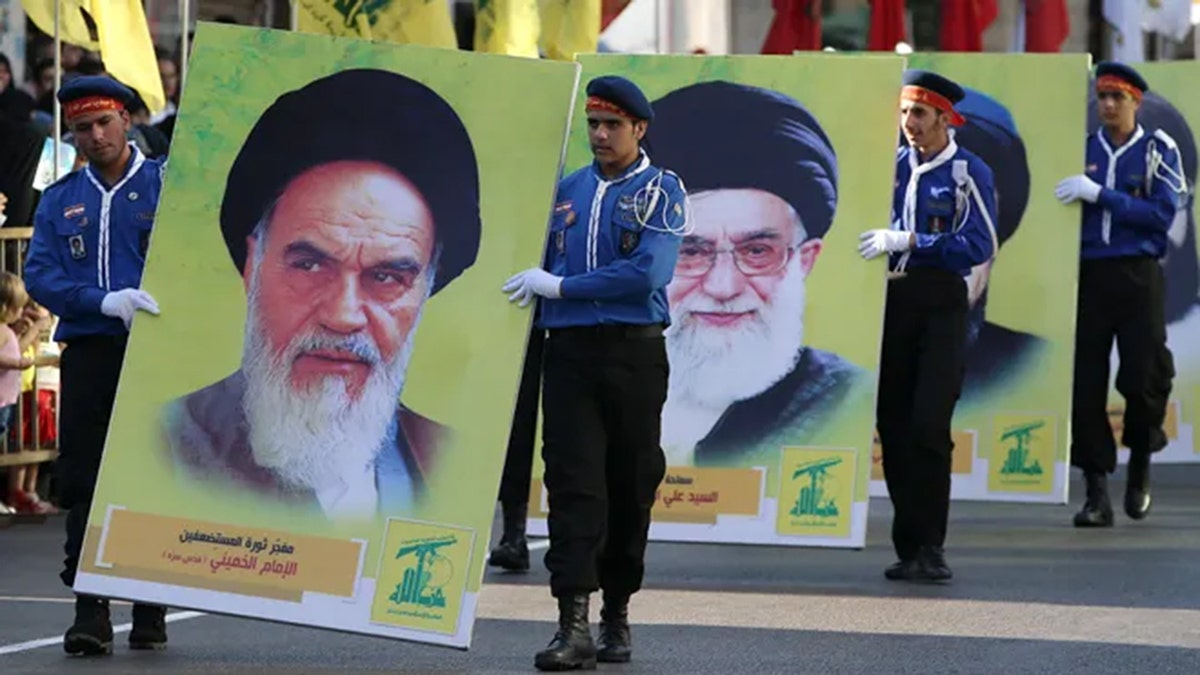
Hezbollah al-Mahdi scouts parade with big portraits of Iran’s late leader Ayatollah Khomeini, foreground, and Iran’s supreme leader Ayatollah Ali Khamenei, background, during an event for Jerusalem day or Al-Quds day, in the southern town of Nabatiyeh, Lebanon, Thursday, Aug. 1, 2013. The last Friday of the Islamic holy month of Ramadan is observed in many Muslim countries as Al-Quds day, as a way of expressing support to the Palestinians and emphasizing the importance of Jerusalem to Muslims. (Hussein Malla/AP)
Edy Cohen, an Israeli security expert on Hezbollah, who was born in Lebanon, told Fox News Digital that «Hezbollah will never disarm itself. From its perspective, it protects two million Shiites. The only way to defeat Hezbollah is to first define it as a terrorist organization. Not to allow its political wing to exist and also to order the Lebanese army to gather in the areas under its control area by area.»
He added that «Dismantling Hezbollah must be carried out in stages. The Lebanese government must first take possession of the heavy weapons. Not to allow it to concentrate except in Dahiya [a Beirut suburb that is a Hezbollah and Shiite stronghold]. Leave it in one place and control all the roads leading to it. Little by little, it can be dismantled. Israel cannot and should not disarm Hezbollah. It can only assist with bombing from above.»
TRUMP’S IRAN CEASEFIRE ROCKED WITHIN HOURS AMID REPORTED MISSILE, DRONE ATTACKS
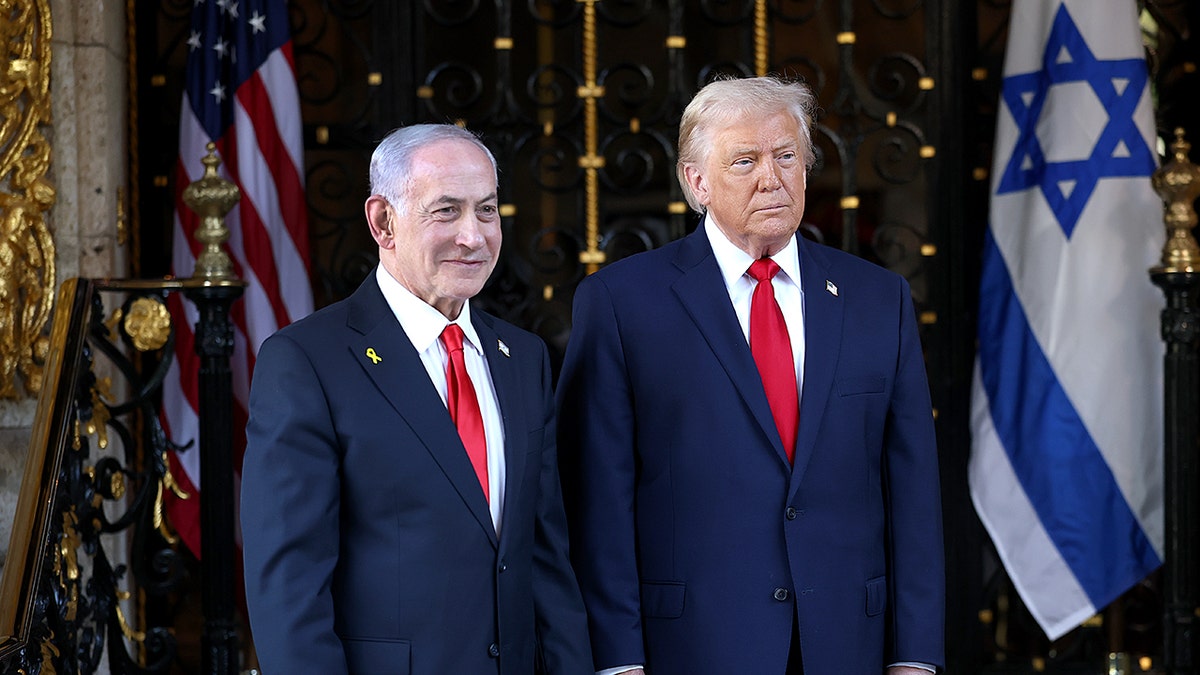
U.S. President Donald Trump welcomes Israeli Prime Minister Benjamin Netanyahu to his Mar-a-Lago club on December 29, 2025, in Palm Beach, Florida. (Joe Raedle/Getty Images)
On Wednesday, the IDF said it hit over 100 targets in 10 minutes, including, «Hezbollah headquarters, military arrays, and command-and-control centers: Intelligence command centers and central headquarters used by Hezbollah terrorists for directing and planning terror attacks against IDF soldiers and Israeli civilians.» Reuters, quoting the country’s health ministry, said some 91 people were killed in Beirut, with a total of at least 182 killed nationwide on Wednesday.
The IDF added, «The large-scale strike was based on precise IDF intelligence and was planned meticulously over weeks. Most of the infrastructure that was struck was located within the heart of the civilian population, as part of Hezbollah’s cynical exploitation of Lebanese civilians as human shields in order to safeguard its operations. Prior to the strikes, steps were taken to mitigate harm to uninvolved individuals as much as possible.»
Since the war started and before Wednesday’s attacks, Israeli airstrikes have killed more than 1,530 people in Lebanon, according to the Associated Press. The Long War Journal notes «that neither the Lebanese Health Ministry nor Hezbollah has provided an official count of the group’s fallen fighters.»
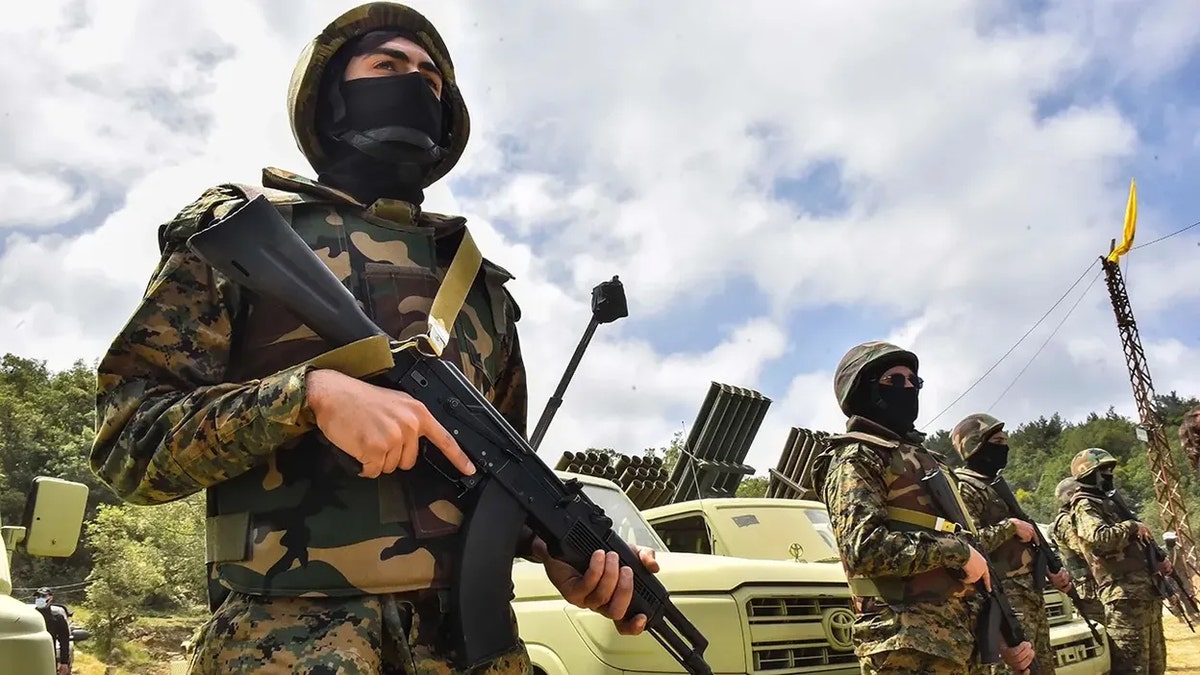
Hezbollah terrorists are shown in this image. A «terrorist network» funded and operated by Hezbollah and Iran has been foiled in the United Arab Emirates, according to a report. (Fadel Itani/NurPhoto)
Guila Fakhoury, whose father, Amer, was kidnapped by Hezbollah in 2019, told Fox News Digital that «Iran and the IRGC are occupying Lebanon through their proxy Hezbollah.»
Fakhoury, who was born in Lebanon, said, «The majority of Lebanese people believe the actions of Hezbollah caused Israel to occupy southern Lebanon and don’t want Iran and Hezbollah. Hezbollah is threatening the entire government.»
VANCE WARNS IRAN WILL ‘FIND OUT’ TRUMP IS ‘NOT ONE TO MESS AROUND’ IF CEASEFIRE DEAL FALLS APART
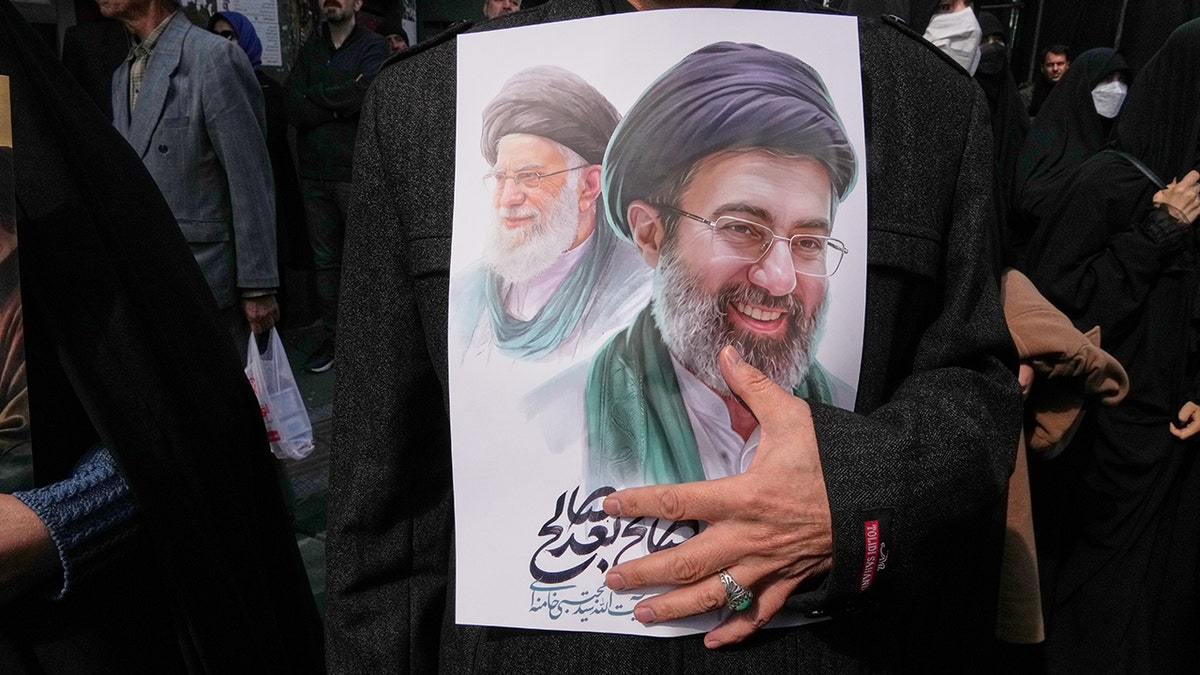
A mourner holds a poster depicting Ayatollah Mojtaba Khamenei, right, the successor to his late father Ayatollah Ali Khamenei, left, as supreme leader, during the funeral procession for senior Iranian military officials and civilians killed during the U.S.-Israel campaign in Tehran, Iran, Wednesday, March 11, 2026. (Vahid Salemi/AP)
As the president and co-founder of the Amer Foundation, an organization dedicated to help families of illegal detainees and educate on Middle East policy and geopolitics, she said is seeing some positive steps being taken including Lebanese President Joseph Aoun calling for negotiations with Israel.
She said the «only solution is to have peace with Israel. I think there a lot of Shiites who are against Hezbollah… The majority of the Lebanese people just want peace. We hope the Trump administration will push the Lebanese government and Israel’s government to start peace talks.»
Last week, Iran’s regime defied Lebanon’s expulsion order for its ambassador by saying he would stay, further increasing tensions in a country in the crosshairs of the latest fighting between the Iranian-backed Hezbollah and Israel.
Lebanon had declared Ambassador Mohammad Reza Shibani «persona non grata» to weaken Iran’s diplomatic presence and have a chargé d’affaires at its embassy instead. But the deadline to leave the country was Sunday and an Iranian spokesperson said the ambassador’s mission in Beirut continues.
CLICK HERE TO DOWNLOAD THE FOX NEWS APP
Fox News Digital reached out to Lebanon’s government and the Embassy in Washington D.C. for a comment.
The Associated Press and Reuters contributed to this report.
war with iran, lebanon, israel, counter terrorism, iran
Aeropuerto de Bucaramanga opera con normalidad tras dos días de bloqueos Por EFE

El argentino que empieza a convertirse en una pesadilla para el Barcelona

La respuesta de Villarruel a una teoría de Lilia Lemoine sobre una alianza con Grabois e Irán

Milei enviará al Congreso un proyecto para cerrar un litigio por el default del 2001

Cristina Kirchner manda una delegación a la cumbre progresista de Pedro Sánchez, que profundiza su pelea con Netanyahu y Trump

Con Rosatti a la cabeza, el Consejo advirtió que no aprobará a libro cerrado el proyecto de la Corte sobre selección de jueces

Mario Kart Tour avanza su siguiente temporada de primavera con ciudades europeas – Nintenderos

Melania Trump’s forceful Epstein denial draws bipartisan support from lawmakers

Un gobernador presentó un amparo contra la reforma de la Ley de Glaciares y pidió suspender su aplicación

Trump blasts Biden admin for releasing illegal immigrant now charged in fatal hammer attack on Florida mother
-
 SOCIEDAD18 horas ago
Mario Kart Tour avanza su siguiente temporada de primavera con ciudades europeas – Nintenderos
-
 INTERNACIONAL18 horas ago
Melania Trump’s forceful Epstein denial draws bipartisan support from lawmakers
-
 POLITICA17 horas ago
Un gobernador presentó un amparo contra la reforma de la Ley de Glaciares y pidió suspender su aplicación