INTERNACIONAL
Trump lays out where he stands with Elon Musk after ‘big beautiful bill’ blowup

NEWYou can now listen to Fox News articles!
President Donald Trump said Tuesday he still likes «Elon a lot,» despite their high-profile split earlier this year over the One Big Beautiful Bill Act.
At the end of the administration’s monthly Cabinet meeting, FOX Business’ Edward Lawrence asked Trump whether Musk was «back in [his] circle of friends» after their falling-out.
Trump responded: «Well, I really don’t know. I mean, I like Elon a lot.» He praised Musk’s endorsement during the 2024 campaign before noting their disagreement over electric-vehicle policy.
Musk was a fixture in the White House in the early days of the second Trump administration as he took on the role as the Department of Government Efficiency’s de facto leader. He served as a special government employee with the Trump administration to help lead DOGE, frequently attending Cabinet meetings and joining Trump during public events. Musk’s tenure with DOGE wrapped up at the end of May.
TRUMP TEASES MUSK AT FORUM AS ONCE-FROSTY DYNAMIC SEEMS TO TAKE A TURN
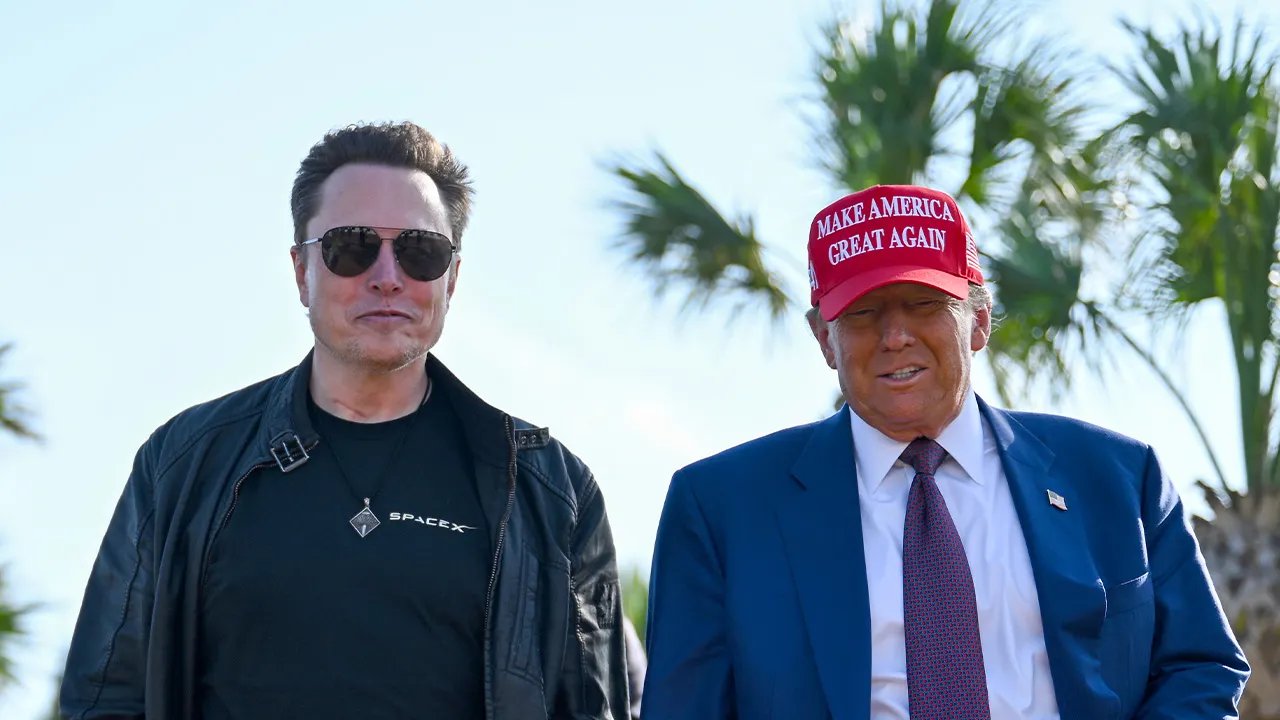
President Donald Trump said he likes Elon Musk «a lot» after the pair faced a rift over the One Big Beautiful Bill Act earlier this year. (Brandon Bell/Getty Images)
Musk had also championed Trump during the 2024 election cycle, criss-crossing battleground states that ultimately all voted for the Republican candidate over former Vice President Kamala Harris.
Trump repeatedly celebrated Musk for his efforts at DOGE to remove potential federal overspending, fraud and mismanagement – an effort assailed by government employees and Democrats who protested both the Trump administration and Musk repeatedly earlier this year.
TRUMP RENOMINATES MUSK ALLY JARED ISAACMAN TO LEAD NASA AFTER EARLIER REVERSAL
The cozy friendship fell to pieces in June, however, when Musk began publicly ridiculing the «One Big Beautiful Bill,» which was a massive piece of legislation Trump signed into law in July that advances his agenda on taxes, immigration, energy, defense and the national debt.
Musk railed against the legislation, which Trump had been rallying Republican lawmakers to pass since the beginning of his second term, posting on X that it would be the «BIGGEST DEBT ceiling increase in HISTORY» and also claimed in a personal attack on Trump that «@RealDonaldTrump is in the Epstein files.»
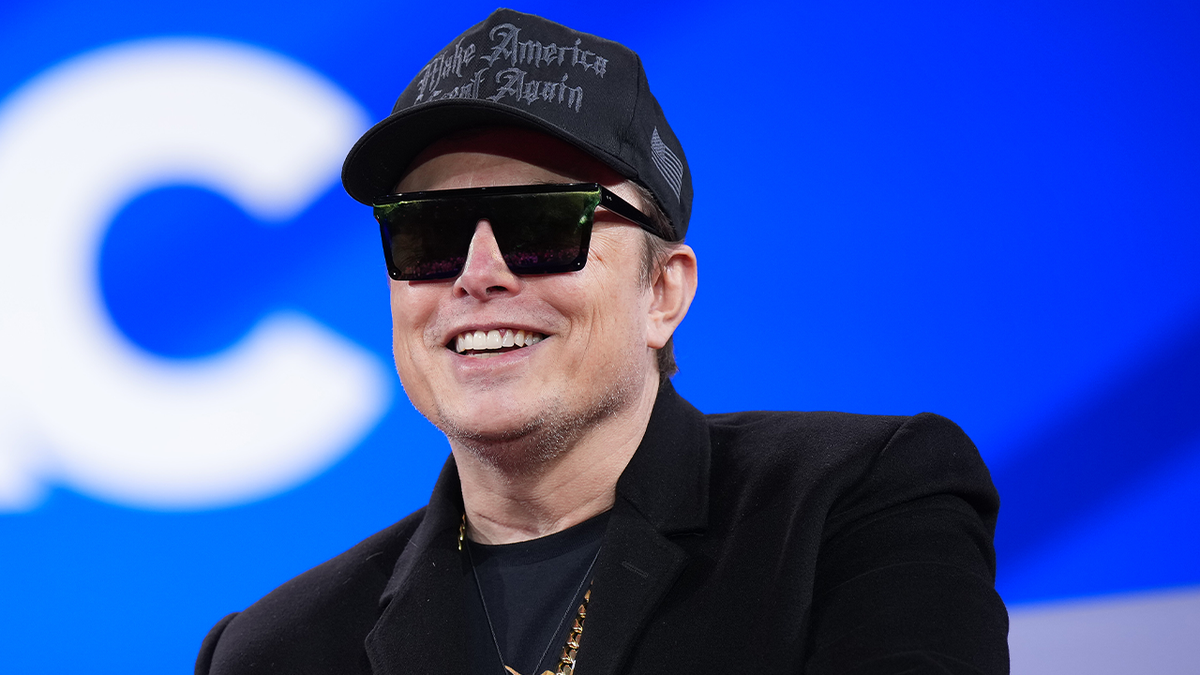
Elon Musk speaks at the Conservative Political Action Conference (CPAC) on Feb. 20, 2025 in Oxon Hill, Maryland. (Andrew Harnik/Getty Images)
Trump previously told the media that his relationship with Musk changed when he began discussing plans to eliminate the electic vehicle mandate, which would affect Musk’s signature electric company, Tesla. Trump signed a trio of congressional resolutions in June ending California’s restrictive rules for diesel engines and mandates on electric vehicle sales, with Trump celebrating that his signature «will kill the California mandates forever.»
WHITE HOUSE TAUNTS LIBERALS WITH PROVOCATIVE MEME-FILLED DEBUT ON BLUESKY
The pair abruptly parted ways in June, with Musk weeks later offering some support to Trump’s presidential actions on social media, such as praising a ceasefire deal between Israel and Gaza in July.
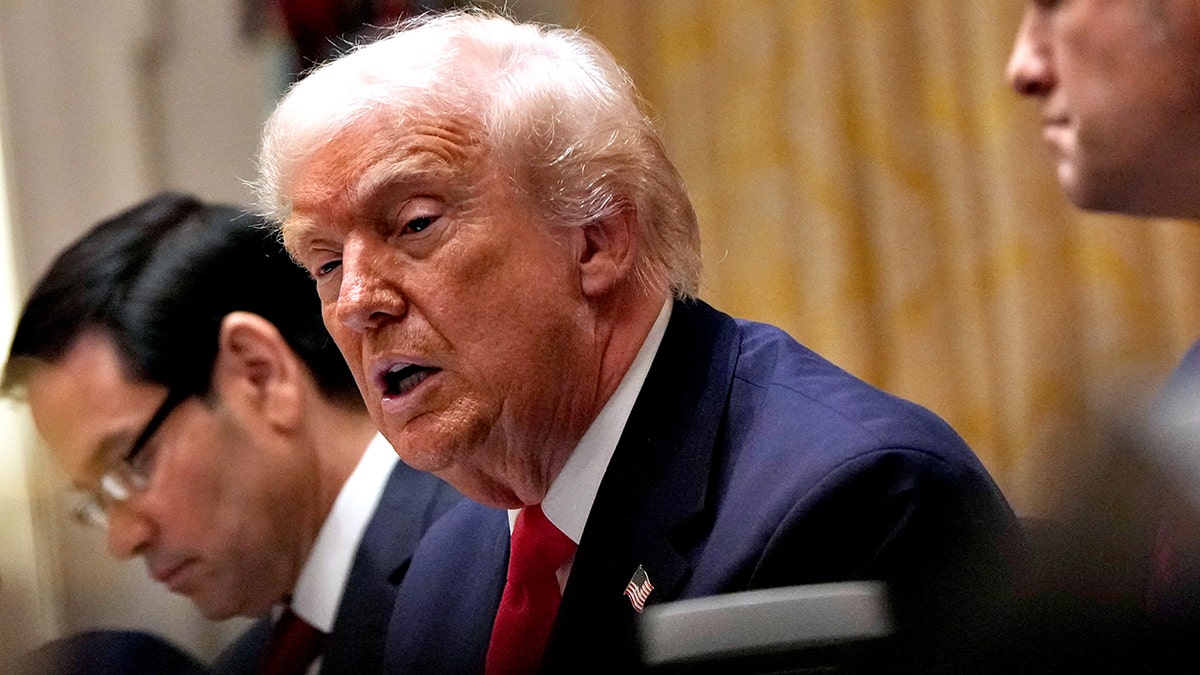
President Donald Trump speaks during a Cabinet meeting at the White House, Tuesday, Dec. 2, 2025, in Washington. (AP Photo/Julia Demaree Nikhinson)
Musk was seen physically back in Trump’s orbit in September during the memorial service for Charlie Kirk, Turning Point USA’s founder who was assassinated on Sept. 10. The pair was seen sitting next to each other and chatting during the ceremony.
CLICK HERE TO GET THE FOX NEWS APP
Musk most recently attended a Trump event on Nov. 18 at the White House for a dinner with Crown Prince Mohammed bin Salman of Saudi Arabia, as well as dozens of high-profile business leaders.
Trump’s latest remarks on Musk unfolded during his Cabinet meeting, which marked his ninth such meeting since the start of his second administration and matched the total number of full Cabinet meetings former President Joe Biden held across his four-year tenure.
donald trump,politics,elon musk










INTERNACIONAL
Newsom’s California rail project now expected to cost $126B, official admits, with still no tracks laid
NEWYou can now listen to Fox News articles!
California’s delayed, over-budget high-speed train from Los Angeles to San Francisco is running fast in only one direction: Rising costs to even get rolling, which are now estimated to be $126 billion.
«Today, we estimate with the right optimization just over $125 billion,» California High Speed Rail Authority board member Anthony Williams told CBS’s «60 Minutes» on Sunday. «I think $126 billion is the current estimate for that.»
That is nearly four times the $33 billion price tag presented to voters in 2008, making the long-delayed project a black eye for Democratic-run California, derided as the latest political example of «waste» in deep-blue America and a «train to nowhere.»
«We’re now in 2026: There are no trains; there’s no track laid; it was a complete bait and switch,» Rep. Vince Fong, R-Calif., told «60 Minutes,» saying the project «needs to stop.»
NEWSOM TOUTS CALIFORNIA’S NUMEROUS LEGAL FIGHTS WITH TRUMP ADMINISTRATION IN FINAL STATE OF THE STATE
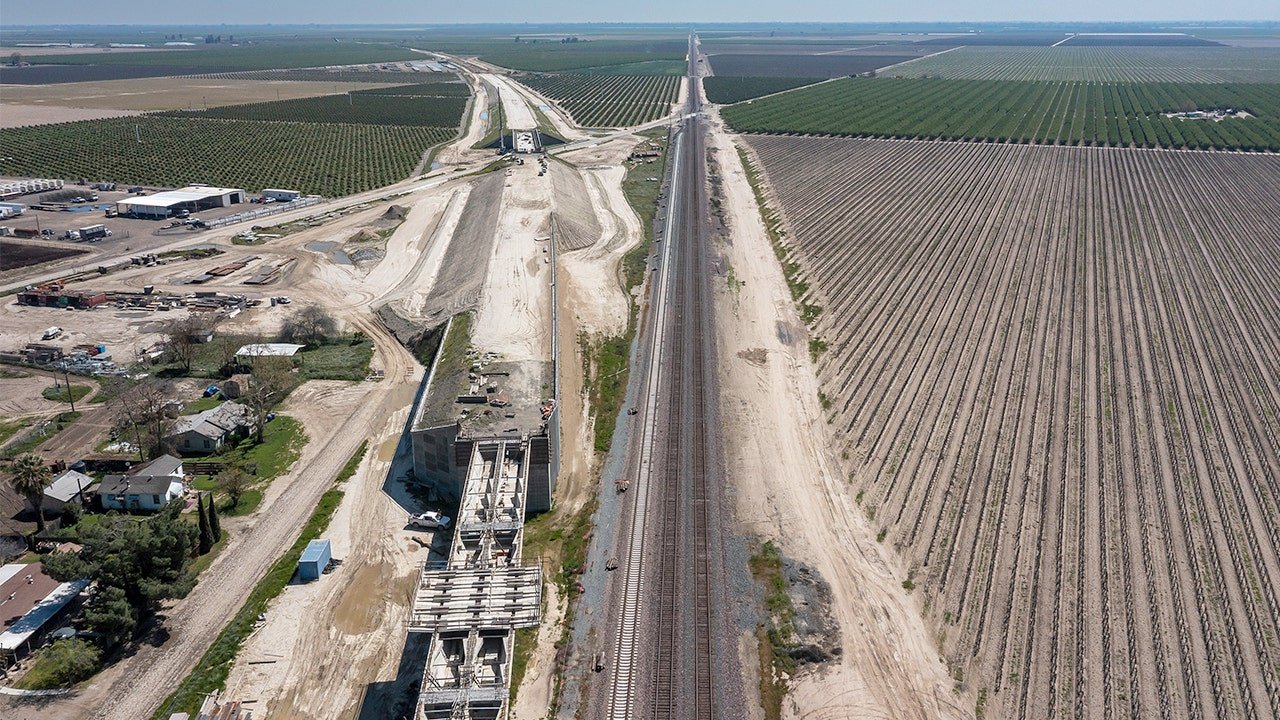
Construction continues on California’s high-speed rail project in Fresno County on March 24, 2025. (David Paul Morris/Bloomberg)
«The California high-speed rail nightmare is the probably quintessential example of government waste and mismanagement.»
California’s long-troubled high-speed rail project is facing renewed scrutiny after state Transportation Secretary Toks Omishakin acknowledged that many of its critics have a point.
«There were mistakes made,» Omishakin told CBS. «Some of the criticisms on this project, I think, are very fair.»
TRUMP ADMIN UNCOVERS ‘STAGGERING’ $8.6 BILLION IN SUSPECTED CALIFORNIA SMALL BUSINESS FRAUD
«I don’t think the voters fully understood, and neither did we in the public sector, what it was going to take to actually get this project delivered,» Omishakin added.
Taking aim at California Democratic Gov. Gavin Newsom, President Donald Trump called California’s project «the worst cost overrun, I’ve ever seen,» a statement he has in the past reserved for Federal Reserve Board Chair Jerome Powell’s Federal Reserve Building in Washington, D.C.
«This administration is working to usher in a Golden Age of Transportation,» Transportation Secretary Sean Duffy told CBS in a statement. «That vision includes high speed rail and we’re exploring opportunities to efficiently build that infrastructure in America.
NEWSOM’S FAILED LEADERSHIP HAS LET CALIFORNIA BECOME A LAND OF FRAUD AND SCAMS
«What this administration won’t stand for is boondoggle projects like Newsom’s Train to Nowhere that wasted billions in taxpayer dollars yet delivered nothing to the American people,» Duffy said. «Under President Trump, America is building again. We defunded Newsom’s disaster and created the first Trump Infrastructure Dividend. Those dollars will now actually fund critical projects that enhance safety on rail networks across America.»
Newsom himself cast doubt on the full San Francisco-to-Los Angeles plan in 2019, and the project now faces a funding gap of roughly $90 billion.
«For $10 billion, Elon Musk put 300 rockets in orbit; for $11 billion, the state of California has built 1,600 feet of elevated rail with no rail,» Palantir CTO Shyam Sankar said in 2024.
State officials say they remain confident more money can be found to dump into the project, but for now California’s high-speed rail stands as a costly symbol of ambition, delay and deep public skepticism.
‘THE DAILY SHOW’ ROASTS GAVIN NEWSOM ON HOMELESSNESS, HIGH-SPEED RAIL IN SATIRICAL ‘LEADING MAN’ VIDEO
«The ultimate 494 miles of building this out without the federal government’s help will be challenging: There’s no doubt about that,» Omishakin said.
Nearly two decades since the start of the project, no track has been laid, and the only major visible progress is on a Central Valley segment between Bakersfield and Merced, according to the report.
The project’s earliest projected opening is now 2033, far later than originally promised. Critics, including Bakersfield’s Fong, a member of the House Transportation Committee.
CALIFORNIA IS BROKE, BUT IT’S NOT TOO LATE FOR THE REST OF US
«The business plan that was put out in 2008 was very theoretical,» Fong said. «You know, ‘This is what we think is gonna happen.’
«And it became very clear that they didn’t have the specifics worked out.»
Fong has sought oversight and accountability on the waste, including 597 change orders that have cost more than $2.3 billion alone as of November 2025, which is nearly 7% of the initial $33 billion project estimate.

Gov. Gavin Newsom and California High-Speed Rail Authority CEO Ian Choudri, middle, greet Iron Workers Local 155 members at the Southern Railhead site in the Wasco/Shafter area in Wasco, Feb. 3, 2026. (Damian Dovarganes/AP)
CLICK HERE TO DOWNLOAD THE FOX NEWS APP
«Taxpayers deserve full transparency and accountability,» Fong wrote in a statement in February. «The high-speed rail nightmare is a glaring example of structural mismanagement.
«Reckless, repeated contract amendments have squandered resources and precious tax dollars. Hardworking California taxpayers cannot afford to let this continue. This project should be canceled before even more money and time are wasted.»
los angeles, costs, gavin newsom, san francisco, california


Trump hints at potential Iran deal amid ongoing negotiations
US Special Forces launched a daring mission to rescue a downed F-15E weapons systems officer deep inside Iran. President Donald Trump confirmed the mission and issued a 48-hour ultimatum for an Iran deal, threatening to blow up everything and take over oil. Trump also vowed to hit Iran’s power plants and bridges.
NEWYou can now listen to Fox News articles!
Israel announced that Iran’s Islamic Revolutionary Guard Corps’ intelligence chief Brig. Gen. Majid Khademi was killed in a precision strike, with an Israeli official noting that Quds Force’s special operations commander Asghar Bagheri was eliminated at the same time.
In a statement posted on X, the Israel Defense Forces (IDF) confirmed Khademi’s killing, accusing him of helping advance terrorist attacks abroad and overseeing surveillance of Iranian civilians as part of the regime’s crackdown on domestic protests.
«Khademi wasn’t just any figure, he was effectively No. 2 within the IRGC, one of the few senior commanders who managed to survive multiple waves of Israeli and American targeting over the past year — until now,» a senior Israeli official told Fox News. «He kept moving, relocating, but ultimately he was hunted down and eliminated.
«He oversaw an intelligence apparatus that repeatedly failed to detect or prevent major Israeli and U.S. operations, including a series of strategic surprises that exposed deep vulnerabilities inside Iran’s security system.»
IRGC intelligence chief Majid Khademi was killed in an Israeli precision strike that also took out a Quds force commander early Monday morning. (Israel Defense Forces / X)
IRAN’S INTERNET BLACKOUT HIDING STRIKE DAMAGE AND SUPPRESSING DISSENT, ISRAELI OFFICIALS SAY
Notably, Khademi was «deeply involved in attempts to penetrate U.S. systems, including efforts to breach the Pentagon,» and «coordinated extensively with Russia,» according to the official.
«His removal marks a significant blow to Iran’s intelligence leadership at a time when the regime is already under sustained pressure,» the official added.
Bagheri was also killed at the same time as the strike that took out Khademi, the official noted, but the IDF has yet to officially confirm his killing.
TRUMP DECLARES ‘I GOT HIM BEFORE HE GOT ME’ AFTER IRAN’S SUPREME LEADER KILLED IN STRIKE
«Bagheri was directly involved in recruiting agents across the Middle East and orchestrating attacks against American targets in Iraq and Syria — including operations that led to U.S. casualties,» the senior official told Fox News.
Khademi spent decades in intelligence and counter-espionage roles while rising through Iran’s security apparatus.
Before his appointment, Khademi headed the Guard’s Intelligence Protection Organization, charged with internal surveillance and counter-intelligence, and held senior roles in Iran’s defense ministry.
CLICK HERE TO DOWNLOAD THE FOX NEWS APP
The IRGC intelligence arm is one of Iran’s most powerful security bodies, with a central role in domestic surveillance to counter foreign influence, and often operating in parallel with the civilian intelligence ministry.
Fox News’ Trey Yingst and Reuters contributed to this report.
iraq, counter terrorism, iran, syria, assassinations murders

Atlético Madrid vs. Barcelona: formaciones, hora y dónde ver por tv

Milei recibe al presidente de Chile en la Casa Rosada para profundizar el comercio y reforzar la seguridad

Gobierno oficializó los adelantos de coparticipación por hasta $400.000 millones para 12 provincias

Newsom’s California rail project now expected to cost $126B, official admits, with still no tracks laid

El comienzo de la Sudamericana: días, horarios y TV de los 16 partidos de la primera fecha

El gobierno porteño anunció el final de los planes sociales: “Chau intermediarios”

Oriana Sabatini sorprendió al elegir a una famosa como madrina de Gia, su hija con Paulo Dybala

La Armada sorteará 30 lugares en el buque que escoltará la salida de la Fragata Libertad: cómo anotarse

La nueva advertencia de Donald Trump a Irán: «El tiempo se acaba, quedan 48 horas antes del infierno»

Círculo rojo: intrigas en el gabinete, desgaste por el caso Adorni y movimientos inquietantes en el Poder Judicial

 INTERNACIONAL2 días ago
La nueva advertencia de Donald Trump a Irán: «El tiempo se acaba, quedan 48 horas antes del infierno»
- POLITICA1 día ago
Círculo rojo: intrigas en el gabinete, desgaste por el caso Adorni y movimientos inquietantes en el Poder Judicial
- POLITICA2 días ago
Créditos del Banco Nación: el Gobierno reveló que Pettovello echó a Massaccesi porque “mintió”