INTERNACIONAL
Top expert exposes how elites are encouraging immigrants to not assimilate into American culture

NEWYou can now listen to Fox News articles!
An expert warned that the U.S. immigration crisis in America will continue so long as the country’s elite reject the idea of the «Americanization» of immigrants.
Mark Krikorian, who is the executive director of the Center for Immigration Studies, told Fox News Digital during an interview that one of the core drivers of declining assimilation in America is not only mass immigration itself but an ongoing «identity problem» in which the country’s elite have made assimilation a «dirty word» by rejecting American identity and exceptionalism.
«It’s not the immigrants’ doing, it’s a problem we have where our leadership classes, whether it’s government, business, education, religion, everything, aren’t really sure about whether it is even a good thing to be an American,» Krikorian, one of the country’s most notorious authorities on immigration policy, continued.
«The idea basically here is that there is no meaning to nationhood or to peoplehood that living in the United States is kind of like living in Northern New Jersey as opposed to Southern New Jersey. You live in the United States, or you live in Mexico or you live in Swaziland, it doesn’t mean anything,» he explained.
OVER 100 CALIFORNIA COLLEGES ACCUSED OF DISCRIMINATING AGAINST US-BORN STUDENTS IN NEW DOJ COMPLAINT
Like those in New York, Massachusetts’ local communities have been stressed by the sheer number of migrants placed in their state. (David Dee Delgado/Getty Images)
«The left increasingly, even at the mainstream level, they see immigration law itself as a kind of Jim Crow, that it’s immoral to keep anyone from moving to the United States if they want to. And everything stems from that,» he continued. «Because if that’s your worldview, then obviously law enforcement coming to round up and remove people who have no right to be here, no legal right to be here, is immoral.»
«So, in that context, how could we expect immigrants to Americanize successfully?» Krikorian said, adding,»What’s different today from, say, 100 or 200 years ago, is we now have a leadership class that doesn’t even believe in assimilation. They think Americanization is a dirty word.»
«My mother was a daughter of immigrants, went to public school in the 30s and 40s outside Boston, and she was taught to memorize the Gettysburg Address and George Washington was the father of our country and they sang Hail Columbia in school. You think they’re doing that in the L.A. Unified School District now, or in New York, or in the school district outside of Boston my mother went to? No!» he said. «They teach American kids to, at best, be ambivalent about America, depending on the school district, even hate America.»
«Until that changes,» he went on, «admitting large numbers of people, even legally, is frankly a bad idea.»
President Donald Trump and Homeland Security Secretary Kristi Noem have embarked on an intensive immigration enforcement agenda. With over 515,000 illegal aliens deported since Trump took office in January, the administration is on track to significantly exceed the record number of illegals deported out of the United States.
However, Krikorian warned that deportations will not be a complete solution to the problem.
«We now have the largest percentage of our population foreign-born ever recorded in American history. It’s close to 16% now. That’s more than it was during even the Ellis Island era … we’ve never been here before,» Krikorian said.
TRUMP’S ‘BORDER CZAR’ WARNS DEM GOVS REJECTING TRUMP DEPORTATION PLAN: ‘GET THE HELL OUT OF THE WAY’
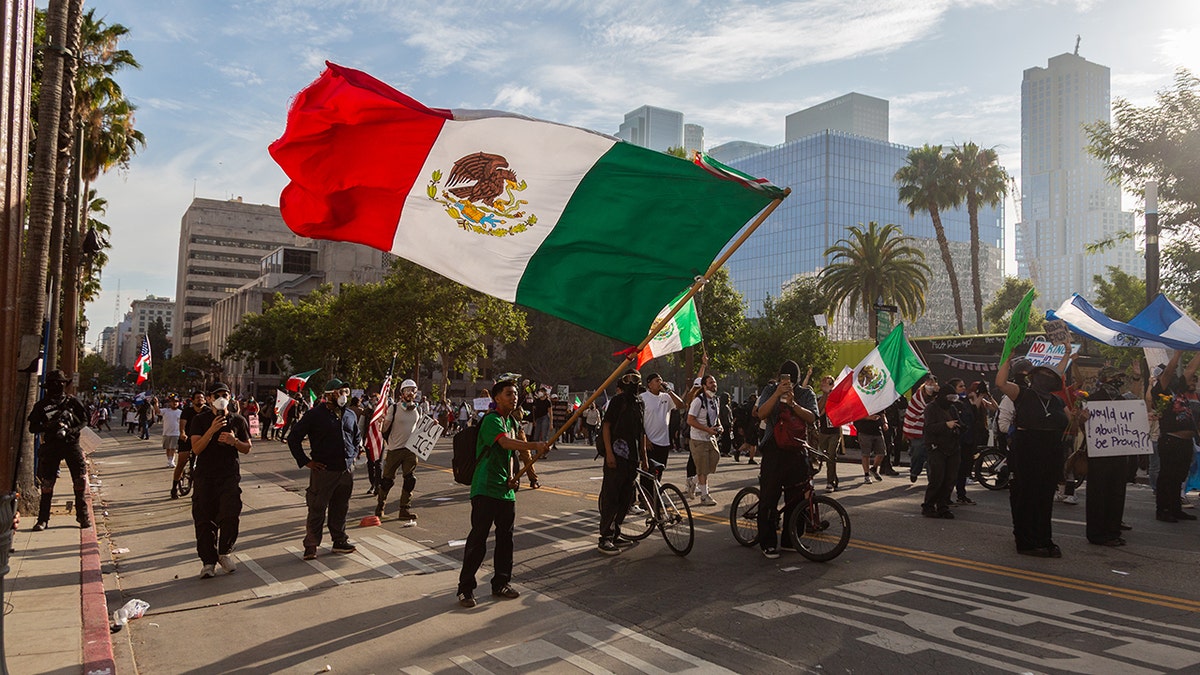
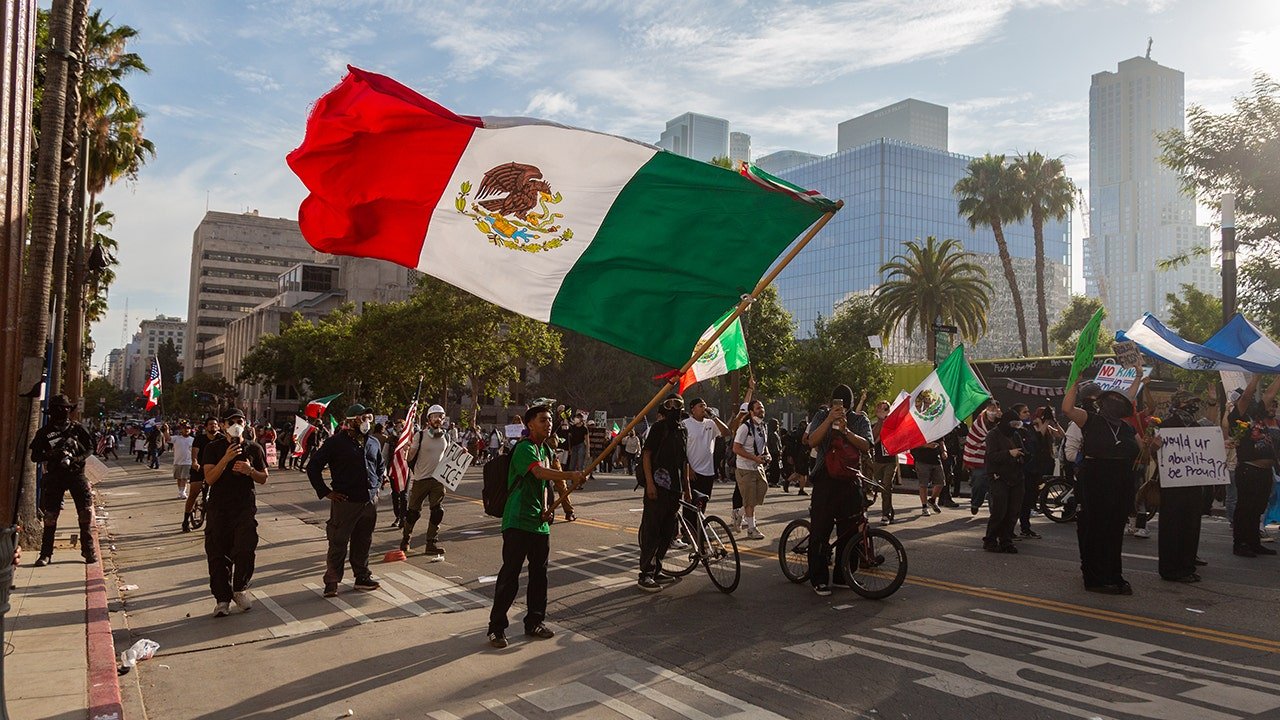
Anti-ICE rioters and police face-off in Los Angeles on Saturday, June 14, 2025. (Jamie Vera/Fox News)
This is further coupled with the rise of technology, which Krikorian said makes it less important for immigrants to integrate into their new communities.
«Newcomers don’t have to really cut off ties in the way that they had to do in the past,» he said. «In the old days, immigrating meant you had no choice but to reorient your emotional and psychological attachments to the new country … Nowadays, you can FaceTime home every day. You can hop on a plane and go to your cousin’s wedding in Bogota for a three-day weekend.»
The solution, in Krikorian’s estimation, is U.S. leaders, from the president to schoolteachers, embracing American identity. With the 250th anniversary of the signing of the Declaration of Independence coming in 2026, Krikorian said there is a «real opportunity» for «a whole year-long process of starting to change the narrative and have that narrative percolate down to local institutions, individual schools, individual congregations, individual businesses, and kind of reverse this idea that America stinks and you shouldn’t want to become part of it.»
TRUMP FREEZES AFGHAN VISAS AFTER DC SHOOTING — AS HE QUIETLY EYES LAND STRIKES IN VENEZUELA
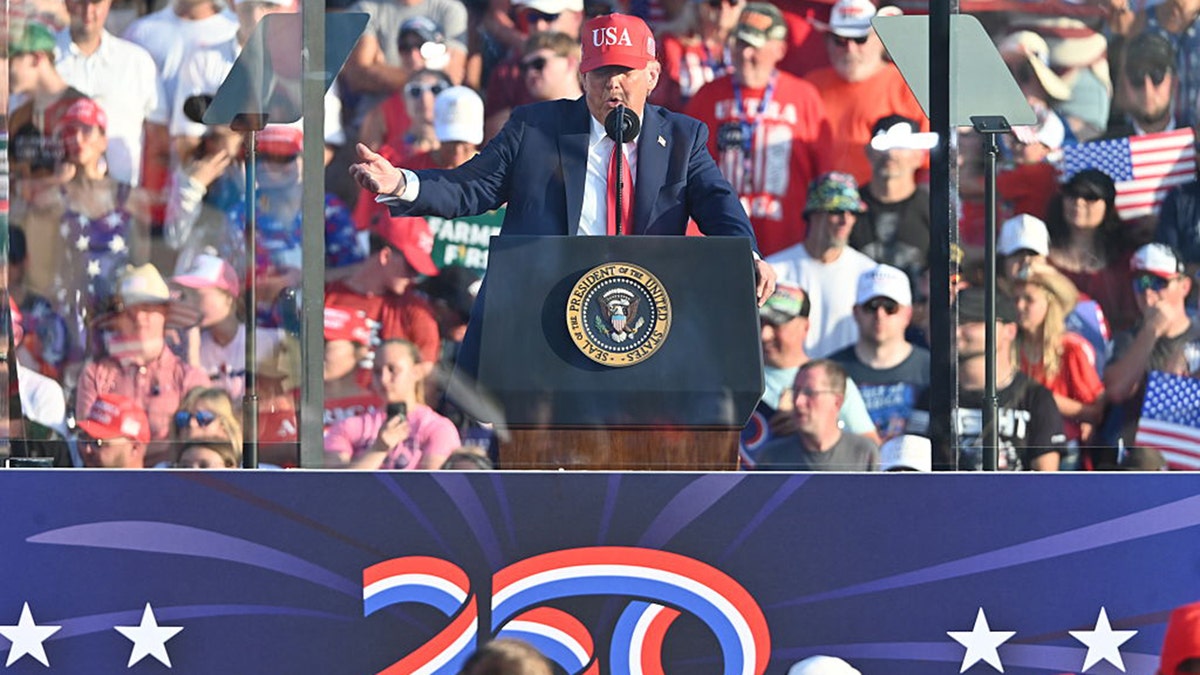
Trump speaks at the Iowa State Fairgrounds, where he kicked off America250 (Kyle Mazza/Anadolu via Getty Images)
«We have succeeded in Americanizing large numbers of people in the past from very different societies,» he said.
CLICK HERE TO DOWNLOAD THE FOX NEWS APP
«It’s harder to do now, but we can do it,» he went on. «We have a real serious challenge ahead of us, but they’re challenges that we can meet if we respond.»
immigration,border security,illegal immigrants,donald trump,education,america 250







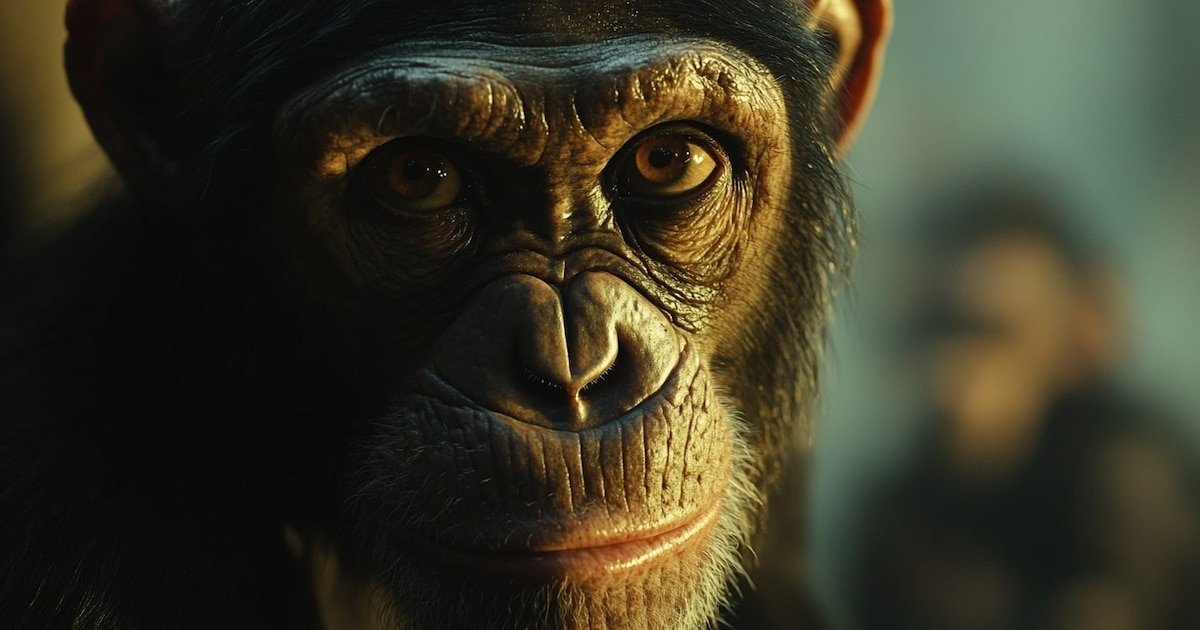
Científicos de la Universidad de Ginebra (UNIGE) analizaron la actividad cerebral de adultos expuestos a sonidos de primates y hallaron que solo los chimpancés provocaron una respuesta distintiva en regiones asociadas al reconocimiento de la voz.
El estudio, publicado en la revista eLife en versión preprint (sin validación de pares), fue dirigido por Leonardo Ceravolo y se centró en observar cómo el cerebro humano reacciona ante vocalizaciones de humanos, chimpancés, bonobos y macacos.
La investigación incluyó a 23 adultos que escucharon 72 grabaciones —18 por especie—, seleccionadas para cubrir tanto contextos sociales positivos como negativos. Los participantes, recostados en un escáner de resonancia magnética funcional (fMRI), debían identificar la especie emisora de cada vocalización utilizando un teclado.

Mediante fMRI, los científicos observaron la actividad de la corteza auditiva, especialmente la circunvolución temporal superior, área fundamental en el procesamiento de sonidos complejos como el lenguaje y las emociones.
Solo las llamadas de los chimpancés provocaron una activación significativa y exclusiva en la circunvolución temporal superior anterior (aSTG) de ambos hemisferios, dentro de las denominadas áreas temporales de la voz (TVA). Este resultado evidencia que el cerebro humano distingue de forma clara y específica las vocalizaciones de chimpancés, en contraste con bonobos o macacos, que no generaron respuestas comparables.
Aunque los bonobos son tan cercanos a los humanos genéticamente como los chimpancés, las vocalizaciones de ambos difieren notablemente en aspectos acústicos. Los bonobos presentan llamadas más próximas al canto de los pájaros, mientras los macacos se encuentran alejados tanto filogenéticamente como en el rango sonoro.

Los análisis acústicos confirmaron que las llamadas de los chimpancés son las más parecidas a la voz humana en parámetros clave como la frecuencia fundamental, lo que facilita la respuesta cerebral diferenciada. La doble proximidad —evolutiva y acústica— parece ser determinante.
Ceravolo afirmó: “Cuando los participantes escucharon las vocalizaciones de los chimpancés, esta respuesta fue claramente distinta de la provocada por los bonobos o los macacos”. Además, la especificidad de la respuesta cerebral se mantuvo incluso tras controlar variables acústicas y filogenéticas con tres modelos estadísticos distintos.
El estudio refuerza la hipótesis de que ciertas capacidades de procesamiento vocal son ancestrales y preceden al lenguaje articulado. Ceravolo explicó que existen áreas cerebrales en algunos animales que reaccionan especialmente a las voces de sus congéneres; ahora se ha demostrado que una región en el cerebro humano adulto —la circunvolución temporal anterosuperior— también es sensible a vocalizaciones de primates no humanos.

Esto sugiere que la sensibilidad a determinadas señales vocales podría haberse conservado evolutivamente, y que el reconocimiento de la voz, incluso en etapas tempranas del desarrollo humano, estaría vinculado a mecanismos neuronales compartidos con otros primates.
El trabajo de la UNIGE aporta evidencia de que la respuesta cerebral humana a sonidos no humanos puede depender de la proximidad evolutiva y acústica. Hasta la fecha, la mayoría de investigaciones centraba su análisis en voces humanas o animales domésticos y no hallaba activaciones específicas en las TVA ante sonidos de otras especies. Este estudio demuestra que bajo ciertas condiciones, el cerebro humano responde selectivamente a vocalizaciones de primates no humanos.
Entre las limitaciones, el estudio se restringió a cuatro especies de primates, lo que limita la generalización, y no se emplearon estímulos acústicos sintetizados para aislar variables aún más. Los autores subrayan que serán necesarias investigaciones futuras que amplíen la variedad de especies y profundicen en el efecto de las características acústicas sobre la activación cerebral.
La investigación de la Universidad de Ginebra abre un nuevo camino para comprender la continuidad evolutiva del procesamiento de señales vocales y su conexión con el lenguaje. Los autores prevén que la integración de técnicas bioacústicas y de neuroimagen funcional, junto con el estudio de más especies, permitirá identificar con mayor precisión los mecanismos neuronales que sustentan la comunicación vocal en humanos y otros primates.
NEWYou can now listen to Fox News articles!
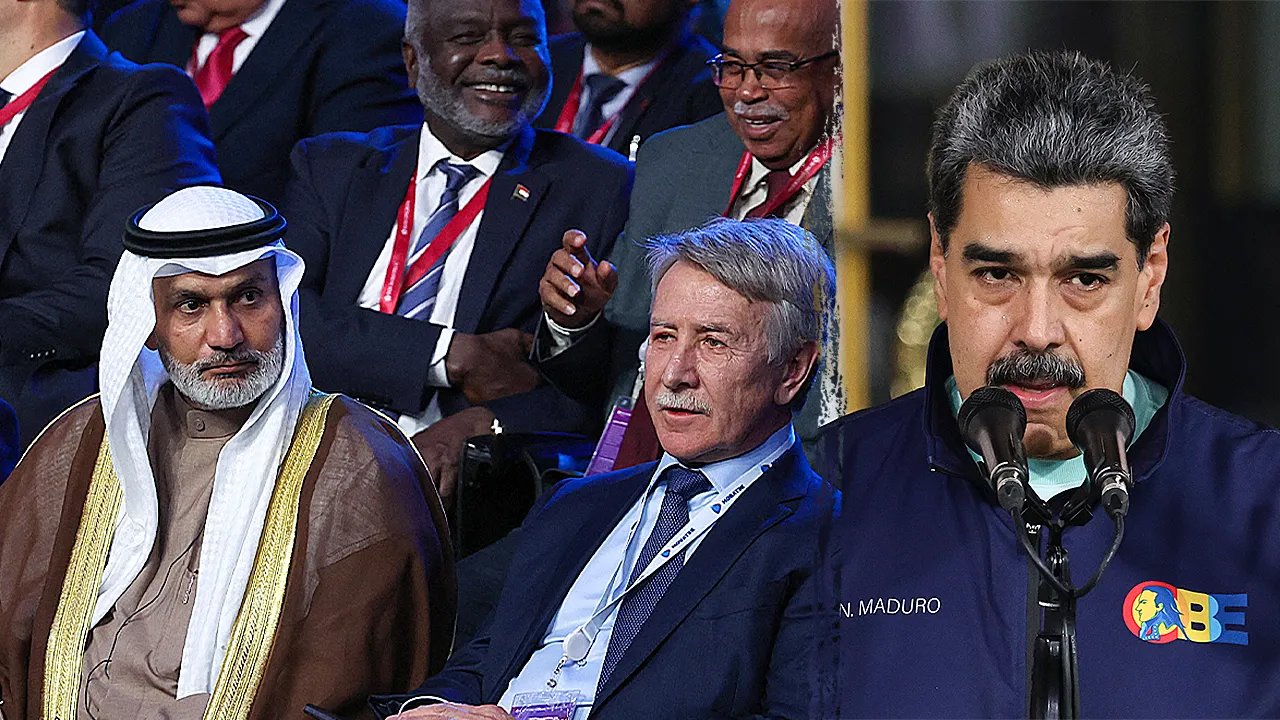
President Maduro’s appeal to oil-rich nations Sunday laid bare just how isolated he has become, a Latin American oil expert says, before describing Venezuela as «broke» and drowning in $150 billion of debt.
The Venezuelan dictator’s plea came in a letter in which he appealed to OPEC for support, claiming that U.S. «direct aggression» was undermining Venezuela’s energy sector and threatening global oil stability.
In a letter to OPEC Secretary-General Haitham Al Ghais and published by Venezuelan Foreign Minister Yvan Gil, Maduro wrote, «I hope to count on your best efforts to help stop this aggression, which is growing stronger and seriously threatens the balance of the international energy market, both for producing and consuming countries.»
TRUMP GAVE MADURO ULTIMATUM TO FLEE VENEZUELA AS LAND OPERATIONS LOOM: REPORT
Nicolas Maduro, Venezuela’s president, during a press conference at Miraflores Palace in Caracas, Venezuela, on Wednesday, July 31, 2024. (Gaby Oraa/Bloomberg via Getty Images)
«OPEC is unlikely to get involved,» Francisco J. Monaldi, Latin American Energy Policy Director, told Fox News Digital.
«Saudi Arabia is the key player, and they will not want to confront the Trump Administration. But more importantly, they never get involved in this kind of conflict,» he added.
In his plea, Maduro argued that U.S. actions were designed to «destabilize» Venezuela and urged oil-producing nations to show solidarity.
The U.S. imposed sanctions on Venezuela targeting government officials, state-run industries like oil and mining, and financial transactions in response to concerns over corruption, trafficking and human-rights abuses.
TRUMP PUSHES PEACE IN EUROPE, PRESSURE IN THE AMERICAS — INSIDE THE TWO-FRONT GAMBLE
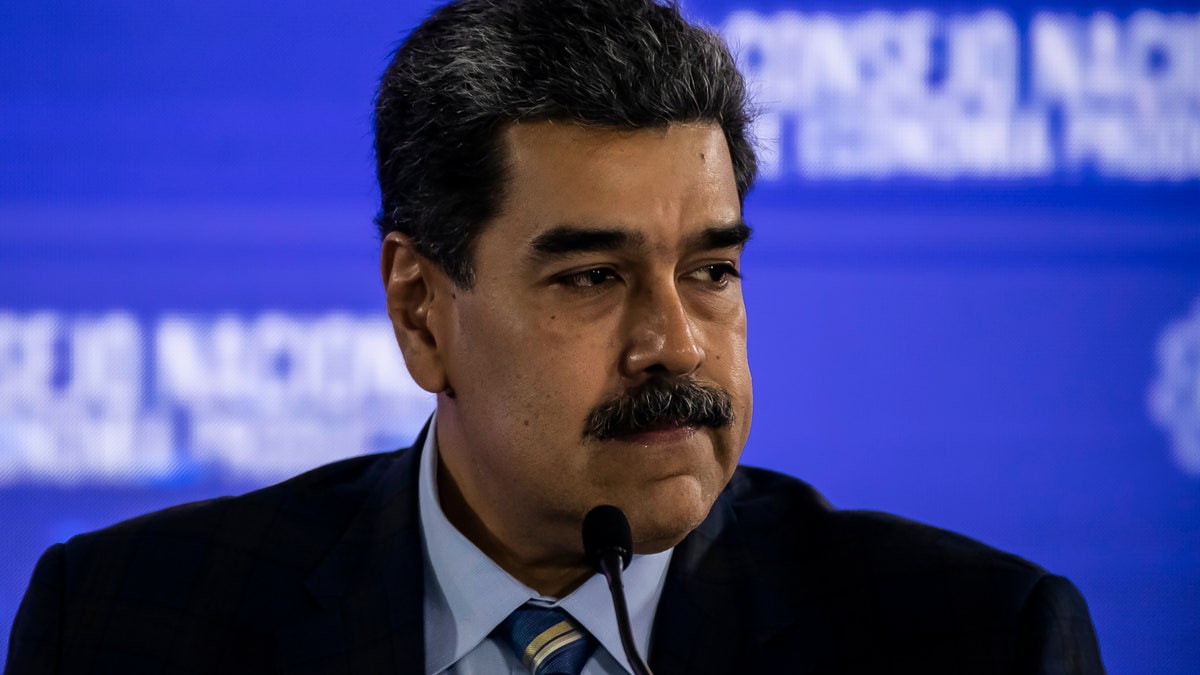
President of Venezuela Nicolas Maduro looks on during a meeting with the ‘Consejo Nacional de Economía Productiva’ (English: National Council of Productive Economy) at Humboldt Hotel on September 21, 2023 in Caracas, Venezuela. (Carlos Becerra/Getty Images)
His request followed President Trump’s order to close U.S. airspace over Venezuela, a move that tightened Washington’s pressure campaign and further restricted the regime’s ability to carry out international business.
Yet Monaldi stressed that Maduro knows his appeal was only symbolic and had «framed» the situation to suit his own narrative over oil.
«Maduro knows perfectly well that he is not going to get the reaction that he would want, but is framing the conflict as a conflict about oil,» he argued.
«Venezuela could once again become a major oil producer and produce about 4 million barrels a day in less than a decade, significantly quadrupling their current output.
WASHINGTON’S SHADOW WAR: HOW STRIKES ON CARTELS THREATEN TO COLLAPSE MADURO’S REGIME
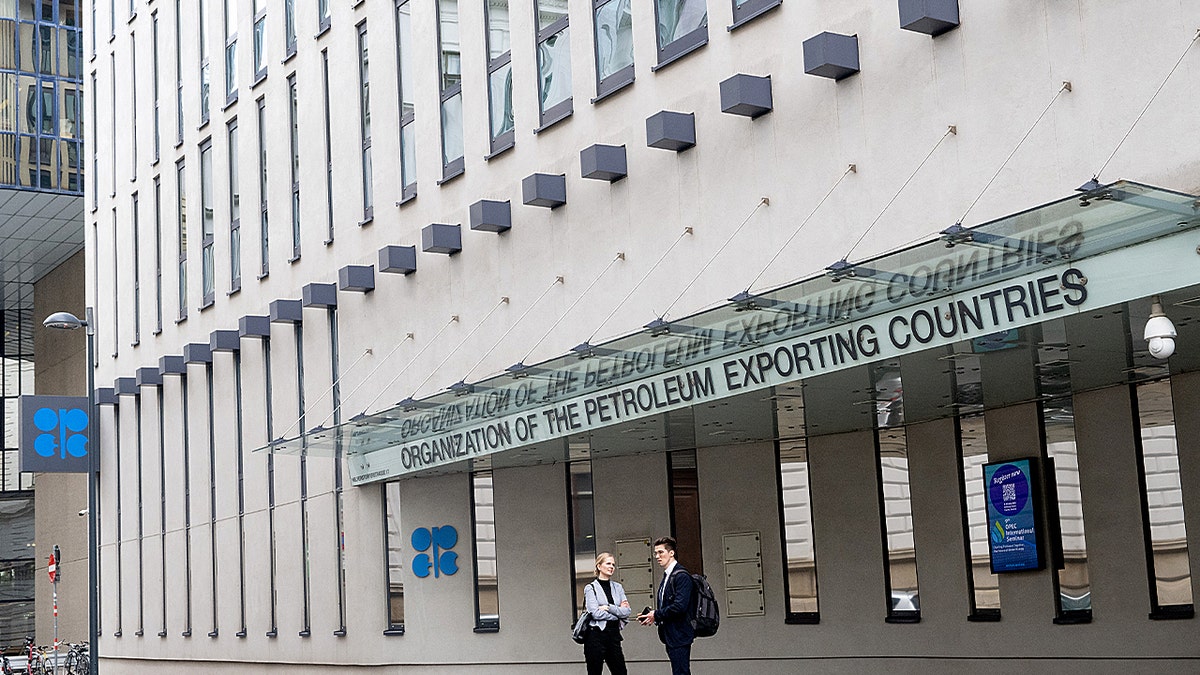
Maduro appealed to OPEC and claimed US aggression. (JOE KLAMAR/AFP via Getty Images)
«The country could increase production if the oil sector is opened fully to private foreign investment, and that requires regime change.
Four million barrels of oil per day will be the equivalent of about $90 billion per year in revenues, which is similar to what Venezuela received in the best of times.
The income could allow Venezuela to pay the debt back and recover swiftly, micro, economically, although it will take years to get to that figure.»
TRUMP SAYS VENEZUELA’S MADURO DOESN’T WANT TO ‘F*** AROUND’ WITH THE US
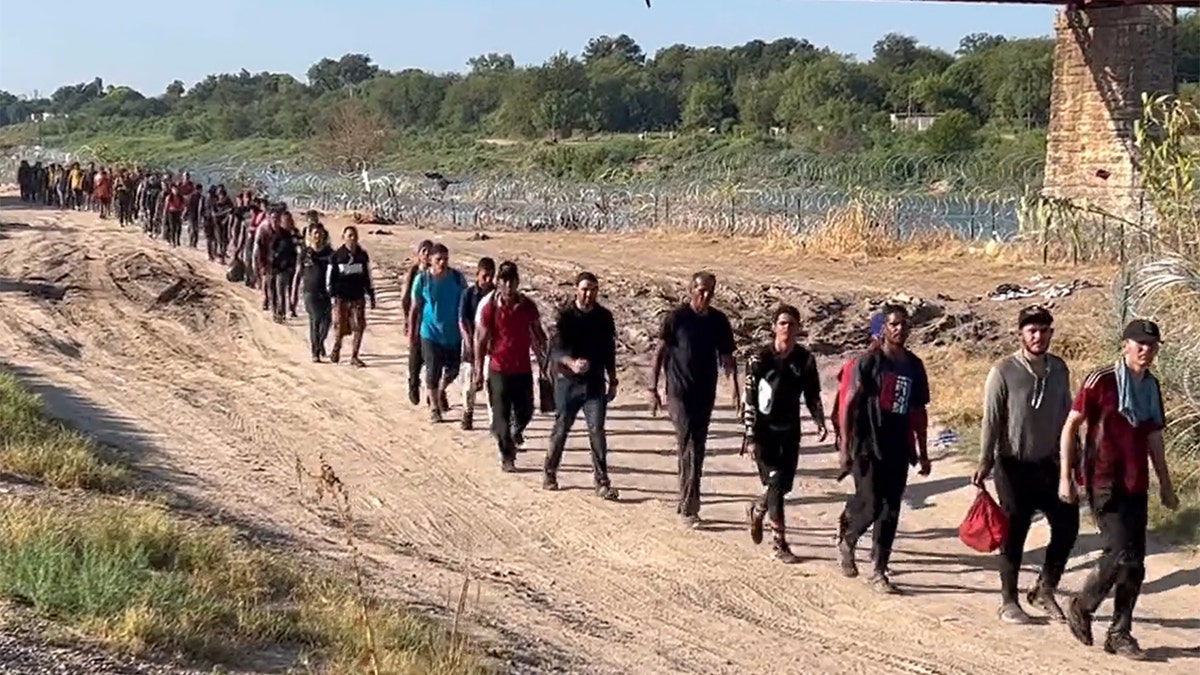
Sept. 20, 2023: Migrants mostly from Venezuela move into Eagle Pass, Texas. (Fox News)
«Now Venezuela is a country that is broke and has $150 billion of debt,» he said.
Tensions escalated further this week after a call between President Trump and Maduro, in which Trump said the Venezuelan leader should step down and leave the country, a direct push toward political transition.
«A regime change is something that the U.S., if they can achieve it, would consider a positive outcome,» Monaldi said.
But he emphasized that Washington’s goals extend beyond energy. Venezuela, he said, has endured years of mismanagement and instability, making it not necessarily a safe bet.
MADURO BRANDISHES SWORD AT RALLY AS HE RAILS AGAINST ‘IMPERIALIST AGGRESSION’ AMID RISING TENSIONS WITH US

President Donald Trump speaks to reporters after speaking to troops via video from his Mar-a-Lago estate on Thanksgiving, Thursday, Nov. 27, 2025, in Palm Beach, Fla. (AP Photo/Alex Brandon)
The broader U.S. priority, he added, is maintaining the Western Hemisphere.
CLICK HERE TO DOWNLOAD THE FOX NEWS APP
«The U.S. has priorities to preserve the Western Hemisphere as a region in which geopolitical rivals are not strong,» Monaldi said.
«The U.S. wants to reduce crime and drug trafficking in the region and the negative effects that Venezuela has had, you know, that have impacted the rest of the Latin American region,» he added.
americas,energy,latin america,sanctions,economy,donald trump,saudi arabia
INTERNACIONAL
Tensión entre Estados Unidos y Venezuela: Donald Trump insiste en que los ataques en territorio venezolano comenzarán «muy pronto»
La escalada gestual
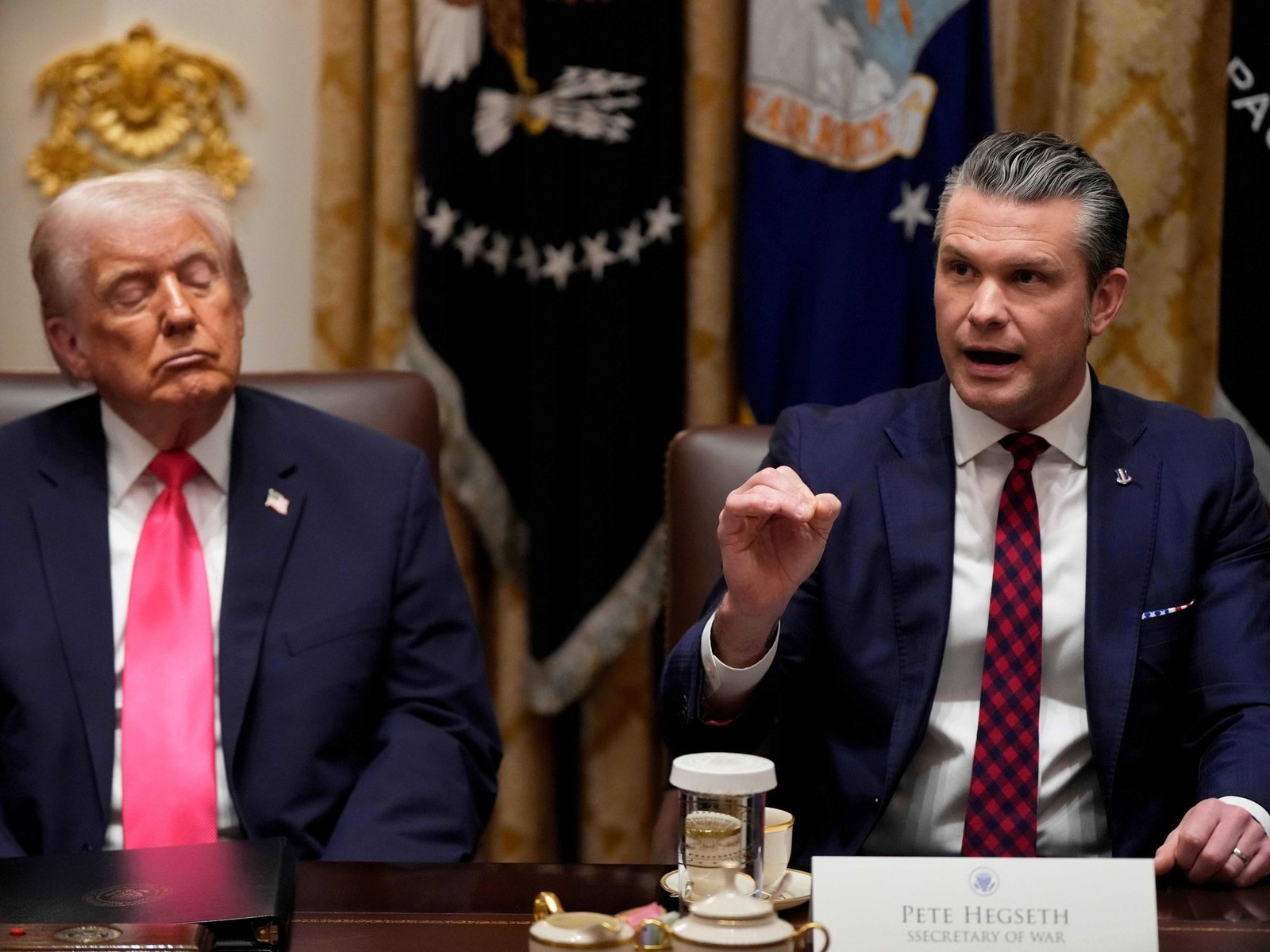
 El presidente Donald Trump se levanta para despedirse tras una reunión de gabinete en la Casa Blanca. Foto AP

Presunto lavado de dinero

La buena noticia que recibió Boca Juniors en la vuelta a las prácticas: el pizarrón de Úbeda pensando en Racing

Por qué el cerebro humano responde de forma única a las voces de chimpancés

Galicia celebró sus 120 años con un anuncio de inversión social récord

Victoria Villarruel reunió en el Senado a enemigos de los hermanos Milei en un acto anticuarentena

Gustavo Valdés le adelantó a Diego Santilli el acompañamiento al paquete de reformas

Wanda Nara involucrada en el escándalo de su abogado, Payarola, contó toda su verdad: “Yo fui…”

Patricia Bullrich lleva la disputa por el fútbol al Congreso y pone bajo la lupa a la conducción de la AFA

La declaración jurada de “Chiqui” Tapia: siete propiedades, vehículos e ingresos anuales de $818.000.000

Las sanciones de AFA a Estudiantes por el pasillo a Rosario Central: Supensión a Verón y los jugadores

 POLITICA1 día ago
La declaración jurada de “Chiqui” Tapia: siete propiedades, vehículos e ingresos anuales de $818.000.000
- CHIMENTOS1 día ago
El video de Rocío Marengo tras su internación en la etapa final de su embarazo: “Bebito, te esperamos con mucho amor”
- DEPORTE2 días ago
Desolación en Palmeiras tras la caída en la final: Gustavo Gómez se fue caminando a su casa