INTERNACIONAL
Congress unveils $900B defense bill targeting China with tech bans, investment crackdown, US troop pay raise

NEWYou can now listen to Fox News articles!
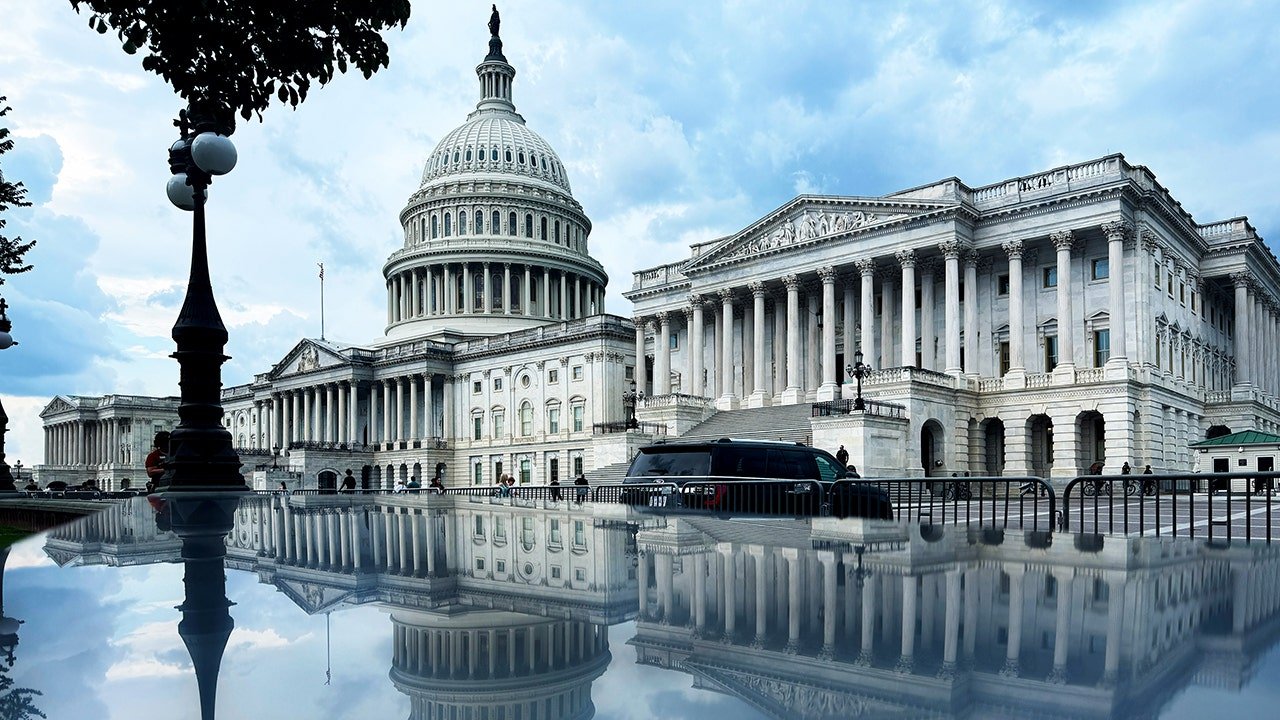
Congress released a $900 billion defense bill that reshapes U.S. economic and military competition with China by imposing new investment restrictions, banning a range of Chinese-made technologies from Pentagon supply chains, and expanding diplomatic and intelligence efforts to track Beijing’s global footprint.
The legislation, which authorizes War Department spending at $8 billion above the White House’s request, includes a 4% pay raise for enlisted service members, expands counter-drone authorities, and directs new investments in the Golden Dome missile defense shield and nuclear modernization programs.
It also extends Pentagon support to law enforcement operations at the southwest border and strengthens U.S. posture in the Indo-Pacific, including funding for Taiwan’s security cooperation program.
In a victory for conservative privacy hawks like House Judiciary Committee Chairman Jim Jordan, R-Ohio, the legislation includes a non-defense provision that would mandate FBI disclosure when the bureau was investigating presidential candidates and other candidates for federal office.
That measure was the subject of party in-fighting last week when Rep. Elise Stefanik, R-N.Y., whom Speaker Mike Johnson, R-La., had appointed chairwoman of House GOP leadership, publicly accused the speaker of kowtowing to Democrats and allowing that provision to be removed.
WAR DEPARTMENT REFOCUSES ON AI, HYPERSONICS AND DIRECTED ENERGY IN MAJOR STRATEGY OVERHAUL
Johnson said he was blindsided by Stefanik’s anger and was unaware of her concerns when she had made them public.
Stefanik later claimed victory on X, stating the provision had been reinstated after a conversation between herself, Johnson and President Donald Trump.
Coverage of in vitro fertilization (IVF) for military families, which became a flashpoint in recent days, is not included in the final NDAA. Neither are provisions preempting states from regulating AI or banning a U.S. central bank digital currency (CBDC).
Republicans have pushed the CBDC prohibition as a privacy and civil-liberties measure, arguing that a government-issued digital dollar could give federal agencies the ability to monitor or restrict individual transactions.
House aides said the anti-CBDC language became tied to a separate housing-policy package known as «Road to Housing,» and the concessions required to keep both items together were unacceptable.
The bill also establishes a new «Artificial Intelligence Futures Steering Committee» charged with producing long-range forecasts and policy recommendations for advanced AI systems, including artificial general intelligence.
House and Senate negotiators released a $900 billion defense bill that reshapes U.S. economic and military competition with China by imposing new investment restrictions, banning a range of Chinese-made technologies from Pentagon supply chains, and expanding diplomatic and intelligence efforts to track Beijing’s global footprint. (Demetrius Freeman/The Washington Post via Getty Images)
The legislation takes aim at long-standing bottlenecks in the defense industrial base by authorizing new investment tools, expanding multi-year procurement for high-demand munitions and platforms, and overhauling portions of the acquisition system to speed the fielding of commercial and emerging technologies.
Alongside those reforms, lawmakers approved new «right-to-repair» style requirements that force contractors to provide the technical data the Pentagon needs to maintain and sustain major weapons systems—a change intended to reduce vendor lock-in and ease chronic maintenance delays across the fleet.
One major section of the bill establishes a far-reaching outbound investment screening system, requiring U.S. companies and investors to alert the Treasury Department when they back certain high-risk technologies in China or other «countries of concern.» The measure gives Treasury the ability to block deals outright, forces detailed annual reporting to Congress, and grants new authorities to sanction foreign firms tied to China’s military or surveillance networks. Lawmakers cast the effort as a long-overdue step to keep U.S. capital from fueling Beijing’s development of dual-use technologies.
US COULD LOSE NEXT MAJOR WAR DUE TO PENTAGON’S ‘BROKEN’ ACQUISITION SYSTEM
The bill also includes a procurement ban targeting biotechnology providers that would bar the Pentagon from contracting with Chinese genetic sequencing and biotech firms linked to the People’s Liberation Army or China’s security services.
Additional sourcing prohibitions restrict the War Department from purchasing items such as advanced batteries, photovoltaic components, computer displays, and critical minerals originating from foreign entities of concern, further tightening U.S. supply chains away from China. They also require the department to phase out the use of Chinese-made computers, printers and other tech equipment.
Beyond economic measures, the NDAA directs the State Department to deploy a new cadre of Regional China Officers at U.S. diplomatic posts around the world, responsible for monitoring Chinese commercial, technological, and infrastructure activities across every major geographic region, including Beijing’s Belt and Road Initiative.
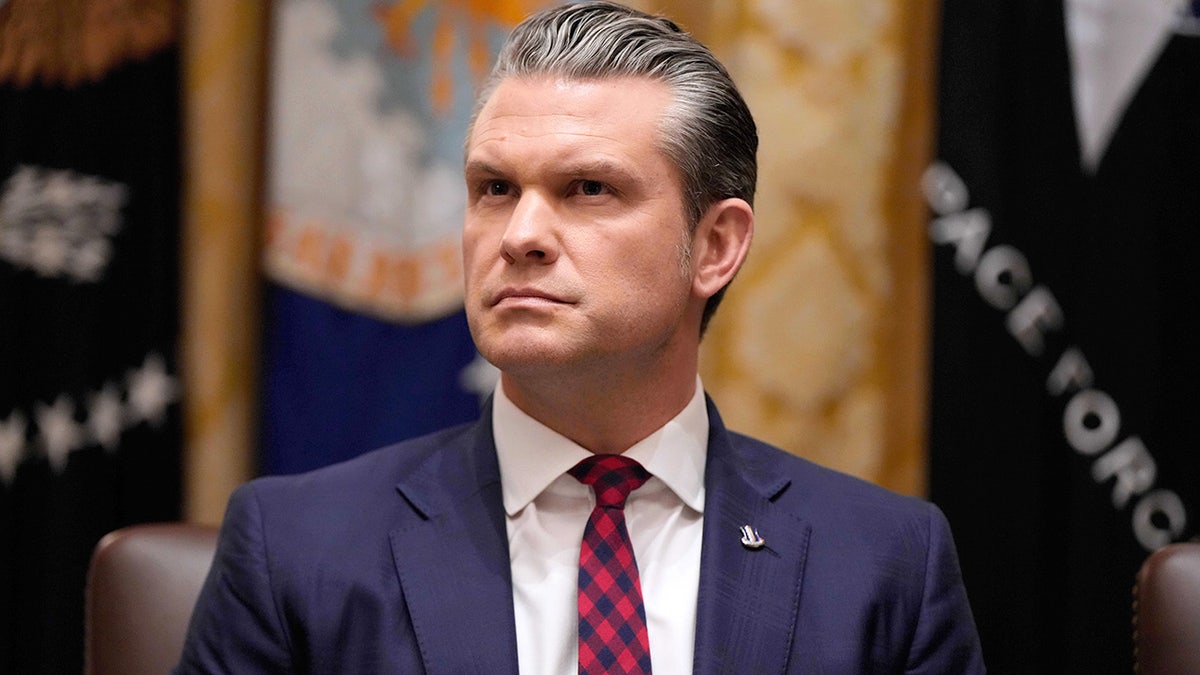
NDAA authorizes Pentagon budget at $8 billion above White House request. (Julia Demaree Nikhinson/AP)
The NDAA contains several Israel-related provisions, including a directive for the Pentagon to avoid participating in international defense exhibitions that bar Israeli involvement. It authorizes funding for Iron Dome, David’s Sling, and Arrow – the missile defense programs the U.S. operates with Israel.
The bill also requires biennial reports comparing China’s global diplomatic presence to that of the United States. The Pentagon is separately directed to strengthen U.S. posture in the Indo-Pacific by extending the Pacific Deterrence Initiative and expanding cooperative training and industrial-base initiatives with regional allies, including Taiwan and the Philippines.
The legislation reauthorizes the Ukraine Security Assistance Initiative at $400 million per year for fiscal years 2026 and 2027. Congress will also require more frequent reporting on allied contributions to Ukraine to track how European partners support Kyiv.
The bill repeals two long-dormant war authorizations tied to earlier phases of U.S. military involvement in Iraq, while leaving the primary post-9/11 counterterrorism authority untouched. Lawmakers said the final text includes repeals of the 1991 Gulf War AUMF and the 2002 Iraq War AUMF, both of which successive administrations have said are no longer operationally necessary. The 1991 authorization approved the U.S.-led effort to expel Iraqi forces from Kuwait, and the 2002 authority permitted the invasion of Iraq under President George W. Bush.
CLICK HERE TO DOWNLOAD THE FOX NEWS APP
Both parties have debated winding down these authorizations for years, arguing they no longer reflect current U.S. missions in the Middle East. Presidents from both parties, including Trump, have maintained that modern military operations in the region do not rely on either statute and that the commander in chief already holds sufficient Article II authority to defend U.S. personnel when required. Repeal also answers long-running concerns in Congress about outdated war authorities being used as secondary legal justifications for actions far from their original intent, such as the 2020 strike on Iranian Gen. Qassem Soleimani.
The NDAA does not touch the 2001 Authorization for Use of Military Force, which remains the central legal basis for U.S. counter-terror operations against al-Qaeda, ISIS, and associated groups. That post-9/11 statute continues to underpin nearly all active U.S. counter-terror missions worldwide.
House aides said leaders in their chamber hoped to consider the bill as soon as this week. It will first need to go through the House Rules Committee, the final gatekeepers before legislation gets a chamber-wide vote. It could hit that panel as early as Tuesday afternoon.
Then it will head for a vote in the Senate before reaching Trump’s desk for his signature.
pentagon defense,spending,house of representatives politics,budget senate






INTERNACIONAL
Temporal en Estados Unidos: se espera más aire ártico en ciudades cubiertas de hielo y con cortes de energía
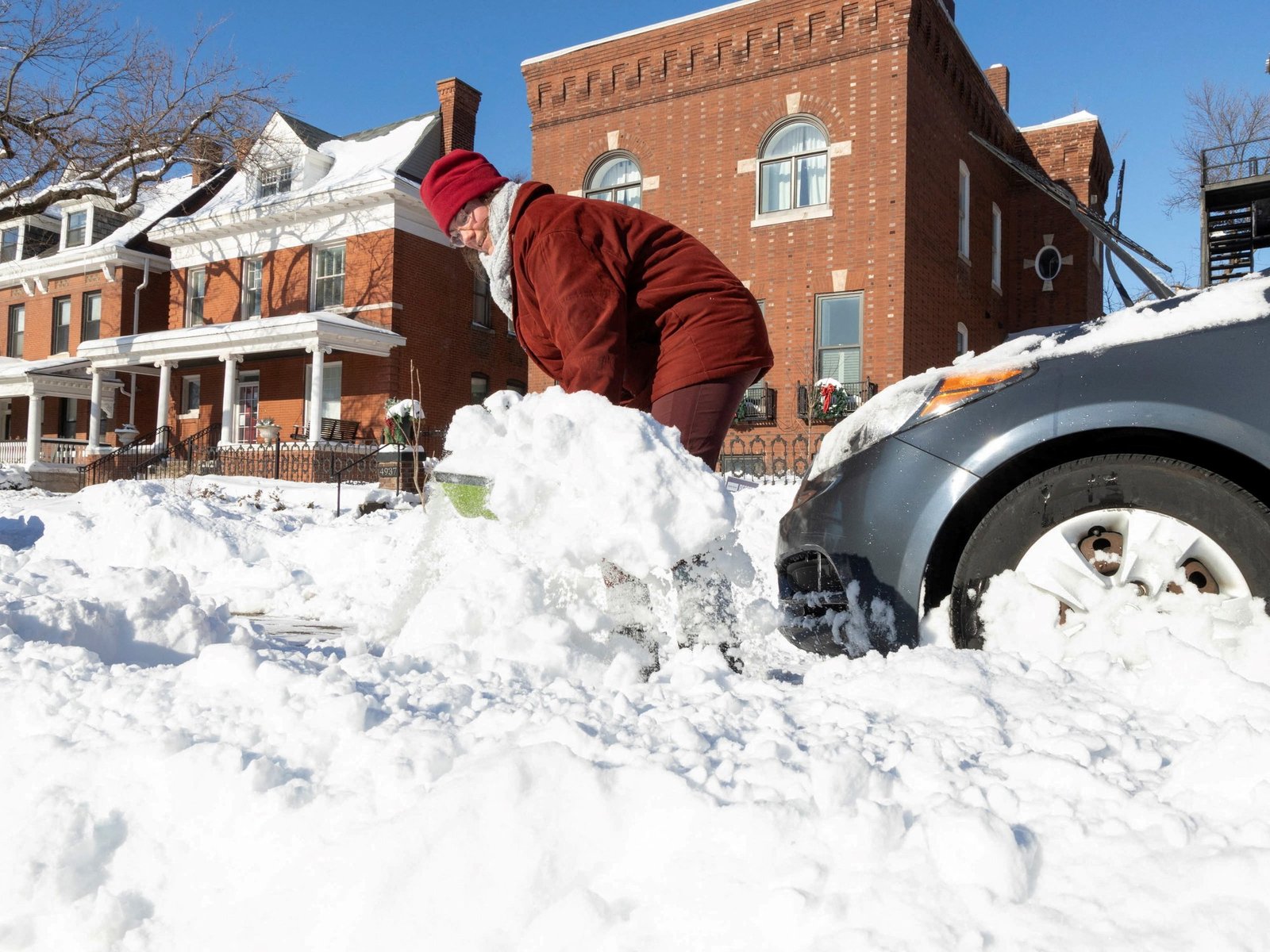
Cuando una gigantesca tormenta invernal se abatió sobre el noreste y partes del sur de Estados Unidos, durante el fin de semana, Lisa Patterson planeó quedarse en la casa de su familia en Nashville.
Pero después de que ella y su esposo se quedaran sin electricidad, los árboles cayeran sobre su entrada y su estufa de leña no bastara para las temperaturas gélidas, la pareja y su perro tuvieron que ser rescatados y llevados a un refugio con calefacción.
«He estado atrapada por la nieve allí durante casi tres semanas sin poder subir y bajar por mi entrada debido a la nieve. Estoy preparada para eso. Pero esto fue sin precedentes«, expresó Patterson.
La familia fue una de muchas en Tennessee y otras partes del sur que han acudido a refugios con calefacción mientras las cuadrillas trabajaban para restaurar la electricidad a cientos de miles de hogares ante una nueva oleada de aire ártico que se esperaba que provocara temperaturas heladas el martes en lugares ya cubiertos de nieve y hielo.
Se han reportado al menos 30 muertes en estados afectados por el frío severo, incluyendo dos personas atropelladas por quitanieves en Massachusetts y Ohio, accidentes fatales de trineo que mataron a adolescentes en Arkansas y Texas, y una mujer cuyo cuerpo fue encontrado cubierto de nieve en Kansas. En la ciudad de Nueva York, las autoridades dijeron que ocho personas fueron encontradas muertas al aire libre durante el gélido fin de semana.
La tormenta había dejado más de 30 centímetros de nieve a lo largo de una franja de 2.100 kilómetros desde Arkansas hasta Nueva Inglaterra, deteniendo el tráfico, cancelando miles de vuelos y provocando el cierre generalizado de escuelas el lunes. El Servicio Meteorológico Nacional dijo que las áreas al norte de Pittsburgh recibieron hasta 50 cm de nieve y enfrentaron sensaciones térmicas de hasta -31 grados Celsisus desde el lunes por la noche hasta el martes.
Se pronostican temperaturas récord de frío más generalizadas para el martes, con advertencias de frío extremo desde el este de Texas hasta el oeste de Pensilvania, según el Servicio Meteorológico Nacional. En Kentucky, el gobernador Andy Beshear advirtió que las temperaturas podrían ser tan frías que apenas 10 minutos fuera «podrían resultar en congelación o hipotermia».
Y los meteorólogos dijeron que es posible que otra tormenta invernal golpee partes de la costa este este fin de semana.
En la madrugada de este martes todavía había más de 550.000 clientes sin electricidad en el país, según poweroutage.com. La mayoría de ellos estaban en el sur, donde las ráfagas de lluvia helada del fin de semana rompieron ramas de árboles y tendidos eléctricos, causando cortes paralizantes en el norte de Mississippi y partes de Tennessee. Las autoridades advirtieron que podría llevar días restaurar la electricidad.
En Mississippi, el gobernador Tate Reeves dijo el lunes que al menos 14 hogares y 20 carreteras públicas sufrieron daños importantes tras la peor tormenta de hielo del estado desde 1994. La Universidad de Mississippi canceló las clases durante toda la semana ya que su campus en Oxford permanecía cubierto de hielo peligroso.
La ciudad de Nueva York vivió su día más nevado en años, con vecindarios registrando de 20 a 38 cm de nieve, lo que obligó al sistema de escuelas públicas más grande del país a cerrar.
Mientras tanto, un frío intenso siguió a la tormenta. Las poblaciones del medio oeste, sur y noreste despertaron el lunes con temperaturas bajo cero. Se pronosticó que los 48 estados contiguos tendrían su temperatura mínima promedio más fría desde enero de 2014, -12,3 ºC.
Nathan Hoffner envió a su hijo de cuatro años a quedarse con su mamá después de que su casa de alquiler en Nashville perdió electricidad el domingo al mediodía. Él y su compañero de cuarto se abrigaron con ropa y varias mantas durante la noche y para la mañana siguiente la temperatura dentro de la casa había caído drásticamente.
«Veía mi aliento en la casa», comentó Hoffner.
INTERNACIONAL
North Korea launches short-range ballistic missiles into sea, show of force ahead of political meetings
NEWYou can now listen to Fox News articles!
North Korea is flexing its muscles and firing short-range ballistic missiles toward its waters ahead of a major political meeting.
South Korea’s military detected the launches of several ballistic missiles from an area northeast of Pyongyang, North Korea, adding that each missile flew approximately 217 miles, The Associated Press reported.
Meanwhile, the Japanese Defense Ministry said that two ballistic missiles launched from North Korea and landed off the coast of the Korean Peninsula, according to the AP.
These launches represent the first time North Korea fired weapons since testing hypersonic missiles in early January, the AP noted. In December, the country tested long-range strategic cruise missiles and new anti-air missiles and released photos of the apparent construction of a nuclear-powered submarine, which would be the first of its kind for Pyongyang, the AP reported.
NORTH KOREA TEST-LAUNCHES HYPERSONIC MISSILE SYSTEM IN FRONT OF KIM, NATION SAYS
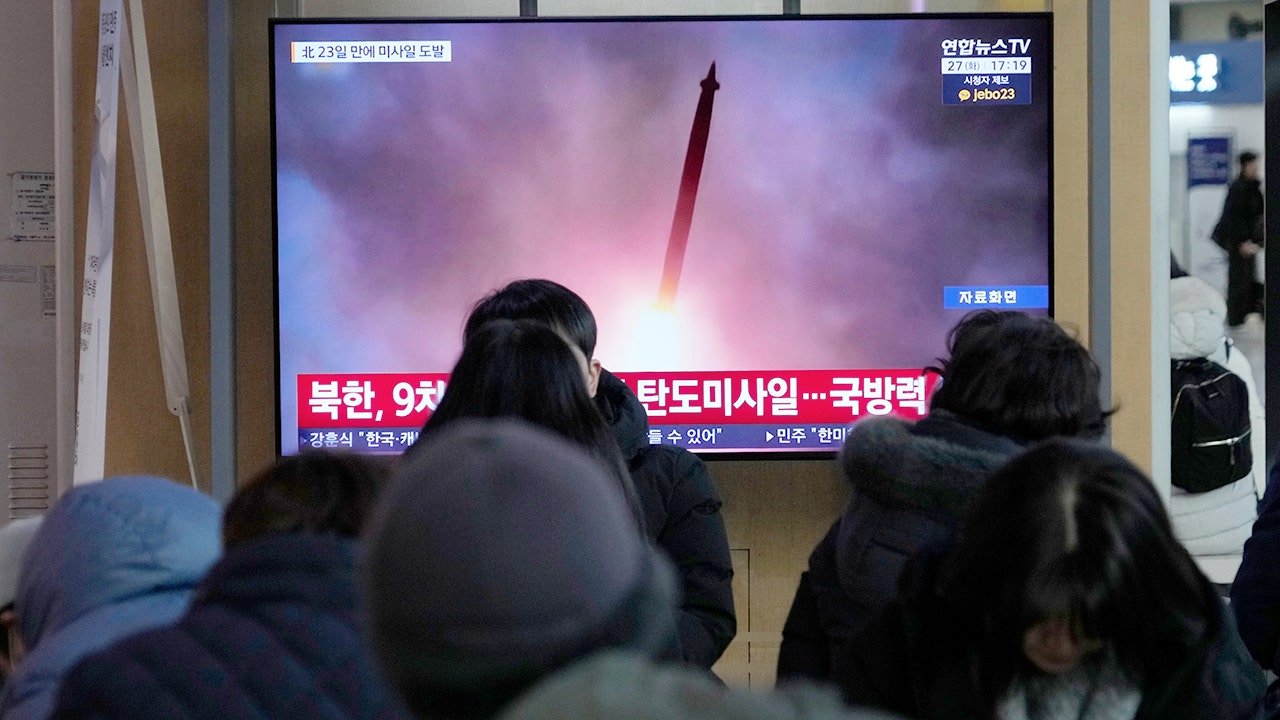
A TV screen shows a file image of North Korea’s missile launch during a news program at Seoul Railway Station in Seoul, South Korea, Tuesday, Jan. 27, 2026. (AP Photo/Ahn Young-joon)
The missile launches come as the ruling party prepares to hold its first full congress in five years, according to the AP, which cited state media. So far, North Korean leader Kim Jong Un has met with other top officials to prepare for the meeting. The top-level meeting will reportedly be used to set new political and economic priorities as the U.S. and South Korea seek renewed talks with North Korea.

In this photo provided by the North Korean government, North Korean leader Kim Jong Un delivers a speech during a ceremony marking the completion of a first-stage modernization project at the Ryongsong Machine Complex in North Korea on Monday, Jan. 19, 2026. (Korean Central News Agency/Korea News Service via AP)
NORTH KOREA RELEASES IMAGES OF DEVELOPMENT OF NUCLEAR-POWERED SUBMARINE
The Korean Central News Agency (KCNA), which is controlled by the North Korean government, reported in December that Kim presided over a plenary meeting of the Workers Party’s Central Committee in which participants discussed issues related to the party congress and this year’s state policies, the AP reported. The outlet noted that Kim revived the congress in 2016 after a 36-year hiatus.
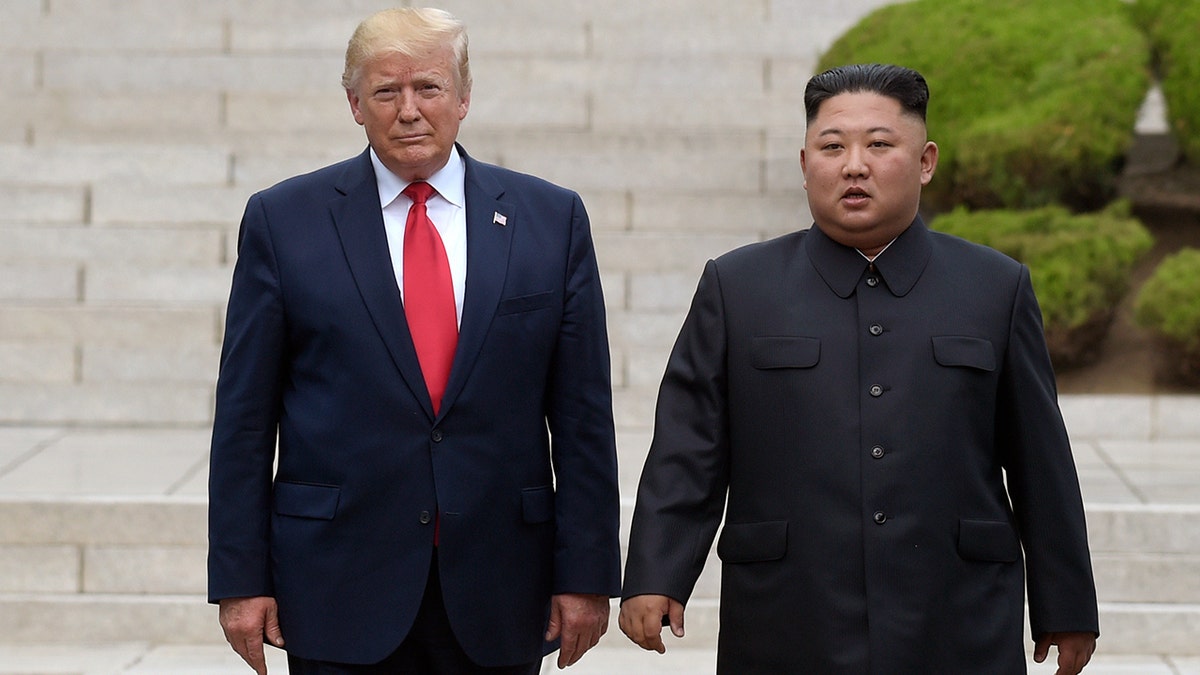
President Donald Trump, left, meets with North Korean leader Kim Jong Un, right, at the North Korean side of the border at the village of Panmunjom in the Demilitarized Zone, on June 30, 2019. (Susan Walsh/AP)
CLICK HERE TO DOWNLOAD THE FOX NEWS APP
Additionally, North Korea recently accused South Korea of carrying out surveillance drone flights across the border. Seoul has denied operating drones during the times Pyongyang specified and said it began investigating the possibility that civilians sent them.
The Associated Press contributed to this report.
world,north korea,south korea

El Grupo Patio, considerado uno de los holdings inmobiliarios más destacados de Chile, atraviesa una grave crisis interna derivada de acusaciones de manipulación en la valoración de la compañía y la presentación de querellas por parte de accionistas y afectados.
La empresa, fundada a comienzos de los años 2000 por la familia Jalaff, cuenta con más de USD 4.000 millones en activos y opera en Chile, Perú, México y Estados Unidos. En los últimos años, el grupo se consolidó como un referente en el mercado inmobiliario latinoamericano.
La crisis actual se originó tras la aparición de actas de directorio que reflejan presuntas malas prácticas y decisiones cuestionables. Este conflicto, reportan medios locales, ha generado una crisis de confianza, que podría limitar el acceso a financiamiento y afectar la relación con acreedores y la percepción general del mercado.

El foco del conflicto se sitúa en la determinación del precio de la participación de Antonio Jalaff, uno de los fundadores, basada en un informe elaborado por la consultora Econsult.
Un grupo de 23 aportantes y herederos de la familia Jalaff presentaron acciones judiciales, argumentando que el informe fue solicitado y financiado por quienes buscaban adquirir esas acciones, dando lugar, según su denuncia, a una valoración artificialmente baja.
Para la querella no hay dudas de que dicho informe fue solicitado y financiado por los compradores, lo que habría resultado en una apreciación artificialmente deprimida del real valor de Grupo Patio.

Según la querella, el informe de Econsult “construyó una imagen económica distorsionada y artificialmente depreciada del Grupo Patio, generando una apariencia falsa sobre el estado financiero del conglomerado”.
A esto se añade, según la denuncia, la falta de transparencia en la metodología, generando cuestionamientos sobre la objetividad del valor fijado y un fuerte impacto en el fondo administrado por el holding.
En declaraciones recogidas por Diario Financiero, Antonio Jalaff manifestó su inquietud sobre el daño sufrido por la empresa y su propia reputación. “Aquí hay gente que ha hecho malas prácticas para inflar su trayectoria empresarial y su ego, a costa del daño económico a acreedores que confiaron en mí y en una compañía que fundé junto a mi padre”, afirmó.
Ante el 4º Juzgado de Garantía de Santiago, Antonio Jalaff presentó una querella por estafa. En ella sostiene que la venta de su participación se realizó bajo una “maquinación fraudulenta”. El perjuicio económico estimado alcanza las 700.000 UF (unos USD 28,5 millones), al haberse concretado la operación a un precio que describe como artificialmente disminuido.
Jalaff denunció: “No nos quedó otra opción. Fueron los compradores y sus asesores quienes impusieron el valor final de la venta, y nos vimos obligados a aceptarlo… nunca aprobé la venta a ese precio, sino que fui arrastrado por las circunstancias y los quórums de las respectivas sociedades”, afirmó entonces.
Álvaro Jalaff sostuvo una posición similar y acusó en El Mostrador, que otros accionistas buscaron aislar a su familia, facilitando el control hostil del grupo.
La operación fue estructurada por Larraín Vial, la mayor corredora de bolsa y firma de finanzas corporativas de Chile. Su historial reciente, que incluye otros escándalo de corrucpción conocido como el caso Factop, agrega presión reputacional al proceso.
Las repercusiones de este caso se extienden más allá del ámbito judicial, impactan la confianza en la gobernanza corporativa y la transparencia financiera dentro de los grandes conglomerados regionales. Los efectos, advierten medios locales, podrían convertirse en un precedente para la gestión empresarial y la dinámica de poder en el sector inmobiliario de Chile y Latinoamérica.

La mansión que Sergio Busquets le vendió a una estrella de la NHL tras su partida del Inter Miami

Susana Giménez se prepara para celebrar su cumpleaños número 82: todos los detalles

Temporal en Estados Unidos: se espera más aire ártico en ciudades cubiertas de hielo y con cortes de energía

North Korea launches short-range ballistic missiles into sea, show of force ahead of political meetings
VIDEO | La desopilante reacción de Daniel Scioli cuando le preguntaron sobre ‘Chiqui’ Tapia: “Me tengo que ir a comer”

Una diferencia de 40% en el precio de los tubos para un gasoducto puede terminar en un recurso antidumping por parte de Techint

Carlos Pagni habló sobre las preocupaciones de Cristina Kirchner: “Tiene miedo porque sabe que se viene algo malo”

Mientras Quilmes arde, Mayra Mendoza viaja a Bogotá para defender a Cristina Kirchner

Juan Grabois contó que le pidieron plata para ir a un programa de C5N

El terrible accidente de Marcela Tauro en Intrusos que causó preocupación: “No puedo caminar ni…”

 POLITICA3 días ago
Mientras Quilmes arde, Mayra Mendoza viaja a Bogotá para defender a Cristina Kirchner
- POLITICA2 días ago
Juan Grabois contó que le pidieron plata para ir a un programa de C5N
- POLITICA3 días ago
La apuesta del Gobierno por la “Argentina Week” en Nueva York: los funcionarios y líderes de sectores estratégicos que asistirán