INTERNACIONAL
Pritzker approves physician-assisted suicide law for terminally ill patients despite Catholic opposition


NEWYou can now listen to Fox News articles!
Illinois Gov. JB Pritzker on Friday signed legislation that will allow eligible terminally ill adult patients to obtain life-ending medication in consultation with their doctors, making Illinois the latest state to authorize physician-assisted suicide for people with a prognosis of six months or less.
The law, known as the Medical Aid in Dying bill or «Deb’s Law,» will take effect in September 2026 to allow participating healthcare providers and the Illinois Department of Public Health (IDPH) time to implement stringent processes and protections.
Deb Robertson, a lifelong Illinois resident with a rare terminal illness who the bill was named after, said in a statement she «know[s] the end for me could be near. But I’m pleased to have been able to play some role in ensuring that terminally ill Illinoisans have access to medical aid in dying.»
A doctor prepares a syringe with Thiopental, a barbiturate that is used in the practice of euthanasia. (Getty Images)
‘LOVE YOU FOREVER’ AUTHOR MAY SOON DIE BY ASSISTED SUICIDE, PRO-LIFE GROUPS CALL DECISION ‘HEARTBREAKING’
Pritzker, a Democrat, wrote in a news release the legislation will help terminal patients «avoid unnecessary pain and suffering at the end of their lives,» and will be «thoughtfully implemented so that physicians can consult patients on making deeply personal decisions with authority, autonomy and empathy.»
The ACLU of Illinois applauded the new measure, saying terminally ill patients living in Illinois will «no longer have to agonize about spending their remaining days fearful of a painful death.»
While Pritzker’s office included a quote from Chicago Episcopalian minister Rev. Judith Doran supporting the law, other groups, including the Catholic Conference of Illinois, released statements opposing any legislation that would legalize assisted suicide.
«Proponents argue that this legislation will end suffering at the end-of-life,» the Catholic Bishops of Illinois wrote in a September statement. «Assisted suicide is not the compassionate solution for those who are suffering. Through palliative care, expanded access to mental health care, and stronger family and community support, providers and families are finding better ways to accompany these people compassionately that truly confer the love for, and dignity of, each human life.»
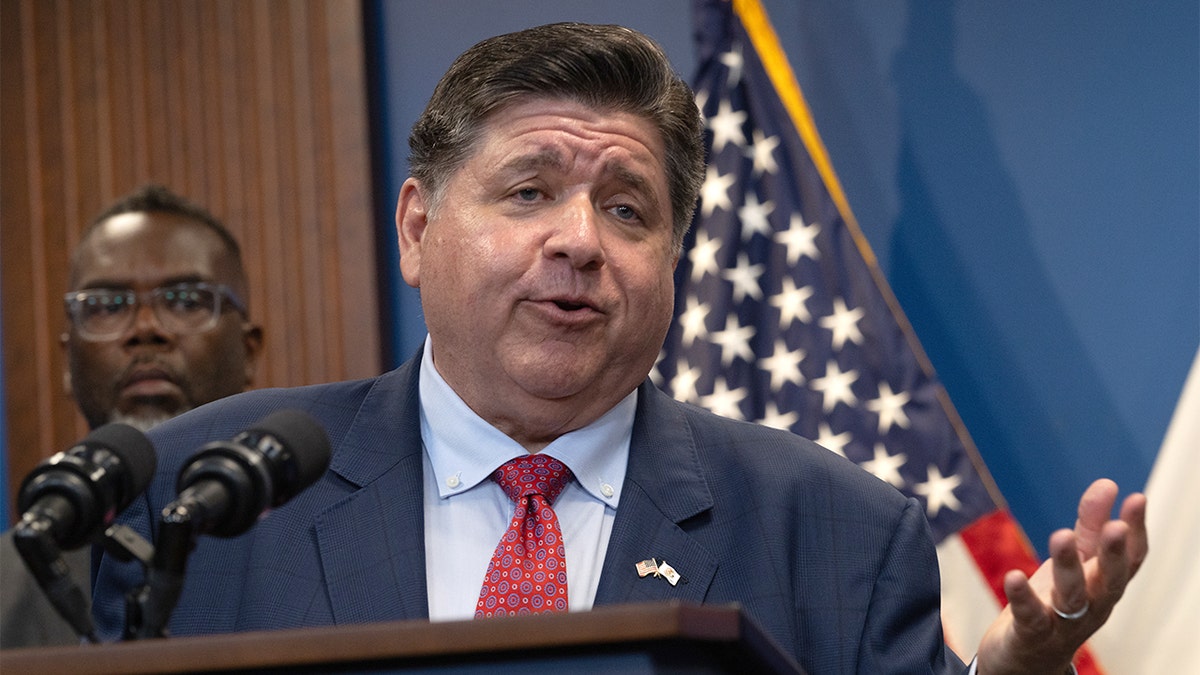
Democratic Illinois Gov. JB Pritzker signed a bill legalizing physician-assisted suicide. (Scott Olson/Getty Images)
‘UNTOLD DAMAGE’: GLOBAL ASSISTED SUICIDE MOVEMENT TARGETS CHILDREN
They added «unintended consequences» of legalized assisted suicide include documented cases of people being denied life-saving medical treatment by insurance companies in lieu of the much cheaper option of life-ending drugs.
«The poor and those with disabilities are particularly in jeopardy as they are the most vulnerable to such abuses,» the Catholic Conference of Illinois wrote. «In response, every major national organization that represents people with disabilities is opposed to assisted suicide.»
Patients must self-administer the medication, with the legislation making it a felony to coerce anyone to request the medication or forge a request.
Patients who qualify and receive medication have the right to withdraw their request at any time or choose not to ingest it, according to the release.

Disability campaigners from «Distant Voices and Not Dead» hold a demonstration outside Westminster Hall in central London, on April 29, 2024, protesting against proposals to legalize assisted suicide in the UK. (Getty Images)
The death certificates of those who commit physician-assisted suicide under the bill will list their cause of death as an underlying terminal disease.
The Thomas More Society, a national public interest law firm, claimed in a statement Friday that Illinois has «crossed a moral and legal red line.»
«This is a dark and sorrowful day for Illinois. When the state signals that some lives are no longer worth living, the most vulnerable pay the price,» Thomas More Society executive vice president Thomas Olp wrote in a statement. «Instead of offering true compassion, support, and care, this law offers a fatal prescription. That is not mercy. It is abandonment.»
In addition to its «grave social and moral implications,» the law firm noted the law threatens the conscience rights of physicians opposed to facilitating assisted suicide, as well as the freedom of association of religious medical institutions.
While physicians, health care providers and pharmacists are not required to participate, the bill requires physicians who object to assisted suicide on moral or religious grounds to refer patients to providers who will participate in ending their lives.
CLICK HERE TO DOWNLOAD THE FOX NEWS APP
«The State is forcing doctors to become active participants and cooperators in a patient’s suicide—no matter if their faith, ethics, or Hippocratic Oath forbid it,» Olp wote. «This is unconscionable coercion, plain and simple. No doctor should be ordered by the government to participate, directly or indirectly, in a process that deliberately ends a human life.»
Beyond the law’s compelled-referral mandate, the law also forces religious hospitals and clinics to retain staff who promote assisted deaths on-site, as long as those staff provide lethal drugs off-site.
«This is a Trojan horse designed to violate and undermine the missions of religious healthcare institutions,» Olp wrote. «Gov. Pritzker’s assisted suicide law threatens the integrity of Catholic and Christian medical institutions statewide. . . . State law should never endorse the idea that suffering or sickness makes a life disposable.»
If you or someone you know is having thoughts of suicide, contact the Suicide & Crisis Lifeline at 988 or 1-800-273-TALK (8255).
illinois,jb pritzker,health,roman catholic,politics











NEWYou can now listen to Fox News articles!
A government shutdown, big or small, is usually a front-and-center issue for lawmakers — but the most recent partial closure could be put on the back burner as Congress returns to several issues in Washington.
Senate Democrats and the White House are still at odds over funding the Department of Homeland Security (DHS), as the shutdown dragged into its tenth day. Neither side is budging, with the most recent concrete action coming early last week.
Trump, who proved pivotal in striking a funding truce with Senate Minority Leader Chuck Schumer, D-N.Y., in January, was not directly involved in recent negotiations.
‘TARIFFS SUCK’: SOME REPUBLICANS PRIVATELY CELEBRATE AS SUPREME COURT BLOCKS TRUMP POLICY
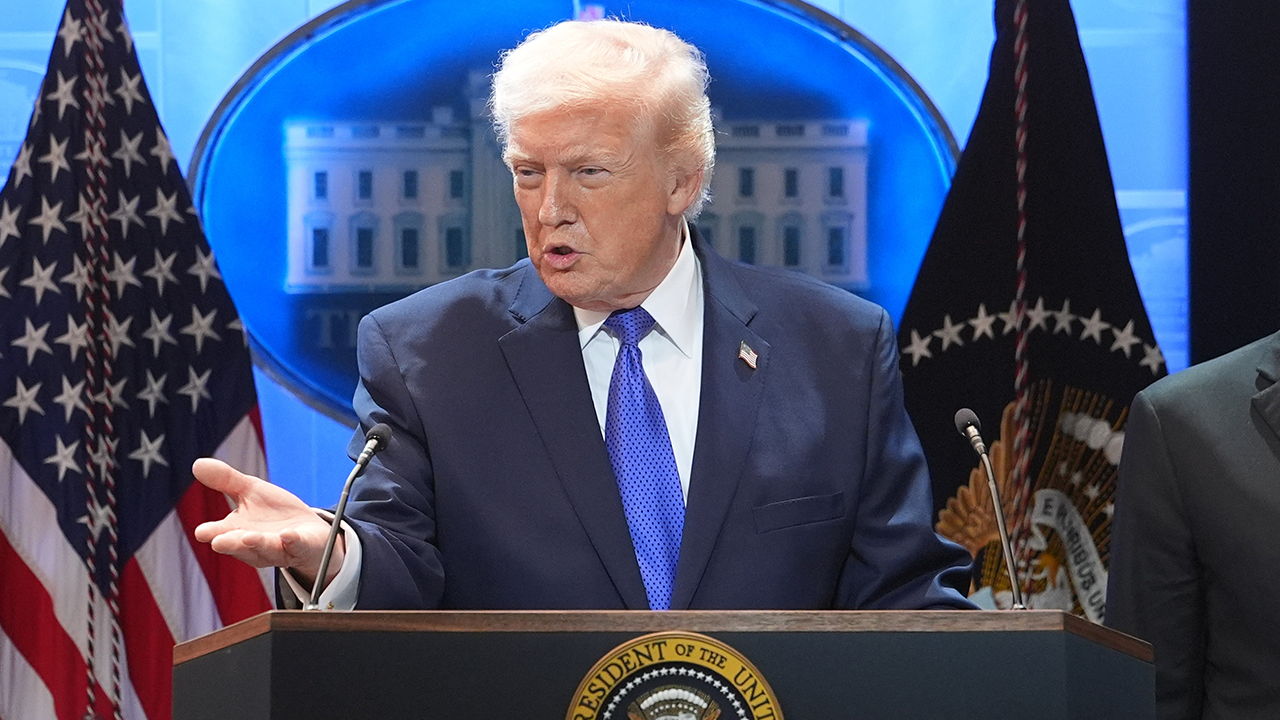
President Donald Trump has not had any «direct conversations or correspondence» with congressional Democrats recently. (Evan Vucci/The Associated Press )
Trump has not had any «direct conversations or correspondence» with congressional Democrats recently, White House press secretary Karoline Leavitt said, noting that the White House and its representatives have been handling the dialogue.
«But, of course, Democrats are the reason that the Department of Homeland Security is currently shut down,» she said. «They have chosen to act against the American people for political reasons.»
Senate Democrats offered a counter to the White House’s own counterproposal, which quickly was rejected as «unserious» by Leavitt. It’s a peculiar instance, given that this is the third shutdown during Trump’s second term, and neither side appears to be in a particular rush to end it.
DEMOCRATS RISK FEMA DISASTER FUNDING COLLAPSE AS DHS SHUTDOWN HITS DAY 5
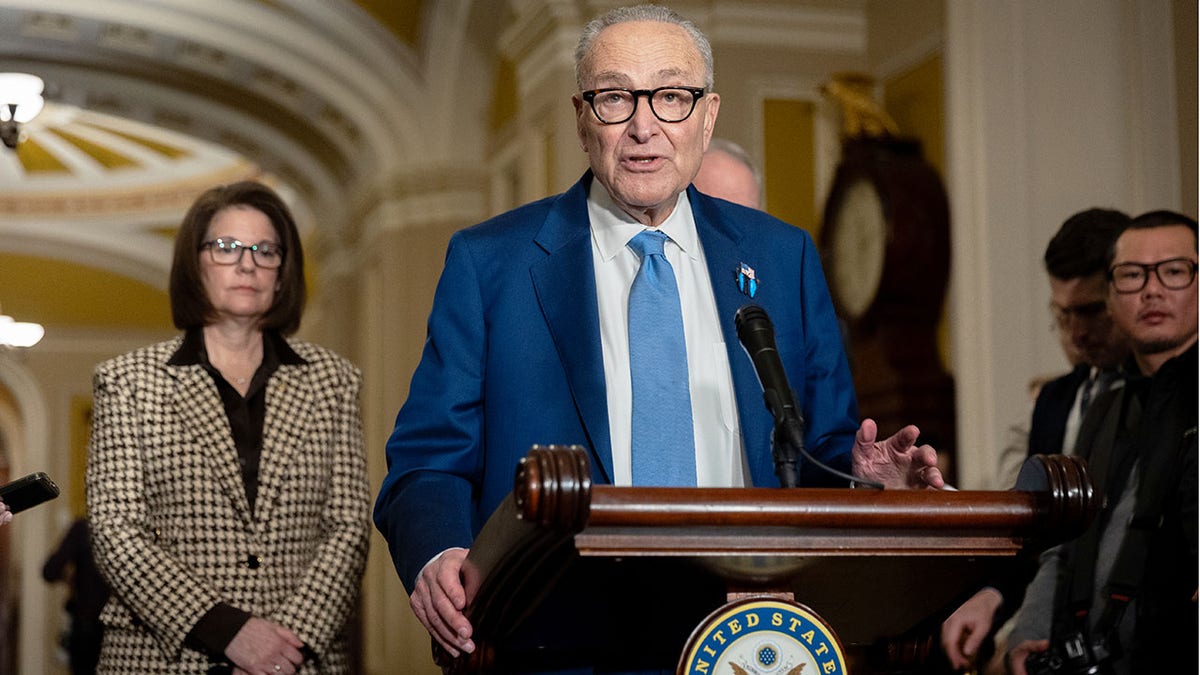
Senate Minority Leader Chuck Schumer, D-N.Y., and his caucus have not relented in their position as DHS enters its tenth day of being shut down. (Nathan Posner/Anadolu via Getty Images)
Senate Majority Leader John Thune, R-S.D., told Fox News Digital that there’s «some room for give and take» in the negotiations, but remained firm in the GOP’s positioning against requiring Immigration and Customs Enforcement (ICE) agents from getting judicial warrants, unmasking or other reforms sought by Democrats that could increase risks for agents in the field.
«I felt like, you know, the last offer the White House put out there was a really — it was a good faith one, and it was clear to me that they’re attempting, in every way, to try and land this thing so we can get DHS funded,» Thune said.
Funding the agency will be a top priority for the upper chamber, but they’ll be delayed because of winter storms descending on the East Coast. The weather has caused the Senate to delay a vote on the original DHS spending bill until Tuesday night, ahead of Trump’s State of the Union address.
There are other issues that could get in the way of hashing out a deal, including a possible conflict with Iran and Trump’s desire to move ahead with tariffs without congressional approval.
GOP WARNS DEMOCRATS USING DHS SHUTDOWN TO STALL SENATE VOTER ID PUSH
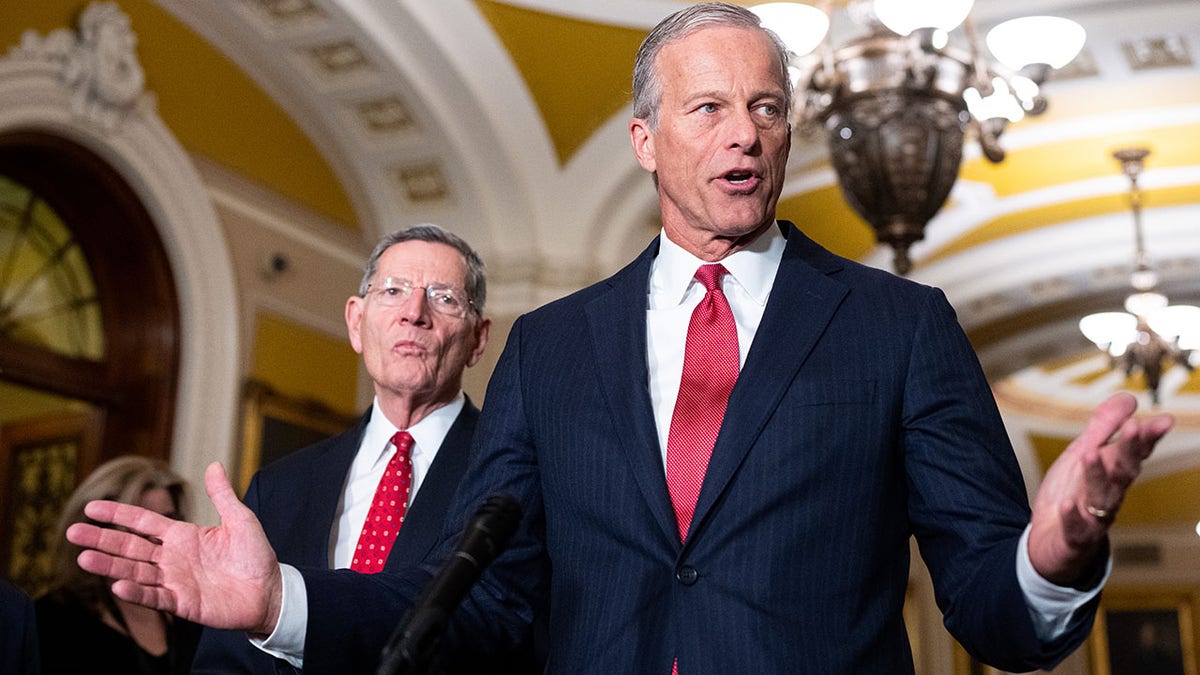
Senate Majority Leader John Thune, R-S.D., warned that Senate Democrats were trying to tie up Republicans from hitting the campaign trail ahead of the pivotal 2026 midterm cycle. (Bill Clark/CQ-Roll Call, Inc via Getty Images)
Trump told reporters Friday that he was «considering» a limited military strike against Iran, which already has riled up some in Congress, who are demanding that lawmakers get a say on whether the U.S. strikes.
Sen. Tim Kaine, D-Va., said in a statement that he has a war powers resolution to block an attack on Iran filed and ready, and challenged his colleagues to vote against it.
«If some of my colleagues support war, then they should have the guts to vote for the war and to be held accountable by their constituents, rather than hiding under their desks,» Kaine said.
CLICK HERE TO DOWNLOAD THE FOX NEWS APP
On the heels of the Supreme Court’s ruling to torpedo his sweeping duties, Trump is considering bypassing Congress to move ahead with another set of global 10% tariffs.
That comes as some Republicans are quietly celebrating the end of the duties, and others are open to working with the administration on a path forward for trade policy.
On tariffs, a Republican aide told Fox News that the GOP was «waiting to see what POTUS does next.»
«The State of the Union should be interesting,» they said.
politics,senate,government shutdown,homeland security

NEWYou can now listen to Fox News articles!
Following the reported killing of major cartel leader Nemesio Oseguera, known as El Mencho, multiple American tourists vacationing in Puerto Vallarta told Fox News Digital they unexpectedly found themselves in the middle of a violent cartel retaliation.
As airlines canceled flights and authorities issued shelter-in-place orders, stranded visitors reported cars set ablaze, suspected cartel members blocking major roads, and stores ransacked by looters — scenes some witnesses said made parts of the popular resort city feel like «a war breaking out in the streets.»
Witnesses said they were forced to evacuate their rooms, manage with limited hotel food, and even venture outside in search of meals while waiting for Mexican authorities to regain control of the city.
Staying at an Airbnb near a main road, Eugene Marchenko, 37, of Charleston, South Carolina, told Fox News Digital he woke up to blaring horns and saw six cars completely engulfed in flames just outside his balcony. He and his wife, who had arrived in Mexico only a day earlier, were forced to evacuate for several hours, fearing that a nearby fuel tanker, also ablaze, could explode.
MAJOR DRUG LORD ‘EL MENCHO’ KILLED IN MEXICAN MILITARY OPERATION WITH U.S. INTELLIGENCE SUPPORT
«I looked down and they’re completely engulfed in flames,» Marchenko said. «It was six cars in total that burned and one fuel tanker.»
He said he watched a neighbor’s video showing men he believed to be cartel members forcing people out of their vehicles, then pouring gasoline and setting the cars on fire.
«They told the people to leave,» Marchenko said. «Then they were taking the gas and pouring the gas on the vehicle and waiting until everybody was clear before they were setting it on fire.»
Later in the afternoon, Marchenko ventured out to find food and said he saw pharmacies and corner stores completely burned down, adding that younger crowds had broken into nearby buildings to loot beer and cigarettes.
CARTELS OUTGUN POLICE: ROCKET LAUNCHERS SEIZED IN EL MENCHO RAID SPOTLIGHT CJNG FIREPOWER
Vehicles appear to carry multiple armed forces in Puerto Vallarta. (Fox News Digital)
Videos obtained by Fox News Digital show a helicopter hovering above his building, circling as if searching for someone, while Mexican armed forces and armored vehicles moved through the streets below.
Public transportation and Ubers had come to a complete halt, Marchenko added, saying that even if flights resume, he is unsure how they would reach the airport.
Despite the chaos, Marchenko noted that no one appeared to panic.
«There’s definitely not any panic from almost nobody here,» he said. «I think it’s interesting, almost everybody was just annoyed more than anything.»
SOCCER MATCHES POSTPONED AFTER MEXICO KILLS CARTEL LEADER ‘EL MENCHO’ NEAR WORLD CUP HOST

A plume of smoke rises in Puerto Vallarta on Feb. 22, 2026. (Fox News Digital)
Adriana Belli, 49, another visitor from Miami, told Fox News Digital that she had planned to spend over a week in Mexico to attend a wedding in Guadalajara and celebrate a friend’s birthday in Mexico City.
Belli said the sudden outbreak of violence was especially shocking, noting that she had spoken with American tourists staying at her Marriott resort who insisted the area was extremely safe after visiting Puerto Vallarta for 24 years.
She added that guests who had gone to the airport were under lockdown and were managing with the limited food available.
«A lot of the other tourists who had early morning flights were actually able to get to the airport, but they are now locked down in the airport and unable to leave,» she said. «So what we heard from other guests is they are just sort of surviving off of granola bars.»

A fuel tanker was set ablaze near a gas station in Puerto Vallarta on Feb. 22, 2026. (Fox News Digital)
Another source staying at a separate resort told Fox News Digital that restaurants and room service had been shut down. Guests were brought to the lobby for what was described as «the last bit of food.»
He added that this was the first trip where he and his wife were away from their 4-year-old son, and that he had to call home to tell family members where to find their will.
«This is the first time we’ve ever been away from him. My wife was saying, ‘We’re never leaving him again,’» he said. «I had to call my mom today and, you know, just tell her, ‘Look, here’s where my will is. We just created this. I don’t want you to panic, but I may need you to stay a couple days extra with my son.’»
CLICK HERE TO DOWNLOAD THE FOX NEWS APP
He added that, despite the area appearing like a war zone, he is remaining optimistic that the authorities will restore order in the coming days.
Mexico’s Defense Department said Sunday that Oseguera was killed in a military operation. The news reportedly triggered widespread unrest and uncertainty across multiple states as Mexican authorities worked to stabilize the region.
location mexico,mexican cartel violence,world,latin america


DHS shutdown drags into week two as Iran threat, SOTU clash complicate Hill talks

Los controladores aéreos convocaron a un paro: en qué fechas y horas se realizará

El precio del Bitcoin cayó casi un 3% y consolida su tendencia hacia la baja

La inclusión de ostarine en la lista de sustancias prohibidas desafía a deportistas y autoridades

Tourists trapped in Puerto Vallarta recount cartel retaliation after El Mencho killed

El tierno video que Wanda Nara publicó en sus redes tras la visita que recibió en su casa de Nordelta: “Muero de amor”

Escándalo en MasterChef: una famosa abandonó a los gritos y acusando que está todo arreglado

Del himno peronista de Kelly Olmos al exabrupto de Agustina Propato: las perlitas del debate por la reforma laboral

Villarruel cuestionó la apertura de importaciones: «Sin industria, se pasa a depender de China»

“Ahora es la hora de jugarse”: el mensaje de Patricia Bullrich a los empresarios tras aprobarse la reforma laboral

 ECONOMIA2 días ago
Villarruel cuestionó la apertura de importaciones: «Sin industria, se pasa a depender de China»
- POLITICA2 días ago
“Ahora es la hora de jugarse”: el mensaje de Patricia Bullrich a los empresarios tras aprobarse la reforma laboral
- ECONOMIA2 días ago
Según un especialista, el precio de la carne se mantendrá alto “entre dos y tres años”