
INTERNACIONAL
El presidente de Bolivia, Rodrigo Paz, anunció el fin de los subsidios a los combustibles en el país

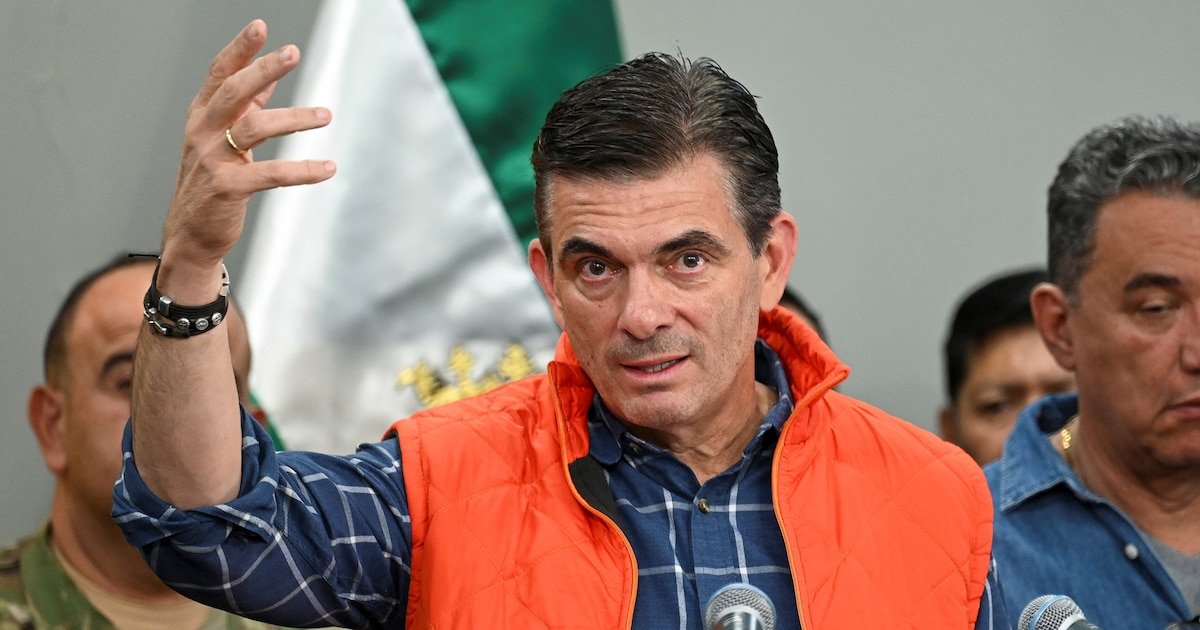
El presidente de Bolivia, Rodrigo Paz, anunció este miércoles el fin de la subvención a los combustibles en el país, acompañado de una serie de medidas económicas adicionales. Entre ellas, destacó un aumento del 20% en el salario mínimo nacional, que pasará de 2.750 a 3.300 pesos bolivianos (equivalente a 395 a 474 dólares). El mandatario aseguró que estas acciones buscan proteger especialmente “a quienes más lo necesitan”.
Por su parte, el ministro de Hidrocarburos boliviano, Mauricio Medinaceli, informó este miércoles que los precios de los combustibles tendrán incrementos significativos tras la eliminación de la subvención.
El precio de la gasolina especial subirá de 3,79 a 6,96 pesos bolivianos, mientras que el diésel pasará de 3,74 a 9,80 pesos bolivianos. Esta decisión forma parte de la estrategia del Ejecutivo para contener el gasto público y combatir el contrabando de carburantes hacia países vecinos.
Paz indicó que los nuevos valores serán oficializados mediante un decreto, que también facilitará la importación privada de diésel retirándolo de la lista de Sustancias Controladas. La vigencia de los ajustes será inmediata tras la publicación del decreto correspondiente.
Según Paz, “la quita de subsidios no significa abandono, sino orden y justicia”. Esta medida se enmarca en el objetivo declarado de transferir gradualmente al sector privado el abastecimiento nacional de combustibles.

El anuncio surge luego de que Paz presentara el lunes pasado en El Alto la creación de la Comisión de la Verdad, un organismo encargado de investigar la supuesta corrupción en el sector de hidrocarburos durante las gestiones de Evo Morales y Luis Arce, ambos del Movimiento al Socialismo (MAS).
Durante el acto celebrado en la sede de la Procuraduría General del Estado, Paz enfatizó que la meta principal es recuperar los recursos que habrían sido desviados y garantizar que los responsables sean llevados ante la Justicia.
“Esto no es venganza, esto es justicia”, afirmó el mandatario ante funcionarios y la prensa, al oficializar la conformación de la comisión y presentar a sus integrantes. Paz aclaró que la investigación se enfocará específicamente en las políticas de nacionalización e industrialización de hidrocarburos implementadas desde 2006 hasta 2025.
El pasado 19 de noviembre, el Gobierno boliviano reveló que aproximadamente el 30% del combustible subvencionado termina en el contrabando hacia países vecinos. Así lo informó Margot Ayala, directora de la Agencia Nacional de Hidrocarburos (ANH), quien basó la estimación en análisis y auditorías en curso dentro del sector energético.

Ayala señaló que existen sospechas fundadas sobre la participación de funcionarios públicos en el desvío de diésel y gasolina, entre los que mencionó trabajadores del área de Sustancias Controladas, de Yacimientos Petrolíferos Fiscales Bolivianos (YPFB) y de la propia ANH. Según sus declaraciones, estarían “dilapidando los recursos del Estado” y facilitando el transporte ilegal de combustibles hacia el exterior.
La directora de la ANH aseguró que las investigaciones continuarán y advirtió que no habrá impunidad. “Esto va a ir a auditoría y va a tener repercusiones. Otra de las cosas que hemos descubierto es que no solamente por falta de control (hay contrabando), sino por la falta de consecuencias es que la gente se ha acostumbrado a hacer lo que le da la gana”, afirmó en el programa radial Asuntos Centrales.
Esta denuncia se suma a una referencia previa a hechos de corrupción dentro de la institución. Ayala reportó que durante un operativo en la Planta de Almacenaje de Hidrocarburos de Senkata, en El Alto, se identificaron “mafias organizadas” involucradas en el desvío de combustible subvencionado.
(Con información de EFE)
Accidents,Disasters,Domestic Politics,Natural Catastrophes,Disasters / Accidents,South America / Central America,Government / Politics


INTERNACIONAL
US gains leverage over Canadian oil, weakens China amid US plans to overhaul Venezuelan oil market

NEWYou can now listen to Fox News articles!
The Trump administration’s plans to revitalize the Venezuelan oil market puts the United States at an advantage over Canada and serves to weaken China, according to energy experts.
Conservative politicians, including the leader of Canada’s conservative opposition party, are calling on Canadian Prime Minister Mark Carney to approve a new Pacific coast pipeline to help aid the country’s oil exports to overseas markets, amid fears that the United States’ involvement in Venezuela’s market will significantly impact the competitiveness of Canadian oil. Canadian lawmakers are concerned that increased oil exports from Venezuela to the United States, which is Canada’s largest oil purchaser, will displace oil from Canada, forcing the country to drop its prices in order to stay competitive.
Meanwhile, experts have added that the U.S. involvement in Venezuela’s oil market will also serve to weaken China.
«This is going to be bad for all petrostates, and Canada is basically a petrostate,» Energy and Environment Legal Institute’s Steve Milloy, a former fossil fuel industry lobbyist, told Fox News Digital.
TRUMP TELLS SCARBOROUGH US WILL KEEP VENEZUELA OIL WHEN PRESSED ON IRAQ COMPARISONS
A «petrostate» is a term used to describe a nation whose government and economy heavily rely on revenue from oil and natural gas exports.
Donald Trump fist-bumps next to images of the Canadian and Chinese flags. (Getty Images)
«Canada, like all petrostates — Iran, all of OPEC, all those people — are going to be at our mercy,» Milloy added.
The leader of Canada’s conservative opposition party, Pierre Poilievre, said in a letter to Carney Tuesday, that the country needs to «move millions of barrels a day to overseas markets» in order to reduce Canada’s «dependence» on the United States’ oil market.
«Venezuela’s re-entry to American markets means time is running out,» Poilievre told Carney in his letter, arguing «our sovereignty depends» on buffering the Canadian oil markets from the United States’ influence amid its plans to go into Venezuela and overhaul its oil.
«Recent events surrounding Venezuelan dictator Nicolás Maduro emphasize the importance that we expedite the development of pipelines to diversify our oil export markets, including a new Indigenous co-owned bitumen pipeline to BC’s northwest coast to reach Asian markets,» Alberta Premier Danielle Smith also said Monday.
But, according to Carney, Canadian oil will remain «competitive,» citing its «clearly low risk» and «low cost» due to the country’s stable governance, Reuters reported Tuesday. «That makes Canadian oil competitive for the medium and long term,» Carney said. «We welcome the prospect of greater prosperity in Venezuela, but we also see the competitiveness of Canadian oil.»
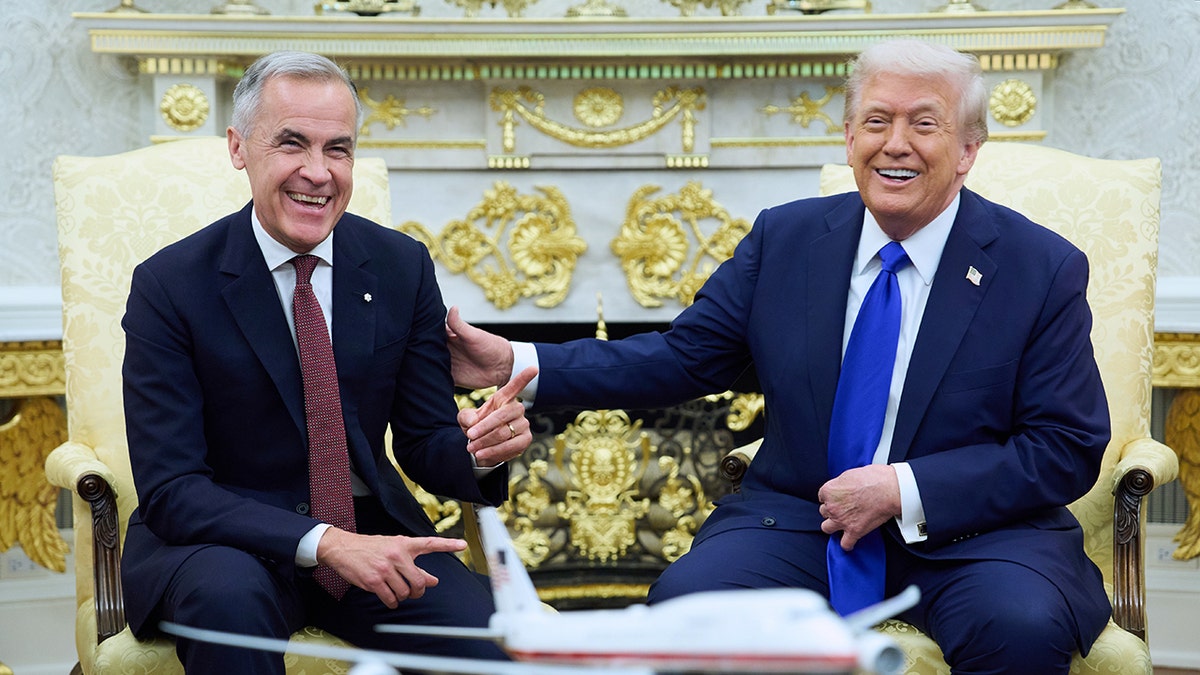
President Donald Trump meets with Canadian Prime Minister Mark Carney in the Oval Office of the White House, on Tuesday, Oct. 7, 2025, in Washington. (Evan Vucci/The Associated Press)
3 KEY TAKEAWAYS FROM TRUMP’S PUSH TO PUT US OIL FIRMS BACK IN VENEZUELA
However, Milloy argued that if Canada is «forced to sell cheaper oil» it will significantly impact the country’s ability to generate revenue. But, Milloy also noted, it is also slightly «premature to say what’s going to happen just yet» as it will take time for the impact of the United States’ intervention in Venezuela’s oil market to take shape.
«There’s a lot yet to be worked out,» Milloy said.
In addition to Canada, Milloy suggested that President Donald Trump’s decision to go into Venezuela and take over its oil market also helps the United States’ leverage over China.
«Another important factor is that a lot of Venezuelan oil went to China,» he pointed out.
«China is basically oil poor, and that’s why China has been trying to electrify everything. They have a lot of nuclear power there, they’re running as much solar and wind as they can because they’re oil poor, they don’t have natural gas and and they need to insulate themselves when they do something stupid like invade Taiwan,» Milloy said. «If they’re dependent on oil and gas, the global market will just shut down. There will be an embargo, and they’ll be screwed. So they’re trying to electrify everything as much as possible — the trucks, the cars, just everything. And this is just another lever on China … They were buying their oil from Venezuela, probably at a cut-price, and that’s going to end. Trump said he would sell oil in China, but it’s not going to be a cut-price.»
CLICK HERE TO DOWNLOAD THE FOX NEWS APP
That sentiment was also echoed by U.S. Oil and Gas Association President Tim Stewart.
«Long term, what this does now, is it puts 40% of the entire production in the world under the U.S. security umbrella — that’s from Alberta to Argentina. And it completely resets the global geopolitical world in terms of the U.S.’s ability to project its interests across the world. We can do things internationally without having an immediate price spike in crude,» Stewart told Fox News.
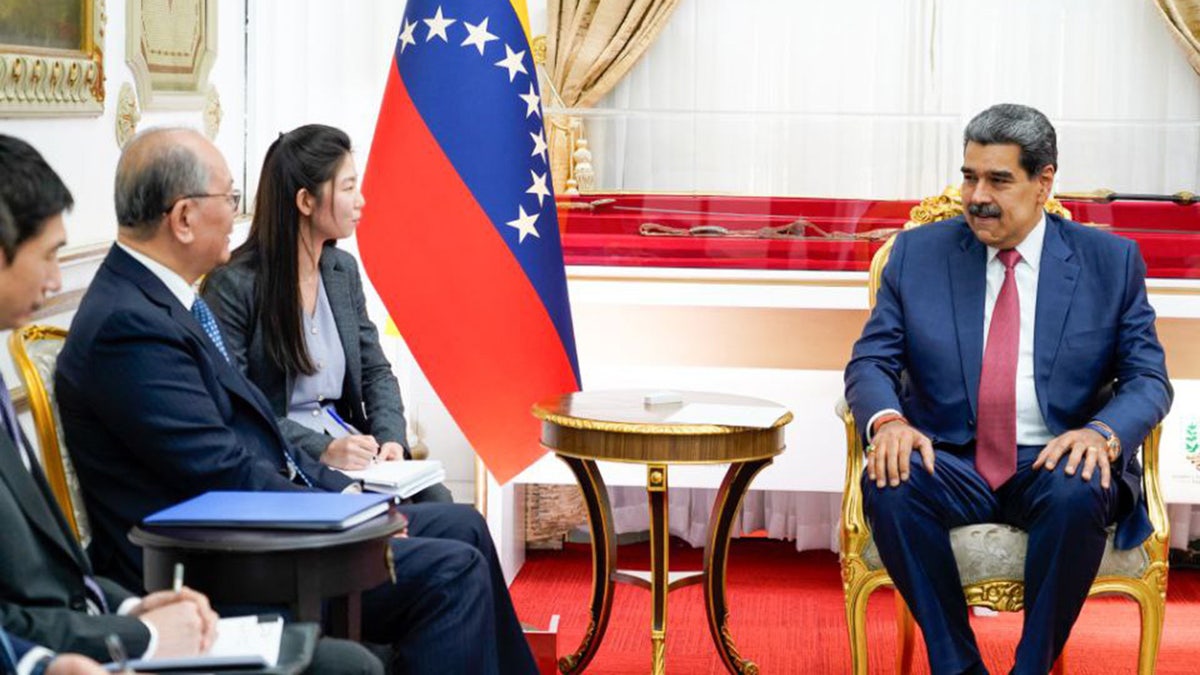
Venezuelan President Nicolas Maduro, right, meets with Qi Xiaoqi, Special Envoy of President Xi Jinping, in Caracas, Venezuela, Jan. 2, 2026. (Presidency of Venezuela/Handout/Anadolu via Getty Images)
«Venezuela is the poster child for the Belt and Road Initiative. The numbers I saw with Venezuela now is about $20 billion to China over just the course of the last few years, and that’s largely backed by crude shipments,» Stewart continued. «What this says to China is ‘I’m sorry, but your failure to plan with good borrowing partners does not constitute our financial obligation.’ It also sends a message to China, ‘Hey get out of our hemisphere.’ … (China) takes about 80% of Venezuela’s crude right now so it’s going to have a big impact on them.»
energy in america,canada,china,economy,energy,venezuelan political crisis
INTERNACIONAL
Mobs of motorcycle-riding armed militia hunt Venezuelan streets for Trump supporters as crackdown intensifies

NEWYou can now listen to Fox News articles!
In the aftermath of Nicolás Maduro’s capture by United States forces, paramilitary groups tied to the Venezuelan leader’s regime have initiated an aggressive campaign to maintain control over the country.
Mobs of motorcycle-riding civilians often armed with assault rifles, known as colectivos, have been conducting intrusive searches and establishing checkpoints to identify and punish anyone showing support for Maduro’s removal from power, Reuters reported.
The National Union of Press Workers of Venezuela reported that armed forces briefly detained fourteen journalists during Monday’s induction of Vice President Delcy Rodríguez as the country’s interim leader. Residents have also reported that some Venezuelans have been afraid to leave their homes, fearing that armed forces would seize and scour their phones for signs of dissent, The Telegraph said.
«The future is uncertain, the Colectivos have weapons, the Colombian guerrilla is already here in Venezuela, so we don’t know what’s going to happen, time will tell,» Oswaldo, a 69-year-old Venezuelan shop owner, told The Telegraph.
The colectivos are largely controlled by Nicolás Maduro’s close ally, Diosdado Cabello, who has a $25 million bounty from the U.S. State Department largely for his role in corruption and drug trafficking.
VENEZUELA’S NEW INTERIM LEADER DELCY RODRÍGUEZ ‘HATES THE WEST,’ EX OFFICIAL WARNS
Paramilitary members known as «colectivos» rally to protest Nicolás Maduro’s capture by the United States armed forces in the center of Caracas, Venezuela, on January 4, 2026. (Andrea Hernández Briceño/Washington Post)
Cabello, who serves as the state’s Minister of Interior, Justice and Peace, is widely known for suppressing political dissent in Venezuela. The presence of colectivos, who often serve as an unofficial arm of state repression, suggests that Maduro loyalists are desperately trying to maintain their grip on the country.
The reported crackdown began with a government directive to root out dissent against the Venezuelan regime. According to Reuters, a state of emergency decree published on Monday ordered police to «immediately begin the national search and capture of everyone involved in the promotion or support of the armed attack by the United States.»
FROM PALACE TO PRISON: VENEZUELAN STRONGMAN MADURO LOCKED IN TROUBLED BROOKLYN JAIL
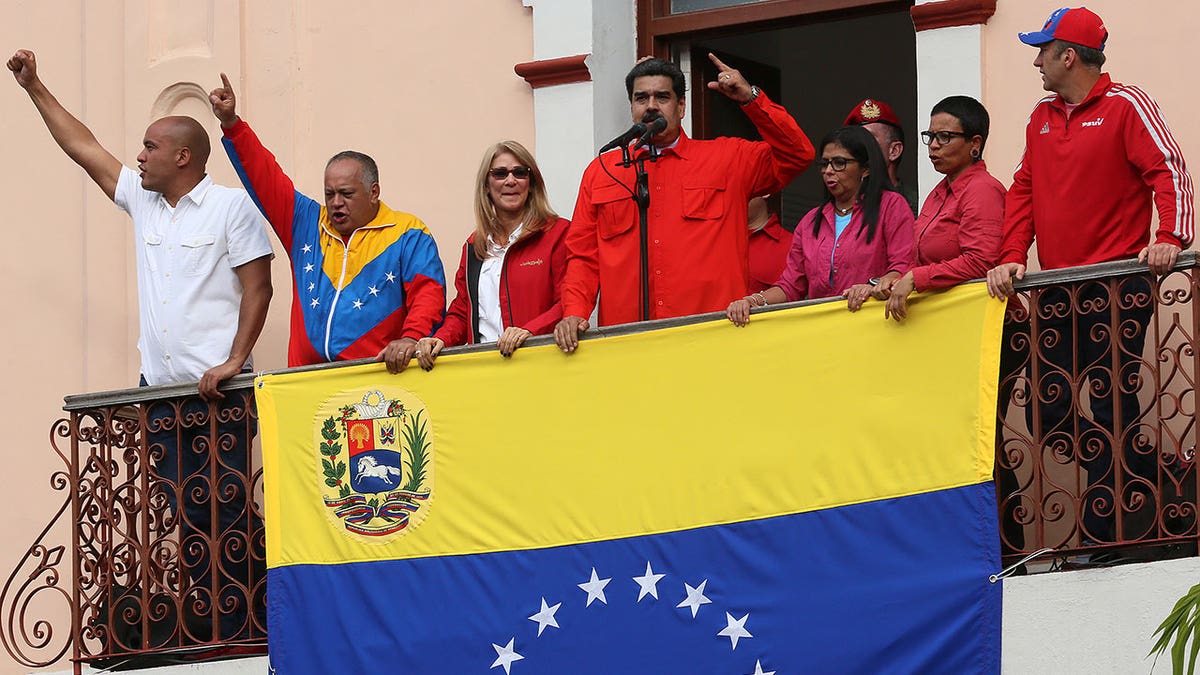
Nicolás Maduro (C) waves a national flag at the Balcón del Pueblo of the Miraflores Government Palace on Jan. 23, 2019, in Caracas, Venezuela. (Edilzon Gamez/Getty Images)
As someone who conducts state-run domestic espionage through widespread coordination of surveillance and counterintelligence agencies, Cabello remains a major unpredictable and dangerous figure in the wake of Maduro’s capture, Reuters reported.
«The focus is now on Diosdado Cabello,» Venezuelan military strategist Jose Garcia told the outlet. «Because he is the most ideological, violent and unpredictable element of the Venezuelan regime.»
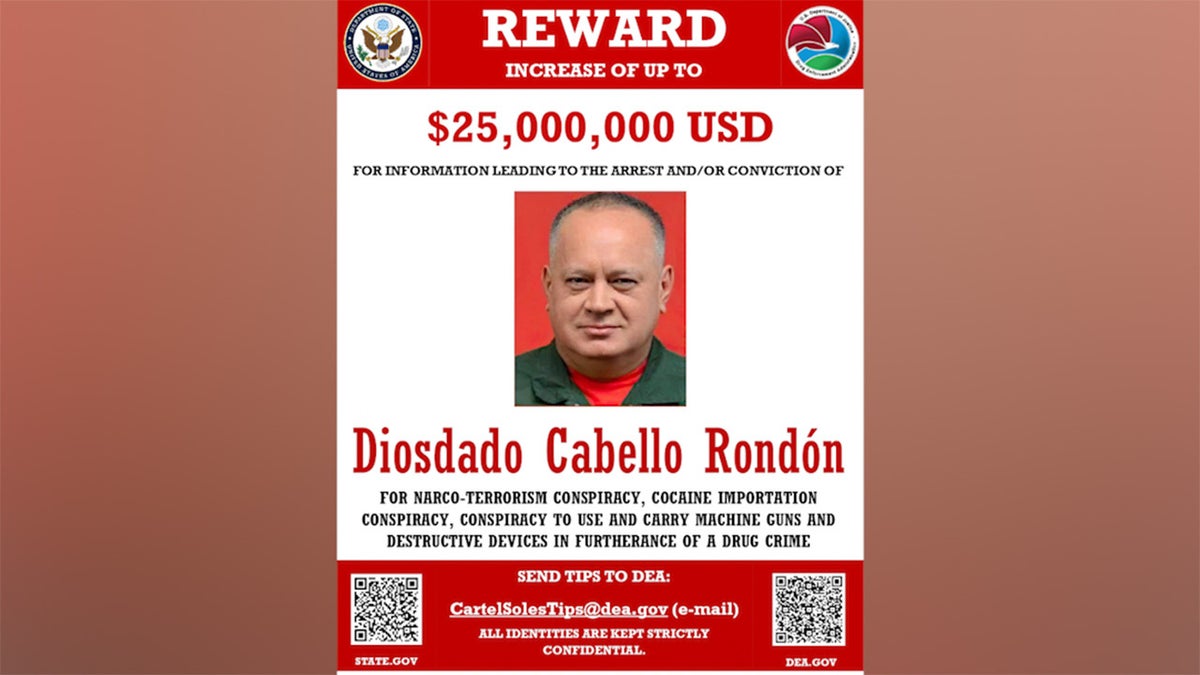
A U.S. State Department «wanted» poster for senior Venezuelan regime figure Diosdado Cabello, whom U.S. authorities have accused of corruption and ties to narcotics trafficking. (U.S. State Department )
Reuters reported that the former military officer was also recently spotted patrolling Venezuelan streets with security forces.
In a social media post by the Venezuelan government, footage reportedly showed Cabello posing with a crowd of armed militia as they shouted, «Always loyal, never traitors.»
Reuters added that in recent weeks, Cabello was also seen on television ordering Venezuela’s military counterintelligence agency to «go and get the terrorists» and warning «whoever strays, we will know.»
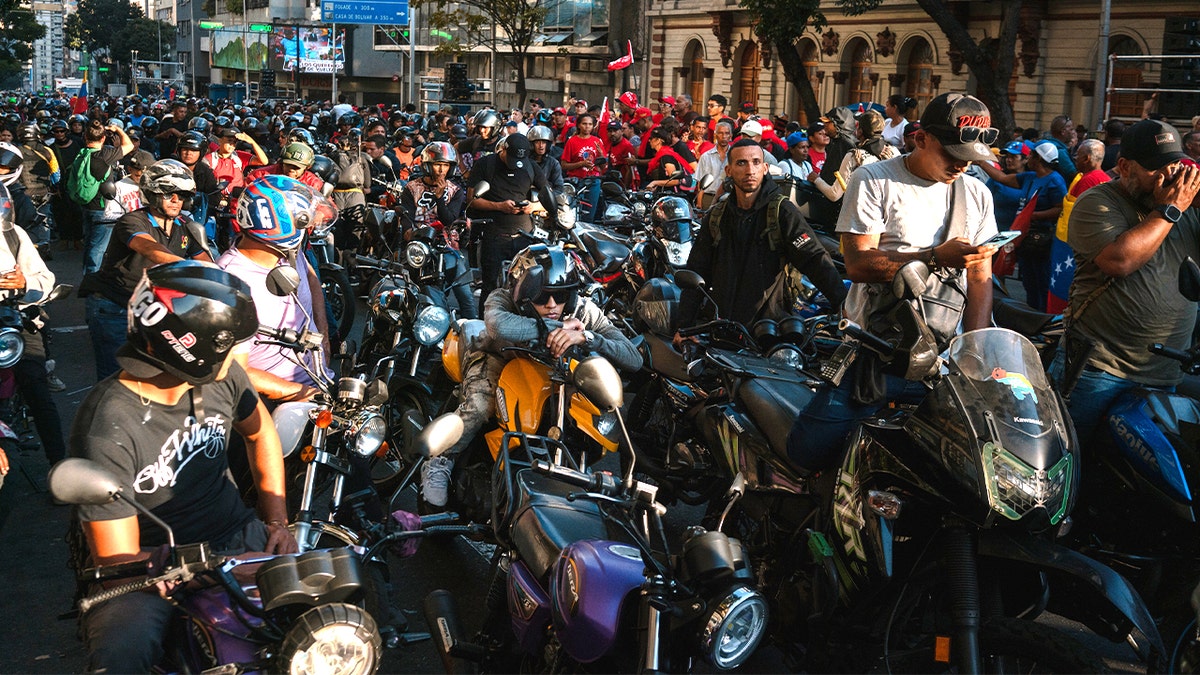
Paramilitary members known as colectivos flood the streets of Caracas, Venezuela, on Jan. 4, 2026. (Andrea Hernández Briceño/Washington Post)
CLICK HERE TO DOWNLOAD THE FOX NEWS APP
He reportedly repeated the same rhetoric in a state television appearance Saturday, wearing a flak jacket and helmet and surrounded by heavily armed guards.
Despite the removal of Maduro, the loyalist crackdown on dissent and the media suggests that the ruling party has no intention of relinquishing its grip on power.
Reuters contributed to this report.
venezuelan political crisis,armed forces,socialism
INTERNACIONAL
Trump confirmó que el gobierno de Delcy Rodríguez autorizó el envío de entre 30 y 50 millones de barriles de petróleo a Estados Unidos

El presidente de Estados Unidos, Donald Trump, anunció un acuerdo con el gobierno de Delcy Rodríguez para que Venezuela le entregue «entre 30 y 50 millones de barriles de petróleo».
«Este petróleo se venderá a precio de mercado, y ese dinero será controlado por mí, como presidente de los Estados Unidos de América, para garantizar que se utilice en beneficio de los pueblos de Venezuela y los Estados Unidos», aclaró Trump en su red Truth Social.
«Le he pedido al secretario de Energía, Chris Wright, que ejecute este plan de inmediato. Se transportará en buques de almacenamiento y se llevará directamente a los muelles de descarga de los Estados Unidos», agregó.
Más temprano, Reuters reveló que Caracas y Washington estaban discutiendo la exportación de crudo venezolano a refinerías de Estados Unidos.
Por el bloqueo de Estados Unidos, PDVSA tiene millones de barriles almacenados en tanques y en buques petroleros e incluso ha tenido que restringir la producción.
Además del gesto hacia la administración Trump en medio de la tensión, el acuerdo le permitirá la petrolera venezolana evitar recortes de producción más grandes. Aunque también implicaría desviar cargamentos que originalmente tenían como destino China, según analizaron dos de las fuentes.
Mientras tanto, Chevron está enviando 11 petroleros -la cifra más alta desde octubre, cuando fletaron 12- este mes a los puertos venezolanos de José y Bajo Grande. Esa petrolera es la única empresa occidental que puede producir y exportar petróleo en Venezuela gracias a una licencia del Departamento del Tesoro de EE.UU.
De los 11 buques, uno ya ha cargado y otros dos se encuentran actualmente atracados. Todo el petróleo tiene como destino refinerías estadounidenses.
Mientras Venezuela trata de estabilizar el escenario político y social tras la captura de Nicolás Maduro y su esposa, Cilia Flores, la administración Trump acelera su plan para revivir la industria petrolera del país.
El secretario de Energía, Chris Wright, se reunirá esta semana con los principales ejecutivos del sector energético estadounidense en Miami, durante la Conferencia de Energía, Tecnología Limpia y Servicios Públicos de Goldman Sachs. También participarán ejecutivos de Chevron -la única gran petrolera que sigue operando en Venezuela-, Exxon y ConocoPhillips, entre otras empresas.
El objetivo es convencer a las petroleras estadounidenses de contribuir en la reactivación de la producción de petróleo en Venezuela, que se asienta sobre las mayores reservas de crudo del mundo. Sin embargo, décadas de falta de inversión han repercutido sobre la infraestructura y limitado la capacidad de producción.
Expertos estiman que se necesitarían alrededor de US$ 10.000 millones al año durante 10 años para reconstruir el sector petrolero venezolano.
En conferencia, Trump dijo que se reuniría con petroleras, aunque no dio más detalles al respecto. «Hay mucho petróleo para extraer«, sostuvo el presidente norteamericano. El vocero de la Casa Blanca, Taylor Rogers, le dijo a CNBC: «Muchas de nuestras compañías están dispuestas y listas para hacer grandes inversiones en Venezuela para reconstruir su infraestructura petrolera, que fue destruida por el gobierno ilegítimo de Nicolás Maduro».
Trump -que está interesado en que una mayor producción de Venezuela haga bajar el precio del petróleo-, calculó que las empresas estadounidenses podrían estar operativas en 18 meses. «Habrá que invertir una enorme cantidad de dinero, y las compañías petroleras lo invertirán, y luego nosotros les reembolsaremos ese dinero o lo recuperarán a través de los ingresos», dijo en la entrevista con NBC.
La administración Trump ya ha mantenido conversaciones con varias compañías petroleras, según declaraciones de un funcionario estadounidense a Bloomberg.
A pesar de la presión de la Casa Blanca, las principales compañías del sector prefieren mantener la cautela. Aunque los productores de crudo tienen intereses a largo plazo en Venezuela, no están dispuestos a realizar inversiones basándose solamente en la salida de Maduro, según le dijo una fuente cercana a la misma agencia.
Las petroleras quieren asegurarse de que hay un gobierno estable, que se respeta el estado de derecho y que pueden confiar en que Washington apoyará su presencia en Venezuela incluso después de que Trump deje el cargo, agregó la fuente.

El Gobierno espera que la justicia rechace los amparos contra el DNU de la SIDE y anticipa que apelarán

El drama de un campeón de la UFC tras sufrir un polémico piquete de ojos en combate: “Es una pesadilla”

Diego Santilli suma una aliada en Interior con trayectoria bonaerense, pertenencia en Pro y pasado en el GEN

US gains leverage over Canadian oil, weakens China amid US plans to overhaul Venezuelan oil market

Cuántos porteños son de clase media y la cifra que hay que ganar para pertenecer a ese estrato social

Rosario Ortega mostró la intimidad de su paseo por Buenos Aires junto a Charly García y su manager: “Con el jefe”

🔴URGENTE – Trump aseguró que «Nicolás Maduro y su esposa han sido capturados y sacados de Venezuela»

Luis Ventura reveló los motivos detrás de la pelea de Juana Repetto y su hermano Bautista Lena: “Esto viene de crianzas y culturas diferentes”, analizó

Cuál es el límite para extraer efectivo en los cajeros automáticos a partir de enero 2026

La tajante actitud de Reina Reech en medio del escándalo con Juana Repetto y Bautista Lena, sus hijos: “La bailarina solo se dedicó a promocionar su academia de danza”

 CHIMENTOS2 días ago
Luis Ventura reveló los motivos detrás de la pelea de Juana Repetto y su hermano Bautista Lena: “Esto viene de crianzas y culturas diferentes”, analizó
- POLITICA18 horas ago
Milei cruzó a Grabois por insultar a un grupo de periodistas y el diputado le respondió: “Se escandaliza por mis modales”
- INTERNACIONAL1 día ago
‘Nos están invadiendo’: El ataque de EE.UU. visto desde los celulares de venezolanos


