INTERNACIONAL
GOP, Democrats clash on Capitol Hill as Republicans target cartels and Dems push to curb ICE partnerships

NEWYou can now listen to Fox News articles!
FIRST ON FOX: A Republican lawmaker in the House of Representatives introduced legislation on Thursday to make federal resources for fighting illegal immigration available to local authorities — even as Democrats unveiled their own language that would restrict partnerships between the two.
Rep. Pat Harrigan, R-N.C., unveiled the COPS Anti-Organized Crime and Cartel Enforcement Act of 2025, looking to provide new resources to local communities combating cartels and other organized threats.
201 HOUSE DEMS VOTE AGAINST BILL NAMED AFTER 20-YEAR-OLD AMERICAN KILLED BY ILLEGAL IMMIGRANT TEEN
Rep. Pat Harrigan, R-N.C., poses for a photo on the House steps after freshman members of Congress posed for their class photo on the House steps of the Capitol in Washington, Nov. 15, 2024. (Bill Clark/CQ Roll Call, Inc. via Getty Images)
Those new resources would be made available through the Department of Justice’s Community Oriented Policing Services (COPS) office.
«My bill gives police departments access to federal COPS grant funding specifically to create specialized units that can take on organized crime, with the training, equipment and personnel they need to dismantle these operations,» Harrigan said.
His bill comes as Democrats led by Rep. Mike Quigley, D-Ill., unveiled the PROTECT Act, a piece of legislation that would forbid federal agencies from deputizing local authorities to carry out immigration-related enforcement. The contrasting pieces of legislation highlight split understandings over the country’s most pressing law enforcement needs and views on how to address them.
Harrigan’s bill would create a $200 million COPS grant over four years. Under current law, COPS provides a wide range of federal assistance for specific purposes — like its «Anti-Heroin Task Force Awards» or the «Preparing for Active Shooter Situations» grant.
The proposed bill would create a similar category for communities grappling with organized crime and cartels.
The bill expands the permissible uses of COPS funding to include the purchase of drones, ballistic vests, helmets and other pieces of equipment. It also looks to codify one of President Donald Trump’s executive orders allowing the purchasing of tactical vehicles by local law enforcement.
In total, Harrigan’s proposal would reroute $1.4 billion in COVID-19-era unemployment funding to cover its provisions.
«Drug cartels and transnational criminal organizations are operating on American soil with near impunity, and our local law enforcement agencies need the resources to fight back,» Harrigan said.
TOP REPUBLICAN REBUKES NOTIONS TO ARREST DHS AGENTS WITH PLAN TO PULL FUNDING FROM PROBLEM CITIES
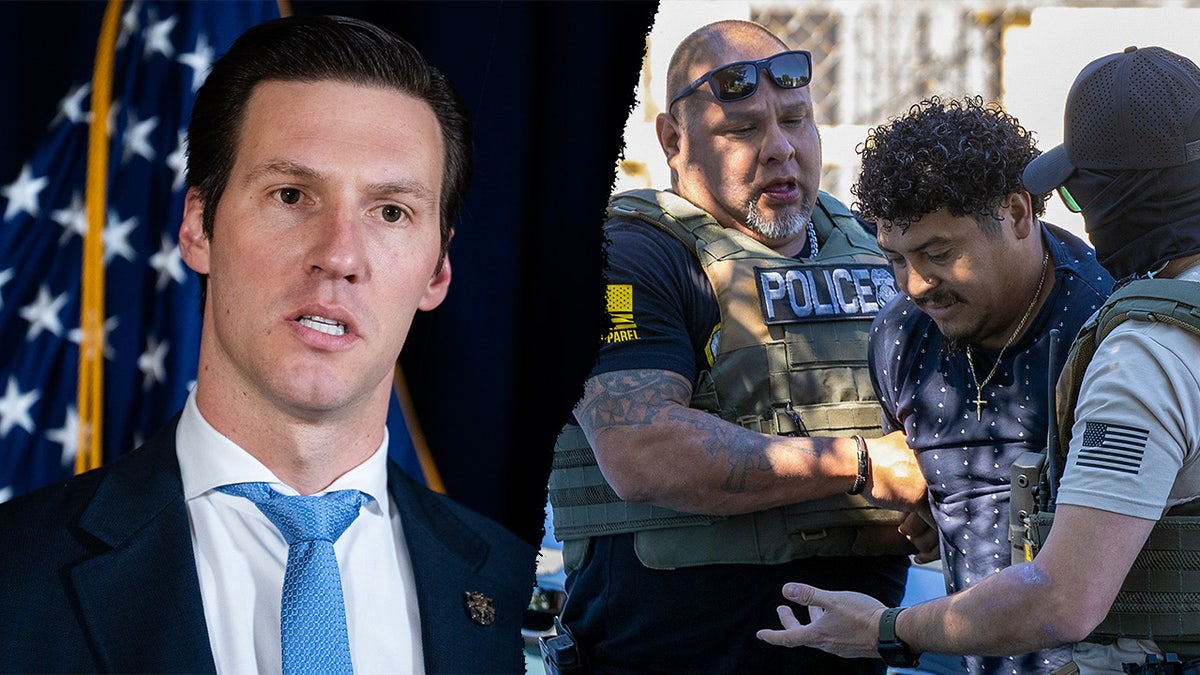
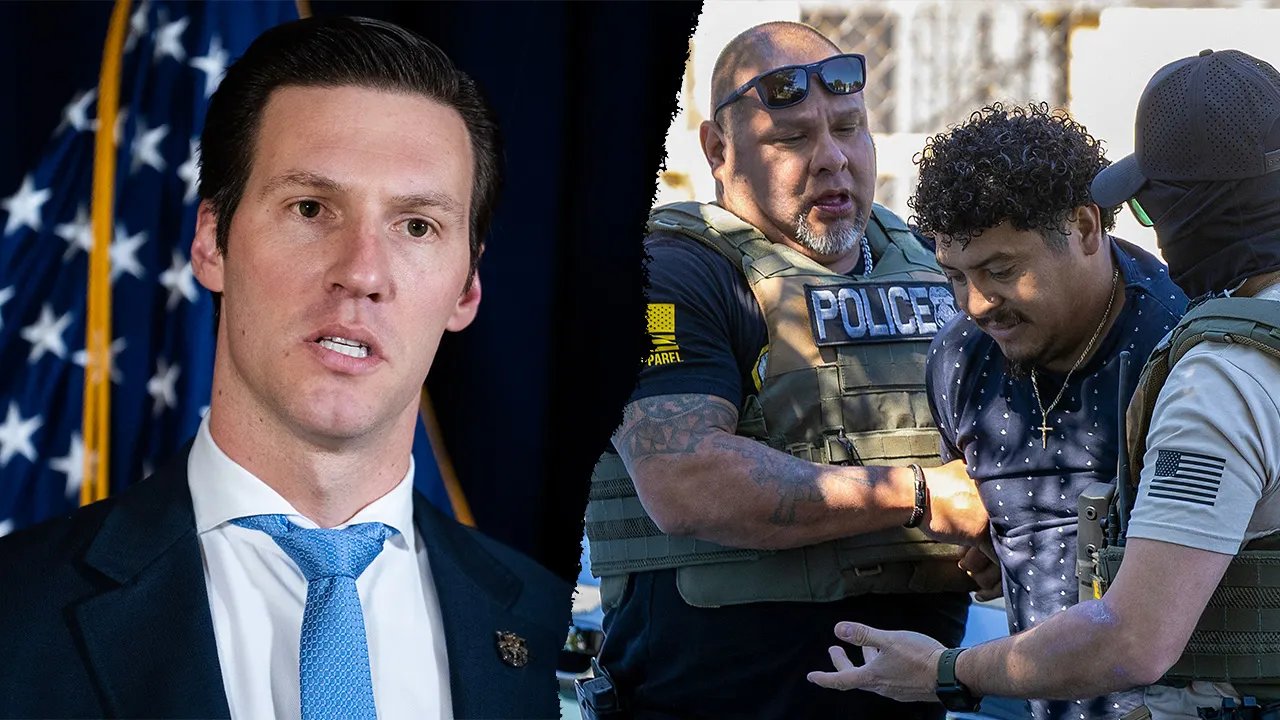
Rep. Pat Harrigan, R-N.C., left, pictured alongside a pair of law enforcement officers making an arrest, right (Tom Williams/CQ Roll Call, Inc. via Getty Images; Photo by Tasos Katopodis/Getty Images)
Democrats, however, have a different set of concerns.
Quigley, who is spearheading the PROTECT Act, believes that local law enforcement that looks and behaves like federal agencies don’t promote public safety if they also erode public trust.
«When people believe that if they call 9-1-1, they have a risk of being scooped and taken away, they’re less likely to call, and they’re going to be less safe,» Quigley said. «I was at the Cook County Domestic Violence Courthouse, talking to advocates. Women were afraid to go in and get the justice they deserved. They were afraid to go get orders of protection to protect them from abusers.»
«In Chicago, the 9-1-1 calls in Latino communities went down 20%,» Quigley added, referencing reporting by the Chicago Tribune earlier this year.
The PROTECT Act, which resurfaces legislation originally introduced by Sen. Cory Booker, D-N.J., would look to eliminate the 287(g) provision of the Immigration and Nationality Act.
That language allows federal agencies to empower local law enforcement bodies to make their own immigration enforcement decisions. When asked what makes the 287(g) provision more problematic than other forms of local-federal collaboration, Quigley said he believes it goes too far.
«I think it’s more likely to create a distrust, just because it’s all-encompassing,» Quigley said. «It’s an extraordinary program, but the public can’t distance local law enforcement and ICE, and they’re less likely to have faith and call in any crime.»
DEMOCRATS REVEAL WHETHER THEY BELIEVE US CITIZENS OR DRUG BOAT TRAFFICKERS ARE MORE IMPORTANT
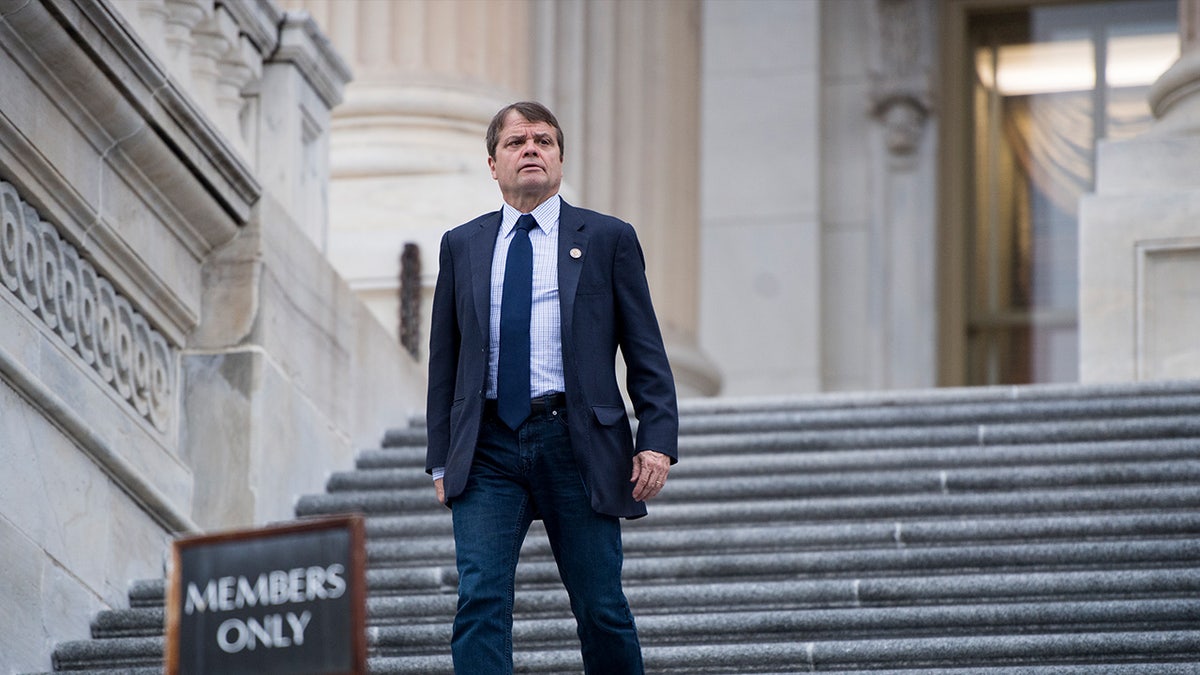
Rep. Mike Quigley, D-Ill., walks down the House steps following a vote in Washington, Oct. 11, 2017. (Bill Clark/CQ Roll Call)
As lawmakers prepare to leave town for the holidays, it’s unclear when the respective bills will receive consideration.
Harrigan pressed the urgency of needing to equip local law enforcement.
CLICK HERE TO DOWNLOAD THE FOX NEWS APP
«We’re talking about the same criminal organizations flooding our streets with fentanyl and fueling violence in our communities, and if we’re serious about securing our communities, we need to give our police the tools to do it,» Harrigan said.
congress,immigration,politics









NEWYou can now listen to Fox News articles!
The federal government has entered its third partial shutdown of the last half-year after Congress failed to reach an agreement on all 12 of its annual spending bills.
Unlike past shutdowns, however, this one just affects the Department of Homeland Security (DHS). It comes after Democrats walked away from a bipartisan deal to fund the department amid uproar over President Donald Trump’s immigration crackdown in Minneapolis.
And while some 97% of the federal government has been funded at this point, a DHS shutdown will still have effects on everyday Americans — effects that will become more apparent the longer the standoff continues.
DHS SHUTDOWN EXPLAINED: WHO WORKS WITHOUT PAY, WHAT HAPPENS TO AIRPORTS AND DISASTER RESPONSE
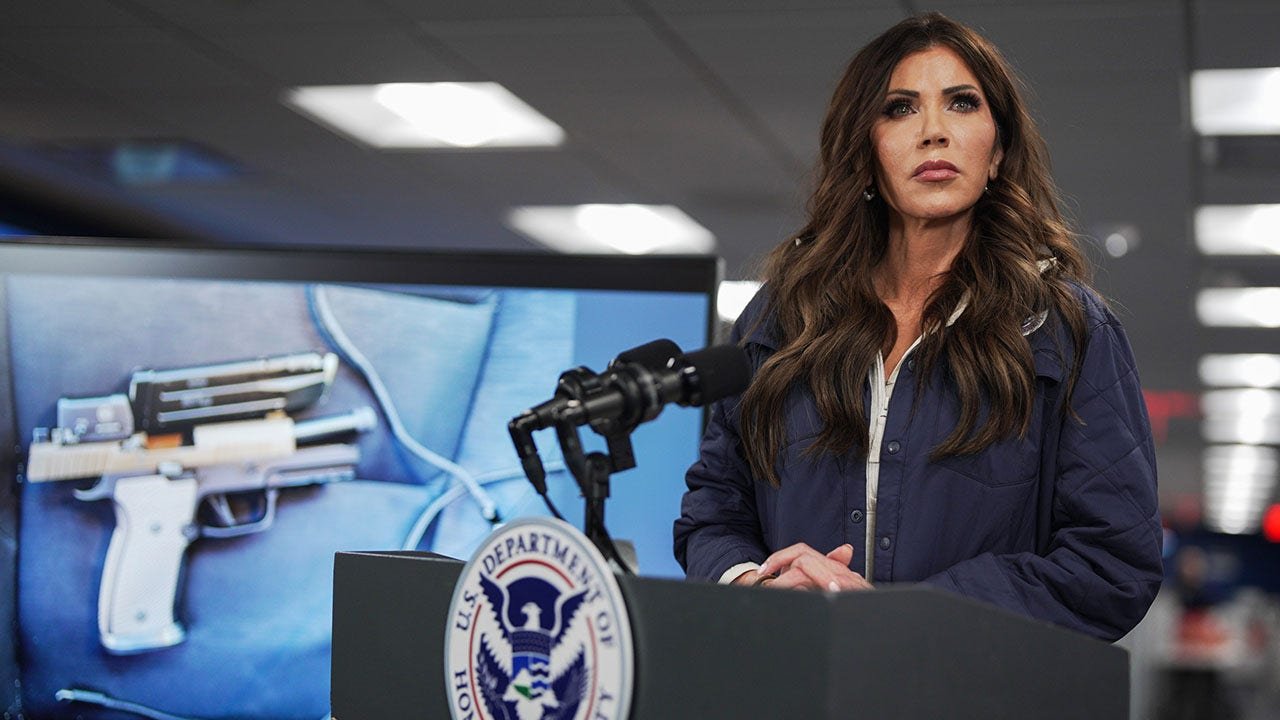
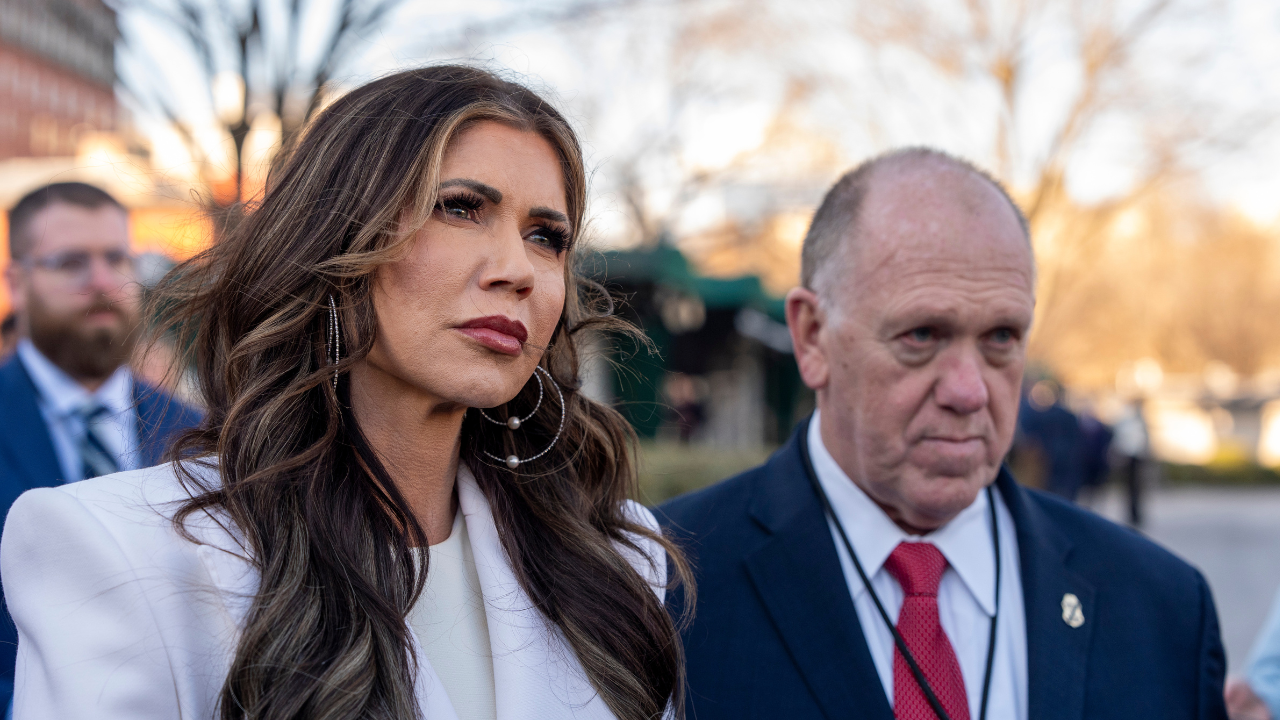
Homeland Security Secretary Kristi Noem delivers a press conference on Jan. 24, 2026. (Al Drago/Getty Images)
Air travel delays
Disruptions to the TSA, whose agents are responsible for security checks at nearly 440 airports across the country, could perhaps be the most impactful part of the partial shutdown to Americans’ everyday lives.
Acting Administrator Ha Nguyen McNeill told lawmakers at a hearing on Wednesday that around 95% of TSA employees — roughly 61,000 people — are deemed essential and will be forced to work without pay in the event of a shutdown.
«We heard reports of officers sleeping in their cars at airports to save money on gas, selling their blood and plasma, and taking on second jobs to make ends meet,» she said of the last shutdown.
But it would take some time before TSA funding could translate to delays. TSA agents, like other essential federal workers, received back pay once the shutdown was over. Those who did not miss shifts also got a $10,000 bonus for added relief.
FETTERMAN BUCKS DEMOCRATS, SAYS PARTY PUT POLITICS OVER COUNTRY IN DHS SHUTDOWN STANDOFF
TSA paychecks due to be issued on March 3 could see agents getting reduced pay depending on the length of the shutdown. Agents would not be at risk of missing a full paycheck until March 17.
If that happens, however, Americans could see delays or even cancellations at the country’s busiest airports as TSA agents are forced to call out of work and get second jobs to make ends meet.
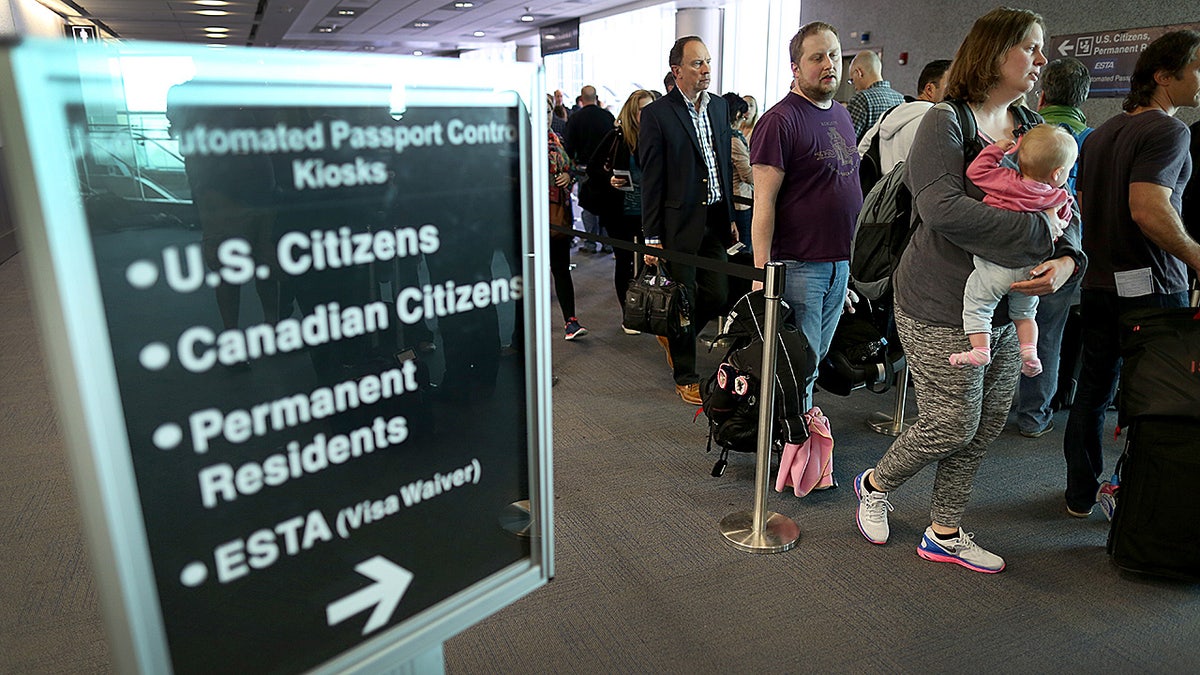
Passengers wait in line to use automated passport control kiosks set up for international travelers arriving at Miami International Airport. (Joe Raedle/Getty Images)
Natural disaster reimbursement
The Federal Emergency Management Agency (FEMA) is one of the largest and most critical recipients of federal funding under DHS.
Associate Administrator of the Office of Response and Recovery Gregg Phillips told lawmakers on Wednesday that FEMA has enough funds to continue disaster response through a shutdown in the immediate future, but that its budget would be strained in the event of an unforeseen «catastrophic disaster.»
That means Americans hit by an unexpected natural disaster during the shutdown could see delayed federal reimbursement for their homes and small businesses.
Others who have already lived through a natural disaster in the last year but still have not received their checks — FEMA is currently working through a backlog worth billions of dollars — could see that relief delayed even further during the shutdown.
«In the 45 days I’ve been here … we have spent $3 billion in 45 days on 5,000 projects,» Phillips said. «We’re going as fast as we can. We’re committed to reducing the backlog. I can’t go any faster than we actually are. And if this lapses, that’s going to stop.»
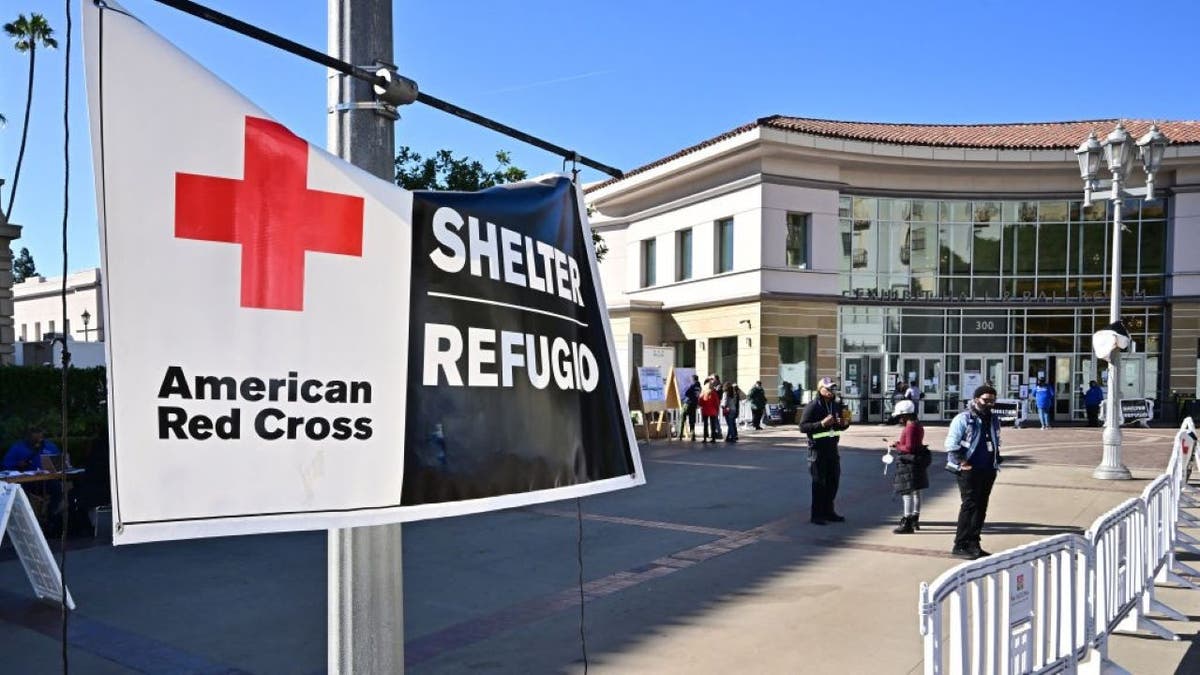
People are seen outside a wildfire shelter at the Pasadena Convention Center on Jan. 21, 2025. (Frederic J. Brown/AFP via Getty Images)
Worker visa processing
American business owners who rely on certain types of worker visas could see processing times extended during a DHS shutdown.
That’s because United States Citizenship and Immigration Services (USCIS) programs are run under DHS and are responsible for processing most immigration applications as well as temporary visas.
CLICK HERE TO DOWNLOAD THE FOX NEWS APP
The majority of those programs are funded by fees and are largely untouched. However, areas like e-Verify, the EB-5 Immigrant Investor Regional Center Program, Conrad 30 J-1 doctors, and non-minister religious workers all rely on funding appropriated by Congress, according to the American Immigration Lawyers Association.
USCIS could allow employers to use alternate processes if e-Verify is disrupted during a shutdown, but it’s not clear how much time it would add to business owners’ day-to-day responsibilities to learn a new route for that paperwork.
house of representatives politics,politics,government shutdown,homeland security
INTERNACIONAL
Von der Leyen pidió revivir la cláusula de defensa mutua de la Unión Europea: “Ha llegado el momento”
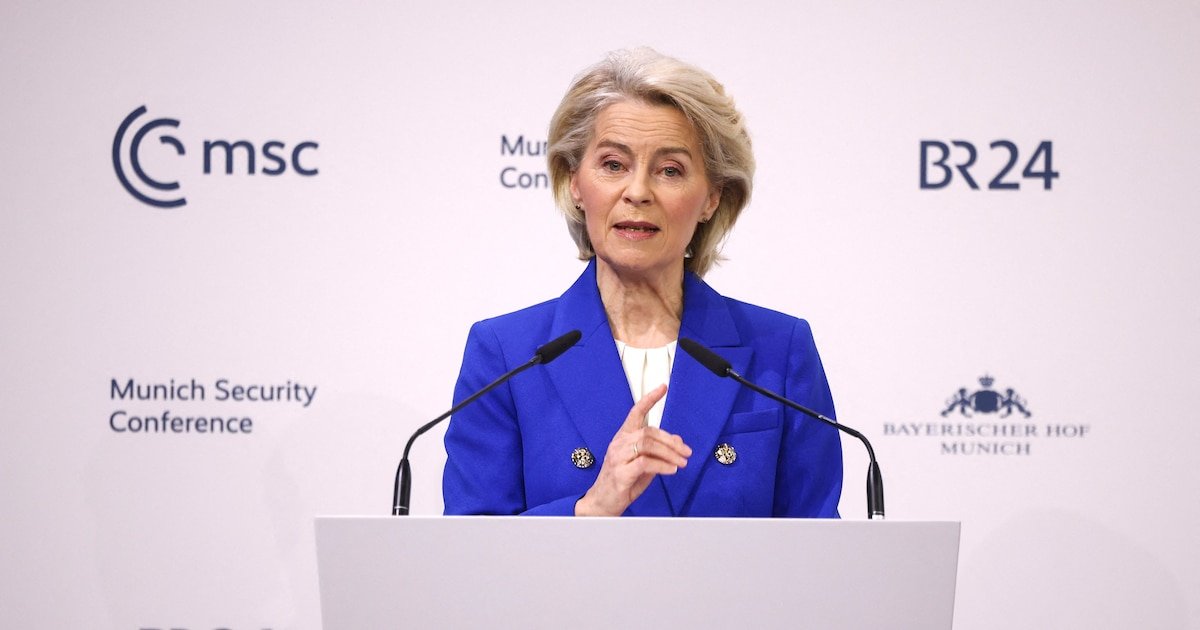
La presidenta de la Comisión Europea, Ursula von der Leyen, apeló este sábado a revivir la cláusula de defensa mutua de la Unión Europea (UE) durante un discurso en el que instó a Europa a ser más independiente para garantizar su propia seguridad.
“Creo que ha llegado el momento de dar vida a la cláusula de defensa mutua de Europa. La defensa mutua no es una tarea opcional para la UE (…) Es nuestro compromiso colectivo apoyarnos mutuamente en caso de agresión”, dijo la mandataria europea durante su intervención en la Conferencia de Seguridad de Múnich.
Esta cláusula fue introducida en el Tratado de Lisboa en 2007, en el llamado Artículo 42.7 por el que los Estados miembros de la UE tienen “la obligación de prestar ayuda y asistencia con todos los medios a su alcance” si otro Estado miembro es víctima de una agresión en su territorio.
La asistencia puede ser militar pero también podría incluir apoyo diplomático o asistencia médica.
Sin embargo, Von der Leyen añadió que “este compromiso solo tiene peso si se basa en la confianza y la capacidad” y señaló que la UE debe ser más rápida a la hora de tomar decisiones.

“Esto puede significar basarnos en el resultado de una mayoría cualificada en lugar de la unanimidad”, sugirió, apuntando a que para ello no haría falta cambiar las normas del bloque comunitario pero que también “tenemos que ser creativos”.
Asimismo, la presidenta del Ejecutivo europeo hizo hincapié en “formalizar los inicios de nuevas colaboraciones en materia de seguridad” con países como Reino Unido, Noruega, Islandia o Canadá.
Por otro lado, Von der Leyen reiteró que la UE “necesita” una nueva estrategia de seguridad en la que todas las políticas comunitarias – comercio, finanzas, infraestructuras o tecnologías – tengan “una dimensión de seguridad clara en este nuevo orden mundial”.
“Necesitamos una nueva doctrina para ello, con un objetivo sencillo: garantizar que Europa pueda defender su propio territorio, su economía, su democracia y su modo de vida en todo momento”, dijo.
Finalmente, la política alemana y ex ministra de Defensa urgió a “derribar el muro rígido que separa los sectores civil y de defensa” y a comenzar a considerar la industria automovilística, aeroespacial y de maquinaria pesada “como parte fundamental de la cadena de valor de la defensa”.
La jefa de la UE, afirmó que Europa y el Reino Unido deben cooperar más estrechamente en materia de seguridad, economía y defensa de las democracias.
“Europa, y en particular el Reino Unido, deberían estrechar lazos… Diez años después del Brexit, nuestro futuro está más decidido que nunca”, declaró en la conferencia de Seguridad de Múnich.
Von der Leyen, ha argumentado que la realidad actual ha impuesto a Europa la decisión última de fomentar su independencia frente a las amenazas internas y externas a las que se enfrenta, porque “ya no tiene más elección” en un “mundo fracturado y hostil” y porque representa la mejor opción para entablar una nueva relación con EEUU basada en la autosufiencia europea en seguridad, defensa, comercio y tecnología digital.

“Nos enfrentamos a la clara amenaza de fuerzas externas que intentan debilitar nuestra Unión desde dentro. El retorno de una competencia y relaciones de poder abiertamente hostiles. El modo de vida europeo se ve desafiado de nuevas maneras. En todos los ámbitos, desde el territorial hasta el de los aranceles o las regulaciones tecnológicas. En esencia, todo esto apunta a una simple realidad en el mundo fracturado de hoy: Europa ya no tiene más elección que aumentar su independencia”, dijo.
Von der Leyen ha aparecido en uno de los foros internacionales más importantes del año solo minutos después de que el secretario de Estado de EEUU, Marco Rubio, proclamara ante los mismos asistentes el final del “engaño” de las democracias liberales y propusiera a Europa un nuevo modelo de relaciones bajo la égida del nacionalismo del presidente estadounidense, Donald Trump, el mismo que comenzó su segundo mandato declarando una guerra arancelaria a Europa.
En esta tesitura, Von der Leyen ha llamado a la autosuficiencia “en todas las dimensiones que afectan a nuestra seguridad y prosperidad: defensa y energía, economía y comercio, materias primas y tecnología digital” antes de lanzar una velada mención a EEUU. “Algunos podrían decir que la palabra ‘independencia’ contradice nuestro vínculo transatlántico. Pero lo cierto es lo contrario. Una Europa independiente es una Europa fuerte. Y una Europa fuerte fortalece la alianza transatlántica”, ha asegurado.
Todo ello, a partir de necesidades imperiosas de seguridad porque “se han cruzado límites que ya no se pueden deshacer” por un motivo fundamental como es la guerra en Ucrania, un conflicto que ha incrementado un 80 por ciento el gasto en 2025 respecto antes del comienzo de la invasión rusa de 2022, una “terapia de choque” para Europa.
Así pues, y como “ningún tabú puede quedar sin respuesta”, la presidenta de la Comisión Europea ha declarado el momento de “implementar la cláusula de defensa mutua europea”: el compromiso colectivo, reflejado el artículo 42 del Tratado de la Unión Europea, “de apoyarnos entre nosotros en caso de agresión”.
Una cláusula que, para Von der Leyen, debe representar la columna vertebral de una nueva Estrategia Europea de Seguridad construida a partir de “todas nuestras herramientas políticas: comercio, finanzas, estándares, datos, infraestructuras críticas, plataformas tecnológicas e información”.
“En Europa debemos estar preparados y dispuestos a utilizar nuestra fuerza de forma asertiva y proactiva para proteger nuestros intereses de seguridad. Necesitamos una nueva doctrina para ello, con un objetivo simple: garantizar que Europa pueda defender su propio territorio, economía, democracia y estilo de vida en todo momento. Porque este es, en definitiva, el verdadero significado de la independencia”, ha zanjado Von der Leyen.
(Con información de EFE y AFP)
Business,International Relations,Corporate Events,Diplomacy / Foreign Policy,Europe
INTERNACIONAL
Anti-ICE chaos erupts at blue state county board meeting after panel endorses detention center
NEWYou can now listen to Fox News articles!
A suburban Maryland board meeting was taken off the air after whistling and protests erupted moments after officials approved a resolution endorsing cooperation with the U.S. Department of Homeland Security, including the purchase of a warehouse in Williamsport that sparked Democratic outrage.
A few miles south of the Hagerstown meeting, DHS had completed the purchase of the $102 million property in Williamsport, just across the Potomac River from Falling Waters, West Virginia, and about 75 miles from Washington, D.C.
The property soon became the site of protests, including a video posted by Total Wine billionaire David Trone, who is running for his former U.S. House seat, in which he stood by a snowbank behind the center and declared ICE was «executing people» and did not belong in Maryland.
PHILLY DA’S ‘HUNT YOU DOWN’ WARNING TO ICE DRAWS CALLS FOR DOJ CRIMINAL PROBE
Anti-ICE protesters converge on a Washington County Board meeting in Hagerstown, Maryland this week. (Katharine Wilson/Getty Images)
Washington County Board President John Barr slammed his gavel Tuesday as outrage erupted over the resolution, declaring the «safety and security of our community is of utmost importance» and that «DHS [and] ICE play a crucial role in safeguarding our nation’s borders and is responsible for enforcing immigration laws, protecting the country from potential threats and maintaining the rule of law for public safety.»
Barr’s voice vote appeared to reflect most if not all board members saying «aye» but elicited «nay!» and «no» from the audience, and people began loudly whistling, clapping and pointing at Barr.
Barr calmly announced, «Clear the room,» and a broadcast producer could be heard saying, «Off air! Off air» before the TV feed was cut.
DHS FIRES BACK AFTER DEM BILLIONAIRE DAVID TRONE CLAIMS ICE IS ‘EXECUTING PEOPLE’
Outside the building on Washington Street, a throng of anti-ICE protesters similarly whistled and waved signs that said «no concentration camps» and «No ICE Jail.»
«These ICE facilities; they’re inhumane; I don’t want them here,» protester Richard Hartman told Baltimore’s NBC affiliate.
Two counter-protesters waved signs saying «Trump is Your President» and «We Love ICE.»
Maryland federal lawmakers urged the county not to pass the resolution. Rep. April McClain Delaney, who Trone is facing in the primary, called the plan «sweeping and dangerous» and forged in «darkness.»
«[It] is yet another example of the Trump administration acting without transparency, accountability or regard for human life,» she said.
Washington County sits in a transitional area. To the east, deep blue Washington suburbs reliably vote Democrat. To the west, «Mountain Maryland» and the Maryland panhandle form a Republican-friendly bastion, though they are grouped with some of the aforementioned suburbs in a congressional district that trends blue.
ANTI-ICE LEGISLATION HEADS TO DESK OF RISING STAR DEMOCRAT GOVERNOR, TESTING HIS PRESIDENTIAL AMBITIONS
Closer to the nation’s capital, officials in once-moderate Howard County blocked another ICE center in Elkridge, according to the Baltimore station.
To the north in Pennsylvania, Democrats have opposed similar transactions, including a center just off US-22 in Shartlesville, a rural community recently home to the now-defunct Roadside America attraction.
In a statement to Fox News Digital about the Williamsport center, Trone said ICE has «detained children as young as 5 years old, American citizens and military veterans.»
CLICK HERE TO DOWNLOAD THE FOX NEWS APP
«ICE only needs to expand its detention space because reprehensible legislation was passed by Congress — with the support of Rep. April McClain Delaney — that strips due process rights and expands this administration’s ability to carry out this cruel agenda.»
Republicans running for the seat, including Robin Ficker and Chris Burnett, have signaled support for immigration enforcement, and state Del. Neil Parrott of Hagerstown, who has formed an exploratory committee but not formally declared, said as much in prior comments to Fox News Digital.
homeland security,republicans,immigration,maryland,democrats

Here’s how the DHS shutdown could impact the lives of everyday Americans

“Una de más”: el Gobierno reconoce que los cambios a las licencias por enfermedad podrían traer problemas en las negociaciones

Dany Lescano: “Ojalá tuviera mucho para dar a los que no tienen nada”

Beatriz Martínez, psiquiatra: “En unos años, dejar a los niños con las pantallas se verá como cuando se mojaba el chupete en anís”

El procedimiento a seguir si te bloquean la cuenta de Mercado Pago

Se jugará el grueso de la fecha 5 del Torneo Apertura: la agenda completa

La advertencia de ATE a los gobernadores que apoyan la reforma laboral: “Firmarán su sentencia de muerte”

A quién afecta la Reforma laboral: estos son los puntos clave del proyecto de Milei

Wanda Nara contó la verdad del escándalo del cumpleaños de la hija de la China Suárez: «Mis hijas no fueron porque ella es…»

Jornada financiera: el dólar cayó a un mínimo en casi tres meses y subieron las acciones argentinas en Wall Street

 POLITICA2 días ago
A quién afecta la Reforma laboral: estos son los puntos clave del proyecto de Milei
- POLITICA2 días ago
Reforma laboral: la modificación sobre accidentes o enfermedades ajenas al trabajo
- ECONOMIA2 días ago
Cayeron 20% las ventas de automóviles en China y el régimen impone medidas para regular el mercado