INTERNACIONAL
Colorado school district in the hot seat for allegedly factoring in race for disciplinary procedures


NEWYou can now listen to Fox News articles!
FIRST ON FOX: A conservative, Trump-aligned legal group filed a civil rights complaint alleging that a school district in Colorado is using race as a major factor when determining disciplinary procedures and has retaliated against administrators who attempt to push back.
America First Legal (AFL), founded by top Trump advisor Stephen Miller, filed a civil rights complaint asking the Department of Education and the Department of Justice to investigate Cherry Creek School District, alleging it is in violation of Title VI of the Civil Rights Act of 1964. In its complaint, AFL cites a specific instance in which a Black student and an Asian student commit nearly identical behavior, but only the Asian student was disciplined.
AFL also obtained undercover recordings of discussions between administrators that allegedly show them admitting that the district’s DEI chief has been interfering with disciplinary procedures on the basis of race. When an administrator tried to step in and call out this allegedly racist activity, the official was retaliated against, according to AFL.
«If a public school district can openly run discipline and employment systems through a racial filter, then the rule of law means nothing,» said Nick Barry, senior counsel at America First Legal. «This is discrimination, plain and simple. It is the soft bigotry of low expectations and should not be tolerated. The Department must intervene and restore equal treatment for students, educators, and families.»
JUSTICE DEPARTMENT SUES PUBLIC SCHOOL DISTRICT OVER ALLEGEDLY DISCRIMINATORY POLICIES
A Cherry Creek School District bus (John Leyba/The Denver Post via Getty Images)
Fox News Digital reached out to the district for comment, but it declined to comment on the matter, telling Fox News Digital it could not say anything because the district had «no knowledge of» AFL’s civil rights complaint despite Fox News Digital transmitting a copy of the complaint to the district. AFL’s complaint was filed electronically with the federal government.
In late 2023, according to the complaint, the district’s Campus Middle School disciplined and suspended three female students after a video of them off campus over Thanksgiving break using variations of the N-word while under the influence of alcohol was submitted to the district. Two students, one White and one Hispanic, were allegedly depicted in the video using the racially charged language, while the third Asian female did not appear in the video and only recorded the encounter.
Meanwhile, a fourth Black female student at the middle school allegedly asked the Asian female student who recorded the encounter to send her the video, which the Black student then allegedly passed along to her sister, a Black student in the district’s high school, who, AFL said, subsequently posted the video on social media and tagged the White, Hispanic and Asian students’ social media accounts. The Black female student who passed the video to her Black sister also passed it to her mother, who then shared the video with the Rocky Mountain NAACP, according to the complaint.
Despite nearly identical behavior from the Asian female student and the Black female students in the district, only the Asian student was disciplined, AFL alleged. She got the same punishment as the two female students pictured in the video using inappropriate language, which included months of expulsion hearings that eventually culminated in her suspension from school, according to AFL.
«[The Black students involved] disseminated the video to a much broader audience than [the Asian student involved],» AFL’s complaint states. «Despite both [Black female students involved] engaging in materially identical conduct as [the Asian female student involved], the District did not impose any discipline. … After [the Black female students’] identical infractions came to light, former Campus Assistant Principal Dan Hanson instructed personnel not to address the matter in electronic communications due to concerns about public records requests and adverse publicity.»
LEAKED LESSONS FROM FIRST-YEAR UNIVERSITY OF ILLINOIS EDUCATION COURSE SHOW EXTREME LEFT BIAS: ‘JUST SO WRONG’
According to AFL’s complaint, one of the non-disciplined Black female students continued to exhibit behavioral issues, and undercover recordings it obtained involving discussions between district administrators show Campus Middle School officials admitting the district’s Equity Department interferes with the equal application of disciplinary policies.

Protesters in Michigan rally against President Donald Trump’s anti-DEI policies, denouncing federal rollbacks on diversity, equity and inclusion programs. (Getty Images/Dominic Gwinn)
«[T]heir first instinct is implicit bias. So if, for example, [Redacted] is not responding appropriately to [the Black female student’s] concerns, it’s because [Redacted] has implicit bias towards a Black young lady, and that she does not know how to navigate the cultural identity of a Black young lady and that [Black female student involved] is talking to her like [she] talks to anybody,» Campus Middle School Principal Lissa Staal can allegedly be heard saying during a meeting with school leaders.
«This is just how [the Black female student involved] communicates. And that is culturally appropriate for [the Black female student involved] to communicate that way because that’s what is culturally appropriate,» Staal continued. «And that’s what is happening is that the Whiteness that is present in our building is looking at that in a punitive way … that we are attributing negative connotations to what is essentially, exactly, we’re calling her disrespectful or disruptive or defiant when she is just communicating in a culturally appropriate way.»
According to AFL’s complaint, school personnel said they had «no ability to enforce anything» against the Black female student who was continuing to act out because they would «lose every time,» since their «hands were tied» by the district’s DEI department.
The district also allegedly retaliated against former Dean of Students Pat Hogarty when he voiced disagreement with the district’s DEI priorities, according to AFL’s complaint.
CLICK HERE TO DOWNLOAD THE FOX NEWS APP
«In January 2024, Mr. Hogarty took part in the Courageous Conversations training. When faced with the topics of ‘What does it mean to be White?’ ‘What experiences define Whiteness?’ and ‘How do you identify?’ Mr. Hogarty stated that ‘he identifies as an American, that he loves his country, and that he believes it is the greatest country ever founded,’» AFL’s complaint states.
«Shortly after the training, Principal Staal informed Mr. Hogarty that the Equity Department’s Executive Director, Mr. Garcia y Ortiz, took issue with Mr. Hogarty’s failure to ‘acknowledge what people of color go through’ and refusal to ‘admit that America is systemically racist.’ Mr. Hogarty later learned that Garcia y Ortiz had referred to Mr.Hogarty’s comments in the training as having ‘racist undertones.’ Approximately a month later, Mr. Hogarty was informed that his position had been eliminated due to ‘budgetary reasons.’»
Due to the Cherry Creek School District receiving federal funds, it is subject to discrimination guidelines under Title VI of the Civil Rights Act. AFL has requested that the Education and Justice departments investigate the matter further and implement any necessary remedial action or referrals to enforce federal civil rights law.
dei,education,justice department,colorado,politics,state and local













INTERNACIONAL
El secreto peor guardado de Vladimir Putin en Ucrania tras cuatro años de invasión rusa
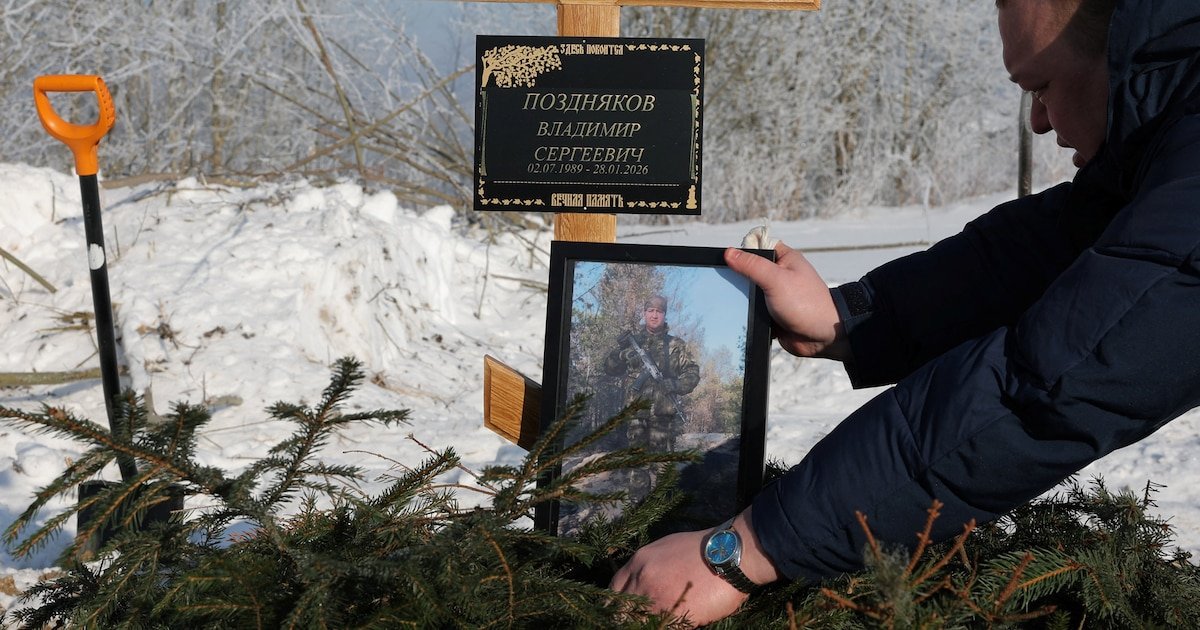
El Ejército ruso ha perdido más de 300.000 hombres en los cuatro años de guerra en Ucrania, según fuentes independientes. Aunque las bajas rusas son un secreto a voces, el Kremlin mantiene silencio para no instigar aún más el creciente descontento entre los rusos con la campaña militar.
La última vez que el Ministerio de Defensa ruso informó sobre muertos en acción –Cargo 200– fue en septiembre de 2022 -cuando los situó en 5.937-, justo antes de la movilización de reservistas que provocó el exilio de más de un millón de hombres en edad militar.
Fuentes occidentales, desde la OTAN a la inteligencia estadounidense y británica, estiman en un millar las bajas diarias en las filas rusas y en más de 30.000 las pérdidas mensuales. Además, enero sería el primer mes en el que el Ejército ruso no puede reponer las bajas con voluntarios.
Los militares rusos caídos se llaman Cargo 200 desde la guerra de Afganistán (1979-1989). Entonces, el talón que acompañaba al cargo ponía 200, ya que ese era el peso máximo del féretro de zinc permitido por el Ministerio de Defensa de la Unión Soviética.
El conocido bloguero militar Yuri Podoliak, que ha sido invitado a recepciones en el Kremlin, fue el que rompió la baraja al abordar en enero en YouTube el sensible tema del Cargo 200.

Podoliak admitió que el Ejército ruso podría haber perdido hasta 415.000 hombres entre soldados, voluntarios y antiguos presidiarios reclutados por el grupo Wagner.
Además, situó las bajas totales en más de 800.000 de los más de dos millones de rusos que han participado en la conocida como ‘operación militar especial’. Ese número de pérdidas humanas contrasta con las conquistas territoriales: apenas un 12% del territorio ucraniano desde el 24 de febrero de 2022.
Según los expertos occidentales, ningún país ha sufrido tantas bajas en un conflicto desde el fin de la Segunda Guerra Mundial en 1945. De hecho, las tropas rusas han sufrido más bajas en estos cuatro años que en todos los conflictos anteriores desde la contienda mundial, lo que incluye las dos sangrientas guerras chechenas.
El portal independiente Mediazona, en colaboración con Meduza y la BBC, cifra los combatientes rusos muertos e identificados con nombres y apellidos en más de 168.000.
A esta cifra hay que sumar los muertos aún no identificados, pero incluidos, entre otros, en los certificados de defunción y hereditarios de acceso público, datos de servicios funerarios o denuncias de desaparición. De hecho, Mediazona admite que, según sus cálculos aproximados, esa cifra rondaría ya los 300.000, a falta de los datos de este año.

En los primeros meses la mayoría de muertos eran soldados profesionales -efectivos de las fuerzas aerotransportadas y de las brigadas motorizadas-, después los presidiarios y a partir de mediados de 2023, los voluntarios.
Mientras, el Centro de Estudios Estratégicos e Internacionales de EE.UU. publicó a principios de año un informe en el que aseguraba que “desde febrero de 2022 las fuerzas rusas han sufrido casi 1,2 millones de bajas (325.000 muertos), más que ninguna otra potencia en cualquier campaña desde la Segunda Guerra Mundial”.
En cuanto a Ucrania, según las estimaciones del centro, habría sufrido entre 500.000 y 600.000 bajas y entre 100.000 y 140.000 muertos.
“A este ritmo, las bajas rusas y ucranianas combinadas podrían alcanzar los 2 millones para la primavera de 2026”, destacó.
Al contrario que el Kremlin, el presidente de Ucrania, Volodímir Zelensky, sí admitió recientemente más de 55.000 muertos en las filas de su ejército.

El Kremlin ha intentado ocultar por todos los medios esta información, lo que incluye el cese de la publicación de datos oficiales sobre mortalidad en Rusia, pero también otros indicadores demográficos que permitirían calcular los muertos en combate.
El presidente ruso, Vladímir Putin, prohibió la publicación de datos de bajas en las filas de las Fuerzas Armadas en mayo de 2015, después de que soldados irregulares rusos fueran desplegados en el este de Ucrania para apoyar la sublevación prorrusa.
De esta forma, los rusos no tienen acceso a datos sobre las pérdidas humanas en el ejército tanto en tiempos de paz, como durante operaciones militares especiales.
Con todo, la censura no es infalible. El segundo tribunal militar del Distrito Occidental admitió a finales de enero, contra la versión oficial, que el buque insignia de la Flota del Mar Negro, el ‘Moskvá’, había sido hundido en abril de 2022 en un ataque ucraniano con torpedos.
Además, el fallo admitió la muerte de 20 marineros, identificados con nombres y apellidos, a lo que hay que añadir ocho desaparecidos.
(Con información de EFE)
War,Europe,Military Conflicts
INTERNACIONAL
Major drug lord ‘El Mencho’ killed in Mexican military operation with US intelligence support
NEWYou can now listen to Fox News articles!
Major Mexican drug lord Nemesio Oseguera, known as «El Mencho,» was killed in a military operation Sunday morning, the country’s Defense Department announced, marking one of Mexico’s most significant blows to organized crime amid pressure from President Donald Trump to intensify the crackdown on drug cartels.
The announcement came as government officials warned of clashes in Jalisco state and widespread criminal activity across the country, prompting the U.S. Embassy in Mexico to issue shelter-in-place advisories for multiple states.
On Sunday, Mexican troops reportedly conducted operations in Tapalpa, Jalisco, targeting Nemesio Rubén Oseguera Cervantes, a former police officer who became the elusive leader of the Cartel de Jalisco Nueva Generación (CJNG), a major supplier of fentanyl to the United States.
Known as «El Mencho,» Oseguera Cervantes carried a $15 million U.S. bounty and rose to power following the arrest of Joaquín «El Chapo» Guzmán, the former head of the Sinaloa Cartel. Over the past 15 years, CJNG has grown from a local criminal group into a global trafficking organization operating out of its stronghold in Jalisco.
A MEXICAN DRUG KINGPIN YOU’VE NEVER HEARD OF IS INFILTRATING SMALL-TOWN AMERICA
El Mencho was killed during a Mexican operation in Jalisco on Feb. 22, 2026. (Drug Enforcement Administration)
«I’ve just been informed that Mexican security forces have killed ‘El Mencho,’ one of the bloodiest and most ruthless drug kingpins,» U.S. Deputy Secretary of State Christopher Landau said in a post on X. «This is a great development for Mexico, the US, Latin America, and the world. The good guys are stronger than the bad guys.»
The Mexican Defense Department said the operation was conducted as part of bilateral coordination and cooperation with the U.S., whose authorities provided complementary intelligence that contributed to Oseguera Cervantes’ capture.
White House Press Secretary Karoline Leavitt confirmed that the U.S. «provided intelligence support to the Mexican government in order to assist with an operation in Talpalpa, Jalisco, Mexico, in which Nemesio ‘El Mencho’ Oseguera Cervantes, an infamous drug lord and leader within the Jalisco New Generation Cartel, was eliminated.»
«‘El Mencho’ was a top target for the Mexican and United States government as one of the top traffickers of fentanyl into our homeland. Last year, President Trump rightfully designated the Jalisco New Generation Cartel as a Foreign Terrorist Organization — because that’s exactly what it is. In this operation, three additional cartel members were killed, three were wounded, and two were arrested,» she wrote on X.
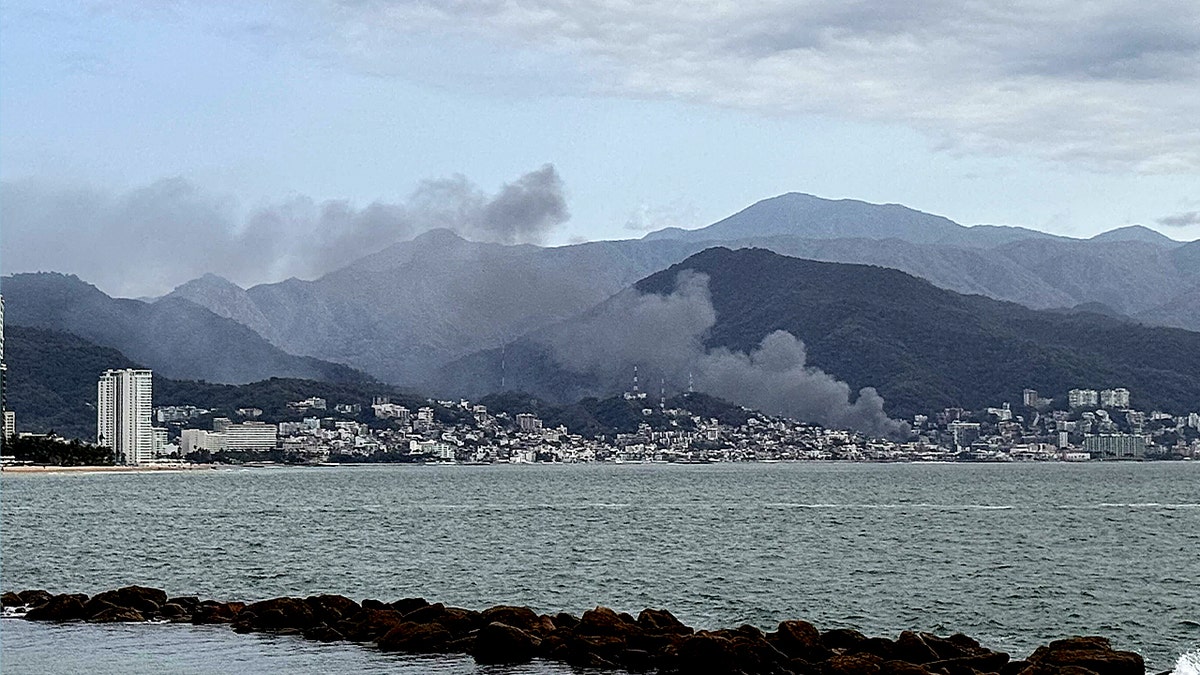
Smoke rises into the sky over Puerto Vallarta during an operation targeting cartel activity on Feb. 22, 2026. (Obtained by Fox News Digital)
During the capture, the CJNG ringleader became wounded and died en route to Mexico City, the Defense Department said.
Four others were reportedly killed at the scene of a shootout between Mexican troops and criminal suspects in Jalisco, with Oseguera Cervantes among three additional individuals who were wounded and later died.
Authorities said they detained two other members of the criminal organization and seized a range of weaponry, including armored vehicles and «rocket launchers capable of downing aircraft and destroying armored vehicles.»
Consequently, three members of the armed forces became injured and are receiving treatment.
TOURISTS IN MEXICAN SEASIDE CITY TOLD TO STAY ON RESORT AS GOVERNMENT WARNS OF ‘CLASHES’

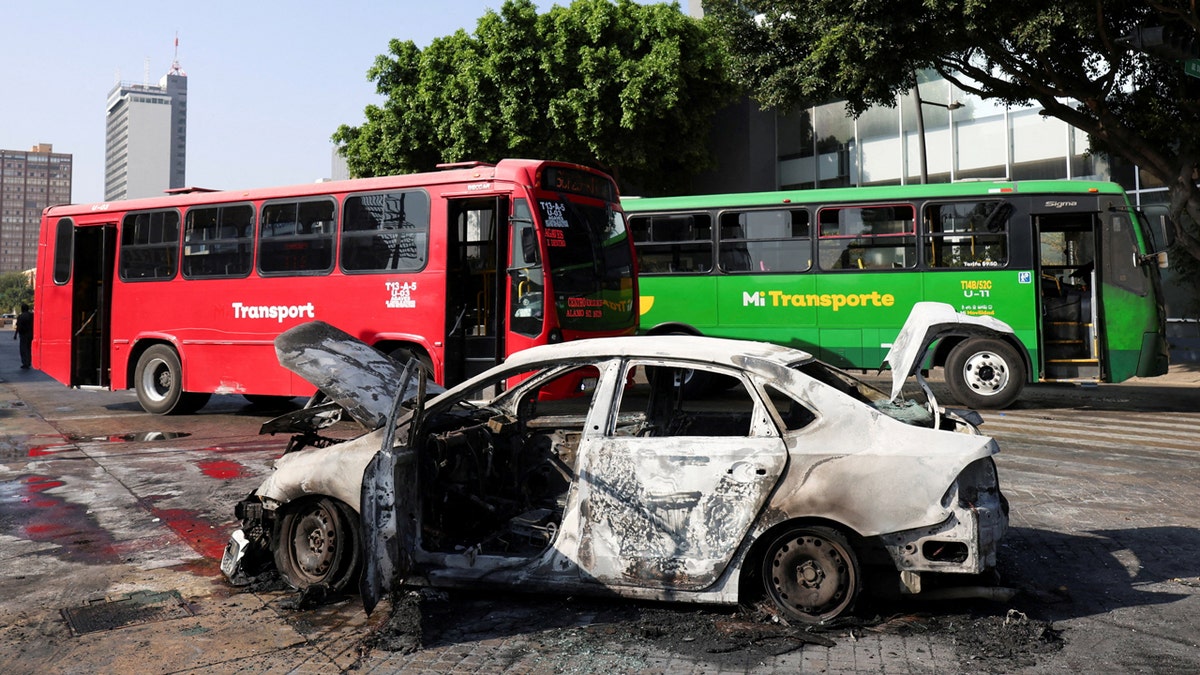
Four others were reportedly killed in a Jalisco shootout during the operation (Gabriel Trujillo/Reuters)
Widespread criminal activity has been reported in Jalisco, the cartel’s stronghold, as well as in northern regions that serve as key border and transit corridors for the organization.
The Security Cabinet of the Government of Mexico noted that multiple buildings were reportedly damaged during the «violent incidents,» including roughly 20 branches of Banco del Bienestar, a state-run banking institution.
At least 21 highways remain blocked, with authorities reporting that five have already been reopened.
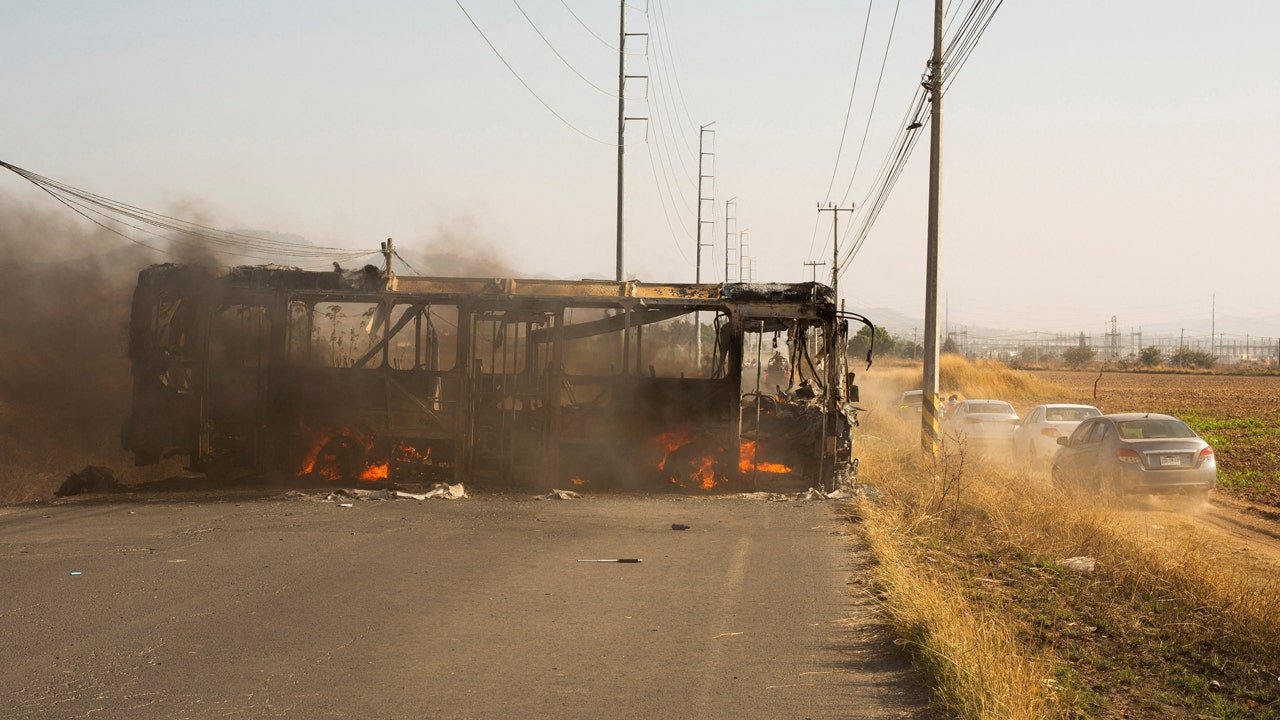
Photos showed numerous roadblocks and burning vehicles, with dark smoke rising into the sky, across the country – tactics officials say cartels often use to slow or block military operations.
Photos and videos shared with Fox News Digital show thick, dark smoke rising over the skyline of the tourist city of Puerto Vallarta on Mexico’s Pacific Coast in Jalisco.
ALLEGED SINALOA CARTEL FENTANYL PRODUCER CHARGED IN NEWLY UNSEALED FEDERAL INDICTMENT

Widespread criminal activity has been reported in Jalisco, the cartel’s stronghold. (Obtained by Fox News Digital)
«I’m watching the scenes of violence from Mexico with great sadness and concern. It’s not surprising that the bad guys are responding with terror. But we must never lose our nerve,» Landau said.
The Mexican National Guard and Army units from central Mexico and states neighboring Jalisco are currently mobilizing to reinforce security, the Defense Department said.
«We remain in Code Red. We reiterate the recommendation to avoid leaving your homes. The clashes are occurring in several federal entities,» Jalisco state Governor Pablo Lemus Navarro added.
At least 21 highways remain barricaded. (Michelle Freyria/Reuters)
Travel warnings have been issued for Jalisco, including Puerto Vallarta, Chapala, and Guadalajara; Tamaulipas, including Reynosa and other municipalities; and parts of Michoacán, Guerrero, and Nuevo León.
«Due to ongoing security operations and related road blockages and criminal activity, U.S. citizens in the named locations should shelter in place until further notice,» the U.S. Embassy & Consulates in Mexico said.
CLICK HERE TO DOWNLOAD THE FOX NEWS APP
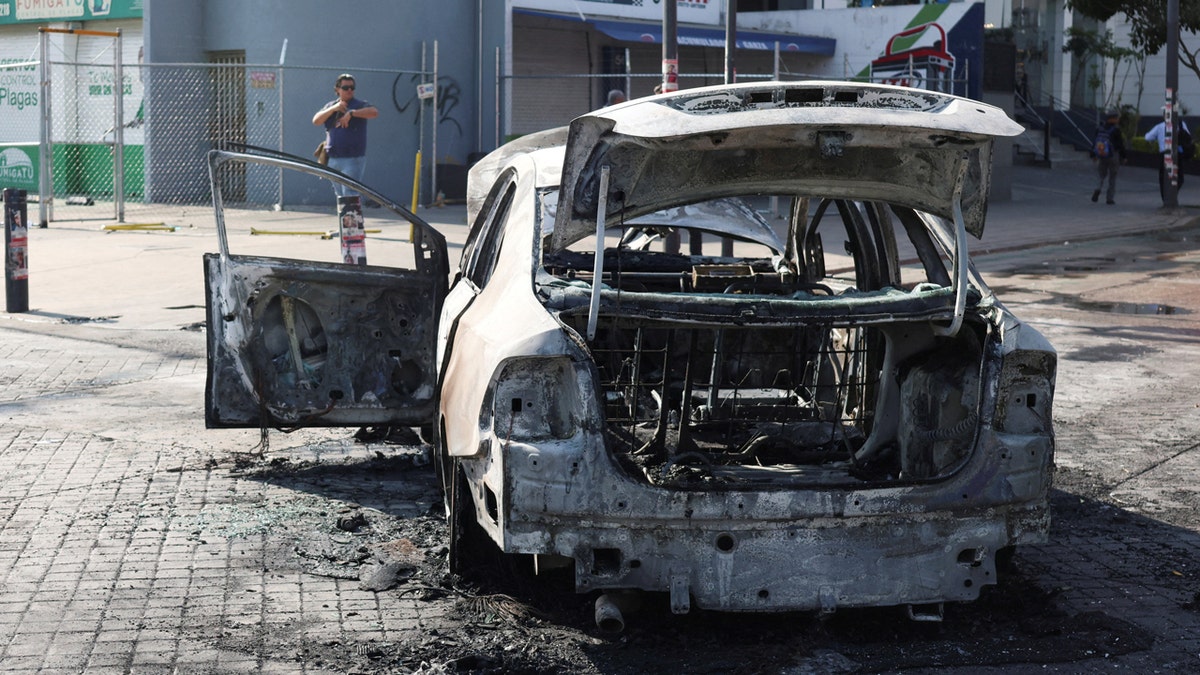
Complementary intelligence from U.S. authorities aided in the operation. (Michelle Freyria/Reuters)
The operation against Oseguera follows sustained pressure from the Trump administration on President Claudia Sheinbaum’s government, urging Mexico to step up its fight against drug trafficking amid threats of potential U.S. intervention.
mexican cartel violence,location mexico,drugs
INTERNACIONAL
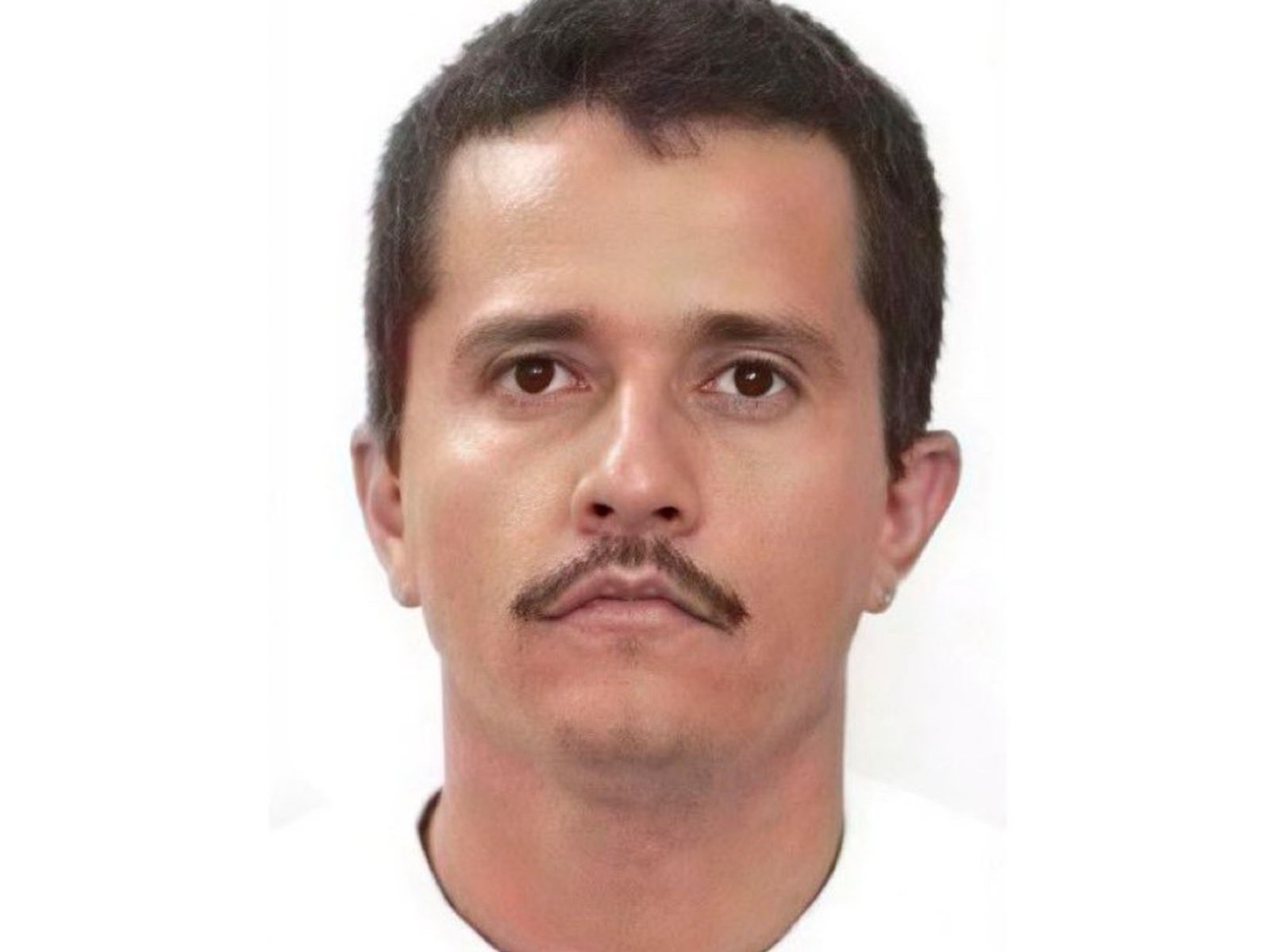
La muerte de “El Mencho”: cómo colaboró Estados Unidos con México para eliminar al capo narco


Hay alerta amarilla por tormentas y viento para este lunes 23 de febrero: las provincias afectadas

El horóscopo de hoy: lunes 23 de febrero

Preocupa a las consultoras la posible caída de la popularidad del gobierno

El equipo que perdió ante su clásico rival y sufrió el descenso más prematuro en la historia del fútbol inglés

El Gobierno reúne a su mesa política para blindar la estrategia en el Congreso

El secreto peor guardado de Vladimir Putin en Ucrania tras cuatro años de invasión rusa

Escándalo en MasterChef: una famosa abandonó a los gritos y acusando que está todo arreglado

Del himno peronista de Kelly Olmos al exabrupto de Agustina Propato: las perlitas del debate por la reforma laboral

Villarruel cuestionó la apertura de importaciones: «Sin industria, se pasa a depender de China»

“Ahora es la hora de jugarse”: el mensaje de Patricia Bullrich a los empresarios tras aprobarse la reforma laboral

 ECONOMIA2 días ago
Villarruel cuestionó la apertura de importaciones: «Sin industria, se pasa a depender de China»
- POLITICA2 días ago
“Ahora es la hora de jugarse”: el mensaje de Patricia Bullrich a los empresarios tras aprobarse la reforma laboral
- ECONOMIA1 día ago
Según un especialista, el precio de la carne se mantendrá alto “entre dos y tres años”