INTERNACIONAL
China’s global aggression check: Taiwan tensions, military posturing and US response in 2025

China, Russia condemn US pressure on Venezuela
Former CIA station chief Dan Hoffman joins ‘Fox News Live’ reacting to China and Russia’s public condemnation of U.S. military pressure against Venezuela as oil tanker blockades continue to impact their economies.
NEWYou can now listen to Fox News articles!
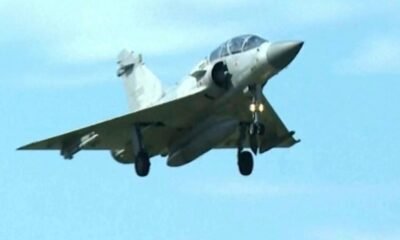
As 2025 ends, tensions between China and Taiwan are higher — and more overt — than at any point in recent years, fueled by expanded U.S. military support for Taipei, increasingly bold warnings from regional allies, and Chinese military drills that look less like symbolism and more like rehearsal.
Beijing has spent the year steadily increasing pressure on Taiwan through large-scale military exercises, air and naval incursions, and pointed political messaging, while Washington and its allies have responded with sharper deterrence signals that China now openly labels as interference.
The result is a more volatile status quo — one where the risk of miscalculation has grown, even as most analysts stop short of predicting an imminent Chinese invasion.
A year of escalating pressure
China capped off 2025 with what it described as its largest Taiwan-focused military exercises to date, launching expansive drills in December that included live-fire elements and simulated island encirclement operations.
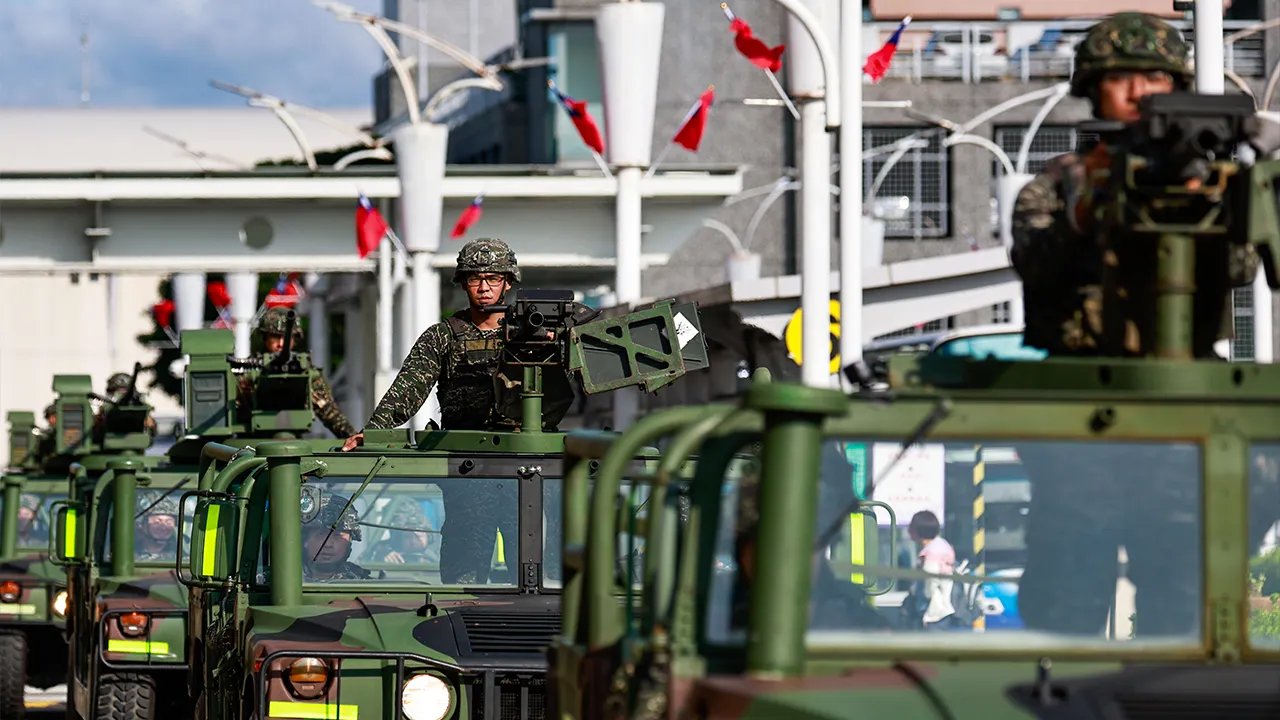
As 2025 draws to a close, tensions between China and Taiwan are higher — and more overt — than at any point in recent years. (Daniel Ceng/Anadolu via Getty Images)
The exercises followed a familiar pattern seen throughout the year: People’s Liberation Army aircraft and ships operating closer to Taiwan with greater frequency, reinforcing Beijing’s claim of sovereignty while testing Taipei’s response capacity.
Unlike earlier shows of force, the late-year drills were widely interpreted as practice for coercive scenarios short of outright war — particularly a blockade or quarantine designed to strangle Taiwan economically and politically without triggering immediate global conflict.
Chinese officials explicitly tied the escalation to Washington’s actions, pointing to a massive U.S. arms package approved in December — valued at roughly $11 billion and described as one of the largest such sales to Taiwan in years — as proof of what Beijing calls «foreign interference.»
XI JINPING HAILS ‘UNSTOPPABLE’ CHINA AS TRUMP ACCUSES BEIJING OF CONSPIRING AGAINST US
Chinese officials have been unusually blunt in their response.
«Any external forces that attempt to intervene in the Taiwan issue or interfere in China’s internal affairs will surely smash their heads bloody against the iron walls of the Chinese People’s Liberation Army,» China’s Taiwan Affairs Office said in a Monday statement.
The arms package continued the U.S. push to strengthen Taiwan’s asymmetric defenses, including missiles, drones and systems designed to complicate a Chinese assault rather than match Beijing weapon-for-weapon.
Taipei welcomed the support but remained cautious in its public response, emphasizing restraint while warning that Chinese military pressure has become routine rather than exceptional.
Japan steps into the frame
One of the most consequential shifts in 2025 came not from Washington or Taipei, Taiwan, but from Tokyo.
In November, Japanese Prime Minister Sanae Takaichi made unusually direct remarks linking a potential Taiwan contingency to Japan’s own security, suggesting that an attack on Taiwan could trigger collective self-defense considerations under Japanese law.
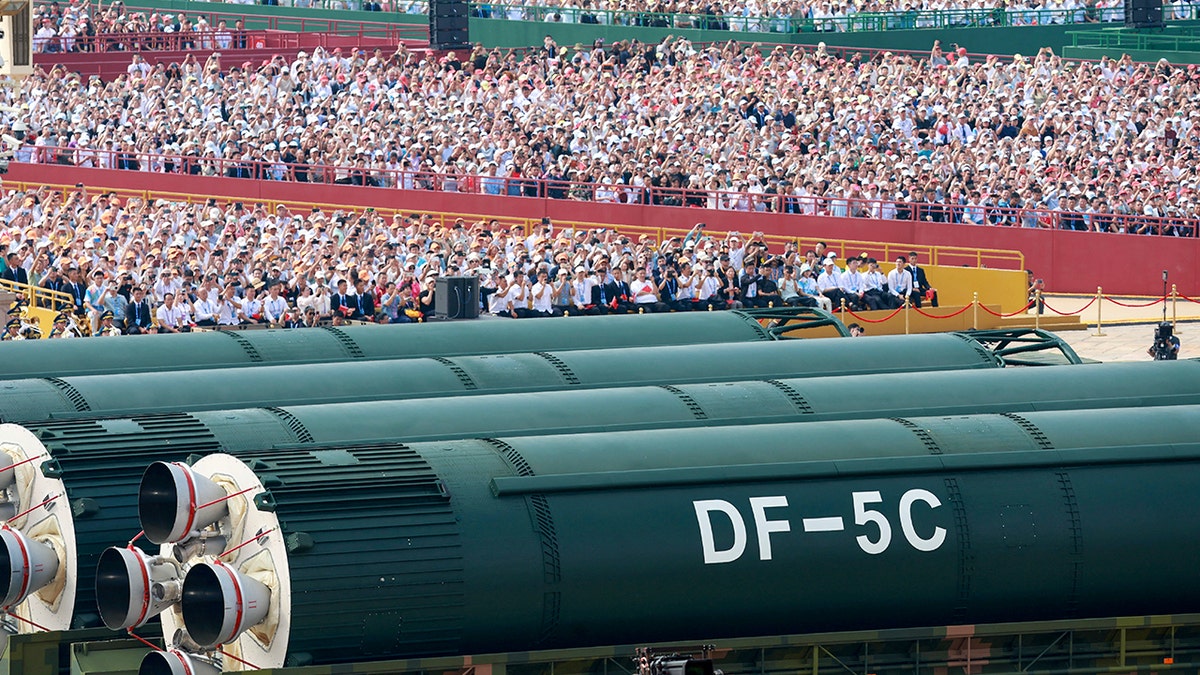
China shows off DF-5C intercontinental strategic nuclear missiles are showcased at a military parade to mark the 80th anniversary of the end of World War Two, in Beijing. (China Daily via Reuters)
The comments marked one of the clearest acknowledgments yet from a sitting Japanese leader that a Taiwan conflict would not remain a bilateral issue between Beijing and Taipei.
China reacted angrily, accusing Japan of abandoning its post-war restraint and aligning itself with U.S. efforts to contain Beijing. The rhetoric underscored a growing Chinese concern: that any move on Taiwan would draw in a widening coalition of U.S. allies.
That concern has also been reinforced by U.S. treaty commitments to the Philippines, where Chinese and Philippine vessels clashed repeatedly in the South China Sea throughout the year, raising fears of a multifront crisis.
Washington’s deterrence gamble
For the United States, 2025 was defined by a balancing act — reinforcing Taiwan without triggering the very conflict Washington seeks to prevent.
In addition to the December arms package, U.S. officials repeatedly reaffirmed that peace and stability in the Taiwan Strait are vital U.S. interests, while avoiding any explicit shift away from long-standing strategic ambiguity.
The Pentagon’s annual report on China, released late in 2025, reiterated that U.S. defense assessments see the Chinese military developing capabilities that could enable it to fight and win a war over Taiwan by 2027 — a benchmark that has increasingly shaped U.S. and allied planning.
U.S. officials, however, have also cautioned that military readiness does not equal intent, warning against treating exercises or procurement timelines as a countdown clock to war.
Is an invasion coming?
The question hanging over the region — and Washington — is whether China is moving closer to launching a full-scale invasion of Taiwan.
The evidence cuts both ways.
On one hand, the scale and sophistication of Chinese military activity around Taiwan has grown noticeably, with drills emphasizing joint operations, rapid mobilization and isolation of the island. Beijing’s rhetoric has also hardened, portraying reunification as increasingly urgent and framing U.S. involvement as an existential threat.
On the other hand, an amphibious invasion of Taiwan would be among the most complex military operations in modern history, carrying enormous political, economic and military risks for China — whose armed forces have not fought a major war since its 1979 invasion of Vietnam.
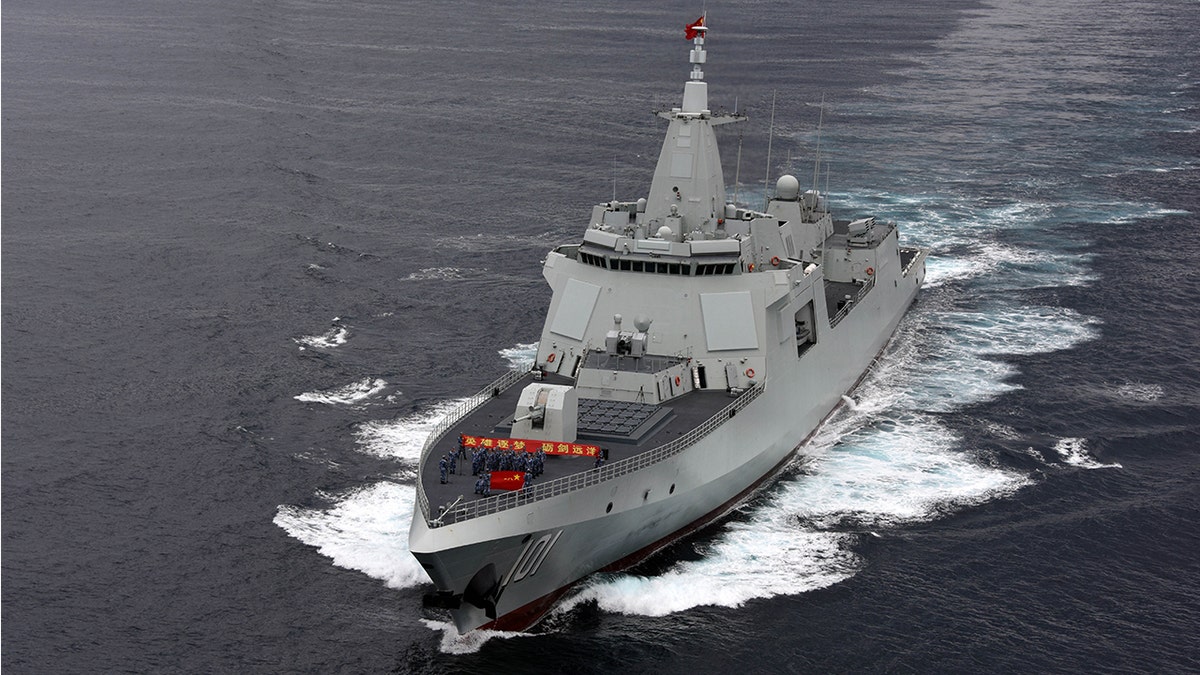
China’s type 055 guided-missile destroyer Nanchang sails during a naval exercise. (Sun Zifa/China News Service via Getty Images)
US COULD BURN THROUGH KEY MISSILES IN ‘A WEEK’ IF WAR WITH CHINA ERUPTS, TOP SECURITY EXPERT WARNS
Many defense analysts argue that Beijing has strong incentives to continue applying pressure through gray-zone tactics — cyber operations, economic coercion, legal warfare and military intimidation — rather than crossing the threshold into open war.
The December drills reinforced that view, highlighting blockade-style scenarios that could test Taiwan and its partners without immediately triggering a shooting war.
The road ahead
As 2026 approaches, the Taiwan Strait remains a flashpoint where deterrence and coercion are colliding more frequently and more visibly.
The most widely held assessment among U.S. and regional officials is that while the risk of conflict is rising — particularly as China approaches its 2027 military readiness goals — an invasion is not yet the most likely near-term outcome.
CLICK HERE TO DOWNLOAD THE FOX NEWS APP
Instead, the danger lies in sustained pressure, miscalculation and crisis escalation, especially as more actors — from Japan to the Philippines — become directly implicated in the Taiwan equation.
For now, 2025 ends with no shots fired across the Taiwan Strait — but with fewer illusions about how close the region may be to its most serious test in decades.
china,taiwan,conflicts defense,pacific






INTERNACIONAL
Donald Trump dio su explicación sobre los moretones en sus manos y reveló detalles sobre su último examen médico

Preguntas sobre la salud del presidente
 Un visible moretón en la mano derecha de Donald Trump, en una imagen de agosto. Foto: REUTERS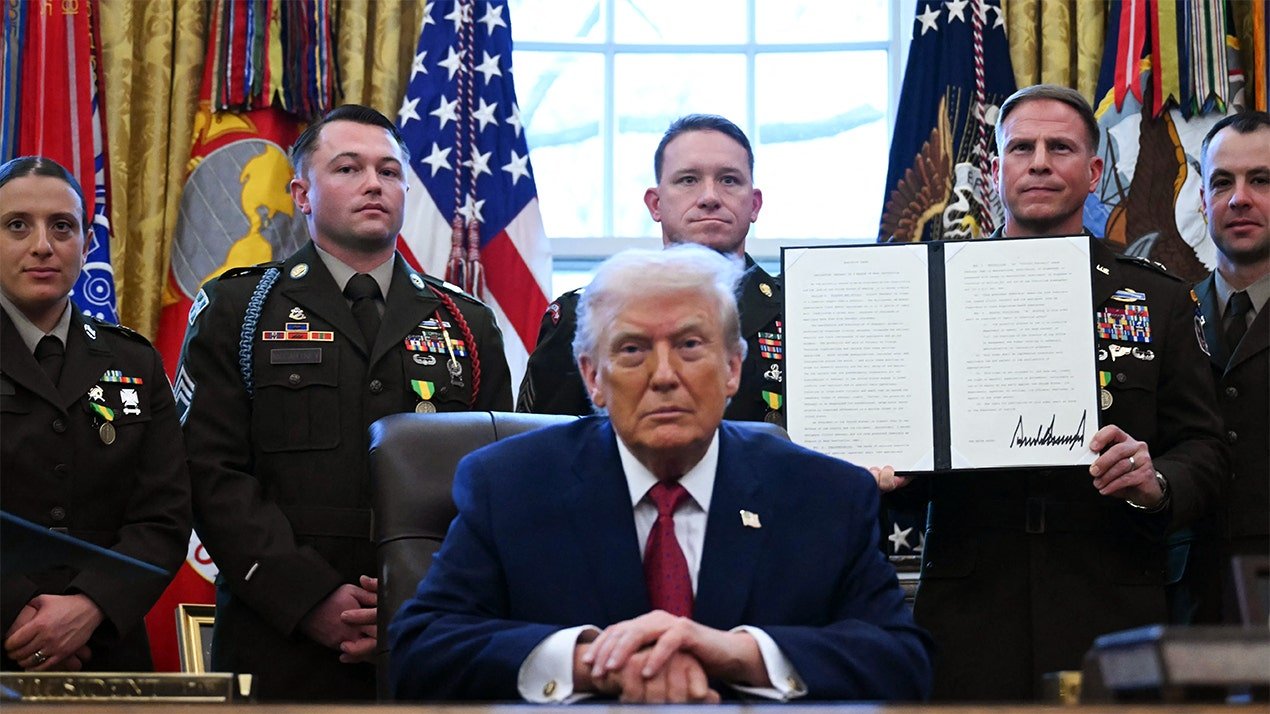
NEWYou can now listen to Fox News articles!
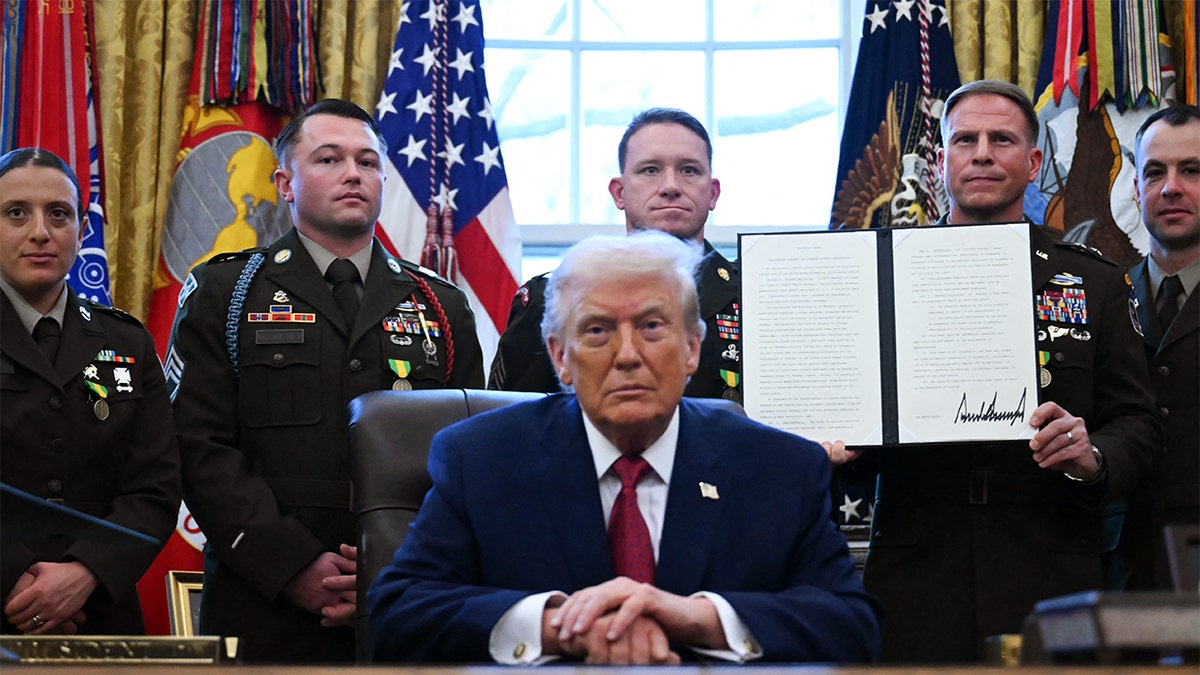
President Donald Trump spent the first year of his second White House term signing a torrent of executive orders aimed at delivering on several major policy priorities, including slashing federal agency budgets and staffing, implementing a hard-line immigration crackdown and invoking emergency authority to impose steep tariffs on nearly every U.S. trading partner.
The pace of Trump’s executive actions has far outstripped that of his predecessors, allowing the administration to move quickly on campaign promises. But the blitz has also triggered a wave of lawsuits seeking to block or pause many of the orders, setting up a high-stakes confrontation over the limits of presidential power under Article II and when courts can — or should — intervene.
Lawsuits have challenged Trump’s most sweeping and consequential executive orders, ranging from a ban on birthright citizenship and transgender service members in the military to the legality of sweeping, DOGE-led government cuts and the president’s ability to «federalize» and deploy thousands of National Guard troops.
FEDERAL JUDGE BLOCKS TRUMP’S BIRTHRIGHT CITIZENSHIP BAN FOR ALL INFANTS, TESTING LOWER COURT POWERS
Many of those questions remain unresolved. Only a few legal fights tied to Trump’s second-term agenda have reached final resolution, a point legal experts say is critical as the administration presses forward with its broader agenda.
Trump allies have argued the president is merely exercising his powers as commander in chief.
Critics counter that the flurry of early executive actions warrants an additional level of legal scrutiny, and judges have raced to review a crushing wave of cases and lawsuits filed in response.
President Donald Trump speaks to the media after signing an executive order at the White House. (Chip Somodevilla/Getty Images)
WINS:
Limits on nationwide injunctions
In June 2025, the Supreme Court sided with the Trump administration 6-3 in Trump v. CASA, a closely watched case centered on the power of district courts to issue so-called universal or nationwide injunctions blocking a president’s executive orders.
Though the case ostensibly focused on birthright citizenship, arguments narrowly focused on the authority of lower courts’ ability to issue nationwide injunctions and did not wade into the legality of Trump’s order, which served as the legal pretext for the case. The decision had sweeping national implications, ultimately affecting the more than 310 federal lawsuits that had been filed at the time challenging Trump’s orders signed in his second presidential term.
Justices on the high court ultimately sided with U.S. Solicitor General John Sauer, who had argued to the court that universal injunctions exceeded lower courts’ Article III powers under the Constitution, telling justices that the injunctions «transgress the traditional bounds of equitable authority,» and «create a host of practical problems.»
The Supreme Court largely agreed. Justices ruled that plaintiffs seeking nationwide relief must file their lawsuits as class action challenges. This prompted a flurry of action from plaintiffs in the weeks and months that followed as they raced to amend and refile relevant complaints to lower courts.
Firing independent agency heads
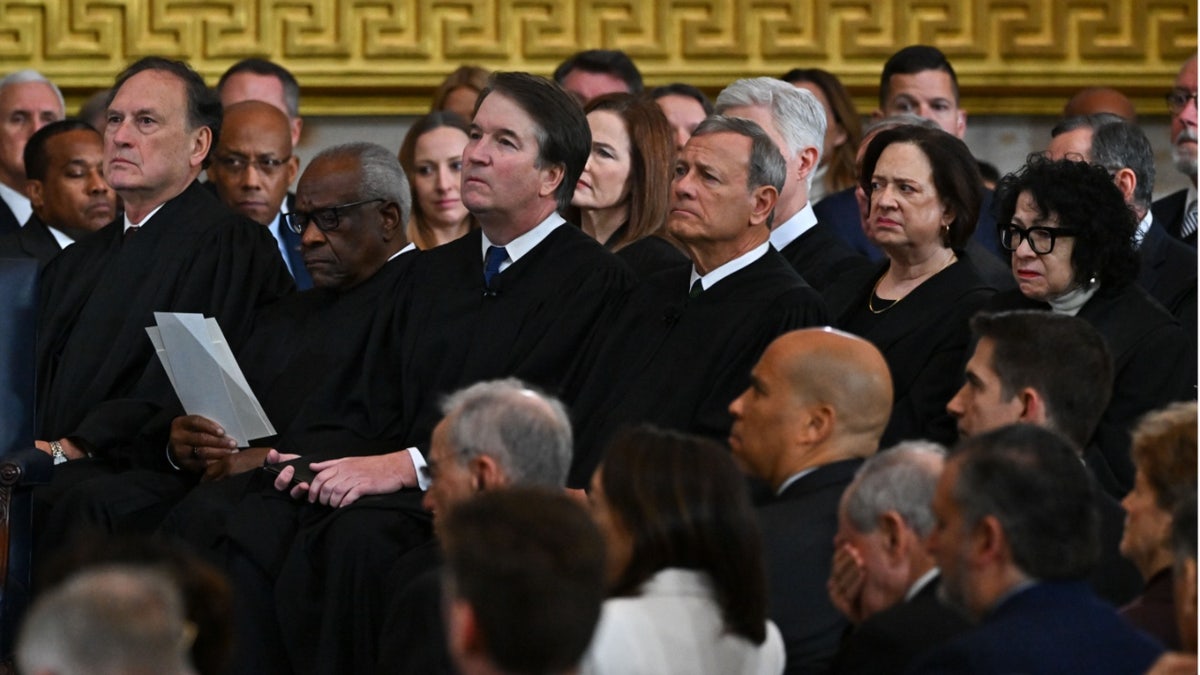
The Supreme Court also signaled openness to expanding presidential authority over independent agencies.
donald trump,supreme court,federal courts
INTERNACIONAL
Investigadores revelaron cómo llegaron los cerdos domésticos a Oceanía desde Asia hace 4 mil años
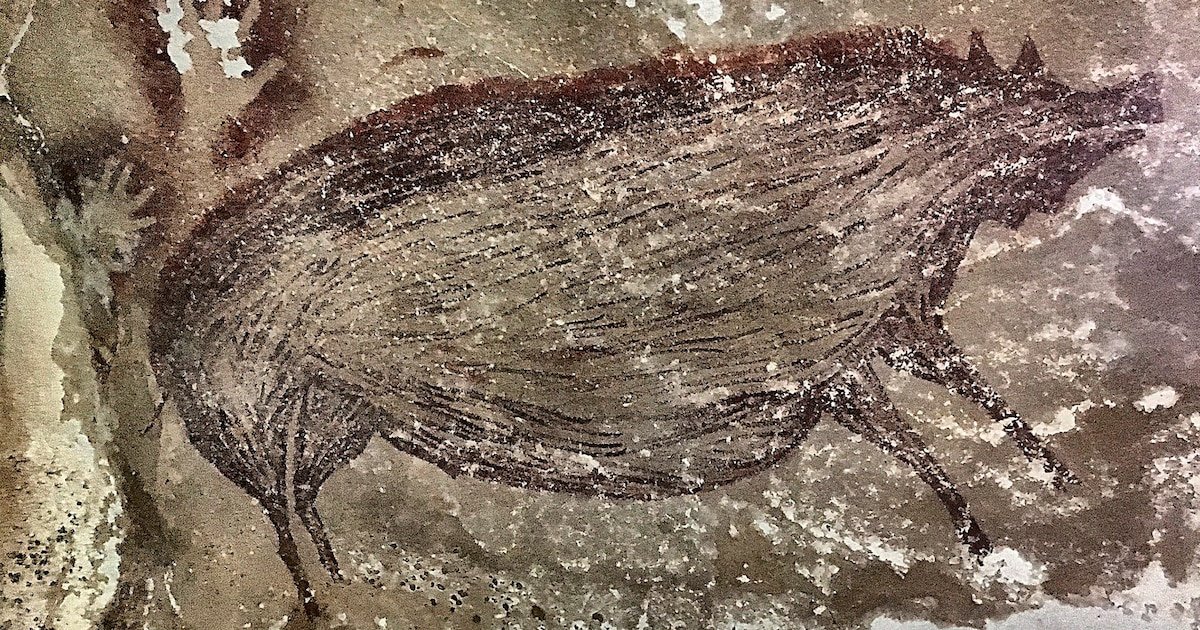
Los cerdos de las islas del Pacífico tienen una historia que se conecta con antiguos viajes humanos.
Un equipo internacional encontró que la mayoría de los cerdos domésticos y libres desde Filipinas hasta Hawái desciende de animales que grupos de habla austronesia llevaron desde el sudeste de China y Taiwán hace unos 4.000 años.
Esa llegada dejó una marca clara en la fauna de las islas. Los cerdos viajaron junto a los humanos en canoas por largas distancias y, al establecerse en nuevas islas, se integraron a los ecosistemas locales.
El estudio publicado en la revista Science, de la Asociación Estadounidense para el Avance de la Ciencia (AAAS) muestra que estos cerdos no se mezclaron con especies silvestres locales en las islas al llegar.

Los investigadores afirmaron: “los cerdos en Oceanía carecen de mezcla genética con especies silvestres nativas presentes a lo largo de la ruta de dispersión austronesia en Filipinas, Sulawesi y otras islas”.
Solo los descendientes que quedaron en Wallacea (una región de islas en el sudeste asiático, situada entre Asia y Australia) y se volvieron salvajes llegaron a cruzarse con especies locales.
David W. G. Stanton lideró la investigación junto a científicos de la Universidad Queen Mary de Londres, el Instituto de Ciencia Evolutiva de Montpellier, la Universidad de Oxford, la Universidad de Estocolmo y otras instituciones del Reino Unido, Francia, Suecia, Alemania, Estados Unidos, Filipinas, Australia, Nueva Zelanda, Islandia, Bélgica, Brunei, Vietnam, Bután, Sri Lanka, Vanuatu e Indonesia.

Durante mucho tiempo, la presencia de cerdos en islas lejanas como Hawái fue un misterio para la ciencia. Las personas han movido animales durante siglos, pero el origen real de los cerdos del Pacífico seguía sin respuesta.
Los investigadores quisieron saber si estos animales llegaron en una sola ola migratoria o en varias etapas. Buscaron aclarar si los cerdos del Pacífico se mezclaron con otras especies o si mantuvieron su linaje original.
Para responder, el equipo analizó el ADN y la forma de los dientes de cientos de cerdos modernos y antiguos. Así lograron reconstruir los recorridos y cambios de los cerdos en el Pacífico durante casi 3.000 años.
El hallazgo ayuda a entender cómo los movimientos humanos pueden transformar la vida animal y el ambiente en las islas.

El equipo estudió 117 genomas de cerdos modernos, antiguos y de museos y más de 700 dientes.
Los datos muestran que los cerdos llevados por los austronesios permanecieron aislados de las especies silvestres durante siglos.
Los investigadores escribieron: “los cerdos en Oceanía carecen de mezcla genética con especies silvestres nativas de las islas a lo largo de la ruta migratoria”.
Identificaron un grupo genético especial, el “Clado del Pacífico”, en la mayoría de los cerdos desde Wallacea hasta Hawái.
Ese grupo se identifica en la mayoría de los cerdos al este de la Línea de Wallace (un límite biogeográfico que separa las especies animales de Asia y Australia en el sudeste asiático) y también en algunos animales de Java, Sumatra y el sudeste asiático continental.

La forma de los dientes fue una pista clave. Los cerdos del Pacífico tienen una dentadura diferente, que los distingue de otras poblaciones. Este rasgo surgió por el aislamiento y la adaptación a nuevas islas.
Los primeros cerdos domésticos que llegaron al Pacífico no se mezclaron con especies salvajes locales. Solo después, algunos de estos cerdos se volvieron salvajes en Wallacea y se cruzaron con otras especies.
Durante la época colonial, llegaron cerdos europeos a Papúa Nueva Guinea y Nueva Caledonia. Esto generó nuevas mezclas genéticas.
Los investigadores escribieron que “la ascendencia europea se introdujo en estas regiones, probablemente por cerdos domésticos europeos durante y después del periodo colonial”.

El análisis reveló que, aunque algunos cerdos de Sumatra, Java y otras islas mezclaron linajes, la mayoría de los cerdos del Pacífico mantiene el linaje traído por los austronesios.
Los resultados muestran que la dispersión de los cerdos estuvo marcada por cuellos de botella genéticos y adaptación.
Los investigadores afirmaron: “su peculiar morfología dental y el aislamiento genético inicial pueden reflejar que estos cerdos introducidos tenían rasgos domésticos que facilitaron su transporte y manejo por grupos de habla austronesia”.

El equipo científico expresó que se debería analizar más genomas antiguos y modernos para entender mejor la historia de los cerdos en el Pacífico.
“Las futuras investigaciones con genomas de alta cobertura y análisis funcionales serán clave para entender el éxito de estas poblaciones ferales”, mencionaron.
Aún faltan muestras de ADN antiguo en partes de Asia. Esto impide conocer todos los detalles de las rutas que siguieron los cerdos.
Pero con los resultados obtenidos ya se puede afirmar que la historia de estos cerdos muestra cómo los viajes humanos dejan huellas en los animales y en los ambientes. El estudio reveló una historia de traslados, aislamiento y cambios en islas lejanas.
Environment,North America,Science / Technology,Oahu

Javier Milei afirmó que avanza en el armado de un bloque regional de diez países

Donald Trump dio su explicación sobre los moretones en sus manos y reveló detalles sobre su último examen médico

Martín Llaryora reformula su Gabinete en Córdoba y dinamita la interna con Juan Schiaretti

Del fútbol al pádel: la nueva vida de Ezequiel Garay

Javier Milei retoma su gira por el país: visitará Córdoba y la provincia de Buenos Aires

Transporte, prepagas, alquileres y los aumentos de servicios que llegan en el arranque del año

Calor extremo en el AMBA: cuándo la temperatura rozará los 40 grados

Quién era Charlie Menditéguy, el millonario argentino que conquistó a Brigitte Bardot y renunció a la Fórmula 1 por ella

Axel Kicillof insistirá con la reelección indefinida de intendentes, pero evita el debate de la Boleta Única

Jorge Lanata, a un año de su muerte: el periodista más original, influyente y popular de su generación

 POLITICA3 días ago
Axel Kicillof insistirá con la reelección indefinida de intendentes, pero evita el debate de la Boleta Única
- CHIMENTOS3 días ago
Jorge Lanata, a un año de su muerte: el periodista más original, influyente y popular de su generación
- POLITICA2 días ago
Documento clave: la empresa de Faroni pactó con la AFA quedarse con el 30% de sus ingresos comerciales en el exterior