INTERNACIONAL
Donald Trump dio detalles sobre el operativo de captura de Nicolás Maduro: el cuarto secreto, los soldados heridos y «el show en tiempo real»

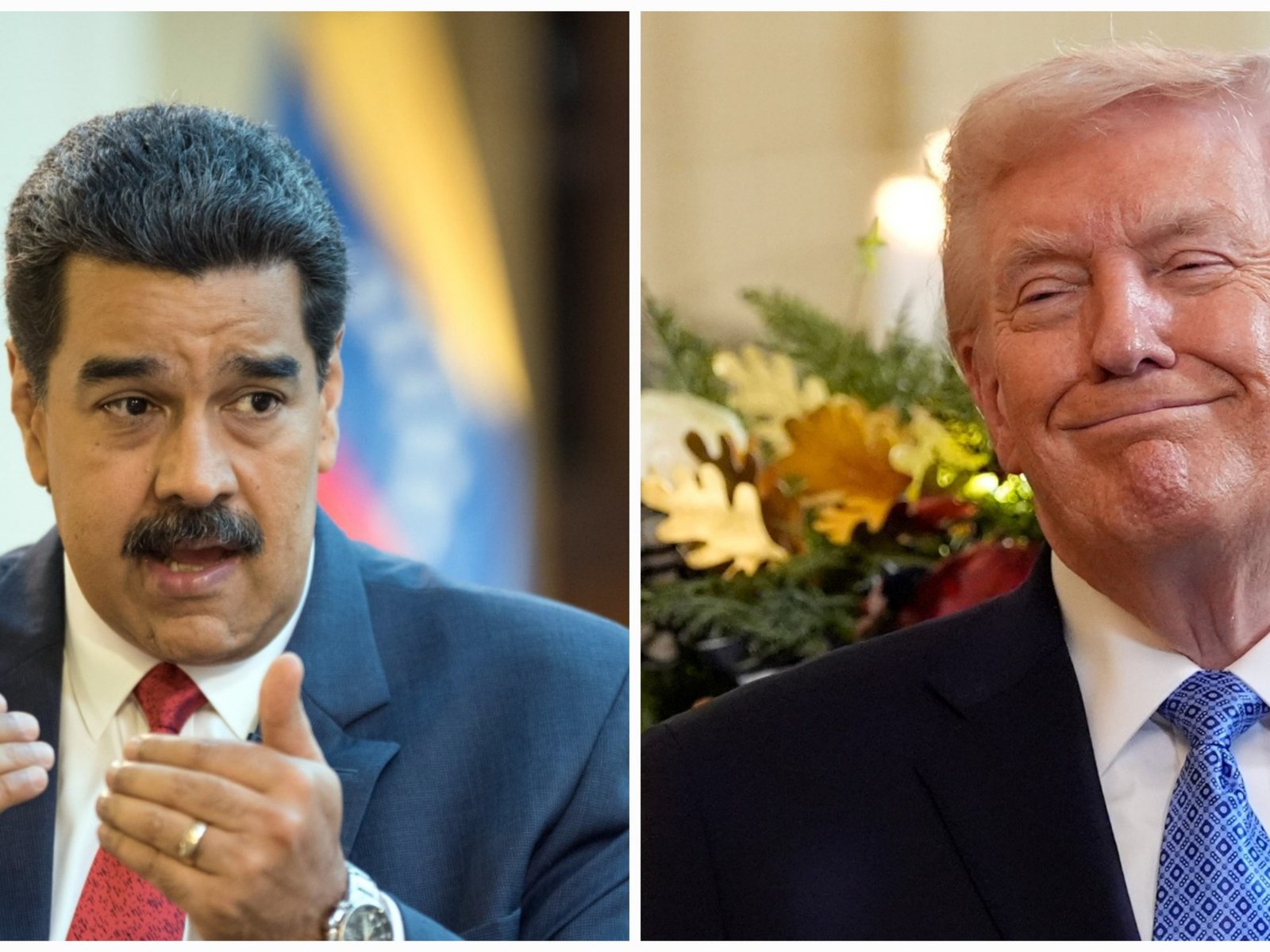
El presidente de Estados Unidos, Donald Trump, brindó algunos detalles sobre el operativo que terminó con la captura del dictador venezolano Nicolás Maduro, y remarcó que hubo algunos soldados norteamericanos que resultaron heridos.
A través de una entrevista en Fox News, el mandatario elogió el accionar del comando Delta, a cargo del operativo. «Hicieron un trabajo muy bueno, algo nunca antes visto. No hay otro país en el mundo que pueda hacer una maniobra así. Lo miré como si estuviese viendo un show de TV. La velocidad, fue increíble el trabajo que hicieron», dijo.
Trump contó que vio todo el operativo en un salón especial, en Mar a Lago, en Florida, rodeado de un equipo de militares. «Lo miramos desde un cuarto, fue muy compleja la maniobra, el aterrizaje, la cantidad de helicópteros, los jets, teníamos todo. (Nuestros militares) entraron a lugares a los que no se podía entrar. En cuestión de segundos lo sacamos. No vi nunca nada así, lo vi en tiempo real, escuché la comunicación en el campo y fue increíble», dijo.
Luego confirmó que «no hubo muertes» de soldados norteamericanos, apenas algunos heridos y un ataque en un helicóptero. Trump señaló que el operativo estaba planeado para llevarse a cabo cuatro días atrás, pero se pospuso por el mal clima.
«Hoy había algo menos de nubes, se abrió el clima y fuimos. Estaba oscuro, no había luna. Estaba en una casa que parecía más una fortaleza que una casa. Tenía puertas de acero, lo que llaman un espacio seguro, de acero sólido. Intentó entrar, pero lo atropellaron tan rápido que no lo logró», remarcó.
Entre los detalles que deslizó Trump sobre el operativo, indicó que el equipo de asalto que entró a la residencia de Maduro venía entrenando con una réplica real de la casa. Una vez capturado, lo subieron en un helicóptero que lo sacó de Caracas rumbo al buque anfibio USS Iwo Jima. «Fue un vuelo agradable, seguro que les encantó», bromeó el presidente. «Pero acuérdense que ellos mataron a mucha gente, mucha gente en su país. Son gente muy despiadada», agregó.
Maduro y su esposa, Cilia Flores, están siendo trasladados en el buque de guerra rumbo a Estados Unidos, según precisó Trump en otro pasaje de la nota. El norteamericano confirmó que habló hasta hace una semana con Maduro, y que en todo momento lo invitó a que se entregue. «Le dije que se rinda y él estuvo muy cerca de hacerlo, pero al final tuvimos que hacer algo más quirúrgico y poderoso. Este fue un símbolo muy importante», planteó.
Sobre sus sucesores, amenazó que tendrán un futuro «muy malo» si se mantienen leales a Maduro. «No podemos arriesgarnos a dejar que alguien más lo dirija y simplemente continúe donde él lo dejó. Yo diría que tiene pocos leales, hay mucha gente apoyándonos. Hay banderas norteamericanas en las calles. Era un dictador que la gente odiaba», agregó.
Trump también fue consultado sobre si la operación era un mensaje también a México, por donde entra la mayor parte de las drogas a Estados Unidos. «No era esa la intención. Somos muy amigos de ella», respondió, en referencia a la presidenta Claudia Sheinbaum.
Pero luego arremetió: «Es una buena mujer, pero los cárteles controlan México. Ella no controla México. Le he preguntado muchas veces, ¿querés que nos encarguemos de los cárteles? y ella me dice, no, no, señor presidente», explicó Trump.
«Así que tenemos que hacer algo, porque en mi opinión el número real de muertos [por consumo de drogas] es de 300.000 al año», aseveró Trump.
En otro pasaje, también le consultaron por las previsiones de petróleo que Caracas suministraba a China. Ayer, en una de sus últimas acciones de gobierno, Maduro había recibido al enviado especial del presidente chino Xi Jinping, Qiu Xiaqi, en una bilateral donde se hablaron de varios temas, incluyendo la provisión de crudo para Beijing.
«Tengo una muy buena relación con Xi, y no habrá ningún problema. Van a conseguir petróleo», remarcó.
También le preguntaron por el futuro de la industria petrolera venezolana. «Bueno, veo que vamos a estar muy involucrados en ese tema. ¿Qué puedo decir? Tenemos las compañías petroleras más grandes del mundo», cerró.

NEWYou can now listen to Fox News articles!
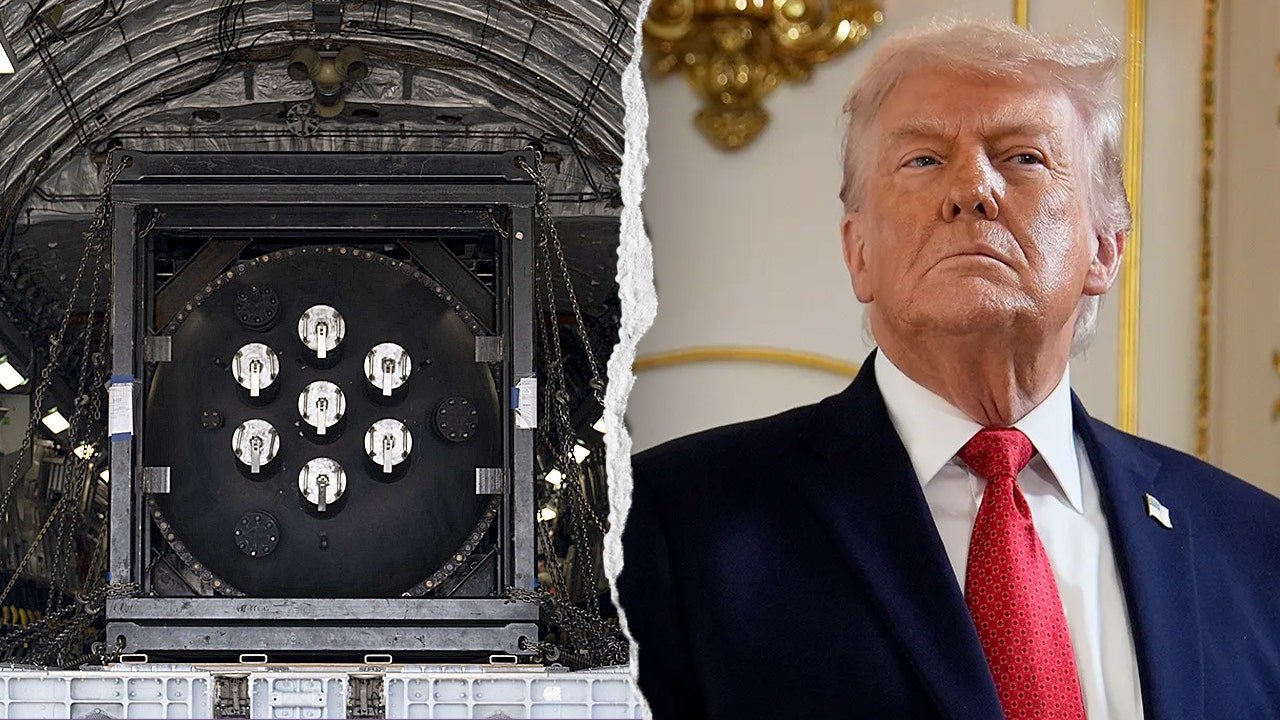
The Department of War on Sunday transported a next-generation nuclear reactor aboard a C-17 from California to Utah, advancing President Donald Trump’s executive order to modernize America’s nuclear energy infrastructure and strengthen U.S. national security.
The reactor was flown from March Air Reserve Base in California to Hill Air Force Base in Utah and is expected to be transported to the Utah San Rafael Energy Lab in Orangeville for testing and evaluation – a key step in assessing how advanced nuclear systems could support military installations and remote defense operations.
The Department of War shared images on X showing the reactor loaded onto the C-17 aircraft.
«We’re advancing President Trump’s executive order on nuclear energy,» the post read. «Moments from now, we will airlift a next-generation nuclear reactor.»
TRUMP ADMIN POURS $1B INTO MASSIVE EFFORT TO RESTART NUCLEAR REACTOR AT HISTORIC MELTDOWN SITE
The Department of War said the successful delivery and installation of the reactor will open new possibilities for energy resilience and strategic independence for the nation’s defense, highlighting what officials described as an agile, innovative and commercial-first approach to addressing critical infrastructure challenges.
«By harnessing the power of advanced nuclear technology, we are not only enhancing our national security but championing a future of American energy dominance,» the agency said in a press release. «This event is a testament to the ingenuity of the American spirit and a critical advancement in securing our nation’s freedom and strength for generations to come.»
Fox News Digital has reached out to the Department of War for additional comment.
THREE MILE ISLAND NUCLEAR PLANT MAKES COMEBACK WITH $1B IN FEDERAL BACKING TO MEET INCREASING ENERGY DEMANDS
The Department of War airlifted a next-generation nuclear reactor to Utah, advancing President Trump’s push to modernize U.S. energy and strengthen national security. (U.S. Department of War X)
In May, President Donald Trump signed several executive orders aimed at expanding domestic nuclear energy development. At the time, Interior Secretary Doug Burgum said America led the postwar world on «all things nuclear» until it «stagnated» and was «choked with overregulation.»
War Secretary Pete Hegseth added that the U.S. was «going to have the lights on and AI operating when others are not because of our nuclear capabilities.»
One of Trump’s nuclear directives called for reforming Energy Department research and development, accelerating reactor testing at national laboratories and establishing a pilot program for new construction.
ENERGY SECRETARY REVEALS HOW US NUCLEAR TESTS WILL WORK
Nuclear energy, the White House said in the order, «is necessary to power the next generation technologies that secure our global industrial, digital, and economic dominance, achieve energy independence, and protect our national security.»
The nuclear expansion effort is part of a broader administration push to reinforce domestic energy production and grid reliability across multiple sectors.
Days later, Trump signed another executive order directing the Department of War to work directly with coal-fired power plants on new long-term power purchasing agreements, arguing the move would ensure «more reliable power and stronger and more resilient grid power.»
The order, «Strengthening United States National Defense with America’s Beautiful Clean Coal Power Generation Fleet,» states, «The United States must ensure that our electric grid … remains resilient and reliable, and not reliant on intermittent energy sources,» calling the grid «the foundation of our national defense as well as our economic stability.»
CLICK HERE TO DOWNLOAD THE FOX NEWS APP
«It is the policy of the United States that coal is essential to our national and economic security,» the order adds.
Fox News Digital’s Jasmine Baehr and Charles Creitz contributed to this report.
donald trump,pete hegseth,defense,energy,utah
NEWYou can now listen to Fox News articles!
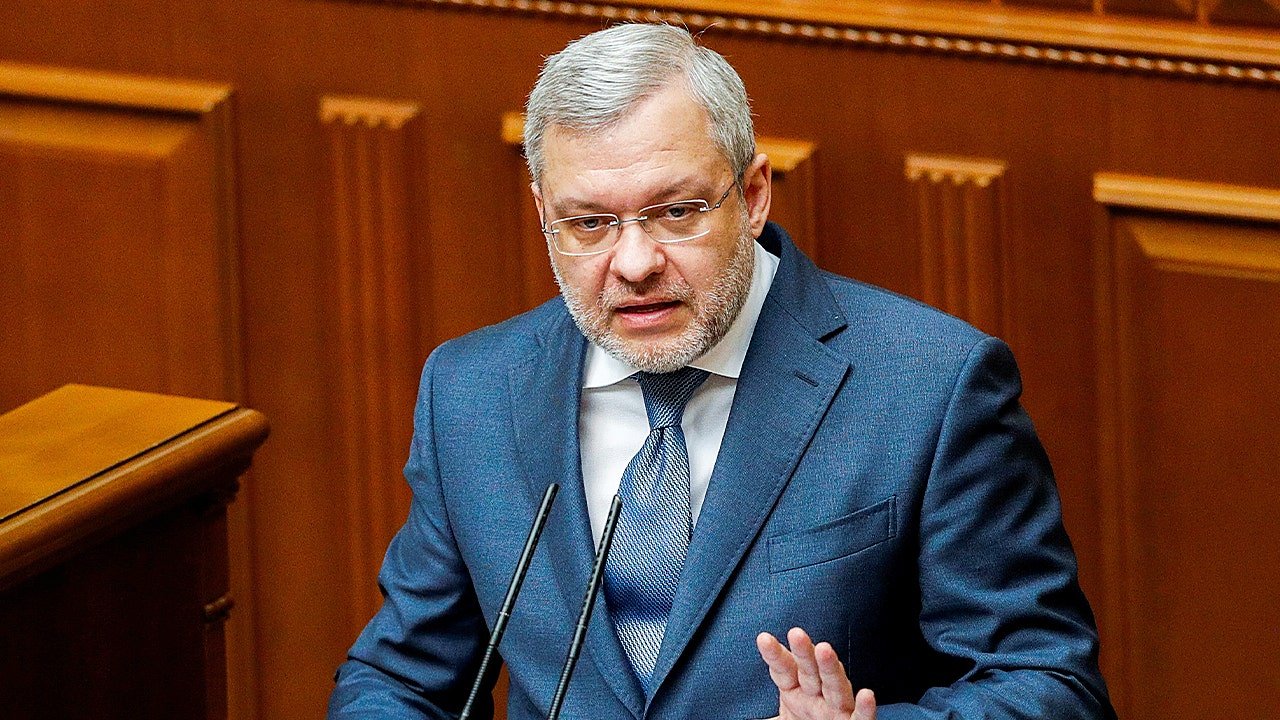
Ukraine’s former energy minister was detained Sunday after authorities removed him from a train at the border as he allegedly attempted to flee the country, a source has confirmed to Fox News Digital.
Herman Halushchenko’s arrest, the source said, followed requests from the National Anti-Corruption Bureau of Ukraine (NABU) and the Specialized Anti-Corruption Prosecutor’s Office (SAPO) and marked an uptick in an anti-corruption probe engulfing the political spectrum.
«Halushchenko tried to escape Ukraine,» the source said under the condition of anonymity.
«The border guards had a request from NABU and SAPO about him and also to get information in case he tried to cross the border,» they added.
TRUMP ADMINISTRATION STAYS SILENT AS MASSIVE UKRAINE CORRUPTION SCANDAL ROCKS ZELENSKYY’S INNER CIRCLE
Ukrainian authorities detained former energy minister Herman Halushchenko in the Operation Midas probe investigating alleged $100 million kickbacks at Energoatom nuclear company. (Valentyn Ogirenko/Reuters)
«This essentially means that because he tried to cross, the president has lost some control here.»
NABU released a statement on the matter Sunday but did not name Halushchenko, according to the Kyiv Post.
He had served as the country’s energy minister under President Volodymyr Zelenskyy, but resigned in November.
«Today, while crossing the state border, NABU detectives have detained the former Minister of Energy as part of the ‘Midas’ case,» the agency said in a statement, referring to a corruption scandal in the country’s energy sector.
«Initial investigative proceedings are ongoing, carried out in accordance with the requirements of the law and court sanctions. Details to follow,» NABU added.
‘GOLDEN TOILET’ SCANDAL: ZELENSKYY FACES DEEPEST CRISIS YET AS ALLIES ACCUSED IN $100M WARTIME SCHEME
Halushchenko had served under Ukrainian President Volodymyr Zelenskyy. (Sergei Grits/AP Photo)
Operation Midas centers on allegations of a $100 million embezzlement scheme within Energoatom, Ukraine’s state-owned nuclear energy company.
Investigators say funds meant for critical energy infrastructure, including wartime grid repairs after Russian attacks, were siphoned off through contract kickbacks.
Halushchenko was one of several ministers who resigned in 2025 as NABU uncovered what it described as the massive money-laundering scheme orchestrated by Tymur Mindich, also an ally of Zelenskyy.
The controversy has also affected border operations. Border head Serhiy Deineko was dismissed in January, the Kyiv Independent reported.
On Jan. 4, Valerii Vavryniuk, the agency’s first deputy, was appointed acting head of the State Border Guard Service of Ukraine (SBGS), according to to Pravda.
«The last border head had also been accused of corruption,» the source said. «There is a new acting head of the border service who is not loyal to Zelenskyy but more so to the institutions.»
FORMER UKRAINIAN PM ACCUSED OF BRIBING POLITICIANS WITH US DOLLARS TO WEAKEN ZELENSKYY’S GOVERNMENT
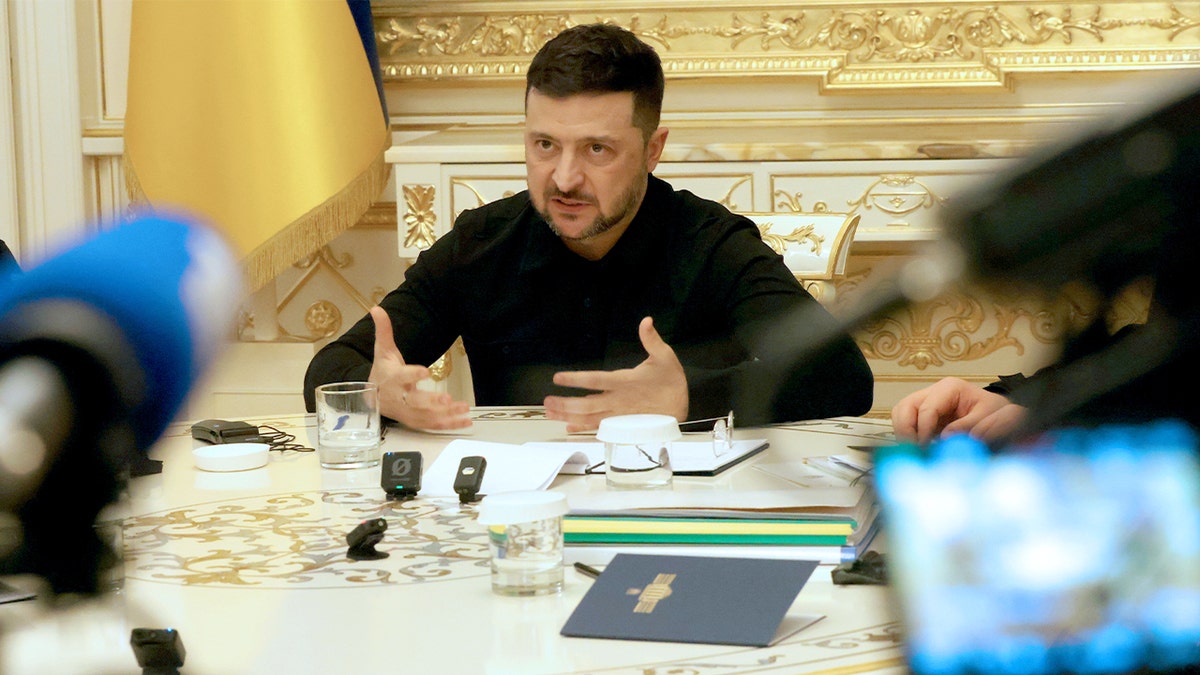
«With the corruption probes, Zelenskyy loses control and this infuriates him,» a source told Fox News Digital. (Pavlo Bahmut/Ukrinform/NurPhoto via Getty Images)
The source also said since Halushchenko was considered an «unofficial but direct subordinate» of Zelenskyy, this latest arrest will prove difficult for Ukraine’s leader.
«Halushchenko had been [an] (unofficial but direct) subordinate to Zelenskyy, so if his corruption is proven then it will be hard to convince people the president knew nothing,» they said.
«With the corruption probes, Zelenskyy loses control and this infuriates him,» the source added.
The developments come as Zelenskyy continues to navigate Ukraine’s war with Russia.
TOP UKRAINIAN OFFICIALS IN ZELENSKYY GOVERNMENT SUBMIT RESIGNATIONS AMID $100 MILLION CORRUPTION SCANDAL
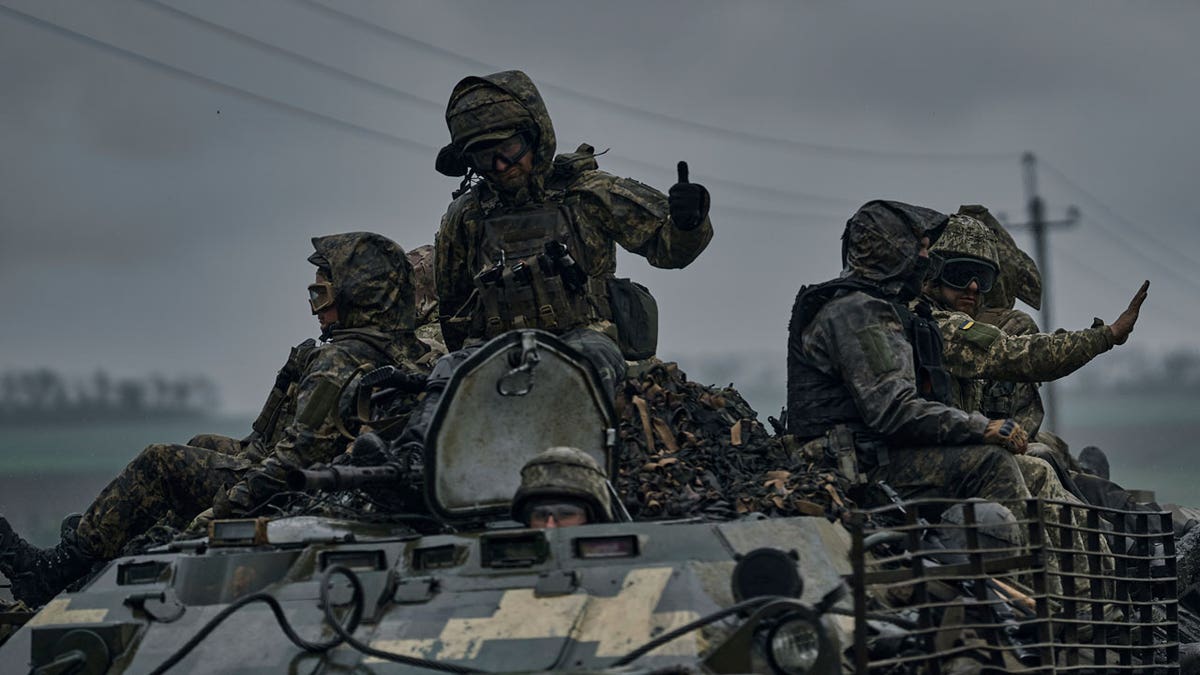
Ukrainian servicemen ride atop an APC toward frontline positions near Vuhledar, Donetsk region, Ukraine, on May 1, 2023. (Libkos/AP Photo)
The source described high emotion inside the Ukraine parliament with Zelenskyy’s «stress rising» in the wake of Herman Halushchenko’s arrest.
«Recently Zelenskyy became angry over initiatives in parliament that were not pushed through, and he shouted and threatened parliamentarians,» the source said.
CLICK HERE TO DOWNLOAD THE FOX NEWS APP
«This week he appeared quite emotionally uncontrollable and almost aggressive behind the camera, so some parliamentarians have seen his stress rise many times recently – and more than pre-war levels,» they said.
Fox News Digital has reached out to Zelenskyy’s office for comment.
ukraine,volodymyr zelenskyy,corruption,border security,crime,crime world
INTERNACIONAL
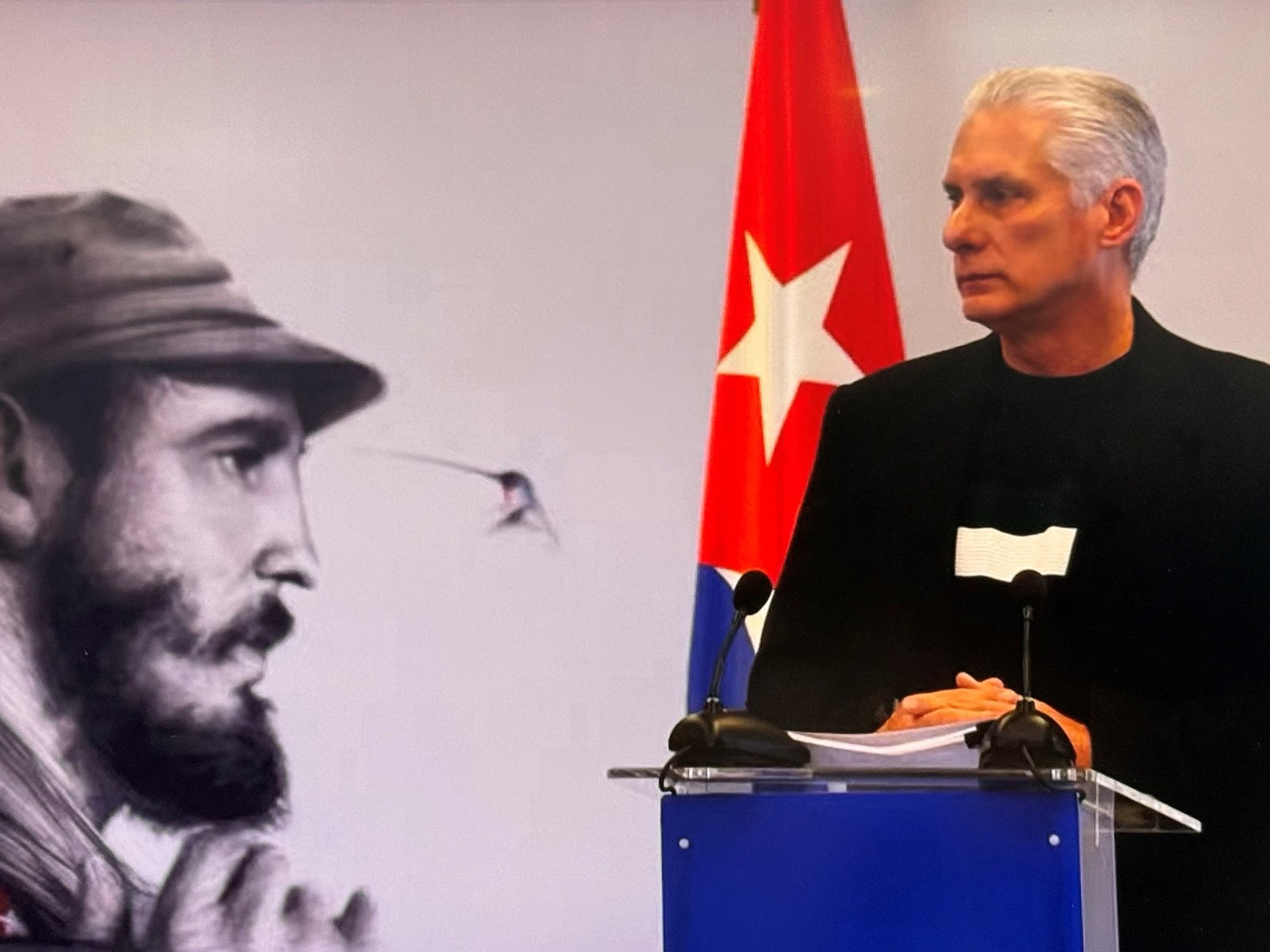
Cuba desempolva una vieja táctica de Fidel Castro: la «Guerra de Todo el Pueblo» ante la presión de Estados Unidos
Prácticas semanales

«Una situación muy distinta»

El Gobierno ya avanza en la estrategia para enfrentar una judicialización de la reforma laboral

Department of War transports next-generation reactor in nuclear energy milestone

“El primo de Pampita”: fuerte cruce entre Grabois y un diputado que lo acusó de instigar a la violencia en la marcha contra la reforma laboral

Zelenskyy ally arrested trying to flee Ukraine as massive corruption probe deepens

Un estudio privado comparó el efecto del aumento de las importaciones sobre los precios y el empleo

El llamativo plan de Anselmi en Botafogo: envió a nueve jugadores a Bolivia días antes de la ida contra Nacional Potosí

A quién afecta la Reforma laboral: estos son los puntos clave del proyecto de Milei

Reforma laboral: la modificación sobre accidentes o enfermedades ajenas al trabajo

Cayeron 20% las ventas de automóviles en China y el régimen impone medidas para regular el mercado

El Barça y media Europa esperan: la joya de 19 años Diomandé atrapada en un lío legal

 POLITICA2 días ago
El Gobierno busca aprobar la reforma laboral y el Régimen Penal Juvenil antes del 1 de marzo
- SOCIEDAD2 días ago
Avistaron una ballena azul en Chubut por primera vez en la historia
- INTERNACIONAL2 días ago
Chaotic video shows passengers trading midair blows; plane forced to divert: reports