INTERNACIONAL
Bebés y realidad extendida: cómo aprenden nuevas palabras sin un adulto presente

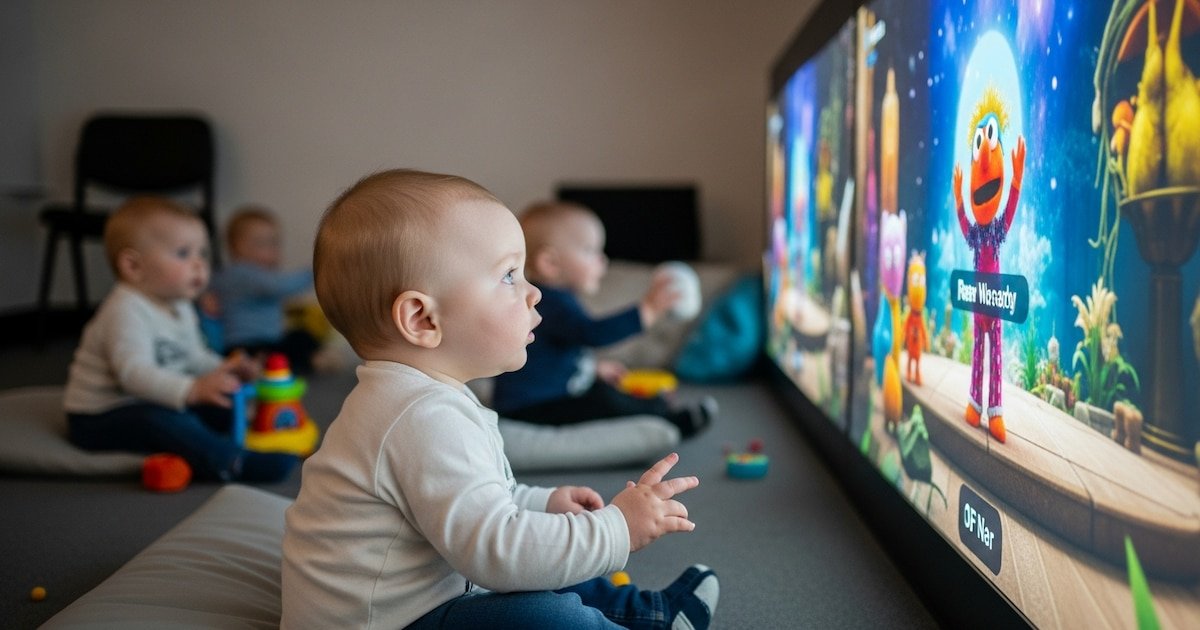
El laboratorio se llenó de silencio cuando, frente a una pared convertida en pantalla, un bebé australiano fijó la mirada en una marioneta virtual. Ocurrió en Western Sydney, durante una serie de experimentos realizados entre 2024 y 2025, en los que 144 bebés de entre seis y 24 meses participaron en sesiones de aprendizaje de tonos no nativos a través de distintos entornos: cara a cara, XR en tiempo real y XR pregrabado.
La investigación buscó responder si los bebés pueden percibir y adquirir información novedosa mediante la tecnología XR, una herramienta cada vez más presente en la educación infantil.
El equipo científico, liderado por Liquan Liu y colaboradores, diseñó un protocolo para evaluar dos aspectos: la capacidad de los bebés para discriminar tonos del idioma mandarín y su habilidad para asociar palabras nuevas con objetos.

Los niños, organizados en dos grupos de edad (seis a 12 meses y 18 a 24 meses), participaron en sesiones de juego en las tres condiciones mencionadas, siempre bajo estrictas medidas éticas y con consentimiento informado de las familias.
De acuerdo con la investigación difundida por Wiley Online Library, todos los participantes recibieron el mismo estímulo audiovisual a través de marionetas y palabras en mandarín. Las diferencias entre las condiciones residieron en la interacción: en la sesión presencial, un agente humano estuvo en la misma habitación; en XR-Live, la interacción ocurrió en tiempo real mediante proyección virtual; en XR-Recorded, los bebés observaron una grabación sin interacción directa.
Según el informe, los resultados en la tarea de asociación objeto-etiqueta mostraron que los bebés mayores (18 a 24 meses) aprendieron mejor el tono descendente, acústicamente más complejo.

El aprendizaje se observó en todas las condiciones, tanto presenciales como virtuales. Entre los bebés menores de un año, no se detectó un aprendizaje significativo de los tonos. La atención se mantuvo alta en la condición presencial, aunque los bebés expuestos a XR también demostraron participación sostenida.
Los análisis estadísticos indicaron que el tono objetivo influyó en el aprendizaje, con el tono descendente superando al ascendente en todos los escenarios entre los bebés mayores. La edad resultó determinante: solo los niños de dos años lograron asociaciones exitosas en la prueba, mientras que los de un año no alcanzaron niveles de aprendizaje superiores al azar.
La discriminación perceptiva de tonos en mandarín también dependió de la edad y de la modalidad de presentación. Los bebés mayores lograron distinguir los tonos en condiciones XR-Live y XR-Recorded, con tiempos de observación significativamente mayores en los ensayos alternantes.

En los bebés de menor edad, no se registraron diferencias relevantes entre las condiciones, lo que sugiere que la maduración cognitiva es un factor clave para el aprovechamiento de tecnologías XR en la primera infancia.
El estudio destaca que los entornos XR ofrecen experiencias inmersivas que pueden facilitar el aprendizaje temprano y la percepción de nuevas lenguas.
De acuerdo con el equipo, la representación humana a tamaño real y la disponibilidad de señales visuales y auditivas en XR pueden suplir parte de la interacción social que se pierde al no estar presente un adulto físicamente. Sin embargo, la edad de los bebés y la complejidad del objetivo de aprendizaje siguen siendo determinantes para el éxito.

Se observó que la atención de los bebés se mantuvo elevada incluso en ausencia de contingencia social, como en la condición XR-Recorded. Esto podría deberse a la novedad de la tecnología o al atractivo del entorno virtual.
Los bebés de dos años mostraron mayor capacidad de discriminación y aprendizaje en XR que sus pares más pequeños, lo que se alinea con teorías del desarrollo sobre la consolidación de sistemas fonológicos y el rápido aumento de vocabulario en esa etapa.
Los hallazgos sugieren que la realidad extendida no solo resulta eficaz para la enseñanza de nuevas palabras, sino que también puede contribuir a reducir desigualdades en el acceso a experiencias educativas de calidad. Las tecnologías XR permiten intervenciones escalables y adaptables, relevantes para contextos donde la presencia física de educadores resulta limitada.

El equipo advirtió que, aunque la tecnología XR muestra un potencial considerable, su eficacia depende del ajuste a la edad y los objetivos de aprendizaje. La familiaridad creciente con los entornos virtuales podría modificar los niveles de atención y aprendizaje en exposiciones repetidas, por lo que se recomienda investigar la influencia del tiempo y la experiencia acumulada en el uso de XR.
Además, la investigación subraya la necesidad de comparar directamente la XR con otros medios digitales y de explorar sus efectos en bebés con distintos perfiles de desarrollo. La integración temprana de XR en políticas educativas podría potenciar la equidad y la sostenibilidad en la formación infantil, siempre que se respeten estándares éticos y se garantice la accesibilidad.
Según el equipo de Liquan Liu, futuras investigaciones deberán evaluar los impactos a largo plazo de la XR en el desarrollo lingüístico y cognitivo, así como sus posibles beneficios para poblaciones en contextos de vulnerabilidad. La colaboración entre educadores, tecnólogos y autoridades será clave para aprovechar al máximo las oportunidades de la XR en la primera infancia.
La evidencia experimental presentada en este trabajo indica que los bebés pueden, en efecto, percibir y aprender información nueva a través de la realidad extendida. Si bien la interacción cara a cara mantiene ventajas, la XR representa una herramienta prometedora para el aprendizaje temprano y la reducción de brechas educativas.
bebés,tiempo de pantalla,dibujos animados,televisión,desarrollo infantil,guardería,tecnología,educación,sociedad













INTERNACIONAL
El ataque Irán: escaso apoyo en Estados Unidos a la ofensiva militar lanzada por Donald Trump contra el régimen de los ayatollahs
NEWYou can now listen to Fox News articles!
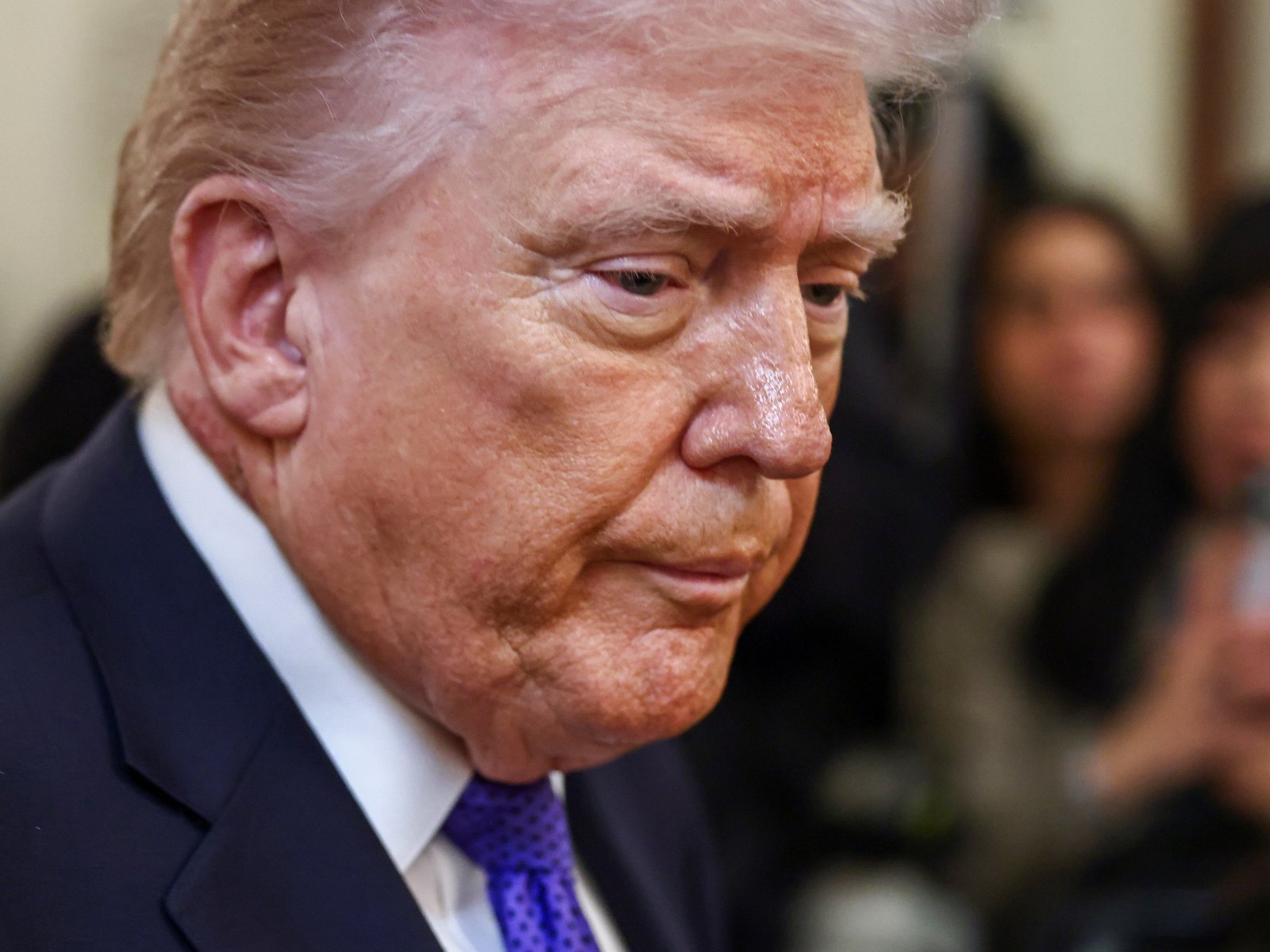
President Donald Trump on Monday sent an official notification to Congress about the U.S. strikes against Iran, in which he attempted to justify the military action in the now expanding conflict in the Middle East.
In a letter obtained by FOX News, Trump told Senate President Pro Tempore Chuck Grassley, R-Iowa, that «no U.S. ground forces were used in these strikes» and that the mission «was planned and executed in a manner designed to minimize civilian casualties, deter future attacks, and neutralize Iran’s malign activities.»
This comes after joint U.S.-Israeli strikes against Iran on Saturday as part of Operation Epic Fury, triggering a response from Tehran and a wider conflict in the region. The strikes killed the Islamic Republic’s Supreme Leader Ali Khamenei and other military leaders.
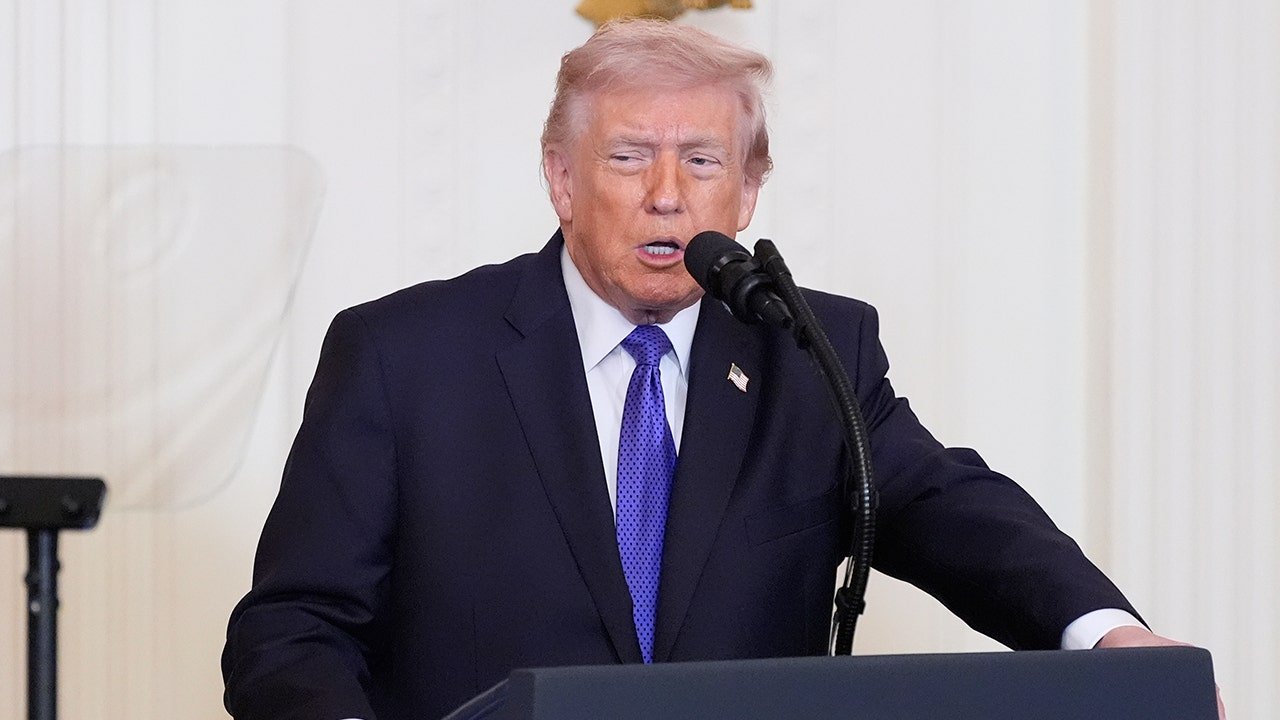
President Donald Trump on Monday sent an official notification to Congress about the U.S. strikes against Iran. (AP Photo/Alex Brandon)
Trump wrote that it is not yet possible to know the full scope of military operations against Iran and that U.S. forces are prepared to take potential further action.
«Although the United States desires a quick and enduring peace, not possible at this time to know the full scope and duration of military operations that may be necessary,» Trump wrote. «As such, United States forces remain postured to take further action, as necessary and appropriate, to address further threats and attacks upon the United States or its allies and partners, and ensure the Government of the Islamic Republic of Iran ceases being a threat to the United States, its allies, and the international community.»
«I directed this military action consistent with my responsibility to protect Americans and United States interests both at home and abroad and in furtherance of United States national security and foreign policy interests,» he added. «I acted pursuant to my constitutional authority as Commander in Chief and Chief Executive to conduct United States foreign relations.»

A general view of Tehran with smoke visible in the distance after explosions were reported in the city, on March 2, 2026, in Tehran, Iran. (Contributor/Getty Images)
Trump said he was «providing this report as part of my efforts to keep the Congress fully informed, consistent with the War Powers Resolution,» as some Republican and Democrat lawmakers attempt to restrain the president’s military action, which they affirm is unconstitutional without congressional approval.
The president also accused Iran of being among the largest state sponsors of terrorism in the world and purported that the «Iranian regime continues to seek the means to possess and employ nuclear weapons,» even after the White House said in June that precision strikes at the time «obliterated» Iran’s nuclear enrichment facilities.
US SURGES FORCES TO MIDDLE EAST AS PENTAGON WARNS IRAN FIGHT ‘WILL TAKE SOME TIME’
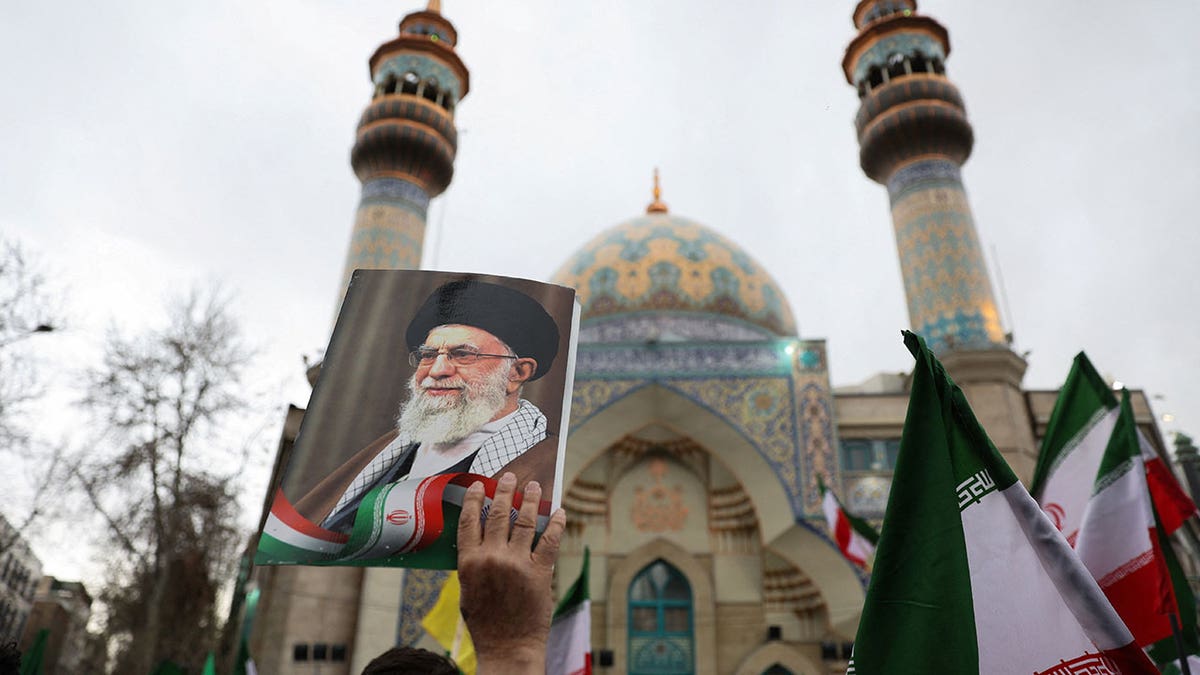
A person holds an image of Iran’s Supreme Leader Ayatollah Ali Khamenei as Iranian demonstrators protest against the U.S.-Israeli strikes, in Tehran, Iran, Feb. 28, 2026. (Majid Asgaripour/WANA (West Asia News Agency) via Reuters)
CLICK HERE TO DOWNLOAD THE FOX NEWS APP
«As I previously communicated to the Congress, Iran remains one of the largest, if not the largest, state-sponsors of terrorism in the world,» Trump said in the letter on Monday. «Despite the success of Operation MIDNIGHT HAMMER, the Iranian regime continues to seek the means to possess and employ nuclear weapons. Its array of ballistic, cruise, anti-ship, and other missiles pose a direct threat to and are attacking United States forces, commercial vessels, and civilians, as well as those of our allies and partners.»
«Despite my Administration’s repeated efforts to achieve a diplomatic solution to Iran’s malign behavior, the threat to the United States and its allies and partners became untenable,» he continued.
Fox News’ Tyler Olson contributed to this report.
Related Article

war with iran,iran,middle east,conflicts,donald trump,politics
INTERNACIONAL
Iran nuclear talks ‘didn’t pass the smell test’ before Trump launched strikes, says Vance
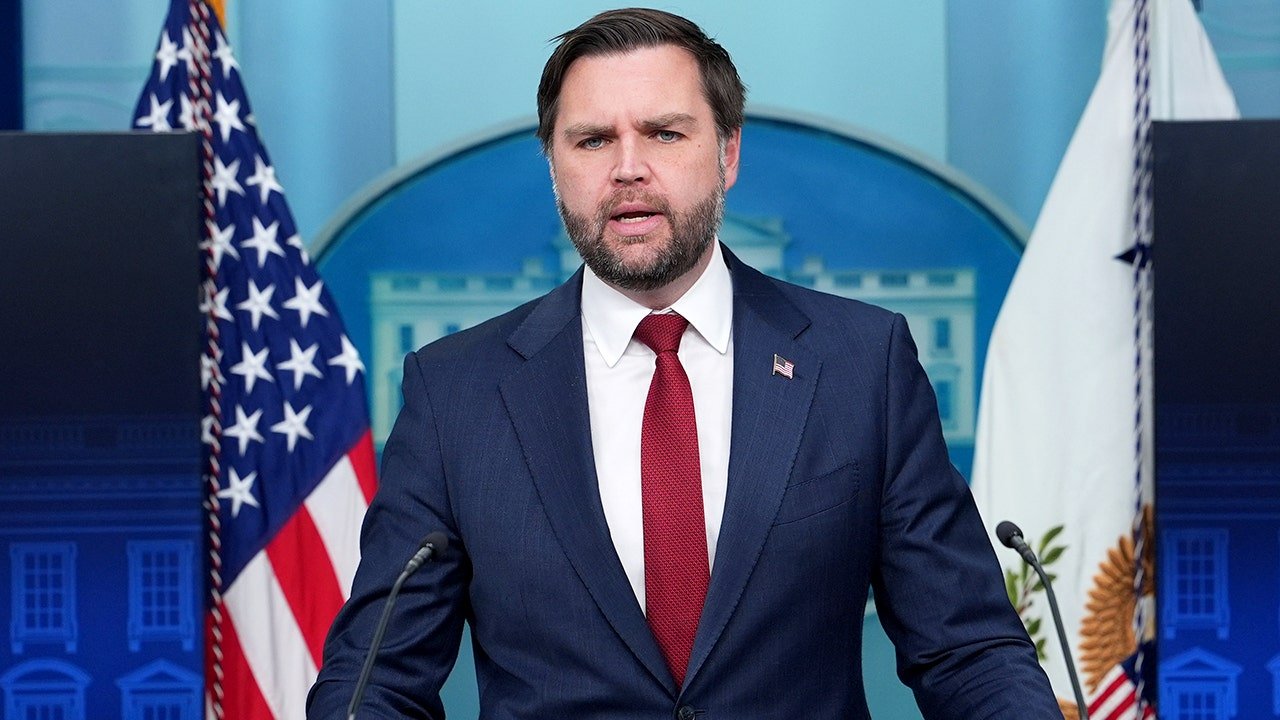
NEWYou can now listen to Fox News articles!
Vice President JD Vance confirmed Monday that negotiations with Iran over its nuclear program collapsed after U.S. officials concluded Tehran’s claims «did not pass the smell test,» prompting President Donald Trump to authorize Operation Epic Fury.
Speaking on «Jesse Watters Primetime,» Vance said U.S. envoys — including Steve Witkoff, Secretary of State Marco Rubio and Jared Kushner — had conducted rounds of «deliberate» talks in Geneva with the Iranian delegation.
The discussions were aimed at curbing Tehran’s nuclear program in exchange for sanctions relief and averting a broader conflict, he said, but ultimately broke down.
«But the Iranians would come back to us and they’d say, ‘Well, you know, having enrichment for civilian purposes, for energy purposes, is a matter of national pride,’» Vance said.
Omani Foreign Minister Badr al-Busaidi, President Donald Trump’s Special Representative for the Middle East, Steve Witkoff and U.S. negotiator Jared Kushner meet ahead of the U.S.-Iran talks, in Muscat, the capital of Oman, on Feb. 06, 2026. (Oman Foreign Ministry/Anadolu via Getty Images)
«And so we would say, ‘OK, that’s interesting, but why are you building your enrichment facilities 70 feet underground? And why are you enriching to a level that’s way beyond civilian enrichment and is only useful if your goal is to build a nuclear bomb?’» he said.
«Nobody objects to the Iranians being able to build medical isotopes; the objection is these enrichment facilities that are only useful for building a nuclear weapon,» Vance clarified.
«It just doesn’t pass the smell test for you to say that you want enrichment for medical isotopes, while at the same time trying to build a facility 70 to 80 feet underground,» he explained.
TRUMP DECLARES ‘I GOT HIM BEFORE HE GOT ME’ AFTER IRAN’S SUPREME LEADER KILLED IN STRIKE
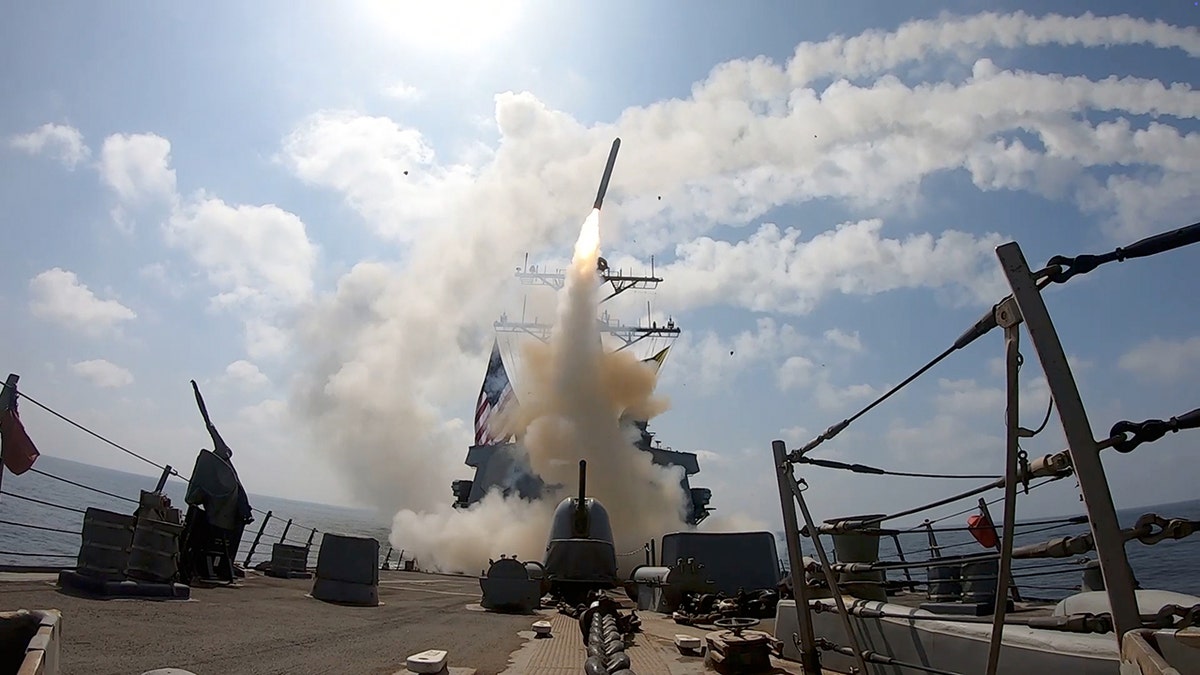
This image from video provided by U.S. Central Command shows a missile being launched from a U.S. Navy ship in support of Operation Epic Fury on Saturday, Feb. 28, 2026. (U.S. Central Command via AP)
Vance spoke as Operation Epic Fury ended its third day. Launched on Feb. 28, U.S. and Israeli forces carried out coordinated precision strikes deep inside Iran aimed at crippling Tehran’s missile arsenal and nuclear infrastructure.
A key issue had been Iran enriching uranium to high levels, including material around 60% purity — a fraction of weapons-grade but far above limits set under the 2015 nuclear deal — keeping international alarm high over proliferation risks.
«We destroyed Iran’s ability to build a nuclear weapon during President Trump’s term,» Vance told Watters. «We set them back substantially. But I think the President was looking for the long haul,» he said.
«Trump was looking for Iran to make a significant long-term commitment that they would never build a nuclear weapon, that they would not pursue the ability to be on the brink of a nuclear weapon.»
FIRES RAGE AT IRAN’S BANDAR ABBAS NAVAL HEADQUARTERS, STRAIT OF HORMUZ TRAFFIC STALLED
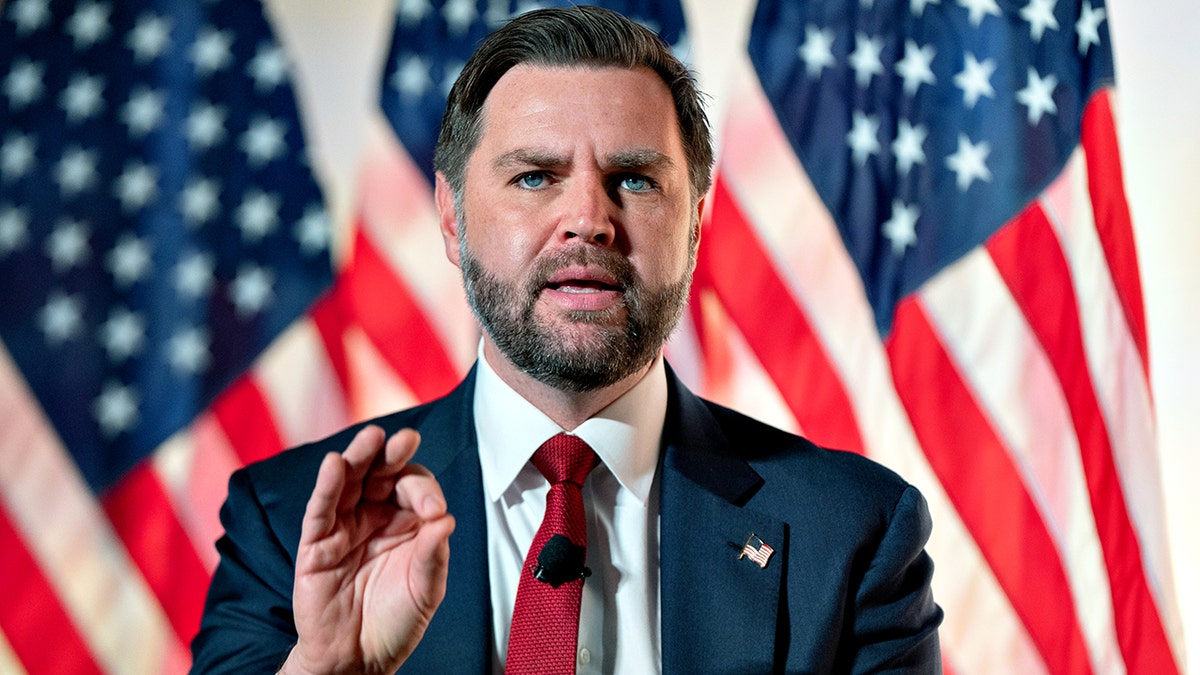
Vice President JD Vance speaks with Breitbart News Washington bureau chief Matthew Boyle at Andrew W. Mellon Auditorium, Nov. 20, 2025, in Washington. (Julia Demaree Nikhinson/AP Photo)
«He wanted to make sure that Iran could never have a nuclear weapon, and that would require fundamentally a change in mindset from the Iranian regime.»
CLICK HERE TO DOWNLOAD THE FOX NEWS APP
«The President is not going to rest until he accomplishes that all-important objective of ensuring that Iran can’t have a nuclear weapon, not just for the next few years, not just because we obliterated for dough or some other.»
«There’s just no way that Donald Trump is going to allow this country to get into a multiyear conflict with no clear end in sight and no clear objective,» Vance added while describing that the administration would prefer to see «a friendly regime in Iran, a stable country, a country that’s willing to work with the United States.»
Related Article

war with iran,ali khamenei,donald trump,jd vance,iran

Lilia Lemoine se burló de Florencia Carignano tras sus críticas al discurso de Milei

El Gobierno busca cerrar la guerra con el kirchnerismo por la integración de las comisiones del Senado

La incendiaria foto de L-Gante en la cama de la China Suárez: “Muy sexual”

“Doble beneficio” y un riesgo latente: cómo afectará el conflicto de Medio Oriente a la economía argentina

Qué dijo Arbeloa tras la roja de Mastantuono

Jade, enfermera veterinaria: “Este error diario con el bebedero de tu perro puede poner en riesgo su salud”

Evangelina Anderson contó qué pasará con sus hijos ante el próximo desafío de Martín Demichelis en España

Destrozaron a Andrea del Boca por el terrible pecado que tuvo en Gran Hermano: “La quiero presa”, apuntaron contra la actriz por un detalle en la cocina

¡Tensión en vivo! Aníbal Pachano y Nancy Pazos protagonizaron un cruce explosivo en la mesa de Mirtha Legrand

Las predicciones más importantes en la vida de cada signo del horóscopo en marzo, según Jimena La Torre: «Será un cambio rotundo»

 CHIMENTOS2 días ago
Destrozaron a Andrea del Boca por el terrible pecado que tuvo en Gran Hermano: “La quiero presa”, apuntaron contra la actriz por un detalle en la cocina
- CHIMENTOS2 días ago
¡Tensión en vivo! Aníbal Pachano y Nancy Pazos protagonizaron un cruce explosivo en la mesa de Mirtha Legrand
- CHIMENTOS2 días ago
Las predicciones más importantes en la vida de cada signo del horóscopo en marzo, según Jimena La Torre: «Será un cambio rotundo»