INTERNACIONAL
Se profundiza la escasez de combustible en Cuba y suspenden el servicio de ómnibus local


La creciente presión de Donald Trump y la suspensión de los esenciales envíos petroleros desde Venezuela están dejando a Cuba sin combustible.
Las primeras señales son visibles. El servicio de “gacelas”, los populares y económicos microbuses vitales para la movilidad ciudadana, comenzaron a suspender sus servicios, reseñó el portal opositor 14ymedio, dirigido por la periodista Yoani Sánchez.
“Solo un grupo pequeño” de estas unidades que cumplen rutas fijas seguirá en funcionamiento “hasta que el combustible lo permita”. “Las pocas que están operativas no podrán realizar la totalidad de los viajes planificados”, alertaron autoridades habaneras en un comunicado.
Leé también: Tras las amenazas de Trump, Cuba activó maniobras militares y se prepara para defenderse de EE.UU.
Incluso, el portal oficialista Cubadebate tuvo que salir a desmentir este lunes una paralización de todas las actividades no esenciales anunciada por una cuenta falsa de la Presidencia en las redes sociales.
“No es cierta la información que circula en redes sociales y que se atribuye a la Presidencia de la República de Cuba, sobre un supuesto cese de actividades en el país, informa Presidencia Cuba. Convocamos a nuestro pueblo a seguir informándose por los canales oficiales”, indicó el sitio.
Esta realidad no es nueva. Cuba atraviesa desde hace décadas una escasez aguda de combustible que provoca apagones diarios y masivos en vastas zonas de la isla y la paralización de sectores vitales para la golpeada economía nacional.
La odisea de cargar combustible en Cuba
Desde hace años cargar nafta se convirtió en una odisea para cualquier cubano común. “En La Habana la mayoría de las gasolineras ya no despachan”, afirmó el sitio 14ymedio.
Según el informe, “en Habana del Este solo 11 gasolineras ofrecían servicio y otras 10 estaban completamente desabastecidas. En el oeste de la capital, el viernes habían cerrado siete servicentros. Nadie se atreve a pronosticar una mejora a corto plazo”, añadió.
Hoy existen tres maneras para llenar el tanque. La manera más rápida es ir a las estaciones de servicio que venden la nafta en divisas. Un litro cuesta 1,30 dólares. Cubanos aguardan para subirse a una «gacela», los populares microbuses (Foto: Cortesía/14ymedio)
“Hay días que ni en dólares se ha conseguido, pero generalmente siempre hay. Lo curioso es que no acepta efectivo. Tienes que cargar una tarjeta (de débito prepaga para facilitar compras en divisas y recargable incluso desde el exterior) que se llama Clásica. Los turistas pagan con Visa y Mastercard de todo el mundo, menos de Estados Unidos”, dijo a TN un docente universitario que pidió preservar su nombre.
La segunda manera es recurrir al mercado negro. Allí, un litro cuesta 500 pesos contra 156 pesos en las gasolineras oficiales. La moneda estadounidense tiene un valor de 410 pesos frente a los 465 pesos en el sector “blue”.
La tercera forma de cargar nafta es recurrir al mercado en pesos, el más económico. Allí empieza la verdadera odisea.
Los cubanos deben descargarse una APP y anotarse allí para recibir un “ticket”. Entonces comienza un período de espera para poder recibir 40 litros de gasolina para autos particulares o 20 litros de combustible para las plantas eléctricas.
Juana, vecina de Habana del Este, contó a TN que se registró para cargar nafta el 24 de diciembre. “Van por el turno 2359″, dijo. Ella tiene un número superior a 4300. Lleva 20 días de espera. “Todavía no nos ha tocado. Estamos planchados”, indicó. Otro vecino del barrio de Miramar contó que la APP “te avisa el día que te toca”.
Leé también: Venezuela: qué son y por qué siguen activos los “colectivos”, los grupos armados protegidos por el chavismo
El sitio 14ymedio resumió: “Con suerte, la confirmación llega en dos o tres meses. Pero incluso entonces, el resultado puede ser frustrante: el día señalado puede que solo haya gasolina motor o regular, de menor octanaje, inservible para muchos vehículos».
¿Por qué falta combustible en Cuba?
Cuba produce 40.000 barriles de crudo de baja calidad por día, pero necesita 110.000 para echar andar el país.
En el mejor momento de su asociación con la Venezuela chavista, llegaban desde Caracas hasta 100.000 barriles diarios. Pero distintas fuentes consultadas por TN sostienen que ese flujo oscilaba hasta la captura de Nicolás Maduro entre 15.000 a 27.000 barriles por día.
Aún con el crudo venezolano, el déficit oscilaba entre 50.000 y más de 60.000 barriles diarios. Rusia envió unos 6.000 al día este 2025. México mucho menos: unos 2500, según datos de la empresa petrolera estatal Pemex.
Con los envíos de Venezuela suspendidos por presión de Trump, la situación se complica cada vez más. Rusia es vista como una alternativa, pero a Moscú hay que pagarle con divisas. Al chavismo se le daba a cambio servicios médicos y de seguridad, como quedó confirmado con la muerte de 32 cubanos durante la captura de Maduro el 3 de enero.
México, otro aliado político natural de La Habana, también se asoma como una fuente alternativa. De hecho, en los últimos días era esperado en el puerto de la capital un buque con 80.000 barriles de crudo mexicano.
Pero la presión de Trump aumenta. El presidente cubano, Miguel Díaz-Canel, desmintió el inicio de negociaciones. “No existen conversaciones con el gobierno de EE.UU, salvo contactos técnicos en el ámbito migratorio”, escribió en X.
La revolución cubana vive su hora más difícil.
cuba, Donald Trump, Venezuela











INTERNACIONAL
Supreme Court conservatives signal support for state transgender sports bans during oral arguments
NEWYou can now listen to Fox News articles!
The Supreme Court struggled for consensus Tuesday as it publicly debated state bans on transgender female students from competing in women’s and girls’ scholastic sports.
Both sides repeatedly invoked contrasting versions of «fairness» and «equal opportunity» before the justices during a more than three-hour oral argument session in the courtroom.
Idaho and West Virginia separately defended their laws that limit participation for transgender females who were designated male at birth in both public school and college athletics.
They are among almost 30 states who say their restrictions are a matter of ensuring a level playing field and student safety.
HOUSE GOP LEADER BLASTS TRANS ATHLETES IN GIRLS’ SPORTS AS ‘BIGGEST FORM OF BULLYING’
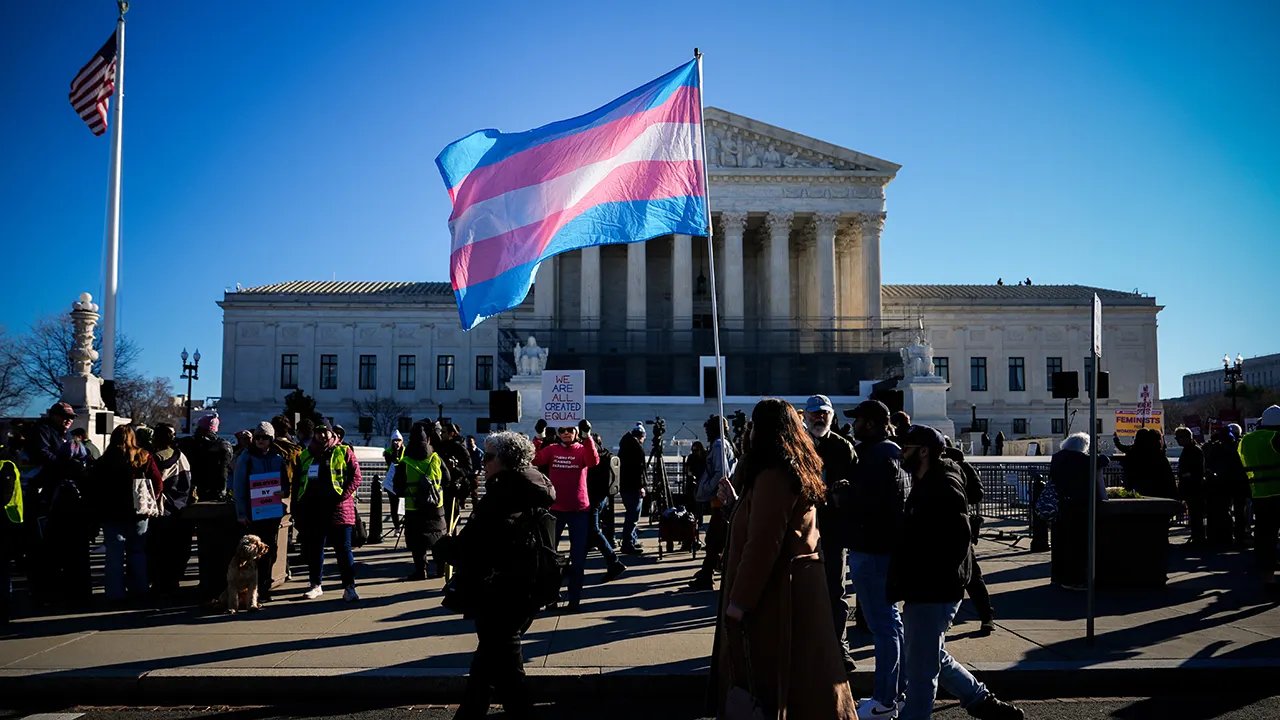
A protester carries a transgender pride flag outside the Supreme Court as it hears arguments over state laws barring transgender girls and women from playing on school athletic teams Tuesday, in Washington, D.C. (Julia Demaree Nikhinson/AP)
But lawyers for a high school sophomore and a college senior counter that those prohibitions are clearly discriminatory and that the issues should be about equality and dignity for every student, free from politics and misinformation.
The high court is examining whether the laws violate the Constitution’s equal protection clause and the landmark federal law Title IX that prohibits sex discrimination in education.
A majority of the court — at least five of the six conservatives — appeared ready to back the state restrictions in some form. Only Justice Neil Gorsuch seemed open to some of the arguments by the student plaintiffs.
In arguments, much of the discussion came down to whether the transgender student population was large enough to give them an opportunity to defend their rights as a protected class.
With an estimated 2.8 million people in the U.S. who identify as transgender, Justice Sonia Sotomayor said their rights should be respected, even if they represent a relatively small percentage of the population.
«The numbers don’t talk about the human beings,» Sotomayor said.
«I’m struggling to understand how you can say that this law doesn’t classify on the basis of transgender status,» said Justice Ketanji Brown Jackson. «The law expressly aims to ensure that transgender women can’t play on women’s sports teams. So, why is that not a classification on the basis of transgender status?»
TRANS ATHLETE AT CENTER OF SUPREME COURT CASE ACCUSED OF SEXUAL HARASSMENT, INTIMIDATION TACTICS AGAINST GIRLS
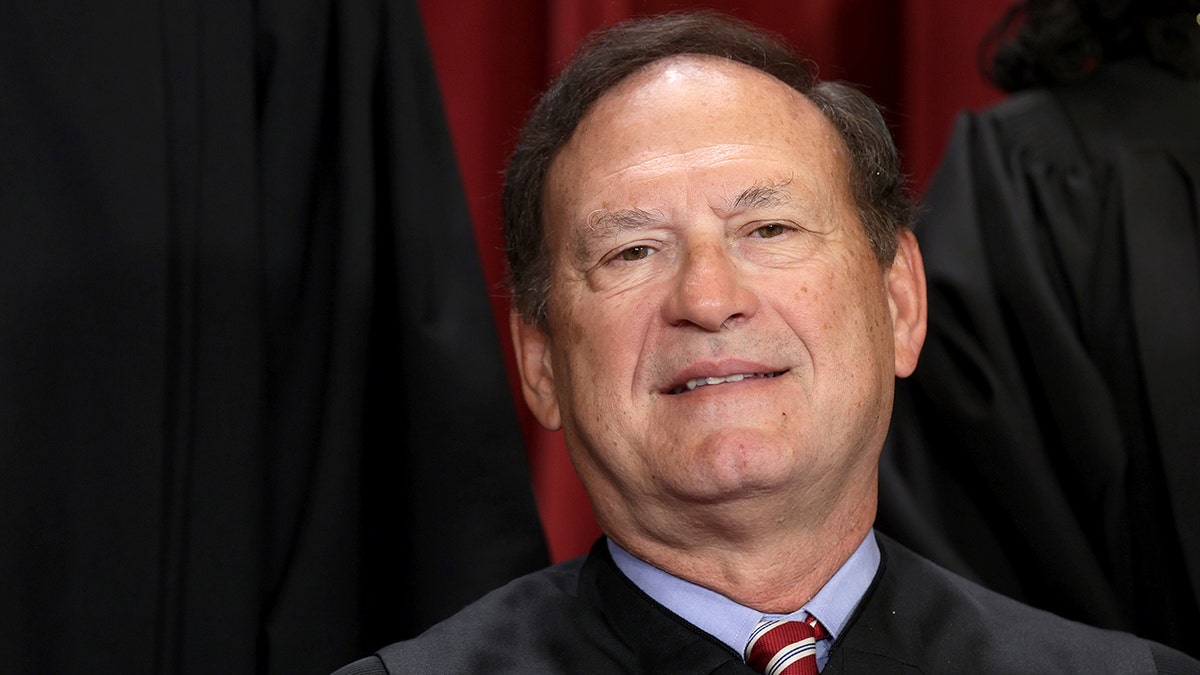
Supreme Court Associate Justice Samuel Alito said the reluctance of some female athletes to compete with and against transgender women is real. (Alex Wong/Getty Images)
But other members of the court suggested just the opposite.
«The question here is whether a sex-based classification is necessarily a transgender classification,» said Chief Justice John Roberts, skeptical of the position by lawyers for the student plaintiffs.
Roberts added that allowing exceptions for a relatively small subset of individuals could have larger implications.
«If we adopted that, that would have to apply across the board and not simply to the area of athletics,» he said.
The arguments also focused a great deal on the relative competitive advantages some transgender athletes would have competing in women’s sports.
Justice Samuel Alito said the reluctance of some female athletes to compete with and against transgender women is real.
«Looking to the broader issue that a lot of people are interested in, there are an awful lot of female athletes who are strongly opposed to participation by trans athletes in competitions with them,» said Alito. «What do you say about them? Are they bigots? Are they deluded in thinking they are subjected to unfair competition?»
«For the individual girl who does not make the team or doesn’t get on the stand for the medal or doesn’t make all-league, there’s a harm there,» said Justice Brett Kavanaugh, who for years coached his daughter’s basketball team. «And I think we can’t sweep that aside.»
He called the growing increase in female sports participation since Title IX was passed in 1972 «inspiring.»
Outside the courthouse, hundreds of activists groups on both sides rallied. Some carried signs like «protect women’s sports» and «trans rights are human rights.»
SUPREME COURT TO REVIEW STATE BANS ON TRANSGENDER ATHLETES’ PARTICIPATION IN SCHOOL SPORTS
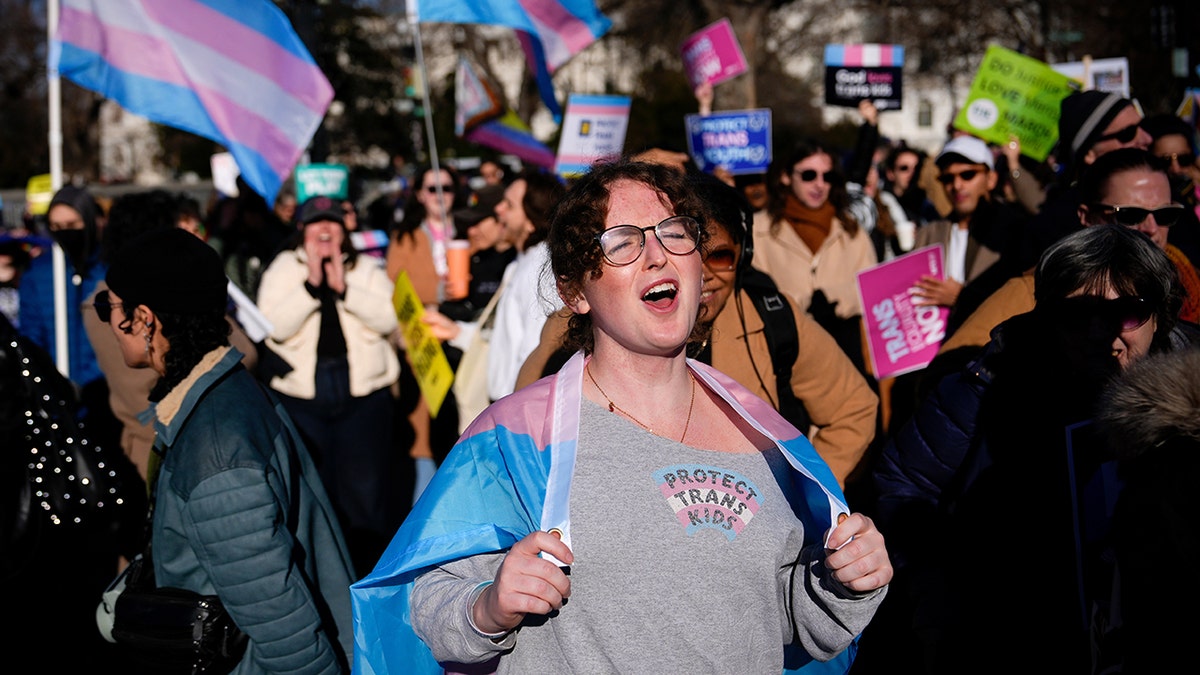
A protester with a transgender pride flag outside the Supreme Court as it hears arguments over state laws barring transgender athletes from playing on girls’ and women’s school athletic teams Tuesday, in Washington, D.C. (Julia Demaree Nikhinson/AP)
Inside, West Virginia plaintiff Becky Pepper-Jackson and her mother attended the oral arguments but did not speak.
This past year, Pepper-Jackson qualified for the West Virginia girls high school state track meet, finishing third in the discus throw and eighth in the shot put in the Class AAA division.
She has identified as female since third grade and has been taking puberty-blocking medication.
Although she is officially listed in court papers as B.P.J., her mother and ACLU lawyers have publicly identified her by Becky’s full name.
The Idaho plaintiff is Lindsay Hecox, a 24-year-old senior at Boise State University who wanted to compete on both NCAA-level and club sports teams for women.
Hecox now wants her high court case dismissed, fearing further harassment as she expects to graduate from college this spring. She says she will no longer play women’s sports in Idaho, but the justices will decide that question of mootness after argument.
Dozens of competing amicus, or supporting, legal briefs were filed by Republican- and Democratic-led states, Congress members, athletes, doctors, scientists and scholars.
The Trump administration was given argument time and said the federally-controlled Title IX does not apply to sex discrimination claims by transgender females.
Justice Department lawyer Hashim Mooppan suggested challenging a law on alleged sex-based discrimination requires a significant number of affected people to have it overturned.
«Why does it have to be that many people? Why? Why?» Justice Jackson asked, appearing exasperated.
Various hypotheticals were raised over how sex-based scholastic bans could apply beyond athletics, to science departments, chess clubs and remedial classes where brain chemistry and genetic differences have been debated.
«I think there are a lot of chess grandmasters who would tell you that women, for whatever reason, they’re not as good at this,» said Justice Elena Kagan.
President Donald Trump last February issued executive order 14201, «Keeping Men Out of Women’s Sports,» aimed at transgender athletes.
It is part of a broader federal effort to recognize what the White House says are «only two immutable sexes: male and female.»
WEST VIRGINIA AG ADDRESSES ALLEGATIONS AGAINST TRANS ATHLETE PLAINTIFF IN WOMEN’S SPORTS SCOTUS BATTLE
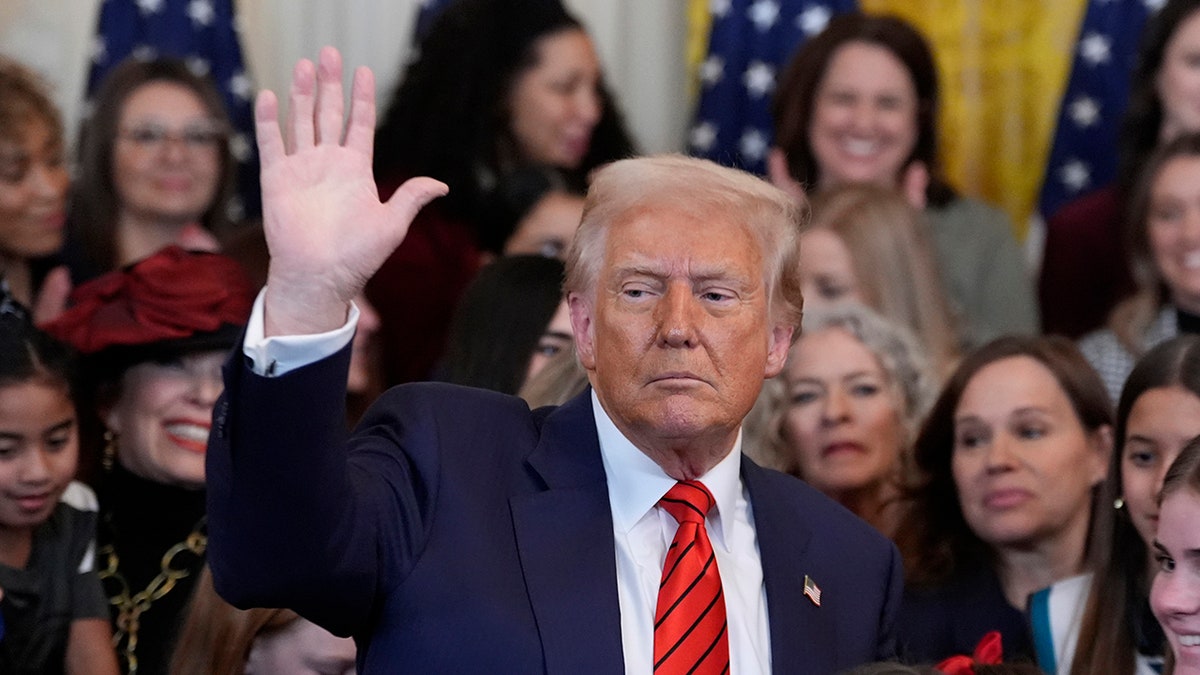
President Donald Trump waves after signing an executive order barring transgender female athletes from competing in women’s or girls’ sporting events, in the East Room of the White House Feb. 5, 2025, in Washington, D.C. (AP Photo/Alex Brandon)
What the court does here could affect other legal fights over LGBTQ+ rights, including transgender people having access to bathrooms or sex designation on documents like passports and driver’s licenses.
The justices have complete discretion to rule narrowly on the rights of athletic competitors or offer a more sweeping precedent on discrimination claims in the workplace, public spaces, military service, government benefits, housing, health care and education.
The Supreme Court in 2020 ruled workplace discrimination against transgender people amounts to sex discrimination.
But in June, the conservative court did not extend that protection to state bans on transgender minors seeking certain healthcare treatments.
The justices there said the issue was grounded on the basis of age and medical care, not sex or transgender status.
That legal articulation may now guide the high court in the current disputes, with questions from the bench Tuesday suggesting some justices may seek a cautious, limited approach to resolving this specific issue.
That could keep the courts out of the controversy for now.
CLICK HERE TO DOWNLOAD THE FOX NEWS APP
«Given that half the states are allowing it, allowing transgender girls and women to participate, about half are not,» Kavanaugh said. «Why would we, at this point, just the role of this court, jump in and try to constitutionalize a rule for the whole country while there’s still, as you say, uncertainty and debate.»
Such a ruling against the students would likely throw the issue back to the states, with the current mix of differing laws continuing to play out in the political process.
The high court cases are Little v. Hecox (24-38) from Idaho; and West Virginia v. B.P.J. (24-83). Decisions are expected by early summer.
politics,supreme court,supreme court oral arguments,federal judges,sports,ncaa,individual rights
INTERNACIONAL
El canciller de Dinamarca se reunirá en la Casa Blanca con la administración Trump para intentar reducir la tensión por Groenlandia
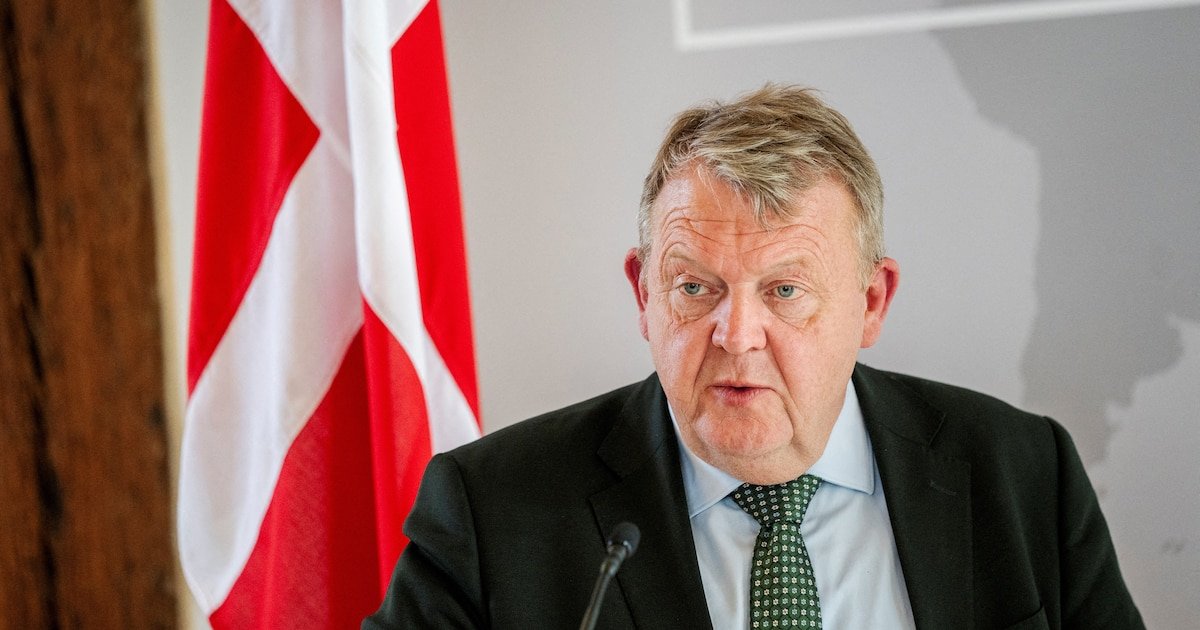
El principal diplomático de Dinamarca llega este miércoles a la Casa Blanca para una reunión de alto riesgo con la administración de Donald Trump, en un intento por reducir la tensión en torno a Groenlandia, territorio autónomo danés que el presidente de Estados Unidos promete adquirir a su aliado de larga data.
Desde su regreso al cargo hace casi un año, Trump reflexiona públicamente sobre la posibilidad de apoderarse de la vasta, estratégica y escasamente poblada isla del Ártico.
El ministro de Asuntos Exteriores danés, Lars Lokke Rasmussen, solicitó las conversaciones con el secretario de Estado estadounidense, Marco Rubio. La reunión se realiza en la Casa Blanca a pedido del vicepresidente JD Vance. Al pedir el encuentro, Lokke afirmó que esperaba “aclarar ciertos malentendidos”. Queda por ver si la administración Trump comparte esa lectura y si decide modificar su postura.
El martes, consultado sobre la afirmación del líder de Groenlandia de que la isla prefiere seguir como territorio autónomo de Dinamarca, Trump respondió: “Bueno, ese es su problema”. Y agregó: “No sé nada sobre él, pero eso va a ser un gran problema para él”.
El viernes, el presidente estadounidense endureció aún más su mensaje. Dijo que quería Groenlandia “les guste o no” y advirtió que “si no lo hacemos de la manera fácil, lo haremos de la manera difícil”. Trump, con antecedentes como desarrollador inmobiliario, sostiene que Estados Unidos necesita la isla ante la amenaza de una eventual toma de control por parte de Rusia o China.

Ambas potencias intensifican su actividad en el Ártico, una región que gana relevancia estratégica a medida que el hielo retrocede por el cambio climático. La incorporación de Groenlandia, con unos 57.000 habitantes, colocaría a Estados Unidos por encima de China y Canadá en extensión territorial y lo convertiría en el segundo país más grande del mundo, detrás de Rusia.
En marzo, Vance realizó una visita no solicitada a Groenlandia. Se alojó únicamente en Pituffik, la antigua base estadounidense en la isla, y no mantuvo contacto con residentes locales. El vicepresidente es conocido por su mano dura, una actitud que quedó en evidencia cuando reprendió públicamente al presidente ucraniano Volodimir Zelensky durante una reunión en la Casa Blanca en febrero.
No se informó si el encuentro sobre Groenlandia estará abierto a la prensa. De no ser así, disminuirían las posibilidades de un enfrentamiento televisado similar. “Si Estados Unidos sigue con ‘Tenemos que tener Groenlandia a cualquier precio’, podría ser una reunión muy corta”, señaló Penny Naas, vicepresidenta senior del German Marshall Fund of the United States, un centro de estudios con sede en Washington. “Si hay algún pequeño matiz, podría dar lugar a una conversación diferente”, añadió.
La jefa de la diplomacia de Groenlandia, Vivian Motzfeldt, participa en las conversaciones. Su gobierno, al igual que el de Dinamarca, se opone de manera firme a las intenciones de Trump. “Una cosa debe quedar clara para todos: Groenlandia no quiere ser propiedad de Estados Unidos. Groenlandia no quiere ser gobernada por Estados Unidos. Groenlandia no quiere ser parte de Estados Unidos”, declaró el primer ministro groenlandés, Jens-Frederik Nielsen, en una conferencia de prensa previa al encuentro en Washington.

Nielsen habló junto a la primera ministra danesa, Mette Frederiksen, quien afirmó que no resultó fácil responder a “la presión completamente inaceptable de nuestro aliado más cercano”.
(Con información de AFP)
INTERNACIONAL
Secret room to be built at Chinese embassy near cable lines, sparking widespread espionage fears
NEWYou can now listen to Fox News articles!
Recently unredacted construction plans for China’s new super embassy in London have ignited a storm of national security concerns across the United Kingdom, as blueprints reveal a hidden underground room positioned alarmingly close to some of Britain’s most sensitive communication cables.
Major critics of the proposed site, which will run as close as three feet to the internet infrastructure, warned that the secret room could serve as a hub for Chinese espionage. While the British government reportedly assured its allies that the lines do not carry sensitive government data, the cables transmit financial transactions as well as communication traffic for millions of internet users.
The blueprints were publicly unredacted Monday by The Telegraph, just one week before Prime Minister Keir Starmer is widely expected to approve the plans before his visit to see President Xi Jinping in China.
A government spokesman told the outlet that despite the security concerns, «national security is our first duty and government security experts have been involved throughout the process so far.»
CCP-LINKED FIRMS QUIETLY HOLD STAKES IN US SOLAR COMPANIES FUELING DEMS’ GREEN PUSH
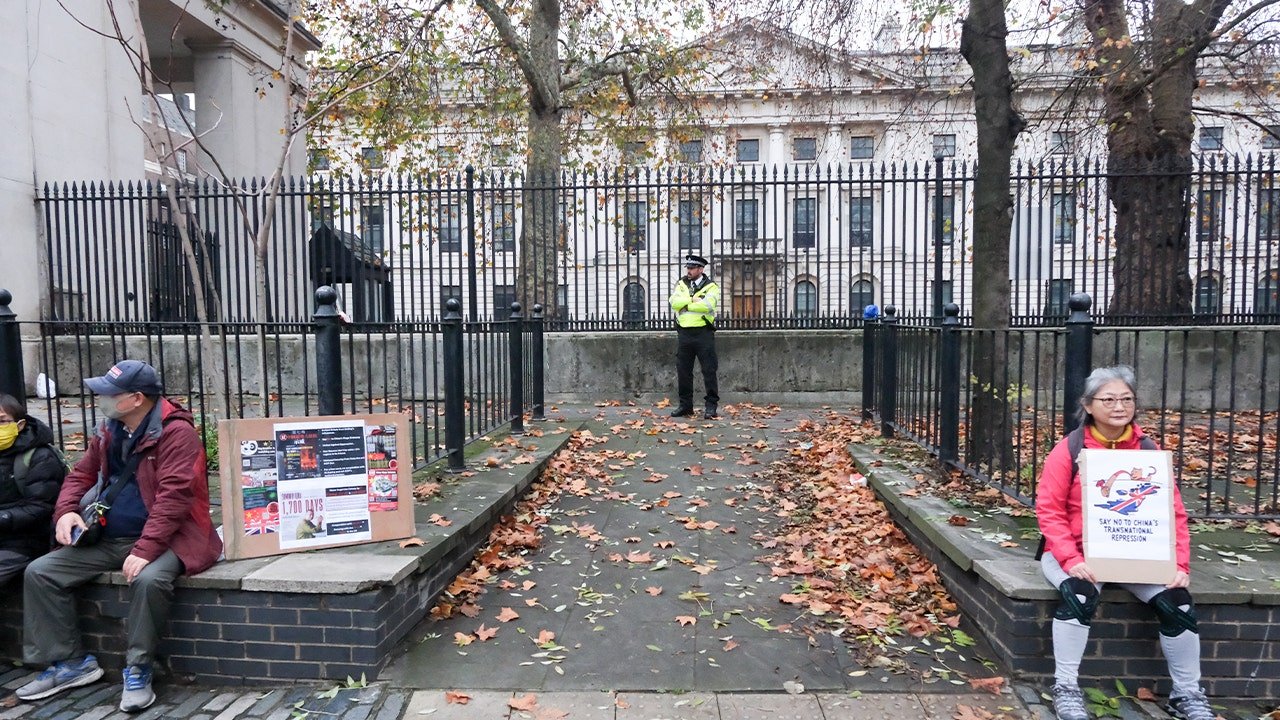
Protest against the proposed China Embassy at the Royal Mint Court, London (Matthew Chattle/Future Publishing via Getty Images)
According to the blueprint, the facility will be located at the former Royal Mint and will become Europe’s largest Chinese embassy.
Construction plans indicate that China intends to demolish and rebuild a basement wall, placing officials and equipment just over three feet from critical fiber-optic cables. Security experts have warned that such proximity could create opportunities for «cable-tapping,» which involves inserting wiretaps or reading light signals leaking from the lines.
Professor Alan Woodward, a security expert at the University of Surrey, highlighted the technical feasibility of espionage given the physical layout, The Telegraph reported. He described the demolition as a «red flag» and noted, «If I were in their shoes, having those cables on my doorstep would be an enormous temptation.»
NAVY SAILOR CONVICTED AFTER SELLING MILITARY SECRETS TO CHINA FOR $12,000 PAYMENT
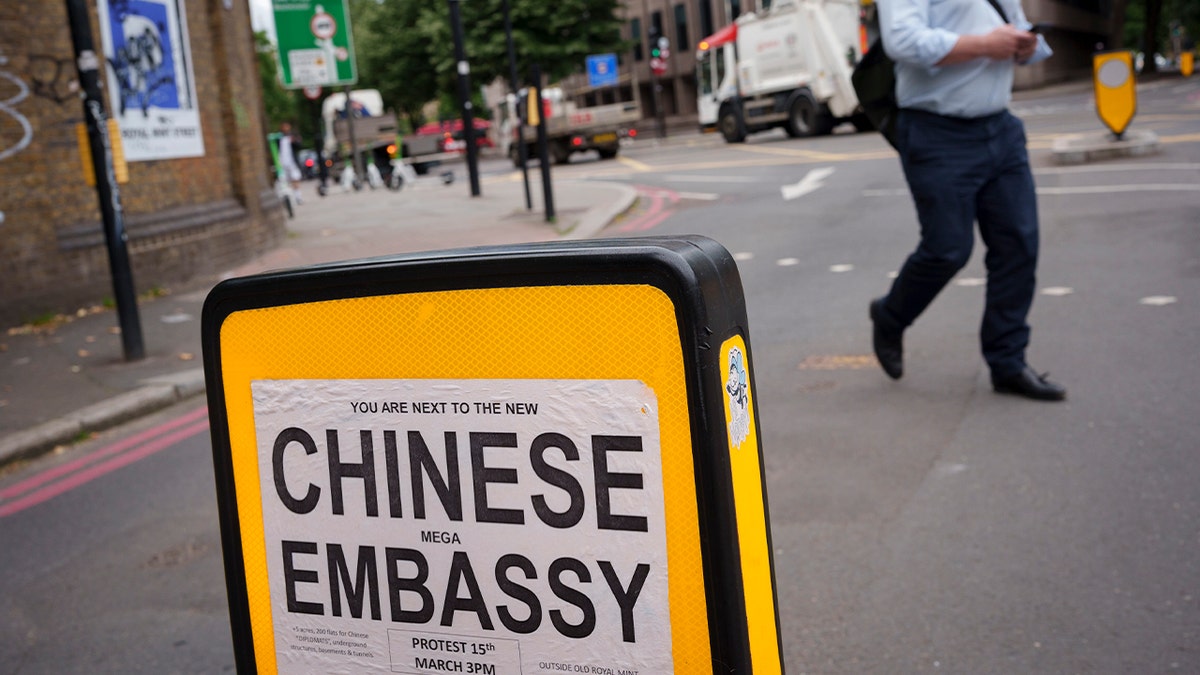
Royal Mint Street at the rear of the possible future Chinese embassy which has been locked in a planning battle for years and whose decision is still due for review, on 10th June 2025, in London, England (Richard Baker/In Pictures via Getty Images)
Additionally, the concealed chamber appears to be equipped with at least two hot-air extraction systems designed to ventilate heat-generating equipment. Experts reportedly inferred that this infrastructure suggests that the room is designed to accommodate high-powered technology such as advanced computers typically used for espionage and data processing.
Beyond the single chamber near the cables, the unredacted plans also revealed a network of 208 secret rooms beneath the diplomatic site. The basement appears to allow for emergency backup generators, sprinkler systems, communications cabling and showers, suggesting that officials could remain underground for extended periods, potentially to operate or monitor equipment.
The construction plans have generally raised fears that the London complex could serve as a Beijing intelligence hub. According to U.K. outlet The Times, Britain has been pressured to reassure the United States and other intelligence partners that the cables do not transmit any sensitive government data.
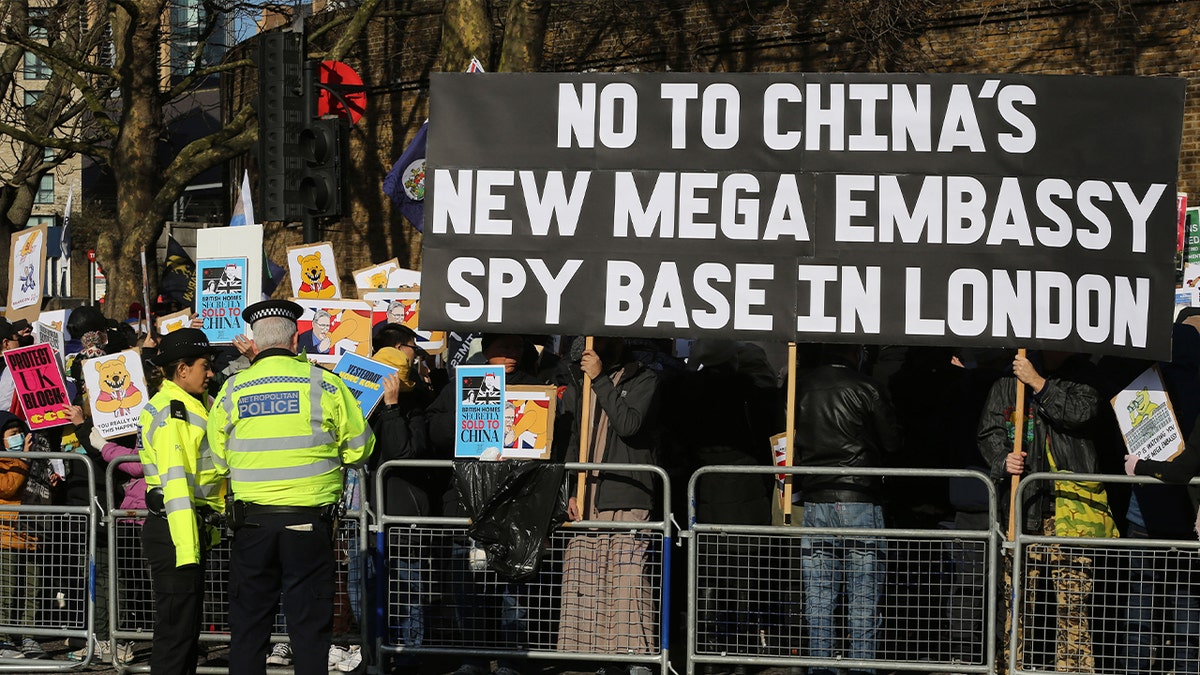
Protesters hold a huge banner saying «No To China’s New Mega Embassy Spy Base In London’ during the demonstration outside the Royal Mint on March 15, 2025. (Martin Pope/SOPA Images/LightRocket via Getty Images)
CLICK HERE TO DOWNLOAD THE FOX NEWS APP
Alicia Kearns, the shadow national security minister and prominent critic of the project, described the approval of the embassy as handing Beijing a strategic advantage against British interests.
«Giving China the go-ahead for its embassy site would be to gift them a launchpad for economic warfare at the very heart of the central nervous system of our critical financial national infrastructure,» she said in a post on X.
united kingdom,china,national security

El fugaz paso de Li Yao en Boca Juniors: un refuerzo propuesto por Macri al que Bianchi devolvió a China luego de dos entrenamientos

Griselda Siciliani rompió el silencio tras la aparición de nuevas ‘amantes’ de Luciano Castro: “Está todo muy…”

El Gobierno designó nuevas autoridades locales en la Central Hidroeléctrica Yacyretá

Supreme Court conservatives signal support for state transgender sports bans during oral arguments

Tras el pico de diciembre, la desaceleración de la inflación luce más desafiante para 2026

El canciller de Dinamarca se reunirá en la Casa Blanca con la administración Trump para intentar reducir la tensión por Groenlandia

El drama matrimonial que vive Maru Botana luego de 28 años en pareja con Bernardo Solá: «Tiene varios problemas»

Polémica en redes: Milei y Feinmman se cruzaron con Marcela Feudale por los incendios en Chubut

La próxima jugada del Gobierno contra Tapia, la resistencia de la AFA y el silencioso respaldo de Kicillof

La triste despedida de Jorge “Corcho” Rodríguez a Pía, su asistente por 30 años: “Gracias por tu amor”

 CHIMENTOS1 día ago
La triste despedida de Jorge “Corcho” Rodríguez a Pía, su asistente por 30 años: “Gracias por tu amor”
- INTERNACIONAL3 días ago
Murió el cantante colombiano Yeison Jiménez en un accidente de avión: el video del día que predijo la tragedia
- POLITICA20 horas ago
La AFA giró US$8 millones a cinco empresas en Miami que ya no existen: un argentino disolvió hace seis días una firma clave