INTERNACIONAL
Daniel Noboa vinculó al correísmo con el voto carcelario


El presidente de Ecuador Daniel Noboa afirmó en su cuenta de X que “los delincuentes votan por los narcos”, al compartir una imagen que presenta supuestos porcentajes de respaldo de “las cárceles” del Ecuador a la Revolución Ciudadana en las segundas vueltas de las elecciones generales de 2023 y 2025. La publicación muestra dos barras con cifras de 90,78% y 96,11%, respectivamente, y atribuye la información al Consejo Nacional Electoral. El mensaje presidencial se enmarca en la confrontación política con el correísmo y sugiere una relación directa entre criminalidad, narcotráfico y preferencias electorales en el sistema penitenciario.
El voto de personas privadas de libertad en Ecuador se realiza bajo un padrón especial, distinto al padrón general. Solo están habilitadas para votar las personas que se encuentran privadas de libertad sin sentencia condenatoria ejecutoriada. Quienes ya tienen una condena firme no ejercen el derecho al sufragio. Esto implica que el universo de votantes es apenas una fracción del total de personas recluidas en el sistema penitenciario, que supera ampliamente a quienes figuran en el padrón electoral especial.
Una verificación realizada por Ecuador Chequea, el único verificador independiente avalado internacionalmente en el país, concluyó que el discurso es engañoso. Si bien los porcentajes difundidos por el presidente corresponden a datos reales del Consejo Nacional Electoral, la forma en que son presentados omite condiciones esenciales del proceso y conduce a una interpretación incorrecta sobre el alcance del voto en las cárceles.

Según la información oficial del CNE, en la segunda vuelta de las elecciones de 2023, la candidata Luisa González obtuvo el 90,78% de los votos válidos emitidos por personas privadas de libertad habilitadas para sufragar. En la segunda vuelta de 2025, González alcanzó el 96,11% de los votos válidos dentro del mismo grupo. Estos datos son verificables y constan en las actas oficiales del organismo electoral. Sin embargo, la verificación advierte que esos porcentajes no representan a “las cárceles” en su conjunto ni a la totalidad de la población penitenciaria del país.
La confrontación entre Noboa y el correísmo no es un episodio aislado ni estrictamente electoral, sino parte de una pugna política más amplia que atraviesa al Ecuador desde hace casi una década. Tras la salida del poder de Rafael Correa en 2017, el movimiento que lideró pasó de ser fuerza gobernante a convertirse en el principal bloque de oposición, con una narrativa centrada en la denuncia de persecución política y en la defensa de su legado, mientras que los gobiernos posteriores construyeron su legitimidad, en buena medida, en oposición a ese pasado y con las sentencias judiciales que demostraron los delitos contra la administración pública sucedidos durante el correísmo.
Noboa emergió en ese escenario como una figura que capitalizó el desgaste del sistema político y el rechazo transversal al correísmo en amplios sectores urbanos y empresariales. Desde la campaña que lo llevó a la Presidencia en 2023, su discurso combinó una promesa de renovación generacional con una línea dura frente a la inseguridad y el crimen organizado, temas que se convirtieron en ejes centrales de su agenda y de su comunicación política.

En ese marco, el correísmo ha sido presentado recurrentemente como un adversario no solo ideológico, sino también moral, asociado en el debate público a prácticas del pasado, autoritarismo y, en algunos casos, a la tolerancia frente a redes criminales, aunque esas asociaciones no siempre estén respaldadas por pruebas judiciales.
Del lado de la Revolución Ciudadana, la estrategia ha sido disputar esa narrativa señalando inconsistencias en la política de seguridad del actual gobierno, cuestionando el uso político del estado de excepción y denunciando una estigmatización sistemática de sus votantes y dirigentes.
La reiterada alusión a cárceles, delincuencia y narcotráfico en el discurso presidencial se inscribe en esa disputa simbólica, en la que cada bando busca fijar marcos interpretativos que exceden los datos concretos y apelan a emociones fuertes en un contexto de crisis de seguridad sin precedentes.

INTERNACIONAL
Trump administration puts key Biden-era immigration policy on notice: ‘Unsustainable cycle’
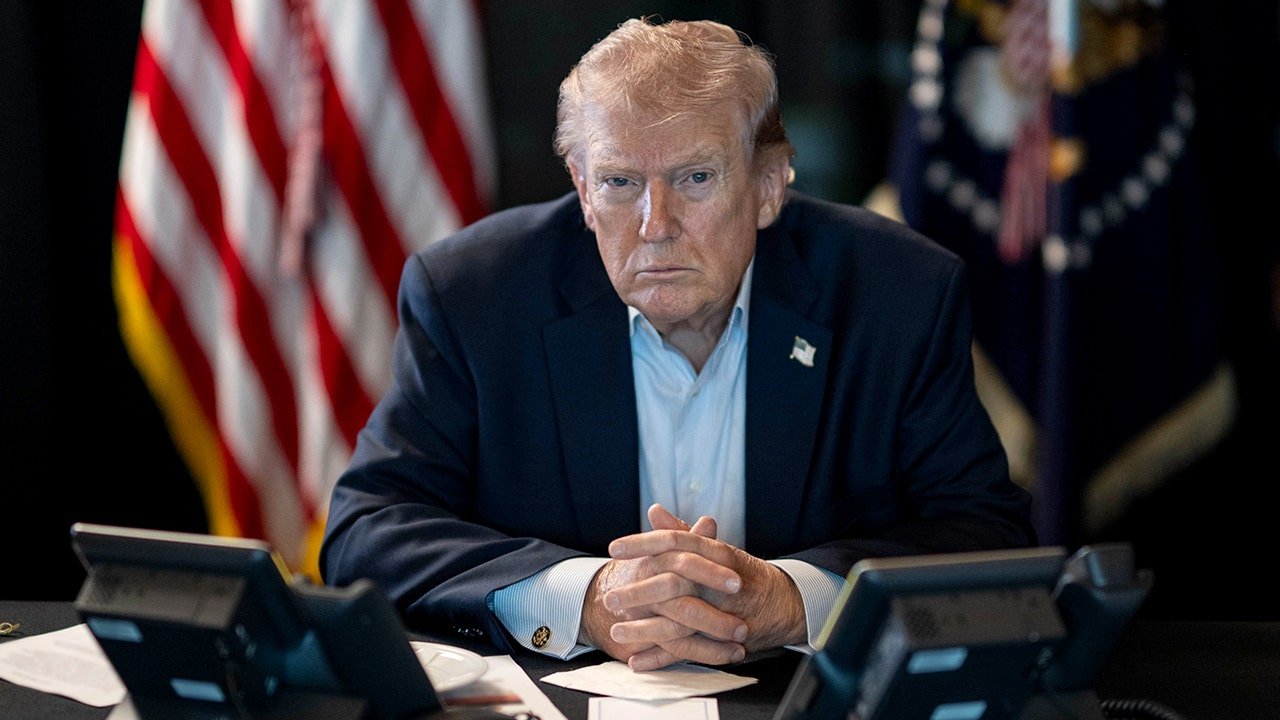
NEWYou can now listen to Fox News articles!
The Trump administration on Wednesday urged the Supreme Court to allow it to terminate the protected legal status of hundreds of thousands of Haitian migrants living in the U.S.
It’s the latest effort by the administration to unwind Biden-era protections of hundreds of thousands of migrants living in the U.S. as part of the president’s hard-line immigration enforcement agenda.
U.S. Solicitor General D. John Sauer urged the high court Wednesday to immediately intervene and overturn a lower court order that blocked the administration’s effort to immediately revoke the temporary protected status designation for some 350,000 Haitian migrants living in the U.S.
A majority of judges for the U.S. Court of Appeals for the D.C. Circuit also blocked the Trump administration’s bid to end the program, citing the «substantial» and «well-documented harms» the migrants would likely face as a result, clearing the way for the administration to appeal the case to the high court.
BIDEN-APPOINTED FEDERAL JUDGE RULES TRUMP’S ‘THIRD COUNTRY’ DEPORTATION POLICY IS UNCONSTITUTIONAL
The Supreme Court building in Washington, D.C. (AP Photo/J. Scott Applewhite, File)
In his filing Wednesday, Sauer urged the Supreme Court to review more broadly the issue of whether the Trump administration can revoke TPS protections for other migrants living in the U.S.
«Unless the court resolves the merits of these challenges — issues that have now been ventilated in courts nationwide — this unsustainable cycle will repeat again and again, spawning more competing rulings and competing views of what to make of this court’s interim orders,» Sauer said Wednesday. «This court should break that cycle.»
The TPS program in question allows individuals from certain countries to live and work in the U.S. legally if they cannot work safely in their home country due to a disaster, armed conflict or other «extraordinary and temporary conditions.»
Haitians were first granted TPS status in 2010 after the devastating earthquake that killed more than 200,000 people and left some 1.5 million in the country homeless.
The protections were extended several times, including under the Biden administration in 2021 after the July assassination of Jovenel Moïse, Haiti’s last democratically elected president.
‘BLANKIES,’ ICE TACTICS AND LUXURY JETS: TOP MOMENTS FROM NOEM’S HOUSE TESTIMONY
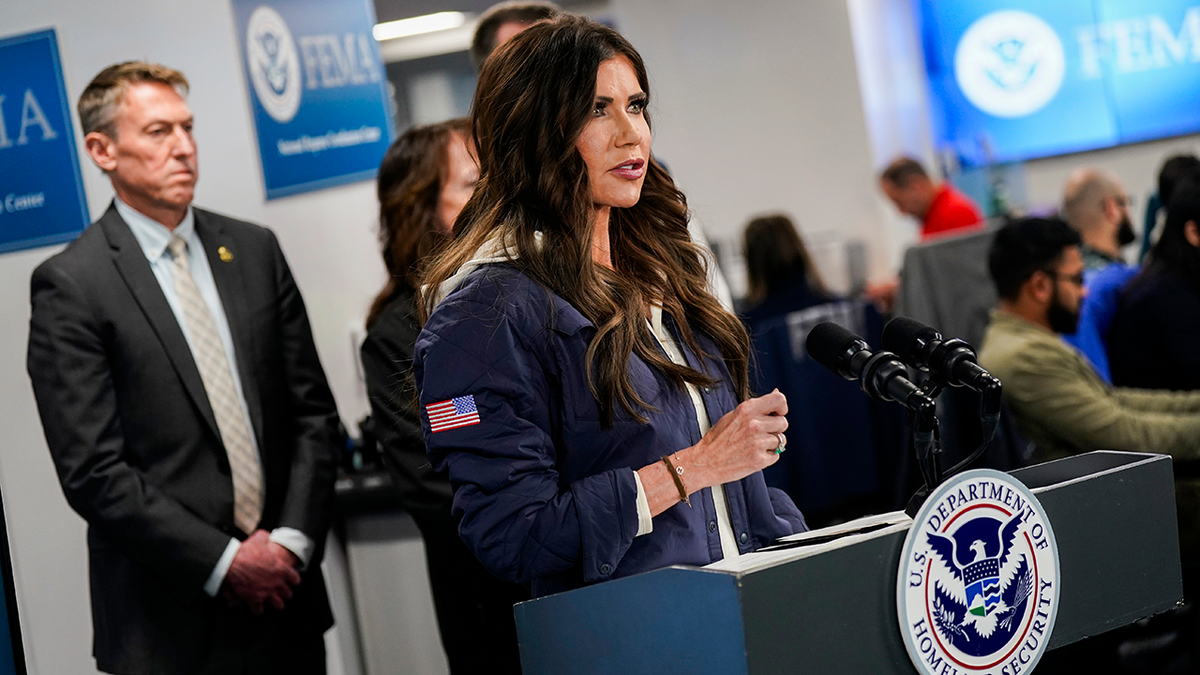
DHS Secretary Kristi Noem speaks from a podium as assembled DHS staff watch. (Al Drago/Getty Images)
DHS Secretary Kristi Noem announced in November that the U.S. would be ending TPS protections for Haitians in the U.S., prompting a group of individuals living in the U.S. with protected status to file suit.
The Trump administration’s Supreme Court filing marks the second time this year the administration has asked the high court to immediately intervene and allow it to strip TPS protections for certain migrants.
Lawyers for the Justice Department also asked the Supreme Court last month to allow it to revoke TPS designations for Syrian migrants in the U.S., though the high court has yet to rule on that request.
The appeal comes just weeks after U.S. District Judge Ana Reyes blocked the Department of Homeland Security from immediately revoking the TPS designations for Haitians in the U.S.
FEDERAL JUDGES IN NEW YORK AND TEXAS BLOCK TRUMP DEPORTATIONS AFTER SCOTUS RULING
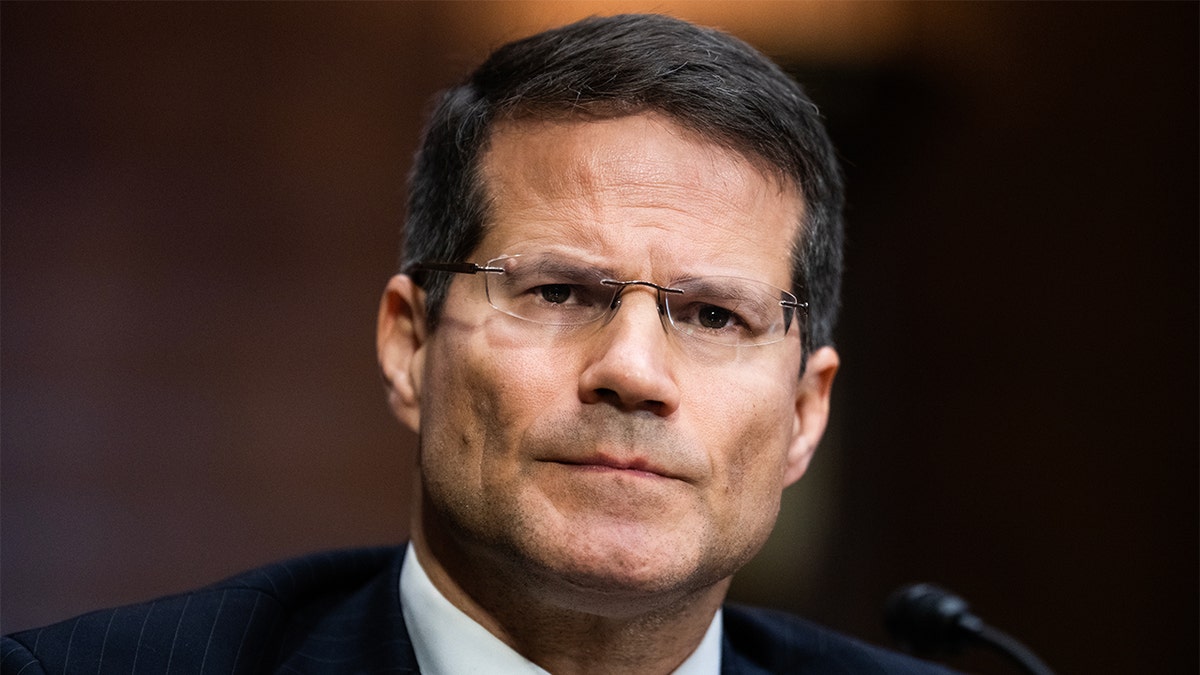
D. John Sauer, nominee to be solicitor general, testifies during his Senate Judiciary Committee confirmation hearing in Dirksen building Feb. 26, 2025. (Tom Williams/CQ-Roll Call, Inc via Getty Images)
Reyes described the administration’s effort to abruptly wind down the designation as «arbitrary and capricious» and accused DHS Secretary Kristi Noem of failing to consider the «overwhelming evidence of present danger» in Haiti, which she noted had prompted the Biden administration to extend TPS protections for Haitians in the first place.
«The government cannot name a single concrete harm from maintaining the status quo,» Reyes said. «And so instead it argues that the court’s decision is ‘an improper intrusion by a federal court into the workings of a coordinate branch of the government.’»
The appeal comes as the Trump administration has sought to wind down most TPS designations, arguing the programs have been extended for too long under Democratic presidents.
CLICK HERE TO GET THE FOX NEWS APP
Trump officials have also taken aim at lower courts that have sought to block or pause their efforts to wind down TPS protections, accusing the lower court judges of exceeding their authority and unlawfully intruding on the executive branch’s authority on immigration policy.
donald trump,supreme court,federal courts,politics,national security,immigration
INTERNACIONAL
Guerra en Medio Oriente: más de 30 países liberan 400 millones de barriles de petróleo para contener la suba de precios
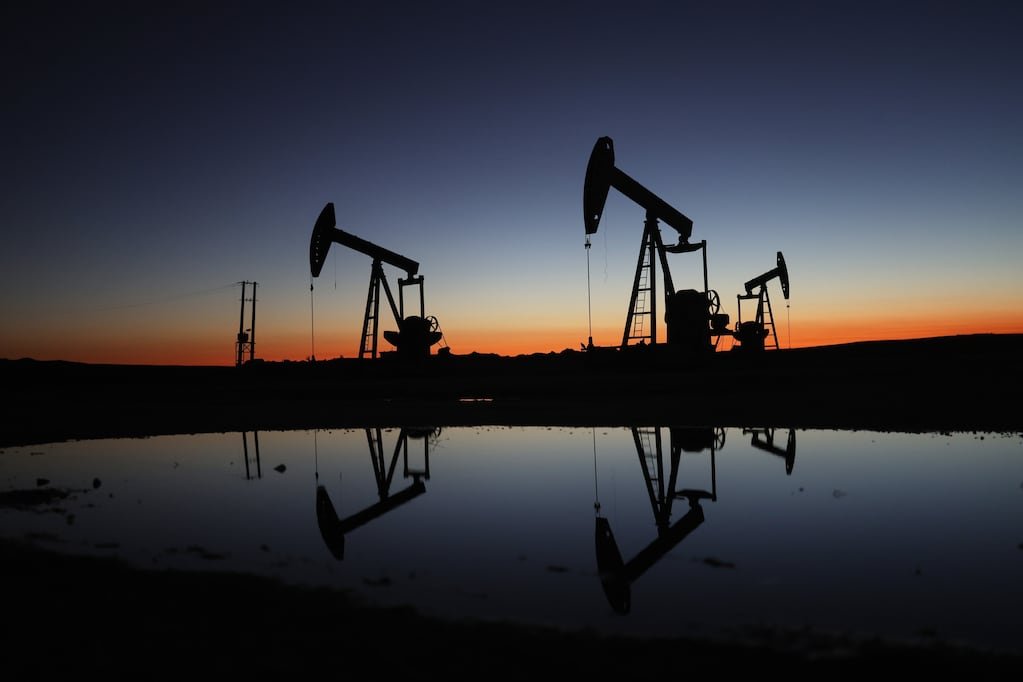
Más de 30 países acordaron por unanimidad liberar 400 millones de barriles de petróleo, que tenían en sus reservas, en un intento por frenar la escalada de precios originada por la guerra en Medio Oriente.
Así lo decidieron los 32 países miembros de la Agencia Internacional de la Energía (AIE), en lo que la entidad catalogó como el mayor desbloqueo de reservas de emergencia en su historia.
Este miércoles, el precio del petróleo Brent subía 4,7% y se acercaba a los US$92 por barril. Horas atrás de la medida de la AIE, Irán amenazó que el valor del crudo internacional rondaría los US$200.
Leé también: Irán se adjudicó el ataque a los barcos comerciales en el estrecho de Ormuz y envió otra advertencia: “Esperen un barril de petróleo a 200 dólares”
“Los países de la AIE pondrán 400 millones de barriles de petróleo (…) a disposición del mercado para compensar la pérdida de suministro por el cierre efectivo del estrecho de Ormuz”, anunció el director ejecutivo de la agencia, Fatih Birol.
“Se trata de una acción de gran envergadura que tiene como objetivo mitigar los efectos inmediatos de la perturbación de los mercados. Pero, para que quede claro, lo más importante para el retorno a unos flujos estables de petróleo y gas es la reanudación del tránsito por el estrecho de Ormuz”, afirmó el directivo.
Según Birol, las reservas de emergencia se pondrán a disposición del mercado según un calendario adaptado a la situación de cada país miembro y se complementarán con medidas de emergencia adicionales en algunas naciones. Nuevos recortes en la producción mundial de crudo (Foto: Reuters)
La guerra en Oriente Medio, que comenzó el 28 de febrero, afecta el comercio de petróleo a través del estrecho de Ormuz, un punto de paso crucial por el que transitan cada día 15 millones de barriles de petróleo y otros 5 millones de barriles diarios de productos petrolíferos, lo que representa aproximadamente el 25% del transporte mundial de petróleo por vía marítima.
Los miembros de la AIE poseen más de 1200 millones de barriles en sus reservas de emergencia, a los que se suman 600 millones de barriles de reservas en manos de la industria en virtud de obligaciones gubernamentales.
El anuncio de la AIE llegó mientras los líderes del G7, de las economías más avanzadas del mundo, estudian medidas para frenar las consecuencias económicas de la guerra entre Estados Unidos e Israel con Irán.
Leé también: Pese a la advertencia de Trump, Irán atacó barcos comerciales en el estrecho de Ormuz y crece la tensión
Los dirigentes del G7 tienen previsto reunirse por videoconferencia este miércoles para “tratar seguramente” el tema de las reservas energéticas, según el ministro francés de Economía, Roland Lescure.
En ese marco, Japón -cuyas reservas estratégicas de petróleo se encuentran entre las mayores del mundo- y Alemania afirmaron que también recurrirían a sus reservas de crudo.
La liberación coordinada de reservas de la AIE es la sexta en la historia de la institución, creada en 1974.
En 1991, antes de la guerra del Golfo, ya se llevaron a cabo acciones colectivas similares, así como en 2005, tras los huracanes Katrina y Rita, en 2011, con motivo de la guerra civil libia, y en dos ocasiones tras la invasión de Ucrania por parte de Rusia en 2022.
Nueva advertencia de Irán: “Esperen un barril de petróleo a US$200”
Irán advirtió este miércoles que no será posible bajar el precio del petróleo mediante “medidas artificiales” y que se puede esperar, por la presión que han impuesto en el estrecho de Ormuz, que el precio del barril suba a 200 dólares. Hoy, el barril Brent se ubicaba por encima de US$90.
“Deben saber que no podrán bajar el precio del petróleo y de la energía mediante medidas artificiales. Con la expansión de la guerra en la región, ya advertimos que pueden esperar un barril de petróleo de 200 dólares, porque el precio del petróleo depende de la seguridad en la región, y ustedes son la fuente de esa inseguridad», afirmó el portavoz del Cuartel General Central de Jatam al-Anbia, Ebrahim Zolfagari.
Petróleo, g7, Guerra en Medio Oriente

NEWYou can now listen to Fox News articles!
After deliberating and assessing the global oil market situation in the face of Middle Eastern conflicts stemming from the United States’ attack on Iran, a cohort of 32 different developed nations agreed to make an «unprecedented» move to help address «oil market challenges.»
The International Energy Agency (IEA) held an emergency meeting at its Paris headquarters Tuesday, with energy representatives from the cohort of G7 countries, to «assess market conditions,» which IEA Executive Director Fatih Birol says «have been significantly affected by the conflict in the Middle East.»
Following that meeting on Thursday, the 32 member countries of the IEA unanimously agreed to collectively release the largest quantity of emergency oil reserves they ever have as a coalition, amounting to 400 million barrels.
«The oil market challenges we are facing are unprecedented in scale, therefore, I am very glad that IEA Member countries have responded with an emergency collective action of unprecedented size,» Birol said following the announcement about the release of the emergency oil reserves. «Oil markets are global, so the response to major disruptions needs to be global too.»
HOUSE GOP URGES TRUMP TO CHOKE OFF IRAN ALLY’S OIL PROFITS AS MIDDLE EAST TURMOIL SPIKES US GAS PRICES
International Energy Agency (IEA) Executive Director Fatih Birol in Paris on March 10, 2026. (Photo by Ludovic MARIN / AFP via Getty Images)
President Donald Trump touted the IEA agreement during remarks in Kentucky Wednesday afternoon, saying the move «will substantially reduce oil prices.»
Before the outbreak of war with Iran, oil was trading in the range of $60 to $70 a barrel, but prices soared after the conflict began, with crude oil futures reaching upward of $115 a barrel on Monday – the highest level since 2022 when Russia invaded Ukraine. However, some experts suggest that the market is correcting itself already from an initial scare that the conflict in the Middle East would have a major impact on oil prices.
«The market realized that maybe things aren’t that bad – the U.S. is having incredible military victories, President Trump is saying, ‘Hey, you know what, the war is probably not going to be going on that long.’ And even some signals that the world doesn’t have to just sit and stand and take it,» said Phil Flynn, senior market analyst at the Price Futures Group and a FOX Business contributor.
The members of the IEA hold emergency stockpiles of over 1.2 billion barrels, and a further 600 million barrels of oil industry stocks. This coordinated release of an unprecedented amount of oil will be the sixth in its roughly half-century history. Previous collective action was taken in 1991, 2005, 2011 and twice in 2022.
TRUMP’S MIDDLE EAST ENVOY REVEALS WHAT LED TO BREAKDOWN IN IRAN TALKS BEFORE OPERATION EPIC FURY
The previous record for the largest collective action was the latest release of emergency oil stocks following Russia’s invasion of Ukraine. In combination, the two actions, which took place in March and April 2022, respectively, amounted to a release of 182.7 million barrels, according to the IEA.
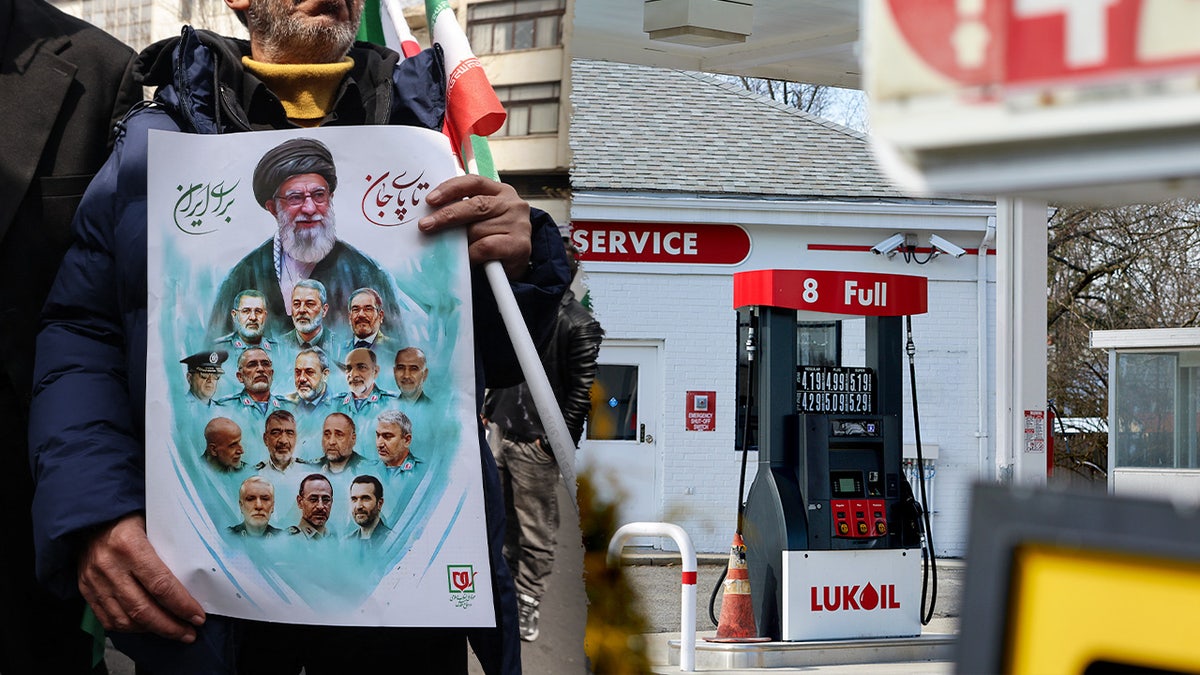
House Republicans are pushing the U.S. to keep a close eye on Russian oil giant Lukoil’s international divestments as the conflict in Iran drives up U.S. gas prices. Russia and Iran are close allies. (Atta Kenare / AFP via Getty Images; Gabby Jones/Bloomberg via Getty Images)
President Trump said repeatedly this week during remarks to the press that the war in Iran would be over shortly, but stopped short of providing an exact timeline.
In his comments to the press Wednesday, President Trump quipped that «We don’t want to leave early, do we?»
«We gotta finish the job, right? Over the past 11 days, our military has virtually destroyed Iran,» Trump said. «It’s a tough country.»
Iran’s ongoing retaliatory attacks in the Strait of Hormuz, a critical maritime choke point for oil transportation, has led to questions about what they will do to prices at the pump. Trump Cabinet official, Interior Secretary Doug Burgum, scoffed this week at claims that the Trump administration was caught off guard by how much Trump’s military actions have impacted the oil market and responded to questions about the impact of attacks on the Strait of Hormuz.
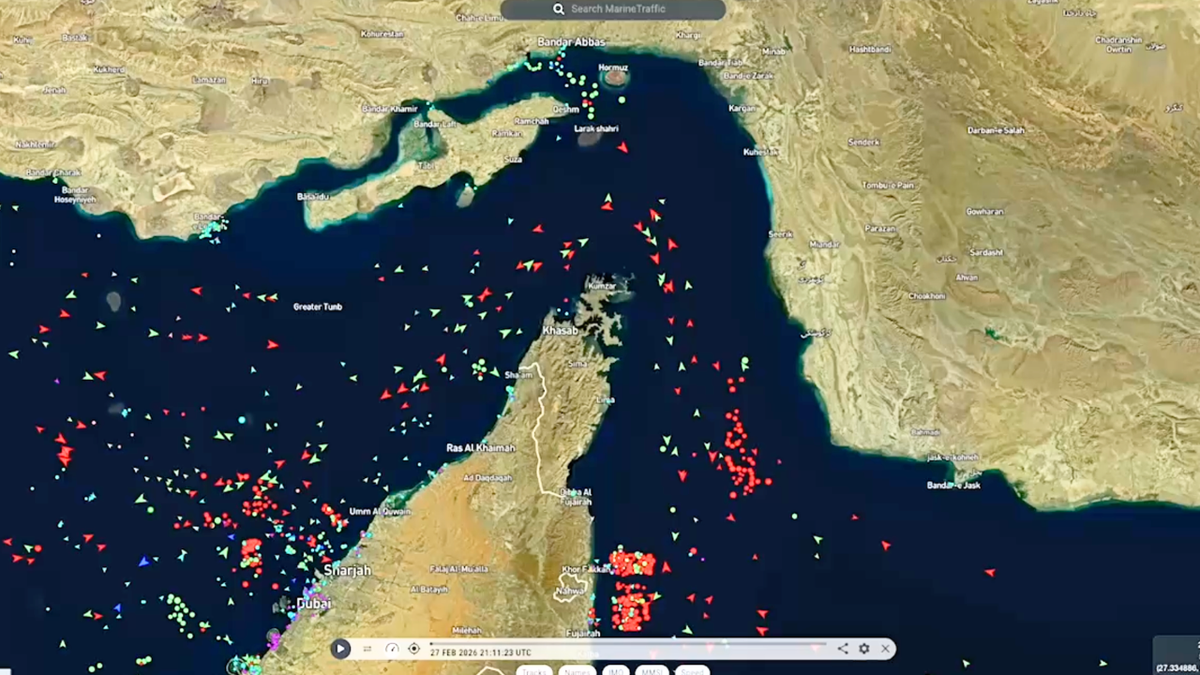
A screenshot of a marine traffic terminal showing vessels in the Strait of Hormuz on March 4, 2026. (Kpler/Marine Traffic)
CLICK HERE TO DOWNLOAD THE FOX NEWS APP
«As you know better than anybody else, it’s a global market, so we could be producing more, or other countries could be producing more, but it all goes into one vat where we get the prices from,» said Fox News’ Brian Kilmeade. «So if the Strait of Hormuz presents a challenge, how could you circumvent that challenge?»
In response, Burgum slammed Iran for «holding the entire world hostage economically by threatening to close the strait.»
«President Trump has made it very clear the consequences if they try to do that,» he continued. «There’s a lot of options between ourselves and our allies in the region, including our Arab friends in the region, to make sure that those straits remain open and energy keeps flowing through the global economy.»
Fox Business’ Eric Revell contributed to this report.
war with iran,middle east,middle east foreign policy,g8 global economy,economy,energy,energy in america

Trump administration puts key Biden-era immigration policy on notice: ‘Unsustainable cycle’

“Si adelantan, no son aliados”: el Gobierno fija criterios electorales y presiona a los gobernadores

Un joven fue atacado a tiros en una estación de servicio abandonada en las afueras de Rosario

Vaca Muerta, protagonista excluyente del Argentina Week: la visión de los empresarios detrás de la locomotora de la economía local

Quién es Marcelo Grandio, el amigo de Adorni y conductor de TV Pública que también figura en el vuelo privado a Punta del Este

Las políticas de Trump dejan a un equipo con diez jugadores menos para jugar la Concachampions: no tienen visado

La cruda confesión de Amalia Granata por el trastorno que sufre su hijo Roque: “Le hicimos estudios y salió que tiene TDAH, dislexia y disgrafia”

Jenny Mavinga angustiada tras una quemadura en Gran Hermano 2026: “¡Ay, me quemó!

El mercado le está corriendo el arco a Caputo y el riesgo país no baja: en la City palpitan medidas