INTERNACIONAL
Japan’s Prime Minister Takaichi plans to dissolve Parliament and call early election to strengthen coalition

NEWYou can now listen to Fox News articles!
Japanese Prime Minister Sanae Takaichi plans to dissolve Parliament’s powerful lower house as early as this month, setting up a snap election aimed at securing voter backing for her agenda while her approval ratings remain high, a senior party official said.
The Associated Press reported that the move would allow Takaichi to seek fresh support for her economic and security priorities at a time when her scandal-tainted party and a new coalition partner hold only a slim majority in Japan’s legislature.
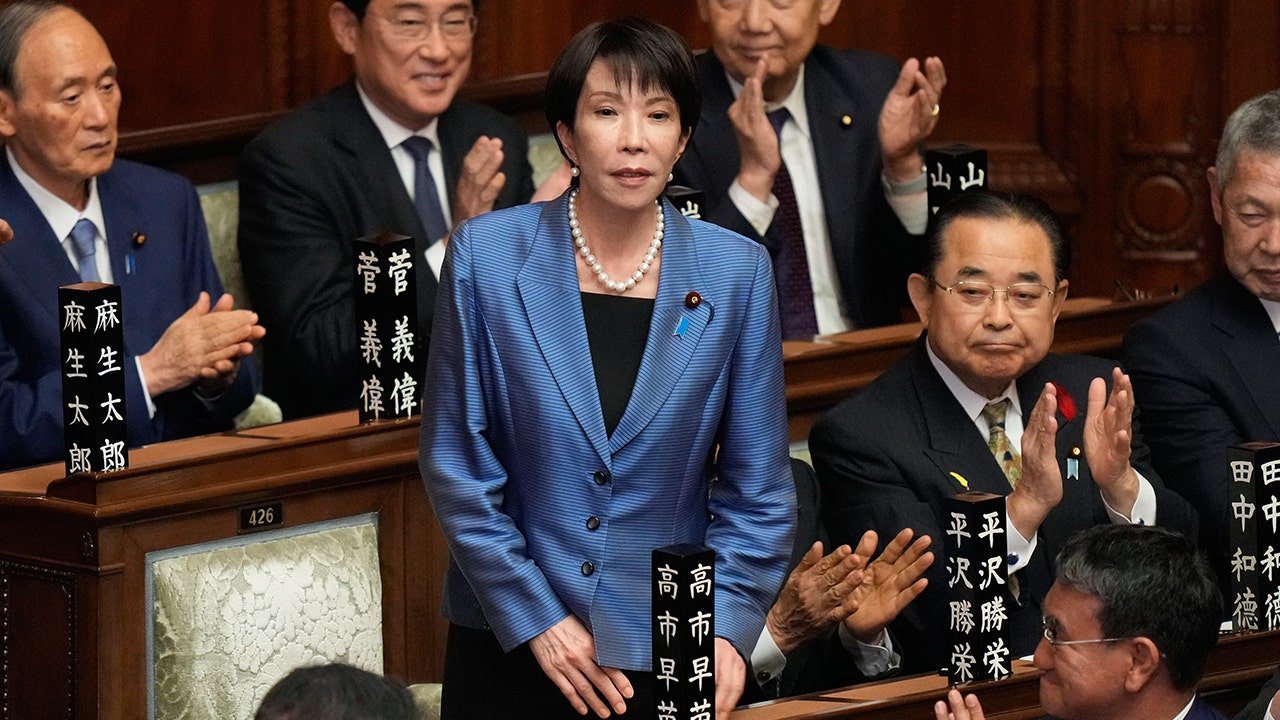
Takaichi made history in October when she was elected as Japan’s first female prime minister.
Described by some Japanese and international media as an ultraconservative, hard-line figure, Takaichi has backed strengthening Japan’s defense posture, emerged as a vocal China hawk and supported constitutional revisions to expand the role of the Self-Defense Forces.
JAPAN’S FIRST FEMALE PM TO MEET TRUMP: WHAT TO KNOW ABOUT THE HEAVY METAL FAN
Japanese Prime Minister Sanae Takaichi, whose warnings about a Taiwan crisis have angered Beijing, in Tokyo, Japan. Oct. 21, 2025. (Eugene Hoshiko/AP Photo)
Calling a snap election could allow Takaichi to capitalize on approval ratings of about 70% and help her Liberal Democratic Party gain additional seats in Parliament.
Shunichi Suzuki, secretary general of the ruling Liberal Democratic Party, told reporters that Takaichi informed him and other senior officials of her intention to dissolve the lower house «soon» after it convenes Jan. 23.
Suzuki said no date has been set for dissolving the chamber or holding a snap election, adding that Takaichi plans to outline her strategy at a news conference Monday.
TAIWAN UNVEILS $40B DEFENSE SPENDING PLAN TO COUNTER CHINA MILITARY THREAT OVER NEXT DECADE
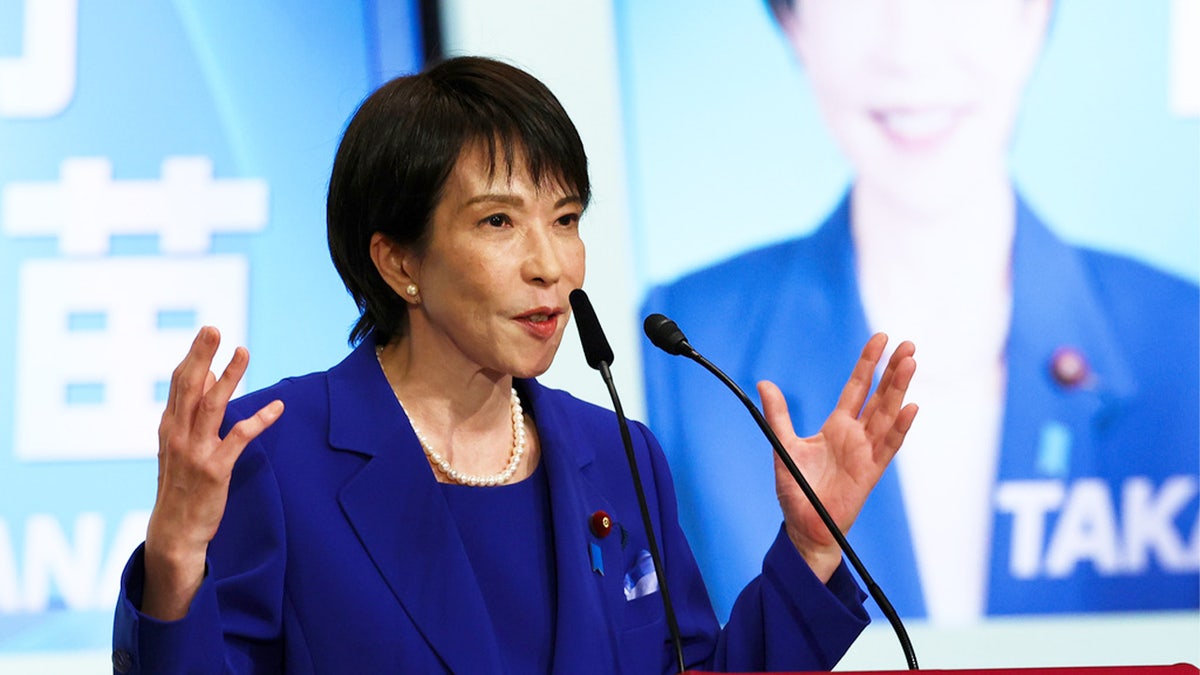
Former Economic Security Minister Sanae Takaichi speaks during the Liberal Democratic Party’s leadership election in Tokyo Oct. 4, 2025. (Kim Kyung-Hoon/Pool Photo via AP)
Takaichi’s scandal-tainted LDP and its coalition hold only a narrow majority in the lower house, Parliament’s more powerful chamber, after losses in the 2024 election.
By calling an early vote, Takaichi appears to be aiming to expand her party’s share of seats and strengthen its position alongside a new junior coalition partner.
Opposition lawmakers criticized the plan as self-serving, saying it would delay urgent parliamentary debate over the national budget, which must be approved quickly.
FORMER JAPANESE PRIME MINISTER’S ACCUSED KILLER PLEADS GUILTY DURING TRUMP VISIT
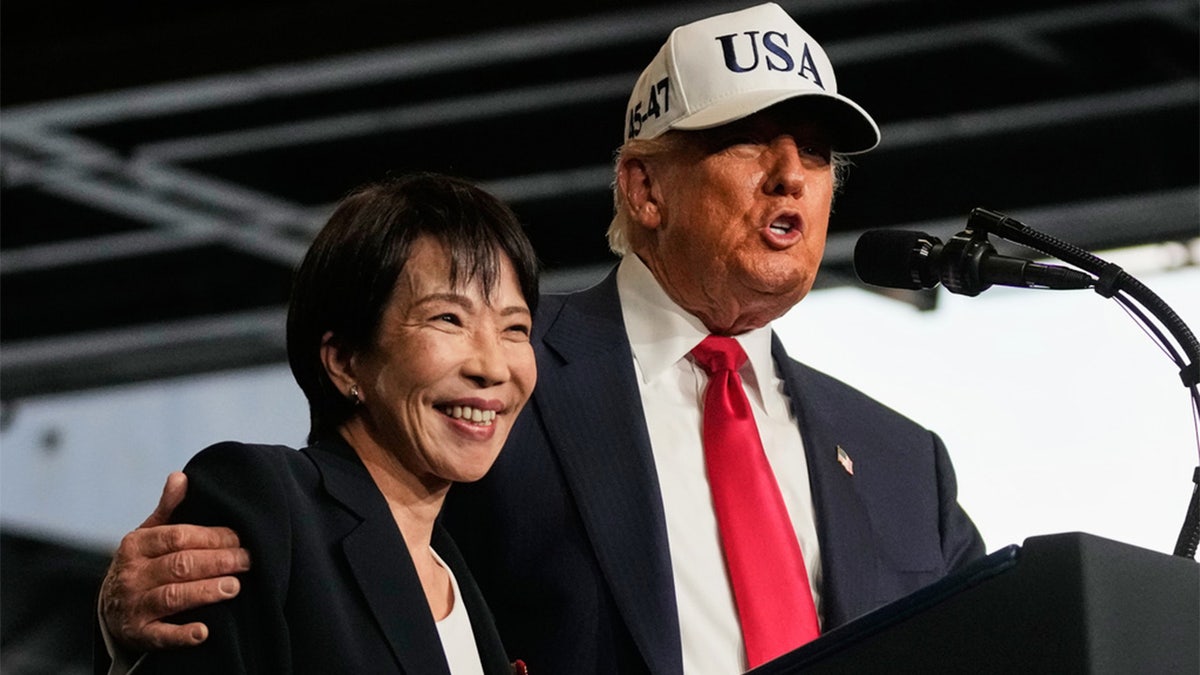
President Donald Trump, with Japanese Prime Minister Sanae Takaichi, speaks to members of the military aboard the USS George Washington in Yokosuka Oct. 28, 2025. (AP Photo/Mark Schiefelbein)
Echoing Suzuki’s comments, media reports have said Takaichi plans to dissolve the lower house on Jan. 23, the opening day of this year’s ordinary parliamentary session, potentially setting the stage for a snap election as early as Feb. 8.
Takaichi is seeking voter backing for her agenda, including «proactive» fiscal spending and an accelerated military buildup under a new coalition with the Japan Innovation Party, Suzuki said.
The conservative Japan Innovation Party joined the ruling bloc after the centrist Komeito party withdrew, citing disagreements over Takaichi’s ideological positions and her approach to anti-corruption reforms.
TRUMP SAYS MISSILES FOR JAPAN’S F-35S WILL ARRIVE ‘THIS WEEK’ DURING VISIT TO USS GEORGE WASHINGTON
Takaichi met Wednesday with Suzuki and other coalition leaders after holding talks in Nara with South Korean President Lee Jae Myung at a summit aimed at strengthening bilateral ties. The meetings came as she faces rising trade and political tensions with China following remarks on Taiwan that angered Beijing days after she took office.
Winning a snap election would also make it easier for Takaichi and her governing bloc to pass a budget and advance other legislation.
Her Cabinet approved a record 122.3 trillion yen ($770 billion) budget in late December that must clear Parliament before the fiscal year begins in April. The plan includes measures to fight inflation, support low-income households and boost economic growth.
CLICK HERE TO DOWNLOAD THE FOX NEWS APP
Known for her hawkish and nationalistic views and her ultra-conservative positions on social issues, including gender and sexual diversity, Takaichi is seeking to reclaim conservative voters drawn to emerging populist parties in recent elections.
The Associated Press contributed to this report.
japan,elections,world politics,foreign affairs,politics












Una mujer de 33 años pasó gran parte de su vida sufriendo dolores intensos sin conocer su verdadero diagnóstico. Según contó, pasó gran parte de su vida “tapando sus síntomas” porque los médicos ignoraban o desestimaban sus dolencias y a los 32 años descubrió que padecía una severa enfermedad.
Melissa Diamond, que actualmente tiene 33, empezó con fuertes malestares desde su primera menstruación, a los 12 años. El dolor era tal que tenía que cancelar todas sus actividades durante los días que duraba el periodo. Después de 20 años sin saber la razón de sus padecimientos, supo que tenía endometriosis.
Leé también: Quiénes eran los tres jóvenes argentinos que murieron en un choque frontal en Brasil
“Mi viaje de salud comenzó cuando tenía doce años y tuve mi primer período. Inmediatamente tuve problemas, y el dolor era tan intenso que faltaba a la escuela y a las actividades regularmente”, contó la mujer estadounidense en una entrevista con People.
A los 14 años su ginecólogo encontró un quiste en su ovario y tuvo que someterse a una cirugía para que se lo extirparan. Después de eso, empezó a tomar pastillas: “Los médicos me inculcaron que necesitaba tomar anticonceptivos, de lo contrario los quistes volverían”, relató.
Cuando llegó a los 20, empezó a pensar en su futuro en su fertilidad: “Quería explorar cómo sería la vida sin anticonceptivos para poder congelar mis óvulos, pero los médicos seguían diciéndome que tenía que seguir con él o podría terminar de vuelta en la sala de emergencias con un quiste roto”, recordó. La mujer descubrió su diagnóstico 20 años después de empezar con los síntomas. (Foto: gentileza Melissa Diamond para People)
Cuando su médico accedió a la suspensión de las pastillas, empezó el calvario nuevamente: “Tuve períodos debilitantes y calambres que me sacarían del trabajo, un síndrome premenstrual horrible, y desarrollé graves problemas estomacales”, explicó.
“Dije que pensaba que podría tener Síndrome de Ovario Poliquístico o endometriosis, (pero mi ginecólogo) me miró y dijo que no tenía esas cosas, que no tenía los síntomas principales, y su respuesta fue volver a tomar la píldora”, lamentó.
Diamond necesitaba respuestas, entonces visitó varios especialistas para tener otras opiniones: “Todos los médicos me dijeron que no había nada malo, que solo necesitaba volver a tomar anticonceptivos. Esa siempre fue la única respuesta”.
“Tenía dolor, pero simplemente viví con eso: fuertes dolores de estómago, diarrea, hinchazón horrible, dolor de espalda”, detalló y contó que ningún medicamento la ayudaba a sentirse mejor.

Diamond terminó hospitalizada por sus dolores. (Foto: gentileza Melissa Diamond para People)
Diamond fue ingresada en la sala de emergencias, donde le dijeron que los médicos no podían hacer nada por ella. “Realmente pensé que me estaba muriendo”, reveló, pero justo en ese momento todo empezó a cambiar.
“Una doctora muy amable se me acercó y me dijo que pensaba que tenía endometriosis. Ella me dijo que no estaban equipados para diagnosticarlo o tratarlo allí, y que necesitaba ver a un especialista”, recordó.
Finalmente, llegó al cirujano, el Dr. Tamer Seckin, jefe de la Fundación de Investigación de la Endometriosis: “Me hicieron una resonancia magnética pélvica, y aunque la endometriosis a menudo no aparece en las imágenes, la encontraron en todas partes”.
Leé también: Pakistán bombardeó un centro de rehabilitación en Afganistán y murieron 400 personas
El diagnóstico era severo; Diamond tuvo que someterse a una cirugía: “Extirparon veintitrés lesiones, tuvieron que extirpar mi apéndice, estaba por todas partes. Por toda mi pared pélvica, mis intestinos, vejiga y recto”.
“Algunas de las lesiones tenían veinte años de antigüedad. Todo el tiempo, tenía razón: algo andaba mal”, expresó Diamond indignada y agregó: “Estaba increíblemente enfadada y asustada (…) pensé en todos los médicos a lo largo de los años que me dijeron que nada estaba mal. Estaba llena de rabia porque todo el tiempo, realmente había algo”.
“Compartir mi historia ha sido una experiencia maravillosa. Estoy tomando algo realmente triste y usándolo para ayudar a otras mujeres a defenderse a sí mismas. No estás sola. Hay millones de mujeres lidiando con esto, las animo a encontrar a otras personas y conectarse dentro de la comunidad endo. Da miedo lidiar con esto. Pero en un mundo en el que estamos silenciadas, tenemos que ser ruidosas”, concluyó.
enfermedad, sintomas, endometriosis, Estados Unidos

BREAKING: Iran’s ‘de-facto’ leader killed airstrike
Fox News’ chief foreign correspondent Trey Yingst reports on the death of Iranian official Ali Larijani in overnight strikes. A senior Israeli official confirmed the intelligence leading up to the strikes were part of joint U.S.-Israeli efforts.
NEWYou can now listen to Fox News articles!
Iranian Supreme National Security Council secretary Ali Larijani and Basij Commander Gholamreza Soleimani have both been killed, according to the Israel Defense Forces and Israeli Defense Minister Israel Katz.
«I have just been updated by the Chief of Staff that Larijani, Secretary of the Supreme National Security Council, and the head of the Basij — Iran’s central repression apparatus — Salimani, were eliminated last night and have joined Khamenei, the head of the annihilation program, along with all those eliminated from the axis of evil in the depths of hell,» Katz said, according to a translation provided to Fox News by his office.
The news comes more than two weeks since Israel launched a war against the Islamic Republic of Iran in conjunction with U.S. President Donald Trump.
«Ali Larijani, Secretary of Iran’s Supreme National Security Council and the regime’s effective leader, has been eliminated,» the Israel Defense Forces noted in a post on X.
WHY GULF STATES AREN’T JOINING THE WAR AGAINST IRAN — DESPITE ATTACKS ON THEIR SOIL
Ali Larijani, left, secretary of Iran’s Supreme National Security Council, and Gholamreza Soleimani, who commands Basij forces. (Courtney Bonneau/Middle East Images/AFP via Getty Images; Morteza Nikoubazl/NurPhoto via Getty Images)
«Throughout the years, Larijani was considered one of the most veteran and senior figures within the Iranian regime leadership, and was a close associate of the Supreme Leader Ali Khamenei. During the most recent wave of protests against the Iranian terror regime, Larijani personally oversaw the massacre that was carried out against Iranian protestors,» the post added.
TRUMP SAYS IRAN’S MILITARY ‘DECIMATED,’ BUT STILL NOT DECLARING WAR OVER
Another IDF post noted, «Yesterday, the IDF targeted & eliminated Gholamreza Soleimani, who operated as commander of the Basij unit for the past 6 years. Under Soleimani, the Basij unit led the main repression operations in Iran, employing severe violence, widespread arrests, and the use of force against civilian demonstrators.»
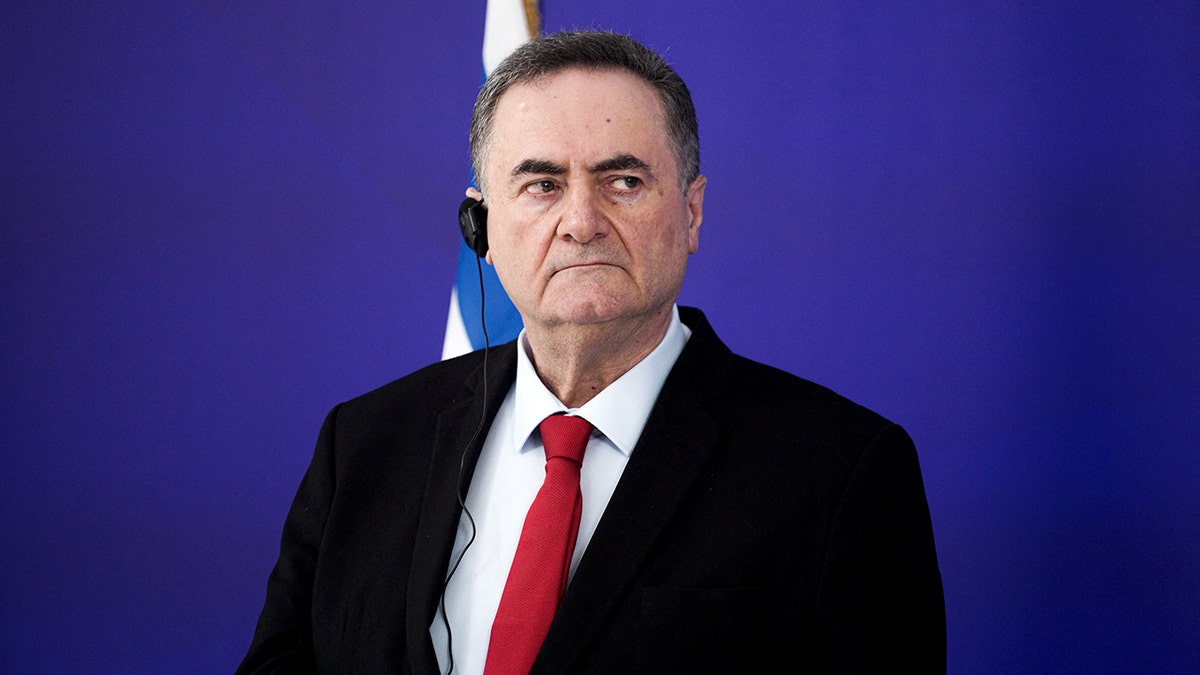
Israeli Minister of Defense Israel Katz in Athens, Jan. 20, 2026. (Nick Paleologos/SOOC/AFP via Getty Images)
The U.S. government had previously indicated that it would offer a reward for information on Larijani.
«Rewards for Justice is offering a reward of up to $10 million for information on the key leaders of Iran’s Islamic Revolutionary Guard Corps (IRGC) and its component branches,» rewardsforjustice.net notes. «Under this reward offer, RFJ is seeking information on the following individuals,» the webpage notes, listing Larijani and others.
HAMAS REASSERTS CONTROL IN GAZA AS IRAN WAR DOMINATES REGIONAL ATTENTION AND GLOBAL FOCUS
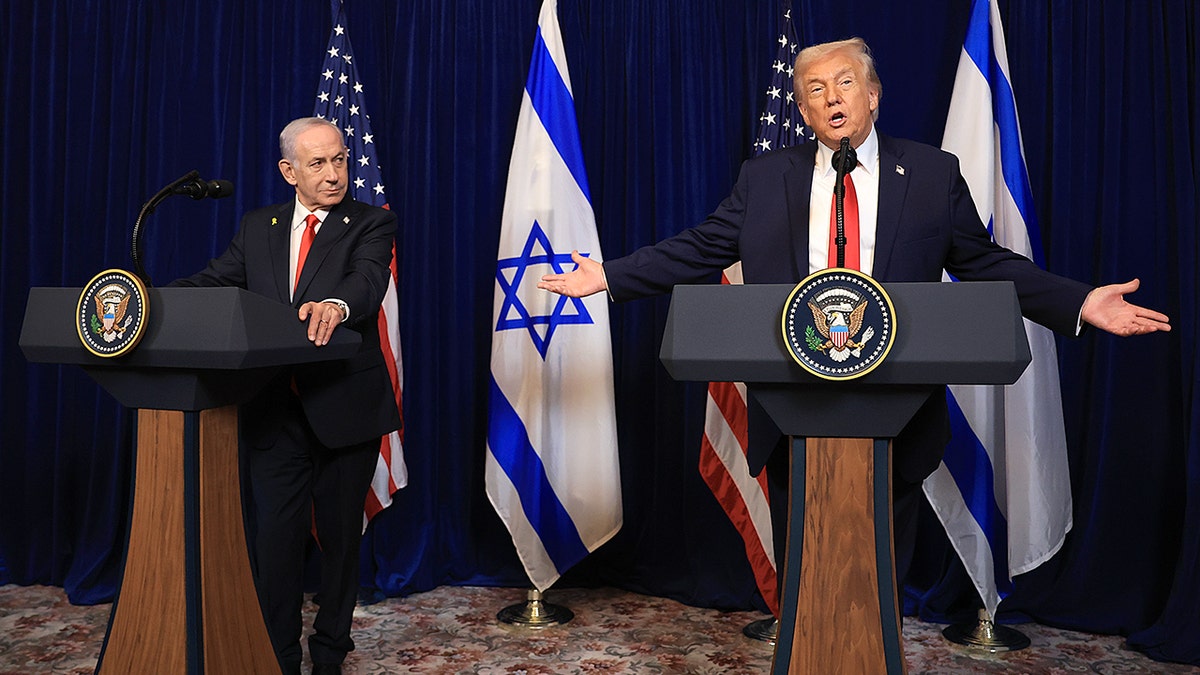
President Donald Trump holds a press conference with Israeli Prime Minister Benjamin Netanyahu at his Mar-a-Lago club on Dec. 29, 2025, in Palm Beach, Florida. (Joe Raedle/Getty Images)
CLICK HERE TO GET THE FOX NEWS APP
«Over a dozen Basij officials were targeted in Iran last night in different strikes, including the head of the Basij forces Gholamreza Soleimani. This was a joint U.S. and Israeli effort,» a senior Israeli official noted. «A strike in Tehran targeted the Basij commander and around a dozen others, including the most senior figures in the Basij forces—people with a lot of blood on their hands.»
Fox News’ Trey Yingst and Yonat Friling contributed to this report.
war with iran,world,israel,iran,wars

NEWYou can now listen to Fox News articles!
President Donald Trump’s suggestion that Iranian oil infrastructure could be a U.S. target sent oil and gasoline prices higher on Monday, as traders weighed the risk of a deeper confrontation that could further exacerbate global energy supplies.
On Friday, Trump ordered strikes on military assets on Iran’s Kharg Island, a strategically vital island in the Persian Gulf that serves as Tehran’s largest oil terminal and a key hub for its crude exports. Over the weekend, he raised the prospect of another bombing raid targeting the island’s oil infrastructure.
«We can do that on five minutes’ notice. We have it all locked and loaded and ready to go if we want to do it,» he said. «We chose not to do it. I chose not to do it again. We’ll see what happens,» Trump told reporters on Air Force One.
TRUMP SAYS US ‘OBLITERATED’ MILITARY TARGETS IN STRIKE ON KEY IRANIAN OIL HUB: ‘POWERFUL BOMBING RAIDS’
A satellite image shows an oil terminal at Kharg Island, Iran, Feb. 25, 2026. (2026 Planet Labs PBC/Handout via Reuters)
The island, located roughly 35 miles off Iran’s Bushehr province in the country’s southwest, is about the size of New York City’s Central Park but carries huge importance for Iran’s economy.
It has a loading capacity of about 7 million barrels per day, and roughly 90% of Iran’s crude oil exports pass through it. Most of those exports are shipped to China and India, underscoring the island’s importance not only to Iran’s energy trade but also to broader global oil markets.
Fears of a fresh strike sent oil prices higher Monday, as traders braced for the possibility that fighting could further disrupt exports from the Persian Gulf, including through the Strait of Hormuz, a critical shipping corridor for global energy supplies.
BEFORE-AND-AFTER SATELLITE IMAGERY OFFERS A RARE LOOK AT DAMAGE INSIDE IRAN
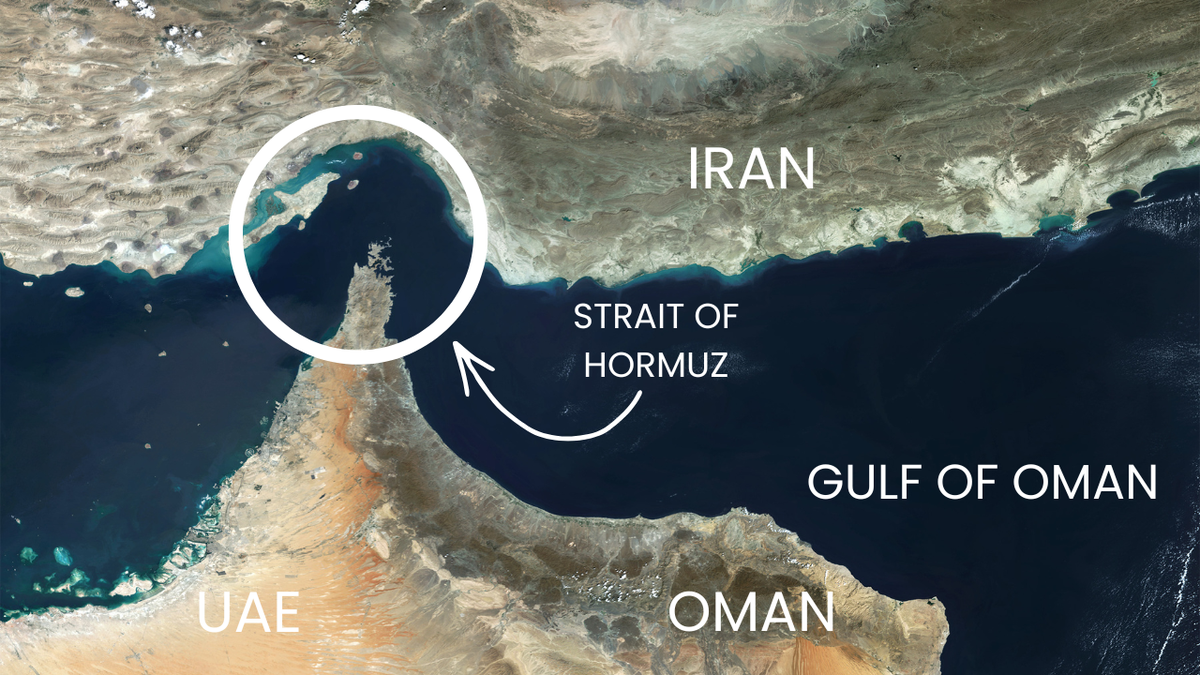
A satellite image shows the Strait of Hormuz, a key maritime passage connecting the Persian Gulf to the Gulf of Oman, vital for global energy supply. (Amanda Macias/Fox News Digital)
Those concerns helped drive oil above $100 a barrel last week for the first time since 2022, as fallout from the U.S.-Israeli conflict with Iran roiled global markets and investors priced in the risk of tighter supply.
Now, that surge is beginning to hit consumers. As crude prices climb, gasoline and diesel prices are rising quickly — especially diesel, which often reacts faster because of its close ties to freight and industrial demand.
As of March 16, AAA put the national average for regular gasoline at $3.70 a gallon, up 77 cents from a month earlier, while diesel climbed to $4.97, up $1.31 over the same period.
THE UNLIKELY TOOL TRUMP IS EYEING TO TACKLE RISING OIL PRICES AMID THE IRAN CONFLICT
Price increases have not been spread evenly across the country. The lowest averages were in Kansas, North Dakota and Oklahoma, at roughly $3.08 to $3.14 a gallon, while the highest were in California, Hawaii and Washington.
«Americans today will spend $275 million more on gasoline than they did before the U.S. attacked Iran, now totaling nearly $2.5 billion since the start,» wrote Patrick De Haan, head of petroleum analysis at GasBuddy.
The run-up has extended beyond gasoline and diesel.
In the U.S., the Argus U.S. Jet Fuel Index — a daily benchmark averaging prices in Chicago, Houston, Los Angeles and New York — climbed to $3.88 a gallon on Friday, after hovering mostly in the low-to-mid $2 range for weeks.
TRAVEL IS ABOUT TO GET MORE EXPENSIVE AS IRAN CONFLICT SPARKS JET FUEL CRUNCH
Higher fuel prices could ripple through the broader economy if they persist, raising costs for airlines, trucking firms and other businesses that depend heavily on transportation. For consumers, sustained increases at the pump also threaten to squeeze household budgets at a time when inflation remains a key concern.
What happens next will likely depend on whether the conflict escalates further and whether oil infrastructure or major shipping lanes are affected.
CLICK HERE TO DOWNLOAD THE FOX NEWS APP
With that risk in mind, the White House is weighing steps to protect commercial shipping through the Strait of Hormuz and considering the use of emergency oil stockpiles to help blunt the impact.
Before boarding Air Force One for Mar-a-Lago late Friday, Trump told reporters the U.S. Navy may begin escorting tankers through the strait «very soon.»
war with iran,economy,energy,donald trump,politics

Causa Cuadernos: los desafiantes gestos y respuestas de Cristina Kirchner cuando el juez le preguntó por sus apodos y antecedentes

Cuáles son los autos 0 km que bajaron su precio casi $10 millones a pesar de no pagar el impuesto al lujo

El Al Nassr espera a Cristiano tras el parón… ¡pero en Portugal quieren forzarle!

Las 12 preguntas del interrogatorio que respondió Cristina en el arranque de su declaración

La golpeó un cartel y murió: la pericia que complica al ex futbolista Damián Manusovich

Ignoraron sus síntomas durante 20 años y descubrieron que tenía una severa enfermedad

La fuerte exigencia a Mauro Icardi para poder ver a sus hijas con Wanda Nara: “A Maurito se lo va a multar si no lleva a las menores al colegio”

BOMBAZO – Guerra abierta: Feinmann y Rossi contraatacan tras la denuncia de Victoria Villarruel

Milei llegó a Madrid para participar de un foro ultraliberal organizado por expertos en criptomonedas

Video: así fue el feroz temporal que azotó Tucumán y causó inundaciones, rutas cortadas y suspensión de clases

 CHIMENTOS3 días ago
La fuerte exigencia a Mauro Icardi para poder ver a sus hijas con Wanda Nara: “A Maurito se lo va a multar si no lleva a las menores al colegio”
- INTERNACIONAL21 horas ago
Insólito: un esquiador británico terminó la Copa del Mundo de Oslo bajo los efectos del alcohol
- POLITICA12 horas ago
TRAICIÓN Y ÉXODO: La promesa rota de Monteoliva que desató una ola masiva de bajas en la Policía Federal