INTERNACIONAL
Iran strikes could signal limits of Beijing, Moscow’s power as US flexes strength

NEWYou can now listen to Fox News articles!
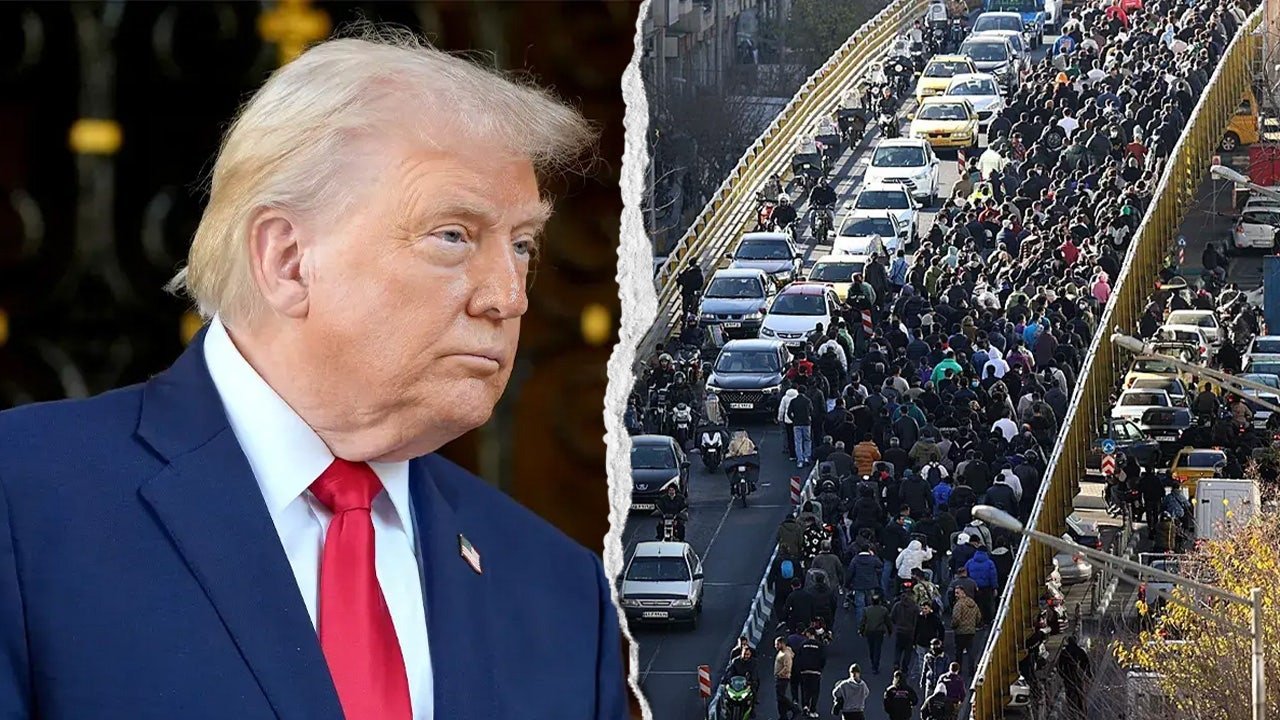
President Donald Trump is weighing whether to pull the trigger and launch strikes against Iran — a move that could potentially expose the weaknesses of both Russia and China, according to experts.
While Russia and China have sought to make inroads in areas of Africa and Latin America — presenting themselves as partners for infrastructure and military equipment — neither Russia nor China intervened to defend their ally Venezuela when the U.S. took action Jan. 3 to topple dictator Nicolás Maduro’s regime.
Potential strikes in Iran, coupled with the strikes in Venezuela to overthrow Maduro, would drive home just how formidable the U.S. is and even near-peer adversaries like Beijing can’t compete, according to experts.
President Donald Trump is weighing whether to pull the trigger and launch strikes against Iran. (Maxine Wallace/The Washington Post via Getty Images)
«Beijing would likely respond with familiar condemnations and calls for restraint, but the deeper takeaway would be uncomfortable: China’s partnerships offer little protection when the United States decides to act,» Craig Singleton, a senior China fellow for the Foundation for Defense of Democracies, said in a statement Wednesday. «Venezuela made that clear regionally; Iran would underscore it globally. Chinese officials will brand Washington reckless or rogue, but privately this episode would validate long-standing Chinese views about how power is actually exercised and that the U.S. is the only country willing and able to project force across multiple theaters on short notice.»
RAND PAUL SAYS TRUMP’S THREAT TO BOMB IRAN ‘IS NOT THE ANSWER’: NOT THE ‘JOB OF THE AMERICAN GOVERNMENT’
«Two complex military operations in two regions just two weeks apart would reinforce a core assessment inside China’s system: America’s military might remains unmatched, and Washington is willing to use it when it judges the risks manageable,» Singleton said. «That combination commands professional respect even as it sharpens Chinese unease.»
Mark Cancian, a senior advisor with the Center for Strategic and International Studies’ defense and security department, voiced similar sentiments and said that countries like Iran and Venezuela who’ve cozied up to Russia and Beijing are likely realizing the pitfalls of those ties.
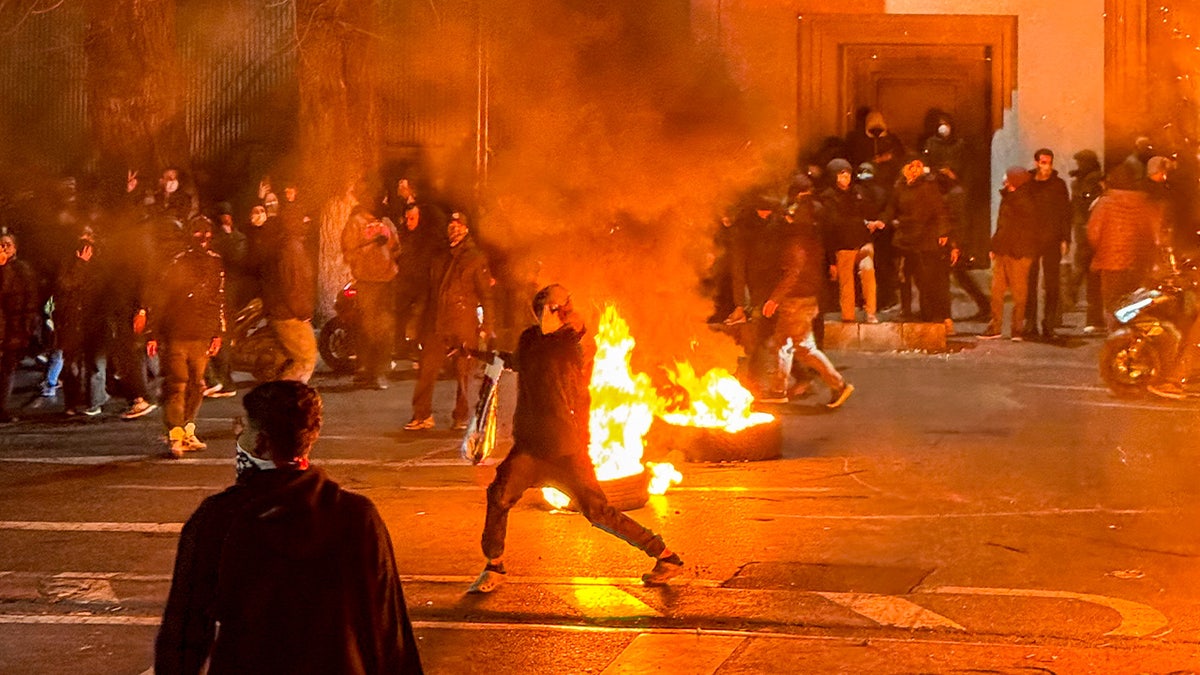
Iranians gather while blocking a street during a protest in Tehran, Jan. 9, 2026. (MAHSA/Middle East Images/AFP via Getty Images)
For example, Venezuela has had long-standing ties to Russia and has purchased Russian military equipment — yet Russia was not there to safeguard Caracas from U.S. strikes or prevent the U.S. from capturing Maduro, Cancian said. Another military strike in Iran would only expose Russia and China’s limitations further, Cancian said.
TOP IRANIAN GENERAL THREATENS TO ‘CUT OFF’ TRUMP’S HAND OVER POTENTIAL MILITARY STRIKES
«I think many countries are seeing that Russia and China can’t protect them, that those alliances have severe limitations,» Cancian told Fox News Digital Friday.
«I think that a strike on Iran would make the same point,» Cancian said.
According to Cancian, the reason Moscow and Beijing can’t defend their allies and partners is because neither maintains a global military like the U.S. does.
TRUMP ANNOUNCES ‘FINAL’ 25% TARIFF ON COUNTRIES DOING BUSINESS WITH IRAN REGIME
«The United States does maintain United bases all over the world,» Cancian said. «It has a Navy that deploys all over the world. The Chinese don’t have that. The Russians don’t have that. So although they have powerful militaries, they don’t have the global capability to protect allies and partners.»
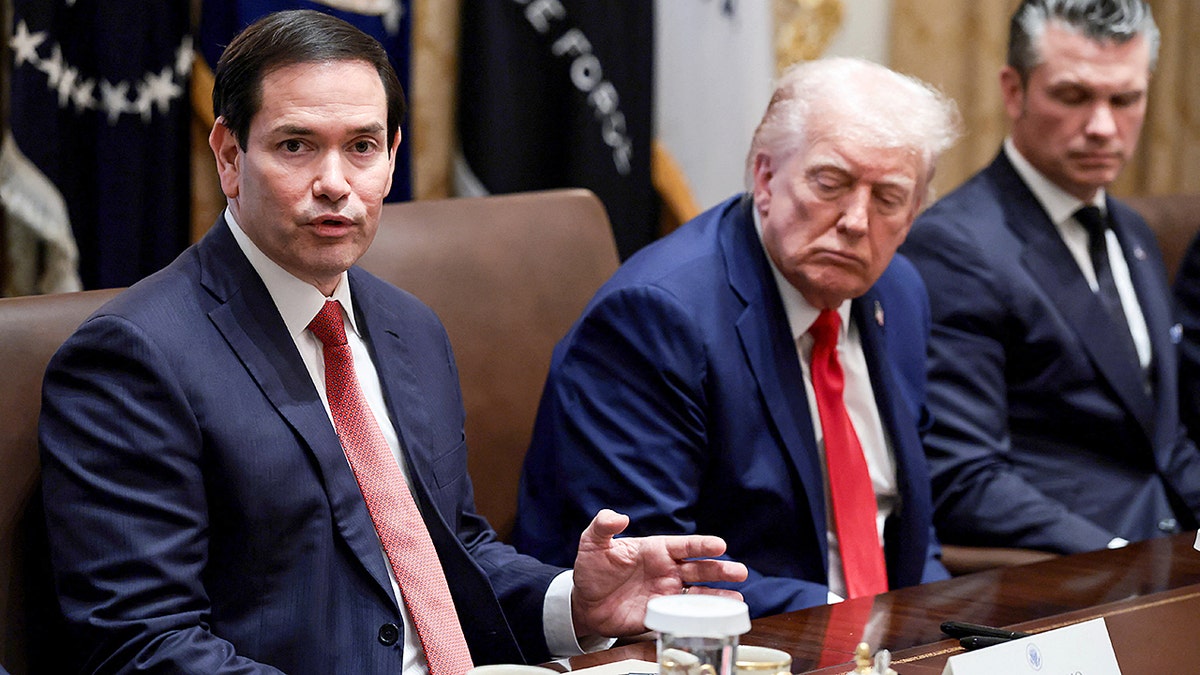
President Donald Trump and War Secretary Pete Hegseth listen as Secretary of State Marco Rubio speaks during a Cabinet meeting at the White House, Oct. 9, 2025. (Evelyn Hockstein/Reuters )
Meanwhile, Trump is still weighing whether he’ll conduct strikes on Iran again. The president told reporters Jan. 11 on Air Force One that the administration was «looking at some very strong options,» and Tuesday said that all meetings with the Iranian regime were scrapped until «the senseless killing of protesters STOPS.» He said that those who’ve killed anti-regime demonstrators will face consequences.
On Wednesday, Trump told reporters that even though «killing in Iran is stopping,» he wouldn’t rule out military action and that the U.S. would «watch and see» what happens. Meanwhile, Trump said Friday that he had held off on strikes for now because Iran had canceled executions for more than 800 people.
INSIDE THE LIGHTNING US STRIKE THAT OVERWHELMED VENEZUELA’S DEFENSES AND SEIZED MADURO
Protests broke out across Iran in December 2025 in response to economic hardships facing the country, as well as a referendum against Iran’s theocratic regime.
More than 2,000 people — including at least nine children — have died in the recent protests, the U.S.-based Human Rights Activists News Agency reported Tuesday.
Trump authorized several major military operations in recent months, on top of the strikes in Venezuela. For example, he also signed off on strikes in Nigeria and Syria in December targeting those affiliated with the Islamic State.
CLICK HERE TO DOWNLOAD THE FOX NEWS APP
This also wouldn’t be the first time Trump has conducted strikes against Iran — should he choose to go through with them. In June, he signed off on strikes targeting Iran’s nuclear sites Fordow, Natanz and Isfahan.
The Associated Press contributed to this report.
white house,donald trump,nicolas maduro,ali khamenei,iran







El Grupo Patio, considerado uno de los holdings inmobiliarios más destacados de Chile, atraviesa una grave crisis interna derivada de acusaciones de manipulación en la valoración de la compañía y la presentación de querellas por parte de accionistas y afectados.
La empresa, fundada a comienzos de los años 2000 por la familia Jalaff, cuenta con más de USD 4.000 millones en activos y opera en Chile, Perú, México y Estados Unidos. En los últimos años, el grupo se consolidó como un referente en el mercado inmobiliario latinoamericano.
La crisis actual se originó tras la aparición de actas de directorio que reflejan presuntas malas prácticas y decisiones cuestionables. Este conflicto, reportan medios locales, ha generado una crisis de confianza, que podría limitar el acceso a financiamiento y afectar la relación con acreedores y la percepción general del mercado.

El foco del conflicto se sitúa en la determinación del precio de la participación de Antonio Jalaff, uno de los fundadores, basada en un informe elaborado por la consultora Econsult.
Un grupo de 23 aportantes y herederos de la familia Jalaff presentaron acciones judiciales, argumentando que el informe fue solicitado y financiado por quienes buscaban adquirir esas acciones, dando lugar, según su denuncia, a una valoración artificialmente baja.
Para la querella no hay dudas de que dicho informe fue solicitado y financiado por los compradores, lo que habría resultado en una apreciación artificialmente deprimida del real valor de Grupo Patio.

Según la querella, el informe de Econsult “construyó una imagen económica distorsionada y artificialmente depreciada del Grupo Patio, generando una apariencia falsa sobre el estado financiero del conglomerado”.
A esto se añade, según la denuncia, la falta de transparencia en la metodología, generando cuestionamientos sobre la objetividad del valor fijado y un fuerte impacto en el fondo administrado por el holding.
En declaraciones recogidas por Diario Financiero, Antonio Jalaff manifestó su inquietud sobre el daño sufrido por la empresa y su propia reputación. “Aquí hay gente que ha hecho malas prácticas para inflar su trayectoria empresarial y su ego, a costa del daño económico a acreedores que confiaron en mí y en una compañía que fundé junto a mi padre”, afirmó.
Ante el 4º Juzgado de Garantía de Santiago, Antonio Jalaff presentó una querella por estafa. En ella sostiene que la venta de su participación se realizó bajo una “maquinación fraudulenta”. El perjuicio económico estimado alcanza las 700.000 UF (unos USD 28,5 millones), al haberse concretado la operación a un precio que describe como artificialmente disminuido.
Jalaff denunció: “No nos quedó otra opción. Fueron los compradores y sus asesores quienes impusieron el valor final de la venta, y nos vimos obligados a aceptarlo… nunca aprobé la venta a ese precio, sino que fui arrastrado por las circunstancias y los quórums de las respectivas sociedades”, afirmó entonces.
Álvaro Jalaff sostuvo una posición similar y acusó en El Mostrador, que otros accionistas buscaron aislar a su familia, facilitando el control hostil del grupo.
La operación fue estructurada por Larraín Vial, la mayor corredora de bolsa y firma de finanzas corporativas de Chile. Su historial reciente, que incluye otros escándalo de corrucpción conocido como el caso Factop, agrega presión reputacional al proceso.
Las repercusiones de este caso se extienden más allá del ámbito judicial, impactan la confianza en la gobernanza corporativa y la transparencia financiera dentro de los grandes conglomerados regionales. Los efectos, advierten medios locales, podrían convertirse en un precedente para la gestión empresarial y la dinámica de poder en el sector inmobiliario de Chile y Latinoamérica.

NEWYou can now listen to Fox News articles!
Venezuelan dictator Nicolás Maduro’s regime was crucial to propping up America’s closest Communist neighbor, Cuba, for many years — but with the despot now in a New York prison, U.S. lawmakers and analysts are turning their attention to Mexico, a top U.S. ally and trading partner that has quietly taken Venezuela’s place.
As of January, Mexico reportedly accounted for 13,000 barrels per day, or 44%, of Cuba’s 2025 oil imports, the top factor keeping what some lawmakers describe as a teetering economy barely afloat. With renewed trade talks approaching in July, Republican lawmakers and conservative analysts are calling for increased pressure on Mexico to cut off Cuba’s oil lifeline.
The Trump administration is also weighing instituting a maritime blockade on oil imports to Cuba, according to Politico. The outlet noted that the move would be an escalation of its previously-stated plan to cut off imports from Venezuela, where Maduro’s former Vice President Delcy Rodríguez is now acting president. Such a blockade could spur crisis in the country and lead to the economic collapse of the Castro/Diaz-Canel regime for which much of the U.S. diaspora has long hoped.
«The Cuban government was, even before this action with Maduro, probably at the weakest point that the regime has been in the last 65 years,» said Rep. Carlos Gimenez, R-Fla., the only Cuban-born member of Congress.
AS TRUMP URGES DEAL, CUBAN PRESIDENT WARNS THAT THE COUNTRY WILL DEFEND ITSELF ‘TO THE LAST DROP OF BLOOD’
Mexican President Claudia Sheinbaum, left; Cuban dictator Miguel Diaz-Canel, right. (Sergio Morales/Getty Images; Jesus Vargas/Getty Images)
«This just makes them weaker. My one concern is that it appears that Mexico is now trying to prop them up. And so, the oil that they were receiving from Venezuela is now being supplanted by oil being received by Mexico.»
The Florida Republican said Mexico is in such a position in part because it is «governed by a Marxist,» casting criticism of socialist-party-aligned President Claudia Sheinbaum.
«The oil that they were receiving from Venezuela is now being supplanted by oil being received by Mexico,» he said.
«It doesn’t matter that [the Miguel Diaz-Canel] regime [in Cuba] has been suppressing and oppressing its people for 65 years, as long as they have the right ideology.»
MARCO RUBIO EMERGES AS KEY TRUMP POWER PLAYER AFTER VENEZUELA OPERATION
Gimenez said that Congress could use upcoming intracontinental trade talks over the United States-Mexico-Canada Agreement (USMCA) to pressure Sheinbaum to stop supporting the dictatorship just 90 miles from Fort Zachary Taylor, at the southern tip of his district.
Cuba is already experiencing rolling blackouts, inability to feed its people, medical shortages and a nosedive in tourism due to those developments, he said.
«Would it be okay for us to kind of nudge them over the edge? I don’t know a problem with that,» he quipped.
SENATE REPUBLICAN PREDICTS THE FALL OF THE CUBAN REGIME
Andres Martinez-Fernandez, a Latin America and national security policy analyst who leads the Heritage Foundation’s research on the region, told Fox News Digital that U.S. tolerance for Mexico’s new position may not last.
«It’s a major issue,» he said, adding the Mexico-Cuba relationship got to «worrying levels» under Sheinbaum’s predecessor and now involves a Cuban medical program he called «forced slavery for revenue» involving Cuban doctors arriving in Mexico and sending remittances home – much of which can get funneled to the regime.
If Mexico City wants to continue aiding Havana, it had better prepare for «severe pushback,» he said, similarly citing the USMCA negotiations that Gimenez mentioned.
CUBA’S PRESIDENT DEFIANT, SAYS NO NEGOTIATIONS SCHEDULED AS TRUMP MOVES TO CHOKE OFF OIL LIFELINE
Those aspects, along with President Donald Trump’s discontent with Sheinbaum’s resistance to U.S. action against cartels could come to a head, he suggested, calling Mexico’s attitude «mendacious and duplicitous.»
«It says nothing good if they decide, to maintain this overt support for the Cuban regime as we continue to see this inadequate action on the cartel front.»
Trump declared earlier this month that there will be «no more oil or money going to Cuba – Zero» and the Department of War has been seizing sanctioned «shadow-fleet» oil tankers.
A White House official said Cuba is failing of its own volition and that its rulers suffered a major setback in losing support from the ousted Maduro regime. Trump believes Cuba should make a deal «before it is too late.»
Meanwhile, the aforementioned USMCA talks are scheduled to take place in July, when the trilateral trade deal undergoes a scheduled review.
The U.S. is likely to seek additional concessions from Mexico and Canada amid trade disputes, the Center for Strategic and International Studies predicted last year, with the interceding Mexico-Cuba development likely to further invigorate such demands.
VENEZUELA’S ACTING LEADER WAS ONCE A DEA ‘PRIORITY TARGET’: REPORT
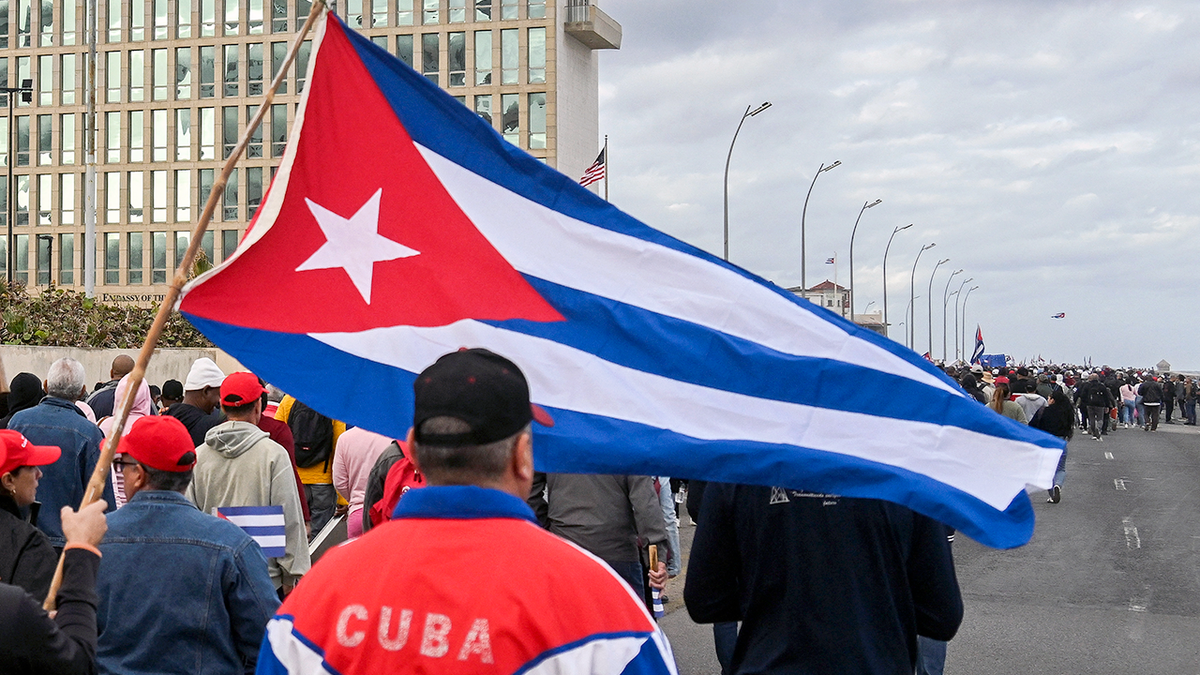
A man waves a Cuban flag at a protest. (Yamil Lage/Getty Images)
The Sheinbaum administration, which did not respond to a request for comment, has reportedly painted its shipments as «humanitarian aid» for the Cuban people.
If Mexico continues oil shipments, it may lead to additionally tense relations between the U.S. and its southern neighbor, already frayed by Trump’s disdain for Sheinbaum’s steadfast refusal to allow American intercession against drug cartels.
If the shipments slacken, that may portend well for the aforementioned upcoming trade negotiations.
As for Cuba, many pro-democracy voices, particularly among the South Florida diaspora, hope the 66-year Castro/Diaz-Canel regime is not long for this world.
Martinez-Fernandez added the regime is likely facing one of the most difficult moments in its history; Mexico’s role aside.
RUBIO LAYS OUT THREE-PHASE PLAN FOR VENEZUELA AFTER MADURO: ‘NOT JUST WINGING IT’
In the 1990s, Cuba lost its larger «patron,» the Soviet Union, he said, and hit a rough patch until Hugo Chavez took power in 1999.
He added that while there has been Western concern about a Chinese foothold there, Beijing appears to have largely «cut ties» and said «there’s nothing new here.»
CLICK HERE TO DOWNLOAD THE FOX NEWS APP
«I do think that there is a likely need for additional developments before we see… That kind of next step collapse of the regime itself,» he said.
Fox News Digital reached out to the White House, Commerce Department and the Palacio Nacional for comment.
venezuelan political crisis,cuba,mexico,location mexico,donald trump,energy


La disputa que sacude a uno de los conglomerados inmobiliarios más grandes de Chile

Sesiones extraordinarias: se oficializó el tratamiento de la Ley Penal Juvenil y amplió el temario

La madre del español Pablo Longoria, presidente del Olympique de Marsella, clave en el fichaje de Mason Greenwood

Clima en AMBA, en vivo: alerta por calor en aumento y avance de tormentas hoy, martes 27 de enero

Post-Maduro, pressure builds on Mexico over Cuba’s new oil lifeline

Cuál es el factor clave que explica por qué el riesgo país quedó cerca de perforar los 500 puntos

Carlos Pagni habló sobre las preocupaciones de Cristina Kirchner: “Tiene miedo porque sabe que se viene algo malo”

Mientras Quilmes arde, Mayra Mendoza viaja a Bogotá para defender a Cristina Kirchner

Juan Grabois contó que le pidieron plata para ir a un programa de C5N

El terrible accidente de Marcela Tauro en Intrusos que causó preocupación: “No puedo caminar ni…”

 POLITICA3 días ago
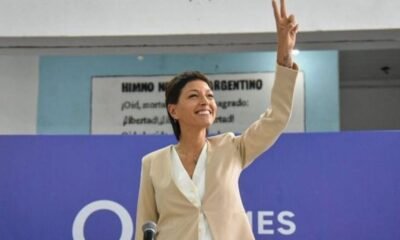
Mientras Quilmes arde, Mayra Mendoza viaja a Bogotá para defender a Cristina Kirchner
- POLITICA2 días ago
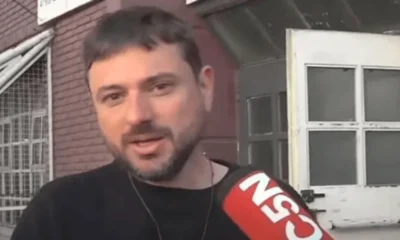
Juan Grabois contó que le pidieron plata para ir a un programa de C5N
- POLITICA3 días ago
La apuesta del Gobierno por la “Argentina Week” en Nueva York: los funcionarios y líderes de sectores estratégicos que asistirán