INTERNACIONAL
From Caracas to Chicago: Trump’s Article II powers face their biggest tests yet


NEWYou can now listen to Fox News articles!
President Donald Trump has spent the bulk of his second White House term testing the limits of his Article II authorities, both at home and abroad – a defining constitutional fight that legal experts expect to continue to play out in the federal courts for the foreseeable future.
These actions have included the U.S. capture of Venezuelan strongman Nicolás Maduro, who was deposed during a U.S. military raid in Caracas earlier this month, and Trump’s continued fight to deploy National Guard troops in Democrat-led localities, despite the stated objections of state and local leaders.
The moves have drawn reactions ranging from praise to sharp criticism, while raising fresh legal questions about how far a sitting president can go in wielding power at home and abroad.
Legal experts told Fox News Digital in a series of interviews that they do not expect Trump’s executive powers to be curtailed, at least not significantly or immediately, by the federal courts in the near-term.
TRUMP OUSTING OF MADURO DRAWS PARALLELS TO US RAID IN PANAMA – BUT THERE ARE SOME MAJOR CONTRASTS
Federal law enforcement personnel stand watch outside the Metropolitan Detention Center as they await the arrival of captured Venezuelan President Nicolás Maduro, Saturday, Jan. 3, 2026, in New York. (Yuki Iwamura/AP)
Despite near-certain challenges from Maduro – who would likely argue any U.S. arrest in Venezuela is illegal, echoing Manuel Noriega’s failed strategy decades ago – experts say Trump’s Justice Department would have little trouble citing court precedent and prior Office of Legal Counsel guidance to justify his arrest and removal.
U.S. presidents have long enjoyed a wider degree of authority on foreign affairs issues – including acting unilaterally to order extraterritorial arrests. Like other U.S. presidents, Trump can cite guidance published in the late 1980s to argue Maduro’s arrest was made within the «national interest» or to protect U.S. persons and property.
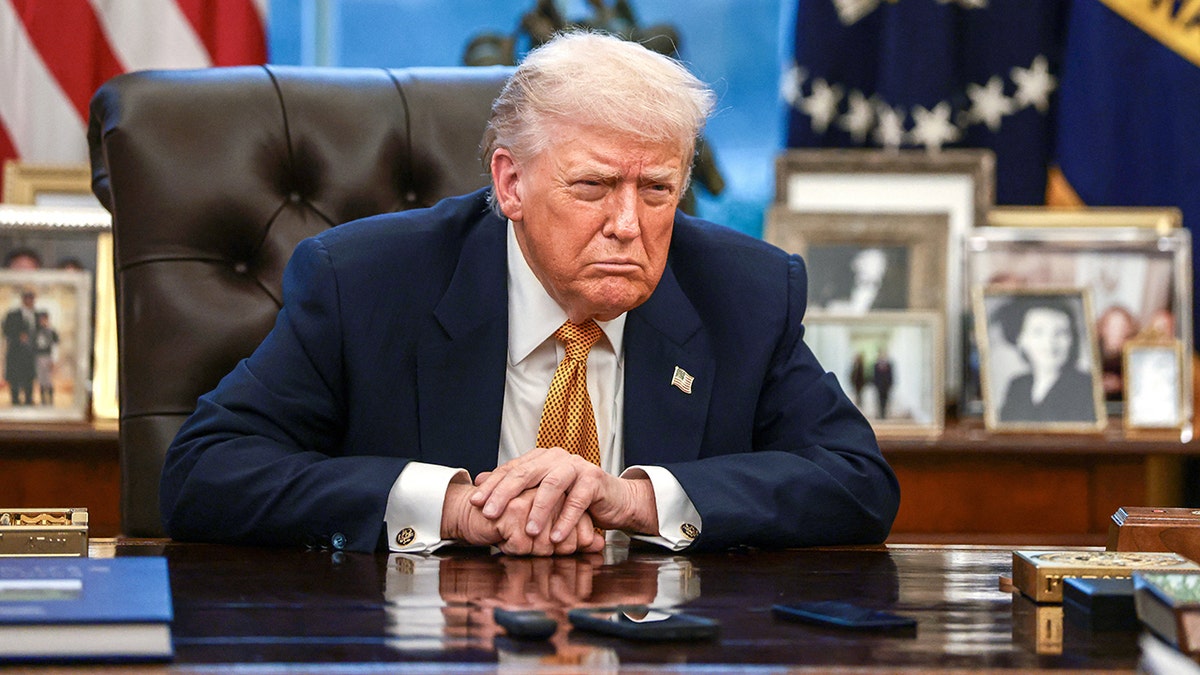
President Donald Trump is seen in the Oval Office in the White House in Washington, D.C., on Wednesday, Jan. 14, 2026. (Evelyn Hockstein/Reuters)
Even if an arrest were viewed as infringing on another country’s sovereignty, experts say Trump could cite ample court precedent and longstanding Office of Legal Counsel and Justice Department guidance to argue the action was legally sound.
A 1989 memo authored by then-U.S. Assistant Attorney General Bill Barr has surfaced repeatedly as one of the strongest arguments Trump could cite to justify Maduro’s capture. That OLC memo states that «the president, pursuant to his inherent constitutional authority, can authorize enforcement actions independent of any statutory grant of power.» It also authorizes FBI agents to effectuate arrests ordered by the president under the «Take Care» clause of the U.S. Constitution, and says the authority to order extraterritorial arrests applies even if it impinges «on the sovereignty of other countries.»
Importantly, federal courts have read these powers to apply even in instances where Congress has not expressly granted statutory authorization to intervene.
DEFIANT MADURO DECLARES HE IS A ‘PRISONER OF WAR’ IN FIRST US COURT APPEARANCE
«When federal interests are at stake, the president, under Article II, has the power to protect them,» Josh Blackman, a constitutional law professor at the South Texas College of Law, told Fox News Digital in an interview.
That’s because Article II, at its core, is «the power for a U.S. president to protect [its] people,» Blackman said.
«The reason why we detained Maduro was to effectuate an arrest. DOJ personnel and FBI agents were there to arrest him and read him his rights. And the reason why we used 150 aircraft, and all the other military equipment, was to protect the people who were going to arrest Maduro,» he added. «It was a law enforcement operation, but [with] military backing to protect them – so Article II does factor in here, indirectly.»
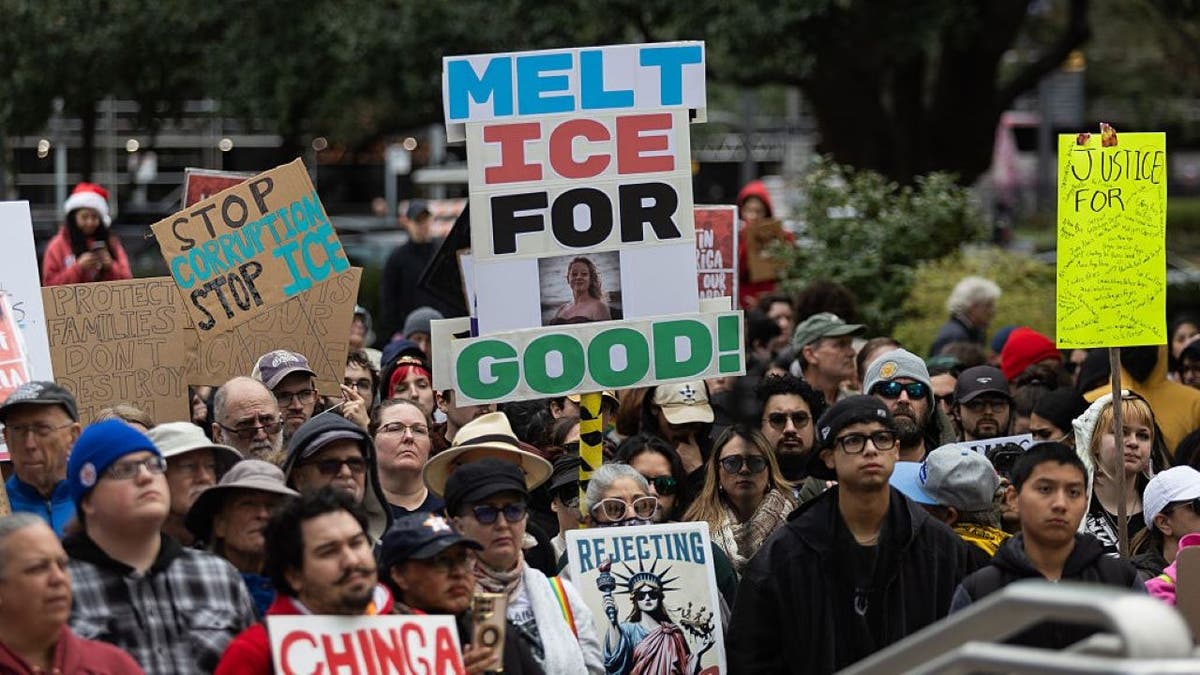
Protesters gather outside City Hall in Houston, Texas, on Jan. 10, 2026, for a demonstration against Immigration and Customs Enforcement (ICE). (Reginald Mathalone/NurPhoto via Getty Images)
Though Trump himself has not cited a legal justification for the invasion, senior administration officials have, including Secretary of State Marco Rubio and Secretary of War Pete Hegseth, who described Maduro’s arrest respectively, as a mission to indict two «fugitives of justice,» and as a «joint military and law enforcement raid.»
In Minnesota, next steps for Trump are a bit more fraught.
Trump’s National Guard deployment efforts were stymied by the Supreme Court in December, after the high court halted Trump’s National Guard deployments under Title 10.
Trump had deployed the federalized troops to Illinois and Oregon last year to protect ICE personnel. But the high court issued an interim order rejecting Trump’s bid, noting that under Title 10, the administration could not federalize the National Guard until it first showed they tried to authorize the regular military to enforce the laws but could not do so.
Some court watchers have noted that the ruling essentially closes off alternatives for Trump to act.
Instead, Trump could opt to enact his Article II «protective powers» domestically via a more sweeping and extreme alternative.
MIKE DAVIS: WHAT IS HAPPENING IN MINNESOTA IS WHY WE HAVE THE INSURRECTION ACT

Supreme Court Justices Samuel Alito, Clarence Thomas and Brett Kavanaugh are seen at the U.S. Capitol on Jan. 20, 2025, in Washington, D.C. (Chip Somodevilla/Pool/AFP via Getty Images)
This includes the use of the Insurrection Act to call up active-duty U.S. troops and order them deployed to Minnesota and elsewhere.
The Insurrection Act is a broad tool that gives presidents the authority to deploy military forces in the U.S. when «unlawful obstructions, combinations, or assemblages, or rebellion» make it «impracticable to enforce the laws.»
Critics note it is a powerful, far-reaching statute that could grant Trump an expansive set of powers to act domestically in ways that are not reviewable by Congress or by the courts.
Jack Goldsmith, a Harvard Law professor and former U.S. Assistant Attorney General, noted this possibility in a recent chat with former White House counsel Robert Bauer. By «closing off this other statute,» he said, the Supreme Court «may have, some argue, driven the president in the direction of the Insurrection Act because this other source of authority was not available.»
Trump allies, for their part, have argued that the president has few other options at his disposal in the wake of the Supreme Court’s interim ruling.
Chad Wolf, the America First Policy Institute’s chair of homeland security and immigration, told Fox News Digital last week that Trump could have «little choice» but to invoke the Insurrection Act.
«If the situation on the ground in Minneapolis continues to grow violent, with ICE officers being targeted and injured as well as other violent acts … Trump will have little choice,» he said.
CLICK HERE TO GET THE FOX NEWS APP
Experts are split on to what degree there is a through-line between the two issues.
Blackman, the South Texas College of Law professor, said the «point of connection» in Trump’s actions is the presidential «power of protection» under Article II, which he said applies both abroad and at home. «The president can protect his law enforcement domestically, and he can protect his law enforcement abroad, both under Article II.»
Fox News Digital’s Ashley Oliver contributed to this report.
donald trump,politics,supreme court,minnesota fraud exposed,federal courts,national security,venezuelan political crisis








INTERNACIONAL
Canada’s Carney under pressure to act after synagogues shot at in latest antisemitic incidents
NEWYou can now listen to Fox News articles!
Over the weekend, two Toronto synagogues were attacked by gunfire. Several days earlier, another synagogue was hit by around twenty gunshots on the Jewish holiday of Purim.
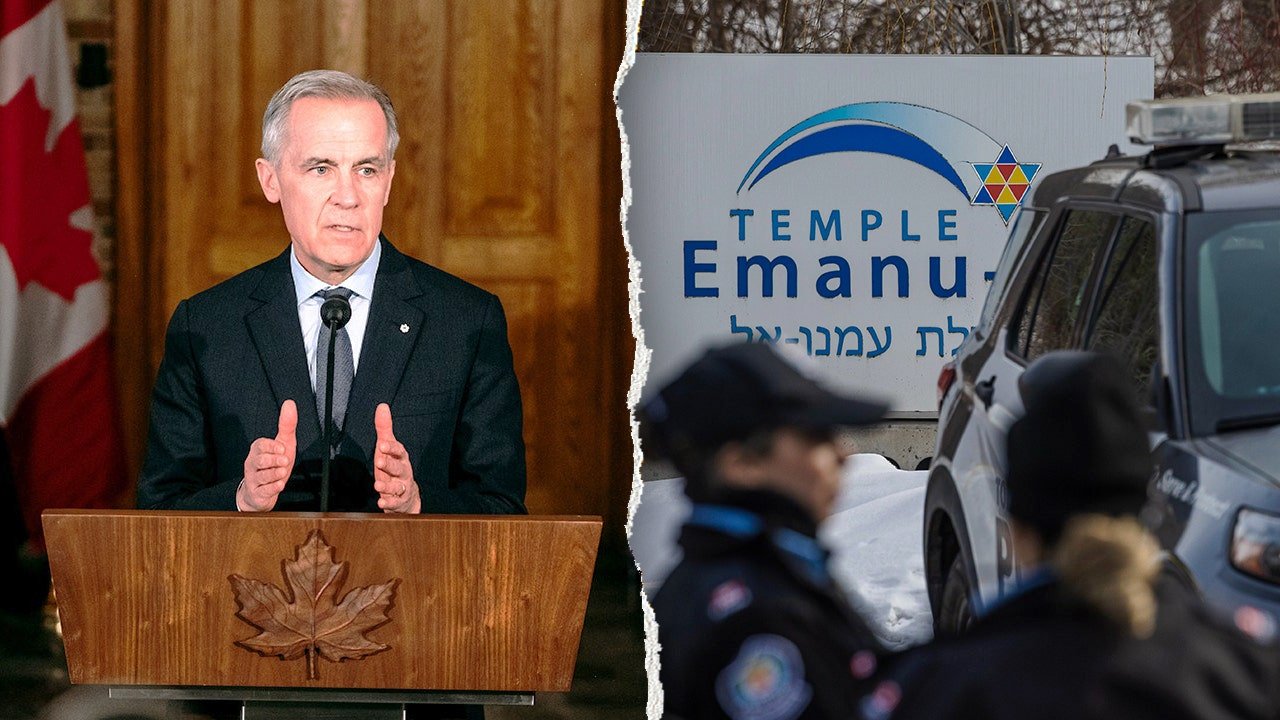
Though the three attacks caused no injuries, many in the Jewish community are demanding concrete action from Prime Minister Mark Carney — not just words of comfort that have typically followed such antisemitic incidents.
Carney took to X saying that the «antisemitic and criminal attacks violate the right of Canadian Jewish men and women to live and pray in complete safety» and «represent a serious assault on the way of life of all Canadians.»
ISRAELI MINISTER WARNS CANADA IS ‘MARCHING TOWARD THE ABYSS’ AFTER JEWISH MAN ATTACKED IN FRONT OF CHILDREN
Temple Emanu-El in Toronto, Canada was shot at on March 3, 2026. No injuries were reported. (Nick Lachance/Toronto Star via Getty Images)
In the aftermath of the first synagogue attack, Israel’s National Security Council warned Israelis overseas to «maintain vigilance and adhere to safety precautions.» Among their suggestions were for Israelis to «conceal Jewish and Israeli identifiers while in public spaces,» to be aware of surroundings «in areas associated with Israel or Judaism,» and to «avoid visiting sites identified as Jewish or Israeli.»
On X, Israeli President Isaac Herzog said that «all eyes are on Canada: it’s time to halt the unprecedented wave of Jew-hatred that has erupted since October 7th.»
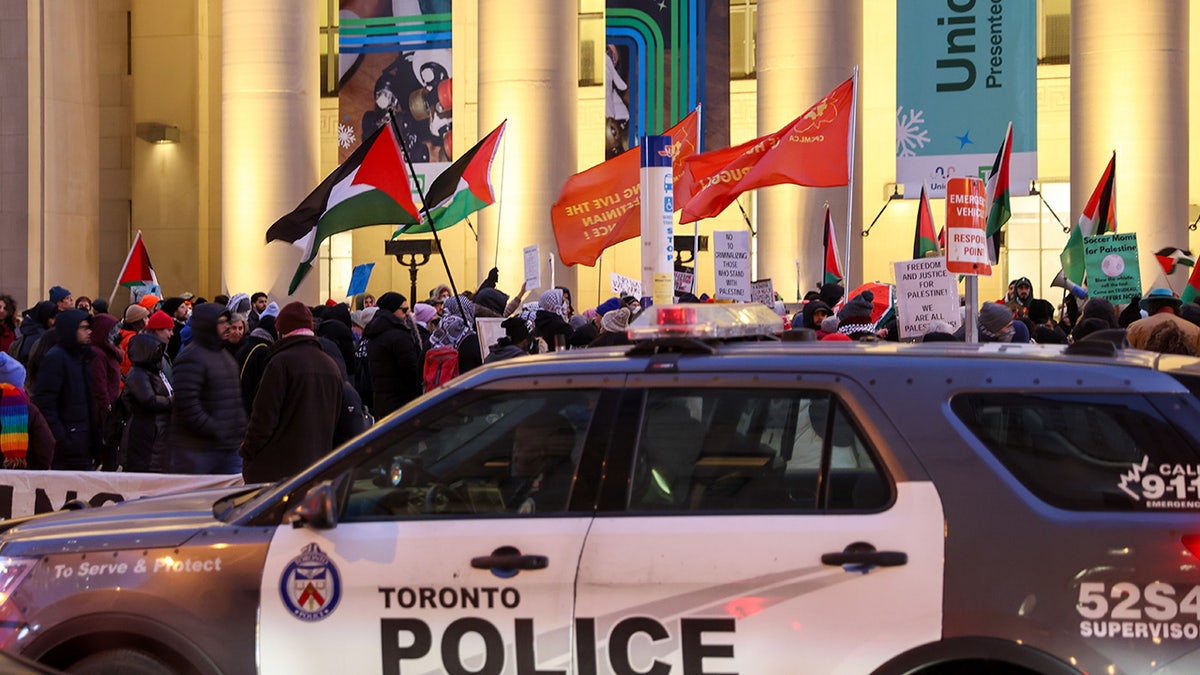
Anti-Israel demonstrators gather outside Union Station during a rally in Toronto, Ontario on Jan. 4, 2024. (Mert Alper Dervis/Anadolu via Getty Images)
Like many Western countries, Canada has seen a marked rise in annual antisemitic incidents since the Hamas terror attack in Israel on Oct. 7, 2023. The League for Human Rights B’nai Brith Canada found that there were 6,219 incidents of antisemitism in Canada in 2024. This constituted an average of 17 incidents per day, more than double the eight incidents per day calculated in 2022.
CANADA’S ANTISEMITISM ENVOY RESIGNS, CITING EXHAUSTION AMID HATE SURGE
While figures for 2025 have yet to be released, Public Safety Canada noted that from April to June 2025, «Among hate crimes targeting religion… the majority were directed at the Jewish community (69%).»
Conservative MP Roman Baber, said the behavior of Canadian Prime Minister Mark Carney and other liberal Canadian politicians have been «adding fuel to the fire of Jew hatred in Canada.»
Baber aimed further criticism at Carney, saying, «When the Prime Minister on the campaign trail says he knows there is genocide in Gaza, he engages in Jew hatred.»
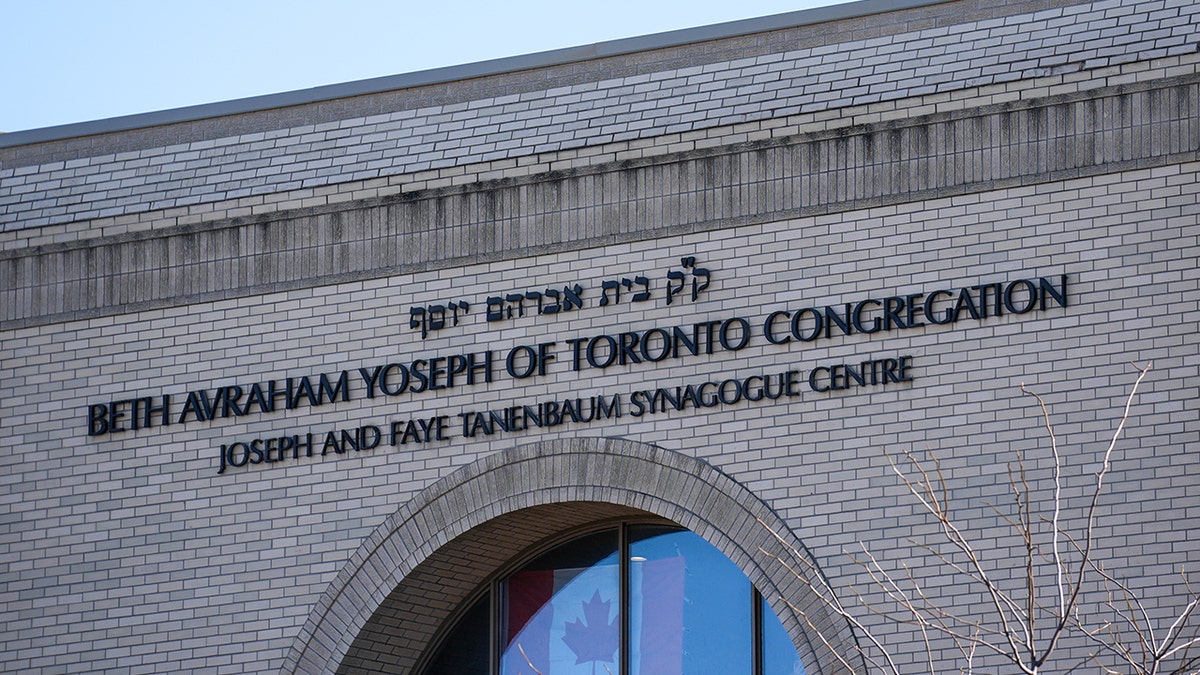
General view of Beth Avraham Yoseph of Toronto synagogue in Thornhill, north of Toronto, Ontario. The place of worship was one of three synagogues attacked in early March 2026.
Baber was referring to an event in April 2025 during which a heckler yelled over a bustling crowd that «there is a genocide happening in Gaza.» Carney responded, «I’m aware, that’s why we have an arms embargo.»
SKYROCKETING ANTISEMITISM IN CANADA SPARKS CONCERN FOR COUNTRY’S JEWS AHEAD OF ELECTION
Carney later said that he did not hear the heckler use the term «genocide.»
Baber noted that «when the Prime Minister recognized the Palestinian state, he rewarded the brutality of Hamas, and he did so on the eve of Rosh Hashanah.»
In his announcement, released the day prior to the Jewish holiday, Carney claimed that recognizing «the State of Palestine, led by the Palestinian Authority, empowers those who seek peaceful coexistence and the end of Hamas,» and «in no way legitimizes terrorism, nor is it any reward for it.» He also claimed recognition «in no way compromises Canada’s steadfast support for the State of Israel, its people, and their security.»
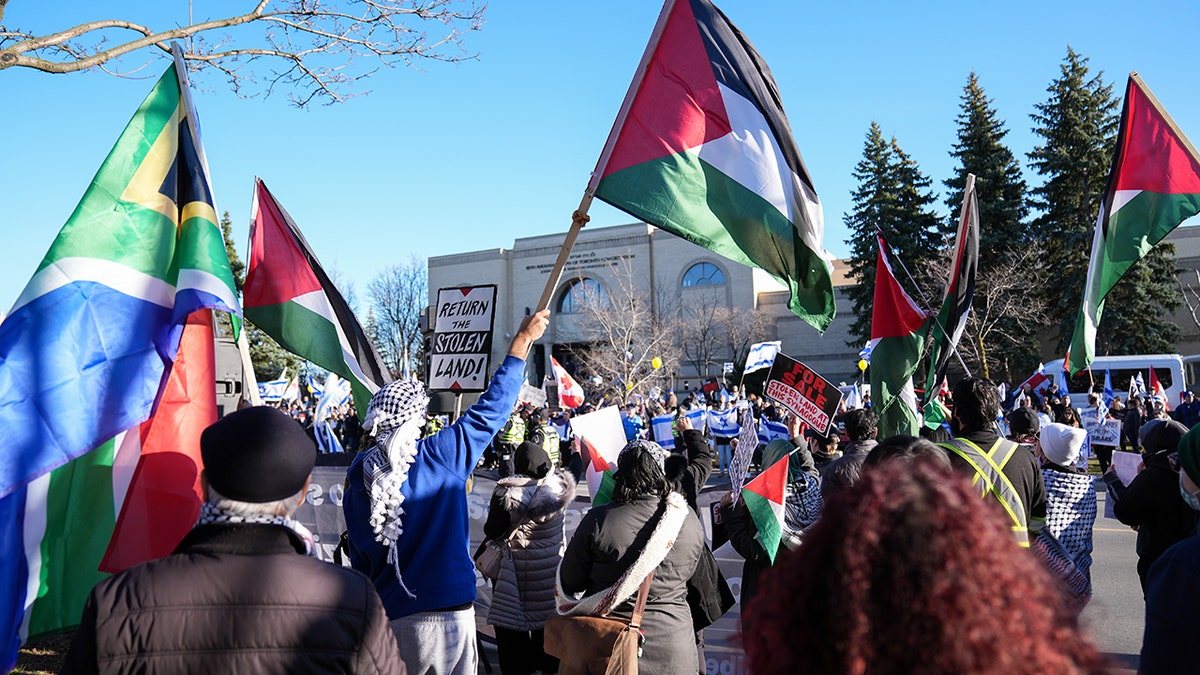
Anti-Israel protesters gather outside the Beth Avraham Yoseph of Toronto synagogue on March 7, 2024. The place of worship was one of three synagogues shot at in the first week of March 2026. (Mert Alper Dervis/Anadolu via Getty Images)
Watchdog organization StopAntisemitism told Fox News Digital that «every day we are seeing painful reminders that antisemitism remains a real and dangerous threat. Acts of violence meant to intimidate or silence our community will not succeed. Loud and proud Jews will not allow hatred or fear to deter our Jewish way of life or our presence in the world. Not in Canada, in the United States, in Europe, and certainly not in Israel.»
CLICK HERE TO DOWNLOAD THE FOX NEWS APP
StopAntisemitism called for the perpetrators to «be punished to the fullest extent of the law so that justice is served and deterrence is clear.»
anti semitism,canada,terrorism,mark carney,israel
INTERNACIONAL
Illegal immigrant’s two decades of unlawful votes expose the real ‘threat’ to democracy: Experts
NEWYou can now listen to Fox News articles!
After an illegal immigrant was discovered to have been voting for more than a decade in Philadelphia, immigration experts are warning that the «system can fail» and that loss of voter confidence represents the true «serious threat» to American democracy.
In an interview with Fox News Digital, Simon Hankinson, a senior research fellow at the Heritage Foundation, said that «the most important thing is perception.»
«People have to believe that their vote counts. And so that’s, I think, a much more serious long-term threat,» said Hankinson.
«We have a perception in the United States,» he continued, «that elections were free and fair. If even the appearance of impropriety, the appearance of corruption, is bad enough to turn people off, to make people not interested in going to vote, to think, ‘Well, my vote doesn’t count anyway.’ Then that’s really what undermines democracy.»
WATCH: DEM WITNESS ACCUSES TRUMP OF ‘POPULATION PURGE,’ KENNEDY FIRES BACK: ‘YOU TRIGGER MY GAG REFLEX’
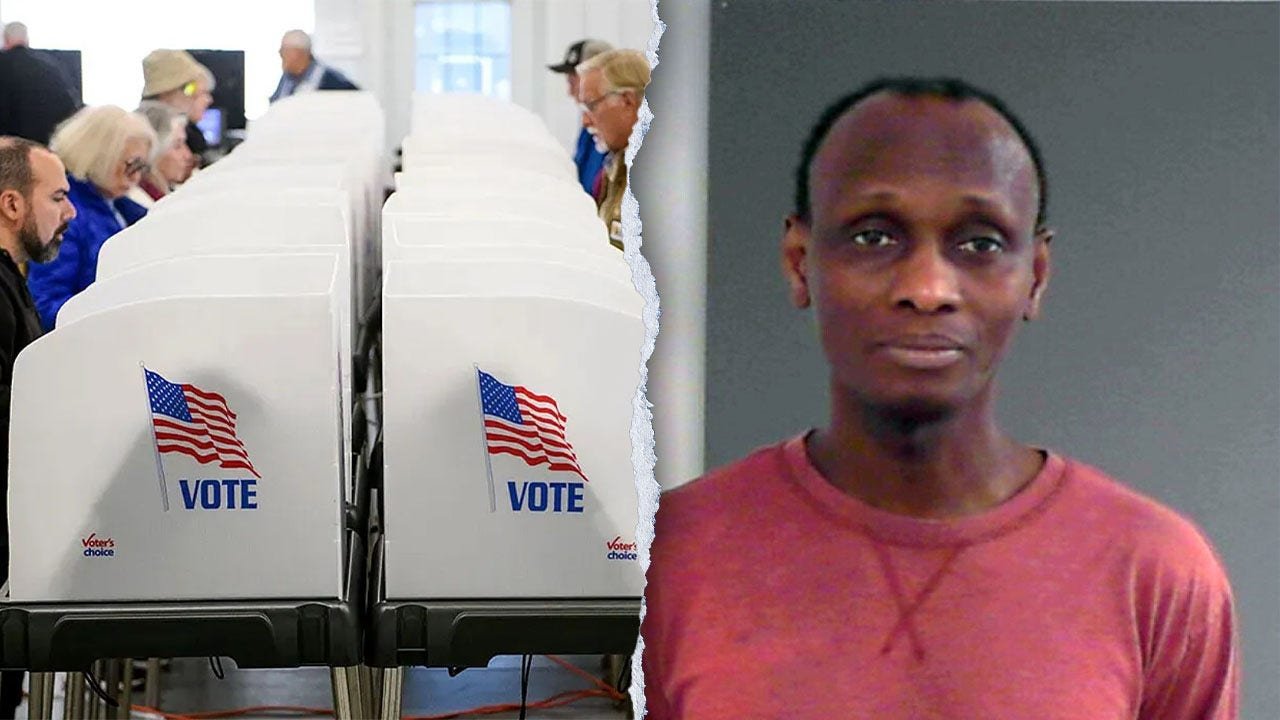
Mahady Sacko, a Mauritanian citizen living in the United States illegally, has fraudulently voted in every federal election dating back to 2008, federal prosecutors said. (Department of Homeland Security; Getty Images)
Earlier this week, Fox News Digital learned that Mahady Sacko, a Mauritanian citizen and illegal immigrant, allegedly voted in every federal election since 2008. He has been arrested by U.S. Immigration and Customs Enforcement and charged with voter fraud in Philadelphia. This comes as congressional lawmakers fiercely debate the SAVE Act, a measure proponents say would strengthen election integrity laws.
Despite being given a removal order in 2000, Sacko, 50, registered to vote in 2005 and falsely stated on several occasions that he was a U.S. citizen, authorities allege. The voting records showed that he cast ballots in the general elections in 2008, 2012, 2016, 2020 and 2024. In addition, he voted in the 2016 and 2020 primary elections, prosecutors said.
Hankinson said that while he believes such cases are more isolated and are not widely prevalent in the U.S., it is a «potentially big problem, and it’s one that’s very easy to fix.»
«The average Joe who does vote doesn’t think he’s setting fire to his ballot. He thinks it’s actually going to count for something. That’s what’s at risk here,» Hankinson continued, adding, «That I think is a long-term serious threat to our democracy.»
Meanwhile, Catherine Engelbrecht, founder of the election integrity research group True the Vote, told Fox News Digital that «an illegal alien allegedly voting in every presidential election since 2008 is proof the system can fail — and we have no reliable, codified way to determine how many others may be doing the same.»
«Millions could be voting illegally, but we don’t know because comprehensive voter roll audits are being fought tooth and nail, instead of being standard operating procedure,» she went on. «What’s most disturbing is how vicious the fight has become to block analyses, stop audits, and shut down even the most basic questions about eligibility and voter record maintenance.»
«That kind of resistance leaves millions of Americans with the unmistakable impression that something is very wrong in our system, and that feeling, that loss of trust, is likely the biggest impact of all.»
SPARKS FLY AS GOP SENATOR REACTS TO BIDEN ADVISOR’S ‘I DON’T KNOW’ ANSWER ON ILLEGAL IMMIGRATION LAW

Catherine Engelbrecht, founder of True the Vote, warned that «millions» could be voting illegally. (SETH HERALD/AFP via Getty Images and Jabin Botsford/The Washington Post via Getty Images)
She posited that «we should treat voter rolls the way serious industries treat sensitive record management.» She suggested bringing in independent third-party auditors, setting clear state and national standards, and using real-time verification of identity, residency, and citizenship as a matter of routine.
«The data exists, the technology exists, and other sectors use it every day — what’s missing is political will to apply those same basic safeguards to our elections,» she said.
On the other hand, in a statement shared with Fox News Digital, David Becker, executive director of the Center for Election Innovation & Research (CEIR), said, «We have a very good sense of the depth of the problem here» and «it is extremely rare that noncitizens get registered, and it is infinitesimally rare that they vote.»
CEIR released its latest review of noncitizen registration and voting claims last month. That review concluded, «CEIR continues to find that sweeping allegations about noncitizen registrations or voting appear to arise from misunderstandings, mischaracterizations, or outright fabrications about complex voter data.»
Becker said that President Donald Trump’s «own Department of Homeland Security has checked more than 49 million voter records, and they themselves admit that 99.98% of those records represented confirmed citizens.»
He added that «in several states that are politically aligned with President Trump, the number of alleged noncitizen voters has precipitously dropped when subjected to scrutiny.»
«We see consistently that the number of potential or confirmed noncitizens registered is very small, and those who are voting are even smaller,» he said.
FBI ARRESTS ALLEGED MS-13 MEMBER ACCUSED IN EL SALVADOR PASTOR’S KILLING
Hans von Spakovsky expressed that «every vote by an alien cancels and effectively voids the vote of a citizen.» (Joe Raedle/Getty Images)
However, Hans von Spakovsky, a former commissioner at the Federal Election Commission and a senior legal fellow at Advancing American Freedom, told Fox News Digital, «The point is that we have an honor system currently with most states doing absolutely nothing to verify citizenship. And we have hundreds of close elections all the time in this country where even a small number of aliens could make the difference in an election.»
CLICK HERE TO DOWNLOAD THE FOX NEWS APP
He shared information from his 2024 testimony to Congress in which he said that findings based on official registration records of thousands of aliens showed they are registered in various jurisdictions, including Arizona, Illinois, Michigan, North Carolina, New Jersey, Pennsylvania and Virginia, and sanctuary cities like Philadelphia and Chicago.
Despite these reports, he said, «virtually no prosecutors have expressed any interest in investigating and potentially prosecuting these aliens.»
«The indicators that it is occurring are there, and it is important to understand that every vote by an alien cancels and effectively voids the vote of a citizen,» he said.
Fox News Digital’s Louis Casiano contributed to this report.
voting,immigration,elections,migrant crime,illegal immigrants,philadelphia


Por qué ocultaron el embarazo Kate Middleton: el escándalo que salpicó a la realeza

Un diputado peronista es investigado por trata de personas y el oficialismo evalúa su apartamiento

El peronismo recupera lugares en las comisiones y el Senado sesionará la semana que viene

Canada’s Carney under pressure to act after synagogues shot at in latest antisemitic incidents

Gigante de las baterías cierra líneas producción para traer producto desde Brasil y prevén despidos

Illegal immigrant’s two decades of unlawful votes expose the real ‘threat’ to democracy: Experts

La cruda confesión de Amalia Granata por el trastorno que sufre su hijo Roque: “Le hicimos estudios y salió que tiene TDAH, dislexia y disgrafia”

El mercado le está corriendo el arco a Caputo y el riesgo país no baja: en la City palpitan medidas

Jenny Mavinga angustiada tras una quemadura en Gran Hermano 2026: “¡Ay, me quemó!

¿Fraude? Robertito Funes Ugarte contó todo sobre el “porro” y el celular dentro de Gran Hermano: “Se dice que les pasan información a los chicos”

 CHIMENTOS3 días ago
La cruda confesión de Amalia Granata por el trastorno que sufre su hijo Roque: “Le hicimos estudios y salió que tiene TDAH, dislexia y disgrafia”
- ECONOMIA3 días ago
El mercado le está corriendo el arco a Caputo y el riesgo país no baja: en la City palpitan medidas
- CHIMENTOS2 días ago
Jenny Mavinga angustiada tras una quemadura en Gran Hermano 2026: “¡Ay, me quemó!