INTERNACIONAL
House candidate predicts historic rise of ‘new generation’ in Congress as parties target key demographic

NEWYou can now listen to Fox News articles!
After making historic inroads with Hispanic voters in the last several election cycles, the Republican Party is going all in on winning the Latino vote this midterm election. The party, which currently holds a razor-thin majority in the House of Representatives, is confident that Hispanic voters will help it retain and shape the future of its majority both this November and in the years to come.
Longtime South Texas Democratic Judge Tano Tijerina told Fox News Digital during an interview that he and Hispanics are ready to buck the Democrats and embrace a «new generation» of political leadership.
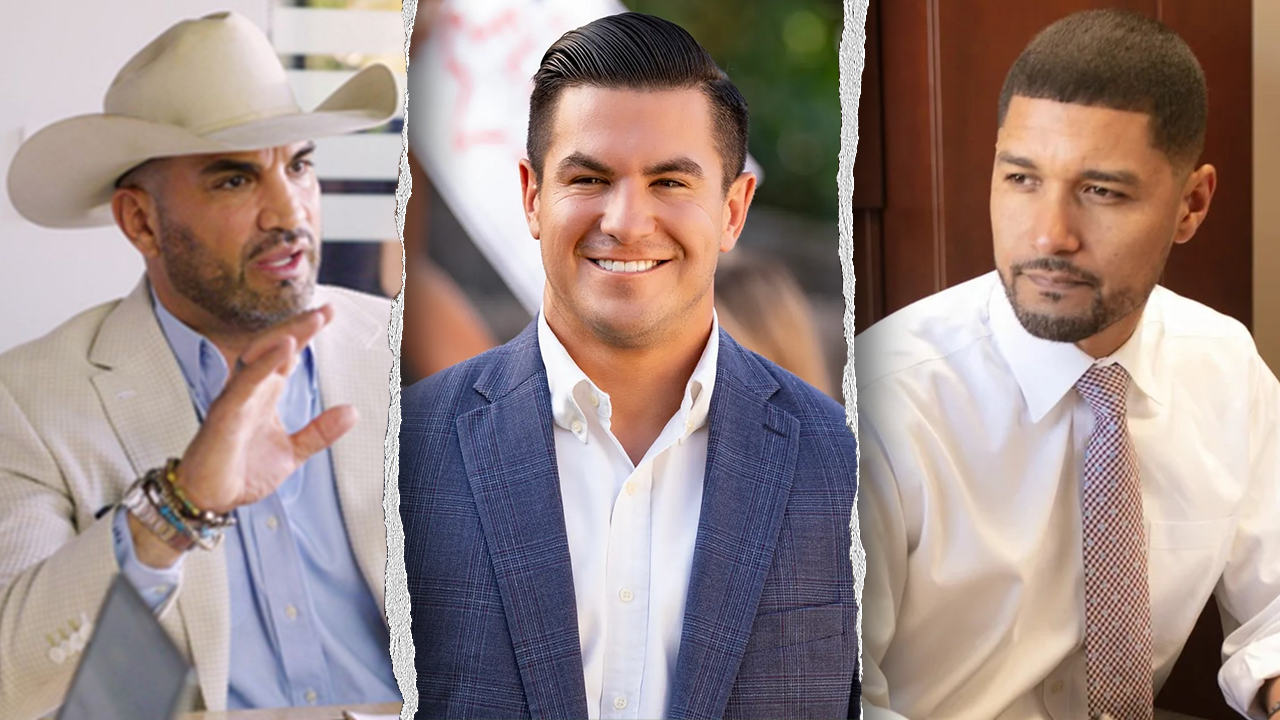
Alongside former assistant U.S. attorney Eric Flores and former California mayor Kevin Lincoln, Tijerina is one of three Hispanic Republicans running to unseat Democrats in Congress who have been endorsed by President Donald Trump. There are eight other Hispanic Republicans running in competitive, heavily Latino districts in border states, Texas, New Mexico and California.
If elected, these candidates will join an already influential group of Hispanics in Congress, including Reps. Maria Salazar, R-Fla., Monica De La Cruz, R-Texas, Nicole Malliotakis, R-N.Y., Juan Ciscomani, R-Ariz., and Gabe Evans, R-Colo.
HEALTHCARE, ECONOMY AND THE ‘ONE BIG BEAUTIFUL BILL’: WELCOME TO THE MIDTERMS
From left to right: Judge Tano Tijerina, Eric Flores and Kevin Lincoln. (Courtesy of National Republican Congressional Committee)
Tijerina is running to unseat longtime Democratic Rep. Henry Cuellar in a district along the Texas-Mexico border. He said that despite long being a Democratic stronghold, the Biden administration’s mismanagement of the border and prioritization of DEI «really opened up a lot of eyes of the Hispanics down here in South Texas.»
«Being a Democrat after so many years, I’m just sick and tired of seeing all the social issues that the Democrats are [promoting]. And I’m not the only one. That’s why Webb County, that’s why South Texas, voted for Trump plus 10 numbers.»
«We have always been conservative, everybody knows it,» he went on, adding, «Down here in South Texas, the only thing that we care about is good-paying jobs [and] making sure that we’re getting protected.»
Cuellar also counts himself as one of the last «blue dog» conservative Democrats in the House of Representatives. He was highly critical of the Biden administration’s handling of the border and immigration issues. Cuellar has said that it was this stance that led to him being indicted by the Biden Department of Justice on foreign bribery charges. He was later given an unconditional pardon by Trump, who also posited that the charges were politically motivated.
Though there was much speculation that Cuellar would switch parties after his pardon, he rebuffed those rumors, saying he would remain a blue dog Democrat. Tijerina said that it is just as well because the people of South Texas «deserve somebody that’s actually going to go fight for them and not fight for themselves.»
«[Cuellar] comes around and says, ‘I’m your money guy, I’m the one that brings the money.’ When in all reality, I, as a county judge, know that we’ve gone through commissioner’s court, we’re the ones with the ideas, we’re are the ones that ask for the federal funding, we’re the ones who do the cash match,» said Tijerina.
«Henry’s been for Henry all these years, and it’s very obvious,» he went on. «It’s time for a new generation.»
CALL TO DUTY: IN BATTLE FOR HOUSE, REPUBLICANS AND DEMOCRATS LOOKING TO VETERANS

Rep. Henry Cuellar, D-Texas, was accused of taking more than half a million dollars in bribes from an Azerbaijan-owned energy company and a Mexican bank. He was pardoned by President Donald Trump on the grounds that he was being targeted for political reasons. (Tom Williams/CQ-Roll Call, Inc via Getty Images)
In response, Democratic Congressional Campaign Committee Spokesperson Madison Andrus told Fox News Digital that «during his time in office, Congressman Cuellar has brought billions of dollars back home to South Texas through his powerful position on the House Appropriations Committee.»
Andrus knocked Tijerina for «fighting for a controversial $10 million spending project in Webb County» to purchase property for a new tax office.
«Tano should focus on his own backyard and do his homework on how members bring money back to their districts,» she said.
A national Democratic strategist told Fox News Digital that Tijerina’s assertion that Cuellar has failed to bring money back to the district stems from a «misunderstanding» of how the House appropriations process works.
«Just based on how the House works, Tano will not be able to bring as much money to the district as Cuellar is,» said the strategist, adding, «It is exceedingly rare that a freshman member of Congress gets a seat on the Appropriations Committee. So, Tano would not be able to sit on it, that just wouldn’t happen. And so, that would necessarily lead to a significant decrease in the federal funding that Texas 28 would get.»
SENATE MAJORITY LEADER JOHN THUNE PREVIEWS REPUBLICAN MIDTERM MESSAGE HEADING INTO 2026
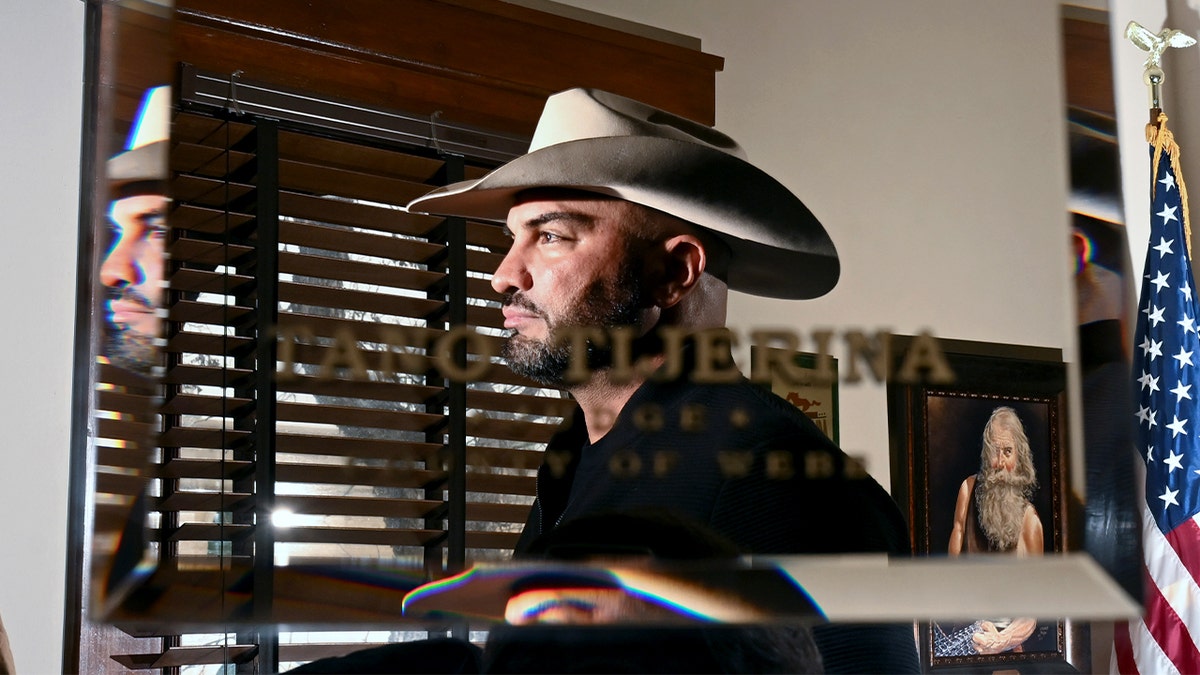
Webb County Judge Tano Tijerina poses for a portrait in his office on February 20, 2025, in Laredo, Texas. (Matt McClain/The Washington Post via Getty Images)
Tijerina, however, is not the only candidate forecasting that the Democrats’ hold on the Hispanic vote is nearing its end.
«For too long, Democrats took South Texas for granted, assuming our votes were virtually guaranteed, while they turned their backs on our values,» said Flores, an Army veteran running as a Republican in the Texas Rio Grande Valley.
Flores asserted that Democrats have «traded the needs of hardworking families for a radical agenda that has left our borders open and our economy in shambles.»
Lest one think this phenomenon is isolated to the Texas border, this sentiment was further echoed by Lincoln, a Marine veteran who is also running in California.
Lincoln told Fox News Digital that Hispanic families in the California Central Valley are «feeling the crushing pressures of the affordability crisis driven by Democrats from Sacramento to Washington who put political ideology ahead of kitchen table issues.»
«Generations of families like mine came to America in pursuit of the American Dream, and the Republican Party is earning their trust by working to restore the affordability and opportunity that allows working families to get ahead again,» said Lincoln.
GOP SEIZES ON DEM CIVIL WAR AS PROGRESSIVES JUMP INTO KEY 2026 SENATE RACES: ‘THEY’RE IN SHAMBLES’

A woman holds a sign expressing Latino support for Republican presidential candidate Donald Trump at his campaign rally at the Orange County Fair and Event Center, April 28, 2016, in Costa Mesa, California. (DAVID MCNEW/AFP via Getty Images)
Despite this, the Democratic Party is also leaning into the affordability message and remains confident that Hispanic voters will stand by them.
«While Republicans are pushing policies that make everyday life unaffordable, Democrats are focused on lowering costs, creating good-paying jobs, and protecting health care for every American,» DCCC spokesperson Bridget Gonzalez told Fox News Digital.
«Latino voters see through the GOP’s empty, hypocritical rhetoric because they’re living with the consequences of Republican extremism every day,» said Gonzalez, adding, «Republicans can trot out all the talking points they want, but Latino families know who’s actually fighting for them — it’s the Democrats.»
CLICK HERE TO DOWNLOAD THE FOX NEWS APP
Meanwhile, National Republican Congressional Committee spokesman Christian Martinez told Fox News Digital that «outstanding» candidates like Flores, Lincoln and Tijerina «reflect their communities, understand the challenges working families face, and are stepping up to help grow a House majority focused on opportunity, security, and the American Dream.»
«Republicans aren’t just talking about earning Hispanic voters’ trust, we’re continuing to work and build it,» said Martinez.
midterm elections,elections,culture trends,latino,texas,california









INTERNACIONAL
El narcotráfico dio una brutal muestra de poder de fuego ante el cambio de estrategia del gobierno mexicano
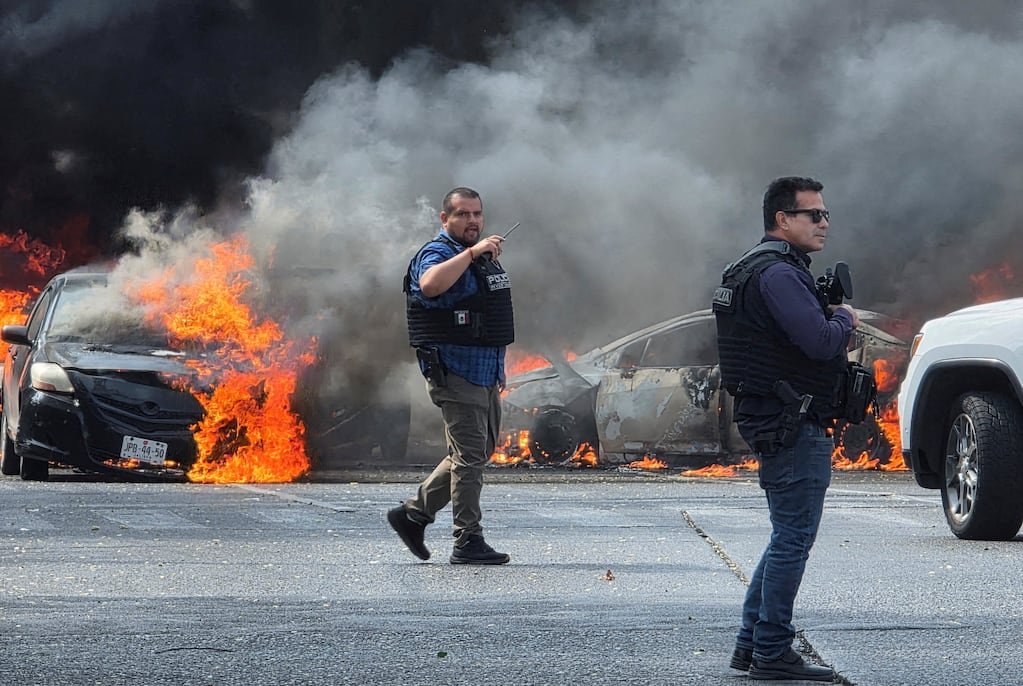
La violencia desatada tras la muerte del líder del Cartel de Jalisco Nueva Generación (CJNG), Nemesio Oseguera Cervantes, alias “El Mencho”, dejó al descubierto no solo el poder de fuego que maneja el narcotráfico en México, sino también un cambio evidente de la estrategia del gobierno en el combate contra el crimen organizado.
No fue un hecho sorpresivo. El narco domina vastas regiones donde impera su ley. Incluso, en muchos estados se convirtió en un importante empleador e impulsor de las economías locales en base a su connivencia y control del poder político y judicial.
Leé también: Nahuel Gallo exige asistencia consular y la visita de la Cruz Roja para levantar la huelga de hambre
Con 175.000 “soldados”, es hoy la quinta fuerza empleadora más grande del país, detrás de Fomento Económico Mexicano (la empresa embotelladora más grande de Coca-Cola en el mundo), Walmart, Manpower y América Móvil. Está por delante hasta de la petrolera estatal Pemex y el poderoso Grupo Salinas.
En ese escenario, el Cartel Jalisco Nueva Generación es uno de los más poderosos y violentos.
El académico mexicano Rafael Prieto Curial, investigador del Centro de Ciencias de la Complejidad, con sede en Viena, dijo a TN que el Cartel de Jalisco Nueva Generación tiene hoy 25.000 miembros.
La presión de Donald Trump y el cambio de estrategia de Claudia Sheinbaum
Algo cambió en México tras la asunción de Donald Trump hace un año. La presión ejercida por el presidente estadounidense sobre el gobierno de la izquierdista Claudia Sheinbaum derivó en un palpable cambio de estrategia en el combate al tráfico de drogas.
Hace seis años, las fuerzas federales mexicanas detuvieron y enseguida liberaron a Ovidio Guzmán, hijo de Joaquín “El Chapo” Guzmán, líder histórico del Cartel de Sinaloa, hoy sentenciado y detenido en una cárcel de máxima seguridad en Estados Unidos.
La presidenta de México, Claudia Sheinbaum (Foto: EFE)
Entonces, el gobierno del presidente Andrés Manuel López Obrador reconoció que habían liberado al hijo de El Chapo para evitar un baño de sangre.
Hoy, la estrategia es otra. El gobierno sabía que la muerte de El Mencho iba a derivar en una ola de caos y violencia como la que se vivió el domingo en vastas zonas de Jalisco, incluso en el turístico balneario de Puerto Vallarta.
Leé también: El mensaje de la presidenta de México tras la muerte del líder del Cártel de Jalisco: “Mantenernos en calma”
“Por presión de Estados Unidos, pareciera que se está cambiando la estrategia del gobierno respecto al narco. Esto hubiera sido impensable hace 10 años. El caso emblemático fue el de Ovidio Guzmán, detenido y liberado para evitar el caos que vemos hoy. Es una visión totalmente distinta”, dijo a TN el exdiputado Fernando Rodríguez Doval, ex secretario nacional del Partido Acción Nacional (PAN, derecha).
Para el dirigente, esta nueva táctica “puede acarrear rupturas en el seno del gobierno”.
“Pareciera que esta captura y abatimiento es respuesta a las presiones de Trump, Eso está cada vez más claro. Fue un operativo conjunto. Habrá que ver hasta dónde abarcó la cooperación. Si solo fue una colaboración de inteligencia o hubo algo más. Pero es evidente que fue una acción coordinada con el gobierno de Estados Unidos”, afirmó.
El poder del narcotráfico en México
El poder del narco mexicano ha crecido en forma exponencial en los últimos años.
Los carteles manejan ejércitos propios con un poder de fuego brutal que quedó plasmado en la ola de incendios de vehículos, cortes de rutas y tiroteos que siguieron a la muerte de El Mencho.

Un policía observa un vehículo calcinado que fue incendiado en una carretera de Guadalajara, Jalisco, México, el domingo 22 de febrero de 2026, tras la muerte del líder del Cártel Jalisco Nueva Generación, Nemesio Rubén Oseguera Cervantes, conocido como «El Mencho». (Foto AP/Alejandra Leyva)
“Su muerte derivó en el despliegue en alrededor de 10 estados de muchísima fuerza narco. Esto nos habla de la enorme fuerza del crimen organizado y la debilidad dramática del Estado a pesar del éxito del operativo”, dijo Rodríguez Doval.
Para el exlegislador, el narco creció de la mano de su connivencia con el poder político. “Eso le ha permitido crecer mucho, conquistando espacios cada vez más fuertes y dominar buena parte del territorio nacional”.
El poder es tan omnipresente que el tráfico de drogas es hoy solo una parte del negocio.
“Hoy se dedican a todo tipo de actividades. Antes eran solo las drogas, pero ahora se han diversificado con ´nuevos mercados´. Se dedican al tráfico de personas, el robo de autos, el cobro de extorsiones, el secuestro, venta de gasolina, peaje. Lo que vemos es una industria criminal presente en muchos ámbitos económicos», afirmó.
La sucesión en el Cartel de Jalisco Nueva Generación
En su diálogo con TN, Rafael Prieto Curial dijo que el abatimiento de El Mencho genera tres sensaciones diferentes.
“Por un lado, era el líder de uno de los carteles mas importantes del mundo, sanguinario, violento y con muchísimo poder en todos los estados del país. Su caída es algo bueno”, dijo.
Pero al mismo tiempo genera la reacción del cartel con “víctimas secundarias, pánico en la sociedad y acostumbrarse a que México es este país” dominado en vastas zonas por organizaciones criminales.
Finalmente, ahora se abre un panorama de enorme incertidumbre por la sucesión del poder en el grupo. “Si el cartel se fragmenta en más de una facción, como ocurrió con el de Sinaloa, podría terminar en una violencia terrible como sucede hoy en ese estado”, indicó.
“Pero si una persona distinta ocupa el lugar de El Mencho, el impacto es nulo. El cartel tiene mas o menos 25.000 miembros. Si pierde a uno, aunque sea el más importante, solo es uno. No estamos viendo a los otros 25.000 que siguen siendo parte del grupo. Lo feo es pensar que aquí termina la política de seguridad”, concluyó.
México, Narcotráfico
INTERNACIONAL
US assets in Middle East positioned for ‘highly kinetic’ war, ex-Pentagon official warns

NEWYou can now listen to Fox News articles!
The U.S. is in position for a «highly kinetic» campaign against Iran after launching one of its largest recent military buildups in the Middle East, a former senior Pentagon official has claimed.
Dana Stroul, now research director at The Washington Institute for Near East Policy, made the assessment Sunday as Washington and Tehran prepare for a second round of indirect nuclear talks in Oman.
«The US military is ready for a sustained, highly kinetic campaign should President Trump order it, and also prepared to defend allies and partners in the Middle East from Iran’s missiles,» Stroul told Fox News Digital.
«The US military can rapidly reposition assets from all over the world and deploy overwhelmingly lethal force in a short period of time to one theater,» she said before highlighting how there is «no ally or enemy capable of what we have seen from the US in this current buildup.»
PRESIDENT TRUMP’S IRAN BUILDUP MIRRORS 2003 IRAQ WAR SCALE AS TENSIONS ESCALATE
The world’s largest warship, U.S. aircraft carrier USS Gerald R. Ford, on its way out of the Oslofjord at Nesodden and Bygdoy, Norway, September 17, 2025. (NTB/Lise Aserud via Reuters)
Describing how the current posture differs from the June 2025 strikes on Iranian-linked nuclear targets, Stroul said the U.S. has expanded its offensive and defensive capabilities.
«Two US aircraft carriers and their accompanying vessels and air wings were stationed in the Middle East last summer during the 12-day war and the US operation Midnight Hammer,» she explained.
«The addition of the Ford is really important, it expands US offensive capabilities if we go to war with Iran,» she said.
While in June 2025, the US carried out limited but highly targeted strikes against Iranian nuclear infrastructure to degrade key facilities without triggering a regional war, now, Stroul said the force posture is broader and more sustained.
The US has also «increased the number of guided-missile destroyers, fighter aircraft, refuelers, and air defense systems» in the region, she explained.
TRUMP SAYS IRAN HAS 15 DAYS TO REACH A DEAL OR FACE ‘UNFORTUNATE’ OUTCOME

An F/A-18F Super Hornet, assigned to Strike Fighter Squadron (VFA) 41, prepares to make an arrested landing on the flight deck of the USS Abraham Lincoln in the Pacific Ocean on Aug. 10, 2024. (U.S. Navy/Mass Communication Specialist Seaman Apprentice Daniel Kimmelman/Reuters)
The deployment of aircraft carriers such as the USS Gerald R. Ford and USS Abraham Lincoln has assumed heightened strategic importance.
The USS Gerald R. Ford was recently tracked transiting the Strait of Gibraltar eastward, while the USS Abraham Lincoln is operating in the Arabian Sea.
«They will both be in the Middle East CENTCOM theater,» Stroul explained before clarifying that there could be «one in the eastern Mediterranean and the other in the Arabian Gulf.»
«There would probably be a combination of reasons for that based on availability, readiness, proximity to the Middle East.
«The Ford was heading home and directed to turn around,» she added.
While the specific destinations of the carriers have not been publicly disclosed for operational security reasons, their presence alone signals escalatory leverage and deterrence.
WITKOFF WARNS IRAN IS ‘A WEEK AWAY’ FROM ‘BOMB-MAKING MATERIAL’ AS TRUMP WEIGHS ACTION

Omani Foreign Minister Sayyid Badr Hamad Al Busaidi, US President Donald Trump’s Special Representative for the Middle East, Steve Witkoff and U.S. negotiator Jared Kushner meet ahead of the US-Iran talks, in Muscat, the capital of Oman, on February 06, 2026. (f Oman, on FebruarOman Foreign Ministry/Anadolu via Getty Images)
The military buildup comes as indirect diplomatic talks between Washington and Tehran continue, with Oman once again serving as a mediator Feb. 26.
Stroul argued that Iran’s leadership is trying to balance brinkmanship with negotiation.
«Iran’s leaders are playing a weak hand by combining saber-rattling about their own capabilities, staging preparations and exercises to signal readiness,» she claimed.
«They are attempting to slow this down by pursuing negotiations. No one should be under any illusions about the reality of US dominance — Iran is completely outmatched in conventional terms,» Stroul said.
BUILT FOR WEEKS OF WAR: INSIDE THE FIREPOWER THE US HAS POSITIONED IN THE MIDDLE EAST

Armed NOPO special police units are on the scene as Iranians take to the streets in the downtown Enghelab (Revolution) Square in Tehran, Iran on June 24, 2025, to celebrate the ceasefire after a 12-day war with Israel. (NEGAR/Middle East Images/AFP via Getty Images)
«Israel dominated Iranian airspace in one day last year, targeted many of Iran’s security leaders, took out half of its missile arsenal, and the US significantly set back its nuclear program,» Stroul said.
Iran’s long-cultivated network of proxies across the region — including Hezbollah, Shiite militias in Iraq, and elements in Syria — has also been weakened after sustained Israeli military pressure.
«Iran’s long-cultivated network of proxies across the region is degraded after more than two years of Israeli operations, and they declined to enter the war and support Iran’s defense last summer,» Stroul explained.
CLICK HERE TO DOWNLOAD THE FOX NEWS APP
«No matter what Iran’s leaders say, Iran is not able to rebuild a decades-long project in a few months.»
«That said, the US military is in a position to execute whatever orders President Trump gives,» she said. «It is not a question of military readiness, but a political decision.»
iran,middle east,wars,donald trump,ali khamenei,pentagon defense,pentagon,us navy,military

La larga y sinuosa ruta de Christopher Beha desde un ateísmo bien fundamentado hasta una fe cristiana aún más cultivada comienza con una imagen poderosa: un ángel se le aparece. No es Clarence, el atolondrado amigo de Jimmy Stewart en ¡Qué bello es vivir!, sino una aparición exigente y persistente.
En su profunda reflexión sobre la fe y la filosofía, Why I Am Not an Atheist (Por qué no soy ateo), explica que el espíritu le dijo que confiara en Dios. “Esto no fue un sueño”, escribe sobre la primera visita, ocurrida a mediados de los años noventa, cuando tenía 15 años. “Estaba despierto —tan seguro de eso como de que ahora estoy despierto mientras escribo estas palabras— y una presencia aterradora se comunicaba conmigo”.
Las visitas continuaron durante años. Beha creció en una familia católica y amante de los libros en el Upper East Side de Nueva York, que lo envió a Princeton. Fue editor de Harper’s Magazine y es autor de cuatro libros anteriores, cuyos temas abarcan desde novelas sobre complicaciones emocionales hasta un repaso por los clásicos, mostrando así su versatilidad literaria.

Unos años después de que el imperioso querubín le indicara que debía acercarse a Dios, Beha comprendió que todo podía explicarse desde la ciencia. Había experimentado parálisis del sueño, un estado en el que permanecía despierto pero inmovilizado, acompañado de alucinaciones.
“Había sufrido un padecimiento físico bastante común y, en vez de buscar una causa racional, me refugié en la superstición”, escribe. “En realidad me había convencido de que Dios me enviaba un mensaje”.
Como alguien que también presenció algo inexplicable (una santa fallecida que abrió los ojos en una cripta en Italia), me resultaba más atractivo el Beha adolescente, colmado de asombro religioso. Pero al final del libro, regresa al ángel con una visión ampliada. Fue a la vez un milagro y algo real. “Sé lo que ‘causó’ esas visitas, desde un punto de vista material, pero también sé lo que provocaron después: un viaje de toda la vida en el que todavía sigo”.
Entre esos extremos se despliegan varios cientos de páginas que componen ese trayecto, casi todas centradas en los filósofos mayoritariamente ateos del canon occidental. No es una peregrinación tradicional, sino una odisea intelectual. Beha debate con los grandes maestros: Descartes, Kant, Locke, Mill, Hobbes, Camus, Nietzsche y muchos más, pero empieza cuestionando a los “nuevos ateos” como Sam Harris, Richard Dawkins, Christopher Hitchens y similares, a quienes considera ya superados.

Hace algunos años, el periodista Michael Kinsley describió el libro de Hitchens God Is Not Great con una frase memorable: “Hitchens es un ateo de aldea a la antigua, parado en la plaza tratando de discutir con los buenos ciudadanos que van camino a la iglesia”.
Beha no es de los que lanzan piedras ni busca peleas. Tiene una devoción casi obsesiva por las grandes mentes. Es el tipo de persona que habrías querido como compañero de habitación antes de la era de la inteligencia artificial. O tal vez no. Ha leído todo y hasta escribió una memoria al respecto, The Whole Five Feet, en la que narra el año que dedicó a leer los 51 volúmenes de los Harvard Classics. Solo mirar esa lista agota a la mayoría.
Él escaló esa montaña para que otros no tuvieran que hacerlo. Pero, a veces, en su nuevo libro se pierde en las nubes. Un ejemplo, al tratar a Immanuel Kant, el filósofo alemán: “Kant aquí invoca dos binarios que ya hemos discutido. El primero es el que existe entre la verdad a priori y a posteriori; el segundo, entre análisis y síntesis”.
Beha es sincero, honesto y resulta agradable en la página. Su historia personal resulta más interesante que la intelectual. Empezó a dudar de su fe a los 18 años, tras casi perder a su hermano gemelo en un accidente de auto. Sufrió depresión y un cáncer que puso su vida en riesgo, abusó del alcohol y las drogas. Fue ateo durante mucho tiempo.

El libro es una larga réplica a “Why I Am Not a Christian”, el célebre ensayo del polímata británico Bertrand Russell, quien calificaba la creencia en Dios como “una concepción indigna de hombres libres”. Russell fue una de las figuras que empujaron a Beha a años de escepticismo comprometido.
No le resultaba suficiente el agnosticismo tibio de los espiritualmente errantes, una condición que el comediante católico Stephen Colbert comparó alguna vez con ser “un ateo sin agallas”. Beha se entregó por completo.
El argumento de Russell es conciso, refuta cada una de las razones principales a favor de la fe. El de Beha no lo es. Descompone la visión atea en dos categorías y dedica la mayor parte del libro a detallarlas e incluso simpatizar con ellas. Una es el “materialismo científico”, que sostiene que solo existe el mundo material. La otra es el “idealismo romántico”, que él define como la creación de la propia realidad.
Durante sus largos años en el desierto de la incredulidad, Beha intentó encajar en alguna de esas narrativas, buscando “hacer significativa una vida sin Dios”.

Al final, el ateísmo le resultó insuficiente, igual que a algunos revolucionarios franceses que transformaron brevemente la catedral de Notre-Dame en el árido Templo de la Razón. La religión de la no-religión puede parecerse a la cerveza sin alcohol: ¿para qué?
Beha no pretende convencer a quienes ya han renunciado a Dios. Solo quiere explicar qué lo llevó a regresar a la fe de sus padres, “escuchando la voz susurrante en el alma”. No hay una conversión fulminante, ninguna luz cegadora. Más bien, su vida, a menudo miserable, mejora con la mujer adecuada, una confesión católica, la asistencia regular a misa. Y esa mujer —“ella era la razón por la que creía en Dios”— ni siquiera es creyente. Es episcopaliana no practicante.
Si Beha no logra necesariamente ganar su debate con Russell, al menos hay que reconocerle que cumple la exigencia de los seres conscientes: reflexionar a fondo sobre el misterio de lo que somos en un universo incognoscible.
“No creo que alguna vez vea las cosas con claridad; no en esta vida mortal”, concluye. “Lo mejor que podemos esperar es estar mirando en la dirección correcta, orientados del modo adecuado”.
Fuente: The New York Times

El Gobierno convocó a una nueva licitación para la privatización de rutas nacionales

Estallido en México: un partido se suspendió porque creyeron escuchar disparos

Hoy Mirtha Legrand cumple 99 años: los detalles del festejo y los cambios de vestuario que usará

Un operativo de inteligencia criminal y vendettas entre capos: la trama secreta del plan criminal narco en Entre Ríos

El narcotráfico dio una brutal muestra de poder de fuego ante el cambio de estrategia del gobierno mexicano

Confucio, filósofo chino: “No son las malas hierbas las que ahogan la buena semilla”

Escándalo en MasterChef: una famosa abandonó a los gritos y acusando que está todo arreglado

Del himno peronista de Kelly Olmos al exabrupto de Agustina Propato: las perlitas del debate por la reforma laboral

Villarruel cuestionó la apertura de importaciones: «Sin industria, se pasa a depender de China»

“Ahora es la hora de jugarse”: el mensaje de Patricia Bullrich a los empresarios tras aprobarse la reforma laboral

 ECONOMIA2 días ago
Villarruel cuestionó la apertura de importaciones: «Sin industria, se pasa a depender de China»
- POLITICA1 día ago
“Ahora es la hora de jugarse”: el mensaje de Patricia Bullrich a los empresarios tras aprobarse la reforma laboral
- ECONOMIA1 día ago
Según un especialista, el precio de la carne se mantendrá alto “entre dos y tres años”