INTERNACIONAL
China infiltrates key Pacific territory of Micronesia with infrastructure projects as US urged to act

NEWYou can now listen to Fox News articles!
FIRST ON FOX: China’s expanding push into the Pacific Islands is raising alarms among experts, who warn that Beijing is quietly working to establish a foothold in territory long viewed as vital to American defense.
Rather than deploying troops or building overt military bases, experts say China is using infrastructure projects, political influence and economic leverage to gain access to strategically sensitive areas across Micronesia, a region tied to the United States through decades-old security agreements.
Fox News Digital has learned that a Chinese-backed runway on the island of Yap is due to be officially opened during a handover ceremony on Feb 9. The president of the Federated States of Micronesia is expected to attend, along with representatives from the Chinese company involved in the project.
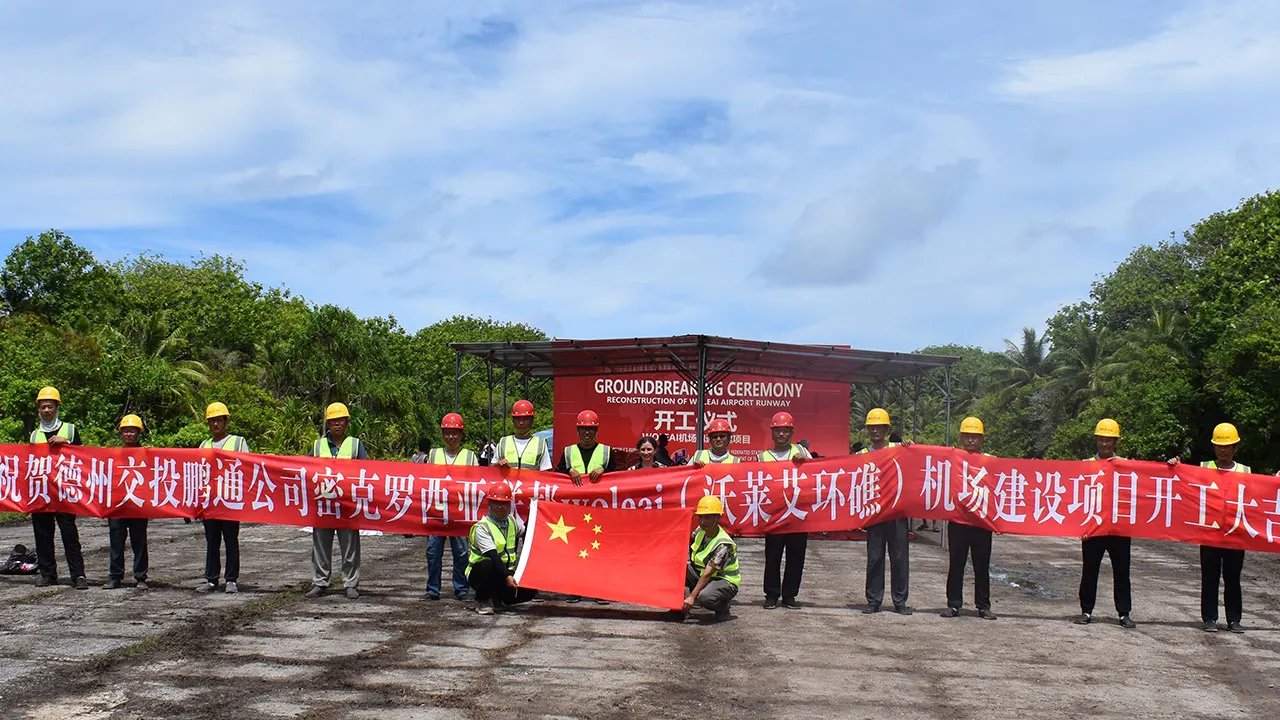
One of the experts tracking the developments, Foundation for Defense of Democracies (FDD) senior fellow Cleo Paskal, traveled to the Federated States of Micronesia to see them firsthand. She told Fox News Digital she spent four days sleeping on the open deck of a Chinese-donated cargo ship in order to witness a Chinese company breaking ground on a project to rehabilitate a World War II Imperial Japanese runway.
NATIONAL SECURITY EXPERTS SOUND ALARM OVER CCP-LINKED LAND OWNERSHIP NEAR US MILITARY BASES: ‘UNTHINKABLE’
Officials attended the groundbreaking ceremony for the Woleai runway project in Yap State with the president of the Federated States of Micronesia standing at the center in May 2025. (Cleo Paskal)
«It’s not a huge runway, but what it does is it gets China in the door and on the ground in a very strategic location,» Paskal said.
The project is located in the state of Yap, a remote east-to-west island chain that sits along key maritime and air routes connecting Hawaii, Guam and East Asia. U.S. military planners have long considered Yap one of the most strategically important locations in the Pacific.
Paskal said the same Chinese company involved in the runway is now working on another major infrastructure project on Yap: the reconstruction of a bridge on the main island.
«At the same time, because of how strategic it is, Secretary Hegseth announced not that long ago about $2 billion worth of defense infrastructure investment for Yap,» she said. «Now, when he says Yap, what he means is the main island of Yap.»
According to Paskal, that distinction matters.
«The story here is that the Department of War is focused on the main island, but, from what I’ve seen, there are no plans for the rest of the island chain,» she said. «Meanwhile, the Chinese are using other entry points into the political and economic system in order to start to break open access to Yap.»
She described China’s approach as fundamentally different from Washington’s.
«So it’s not just a physical kinetic infrastructure operation,» Paskal said. «It’s also a political warfare operation, whereas the U.S. is focusing more just on a very narrow band of the kinetic map.»
CHINA’S MISSILE SURGE PUTS EVERY US BASE IN THE PACIFIC AT RISK — AND OFFICIALS SAY THE WINDOW TO RESPOND IS CLOSING
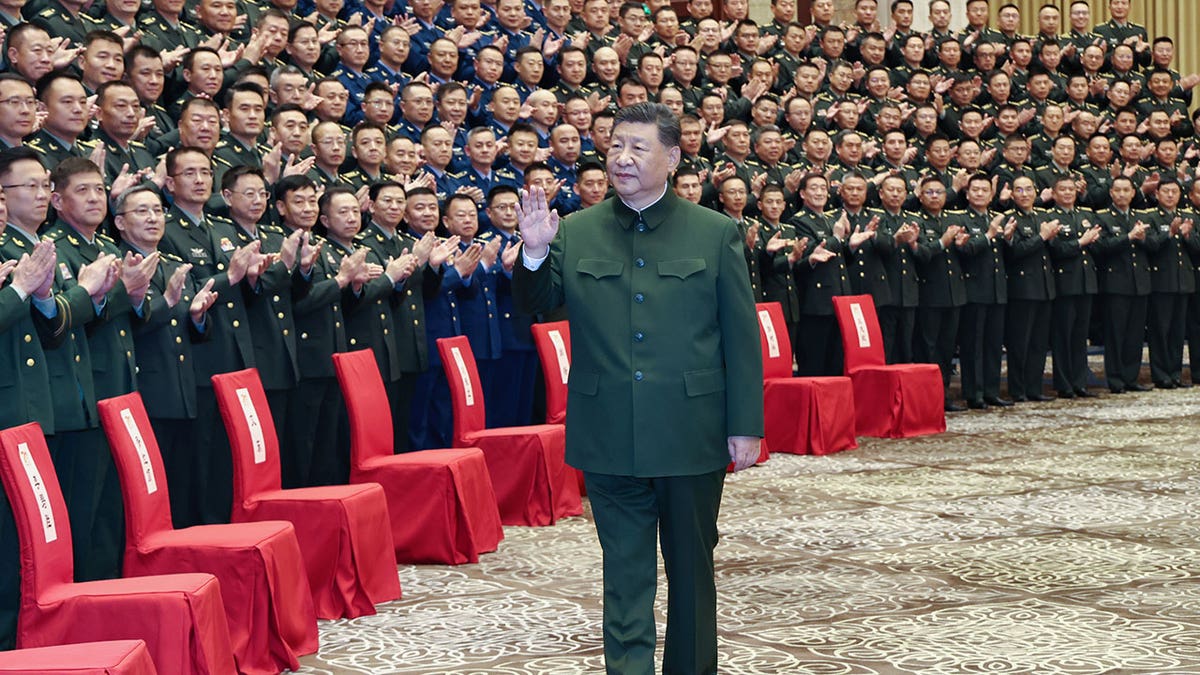
Chinese President Xi Jinping, also general secretary of the Communist Party of China Central Committee and chairman of the Central Military Commission, meets with representatives of military personnel stationed in northwest China’s Xinjiang Uygur Autonomous Region, in Urumqi, the regional capital, Sept. 23, 2025. (Photo by Li Gang/Xinhua via Getty Images)
The geography at stake has shaped American security strategy for generations.
During World War II, the lagoon at Ulithi, part of the Yap island chain, served as the largest U.S. naval base in the world, hosting hundreds of American warships as the military prepared for operations against Imperial Japan.
That history, Paskal said, helps explain why the region remains so sensitive today.
Under the Compact of Free Association, the United States retains exclusive defense rights in Micronesia. The agreements allow Washington to deny military access to other powers, establish defense facilities and maintain strategic control, while granting Micronesian citizens the right to live and work in the United States and serve in the U.S. military. The Compact creates such deep ties that Micronesia is considered part of the U.S. domestic mail system.
The compacts were designed after World War II to ensure Pacific islands once controlled by Japan could never again be used as launch points for attacks against the United States.
But Paskal warned that China is finding ways to work around, and potentially undermine, those arrangements.
She said U.S. officials often focus on visible construction sites while underestimating the broader political campaign that enables Chinese access in the first place. This includes cultivating ties with national leaders, engaging local officials such as customs and immigration officers and securing contracts through regional development banks in order to place Chinese companies and personnel on the ground.
According to Paskal, Chinese firms are often willing to absorb financial losses in exchange for long-term strategic positioning.
CHINA QUIETLY BUILDS WORLDWIDE SPACE NETWORK, ALARMING US OVER FUTURE MILITARY POWER
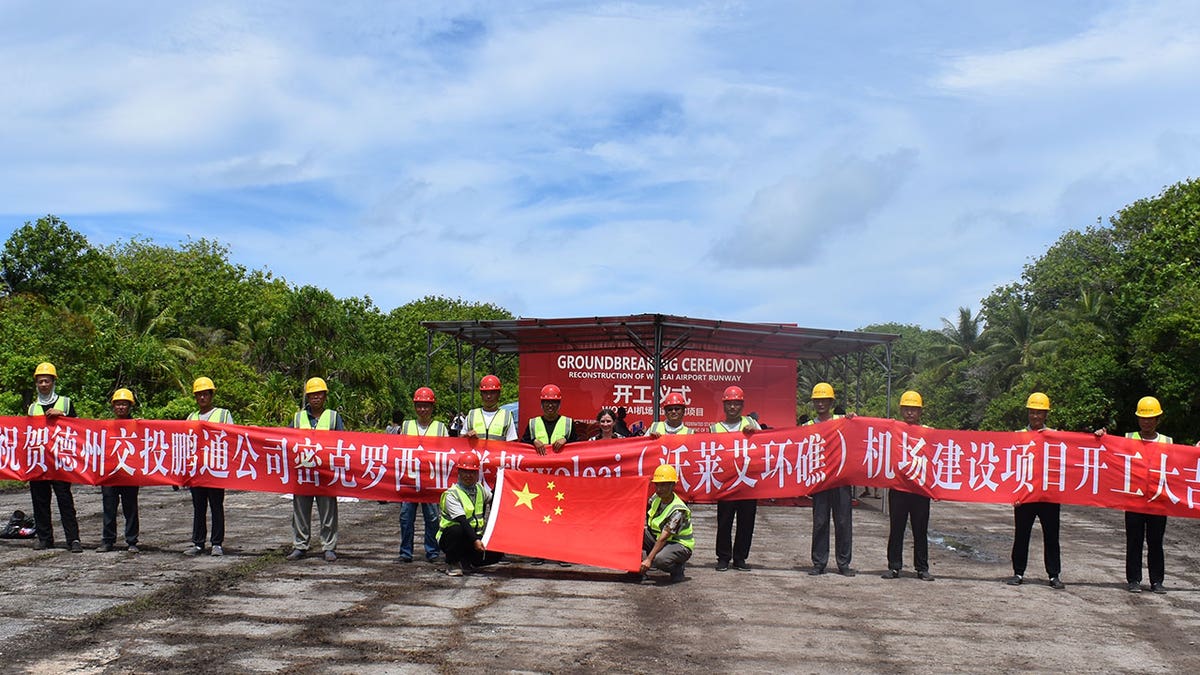
The groundbreaking ceremony for the Woleai runway project in Yap State. Representatives of a Chinese company hold a banner on stage. May 2025. (Cleo Paskal)
The concern is heightened by political shifts within Micronesia itself. While states such as Yap have historically been more resistant to Chinese engagement, the national government has grown closer to Beijing in recent years.
Former President of the Federated States of Micronesia David Panuelo warned in a March 9, 2023, letter that China was engaging in political warfare, including alleged bribery and pressure campaigns. He later lost his re-election bid, while the current government is viewed as more receptive to China.
When asked by Fox News Digital about China’s activities in Micronesia, a spokesperson for the Chinese Embassy in Washington said, «I am not aware of the specifics.»
The spokesperson emphasized that China views Pacific Island Countries (PICs) as partners in development and denied any geopolitical intent.
«China always respects the sovereignty and territorial integrity of PICs,» the spokesperson said, adding that Beijing has «never interfered in the internal affairs of PICs, never attached any political strings, and never sought any geopolitical self-interest.»
Paskal said this characterization is not accurate, pointing to what she described as China’s targeted efforts to interfere with the internal decisions of three Pacific Island countries — Palau, the Marshall Islands and Tuvalu — to recognize Taiwan, including explicitly attaching support to derecognition.
The spokesperson’s statement added that the South Pacific should be «a stage for cooperation, rather than an arena for vicious competition» and insisted China’s engagement does not target any country.
For U.S. security experts, however, the concern is not a single runway or bridge, but the gradual erosion of strategic access in a region that has underpinned American defense for more than 80 years.
CLICK HERE TO DOWNLOAD THE FOX NEWS APP
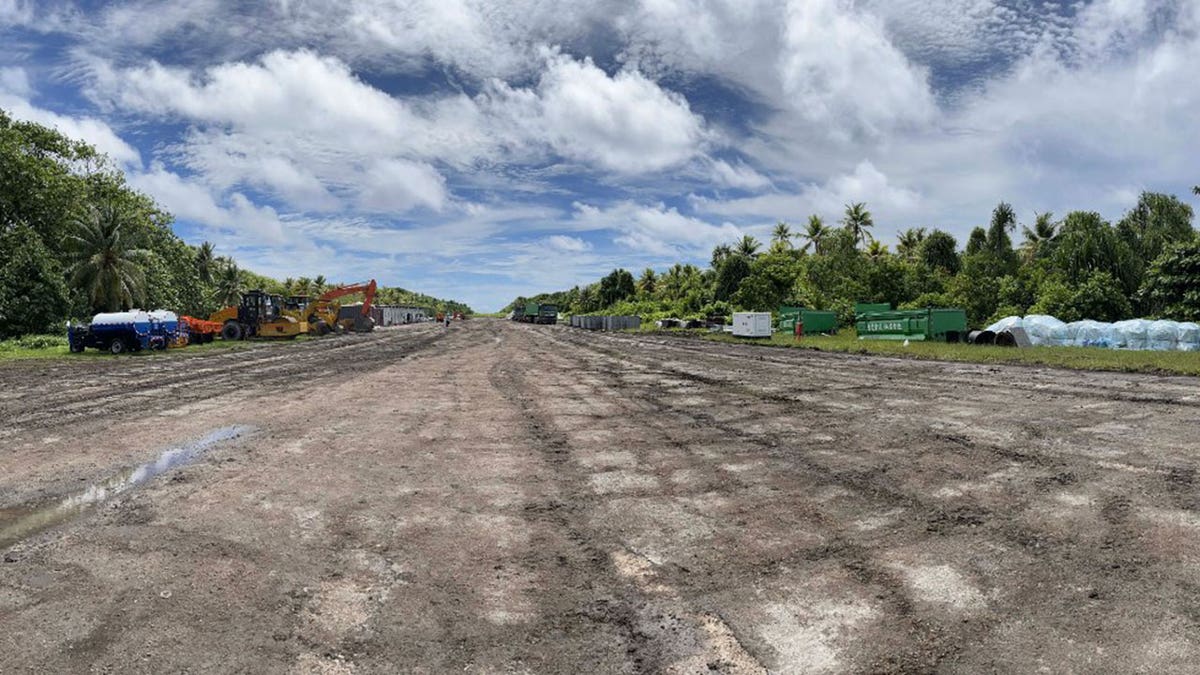
The runway at Woleai in Yap State, part of a Chinese-backed infrastructure project in the Federated States of Micronesia. (Cleo Paskal)
China expert Gordon Chang told Fox News Digital, «We lost so many American lives in World War Two, taking these islands from the Japanese. And now we are letting China dominate them. This is just wrong. I can’t, I get angry when I think about this. But the important point here is that we have the power to stop this,» he said.
«The three compact states are our closest military allies, our closest allies full stop. We said that again. The three complex states in the Western Pacific are our closet allies. Guam is actually part of the United States. So we have the power to stop this and we’re not doing that. And this is now on us, a strategic failure, a failure to understand what China is doing. I hope that the administration starts to understand the significance of what’s occurring and moves to block Chinese infiltration of the Western Pacific.»
As Paskal warned, China’s campaign in the Pacific is unfolding not through force, but through influence, access, patience and presence.
Neither the White House nor the Department of War responded to requests for comment from Fox News Digital.
china,national security,pacific











Tradición
Problemas

NEWYou can now listen to Fox News articles!
Gaza’s Rafah border crossing with Egypt resumed limited operations Monday under the terms of the Israeli-Hamas ceasefire agreement, reopening a critical gateway that had been largely closed for nearly two years.
The reopening comes with tight restrictions. Only a small number of people will be permitted to travel in either direction and commercial goods will not be allowed to pass through the crossing, officials said.
Egyptian authorities said the first day of operations will allow up to 50 Palestinians to cross in each direction, a figure that reflects the narrow scope of the initial reopening rather than a full return to prewar travel.
Health officials in Gaza say tens of thousands of residents with urgent medical needs are seeking evacuation through Rafah, underscoring the pressure on the crossing even as access remains tightly controlled. Thousands of Palestinians currently outside Gaza are also hoping to return.
US MILITARY TO OVERSEE NEXT PHASE OF PEACE DEAL FROM COORDINATION BASE IN ISRAEL
Ambulances line up to enter the Egyptian gate of the Rafah crossing on the way to the Gaza Strip, in Rafah, Egypt, Sunday, Feb. 1, 2026. (AP Photo/Mohamed Arafat)
Before the war, Rafah served as Gaza’s primary passage to the outside world. All other crossings into the territory are shared with Israel. Under the ceasefire framework that took effect in October, Israeli forces continue to control the corridor between the crossing and the areas where most Palestinians live.
Israel and Egypt are vetting travelers, and the crossing is being overseen with international involvement, officials said, as part of efforts to prevent weapons smuggling while allowing limited humanitarian movement.
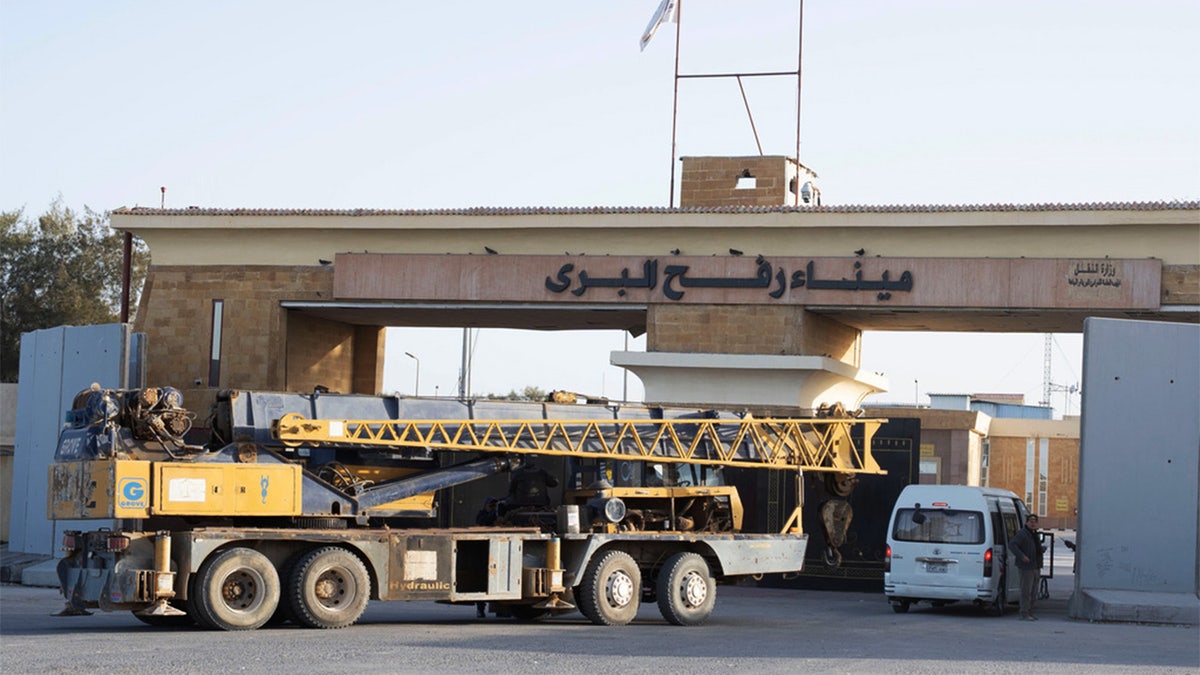
A crane enters the Egyptian gate of the Rafah crossing to the Gaza Strip, in Rafah, Egypt, Sunday, Feb. 1, 2026. (AP Photo/Mohamed Arafat)
Egypt has said the crossing must function in both directions and has pushed back against any use of Rafah as a mechanism to permanently displace Palestinians from Gaza.
US ENVOY WITKOFF SAYS HIGH-LEVEL MIAMI TALKS FOCUSED ON ‘UNIFIED GAZAN AUTHORITY’ AS ISRAEL CEASEFIRE ADVANCES
Elsewhere in the territory, fighting-related incidents continued despite the ceasefire. Gaza hospital officials accused an Israeli navy vessel of firing on a tent camp near the southern city of Khan Younis, killing a 3-year-old Palestinian boy. Israel’s military said it was reviewing the report.
Egyptian authorities said roughly 150 hospitals across the country are prepared to receive patients evacuated from Gaza, while the Egyptian Red Crescent has set up support areas on the Egyptian side of the crossing.
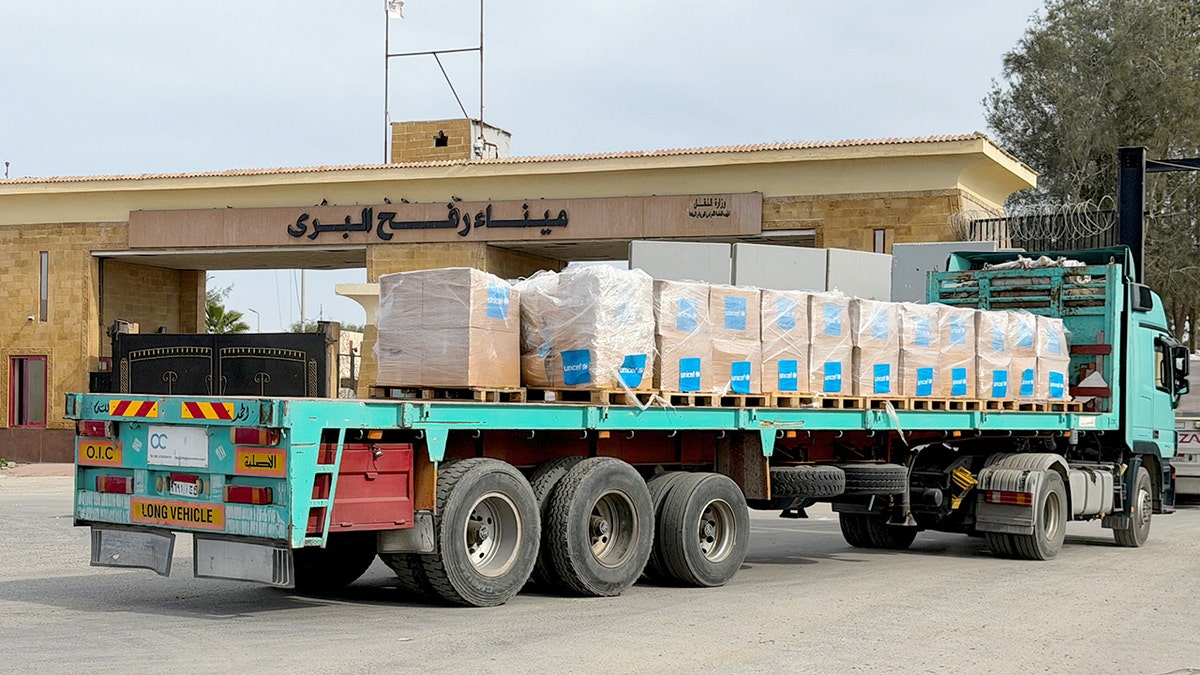
A truck carrying humanitarian aid at the Rafah border on the Egyptian side, in Rafah, Egypt, on Thursday, Jan. 29, 2026. (Reuters)
Israel seized control of the Rafah crossing in May 2024, describing the move as part of its campaign against Hamas smuggling routes. The crossing was briefly opened for medical evacuations during a short-lived ceasefire in early 2025.
The U.S.-brokered ceasefire that took effect on Oct. 10 halted more than two years of fighting that began with the Hamas-led terror attacks on southern Israel on Oct. 7, 2023. The ceasefire’s initial phase focused on hostage exchanges, increased humanitarian aid and a limited Israeli pullback.
CLICK HERE TO DOWNLOAD THE FOX NEWS APP
A second phase envisions a new Palestinian governing arrangement for Gaza, the deployment of an international security force, the disarmament of Hamas and steps toward reconstruction — goals that remain unresolved.
The Associated Press contributed to this report.
middle east,israel,world
INTERNACIONAL
Las contradicciones de la economía brasileña: entre el déficit y el récord de inversiones extranjeras

La economía brasileña atraviesa una fase marcada por grandes contradicciones y por incertidumbres que podrían tener un fuerte impacto en 2027, cuando quienquiera que sea el nuevo presidente deberá enfrentarse a una situación fiscal crítica. La semana pasada, el Banco Central confirmó la tasa Selic en el 15%. Se trata del tipo de interés de referencia fijado por el Banco Central de Brasil, que sirve como ancla para todos los demás tipos de interés, como préstamos, hipotecas, tarjetas de crédito y títulos públicos. Con este nivel, la tasa real, que incluye la inflación prevista para los próximos 12 meses, se mantiene en torno al 10,6%, el nivel más alto desde mayo de 2006, cuando era del 10,7%.
La semana pasada, el Tesoro reveló además que las cuentas del Ejecutivo en 2025 registraron un déficit de 61.700 millones de reales (11.738 millones de dólares), casi el doble del límite fiscal tolerado y un 32% superior al déficit de 2024, que fue de 42.900 millones de reales (8.161,3 millones de dólares). El ministro de Hacienda, Fernando Haddad, quien ya ha anunciado que dejará su cargo este mes, declaró, sin embargo, que la meta fiscal fue cumplida. En realidad, para llegar a esta afirmación —según los expertos—, el ministro no incluyó algunos gastos relacionados con sentencias y acciones judiciales en los ámbitos de la sanidad, la educación y la defensa nacional, así como los reembolsos por deducciones indebidas del Instituto Nacional de la Seguridad Social (INSS).
En un editorial titulado “Como en los tiempos de Dilma”, en referencia a las pedaladas fiscales del gobierno de Dilma Rousseff que condujeron a la peor recesión económica de la historia brasileña, el diario O Estado de São Paulo critica las declaraciones de Haddad. “El gobierno alcanza su meta fiscal mediante una maniobra para excluir gastos del cálculo, pero los números no mienten: la deuda galopa y Lula parece decidido a revivir la pesadilla de su delfina”. “Durante el desastroso gobierno de Dilma Rousseff, una táctica similar se conoció como ‘contabilidad creativa’ y fue uno de los factores que condujeron a su proceso de impeachment. Es importante reconocer una diferencia significativa: en la era Dilma, el déficit se ocultaba mediante fuertes manipulaciones; en la administración de Lula, la maniobra para alcanzar el objetivo se realiza a la luz del día”, concluye O Estado de São Paulo.

Las proyecciones incluidas en el último Informe de Proyecciones Fiscales del Tesoro Nacional, que analiza la evolución de las cuentas públicas brasileñas en la próxima década y fue presentado la semana pasada, advierten que el gobierno de Lula deberá conseguir 14.000 millones de reales (2.663,4 millones de dólares) adicionales este año para alcanzar el objetivo fiscal, que prevé un superávit primario del 0,25% del PIB (equivalente a 34.300 millones de reales, es decir, 6.525 millones de dólares). Las necesidades de mayores ingresos serán aún más elevadas en 2027, cuando, según las estimaciones, faltarán 46.000 millones de reales (8.751 millones de dólares), para alcanzar el objetivo de un superávit del 0,5% del PIB (73.000 millones de reales, o sea 13.888 millones de dólares).
En el tercer mandato de Lula, la deuda pública como porcentaje del PIB saltó del 71,7% al momento de su asunción al 78,7% a finales del año pasado. El Tesoro prevé que alcanzará el 83,6% en 2026. Se trata de un aumento de casi 12 puntos porcentuales en un solo mandato, que recuerda a los datos del gobierno de Dilma Rousseff, cuando entre 2011 y 2015 la deuda pública pasó del 51% al 65% del PIB.
También las cuentas de las principales empresas estatales del país están en rojo. El déficit registrado en 2025 fue de 5.870 millones de reales (1.117 millones de dólares), según los datos divulgados por el Banco Central el viernes pasado. Es el segundo peor resultado desde el inicio de la serie histórica en 2001, solo por detrás del récord de 8.100 millones de reales (1.541 millones de dólares) en 2024. En el cálculo se excluyen únicamente la petrolera estatal Petrobras y los bancos públicos como el Banco do Brasil y la Caixa Econômica Federal. En particular, pesa de forma significativa la crisis de Correos, que acumuló pérdidas por 6.100 millones de reales (1.160 millones de dólares) en los primeros nueve meses de 2025, casi el triple de las registradas el año anterior, cuando el resultado negativo fue de 2.100 millones de reales (400 millones de dólares).

También preocupa el clima de tensión dentro del Instituto Brasileño de Geografía y Estadística (IBGE), responsable del cálculo del Producto Interno Bruto (PIB). El dato correspondiente a 2025 se dará a conocer el próximo 3 de marzo, pero los enfrentamientos entre el presidente de la institución, Marcio Pochmann, y parte del personal técnico hacen temer discrepancias en la elaboración de los datos. El pasado 19 de enero fue despedida la investigadora Rebeca Palis, hasta entonces responsable de la Coordinación de Cuentas Nacionales, el área encargada del cálculo del PIB. En señal de solidaridad, al menos otros tres directivos del área que ella coordinaba presentaron su dimisión. La semana pasada, además, otra directiva fue destituida de la Gestión de Sistematización de Contenidos Informativos (GECOI). Según el sindicato del sector, Pochmann está llevando a cabo “una caza de brujas contra los empleados públicos que defienden la posición técnica, institucional e histórica del IBGE”.
A pesar de este escenario tan complejo, en 2026 el Ibovespa, la bolsa brasileña, alcanzó máximos históricos, superando los 183.000 puntos, impulsado principalmente por un fuerte flujo de capitales extranjeros. Solo en enero, las inversiones foráneas ya superaron más de la mitad del total registrado en todo 2025, favorecidas por un dólar más débil y por valoraciones aún atractivas de la Bolsa brasileña, a pesar de los riesgos asociados a los altos tipos de interés, al contexto fiscal y a las incertidumbres electorales. Hasta el 23 de enero de este año, los extranjeros invirtieron 17.728 millones de reales (3.373 millones de dólares) en el mercado bursátil brasileño, frente a los 25.473 millones de reales (4.846 millones de dólares) de todo 2025.
Otro dato positivo es la caída de la tasa de desempleo. Con una media anual del 5,6% a finales de 2025, alcanzó el nivel más bajo de la serie histórica. Al menos cinco factores explican este resultado. En primer lugar, Brasil está envejeciendo y, con el envejecimiento, aumenta el número de personas que salen del mercado laboral sin ser sustituidas en la misma proporción, lo que reduce la tasa de desempleo. Además, el aumento de la escolarización ha hecho que en los últimos años los jóvenes dediquen más tiempo al estudio, retrasando su entrada en el mercado laboral, lo que también tiene un impacto directo en el desempleo. Otro fenómeno decisivo ha sido la expansión de las aplicaciones de reparto y transporte de pasajeros. “Esto ha contribuido a reducir la tasa de desempleo, porque una persona despedida que de otro modo estaría desempleada puede encontrar rápidamente trabajo como conductor o repartidor. Es una forma de seguir siendo productivo para la economía”, declaró al diario O Globo Bruno Imaizumi, economista de 4Intelligence.
El año 2026 será, por tanto, no solo el de las elecciones presidenciales en Brasil, sino también el de una crucial prueba económica, cuyo impacto será determinante para el mandato del próximo presidente. Desde el empleo hasta la deuda pública, el nuevo gobierno deberá navegar con extrema cautela entre datos y políticas económicas para no llevar al país a una nueva recesión.
Business,International Relations,Corporate Events,Diplomacy / Foreign Policy,South America / Central America

Karina Milei activa gestiones para incidir en la próxima conformación del Consejo de la Magistratura y choca con Santiago Caputo

Financial Times resaltó el boom de compras de argentinos ante la apertura de la economía: furor por Apple, Lego y Stanley

Es uno de los juegos gratis más jugados, pero 128 millones de jugadores no podrán tocar Apex Legends en unos meses

Incredulidad con la estatua de Falcao de 195 kilogramos: ‘Es terrorífica’

La China se metió en la relación de Mauro Icardi con Wanda Nara por sus hijas y destapó el verdadero escándalo: “Denuncias falsas y temas judiciales que no se comparan”

Ignacio Devitt, el enlace de Adorni con el Congreso que consiguió una silla en la mesa chica del poder mileísta

La escandalosa prohibición de María Susini: por qué no quiere que Facundo Arana se acerque a sus hijos

A qué hora puede llover hoy en CABA, según el Servicio Meteorológico Nacional

Julieta Díaz contó por qué no funcionó su noviazgo con Luciano Castro en medio de la separación con Griselda Siciliani

Maximo Kirchner propuso que Axel Kicillof presida el PJ Bonaerense

 CHIMENTOS3 días ago
Julieta Díaz contó por qué no funcionó su noviazgo con Luciano Castro en medio de la separación con Griselda Siciliani
- INTERNACIONAL2 días ago
Estados Unidos advirtió al régimen de Irán que “no tolerará” ejercicios militares “inseguros” cerca de sus fuerzas en Medio Oriente
- POLITICA3 días ago
El New York Times asegura que la Argentina podría firmar un acuerdo con EE.UU. para recibir deportados