INTERNACIONAL
Panamá anuló la concesión que permitía a una filial de la empresa hongkonesa CK Hutchison Holdings operar dos puertos en el Canal

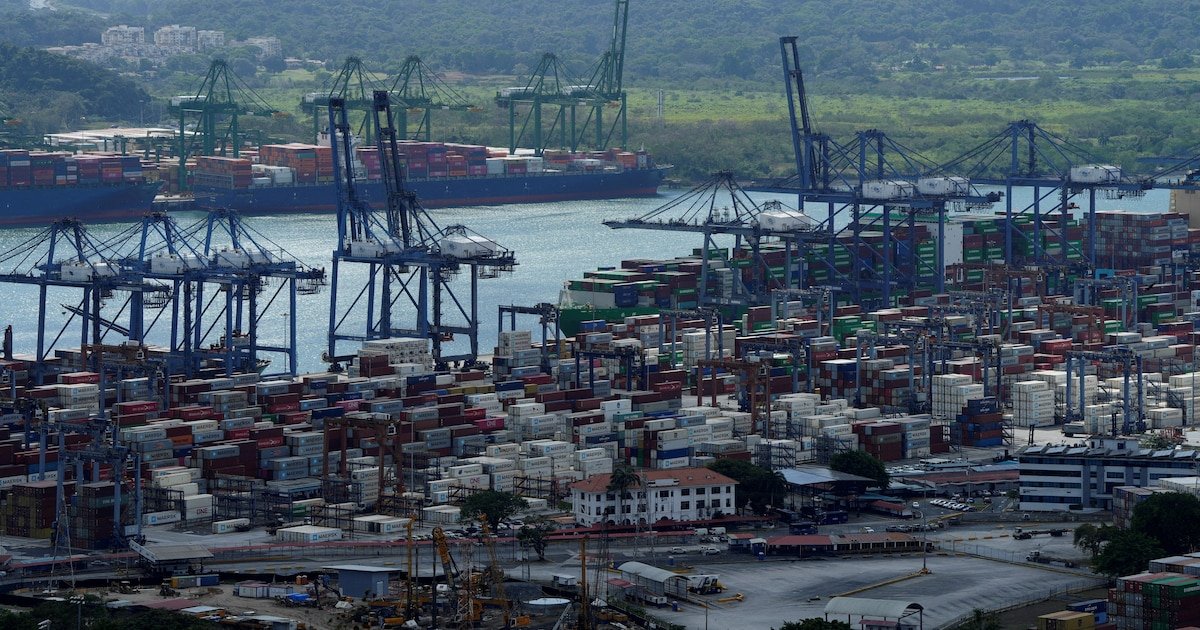
La Corte Suprema de Justicia de Panamá anuló este jueves la concesión que permitía a una filial de la hongkonesa CK Hutchison Holdings operar dos puertos estratégicos en ambos extremos del canal de Panamá, tras declarar inconstitucionales las leyes que sustentaban el contrato, según informó el propio tribunal en un comunicado.
El fallo afecta a la operación de los puertos de Balboa, en el Pacífico, y Cristóbal, en el Atlántico, administrados desde 1997 por la empresa Panama Ports Company, subsidiaria de Hutchison. La Corte no detalló los fundamentos específicos de la inconstitucionalidad ni precisó las consecuencias inmediatas para la continuidad de las operaciones.
La nulidad del contrato fue solicitada por la Contraloría General de la República, que el año pasado presentó dos demandas al considerar que la concesión resultaba “inconstitucional” y que se habían producido diversas irregularidades. El contralor Anel Flores afirmó que una auditoría detectó pagos no realizados, errores contables y la presunta existencia de una “concesión fantasma” dentro de los puertos desde 2015, acusaciones que la empresa negó.
De acuerdo con la auditoría, las irregularidades habrían generado un perjuicio aproximado de 300 millones de dólares al Estado panameño desde la extensión del contrato en 2021 y de unos 1.200 millones de dólares durante los primeros 25 años de la concesión original. Flores también sostuvo que la renovación del contrato careció del aval obligatorio de su despacho.

El presidente panameño José Raúl Mulino calificó en reiteradas ocasiones el contrato como “leonino” y “contrario a los intereses nacionales”, en un contexto marcado por la presión de Estados Unidos. El presidente estadounidense Donald Trump afirmó en varias oportunidades que China controla el canal de Panamá a través de los puertos operados por la compañía hongkonesa, pese a que la vía marítima es administrada por una entidad pública panameña autónoma.
“Hemos sido muy maltratados con este tonto regalo que nunca debió ser otorgado. La promesa que nos hizo Panamá no se ha cumplido (…) China opera el Canal de Panamá, y no se lo dimos a China, se lo dimos a Panamá. Y lo vamos a recuperar”, dijo Trump durante su toma de posesión hace un año.
Las presiones de Washington coincidieron con un proceso de venta de los activos portuarios de Hutchison. La empresa anunció un acuerdo para vender su participación mayoritaria en los puertos panameños y en otras terminales globales a un consorcio internacional liderado por la estadounidense BlackRock, como parte de una operación valuada en 22.800 millones de dólares. El acuerdo recibió el visto bueno de Estados Unidos, pero generó reparos en China, lo que trabó su avance.
El analista político Edwin Cabrera señaló que el siguiente paso procesal consiste en notificar formalmente a las partes sobre la decisión judicial y que luego la definición sobre el futuro de los puertos quedará en manos del Órgano Ejecutivo, a través de la Autoridad Marítima de Panamá. “Tengo la impresión de que la operación no se va a detener”, afirmó Cabrera.

El fallo se conoció mientras el canal proyecta inversiones por más de 8.500 millones de dólares en la próxima década para ampliar y diversificar su negocio. Entre los planes figuran la construcción de dos nuevos puertos para 2029, con una inversión estimada de 2.600 millones de dólares, además de un gasoducto y un nuevo embalse. Empresas chinas expresaron interés en algunos de esos proyectos.
Estados Unidos inauguró el canal en 1914 y lo transfirió a Panamá el 31 de diciembre de 1999, en virtud de tratados bilaterales que garantizan el tránsito en igualdad de condiciones para todas las banderas. Por la ruta de 80 kilómetros circula cerca del 5% del comercio marítimo mundial, con Estados Unidos y China como principales usuarios.
(Con información de AFP y AP)

INTERNACIONAL
Donald Trump sigue hablando de «negociaciones»: ahora dice que Irán le entregó a Estados Unidos «un gran regalo» relacionado con el petróleo y el gas
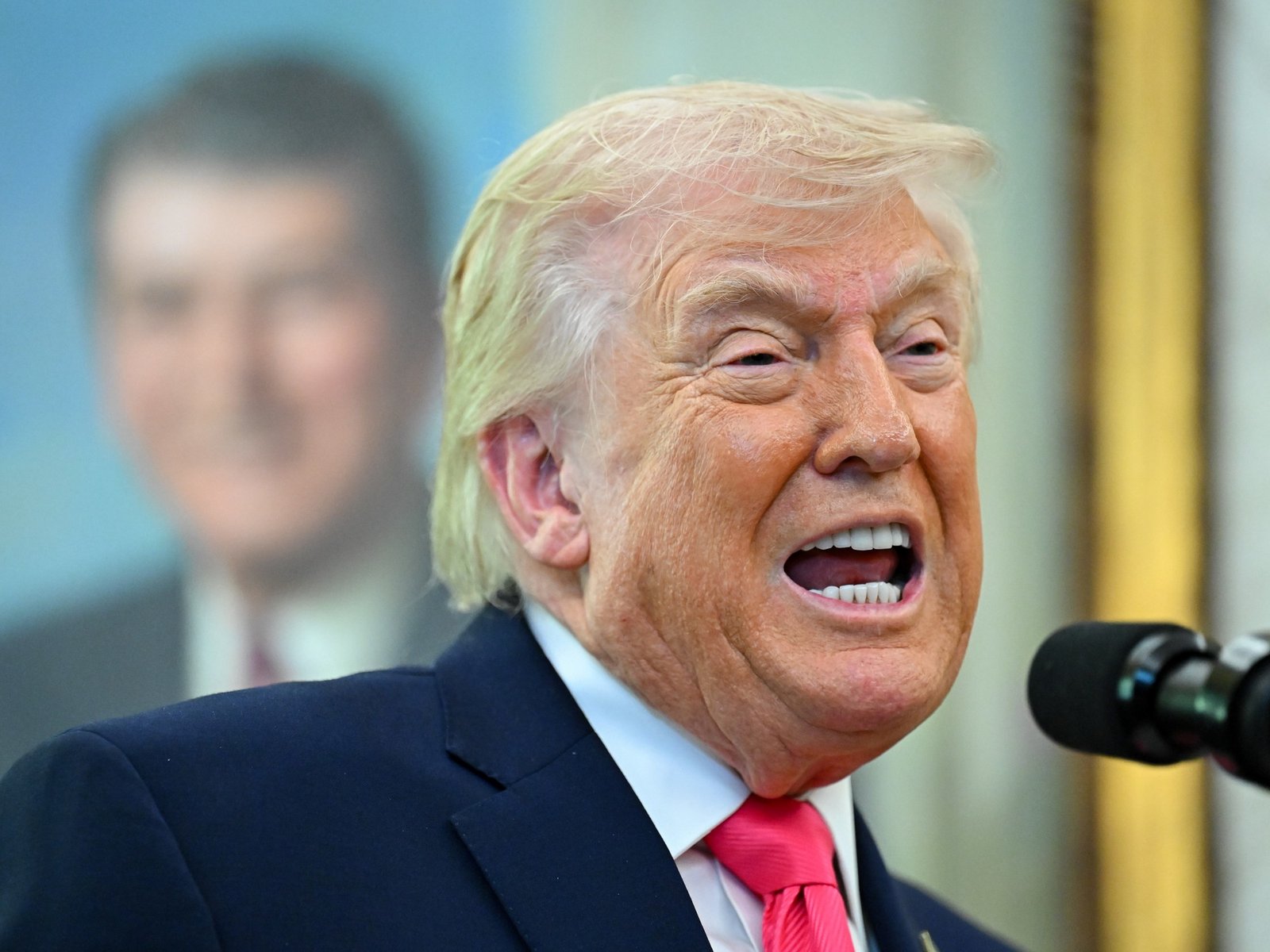
El presidente Donald Trump se refirió este martes a las anunciadas y poco claras negociaciones de Estados Unidos con Irán y dijo que el régimen iraní “quiere un acuerdo” y que ofreció “un regalo” sobre petróleo y el gas — que no especificó–, y que resignó tener armas nucleares. Mientras los mercados siguen nerviosos por la incertidumbre de la guerra y el precio del barril volvió a pasar la barrera de los 100 dólares, el jefe de la Casa Blanca se congratuló también por su “éxito tremendo” en la ofensiva. “Tuvimos uno en Venezuela, ahora tengo uno en Irán”, aseguró.
Funcionarios de varios gobiernos conocedores de la diplomacia han dicho que las conversaciones hasta ahora fueron indirectas a través de los mediadores, aparentemente Pakistán, Egipto y Turquía. Irán afirma que fue EE.UU. quien pidió el diálogo, insistió públicamente en que no hay conversaciones directas o indirectas y que no estaba interesado en tenerlas y menos en resignar su arsenal nuclear. Aparentemente habría en danza un plan de 15 puntos.
Cuando Trump anunció el lunes por la mañana las negociaciones en sus redes sociales, el mercado se disparó y el precio de petróleo cayó hasta 85 dólares el barril. Pero con el correr de las horas y con Irán negando las conversaciones, la confusión reinó y la incertidumbre volvió a reflejarse en Wall Street y en el precio del barril este martes.
En una ceremonia en la Casa Blanca, Trump habló sobre la situación en Irán. “Estamos teniendo un éxito tremendo. Tuvimos uno en Venezuela. Ahora tengo uno en Irán”, dijo. Y agregó: “No les queda marina. No les queda fuerza aérea. No les queda equipo antiaéreo, ni radar, ni líderes. Los líderes se han ido. Nadie sabe con quién hablar, pero en realidad estamos hablando con las personas adecuadas, y quieren cerrar un trato”.
Trump presentó a Irán como una nación tan cerca de la derrota militar que no tuvo más opción que negociar, pero los iraníes dejaron claro el martes que aún podían atacar en toda la región. Sus misiles atacaron a Israel e Irak, y las naciones del Golfo Pérsico también informaron de nuevos ataques, a pesar de las afirmaciones de funcionarios estadounidenses e israelíes de que el programa iraní de misiles balísticos ha sido gravemente afectado.
El jefe de la Casa Blanca también dijo que la guerra “está ganada”. Sin embargo, el panorama no parece tan optimista como afirma. De hecho, el Pentágono solicitará al Congreso 200.000 millones adicionales para abastecer el despliegue militar y el Departamento de Guerra se alista a enviar unos 3.000 soldados de una brigada de combate de elite, según reveló The Wall Street Journal.
Esta brigada, la “82nd Airborne”, es una fuerza de respuesta rápida capaz de desplegarse entre 18 y 72 horas. Algunos especulan que el anuncio de negociaciones es una manera de ganar tiempo hasta que lleguen las tropas a la zona para una eventual incursión terrestre.
Siempre atento a los mercados y a las elecciones legislativas de noviembre, Trump busca retomar la narrativa de que el triunfo en Irán será sencillo como el de Venezuela, aunque la situación evidentemente se prolonga mucho más de lo que preveía y con impacto mayor. Aunque Trump dice que la capacidad militar de Teherán está destruida, el régimen sigue atacando con misiles y continúa bloqueando el estrecho clave de Ormuz, donde pasa el 20% del petróleo mundial, con fuertes consecuencias económicas globales.
El presidente no respondió directamente a la pregunta sobre si su yerno Jared Kushner y el enviado especial Steven Witkoff negociarán directamente en persona con los iraníes. «Estamos en negociaciones ahora mismo. Lo están haciendo, junto con Marco (por el secretario de Estado Marco Rubio), JD (por el vicepresidente JDVance). Tenemos a varias personas haciéndolo. Y la otra parte, te lo aseguro, le gusta hacer un trato. ¿Y quién no lo haría?»
Y siguió: «Es que realmente tenemos un cambio de régimen. Esto es un cambio de régimen porque los líderes son muy diferentes a los que empezamos y que crearon todos esos problemas.» La ofensiva que comenzó el 28 de febrero por parte de EE.UU. e Israel eliminó al líder supremo, el ayatollah Ali Khamenei, y decenas de altos funcionarios del régimen.
Trump además dijo en las supuestas negociaciones en curso Irán les había ofrecido «un regalo», relacionado con el petróleo y el gas y el Estrecho de Ormuz, para demostrar que tienen el control. Valía mucho dinero. “No van a tener armas nucleares”, dijo el presidente, sin dar detalles.
Trump siguió con su optimismo: «Esta guerra está ganada», afirmó y volvió a echar la culpa a la prensa por una supuesta campaña en su contra. “Solo las «noticias falsas» sugieren que sigue vigente”, dijo.
INTERNACIONAL
Who actually runs Iran right now? The key power players as Trump claims talks to ‘top’ official
NEWYou can now listen to Fox News articles!
«Nobody knows who to talk to,» President Donald Trump said Tuesday at the White House, describing what he portrayed as both chaos and opportunity inside Iran’s leadership. «But we’re actually talking to the right people, and they want to make a deal so badly.»
His remarks come as the U.S. claims it is engaged in talks with a «top» Iranian figure, even as Tehran publicly denies negotiations are taking place.
The question now is not just whether talks are happening, but whether anyone in Tehran has the authority to deliver. With U.S.-Israel strikes on senior Iranian leadership and growing internal fractures, Iran appears to be operating less like a centralized theocracy and more like a wartime system run by overlapping power centers, with the Islamic Revolutionary Guard Corps (IRGC) at its core.
Here’s who matters now.
TRUMP’S MIDDLE EAST ENVOY REVEALS WHAT LED TO BREAKDOWN IN IRAN TALKS BEFORE OPERATION EPIC FURY
A State Department Rewards for Justice poster offers up to $10 million for information on key leaders tied to Iran’s Islamic Revolutionary Guard Corps (IRGC), including Mojtaba Khamenei, Ali Asghar Hejazi, Yahya Rahim Safavi, Ali Larijani, Eskandar Momeni and Esmail Khatib. (State Department / Rewards for Justice)
The IRGC: The real power behind the state
Across intelligence assessments and recent reporting, one conclusion is consistent: the Islamic Revolutionary Guard Corps has emerged as the dominant force in Iran’s political system.
Behnam Ben Taleblu, senior fellow at the Foundation for Defense of Democracies Washington, D.C., think tank, said the current moment is accelerating a long-standing trend.
«No doubt both the 12-Day war and this current conflict have trimmed the commanding heights of the Islamic Republic’s political and military leadership,» he said. «But it has also expedited the trend lines inherent in Iranian politics, which is the dominance of the security forces and the ascendance of the IRGC.»
«Yes, there is more IRGC control over the state than ever before, but the state is weaker than ever before and more of a national security rump state than ever before,» he said.
«It shouldn’t particularly preoccupy Washington, who is and isn’t offering negotiations,» Ben Taleblu added. «The preeminent preoccupation of Washington has to be working toward a military win at a political win, and that does not come by working with the IRGC, but actually beating them on the battlefield and supporting the forces most arrayed against them in Iran, which are the Iranian people.»
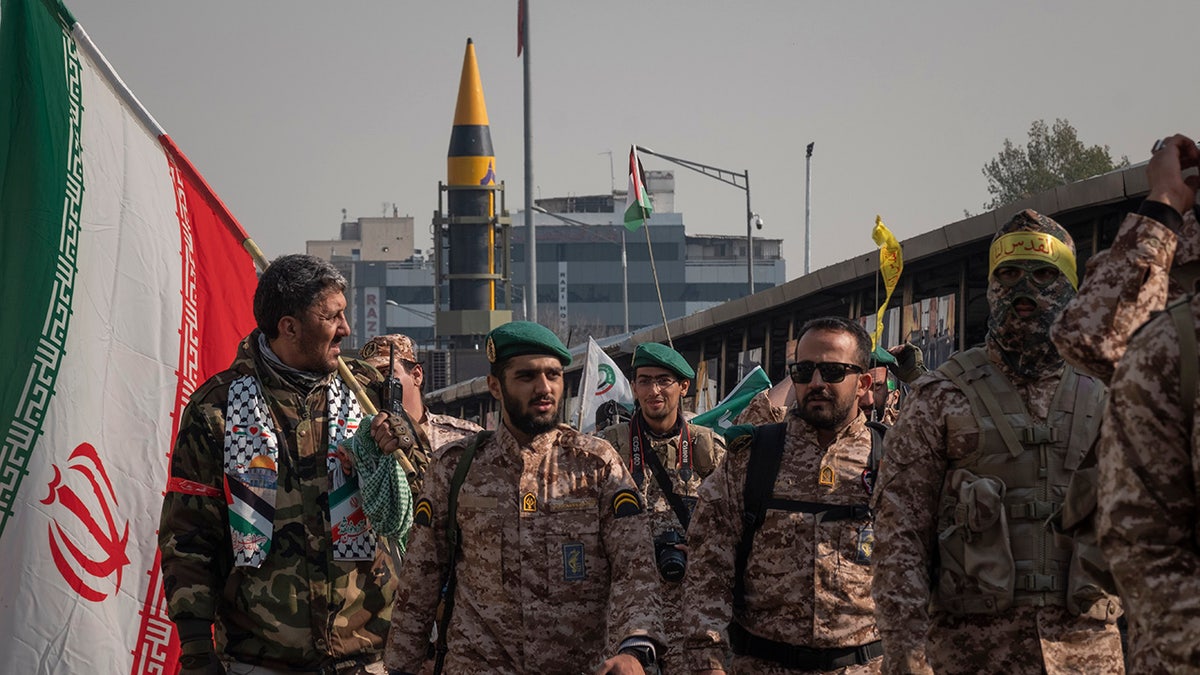
Islamic Revolutionary Guard Corps military personnel are walking along Enghelab (Revolution) Ave. as an Iranian Kheibar surface-to-surface missile is being unveiled during a military rally in Tehran, Iran, Nov. 24, 2023. (Morteza Nikoubazl/NurPhoto via Getty Images)
The command room: Supreme National Security Council
If the Islamic Revolutionary Guard Corps is the power in Iran, the Supreme National Security Council appears to be the mechanism through which that power is exercised.
The Supreme National Security Council is Iran’s top forum for coordinating military and foreign policy, bringing together senior Islamic Revolutionary Guard Corps commanders and government officials under the authority of the supreme leader. It was established after the 1979 revolution and has played a central role in managing major crises, from nuclear negotiations to wartime operations.
Iran appointed Mohammad Bagher Zolghadr, a former Islamic Revolutionary Guard Corps commander, as secretary of the council, reinforcing its central role in coordinating military and political decisions, Reuters reported Tuesday.
A Middle Eastern official source with knowledge of the system described the structure.
«Right now, the power is in the hands of the IRGC,» the source said. «The Supreme National Security Council makes the decisions, of course, with the backing of the majority of IRGC commanders.»
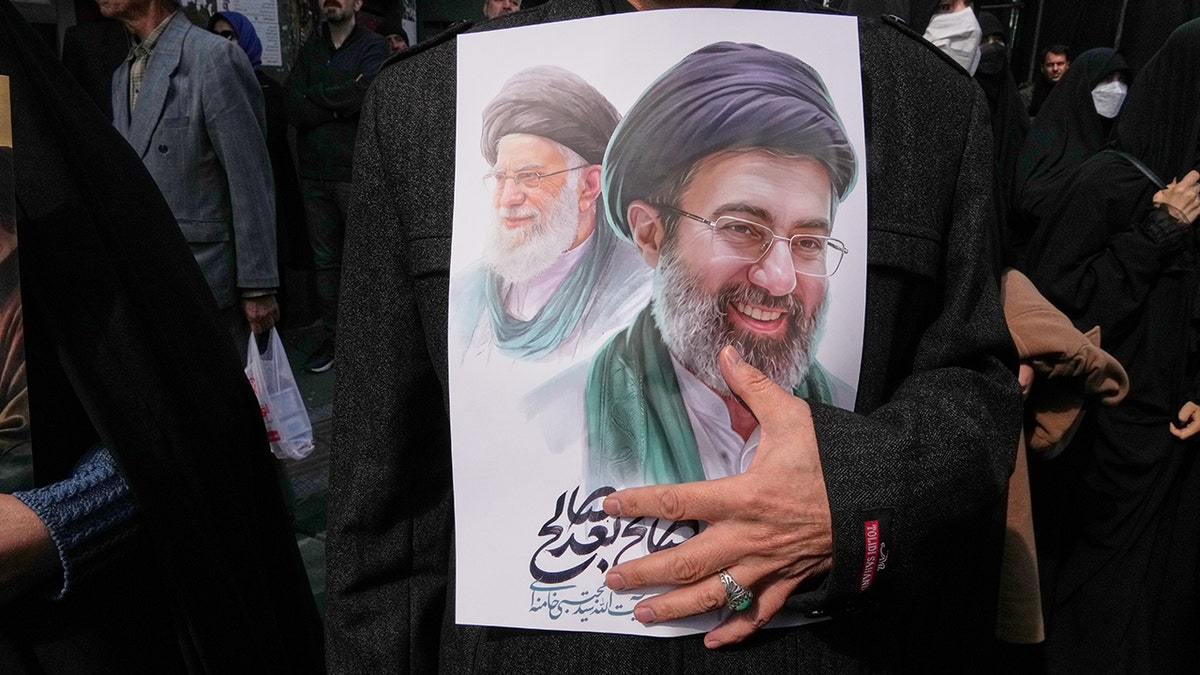
A mourner holds a poster depicting Ayatollah Mojtaba Khamenei, right, the successor to his late father, Ayatollah Ali Khamenei, left, as supreme leader, during the funeral procession for senior Iranian military officials and civilians killed during the campaign in Tehran, Iran, March 11, 2026. (Vahid Salemi/The Associated Press )
Mojtaba Khamenei: The supreme leader in name
Formally, Iran’s system centers on Supreme Leader Mojtaba Khamenei. But his actual grip on power remains uncertain.
Khamenei inherited the position’s sweeping authority following his father’s death, but «lacks the automatic authority enjoyed by his father,» the Middle Eastern official said.
Moreover, he has not appeared publicly since taking power and only has issued written statements, raising questions about both his health and his ability to govern, after reportedly being injured in the initial Feb. 28 U.S.–Israeli strikes that killed his father and other senior Iranian leaders.
Brig. Gen. (res.) Yossi Kuperwasser, head of the Jerusalem Institute for Strategy and Security, suggested his role may currently be limited: «For the time being, since Mojtaba has been injured, it seems he’s a hologram and not holding power. However, if Mojtaba recovers, he will be involved in ruling Iran. He is not just a figurehead. But anyhow, for the time being, the control of Iran is in the hands of the revolutionary guards.»
WITH DOGS, DANCE AND UNCOVERED HAIR, IRANIANS DEFY ‘UNHOLY ALLIANCE’ OF SOCIALISTS, RADICALS: ‘HYPOCRITES!’
Ghalibaf: The man at the center of Trump’s claim
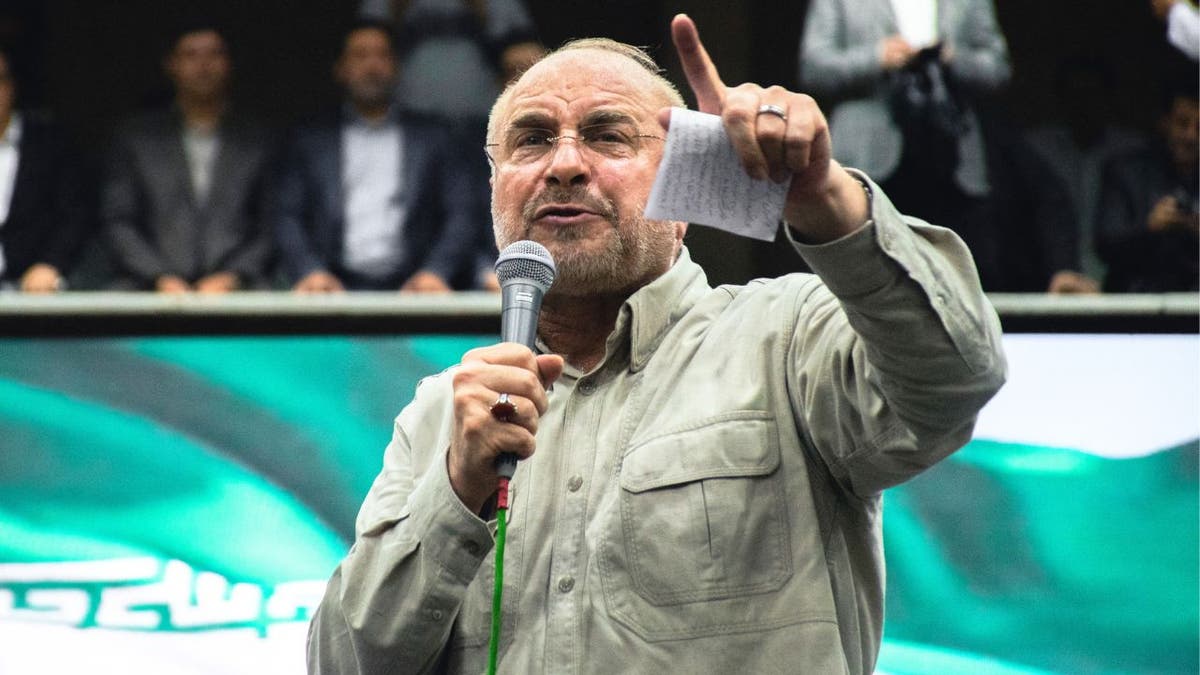
Iranian Parliament Speaker Mohammad Bagher Ghalibaf speaks during a public event in Iran in 2024. (Hossein Beris / Middle East Images / Middle East Images via AFP)
Trump’s statement that he is speaking to a «top person» has focused attention on one name in particular: Mohammad Bagher Ghalibaf.
The White House is quietly exploring Ghalibaf as a potential interlocutor and even a possible future leader, Axios reported.
A former Islamic Revolutionary Guard Corps commander and current parliament speaker, Ghalibaf represents a hybrid figure inside the system, bridging military credentials and political authority.
He was one of the key security figures involved in the crackdown on student protests in July 1999 and has run for president four times since 2005.
IRAN WAR, 11 DAYS IN: US CONTROLS SKIES, OIL SURGES AND THE REGION BRACES FOR WHAT’S NEXT
Ghalibaf is expected to meet U.S. special envoys Steve Witkoff and Jared Kushner in the capital of Pakistan as early as the end of the week.
Ben Taleblu said: «Those who see the ascendants of someone like Ghalibaf, who is an IRGC veteran, having extended power outside his traditional civilian rule, have missed the decades of how personality, not profession, has been the driving force in Iranian politics for the past few decades. I would also say those who worry about the IRGC background of the Supreme National Security Council are all that in Iran today, may have missed the fact that the past few Supreme National Security Council Secretaries, Shamkhani, Larijani, Ahmadian, all also had IRGC backgrounds.»
At the same time, Ghalibaf has publicly denied engaging in talks with the United States, and no direct confirmation of negotiations has been provided by either side.
Araghchi: The diplomat carrying messages

Iran’s Foreign Minister Abbas Araghchi attends a joint press conference with Russian Foreign Minister following their talks in Moscow on April 18, 2025. (Getty Images)
Foreign Minister Abbas Araghchi remains one of the most visible figures internationally.
If talks were to take place, Araghchi likely would be part of the Iranian delegation alongside Ghalibaf, Reuters reported.
But analysts caution that his role is limited. He may act as a channel for communication, but does not set policy independently.
Strategic decisions, particularly on war and negotiations, are still shaped by the Islamic Revolutionary Guard Corps and the broader security establishment.
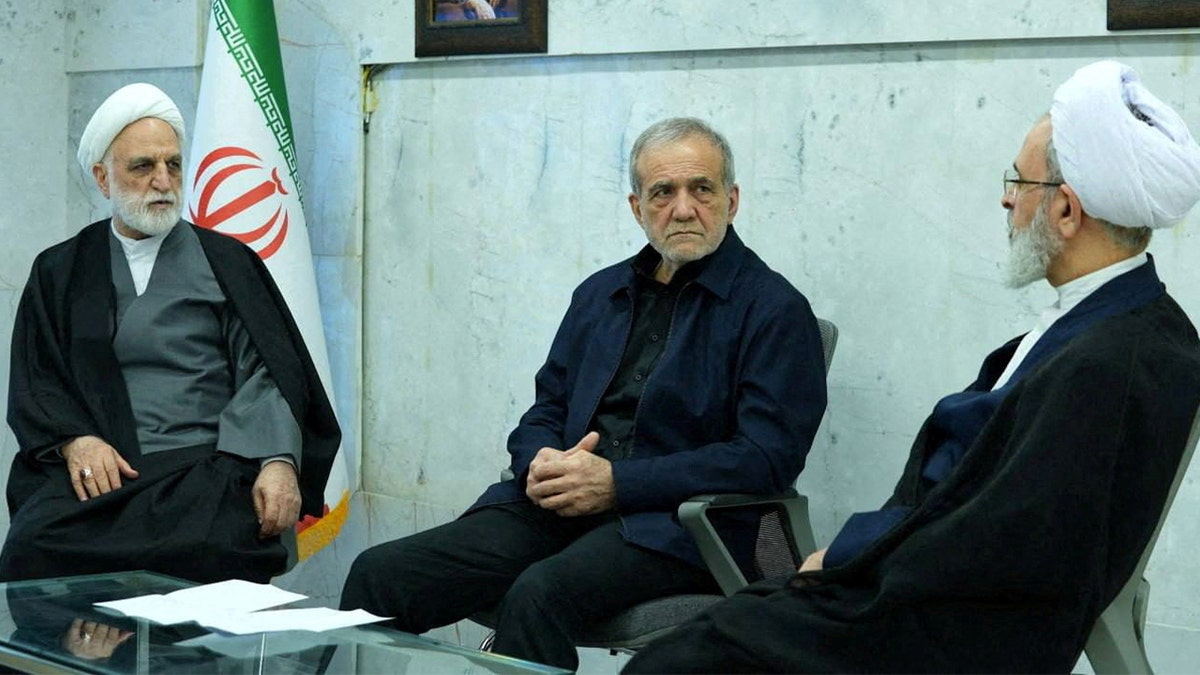
Iranian President Masoud Pezeshkian, Gholam-Hossein Mohseni-Eje’i, the head of the judiciary and Alireza Arafi, deputy chairman of the Assembly of Experts, attend the meeting of the interim leadership council of Iran in an unknown location, amid the U.S.-Israel conflict with Iran, March 1, 2026. (IRIB/WANA (West Asia News Agency)/Handout via Reuters)
The wider power circle: generals, clerics and enforcers
Beyond the headline figures, a broader group of officials who continue to shape Iran’s direction can be identified.
These include Islamic Revolutionary Guard Corps chief Ahmad Vahidi, Quds Force commander Esmail Qaani, naval commander Alireza Tangsiri, Judiciary Chief Gholamhossein Mohseni-Ejei, President Masoud Pezeshkian and senior clerical and political figures such as Saeed Jalili and Ayatollah Alireza Arafi.
Each represents a different pillar of the system: military power, regional proxy operations, control of strategic waterways, internal repression and religious legitimacy.
Together, they form what analysts describe as a fragmented but resilient governing network.
CLICK HERE TO DOWNLOAD THE FOX NEWS APP
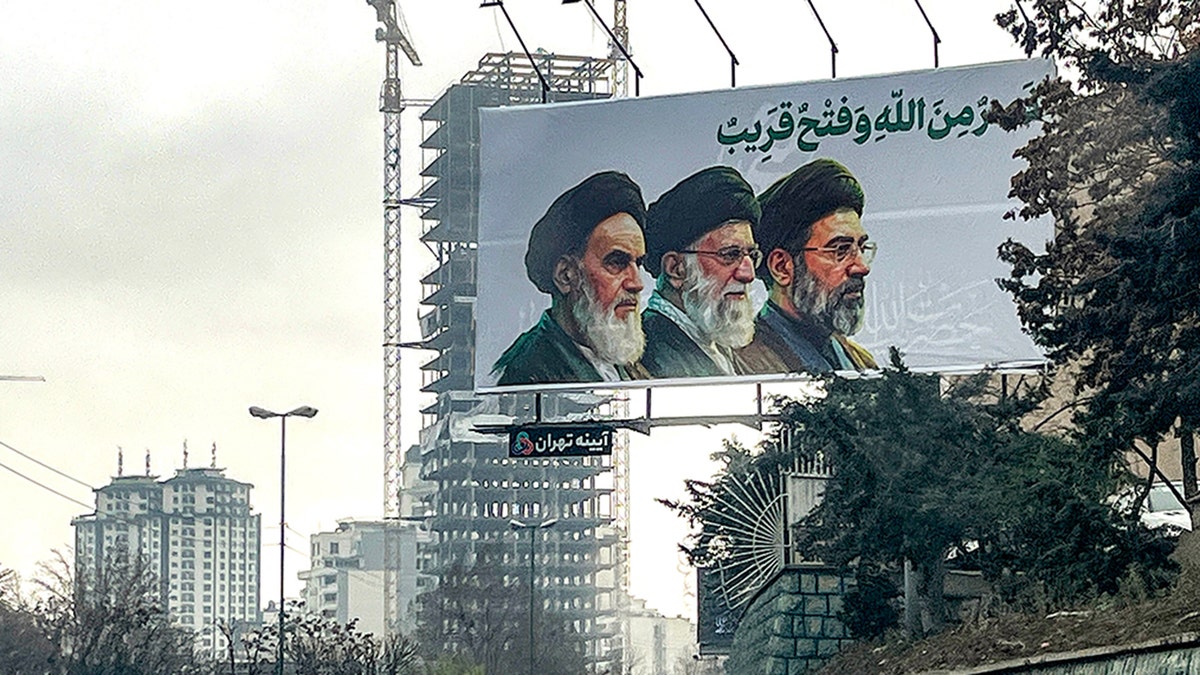
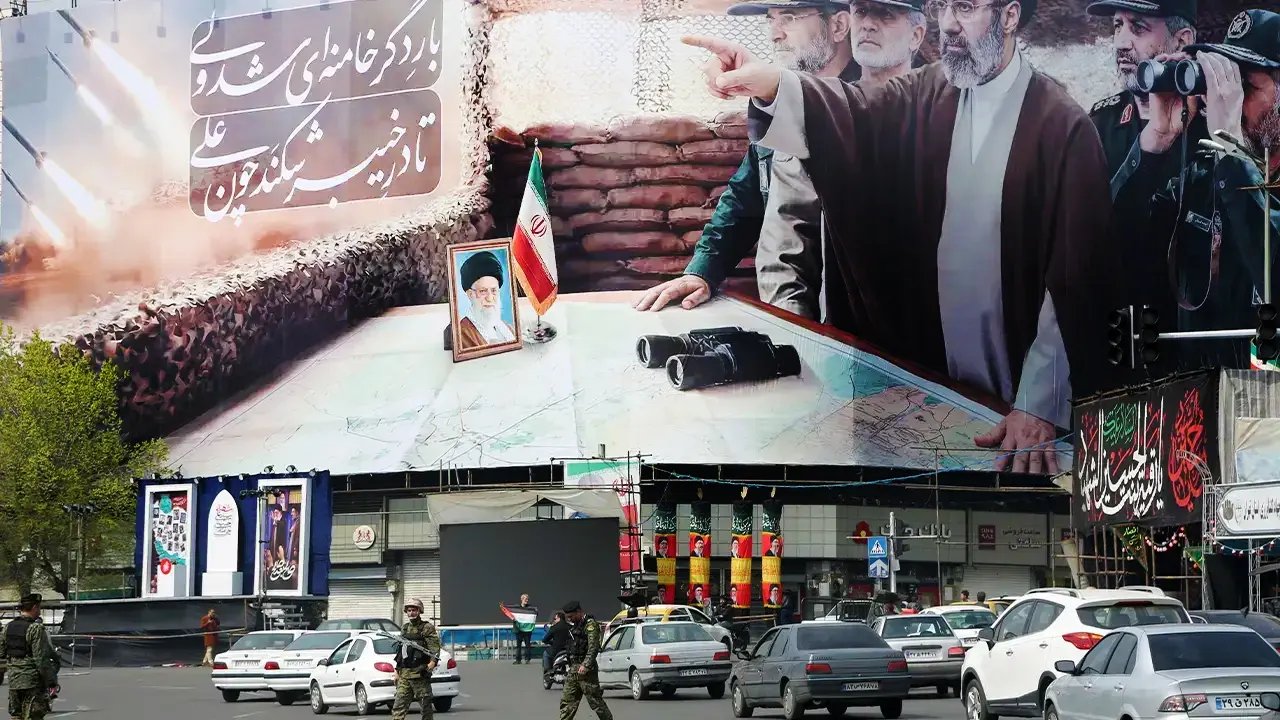
A billboard depicting Iran’s supreme leaders since 1979: (left to right) Ayatollahs Ruhollah Khomeini (until 1989), Ali Khamenei (until 2026), and Mojtaba Khamenei (incumbent) is displayed above a highway in Tehran on March 10, 2026. (AFP/Via Getty Images)
Despite internal divisions, Iran’s leadership remains united on one core objective: survival of the regime.
Kuperwasser described the split: «There are the more pragmatic elites, like Araghchi, Rouhani, and Zarif. There are also the hardliners who have usually held the upper hand … But they are united in one issue — that the regime should survive and stay in power.»
Iran’s U.N. mission did not respond to a request for comment in time for publication.
war with iran, mojtaba khamenei, iran
INTERNACIONAL
‘Americans first’: ICE sweeps up child predators, rapists across US as Mullin takes helm of DHS
NEWYou can now listen to Fox News articles!
FIRST ON FOX: As new Homeland Security Secretary Markwayne Mullin prepared to be sworn in, U.S. Immigration and Customs Enforcement officers continued operations, arresting child predators, rapists and domestic abusers across the country.
According to DHS, in just one day of operations, ICE arrested illegal aliens convicted of serious crimes in Utah, Ohio, New York and Texas. The agency said these arrests align with statistics showing that 70% of illegal aliens arrested by ICE have criminal convictions or pending criminal charges in the U.S.
This comes as Mullin, newly confirmed by the Senate, is sworn in as President Donald Trump’s new DHS secretary. Mullin, who until now served as a Republican senator from Oklahoma, replaces former South Dakota Gov. Kristi Noem.
Commenting on the arrests, DHS Acting Assistant Secretary Lauren Bis told Fox News Digital that «under President Trump and Secretary Mullin, criminal illegal aliens are not welcome in the United States.»
HOUSE CONSERVATIVES ERUPT OVER SENATE GOP, WHITE HOUSE DEAL AMID SAVE ACT FIGHT
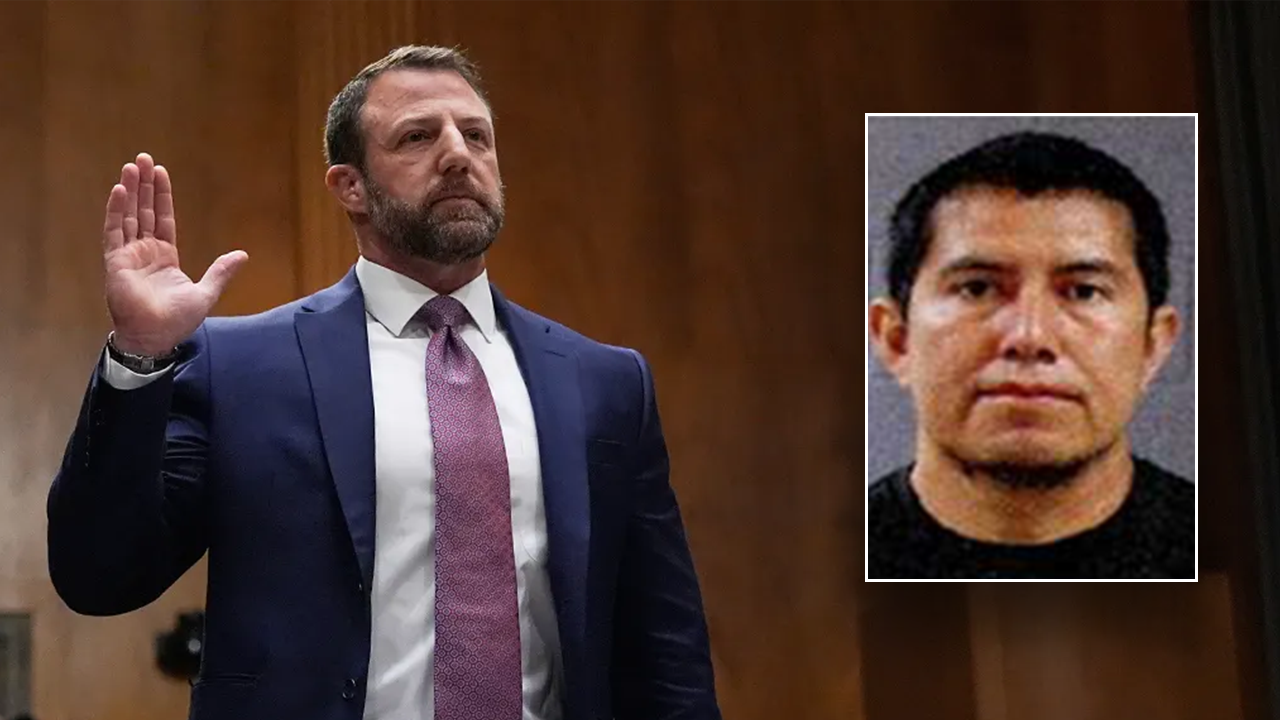
Several criminal illegal immigrants were arrested as incoming DHS Secretary Markwayne Mullin, left, prepared to be sworn in. Among them is Salvadoran illegal Oscar Edgardo Rogel-Gomez, right. (Manuel Balce Ceneta/AP Photo; DHS)
«If you come to our country illegally and break our laws, we will arrest you, deport you, and you will never return,» said Bis.
«Yesterday, the heroic men and women of ICE arrested multiple child predators, rapists, domestic abusers and other heinous criminals,» she added.
Among those arrested by ICE on Monday was Salvadoran illegal Oscar Edgardo Rogel-Gomez, who was convicted of sexual abuse of a child in St. George, Utah.
In Ohio, ICE officers arrested Alcides Ordonez-Cruz, an illegal alien from Honduras, who was convicted of third-degree gross sexual imposition and endangering children in Van Wert County, according to DHS.
IL DEMS DECLINE TO DEFEND ‘NO’ VOTES ON LAKEN RILEY ACT AFTER STUDENT’S KILLING TIED TO REPEAT OFFENDER
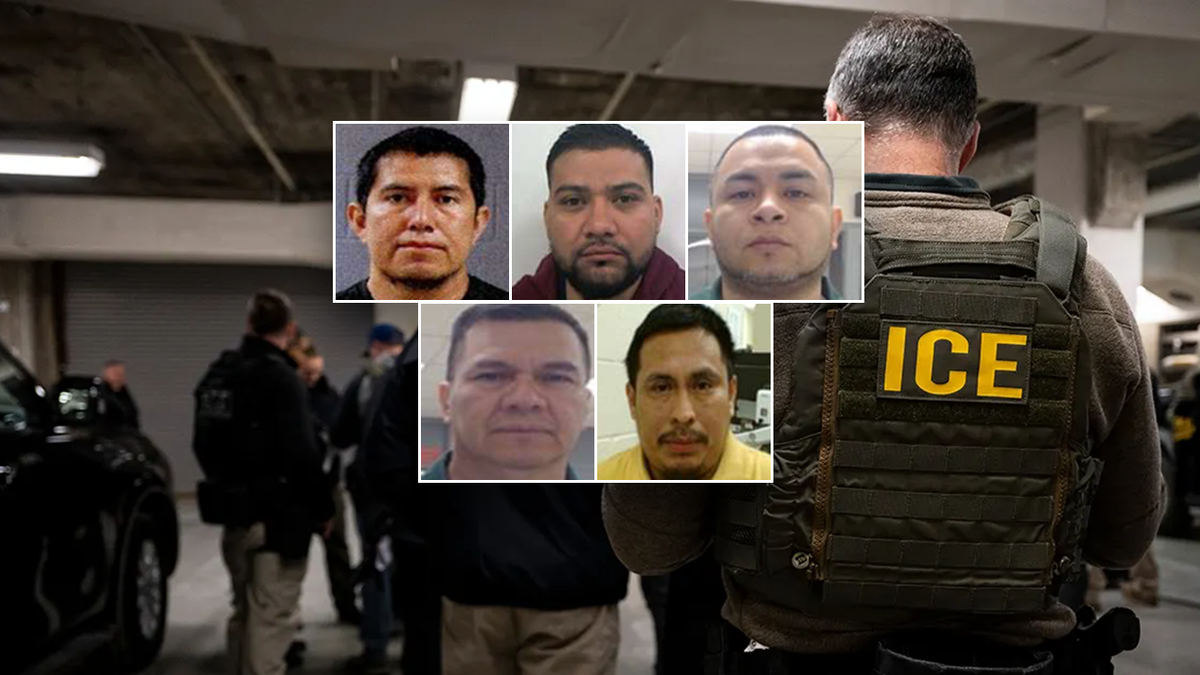
Left to right: Oscar Edgardo Rogel-Gomez, Alcides Ordonez-Cruz, Jose Gonzalez-Diaz, Jose Vazquez-Cardoza and Jose Simaj-Barrera. (Christopher Dilts/Bloomberg via Getty Images; DHS)
Officers also arrested two Salvadoran illegals in Riverhead, New York, on Monday: Jose Gonzalez-Diaz and Jose Vazquez-Cardoza. DHS said that both Gonzalez-Diaz and Vazquez-Cardoza have been convicted of rape.
In Harris County, Texas, home to the state’s largest city, Houston, ICE officers arrested Jose Simaj-Barrera, an illegal from Guatemala. According to DHS, Simaj-Barrera was convicted of assault of a family member.
Mullin was confirmed by the Senate on Monday, following a short but at times explosive confirmation process. He is the ninth secretary to lead DHS and follows a turbulent tenure under Noem, who oversaw the agency during a period of both record deportations and intense controversy.
HOMAN FIRES BACK AT BOOKER AFTER SENATOR VOICES ‘OUTRAGE’ OVER ICE AIRPORT DEPLOYMENTS
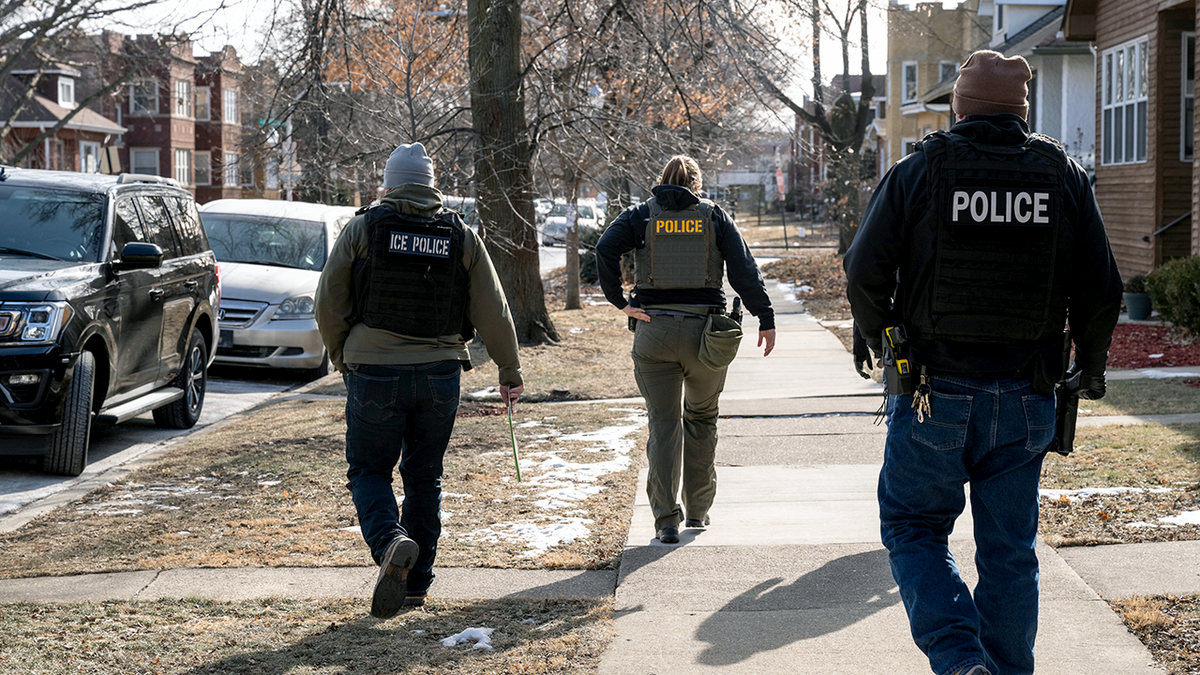
Federal ICE police officers patrol a suburban street. (Christopher Dilts/Getty Images)
CLICK HERE TO DOWNLOAD THE FOX NEWS APP
This comes as DHS continues to operate under lapsed funding. Democrats in Congress have made renewed funding for the agency contingent on sweeping reforms they say are necessary.
Despite these challenges, Mullin appeared confident during his swearing-in ceremony, telling the president, «I won’t let you down.»
Following his swearing in, Mullin told Fox News Digital in an emailed statement that «as the Secretary of Homeland Security, I look forward to continuing President Trump’s mission to safeguard the American people and defend the homeland.»
«I want to thank President Trump and my Senate colleagues for trusting me with this crucial role,» said Mullin.
«My first priority,» he said, «is to get the Department funded so the incredible patriots that support our 22 critical agencies receive a paycheck and can continue their critical work of keeping our nation safe.»
«DHS is bigger than any political party,» he added. «It’s time to end the partisan bickering that threatens our national security and put the American people first.»
immigration, homeland security, illegal immigrants, migrant crime, enforcement, donald trump

Ley de Glaciares: ambientalistas y bloques opositores convocaron a una marcha contra los límites de participación en el Congreso

CAZA DE BRUJAS EN RÍO: Lula utiliza a una argentina como «chivo expiatorio» en su guerra fría contra Milei

La Cámpora hizo del pedido de liberación de Cristina Kirchner su consigna central del 24 de marzo

YPF explicó que la guerra en Medio Oriente podría acelerar el millonario proyecto Argentina GNL

Koeman mima a Kees Smit, el ‘Pedri neerlandés’ que se deja querer por el Barça

Donald Trump sigue hablando de «negociaciones»: ahora dice que Irán le entregó a Estados Unidos «un gran regalo» relacionado con el petróleo y el gas

¿FIN DE CICLO? Escándalo por la mansión no declarada y viajes de lujo empujan a Manuel Adorni fuera del Gobierno: Su salida sería inminente

»¡VAN A FUNDIR A MEDIO PAÍS!»: El lapidario diagnóstico de Roberto Cachanosky sobre el plan de Milei

Apareció otra factura y complica más a Adorni: el vuelo de vuelta también lo pagó su amigo Grandio

ALERTA FINANCIERA: 4 de cada 10 argentinos ya no pueden pagar sus deudas. ¡Caputo debe actuar ya!

 POLITICA2 días ago
»¡VAN A FUNDIR A MEDIO PAÍS!»: El lapidario diagnóstico de Roberto Cachanosky sobre el plan de Milei
- ECONOMIA2 días ago
ALERTA FINANCIERA: 4 de cada 10 argentinos ya no pueden pagar sus deudas. ¡Caputo debe actuar ya!
- POLITICA1 día ago
El mensaje de Milei sobre la “traición” que llamó la atención en el Gobierno y también en la oposición