INTERNACIONAL
Who is the populist conservative president-elect in Costa Rica?

NEWYou can now listen to Fox News articles!
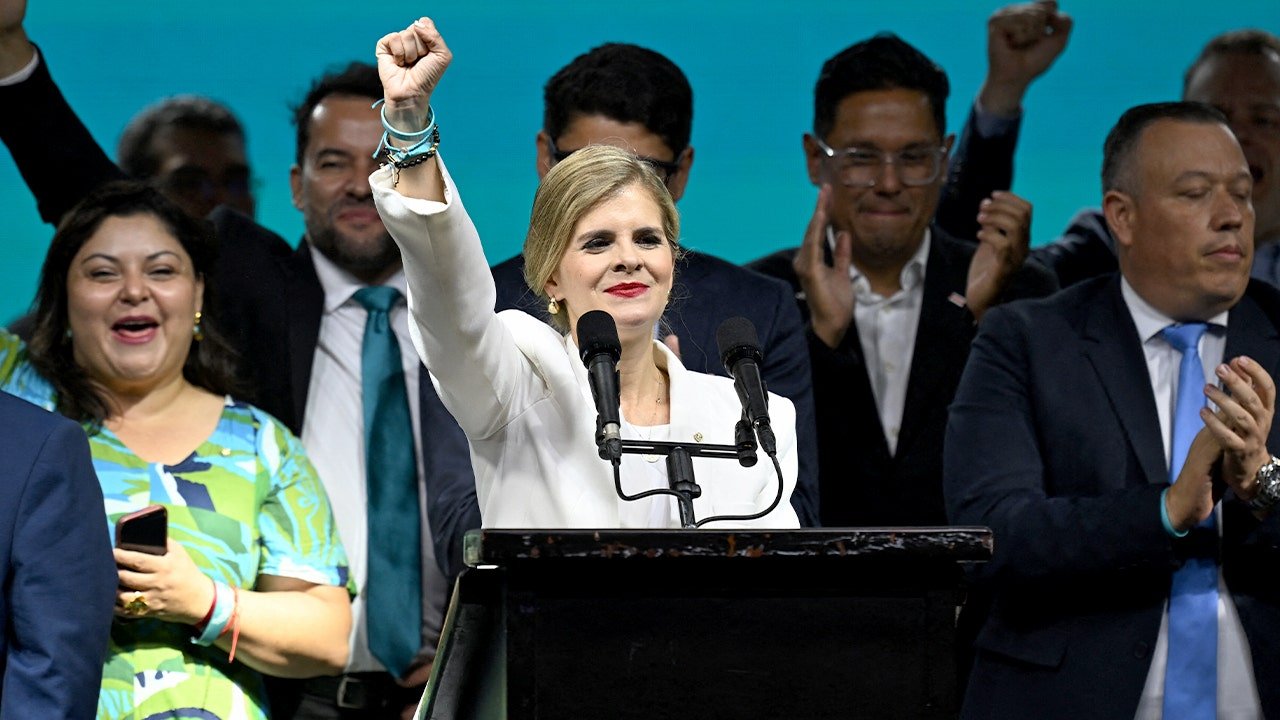
Laura Fernández Delgado declared victory in the Costa Rican presidential election on Sunday after preliminary results showed her Sovereign People’s Party leading the national vote with just over 48% support.
The National Liberation Party followed in second place with approximately 33% of the vote, according to the latest official tally from Costa Rica’s Supreme Electoral Tribunal, which oversees and certifies national elections.
«Change will be deep and irreversible,» Fernández said at her victory party in San Jose, according to a translation of her remarks from Reuters.
A former government minister, she is the handpicked successor of outgoing President Rodrigo Chaves, who is constitutionally prohibited from seeking re-election.
COSTA RICA SWINGS RIGHT AS VOTERS EMBRACE TOUGH-ON-CRIME LEADER AMID SURGING VIOLENCE
Presidential candidate Laura Fernandez of the Sovereign People’s Party (PPSO) reacts onstage as early results show her leading the general election in San Jose, Costa Rica, Feb. 1, 2026. (Raquel Cunha/Reuters)
Fernández, 39, is set to become Costa Rica’s second female president, after Laura Chinchilla, who served from 2010 to 2014.
Secretary of State Marco Rubio on Monday congratulated Fernández on her victory in Costa Rica’s presidential election, emphasizing the United States’ commitment to working closely with her incoming administration.
«Under her leadership, we are confident Costa Rica will continue to advance shared priorities to include combatting narco-trafficking, ending illegal immigration to the United States, promoting cybersecurity and secure telecommunications, and strengthening economic ties,» Rubio said.
TRUMP-STYLE LAW-AND-ORDER CONSERVATIVE CLINCHES CHILE’S PRESIDENCY AS VIOLENT CRIME CRISIS RESHAPES NATION
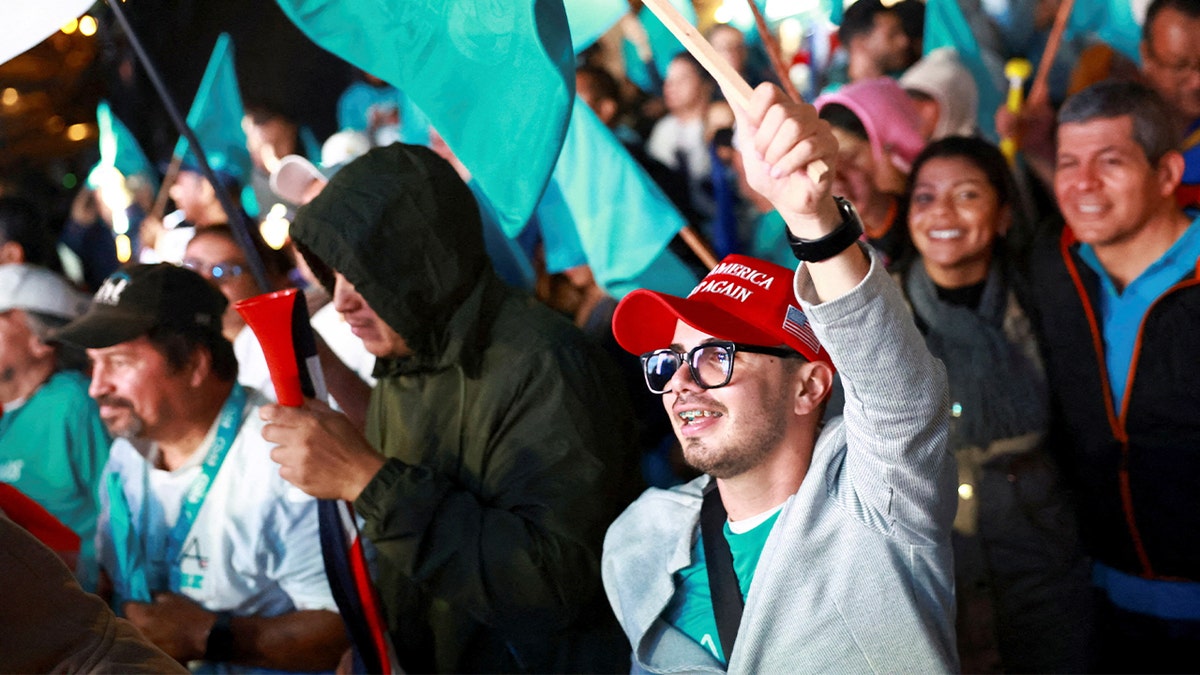
A man wearing a MAGA cap reacts as supporters of presidential candidate Laura Fernandez of the Sovereign People Party (PPSO) wait for her address after polls closed in the general election in San Jose, Costa Rica, Feb. 1, 2026. (Raquel Cunha/Reuters)
Reuters reported that Fernández, who is married and has a young daughter, has built her political profile around conservative Catholic values and a strong emphasis on family, helping her gain traction among Costa Rica’s expanding evangelical electorate.
She has publicly expressed admiration for Nayib Bukele, the president of El Salvador, and his tough stance on crime, signaling openness to enhanced security measures in violence-prone areas.
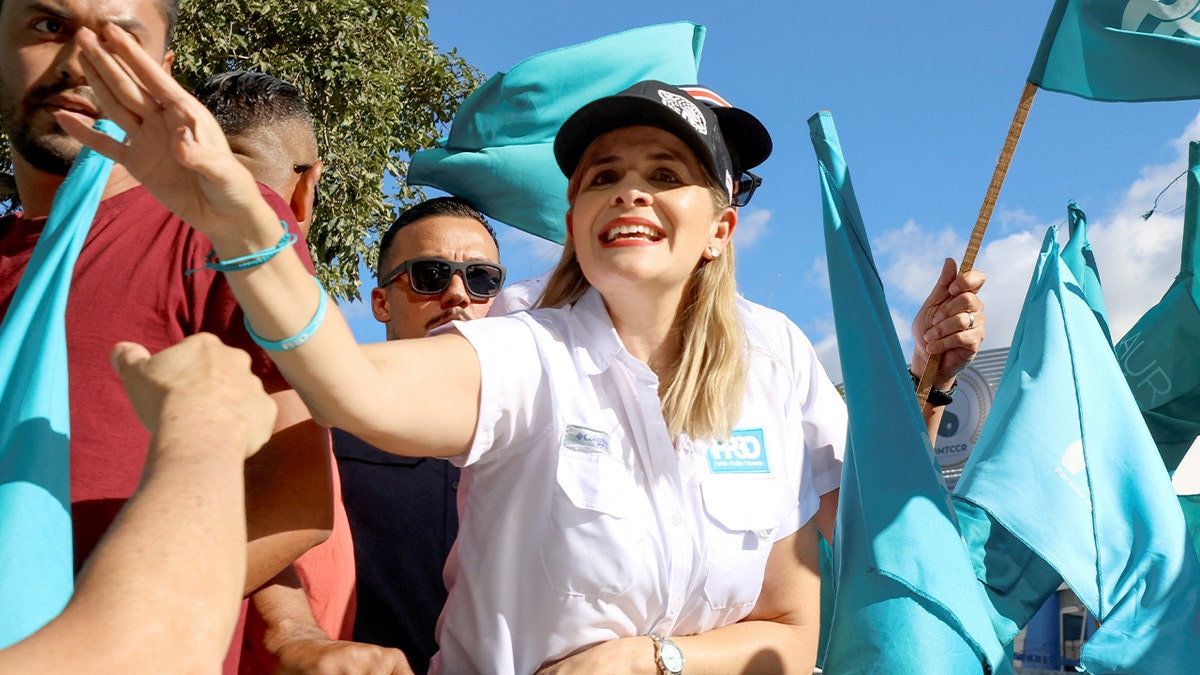
Costa Rica’s presidential candidate Laura Fernandez of the Sovereign People’s Party (PPSO) greets supporters during a campaign rally ahead of Sunday’s election in San Jose, Costa Rica, Jan. 24, 2026. (Mayela Lopez/Reuters)
CLICK HERE TO DOWNLOAD THE FOX NEWS APP
Fernández has also said she would complete construction of a maximum-security prison modeled on El Salvador’s CECOT facility as part of a broader strategy to address serious crime.
The president-elect is scheduled to be sworn in on May 8.
Fox News’ Emma Bussey contributed to this report.
world,central america,presidential









INTERNACIONAL
Pacho O’Donnell: “El sable de San Martín fue robado dos veces y él nunca lo usó, pero trasladarlo es militarizar su memoria”

Hay algo intenso, tiene que haber algo que toca hondo, en el sable de San Martín para que haga días que discutamos dónde va a estar, dónde tiene que estar, donde está bien o mal que esté. Para que, en la década del 60, haya sido robado dos veces. Para que el gobierno nacional, que ya tiene bastantes problemas, se ocupe de hacer un decreto para que sea trasladado del Museo Histórico Nacional al Regimiento de Granaderos. Para que por esta decisión haya renunciado la directora del Museo. Para que los descendientes de Juan Manuel de Rosas, a quien San Martín se lo dejó, hayan presentado una medida cautelar para que el sable se quede donde está, cautelar que, en principio, fue rechazada en la tarde del jueves.
A Pacho O’Donnell le parece obvio: “Es un símbolo máximo de nuestra nacionalidad”, ¿no? De nuestra guerra de independencia. ¡Es el sable de San Martín!»
Mario “Pacho”, O’Donnell es historiador, escritor, fue Secretario de Cultura en el gobierno de Carlos Menem y, justo, es autor -entre muchos otros libros- de una obra de teatro titulada El sable y de una investigación llamada Juan Manuel de Rosas, el maldito de nuestra historia oficial.
-¿Por qué San Martín le da el sable a Rosas?
-En el tercer artículo de su testamento, San Martín, que es una figura incuestionable, dice que le da el sable “que me ha acompañado”. Interesante… dice: “Me ha acompañado en toda la guerra de la Independencia de la América del Sur”. Y dice que se lo da a Juan Manuel de Rosas, “como prueba de satisfacción por la firmeza con que se sostuvo el honor de la República contra los extranjeros”.

-¿De qué está hablando? ¿Que se sostuvo el honor cuándo?
-El testamento tiene fecha 23 de enero de 1844. Es decir, que no le deja el sable, como se dice, por la Vuelta de Obligado (Ndela R: cuando se resistió la invasión de una tropa anglofrancesa), sino que se lo deja antes de la Vuelta de Obligado, se lo deja por la defensa contra el bloqueo francés de 1838. Por supuesto, la Vuelta de Obligado no hace sino reafirmar su admiración por la defensa de la soberanía. Es un gesto extraordinario de San Martín y, por supuesto, a contrapelo de la historia liberal, que pretende hacer de Rosas el enemigo público número, el maldito de la Historia.
-¿Y por qué el incuestionable le hace semejante honor al maldito?
-Bueno, alguna vez Sarmiento intentó dar una explicación diciendo que San Martín ya estaba muy viejo, que ya no pensaba bien cuando hizo eso. Es un tema imposible de resolver para la historia oficial, para la historia liberal.
-¿Rosas cómo lo tomó?
-Fue un gran honor, fijate que cuando se fue exiliado, después de la batalla de Caseros, se ocupó muy especialmente de que le enviaran el sable de San Martín. Cuando vuelve Terrero, el marido de Manuelita, deja la indicación precisa de que se vea exhibido. Que sea exhibido como ejemplo para la ciudadanía argentina. El hecho de la exhibición es un tema importante.
-Y se indicaba dónde.
-Era lógico que estuviera en el Museo Histórico Nacional.
-Pero eso es parte de la polémica ahora, se va a Granaderos.
-Es muy distinto que esté en el Museo Histórico Nacional, donde puede acceder toda la gente, que dentro de un regimiento de gran prestigio, indudablemente muy honorable, como Granaderos, pero en el cual la exhibición va a ser más difícil.
-¿Y si Granaderos garantizara una exhibición?
-¡Espero que sea así! El punto es que llevar el sable al Regimiento de Granaderos es militarizar demasiado la memoria de San Martín. San Martín fue un gran militar, pero fue un gran estadista también. Un hombre de Estado en sus declaraciones, sus programas, su donación de bibliotecas, su interés por la cultura, por cómo administró tanto Mendoza o Lima, después de la liberación de Perú. La derecha siempre quiere dar su imagen militarizada.
-¿Por qué? ¿Por qué ahora?
-Creo que hay toda una campaña de Milei, de congraciar el poder civil con el ejército… Y claro que es un símbolo de una enorme importancia, que tiene sus particularides y su historia.

-¿Cómo es eso?
-En principio, es un sable curvo. San Martín lo compra, usado, en 1811 en Londres, cuando ha dejado ya de pertenecer al ejército español y se prepara para venir a América. Y compra un sable usado que es un alfanje turco. San Martín lo había probado en las guerras napoleónicas para la carga de caballería, porque el sable curvo lastima y sigue, a diferencia de la espada recta que pincha y se atasca. El principal objetivo es el cuello siempre.
-¿Se saben más cosas del sable?
-Es un sable muy modesto. No tiene incrustaciones de oro ni grandes adornos. Y a mí me interesa que, cuando se lo da a Rosas, San Martín dice eso de: “El sable que me ha acompañado”. Casi como una cosa de afecto, ¿no? Un compañero de campaña.

-Y lo compra cuando toma una decisión trascendental para su vida, que es cambiar de bando de alguna manera.
-Por eso para los españoles es un traidor.
-¿Alguna vez lo usó? ¿San Martín combatió con ese sable realmente o fue más el gesto de un militar que debe tener un sable?
-No, no lo usó, en aquella época los jefes más bien planificaban la batalla. Yo no recuerdo que San Martín haya estado en primera línea de los combates, pero no por cobardía, porque no era un cobarde, sino que necesitaba controlar el escenario… Él fue un gran estratega militar. La batalla de Chacabuco es una batalla que se estudia en las secuelas de guerra del mundo.
-El sable fue robado en 1963 y 1965. ¿Cómo fue eso?
-Las dos veces lo robó la Juventud Peronista, lo sacaron del Museo. En aquellos tiempos el peronismo negociaba, por ejemplo, el regreso de Perón. Fue el 12 de agosto de 1963. Y el otro robo fue el 19 de agosto de 1965. Bueno, luego lo devolvían. Siempre era un hecho de mucha repercusión mediática en una época en que el peronismo estaba proscrito y prohibido. –
-¿Qué significa hoy el sable?
-Los gobiernos siempre saben la importancia que tiene la instrumentación política de los símbolos históricos. La Historia es muy subjetiva, es muy distinta la historia escrita por un historiador liberal que por un historiador nacional y popular revisionista. De alguna manera, el historiador siempre es un intérprete.
Pacho O’Donnell,Sable de San Martín,historia,Argentina,independencia,próceres,cultura,patrimonio,escritor,historiador
INTERNACIONAL
Shapiro fires back at DHS, says truck driver accused in deadly crash had legal status in database
NEWYou can now listen to Fox News articles!
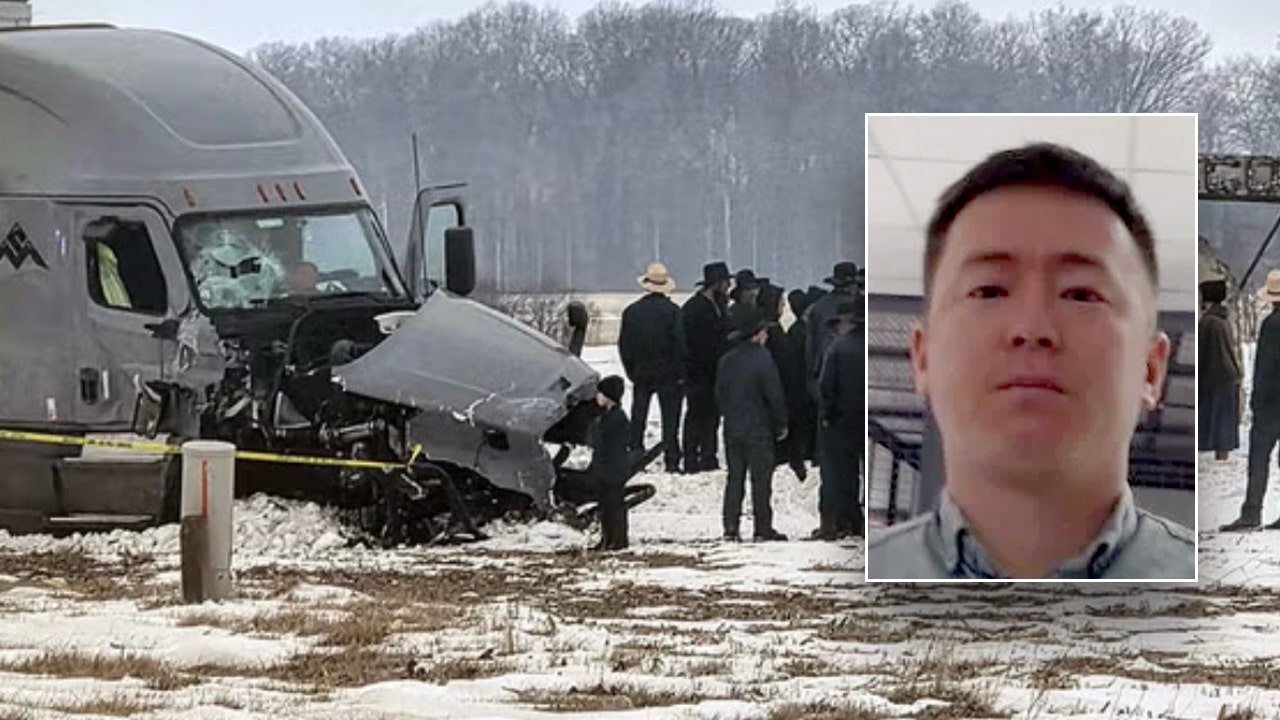
Pennsylvania Gov. Josh Shapiro’s team is disputing the Department of Homeland Security’s (DHS) assertions about the immigration status of a semi-truck driver involved in a crash that left four dead in Indiana. The driver was taken into U.S. Immigration and Customs Enforcement (ICE) custody after a detainer was placed on him.
DHS said the driver, Bekzhan Beishekeev, a 30-year-old national of Kyrgyzstan, came into the U.S. «illegally» using the controversial CBP One app and was later issued a commercial driver’s license (CDL) in Pennsylvania. The department confirmed to Fox News that Beishekeev entered the country on Dec. 19, 2023, at the Nogales, Ariz., port of entry, using the CBP One app and was released into the U.S. via parole by the Biden administration.
«Not only was Bekzhan Beishekeev released into our country by the Biden administration using the CBP One app, but he was also given a commercial driver’s license by Governor Shapiro’s Pennsylvania. These decisions have had deadly consequences and led to the death of four innocent people in Indiana on Tuesday,» DHS Assistant Secretary Tricia McLaughlin said in a statement.
McLaughlin then called on «sanctuary» governors to stop issuing CDLs to illegal immigrants «before another American gets killed.»
SEMI-TRUCK DRIVER HELD ON ICE DETAINER AFTER 4 KILLED IN HEAD-ON CRASH
Bekzhan Beishekeev, a 30-year-old national of Kyrgyzstan, was allegedly involved in a crash that left four dead. (Fox News/DHS)
Shapiro’s office argues that Beishekeev had legal status when he was issued the license in July 2025 and that he could still be eligible under a DHS database to receive one.
«Every person who applies for a non-domiciled commercial driver’s license issued by PennDOT must provide proof of identify and proof of their legal presence in the United States. That information is verified by the federal Systematic Alien Verification for Entitlements (SAVE) database, administered by Kristi Noem and the United States Department of Homeland Security,» Shapiro spokesperson Alex Peterson said in a statement provided to Fox News.
«The individual in question had legal status in Kristi Noem’s database when the license was issued in July 2025 and still shows as eligible to receive a license as of today. Kristi Noem should focus on minding the shop in her own agency, as her incompetence and operational failures seem to be matching the scale of her moral failures as the Secretary of Homeland Security,» Peterson added.

The Indiana State Police is investigating the crash in Jay County. (Indiana State Police)
ILLEGAL IMMIGRANT ALLEGEDLY RAMS ICE VEHICLE, BITES AGENTS AFTER FAILED GUN PURCHASE IN PITTSBURGH
The deadly crash occurred on Feb. 3 at approximately 4:00 p.m. when Beishekeev was driving eastbound on Indiana’s State Route 67 and allegedly failed to break for a slowed semi-truck in front of him, according to DHS and Indiana State Police. Beishekeev then allegedly swerved into oncoming traffic and slammed into a van carrying 15 passengers. Four people were killed in the crash. DHS said the fatal incident is being investigated by the Indiana State Police, the Jay County Sheriff’s Department and the Jay County Coroner’s Office.
DHS and the U.S. Department of Transportation (DOT) have warned about the dangers of CDL issuing practices in several states following a series of fatal crashes allegedly involving illegal immigrants.
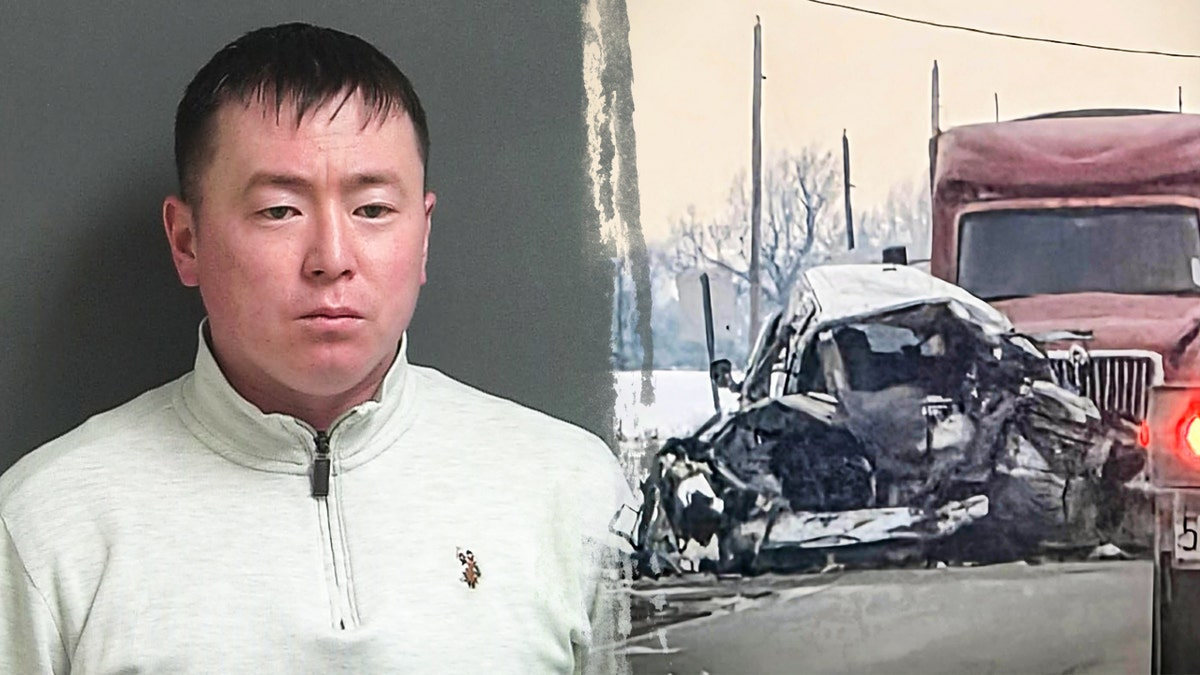
Bekzhan Beishekeev, left, has been taken into ICE custody following a fatal crash on Feb. 3, 2026, in Jay County, Ind., near the state’s border with Ohio. (Jay County Sheriff’s Department)
CLICK HERE TO DOWNLOAD THE FOX NEWS APP
In its statement on Beishekeev, DHS noted that ICE had previously arrested another illegal immigrant who was issued a CDL in Pennsylvania.
Akhror Bozorov, 31, is an Uzbek national who DHS said was wanted in his country of origin for belonging to a terrorist organization. Bozorov was arrested in Kansas on Nov. 9 while working as a commercial truck driver, using a CDL issued in Pennsylvania, according to DHS. Bozorov was allegedly granted work authorization in January 2024 under the Biden administration.
Fox News’ Alexis McAdams and Fox News Digital’s Gregary Norman-Diamond contributed to this report.
politics,us,illegal immigrants,pennsylvania
INTERNACIONAL
Iran’s Khamenei stays away from talks as JD Vance says dynamic makes diplomacy ‘much more complicated’

NEWYou can now listen to Fox News articles!
As indirect talks between the U.S. and Iran started on Friday in Oman, remarks from Vice President JD Vance earlier in the week questioning the absence of the Supreme Leader Ali Khamenei from talks have raised a core dilemma for Washington — the person with ultimate authority in Tehran is not sitting at the negotiating table.
In the interview, Vance said, «It’s a very weird country to conduct diplomacy with, when you can’t even talk to the person who’s in charge of the country. That makes all of this much more complicated… It is bizarre that we can’t just talk to the actual leadership of the country. It really makes diplomacy very, very difficult,» he said on Megyn Kelly’s podcast.
IRANIAN SUPREME LEADER BLAMES TRUMP FOR INCREASINGLY INTENSE DEMONSTRATIONS
Iran’s Supreme Leader Ali Khamenei waves to the audience during a speech in Tehran, Iran, on Nov. 3, 2025. During his address marking the anniversary of the 1979 takeover of the U.S. Embassy in Tehran, known as the «National Day of Fight against Global Arrogance,» Khamenei stated that cooperation between Tehran and Washington is impossible as long as the U.S. continues to support Israel and maintain military bases in the region. ( Iranian Leader Press Office/Anadolu via Getty Images)
The Supreme Leader has no equals
Ayatollah Ali Khamenei, 86, has served as Iran’s supreme leader since 1989 and remains the country’s highest political and religious authority, with ultimate control over military, security and strategic decisions. That concentration of power means any diplomatic outcome must ultimately pass through him.
Sina Azodi, the director of the Middle East Studies Program at George Washington University, told Fox News Digital that Khamenei’s authority stems from direct control over Iran’s core power centers. «He is very powerful because he is the commander in chief of the armed forces and appoints the heads of the IRGC, the Artesh (conventional military), the judiciary and other important institutions.»
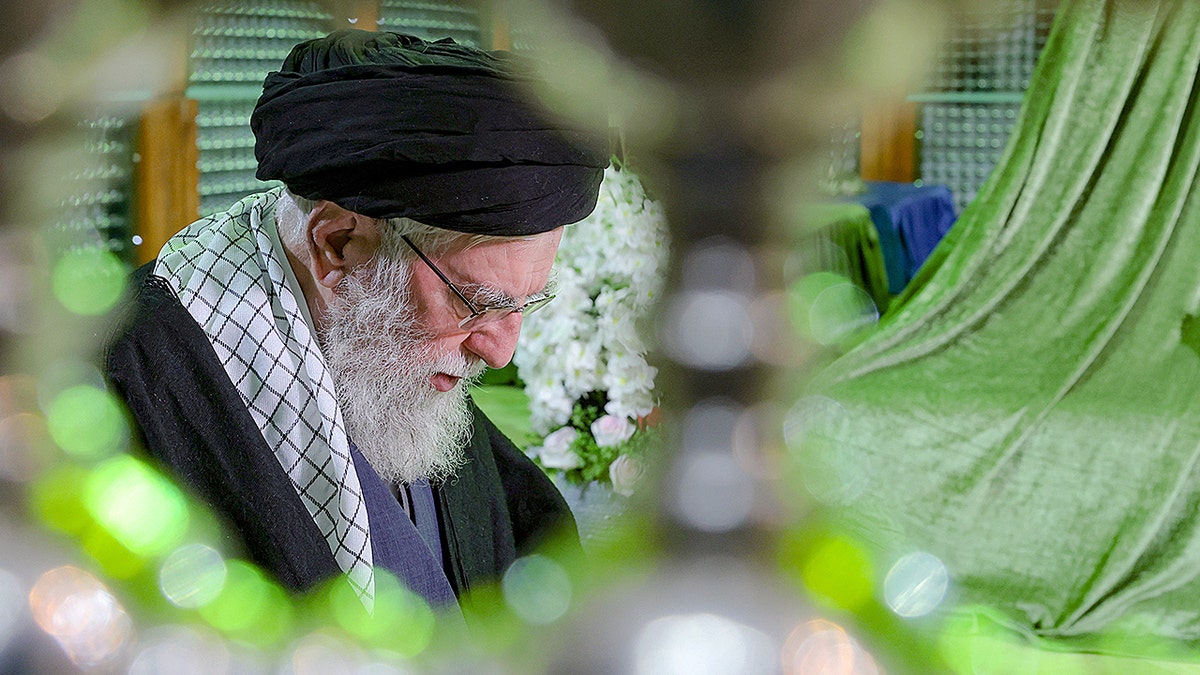
Iran’s Supreme Leader Khamenei makes first public appearance in weeks with fresh U.S. threats. (Office of the Iranian Supreme Leader Credit/Associated Press)
Azodi added that protocol and hierarchy also explain Khamenei’s absence from negotiations. «Iranians are very adamant about diplomatic protocols — that since other countries don’t have the equivalent rank, he does not participate in any negotiations because his ‘equal’ rank does not exist,» Azodi said. «Even when foreign heads of state visit him, there is only the Iranian flag, and foreign flags are not allowed.»
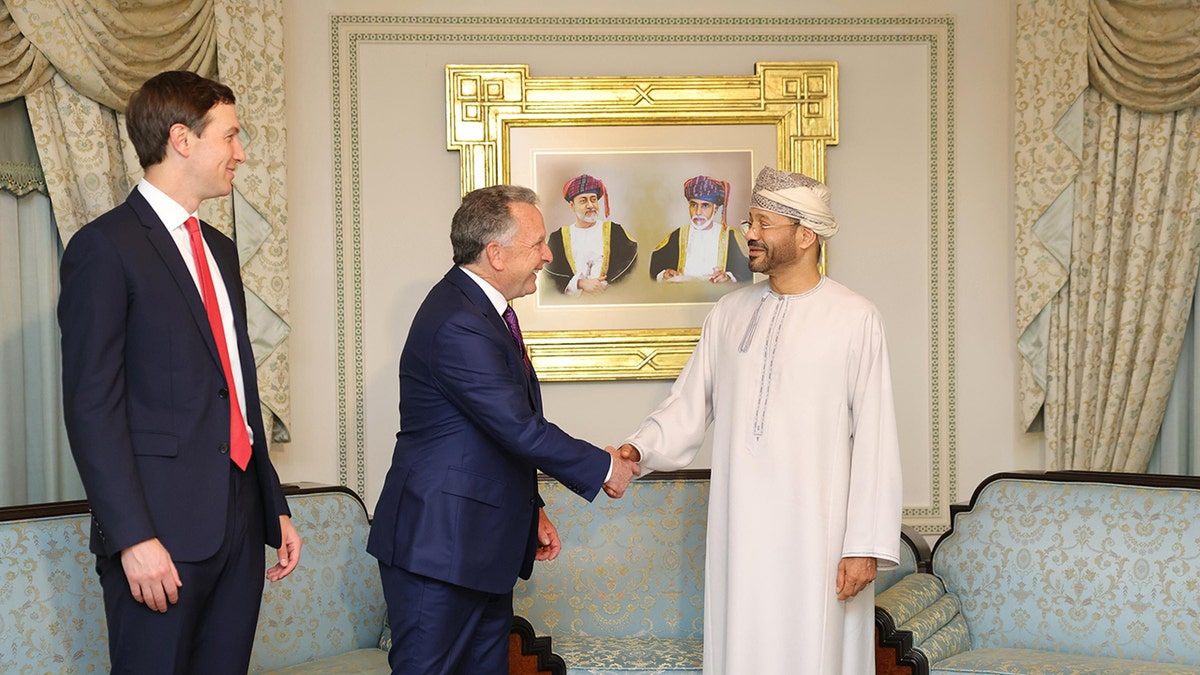
Omani Foreign Minister Sayyid Badr Hamad Al Busaidi, President Donald Trump’s Special Representative for the Middle East, Steve Witkoff and U.S. negotiator Jared Kushner meet ahead of the U.S.-Iran talks, in Muscat, the capital of Oman, on Feb. 6, 2026. (Oman Foreign Ministry/Anadolu via Getty Images)
Iranian sources familiar with internal discussions described Khamenei as operating from a legacy mindset at this stage of his life. «The supreme leader sees the confrontation with Washington as defining his historical role and believes Iran can retaliate against U.S. interests in the region. Khamenei is not focused on personal risk and views strategic confrontation as part of preserving his legacy,» a Middle Eastern source speaking on the condition of anonymity told Fox News Digital.
Behnam Ben Taleblu, a senior fellow at the Foundation for Defense of Democracies, told Fox News Digital that Khamenei remains the decisive figure in Iran’s system even as the regime faces pressure at home and abroad.
«He wields great influence in Iran but also exercises the greatest veto in Iran’s political hierarchy»
«He wields great influence in Iran but also exercises the greatest veto in Iran’s political hierarchy,» Ben Taleblu said.
He added, «The Iranian strategy… is to raise the cost of war in the thinking of the adversary,» he said, describing a system that signals willingness to talk while simultaneously preparing for confrontation.
He warned that «regimes that are afraid and lethal and weak can still be dangerous,» and said Tehran may believe threatening U.S. assets could deter a broader war even if such escalation risks triggering a stronger American response.
TOP IRANIAN GENERAL THREATENS TO ‘CUT OFF’ TRUMP’S HAND OVER POTENTIAL MILITARY STRIKES
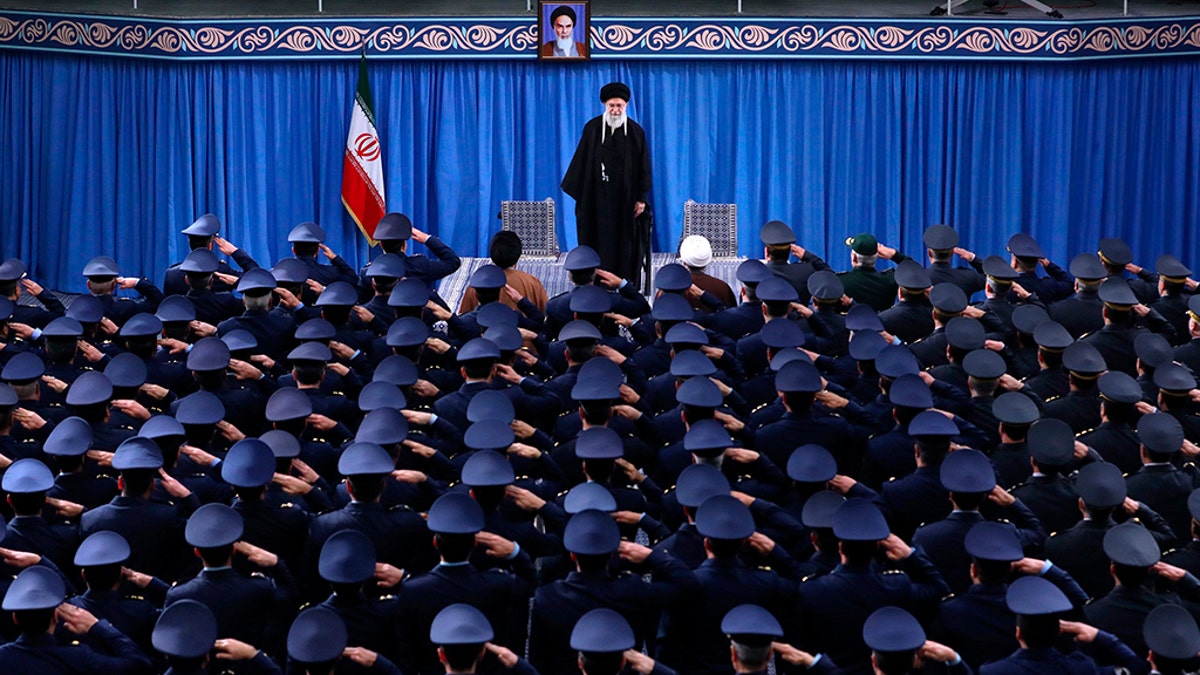
In this picture released by the official website of the office of the Iranian supreme leader, Supreme Leader Ayatollah Ali Khamenei stands as army air force staff salute at the start of their meeting in Tehran, Iran, Friday, Feb. 8, 2019. Khamenei is defending «Death to America» chants that are standard fare at anti-U.S. rallies across Iran but says the chanting is aimed at America’s leaders and not its people. (Office of the Iranian Supreme Leader via AP)
«Very difficult to say what Khamenei’s mindset is, but I think that he, along with other senior officials, think that the current conflict is not an isolated phenomenon but rather the continuation of the June 2025 conflict and the recent protests, which he called ‘an American coup,’» Azodi told Fox News Digital.
«I think that he thinks that the U.S. is definitely after a regime change and that needs to be resisted at all costs,» he added.
Inside Iran, frustration with Khamenei has become increasingly visible, according to a journalist reporting from within the country.
TRUMP SAYS IRANIAN SUPREME LEADER KHAMENEI SHOULD BE ‘VERY WORRIED’ AMID TENSIONS
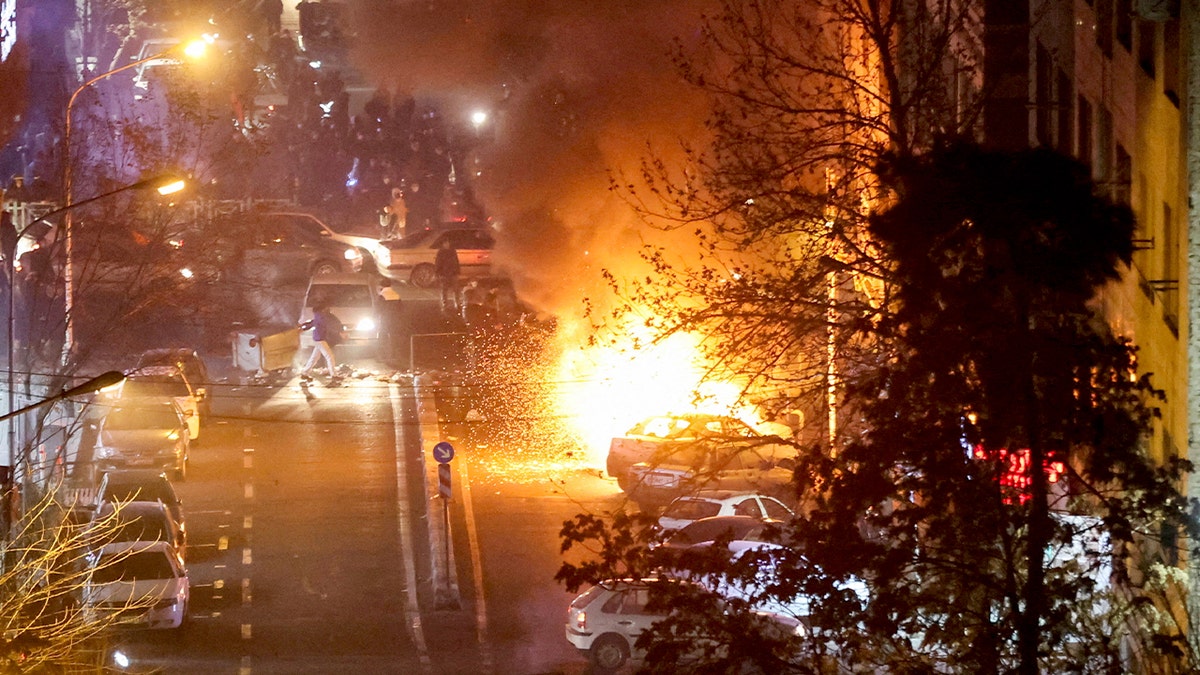
Cars burn in a street during a protest over the collapse of the currency’s value in Tehran, Iran, Jan. 8, 2026. (Stringer/WANA (West Asia News Agency) via REUTERS)
«What people want more than anything else is for Khamenei to die… I hear it every day, everywhere I go — why doesn’t he die?» the journalist told Fox News Digital.
«He is perceived as God’s representative, while leaders of enemy states are viewed as representatives of Satan, which is why he never meets with them.»
«You just open the Twitter of Iranians… the tweet is, why don’t you die? And everybody knows who we are talking about. So a nation is waiting for him to die.»
The journalist said many Iranians no longer believe political reform is possible and instead see generational change as the only turning point.
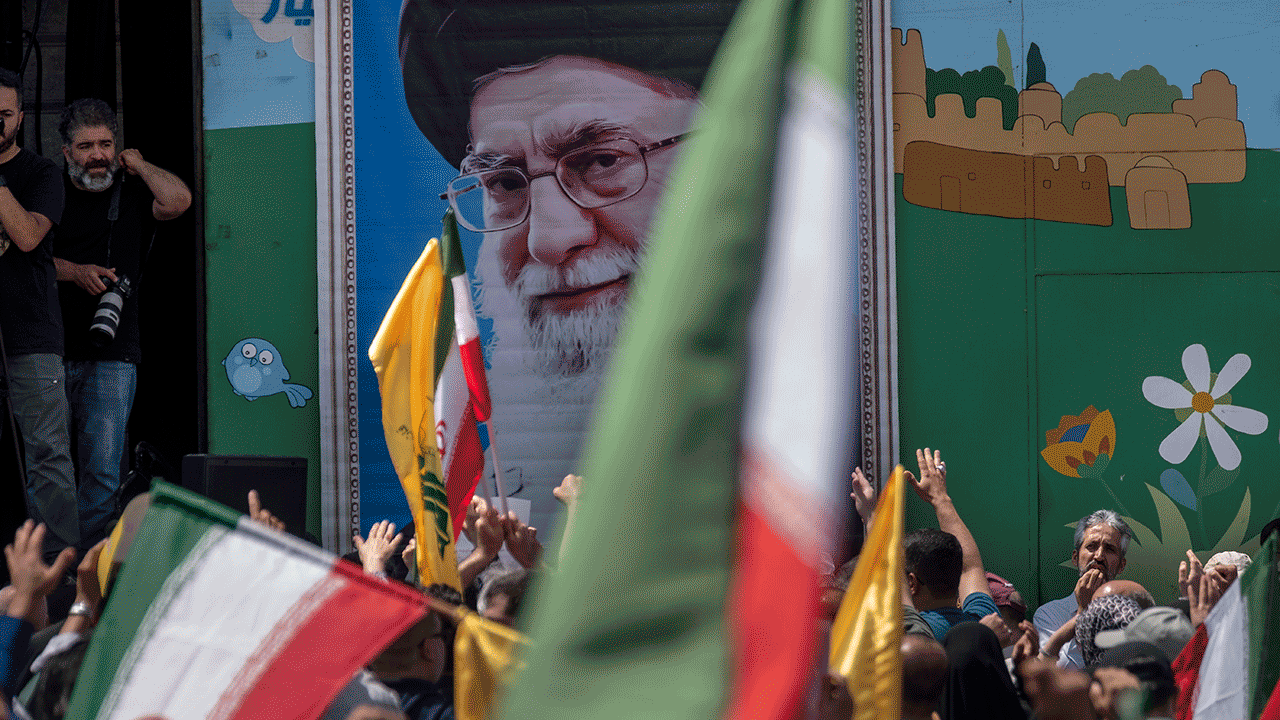
Iranian worshipers hold up their hands as signs of unity with Iranian Supreme Leader Ayatollah Ali Khamenei during an anti-Israeli rally to condemn Israel’s attacks on Iran, in downtown Tehran, Iran, on June 20, 2025. (Morteza Nikoubazl/NurPhoto via Getty Images)
An Iranian journalist in exile, Mehdi Ghadimi, told Fox News Digital that, «The Islamic government considers itself obligated to enforce Islamic law across the entire world. They harbor hatred toward Iranians and Jews, whom they regard as enemies of Islam,» he explained, «In such a structure, the leader is seen as more than a political ruler; he is perceived as God’s representative, while leaders of enemy states are viewed as representatives of Satan, which is why he never meets with them. If dialogue or compromise were to take place, his sacred image would collapse in the eyes of his supporters.»
He continued, «For this reason, groups labeled as ‘moderate,’ ‘reformist’ or ‘pro-Western’ are created so that the West can negotiate with them,» Ghadimi added. «No one within the structure of the Islamic Republic thinks about anything other than defeating the Western world and establishing Islamic dominance globally. The diplomats presented to Western politicians as moderates are tasked with using diplomacy to buy time for Khamenei.»
CLICK HERE TO DOWNLOAD THE FOX NEWS APP
The negotiations come amid heightened regional tensions, U.S. military deployments and unresolved disputes over Iran’s nuclear program and missile capabilities.
Regional analysts say that for the U.S., the central challenge remains unchanged. Diplomats can negotiate, but the final decision rests with one man — a leader shaped by decades of confrontation with the United States, focused on regime survival and determined to preserve his legacy even as Iran enters a new round of talks.
ali khamenei,iran,jd vance,foreign policy,donald trump,world protests

Tras el conflicto, Independiente vendió a Javier Ruiz y cerró la salida de otra promesa: la lista con todos los jugadores que dejaron el club

Reforma laboral: la postura intransigente se impone en el Gobierno y gana adeptos la idea de no hacer cambios

Cómo evalúan en EE.UU. el acuerdo comercial con la Argentina: el efecto en las inversiones y el punto conflictivo de la carne

Acuerdo comercial Argentina-EEUU: qué autos podrán importarse y quiénes podrán acceder al beneficio de arancel 0%

Quién es la famosa actriz que confirmó su embarazo a los 42 años y será mamá por primera vez: «Es un milagro, estoy de 6 meses»

Argentina y EEUU preparan el ejercicio militar conjunto de alto despliegue “más importante de la historia reciente”

La trama detrás del sorpresivo portazo de Lavagna en el INDEC y el desacuerdo con Milei por el IPC

Mariana Fabbiani mostró fotos de sus vacaciones soñadas en la playa: «Desde el paraíso»

Flor de la V contó las dificultades que vivió junto a Pablo Goycochea cuando se conoció su romance: “Había una persecución”

Jorge Macri: «Hay una percepción de que hay cosas que aumentan más que la inflación»

 CHIMENTOS1 día ago
Flor de la V contó las dificultades que vivió junto a Pablo Goycochea cuando se conoció su romance: “Había una persecución”
- POLITICA2 días ago
Jorge Macri: «Hay una percepción de que hay cosas que aumentan más que la inflación»
- ECONOMIA1 día ago
Milei dejó trascender que Lavagna quería un índice de inflación más alto porque «jugaba para Massa»