INTERNACIONAL
Pacho O’Donnell: “El sable de San Martín fue robado dos veces y él nunca lo usó, pero trasladarlo es militarizar su memoria”


Hay algo intenso, tiene que haber algo que toca hondo, en el sable de San Martín para que haga días que discutamos dónde va a estar, dónde tiene que estar, donde está bien o mal que esté. Para que, en la década del 60, haya sido robado dos veces. Para que el gobierno nacional, que ya tiene bastantes problemas, se ocupe de hacer un decreto para que sea trasladado del Museo Histórico Nacional al Regimiento de Granaderos. Para que por esta decisión haya renunciado la directora del Museo. Para que los descendientes de Juan Manuel de Rosas, a quien San Martín se lo dejó, hayan presentado una medida cautelar para que el sable se quede donde está, cautelar que, en principio, fue rechazada en la tarde del jueves.
A Pacho O’Donnell le parece obvio: “Es un símbolo máximo de nuestra nacionalidad”, ¿no? De nuestra guerra de independencia. ¡Es el sable de San Martín!»
Mario “Pacho”, O’Donnell es historiador, escritor, fue Secretario de Cultura en el gobierno de Carlos Menem y, justo, es autor -entre muchos otros libros- de una obra de teatro titulada El sable y de una investigación llamada Juan Manuel de Rosas, el maldito de nuestra historia oficial.
-¿Por qué San Martín le da el sable a Rosas?
-En el tercer artículo de su testamento, San Martín, que es una figura incuestionable, dice que le da el sable “que me ha acompañado”. Interesante… dice: “Me ha acompañado en toda la guerra de la Independencia de la América del Sur”. Y dice que se lo da a Juan Manuel de Rosas, “como prueba de satisfacción por la firmeza con que se sostuvo el honor de la República contra los extranjeros”.

-¿De qué está hablando? ¿Que se sostuvo el honor cuándo?
-El testamento tiene fecha 23 de enero de 1844. Es decir, que no le deja el sable, como se dice, por la Vuelta de Obligado (Ndela R: cuando se resistió la invasión de una tropa anglofrancesa), sino que se lo deja antes de la Vuelta de Obligado, se lo deja por la defensa contra el bloqueo francés de 1838. Por supuesto, la Vuelta de Obligado no hace sino reafirmar su admiración por la defensa de la soberanía. Es un gesto extraordinario de San Martín y, por supuesto, a contrapelo de la historia liberal, que pretende hacer de Rosas el enemigo público número, el maldito de la Historia.
-¿Y por qué el incuestionable le hace semejante honor al maldito?
-Bueno, alguna vez Sarmiento intentó dar una explicación diciendo que San Martín ya estaba muy viejo, que ya no pensaba bien cuando hizo eso. Es un tema imposible de resolver para la historia oficial, para la historia liberal.
-¿Rosas cómo lo tomó?
-Fue un gran honor, fijate que cuando se fue exiliado, después de la batalla de Caseros, se ocupó muy especialmente de que le enviaran el sable de San Martín. Cuando vuelve Terrero, el marido de Manuelita, deja la indicación precisa de que se vea exhibido. Que sea exhibido como ejemplo para la ciudadanía argentina. El hecho de la exhibición es un tema importante.
-Y se indicaba dónde.
-Era lógico que estuviera en el Museo Histórico Nacional.
-Pero eso es parte de la polémica ahora, se va a Granaderos.
-Es muy distinto que esté en el Museo Histórico Nacional, donde puede acceder toda la gente, que dentro de un regimiento de gran prestigio, indudablemente muy honorable, como Granaderos, pero en el cual la exhibición va a ser más difícil.
-¿Y si Granaderos garantizara una exhibición?
-¡Espero que sea así! El punto es que llevar el sable al Regimiento de Granaderos es militarizar demasiado la memoria de San Martín. San Martín fue un gran militar, pero fue un gran estadista también. Un hombre de Estado en sus declaraciones, sus programas, su donación de bibliotecas, su interés por la cultura, por cómo administró tanto Mendoza o Lima, después de la liberación de Perú. La derecha siempre quiere dar su imagen militarizada.
-¿Por qué? ¿Por qué ahora?
-Creo que hay toda una campaña de Milei, de congraciar el poder civil con el ejército… Y claro que es un símbolo de una enorme importancia, que tiene sus particularides y su historia.

-¿Cómo es eso?
-En principio, es un sable curvo. San Martín lo compra, usado, en 1811 en Londres, cuando ha dejado ya de pertenecer al ejército español y se prepara para venir a América. Y compra un sable usado que es un alfanje turco. San Martín lo había probado en las guerras napoleónicas para la carga de caballería, porque el sable curvo lastima y sigue, a diferencia de la espada recta que pincha y se atasca. El principal objetivo es el cuello siempre.
-¿Se saben más cosas del sable?
-Es un sable muy modesto. No tiene incrustaciones de oro ni grandes adornos. Y a mí me interesa que, cuando se lo da a Rosas, San Martín dice eso de: “El sable que me ha acompañado”. Casi como una cosa de afecto, ¿no? Un compañero de campaña.

-Y lo compra cuando toma una decisión trascendental para su vida, que es cambiar de bando de alguna manera.
-Por eso para los españoles es un traidor.
-¿Alguna vez lo usó? ¿San Martín combatió con ese sable realmente o fue más el gesto de un militar que debe tener un sable?
-No, no lo usó, en aquella época los jefes más bien planificaban la batalla. Yo no recuerdo que San Martín haya estado en primera línea de los combates, pero no por cobardía, porque no era un cobarde, sino que necesitaba controlar el escenario… Él fue un gran estratega militar. La batalla de Chacabuco es una batalla que se estudia en las secuelas de guerra del mundo.
-El sable fue robado en 1963 y 1965. ¿Cómo fue eso?
-Las dos veces lo robó la Juventud Peronista, lo sacaron del Museo. En aquellos tiempos el peronismo negociaba, por ejemplo, el regreso de Perón. Fue el 12 de agosto de 1963. Y el otro robo fue el 19 de agosto de 1965. Bueno, luego lo devolvían. Siempre era un hecho de mucha repercusión mediática en una época en que el peronismo estaba proscrito y prohibido. –
-¿Qué significa hoy el sable?
-Los gobiernos siempre saben la importancia que tiene la instrumentación política de los símbolos históricos. La Historia es muy subjetiva, es muy distinta la historia escrita por un historiador liberal que por un historiador nacional y popular revisionista. De alguna manera, el historiador siempre es un intérprete.
Pacho O’Donnell,Sable de San Martín,historia,Argentina,independencia,próceres,cultura,patrimonio,escritor,historiador











INTERNACIONAL
Cómo las noticias falsas e imágenes creadas con IA multiplicaron el pánico tras la muerte del capo más poderoso de México

INTERNACIONAL
Biden-appointed judge who slapped down Trump deportation policy previously rebuked by SCOTUS
NEWYou can now listen to Fox News articles!
A federal judge appointed by former President Joe Biden on Thursday again ruled against the Trump administration’s third-country deportation policy, months after the Supreme Court blocked his earlier decision and rebuked him in a rare follow-up order.
The Supreme Court not only stayed Boston-based Judge Brian Murphy’s injunction over the same deportation policy in a 6-3 order last June, but the high court followed up with a second 7-2 order a week later admonishing the judge for flouting its decision. Murphy’s latest ruling is also likely to land before the justices, setting up a fresh test of the judge’s decisions in the high-stakes case.
Murphy, who was confirmed by the Senate along party lines, had issued a sweeping 81-page decision on Thursday finding that the Department of Homeland Security’s process for deporting migrants to third countries (countries that are not specified in the migrants’ removal orders) was unlawful because it violated the migrants’ due process by not giving them enough time to raise fears that they could be tortured in the country they are sent to.
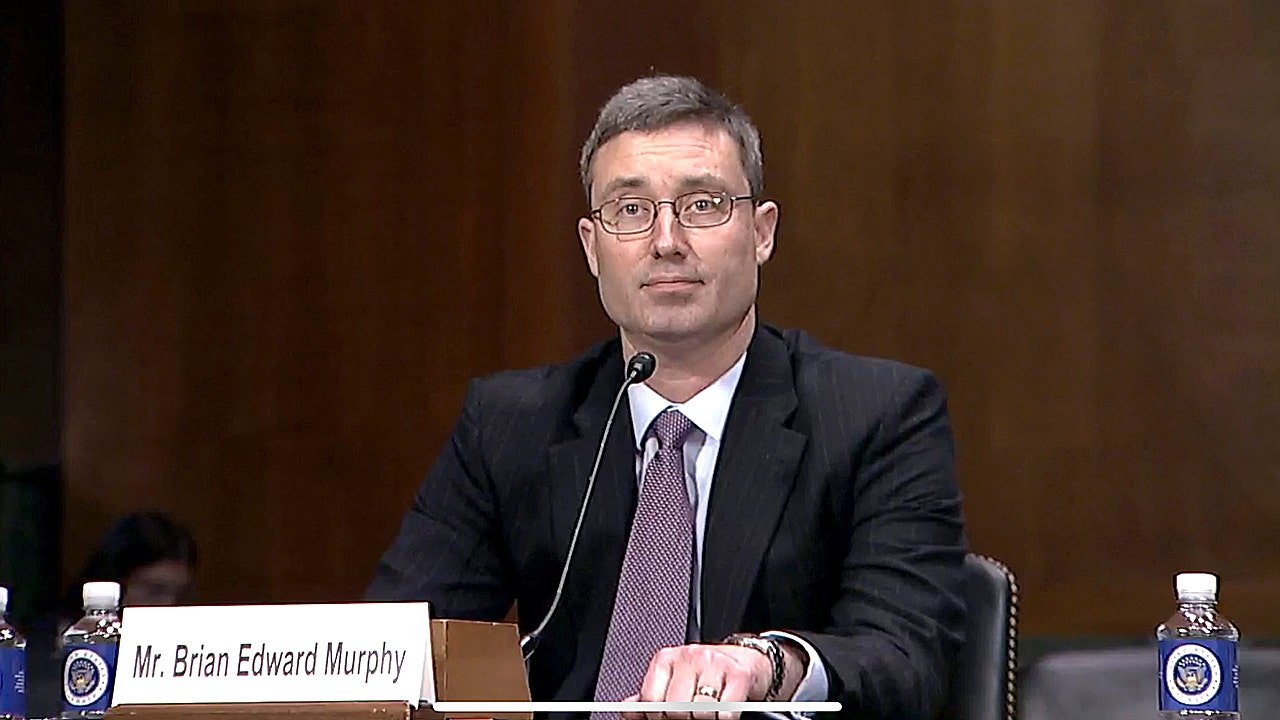
Judge Brian E. Murphy speaks at his Senate Judiciary Committee confirmation hearing on April 17, 2024. (U.S. Senate Committee on the Judiciary)
Murphy’s decision came after the judge last year issued a preliminary injunction that also blocked DHS from deporting migrants to third countries under the department’s current protocols. The Supreme Court’s order in June halted that decision, but, pointing to a technicality, Murphy said that a separate subsequent ruling he made on May 21 specifically addressing six migrants bound for South Sudan was still «in full force and effect» despite the high court’s stay.
The judge’s move led the Department of Justice to ask the Supreme Court for clarification, and the high court responded by issuing its follow-up 7-2 opinion saying Murphy could not block DHS from deporting the six migrants.
«Our June 23 order stayed the April 18 preliminary injunction in full. The May 21 remedial order cannot now be used to enforce an injunction that our stay rendered unenforceable,» the Supreme Court’s majority wrote.
In an unusual move, the majority also noted that if the government needed further help to stop Murphy’s interference, it could seek a writ of mandamus, a rare legal tool used by a higher court to force a lower court judge to follow the law.
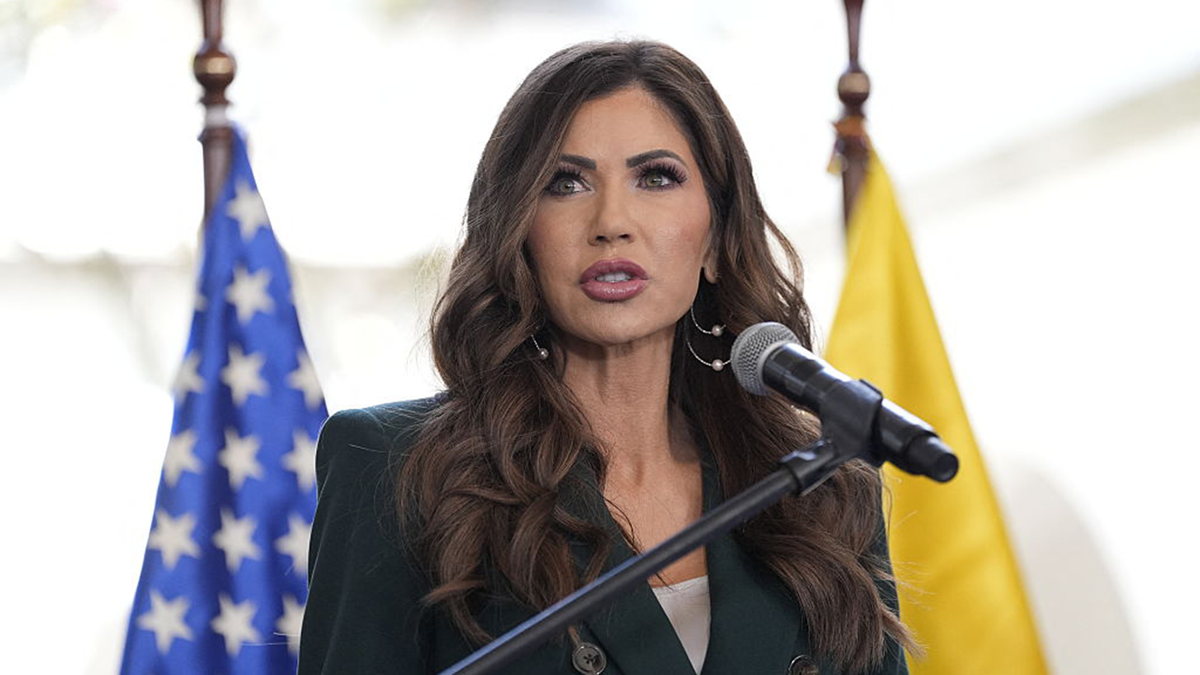
Department of Homeland Secretary Kristi Noem (Getty Images/Alex Brandon)
The high court said it expected Murphy to «now conform [his] order to our previous stay and cease enforcing the April 18 injunction through the May 21 remedial order.»
Justice Elena Kagan, an Obama appointee who agreed with Murphy’s initial decision to block the deportations, sided with the majority in agreeing that the judge had acted defiantly.
«I do not see how a district court can compel compliance with an order that this Court has stayed,» Kagan wrote in a concurring opinion.
FEDERAL JUDGE RULES AGAINST DHS ON WARRANTLESS IMMIGRATION ARRESTS IN OREGON
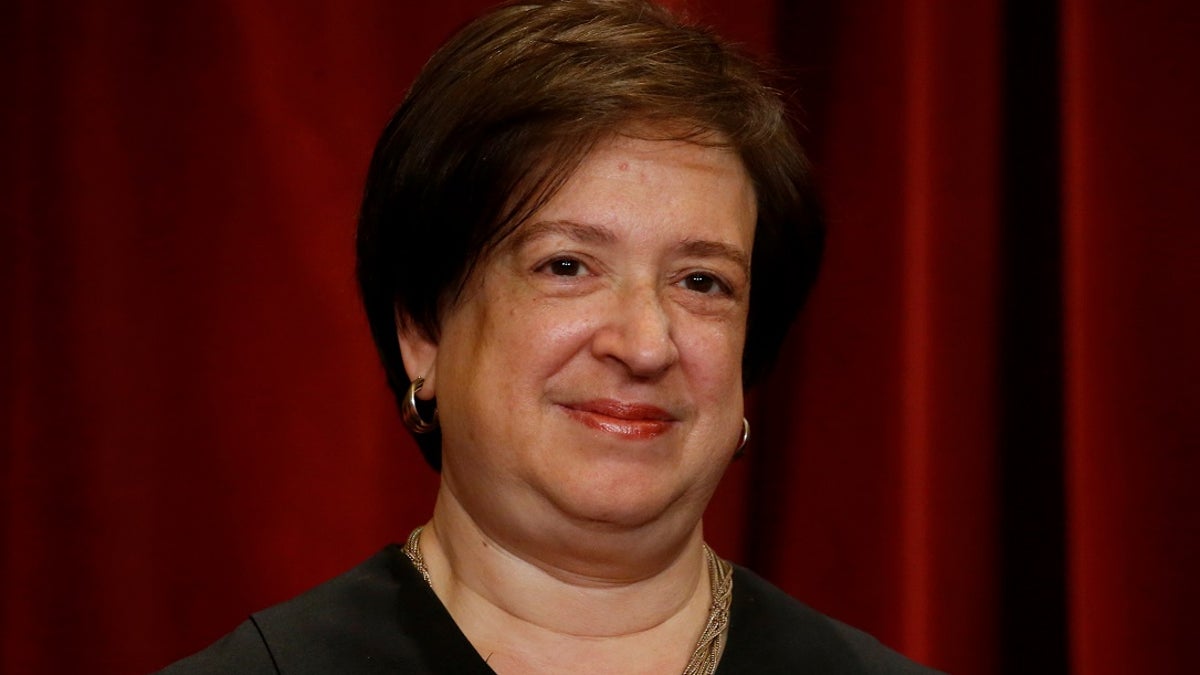
Justice Elena Kagan joined the Supreme Court in 2010 after being nominated by former President Barack Obama. (Reuters/Jonathan Ernst)
The DOJ had fumed over Murphy’s attempt to block the deportation of the six migrants. Solicitor General John Sauer described it as a «lawless act of defiance» of the Supreme Court’s authority when seeking clarification from the high court.
CLICK HERE TO DOWNLOAD THE FOX NEWS APP
«For over two months now, the Executive has labored under an injunction that this Court yesterday deemed unenforceable,» Sauer wrote. «This Court should immediately make clear that the district court’s enforcement order has no effect, and put a swift end to the ongoing irreparable harm to the Executive Branch and its agents, who remain under baseless threat of contempt as they are forced to house dangerous criminal aliens at a military base in the Horn of Africa that now lies on the borders of a regional conflict.»
Murphy said in his ruling Thursday that DHS’s deportation policy was «not fine nor is it legal.» During the prior administration, when Murphy was appointed to the federal bench, Biden sought to undo Trump’s strict immigration policies, leading to nearly 10 million migrant encounters at the southern border. Biden also faced criticism for lax policies that involved releasing millions of migrants into the country during his tenure while they awaited immigration hearings. Border encounters have dropped dramatically since Trump retook office.
Murphy stayed his ruling for 15 days to give the Trump administration time to appeal to the U.S. Court of Appeals for the 1st Circuit, given what the judge acknowledged was the «importance» and «unusual history» of the case.
Fox News Digital’s Breanne Deppisch contributed to this report.
Related Article

supreme court,judiciary,immigration,deportation,justice department

NEWYou can now listen to Fox News articles!
Talks between Iran and the U.S. wrapped up in Geneva Thursday as officials cited «significant progress» and announced a next meeting set for Vienna within days.
Yet despite senior U.S. officials describing the third round as «positive,» per Axios, Iranian state television also reported that Tehran will continue enriching uranium and rejected proposals to transfer it abroad.
According to The Associated Press , the reports claimed Iran would also push for the lifting of international sanctions — signaling it is not prepared to meet President Donald Trump’s demands.
The negotiations were carried out primarily indirectly, with Omani Foreign Minister Badr al-Busaidi relaying messages between the two sides.
Oman’s Foreign Affairs’ Minister Badr bin Hamad al-Busaidi gives a thumbs up as he leaves his hotel to reach Oman’s ambassador residency for new round of talks between the United States and Iran to address Iran’s nuclear program. (Fabrice COFFRINI / AFP via Getty Images)
In a post on X, al-Busaidi confirmed that the round had concluded and said discussions would resume soon.
«We have finished the day after significant progress in the negotiation between the United States and Iran,» he said on X.
«We will resume soon after consultation in the respective capitals. Discussions on a technical level will take place next week in Vienna. I am grateful to all concerned for their efforts: the negotiators, the IAEA, and our hosts, the Swiss government,» al-Busaidi said.
There was no immediate public statement from U.S. or Iranian officials after the session.
LEAVITT SAYS TRUMP CHOOSES DIPLOMACY FIRST FOR IRAN, BUT REMAINS ‘WILLING TO USE’ LETHAL FORCE IF NECESSARY
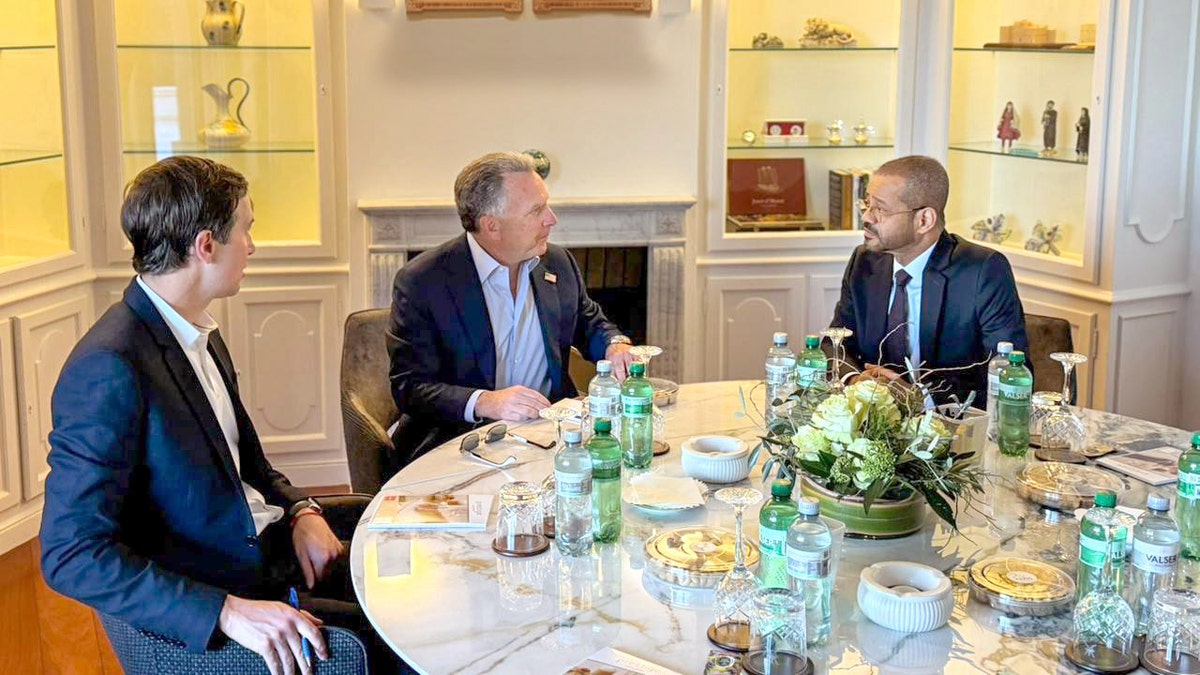
Special envoy Steve Witkoff (C) and Jared Kushner (L) meet with Oman’s Minister of Foreign Affairs Sayyid Badr bin Hamad Albusaidi (R) in Geneva, Switzerland, to discuss ongoing diplomatic negotiations on Thursday, Feb. 26, 2026. (Oman Ministry of Foreign Affairs/X)
Trump’s special Middle East envoy, Steve Witkoff, attended the three-hour negotiations with Iranian Foreign Minister Abbas Araghchi.
IAEA Director General Rafael Grossi was also involved, with Iranian officials presenting a draft proposal for a potential nuclear agreement with the U.S., which has key demands.
Iran insists it has the right to enrich uranium and has appeared to refuse to negotiate over other issues, including its long-range missile program and support for armed groups such as Hamas and Hezbollah.
TRUMP ADMIN RAMPS UP ‘MAXIMUM PRESSURE’ IRAN SANCTIONS AHEAD OF NEW ROUND OF NUCLEAR TALKS
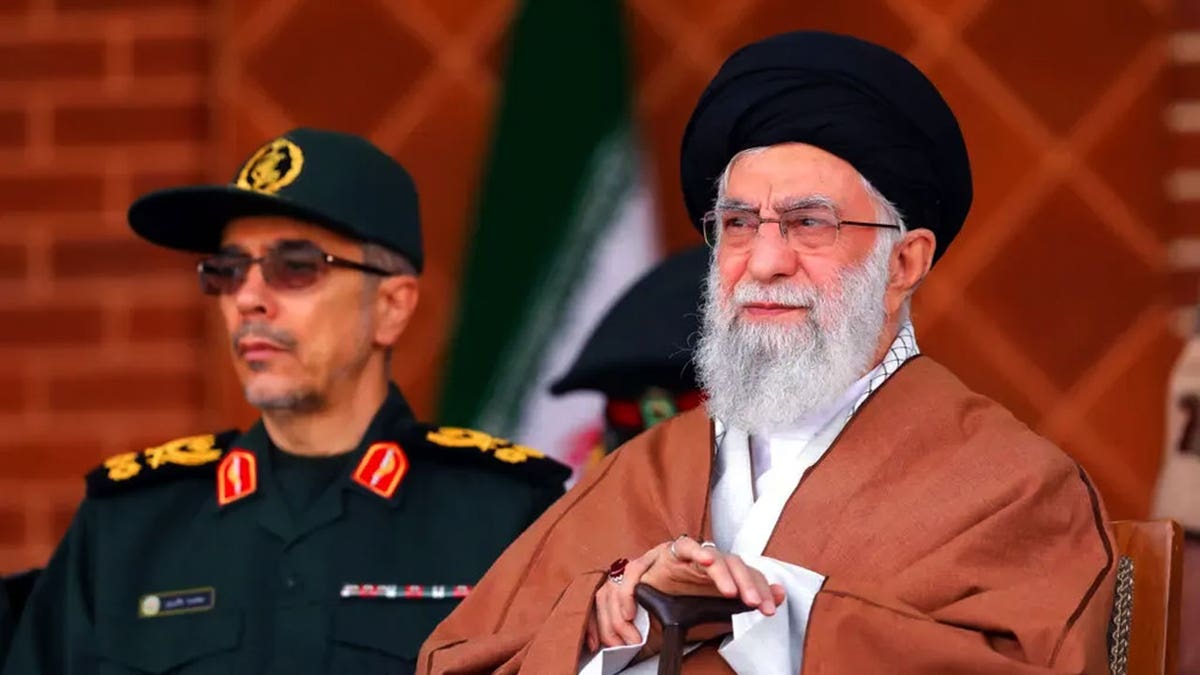
Iran’s Supreme Leader, Ayatollah Ali Khamenei pictured sitting next to a senior military official in Iran. (Getty Images)
Trump, meanwhile, insists on a deal to curb Iran’s nuclear program. In his State of the Union address Feb. 24, the president said he prefers a diplomatic solution.
«My preference is to solve this problem through diplomacy, but one thing is certain: I will never allow the world’s number one sponsor of terror, which they are by far, to have a nuclear weapon,» the president said. «Can’t let that happen.»
As the Geneva talks unfolded Thursday, Ali Shamkhani, a senior adviser to Iran’s Supreme Leader, Ayatollah Ali Khamenei, also wrote on X that if the main U.S. concern is preventing a nuclear weapon, that stance «aligns» with Khamenei’s fatwa and Iran’s defensive doctrine.
CLICK HERE TO DOWNLOAD THE FOX NEWS APP
He added that Iranian Foreign Minister Abbas Araghchi has «sufficient support and authority» to come to a final agreement in the talks.
The development came as the U.S. continues assembling military assets, including a fleet of aircraft and warships in the Middle East.
Fox News Digital has reached out to the White House for comment.
Related Article

iran,ali khamenei,middle east,sanctions,nuclear proliferation,donald trump

Cómo las noticias falsas e imágenes creadas con IA multiplicaron el pánico tras la muerte del capo más poderoso de México

Cuánta plata hay que ganar por mes para pertenecer al 10% de la población más rica de Argentina

El gesto de Martínez Quarta con Gallardo luego de marcarle un gol a Banfield en la despedida del técnico de River Plate

Con los votos justos, el Gobierno apuesta a cambiar la ley de glaciares en el Senado

Diputados opositores impulsan un proyecto para declarar la emergencia salarial educativa y reforzar los ingresos de los docentes

Biden-appointed judge who slapped down Trump deportation policy previously rebuked by SCOTUS

Jorge Macri prepara su discurso para abrir el año legislativo: el deseo de reelección y el espejo en Bukele

Daiana Fernández Molero defendió la reforma laboral: “Va a haber mayor creación de empleo porque va a ser más fácil contratar en blanco”

Uno por uno, todos los famosos que saludaron a Mirtha Legrand por sus 99 años

Crisis en la industria: otra multinacional se achica y cierra una planta en la Argentina

 POLITICA2 días ago
Jorge Macri prepara su discurso para abrir el año legislativo: el deseo de reelección y el espejo en Bukele
- POLITICA3 días ago
Daiana Fernández Molero defendió la reforma laboral: “Va a haber mayor creación de empleo porque va a ser más fácil contratar en blanco”
- CHIMENTOS3 días ago
Uno por uno, todos los famosos que saludaron a Mirtha Legrand por sus 99 años