INTERNACIONAL
Iran vows to ‘target US bases’ if American forces launch an attack: report

NEWYou can now listen to Fox News articles!
Iranian Foreign Minister Abbas Araghchi warned Saturday that Tehran will «target U.S. bases» in the region if American forces launch an attack, a report said.
The remark came after Araghchi said Friday that indirect nuclear talks with the U.S. in Oman were «a good start» and that there was a «consensus» that the negotiations would continue.
«It would not be possible to attack American soil, but we will target their bases in the region» if Iran is attacked by U.S. forces, Araghchi told Al Jazeera Saturday, according to Reuters.
«We will not attack neighboring countries; rather, we will target U.S. bases stationed in them. There is a big difference between the two,» he reportedly added.
IRANIAN OFFICIAL SAYS NUCLEAR TALKS WILL CONTINUE AFTER US, TEHRAN NEGOTIATIONS HAD ‘A GOOD START’ IN OMAN
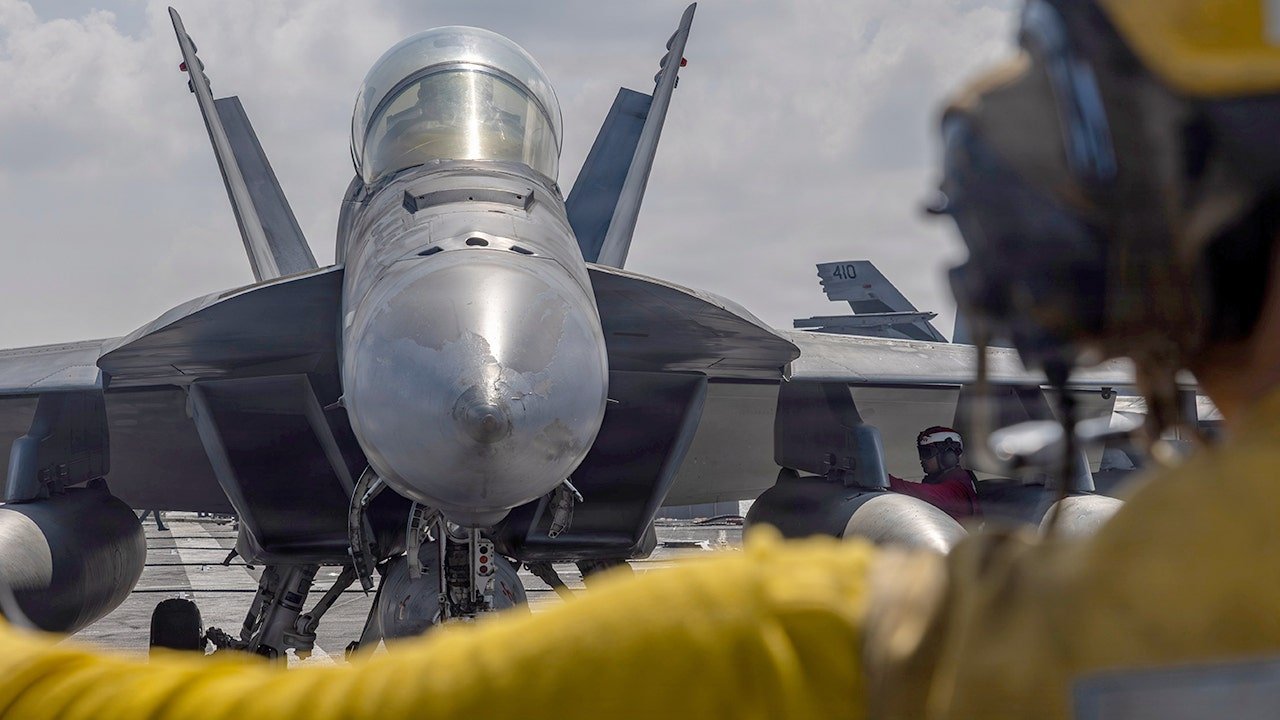
This handout photograph from the U.S. Navy shows Aviation Boatswain’s Mate 2nd Class Michael Cordova directing an F/A-18F Super Hornet on the flight deck of the Nimitz-class aircraft carrier USS Abraham Lincoln in the Indian Ocean on Jan. 23, 2026. (Mass Communication Specialist Seaman Daniel Kimmelman/U.S. Navy via AP)
The U.S. last June attacked nuclear facilities in Iran in what has come to be known as Operation Midnight Hammer.
In response, Iran launched a retaliatory attack on Al-Udeid, the American airbase in Qatar, which President Donald Trump characterized at the time as a «very weak response.»
«Iran has officially responded to our Obliteration of their Nuclear Facilities with a very weak response, which we expected, and have very effectively countered. There have been 14 missiles fired — 13 were knocked down, and 1 was ‘set free,’ because it was headed in a nonthreatening direction,» the president wrote on Truth Social.
SATELLITE IMAGES REVEAL ACTIVITY AT IRAN NUCLEAR SITES BOMBED BY US, ISRAEL
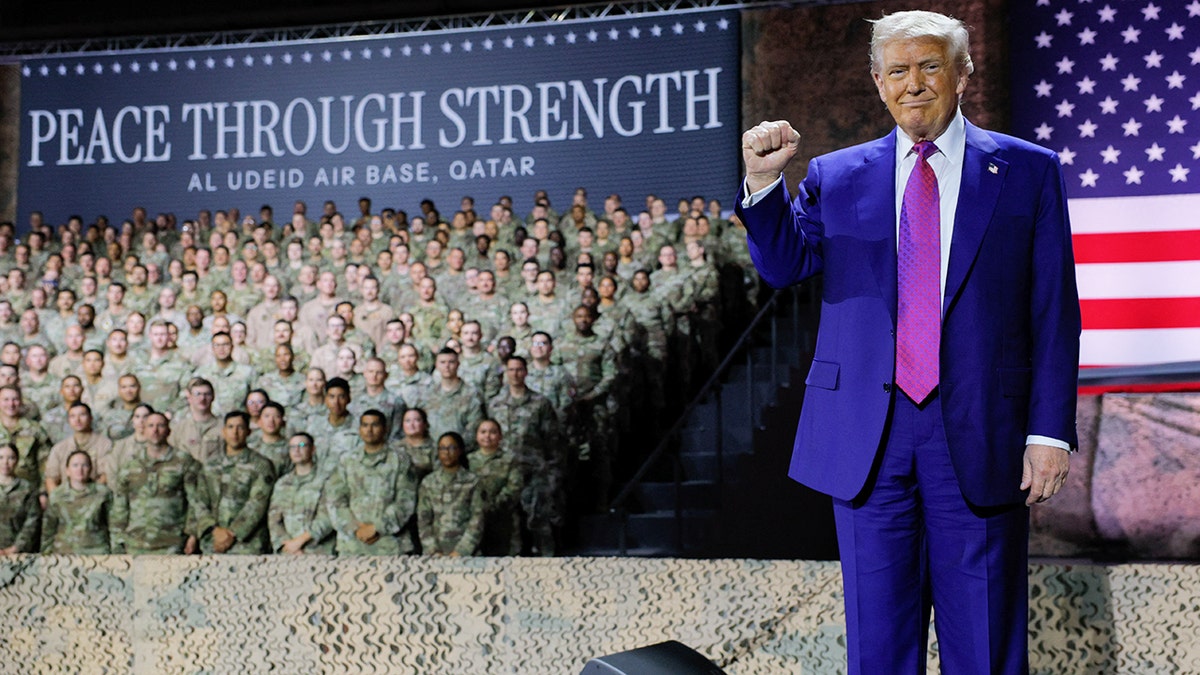
President Donald Trump gestures while delivering remarks to U.S. troops during a visit to Al Udeid Air Base in Doha, Qatar, May 15, 2025. (Brian Snyder/Reuters)
Regarding Friday’s nuclear talks, Araghchi said, «It was a good start, but its continuation depends on consultations in our respective capitals and deciding on how to proceed.»
Omani Foreign Minister Badr al-Busaidi met with both Iranian and American officials on Friday, the Foreign Ministry of Oman said on X. The ministry said that al-Busaidi held separate meetings with Araghchi and U.S. special envoy Steve Witkoff and Jared Kushner.
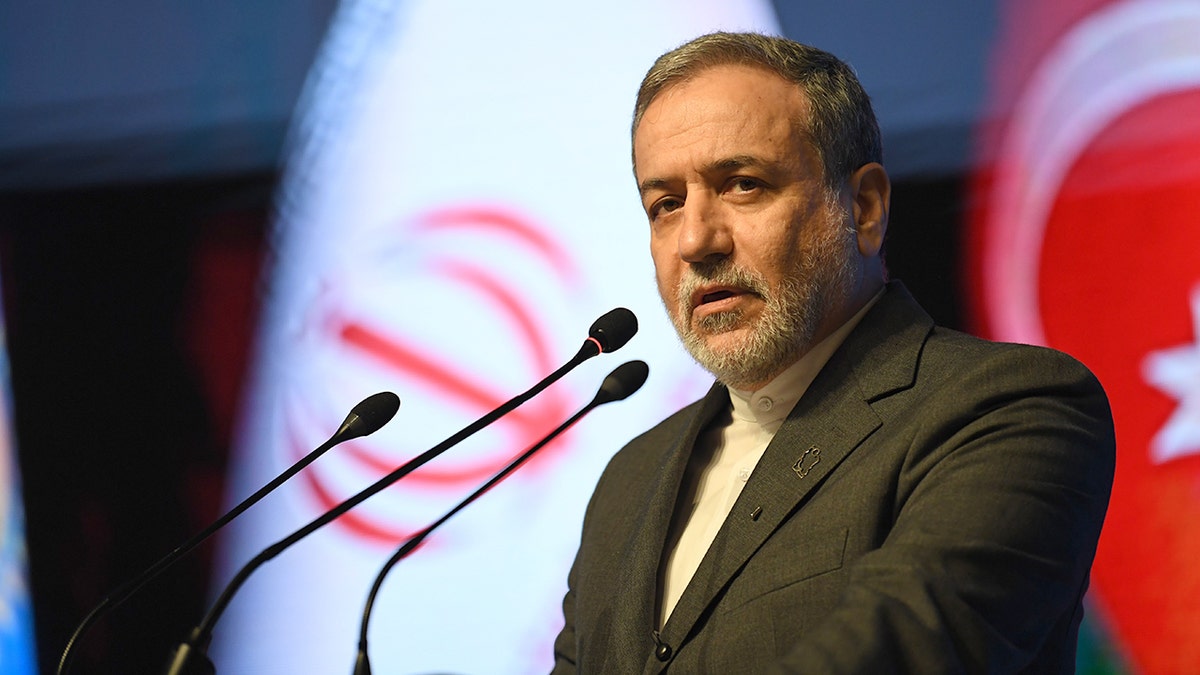
Iranian Foreign Minister Abbas Araghchi speaks in the northern city of Rasht, Iran, Nov. 18, 2025. (Shadati/Xinhua via Getty Images)
CLICK HERE TO GET THE FOX NEWS APP
«The consultations focused on preparing the appropriate conditions for resuming diplomatic and technical negotiations, while emphasizing their importance in light of the parties’ determination to ensure their success in achieving sustainable security and stability,» the Foreign Ministry of Oman said.
iran,military,conflicts,nuclear proliferation,donald trump,middle east,world










INTERNACIONAL
A pesar de una “amistad sin límites”, Ucrania reveló que las inversiones de China en Rusia se estancaron desde el inicio de la guerra
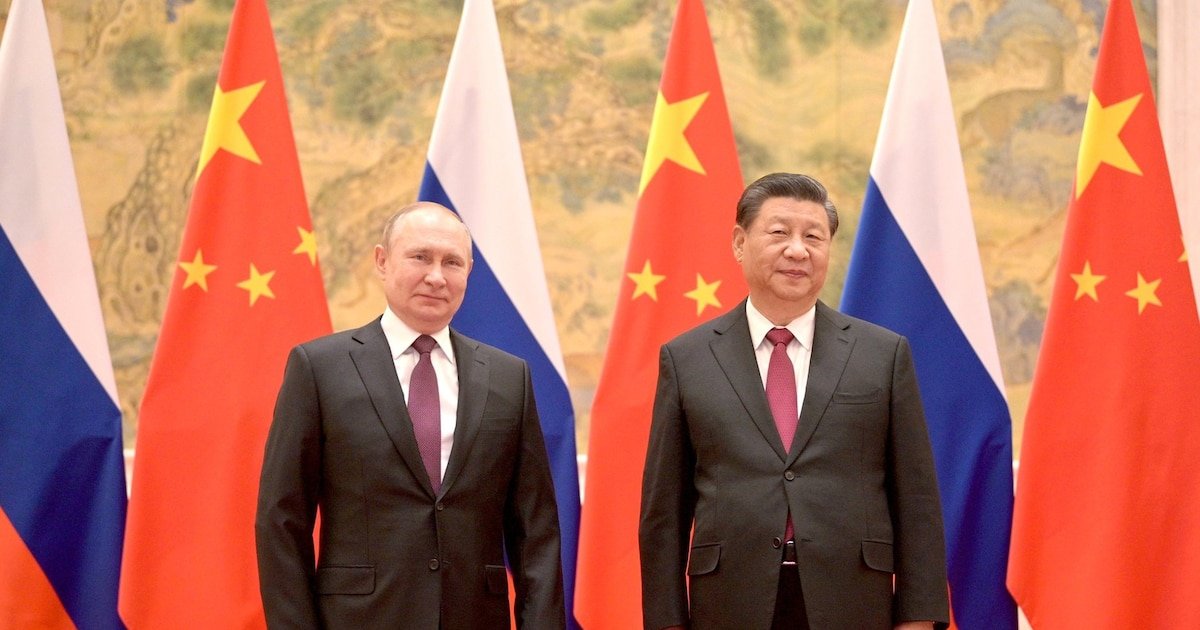
El Servicio de Inteligencia Exterior de Ucrania informó que, pese a la retórica de Moscú y Beijng sobre una “amistad sin límites” en 2022, los datos de inversión reflejan una realidad distinta en medio de la invasión rusa.
El volumen total de inversiones chinas acumuladas en Rusia se mantiene estable, alrededor de 17.400 millones de dólares, sin crecimiento desde 2022. En ese mismo años, se registró un incremento del 20% respecto a 2021, impulsado por decisiones previas y por el “efecto sustitución” tras la retirada de inversores occidentales del mercado ruso.
Sin embargo, para 2025, esa tendencia al alza se estancó. El único sector con crecimiento relativo destacado (+50%) fue el de servicios financieros. Mientras en 2022 los bancos chinos en Rusia brindaban apoyo, para 2025 su expansión se focalizó en facilitar el comercio bilateral, principalmente mediante el desarrollo de canales de pago y liquidación, y no en la creación de nuevas instalaciones productivas.
Por el contrario, las inversiones en materias primas —tradicionalmente un sector atractivo para China— disminuyeron ligeramente, pasando de 9.000 millones de dólares a 8.800 millones, según la la agencia estatal de investigación.
El análisis ucraniano remarcó que los inversores chinos se muestran extremadamente pragmáticos: solo participan en la economía rusa cuando consideran que es seguro, dadas las sanciones internacionales, y en muchos casos optan por no invertir directamente.

Sin embargo, funcionarios desde Beijing aseguran que “China no puede permitirse que Rusia pierda la guerra en Ucrania”. Durante una reunión de cuatro horas el 3 de julio del 2025 con la vicepresidenta de la Comisión Europea Kaja Kallas, el ministro de Asuntos Exteriores de China, Wang Yi rechazó en la conversación las acusaciones occidentales de que China financia y arma a Moscú.
No obstante, China se consolidó como el principal proveedor de bienes de doble uso para la industria de defensa rusa y auxilió a Moscú a esquivar las sanciones occidentales.
La declaración, que sorprendió a la delegación de la Unión Europea, revela el trasfondo estratégico de Beijing: una derrota rusa podría redirigir la presión estadounidense hacia Asia y, especialmente, hacia Taiwán. Para China, evitar una victoria ucraniana es un objetivo geopolítico central, aunque en público el régimen de Xi Jinping continúe reivindicando una resolución pacífica del conflicto.
Por su parte, a finales del años pasado, el presidente de Ucrania, Volodimir Zelensky, aseguró que “no ve una disposición por parte de China para sumarse a la vía de paz” par dar cierre al conflicto que está por alcanzar los cuatro años de duración.
El mandatario manifestó que las autoridades ucranianas “siempre han querido que China presione a Rusia para detener la guerra, pero desafortunadamente no lo ha hecho”, y añadió que, por el contrario, “China ha aumentado el volumen de las importaciones de energía rusa”. Zelensky argumentó que “Rusia gasta el dinero de la exportación de su energía en la guerra”, y subrayó: “Por desgracia, este es el papel de China a día de hoy”.

Estados Unidos busca que Ucrania y Rusia pongan fin a la guerra antes de junio y ofreció organizar una nueva ronda de conversaciones la próxima semana, según informó Zelensky el sábado.
La administración del presidente Donald Trump presionó a ambas partes para llegar a un acuerdo, mediado recientemente en encuentros en Abu Dhabi, aunque hasta ahora no se superó el desacuerdo sobre el estatus de los territorios ocupados.
Rusia, que actualmente controla cerca del 20% del territorio ucraniano, insiste en obtener el dominio total de la región de Donetsk como parte de un posible acuerdo. Por su parte, Kiev rechaza cualquier pacto que no garantice la disuasión de futuras invasiones rusas.
“Estados Unidos propuso por primera vez que los dos equipos negociadores —Ucrania y Rusia— se reúnan en Estados Unidos, probablemente en Miami, dentro de una semana”, declaró Zelensky a la prensa. “Dicen que quieren tener todo listo para junio”, añadió.
Zelensky expresó reiteradamente su frustración por las demandas de concesiones que considera desproporcionadas para Ucrania en comparación con Rusia. El mandatario subrayó que no aceptará acuerdos entre Washington y Moscú que excluyan a Kiev o comprometan la soberanía ucraniana.
Defence,Defense,Europe
INTERNACIONAL
Top Haitian leader reveals which US policy the country would be ‘helpless’ without: ‘Give them money’
NEWYou can now listen to Fox News articles!
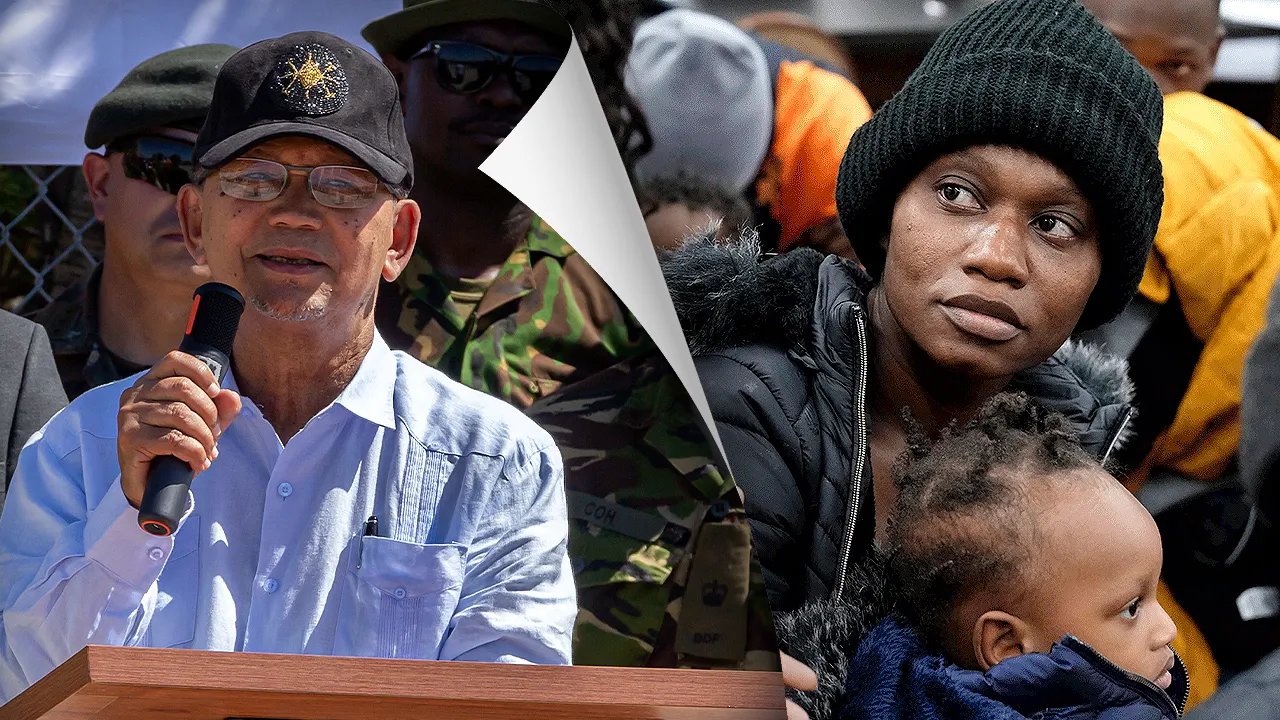
One of the nine current leaders of Haiti’s transitional government admitted to Fox News Digital his country is «helpless» to handle the return of its citizens, noting that Haiti relies on billions of dollars generated by U.S., Canadian and French-based migrants to keep its economy going.
Leslie Voltaire, a member of the nine-member transitional council leading Haiti ahead of scheduled elections later this year, described a state of total dependency on temporary protected status (TPS) that has now spanned more than 15 years and which President Donald Trump is trying to end.
Voltaire warned that a sudden termination of TPS would trigger an immediate crisis because the nation lacks the economic infrastructure to reabsorb as many as 400,000 repatriated citizens from the United States.
«We think that we are helpless if another country is sending back our compatriots,» Voltaire told Fox News Digital. «We cannot do anything about it – just accommodate them, give them money to go back to their provinces and to their cities, help them with food. But it’s very painful due to the small budget that we have in the government.»
STATE DEPARTMENT ISSUES SECURITY ALERT AMID ‘HEAVY GUNFIRE’ NEAR US EMBASSY IN HAITI
Trump tried to end Haiti’s long-standing TPS status during his first administration, but, similar to today, federal judges stepped in to block the move.
In November, the Department of Homeland Security (DHS) published a notice indicating that Haiti’s temporary status would not be renewed this month, but in a subsequent 11th-hour ruling earlier this week, U.S. District Judge Ana Reyes issued a preliminary injunction blocking the Trump administration from ending Haiti’s TPS status.
Reyes argued the move was likely motivated by «hostility to non-white immigrants» as opposed to an objective view of the ongoing situation in Haiti.
Leslie Voltaire, a member of Haiti’s transitional council ahead of new elections, next to a Haitian immigrant. (Getty Images)
Shortly before Fox News Digital spoke with Voltaire Thursday evening, three U.S. warships arrived off the coast of Haiti ahead of the country’s Feb. 7 deadline for the council to transition power to a soon-to-be elected leader or leaders. In addition to the U.S. ramping up its presence, the United Nations recently approved, with U.S. support, the deployment of a new Gang Suppression Task Force to Haiti to help with the ongoing violence there.
When asked for specific metrics on when Haiti might be stable enough to no longer require its TPS status, Voltaire did not point to anything concrete, like a certain number of police officers, territory controlled or national GDP. Rather, Voltaire said Haiti needs more time, more investment and greater security before the country can be considered stable enough to take back hundreds of thousands of its people.
«The problem of security in Haiti is mainly to have jobs,» Voltaire told Fox News Digital. «There are no jobs because there is no investment right now. There is no investment because there is insecurity. And also we have to provide services to the population, so, there is a huge need of cash, of resources – financial resources. … If they come with 400,000 people, that would be a huge problem.»
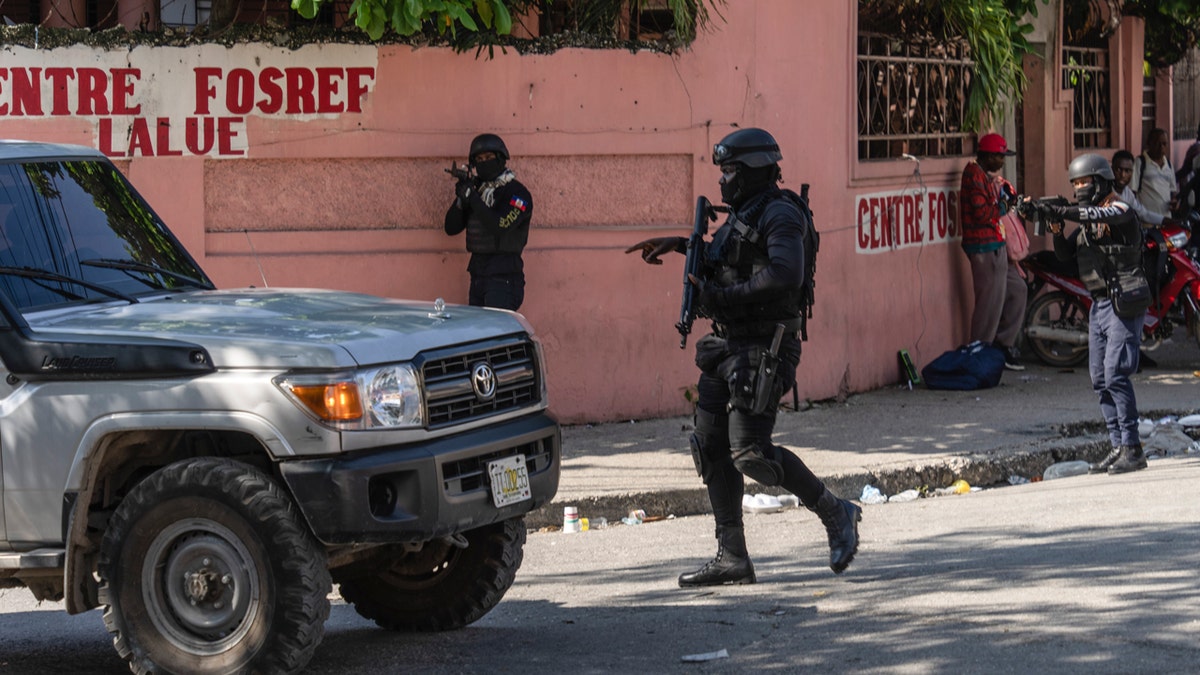
Police stop at a car to inspect in Port-au-Prince, Haiti, April 22, 2024. (AP Photo/Ramon Espinosa)
FLASHBACK: 2024′ IMMIGRATION GROUND ZERO IN SPOTLIGHT AGAIN AS JUDGE’S 11TH HOUR RULING SPARKS OUTRAGE
Voltaire conceded the U.S. economy and migrant labor — pointing out Haitians living in the U.S., Canada and France bring $3 to $4 billion per year into Haiti through remittances — could be described as a «crutch,» indicating that around 85% of the country’s «professional» class lives abroad.
Voltaire noted that Haitian leadership was «pleading» with U.S. leadership to give it a break on tariffs, something Voltaire thinks could improve his country’s economic situation.
«We don’t have an economy that has the capacity to produce the kind of dollars that [migrant workers] are generating,» Voltaire lamented.

Haitian immigrants Petterly Jean-Baptiste, left, and wife Leonne Ysnardin ride aboard a van in Boston and are transported with their children to a shelter in Quincy, Mass., Nov. 16, 2023. (AP Photo/Steven Senne)
While admitting his nation is propped up by migrant labor from the U.S., as well as France and Canada, Voltaire simultaneously pointed the finger at the United States for the very poverty that necessitates the aid Haiti needs.
Voltaire argued that a 19-year U.S. military «occupation» in the early 20th century «depleted» Haiti’s middle class by turning the country into a pool of cheap labor for neighboring sugarcane producers.
«I think one of the historic problems is that when the U.S. occupied Haiti between 1915 and 1934, they chose to use the Dominican Republic and Cuba as the sugarcane producers,» Voltaire said when asked about why the neighboring Dominican Republic has not dealt with some of the same instability as Haiti.
«And Haiti, because it was densely populated, was treated as the labor for those countries. This is why we have like half a million Haitians in the Domincan Republic, and the same in Cuba … and we have been depleted.»

A Haitian flag is seen in Port-au-Prince. (Stan Honda/AFP via Getty Images)
CLICK HERE TO DOWNLOAD THE FOX NEWS APP
Voltaire also cited the U.S. favoring the «dictatorship» of the former president of Haiti between 1957 and 1971, Francois Duvalier, for the dire circumstances in Haiti and why the Domincan Republic has fared differently.
«The U.S. was favoring the dictatorship of Duvalier, which was bad with the Tonton Macoute and which did not have the investment that we hoped we would have when Kennedy launched the Alliance for the Progress. We were not part of it. And we have been under a dictatorship. And then when the dictatorship disappeared, there was a dismantlement of the Haitian state that we have to reconsolidate,» Voltaire pointed out.
Voltaire cited this history as a reason why 85% of its professional class, like university professors, artists and skilled technicians live outside of Haiti. And he mused that «maybe it’s a good thing» to begin repatriating Haitians back to their home country. But he reiterated that economic and political development must continue for that to happen.
world,foreign policy,foreign affairs,foreign,immigration,politics,homeland security
INTERNACIONAL
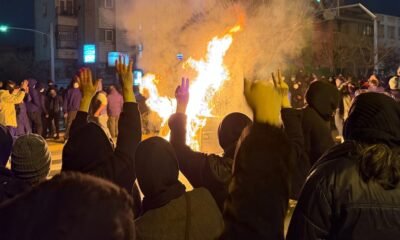
El régimen iraní detuvo a un nuevo activista por un manifiesto crítico contra la represión de las protestas
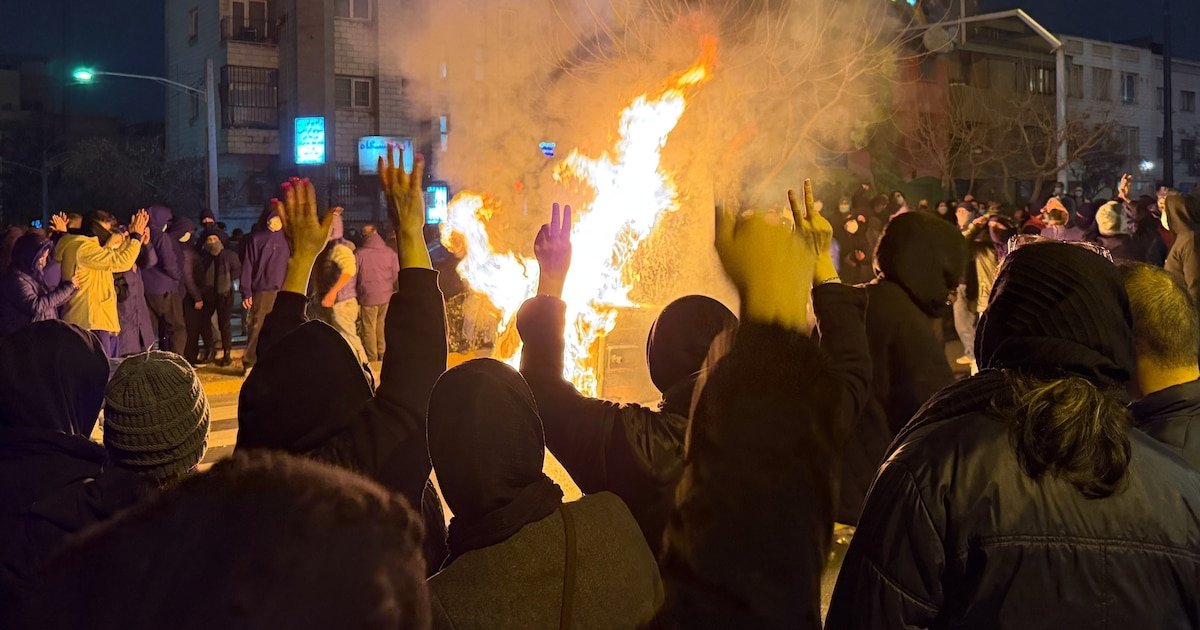
Las fuerzas de seguridad de Irán detuvieron el sábado al activista Ghorban Behzadian-Nejad tras la publicación de un manifiesto crítico con el régimen, en el que se reclamaba la formación de una asamblea constituyente y el fin de la República Islámica.
Según informaron medios locales, el opositor y asesor de Mir Hosein Musaví —líder del Movimiento Verde de 2009, bajo arresto domiciliario desde hace 15 años—, fue arrestado en su domicilio en Teherán.
El activista es uno de los firmantes del llamado “Comunicado de los 17”, difundido a finales de enero, que exige un referéndum “libre y transparente”, una asamblea constituyente y respalda las recientes protestas contra el régimen ayatolá.
La semana pasada, otros tres firmantes del texto —entre ellos el guionista Mehdi Mahmoudian, nominado al Óscar por la película Un simple accidente— fueron también detenidos, junto con los activistas Vida Rabbani y Abdullah Momeni, según The Hollywood Reporter.
Entre quienes apoyan el comunicado figuran el cineasta Jafar Panahi (actualmente en Estados Unidos), el cineasta Mohammad Rasoulof (exiliado en Alemania), la Premio Nobel de la Paz Narges Mohammadi y la abogada Nasrin Sotoudeh, ganadora del Premio Sájarov.
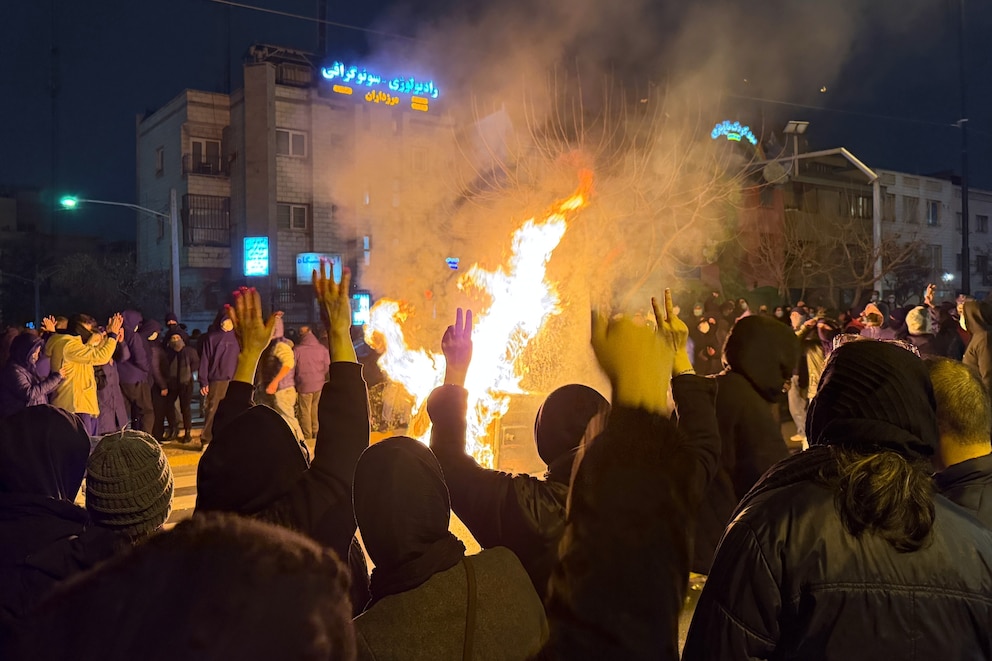
El manifiesto responsabiliza al líder supremo Ali Khamenei de la muerte de miles de personas en las protestas iniciadas en diciembre por la depreciación del rial y que luego se extendieron con reclamos para acabar con la República Islámica. Las manifestaciones fueron duramente reprimidas por la Guardia Revolucionaria Islámica.
Alemania exigió el lunes pasado la libertad del guionista iraní Mahmoudian. “La detención de Mehdi Mahmoudian no es un caso aislado, sino parte de un sistema que pretende silenciar deliberadamente las voces críticas. Quien encarcela a autoras y autores no combate el arte, sino la libertad. Mahmoudian debe ser liberado, porque el arte no es un delito”, indicó en un comunicado el ministro alemán de Cultura y Medios de Comunicación, Wolfram Weimer.
El régimen iraní reconoce 3.117 fallecidos, aunque organizaciones opositoras como Human Rights Activists in Iran (HRANA), con sede en Estados Unidos, elevan la cifra a 6.961 y siguen verificando más de 11.600 posibles muertes y unos 51.000 arrestos.
La relatora especial de la ONU para Irán, Mai Sato, señaló que médicos iraníes estiman que la cifra real podría alcanzar los 20.000 muertos, aunque Naciones Unidas advierte que los datos son difíciles de corroborar.
En paralelo a la represión impuesta a las protestas por las autoridades de Irán, la Nobel de la Paz Narges Mohammadi empezó una huelga de hambre en la prisión de Mashhad para denunciar las condiciones de su detención, tras ser arrestada el 12 de diciembre durante un acto en memoria del abogado Khosrow Alikordi.
La fundación que lleva su nombre, gestionada por su familia en París, informó que la protesta responde a una detención considerada ilegal, a la incomunicación con allegados y abogados, y a la presión ejercida por las fuerzas de seguridad.
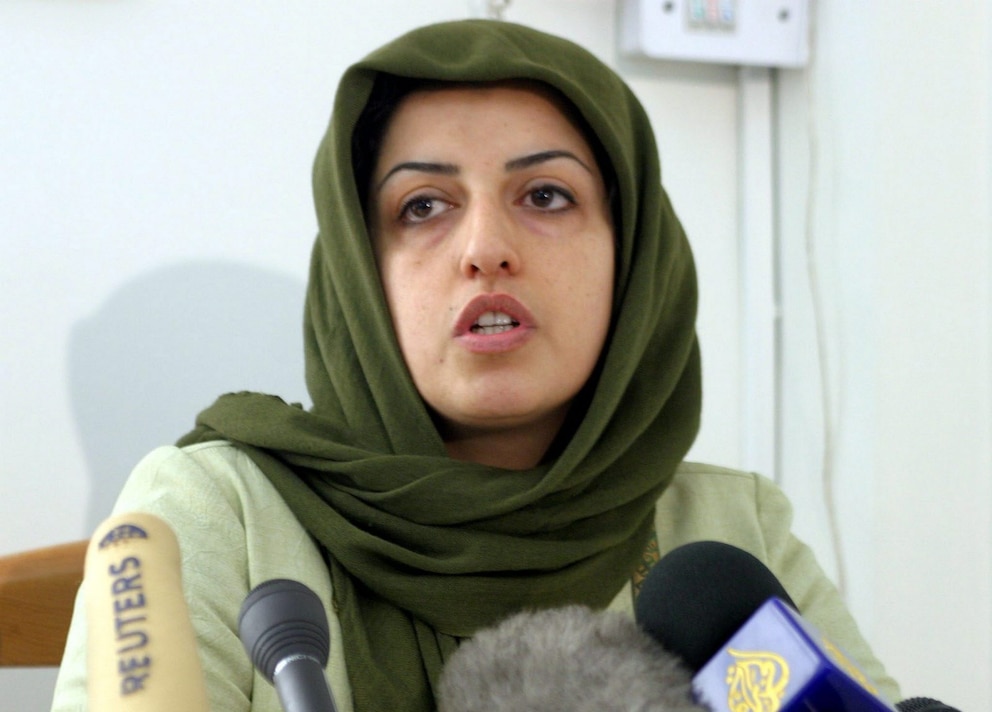
Desde su arresto, Mohammadi solotuvo una breve llamada telefónica con su hermano, mientras sus familiares recibieron amenazas para no difundir información sobre su situación. Ali Rahmani, hijo de la activista, expresó su preocupación por la salud de su madre y de otros presos políticos: “Lo que está sucediendo en nuestro país es un crimen contra la humanidad”, afirmó.
La abogada Chirinne Ardakani, representante de la familia, señaló que Mohammadi permanece en aislamiento y que la última comunicación familiar fue el 14 de diciembre. Las autoridades de Mashhad detuvieron a Mohammadi junto a unas 40 personas durante el homenaje a Alikordi, fallecido en circunstancias poco claras.
El delicado estado de salud de Mohammadi ha motivado reclamos internacionales. Según reportó CNN, la activista presenta antecedentes de infartos, hipertensión, problemas de columna y ha sido sometida a cirugías de urgencia.
(Con información de EFE)
010.jpg,20260110_zih_i98_010.jpg,anti-regime,authoritarian,calls,change,civil,crackdown,demonstrations,dissent,end,for,forces,freedom,human,in,iran,iranian,islamic,mass,movement,nationwide,on,overthrow,people,political,popular,press,prisoners,protest,protesters,protests,public,regime,repression,republic,resistance,revolution,rights,security,slogans,state,street,the,unrest,uprising,versus,violations,violence,zhandout

La pelea judicial para la que se prepara la Casa Rosada y la nueva estrategia que diseña LLA de cara al 2027

La industria volvió a caer en diciembre pero cerró 2025 con un crecimiento de 1,6%

La declaración de Tom Brady que generó repudio previo a la final del Super Bowl: “Me da asco”

Le pidió a su ex pareja que lo acompañara al médico por una supuesta enfermedad y la mantuvo secuestrada en Santa Fe

¡Exclusivo! Cómo está hoy «Bam Bam» Morais, a 19 años de ganar Gran Hermano: «No quise seguir en los medios porque…»

Javier Milei prepara el discurso que dará en Mar-a-Lago: alianza con EE.UU., Consejo de la Paz y rol de la Argentina

Flor de la V contó las dificultades que vivió junto a Pablo Goycochea cuando se conoció su romance: “Había una persecución”

Jorge Macri: «Hay una percepción de que hay cosas que aumentan más que la inflación»

Milei dejó trascender que Lavagna quería un índice de inflación más alto porque «jugaba para Massa»

¿La revancha de Don Chatarrín?: acuerdo Trump-Milei puede favorecer a Rocca ante el avance asiático

 ECONOMIA2 días ago
¿La revancha de Don Chatarrín?: acuerdo Trump-Milei puede favorecer a Rocca ante el avance asiático
- CHIMENTOS3 días ago
Desconcertada y sin la China Suárez: así reaccionó Magnolia tras el maltrato de un guardaespaldas
- INTERNACIONAL2 días ago
Top fiery moments as Democrats clash with Treasury Secretary Bessent in chaotic Hill hearings