INTERNACIONAL
US forces complete withdrawal from strategic al-Tanf Garrison in Syria

NEWYou can now listen to Fox News articles!
The U.S. military has completed its withdrawal of American forces from al-Tanf Garrison in Syria, U.S. Central Command (CENTCOM) announced Thursday.
The departure, finalized Feb. 11, was carried out as part of a broader shift in U.S. posture in the region under Operation Inherent Resolve, the coalition mission launched in 2014 to combat ISIS.
American troops have maintained a limited presence in the country to support partner forces and prevent the terrorist group from resurging after it was territorially defeated in 2019.
Syria’s Defense Ministry said government forces took control of the al-Tanf base following the U.S. withdrawal and have begun deploying along the country’s borders with Iraq and Jordan, according to the Syrian Arab News Agency, the country’s state-run news outlet.
US MILITARY LAUNCHES AIRSTRIKES AGAINST ISIS TARGETS IN SYRIA, OFFICIALS SAY
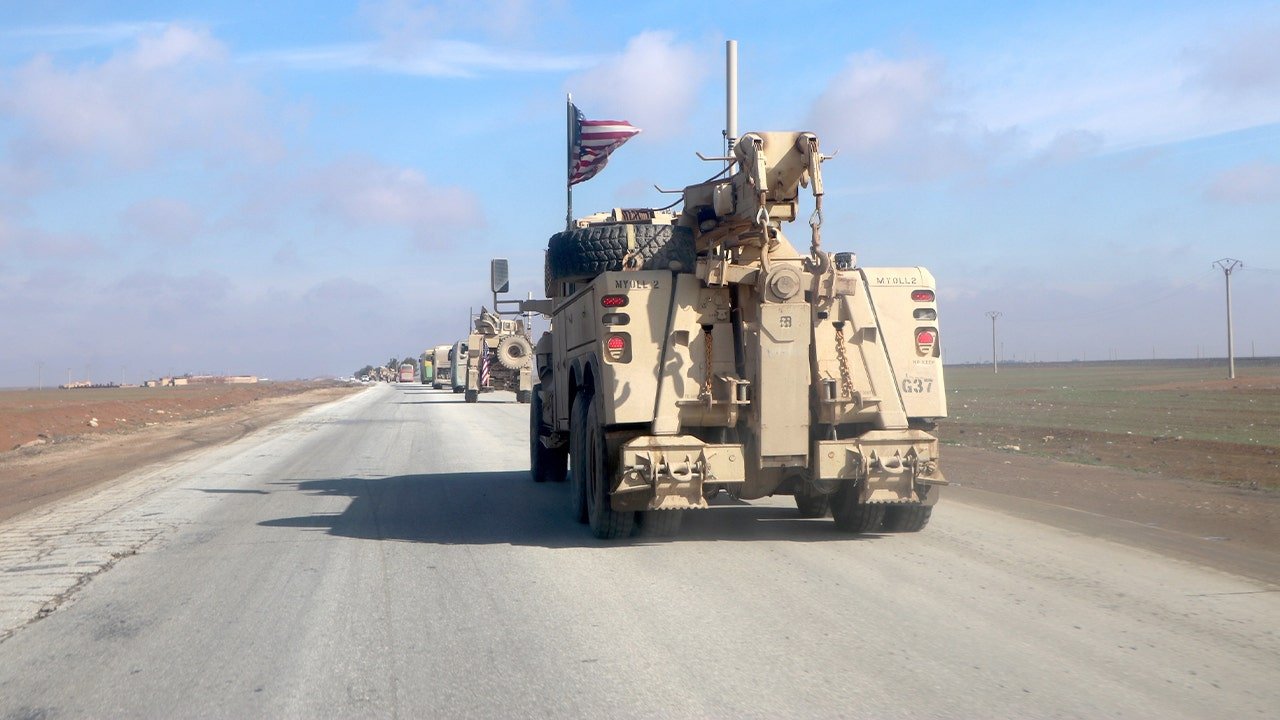
U.S. military vehicles escort passenger buses transporting Islamic State detainees from northeastern Syria into Iraq, Feb. 8, 2026. (Str/Xinhua via Getty Images)
The ministry said the handover was coordinated with U.S. officials and that Syrian Arab Army units moved in to secure the base and surrounding areas in the tri-border desert region.
The development follows a Pentagon decision in April 2025 to scale back and consolidate U.S. forces in Syria.
Caroline Rose, director of the Crime-Conflict Nexus and Military Withdrawals portfolios at the New Lines Institute, told Fox News Digital that al-Tanf was one of the most strategically important U.S. garrisons in Syria, if not the broader Middle East, as it offered access, insight and intelligence collection along Syria’s borders with Jordan and Iraq.
AFTER TRUMP DECLARED ISIS DEFEATED, US FACES NEW TEST AS DETAINEES MOVE AMID SYRIA POWER SHIFT

A satellite image shows the al-Tanf Base in Syria, July 20, 2025. (Planet Labs PBC/Reuters)
«This was not only pivotal during the U.S.-led Coalition to defeat the Islamic State, where there was a threat of cross-border offensives and violence, but also proved key to U.S. deterrence efforts against Iran-backed militia networks that operated in Iraq and Syria,» she said. «The U.S. pullout from Al-Tanf is a signal that Washington is now comfortable with where the counter-ISIS fight is and the defeat of Iran-aligned proxy networks in the region, along with Syrian security integration efforts with the [Syrian Democratic Forces].»
Rose added that the departure could be viewed as a setback for Jordan, which has long depended on the U.S. position at al-Tanf to deter adversarial actors in the region.
Despite the withdrawal, U.S. forces remain prepared to counter ISIS threats, CENTCOM said, noting that in the past two months, American forces have struck more than 100 targets in the region and captured or killed more than four dozen ISIS fighters.
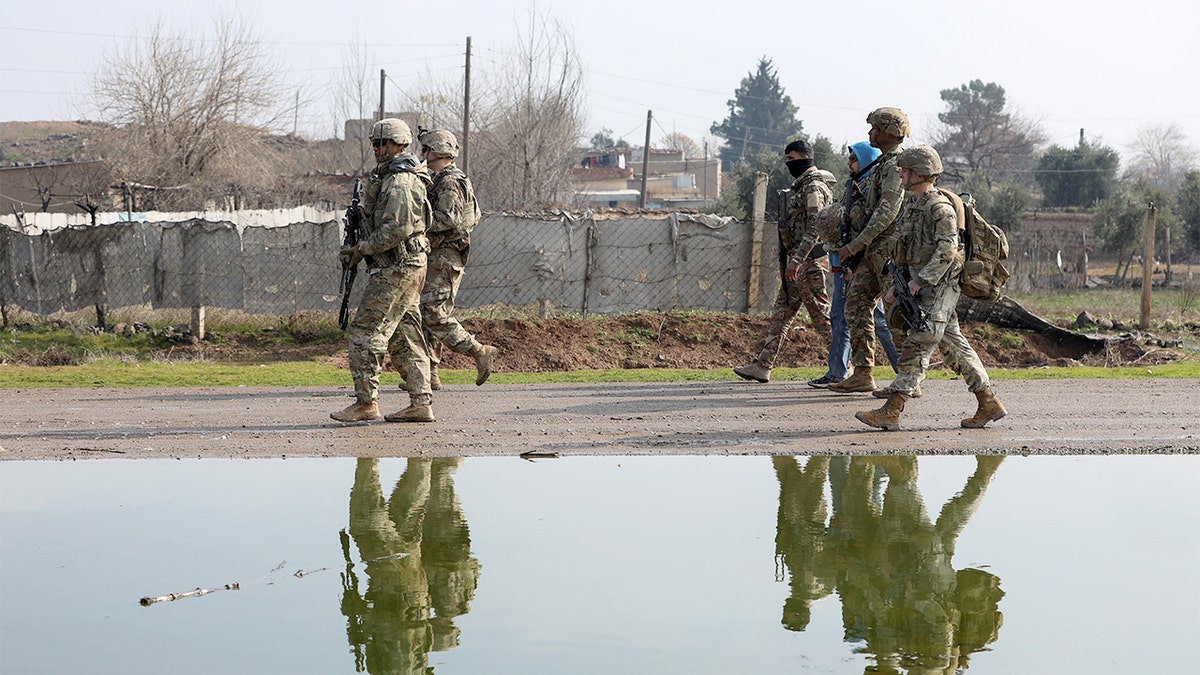
Soldiers from the U.S.-led coalition walk with members of the Kurdish-led Syrian Democratic Forces (SDF) in the countryside of Qamishli, northeastern Syria, Feb. 8, 2024. (Orhan Qereman/Reuters)
The change in posture comes just weeks after U.S. forces transferred 150 ISIS fighters from a detention facility in Hasakah, Syria, to a secure location in Iraq.
FROM SYRIA TO SOMALIA, US TROOPS REMAIN DEPLOYED THIS HOLIDAY SEASON UNDER MISSIONS THAT NEVER FORMALLY ENDED
Officials indicated in late January that thousands more detainees could also be moved as part of the broader effort to maintain long-term security in the region.
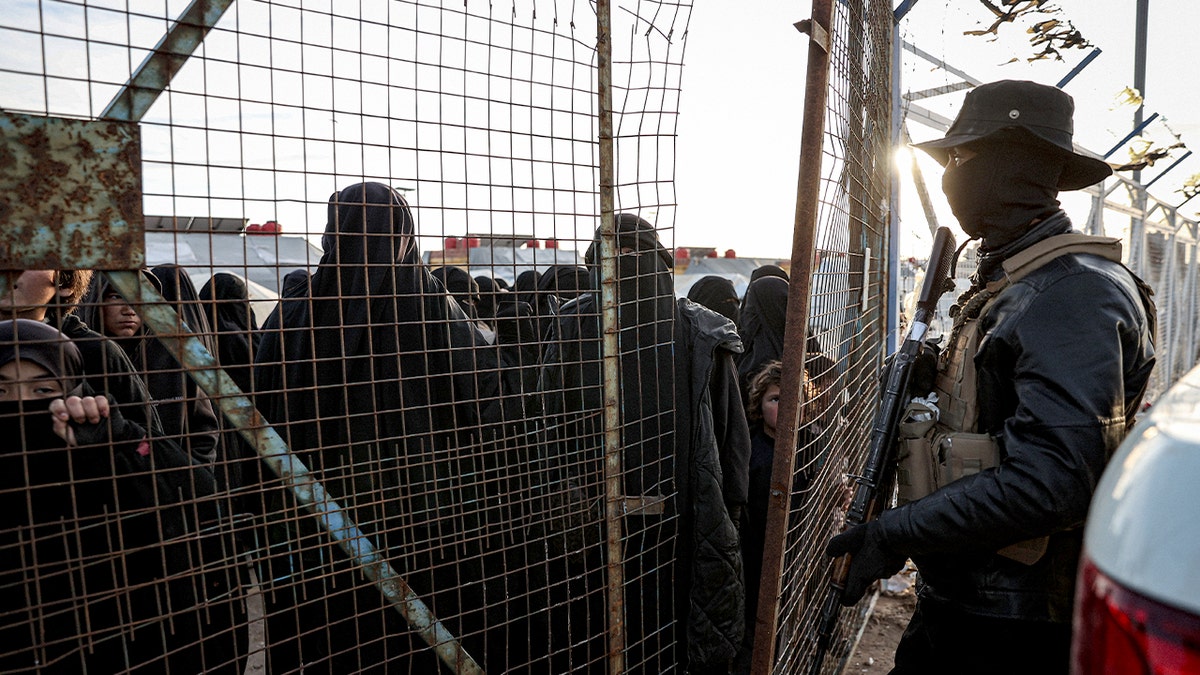
A view of al-Hol camp, where families linked to the Islamic State group are being held, in Hasakah province, Syria, Jan. 21, 2026. (Izz Aldien Alqasem/Anadolu via Getty Images)
CLICK HERE TO DOWNLOAD THE FOX NEWS APP
Syria became the 90th member of the Global Coalition to Defeat ISIS, a U.S.-led alliance formed to coordinate international efforts against the extremist group, in November.
Tom Barrack, the U.S. ambassador to Turkey and special envoy for Syria, said Damascus — under interim President Ahmed al-Sharaa — is prepared to assume security responsibilities, including control of ISIS detention facilities and camps, following the 2024 ouster of Bashar al-Assad.
syria,military,isis,counter terrorism











REUTERS/Alexander Ermochenko/Archivo
El portavoz del Kremlin, Dmitri Peskov, exigió este miércoles al presidente ucraniano, Volodimir Zelensky, que ordene la retirada inmediata de sus tropas del Donbás, aprovechando el anuncio del Ministerio de Defensa ruso de haber completado el control total de la región de Lugansk. Peskov rechazó que exista un ultimátum de dos meses, como había denunciado Zelensky, y endureció la posición: la decisión, dijo, debe tomarse “hoy mismo”. El portavoz responsabilizó al presidente ucraniano de haber prolongado “la fase más cruenta de esta guerra” al no ordenar la retirada de sus fuerzas de las fronteras administrativas de Donetsk.
Las declaraciones llegaron en paralelo al anuncio del Ministerio de Defensa ruso, que comunicó que “las unidades del Grupo de Fuerzas Oeste han completado la liberación de la República Popular de Lugansk”. Kiev desmintió la versión de inmediato. El portavoz de las Fuerzas Conjuntas ucranianas, Viktor Trehubov, aseguró que no hay cambios en esa región y reconoció ante la AP que solo quedan “pequeños parches” bajo control ucraniano, defendidos por la 3ª brigada desde hace tiempo. No es la primera vez que Moscú hace este anuncio sin respaldo verificable: el dirigente designado por Rusia en Lugansk ya proclamó la captura total de la región en junio de 2025, con idéntico resultado.
Funcionarios ucranianos han señalado en reiteradas ocasiones que Moscú recurre a este tipo de declaraciones para convencer a los negociadores de Washington de que una victoria rusa es inevitable. El Instituto para el Estudio de la Guerra (ISW) indicó el martes que las tácticas ucranianas están obstaculizando los avances rusos y que, en los últimos meses, las fuerzas de Kiev lograron sus progresos más significativos desde la incursión en la región rusa de Kursk en agosto de 2024.

REUTERS/Yan Dorbronosov/Foto de archivo
La disputa sobre el Donbás es el principal nudo de las negociaciones. Moscú exige la retirada ucraniana de las cuatro regiones que anexionó ilegalmente en septiembre de 2022 —Lugansk, Donetsk, Jersón y Zaporiyia— como condición previa a cualquier acuerdo, aunque nunca logró el control efectivo de ninguna de ellas. El propio Putin reconoció en octubre pasado que tropas ucranianas aún controlaban el 0,13% del territorio de Lugansk. Kiev rechaza esa condición y advierte que no puede dar por perdidos esos territorios.
La semana pasada, el secretario de Estado estadounidense, Marco Rubio, desmintió a Zelensky, quien había afirmado que Washington condicionaba sus garantías de seguridad a la retirada ucraniana del Donbás. Rubio calificó esa afirmación de “mentira” y aclaró que las garantías solo entrarían en vigor una vez terminada la guerra, sin exigir cesión territorial alguna. Pese a ello, los esfuerzos diplomáticos no han logrado romper el estancamiento, y la atención de Washington está volcada hacia la guerra con Irán.
Zelensky describió este miércoles la situación en el frente como “bastante tensa” y sostuvo que las fuerzas ucranianas mantienen sus posiciones pese a la ofensiva rusa de primavera. Más tarde tenía prevista una videollamada con los enviados de Donald Trump, Steve Witkoff y Jared Kushner, para explorar nuevas negociaciones trilaterales.
La jornada dejó también nuevas víctimas civiles. Un ataque con drones mató a cuatro personas en la región central de Cherkasy. Drones rusos dañaron además instalaciones en Lutsk, cerca de la frontera con Polonia, donde quedaron afectados un centro postal y un punto de distribución de alimentos. La fuerza aérea ucraniana informó haber derribado 298 drones —en su mayoría del modelo Shahed de diseño iraní— de los ataques nocturnos lanzados desde el oeste de Rusia y Crimea. La guerra acumula más de 15.000 civiles ucranianos muertos, según las Naciones Unidas, y ha desplazado a más de seis millones de personas fuera del país.
Politics,Europe

NEWYou can now listen to Fox News articles!
FIRST ON FOX: A new report is raising concerns about Turkey’s role in the Middle East, arguing that under President Recep Tayyip Erdoğan, the country has moved away from its traditional Western alignment and toward deeper engagement with Islamist movements, including the Muslim Brotherhood.
The Foundation for Defense of Democracies report, led by senior fellow Sinan Ciddi and titled «Islamist Domination of Turkey: A Forward Base for Muslim Brotherhood-Aligned Jihadism,» argues that Turkey has ties to Hamas — the U.S.-designated terrorist group responsible for the Oct. 7 massacre — as well as to the Muslim Brotherhood — an Islamist movement whose affiliates have recently been designated as terrorist organizations by the United States — placing Turkey’s policies under renewed scrutiny as it prepares to host a NATO summit.
Ciddi told Fox News Digital the shift reflects a broader transformation in how Turkey defines threats.
«What we have is Turkey has completely rewritten the rules of how you interpret what a jihadist terrorist entity may be,» Ciddi said. «Erdoğan has reinvented what is interpreted as a terrorist entity … groups such as Hamas or al-Nusra fall into line with his pan-Islamist view of the world.»
EXPERT WARNS RADICAL ISLAMIST NETWORKS COULD SHIFT WEST AFTER IRAN REGIME SHAKEUP
Turkish President Recep Tayyip Erdogan (R) and then-Chairman of Hamas Khaled Mashal (L) shake hands at the Historical Mabeyn Palace in Istanbul, Turkey on June 24, 2016. (Kayhan Ozer/Anadolu Agency/Getty Images)
Hamas presence draws scrutiny
A central focus of the report is Turkey’s relationship with Hamas, which the United States designates as a terrorist organization, and yet Hamas expanded its presence in Turkey after 2011, establishing offices and networks inside the country.
«From 2011 onward … Hamas used this opportunity inside of Turkey with a friendly government to establish offices, engage in recruitment (and) fundraising,» Ciddi said.
U.S. authorities have taken action against some of those networks. The Treasury Department has designated Hamas-linked individuals and entities operating in Turkey, a point Ciddi said underscores longstanding concerns.
«The United States Treasury has been tracking and designating Hamas-affiliated NGOs and individuals inside of Turkey,» he said.
The report also alleges that some Hamas operatives have been able to travel using Turkish-issued documents and that senior figures have been publicly received by Erdoğan.
Beyond Hamas, the report describes Turkey as a hub for Muslim Brotherhood figures from across the region, including Egypt and Yemen, many of whom relocated there following crackdowns in their home countries.
Across parts of the Arab world, the Muslim Brotherhood has been banned or restricted for years.
Egypt outlawed the movement in 2013, accusing it of inciting unrest and undermining state institutions. Saudi Arabia and the United Arab Emirates later designated it a terrorist organization, describing it as a threat to national stability, while Bahrain adopted a similar stance.
Jordan dissolved its local chapter this year following arrests authorities said were linked to illicit weapons activity.
Some European countries also have taken steps targeting networks linked to the movement.
Austria, for example, has pursued legal action against individuals and organizations it says are connected to Brotherhood-linked activity as part of its counter-extremism policies.
Officials in these countries have argued that the Brotherhood operates through a mix of religious outreach, political activism, charitable organizations and media platforms to influence public opinion and challenge state authority.
ISRAEL SHUTS DOOR ON TURKEY IN GAZA AS TRUMP PRAISES ERDOGAN, PLAYS DOWN CLASH
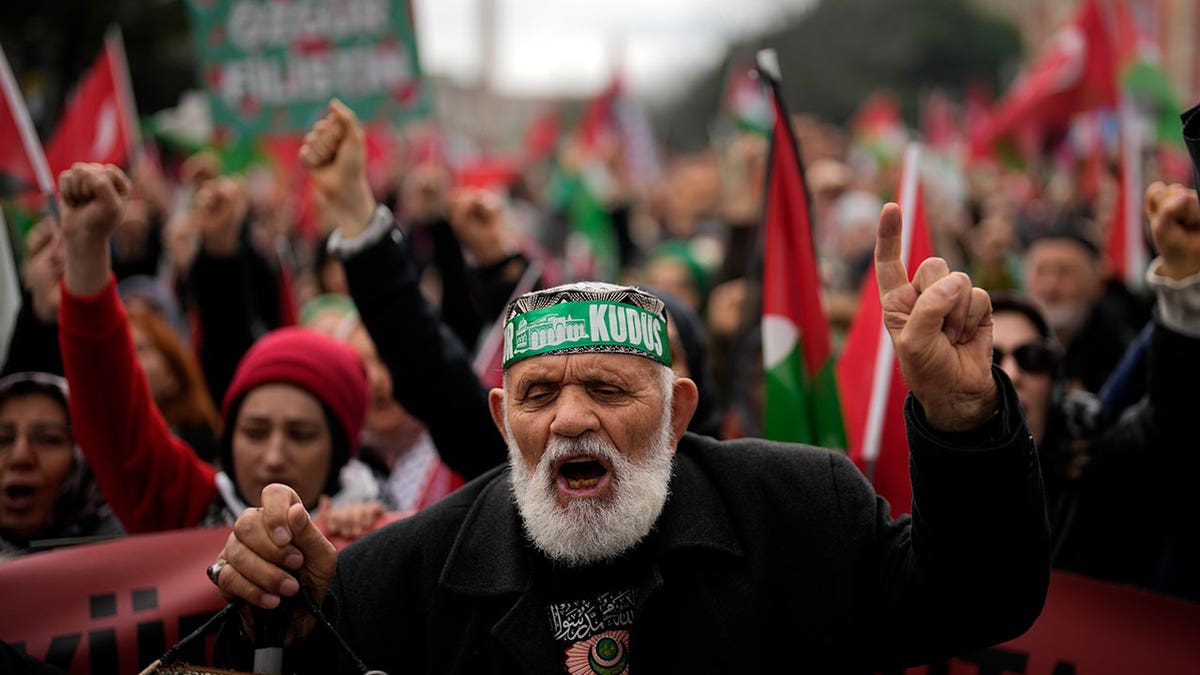
People protest in support of Palestinians in Gaza during a protest rally in Istanbul, Turkey, on Feb. 17, 2024, amid the ongoing war between Israel and Hamas. (Khalil Hamra/The Associated Press )
Syria policy and sanctions questions
The report also examines Turkey’s role in Syria, where the country backed opposition forces during the civil war, supporting a range of armed factions, including groups that later formed the Syrian National Army.
«The Syrian National Army … was a hodgepodge collection of militias that Turkey directly armed, paid and organized,» he said.
The report links Turkish support to groups such as al-Nusra and Hayat Tahrir al-Sham, raising questions among analysts about whether such ties could expose Turkish officials to potential sanctions under U.S. law.
TRUMP FACES MIDDLE EAST TEST AS NETANYAHU BALKS AT ERDOGAN’S GAZA TROOP HOPES
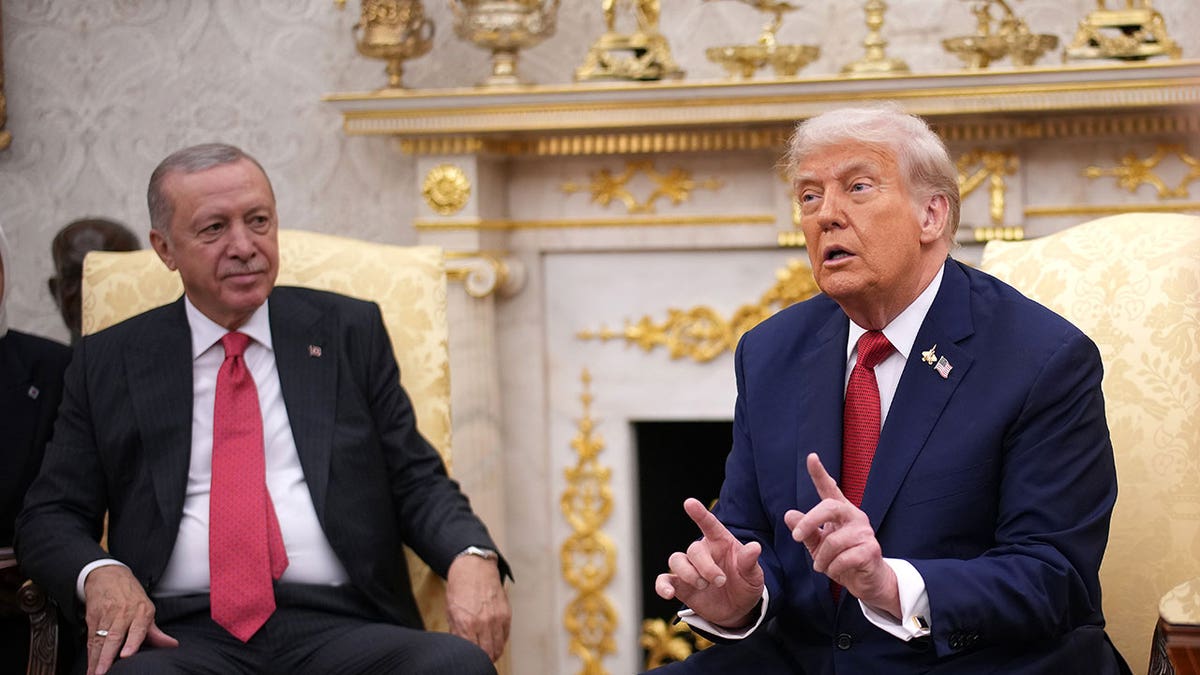
U.S. President Donald Trump (R) delivers remarks during a meeting with President of Turkey Recep Tayyip Erdogan in the Oval Office at the White House on Sept. 25, 2025 in Washington, D.C. (Andrew Harnik/Getty Images)
A balancing act with Washington
Despite these concerns, other analysts say Turkey’s relationship with the United States continues to act as a constraint on its behavior, while the relationship between Donald Trump and Turkish President Recep Tayyip Erdoğan has been characterized by renewed trust, with Trump praising Erdoğan’s role in Gaza diplomacy.
As Trump celebrated the Gaza ceasefire agreement in Sharm el-Sheikh, Egypt in October 2025, he singled out one leader for extraordinary praise — Erdoğan, whose leadership he credited for helping deliver the Gaza ceasefire.
«A guy who’s been a friend of mine for a long time. I don’t know why I like the tough people better than the soft, easy ones,» Trump said about Erdoğan at the Sharm el-Sheikh summit in October 2025. «This gentleman from a place called Turkey is one of the most powerful in the world … He’s a tough cookie — but he’s my friend.»
Hişyar Özsoy, a Turkish politician and academic, described the relationship between Erdoğan and Trump as «transactional,» noting Washington often relies on Turkey for regional coordination.
In a policy webinar hosted by the Jerusalem Institute for Strategy and Security, Turkish academic Hüseyin Bağcı emphasized that Ankara remains closely tied to Washington.
«The Turkish state is not interested in fighting with Israel because the Turkish government has very good relations with (the) United States of America,» he said. «You cannot be good with America and then be in conflict with Israel.»
Bağcı also suggested Turkey has at times limited Islamist actors domestically.
«Today do you hear anything about» the Muslim Brotherhood, he said. «No … because the president said stop.»
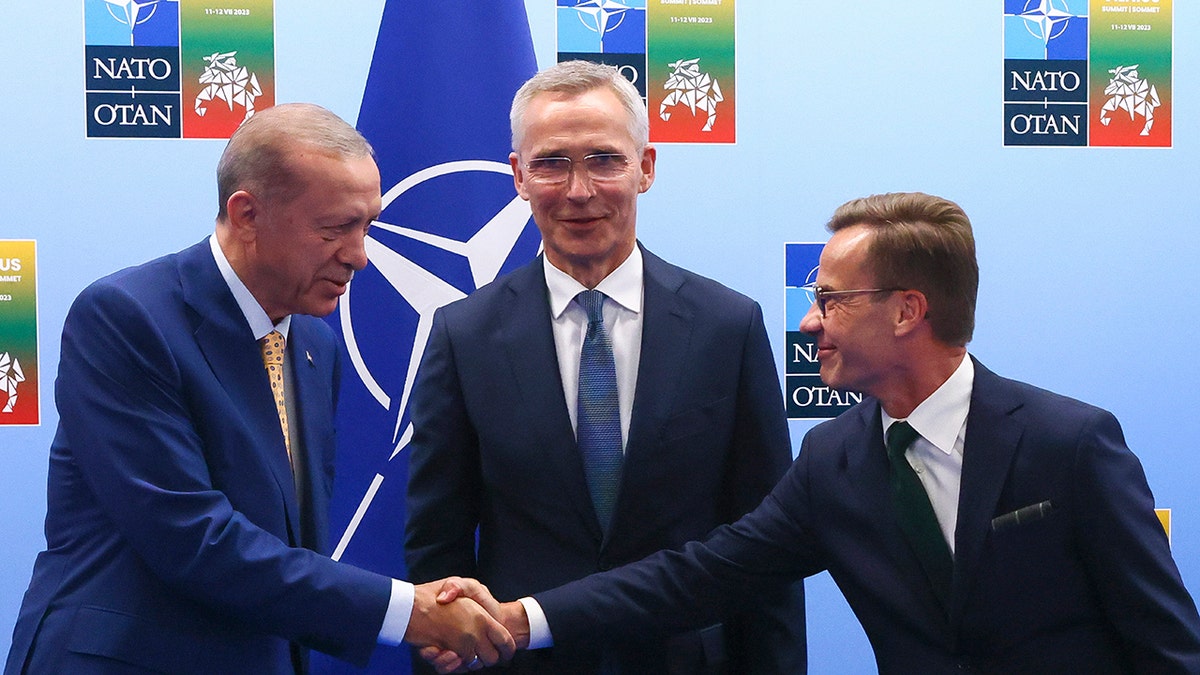
Turkey’s President Recep Tayyip Erdoğan, left, shakes hands with Sweden’s Prime Minister Ulf Kristersson, right, as NATO Secretary General Jens Stoltenberg looks on prior to a meeting ahead of a NATO summit in Vilnius, Lithuania, Monday, July 10, 2023. (Yves Herman, Pool Photo via AP)
NATO ally under pressure
Turkey, a NATO member since 1952, remains a key partner for the United States, providing logistical access, military capabilities and diplomatic reach.
But Ciddi argued Turkey’s current trajectory increasingly diverges from alliance priorities.
«There is an established track record … where Turkey significantly undermines the transatlantic alliance’s core security concerns,» he said.
He pointed to U.S. sanctions on Turkish entities accused of supplying dual-use goods to Russia, as well as Ankara’s broader strategy of maintaining ties with competing powers.
Iran and regional positioning
As far as Turkey’s positioning itself amid tensions with Iran, Ciddi said Turkey is likely to favor a weakened Iranian regime rather than a complete collapse that could produce a more pro-Western government.
«A weakened Iranian regime is Erdoğan’s safest bet,» he said.
Bağcı offered a similar assessment of the rivalry.
«Iran is not an enemy of Turkey, but not necessarily its best friend. Turkey and Iran are two regional competitors,» he said.
CLICK HERE TO DOWNLOAD THE FOX NEWS APP
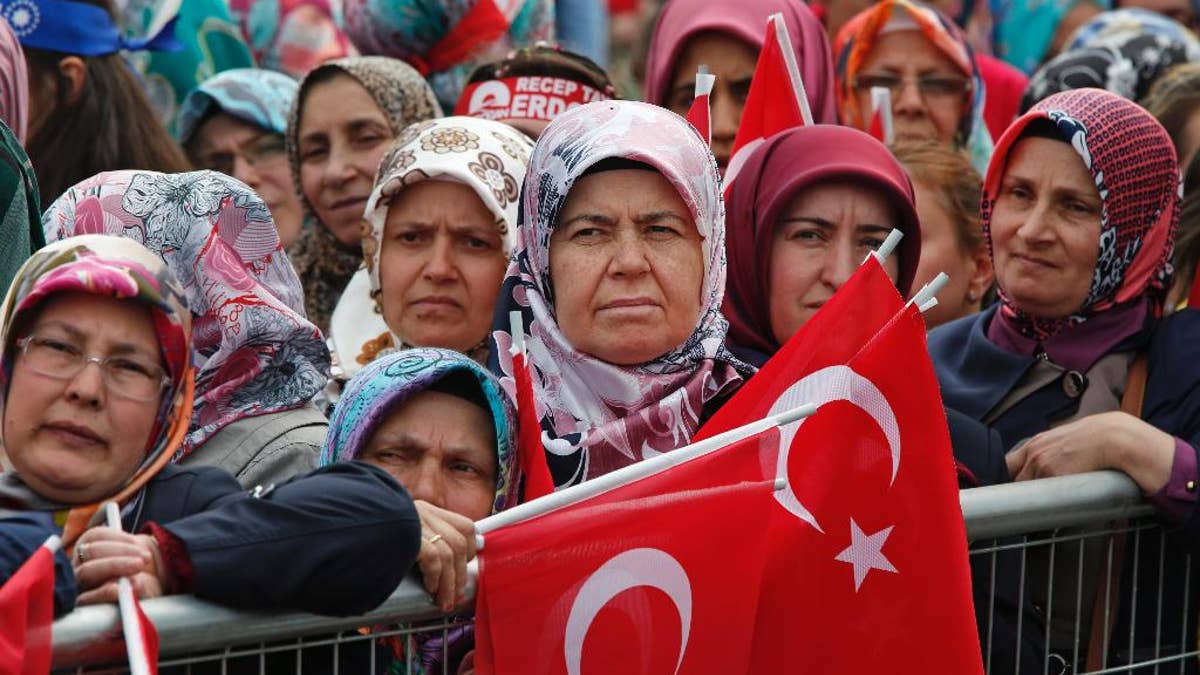
In this May 30, 2015, file photo, supporters of Turkey President Recep Tayyip Erdogan and prime minister and leader of the Justice and Development Party (AKP), Ahmet Davutoglu, some holding Turkish flags, wait for their appearance in Istanbul during a rally to commemorate the anniversary of the city’s conquest by the Ottoman Turks. As extremist violence and political uncertainty cast a shadow over Turkey, voters are looking for the parliamentary election to usher in stability. (AP Photo/Lefteris Pitarakis)
Looking ahead
The report recommends potential U.S. policy responses, including sanctions and increased scrutiny of Turkey’s financial system, steps that could reshape relations between Washington and Ankara.
Fox News Digital reached out multiple times to the Turkish government and to the State Department for comment but did not receive a response in time for publication.
war with iran, turkey, nato, europe, terrorism, syria

NEWYou can now listen to Fox News articles!
President Donald Trump goes before the nation in prime time on Wednesday evening to deliver what the White House says is «an important update» on the war with Iran.
The president’s address comes amid the month-long attacks by the U.S. and Israel on Iran, which polls indicate are unpopular with many Americans, and a surge in gas prices as a direct result of the fighting have triggered a further slide in Trump’s standing in public opinion surveys.
The political implications are clear: The strikes on Iran and the erosion of the president’s approval ratings are warning signs for the GOP as Republicans ramp up to defend their slim House and Senate majorities in this autumn’s midterm elections.
Trump stood at 41% approval and 59% disapproval in the latest Fox News national poll, which was conducted March 20–23. The president’s negative 18-point margin was up from 14 points in the previous Fox News poll, which was conducted Feb. 28–March 2, as the strikes against Iran began.
FOX NEWS LIVE UPDATES ON THE U.S. WAR WITH IRAN
The president’s approval ratings stood in the upper 30s, with his disapproval in the upper 50s to low 60s, in the most recent national surveys from Reuters/Ipsos, AP/NORC, and Quinnipiac University. A CNN poll conducted March 26–30 and released Wednesday indicated Trump had a 35%-64% approval/disapproval rating.
An average of the most recent national surveys gauging the president’s standing puts Trump just above 40%, with his disapproval in the upper 50s.
WHAT THE LATEST FOX NEWS POLL SHOWS ON THE WAR WITH IRAN
While Trump’s base remains extremely supportive of the president and the war, much of the slippage is coming from within the GOP, specifically those who are considered non-MAGA Republicans.
«I do see in the last couple of surveys an edging down…close to a double-digit movement,» veteran Republican pollster Daron Shaw, who helps run the Fox News Poll with Democrat Chris Anderson, said, pointing to declining support for Trump among non-MAGA Republicans.
A screen grab from a video released on U.S. President Donald Trump’s Truth Social account shows Donald Trump making statements regarding combat operations on Iran on Feb. 28, 2026, in Palm Beach, Florida. (US President Trump Via Truth Social/Anadolu via Getty Images)
Fueling Trump’s decline appears to be the surge in gas prices.
The average price of gasoline in the U.S. topped $4 per gallon on Tuesday, according to national averages from AAA and GasBuddy, for the first time in four years.
FOX BUSINESS: GAS PRICES TOP $4 PER GALLON
The military attacks by the U.S. and Israel have resulted in the deaths of Iranian Supreme Leader Ayatollah Ali Khamenei and other top officials, and the decimation of the country’s military.
In response, Iran has targeted energy facilities with missile and drone attacks in a number of Persian Gulf nations. It has also made the Strait of Hormuz nearly impassable to commercial shipping, bringing roughly 20% of the world’s oil supply to a halt and sending global fuel prices sharply higher.
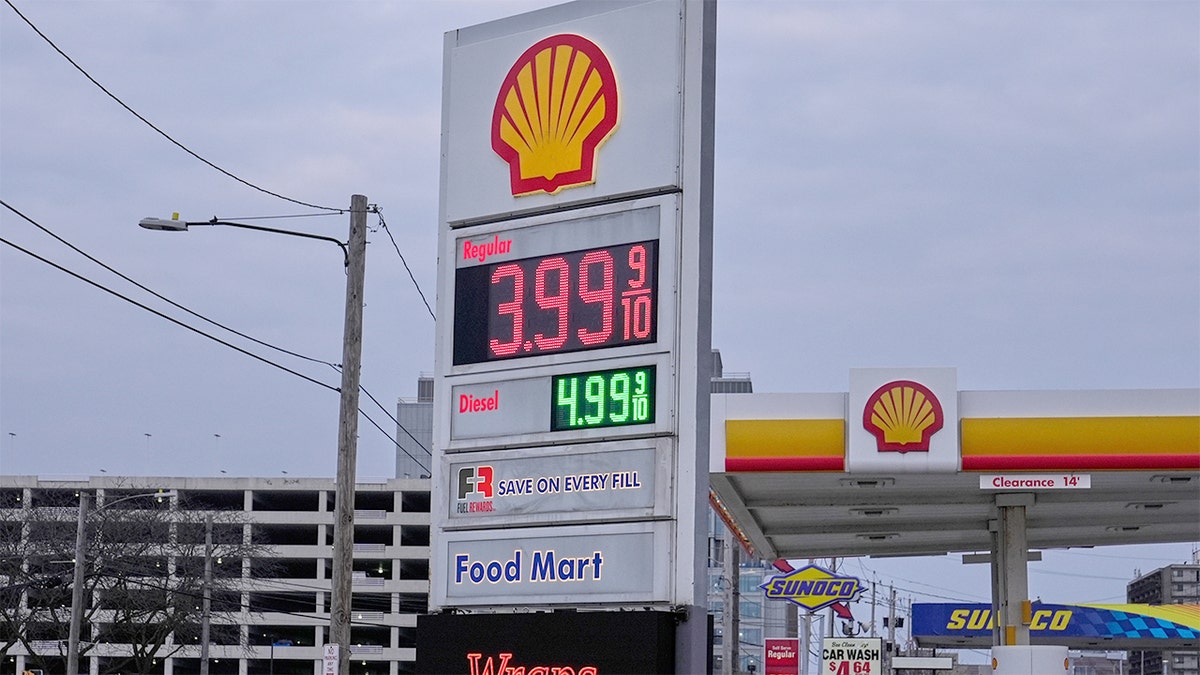
A gas station displays a sign for $3.999 for regular gasoline, in Cleveland, Monday, March 30, 2026. (Sue Ogrocki/AP Photo)
That has only exacerbated Trump’s polling woes when it comes to his performance on the economy, amid public dissatisfaction with high prices and the cost of living.
A spotlight on inflation helped fuel sweeping victories by Trump and Republicans in the 2024 elections, when they won back the White House and Senate and successfully defended their slim House majority.
DEMOCRATS TARGET TRUMP, GOP, OVER SURING GAS PRICES
But a laser focus on affordability by Democrats, amid persistent inflation, has fueled a slew of victories and overperformances in 2025’s off-year elections and in special elections in the more than 14 months since Trump returned to the White House.
According to the Fox News poll, 80% of respondents said they were concerned about gas prices, and 86% concerned about inflation and high prices. And the CNN survey spotlighted that the president’s approval rating for handling the economy sank to 31%, Trump’s lowest level ever in their polling.
The White House says the surge in prices is temporary.
«When Operation Epic Fury is complete, gas prices will plummet back to the multiyear lows American drivers enjoyed before these short-term disruptions,» White House press secretary Karoline Leavitt said in a statement on Tuesday.
Leavitt emphasized that «President Trump remains committed to fully unleashing American energy dominance, lowering costs, and putting more money back in the pockets of hardworking American families.»
OIL HAS SURGED SINCE THE IRAN CONFLICT BEGAN, BUT GAS PRICES MAY NOT BE DONE RISING
The gas price surge is giving Democrats more political ammunition to target the GOP.
«BREAKING: National Gas Prices Skyrocket to $4 Per Gallon,» read the headline from an email Tuesday morning from the Democratic National Committee.
The House Democrats’ campaign committee last week launched digital ads showing prices at the pump rising and an image saying «D.C. Republicans Did That!» Sources say to expect another round of ads on gas prices in the coming weeks.
But Democrats have their own polling problems, as the party’s brand image has cratered to historic lows in a slew of polls over the past year.
Shaw, pointing to the so-called double-haters, voters who disapprove of both Trump and the Democrats, said that group hasn’t «really swung dramatically to the Democrats» as the midterms approach.
Republican Sen. Ted Cruz of Texas emphasized in a recent Fox News Digital interview that, in his opinion, Trump’s «decision to launch this military action is the most consequential decision» of his presidency.
Such perceptions only increase what’s at stake when Trump addresses the nation in prime time.
CLICK HERE TO DOWNLOAD THE FOX NEWS APP
«The American people want to hear what the off-ramp for the war is and when it will end,» Dan Eberhart, an oil drilling chief executive officer and prominent Republican donor told Fox News Digital.
Eberhart, who is supportive of the president, said: «Trump’s base is with him, but many ordinary Americans feel the war is unnecessary. Tonight is Trump’s opportunity to explain why this war matters to everyday Americans.»
donald trump, war with iran, iran, polls, midterm elections, inflation, politics

“No se corten solos”: el error de Santillán generó bronca entre libertarios y el oficialismo trata de ordenar a sus diputados

Ucrania rechazó las exigencias rusas tras nuevo ultimátum sobre el Donbás

Maxi López regresó a Suiza para celebrar el cumpleaños de su hija Elle

Fabián Ruiz acelera su regreso al PSG

Irán desmintió a Donald Trump y negó haber pedido un alto al fuego: máxima tensión y sin señales de tregua

Turkey’s NATO role under scrutiny amid new report on Hamas, Muslim Brotherhood ties

Máximo Kirchner salió al cruce de Milei y Macri tras el fallo por YPF a favor de la Argentina

El Gobierno cambia su propuesta de reforma: endurece penas para delitos comunes, pero no para los casos de corrupción

Nuevas críticas de Marcela Pagano contra los Milei: “Karina es la que gobierna”, aseguró

Dos jubiladas que le habrían prestado dinero a Manuel Adorni negaron conocerlo

 POLITICA3 días ago
Nuevas críticas de Marcela Pagano contra los Milei: “Karina es la que gobierna”, aseguró
- POLITICA1 día ago
Dos jubiladas que le habrían prestado dinero a Manuel Adorni negaron conocerlo
- POLITICA2 días ago
Quiénes son las dos acreedoras del préstamo con el que Adorni compró su departamento en Caballito