INTERNACIONAL
AOC accuses Israel of genocide in Germany where Holocaust was launched, sparking outrage


AOC slammed over Israel ‘genocide’ comments
Alexandria Ocasio Cortez spoke during a town hall at the Munich Security Conference in Germany where she claimed U.S. aid «enabled a genocide in Gaza.» (Credit: Munich Security Conference)
NEWYou can now listen to Fox News articles!
Rep. Alexandria Ocasio-Cortez, D-N.Y., alleged at the Munich Security Conference on Friday that U.S. aid to the Jewish state enabled a genocide by Israel. AOC’s attack on the Jewish state in Munich unfolded in the birthplace of Adolf Hitler’s Nazi movement that carried out the worst genocide in human history.
AOC’s assault on Israel’s war campaign to defeat the U.S. and EU-designated terrorist movement Hamas in the Gaza Strip sparked outrage and intense criticism from academic military and Middle East experts.
During the town hall event in Munich, the Squad member said, «To me, this isn’t just about a presidential election. Personally, I think that the United States has an obligation to uphold its own laws, particularly the Leahy laws. And I think that personally, that the idea of completely unconditional aid, no matter what one does, does not make sense. I think it enabled a genocide in Gaza. And I think that we have thousands of women and children dead that don’t, that was completely avoidable.»
‘DOUBLING DOWN ON STUPID’: NEWSOM, AOC, TRASH TRUMP AT EUROPEAN SUMMIT AS THEY RAISE 2028 PROFILES
Rep. Alexandria Ocasio-Cortez, D-NY., speaks during the Munich Security Conference (MSC) in Munich, Germany, Feb. 13, 2026. (Liesa Johannssen/Reuters)
She continued, «And, so I believe that enforcement of our own laws through the Leahy laws, which requires conditioning aid in any circumstance, when you see gross human rights violations, is appropriate.»
The Leahy Laws prohibit the Department of Defense and the State Department from funding «foreign security force units when there is credible information that the unit has committed a ‘gross violation of human rights.» Former Sen. Patrick Leahy, D-VT., introduced the bill in 1997.
Tom Gross, an expert on international affairs, told Fox News digital that «AOC has flown all the way to Munich — infamous as the city in which Hitler staged his Nazi Beer Hall Putsch that marked the beginning of the road to the Holocaust — in order to smear the Jewish people further with a phony genocide allegation.»
Gross added, «Such preposterous allegations of ‘genocide’ form the bedrock of modern antisemitic incitement against Jews in the U.S. and globally. This shocking ignorance and insensitivity by Ocasio-Cortez should rule her out of any potential presidential bid or other high office.»

Memorials at the site of the Oct. 7 Hamas terror attack on the Supernova music festival near Kibbutz Re’im, Israel, on Monday, May 27, 2024. (Kobi Wolf/Bloomberg via Getty Images)
RASHIDA TLAIB HIT WITH HOUSE CENSURE THREAT, ACCUSED OF ‘CELEBRATING TERRORISM’ IN PRO-PALESTINIAN SPEECH
Military experts and genocide researchers have debunked the allegation that Israel carried out a genocide against Palestinians during its self-defense war against the Hamas terrorist organization that started after Hamas terrorists attacked communities in parts of southern Israel on Oct. 7, 2023 that saw over 1200 Israeli and foreign nationals killed and 251 brutally kidnapped and taken into Gaza by Hamas and other terrorists.

Hamas terrorists wave to Gazans during Sunday’s release of three Israeli hostages. (TPS-IL)
Danny Orbach, a military historian from the Hebrew University of Jerusalem, and co-author of «Debunking the Genocide Allegations: A Reexamination of the Israel-Hamas War from October 7 2023, to June 1, 2025,» told Fox News Digital that Ocasio-Cortez accusation that Israel committed genocide is an «accusation that is incorrect both factually and legally. Under the Genocide Convention, genocide requires proof of a special intent to destroy a protected group, in whole or in part, and as a baseline condition, an active effort to maximize civilian destruction.
«The evidence shows the opposite: as demonstrated in our multi-author study Debunking the Genocide Allegations, Israel undertook unprecedented measures to mitigate civilian harm, including establishing humanitarian safe zones that independently verified data show were approximately six times safer than other areas of Gaza.»

An Israeli soldier patrols near Kibbutz Beeri in southern Israel on Oct. 12, 2023, close to the place where 270 revelers were killed by terrorists during the Supernova music festival on Oct 7. (Aris Messinis/AFP via Getty Images)
Orbach added, «Israel also issued detailed advance warnings before strikes and facilitated the entry of over two million tons of humanitarian aid, often at significant cost to its own military advantage, including the loss of surprise and the sustainment of an enemy during wartime.»
He concluded, «These measures were taken despite Hamas’s Oct. 7 massacre, its systematic use of human shields and hospitals for military purposes, and a tunnel network exceeding 1,000 kilometers — an operational challenge without historical precedent. Finally, no credible evidence demonstrates the kind of unambiguous, exclusive genocidal intent toward Palestinians that international law requires and that cannot be reasonably interpreted otherwise.»
CLICK HERE TO DOWNLOAD THE FOX NEWS APP
The conservative commentator Derek Hunter posted on X. «Imagine going to Germany to complain about a fake genocide by Jews…in Munich, of all places. @AOC is about as smart as clogged toilet.»
In Dec. 2024, Germany joined the U.S. in rejecting the allegations that Israel committed genocide in Gaza.
alexandria ocasio cortez,israel,hamas,holocaust,conflicts,politics,the squad,anti semitism














Cambio
Posturas
Futuro

NEWYou can now listen to Fox News articles!
The government entered a partial shutdown at midnight Friday after Congress failed to reach a funding deal — and some lawmakers’ decision to attend an international gathering in Europe this weekend is drawing criticism from colleagues on both sides of the aisle.
«It’s absurd, I hope the American people are paying attention,» Rep. Eric Burlison, R-Mo., told Fox News Digital.
The deadline to fund the Department of Homeland Security (DHS) by the end of the week came with a built-in complication: members of both chambers were scheduled to attend the annual Munich Security Conference, with many set to depart by day’s end Thursday.
GOVERNMENT TO SHUT DOWN AT MIDNIGHT AFTER DEMS, WHITE HOUSE FAIL TO STRIKE DHS DEAL
While the DHS shutdown continues, several lawmakers are overseas in Germany. (Viktor Kovalchuk/Global Images Ukraine via Getty)
Without a deal in place, Congress left Washington, D.C., on Thursday after the Senate failed to pass both a full-year funding bill for DHS and a temporary, two-week funding extension.
At midnight Friday — with several lawmakers already in Germany — DHS shut down.
Both Republican leaders warned members to be prepared to return if a deal was reached. Senate Majority Leader John Thune, R-S.D., gave senators 24 hours’ notice to return, while House Speaker Mike Johnson, R-La., allowed a 48-hour window.
Despite the conference being scheduled months in advance, some lawmakers said leaving Washington — or even the country — during an active funding standoff sent the wrong message.
Sen. Rick Scott, R-Fla., blamed Senate Minority Leader Chuck Schumer, D-N.Y., arguing that Democrats blocked Republican-led efforts to prevent a partial DHS shutdown.
DHS SHUTDOWN EXPLAINED: WHO WORKS WITHOUT PAY, WHAT HAPPENS TO AIRPORTS AND DISASTER RESPONSE
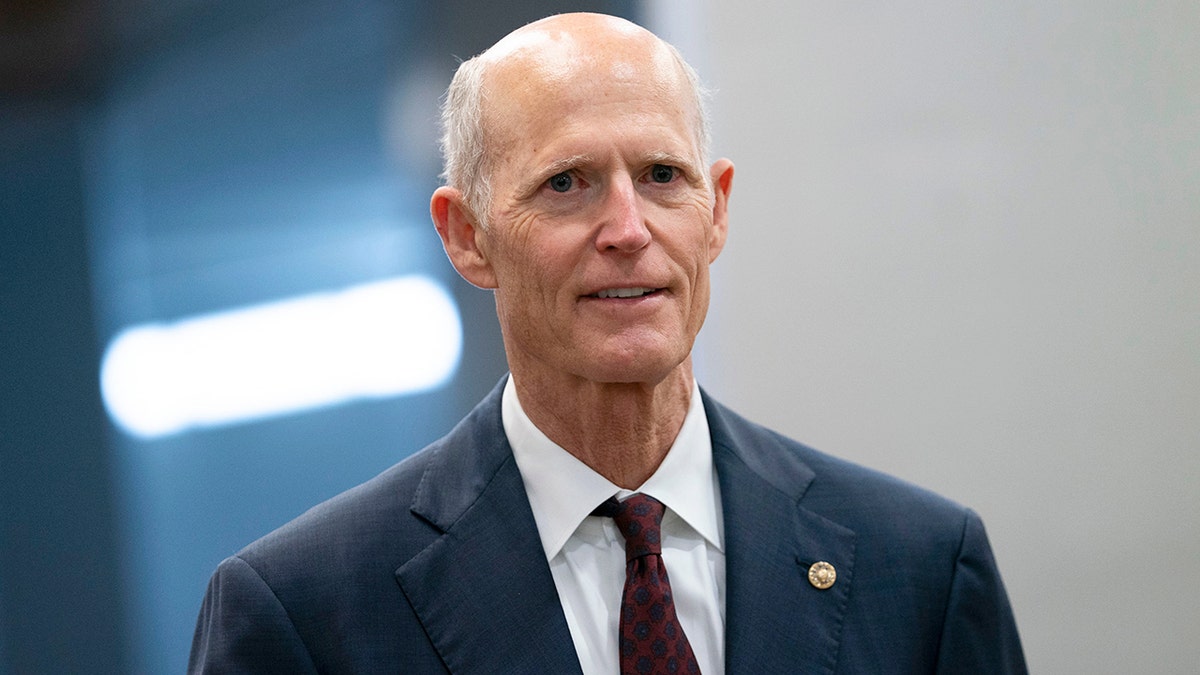
Sen. Rick Scott, R-Fla., in the Senate Subway during a vote at the U.S. Capitol in Washington, March 14, 2025. (Allison Robbert/Bloomberg via Getty Images)
«Schumer’s what’s deciding this,» Scott told Fox News Digital. «I mean, he’s deciding that he’s more interested in people going to Munich than he is in funding DHS.»
Several lawmakers from both chambers are attending the conference, participating in side discussions and panels during the annual forum, where heads of state and top decision-makers gather to debate international security policy.
Members of the House expressed frustration that senators would leave amid stalled negotiations between Senate Democrats and the White House.
«The Senate started out a week ago saying, ‘I don’t think anybody should leave town,’» Rep. Mark Amodei, R-Nev., told Fox News Digital. «Now they’re doing the Munich thing. At least [the House] sent a bill over…not a great pride moment for the federal government, is it?»
Sens. Lindsey Graham, R-S.C., and Sheldon Whitehouse, D-R.I., led a bipartisan delegation of 11 senators to the conference.
When asked whether the shutdown would affect his travel plans, Whitehouse said, «I hope not.»
Sen. Richard Blumenthal, D-Conn., who was scheduled to participate in a panel with Graham titled «The State of Russia,» according to the conference agenda, said lawmakers should have resolved outstanding issues before leaving town.
«I’m not delighted with Republican resistance and unresponsiveness, but it’s on them at this point,» Blumenthal said.
House rules prohibit official congressional delegations, also known as CODELs, during a shutdown. Still, several House members made the trip to Bavaria. At least a handful of House Democrats, including Rep. Alexandria Ocasio-Cortez, D-N.Y., attended the conference.
DEMS DIG IN, GUARANTEE SHUTDOWN WITH BLOCK OF DHS FUNDING
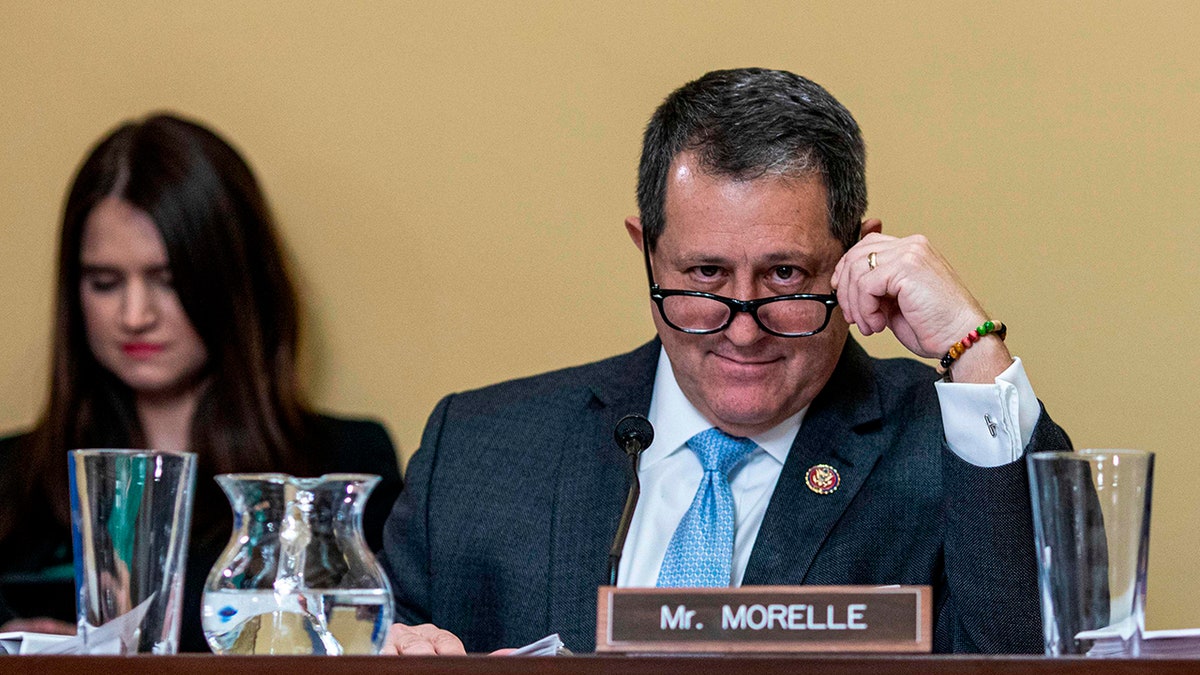
Rep. Joe Morelle, D-N.Y., interviews witnesses during a House Rules Committee hearing on the impeachment against President Donald Trump, Dec. 17. 2019. (Jason Andrew/Pool/AFP via Getty Images)
House Appropriations Committee Chair Tom Cole, R-Okla., said during a hearing on the impact of a DHS shutdown that it would be «unconscionable if Congress leaves and does not solve the problem.»
«I’m sure Munich is a great place. I’ve been there many times. The beer is outstanding,» Cole said. «But we don’t need to go to a defense conference someplace in Europe when we’re not taking care of the defense of the United States of America.»
Lawmakers are expected to continue negotiations throughout the weekend while many are abroad. Senate Democrats have signaled they may present a counteroffer to the White House but have not finalized a proposal.
If an agreement is reached, it would still take time to draft the legislative text and bring the measure to the Senate floor. Even so, some lawmakers argued that stepping away from negotiations — whether returning home or traveling overseas — was the wrong move.
CLICK HERE TO DOWNLOAD THE FOX NEWS APP
«I’ve been pretty outspoken to say we need to stay as long as we have to be here to be able to get things resolved so we don’t ever have a shutdown,» Sen. James Lankford, R-Okla., told Fox News Digital.
«That’s the easiest way to resolve it is to say ‘no one walks away from the table,’» he added. «We stay at the table.»
Rep. Joe Morelle, D-N.Y., told Fox News Digital the situation reflects poorly on GOP leadership’s handling of funding priorities, though he acknowledged the significance of the international conference.
«There’s a certain irony that we would not be here to fund essential services of our government, but we have enough time and energy to go to the Munich Security Conference, which admittedly is a very important international gathering,» Morelle said. «But I think it says a lot about the lack of leadership…we can’t do the fundamentals of this job.»
politics,senate,house of representatives politics,government shutdown,homeland security,germany
INTERNACIONAL
Una película sobre la leyenda trágica de Bill Evans entra en competencia en el Festival de Berlín

Una película sobre el legendario pianista de jazz Bill Evans que se centra en uno de los periodos más traumáticos de su, a menudo, tortuosa vida tuvo su estreno en el Festival de Cine de Berlín, en donde participa en la competencia oficial por el Oso de Oro. Rodada en blanco y negro, toma su título de uno de los primeros álbumes de Evans: Everybody digs Bill Evans. Dirigida por el británico Grant Gee, todo un especialista de vídeos musicales para Radiohead, Blur y Nick Cave entre otros; está protagonizada por el actor noruego Anders Danielsen Lie, conocido principalmente por The Worst Person in the World’ (dirigida por Joachim Trier), quién interpreta a Bill Evans, quien murió en 1980 a la edad de 51 años.
La película se enfoca en el periodo posterior a la muerte del bajista Scott LaFaro en un accidente automovilístico en 1961, pocos días después de que el trío de Evans terminara de grabar su residencia en el Village Vanguard —ahora considerados discos clásicos. El pianista y compositor, sumido en el dolor, dejó de tocar durante varios meses, lamentando la pérdida de su amigo y recayendo en el consumo de heroína. Una visita a sus padres en Florida —interpretados por los veteranos de Hollywood Bill Pullman y Laurie Metcalf— es el catalizador para que él vuelva a encarrilar su vida. Pero, como observó Danielsen Lie, esto fue solo una de una serie de crisis en la vida del músico, quien luchó durante años con su adicción a las drogas.

“Una de las cosas que se ha dicho sobre Bill Evans es que fue el suicidio más largo de la historia”, dijo el actor. “Y eso es en parte cierto, porque hay una inmensa cantidad de comportamiento autodestructivo en esta biografía”, añadió. “Pero al mismo tiempo, él también estaba muy vivo… Realmente disfrutaba de su arte y de lo que hacía, lo cual es algo contradictorio. Eso es opuesto al desastre total y el caos que su vida fue en muchas etapas a lo largo del camino.”
Danielsen reconoció en una rueda de prensa en la Berlinale que muchas veces pensó que Evans tomaba malas decisiones, algo que queda claramente reflejado en sus comportamientos autodestructivos. “Pero a la vez disfrutaba de la vida y decía que nunca había tenido un momento infeliz al piano”. Y agregó que “como actor, no quiero tener que defender las elecciones de mis personajes, no soy alguien que juzgue a mis personajes”.

Aunque el filme, más que en la faceta de pianista de Evans, se centra en su vida personal, en sus demonios interiores y en sus fallidas relaciones. Según contaron, fue una película que tardó casi una década en hacerse realidad, por lo difícil que fue conseguir financiación para el proyecto, aunque finalmente el dinero llegó del Reino Unido e Irlanda, así como de fondos privados en los Estados Unidos. Una vez en el montaje, el director tenía muy claro desde el principio el uso alterno del blanco y negro y del color para marcar las distintas etapas. Todo empezó, explicó Grant Gee, con una vieja foto de Bill Evans que le hizo preguntarle quién era ese hombre que se escondía detrás del genio.
Everybody digs Bill Evans está basada en la novela Intermission del escritor galés Owen Martell, adaptada al cine por el guionista irlandés Mark O’Halloran. Fue él quien decidió incluir de nuevo a la pareja de Evans, Ellaine Schultz —quien compartía su adicción— en la historia. Aunque ella no aparece en la novela, el escritor dijo que para él era una de las claves emocionales del “viaje que Bill emprende con ella y los demás a su alrededor”. Valene Kane, quien interpreta a Schultz, estuvo de acuerdo. “Creo que siempre necesitas la historia de amor. Es una de las fuerzas de vida más importantes que tenemos.”
Fuente: AFP
[Fotos: REUTERS/Nadja Wohlleben; prensa Festival de Berlín]
Arts,Culture,Entertainment,Arts / Culture / Entertainment,Europe

La retirada de Trump en Minnesota refleja el poder del descontento popular

Polémica por la ropa importada: más del 93% del consumo de indumentaria y calzado se provee de la industria nacional

Unión vs. San Lorenzo: formaciones, hora y dónde ver por tv

Las relaciones cárnicas: de Roca-Runciman a Milei-Trump

Sin votos para rechazar la reforma laboral en Diputados, la oposición apuesta por ganar tiempo y desgastar al Gobierno

Los famosos festejan San Valentín: cartas románticas, videos retro y amor a pesar de la distancia

Wanda Nara contó la verdad del escándalo del cumpleaños de la hija de la China Suárez: «Mis hijas no fueron porque ella es…»

A quién afecta la Reforma laboral: estos son los puntos clave del proyecto de Milei

Jornada financiera: el dólar cayó a un mínimo en casi tres meses y subieron las acciones argentinas en Wall Street

El emotivo homenaje a Luis Brandoni que hizo romper en llanto al espectáculo argentino

 POLITICA2 días ago
A quién afecta la Reforma laboral: estos son los puntos clave del proyecto de Milei
- POLITICA2 días ago
Reforma laboral: la modificación sobre accidentes o enfermedades ajenas al trabajo
- ECONOMIA2 días ago
Cayeron 20% las ventas de automóviles en China y el régimen impone medidas para regular el mercado