INTERNACIONAL
China pledges aid to Ukraine as US officials warn Beijing is quietly fueling Russia’s war


NEWYou can now listen to Fox News articles!
China offered new humanitarian energy assistance to Ukraine — even as a senior U.S. official said Beijing has the power to stop Russia’s invasion and has chosen not to.
«China could call Vladimir Putin and end this war tomorrow and cut off his dual-purpose technologies that they’re selling,» U.S. Ambassador to NATO Matthew Whitaker said during a Friday panel on U.S. foreign policy at the Munich Security Conference, moderated by Bloomberg.
«China could stop buying Russian oil and gas,» he added. «You know, this war is being completely enabled by China.»
NATO AMBASSADOR SAYS UKRAINE PEACE DEAL COULD BE ‘ON THE CUSP’ AS NATIONS NEAR FINALIZATION OF SECURITY PACT
Whitaker’s remarks came as Chinese Foreign Minister Wang Yi met with Ukrainian Foreign Minister Andrii Sybiha on the sidelines of the conference and pledged what both sides described as humanitarian energy assistance to help Ukraine cope with ongoing Russian strikes on its power infrastructure.
Sybiha said on social media that he was grateful for China’s decision to provide an additional energy aid package. Readouts from both Kyiv, Ukraine, and Beijing described the meeting as focused on peace efforts, bilateral ties and support for Ukraine’s energy system, which repeatedly has been targeted by Russian missile and drone attacks.
China has not publicly disclosed the size or scope of the aid package.
China offered new humanitarian energy assistance to Ukraine, even as a senior U.S. official said Beijing has the power to stop Russia’s invasion — and has chosen not to. (Ken Ishii – Pool/Getty Images)
Beijing repeatedly has said it seeks a «constructive» role in ending the crisis and maintains that it is not a party to the conflict. Chinese officials have denied supplying lethal military assistance to Moscow and argue they support dialogue and a political settlement.
U.S. officials, however, increasingly frame China as Russia’s most important external enabler.
Whitaker said in Munich that China is providing «crucial support» for Russia’s aggression. Russia relies heavily on China for critical parts and components used in drones and other war equipment, Western officials say, even as Beijing publicly distances itself from direct weapons transfers.
ZELENSKYY CLAIMS US GAVE UKRAINE AND RUSSIA A DEADLINE TO REACH PEACE AGREEMENT
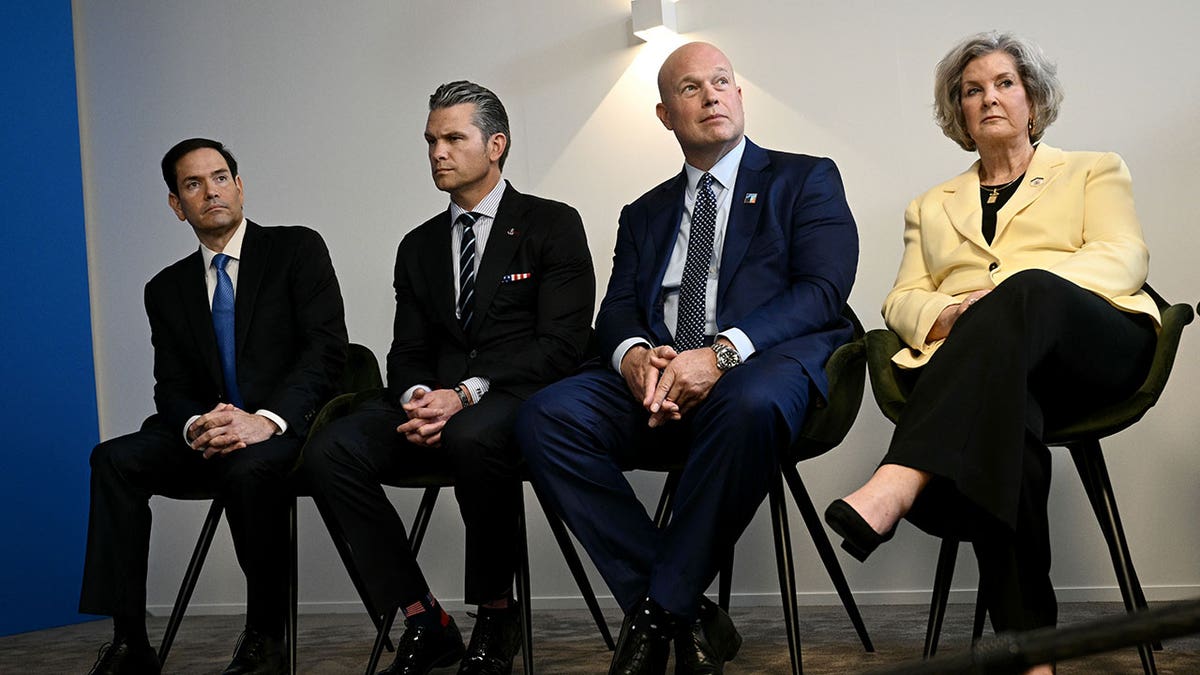
«China could call Vladimir Putin and end this war tomorrow and cut off his dual-purpose technologies that they’re selling,» U.S. Ambassador to NATO Matthew Whitaker, second from right, said during a Friday panel on U.S. foreign policy at the Munich Security Conference, moderated by Bloomberg. (Brendan Smialowski – Pool/Getty Images)
China and Russia have deepened their partnership since the start of the war, expanding trade and financial cooperation. Moscow increasingly has relied on Chinese technology, industrial goods and financial channels as Western sanctions tightened.
China is once again the largest buyer of Russian crude oil shipments. Tracking data show that roughly 1.65 million barrels per day of crude were offloaded at Chinese ports in January — the highest level since March 2024 and the second-highest monthly total since Moscow’s 2022 invasion of Ukraine.
The purchases provide Moscow with a critical revenue stream as Western governments attempt to constrain Russia’s war financing through sanctions and price caps.
The juxtaposition at Munich was stark: Beijing offering to help repair Ukraine’s energy grid while simultaneously remaining a major buyer of the oil that funds the Russian war machine Western officials say is destroying it.
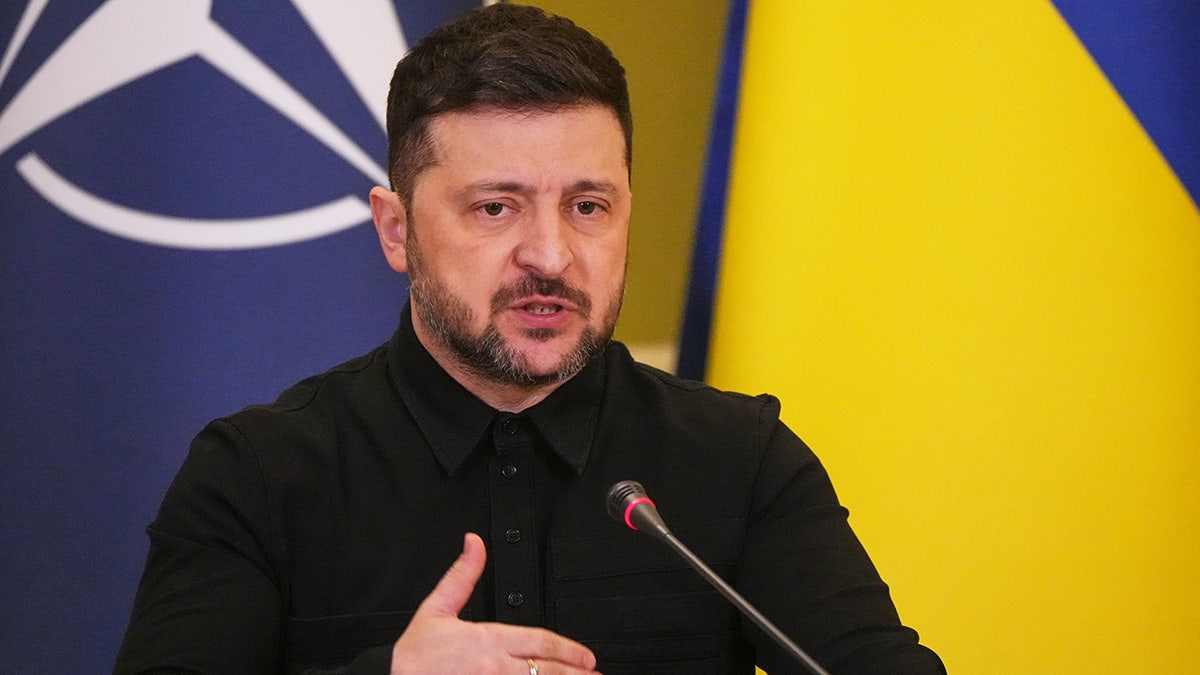
Whitaker’s remarks came as Chinese Foreign Minister Wang Yi met with Ukrainian Foreign Minister Andrii Sybiha on the sidelines of the conference and pledged what both sides described as humanitarian energy assistance to help Ukraine cope with ongoing Russian strikes on its power infrastructure. (Sergei Grits/The Associated Press )
Beijing rejects the accusation that it is enabling the war, arguing instead that sanctions and military escalation will not resolve the conflict and that it supports negotiations.
By maintaining diplomatic channels with Ukraine and offering humanitarian support, Beijing preserves a foothold in potential post-war reconstruction discussions, even as its economic ties with Moscow deepen.
CLICK HERE TO DOWNLOAD THE FOX NEWS APP
For European governments weighing additional measures against Chinese entities accused of supplying dual-use goods to Russia, Beijing’s humanitarian outreach complicates the diplomatic picture.
For Washington, however, the framing at Munich was direct: China has the economic and technological influence to change Russia’s calculus.
china,xi jinping,ukraine,vladimir putin,russia,volodymyr zelenskyy








INTERNACIONAL
Thune guarantees voter ID bill to hit the Senate despite Schumer, Dem opposition: ‘We will have a vote’
NEWYou can now listen to Fox News articles!
Senate Majority Leader John Thune, R-S.D., is ready to put Senate Democrats to the test on voter ID legislation.
The Safeguarding American Voter Eligibility (SAVE) America Act has earned the backing of 50 Senate Republicans, including Thune, which is enough to break through a key procedural hurdle.
Whether it can pass from the Senate to President Donald Trump’s desk is, for now, an unlikely scenario if lawmakers take the traditional path in the upper chamber. Still, Thune wants to put Democrats on the spot as midterm elections creep closer.
«We will have a vote,» Thune told Fox News Digital.
SCHUMER SAYS DEMS WILL FIGHT VOTER ID PUSH ‘TOOTH AND NAIL,’ BALKS AT DHS ROLE IN ELECTIONS
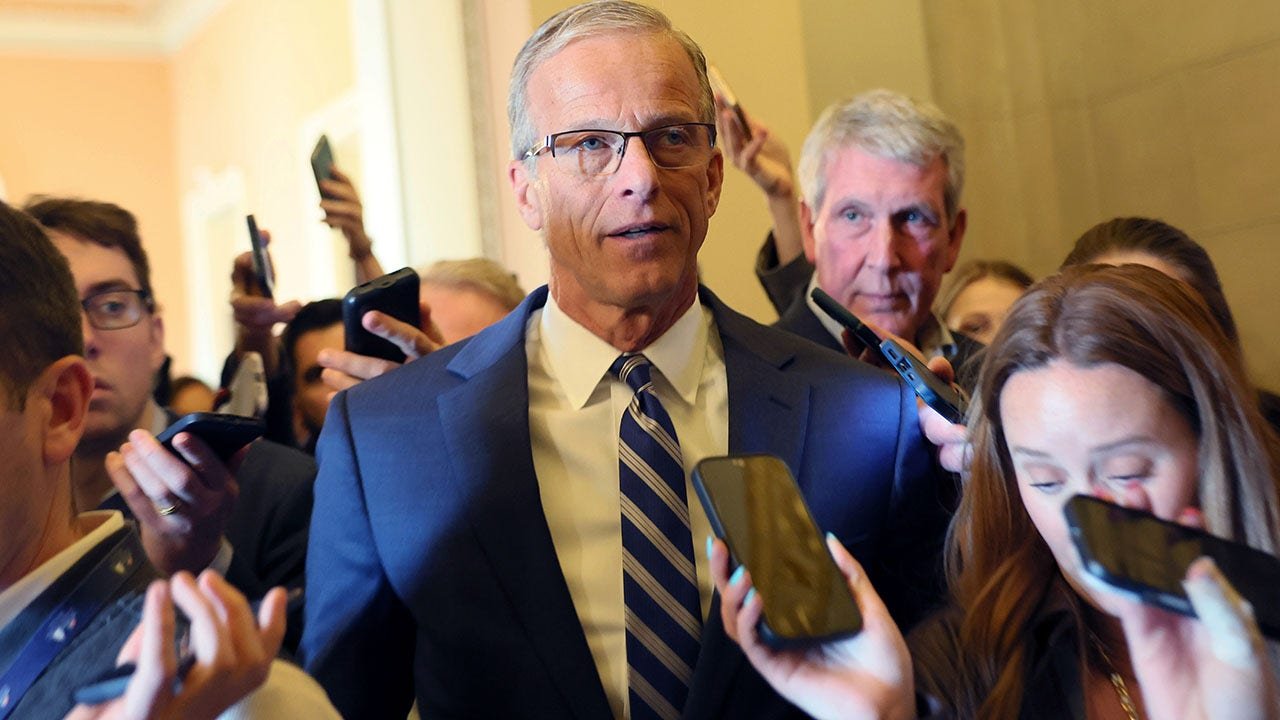
Senate Majority Leader John Thune, R-S.D., told Fox News Digital that the SAVE America Act, voter ID legislation backed by President Donald Trump, would get a vote in the Senate. (Michael M. Santiago/Getty Images)
His comments came as he crisscrossed his home state of South Dakota, where he and Republicans in their respective states are out selling their legislative achievements as primary season fast approaches.
Thune viewed the opportunity of a floor vote as a way to have Senate Minority Leader Chuck Schumer, D-N.Y., and his caucus explain to voters why they would block a legislative push to federally enshrine voter ID and proof of citizenship to register to vote.
«We will make sure that everybody’s on the record, and if they want to be against ensuring that only American citizens vote in our elections, they can defend that when they have to go out and campaign against Republicans this fall,» Thune said.
COLLINS BOOSTS REPUBLICAN VOTER ID EFFORT, BUT WON’T SCRAP FILIBUSTER
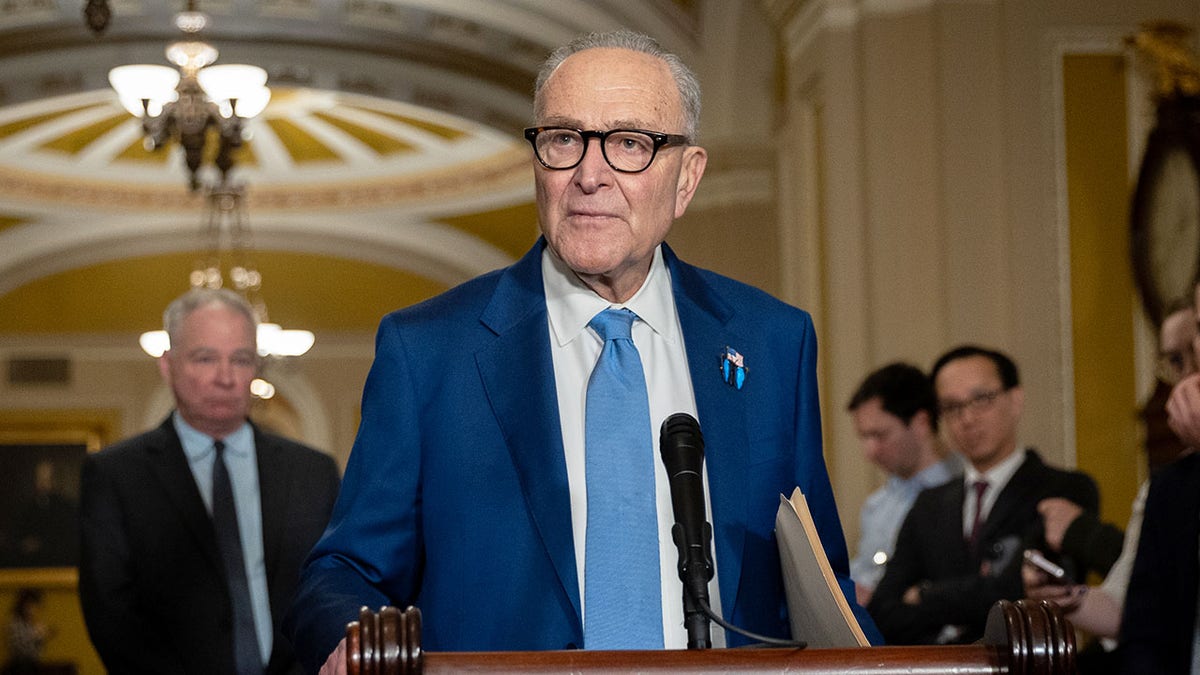
Senate Minority Leader Chuck Schumer, D-N.Y., and most Senate Democrats aren’t willing to back the SAVE America Act, complicating the bill’s survival in the upper chamber. (Nathan Posner/Anadolu via Getty Images)
But the political makeup of the Senate will prove a tricky path to navigate if Republicans want to pass the bill.
Though the majority of the Senate GOP backs the bill, without at least a handful of Senate Democrats joining them, it is destined to fall victim to the 60-vote filibuster threshold.
And Schumer has time and again made clear that he and the majority of Senate Democrats view the legislation, which passed the House last week, as a tool of voter suppression that would unduly harm poorer Americans and minority groups.
So Senate Republicans are looking at their options.
One, which Thune already threw cold water on, is nuking the Senate filibuster. The other is turning to the talking, or standing, filibuster. It’s the physical precursor to the current filibuster that requires hours upon hours of debate over a bill.
FETTERMAN SLAMS DEMOCRATS’ ‘JIM CROW 2.0’ VOTER ID RHETORIC AS PARTY UNITY FRACTURES

President Donald Trump listens during a cabinet meeting at the White House, Jan. 29, 2026, in Washington. (AP Photo/Evan Vucci, File)
Some fear that taking that path could paralyze the Senate floor. Thune acknowledged that concern, having previously made it himself, but noted another wrinkle.
«A lot of people focus on unlimited debate, and yes, it is something that could drag on for weeks or literally, for that matter, months,» Thune said. «But it’s also unlimited amendments, meaning that every amendment — there’s no rules — so every amendment will be 51 votes.»
He argued that there are several politically challenging amendments that could hit the floor that would put members in tough reelections in a hard spot and possibly cause them to pass, which «could also be very detrimental to the bill in the end.»
CLICK HERE TO DOWNLOAD THE FOX NEWS APP
Thune didn’t shut down the idea of turning to the talking filibuster, especially if it ended in lawmakers being able to actually pass the SAVE America Act. But in the Senate, outcomes are rarely guaranteed on politically divisive legislation.
«I think that, you know, this obviously is a mechanism of trying to pursue an outcome, but I don’t know that, in the end, it’ll get you the outcome you want,» Thune said. «And there could be a lot of ancillary damage along the way.»
politics,senate,elections,john thune
INTERNACIONAL
Se mantiene la huelga de hambre de familiares de presos políticos en Caracas ante el estancamiento de las excarcelaciones
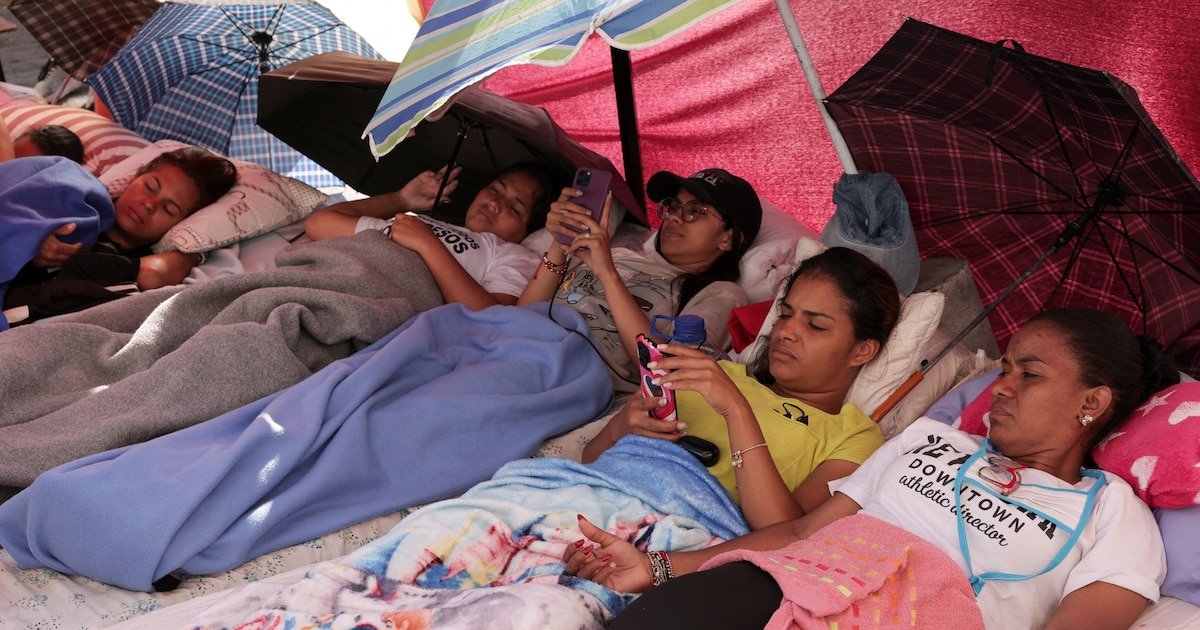
Familiares de presos políticos en Venezuela entraron este lunes en su tercer día de huelga de hambre en Caracas para exigir nuevas excarcelaciones, tras el retraso por segunda vez de la aprobación de una ley de amnistía que podría beneficiar a cientos de detenidos.
Las mujeres manifestantes se mantienen acampando a las afueras de los calabozos policiales conocidos como Zona 7, donde persisten las denuncias por el delicado estado de salud tanto de las familiares como de los propios reclusos.
La protesta comenzó el 14 de febrero, cuando una decena de mujeres se instaló en colchonetas bajo toldos improvisados en la entrada del centro de detención.
La escena es de extremo desgaste físico: rostros demacrados, cuerpos debilitados y manifestaciones de fatiga, angustia y desesperación.

“Ya el cuerpo comienza a resentirse. Siento mucha debilidad, cansancio cuando me levanto. Ya ni siquiera se puede descansar. Dormir bien, nada de eso. El cuerpo comienza a sentir los embates de no comer”, relató Evelin Quiaro, una de las huelguistas, quien lleva más de un mes pernoctando frente al recinto.
Las mujeres exigen la liberación de sus familiares y reclaman el cumplimiento de la promesa hecha por el titular del Parlamento, el chavista Jorge Rodríguez, quien aseguró el 6 de febrero que todos los presos serían liberados tras la aprobación de la ley de amnistía.
La discusión de la norma, sin embargo, fue postergada por segunda vez, y la próxima sesión legislativa está programada para el 19 de febrero. Mientras tanto, la incertidumbre domina a las familias que esperan excarcelaciones y denuncian que el proceso avanza a cuentagotas.
De acuerdo con la ONG Foro Penal, desde el 8 de enero se han concretado 444 liberaciones, pero más de 600 presos políticos siguen tras las rejas.
La situación sanitaria de las huelguistas y de los presos dentro de Zona 7 es alarmante. Una de las manifestantes tuvo que abandonar el ayuno por problemas de tensión arterial, y un médico que las asiste explicó que ha solicitado sin éxito autorización para atender a los internos.

Yessy Orozco, hija y hermana de dos detenidos, denunció que los funcionarios niegan el ingreso de personal de salud, argumentando la falta de autorización judicial.
El Comité por la Libertad de los Presos Políticos (CLIPP) advirtió que impedir la atención médica o el acceso a sueros hidratantes pone en grave riesgo la vida e integridad de las personas en huelga, recordando antecedentes fatales por falta de asistencia.
Familiares de los detenidos aseguran que un grupo de presos en el interior del centro también realiza una huelga de hambre desde el viernes, lo que agrava la preocupación por su estado físico. La organización Clipp denunció además que la policía impide el ingreso de sueros hidratantes y no ofrece explicaciones, sumando esta prohibición a la negativa de atención médica para los huelguistas.

La protesta de los familiares se produce en un contexto de tensión política y promesas incumplidas. El proceso de excarcelaciones y la discusión de la amnistía fueron anunciados tras la caída de Nicolás Maduro y la asunción de Delcy Rodríguez como jefa del régimen chavista, en medio de presiones internacionales, especialmente de Estados Unidos. Sin embargo, los familiares sostienen que el ritmo de liberaciones es lento y que la situación de los presos políticos continúa siendo crítica.
La Plataforma Unitaria Democrática, principal fuerza opositora, expresó su respaldo a las manifestantes y exigió la liberación “plena, inmediata y sin condiciones” de todos los presos políticos.
“No puede haber reconciliación ni justicia mientras persista la persecución y el encarcelamiento por razones políticas. ¡Ya basta de tanto sufrimiento! Venezuela merece libertad y dignidad”, afirmó en un comunicado.

En las últimas horas, la tensión creció frente al comando policial tras la difusión de un video donde un funcionario tilda la huelga de “show” y acusa a las mujeres de estar “cometiendo un delito”, pese a que la Constitución garantiza el derecho a la protesta pacífica.
Las familias y organizaciones de derechos humanos insisten en la urgencia de medidas humanitarias y el cese de la represión para quienes solo buscan la libertad de sus seres queridos.
(Con información de EFE y AFP)
Gente,descanso,campamento,colchones,sombrilla,ocio,manifestación,exterior,reposo,espera
INTERNACIONAL
Iran launches war drills in Hormuz Strait as US carrier is flying missions 24/7 before Geneva talks

NEWYou can now listen to Fox News articles!
Iran launched live-fire naval exercises in the Strait of Hormuz on Monday in preparation for potential security and military threats in the strategic waterway, according to the country’s state-run IRNA news agency.
The drill, called «Smart Control of the Strait of Hormuz,» was led by the naval forces of the Islamic Revolutionary Guard Corps (IRGC) under the supervision of IRGC Commander in Chief Maj. Gen. Mohammad Pakpour, according to Iran International.
State media said the exercise was organized to assess the readiness of operational units, review security plans and rehearse scenarios for responding to any security and military threats in the area.
SCOTT BESSENT SAYS IRAN UNDERSTANDS ‘BRUTE FORCE’ AS TRUMP WEIGHS OPTIONS AMID NUCLEAR STANDOFF
Iran launched naval exercises in the Strait of Hormuz on Monday, hours before nuclear talks resumed in Geneva between the U.S. and Iran. (Press Office of Islamic Revolutionary Guard Corps / Handout/Anadolu via Getty Images)
The exercises came within hours of renewed diplomatic efforts starting in Geneva between the U.S. and Iran that are aimed at reviving negotiations over Iran’s nuclear program.
«I am in Geneva with real ideas to achieve a fair and equitable deal,» Iranian Foreign Minister Abbas Araghchi wrote on X on Monday «What is not on the table: submission before threats,» he said.
President Donald Trump has ordered a buildup of U.S. military forces in the Middle East and has threatened to strike Iran if its leadership does not agree to a deal on its nuclear program.
VANCE WARNS IRAN THAT ‘ANOTHER OPTION ON THE TABLE’ IF NUCLEAR DEAL NOT REACHED
On Friday, Trump also offered an endorsement of regime change in Tehran and said it would be the «best thing that could happen» for Iran.
U.S. Central Command, or CENTCOM, went on to show U.S. military presence in the region Monday.
In a post on X, it shared images of EA-18G Growlers from Electronic Attack Squadron 133 and F-35C Lightning IIs from Marine Fighter Attack Squadron 314 preparing for launch from the flight deck of the USS Abraham Lincoln.
«Operating in international waters in the Middle East, the aircraft carrier conducts around-the-clock flight operations in support of regional security,» the post said.
TOP IRAN SECURITY OFFICIAL SEEN IN OMAN DAYS AFTER INDIRECT NUCLEAR TALKS WITH US

Iran carried out live drills Monday after Trump ordered military buildup in Middle East and threatened strikes if Iran doesn’t agree to nuclear deal. (Press office of Islamic Revolutionary Guard Corps / Handout/Anadolu via Getty Images)
The Pentagon has been building up what Trump has described as an «armada» in the region.
The USS Abraham Lincoln is present flanked by three warships equipped with Tomahawk missiles and is at the center of a broader U.S. naval buildup in the region.
Meanwhile, Tehran said the second round of talks would be held on Tuesday «with the mediation and good offices of Oman.»
Negotiations restarted in Muscat on Feb. 6, after previous talks collapsed when Israel launched an unprecedented bombing campaign against Iran in June that sparked a 12-day war and escalated tensions across the region.
CLICK HERE TO DOWNLOAD THE FOX NEWS APP
On Monday, U.S. Ambassador to Israel Mike Huckabee said there was «significant and legitimate doubt that the Iranians will ever agree to something that would cause them to lay down any ambitions of nuclear weaponry.»
iran,defense,military,us navy,middle east,israel,pentagon defense

La Justicia ya analiza los chats y audios entre la mano derecha de Pablo Toviggino y el financista para traer millones desde el exterior con empresas fantasma

Murió Juan Carlos Desanzo, director emblemático de Eva Perón y El Polaquito, a los 88 años

Boom de créditos hipotecarios: 2025 cerró como el cuarto mejor año desde que hay registros y qué se proyecta para 2026

Paulo Dybala, íntimo: una revelación sobre Cristiano Ronaldo, su impactante museo y el pilates y la moda como nuevo estilo de vida

Milei y la maratón de “la Piba”, que no termina

Reforma laboral: el Gobierno define qué cambios hará con las licencias médicas y el proyecto volvería al Senado

Avistaron una ballena azul en Chubut por primera vez en la historia

El Gobierno busca aprobar la reforma laboral y el Régimen Penal Juvenil antes del 1 de marzo

Uno de los jefes de la CGT adelantó que convocarán a un paro general por la reforma laboral: “Trabajaremos para que sea una gran huelga”

Chaotic video shows passengers trading midair blows; plane forced to divert: reports

 POLITICA1 día ago
Uno de los jefes de la CGT adelantó que convocarán a un paro general por la reforma laboral: “Trabajaremos para que sea una gran huelga”
- POLITICA2 días ago
Reforma laboral: Milei quiere aprobarla sin cambios en Diputados, pero la oposición busca corregirla
- POLITICA2 días ago
Efecto Santa Fe: policías y penitenciarios de Río Negro rechazaron un aumento en cuotas y amenazan con acampar por tiempo indeterminado en Viedma