INTERNACIONAL
‘It’s hidden’: Female genital mutilation and the secret shame of Minnesota’s Somalis

NEWYou can now listen to Fox News articles!
More than half a million women and girls in the United States are living with the physical and psychological scars of female genital mutilation — including many in Minnesota, home to a large Somali community from a country where roughly 98% of women have undergone the procedure, according to United Nations data.
Yet despite a state law that makes performing the procedures a felony, Minnesota has never secured a single criminal prosecution under its law — raising questions about enforcement, and whether cases could be going on undetected.
Female genital mutilation, or FGM, involves the cutting or removal of parts of a female’s genital organs, typically for cultural rather than medical reasons. The practice is irreversible.
«It’s hidden — it’s a cultural practice, and who is doing the cutting could be a family member or a doctor who is also in that same culture,» Minnesota Republican state Rep. Mary Franson told Fox News Digital, noting it may be carried out within tight-knit communities. She said the secrecy surrounding the practice makes it exceptionally difficult to detect and confront.
MINNESOTA ‘ON THE CLOCK’ AS HHS THREATENS PENALTIES OVER CHILDCARE FRAUD SCANDAL
Razor blades often used before carrying out female genital mutilation. (REUTERS/James Akena)
For some within Minnesota’s Somali community, the issue is less about public crime statistics and more about private silence — a practice survivors say is carried in secrecy, shame and fear.
The lack of prosecutions comes amid broader scrutiny of how Minnesota agencies handle oversight failures, including high-profile welfare and daycare fraud cases in which prosecutors allege billions of taxpayer dollars were siphoned off while warning signs went unaddressed. Investigators and watchdogs later concluded that officials were reluctant to probe deeply in culturally sensitive contexts — a reluctance, critics say, allowed large-scale violations to persist in plain sight.
The estimate of more than half a million survivors in the United States comes from the Centers for Disease Control and Prevention’s most recent national analysis, published in 2016.
Together, the scale of the issue and the difficulty of detection have raised questions about whether Minnesota’s ban on FGM is being effectively enforced when the crime is often carried out in secrecy.

Ayaan Hirsi Ali, a Somali-born activist and author who survived FGM, recalled the harm the practice has had on her and the need for accountability. ((Photo by Leonardo Cendamo/Getty Images))
Survivor warns of lasting harm
Ayaan Hirsi Ali, a Somali-born activist and author who survived FGM, described the lasting physical and psychological damage she endured and called for legal accountability.
«Female genital mutilation is violence against the most vulnerable — children,» Hirsi Ali told Fox News Digital. «It causes infection, incontinence, unbearable pain during childbirth and deep physical and emotional scars that never heal. Religious or cultural practices that deliberately and cruelly harm children must be confronted. No tradition can ever justify torture.»
Hirsi Ali, who founded the AHA Foundation as a means to end FGM, said that the pressure placed on parents in these groups to enforce the practice poses an overwhelming risk to girls.
«Only legal accountability can help reduce that risk,» Hirsi Ali said. «I survived female genital mutilation and I carry its scars with me. But I refuse to accept that another girl in America must endure what I did in Somalia.»
‘I remember being held down’
Zahra Abdalla, a Minnesota-based Somali survivor of female genital mutilation, told Fox News Digital that the practice survives in secrecy, shielded by family pressure and silence.
Abdalla, who spoke to Fox News Digital on camera but asked that her face be blurred, said she was between six and seven years old when she was forcibly restrained in a refugee camp in Kenya while adult women in her community carried out the procedure without anesthesia, using a razor blade.
«They tied my hands and my legs,» Abdalla said. «I remember being held down. I remember the pain — and knowing I could not escape.»
Abdalla said she was «lucky» because she fought back during the procedure, kicking one of the women who was pregnant at the time. The disruption, she said, caused the cutting to stop before it was fully completed. She said the wound was later washed with salt water.
«That pain — I thought I was going to pass out,» she said.
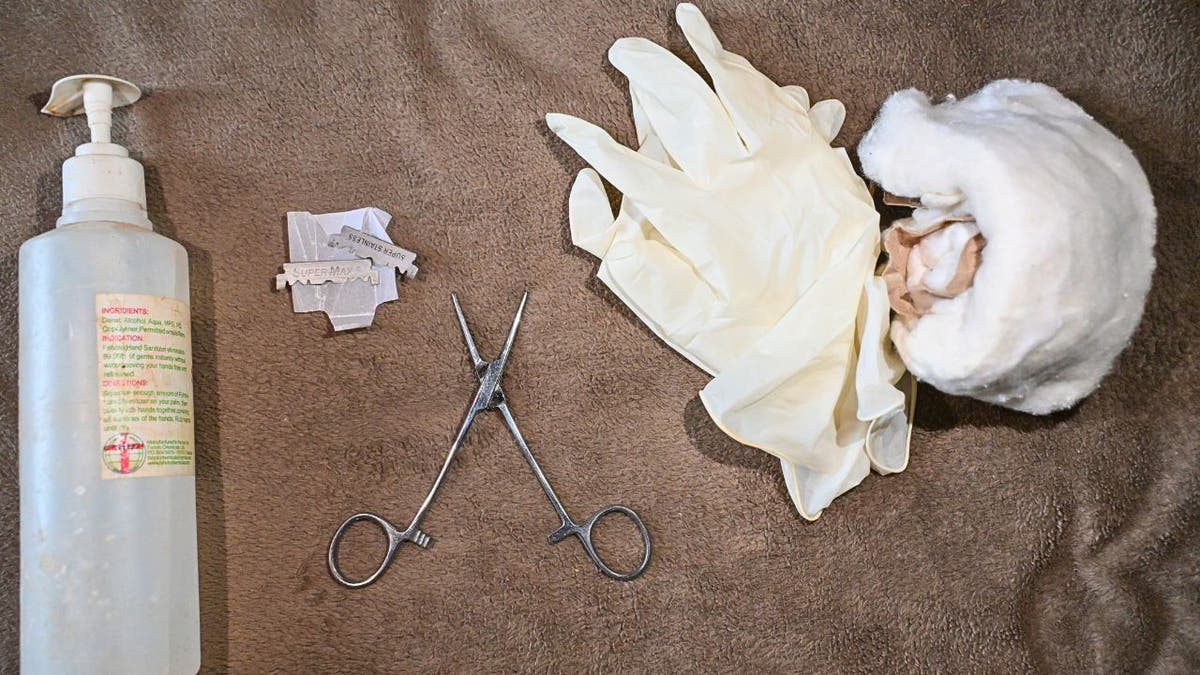
Tools used to perform medicalized female genital mutilation (FGM) procedures are displayed in Kisii, Kenya in 2023. (Simon Maina/AFP)
The damage followed her into adulthood, she said, later requiring surgery and, in her view, contributing to multiple miscarriages. She also said intercourse was very difficult.
She said the practice is often driven by marriage expectations, adding that in some communities men are reluctant to marry women who have not undergone the procedure.
«It’s tied to dowry. It’s tied to marriage,» she said, referring to the financial and social expectations placed on families when arranging marriages. «It’s tied to what men expect,» she said. «Families believe it protects a girl’s value.»
She said silence remains one of the biggest barriers to enforcement. She is the executive director of the nonprofit Somaliweyn Relief Agency (SRA), which seeks to raise awareness about the practice.
«You don’t talk about it,» she said. «You’re told to stay quiet.»
While she said she cannot confirm specific cases inside Minnesota, she said she believes some families take girls back to Somalia during school breaks to have the procedure performed.
No prosecutions despite felony law
Her warning mirrors how some of the only known U.S. cases have surfaced.
In a high-profile federal case in Michigan in 2017, prosecutors alleged that two young girls were taken from Minnesota to undergo female genital mutilation. The case later collapsed because the judge ruled that Congress did not clearly have the constitutional authority, at the time, which expanded federal jurisdiction in cases involving interstate or international travel.
That ruling prompted Congress to strengthen the statute, a change signed into law by President Donald Trump in 2021 under the Stop FGM Act, which expanded federal jurisdiction in cases involving interstate or international travel.
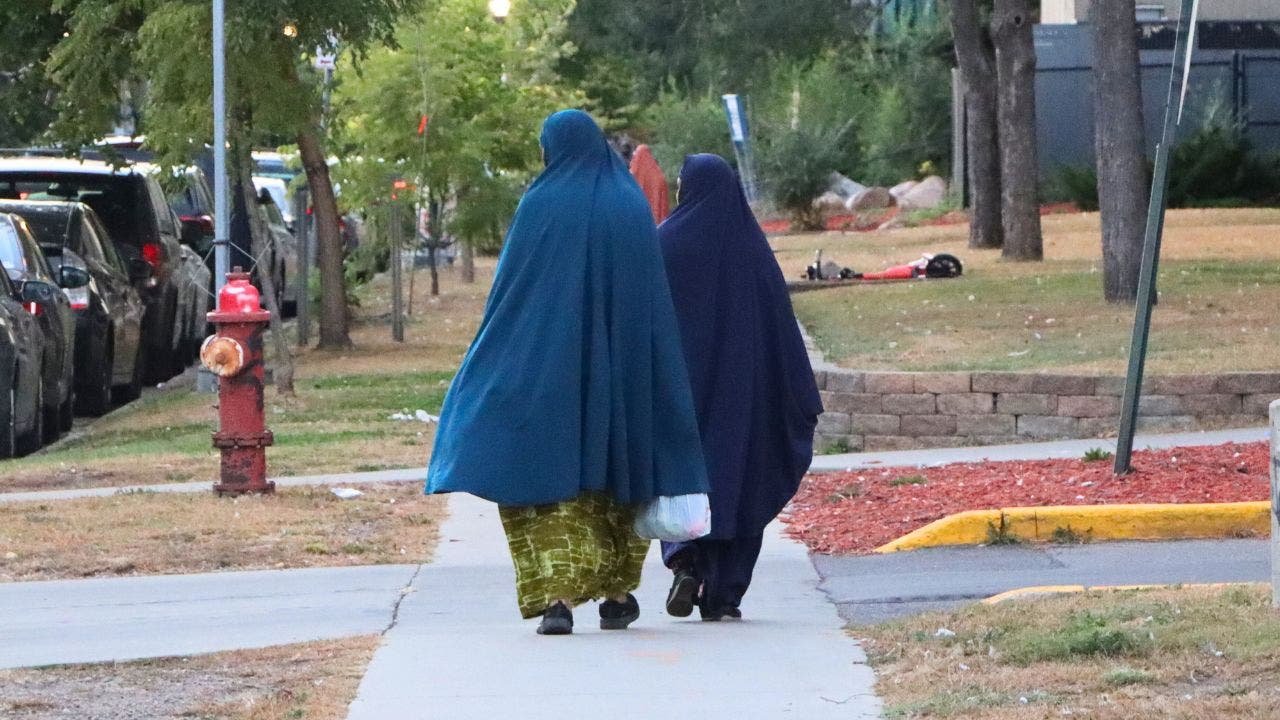
Women wearing traditional Muslim clothing walk along a sidewalk in Minneapolis. The city is home to a large Muslim population. (Michael Dorgan/Fox News Digital) (Michael Dorgan/Fox News Digital)
However, a Fox News Digital review of publicly available Minnesota court records, enforcement announcements and professional licensing disciplinary records found no documented prosecutions or sanctions tied to FGM. The Minnesota Attorney General’s Office said prosecutions for state crimes like female genital mutilation are handled by county attorneys and did not identify any FGM cases. County prosecutors contacted for this story also did not identify any prosecutions.
Those provisions, however, have not resulted in documented criminal prosecutions.
Minnesota criminalized female genital mutilation in 1994, classifying the practice as a felony.
The Minnesota Department of Health told Fox News Digital that it does not track specific data on female genital mutilation, underscoring how difficult the practice is to monitor or enforce.
Global context, local uncertainty
Around the world, FGM is most prevalent in parts of Africa and the Middle East.
Somalia has among the highest prevalence rates in the world, with United Nations data estimating roughly 98% of women ages 15 to 49 there have undergone the procedure. The United Nations, World Health Organization and UNICEF classify FGM as a human rights violation rooted in efforts to control female sexuality and enforce gender inequality, and the UN observes an annual day of awareness in February to combat the practice globally.
Those figures describe conditions in Somalia and are not proof the procedure is occurring in Minnesota, but they help explain why risk is acknowledged even as the practice remains difficult to detect.
Medical experts say the procedure can cause chronic pain, severe bleeding, infections, urinary problems, sexual dysfunction, childbirth complications and, in some cases, death. Because it permanently alters genital tissue, the harm cannot be undone. Survivors often require repeated medical care and carry lasting psychological trauma.
Critics say the gap between the law and enforcement is fueled by silence.
Survivors often do not report the practice out of fear, stigma, family pressure or concern about involving authorities — even when mandatory reporting laws exist. Medical professionals, particularly OB-GYNs, are often the first to encounter adult survivors, placing clinicians near the center of any enforcement effort that has yet to materialize.
MINNESOTA FRAUD WHISTLEBLOWER SAYS ‘LACK OF GUARDRAILS WAS PRETTY SHOCKING’
The CDC has not released a newer national estimate, and there is no data on the number of people in Minnesota who are victims. However, a CDC-supported Women’s Health Needs Study conducted from 2019 to 2021 included Minneapolis as one of four U.S. metro areas documenting a significant survivor population.
The study did not track where procedures occurred or whether anyone was charged, underscoring how little the public knows about enforcement.
Fox News Digital also contacted multiple Minnesota clinics that provide reproductive and women’s health services asking whether clinicians encounter patients with physical evidence of female genital mutilation. None responded.
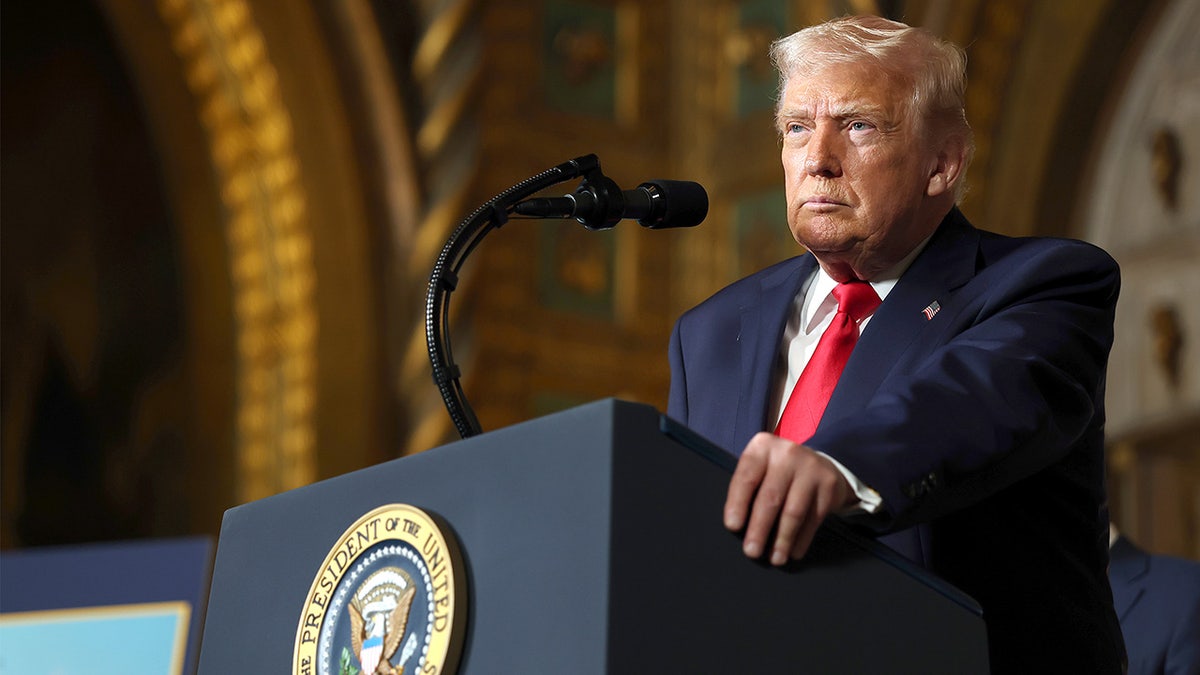
The AHA Foundation said it is pushing for President Donald Trump to sign an executive order to make combating female genital mutilation a national priority. (Tasos Katopodis/Getty Images)
Lawmakers push task force amid accountability questions
Some Minnesota state lawmakers have introduced legislation this session to establish a «task force on prevention of female genital mutilation» — a step that Rep. Mary Franson said reflects concerns raised by women in the community that the practice may be occurring or going undetected in Minnesota.
Franson said the legislation was prompted by concerns raised by women in the Somali community. The bill’s chief author is Rep. Huldah Momanyi-Hiltsley, a Democrat of Kenyan heritage, and it is co-sponsored by Franson along with Democratic Reps. Kristin Bahner, Kristi Pursell and Anquam Mahamoud, who is Somali-American. None of them responded to multiple Fox News Digital requests for comment.
Franson said she became a focal point of opposition once she became publicly associated with the bill.
«The bill was brought forward by women in the Somali community. I was the chief author, but then Democrats told one of the DFL women that if I carried the bill, they would not support it,» Franson said. «Of course, it’s because they believe I am a racist.»
Franson, who is white, first introduced FGM-related legislation in 2017 that would have classified the practice as child abuse and clarified parental accountability. That effort stalled and never became law.
CLICK HERE TO DOWNLOAD THE FOX NEWS APP
At the federal level, Congress criminalized female genital mutilation in 1996 and later expanded federal jurisdiction in 2018 under legislation signed by then-President Donald Trump, explicitly covering cases involving interstate or international travel.
Even so, prosecutions nationwide have remained rare, with the only widely cited state-level conviction occurring in Georgia in 2006, where a woman was convicted under Georgia state law for performing FGM on a minor.
In Minnesota, where the practice has been a felony since 1994, there is no public record of a single criminal prosecution — raising an unavoidable question: with laws on the books and a documented survivor population, who is responsible for enforcing the ban, and why have prosecutions not followed?
immigration,minnesota fraud exposed,minnesota,minneapolis st paul,politics,donald trump,africa,health













INTERNACIONAL
US assets in Middle East positioned for ‘highly kinetic’ war, ex-Pentagon official warns

NEWYou can now listen to Fox News articles!
The U.S. is in position for a «highly kinetic» campaign against Iran after launching one of its largest recent military buildups in the Middle East, a former senior Pentagon official has claimed.
Dana Stroul, now research director at The Washington Institute for Near East Policy, made the assessment Sunday as Washington and Tehran prepare for a second round of indirect nuclear talks in Oman.
«The US military is ready for a sustained, highly kinetic campaign should President Trump order it, and also prepared to defend allies and partners in the Middle East from Iran’s missiles,» Stroul told Fox News Digital.
«The US military can rapidly reposition assets from all over the world and deploy overwhelmingly lethal force in a short period of time to one theater,» she said before highlighting how there is «no ally or enemy capable of what we have seen from the US in this current buildup.»
PRESIDENT TRUMP’S IRAN BUILDUP MIRRORS 2003 IRAQ WAR SCALE AS TENSIONS ESCALATE
The world’s largest warship, U.S. aircraft carrier USS Gerald R. Ford, on its way out of the Oslofjord at Nesodden and Bygdoy, Norway, September 17, 2025. (NTB/Lise Aserud via Reuters)
Describing how the current posture differs from the June 2025 strikes on Iranian-linked nuclear targets, Stroul said the U.S. has expanded its offensive and defensive capabilities.
«Two US aircraft carriers and their accompanying vessels and air wings were stationed in the Middle East last summer during the 12-day war and the US operation Midnight Hammer,» she explained.
«The addition of the Ford is really important, it expands US offensive capabilities if we go to war with Iran,» she said.
While in June 2025, the US carried out limited but highly targeted strikes against Iranian nuclear infrastructure to degrade key facilities without triggering a regional war, now, Stroul said the force posture is broader and more sustained.
The US has also «increased the number of guided-missile destroyers, fighter aircraft, refuelers, and air defense systems» in the region, she explained.
TRUMP SAYS IRAN HAS 15 DAYS TO REACH A DEAL OR FACE ‘UNFORTUNATE’ OUTCOME

An F/A-18F Super Hornet, assigned to Strike Fighter Squadron (VFA) 41, prepares to make an arrested landing on the flight deck of the USS Abraham Lincoln in the Pacific Ocean on Aug. 10, 2024. (U.S. Navy/Mass Communication Specialist Seaman Apprentice Daniel Kimmelman/Reuters)
The deployment of aircraft carriers such as the USS Gerald R. Ford and USS Abraham Lincoln has assumed heightened strategic importance.
The USS Gerald R. Ford was recently tracked transiting the Strait of Gibraltar eastward, while the USS Abraham Lincoln is operating in the Arabian Sea.
«They will both be in the Middle East CENTCOM theater,» Stroul explained before clarifying that there could be «one in the eastern Mediterranean and the other in the Arabian Gulf.»
«There would probably be a combination of reasons for that based on availability, readiness, proximity to the Middle East.
«The Ford was heading home and directed to turn around,» she added.
While the specific destinations of the carriers have not been publicly disclosed for operational security reasons, their presence alone signals escalatory leverage and deterrence.
WITKOFF WARNS IRAN IS ‘A WEEK AWAY’ FROM ‘BOMB-MAKING MATERIAL’ AS TRUMP WEIGHS ACTION
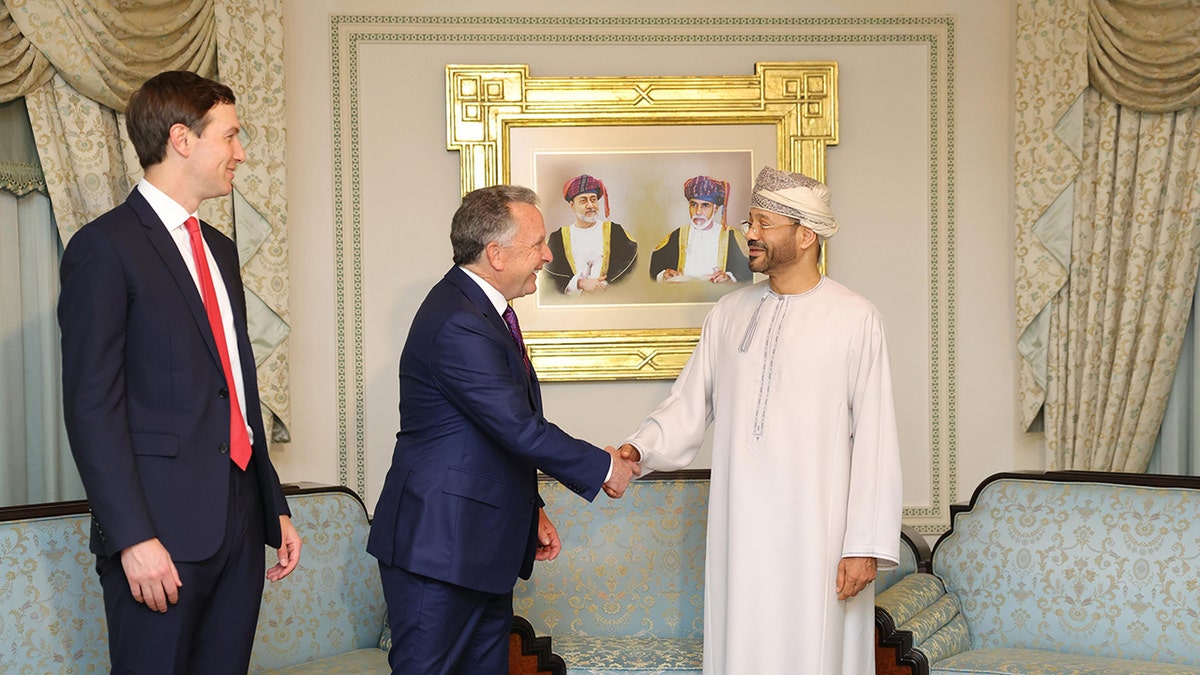
Omani Foreign Minister Sayyid Badr Hamad Al Busaidi, US President Donald Trump’s Special Representative for the Middle East, Steve Witkoff and U.S. negotiator Jared Kushner meet ahead of the US-Iran talks, in Muscat, the capital of Oman, on February 06, 2026. (f Oman, on FebruarOman Foreign Ministry/Anadolu via Getty Images)
The military buildup comes as indirect diplomatic talks between Washington and Tehran continue, with Oman once again serving as a mediator Feb. 26.
Stroul argued that Iran’s leadership is trying to balance brinkmanship with negotiation.
«Iran’s leaders are playing a weak hand by combining saber-rattling about their own capabilities, staging preparations and exercises to signal readiness,» she claimed.
«They are attempting to slow this down by pursuing negotiations. No one should be under any illusions about the reality of US dominance — Iran is completely outmatched in conventional terms,» Stroul said.
BUILT FOR WEEKS OF WAR: INSIDE THE FIREPOWER THE US HAS POSITIONED IN THE MIDDLE EAST
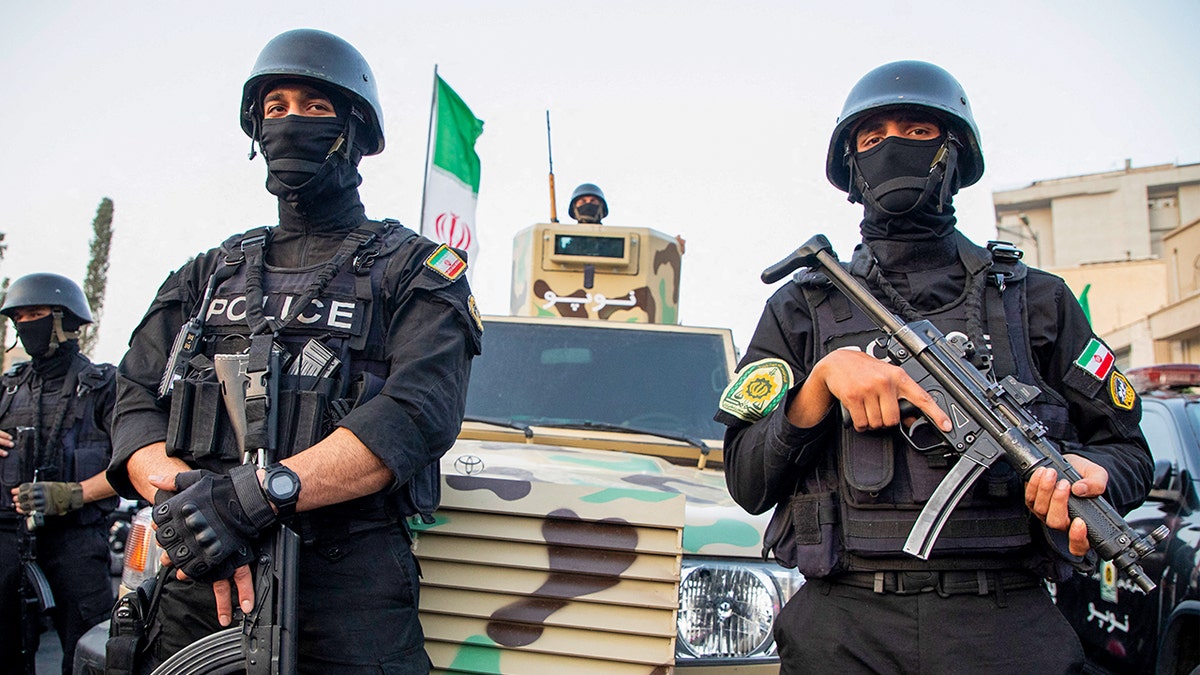
Armed NOPO special police units are on the scene as Iranians take to the streets in the downtown Enghelab (Revolution) Square in Tehran, Iran on June 24, 2025, to celebrate the ceasefire after a 12-day war with Israel. (NEGAR/Middle East Images/AFP via Getty Images)
«Israel dominated Iranian airspace in one day last year, targeted many of Iran’s security leaders, took out half of its missile arsenal, and the US significantly set back its nuclear program,» Stroul said.
Iran’s long-cultivated network of proxies across the region — including Hezbollah, Shiite militias in Iraq, and elements in Syria — has also been weakened after sustained Israeli military pressure.
«Iran’s long-cultivated network of proxies across the region is degraded after more than two years of Israeli operations, and they declined to enter the war and support Iran’s defense last summer,» Stroul explained.
CLICK HERE TO DOWNLOAD THE FOX NEWS APP
«No matter what Iran’s leaders say, Iran is not able to rebuild a decades-long project in a few months.»
«That said, the US military is in a position to execute whatever orders President Trump gives,» she said. «It is not a question of military readiness, but a political decision.»
iran,middle east,wars,donald trump,ali khamenei,pentagon defense,pentagon,us navy,military

La larga y sinuosa ruta de Christopher Beha desde un ateísmo bien fundamentado hasta una fe cristiana aún más cultivada comienza con una imagen poderosa: un ángel se le aparece. No es Clarence, el atolondrado amigo de Jimmy Stewart en ¡Qué bello es vivir!, sino una aparición exigente y persistente.
En su profunda reflexión sobre la fe y la filosofía, Why I Am Not an Atheist (Por qué no soy ateo), explica que el espíritu le dijo que confiara en Dios. “Esto no fue un sueño”, escribe sobre la primera visita, ocurrida a mediados de los años noventa, cuando tenía 15 años. “Estaba despierto —tan seguro de eso como de que ahora estoy despierto mientras escribo estas palabras— y una presencia aterradora se comunicaba conmigo”.
Las visitas continuaron durante años. Beha creció en una familia católica y amante de los libros en el Upper East Side de Nueva York, que lo envió a Princeton. Fue editor de Harper’s Magazine y es autor de cuatro libros anteriores, cuyos temas abarcan desde novelas sobre complicaciones emocionales hasta un repaso por los clásicos, mostrando así su versatilidad literaria.

Unos años después de que el imperioso querubín le indicara que debía acercarse a Dios, Beha comprendió que todo podía explicarse desde la ciencia. Había experimentado parálisis del sueño, un estado en el que permanecía despierto pero inmovilizado, acompañado de alucinaciones.
“Había sufrido un padecimiento físico bastante común y, en vez de buscar una causa racional, me refugié en la superstición”, escribe. “En realidad me había convencido de que Dios me enviaba un mensaje”.
Como alguien que también presenció algo inexplicable (una santa fallecida que abrió los ojos en una cripta en Italia), me resultaba más atractivo el Beha adolescente, colmado de asombro religioso. Pero al final del libro, regresa al ángel con una visión ampliada. Fue a la vez un milagro y algo real. “Sé lo que ‘causó’ esas visitas, desde un punto de vista material, pero también sé lo que provocaron después: un viaje de toda la vida en el que todavía sigo”.
Entre esos extremos se despliegan varios cientos de páginas que componen ese trayecto, casi todas centradas en los filósofos mayoritariamente ateos del canon occidental. No es una peregrinación tradicional, sino una odisea intelectual. Beha debate con los grandes maestros: Descartes, Kant, Locke, Mill, Hobbes, Camus, Nietzsche y muchos más, pero empieza cuestionando a los “nuevos ateos” como Sam Harris, Richard Dawkins, Christopher Hitchens y similares, a quienes considera ya superados.

Hace algunos años, el periodista Michael Kinsley describió el libro de Hitchens God Is Not Great con una frase memorable: “Hitchens es un ateo de aldea a la antigua, parado en la plaza tratando de discutir con los buenos ciudadanos que van camino a la iglesia”.
Beha no es de los que lanzan piedras ni busca peleas. Tiene una devoción casi obsesiva por las grandes mentes. Es el tipo de persona que habrías querido como compañero de habitación antes de la era de la inteligencia artificial. O tal vez no. Ha leído todo y hasta escribió una memoria al respecto, The Whole Five Feet, en la que narra el año que dedicó a leer los 51 volúmenes de los Harvard Classics. Solo mirar esa lista agota a la mayoría.
Él escaló esa montaña para que otros no tuvieran que hacerlo. Pero, a veces, en su nuevo libro se pierde en las nubes. Un ejemplo, al tratar a Immanuel Kant, el filósofo alemán: “Kant aquí invoca dos binarios que ya hemos discutido. El primero es el que existe entre la verdad a priori y a posteriori; el segundo, entre análisis y síntesis”.
Beha es sincero, honesto y resulta agradable en la página. Su historia personal resulta más interesante que la intelectual. Empezó a dudar de su fe a los 18 años, tras casi perder a su hermano gemelo en un accidente de auto. Sufrió depresión y un cáncer que puso su vida en riesgo, abusó del alcohol y las drogas. Fue ateo durante mucho tiempo.

El libro es una larga réplica a “Why I Am Not a Christian”, el célebre ensayo del polímata británico Bertrand Russell, quien calificaba la creencia en Dios como “una concepción indigna de hombres libres”. Russell fue una de las figuras que empujaron a Beha a años de escepticismo comprometido.
No le resultaba suficiente el agnosticismo tibio de los espiritualmente errantes, una condición que el comediante católico Stephen Colbert comparó alguna vez con ser “un ateo sin agallas”. Beha se entregó por completo.
El argumento de Russell es conciso, refuta cada una de las razones principales a favor de la fe. El de Beha no lo es. Descompone la visión atea en dos categorías y dedica la mayor parte del libro a detallarlas e incluso simpatizar con ellas. Una es el “materialismo científico”, que sostiene que solo existe el mundo material. La otra es el “idealismo romántico”, que él define como la creación de la propia realidad.
Durante sus largos años en el desierto de la incredulidad, Beha intentó encajar en alguna de esas narrativas, buscando “hacer significativa una vida sin Dios”.

Al final, el ateísmo le resultó insuficiente, igual que a algunos revolucionarios franceses que transformaron brevemente la catedral de Notre-Dame en el árido Templo de la Razón. La religión de la no-religión puede parecerse a la cerveza sin alcohol: ¿para qué?
Beha no pretende convencer a quienes ya han renunciado a Dios. Solo quiere explicar qué lo llevó a regresar a la fe de sus padres, “escuchando la voz susurrante en el alma”. No hay una conversión fulminante, ninguna luz cegadora. Más bien, su vida, a menudo miserable, mejora con la mujer adecuada, una confesión católica, la asistencia regular a misa. Y esa mujer —“ella era la razón por la que creía en Dios”— ni siquiera es creyente. Es episcopaliana no practicante.
Si Beha no logra necesariamente ganar su debate con Russell, al menos hay que reconocerle que cumple la exigencia de los seres conscientes: reflexionar a fondo sobre el misterio de lo que somos en un universo incognoscible.
“No creo que alguna vez vea las cosas con claridad; no en esta vida mortal”, concluye. “Lo mejor que podemos esperar es estar mirando en la dirección correcta, orientados del modo adecuado”.
Fuente: The New York Times
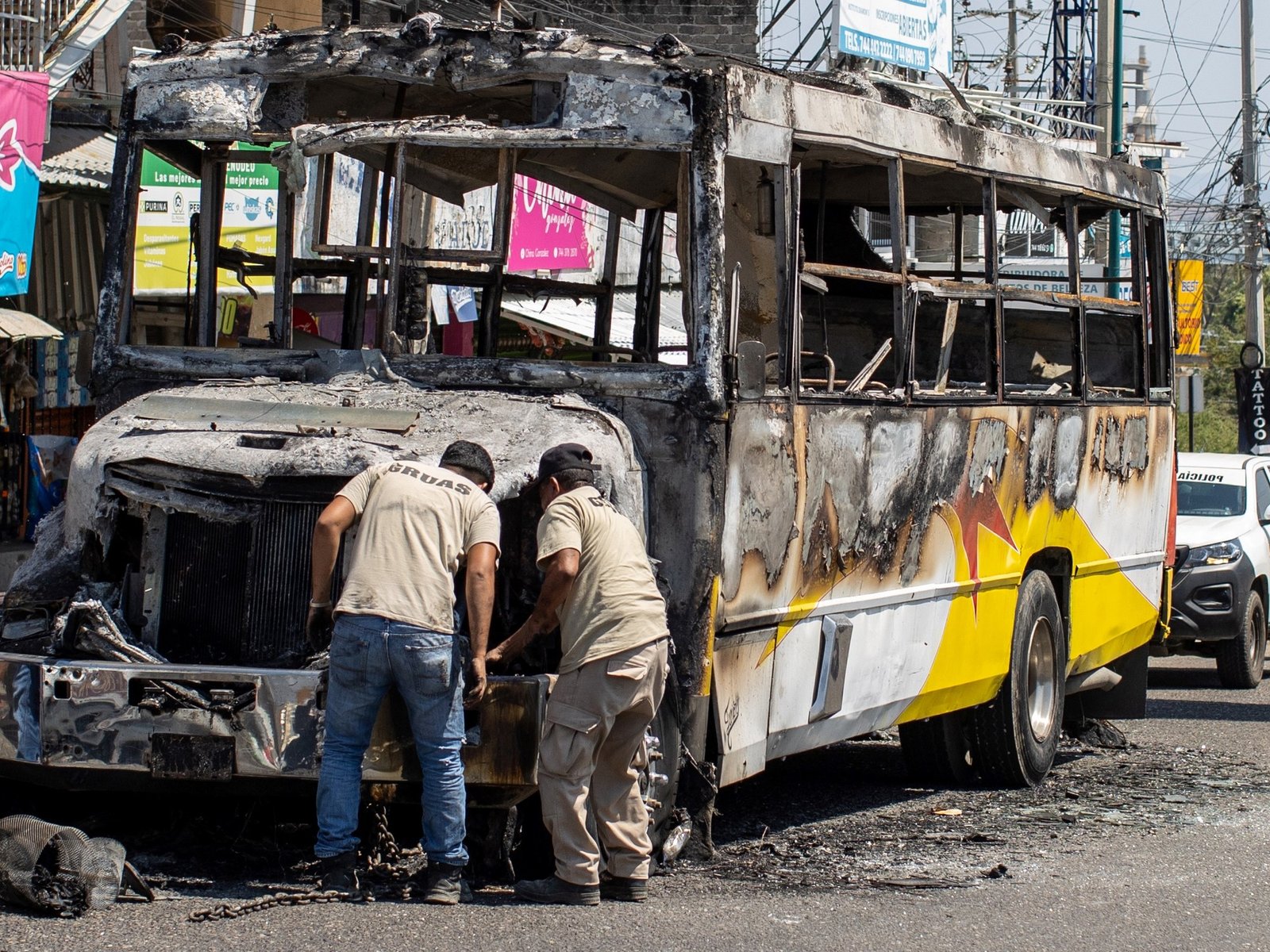
1.- Cartel de Sinaloa:
2.- Cartel Jalisco Nueva Generación:
3.- Cartel del Golfo:

4.- Cartel del Noroeste:
5.- La Nueva Familia Michoacana:

6.- Carteles Unidos:

Solo en Off | Furor y decepción entre quienes pagaron para sentarse cerca de Milei en Mar a Lago

La Cancillería argentina emitió una alerta y recomendó no viajar a Jalisco por la violencia en México

Tras los nuevos aranceles de Trump, se achica la ventaja comercial del acuerdo de la Argentina con Estados Unidos

Los motivos detrás del descenso más prematuro del fútbol inglés

En plena ausencia de Mauro Icardi, Wanda Nara apareció en el casamiento de su hermano

Con un ajustado apoyo y cambios en el texto original, el oficialismo define hoy el futuro de la reforma laboral en Diputados

Escándalo en MasterChef: una famosa abandonó a los gritos y acusando que está todo arreglado

Del himno peronista de Kelly Olmos al exabrupto de Agustina Propato: las perlitas del debate por la reforma laboral

Villarruel cuestionó la apertura de importaciones: «Sin industria, se pasa a depender de China»

“Ahora es la hora de jugarse”: el mensaje de Patricia Bullrich a los empresarios tras aprobarse la reforma laboral

 ECONOMIA2 días ago
Villarruel cuestionó la apertura de importaciones: «Sin industria, se pasa a depender de China»
- POLITICA1 día ago
“Ahora es la hora de jugarse”: el mensaje de Patricia Bullrich a los empresarios tras aprobarse la reforma laboral
- ECONOMIA1 día ago
Según un especialista, el precio de la carne se mantendrá alto “entre dos y tres años”